
Last Updated: June 25, 2026
Thank you for visiting! By the way… any links on this page that lead to products on Amazon and other stores/partners are affiliate links Aquarium Store Depot earns a commission if you make a purchase.
Table of Contents
- What Most Care Guides Get Wrong About Ember Tetra The Perfect Nano Fish for Planted Tanks
- The Reality of Keeping Ember Tetra
- Species Overview
- Classification
- Origins and Habitat
- What Does they Look Like?
- How Big are They?
- How Long Do They Live?
- Ember Tetra Care Guide
- What People Get Wrong
- What Do They Eat?
- Setting Up Your Tank
- Water Quality
- Breeding
- Health and Disease
- Where to Buy
- Frequently Asked Questions
- Is the Ember Tetra The Perfect Nano Fish for Planted Tanks Right for You?
- What It Is Actually Like Living With Ember Tetra
- How the Ember Tetra The Perfect Nano Fish for Planted Tanks Compares to Similar Species
- Closing Thoughts
- Recommended Video
The ember tetra is the definitive nano tank fish. In the right setup with dark substrate, tannins, and proper lighting, they glow like embers in a fire. In a bare, bright tank with hard water, they look like nothing. Setup is everything with this species.
Ember tetras in the wrong tank are invisible. In the right tank, they are on fire.
What Most Care Guides Get Wrong About Ember Tetra The Perfect Nano Fish for Planted Tanks
The most common mistake I see with ember tetra the perfect nano fish for planted tankss is keeping too few. Guides will say “minimum 6” and leave it at that. In reality, these fish behave completely differently in a proper group of 8 to 10 or more. Keeping just 3 or 4 often leads to stress, hiding, and fin nipping that wouldn’t happen in a larger school. Another thing most guides miss is how much lighting and decor affect this species. Ember Tetra The Perfect Nano Fish for Planted Tankss look washed out under bright white LEDs on a light substrate. Dim the lights, add some tannins, use a dark background, and you’ll see colors you didn’t know they had. I’ve also noticed that many care sheets recommend overly broad water parameters. Yes, ember tetra the perfect nano fish for planted tankss are adaptable.
The Reality of Keeping Ember Tetra
They look terrible at the fish store. Ember tetras in a bare store tank under bright lights look pale and washed out. This is the number one reason people walk past them. In a planted tank with dark substrate and moderate lighting, they develop an intense orange-red glow that transforms the entire tank. Do not judge this fish by its store appearance.
Group size matters more than tank size. You can keep embers in a 10-gallon, but the real key is school size. Six is the minimum, but 10 to 15 is where the magic happens. In large groups they school tightly, display brighter color, and exhibit natural foraging behavior that makes them genuinely engaging to watch.
They are not as fragile as they look. Their tiny size makes people assume they are delicate. They are not. Ember tetras tolerate a reasonable range of water parameters and are hardier than most fish their size. The main thing that kills them is poor acclimation and ammonia spikes in uncycled tanks.
Biggest Mistake New Owners Make
Buying 4 or 5 and sticking them in an uncycled tank. They need a mature tank and a proper school. Anything less and you get pale, stressed fish that hide constantly.
After 25+ years in this hobby, the ember tetra is still my top recommendation for anyone setting up a planted nano tank. No other fish at this size delivers this combination of color, behavior, and ease of care.
Species Overview
| Scientific Name | Hyphessobrycon Amandae |
| Common Names | Fire Tetra, Amanda’s, Dwarf Reds, Reds |
| Family | Characidae |
| Origin | Brazil |
| Diet | Omnivore |
| Care Level | Easy |
| Activity | Very Active |
| Lifespan | 2 – 4 Years |
| Temperament | Peaceful |
| Tank Level | Midwater |
| Minimum Tank Size | 10 gallons |
| Temperature Range | 72 ° to 80 °F |
| Water Hardness | 4 to 8 dkH |
| pH Range | 6.5 to 7.5 |
| Filtration/Water Flow | Low |
| Water Type | Freshwater |
| Breeding | Egg layer |
| Difficulty to Breed | Easy |
| Compatibility | Community tanks |
| OK, for Planted Tanks? | Yes |
Classification
| Order | Characiformes |
| Family | Characidae |
| Genus | Hyphessobrycon |
| Species | H. Amandae (Gery & Uj, 1987) |
Ember tetras are easy to keep but need a species-appropriate setup to thrive. Group size and tank environment matter more than water parameters.
Origins and Habitat
The Ember Tetra was discovered fairly recently in 1987. It was named after Heiko Bleher’s mother, Amanda Bleher1.
But don’t be fooled. Heiko Bleher didn’t actually stumble upon this species himself. Instead, he is known for his work with other South American fish.
Now back to the Ember Tetra. These fish come from Brazil, where they mostly reside in the Araguaia River basin. Its slow-moving waters contain plant materials that decompose, creating an acidic environment.
These stained waters are called ‘blackwater.’ This dark color makes it easier for Ember Tetras to hide.
As shoaling fish, Ember Tetras live in groups. However, they are not to be confused with schooling fish.
Unlike schooling fish, a group of Ember Tetras doesn’t swim in the same direction. They just stay close together.
Ember Tetras are peaceful and can coexist with many other types of wild fish. Some of those fish include:
- Other Tetras
- Pygmy Rasbora
- Pleco Catfish
By the early 1900s, Ember Tetras had found their way into freshwater fish tanks. Since then, they have become a top choice for aquarium enthusiasts.
And that’s understandable when you consider the Ember Tetra’s beautiful appearance. Plus, they are easy to care for.
What Does they Look Like?
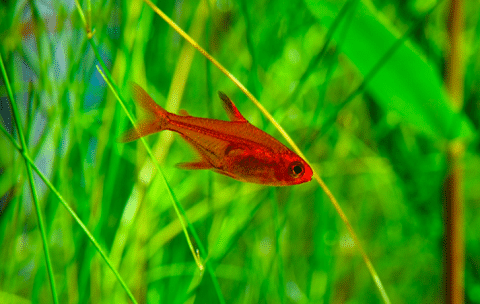
Most Ember Tetras are orange, but some have a reddish-orange glow. In either case, the Ember Tetra’s iridescent scales make this fish shimmer and stand out in an aquarium.
Usually, their fins are a bit darker than the rest of their body. Their bodies are thicker in the front and thin out towards the back.
How Big are They?
These freshwater fish are tiny, making them the perfect size for a nano tank. You can expect your Ember Tetras to be about ¾ to 1 inch long.
How Long Do They Live?
With proper care, aquarium Ember Tetras live about 2-4 years. Although some fishkeepers have claimed this species can live for 10 years, that claim has not been proven and is likely inaccurate.
Their short life span is one disadvantage of keeping this otherwise fantastic fish. But you helps your Ember Tetras live as long as possible by giving them:
- The ideal tank environment
- A high-quality diet
- Interactions with other fish
Later in this article, we will talk more about those important aspects of Ember Tetra care.
Ember Tetra Care Guide
Ember Tetra are peaceful fish, making them a great addition to community tanks. You can also keep them in a species-specific tank.
Whether you choose the former or the latter option, Ember Tetras need to live in a group. The size of the group depends on how big your tank is, but aim for a minimum of 10-15 fish.
Because they are so easygoing, the males are unlikely to show aggression towards each other. That makes it easy to put together a group of Ember Tetras.
Although they don’t cause trouble, Ember Tetras are active little fish. They are always swimming around and aren’t afraid to explore their surroundings.
While swimming about, they will likely stick to the middle of the tank. When they want a break, they will seek refuge in the tank’s plants. That’s why you need to add some to your aquarium. More on that later.
And those plants aren’t just a resting spot. Ember Tetras also have a great time racing through them as they swim after each other. You will definitely be entertained by these fish!
What People Get Wrong
The most common mistake is keeping ember tetras in too small a group. A group of 5 or 6 will hide constantly, show faded coloration, and fail to display the confident schooling behavior that makes this fish so appealing. Groups of 10 or more show completely different behavior , active, front-and-center, and visually stunning in a planted tank.
The second issue is tank mates. Ember tetras are tiny , 0.8 inches (2 cm) fully grown. Any fish that fits them in its mouth is a threat. Even fish marketed as “peaceful” can pick off ember tetras if there is a significant size difference. They belong in a species-appropriate setup: nano fish only, calm water, and similar-sized community fish like chili rasboras, pygmy corydoras, or small livebearers.
Third: bright overhead lighting and bare substrate wash out their color. Ember tetras show their best orange-red color against dark substrate with floating plants or a densely planted background. The tank setup determines whether they look like spectacular show fish or washed-out orange dots.
What Are Good Tank Mates for Them?
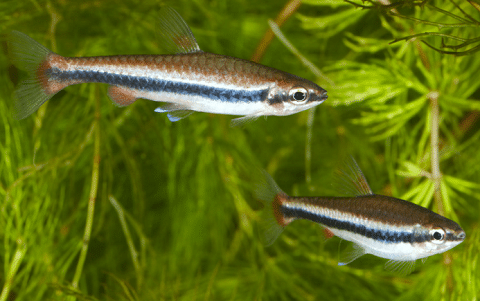
Although Ember Tetras are fine in a species-specific tank, their bright colors and gentle disposition make them an excellent choice for a community tank.
You just have to choose the right tank mates. When selecting those tank mates, keep the following pointers in mind:
- Avoid aggressive fish. Instead, choose fish that have a friendly nature.
- Big fish might eat your tiny Ember Tetras. That’s why you need to avoid any species that are larger than Ember Tetras.
- Ember Tetras are middle-dwellers, so it’s a good idea to select bottom and/or top dwellers for their tank mates.
Best Tank Mates
Now that we’ve given you some general guidelines, here are some specific ideas for tank mates:
- Pencil Fish
- Cory Catfish
- Rasboras
- Neon Tetras
- Pygmy Catfishes
- Guppies
- Mollies
- Hatchetfish
- Rosy Tetras
- Bleeding Hearts
- Black Neons
- Flames
- Bettas
And if you are looking for some non-fish mates, nerite snails and other small snails are great options. Many nano fish are compatible with these fish.
Least Compatible Fish
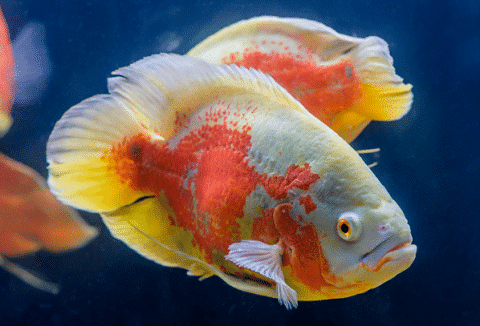
Here are a few examples of fish you definitely want to keep out of an Ember Tetra tank:
- Goldfish
- Koi
- Cichlids
- Jack Dempseys
- Oscars
- Angelfish
- Tiger Barb
- Clown Loaches
- Any type of carnivorous fish
What Do They Eat?
It’s not hard to find foods that Ember Tetras will gobble up. The hardest part of feeding this fish is making sure the food is small enough for these tiny creatures to consume.
With that in mind, you need to break up the food into small pieces. This will help your Ember Tetras eat the food more easily, which prevents other fish from stealing it.
Some options include:
- Micropellets
- Crushed up flakes
- Frozen foods
And don’t get upset if you catch your fish nibbling on a tank plant. They are just enjoying a little snack and won’t consume enough of the plant to harm it. A good staple food to consider is Xtreme Aquatic Foods Nano. It’s specially designed for small freshwater fish.

Xtreme Aquatics Nano formula is specially designed for smaller fish and contained a well balance mix of raw ingredients. It is a great staple food for your nano fish.
Give Them Live Foods
Wild Ember Tetras live on a diet of plants and very small prey, such as worms, invertebrates, and zooplankton.
Keeping this natural diet in mind, it would be great if you could incorporate some live foods into your Ember Tetras’ meals.
Those foods will add some variety to their diet, which ensures all of their nutritional needs are met.
Furthermore, they will also help prevent digestive issues that is caused by consuming too much processed food.
Here are some live foods you can give your Ember Tetra:
- Daphnia
- Tubifex worms
- Baby brine shrimp
- Blood worms
- Insect larvae
- Grindal worms
- Microworms
You can also find these foods in frozen food form if you shop around locally.
How Much and How Often to Feed Them
You should feed your Ember Tetras about 2-4 times each day. At every meal, carefully avoid overfeeding.
How can you tell if you are feeding the right foods in the right amounts? It’s not hard to find out.
All you have to do is observe your fish. Are they brightly colored? Are they active? Do they do be at ease?
If you can answer yes to those questions, your Ember Tetras’ diet is meeting their needs. But if their color begins to fade or they aren’t acting quite right, their diet should be tweaked.
Setting Up Your Tank
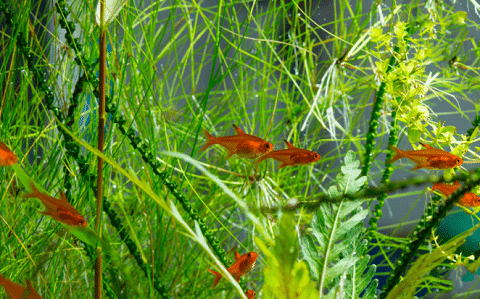
When creating the ideal environment for your fish, you need to keep their natural habitat in mind. Your goal is to get as close to this habitat as possible.
But what exactly does that look like? That’s what we are going to cover in this section. Read on to learn more.
Tank Size
Before we talk about the tank’s environment, we need to discuss the tank’s size. It’s important to choose the right size because Ember Tetras require space for swimming around.
The right size depends on how big the group is. If you have 5-8 fish, the tank should be at least 10 gallons.
For every fish beyond the number 8, increase the tank size by one gallon. Once you hit the 20-25 fish range, you will need a 20-25 gallon tank.
Here’s a quick tip. Maximize swimming space by getting a long tank, rather than a tall one.
Tank Setup
After you choose the right size you need to set up the tank. The tank should include plants, substrate, and decor. Read on to learn more.
Plants
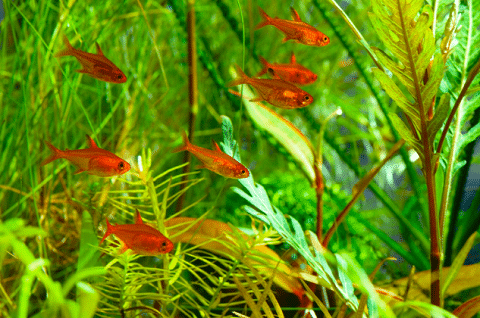
Ember Tetras need plants. The total amount depends on how large the tank is and how many fish you have.
You certainly don’t want to crowd your fish. Instead, give them just enough plants to help them feel secure.
This will prevent stress. And when your fish are stress-free, they will stay healthy and beautiful.
Furthermore, when the tank has the right amount of plants, your Ember Tetra will have a blast swimming through them. Your fish can also use them as resting spots.
As an added bonus, the plants also house bacteria that your little fish can eat, adding extra nutrition to their diet.
Some great plants to use are:
- Java Moss
- Hornwort
- Anacharis
- Crypts
- Bladderworts
- Najas Grass
- Peacock moss
- Duckweed
Floating plants work really well with these fish too. They provide another place for them to hide.
Substrate
You can use enriched active soil or mud for substrate. Whichever one you choose, it’s best to go with a dark color. This dark tone will make your gorgeous Ember Tetras really stand out!
Decor
The tank’s finishing touches should include rocks and wood. Ember tetras are great fish to use in planted aquascapes like Iwagumi and Dutch aquascapes. If you have serious interest in those styles of planted tanks, check out the links.
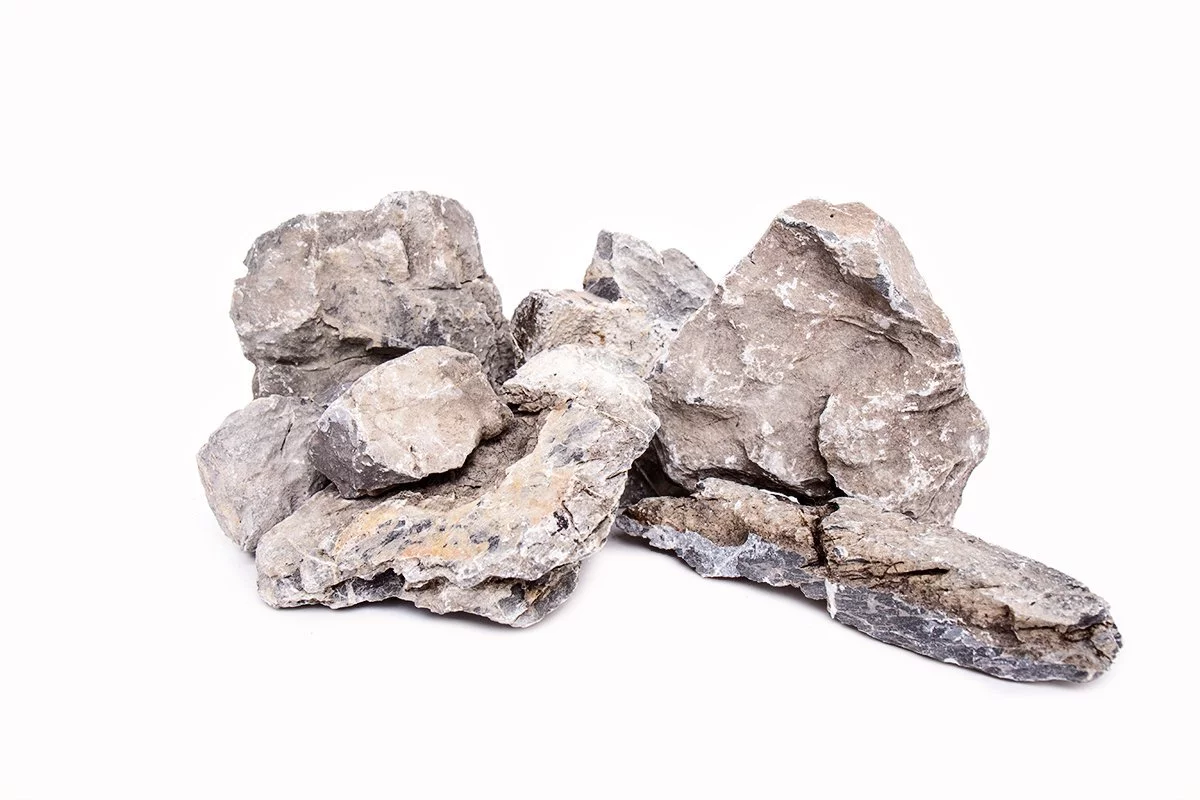
A go to classic. Highly recommended for Iwagumi aquascapes
Water Quality
Okay, now you know what to put in the tank. Great! Next, you need to learn how to maintain ideal water conditions.
Let’s get started.
Filtration
Wild Ember Tetras live in slow-moving waters, so it’s necessary to replicate this in your aquarium.
That is done by installing a sponge filter. The filter will keep the water clean while also generating the appropriate water flow. If you need better filtration because you are using a lot of plants, you can consider putting a sponge on the intake and lowering the flow.
Water Parameters
These tiny little freshwater fish can’t handle change very well. That’s why consistency is key when caring for Ember Tetras. Avoid large fluctuations by keeping a close eye on the tank’s water temperature and pH.
Here are the water parameters to aim for:
- Water Temperature: 72-80 degrees Fahrenheit
- pH: 5.5 – 6.7
- KH: 4 – 8
As you can see, Ember Tetras prefer acidic water. You reduces pH by adding driftwood or Indian almond leaves to the tank.
Aquarium Maintenance
Although Ember Tetras are very easy to care for, they are sensitive and require regular tank maintenance. If you fall behind, they might end up with health problems.
Test Tank Conditions
It’s a good idea to get a test kit and test the water about 1-2 times per week. Taking this step will help you maintain ideal water conditions, allowing your Ember Tetras to thrive.
Breeding
Breeding Ember Tetras is fairly easy. In fact, some of your fish might breed on their own, without any work on your part.
However, the parents and other fish are likely to eat the fry. That’s why it’s best to work through a process that involves your oversight. Let’s talk about that right now. If you prefer a video, you can check out the one below by MaFishGuy Aquarium Information.
Sexing
First, you will need to select a male and female to place in a separate breeding tank. Although sexing Ember Tetras is a bit challenging for newbies, don’t let that intimidate you.
Just look at the shape and color of the fish. Females are rounder and males are brighter.
Getting Your Fish Ready to Breed
Ember Tetras are ready to breed when they are about 4-6 months old. After you’ve picked out a male and female, place them in a separate breeding tank, away from the other fish.
The breeding tank’s water conditions should be pretty close to the regular tank’s conditions, with the temperature and pH being on the higher end of the optimal range.
Get your fish in tip-top shape for breeding by feeding larval brine shrimp every day for two weeks.
The Breeding Process
When the fish are ready to breed, the male will start chasing and nipping the female. Once the female is carrying eggs, her abdomen will grow larger.
This species doesn’t lay its eggs in any particular location. That means your Ember Tetra’s eggs will sink to the bottom of the tank.
If you put mesh fabric or an egg crate in the tank, these barriers will keep the parents from getting to the eggs.
Caring for Fry
After the eggs have been laid, the parents might try to eat them. Prevent this by removing them from the tank immediately after the female lays the eggs.
The eggs will hatch in approximately 2-3 days, giving you about 100 fry.
After they hatch, start feeding infusoria. When they are a week old, give them baby brine shrimp and small worms. Eventually, you can start feeding crushed fish flakes.
Health and Disease
Thankfully, Ember Tetras don’t typically have a lot of health problems. While hardy, that doesn’t mean these fish are invincible.
If you want to keep them healthy they need high-quality food, the right water conditions, and social interactions with other tetras.
Evaluating Your Ember Tetras’ Health
How can you tell if your Ember Tetras are healthy? Just take a look at their appearance. If your fish are brightly colored, they are in great shape!
On the other hand, a pale fish that acts abnormally isn’t doing too well. This sick fish is quite vulnerable to attacks and should be removed from the tank.
Common Their Health Issues
Here are the health issues and fish diseases that Ember Tetras are most likely to have:
- White Spot Disease – This appears as white spots and is caused by stress or poor care. Prevent this disease by maintaining ideal water conditions. If the disease occurs, there are products to treat it.
- Fungal and Bacterial Infections – These infections is fatal. Be sure to address the issue immediately! Signs include rotting fins and cloudy masses.
- Impaction – Too much dry food can block the digestive system. Prevent impaction by including wet food in the diet or soaking dry foods before feeding.
Where to Buy
Many fish stores sell Ember Tetras, making them easy to find. You will pay about $2 per fish. Some online fish stores will also sell them. It may make sense to purchase them online if you cannot find a quality local fish store in your area.
Frequently Asked Questions
How many can I put in a 10-gallon tank?
No more than 5-8. Anything above that number may overcrowd the tank. If you want more than 8 fish, you will need a larger tank.
How many should be in a school?
Your group of Ember Tetras should consist of at least 10-15 fish. If you want a larger group, be sure to choose a tank that’s big enough to fit them all.
Do they like currents?
Wild Ember Tetras live in slow-moving water. Keep this in mind when choosing a filter.
How long do Neon and this type live?
The average lifespan is about 2-4 years, provided the fish are properly cared for. This requires feeding the right diet, maintaining optimal tank conditions, and allowing them to live in a group.
Will they nip a betta?
Sometimes an Ember Tetra might try to nip a betta or any other fish with long fins. However, they aren’t known to normally exhibit this behavior.
Is the Ember Tetra The Perfect Nano Fish for Planted Tanks Right for You?
Before you add a ember tetra the perfect nano fish for planted tanks to your tank, it’s worth asking whether this species actually fits your setup and your goals. Here’s a quick breakdown to help you decide.
This species is a good fit if:
- You have a large enough tank to manage territories. Cramped conditions amplify aggression.
- You’re comfortable managing aggression through stocking ratios, line of sight breaks, and tank layout.
- You can commit to regular water changes. These fish produce more waste than many smaller species.
- You’re not planning a peaceful community tank. Ember Tetra The Perfect Nano Fish for Planted Tankss need tank mates that can hold their own.
- You enjoy watching active, interactive fish. Cichlids have personality that smaller species simply don’t match.
- You have backup plans. Sometimes a particular fish just doesn’t work out, and you need a way to rehome it.
- You’re feeding a varied, high-quality diet. Color and health depend on nutrition.
If most of those points line up with your setup, the ember tetra the perfect nano fish for planted tanks is worth serious consideration. If several don’t, it’s better to choose a species that matches your tank now rather than trying to make it work.
Avoid If:
- You keep a bare or brightly lit tank – ember tetras need dark substrate and floating plants to show full orange color; bare setups produce dull, pale fish
- You keep a group of 5 or fewer – small groups produce anxious fish that hover rather than school
- You want immediately impactful color – ember tetras build full coloration over weeks in the right setup conditions
What It Is Actually Like Living With Ember Tetra
A school of 10+ ember tetras in a densely planted tank creates one of the most visually satisfying displays in the hobby. They move through plant stems like little orange sparks drifting through a forest.
They occupy the middle water column and rarely venture to the surface or bottom. This makes them perfect tank mates for surface dwellers and bottom feeders.
Their color changes throughout the day. First thing in the morning they are pale, and by afternoon under full lighting they glow their brightest orange-red.
They are peaceful to the point of being easy targets. Fast or aggressive tank mates will stress them out and fade their color. Keep the tank calm.
How the Ember Tetra The Perfect Nano Fish for Planted Tanks Compares to Similar Species
Choosing between similar species is tricky. Here’s how the ember tetra the perfect nano fish for planted tanks stacks up against some common alternatives.
Ember Tetra The Perfect Nano Fish for Planted Tanks vs. Glowlight Tetra: Both are warm-toned community tetras, but they fill slightly different roles. The ember tetra the perfect nano fish for planted tanks is smaller and can work in nano tanks as small as 10 gallons, while the glowlight tetra is a bit larger and does best in 15+ gallon setups. Color-wise, they complement each other well and is kept together in a mid-sized planted tank. Check out our Glowlight Tetra care guide for a detailed breakdown.
Ember Tetra The Perfect Nano Fish for Planted Tanks vs. Flame Tetra: Both species occupy a similar niche in community tanks, but they differ in temperament, coloration, and ideal water conditions. The ember tetra the perfect nano fish for planted tanks is a solid choice for hobbyists who want reliable schooling behavior and easy care, while the flame tetra brings a slightly different look and energy to the tank. In my experience, the deciding factor usually comes down to which aesthetic you prefer and what other species are already in the tank. Check out our Flame Tetra care guide for a detailed breakdown.
Closing Thoughts
To sum it all up, Ember Tetras are great fish to keep. They are easy to care for and get along well with many different types of fish. Plus, their stunning colors will make your aquarium look amazing!
As long as you continue providing great care, your Ember Tetras will light up the tank. And that’s why so many aquarium hobbyists love this species.
Recommended Video
Check out our tetra tier list video where we rank the most popular tetras in the hobby, including the ember tetra:
- About the Author
- Latest Posts

I’m Mark Valderrama, founder of Aquarium Store Depot and a fishkeeper with over 25 years of hands-on experience. I started in the hobby at age 11, worked at local fish stores, and have kept freshwater tanks, ponds, and reef tanks ever since. I’ve been featured in two best-selling aquarium books on Amazon and built this site to share practical, experience-based fish keeping knowledge.
Leave a Reply