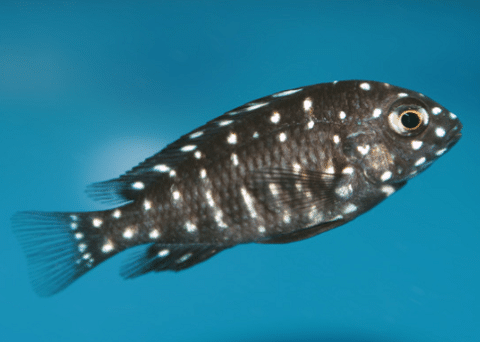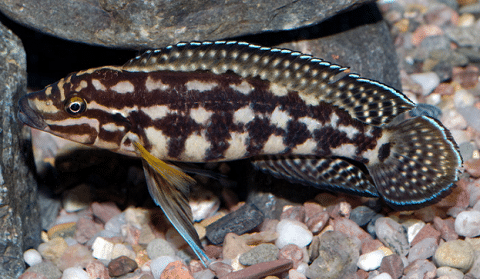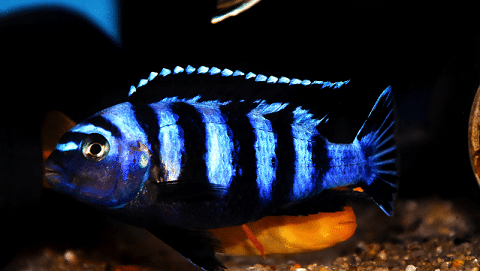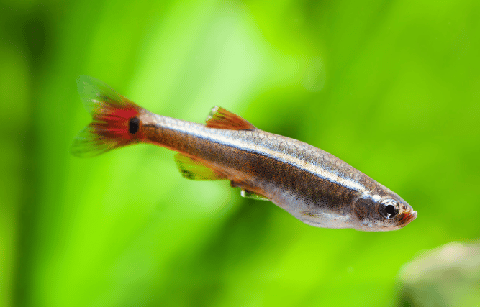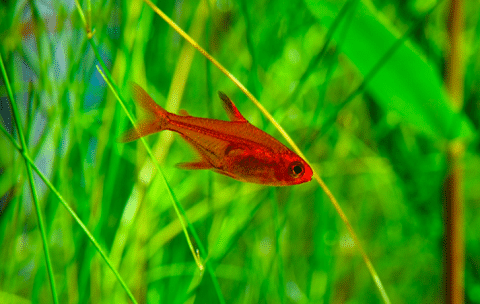
Tropical fish were how I got into this hobby, and after 25+ years and a lot of tanks, I still think a freshwater tropical setup is one of the most rewarding things you can do in this hobby. The variety alone is wild. schooling tetras, large cichlids, oddballs, planted tanks, biotopes. There’s genuinely something for every skill level and every taste.
This guide covers 30 of the most popular tropical species you’ll come across, with honest notes on which ones are truly beginner-friendly and which ones get sold as “easy” but have requirements that can trip you up if you’re not prepared.
Expert Take | Mark Valderrama, AquariumStoreDepot
After 25+ years in this hobby, I want to be direct: the most common mistake I see is beginners buying fish based on looks alone, without checking whether their tank is actually set up for that species. This guide is a decision-making tool, not just a list. Use the difficulty tiers and comparison table below to figure out which group fits your tank, your experience level, and your goals before you go to the fish store.
Key Takeaways
- Tropical fish need an electric heater in their tank to stay warm.
- There’s a tropical fish species for you, no matter how big your tank and your budget are.
- Many freshwater tropical fish can live together, but it’s important to research each fish’s temperament and diet to avoid any accidents.
- Fish aren’t the only amazing creatures that live in fish tanks. Amphibians and invertebrates make great pets too!
What Are Tropical Freshwater Fish?
Fish are the most diverse group of vertebrate organisms on the planet (by a long way!), and the tropics have the most variety of all. Freshwater tropical fish are simply the species that come from freshwater bodies like rivers and lakes near the Earth’s equator.
These areas stay warm throughout the year, and abundant rain creates plenty of habitats for these fish to thrive. Freshwater tropical fish often have bright colors and exotic features, and many of these fish do great in home aquariums, provided we can keep the water in their tank warm like their wild home.
There are just so many different tropical fish species that we need a way to split them up into different aquarium fish categories. Let’s take a quick look at some of these groups before we get into the different species.
Schoolers and Shoalers
Many tropical fish species are highly social, and they live in groups in the wild. These fish either hang out in schools where each individual swims in the same direction and move together, or in shoals, where they stay near each other but do their own thing until it’s time to move on.
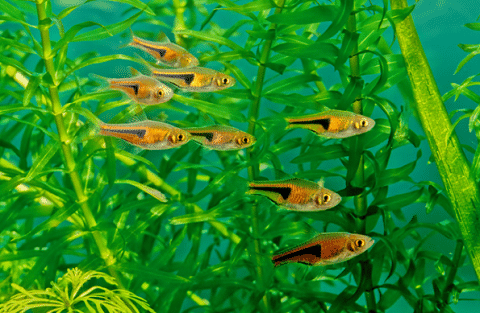
Schooling and shoaling fish make great aquarium fish, but it’s important to keep enough of them to form their own little school and feel safe together.
Centerpiece Specimens
Some fish are perfectly happy to live on their own, and these species can make great freshwater aquarium fish too. These fish might be the biggest, coolest fish in a tropical community tank, or have the aquarium all to themself as a ‘wet pet’.
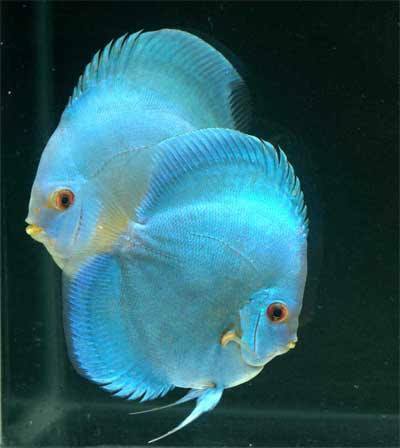
Centerpiece fish are often more time-consuming fish, but they are also the most rewarding fish you can keep!
Bottom Dwellers
Bottom dwellers might sound like an insult to some, but there’s a whole world of amazing freshwater aquarium fish species that spend their lives on the bottom of the tank!
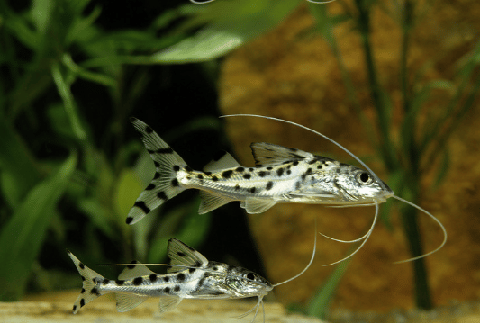
These fish often benefit aquariums by cleaning up scraps and wasted food that the other species miss, and they tend to have really weird and interesting body shapes. However, bottom-dwellers usually favor camouflage over bright colors so that they can blend in with their environments.
Peaceful vs. Aggressive Types
Different tropical fish species have different ways of interacting with the other fish. Some fish are highly territorial and do not allow other fish to approach their turf, while others are peaceful and get along great with friends and neighbors.
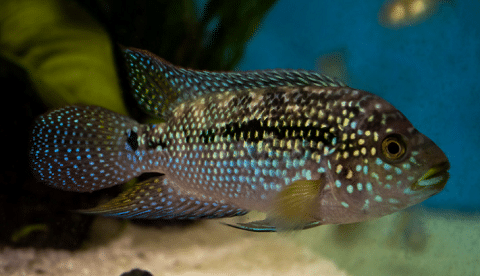
Sometimes aggressive fish can live with other aggressive fish because they are tough enough to defend themselves, but peaceful community fish do not mix well with aggressive or territorial fish. Placing them together will put your prized pets at risk of getting bullied, eaten, or killed!
Tropical Freshwater Fish Species – 30 Amazing Types!
Are you ready to learn about some awesome freshwater tropical fish? There are way too many species to cover in this article alone, but let’s start out by getting to know the 30 best types that you can keep. I also included a video from our YouTube Channel to help visualize. Our blog post goes into more details so please look at both. If you like our content, be sure to subscribe!
I’ve included the following important facts about each group to help you decide which fish are best for you:
- Fish Family
- Fish Type
- Temperament
- Care Level
- Size Range
- Special Features
Here we go!
1. Arowanas
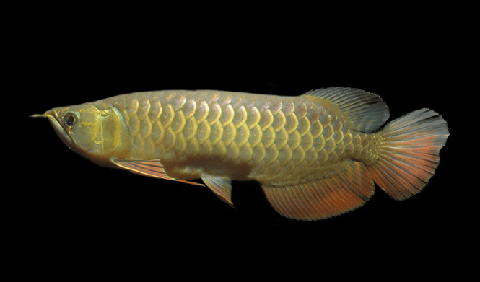
- Fish Family: Osteoglossidae
- Fish Type: Centerpiece fish
- Temperament: Aggressive
- Care Level: Expert
- Size Range: 2 – 3 feet
- Special Features: Huge size and dragon-like scales
We’re kicking off this list with a true monster fish, just to show you what is possible in the tropical fish-keeping hobby. Arowanas are time-consuming and expensive aquarium fish that need huge aquariums, but boy are they beautiful!
These aggressive fish have huge mouths, and that means any fish that is small enough to eat will probably end up as lunch. Nevertheless, these unique tropical fish can make wonderful pets for experienced fishkeepers.
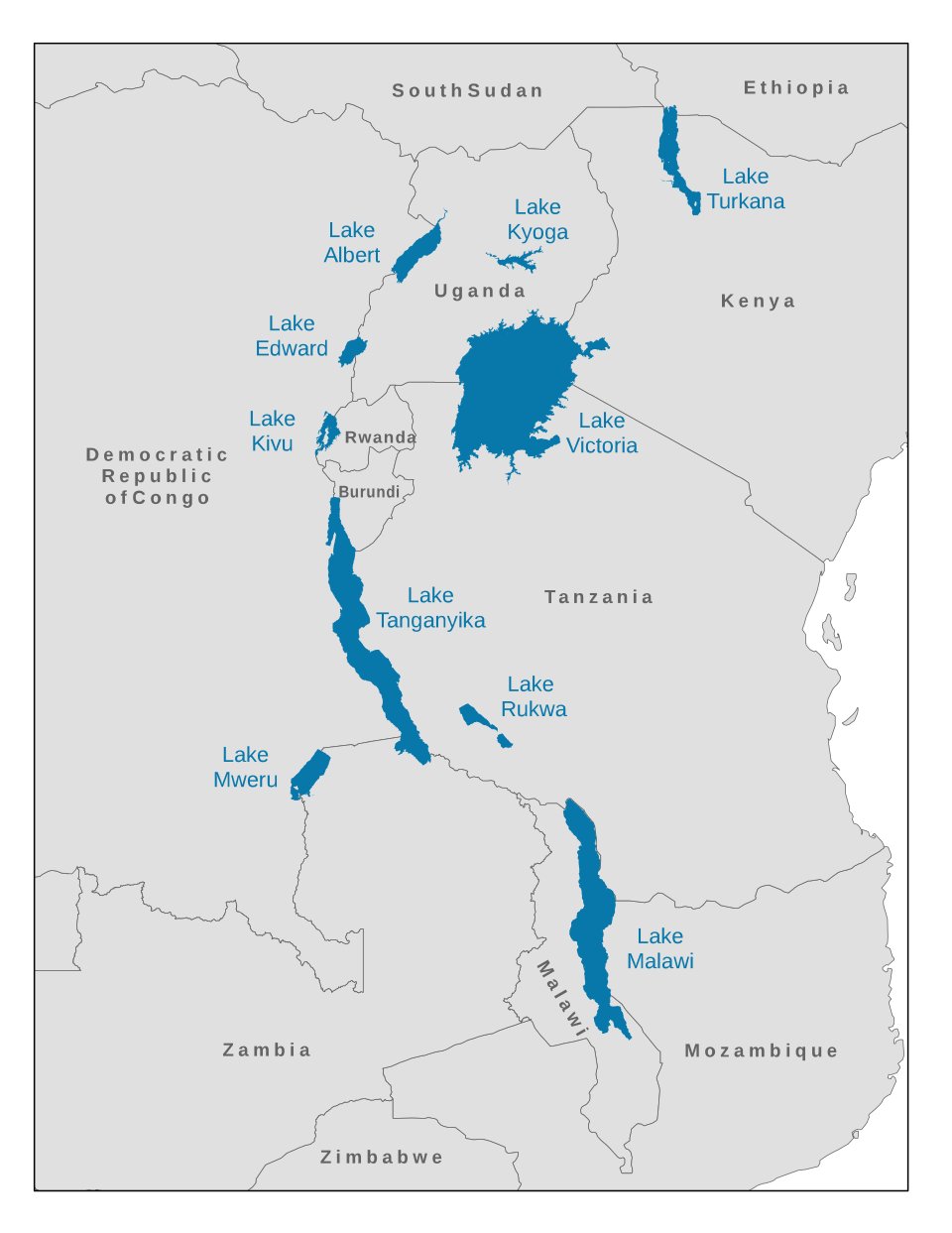
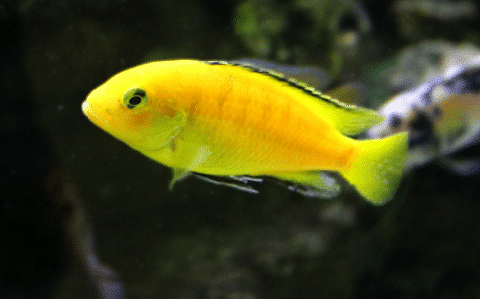
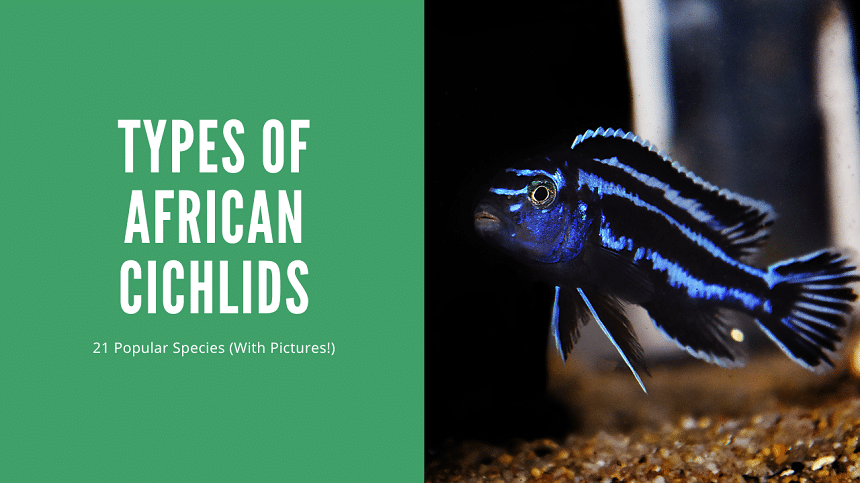
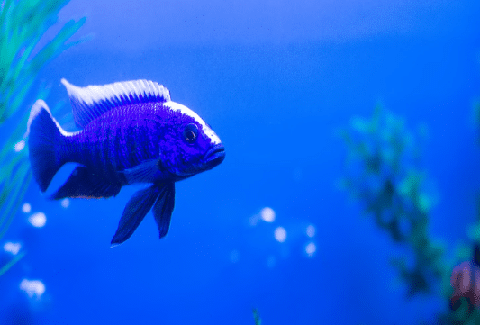
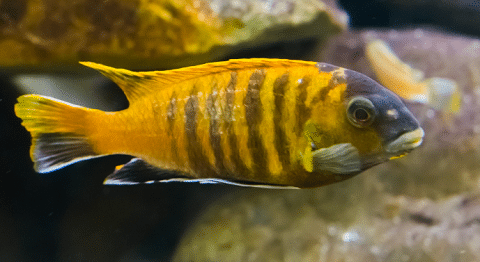
2. African Cichlids
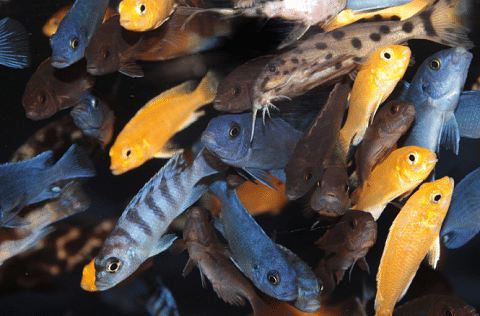
- Fish Family: Cichlidae
- Fish Type: Centerpiece fish
- Temperament: Semi-aggressive or aggressive
- Care Level: Intermediate
- Size Range: 1.5 – 16 inches
- Special Features: Amazing colors and fascinating breeding behaviors
African Cichlids fall into an in-between category. They make an awesome community species, but they certainly are not peaceful community fish!
These fish have some of the most vibrant colors in the hobby, and their high activity levels make them the first choice for aquarists who want a busy tropical fish tank.
African cichlids tend to be highly territorial, and they will fight and even kill each other if you keep the wrong species, in the wrong numbers, or in the wrong tank setup. They also need hard, high-pH water to thrive, so they aren’t the best choice for beginners.
3. Bettas

Use Coupon Code ASDFISH at Checkout
Betta Fish are one of the most beautiful varieties of freshwater fish available in the hobby. Easy to care for with plenty of varieties!
- Fish Family: Osphronemidae
- Fish Type: Centerpiece fish, Labyrinth fish
- Temperament: Aggressive to their own kind and fish that look like them
- Care Level: Easy
- Size Range: 2 – 2.5 inches
- Special Features: Great beginner fish for small aquariums
There are many wild species of betta fish, but the Betta splendens, or the Siamese fighting fish is the most popular. These awesome little tropical fish are perfect for small aquariums, and you can find them in pretty much any pet store.
The male betta fish is usually more colorful, but females make great pets too. The most important rule is to keep just one betta fish in a tank, these fish love to fight!
4. Barbs
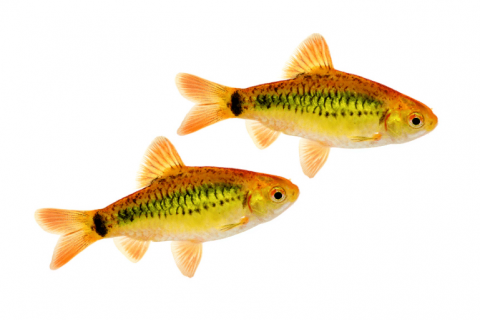
- Fish Family: Cyprinidae
- Fish Type: Schooling fish
- Temperament: Peaceful to semi-aggressive
- Care Level: Easy to intermediate
- Size Range: 2 – 14 inches
- Special Features: Beautiful fish with glossy scales and a range of colors and patterns
Aquarium barbs are a popular group of tropical aquarium fish for many reasons. Most are peaceful schooling or shoaling fish that are ideal beginner fish and very affordable. Some, like the tiger barb, can be pretty mean though, and these aren’t always a good choice for community tanks.
Some of the best species are the cherry barbs, the golden barbs, and the Odessa barbs, but if you have enough room, the tinfoil barb is great too!
5. Bichirs
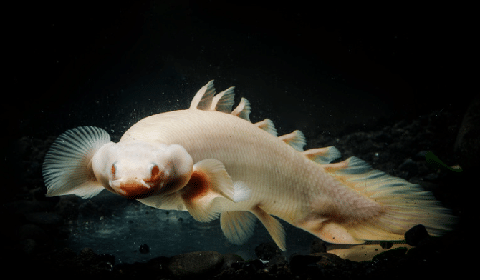
- Fish Family: Polypteridae
- Fish Type: Bottom dweller/ centerpiece fish
- Temperament: Semi-aggressive
- Care Level: Intermediate
- Size Range: up to 20 inches
- Special Features: Dinosaur-like appearance and large size
Bichirs are strange, prehistoric-looking tropical fish from Africa. There are several species, although the Senegal bichir is the most popular in the aquarium trade. They will eat any small fish that they can swallow, so keep them with other larger tank mates.
Bichirs can grow huge, and live for over 40 years with good care. Keeping them healthy in the long term is going to require a huge aquarium and serious commitment. Still, these fish are definitely worth considering if you want a truly unique tropical fish pet!
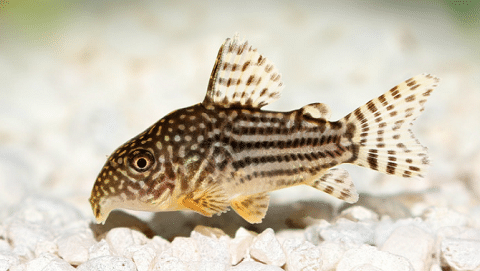
6. Cory Catfish
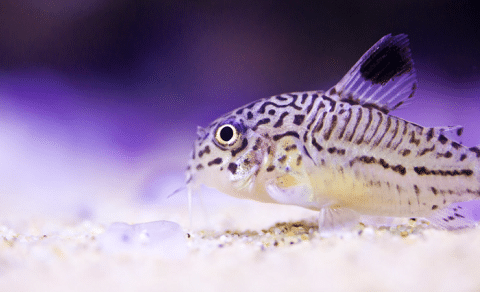
- Fish Family: Callichthyidae
- Fish Type: Bottom dwellers
- Temperament: Peaceful
- Care Level: Easy
- Size Range: 1 – 4 inches
- Special Features: Peaceful community fish with fun schooling behavior
Originally from the tropical waters of South America, the corydoras catfish is now a popular freshwater aquarium fish all over the world. These fish are incredibly peaceful, so they get along great with pretty much every other tropical fish that is not big enough to eat them!
There are loads of different species, including the tiny pygmy cory and the elegant emerald cory catfish, and all are social schooling fish. That means you’ll need a group of at least 6 of these calm fish to see them at their best.
7. Danios
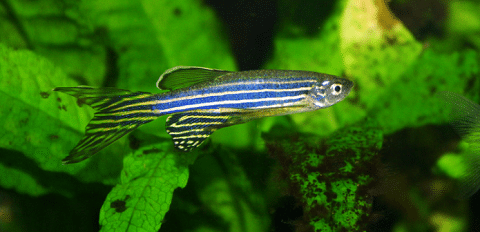
- Fish Family: Cyprinidae
- Fish Type: Schooling fish
- Temperament: Peaceful
- Care Level: Easy
- Size Range: 0.8 – 6 inches
- Special Features: Peaceful, hardy, and energetic fish for community tanks
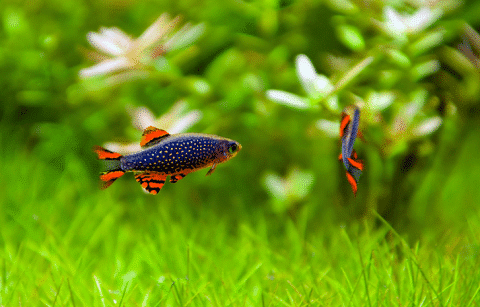
Danios are energetic shoaling fish from the same family as barbs and goldfish. There are many species, ranging from the delicate celestial pearl danio to the high-speed zebrafish.
Most danios are tiny fish, but they can be very active and often need plenty of swimming space.
8. Discus
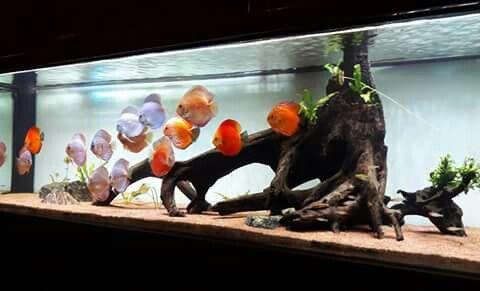
- Fish Family: Cichlidae
- Fish Type: Centerpiece fish
- Temperament: Peaceful
- Care Level: Moderate
- Size Range: 4 – 8 inches
- Special Features: Unique disk shape, various breeds with amazing colors
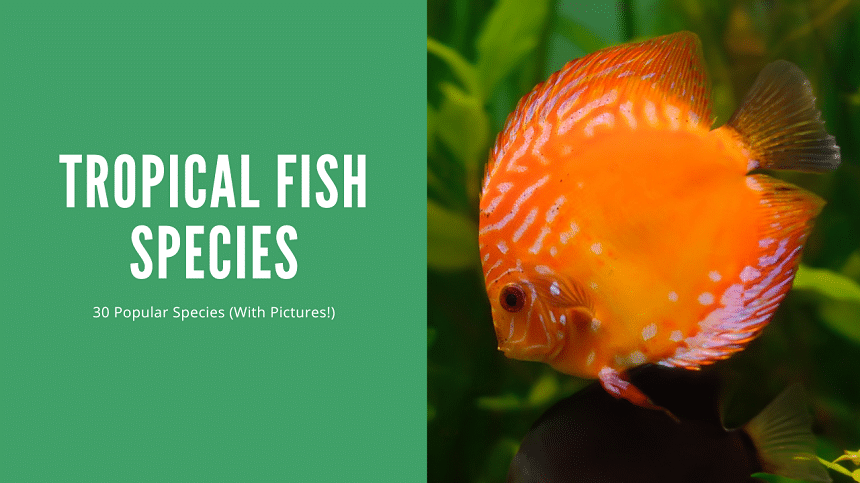
Few fish have the amazing variety of colors and patterns of the discus fish. These peaceful cichlids are also known as the kings of all freshwater fish in the freshwater hobby. These shy fish need special care, are delicate, and are not recommended for beginners.
9. Dwarf Cichlids
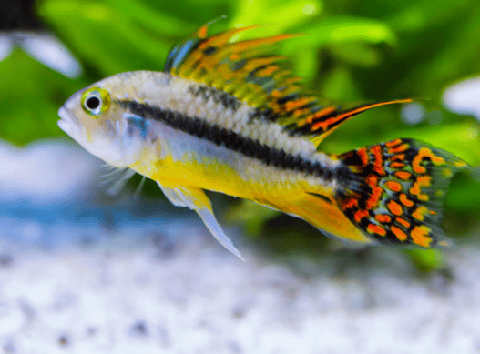
- Fish Family: Cichlidae
- Fish Type: Bottom dwellers, centerpiece fish
- Temperament: Peaceful to semi-aggressive
- Care Level: Easy to intermediate
- Size Range: 2 – 4 inches
- Special Features: Smaller and more peaceful than larger African and New World cichlids
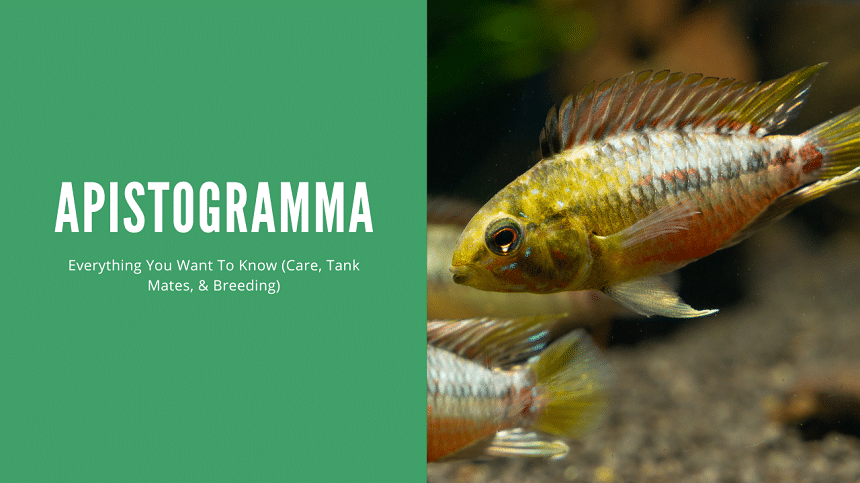
The dwarf cichlids have a number of benefits over their larger cousins. These small fish can be kept in just 30 gallons, and they tend to be more peaceful, while still having great looks and interesting behaviors.
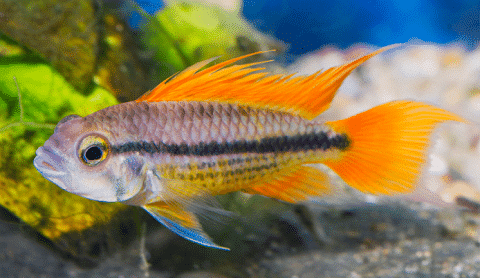
There are many great species of dwarf cichlids in the hobby, but cockatoo cichlids (Apistogramma), rams (Mikrogeophagus), and kribs (Pelvicachromis) are the big names in this group.
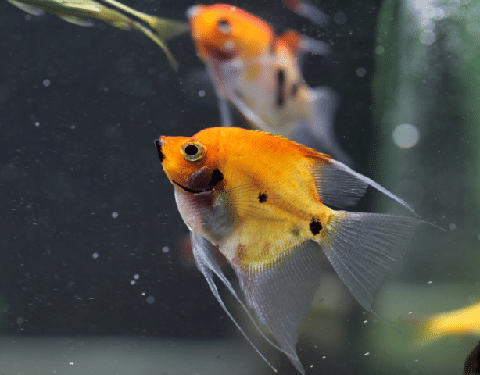
10. Freshwater Angelfish
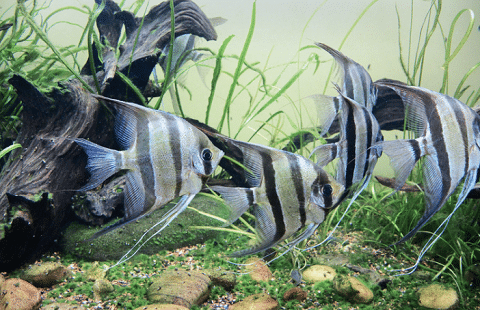
- Fish Family: Cichlidae
- Fish Type: Centerpiece fish
- Temperament: Generally peaceful
- Care Level: Easy
- Size Range: 6 inches long & 8 inches tall
- Special Features: Round, flattened body with huge triangular fins.
The freshwater angelfish is another peaceful South American cichlid that comes in a variety of breeds. The great thing about these large fish is that they thrive in community aquariums and can even live safely with smaller schooling fish like tetras and rainbow fish.
11. Freshwater Catfish
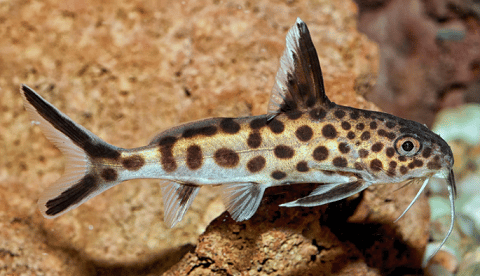
- Fish Family: Siluriformes
- Fish Type: Bottom dwellers
- Temperament: Peaceful to semi-aggressive
- Care Level: Easy to advanced
- Size Range: 3 inches to 3 feet
- Special Features: Long cat-like whiskers
Freshwater catfish are another diverse group of fascinating, and often very large tropical fish. These interesting bottom dwellers rarely have bright colors, but many species have awesome markings and patterns.
Popular aquarium species include the shoaling transparent glass catfish of Asia, the Synodontis catfish of Africa, which includes the strange upside-down catfish, and the spotted pictus catfish of South America.
Catfish are generally peaceful fish, although species with large mouths will eat other fish. Some catfish grow really huge, so always do your research before you leave the shop with a baby catfish!
12. Freshwater Gobies
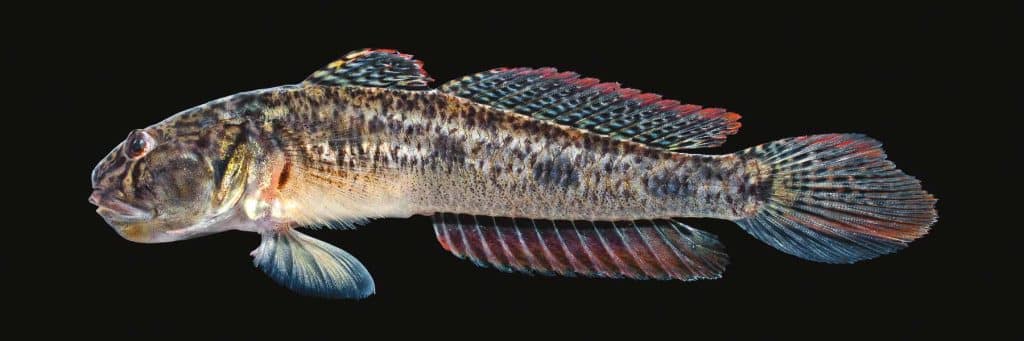
- Fish Family: Gobiidae
- Fish Type: Bottom dwellers
- Temperament: Peaceful – aggressive
- Care Level: Easy-moderate
- Size Range: 2 – 24 inches
- Special Features: Interesting oddball fish
Gobies are one of the most diverse groups of fish on the planet, and yet there are few species available in the freshwater aquarium trade.
Fortunately, these interesting fish are becoming more popular, and today you can find everything from small, brightly colored algae eaters to large, dangerous-looking creatures like the dragon goby.
Many of the popular freshwater aquarium gobies will do best in brackish conditions, so make sure the species you choose will be happy in your tank.
13. Freshwater Eels
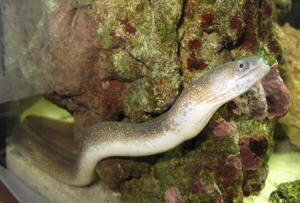
- Fish Family: Mastacembelidae etc.
- Fish Type: Bottom dwellers
- Temperament: Peaceful
- Care Level: Intermediate
- Size Range: 8 – 40 inches
- Special Features: Snake-like body and interesting markings
There are a few groups of freshwater eels in the aquarium, and many of them are not true eels at all! The most popular types are from a fascinating group of snake-like fish that include the tire-track, fire, and spiny eels.
These odd-ball fish come from Africa and Asia, and they make a fascinating centerpiece or bottom dweller fish in many tropical aquarium types.
14. Freshwater Sharks
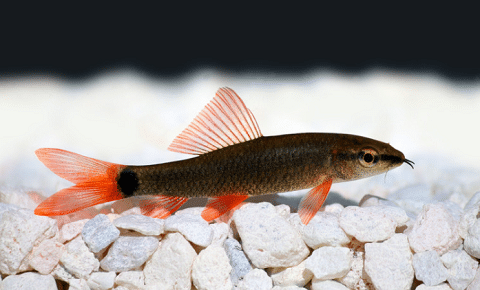
- Fish Family: Cyprinidae
- Fish Type: Bottom dwellers
- Temperament: Peaceful/semi-aggressive
- Care Level: Moderate to advanced
- Size Range: 5 – 14 inches
- Special Features: Dramatic shark-like fins and body shape
Freshwater sharks are a group of popular tropical fish that don’t exactly live up to their more iconic saltwater fish namesake. While they may have a shark-like body shape, these fish do not have the sharp teeth or leathery skin of true sharks.
The most popular freshwater sharks are rainbow sharks, bala sharks, and red-tail sharks. Some of these fish have naturally bold colors, but check out the Glofish Sharks if you want a fish that really shines!
15. Freshwater Stingrays
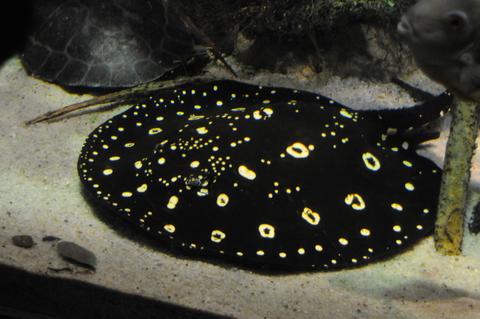
- Fish Family: Potamotrygonidae
- Fish Type: Bottom dweller
- Temperament: Peaceful but potentially dangerous
- Care Level: Advanced
- Size Range: 30 – 36 inches
- Special Features: Strange body shape and interactive personality
You might be shocked to learn that freshwater stingrays exist, and even more shocked to discover they make great pets!
However, these unusual fish are not going to fit in your standard aquarium. They are some of the most expensive aquarium fish, and their care requires high experience levels.
Stingrays require a huge floor space, but they don’t need much depth. These flat fish can be kept in indoor ponds where they become very tame and often take food from the hand. Of course, stingrays can sting, so keeping these creatures does come with some risks.
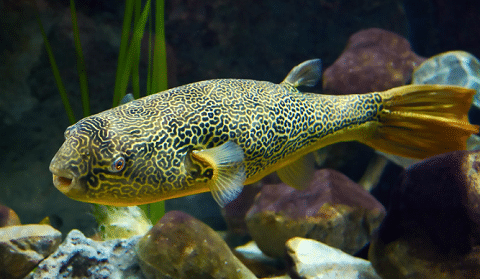
16. Freshwater Puffers
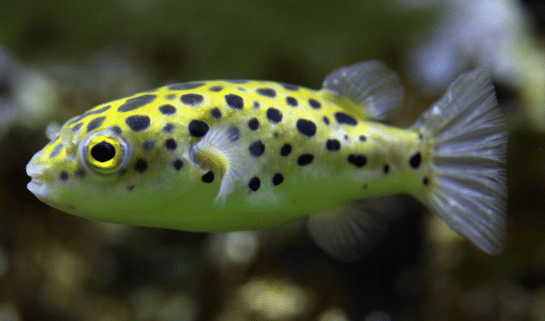
- Fish Family: Tetraodontidae
- Fish Type: Centerpiece fish
- Temperament: Semi-aggressive to aggressive
- Care Level: Intermediate to Advanced
- Size Range: 1 – 30 inches
- Special Features: Unusual looks and swimming style
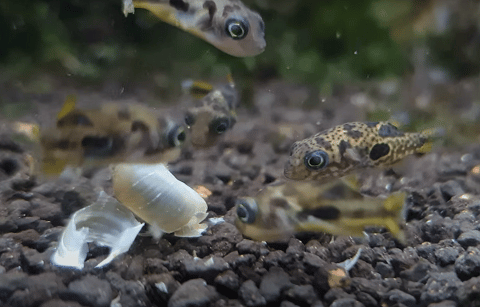
Freshwater pufferfish are another unusual group of fish that you would expect to find on a saltwater fish list. In fact, there are many freshwater species, and these adorable creatures can make wonderful pets once you understand their needs and behavior.
Freshwater puffers need hard-shelled foods to keep their sharp teeth worn down, and most species are not safe for community tanks.
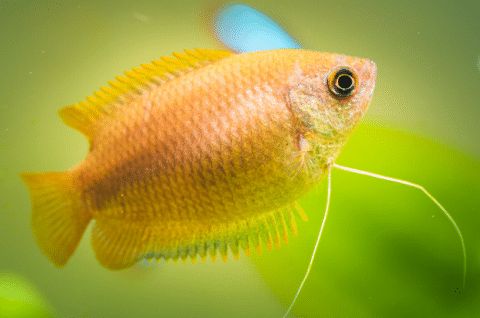
17. Gouramis
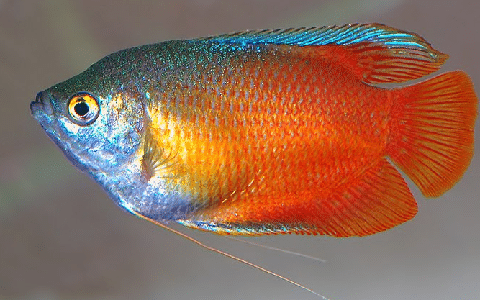
- Fish Family: Osphronemidae
- Fish Type: Centerpiece fish
- Temperament: Peaceful to semi-aggressive
- Care Level: Easy to intermediate
- Size Range: 1.5 – 28 inches
- Special Features: Beautiful colors and long feeler-like pelvic fins
Gourami fish range from the tiny sparkling gourami, perfect for nano aquariums, to the mighty giant gourami, a gentle monster that makes a wonderful pet if given the room it needs. Gouramis are part of the same family as betta fish, and they have the same interesting air-breathing abilities.
Gouramis are a great centerpiece fish for a tropical fish tank. The range of different colors, shapes, and sizes means there’s a gourami species for anyone!
18. Guppies

An undemanding fish that is a livebearer. Many varieties available
- Fish Family: Poeciliidae
- Fish Type: Shoaling fish, livebearer
- Temperament: Peaceful
- Care Level: Easy
- Size Range: 1.5 – 2.5 inches
- Special Features: Hardy beginner fish that’s easy to breed
Guppies are colorful fish, and they have been bred into many different types with various patterns and fin shapes. These peaceful fish add color and movement to virtually every level of a freshwater tank, and their affordability and hardiness make the an ideal choice for first-time fish keepers.
Guppies are the most common of the livebearers, a group of fish that give birth to live young instead of laying eggs. This means they are super easy to breed, which can be a really fun hobby.
19. Hatchetfish
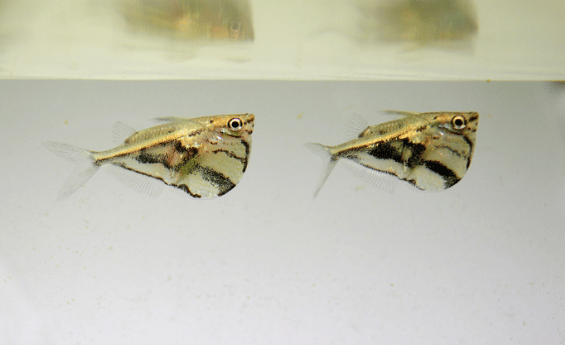
- Fish Family: Gasteropelecidae
- Fish Type: Schooling fish
- Temperament: Peaceful
- Care Level: Intermediate to advanced
- Size Range: 1.75 – 3.5 inches
- Special Features: Strange flattened body shape and surface-dwelling habits
The hatchetfish is an interesting tropical fish that spends its life up at the surface of the tank. These fish escape predators by jumping out of the water, which means they need a really secure lid to prevent them from escaping onto the floor of your fish room!
20. Killifish
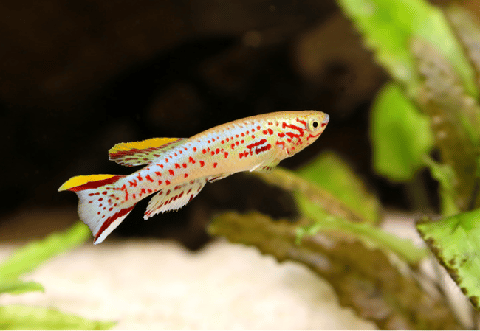
- Fish Family: Aplocheilidae, Valenciidae, Cyprinodontidae, Fundulidae, Profundulidae
- Fish Type: Shoaling fish
- Temperament: Peaceful to semi-aggressive
- Care Level: Easy to moderate
- Size Range: 1.5 – 5.5 inches
- Special Features: surface-dwelling fish with amazing colors
Killifish are colorful nano fish that make fascinating pets and can thrive in tanks as small as 5 or 10 gallons. Like the hatchet fish, killis are generally surface-dwelling fish, and they can easily escape an open-top aquarium.
21. Loaches
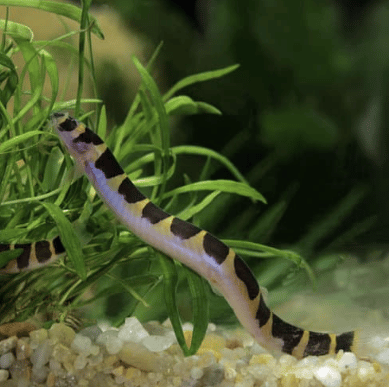
- Fish Family: Cobitoidea superfamily
- Fish Type: Bottom dweller
- Temperament: Peaceful
- Care Level: Easy to moderate
- Size Range: 1 – 12 inches
- Special Features: whisker-like barbels and a variety of colors and patterns.
Loaches range from tiny eel-like fish to large colorful schooling species. They all have adorable and fascinating behaviors, and they can make great pets with heaps of personality. Most loaches are tropical fish, but some species like the dojo loach prefer their water a little cooler.
Loaches are generally peaceful creatures that search for food on the bottom of the tank. They are social fish too, so pick up a small group to keep them feeling comfortable in your aquarium.
22. Mollies
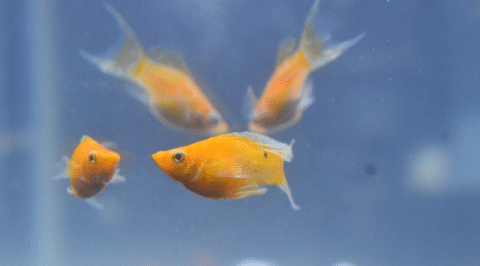
- Fish Family: Poeciliidae
- Fish Type: Shoaling fish, livebearer
- Temperament: Peaceful
- Care Level: Easy
- Size Range: 3 – 7 inches
- Special Features: Hardy fish with many color morphs and fin shapes
Mollies are excellent tropical fish for everyone from beginners to experienced fish keepers. These North and Central American livebearers are hardy fish that can live in fresh, brackish, and even saltwater aquariums!
Mollies get along well with other fish, making them ideal for community aquariums. There are three popular species in the aquarium trade, with a variety of popular breeds such as the stunning Sailfin, the elegant lyretail, and the strange balloon molly.
23. New World Cichlids
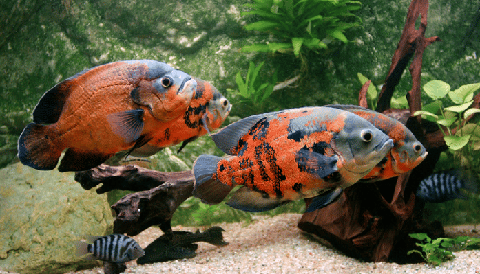
- Fish Family: Cichlidae
- Fish Type: Centerpiece fish
- Temperament: Peaceful to aggressive
- Care Level: Easy to advanced
- Size Range: 2 – 12 inches
- Special Features: Great colors and personality
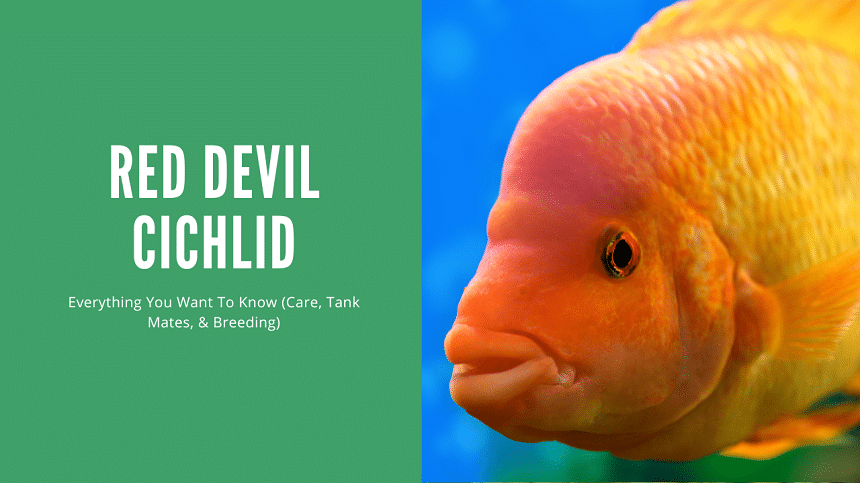
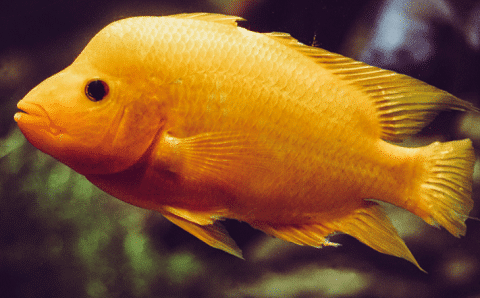
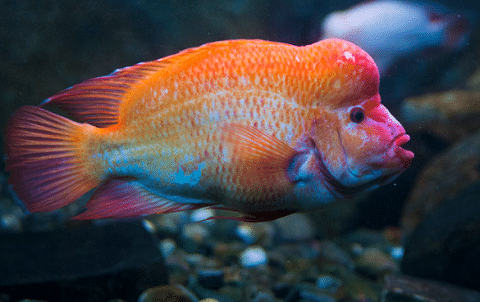
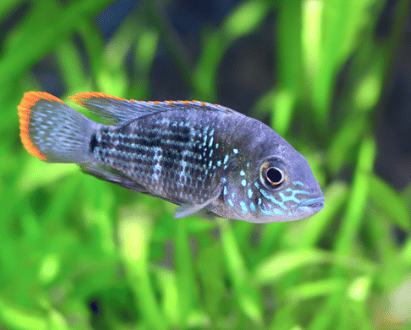
The New World Cichlids are a diverse group of tropical fish from Texas through Central and South America. These fish include the shy and colorful dwarf cichlids, the fascinating earth-eaters (Geophagus), and popular large wet pets like Oscar fish, Midas Cichlids, and Jack Dempseys.
There are so many species with different shapes, colors, and personalities that it’s impossible to describe them all here. However, one thing we can say is that there’s a great New World Cichlid for any freshwater aquarium!
24. Platies
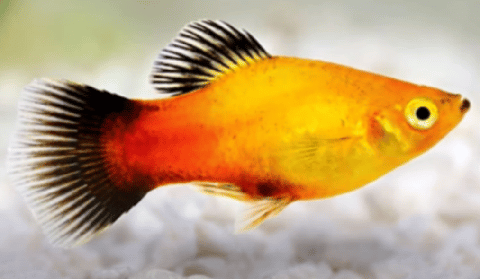
- Fish Family: Poeciliidae
- Fish Type: Shoaling fish, livebearers
- Temperament: Peaceful
- Care Level: Easy
- Size Range: 2 – 3 inches
- Special Features: Peaceful community species that is easy to breed
Platies are another wonderful live-bearing species from Mexico and Central America. At two to three inches, these fish are in between the size of the guppy and the molly, and they can be kept with both species in awesome livebearer community tanks.
There are two platy species available in the hobby, but these fish have been selectively bred to produce a huge variety of colorful and interesting breeds like the sunset, Mickey Mouse, and wagtail platies.
25. Plecostomus
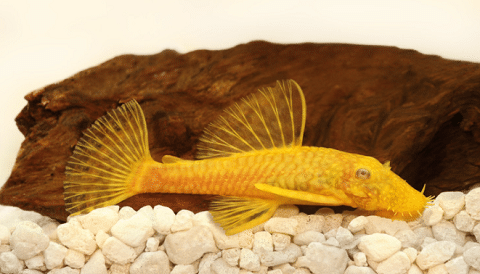
The Bristlenose Pleco is a smaller Pleco that does a great job of eating algae. Peaceful and gets along with most fish
- Fish Family: Loricariidae
- Fish Type: Bottom dweller
- Temperament: Peaceful
- Care Level: Easy to intermediate
- Size Range: 2 to 20 inches
- Special Features: Armored body and various intricate patterns
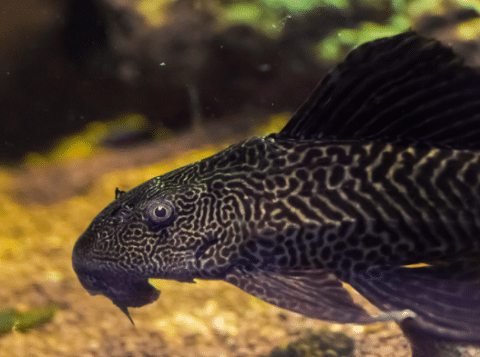
Plecostomus catfish, or just plecos for short, are a large group of South American Catfish that hang out on the bottom of lakes and rivers and graze on rocks and driftwood. Plecos are great algae eaters for large aquariums, and they will help to clean the glass and other surfaces of Your tank.
There are hundreds of different pleco species out there, ranging from small pleco species like the strange-looking bristlenose at just 4 inches to the impressive common pleco that can reach 20 inches!
26. Rainbowfish
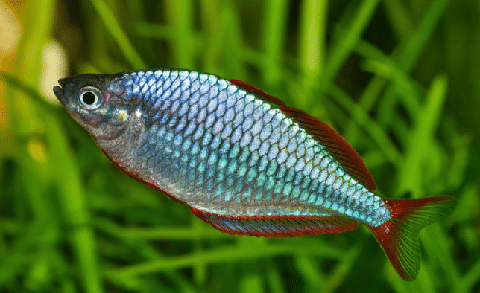
- Fish Family: Melanotaeniidae, Pseudomugilidae, etc.
- Fish Type: Schooling fish
- Temperament: Peaceful
- Care Level: Easy
- Size Range: 1.5 – 6 inches
- Special Features: Bright colors and peaceful personality
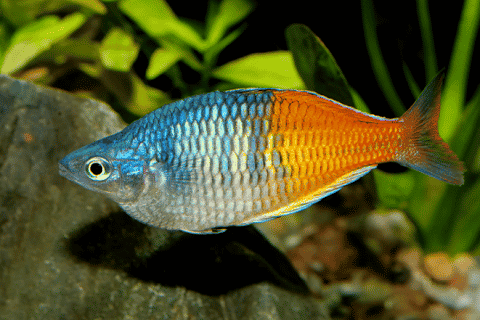
Rainbowfish are a colorful group of tropical fish from Australia and Southeast Asia. They range in size from nano species like the spotted blue-eye rainbow at just 1.5 inches, to medium-sized fish like the popular boesemani rainbowfish.
These active fish thrive in community aquariums with great water quality and suitable tank mates. The larger species will need a tank in the 55-gallon class, but nano types can be kept in a well-planted tank of just 10 gallons or more.
27. Rasboras
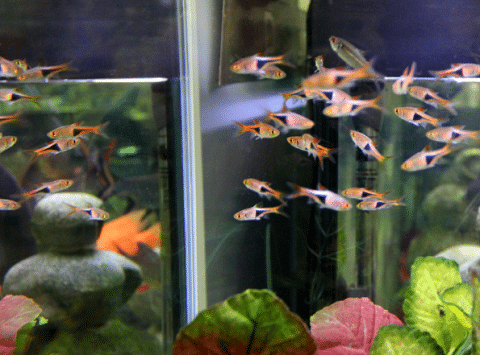
- Fish Family: Cyprinidae
- Fish Type: Schooling fish
- Temperament: Peaceful
- Care Level: Easy
- Size Range: 0.7 – 3 inches
- Special Features: Beautiful fish for nano and community aquariums
Rasboras are a group of tropical fish that includes some of the smallest and most popular species in the hobby.
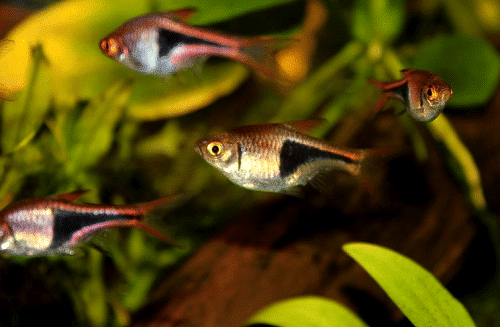
Many of these Asian species are ideal beginner fish, and the tiny Boraras species like the chili rasbora are one of the few schooling fish that can thrive in a 5-gallon aquarium.
28. Swordtails
- Fish Family: Poeciliidae
- Fish Type: Shoaling fish, livebearer
- Temperament: Peaceful
- Care Level: Easy
- Size Range: 5 – 6 inches
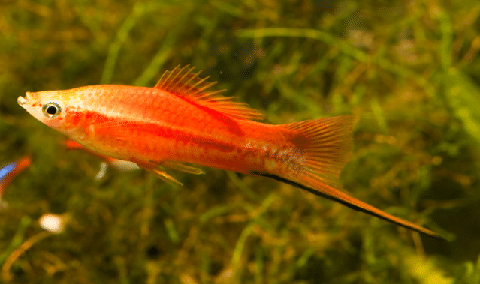
- Special Features: Bright colors and long, sword-like tail
Swordtails are one of the larger tropical livebearer species and a great community tankmate for a variety of other fish. They are active freshwater fish that add a flash of color and movement to any aquarium.
Swordtail fish come in various shades of orange, yellow, and pink, and they can have various tail shapes. These fish breed regularly in the home aquarium, so get ready to see loads of little ones if you keep males and females together.
29. Suckermouth Catfish and other Algae Eaters

A small algae-eating fish. Also great with freshwater shrimp.
- Fish Family: Various
- Fish Type: Bottom dwellers
- Temperament: Peaceful
- Care Level: Easy to intermediate
- Size Range: 2- 8 inches
- Special Features: Excellent algae control for planted tanks
The plecostomus catfish aren’t the only algae-eating fish in the aquarium world. Many other tropical fish will happily graze on your aquarium glass, hardscape, and plants, and the best part is that they make fascinating pets in their own right!
Look out for Otocinclus catfish (the best choice for nano aquariums), farlowella catfish (strange, twig-like bottom-dwellers), Siamese algae eaters, and flying foxes if you’re looking for great clean-up crew species for your tank.
30. Tetras
- Fish Family: Characidae
- Fish Type: Schooling fish
- Temperament: Peaceful
- Care Level: Easy
- Size Range: 0.75 – 3 inches
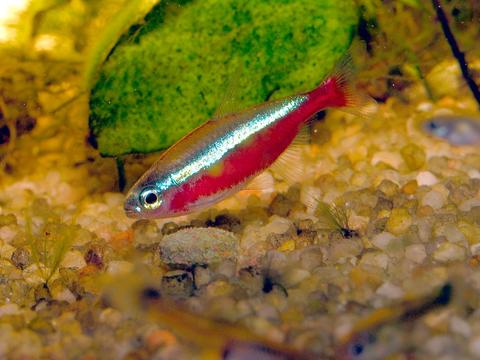
- Special Features: Dazzling colors and amazing schooling behavior
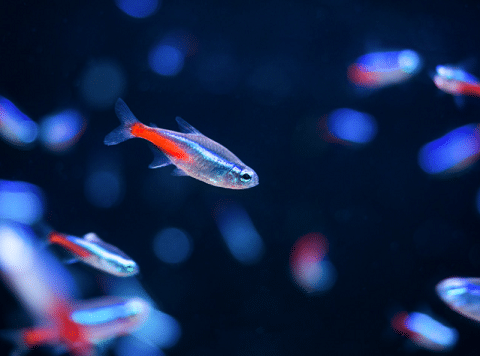
Tetras are the perfect fish for peaceful communities and planted aquascapes. There are many wonderful species available in the hobby, ranging from the world-famous neon tetra to slightly larger fish like the Congo Tetra of tropical Africa.
Tetras are schooling or shoaling fish, and they need the company of their own species to swim confidently and show their best colors. Add a school of at least 8 of these fish to your tank and enjoy these rewarding fish!
How to Choose: Difficulty Tiers for Tropical Fish
ASD Difficulty Tiers | Tropical Freshwater Fish
Tier 1 (Beginner): Guppies, mollies, platies, swordtails, danios, corydoras, bristlenose plecos, most tetras. Hardy, adaptable, forgiving of beginner mistakes. Start here.
Tier 2 (Intermediate): Gouramis, barbs, loaches, most cichlids (including angelfish and most New World cichlids), rasboras, rainbowfish, freshwater puffers. Require stable water, appropriate tank mates, and specific diet attention.
Tier 3 (Advanced): Discus, killifish (species-dependent), axolotls, arowanas, freshwater stingrays, bichirs, freshwater eels. Require large tanks, specialized diet, precise parameters, or species-only setups. Do your research before purchasing.
Tier 4 (Expert Only): Large New World cichlids (Oscar, flowerhorn, jaguar) kept as wet pets, freshwater sharks in full-size adult tanks. Years of commitment and dedicated large systems required.
Mark’s Pick | Best First Tropical Fish Setup
For a first freshwater tropical tank, I always recommend corydoras catfish paired with a small tetra school. Corydoras are bulletproof, entertaining to watch, useful for cleanup, and almost never bother other fish. A school of 6+ neon or ember tetras adds movement and color at the midwater level. Together, they teach you how a community tank actually works without punishing every beginner mistake. That combination has launched more successful fishkeepers than any other I’ve seen.
Which Group Fits Your Setup?
Use this decision table to match your goals and tank size to the right fish group before you buy.
| If you want… | Best Group | Min. Tank Size | Difficulty |
|---|---|---|---|
| Easy colorful schooling fish | Tetras, Rasboras, Danios | 10 gal (38 L) | Beginner |
| A single showpiece fish | Betta, Angelfish, Gourami | 10–55 gal (38–208 L) | Beginner–Intermediate |
| A community bottom cleaner | Corydoras, Bristlenose Pleco | 20 gal (76 L) | Beginner |
| Easy breeders you can enjoy | Guppies, Mollies, Platies | 10 gal (38 L) | Beginner |
| An aggressive species-only tank | African Cichlids, Large NW Cichlids | 55–125 gal (208–473 L) | Expert |
| The most rewarding challenge | Discus | 55+ gal (208+ L) | Advanced |
| Something genuinely unique | Bichir, Arowana, Freshwater Eel | 75–250 gal (284–946 L) | Advanced |
Other Creatures
Fish are the first animals that come to mind when we think about aquariums, but did you know that all sorts of other strange and beautiful creatures can live in a fish tank? Let’s check them out!
1. Freshwater Shrimp
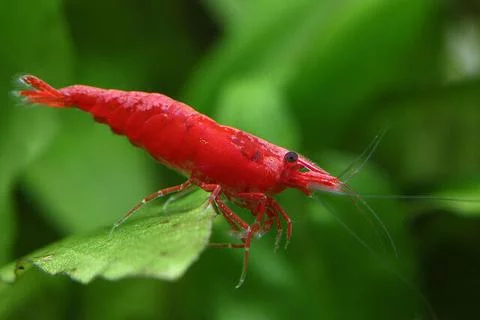
Freshwater aquarium shrimp are a great addition to small tanks and aquascapes. Peaceful, full of personality, and colorful. Many varieties are available.
- Family: Atyidae
- Type: Bottom dwellers
- Temperament: Peaceful
- Care Level: Easy to moderate
- Size Range: 1 – 2 inches
- Special Features: Wide range of breeds in various colors
Freshwater shrimp have become super popular in the aquarium hobby, and it’s easy to see why! There are many different breeds and species available, and they come in just about any color you can think of.
Freshwater shrimp are very peaceful creatures, and they are fascinating to watch as they feed and explore. Unfortunately, most fish will pick on freshwater shrimp or even swallow them whole, so it’s best to keep them in their own tank or with vegetarian species like the otocinclus catfish.
2. Aquarium Snails
- Family: Ampullariidae, Neritidae, etc.
- Type: Bottom-dwellers
- Temperament: Peaceful
- Care Level: Easy
- Size Range: 1 – 4 inches
- Special Features: Excellent clean-up crew and algae control animals
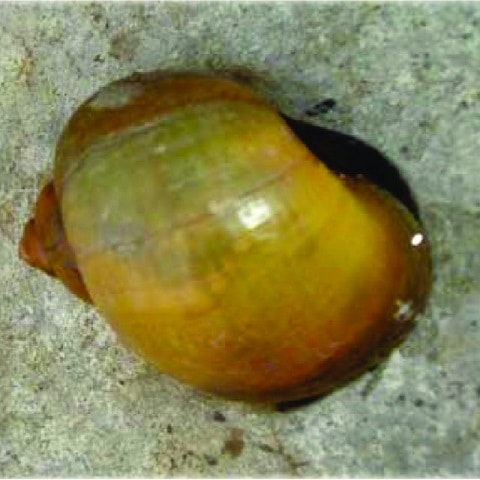
Aquarium Snails are another excellent aquarium invertebrate for tropical aquariums. These slow-moving creatures do great work in our tanks by eating algae, cleaning up waste, and eating leftover fish food. However, some species tend to multiply really fast!
There are many aquarium snails that do not breed in our fish tanks, and these are usually the best choices. Choose the neatly patterned and colored nerite snails if you want a small, algae-busting machine, or the much larger mystery snail for a cool display animal.
3. Aquarium Crabs

- Family: Ocypodidae etc.
- Type: Bottom dwellers
- Temperament: Peaceful to semi-aggressive
- Care Level: Moderate
- Size Range: 0.4 – 1 inches
- Special Features: Fascinating and unusual aquarium inhabitants
Crabs are not very common in the freshwater aquarium world, although there are some great species available if you know where to look.
Many aquarium crabs require a paludarium setup, which is a tank that incorporates both water and dry land. However, there are some fully aquatic options too like the pom-pom crab and the tiny Thai micro crabs.
4. Dwarf African Frogs
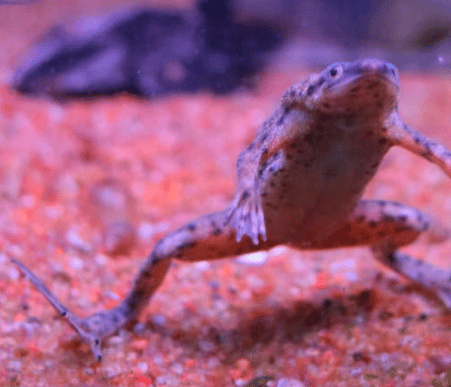
- Family: Pipidae
- Type: Bottom-dwellers/centerpiece pets
- Temperament: Peaceful
- Care Level: Moderate
- Size Range: 2 inches
- Special Features: Fully aquatic frog that can live in a small aquarium
African dwarf frogs are adorable little creatures that spend their whole lives in the water. However, they must swim to the surface to breathe air because they do not have gills like fish.
These social creatures should be kept in groups of two or more, preferably in a shallow aquarium. They are tropical creatures, so they need an aquarium heater and an aquarium filter to keep their water warm and clean.
5. Crayfish
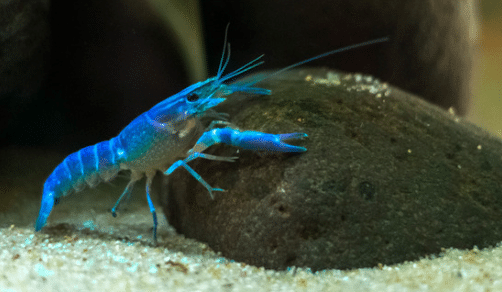
- Family: Cambaridae etc.
- Type: Bottom dweller
- Temperament: Aggressive
- Care Level: Easy
- Size Range: 1 – 6 inches
- Special Features: Bright colors and unique body shape
Freshwater crayfish are probably the most colorful freshwater aquarium invertebrates in the hobby. These cool crustaceans have powerful claws, and they will use them on unsuspecting fish, so their tank mates need to be chosen with care!
6. Axolotls
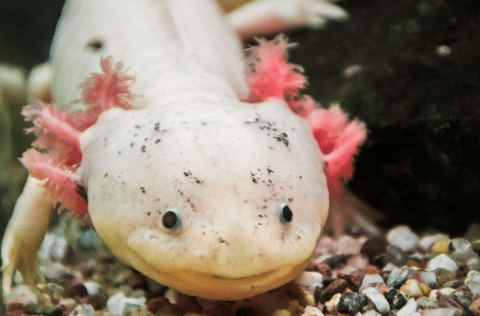
- Family: Ambystomatidae
- Type: Centerpiece pet
- Temperament: Semi-aggressive
- Care Level: Easy
- Size Range: 9 – 12 inches
- Special Features: Strange spiky gills and a smiling face
We’ve saved the strangest tropical fish tank inhabitant for last. The Axolotl is also known as the Mexican walking fish, but this creature is not a fish at all!
Axolotls are fully aquatic salamanders that do great in fish tanks. These interesting animals are not truly tropical though, so give them their own tank with stable water temperatures of 60-64°F to keep them cool and comfortable.
Common Mistakes to Avoid
- Buying a fish based on looks alone without checking adult size, tank requirements, or temperament
- Stocking a 10-gallon (38 L) tank with fish labeled “small” at the store that grow to 6 inches (15 cm)
- Mixing aggressive cichlids or fin-nipping barbs with slow-moving or long-finned species
- Buying schooling fish as singles: they stress, hide, and die faster alone than in a proper group
- Adding discus, stingrays, or arowanas as a first fish because they looked stunning at the store
- Adding fish to a brand-new uncycled tank without completing the nitrogen cycle first
FAQs
What fish are considered tropical fish?
Tropical fish are any species that come from a warm part of the world. There is no hard rule about the exact temperatures, but most species are comfortable in 74 to 80 degrees Fahrenheit.
These fish usually require an electric aquarium heater to keep their water temperature in the right range, unless you live in a tropical part of the world.
Are tropical fish hard to keep?
Tropical freshwater fish species are among the easiest type of fish to keep and the best option for beginners to the aquarium hobby. Of course, each fish species has its own care requirements, and some are much easier than others.
All species need a big enough tank, good aquarium filtration, and a balanced diet. Most of the popular small fish species will thrive on a simple flake food diet supplemented with live or frozen foods like brine shrimp.
What fish should I put in my tropical tank?
The great thing about tropical fish is the huge variety of species available. There are a couple of questions to ask yourself before choosing fish for your aquarium.
Is my aquarium big enough for this fish?
Will this fish get along with my other fish?
Can I provide the right care and food for this fish?
Do I like the look and behavior of this species?
If you can answer yes to all of those questions, you might just have the perfect species for your tank!
What is the most popular tropical fish?
Guppies, bettas, and tetras are probably the most popular tropical fish species in the world. Of course, with so many amazing fish species available, most aquarists have their own lists of favorite fish!
What is the most hardy tropical fish?
Zebra danios and Livebearers like mollies and guppies are considered especially hardy tropical fish that are great for beginners. However, all fish species deserve the best water quality, care, and diet that you can provide.
Closing Thoughts
The freshwater tropical hobby has something for everyone. Whether you want a low-maintenance nano setup with a betta or a 125-gallon (473 L) African cichlid display, there’s a path that fits your budget, your space, and your skill level. The key is matching the fish to the setup, not the other way around.
Use the difficulty tiers and decision table in this guide before you buy. Start with something forgiving, get it dialed in, and build from there. That’s the approach that leads to tanks you’re proud of years down the road.
Where to Find Quality Tropical Fish
For healthy, quality-guaranteed fish from reputable sources:
- Flip Aquatics: quality freshwater fish, shipped live with guarantee
- Dan’s Fish: wide selection of tropical community fish
📘 Want to learn more? This article is part of our complete Freshwater Fish Guide. your ultimate resource for freshwater species, care tips, tank setup, and more.