Tag: Freshwater

  • Bladder Snail Care Guide: Pest or Cleanup Crew? (The Honest Answer)

    Bladder Snail Care Guide: Pest or Cleanup Crew? (The Honest Answer)

    Bladder Snails are the pest snail most people are trying to get rid of. They hitchhike on plants, reproduce explosively, and cover every surface within weeks.

    You did not buy bladder snails. They found you. Now you need a plan.

    Table of Contents

    The Bladder Snail is the most underrated cleanup crew member in freshwater tanks. Most people either ignore snails completely or treat them as pests. I have kept snails intentionally for over 20 years and this species does something specific that most tank owners genuinely benefit from.

    Snails are livestock, not decoration. Treat them accordingly.

    Keeping Bladder Snail long-term requires consistent water quality, proper diet, and a tank that meets their specific needs. This is not a set-and-forget species.

    When kept right, the Bladder Snail is one of those fish that makes the entire hobby worth it.

    What Most Care Guides Get Wrong About Bladder Snail

    A lot of guides suggest Bladder Snail can go in practically any nano tank. That is technically true, but a cramped setup leads to stress and shorter lifespans. Even small fish benefit from a bit of extra space and stable water chemistry that comes with slightly larger volumes. Another thing guides gloss over is temperament. Bladder Snail are often described with a single label, but their behavior shifts depending on tank size, tank mates, and territory. You need to plan for the worst-case scenario, not the best. Group size is another area where most guides fall short. Saying ‘keep them in groups’ is not enough. The difference between keeping 3 and keeping 8 or more is night and day when it comes to coloration, confidence, and natural behavior.

    The Reality of Keeping Bladder Snail

    Snails are sensitive to water chemistry. Low pH and soft water dissolve snail shells over time. If your water is acidic or lacks calcium, your snails will develop thin, pitted shells and die prematurely. Calcium supplementation with cuttlebone or mineral blocks is often necessary.

    Copper kills snails. Any medication containing copper is lethal to snails. Always check labels. Many common ich treatments contain copper and will wipe out every snail in your tank.

    Population control varies by species. Some snails breed explosively. Others breed slowly or not at all in freshwater. Know which type you are buying before introducing them.

    Biggest Mistake New Owners Make

    Ignoring water hardness and pH. Snails need calcium-rich, slightly alkaline water to build and maintain their shells. Soft, acidic water is the number one cause of premature snail death in home aquariums.

    Expert Take

    Drop a piece of cuttlebone in every tank that has snails. It dissolves slowly, adds calcium, and prevents shell erosion. It is the cheapest, most effective snail supplement available.

    Key Takeaways

    • Bladder snails are adaptable, have unique respiratory systems and help keep aquariums clean.
    • They’re small & colorful with yellowish-orange spots and a sinistral shell.
    • The bladder snail is known for overpopulation a tank and will be seen as a pest by many fish tank owners
    • To ensure their well being, provide the bladder snail with a diverse diet, maintain tank conditions & introduce natural predators to control population growth.

    Species Overview

    Scientific NamePhysella acuta
    Common NamesBladder Snail, Acute Bladder Snail, Pond Snail (mistakenly)
    FamilyPhysidae
    OriginOriginally from Europe, but now widely distributed globally
    DietHerbivorous
    Care LevelEasy
    ActivityMostly active during the night (nocturnal)
    Life Span1-2 years
    TemperamentPeaceful
    Tank LevelAll levels
    Minimum Tank Size10 gallons
    Temperature Range65-82ยฐF (18-28ยฐC)
    Water Hardness2-15 dKH
    pH Range7.0-8.0
    Filtration/Water FlowAny
    Water TypeFreshwater Tanks
    BreedingAsexual or Sexual – Egg Layer
    Difficulty to BreedEasy
    CompatibilityCommunity Tanks
    OK, for Planted Tanks?Yes

    Classification

    PhylumMollusca
    ClassGastropoda
    OrderBasommatophora
    FamilyPhysidae
    GenusPhysella
    SpeciesP. Acuta (Draparnaud, 1805)

    Understanding Bladder Snails

    The Bladder snail is found in freshwater locations all over the world except Antarctica. The bladder snail’s incredible adaptability is due to a special respiratory system allowing them to float and swim around. This makes for an ideal addition to any aquarium since they consume algae and other waste keeping it clean while having quite a bit of resilience.

    These freshwater snails get into home tanks through hitchhiking rides on plants or decorations entering from driftwood, leaves, rocks, etc. Despite this being able bodied species, they can become invasive when not managed properly in some areas making understanding how you care for them even more important than ever before as bladder snails provide amazing benefits if handled correctly!

    Natural Habitat

    Bladder snails (often called pond snails) is found virtually worldwide, with the exception of Antarctica. They have been discovered in ponds, streams, rivers and lakes, as well as irrigation systems such as rice fields or ditches, even municipal drains! This adaptability has led to fears that they might spread uncontrollably if not managed carefully. Thus making it critical to limit their population growth through aquariums and other artificially regulated settings.

    Appearance

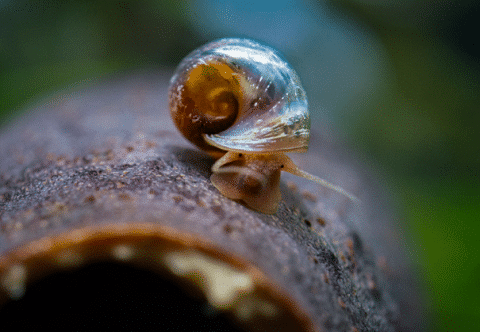
    Bladder Snail

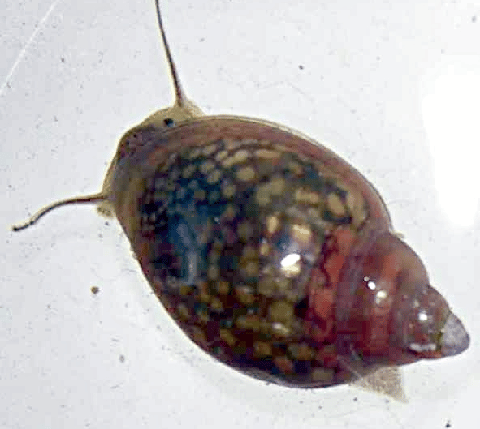
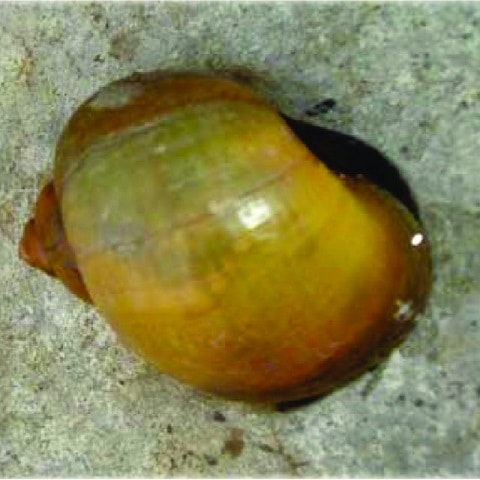
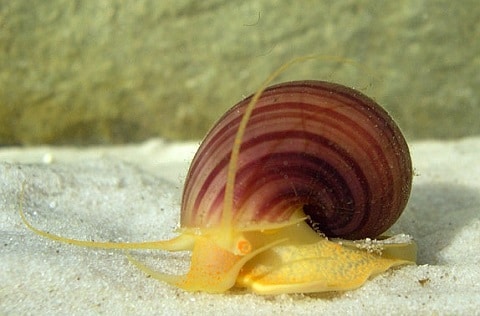
    Bladder snails possess a sinistral shell without an operculum, having yellowish-orange spots on their mantle and thin tentacles with small black eyes. Their size is small. Restricted to 0.6 inches or smaller in length. You can differentiate them from pond snails by the shape and color of their shells. They are equipped with little feet which allow for mobility across your aquarium. Providing fun entertainment during observation of them scuttling around!

    Comparing With Pond Snails

    When it comes to looks and adaptability, bladder snails are more remarkable looking than pond snail counterparts. There are a few differences:

    • They appear in a range of vibrant colors while being more capable of withstanding varying water temperatures as compared to the latter (making them more hardy than the pond snail).
    • Pond snails are bigger – about 2-3 times larger
    • Their shell spinal are to the left, otherwise known as sinistral. Pond snails shells sping to the right
    • The bladder snails lack a operculum lid to protect itself

    Behavior & Adaptability

    When danger is detected, bladder snails react in a unique manner. They shake their bodies and swim rapidly to the bottom of the tank for protection using air from their pulmonary cavity. This action helps them expel any parasites or microbes that may be present on their body too.

    Their respiratory system plays an essential role when it comes to survival as well. Not only does it provide necessary oxygen, but also enables them to move quickly away from potential predators or dangers present in the environment they live in. The presence of an air bladder within this species gives even more agility during such times, giving these animals better chances at evading threats successfully by fleeing through waters swiftly towards safety.

    Movement & Defense Mechanisms

    Bladder snails showcase their agility by being able to quickly move around the water using just their feet, and even can swim upside down at the surface for breathing air. When facing a predator, they display resourcefulness in defense with an impressive movement of flipping back and forth between inside and outside of its shell rapidly (video source).

    Adapting to Tank Conditions

    Bladder snails are excellent for new aquarists, as they require little effort to maintain and can tolerate a variety of water parameters. Their impressive adaptability means that bladder snails will thrive in diverse tank conditions, from temperature and pH levels to hardness. They are incredibly hardy animals which makes them a great option when it comes to a clean up crew, and they will help with consuming fish waste.

    Diet & Feeding Habits

    Bladder snails are omnivores, meaning they will feast on whatever is available in an aquarium, such as algae and decaying waste. To prevent overpopulation due to excessive feeding, moderation must be practiced when offering food. Along with a diverse diet that could include eggshells or cuttlefish bones for calcium-rich nutrients, bladder snails require other items like algae wafers and blanched vegetables (as well as sinking pellets) to stay healthy in their environment. Monitoring the balance of dietary intakes helps keep these bladder snails happy too!

    Preferred Food Sources

    Bladder snails should consume a variety of foods to stay healthy and grow, such as decaying plant matter, biofilm, algae, insects, veggies and meat. They will scavage edibles meant for fish if given the opportunity. Supplying an assorted diet (and plenty of algae) that includes all the needed nutrients will keep bladder snails in good health condition.

    Impact on Aquarium Plants

    ludwigia peruensis plant

    It is a common misconception that Bladder snails eat plants. In actuality, these snails will not consume live lives in freshwater tanks. Their man issue is the rare they reproduce at.

    Bladder snails are beneficial to have in your aquarium, as they eat any decaying plant matter and detritus present. This helps keep the tank clean without threatening healthy plants. As long as your flora is doing well, these little critters will be a welcome addition for keeping an orderly environment underwater.

    Creating a Suitable Environment

    Bladder snails can survive in a freshwater tank of any size due to their adaptability, although it is recommended that larger ones are kept for maintenance purposes. They don’t necessarily require live plants or hiding spots as they prefer warm, still waters and the main factor involved in creating a good environment for them should be cleanliness.

    This entails regular water changes and proper filtration which will help maintain an ideal balance between temperatures ranging from 64-84 Fahrenheit with pH 7-8 degrees of hardness so ammonia/nitrate levels remain safe. This helps guarantee bladder snails live a healthly life along with other aquatic life within their habitat too!

    Tank Size & Setup

    When keeping bladder snails, it is necessary to have an aquarium of at least 10 gallons. The water temperature should be maintained between 65 and 75 degrees Fahrenheit for the optimum health of your creatures. Creating such conditions will keep them active and in good shape.

    Water Parameters & Calcium Needs

    The well-being and longevity of bladder snails depend on having the right water conditions, such as warm temperatures with little to no current. For them to have healthy shells and for their growth and reproduction, it is essential that calcium-rich sources are available. These may include cuttlefish bones or eggshells. Maintaining appropriate water parameters should be a priority in order to ensure your bladdersnail’s health.

    Breeding & Population Control

    Bladder snails reproduce asexually when there isn’t an available mate. This is accomplished by self-fertilization due to their male and female reproductive organs. This will occur if the population of them is threatened. Due to their ability for rapid reproduction, it is difficult managing population levels within an aquarium environment.

    To combat this problem, one should pay close attention to how much food they are consuming, as too much will lead quickly towards overpopulation issues. Some methods which may aid in keeping populations under control include housing them alongside natural predators or by trapping existing snails out of the tank periodically, all effective measures that help create balance when caring for these creatures properly.

    Reproduction Methods

    Mating for bladder snails is a lengthy process that involves each individual climbing onto the other’s shell and covering their partner’s reproductive organs. The egg capsules of these creatures may contain between 10 to 50 eggs, with hatching occurring in around 6-7 days.

    Baby Bladder Snails

    When they emerge from the capsule, baby bladder snails are very small, just 1mm long! These baby bladder snails will reach maturity in as little as one month!

    Controlling Population Growth

    In order to manage the bladder snail population, consider introducing natural predators into your tank such as loaches, puffers and assassin snails. Be aware that excess food given to fish can also contribute towards an increase in their numbers. Thus it is important you only give them what they need for growth. Regular water changes are likewise necessary so as not to let the snail population get out of control, manual removal may even be required at times too!

    It is also something to note that the bladder snail is equipped with a sperm storage organ. Even if one makes it into your aquarium, the bladder snail can use this organ to reproduce. This is similar to female livebearers, who are able to store sperm for several months.

    By utilizing these strategies correctly, a balanced ecosystem will undoubtedly follow suit within your aquarium habitat.

    Tank Mates & Predators

    Bladder snails can form a beneficial addition to an aquatic setting due to their versatility and ability of coexisting with other freshwater creatures. To ensure that the population does not become out-of-hand, it may be wise to house them alongside fish like betta fish which eat bladder snails in order maintain balance inside your tank ecosystem.

    Compatible Tank Mates

    Bladder snails are safe to live alongside:

    It is best not to cohabit these aquatic snails with aggressive types such as crayfish, yoyo loaches, betta fish or puffers – which could cause harm to the bladder snail’s wellbeing (unless you want to reduce their population — more on that below).

    Natural Predators

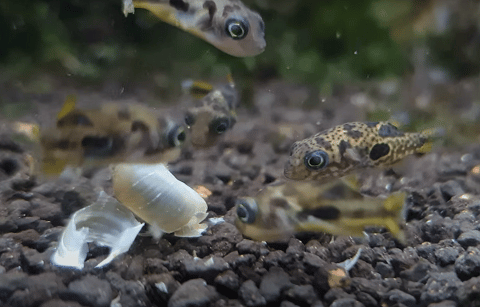
    Pea Puffer Eating Snail

    Bladder snails have a few natural predators, including:

    These creatures can reduce the number of bladder snail populations while also maintaining balance in aquariums. Crayfish are likely to feast on softer and smaller specimens, whereas assassin snails will feed on adult and baby snails. Housing these creatures with their predators will help bring down their numbers accordingly.

    Health & Disease Prevention

    Bladder snails can remain in excellent health if their environment is kept optimal. By regularly monitoring the water parameters and making necessary adjustments to maintain steady conditions within the tank, bladder snail owners are helping ensure that these creatures stay healthy and thriving. It is also important for them to have access to a nutritious diet with items such as algae wafers, blanched vegetables or sinking pellets.

    This will provide essential nutrients which help promote good growth of shells of your bladder snails while preventing potential digestive issues like indigestion from occurring. An effective way of maintaining hygiene is through regular water changes so their habitat remains clean at all times – something proven vital when it comes sustaining strong calcium-rich shells & successful reproduction rates!

    Common Health Concerns

    Healthy bladder snails is affected by a few common ailments, including bacterial and fungal infections and damage to their shells. Shell help is a common aliment if your calcium levels stay long. Parasites are less of a worry since the bladder snail has this cool ability to remove bugs and parasites away with its unique respiratory system. These aquatic snails were built to be tough!

    Preventative Measures

    Maintaining a clean, hygienic environment and regularly changing the water are essential steps to preventing diseases in bladder snails. Providing them with varied nutrition that is rich in calcium can also help keep them healthy and strong. By following these tips you will greatly increase the chances of keeping them around (then probably worrying about how many they are afterward)!

    Frequently Asked Questions

    Are bladder snails bad for your tank?

    Bladder snails, in general, are harmless and can even be beneficial to your tank. They will not cause any damage to other fish or plants. Instead they help by eating leftover food scraps that would otherwise decompose at the bottom of your tank. It is essential to ensure their population doesn’t exceed a certain size as too many bladder snails may overrun the aquarium environment if there’s too much extra food being supplied into it.

    Is the bladder snail invasive?

    It is advisable to be cautious when bringing in plants and animals into an aquarium since bladder snails (Physa acuta) can become a problem. They are invasive species because of their tendency for quick proliferation. This makes them hard to eliminate from any water container once established.

    Thus, taking steps beforehand may help avoid adding these creatures which could cause complications later on if allowed to thrive unchecked.

    What is the benefit of bladder snail?

    The Physella acuta, commonly known as the Bladder Snail, is a great addition to any aquarium. Not only does it scour the substrate and feast on algae growths, but also doesn’t touch or consume your aquatic plants!

    What’s more? They are incredibly hardy animals that can easily enter an aquarium by hitting rides with live plants – so you don’t even need to make deliberate efforts of introducing them into your system. All in all, when considering cleanup crew options, Bladder Snails should be high up on anyone’s list!

    Will bladder snails eat live plants?

    Contrary to what some may think, bladder snails will not feed on any living plant matter, a trait which sets them apart from pond snails. Thus it is confidently stated that these particular species of mollusks consume no vegetation at all.

    Are bladder snails bad for your tank?

    Bladder snails is a boon or a bane to your aquarium based on the situation. They bring huge benefits in terms of waste management and reducing algae, so long as they don’t end up taking over due to unchecked growth. It is necessary for their numbers to remain regulated if you want them around. Otherwise it will become too chaotic!

    How the Bladder Snail Compares to Similar Species

    Want an easy community fish? This is not it. Want a species that rewards dedicated care? The Bladder Snail delivers if you put in the work.

    The most common alternative to the Bladder Snail is the Malaysian Trumpet Snail, another prolific snail that multiplies quickly. MTS burrow in substrate and aerate it, while Bladder Snails stay on surfaces. Both are often considered pests, but both serve a cleanup purpose. MTS are better for planted tanks with sand substrate.

    Closing Thoughts

    Bladder snails is a beneficial “accidental” addition to any fish tank, as they help maintain a clean tank. However, they are known for reproducing like crazy, so understanding how to keep their numbers down is helpful if you are planning to keep them around.

    Taking care to ensure the right environment and keeping your bladder snails population in check will result in a thriving population that brings life into your tank if you want to enjoy all the benefits these resilient creatures offer fully, be sure to give them proper attention (and monitoring) they require!

  • 35 Types of Goldfish: A Complete Visual Guide to Every Variety

    35 Types of Goldfish: A Complete Visual Guide to Every Variety

    Goldfish have been selectively bred for over a thousand years, which explains why the variety is staggering. We’re talking fancy double-tailed types, single-tailed pond varieties, telescope-eyed fish, bubble-eyed fish, and everything in between. I’ve covered goldfish extensively on my YouTube channel and the video I did on the 35 best goldfish types has over 175,000 views, which tells you how much interest there is in understanding the differences. Not all goldfish are the same, and not all goldfish belong in the same setup. This guide breaks down 35 types with honest context on what each one actually needs.

    https://www.youtube.com/watch?v=6ZzwMPUxB_A

    Key Takeaways

    • Goldfish have a rich history, and they come in a wide range of shapes, sizes, and colors
    • Slim-bodied goldfish are cheaper, hardier, and easier to care for than fancy goldfish
    • Fancy goldfish require more care than slim-bodied breeds
    • Some goldfish breeds can grow to over 12 inches, so they need plenty of space and high-quality filtration to stay healthy

    Species Background

    The goldfish (Carassius auratus) is a freshwater fish from China that is kept in aquariums and ponds all over the globe. These fish prefer cool, slow-flowing, or still water in nature, and the largest individuals can grow to over 16 inches long and weigh over 5 pounds if they have enough space.

    Aquarists have long prized the goldfish for its grace and beauty, and they first started breeding these fish over a thousand years ago! Today they are as popular as ever, and selective breeding has created an awesome variety of different breeds.

    Slim-bodied Vs Fancy Types – What’s The Difference?

    The two major goldfish breed categories are slim-bodied and fancy breeds – read on to learn more about these goldfish types.

    Slim-bodied Varieties

    Slim-bodied goldfish like common, feeder, and comet goldfish have been bred into many colors, although their streamlined, torpedo-shape is just as nature intended. These are the most common and most affordable breeds of goldfish and the type most people are familiar with.

    Slim-bodied goldfish are hardy and very easy to care for without any advanced care requirements. That means they make excellent beginner fish, as long as you can provide the following basic requirements:

    Let’s take a look at some of the pros and cons of the slim-bodied breeds

    Pros:

    • Slim-bodied goldfish come in a range of beautiful colors and fin types
    • Slim-bodied goldfish are very affordable. You can find feeder goldfish for less than a dollar each!
    • These fish are super easy to find at just about any pet store
    • Common goldfish are very hardy, which makes them great for an outdoor pond

    Cons:

    • Slim-bodied goldfish get surprisingly large and their active swimming habits make them unsuitable for small aquariums
    • Goldfish are natural omnivores, and these faster swimming varieties can catch and eat small tank mates

    Fancy breeds

    Fancy goldfish are the product of centuries of careful selective breeding, and the results are adorable! These fish may have strange, bulging bubble eyes, humped backs without dorsal fins, or even bulbous growths on their foreheads and gill covers.

    However, such extreme variation has come at a cost, and these eye-catching features make them much more sensitive, which means they require more specialized care. They are more expensive too, so these goldfish breeds are better suited to more experienced fish keepers.

    Let’s take a look at a few more pros and cons of keeping fancy goldfish.

    Pros:

    • Fancy goldfish have been bred into some truly adorable shapes, and their clumsy movements make them very entertaining
    • Fancy goldfish is fascinating to breed for more advanced hobbyists
    • Fancy goldfish are relatively small goldfish breeds, although most types can reach 6 to 8 inches

    Cons:

    • Fancy goldfish is pretty expensive, particularly when you start looking at rare varieties
    • Sensitive breeds like bubble eyes and celestial goldfish have fluid- filled sacs under their eyes that are easily damaged

    35 Types Of Goldfish

    Now that you know a little more about the differences between fancy and slim-bodied goldfish breeds, let’s go ahead and meet 35 of the world’s most popular goldfish breeds! We have a YouTube video just for you from our channel. Our blog post goes into more detail so follow along with both!

    1. Shubunkin

    Editor’s Choice
    Shubunkin

    Editors’ Choice

    Coloration, patterns, and it’s Koi-like features make this goldfish one of the most popular for ponds

    Click For Best Price Buy On Amazon
    • Goldfish Type: Slim-bodied
    • Adult Size: 9 – 18 inches
    • Color Pattern: Multi-colored blotches and spots (calico)
    • Unique Traits: Hardy goldfish with great colors, suitable for ponds

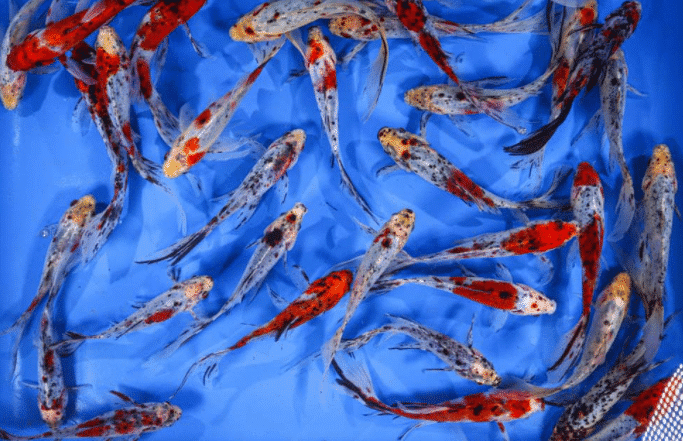
    Shubunkin goldfish are popular slim-bodied goldfish with a mottled and multicolored (calico) pattern. Pretty much any calico goldfish with a single tail is called a shubunkin, so this breed is highly variable in shape. However, there are three common shubunkin variations that you are likely to come across.

    London Shubunkin goldfish look like a typical common goldfish with calico patterning, while American shubunkin goldfish have much longer fins like a comet goldfish. The Bristol shubunkin is an interesting variant with larger, rounder tail fins that look somewhat heart-shaped.

    2. Feeder

    Feeder-Goldfish
    • Goldfish Type: Slim-bodied
    • Adult Size: 6 – 12+ inches
    • Color Pattern: Various
    • Unique Traits: None

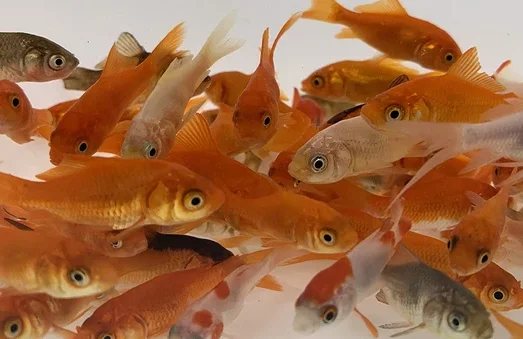
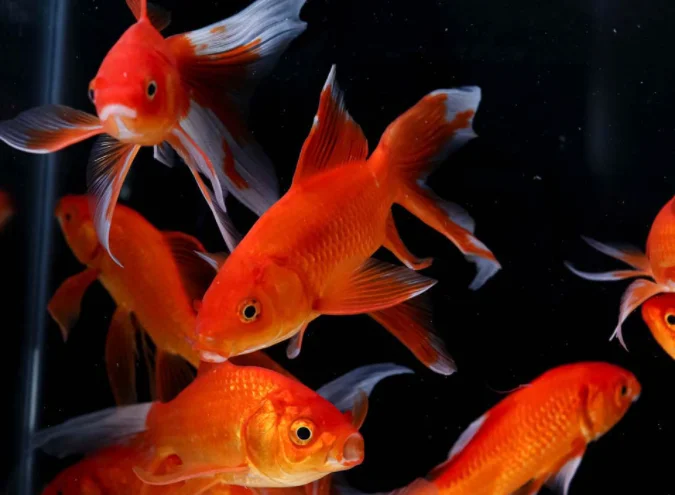
    The feeder goldfish is not exactly a breed but rather a class of feeder fish sold as a live food source for other fish and pets like turtles. They are common or comet goldfish that have poor color or body shape, but that doesn’t mean they can’t make great pets.

    Feeder goldfish are very cheap and they can have great colors and fins too. The problem is that some breeders don’t take great care of these fish, so they is in poor condition when you pick them up.

    3. Comet

    Best Value
    Comet Goldfish

    Best Value

    The Comet is a fast, hardy, and well adapted goldfish for aquariums and outdoors ponds

    Click For Best Price Buy On Amazon
    • Goldfish Type: Slim-bodied
    • Adult Size: 12 inches
    • Color Pattern: Solid color
    • Unique Traits: Long, single fins and deeply forked tail

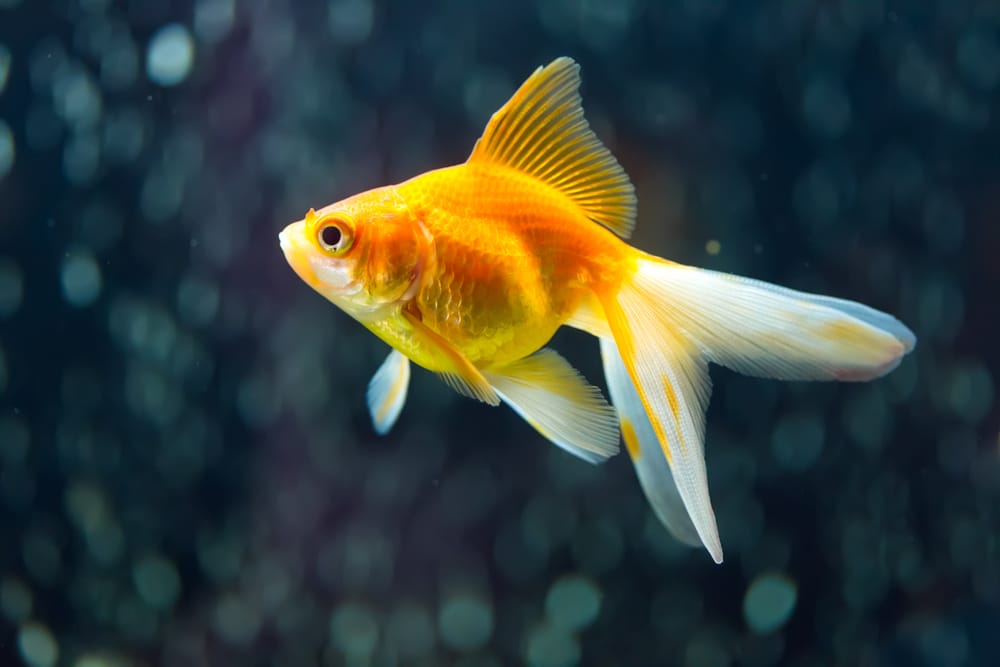
    The comet goldfish is a very popular American breed with long, flowing fins. These hardy beginner-friendly goldfish are very affordable and come in a range of colors, including red, orange, yellow, white, and red and white. They are an active breed, suitable for larger tanks and ponds.

    4. Sarasa Comet

    Best Value
    Sarasa Comet

    Best Value

    The Sarasa is a great Koi lookalike goldfish variety that offers a variety of colors

    Click For Best Price Buy On Amazon
    • Goldfish Type: Slim-bodied
    • Adult Size: up to 14 inches
    • Color Pattern: Red & white
    • Unique Traits: Long, single fins, deeply forked tail, and white and red coloration

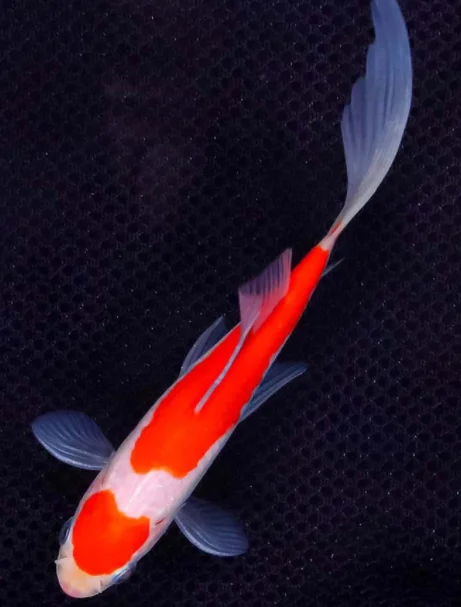
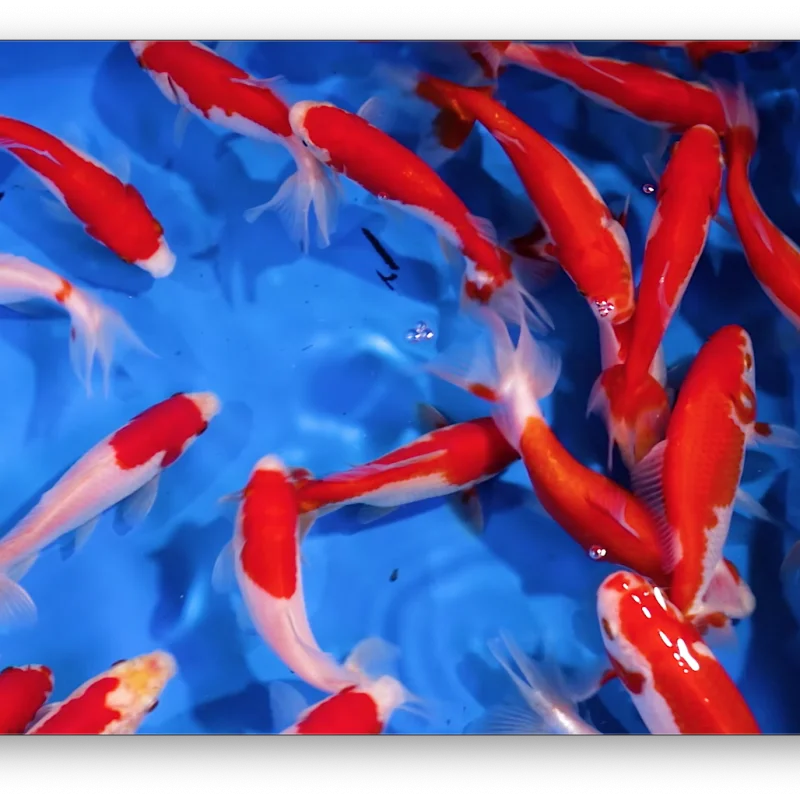
    The Sarasa comet goldfish is a popular color variant of the well-known comet goldfish. These eye-catching fish are mostly white, with red markings on their body, and some individuals also have red on their fins.

    Like the regular comet, Sarasa comets do great in outdoor ponds, and they really stand out with those bright contrasting colors!

    5. Wakin

    Wakin Goldfish

    With their elongated bodies and unique fins, Wakins are a flash of color and character to your pond

    Click For Best Price
    • Goldfish Type: Slim-bodied
    • Adult Size: 10 to 18 inches
    • Color Pattern: Various solid colors and calico
    • Unique Traits: Double-tail

    Wakin goldfish are a popular Japanese breed, identified by their double tail. They were developed from the common goldfish and look very similar apart from their extra tail fin.

    Wakin goldfish are a great alternative for fishkeepers who want the interesting features of a fancy breed, but the active and hardy nature of a slim-bodied goldfish.

    6. Fantail

    • Goldfish Type: Fancy
    • Adult Size: 6 – 8 inches
    • Color Pattern: Various
    • Unique Traits: Egg-shaped body, Double tail and anal fins, high dorsal fin

    Fantail goldfish are popular for their heavy, egg-shaped body and wonderful fins. They have amazing flowing tail fins and anal fins and are available in a bunch of beautiful colors.

    Fantail goldfish are true fancy goldfish, although they are relatively hardy and affordable compared with rarer fancy breeds.

    7. Jikin

    • Goldfish Type: Slim-bodied
    • Adult Size: 8 – 10 inches
    • Color Pattern: red & white/ orange & white
    • Unique Traits: X-shaped double tail

    The Jikin goldfish (video source) or peacock-tail goldfish is a rare Japanese goldfish breed with a unique double tail that spreads outward.

    They are an expensive breed, similar to the Wakin apart from their unusual tail which looks like the letter X when viewed from behind.

    8. Watonai

    • Goldfish Type: Slim-bodied
    • Adult Size: 10 – 12 inches
    • Color Pattern: Various
    • Unique Traits: Long double tail fins

    The Watonai goldfish (video source) is a double-tail and double anal fin breed with long tail fins, kind of like a double-tailed comet goldfish, or a long-tailed wakin.

    Watonai goldfish were first bred in Japan in the early 1900s, making them a relatively new breed. These beautiful fish are rare but fairly hardy and easy to care for.

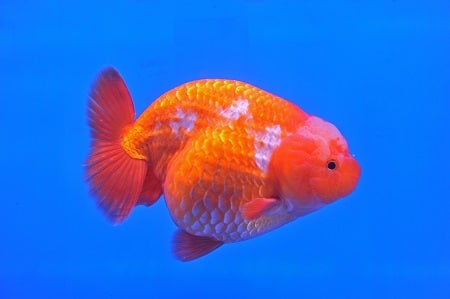
    9. Ranchu

    Ranchu-Goldfish
    • Goldfish Type: Fancy
    • Adult Size: 6 – 8 inches
    • Color Pattern: Various
    • Unique Traits: ‘Hooded’ head, steeply curved lower back and no dorsal fin

    The Ranchu goldfish is one of the most unusual and adorable goldfish breeds in the world. They are a Chinese fancy goldfish breed with a deep, egg-shaped body and bubble-like growths on their head known as a wen or hood. These fish also lack a dorsal fin and have a single tail fin.

    Ranchu breeds vary somewhat depending on their country of origin. Some breeds are still bred to look their best from above, while others are judged from the side.

    The Ranchu is a relatively delicate and sensitive breed, ideal for more experienced goldfish keepers. They are pretty slow-moving, clumsy fish that will do best with other fancy goldfish types for tankmates.

    10. Thai Ranchu

    • Goldfish Type: Fancy
    • Adult Size: 6 – 8 inches
    • Color Pattern: Various
    • Unique Traits: Large Wen, V-shaped tail, and high curved back

    Thai ranchu goldfish (video source) are a local variant of the ranchu that are bred in Thailand, Southeast Asia. These unique fancy goldfish have a unique body shape and a very large wen (hood).

    This breed has a high curved back with the highest point closer to the tail, and like other ranchus, they have no dorsal fin. This breed is best viewed from the side, unlike Japanese ranchu which are assessed from above.

    11. Butterfly Tail

    • Goldfish Type: Fancy
    • Adult Size: 5 – 8 inches
    • Color Pattern: Various
    • Unique Traits: Butterfly-shaped double tail and telescope eyes

    The butterfly tail goldfish (video source) is a beautiful fancy goldfish breed with a unique double tail. When viewed from above, their tail spreads out to look just like the wings of a butterfly!

    This is a deep-bodied breed that comes in a variety of color patterns, including calico. They also have a high dorsal fin and telescope eyes, which makes them a really interesting breed to observe from above or the side.

    12. Lionchu

    • Goldfish Type: Fancy
    • Adult Size: 5 – 8 inches
    • Color Pattern: Various
    • Unique Traits: Ball-shaped body with a well-developed hood and no dorsal fin

    The Lionchu goldfish (video source) was recently developed in Thailand, and it is a cross between the Lionhead goldfish and the Ranchu goldfish. These two fancy breeds are already pretty similar, but the Lionchu has inherited the curved lower back of the Ranchu and the prominent hood of the lionhead.

    Lionchus come in a range of colors, including single, bi-colored, and calico patterns. They are fairly sensitive fish, ideal for more experienced fancy goldfish keepers.

    13. Ryukin

    Ryukin-Goldfish
    • Goldfish Type: Fancy
    • Adult Size: 5 – 8 inches
    • Color Pattern: Various
    • Unique Traits: Very long triple or quadruple tail

    The Ryukin goldfish is a fancy breed with a very wide body and a distinctive humped back. These fish have a high dorsal fin and a very long 3 or 4-lobed tail.

    This Chinese breed is relatively hardy and makes a great starter fancy goldfish. They can even be kept in ponds with other goldfish like commons and comets in a well-maintained pond.

    12. Telescope Eye

    • Goldfish Type: Fancy
    • Adult Size: 4 – 10 inches
    • Color Pattern: Various
    • Unique Traits: Strange protruding eyes

    The telescope eye goldfish is another great Chinese fancy goldfish breed that is also known as the dragon eye goldfish. These fish come in many color patterns, including interesting varieties like calico, panda, and redcap.

    Telescope goldfish are named for their remarkable protruding eyes but they have other fancy breed features similar to the fantail goldfish. Their care is pretty straightforward, although you should keep sharp objects out of their tank to protect their sensitive eyes.

    13. Bubble Eye

    • Goldfish Type: Fancy
    • Adult Size: 3 – 5 inches
    • Color Pattern: Various
    • Unique Traits: Huge bubble eyes

    The bubble eye goldfish is one of the strangest fancy goldfish varieties and looks very different from its wild slim-bodied ancestors!

    These small goldfish have been bred to have huge fluid-filled sacks below their eyes, which leaves them pretty clumsy and vulnerable to boisterous and aggressive fish.

    They are a good choice for seasoned goldfish keepers, but also for less experienced aquarists that are willing to put in the planning and effort to create the ideal goldfish tank.

    14. Froghead

    • Goldfish Type: Fancy
    • Adult Size: 4 – 6 inches
    • Color Pattern: Various
    • Unique Traits: Small bubble eyes

    The froghead or toadhead goldfish is a great breed for goldfish enthusiasts that are interested in the history of the hobby.

    In fact, the froghead is believed to be the ancestor of the modern bubble eye and celestial goldfish. They appear similar to these breeds, although they have smaller sacs beneath their eyes.

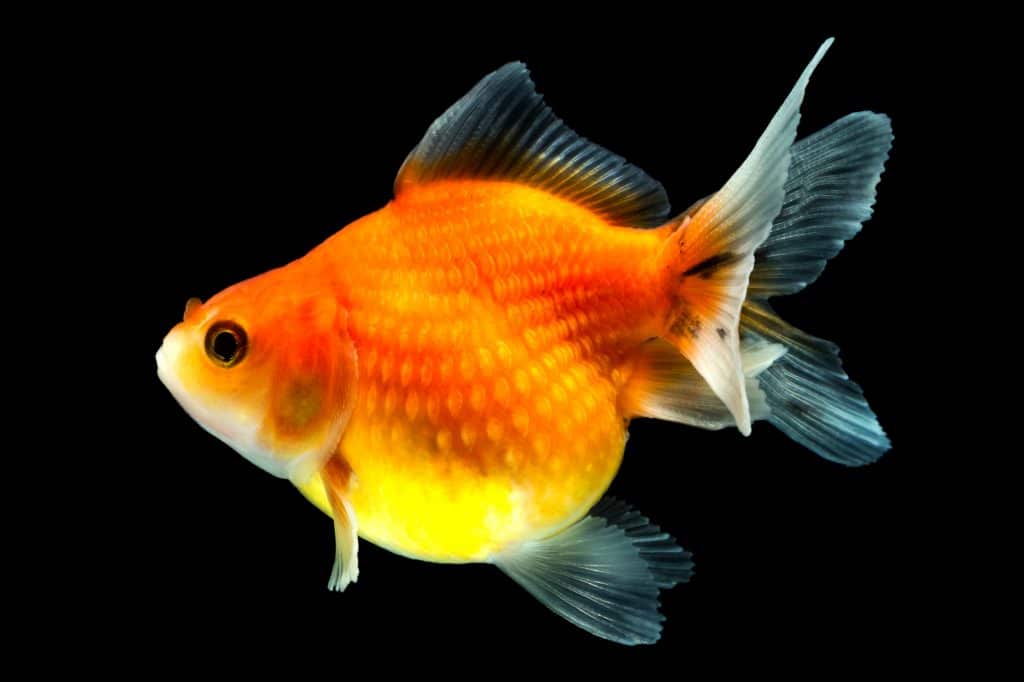
    15. Pearlscale

    Pearscale-Goldfish
    • Goldfish Type: Fancy
    • Adult Size: Up to 8 inches
    • Color Pattern: Various
    • Unique Traits: Golfball-shaped body, with prominent domed scales

    The pearlscale goldfish is a large fancy goldfish breed with a ball-shaped body. These fish are named for their domed scales which are widely separated, creating a golfball-like texture. Other features include a double tail and single or double growths on the head.

    The pearlscale is one of the more heavily bred fancy goldfish types, so they are not the ideal choice for beginners.

    16. Egg Fish

    • Goldfish Type: Fancy
    • Adult Size: 6 – 8 inches
    • Color Pattern: Various
    • Unique Traits: Egg-shaped body

    The egg-fish goldfish is an ancient Chinese breed that came before many of the popular fancy goldfish varieties we see today. They have a long, egg-shaped body, without a dorsal fin or a wen. These fish are available in many colors and scale types, although they tend to be pretty rare.

    17. Oranda

    Oranda-Goldfish
    • Goldfish Type: Fancy
    • Adult Size: 8 – 12 inches
    • Color Pattern: Various
    • Unique Traits: Prominent wen/hood

    The Oranda goldfish is one of the most popular fancy goldfish breeds, combining large, well-developed fins, a short, rounded body, and a large wen on top of its head which may cover the entire face.

    Orandas are similar to the lionhead goldfish but have a dorsal fin and larger fins in general. These fish are available in many colors, and some interesting varieties have a head growth with a different color from the rest of their body and fins.

    18. Thai Oranda

    • Goldfish Type: Fancy
    • Adult Size: 8 – 12 inches
    • Color Pattern: Various
    • Unique Traits: Highly developed head growth

    Thai oranda goldfish (video source) are similar to regular orandas, although have rounder bodies, fuller tails, and well-developed wens that extend onto the gill covers, sometimes covering their eyes.

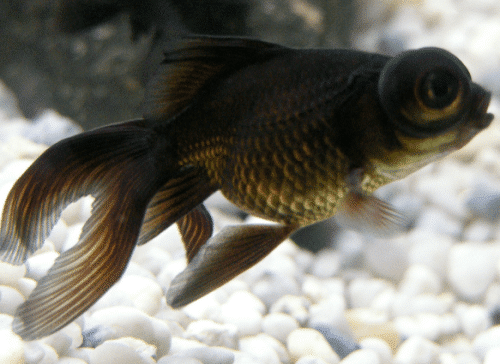
    19. Black Moor

    Black-moor-goldfish in aquarium
    • Goldfish Type: Fancy
    • Adult Size: 6 – 8 inches
    • Color Pattern: Black
    • Unique Traits: Black color and telescope eyes

    Black moor goldfish are a very popular breed of all-black goldfish with bulging telescope eyes. This ancient breed was developed in China over 500 years ago where they were originally known as dragon eye goldfish.

    Black moors are suitable for beginners, although they are not as hardy as slim-bodied breeds like comets and common goldfish.

    20. Red Moor

    • Goldfish Type: Fancy
    • Adult Size: 6 – 8 inches
    • Color Pattern: Red
    • Unique Traits: Red color and telescope eyes

    The Red Moor goldfish is a variety of telescope goldfish that changes color as it matures. These fish start out as Black Moor Goldfish but gradually change into a red color.

    21. Veiltail

    Veiltail-Goldfish
    • Goldfish Type: Fancy
    • Adult Size: 8 – 12 inches
    • Color Pattern: Various
    • Unique Traits: Extra-long tail with square edge and sail-like dorsal fin

    The veiltail goldfish is an American fancy breed, first bred in Philadelphia in 1890. They are best known for their impressively long double tails and high, sail-like dorsal fin. These fish also have a pointed face and a very deep body shape without a shoulder hump.

    They are pretty weak swimmers due to their amazing finnage, so these fish are easily outcompeted by faster tank mates.

    22. Celestial Eye

    • Goldfish Type: Fancy
    • Adult Size: 5 – 6 inches
    • Color Pattern: Orange, white, or orange and white
    • Unique Traits: Upward-facing eyes and no dorsal fin

    The celestial eye goldfish is probably the strangest of all the fancy goldfish types. They are very similar to the bubble eye goldfish but their eyes face directly upwards! Their eyes start out pretty normal but turn upwards after about 6 months.

    Celestial eye goldfish are a Chinese or Korean breed that is well over 200 years old. They are fairly easy to care for and they get along great with other goldfish types – just keep sharp objects and decorations out of their tank to prevent eye injuries.

    23. Lionhead

    Lionhead-Goldfish
    • Goldfish Type: Fancy
    • Adult Size: Up to 6 inches
    • Color Pattern: Various
    • Unique Traits: Large head growth, and curved back without dorsal fin

    The Lionhead goldfish is an ancient Chinese breed, characterized by an extensive wen (hood) that covers the head, including the gill plates and cheeks. Their wen can take several years to develop fully.

    Lionhead goldfish have a gently curved back, without a dorsal fin, and a relatively short tail. They are available in a variety of colors, including bi-colored patterns.

    24. Siamese Doll

    • Goldfish Type: Fancy
    • Adult Size: 6 – 8 inches
    • Color Pattern: Pale yellow
    • Unique Traits: Red eyes

    The Siamese doll goldfish is a pale yellow form of the telescope goldfish with red or orange eyes. They have a deep, rounded body shape and full, well-developed fins including a high dorsal fin. Unfortunately, these eye-catching fish are pretty rare.

    25. Sabao

    • Goldfish Type: Fancy
    • Adult Size: up to 10 inches
    • Color Pattern: Red & white
    • Unique Traits: Long single tail and deep egg-shaped body

    The Sabao, also known as the Tamasaba goldfish (video source), is a rare Japanese fancy goldfish breed with a very long, V-shaped single tail and the deep body of a Ryukin goldfish. They are seen in a red and white pattern.

    These beautiful fish are pretty large and cold hardy, making them suitable for outdoor ponds.

    26. Pompom

    • Goldfish Type: Fancy
    • Adult Size: 4 – 6 inches
    • Color Pattern: Various
    • Unique Traits: Ball-shaped nasal growth

    Pompom goldfish are an interesting fancy breed with strange ball-like growths on top of their nose. These growths are actually overgrown nasal septa, and their size varies between individuals.

    This type of goldfish is available in many colors and fin types, and they may share features with other fancy breeds like orandas, celestials, fantails, and bubble eye goldfish.

    27. Demekin

    https://youtu.be/5_Ra1qqYXlY
    • Goldfish Type: Fancy
    • Adult Size: 4 – 8 inches
    • Color Pattern: Various
    • Unique Traits: Ryukin goldfish shape with telescope goldfish eyes

    Demekin (video source) was the original Japanese term for telescope eye goldfish, although today the name is often used more specifically. Many goldfish keepers now classify telescope eye fish with the deep belly and shoulder hump of the Ryukin goldfish as Demekins.

    There are some truly spectacular demekins in the hobby today, and they come in a variety of color forms, including solid, bi-colored, and calico forms.

    28. Thai Peacock Tail

    • Goldfish Type: Fancy
    • Adult Size: 8 – 10 inches
    • Color Pattern: Red & white, black
    • Unique Traits: Deep body and full fins

    Thai peacock tail goldfish (source from King Koi and Goldfish) are a local Thailand variety of the Oranda goldfish, very similar to the Thai orchid tail orandas. These fish have very deep, rounded bodies, with full finnage and bright colors.

    29. Hama Nishiki

    • Goldfish Type: Fancy
    • Adult Size: up to 8 inches
    • Color Pattern: Various
    • Unique Traits: Pearlscale with large head-growth

    The Hama Nishiki is a rare variant of the pearlscale goldfish with a large bubble-shaped growth on top of its head. These strange and beautiful fish are also known as crown pearlscales in English.

    30. Thai Rose Tail

    • Goldfish Type: Fancy
    • Adult Size: 8 – 12 inches
    • Color Pattern: Various
    • Unique Traits: Spread, ruffled tail with well-developed wen and deep egg-shaped body

    Thai rosetail goldfish (video source) are a breeder-specific variety of Oranda goldfish from Thailand in Southeast Asia. This breed has a highly developed wen and a very deep body. The tail is open and ruffled when mature.

    31. Izumo Nankin

    • Goldfish Type: Fancy
    • Adult Size: up to 8 inches
    • Color Pattern: red & white
    • Unique Traits: Large, deep body with double tail and no dorsal fin

    The Izumo Nankin goldfish is a rare fancy breed first developed in Japan in the mid-1700s. These fish have a deep body like a Ryukin, although they do not have a dorsal fin. Their lower tail lobes flair out similar to the Ranchu, and they appear triangular from above.

    32. Tosakin

    • Goldfish Type: Fancy
    • Adult Size: up to 8 inches
    • Color Pattern: Red, black, or red & white
    • Unique Traits: A divided double tail that spreads horizontally

    The Tosakin goldfish (video source) is a rare fancy fantail type goldfish with a short, deep body and a horizontally spreading tail. These fish are traditionally viewed from above so their beautiful tails is appreciated.

    Tosakins were originally kept in wide, shallow bowls to encourage their tails to spread, and some breeders continue this practice today. Such a large and unusual tail makes these fish pretty weak swimmers, so they should be kept in a goldfish tank with low flow.

    33. Thai Orchid Tail

    • Goldfish Type: Fancy
    • Adult Size: 8 – 12 inches
    • Color Pattern: Various
    • Unique Traits: Deep-bodied Oranda with Tosakin tail

    The Thai Orchid Tai (video source) l is an Oranda breed developed by an accomplished Thai goldfish breeder. These beautiful orandas have been bred to show a spreading, tosakin-style tail, making them attractive when viewed from above and from the side.

    34. Shukin

    • Goldfish Type: Fancy
    • Adult Size: 6 – 10 inches
    • Color Pattern: Red, calico, red & white, silver, blue, or white
    • Unique Traits: Long tail, with ranchu body and no dorsal fin

    The Shukin goldfish (video source) is a Japanese breed that was developed in the late 1800s. This rare breed actually went extinct during World War Two, but thankfully it has been recreated and is still available today.

    These fancy goldfish are the product of crossing ranchu and oranda goldfish. The breed combines the body shape of the ranchu with the long tail of the oranda.

    35. Nymph

    • Goldfish Type: Fancy
    • Adult Size: up to 12 inches
    • Color Pattern: Various
    • Unique Traits: Long, straight tail on a fantail body

    The nymph goldfish (video source) is a hardy fancy breed that probably arose from crossing comet and fantail goldfish. They have a deep, short body with a very long single tail and a long dorsal fin situated far back.

    FAQs

    What is a large goldfish called?

    Shubunkins are one of the largest types of goldfish in the world, sometimes reaching an impressive 18 inches in length! All goldfish varieties grow pretty large, however, with most reaching at least 6 to 8 inches in a large enough aquarium.

    What types of goldfish live the longest?

    The slim-bodied goldfish breeds like common and comet goldfish live the longest, especially if provided with good care and high water quality. The oldest known goldfish lived for 43 years, although a maximum lifespan of 15 to 20 years is more usual.

    What are the different types of goldfish?

    There are about two hundred different breeds of goldfish, with popular groups including Ryukin, Ranchu, and Oranda types. However, the different types of goldfish is split into two major groups based on their body shape.

    Slim-bodied goldfish have naturally streamlined bodies with double or single tails while fancy goldfish types have deep, rounded bodies and other unusual features like bubble eyes and head growths.

    What are Japanese goldfish called?

    Japan has a long and rich history of fancy goldfish breeding, and there are a huge variety of breeds first developed there. Popular goldfish bred in Japan include the Jikin, Tosakin, and Wakin goldfish.

    What is the difference between fancy goldfish and oranda goldfish?

    Oranda goldfish are a specific breed of fancy goldfish. In other words, all orandas are fancy goldfish but not all fancy goldfish are orandas!

    Final Thoughts

    Goldfish have been with us for over a thousand years, first in ponds and pots, and now in glass aquariums where their beauty and grace is fully appreciated. We hope this guide has shown you the amazing variety of goldfish out there, and just maybe helped you choose your next pet!

    Which is your favorite goldfish breed? Let us know in the comments below!


    ๐Ÿ“˜ Want to learn more? This article is part of our complete Freshwater Fish Guide. Your ultimate resource for freshwater species, care tips, tank setup, and more.

  • Vampire Crab Care Guide: The Most Dramatic-Looking Crab in the Hobby

    Vampire Crab Care Guide: The Most Dramatic-Looking Crab in the Hobby

    Vampire Crabs are terrestrial crabs that need more land than water. The paludarium setup is not optional.

    Vampire crabs are not aquatic. They are land crabs that like to wade. Build for that.

    Table of Contents

    The Vampire Crab is not a fully aquatic animal, and that is the first thing most buyers get wrong. I have seen these crabs drown in fully submerged setups at fish stores. After keeping crabs for years, I know the real setup they need to survive.

    If your crab has no way to climb out of the water, your setup is wrong.

    The Vampire Crab needs a paludarium-style setup with both land and water access. That is a different kind of maintenance commitment than a standard aquarium.

    Crabs are escape artists with opinions. If your lid has a gap, they will find it.

    What Most Care Guides Get Wrong About Vampire Crab

    A lot of guides suggest Vampire Crab can go in practically any nano tank. That is technically true, but a cramped setup leads to stress and shorter lifespans. Even small fish benefit from a bit of extra space and stable water chemistry that comes with slightly larger volumes. Another thing guides gloss over is temperament. Vampire Crab are often described with a single label, but their behavior shifts depending on tank size, tank mates, and territory. You need to plan for the worst-case scenario, not the best. Group size is another area where most guides fall short. Saying ‘keep them in groups’ is not enough. The difference between keeping 3 and keeping 8 or more is night and day when it comes to coloration, confidence, and natural behavior.

    The Reality of Keeping Vampire Crab

    Most crabs are semi-terrestrial. A fully submerged tank is a death sentence for most freshwater and brackish crabs. They need land access, humidity, and the ability to climb above the waterline. A paludarium-style setup is the only correct approach for most species.

    Escape prevention is a daily concern. Crabs climb everything. Heater cords, filter intakes, airline tubing, tank decorations. If there is a path to the rim, they will find it. A tight-fitting lid with no gaps is mandatory.

    Aggression is always present. Crabs are territorial and will fight other crabs, eat small fish, and destroy plants. Tankmate selection is limited and must be carefully planned.

    Biggest Mistake New Owners Make

    Keeping crabs in a fully aquatic setup without land access. Most freshwater crabs need to leave the water regularly. Without a dry area, they drown. Yes, crabs can drown.

    Expert Take

    Build the land area first, then add the water section. If you start with water and try to add land later, you will redesign the entire setup. Trust me on this.

    Key Takeaways

    • Vampire crabs require a tank that has both land and water areas
    • Vampire crabs prefer to be with live plants, perch, caves & rocks
    • Vampire crabs enjoy water temperature from 75 – 82F (24-28C)
    • Feed once a day with commercial shrimp to bloodworms & provide compatible tank mates for a safe living environment.

    Overview of Species

    Scientific NameGeosesarma dennerle
    Common NamesVampire Crab, Mini Crab, Red Devil Crabs, Carnival Crabs
    FamilySesarmidae
    OriginSoutheast Asia (specifically Indonesia)
    DietOmnivore
    Care LevelIntermediate 
    ActivityMostly active during the night (nocturnal)
    Life Span2-3 years
    Temperament peaceful, but males is territorial towards each other
    Tank LevelSemi terrestrial, with access to both land and water areas in the tank
    Minimum Tank Size5 gallons (18 liters) for a single crab, larger if keeping a group
    Temperature Range75-82ยฐF (24-28ยฐC)
    Water Hardness0-10 dKH
    pH Range6.0-7.5
    Filtration/Water FlowSlow to Moderate
    Water TypeFreshwater Tanks
    BreedingEgg Carrier
    Difficulty to BreedModerate
    CompatibilityCompatible with like-minded and like-sized fish species and inverts
    OK, for Planted Tanks?With Caution

    Classification

    PhylumArthropoda
    ClassMalacostraca
    OrderDecapoda
    FamilySesarmidae
    GenusGeosesarma
    SpeciesG. Dennerle (Ng, Schubart & Lukhaup, 2015)

    Understanding Them

    Geosesarma dennerle, also known as vampire crabs (video from our official YouTube Channel), red devil crabs or carnival crabs, are nocturnal freshwater crustaceans found in the Indian Ocean. The Vampire Carb are small sized and have breathtaking beauty that make them an attractive addition to any aquarium. During daylight hours they hide away from the light, often staying motionless for many hours within their preferred spot – both on land and in water – before continuing to roam around their vampire crab tank at night time.

    Origin and Natural Habitat

    Vampire crabs live in the wild on the islands in the Indian Ocean like Java, Sulawesi and Riau as well as Krakatau, find their home in freshwater rivers and lakes across regions such as Southeast Asia and Indonesia that are hot & humid. They prefer shallow waters with an abundance of vegetation & land. Which closely resembles their natural habitat.

    Live plants provide excellent shelter for these creatures while being protected from consumption by them – hence it’s a necessary part of vampire crab habitats. The Vampire crab needs soft sandy substrates beneath the surface so that breeding or molting can happen conveniently underground.

    Physical Appearance

    Vampire Crab On Rock

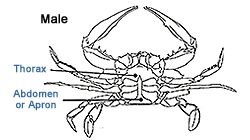
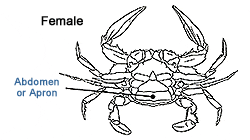
    Vampire crabs stand out from other crab species due to their distinct deep purple hue on both their legs and bodies, lacing the color with white or cream spots. They are identified by yellow eyes and small pincers, plus male vampire crabs have lighter claws compared to those of the female vampire crabs. The latter is done. Distinguished through an abdominal flap. A sharp one for males while it is wider yet rounder in females.

    An amazing occurrence that vampire crabs go through is molting when old exoskeletons get discarded so as to grow new ones bigger than before. This also serves them protection against possible predators in nature’s wild areas.

    Caring for Your Vampire Crab

    The well-being of vampire crabs rests upon the environment they are kept in, which ideally should include a 10 gallon fish tank with an 80:20 ratio of land to water. This partially terrestrial habitat should also contain live plants and offer perching opportunities. Maintaining aquarium water within slightly alkaline water parameters is essential for their survival.

    A quality filter, heater, and regular partial changes every month will ensure ammonia and nitrite levels remain undetectable – and keeps your nitrate levels low. The humidity level should remain at 75% or higher. Without proper care, the vampire crab cannot thrive as desired, so it’s very important that all aspects be taken into account when setting up the ideal space for them to inhabit safely!

    Tank Setup and Environment

    When it comes to setting up the ideal habitat for vampire crabs, a 10-gallon tank is the perfect size. The land/water ratio should be 80:20 with plenty of live plants, and somewhere they can perch – replicating their semi-terrestrial environment. Ensure there are enough hiding places in the form of caves or rocks so they feel safe.

    Water Parameters and Maintenance

    In terms of water parameters. pH levels from 7.5-8., temperature 24. 28ยฐC (75. 82 ยฐF). An efficient filter system as well as a heater and humidifier, will also come in handy in order to keep optimal quality standards maintained at all times.

    Humidity levels are especially important for these aquatic creatures. Humidity needs to remain at or above 75%. To maintain this environment within the tank, a filter and heater should be purchased. Ammonia and nitrates should also be monitored regularly, with monthly partial water changes being performed in order to keep them under control.

    Diet and Feeding

    Vampire crabs are a great choice for aquarists that want to keep an easy-to-maintain pet. These omnivores need only one daily feeding and require minimal maintenance in their tanks, making them accessible for all aquatic enthusiasts. As scavengers, vampire crabs eat almost anything they find on the substrate, which adds variety to their diet. It is important not to forget to provide them with well balanced meals so as to ensure optimal health over time.

    Food Options

    For a balanced and healthy diet, vampire crabs should be provided with live and frozen foods as well as some dried options such as flakes, pellets, or algae wafers. Calcium-rich items like peas, spinach or broccoli are important for strong shell development in the animal. Other suitable food sources include brine shrimp feed along with earthworms, plus other meaty treats like bloodworms and crickets. Fruits, veggies, and natural plant matter can also provide variety to the vampire crab diet when fed on occasion.

    Feeding Frequency

    Vampire crabs should be fed a well-balanced diet so they are given the necessary nutrition and energy on a daily basis. To accomplish this, a regular feeding routine should be established. Establish an appropriate schedule for them so they can live healthy in their aquatic habitat.
    If you keep up with consistent feedings of nutrients, it will lead to contentment within the crab population while also helping maintain good health levels as well! Feeding once a day should suffice for them.

    Social Behavior and Tank Mates

    Vampire crabs are sociable animals and is quite aggressive if they feel threatened by other water-dwellers. So, it is important to make sure the tank mates for these creatures coexist peacefully with them as they will get along well among their own kind. A harmonious aquarium should be created so that vampire crabs stay contented in their environment. This means avoiding crab species or large carnivorous fish, which could create a hostile atmosphere towards them. In contrast, similarly sized passive fish can live in harmony with the vampire crabs without any problems arising from territorial issues.

    Vampire Crab Compatibility

    When keeping vampire crabs, it is vital to ensure that their tank mates are compatible. This crustacean species be highly aggressive towards other crab species and larger fish.

    Ideal Tank Mates

    The best vampire crab tank mates should be similar in size and gentle fish that don’t present any danger. Other crab varieties must not join them since they might cause territorial issues among each other or lead to aggressive behaviors.

    Fortunately, some aquarists have experienced great success pairing these creatures with smaller peaceful freshwater varieties such as:

    If you select compatible companions for your vampires carefully, it will help create a harmonious atmosphere in their habitat which would consequently ensure good health, contentment, and longevity of these animals.

    Breeding and Reproduction

    Breeding vampire crabs is an exciting and fulfilling experience for any aqua enthusiast. The breeding involves the male fertilizing eggs carried by female vampire crab around 30 days, then they hatch into independent babies that need to be isolated from their parents in order to avoid cannibalism.

    Note there isn’t any established method of breeding available in the aquarium trade. Just keep your vampire crabs in optimal health, and they will attempt to breed on their own. That being said, Christoper Scott has a wonderful video on how to breed vampire crabs that is helpful to you. Check out the video below:

    Breeding Process

    Breeding vampire crab is an intermediate level challenge. Male fertilization of the female’s eggs results in between 20 and 80 offspring, which will take roughly a month to hatch. To successfully breed these unique creatures, itโ€™s necessary to provide adequate space, food sources and environment for them while closely observing the process.

    Caring for Baby Crabs

    Baby vampire crabs need to be housed away from adult vampire crabs and each other in order to avoid cannibalism. That’s correct – even the babies will attempt to eat each other!

    Hideaway should be offered to the infant crustaceans so they can feel at ease during this sensitive stage and to ensure the survival of as many young vampire crabs as possible. The young vampire crabs must have a nutritious diet consisting of quality fish flakes, frozen brine shrimp or bloodworms. All given once daily will allow them to grow into healthy adults.

    Common Health Issues and Prevention

    The well-being of vampire crabs is easily compromised, just like any other aquatic creature. Such health issues could include various parasites, bacteria and fungi. This is why itโ€™s important to maintain a clean environment with the correct water parameters in order to help prevent these illnesses from occurring. By taking preventive steps such as isolating new specimens or providing them with balanced diets. You will minimize risks significantly of a disease outbreak into their habitat while keeping your crab population healthy and active!

    Parasites, Fungal and Bacterial Infections

    The health of vampire crabs is compromised by various parasites, such as flukes, nematodes and ciliates. Fungal infections and bacterial issues are common as well. Because of their invert makeup, they are not susceptible some common fish diseases like white spot disease (ich).

    To ensure the wellbeing of your pet you should keep up with regular water changes. If any outbreaks occur, make sure the medication used is safe for these inverts. Make sure they have adequate nutrition from a balanced diet in order to prevent any potential illnesses arising down the line for your beloved vampire crab(s).

    Aside from illnesses, Vampire Crabs are very sensitive to copper and copper poisoning. If you have a planted tank, make sure the fertilizer you use does not contain copper. Many fertilizers that are designed for freshwater shrimp will be safe to use with vampire crabs.

    Great For Shrimp Tanks!
    Thrive S Fertilizer

    An aquarium plant fertilizer specifically designed for shrimp tanks

    Buy On Amazon

    Molting and Shell Health

    Vampire crabs molt in order to grow, but this process can make them vulnerable. It is important for owners of these crustaceans to provide secure hiding places during the molt and practice good water quality standards as well as quarantine procedures. These practices will ensure their vampire crab pets remain healthy throughout life.

    A nutritious diet that contains an ample amount of calcium needs to be provided so the exoskeleton stays strong and robust. Adding foods such as spinach or peas packed with this mineral into their meals is recommended, along with offering supplements if necessary.

    Other Species To Check Out

    Not sure if this crab is for you? Check out our other crab guides below:

    Frequently Asked Questions

    Are vampire crabs aggressive to humans?

    Vampire crabs are quite territorial, often exhibiting aggressive behavior towards other vampire crabs and species. Nevertheless, the tiny claws on these little crustaceans pose no threat to humans. They make excellent additions to any aquarium as they offer a fascinating yet risk-free experience for all!

    Are vampire crabs good pets?

    Vampire crabs make amazing pets for newbies, as they are tough and easy to care for. Vampire crab behavior is known for being charming and energetic. They like climbing surfaces or taking refuge in dark corners also add an extra layer of interest to owning them! As long as you provide good nutrition and keep their environment clean, vampire crabs is awesome little companions.

    What’s a vampire crab?

    Vampire crabs, one of nature’s most interesting creations, inhabit the Indonesian island of Java. These charismatic little animals live mostly on land, but they become particularly active around twilight when their big luminous eyes search for food. Their semi-terrestrial lifestyle and sinister common name make them a truly remarkable species!

    What is the lifespan of a vampire crab?

    When taken care of correctly, vampire crabs can have a lifespan up to two years. For optimal well-being, their tank should be at least 10 gallons in size and the temperature as well as pH levels needs to remain consistent throughout. If these water conditions are met properly, your pet crab is sure to enjoy an active and fulfilling life for two years!

    Are Vampire Crabs aggressive to humans?

    Vampire crabs may appear aggressive towards other species due to their territorial nature, yet they are harmless toward humans as their claws only possess minimal strength. Despite the small size of these creatures, caution should still be taken when interacting with them in order to avoid potential conflicts.

    How the Vampire Crab Compares to Similar Species

    Want a fully aquatic invertebrate? Get shrimp. Want a semi-terrestrial paludarium project? Get crabs. The setup is completely different.

    The most common alternative to the Vampire Crab is the Red Claw Crab, another semi-terrestrial crab option. Red Claw Crabs are larger, more aggressive, and need brackish water. Vampire Crabs stay smaller, are more colorful, and do well in fully freshwater paludariums. For a planted paludarium, Vampire Crabs are the showier, easier choice.

    Closing Thoughts

    At the end of the day, ensuring that your vampire crabs are healthy and happy requires thoughtful vampire crab care, a nutritious diet, compatible tank mates, and appropriate natural habitat for breeding.

    Taking good observation practices seriously, along with caring deeply about these fascinating crustaceans, will help to build a harmonious space in which they can prosper. By learning more about the vampire crab, we can provide future generations of enthusiasts with advice on how best to look after their own vampire crab colonies, making sure everyone is able to enjoy life alongside this mysterious species.

  • Best Cherry Barb Tank Mates: 15 Great Choices (From Personal Experience)

    Best Cherry Barb Tank Mates: 15 Great Choices (From Personal Experience)

    Cherry Barbs are one of my personal favorites for a planted community tank. that deep red coloration on a male in breeding condition against a backdrop of green plants is genuinely hard to beat. I’ve kept them in my own community setups and they’re one of the most easygoing barb species you’ll find. Unlike Tiger Barbs, they won’t nip fins and they don’t need to be in a huge school to behave. They do best in groups of six or more, and they look best with tank mates that won’t outcompete them for food or stress them with aggression. Here’s what I’ve found actually works.

    Key Takeaways

    • Cherry barbs are peaceful schooling fish that need a densely planted tank.
    • These fish are relatively hardy and can be kept in a wide range of aquarium conditions.
    • Compatible tank mates include other schooling fish as well as several larger feature species.
    • Cherry barbs have the potential to become slightly aggressive towards each other and smaller, slower species.

    Introduction

    Cherry barbs have become increasingly popular over the past several years and for good reason. Before these small, colorful fish became mainstream, the term ‘barb’ generally referred to tiger barbs (Puntius tetrazona). As many hobbyists quickly found out, tiger barbs are aggressive fish that aren’t the best choice for a community tank. Because of this negative connotation, many hobbyists still relate the barb term to aggression.

    The fact of the matter is that cherry barbs are some of the most community-friendly fish available for freshwater aquariums. Cherry barbs (Puntius titteya) are in the same scientific genus as their aggressive cousins but replace overaggression with intense coloration.

    Appearance

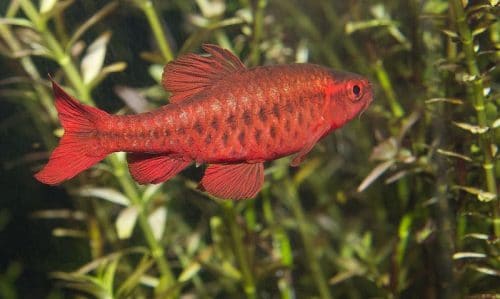
    The cherry barb is named after its bright orange coloration. Some individuals may have a noticeable dark red line from the tip of their face to the dorsal fin.

    Male Cherry Barb
    Male

    Cherry barbs grow to be about 2 to 3 inches long and have a torpedo-shaped body. Though this body shape allows them to quickly dart through the water column if threatened by a predator, cherry barbs are generally very relaxed and controlled swimmers; they are slightly more active than small species of tetra but demonstrate the same jagged movements.

    Male cherry barbs are smaller in size and more torpedo-shaped than female fish. Female cherry barbs are much plumper and have less intense coloration that is usually more brown than red or orange.

    Tank Requirements

    Cherry barbs aren’t necessarily difficult fish to keep, but some responsibility comes with having them in your freshwater aquarium. Unfortunately, cherry barbs are only endemic to small flooded regions throughout the country of Sri Lanka and are now considered a vulnerable species1. This is due to deforestation and the destruction of their native rivers and floodplains.

    To have these fish thrive in your own aquarium, they should be kept in conditions similar to those found in their natural habitat. Luckily, cherry barb fish have been successfully bred in the aquarium trade so most individuals are not wild-caught.

    But are cherry barbs easy to keep in the aquarium?

    Cherry barbs are relatively easy to keep in standard freshwater tanks. There are a few special considerations needed when setting up their aquarium and keeping them with other species. This mostly includes matching their natural habitat as best as possible while ensuring they don’t outcompete other species for food during feeding times. Otherwise, their needs are very similar to those of any other tropical fish.

    Here’s how to set up the best fish tank for cherry barbs!

    Tank Setup

    Like many other tropical fish, the cherry barb is a schooling fish that needs to be kept in groups of at least six or more. As a result, this increases the minimum tank size recommended to about 30 gallons for comfortably keeping a school. That being said, many hobbyists have kept a school of cherry barb fish in a 20 gallon long tank, though this is only recommended if the overall tank stocking is very light.

    Otherwise, these freshwater fish can be kept with a variety of species as long as tank conditions are catered around them. Cherry barbs come from waters filled with dense vegetation and life that protects them from the strong overhead sun. In the aquarium, these conditions should be met by having a well-planted tank with plenty of plants that cover the surface of the water, like floating species. A gravel or sand substrate may be based on preference but should facilitate healthy root growth.

    Cherry barbs are not messy fish and do not require a ton of filtration. Allowing the tank to be messier than average can be extremely beneficial for heavily planted tanks that need constant nutrient input. Filtration should offer a low to medium water current and keep water quality stable between water changes.

    Water Parameters

    Cherry barbs aren’t one of the most hardy fish available in the aquarium hobby but captive-bred individuals can withstand most water parameters as long as they don’t fluctuate. That being said, the ideal water quality parameters for a cherry barb tank are:

    Cherry barbs are tropical fish and need a constant water temperature between 74-82ยฐ F.

    What Do You Feed Them?

    Cherry barb fish are omnivores and will readily eat anything that can fit inside their mouths. This includes various tiny insects and plant matter they might find floating in the water.

    In the aquarium, they can be given high-quality flake foods and pellets that sink to the middle of the water column. They especially like an occasional treat of brine shrimp, bloodworms, and daphnia.

    Will They Breed in a Community Tank?

    In the right home aquarium, cherry barbs will breed when they feel ready. This barb species is an egg layer that can be spawned in the display aquarium or a separate tank. As males and females are easy to differentiate, it’s recommended to keep a single male with a small group of females.

    When ready, the female will lay her eggs and the male will fertilize them. At this point, both the male and female cherry barbs should be removed.

    How many cherry barbs should you keep together?

    The cherry barb is a schooling species and should be kept in groups of at least six or more at all times. Male cherry barbs can become aggressive towards each other so only one male should be kept for every small group of females. For a larger tank, multiple males may be kept as long as there is room to disperse the aggression.

    Are they aggressive?

    Cherry barbs are not very aggressive, but they are still a barb species. This means that there may be some intraspecies aggression, particularly between males during spawning periods. Large cherry barb individuals may also start to nip at smaller, less active species.

    The Best Cherry Barb Tank Mates

    While a school of cherry barb fish can easily fill a planted tank on their own, many hobbyists like to keep these bright fish with other species. Luckily, they are one of the best community-friendly species available as they are colorful and present in the aquarium.

    All this considered, here are some of the best cherry barb tank mates available for a community tank setup.

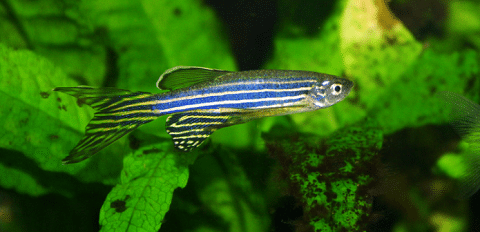
    1. Zebra Danio

    What Does A Zebra Danio Look Like
    • Scientific Name: Danio rerio
    • Adult Size: 3 inches
    • Care Level: Easy
    • Temperament: Peaceful
    • Swimming Level: Top and middle
    • Minimum Tank Size: 10 gallons
    • pH: 6.5-7.5
    • Water Temperature: 64-75ยฐ F

    Zebra danios are one of the most popular freshwater fish available in the aquarium trade. These are peaceful yet active fish that can bring life to the upper portions of the aquarium.

    Zebra danios can be a great cherry barb tank mate, especially in aquariums with a lower average water temperature. However, the activity level of the zebra danio should be considered. Most times, their activity will cause cherry barbs to also become bold in character. But sometimes, this activity can be too much and cause you cherry barbs to become timid and reclusive.

    If you find that your cherry barbs turn into timid fish, then you may need to increase their schooling size or remove the zebra danios altogether.

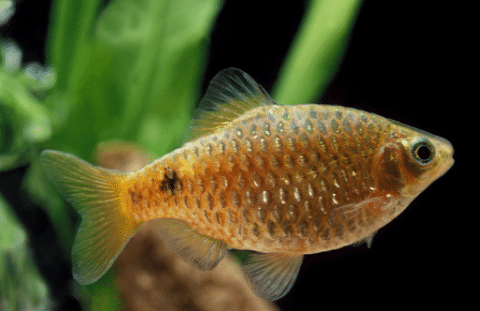
    2. Rosy Barbs

    <a href=Rosy Barb in Planted Tank” class=”wp-image-554575″/>
    • Scientific Name: Puntius conchonius
    • Adult Size: 6 inches
    • Care Level: Easy
    • Temperament: Semi-aggressive
    • Swimming Level: All
    • Minimum Tank Size: 30 gallons
    • pH: 6.0-7.0
    • Water Temperature: 64-74ยฐ F

    Rosy barbs are large fish that can do well with cherry barbs if some specific conditions are met. These fish are labeled as semi-aggressive fish as they can sometimes be fin nippers among themselves and with slower fish. This shouldn’t be a problem for keeping them with cherry barbs as their moderate activity will influence your cherries to be more active.

    Rosy barbs are also unique in the fact that they do best in cooler water temperatures. This means that some acclimation may be necessary to get your cherry barbs in the temperatures preferred by your rosy barbs.

    3. Guppy Fish

    • Scientific Name: Poecilia reticulata
    • Adult Size: 2 inches
    • Care Level: Very easy
    • Temperament: Peaceful
    • Swimming Level: Top
    • Minimum Tank Size: 10 gallons
    • pH: 5.5-8.0
    • Water Temperature: 64-82ยฐ F

    Guppy fish get a lot of hate due to being the stereotypical beginner species, but this incredibly hardy fish can bring a ton of color and movement to an aquarium.

    Though cherry barbs have unique coloration, they can be difficult to match with other tank mates. Guppies come in almost every color imaginable, which can be used to either complement or contrast those of your cherry barbs.

    Keep in mind that guppies are prolific livebearers that can quickly overpopulate a small fish tank.

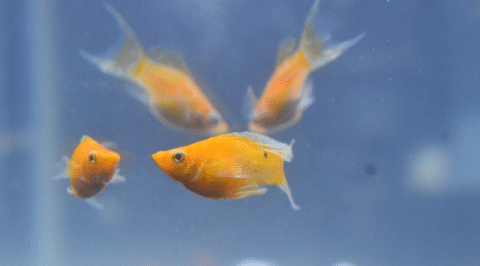
    4. Mollies

    How Do Molly Fish Look Like
    • Scientific Name: Poecilia sphenops
    • Adult Size: 3-5 inches
    • Care Level: Very easy
    • Temperament: Peaceful
    • Swimming Level: Top and middle
    • Minimum Tank Size: 10 gallons
    • pH: 7.0-8.0
    • Water Temperature: 72-82ยฐ F

    Similarly, mollies are also a great, beginner-friendly cherry barb tank mate. Mollies are much larger than guppies and have bigger splashes of color and movement. They can sometimes overpower other fish, especially during feeding times. It may be necessary to feed your mollies and cherries in two different locations of the aquarium.

    Like guppies, mollies are livebearers. In addition to their large size and active demeanor, it’s recommended to only keep cherry barbs and mollies together in aquariums with plenty of swimming space.

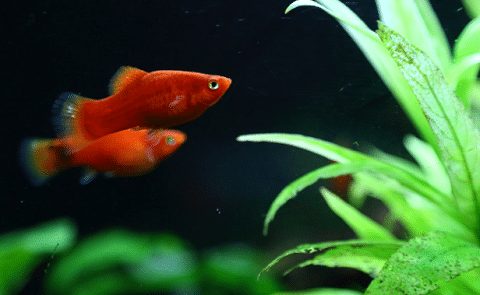
    5. Platy Fish

    Platy Fish
    • Scientific Name: Xiphophorus maculatus
    • Adult Size: 2 inches
    • Care Level: Easy
    • Temperament: Peaceful
    • Swimming Level: Top and middle
    • Minimum Tank Size: 10 gallons
    • pH: 7.0-8.0
    • Water Temperature: 64-82ยฐ F

    If mollies are too much for your aquarium, then platies are just as easy but at half the size. Platy fish come in a variety of bright colors that can be used to compliment those of your cherry barbs. They are still very active fish but are more relaxed than guppies or mollies. That being said, they are also prolific livebearers that can quickly overpopulate an aquarium.

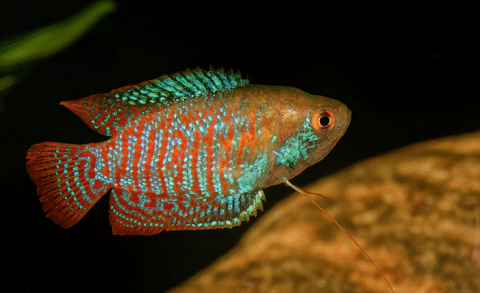
    6. Dwarf Gouramis

    Dwarf Gourami in Aquarium
    • Scientific Name: Trichogaster lalia
    • Adult Size: 2-3 inches
    • Care Level: Moderate
    • Temperament: Peaceful to semi-aggressive
    • Swimming Level: Top and middle
    • Minimum Tank Size: 10 gallons
    • pH: 6.0-8.0
    • Water Temperature: 72-82ยฐ F

    The dwarf gourami is a popular freshwater fish that’s often used as a featured species, especially in smaller aquariums. For the most part, dwarf gouramis are great tank mates for a cherry barb tank. However, some dwarf gouramis have been known to be aggressive towards each other and to other fish. If considering a dwarf gourami, it’s strongly recommended to keep larger schools of cherry barb and only one gourami.

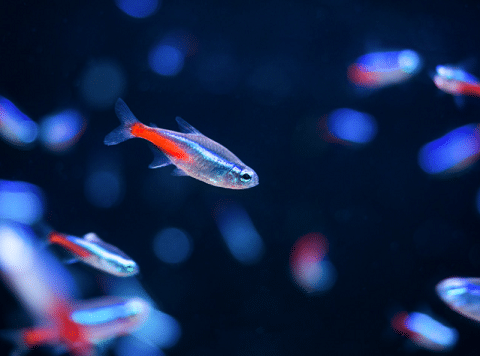
    7. Neon Tetra

    • Scientific Name: Paracheirodon innesi
    • Adult Size: 1-2 inches
    • Care Level: Moderate
    • Temperament: Peaceful
    • Swimming Level: Middle
    • Minimum Tank Size: 10 gallons
    • pH: 5.0-7.0
    • Water Temperature: 68-82ยฐ F

    Another popular tropical fish, the neon tetra is a moderate-level fish. These fish are relatively delicate when transporting and acclimating and often die within the first few days of having them in the aquarium. Even after they’re established, they are likely to die off one by one.

    That being said, if you have success keeping neon tetras, they can be great tank mates for cherry barbs. Of the two, cherry barbs tend to be more aggressive than neons and so there should be more neon tetras than cherry barbs.

    8. Cardinal Tetra

    • Scientific Name: Paracheirodon axelrodi
    • Adult Size: 2 inches
    • Care Level: Moderate
    • Temperament: Peaceful
    • Swimming Level: Middle
    • Minimum Tank Size: 10 gallons
    • pH: 5.0-7.0
    • Water Temperature: 68-82ยฐ F

    Cardinal tetras are almost exact in color and behavior to neon tetras but are slightly larger and a little more sensitive to water parameters. As another type of schooling fish, the number of cardinals should be greater than the number of cherry barbs; the larger size of cardinals helps deter some cherry barb aggression, but greater numbers will help keep them safe from potential nipping.

    9. Penguin Tetra

    <a href=Penguin Tetra in Planted Tank” class=”wp-image-1073302″/>
    • Scientific Name: Thayeria boehlkei
    • Adult Size: 2-3 inches
    • Care Level: Easy
    • Temperament: Peaceful
    • Swimming Level: Middle
    • Minimum Tank Size: 30 gallons
    • pH: 5.5-8.5
    • Water Temperature: 64-82ยฐ F

    Penguin tetras are very adaptable fish that can be great tank mates for the cherry barb. Penguin tetras are very similar in shape, size, and behavior to the cherry barb. The benefit of keeping penguin tetras is that they bring schooling fish behavior without offering color. This can be useful for hobbyists looking to accent their cherry barbs instead of other species.

    10. Rasboras

    Rasboras
    • Scientific Name: Rasbora spp.
    • Adult Size: <4 inches
    • Care Level: Easy
    • Temperament: Peaceful
    • Swimming Level: Top and middle
    • Minimum Tank Size: 10 gallons
    • pH: 6.5-8.0
    • Water Temperature: 75-80ยฐ F

    Many species of Rasbora can be ideal tank mates for cherry barbs. One of the most popular rasboras kept with cherry barb fish is the harlequin rasbora (Trigonostigma heteromorpha). These peaceful fish feature some of the same colors seen on the cherry barb but have a much smaller body and angular patterns.

    Each species of Rasbora will be different from the next. Some are more stagnant swimmers, like harlequin rasboras, while others enjoy being just as, if not more, active than cherry barbs. Make sure to research compatibility before placing these fish with each other.

    11. Kribensis

    Kribensis Cichlid Male and Female
    • Scientific Name: Pelvicachromis pulcher
    • Adult Size: 4 inches
    • Care Level: Easy
    • Temperament: Semi-aggressive
    • Swimming Level: Middle to bottom
    • Minimum Tank Size: 55 gallons
    • pH: 6.0-8.0
    • Water Temperature: 72-82ยฐ F

    You might be surprised to find a cichlid on this list of the best tank mates for a cherry barb tank, but kribensis typically don’t mind a schooling fish in their aquarium; in setups like this, aquarium conditions and species should be chosen based on the kribensis.
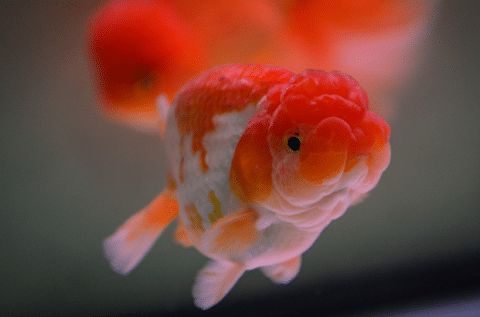
    For the most part, kribensis and cherry barbs will ignore each other in the aquarium. However, kribensis are cichlids that have the potential to breed and become aggressive during spawning periods. This can cause some conflict with the cherry barbs.

    If there is serious aggression, the kribensis should be moved to a breeding tank during these times. Additional cherry barbs and aquarium plants may also be added for more protection in numbers and structure.

    12. Celestial Pearl Danio

    • Scientific Name: Celestichthys margaritatus
    • Adult Size: 1 inch
    • Care Level: Moderate
    • Temperament: Peaceful
    • Swimming Level: Middle and bottom
    • Minimum Tank Size: 10 gallons
    • pH: 6.5-7.5
    • Water Temperature: 72-82ยฐ F

    Many hobbyists that keep cherry barbs are likely to keep celestial pearl danios. For whatever reason, these two fish species are often paired together as being more challenging or unusual fish tank options. In reality, both these hardy fish species are readily available, easy to keep, and even great tank mates with the right setup.

    There is a large difference in demeanor between celestial pearl danios and cherry barbs. Cherry barbs eat very quickly and are moderately active in general. Celestial pearl danios take their time and can be reclusive in overstimulating situations.

    To help balance this difference, special attention will need to be given during feeding times. Though not likely, there is also a chance that large cherry barbs could eat particularly small celestial pearl danios.

    13. Honey Gourami

    • Scientific Name: Trichogaster chuna
    • Adult Size: 2 inches
    • Care Level: Easy
    • Temperament: Peaceful
    • Swimming Level: All
    • Minimum Tank Size: 10 gallons
    • pH: 6.0-7.5
    • Water Temperature: 72-82ยฐ F

    If a dwarf gourami is giving you trouble, then the honey gourami might be a better alternative for your cherry barb tank. Honey gouramis are actually smaller than their dwarf counterparts and much more community tank appropriate.

    While not aggressive, the honey gourami can be overly inquisitive. This could potentially stress out smaller cherry barb individuals. In return, large cherry barbs can also stress out a smaller honey gourami.

    14. Kuhli Loach

    • Scientific Name: Pangio spp.
    • Adult Size: 3-5 inches
    • Care Level: Moderate
    • Temperament: Peaceful
    • Swimming Level: Bottom
    • Minimum Tank Size: 20 gallons
    • pH: 6.5-7.5
    • Water Temperature: 75-86ยฐ F

    Kuhli loaches are a great choice for a cherry barb tank that needs some life at the bottom of it. These fish prefer warmer tank water temperatures so some acclimation may be needed to get them in the same range as cherry barbs.

    Another consideration for keeping these freshwater fish is that they are bottom feeders. Cherry barbs are very active feeders and will quickly eat any food that floats down the water column. It may be necessary to supplement sinking pellets or other heavy foods that float past the barbs and onto the substrate for the loaches to eat.

    15. Otocinclus

    • Scientific Name: Otocinclus spp.
    • Adult Size: <4 inches
    • Care Level: Difficult
    • Temperament: Peaceful
    • Swimming Level: All
    • Minimum Tank Size: 20 gallons
    • pH: 6.5-7.5
    • Water Temperature: 75-82ยฐ F

    If you’re struggling with an algae problem in your cherry barb aquarium, you may have been recommended Otocinclus, or otos for short. Otos are very efficient algae eaters that can clean a tank overnight. But this is what also makes them so difficult to keep.

    Otocinclus are schooling fish that need a constant supply of algae. This limits them to mature tanks that have plenty of natural food available. If this describes your aquarium, then otos are good tank mates for cherry barbs as the two will rarely interact.

    Bad Choices

    While cherry barbs can get along with most fish species, there are some that they will never be compatible with. This includes overly aggressive or active species such as:

    • Aggressive small to medium-sized cichlids, like convict cichlids (Amatitlania nigrofasciata)
    • Large African or South American cichlids, like Oscar fish (Astronotus ocellatus)
    • Any other fish species that can easily fit a cherry barb in its mouth

    Conclusion

    The cherry barb is an often overlooked fish that is highly compatible with most other fish species available. A school of cherry barbs can offer intense color and movement in a small or large tank setup with minimal additional work. Some of the best cherry barb tank mates are other schooling species, but they can also be kept with several larger feature species.


    ๐Ÿ“˜ Want to learn more? This article is part of our complete Freshwater Fish Guide. your ultimate resource for freshwater species, care tips, tank setup, and more.

  • How to Lower Nitrites in a Fish Tank: Fast Fixes and Permanent Solutions

    How to Lower Nitrites in a Fish Tank: Fast Fixes and Permanent Solutions

    Nitrite spikes are one of the most dangerous situations a new fish keeper faces, and they almost always happen during the nitrogen cycle. I’ve walked dozens of beginners through nitrite emergencies over the years and the approach is consistent. act fast, understand what’s happening, and don’t panic. Here’s my step-by-step guide.

    High nitrites are a crisis situation for any tank. it’s the middle stage of the nitrogen cycle where ammonia has been converted to nitrite, but your beneficial bacteria haven’t fully established yet to convert it to the much-safer nitrate. I’ve helped new hobbyists troubleshoot this exact problem many times over the years. The immediate response and the long-term fix are two very different things, and doing one without the other just prolongs the problem. Here’s exactly what to do.

    Key Takeaways

    • Understanding nitrite levels in aquariums is necessary for the health of fish.
    • Regular partial water changes, adding beneficial bacteria, and adjusting feeding practices are effective methods to reduce nitrite levels.
    • Proper maintenance, incorporating live plants, and managing fish populations are all long-term strategies for maintaining low nitrite levels in an aquarium.

    Understanding Nitrite Levels in Aquariums

    Betta in Fish Tank

    Managing nitrite levels is a crucial part of the nitrogen cycle in an aquarium. Unfortunately, it can be hard to detect this colorless and odorless chemical without specialized testing equipment. Leaving it unchecked for too long, elevated nitrite concentrations can cause serious problems such as decreased appetite or even death within several hours for your fish due to nitrite poisoning.

    Fortunately, though, with the right knowledge about how best to regulate them, you should have no difficulty keeping their levels undetectable. Before we learn about nitrates, let’s learn about the nitrogen cycle itself and the role it plays in our aquariums.

    The Nitrogen Cycle

    It is essential to understand the nitrogen cycle for an aquarium with healthy fish. This process involves beneficial bacteria that convert ammonia into nitrite, and then convert these into nitrate. A typical cycle takes between two to six weeks, but this can be completed faster via fishless cycling.

    An ammonia spike is the first thing to occur in a cycle; then, it will become undetectable. If you detect high levels of nitrite without detectable ammonia levels, this suggests nitrite spikes meaning the cycle has reached halfway completion, as colonies that consume ammonium are present but not yet in sufficient numbers to convert nitrite.

    Maintaining these bacterial communities by providing suitable conditions allows them to complete their work efficiently so they can balance out the nitrogen cycle and prevent your fish from suffering from nitrite poisoning.

    Acceptable Levels

    In order to create a safe and thriving environment for fish, it is essential that nitrite levels remain zero in an already established tank. In new tanks, high readings are natural due to the absence of beneficial bacteria, which should be introduced before adding any fish. Even a 1ppm nitrite level can cause stress in some freshwater fish species, so monitoring these levels closely is recommended.

    Temperature, pH and salinity all have an effect on how ammonia levels and nitrite affect your freshwater fish – catfish being more tolerant than others like fathead minnow for example- thus making regular testing vital if you want optimum health conditions within your tank.

    Causes of High Levels

    Nitrite levels in a freshwater aquarium are typically high due to overfeeding, overcrowding or improper maintenance. Excessive waste leads to increased pollution and decreased water quality. This often necessitates more frequent water changes than normal.

    To prevent elevated ammonia and nitrite levels from occurring as a result of these problems, it is important that the proper feeding practices be adhered to along with keeping appropriate numbers of aquarium fish inhabiting the tank plus making sure regular upkeep is maintained too.

    Testing Levels in Your Aquarium

    Maintaining the proper nitrite levels in your aquarium is essential, and there are several ways you can monitor this. Test strips, liquid test kits and digital testers all offer different benefits to help track these numbers correctly. Liquid test kits and digital testers would be my preference, as strips are known for being inaccurate.
    Liquid Test Kits

    Having an accurate measure of nitrite levels is important for healthy fish tanks, and liquid test kits are great tools to achieve just that. These kits can detect variations in aquarium water when you put a few drops of the testing solution into it. While this takes up some extra time, their precision makes them very popular amongst aquarists looking for reliable results.
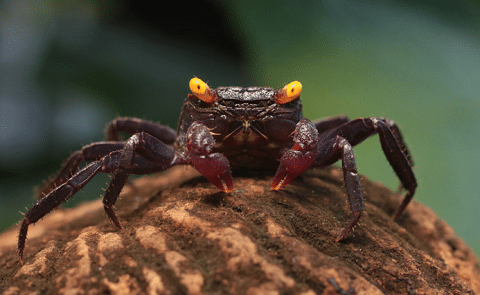
    Regularly using these test kits helps identify potential problems before they worsen. Thus ensuring your aquatic life stays safe and flourishing at all times!

    Test Strips

    Test strips offer a fast and effortless method to measure nitrite concentration in your fish tank. They can also be used for evaluating other water characteristics, making them convenient for instant tests or spot checks. Their accuracy may not compare with liquid or digital testers.

    API Test Strips

    This is a basic test kit that are used in many pet stores. There are better options, but this is readily available at most stores

    Buy On Petco Buy On Amazon

    Although test strips are less precise than liquid kits when it comes to determining the level of nitrites, they still deliver an uncomplicated way of keeping track of how much there is present. In the event you need immediate results, these products provide enough information that allows quick identification and resolution of any potential issue detected before it turns into something more serious later down the line.

    Digital Testers

    Investing in a digital tester will bring convenience and accuracy when it comes to monitoring nitrite levels. These devices offer quick and precise readings, with some being able to evaluate multiple factors other than nitrite as well.

    Hanna Instruments Ammonia Test

    Hanna Instruments are lab grade digital testers that are known for high accuracy and reliability

    Buy On Amazon

    By keeping an eye on water quality through the accurate measurements of these testers, aquarium owners can ensure their fish tanks have safe living conditions that remain optimal for them. As such, those looking for reliable methods they can trust should consider getting a digital tester. especially if speed is also desired alongside precision results! Keep in mind that these testers can get very expensive.

    How To Lower Nitrites In Fish Tanks (Immediate Actions)

    In order to preserve the well-being of your fish, it is essential that action be taken immediately if you have nitrate levels that are detectable. Three techniques are particularly effective at remedying this situation quickly.

    1. Adding beneficial bacteria into the tank.
    2. Undertaking partial water changes
    3. Altering feeding habits

    Let’s take a closer look at how these tactics work to eliminate those troublesome nitrite spikes. I’ve included a video from our YouTube Channel for those who prefer a visual presentation. As always, our blog post goes into more detail. Please subscribe to us if you like our content. We post new videos every week!

    Adding Beneficial Bacteria

    Adding beneficial bacteria (AKA bottled bacteria), like Turbostart, to your aquarium is a great way of promoting the nitrogen cycle and creating a healthy ecosystem for your fish. Introducing these friendly microorganisms helps convert nitrite into nitrate more efficiently while also managing overall levels in order to ensure the proper well-being of your aquarium fish. After large water changes, it is especially important to include this type of boost as well so that cycling can occur again quickly and effectively.

    My Pick For Freshwater Bacteria
    Fritz Turbo Start 700 Freshwater

    Fritz Turbo Start is known in the industry as the fastest acting nitrifying bacteria you can purchase. This 700 version is specialized for freshwater tank and has my highest recommendation

    Buy On Amazon Click For Best Price

    Partial Water Changes

    Partial water changes are essential for managing nitrite levels in the aquarium. Not only does it help reduce concentrations of nitrite by diluting them, but you must also remove sources such as fish waste and uneaten food to keep your tank’s environment healthy.

    Be sure to dechlorinate tap water before introducing new liquid into the system. use a product like SeaChem Prime. Prime will ensure that any toxins are removed from your tap water, including ammonia and nitrite. Regular partial changes will ensure that any issues regarding high amounts of nitrites won’t become serious over time.

    Adjusting Feeding Practices

    Nitrite levels in an aquarium can be effectively managed through proper feeding practices. By avoiding overfeeding and only giving your fish what they are able to consume within a few minutes, it will help minimize excess waste production, which increases ammonia and nitrite levels. Doing so allows for the environment to stay healthier overall while still providing the nourishment necessary for their health.

    It is essential to maintain sensible feeding habits as this plays a huge role in keeping both ammonia and nitrite concentrations at manageable amounts, ensuring an environment free of ammonia levels, and preventing your fish from getting nitrite poisoning.

    Long-Term Solutions for Maintaining Undetectable Levels

    It is important to not only take immediate actions in order to preserve low nitrite levels, but also come up with long-term solutions. Appropriate tank maintenance and regulating the amount of fish are both essential for maintaining a healthy aquarium environment. To understand how these can help you reach optimal conditions on the long run, let’s look into each one more closely. There are two main ways to eliminate ammonia and nitrite long-term in aquariums:

    1. Providing adequate filtration
    2. Maintenance
    3. Live Plants
    4. Maintaining healthy stocking levels

    The Important of Aquarium Filtration

    Filtration systems in aquariums will help keep ammonia spikes and nitrite spikes at bay. The filter bacteria in cycled filters will be kept in the biological chambers of these units. There are many types of filters that can be deployed in an aquarium. Here are example types:

    All these types have their pros and cons. More advanced freshwater tanks will use canister filters, while salt water fish tanks will often use sumps.

    Proper Aquarium Maintenance

    To keep nitrite levels low and provide a healthy home for your fish, proper aquarium maintenance is essential. Cleaning the filters, as well as removing dead organisms or uneaten food particles from the tank should be carried out on a regular basis to ensure water quality. To perform weekly (or bi-weekly) water changes based on the stock level of your aquarium. Establishing an effective biological filter takes about four weeks before it can work efficiently.

    If you maintain a planted tank, you will also want to prune and remove dead plant material from the aquarium regularly.

    Whether you keep a freshwater or saltwater tank, maintaining your filter units is essential as well. You will want to regularly clean out your mechanical and chemical filtration sections. Clean out your motors and piping regularly to keep optimal running conditions in your tank.

    Through correct maintenance techniques, you will not only preserve balanced conditions. Limit stress placed upon aquatic life, resulting in healthier inhabitants! Regular care helps maintain optimum nitrite levels while providing ideal living conditions for these creatures that need our help to stay safe and secure underwater habitats.

    Live Plants and Their Benefits

    <a href=Anubias Nana Petite Plant” class=”wp-image-555062″/>
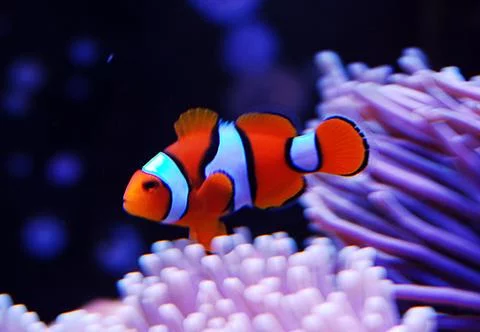
    Live plants play an integral role when it comes to keeping nitrogen stable. They act as biofilters that consume large amounts of ammonia while simultaneously adding oxygen back into your water column. providing multiple beneficial effects! Proper upkeep and management of population density will help.

    Keep in mind that plants can be a detriment as well. Dead plants can lead to poor water quality and sudden nitrite spikes. Work towards decreasing high concentrations of nitrites in your system by doing your part with maintenance.

    Live plants can help maintain low nitrite levels in your aquarium. As fertilizer, they absorb nitrites and supply oxygen to the water, which maintains a balance of healthy elements for aquatic life forms. These live plants also add beauty while providing shelter to fish species as well as other organisms living under the surface.

    Some plants are also more adapt at absorbing nutrients than others. Here are a few examples of plants that excel at nutrient reduction:

    If you start seeing yellow or brown leaves on your greenery, itโ€™s best practice to prune them out before they star to decay. This ensures that equilibrium remains undisturbed within these tanks. Adding live vegetation not only serves an aesthetic purpose but is fundamental in achieving optimum conditions with regard to the maintenance of nitrite levels.

    Managing Fish Population

    Maintaining an appropriate number of fish for the size of your aquarium is essential in preserving low nitrite concentrations. An overcrowded tank can result in a surge on these levels, which may be harmful to both aquatic life and the fish themselves. Regular water changes are also beneficial because they help rid the water of toxins like nitrites, as well as keeping those amounts at bay.

    By properly managing your population, you create a more balanced ecosystem free from any issues caused by high nitrite rates that could potentially put everyone’s health at risk-including yours! All this helps promote happy and thriving living conditions where everybody feels comfortable regardless if itโ€™s in or out of our tanks.

    Special Considerations for Saltwater Aquariums

    Tank Raised Clownfish

    When dealing with saltwater aquariums, it’s essential to keep nitrite levels in check. Nitrate monitoring and avoiding nitrite toxicity are two important ways of maintaining a healthy aquatic habitat.

    To effectively handle the management of these special considerations for saltwater tanks, we must learn how to manage their nitrite levels accordingly. By closely keeping tabs on both nitrogenous compounds -nitrates and nitrites – any aquarist can rest assured theyโ€™re providing an adequate environment for their marine life species!

    Toxicity in Saltwater Tanks

    In saltwater tanks, nitrite toxicity is not typically seen as a pressing matter due to the presence of chloride ions1. The gill lamellae are less vulnerable in these environments because chloride inhibits absorption rates. If there’s an excessive level of nitrites, it could be symptomatic of higher ammonia or nitrate concentrations that should be tested and treated accordingly.

    It is essential for aquarists to monitor their saltwater aquariums to assess for elevated levels of nitrite on a regular basis. this way, any potential issues can quickly become identified before they affect your fishโ€™s health and stability negatively.

    Frequently Asked Questions

    Does water conditioner lower nitrites?

    Water conditioners can be a successful way of lessening nitrite levels in an aquarium. Vigilantly monitoring the concentration of both ammonia and nitrate, as well as performing regular water changes, will help. Reduce these dangerous elements.

    Can fish survive high nitrites?

    For your fish to stay healthy, it is advisable that you check the nitrite level of your tank water frequently and make sure not to exceed 1ppm. It can be possible for some species of fish to endure high nitrites over a short period, but they will still become stressed, and long term nitrite poisoning occurs.

    How can I lower my nitrites without water change?

    Reducing organic waste in your tank is the key to keeping nitrate levels low and preventing future spikes without needing water changes. To help achieve this, incorporate a bio-media filter into your aquarium setup, it can make all the difference!

    How long does it take for nitrite levels to drop?

    It is. It takes two to seven days for nitrite levels to decrease, although the timeframe may vary. Usually, it is within 48-72 hours that a drop in these levels can be observed.

    How long can fish live with high nitrites?

    The high levels of nitrites in aquariums are very dangerous to fish and can cause them intense pain before dying prematurely. Keeping the concentration low is key for a healthy environment, since if it’s too elevated, they could only last a few days at most.

    Summary

    For a flourishing aquatic environment, monitoring and controlling nitrite levels in your aquarium is of utmost importance. To become an adept at handling this parameter, one needs to have a detailed understanding of the nitrogen cycle and be consistently mindful when measuring its presence level; both immediate remedial steps as well as longer term solutions should then follow accordingly.

    Although it can seem intimidating initially, you are now armed with all the know-how that will help make managing these readings simpler than ever! Allocating proper time for maintenance may seem tedious, but ultimately pays off by providing secure habitat for fish living within your aquarium’s boundaries. creating a thriving ecosystem sure to bring joy every day!

    References

  • How Long Can Fish Go Without Food? (The Answer Might Surprise You)

    How Long Can Fish Go Without Food? (The Answer Might Surprise You)

    This is one of the most common questions I get from newer hobbyists heading out of town. and the honest answer is that most healthy fish handle a few days without food better than people expect. Overfeeding is actually a far more common problem in this hobby than underfeeding. Fish in a well-established tank with some algae and live plants can often graze on their own for a week or more without any issues. The variables that matter are species, age, tank conditions, and whether the fish are already in good health. I’ll break down what the real limits are so you can make an informed decision before you travel.

    Key Takeaways

    • In general, aquarium fish can survive without food for anywhere from 3 days to 2 months. It will depend on the fish species
    • Fasting is a beneficial practice for the health of individual fish, but juveniles should not fast.
    • Fish fasting duration depends on species and factors such as metabolism, activity levels, water temperature, and dietary preferences.
    • Automatic feeders or fish sitters are reliable options to provide care while you’re away from home.

    How Long Can Fish Go Without Food?

    To answer this quickly for our readers, in general, fish can survive without food anywhere from 3 days to 2 months, depending on the species. There really isn’t a quick answer to this because fish species are so varied1.

    Let’s look at a few examples. Cichlids are known for having long fasting periods after breeding. The female cichlid can go as long as a month during this mouth-brooding period while taking care of their young. That’s some parent dedication right there!

    Other fish like Mandarian Gobies in saltwater tanks need to eat because they don’t have a stomach. These fish cannot fast at all and require fauna like copepods to feed off of them constantly.

    As you can see, you can go extreme ends of the spectrum with fish! Let’s look into understanding why a fish would fast and the various factors that would determine how long your fish can go without food.

    Understanding Fasting With Aquatic Animals

    <a href=Pearl Gourami Fish” class=”wp-image-554652″/>
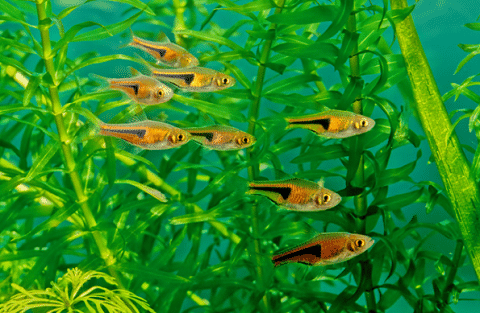
    Fish fasting means withholding food from your fish for a certain period of time. Although it may seem counterproductive, going without daily meals can be beneficial to the fish, most species are capable of managing up to 7 days with no nutrition, but some types have greater endurance. Skipping one meal per week is necessary in order to prevent health issues such as constipation and swim bladder disease. Juvenile fish must eat regularly, or else they won’t develop properly, resulting in malformations that stop them from flourishing.

    The Importance of Fasting

    Periodically fasting fish can contribute to their overall health and the well-being of an entire aquarium community. The process helps empty a fish’s digestive system, allowing it to more efficiently absorb nutrients from its food. This is particularly important for round-bodied species, which may otherwise experience difficulty swimming due to pressure on the swim bladder caused by excess consumption.

    These fasts should last anywhere between 24 to 48 hours before introducing nutrient rich meals such as meat or fresh vegetables back into their diets. Avoiding overfeeding prevents water quality issues associated with increased waste production along with excessive nutrients that are likely to encourage the growth of algae and add stress to your fish from poor quality water.

    Species-Specific Fasting Duration

    For aquarium hobbyists, it is vital to understand that how long a certain species of fish can survive without food. How long largely varies and depends on its type. For example, betta fishes have the ability to go for about two weeks with no meals, whereas goldfishes may be able to stay alive up to a week or more without consuming any nourishment.

    Such fasting periods are not ideal for sustaining their health in the long-term, but rather help them strengthen their digestive system and better get accustomed to their habitats as they grow older. Temperature levels existing in water as well as activity rates along with individual preferences when picking what kind of food also influence feeding frequency significantly within various types of creatures under consideration here, namely fish!

    Fasting for Juveniles

    The nutrition requirements of young fish are quite different than those of adult specimens. Young fish need multiple feeding daily to support their growth and development. Insufficiently feeding baby fish may lead to deformities, sickness, or even death due to malformations caused by a lack of proper nourishment.

    It is important for fryโ€™s diet to include live/frozen food sources as well as pellets, flakes, and vegetables in order to maintain good health until reaching maturity, after which fasting days can be introduced into the eating regime in order to optimize any potential future issues with digestion.

    Factors Affecting Feeding Frequency

    School of Rasboras

    How long fish can survive without food is determined by numerous factors, such as their metabolism and activity levels, water temperature, and eating habits. All these criteria play an important role in deciding how often the fish need to feed or go for days without nourishment.

    In this section, we shall examine every factor closely so that you have a better understanding of its influence on your fish’s feeding practices. The temperature of the tank water, along with metabolic rate and lifestyle, all figure heavily into determining just how much time a species can stay healthy while skipping meals.

    Metabolism and Activity Levels

    The energy requirements of smaller, more active fish differ greatly from larger ones that are slower in nature. The activity levels and metabolism of these creatures determine how often they need to be fed. The former requires two or three meals per day as their high-energy lifestyle calls for a large amount of food intake, which typically includes plankton and insect larvae.

    On the other hand, bigger species require less frequent sustenance because they don’t expend too much energy due to their calmer existence. It is important to understand your pet’s metabolic rate so you can give them enough nourishment at regular intervals for optimal health conditions.

    Water Temperature’s Role

    Eheim Jagar Heater

    The water temperature is a key factor in the frequency of fish feeding. When it gets too hot or cold, eating may decrease due to discomfort. Too much food at any temperature can cause harm to your fish, so be sure that you are adjusting their intake accordingly based on the temperature of the water.

    Water should stay regulated according to what best suits each particular type of aquatic life living inside it. This includes regulating meal times by taking into consideration both temperate ranges as well as optimal meals given out daily per individual species.

    Adequately providing nutritional needs correlated with changes in the atmosphere will assist not only towards maintaining appropriate body functions but also establishing overall well-being for all inhabitants (such as fish) found inhabiting these environments. Monitoring fluctuations occurring from warmer/cooler climates is part of being responsible ownership practices!

    Dietary Preferences: Herbivores vs. Carnivores

    Feeding frequency is an important factor to consider when caring for different types of fish. Carnivorous varieties require fewer meals than herbivores as they eat prey items that provide more concentrated energy sources. This means they can get by on a single meal, whereas their vegetarian counterparts need regular feedings since plant matter offers them less energy per mouthful.

    Providing the correct diet based on what each type likes to consume helps keep your fish healthy and happy. Herbivore species should be offered live plants or algae so they always have access to low-energy food while carnivores need fresh, meaty fare like live or frozen prey instead in order to meet their nutritional needs properly.

    Here are examples of these types of freshwater fish:

    Herbivores

    Carnivorous Fish

    Size and Feeding Habits

    African Cichlids in a Rock Aquarium

    Fish, regardless of size, need to be fed regularly. Larger fish with slow metabolism can go longer periods without being provided food when compared to smaller fish which possess faster metabolisms. This is because a bigger body requires fewer calories to function optimally, while the opposite applies in case of small sized fish and they require fewer calories, but more frequent feedings to function. Frequent feedings are necessary for those fishes that have high metabolic rates, but not so much for big fish with slow metrics.

    Large Species And Slower Metabolism

    When it comes to adult fish, which are of a larger size, their cells can have an influence on the oxygen availability and, as such cause them to have lower metabolic rates compared with smaller varieties. This then leads to less frequent feedings being necessary for large adults than those of more diminutive sizes – typically, many fish hobbyists suggest providing sustenance just once per day in order maintain optimal health in these bigger organisms.

    The amount administered needs careful consideration also so not too much is consumed. Overfeeding may bring about issues like constipation or swim bladder disease while having ill-effects upon water quality within aquariums altogether. Appropriate feeding frequency is essential if we wish our larger aquatic friends remain healthy and happy!

    Her are examples of large freshwater fish species

    Small Species and Faster Metabolism

    Small fish are characterized by having a higher metabolism, which requires them to consume food more frequently than their larger counterparts. This can be beneficial for the small fish, as it provides extra sources of nutrition that will help increase its chances of survival.

    Congo-Tetra

    To meet these particular dietary needs with fast metabolisms, regular and light feedings must occur so they get what is needed nutritionally without overwhelming themselves or creating an imbalanced tank environment.

    The frequency at which you should properly feed your smaller fish is critical in ensuring good health and well-being all around!

    Examples Of Small Species

    Special Considerations for Goldfish

    Goldfish require particular diets compared to other fish species, that consist of approximately 30% protein and encompass various types of foods like live or frozen items, flakes, pellets as well as vegetables. Adult goldfish have a tendency to eat too much if not managed correctly, so fasting them once in a while is suggested for optimal health. By properly providing the right diet balance along with periodic fasts, you can guarantee your pet fish remains healthy and content.

    Preparing Your Aquatic Pets for Your Absence

    Fish Tank In Living Room

    If you need to be away from home for any length of time, it is important that your fish get the food and care they require while you are gone. To help address this issue, there are several solutions available like automatic fish feeders, hiring a fish-sitter, or using specialized blocks of compressed nutrition specifically designed for fish.

    To make sure that your underwater buddies have enough nourishment in your absence, these options should provide ideal choices when deciding what solution will best suit them.

    Automatic fish feeders can easily dispense preset amounts at predetermined times so all nutritional needs are met on schedule. Sometimes leaving specific instructions with someone familiar with their dietary habits may be preferable, especially if more than one type of food is required such as flakes plus frozen treats!

    Fish owners might even consider feeding items made up of specially formulated cubes that last longer because moisture evaporates slower.

    Utilizing Automatic Feeders

    An automatic fish feeder is a battery-operated device designed to establish set feeding schedules for your pet fish, even when you are not around. Bear in mind that some types of these tools can only disperse dry food such as flakes and pellets. To ensure the well being of your aquatic friends, it’s important to give them just enough nourishment – what they’re able to eat within three minutes should do the trick!

    Having an automatic fish feeder ensures that your aquatic pets will get all their necessary nutrients while also keeping their environment clean by limiting excessive eating or waste, which might lead to poor water quality, ultimately affecting the health status of your gilled pals negatively. This piece of equipment could be quite a reliable solution for providing food during oneโ€™s absences from home.

    Hiring Sitting Services (Or Finding A Friend)

    Having a knowledgeable fish sitter can be incredibly advantageous for any aquarium owner who plans to go away from home for an extended period of time. You can hire a service to ensure your beloved aquatic creatures are fed, and their fish tank stays in good condition.

    However, the best sitter is likely one you can find from a local aquarium society. These hobbyists are experienced and will know how to care for your pet fish. Facebook groups are useful to find local people as well. Spent time in these groups and get to know them. Find someone you trust so when the time comes you travel without worry.

    Aquarium Society

    Investing wisely on the right person guarantees that your fish will get optimal care when they need it most. Meaning that during holidays or business trips you’ll have one less thing to worry about, knowing perfectly well that your finned friends are being taken care of by an expert hand.

    Considering Food Blocks

    Fish food blocks are composed of protein derived from both animals and plants that gradually release nutrients into the water. These blocks can break down and leave uneaten food in an aquarium, which can result in poor water quality. Manufacturers have reduced nutritional values to counter this problem, so they must not be used without filtration systems or proper circulation of the water for them to dissolve well.

    Though fish food blocks may appear as a suitable way of feeding your pet fish when youโ€™re away, it should still be employed with caution. The best option is making sure your fish tank has enough filtration plus adequant current. Otherwise, think about using automated feeders or getting assistance from someone who knows how to take care of fish (fish sitter).

    Frequently Asked Questions

    Can my fish go a week without food?

    Adult aquarium fish can usually endure up to a week without food. Due to their low fat stores, younger fish may not last as long. For this reason, it is crucial that you consult the pet shop prior if planning an extended leave of absence from home. When departing for more than several days, make sure your aquatic friends have enough food beforehand in order to maintain healthy conditions while away.

    How many days can a fish go without eating?

    Fish are relatively hardy, and they can endure a few days without nourishment. For them to stay healthy, it is recommended that aquarium fish should be fed at least once every two or three days. Adult healthy fish could manage up to fortnight with no food intake. On the other hand, young ones don’t have enough fat reserves as adults do, so providing them nutrition in intervals of 2-3 days will help maintain their health is much better.

    What happens if you don’t feed your fish for 2 days?

    Adult fish are able to exist without nutrition for two days due to the fat reserves in their bodies. Younger specimens require regular feeding or else they could have health complications arise from going too long without food. Thus it is important that you feed your fish on a routine basis so that both mature and young fish stay healthy.

    How can I feed my fish while on vacation?

    If you are going on vacation, it is vital to take steps in order to make sure your fish get the right amount of food. A great solution for this problem is a battery-operated automatic fish feeder – this allows you to pre-program meal times so that even while away from home, your aquatic friends will still be fed as usual.

    Can fish survive 4 days without food?

    Fish are capable of surviving for up to four days without food. It is crucial that they maintain a balanced diet and optimal health beforehand. Their habitat must meet all criteria necessary in order for them to survive during the period when no meals are consumed.

    Even though fish can last several days with nothing nourishing them, providing regularly scheduled nutritious feedings alongside an ideal living space ensures that they stay healthy and happy.

    Closing Thoughts

    It is important for fish owners to understand the dietary needs, frequency of feedings, and preferences of their aquatic pets. This knowledge can be used to make sure that when you are away, your aquarium inhabitants receive proper care by taking into account factors such as size and metabolism rate along with activity levels in combination with water temperature. To ensure a healthy environment, an automated fish feeder or enlisting the services of a reliable sitter may be employed while food blocks also provide great nutrition sources which will keep your finned friends fit during absences.


    ๐ŸŸ Want to learn more? This article is part of our complete Aquarium Care Guide. your ultimate resource for water chemistry, maintenance, feeding, disease prevention, and everything you need for a healthy tank.

  • Aquarium Temperature Guide: Correct Ranges for All Fish (Plus Heater Tips)

    Aquarium Temperature Guide: Correct Ranges for All Fish (Plus Heater Tips)

    Temperature is one of those parameters that beginners underestimate and experienced keepers obsess over. for good reason. I use titanium heaters with a separate controller on my tanks because standard heaters have a failure rate that makes me uncomfortable, and a stuck-on heater can cook a tank fast. The flip side is that temperature stability matters as much as hitting the right number. swings of even a few degrees daily will stress fish and suppress immune function over time. This guide covers the correct ranges for virtually every common aquarium fish so you can dial in your setup with confidence.

    Aquarium Water Temperature – Why it Matters

    Fish are cold-blooded animals1, which means they are directly affected by the water temperature. Unlike birds and mammals (like ourselves), fish can’t regulate their own body temperature, and they can’t crawl under a blanket either! Check out our video from our YouTube Channel that you can follow along with this blog!

    So what happens when the water gets a little too cold or warm?

    Well, if it gets really hot or really cold, your fish aren’t going to survive. However, keeping your fish even a little outside of their proper temperature range can have serious health impacts in the long run.

    Incorrect water temperatures cause stress and affect your fish’s immune system, leaving them wide open to a whole range of health ailments – fungal, bacterial, and parasitic infections. Unhealthy tank temperatures aren’t only dangerous for your fish. Inverts like shrimp, snails and aquatic plants also have preferred temperature ranges to consider.

    And then there are the organisms that we can’t even see. The beneficial bacteria that live in our aquariums are also sensitive to high temperatures, and without them, the nitrogen cycle can fail and cause serious water quality issues.

    Choosing the Right Temp for Your Fish

    Before you buy any fresh or saltwater fish, be sure to research its temperature requirements and make sure you will be able to maintain that temperature range.

    Each fish species can survive in a range of temperatures, but it’s usually safest to aim for the middle of the range if you’re going to be maintaining a stable temperature.

    Matching Tankmates

    So, aquarists need to maintain a stable water temperature or a suitable temperature range that matches the needs of their specific fish species. But what happens when you keep a community setup with more than one species?

    Goldfish Fins

    Well, it’s vitally important that each fish species you keep is comfortable in the same temperatures. Ideally, you should be choosing tank mates from a similar natural habitat, but at the very least their upper and lower temperature limits should be pretty similar.

    You don’t want a situation where one or more of your fish are always uncomfortable like in the following example:

    From a temperature perspective alone, a goldfish can live in temperatures between 65 and 72 degrees Fahrenheit, and a cockatoo cichlid can survive in 72 – 84 degrees Fahrenheit, but that doesn’t mean you should keep the two species together at 72ยฐF since they will both be right on the limit, and a small swing either way could be dangerous. Note this example is temperature only. There are other factors to consider like temperament, pH, and hardness preference of these fish.

    Stable vs. Fluctuating temps – Which is Best?

    So we know that each fish species prefers a certain temperature range, but should we aim to maintain a specific happy middle ground, or let the water warm and cool slightly? Gradual warming and cooling through the day is perfectly natural as long as the temperatures stay within a safe range, but you want to avoid frequent and rapid water changes.

    You see, water temperature varies in nature, slowly with the seasons, and quickly during storms and hot weather. However, changes happen much slower in large bodies of water, and wild fish have the freedom to move to areas where the water is warmer or cooler. In the ocean, water stability is more critical as a degree or two change can have drastic changes to corals and fish2.

    If you keep your home warm all year, or you live in a tropical environment, you probably won’t need a heater (more on this later), and you can allow your water temperature to fluctuate if it stays within a safe range.

    However, if you need to use a heater (as many folks do), it’s best to maintain a stable temperature throughout the year and only raise or lower it if you have a specific goal like treating an infection or breeding your fish.

    Suggested Ranges for Different Fish

    Now that you know a little more about aquarium temperature and why it’s so important, let’s take a look at some recommended temperature ranges for different aquarium setups. These are general guidelines, but remember to research each fish species needs before choosing a specific temperature.

    Cold Water Fish

    While most of the popular aquarium fish come from warm and tropical parts of the world, some well-known fish actually prefer it a little cooler. Coldwater fish are generally comfortable in water temperatures below 70 ยฐF, and some are even happy below 60 degrees fahrenheit.

    Here are a few examples of coldwater fish and their preferred temperature range:

    Check out our guide to 20 great cold water aquarium fish for more examples!

    Tropical Fish

    Most aquarium fish are tropical species that come from natural habitats near the Earth’s equator. The temperatures are generally warm to hot in these regions, and the seasons don’t change too much, so temperatures are relatively stable.

    Congo-Tetra

    Ideal temperatures for tropical fish vary between the species, but most fish will thrive at 75 to 80 degrees Fahrenheit. However, some fish enjoy even warmer water.

    Here are a few examples of ‘hot’ water fish and their preferred temperature range:

    Reef Tanks

    Tropical reefs are warm water environments, and that means most aquarists will need to run a heater in their reef tanks to keep the temperature in the safe range. Water temperatures fluctuate in the ocean too, but not as quickly or as dramatically as they can in a glass aquarium.

    Toadstool Coral in Reef Tank

    Corals are heat-sensitive organisms that are most comfortable between about 73 and 84 degrees Fahrenheit, and most aquarists agree that ideal reef tank temperatures range between about 73 and 80ยฐF, with the ideal temperature right around 78 degrees Fahrenheit.

    Other Common Setups

    I’m going to list a few other popular tank setups and ranges for your reference. We have links in this section to their respective overview pages.

    WYSIWYG Available!
    Betta Fish

    Use Coupon Code ASDFISH at Checkout

    Betta Fish are one of the most beautiful varieties of freshwater fish available in the hobby. Easy to care for with plenty of varieties!

    Buy Premium Varieties Buy On Petco Online

    Adjusting Your Aquarium Temperature

    In a perfect world, the water in our fish tanks would remain within the same range as our aquatic pets’ natural habitat without any adjustments, but that just isn’t always the case. Fortunately, providing warmer or cooler water is possible with the right techniques and equipment.

    However, before we discuss techniques for increasing and decreasing water temperature, it’s important to mention again that adjustments must be made slowly and carefully. Dramatic changes in water temperatures will cause shock and might even kill your aquatic pets.

    Heating The Water

    Aquarium heaters are simple devices that warm the water in aquariums and maintain a specific stable temperature for tropical fish. Read on to learn whether you need an aquarium heater and how to use these life-saving tools.

    Do you need a heater?

    Cold-water fish usually do not require a heater if kept indoors, but you should monitor their water temperature anyway to stay on the safe side.

    It is possible to maintain warm water for tropical fish without using a heater IF you maintain warm temperatures in your home. Your lighting and other equipment may even provide enough heat, even if your home is a little on the cool side.

    However, if you’re just getting started and you’re not exactly sure how the temperature changes in your home through the year, it’s going to be safer to pick up a heater rather than experiment with fish already in your tank.

    Remember- Just because your aquarium fish might survive temperatures outside of their preferred range doesn’t mean it’s good for them in the long run.

    Choosing A Heater

    Aquarium heaters are sized according to their wattage. In most cases, 5 watts per gallon is going to be adequate, and you can go down to about 3 watts per gallon on larger aquariums over 60 gallons where the water temperature remains more stable. You may need to use more than one heater in a large aquarium, and this has the benefit of creating a more even temperature distribution.

    Best Value
    Eheim Jager Aquarium Heater

    Best Value

    Very accurate, durable, and German made. A great value buy for any aquarium

    Click For Best Price Buy On Amazon

    Most aquarium heaters work on a built-in thermostat, so a heater that is slightly too large for your tank is not going to make the water too hot, although it may warm your water too quickly. However, a heater that is too small for your aquarium volume is not going to cope in a cold room.

    Here are a few examples of suggested minimum heater sizes for various tropical fish tanks:

    • 5-gallon tank: 25 – 50 watts
    • 10-gallon tank: 50 – 100 watts
    • 29-gallon tank: 100 – 150 watts
    • 55-gallon tank: 150 – 200 watts

    These are suggested minimum wattages, but you might need to go bigger if your home is very very cold.

    Using A Heater

    There are various aquarium heater designs on the market, so it’s best to follow the specific instructions of whichever product you choose to buy. However, there are some general guidelines that you should take note of.

    Aquarium heaters use thermostats that tell them when to kick on and off to maintain your desired tank temperature. This means you need to adjust your heater to the temperature your fish need and then leave it powered on permanently.

    Position your heater near a source of water flow in the fish tank to distribute the warmth evenly. Heaters are not the prettiest devices, so I recommend the back of the aquarium where you can hide your hardware with hardscape, ornaments, or plants.

    Heaters are supposed to last several years, although it’s wise to keep a spare, especially if your home is not heated and you don’t live near a fish or pet store. As a best practice, it is best to replace your heater once a year as they have a record of failing. Installing a heater controller will provide the most assurance.

    Protects Against Heater Failure!
    Inkbird Heater Controller

    Protect your investment with this heater controller. An excellent choice for small tanks. WiFi models now available!

    Buy On Amazon Click For Best Price

    Circulation & Oxygenation

    Warm water holds less oxygen than cool water, so increasing the flow and oxygenation in your aquarium can have great benefits for your tropical fish. A small powerhead and an airstone can distribute the heat, break up the water’s surface, and dissolve more oxygen into the water.

    Adequate water circulation in your aquarium will ensure stable water temperatures throughout your fish tank, just remember that power heads and pumps will give off some heat.

    Cooling your Tank

    Warming the water temperature in your aquarium is easy. All you need is a good quality heater, plugged into a reliable power source, and an accurate thermometer to keep an eye on and you’re all set. But what do you do if your water is too warm?

    Well, cooling your fish tank can be a little more complicated, but there are many proven methods to choose from. Let’s take a look at some effective options:

    Use Minimal Equipment

    All internal aquarium hardware that uses electricity gives off some heat. Minimizing your equipment and choosing low energy alternatives are great ways to keep things cool.

    LED aquarium lighting is the best choice if your fish tank is running too warm. LED technology runs cooler than traditional fluorescent and incandescent lights, and it uses less power and lasts longer too.

    Powerfilters create heat too, so consider a sponge filter to save a few degrees. Air-powered filters do not increase water temperature and can even help to cool the tank by surface agitation and evaporative cooling. Running an airstone has the same effect, and has the added benefit of increasing aeration for your fish.

    Create a Cool Environment

    An aquarium in a hot room will naturally warm up to match the surrounding air. Keep your fish tanks in a cool space like the basement or in a room on the north side of your house where the walls don’t get direct sunlight.

    You should also move your aquarium away from sources of heat like computers, refrigerators, and stovetops. Air conditioning the room is highly effective, but cranking up the AC will crank up your utility bills too, so keep that in mind.

    Evaporative Cooling

    It’s possible to cool your aquarium by running a small fan on the water’s surface. You can even set your fan on a timer, for the late afternoon when it gets the warmest or even wire it to a thermostat if you’re handy.

    Aquarium Cooling Fan

    Aquarium cooling fans are cheap and effective ways of pushing heat away from the aquarium

    Buy On Amazon Click For Best Price

    You’ll need to remove the hood of your tank to allow for airflow and the best option is to cover your aquarium with a fine mesh. That way some water can evaporate and heat can escape your tank.

    You could go without the mesh, but then you run the risk of fish jumping out of your tank, and you’d be surprised how well fish can jump! One way of minimizing the risk is to drop your water level by a few inches.

    Evaporative cooling will increase humidity around your tank, which is great for houseplants, but not ideal for electronics. Cooling your aquarium with evaporation also means you’re going to need to top up your tank more often. This is pretty straightforward in a freshwater setup, but it will cause salinity fluctuations in a reef tank (unless you implement an auto top off system).

    Cooling with Ice

    You could also cool your aquarium with ice or cold water in a pinch, but this method is time-consuming, difficult to manage, and has more risks for your fish. One way to do this effectively is to freeze a couple of soda bottles full of water and float them in your tank when necessary.

    Use a Chiller

    The most effective method of cooling your aquarium water is to use a purpose-made aquarium chiller. These devices refrigerate the water as it flows through them, effectively cooling it to your desired tank temperature. Chillers aren’t cheap, but they are adjustable and provide much better fish tank temperature control than some of the other DIY options.

    Editor’s Choice
    JBJ Arctica Aquarium Chiller

    Editor’s Choice

    The name brand in aquarium chillers. The JBJ Arctica efficiently keeps tanks cool and are quiet

    Click For Best Price Buy On Amazon

    Monitoring

    Aquarium heater temperature adjustment systems can be pretty inaccurate, so a good quality thermometer is your safest bet for monitoring your tank temperature.

    There are many designs available in the hobby including old-school floating glass thermometers, stick-on-the-glass designs, systems with submersible probes and LCD screens, and even infrared guns.

    Choose a design that’s easy to read and compare it with others in the shop or test it against a friend’s thermometer to confirm its accuracy if you can.

    FAQs

    How cold is too cold for an aquarium?

    Your aquarium is too cold if your thermometer reads below the minimum temperature range of the fish you keep. Fish in general do take cooler water better than water that is too warm, however, long term exposure will cause harm and your fish may not survive. Some cool water fish like goldfish can survive without heaters in cool indoor temperatures.

    How warm is too warm for an aquarium?

    Most tropical fish can survive in water up to about 80 degrees Fahrenheit. There are some fish that can handle 82-86ยฐF. However, every fish species will have difference needs. This is why you should research the various care requirements of the fish you are looking to purchase.

    Is 82 degrees too hot for aquarium?

    Most cold water and temperate fish will be stressed when their tank’s temperature reaches 82 degrees Fahrenheit. However, some tropical fish thrive at this temperature, and most species will survive for some time. However, most aquarium fish require slightly cooler water for long-term health.

    How do I know if my aquarium is too warm?

    At higher temperatures, fish will usually show signs of hypoxia (suffocation) by reduced activity levels and rapid breathing at the water surface or the bottom of the tank. However, monitoring your tank’s temperature with a thermometer is the most reliable way to safeguard fish health.

    What is the best temperature for a freshwater fish tank?

    Each fish species has its own ideal temperature range, so there is no single best temperature. However, a temperature of about 77 degrees Fahrenheit is suitable for most tropical fresh and saltwater fish.

    Final Thoughts

    Fish tank temperature control is one of the most important factors to be successful in the aquarium hobby. The take-home message is that you don’t have to keep your tank perfectly stable at a specific water temp, but stick within your pet’s ideal temperature range to keep your fish healthy in the long run.

    I hope this article has been helpful to you and your fish tank, and feel free to share your aquarium water temp tricks in the comments below!


    ๐ŸŸ Want to learn more? This article is part of our complete Aquarium Care Guide. your ultimate resource for water chemistry, maintenance, feeding, disease prevention, and everything you need for a healthy tank.

  • Why Is My Snail Floating? 7 Reasons (and How to Tell If It’s Alive)

    Why Is My Snail Floating? 7 Reasons (and How to Tell If It’s Alive)

    A floating snail triggers the same reaction every time: ‘is it dead?’. and it’s a completely understandable concern. After keeping snails across multiple tank types for years, I can tell you that floating doesn’t always mean dead, but it does always mean something worth investigating. Here’s how to tell the difference.

    A floating snail is one of those things that makes new keepers reach straight for the net. but before you assume the worst, know this: it’s actually pretty normal behavior for mystery snails and a few other species. They can intentionally trap air in their shells to float down from the top of the tank. That said, floating can also mean something is wrong. water quality issues, stress, or yes, occasionally a dead snail that hasn’t started to smell yet. After keeping snails across many of my tanks over the years, here’s how I tell the difference.

    If youโ€™ve seen your snail floating around the fish tank, there could be a variety of reasons for this behavior. Snail owners shouldn’t worry since not all of them are necessarily alarming and can usually be resolved with proper care. In this post, we will discuss seven potential causes behind why your snail is seemingly afloat, as well as methods to determine if it’s problematic before taking action in order to ensure that they stay happy and healthy!

    Key Takeaways

    • Understanding the behavior of aquarium snails is important to ensure their health and happiness.
    • Identify potential causes of floating, such as searching for food or copper poisoning, and address them with preventative measures like providing proper nutrition & creating a stable environment.
    • Observe movement & examine the shell to determine if your snail has died. Remove promptly from the tank if so.

    Understanding Snail Floating Behavior

    Golden Apple Snail

    Aquatic snails, such as the mystery snail, can naturally float due to their buoyancy and ventilation system. If your snail is consistently drifting for extended periods of time, it is a problem. It’s important to investigate possible causes behind this phenomenon in order to keep its environment safe and healthy.

    Analyzing water parameters along with other aquarium conditions are key components in locating what is causing prolonged floating by the animal. Allowing natural behavior while also being mindful of potential detriments will make sure that these aquatic creatures live happy lives without unnecessary difficulty, intervention, or harm done to them.

    Natural Buoyancy and Ventilation System

    A unique trait of aquarium snails is that they can store air inside their lungs, allowing them to stay afloat and also properly breathe1. This natural buoyancy means it’s easy for the snail to traverse its way around the fish tank or even rest when finished laying eggs.

    The fact your snail floats might just be normal behavior. If this position does not change after some time has passed, then there may be an issue needing investigation at hand. To identify any potential problems, keep an eye on how long you observe your pet remaining adrift in the water before sinking back down again normally.

    Why Is My Snail Floating (The 7 Reasons Why)

    Mystery Snail

    Your mystery snail’s floating behavior could be caused by a number of things. These include:

    1. Its search for food
    2. Distress due to the environment or water parameters
    3. Air getting trapped in its shell
    4. Moving from one spot to another
    5. Sleeping patterns
    6. Copper poisoning
    7. The snail passing

    You should check each potential cause so you can address any issues appropriately and guarantee your little critterโ€™s well-being.

    It may also indicate that something is wrong if it continues hovering on top of the surface. like an increase in water temperature or pollution levels which are harmful. Awareness about these common causes will help you better take care of your aquatic pet! Let’s look into each reason in detail.

    1. Searching for Food

    Snails may sometimes rise to the top of their tank if they are hungry. This is because these creatures tend to take in the thin film that forms on the surface, which consists of bits and pieces from plants as well as proteins floating around there.

    In order to prevent this kind of behavior due to hunger, it’s essential for you to provide your snail with plenty of food options (like fresh vegetables, algae around the tank, or fruits) near its dwelling place at all times. Doing so will give them proper nutrition while making sure they never need to float searching for food again!

    2. Stressed By Environment Or Water Parameters

    If your snail is seen to be floating, this could mean it’s feeling stressed out. Symptoms of stress may include bubbling water or foam near its shell and lackluster behavior such as sluggishness.

    To ensure their wellbeing, there must be suitable tankmates present with whom they will feel safe around, plus you should provide them with an environment with an adequate amount of food so they don’t suffer from malnutrition either.

    It is vital to frequently monitor the water parameters within its environment and keep stability wherever possible. Monitor your ammonia, nitrite, and nitrate levels. Aquarium snails can be more sensitive to changes than fish and can pass suddenly. Test your water frequently with test kits so you can stay on top of it.

    3. Trapped Air

    If you notice that your snail is floating, it could be due to air being trapped in its shell. To check this, take a look for any signs of bubbles and observe the movement while its submerged in water. Moving their body up and down may help release the trapped air inside them, thereby getting rid of the issue of buoyancy. The cause for such can be from either closing their shell too tightly or having an abundance of gas pockets present within their aquatic habitat.

    4. Changing Locations

    Ramshorn Snail

    When snails fill their shells with air, they are able to use it as a natural buoyancy for relocation within the tank. This tendency can be normal and expected. If your snail is constantly floating, you should take extra care in monitoring its environment to guarantee there isn’t any kind of hostility from other fish or intense filtration systems causing distress.

    5. It Is Sleeping

    A floating snail may just be catching some Z’s! Snails rest to save energy and remain safe from possible predators. They can sleep, tucked inside their shell, appearing like they’re not moving at all.

    In order to make sure your little buddy gets enough shuteye, give them a calm environment in the dark that has lots of spaces for hiding away. Sleeping consistently on the surface could be a sign of stress.

    6. Poisoned By Cooper

    Snails and other invertebrates are very sensitive to copper and can become sickened or killed by even small amounts. In order to safeguard their health, it is essential that the water in which they live be tested often for traces of this toxic element. If there’s reason to suspect your pet has been exposed to poisoned water or meds containing copper, you should swiftly move them into another aquarium environment free of such substances.

    If you have a planted tank, some aquarium fertilizers contain copper as an element. Opt for using a shrimp safe fertilizer so you don’t accidentally poison your snails.

    Great For Shrimp Tanks!
    Thrive S Fertilizer

    An aquarium plant fertilizer specifically designed for shrimp tanks

    Buy On Amazon

    Maintaining accurate monitoring on a regular basis will help ensure against any possible poisoning occurring again so as not too upset your beloved snail friend!

    7. The Animal Has Died

    If you notice that your snail is no longer living, examine the shell for any signs of damage or discoloration and give it a smell test for an unpleasant scent. Also, watch out to see if there are any responses when touched.

    It’s essential to remove deceased snails from their tank quickly. They decay fast and can cause ammonia levels in the water system to spike.

    Identifying Potential Problems

    It is important to identify any issues that could be causing your snail’s unusual floating behavior. From water quality and health concerns to trapped air, these can all have a negative effect on the habitat of your aquatic friends. By making sure you address each of them accordingly, you’re ensuring they are in a safe environment with healthy conditions for growth and well-being. Not only will this help out your aquarium snails but also other inhabitants living in the tank too!

    Water Quality Issues

    Water quality can have serious implications for your snails and other aquatic inhabitants in the aquarium. Poor water conditions, such as elevated nitrates, nitrites or ammonia levels, could cause them to float due to distress. To avoid this, regular testing of parameters via test strips or a liquid kit is advised, together with using a filter system and periodic water changes. Doing so will help you maintain healthy tank conditions conducive for all its aquatic life forms!

    Health Concerns

    Health problems such as sickness, copper contamination and air bubbles trapped in the shell can cause snails to float. Monitoring for any signs of stress or illness is key in addressing these issues. Adequate nutrition, and a stable habitat with suitable companions should help prevent floating by keeping your snail healthy and stress free.

    Trapped Air

    Trapped air could be causing your snail to float, which can easily be remedied by gently moving the creature’s body up and down while submerged. This would help release any trapped air bubbles from beneath its shell.

    To minimize this issue, make sure you keep a clean tank and that no film is formed on top of the water surface as well. A surface skimmer does wonders for removing the film.

    Addressing the Causes (What To Do About It)

    To create a safe and healthy environment for your snail, it is important to make sure that the water parameters are monitored and adjusted appropriately. Appropriate nutrition should be provided as well as any trapped air removed in order to help your pet flourish and prevent future cases of floating behavior.

    Monitoring and Adjusting Water Parameters

    The health of your mystery snail relies on carefully monitoring the water conditions in its tank. Test for ammonia, nitrate and nitrite levels frequently. Be mindful to keep temperature and pH at an ideal level. In order to maintain good water quality, do regular water changes as well as employ a weak current filter so that your snails don’t become distressed by strong currents.

    Providing Proper Nutrition

    Keeping water quality optimal is key in ensuring that your snail has the nutrition it needs for good health. Offer fresh produce and other plant-based foods to provide variety. It’s also important to regularly remove any uneaten food from its tank so there isn’t overfeeding taking place.

    Removing Trapped Air

    Your snail may float due to air getting trapped in its shell, so it’s important to get rid of that. Gently move the snail up and down in water as this will help release any contained air from its body. Keeping your tank clean also helps prevent a film from forming on top of the tank, which can lead to additional trapped-air issues for your snail.

    Preventative Measures

    To ensure that your snail stays healthy, it is important to take the necessary precautions. This includes selecting compatible tank mates for them and providing a secure hideout as well as maintaining stable surroundings in order for them to feel safe and contented.

    Choosing Compatible Tank Mates

    Ember Tetra School

    Choosing compatible partners for your snail is of the utmost importance in order to avoid stress. Regarding tankmates, here are a few examples of safe mates for your snails:

    Be aware that putting too many fish in a tank might cause distressful conditions due to inadequate water quality, which could make your aquarium snail float as a result.

    Maintaining a Stable Environment

    It is important to maintain a stable environment for your snail in order for it to stay healthy and happy. Monitor the water parameters, such as temperature and pH regularly. Adjust them when necessary. Tank maintenance should be carried out on a regular basis, which includes cleaning the aquarium, removing debris and examining any snails not moving to see if they are alive.

    Offering Hiding Places

    Give your snail a place to hide by providing plenty of plants, rocks, and other items in the tank. This will not just reduce stress, but also provide it with an environment that’s akin to its natural one where exploration is possible. Aquarium driftwood is also useful as a means of exploration and for additional surfaces for your snail to eat algae and biofilm.

    Editor’s Choice
    Manzanita Driftwood

    Editor’s Choice

    Manzanita offers it all. Great shape, low tannins, quick to water log and reasonably priced. It’s the ultimate driftwood!

    Click For Best Price Click For Branch Pieces

    Determining If Your Animal is Dead

    It’s important to confirm the status of your snail if you suspect that it may have died despite taking measures against potential causes of floating. To determine whether or not your snail has passed away, there are three steps involved: observing its shell closely, performing a smell test, and checking for movements. Through these assessments, one can ascertain their snail’s condition accurately and respond accordingly depending on the results obtained.

    Examining the Shell

    It’s essential to confirm if a snail is alive if you detect any signs of an empty or damaged shell. A smell test along with observing movement are two ways that can help determine this. It is also important to remove dead snails from tanks quickly in order to protect other aquatic inhabitants from ammonia poisoning caused by them.

    Performing a Smell Test

    To determine if a snail has died, its shell should be carefully sniffed to see if any pungent and unpleasant smell is emitted. If this odor can be detected, it suggests that the creature has passed away. Appropriate steps need to be taken for its removal from the tank as well as disposal of the body.

    Observing Movement

    To check if your snail is alive, try to stimulate it with a light touch. If the creature responds by contracting or shifting its position in any way, then you can assume that all’s well and good. On the other hand, if no movement at all is seen and its body remains exposed out of the shell-case – this could be an indication of death. Thus it should be promptly removed from the tank.

    Frequently Asked Questions

    Why is my snail floating but alive?

    Your snail may be alive and healthy despite looking as if it is floating on the top of your aquarium. This could be caused by a pocket of air trapped in its lungs, which makes them buoyant, or from nibbling away at the protein film that can form at the surface. Whatever is going on with your mollusk friend, they are likely to still be very active even though their position has changed!

    Why is my snail floating but not dead?

    The behavior of floating for your snail might be due to an air bubble caught inside its lungs, or it could even signify that the animal is consuming a protein film seen on top of the water. This type of activity isn’t unusual among snails and doesn’t necessarily mean there’s something wrong with them. having this pocket helps them stay above surface level while they look for food. Although one should not discount that possibility completely either. In some cases, their levitating can indeed indicate death as well.

    Do dead mystery snails float?

    When mystery snails float on the surface of a tank, it’s often an indication they are no longer alive. Poor water quality and sicknesses can be to blame for their demise. Old age is another factor. Although dead mystery snails may appear motionless, air-filled lungs help keep them afloat above the tankโ€™s waters so removing such a snail from its habitat should not be overlooked due to their smaller size.

    How long should I float my snail?

    In order for your snails to easily transition into their new home, it is advised that you float them in the tank inside a bag for about 30 minutes. This period will give them time to get familiar with the temperature of the water and help acclimate them more smoothly. Floating should be done prior to introducing snails into your aquarium so temperatures have enough time to adjust accordingly.

    Once this 30-minute window has passed, you can safely add your snail companions without any problems. Hesitation or worry! Following these steps we recommend taking when adding our aquatic friends ensures an easy introduction process and seamless integration of all creatures involved!

    Why is my snail floating but alive?

    Snails can often be found floating due to air pockets held in their lungs and the film on top of water they eat away. This isn’t necessarily an indication that the snail is dead. It may just have found a comfortable position for itself. So, there’s still hope your little one is alive!

    Closing Thoughts

    By providing a steady environment, adequate food supply and routinely monitoring the water parameters, you can ensure your mystery snail is able to flourish in their home. To be certain of this, it’s important to identify any issues that may arise as floating could indicate various natural habits or health concerns including death. With these measures put into practice, they’ll have an optimal habitat for them to thrive with our aquariums where we can observe their fascinating presence first-hand.

  • How Many Fish Per Gallon? Why the Old Rule Is Wrong (And What to Use Instead)

    How Many Fish Per Gallon? Why the Old Rule Is Wrong (And What to Use Instead)

    The “1 inch of fish per gallon” rule gets repeated everywhere in this hobby, and it’s one of the most misleading pieces of advice beginners receive. It ignores bioload, fish behavior, filtration capacity, swimming habits, and territory requirements. A single Oscar in a 20-gallon and twenty neon tetras in a 20-gallon are not equivalent situations just because the inch count matches. My honest take after 25+ years: fewer fish, done right, is almost always better than maximizing stocking. A stable, lightly stocked tank is dramatically easier to maintain and harder to crash than one pushed to its limits.

    https://www.youtube.com/watch?v=2qmhrfHJjXw

    Key Takeaways

    • There is no set rule for how many fish per gallon you can keep in your freshwater or saltwater aquarium.
    • Many factors, like experience level, tank shape, tank setup, fish species, and water quality will determine the right number for your tank.
    • Stocking a saltwater aquarium is much different than stocking a freshwater setup and more consideration is needed.

    Freshwater Stocking

    Whether you’re stocking a fish tank for the first time or trying to add a little more biodiversity to an established aquarium, you need to know how many fish per gallon is right for your system. You may have heard of the one inch of fish per gallon rule, especially if keeping a freshwater tank. This means that every inch that your fish is expected to grow in length requires an additional gallon of water.

    We’re here to say that the one inch of fish per gallon rule is obsolete and was never true.

    In reality, this golden stocking number changes from tank to tank and there is no correct answer. In fact, there are many factors that go into determining how many fish can comfortably and safely fit in your aquarium.

    There is a big difference between how many fish can be kept in a freshwater aquarium as opposed to a saltwater aquarium although many of the determining factors are the same. To understand how many fish you can keep in your aquarium, you will need to understand your experience level, tank shape, tank setup, fish species, and water quality.

    Experience Level

    Before you even think about filling your fish tank with water, you need to take a realistic look at your capabilities as a fish owner. For beginners, a larger aquarium is generally easier to keep stable than a small aquarium while also allowing plenty of space for fish. On the other hand, experienced hobbyists can easily fit multiple schooling species and feature species into small tanks without any problems.

    An experienced hobbyist can overfill an aquarium, while inexperienced hobbyists may struggle with maintaining a well-understocked aquarium. Why is this?

    Behind fishkeeping is a ton of science with even more trial and error. Unfortunately, some lessons can only be learned by doing. This experience lets hobbyists make judgments about their tank’s abilities that determine how successful they are and ultimately allow for more fish.

    Tank Shape

    Believe it or not, tank shape influences how many fish you can keep in your aquarium over tank setup. This is because many tropical fish prefer horizontal swimming space as opposed to vertical swimming space; one of the exceptions to this rule might be freshwater angelfish (Pterophyllum scalare)1.

    About a decade ago, bowfront and hexagonal aquariums became very popular. However, hobbyists quickly found out that they are impractical for the natural behavior of fish wanting to swim long distances. It should also be mentioned that it was difficult to find appropriately-fitting equipment.

    One of the best examples of how big of a difference the tank shape can make is with stocking between a 20 gallon long tank and a 20 gallon high tank.

    20 gallon tanks are very desirable for their stretched-out, yet confined space. This is one of the best tank sizes available that can house an assortment of fish, invertebrates, and plants. This is in direct contrast to a 20 gallon high tank which is usually too short for keeping more than one kind of tropical schooling fish.

    In general, a long fish tank allows for more fish than a tall fish tank.

    Tank Setup

    That isn’t to say tank setup isn’t important, though. The more items you put into an aquarium, the less space your fish have to move around. That is, unless, you add live plants.

    There are many different ways to set up a fish tank. For freshwater aquariums, the main setups are split between artificial and natural setups. Artificial setups include aquarium-safe decorations while natural setups include live plants, rocks, and driftwood.

    Editor’s Choice
    Manzanita Driftwood

    Editor’s Choice

    Manzanita offers it all. Great shape, low tannins, quick to water log and reasonably priced. It’s the ultimate driftwood!

    Click For Best Price Click For Branch Pieces

    How does your choice in decorations affect which fish you can keep though?

    Every species of fish comes from a different environment with conditions that are unique to that ecosystem. While many fish were born and raised in the aquarium hobby, recreating their natural habitat in an aquarium setting is ideal. Depending on the species, some fish like wide open swimming areas while others enjoy a tank filled to the brim with plants; some fish even prefer nothing at all in their tank.

    Filtration & plants

    No matter which tank setup you go with, it is always recommended to keep live plants if possible. Live plants offer natural biological filtration as they filter and use harmful compounds, like ammonia, nitrite, and nitrate. Having a balance between live plants and the amount of bioload created in the aquarium allows for naturally safe conditions, and thus more fish as long as more plants are then added.

    Otherwise, additional filtration can make up for having a large amount of fish in the aquarium. For especially dirty species, some hobbyists have filtration systems that are the same size or larger than the display tank! Filter media is necessary surface area for beneficial bacteria to grow and process waste; the more filter media you have, the more potential bacteria you will have.

    Installing a large filtration system with plenty of media can work to process ammonia and nitrite, allowing more biological room for fish and less physical tank maintenance.

    Tank Maintenance

    If you can’t keep aquarium plants and are limited with filtration, then there are ways to have more fish without them. The main way to have more fish without plants or a big filtration system is by performing regular maintenance. This method is not recommended for the average hobbyist as missing even a single water change on an overstocked tank can be fatal.

    Depending on how many fish you have, you may need to perform daily water changes. These water changes can vary in percentage, but some of the larger predatory species may require up to 75% of water changed daily; the more waste created, the bigger and more frequent the water changes need to be.

    Keep in mind that the amount of tank maintenance you need to perform doesn’t necessarily depend on how many fish are in the tank, but rather on the species, the filtration system, what they eat, and the overall bioload created.

    Fish Species

    To answer how many fish you can keep in your aquarium, you need to look at the species being kept. The truth is that there is no correct answer to how many fish can be kept per gallon as every tank is different.

    In general, larger fish need a larger tank and smaller fish need a smaller tank. But if we look at the tank size requirements for a betta fish versus a tetra, we’ll see all of the considerations that must go into making sure our fish are comfortable.

    The smallest tank a betta can be kept in is 3 gallons. The smallest tank a neon tetra can be kept in is 10 gallons. On average, betta fish grow to be about one to two inches bigger than a tetra. So why do they need so much more space?

    Tetras are schooling fish that need to be kept with their own species. When you buy one neon tetra, you’re actually buying at least six due to their schooling behavior. Neon tetras are generally more fast-moving and active than betta fish, so they also need more space to freely swim. Though bettas are larger fish, they excel in small spaces that reflect their natural habitat.

    However, if wanting to put your betta fish with other schooling fish, then you need a much larger tank, like a 10 gallon. This is because you need to account for the betta’s aggression.

    WYSIWYG Available!
    Betta Fish

    Use Coupon Code ASDFISH at Checkout

    Betta Fish are one of the most beautiful varieties of freshwater fish available in the hobby. Easy to care for with plenty of varieties!

    Buy Premium Varieties Buy On Petco Online

    Aggression and territory establishment are the main reasons why some fish need so much space. Many fish in the freshwater hobby are peaceful and suitable for a community tank, meaning that you can keep a lot in one tank. However, aggressive species, like cichlids, need plenty of room to establish and maintain their territories and dominance. This leads to fewer fish in a bigger tank.

    In addition to aggression, fish waste, leftover food, and overall bioload also need to be considered. Bigger fish eat more and create more waste, but they’re not the only ones. Some fish are notoriously messy, like small platies (Xiphophorus sp.) that have very active bowels. Again, the messiness of a fish will vary from species to species regardless of their size.

    Lastly, you need to consider the maximum size of your fish. Many fish are sold as juveniles in the aquarium hobby, but should be expected to grow larger as they mature; for some fish, this is a couple of inches, while others can turn into a couple feet in difference. One good example of this is the fancy goldfish (Carassius auratus).

    It is common to find a fancy goldfish for sale under 4 inches when in reality, their adult size might actually be a foot in length! Considering the maximum size of your fish might make your tank seem empty at first, but give your fish some time to grow into it.

    Water Quality

    No matter your experience level, tank setup, or species kept, water quality is the most important aspect of safely stocking your aquarium. Every aquarium must be cycled and established with good bacteria that are able to process toxic compounds that would otherwise kill your fish. If your tank has not completed the nitrogen cycle, then not even one fish can be safely kept.

    But what does it mean to have good aquarium water?

    Good aquarium water doesn’t mean anything but having safe water parameters that make your fish happy. Ideally, this should read as 0 ppm ammonia, 0 ppm nitrite, and under 40 ppm nitrate with a neutral 7.0 pH and a tropical water temperature in a freshwater setting.

    In general, a greater number of fish equals a greater amount of waste entering the system, which can increase toxic compounds, like ammonia and nitrite. This is why many beginner hobbyists lose all their fish in the first few days of having them due to a low number of beneficial bacteria in an overstocked tank.

    However, even a large aquarium with little fish can have water quality issues. This mainly comes down to not having adequate filtration or regular maintenance but can also be due to leaving a dead fish in the aquarium or overfeeding. If you neglect your tank, then conditions can quickly become unsafe.

    It’s important to keep in mind that while you don’t want an excess of harmful compounds in your aquarium, many hobbyists have kept fish in water parameters outside of these ideal standards for decades.

    Saltwater Stocking

    Stocking a freshwater aquarium is much easier than stocking a saltwater one. Saltwater systems are more delicate regarding tank setup, fish species, and water quality. There is no rule book to stocking when it comes to keeping fish in the saltwater hobby.

    For instance, you need to decide which tank setup you want to have: a reef or fish only with live rock (FOWLR). If setting up a FOWLR tank, then you need to pick whether you want to keep reef species or predatory species. Predatory saltwater fish require a lot of room due to their aggression and food requirements, which in turn, creates a lot of waste. This means that a large tank is required with above-average filtration and a very particular stocking list.

    Reef species are easier to find tank mates for, but still challenging to get right due to increased aggression, territoriality, and special considerations that come along with most saltwater species. The order in which the fish are added can also determine the long-term success of the setup.

    FAQs

    How many fish can live in a 1 gallon tank?

    None! There are no available species of fish that are suitable for a 1 gallon fish tank. The smallest aquarium size ever recommended for keeping fish is 2.5 gallons which will comfortably fit a betta under experienced hands.

    How many fish can you put in 2 gallons?

    Again, none! A half gallon makes a ton of difference in the pico world. The minimum tank size recommended for any fish is 2.5 gallons.

    How many fish can you put in a 5-gallon?

    5 gallon aquariums don’t leave much space for fish. A betta fish tank is the most ideal setup, though freshwater hobbyists have had success keeping specific kinds of killifish and minnows.A 5 gallon saltwater aquarium can comfortably fit some species of goby and invertebrates.

    What fish can be in a 10 gallon tank?

    Many fish, both freshwater and marine, can be kept in a 10 gallon tank. These options include popular tetras, rasboras, and livebearers as well as clownfish and gobies.

    How many tetras can you put in a 10 gallon tank?

    Ideally, six to eight tetras should be kept in a 10 gallon tank to form a complete school. Some hobbyists have had luck keeping two schools of different tetras in a 10 gallon tank, though this is recommended for experienced hobbyists as this would be considered a crowded tank.

    How many fish can I put in a 10 gallon tank with a betta?

    This largely depends on the personality of the betta and how many other fish it will tolerate. In general, a peaceful betta can be safely kept with an active species of schooling fish.

    Conclusion

    There is no rule for how many fish you can keep per gallon of water for freshwater or saltwater setups. Many factors, including experience level, tank shape, tank setup, fish species, and water quality determine the right number of fish for your exact aquarium. In our opinion, it’s always better to understock the aquarium than to deal with water quality issues or aggression problems in the future.

  • Can a Male and Female Betta Live Together? (The Honest Answer)

    Can a Male and Female Betta Live Together? (The Honest Answer)

    The short answer is: temporarily yes, permanently it’s complicated. Male and female bettas can coexist briefly for breeding, but a male will harass a female relentlessly if they’re kept together long-term in most setups. I’ve kept bettas and followed the betta community closely. the “betta harem” concept gets floated around where one male is kept with multiple females in a large heavily planted tank, and some keepers pull it off. But I’d never recommend it as a beginner setup, and it requires constant monitoring. For 99% of keepers, a male betta does best as the solo star of his own tank.

    Key Takeaways

    • The quick answer is generally no, however it is possible in the right setup
    • It is possible to house bettas together in the same tank as long as personalities match and the aquarium is set up specifically for keeping multiple bettas.
    • Temperament, tank mates, introduction methods, water quality, and diet can be controlled to keep male and female betta fish together with minimal to no aggression.
    • Two to three female bettas should be kept per every one male betta fish. A large tank will leave room for territories to be established, but these small fish can be comfortably kept together in nano aquariums.
    • Adding other tank mates, like harlequin rasboras, may help distract more aggressive bettas.

    Introduction

    It was originally believed that no other fish could live in the same tank alongside betta fish of the Betta splendens species. Over the years, aquarium hobbyists bent the rules and added an assortment of plants, invertebrates, and eventually, other tropical fish. While many times these betta combinations ended up in dead fish, every once in a while, there would be a success.

    As more time went on, hobbyists learned which species were compatible and the best ways to introduce them to aggressive bettas. Now, fishkeepers are pushing the betta boundaries even more by trying to keep male and female bettas together indefinitely in the same aquarium.

    Can A Male and Female Betta Live Together in the Same Tank?

    For a long time, it was believed that male and female bettas should only be together in the same tank for breeding purposes. While this is still largely true, a handful of hobbyists have had luck keeping pairs, harems, and groups together in slightly larger tank setups.

    There are a few factors that go into determining whether or not these pairings will be successful. These include temperament, tank setup, tank mates, introduction methods, water quality, and diet. We have a video from our YouTube channel above that gives you a few examples of this combo being successful and we go into more details below in our blog. If you like our content, be sure to subscribe as we post new videos every week!

    Why is Your Male Betta Attacking Your Female Betta?

    While some male and female betta fish live together with no problems, others are incompatible no matter what you do. In most cases, the male is aggressive towards the female, but sometimes the female can be overly dominant as well.

    This aggression usually stems from an overlap in territories, breeding times, or the individual personalities of the fish. No matter why your male betta is attacking your female betta or vice versa, the fish should be separated as soon as possible.

    Can You Keep 2 Female Betta Fish Together?

    While many hobbyists like to mix males and females, what if you just want to feature two female betta fish? This isn’t quite a betta sorority, but rather, a peaceful pairing of two bettas.

    Yes, two female betta fish can live together as long as the personalities of the fish match and the tank is set up correctly. Female bettas can be just as aggressive as their male counterparts, so it’s best to purchase related bettas or ones that were raised together. The tank should also have plenty of swimming space but filled with vegetation and hiding places that break up lines of sight.

    If anything, a glass or plastic tank divider can be used to separate these two betta fish without any risk.

    Temperament

    Naturally, betta fish do not want to be aggressive toward one another. If you think about their secluded natural habitats in seasonal floodplains and rice paddies, being overly aggressive and defensive to the point of death would greatly impact the overall population; a limited number of available fish in an environment should not be made smaller through intraspecies competition.

    One of the main reasons domesticated bettas are so aggressive in the aquarium hobby is due to selective breeding. Many lineages of betta fish were intentionally bred to demonstrate the most aggression for fighting purposes, hence their secondary common name of Siamese fighting fish. It’s also been determined that certain colors of betta, namely those with red pigment genetics, have more of an aggressive nature than others1.

    While you can try to pick the most natural, wild-type-looking Betta splendens to reduce the chances of aggression, compatibility will largely be up to the individual bettas involved. If you’ve ever owned betta fish before, you will know that no two are the same. Each fish has its own personality that can be bold and expressive or shy and reclusive. Either extreme of this range can result in incompatibility.

    Ideally, you want male and female betta fish that are alert yet relaxed. They should be inquisitive but not defensive. If you have overly curious or offensive fish, then there are a few ways to diminish unwanted aggressive and territorial nature through your aquarium setup.

    Tank Setup

    Think about a betta’s natural habitat again. In addition to being small, betta fish live together in densely vegetative areas. The water is usually stained by tannins from organics with tons of kicked-up sediment. Add in the plant life and visibility is greatly reduced.

    These same conditions should be replicated in a betta fish tank with plenty of live plants and structures that break up the line of sight between each betta. When keeping more than one betta fish together, you need to make it easy for territories to be established and later maintained. One way to do this is by creating walls of foliage, like with Java moss (Vesicularia dubyana), between wooden or rock structures.

    Though this unkempt environment won’t look polished like most other heavily planted aquariums, your betta fish will be much less willing to fight each other. On top of adding lots of natural coverage and hiding places, lighting can be dimmed and organic tannins may also be added to stain the water and darken conditions.

    Contrary to popular belief, adding additional tank mates can also keep male and female bettas calm as long as tank size allows for additional fish. The minimum tank size you will want to consider for multiple Bettas is 20 gallons, with a 20 gallon long being the only viable option at that size. A 29 gallon or larger is preferred. Heavily planted setups are also recommended.

    Tank Mates

    Rarely has the answer to aggressive fish ever been adding additional fish. But believe it or not, having dither species, or bold and active fish that are used by other fish to determine environmental conditions, can help bettas feel more relaxed.

    This mentality follows as: if the dither fish are relaxed, then there must be no threat present and the betta can also relax. Dither fish can also increase activity from betta fish and make shy individuals more likely to be in the front of the tank.

    Some of the best betta fish dither fish include livebearers, tetras, and danios. Make sure that these fish don’t outcompete your bettas during feeding times. For the best results, it’s recommended to feed your fish in separate areas of the tank, with one species receiving floating fish flakes with others getting sinking pellets. This should help lessen competition and decrease the chances of aggression arising during feeding times.

    Still, always watch while your female and male bettas eat as this is when aggression is most likely to show.

    How Many Bettas Can Live Together?

    In regards to betta fish as their own tank mates, there is a balance that needs to be achieved. At least two to three female betta fish should be kept per every male betta. This will prevent the male betta fish from overpowering the females while also limiting aggression between other males. This should only be attempted in a larger tank.

    How Many Bettas Can You Have In Your Tank, Though?

    A lot, actually. If things go well, betta fish are small fish that have adapted to living in small spaces. Hobbyists have successfully kept upwards of five betta fish in a 20 gallon tank with one male betta and four female bettas; for nano tanks, it’s recommended to only keep one male betta fish.

    As tank size increases, so does the possible number of betta fish. Keep in mind that the more fish you add, the greater risk you’re imposing on your fish.

    Introduction Methods

    How you introduce your male and female betta fish to one another will get you started on the right foot. There are a couple of ways to introduce these fish with varying success.

    1. Introducing them all at the same time. This is the most agreed-upon method for successfully introducing aggressive fish to each other. Putting all the fish together in the same tank at the same time allows for equal competition to establish territories; there is no opportunity for a dominant female or male to claim and defend their own space in the aquarium. Instead, every fish comes in stressed and then relaxes over time. Unfortunately, this method doesn’t always work. Naturally, some fish are bigger and more aggressive than others. This can still lead to outlying fish that get bullied and harassed by other fish. If using this method, be prepared to remove and rehome less dominant fish.
    2. Introduce additional fish over time. If you’re not able to add all your bettas at the same time, then you might need to add them slowly over the course of weeks or months. This method can be more challenging than introducing all betta fish at the same time as territories and dominance levels are already established; adding a new fish into the mix can upset hierarchies and make fish feel pressed for space, which can result in aggression.The best way to introduce new male and female betta fish to one another is by using a tank divider. This allows the fish to become familiar with each other without threat to their safety; if your fish don’t react well to one another’s presence, then there’s a good chance things won’t go well once the tank divider has been removed.

    In addition to these introduction methods, there are other ways in which you can improve the compatibility between your male and female bettas. One way is to purchase related fish. Male and female betta fish that are related and have been raised together are much less likely to be aggressive. This is not always true though and overaggression is still possible.

    This is especially likely to happen if mature male bettas are added with mature female bettas. When ready, a male betta will create a bubble nest in preparation to mate. This mating ritual can be intense for the female and has resulted in serious injury during and after the process. As we’ll see, keeping male bettas from initiating the breeding process is safest for all fish involved.

    Another way to help guarantee compatibility is by purchasing a pre-formed betta harem. Betta harems have become increasingly popular over the years as hobbyists have figured out how to make them work. These harems consist only of females, which reduces some chance of aggression–don’t be fooled though, female betta fish can be just as aggressive as male bettas (video source).

    No matter which introduction method you use, you should always be prepared to move fish to separate tanks if need be.

    Water Quality

    Water quality plays a big part in whether or not male and female betta fish live compatibly in the same aquarium. As mentioned before, it’s ideal to create conditions that don’t encourage breeding. Breeding betta fish is an intense and sometimes dangerous act that can cause injury to both fish involved.

    In this process, male betta fish create a bubble nest at the surface of the water. They then select a female betta fish to entangle and fertilize her eggs. However, the male fish may chase, nip, and even attack female bettas whether they’re ready or not. If successful, the fertilized eggs will begin to fall to the substrate. The male betta fish will catch them and safely put them in the bubble nest. He will continue to protect this nest with his life, including from other betta fish, until they hatch.

    The mating season is initiated when conditions are favorable. Remember, betta fish live together in temporary bodies of water that can quickly disappear. This is usually when water temperatures are highest, with plenty of vegetation and insects available for fry to eat.

    In the aquarium, male and female betta fish are often moved to a separate breeding tank where conditions can be controlled to simulate these rises in temperature; a separate tank also allows for easy removal of the female betta after mating has finished. Most times, these favorable conditions occur between 80-82ยฐ F.

    In order to keep male and female betta fish from mating in the aquarium, and thus increasing possible aggression, it’s recommended to keep the water temperature slightly cooler at 75-78ยฐ F. Other parameters should be held in their optimal range with both ammonia and nitrite at 0 ppm, minimal nitrates, and pH between 6.5-8.0.

    Even more important is keeping these parameters stable. While temperature fluctuations are the leading influence on breeding bettas, other parameter swings can also cause betta fish to initiate the process. Water parameters should remain as stable as possible through close monitoring and water changes.

    Water changes should also be more regular than in a regular betta fish tank. This is because both male and female betta fish release pheromones that are attractive to one another, further increasing the likelihood of breeding. Luckily, these pheromones are easily removed during weekly tank maintenance.

    Diet

    Lastly, diet can play a huge role in whether or not your male and female betta fish live together harmoniously. Here’s how to control feeding time and food selection so that your fish live together indefinitely and not only just for breeding.

    Diet is often used to influence breeding. Providing a high-quality, protein-rich food selection is a popular method for hobbyists to use to encourage spawning. While it’s still recommended to give your male and female fish the best food possible, live food is especially preferred. Live food, like insects, bloodworms, and shrimp, distracts your betta fish while providing enrichment. If they are too concentrated on a delicious meal, then there’s no time to be aggressive toward each other.

    Live food can be expensive and fattening, though, and can’t be given for every feeding. Instead, a high-quality flake and/or pellet can be given at different locations and depths of the aquarium. This is especially true if you have other species that might outcompete your bettas during feeding times.

    In addition to providing live food, feed regularly. Again, this will give the fish something to look forward to and participate in as opposed to fighting.

    Conclusion

    Yes! It is possible to keep multiple bettas in the same tank–in fact, a group of betta fish can be successfully kept in relatively small aquariums as long as the tank setup is designed with them in mind. These kinds of betta tanks can be used to house a female sorority or a couple of males with several females.

    Every fish has its own personality and some combinations won’t work no matter what you do. If you are patient and diligent about your fish’s needs, then there’s a good chance you can keep male and female betta fish together for the long term!


    ๐Ÿ“˜ Want to learn more? This article is part of our complete Betta Fish Guide. your ultimate resource for betta care, types, tank setup, feeding, tank mates, and more.

    References

  • How Do Fish Mate? A Guide to Fish Reproduction (And How to Breed Them)

    How Do Fish Mate? A Guide to Fish Reproduction (And How to Breed Them)

    Fish reproduction is one of the most diverse biological topics in the animal kingdom. livebearers like guppies deliver fully formed fry, egg scatterers like tetras broadcast eggs and immediately forget about them, mouthbrooders like cichlids carry eggs and fry in their mouths for weeks, and bubble nest builders like bettas construct floating nests and guard eggs with real parental investment. I’ve observed breeding behavior across multiple species in my tanks over 25+ years, and it’s one of the most rewarding aspects of the hobby when you understand what you’re looking at. This guide breaks down how fish actually reproduce and how to encourage it in a home aquarium.

    Key Takeaways

    • Some fish are Hermaphrodites like clownfish and can change from female to male or male to female!
    • There are internal fertilization and external fertilization fish
    • Some fish are monogamous their entire life, while others have breeding seasons, others only breed once in their life
    • Aquarium fish breed with the following methods in aquariums: egg scatters, egg depositors, egg buriers, mouthbrooders, and livebearers

    Fertilization – The Crucial Step

    Before we get into the various breeding strategies of our fish friends, let’s start with a basic reminder on the concept of sexual reproduction.

    The important thing to understand is that for a new individual fish to come into existence, it needs a sperm cell from its father to fertilize an egg cell from its mother. These cells fuse and multiply to grow into a complete little fish, ready to grow up and repeat the miracle of reproduction!

    So where do fish eggs and sperm come from?

    Reproductive Organs

    Adult fish produce eggs and sperm, and different species reach sexual maturity at different ages. The Female reproductive organs are known as ovaries, and that’s where eggs (also known as roe) are produced. Male fish produce sperm (also known as milt) in their testes.

    As you’ll learn later on, most fish simply deposit their eggs and sperm into the water, but some males have sex organs for depositing sperm inside the female. These organs are known as claspers or gonopodia, depending on the type of fish.

    Did You Know? – Hermaphrodites

    Melanurus Wrasse in Reef Tank

    As strange as it sounds, some fish can be both a male and a female at different times of their lives! Clownfish start their lives as males and then change into females when they reach a certain age. Wrasse fish do just the opposite and change from females to males.

    Mating Strategies

    So, how do male and female fish bring sperm cells and egg cells together in the first place? Well, that’s where things get very interesting.

    Fish come in all sorts of shapes and sizes, and they live everywhere from the deep dark ocean floor to shallow, fast-flowing rapids and even temporary puddles. Clearly, the same approach isn’t going to work for every species, and that’s why we see the amazing variety of reproductive strategies in the fish world.

    Let’s take a look at some of the ways that fish eggs are fertilized.

    Internal Fertilization

    The first way that fish can reproduce is through internal fertilization. In this strategy, the male must deliver his sperm cells into the female’s body where they can fertilize her eggs. Live-bearing fish species like guppies and mollies reproduce this way, and so do stingrays and sharks.

    Sailfin Molly in Aquarium

    Internal fertilization can be tricky in water, and it puts fish at increased risk of predation while they mate. However, it also provides a higher chance of successful fertilization, although fish that breed this way tend to produce fewer offspring.

    So how do fish mate underwater? They can’t exactly hold onto each other while they mate, so the males of many shark species literally bite their partner to stay in position. Livebearers like guppies do things a little quicker, and the male simply jabs the female with his gonopodium for a moment to transfer his sperm.

    Species that practice internal fertilization are known as ovoviviparous and viviparous fish. Let’s take a look at the differences and similarities between these breeding strategies.

    Ovoviparity

    In ovoviviparous fish, the eggs are fertilized inside the female’s body and not released into the water. The baby fish then grows and develops by feeding on the nutrients stored inside its egg.

    Ovoviviparous fish produce fewer eggs than egg layers, but their eggs develop in the safety of their mother’s body where they have a much higher chance of developing and hatching safely.

    Viviparity

    Here, the baby develops inside the female fish and gets all the nutrients it needs directly from its mother, kind of like we do. In some cases, however, the mother does not provide these nutrients, and the baby fish must eat each other or other tissues to grow. Brutal right?

    Strange but True – The Curious Case of the Seahorse

    Seahorse Couple

    The seahorse does things a little differently. In a strange reversal, the female lays her eggs inside the male’s pouch, and he then fertilizes them and looks after the eggs until the little ones swim free.

    External Fertilization

    External fertilization is where fish release their eggs and sperm into the water to fuse outside of the female’s body. This common strategy is known as oviparity, and most fish (including most aquarium fish) reproduce this way.

    This breeding strategy has some important benefits for female fish because it leaves them free to swim and feed without carrying so many eggs or babies. Of course, external fertilization is more of a gamble, but oviparous fish often produce huge numbers of eggs to improve their chances.

    Parthenogenesis

    Some fish can have babies without fertilization at all. Their eggs develop without fusing with sperm, and the baby fish is a clone of its mother. This reproduction strategy is risky because the lack of genetic diversity does not weed out bad mutations.

    So now you know the basic concepts of how fish fertilize their eggs. Let’s take a closer look at what happens next in the reproductive cycle.

    Embryo Development

    Female fish that practice external fertilization deposit their eggs in different places. They may release their eggs out into the open water where they drift for long distances on sea currents or deposit them in a specific place. Some fish lay sticky eggs that stay put on plants until they hatch.

    Either way, the embryo in the fertilized egg will now develop until it is ready to hatch out as a larva or juvenile. This process can take just a few days for many fish, but shark eggs can take as long as nine months to hatch!

    What Happens When the Eggs Hatch?

    Baby fish hatch out at various stages of development depending on their species. The tiny babies of bony fish are called larvae, and they cannot swim freely. At first, they live off their yolk sac, which provides all the nutrients they need until they are ready to start feeding themselves. Below is a cool video from Chrisfix showing eggs hatching under a microscope!

    Baby sharks are much better developed when they hatch. These cartilaginous fish skip the larval stage and hatch out as juveniles that look like miniature versions of their parents.

    Ovoviviparous and viviparous fish that give birth to live young have relatively few babies, but they are larger and better developed when they are born. Great White Sharks have just 2 to 12 babies at a time. Compare that with the ocean sunfish that can lay a jaw-dropping 300 million eggs at a time!

    How Do Fish Find a Mate?

    Many fish live in the same general area throughout their lives, so finding a partner and choosing where to mate is pretty straightforward. However, for some species, mating involves amazing journeys and migrations.

    Adult salmon live in the ocean but spawn in shallow, oxygen-rich streams far from the coast. These amazing fish return to the same stream where they hatched and swim far up, climbing waterfalls and dodging dangers like hungry bears only to mate and then die. Fish like salmon that mate only once in their lives are called semelparous.

    Freshwater eels also migrate before breeding, but they do things a little differently. These fascinating creatures spend their adult lives in freshwater but travel thousands of miles to lay their eggs out at sea. You can check out how crazy eel reproduction is in our video below from our YouTube Channel.

    Fish that spawn in large groups need to know where and when to meet each other for the main event. These fish often congregate in the same areas and at the same tide and moon phase each time.

    Relationships

    External fertilization is pretty impersonal. In some cases, large schools of fish simply come together and release their eggs and sperm in the open water. There’s no time for being picky; these fish breed in bulk!

    Large schools of spawning fish attract loads of hungry scavengers looking for a free fish-egg breakfast, but with so many eggs in the water, some will always float away unnoticed.

    Monogamy

    However, some fish have more intimate monogamous relationships, and many species go through complex courtship rituals to choose a partner, build a nest for their eggs, and even care for their young.

    Monogamous fish form pair bonds where a single male and a single female fish mate and reproduce. This breeding strategy is actually pretty rare, but seahorses and freshwater cichlids are good examples. Mouthbrooding cichlids even protect their young by allowing them to shelter in their large mouths, safe from predators.

    The Siamese fighting fish or betta is another well-known example of a monogamous fish. In a fascinating mating ritual, male bettas fertilize their partner’s eggs as they are released and then place them in a bubble nest at the water’s surface.

    Sexual Maturity

    Fish are ready to mate when they reach sexual maturity and their reproductive organs are developed and fully functional. The age when fish mature varies tremendously between different fish species depending on their lifespan and biology.

    Nothobranchius furzeri, the beautiful turquoise killifish of Africa, is sexually mature at just two weeks old. These small freshwater fish live fast and die young, completing their entire lifecycle in less than a year! They have such a short lifespan because they live and breed in temporary rain pools.

    Nothobranchius furzeri

    Whale sharks, on the other hand, have all the time in the world. These magnificent beasts live life in the slow lane and are first able to breed when they are 25 to 30 years old.

    Breeding Season

    Many fish species mate at a specific time of the year, although this varies. Salmon, for example, spawn in the fall, while most fish species breed in the spring. Temperature and day length changes tell the fish when it’s time to breed.

    Most fish are iteroparous, which means they can breed several times in their lives. Others, like the blood-sucking lamprey, are semelparous and breed just once in their lives.

    How Do Fish Mate in Aquariums?

    Up until now, we’ve covered some of the basics of fish breeding theory and hopefully answered the question of how do fish mate.

    On a more practical level, understanding the basics of fish reproduction is important for the more advanced fish keeper who wants to breed fish as a hobby or for extra income. So how do fish mate in aquariums?

    Let’s take a look at some basic concepts for the beginner fish breeder.

    Aquarium Breeding

    Aquarium fish species use many different breeding strategies, but most are egg layers (oviparous). We can go a step further and divide most popular species into egg scatterers, egg depositors, mouth brooders, and livebearers – here’s what you need to know:

    Egg Scatterers

    Egg scatterers simply scatter their eggs over any surface and ‘hope for the best’. These fish lay large amounts of small eggs that hatch pretty quickly, and they do not bother to protect them from other fish and predators.

    Egg Scattering fish examples:

    Egg Depositors

    Red Betta Fish

    Egg depositors take a little more care and lay their eggs in a nest, cave, or other specific areas where the male can fertilize them directly. These fish generally lay smaller batches of larger eggs, and often protect them from other fish.

    Egg depositing fish examples:

    Egg Buriers

    Some fish bury their eggs in the substrate. Annual killifish are a great example of egg buriers, and they do this to keep their eggs moist in the dry season when their puddle evaporates.

    Mouthbrooders

    Some species of fish take caring for their eggs to a whole other level. Instead of leaving their eggs to drift, or depositing them in a nest, mouthbrooders keep their fertilized eggs safely behind closed jaws!

    Mouth-brooding fish examples:

    • Sea catfish
    • Cardinal fish
    • Discus

    Livebearers

    Livebearing fish are the easiest species of fish to breed in the aquarium because they do not lay eggs. These fish become visibly pregnant and give birth to free-swimming babies. Livebearer babies are tiny, but they are better developed than the fry of egg layers and easier to care for.

    Live-bearing fish examples:

    Aquarium Breeding – Basic Steps for Beginners

    Naturally, you will need at least one male and female of a particular species to breed successfully, but putting fish in a glass box and hoping for the best rarely produces results. There are a few things you can do to improve the chance of successful mating.

    Let’s take a look at some basic steps that apply to breeding many species of fish.

    Research, Research, Research

    Each species of fish has different breeding behaviors and requirements. You’ll need to do your homework on the most reliable breeding techniques of your chosen fish species before you get started.

    Some popular aquarium fish have never been bred in captivity or need special hormone treatments to induce spawning. Choose easy species like livebearers or hardy egg-laying fish like danios if you’re just getting started.

    Conditioning

    Fish need to be in peak physical condition to reproduce. Breeding takes a lot of energy out of male and female fish, so supplementing their diet with live and frozen foods in the weeks before breeding is highly recommended.

    Get Them in the Mood

    You can encourage your aquarium fish to breed at any time of the year by making gradual adjustments with your heater and aquarium lighting. Increasing the temperature and photoperiod gradually makes them think that spring has sprung!

    Provide a Safe Place

    Many fish keepers prefer to keep a variety of species in their aquariums, but most fish see eggs as a tasty snack, so it’s best to move your breeding fish into a separate tank for the safety of the eggs and fry. Bear in mind that many fish will even eat their own eggs and babies, so you’ll probably want to remove the parents after spawning.

    Nest builders like cichlids can become highly territorial and protective over their eggs, so it is often safer for your other fish to breed them in their own tank.

    Caring For Babies

    If you successfully breed your fish, the next challenge is caring for all the little babies, and feeding fry can be a tricky task!

    Fish fry are too small to eat regular flake food or pellets, so it’s best to prepare ahead of time and grow some infusoria for them. Powdered food and newly hatched brine shrimp are ideal food sources once they grow a little bigger.

    Finding Homes

    Fish can produce an impressive amount of babies, so it’s important to plan ahead and make sure you’ll be able to find a good home for all the little ones! Your local fish store might be interested in selling them for you, or you can give them away to other fish-keeping friends.

    FAQs

    How do I know if my fish are mating?

    Fish often mate in aquariums without us even knowing. You might spot some tiny fish fry hiding out somewhere in the tank, or you might never know your fish even laid eggs because their tank mates gobbled them up!

    The best way to know if your fish are breeding is to observe their behavior. Each fish species has different mating behaviors, but common signs include nest building, increased aggression towards other fish, or guarding a certain area. They may also be following each other constantly or swimming side by side in a quiet part of the tank.

    How does a male fish impregnate a female?

    Most female fish do not get pregnant. Instead, they lay their eggs and the male fertilizes them externally, out in the water.

    However, some fish species do practice internal fertilization, and the process is similar to the way mammals like us mate. Male guppies, for example, have a modified anal fin called a gonopodium that they insert into the female and release their sperm.

    What is the mating process of fish?

    Fish reproduce in many different ways. In most species, males and females come together at certain times of the year to spawn. The female will release all her eggs which either fall into a nest, drift in the water, or stick to rocks or vegetation.

    The male fish will release his sperm over the eggs, or into the water column at the same time to fertilize them. Most parent fish leave the eggs to hatch and the babies to fend for themselves, but some fish species protect their eggs and babies until they are ready to fend for themselves.

    How long do fish mate for?

    Fish mating can take a single second or several hours, it all depends on the type of fish. The male guppy can impregnate the female in the blink of an eye, but a male and female betta have a long mating process that involves building a nest, embracing, egg-laying, and placing the fertilized eggs in the nest.

    Final Thoughts

    Many fishkeepers and nature lovers find themselves asking just how do fish mate? Whether you are trying to breed a particular fish species, or you’re just interested in learning more about these fascinating creatures, this article should clear up some of the secrets of fish mating!

    Have you ever seen your fish mate? Tell us about your experiences in the comments below!

  • Tinfoil Barb Care Guide: Impressive Schooling Fish That Need Way More Room Than You Think

    Tinfoil Barb Care Guide: Impressive Schooling Fish That Need Way More Room Than You Think

    Table of Contents

    The tinfoil barb reaches 12 to 14 inches and needs a minimum of 125 gallons. Most pet stores sell them as 2-inch juveniles without mentioning any of that. It is one of the most frequently rehomed fish in the hobby because people buy them small, watch them grow at an alarming rate, and then realize they have no tank large enough to keep a group of them healthy.

    If you have the space, a school of adult tinfoil barbs in a 200+ gallon tank is genuinely spectacular. They are fast, flashy, and impressively large. But this is not a fish you stumble into. It is a fish you plan for. This guide covers the real requirements, because a tinfoil barb in a 55-gallon tank is not a pet. It is a countdown to a rehoming post.

    Do not buy a tinfoil barb unless you already own or are committed to buying a tank measured in hundreds of gallons. There is no growing into it later.

    What Most Care Guides Get Wrong About Tinfoil Barb

    Most care sheets list the minimum tank size for Tinfoil Barb and call it a day. But a minimum is just that. In my experience, giving them more room changes their behavior completely. You see more natural movement, less stress, and fewer aggression issues. Another thing guides gloss over is temperament. Tinfoil Barb are often described with a single label, but their behavior shifts depending on tank size, tank mates, and territory. You need to plan for the worst-case scenario, not the best. Group size is another area where most guides fall short. Saying ‘keep them in groups’ is not enough. The difference between keeping 3 and keeping 8 or more is night and day when it comes to coloration, confidence, and natural behavior.

    Sold as a flashy two-inch juvenile, it reaches a foot long within two years and destroys plants, overwhelms filtration, and outgrows 90% of home tanks.

    The Reality of Keeping Tinfoil Barb

    The tinfoil barb grows to 14 inches. Let that number land. Fourteen inches of fast-moving, school-requiring fish in your aquarium. A group of five adult tinfoil barbs needs a 180-gallon tank minimum, and they will reach that size within three years of purchase.

    The tinfoil barb is the fish that taught a generation of hobbyists to research before they buy.

    They are sold at 2 inches in pet stores alongside fish a fraction of their adult size. The label says ‘community fish.’ That is technically true. They are peaceful. But a peaceful 14-inch fish in a 55-gallon tank is still a fish in the wrong tank.

    Schools of five or more are necessary. A single tinfoil barb becomes nervous and erratic. The schooling behavior only stabilizes in groups, and groups of 14-inch fish need serious tank volume.

    Biggest Mistake New Owners Make

    Buying them as small juveniles for a 55-gallon tank. Tinfoil barbs do not grow slowly. They hit 8 inches within 18 months and keep going. If you do not have a 180-gallon tank in your future, do not buy this fish. There is no plan B that works.

    Expert Take

    A school of five tinfoil barbs in a 240-gallon tank is one of the most impressive freshwater displays you can build. The silver bodies catch light as they turn in unison, creating a shimmering wall of fish that rivals saltwater schooling species. But the commitment is real. This is not a fish for standard home aquariums. This is a fish for keepers with space, budget, and a long-term plan.

    Key Takeaways

    • Tinfoil barbs are smart and intelligent pets that can easily recognize their owners. You can even hand-feed them and teach them exciting things like swimming through the hoops.
    • Tinfoil barbs have great instincts. They can hear vibrations in the water and even detect pressure changes and other movements.
    • In some countries, tinfoil barbs are considered a delicacy and bred on fish farms.
    • In terms of swimming and tank activities, tinfoil barbs are considered superactive freshwater fish that are capable of swimming up to 37 miles per hour.
    • Most tinfoil barbs are artificially colored and sold under many names including pink, orange, and blue tinfoil barbs, etc.

    Overview 

    Scientific NameBarbonymus schwanenfeldii
    Common NamesGoldfoil Barb, Schwanefeld’s Barb, River Barb
    FamilyCyprinid
    OriginTropical regions in Borneo, Sumatra, Thailand, and the Malayan peninsula
    DietOmnivore
    Care LevelModerate 
    ActivityHigh
    Lifespan8 to 10 years 
    TemperamentSemi aggressive fish
    Tank LevelAll levels
    Minimum Tank Size75 gallon minimum (125+ – 200+ recommended for a school)
    Temperature Range72.0 to 77.0ยฐ F (22.2 to 25.0ยฐ C)
    Water Hardness2 – 10 dGH
    pH Range6.5 – 7.5
    Filtration/Water FlowStrong
    Water TypeFreshwater
    BreedingEgg Scatterers
    Difficulty to BreedDifficult
    CompatibilityCompatible with like-minded and like-sized fish species
    OK, for Planted Tanks?With Caution

    Classification

    KingdomAnimalia
    PhylumChordata
    ClassActinopterygii
    OrderCypriniformes
    FamilyCyprinidae
    GenusBarbonymus
    SpeciesB. Schwanefeldii (Bleeker, 1854)

    Brief Introduction

    The tinfoil barb (Barbonymus Schwanenfeldii), or Goldfoil barb, Schwanefeld’s Barb, River Barb is one of the largest fish from the Cyprinid family. The tinfoil barb species are aquatic gentle giants that need a spacious aquarium with lots of beautiful tank decorations. So, if you have the required huge space, this barb fish is ideal for you because it is: 

    1. Beautiful and impressive
    2. Easy to care for
    3. Peaceful species

    Also, they are schooling fish that lives the best with a school of five fish or more of their size and kind. If you’re keeping them in a tinfoil barb aquarium, be sure to clean the tank regularly and keep an eye on the fish’s activities.

    Origin & Habitat

    The tinfoil barbs come from the native streams of Borneo, Sumatra, Thailand, and the Malayan peninsula. Later, it was introduced in Singapore and other places. Therefore, they are widely available worldwide.

    In the wild, they can be found in rapidly moving rivers and streams. Similarly, in your aquarium, Tinfoil Barbs will appreciate strong currents and strong moving water. 

    Appearance

    In their natural state, the tinfoil barbs are silver or golden yellow in color with lustrous scales. Their fins have beautiful hues of black, orange, and red.

    Tinfoil Barb in Tank

    The bodies of tinfoil barbs are torpedo-shaped and have high back and forked tail fin. The dorsal fin is usually red with black blotch along its tip. They also have red pectoral, pelvic, and anal fins. While the caudal fins are orange or have a shade of deep with black submarginal stripe on the upper and lower ends.

    Difference between Juvenile and Adult Tinfoil Barb fish

    The juvenile tinfoil barbs are different from the adult in terms of body and fin coloration. The young tinfoil barbs have basic silver or tin-plated scales. As they grow older, they develop color to their scales and the pelvic and anal fins turn red with a white tip on the dorsal fin. 

    Appearance-wise, tinfoil barb resembles their smaller cousins, red-tail tinfoil barb. But, tinfoil barbs are much larger. Other than their size, they are almost identical. 

    What is the average adult size?

    The average adult size of a tinfoil barb is almost 14 inches or 35 cm in length.ย Therefore, the aquarium size should be no less than 225 gallons.

    How long do they live?

    Tinfoil barbs are here to stay with you for a good 8 to 10 years. Even longer, when taken good care of their water parameters and other requirements.

    Artificially Colored Tinfoil barb:

    You may find some bizarre, intriguing colors in the tinfoil barb that are rather transparent or albino. These artificially colored freshwater fish are sold under many different names such as Blushing Tinfoil Barb or colored names like blue, pink, purple, and orange.

    Even though attractive, the artificially colored variety poses serious challenges to the fish-keeping world. Therefore, many experts raised serious concerns about this practice because this process may cause stress and pain to the fish. Eventually, the tinfoil barb may be exposed to infections and other diseases by this process.

    Food & Diet

    Wild tinfoil barbs feed mainly on plant material, but since they are omnivores; they also eat treats in the form of worms, insects, submerged land plants, crustaceans, small fish, and filamentous algae.

    In captivity, tinfoil barbs eat all kinds of live food, fresh, frozen, or flake food, such as brine shrimp, and bloodworms. In short, they love proteins and also, tinfoil barb eat small fish. So, it’s not recommended to keep small or tiny fish in their aquarium as they might see them as potential prey. 

    Additionally, their diet should also contain vegetable substitutes such as wafers, cooked lettuce, spinach, or oatmeal. You can also feed them algae wafers.

    How often to feed them?

    If you’re feeding them once a day, only feed them enough food for a 5-minute meal.ย If you’re feeding them several times a day, give them no more than they can consume in three minutes or less.

    Temperament and Behavior

    Generally, tinfoil barbs are peaceful fish species. However, make sure you don’t keep them with tiny fish because they might end up harming other small fish. All in all, they are peaceful schooling species that are enthralling to watch in home aquariums.

    I advise keeping them in a school of at least 5 or more fish of the same size and temperament. Also, avoid keeping shyer fish that prefer slow moving water as they are super active and prefer fast moving water. As a result, the other slow fish might feel intimidated by them and may feel unnecessarily stressed.

    Tinfoil Barb Tank Mates

    The ideal tank mates for tinfoil barbs are:

    1. Bala shark
    2. Angelfish
    3. Silver dollar
    4. Tetras
    5. Plecos
    6. Arowanas
    7. Gouramis (Gold, Opaline, and blue)
    8. Large cichlids like the Oscar Cichlid
    9. Fire eel
    10. Clown loach

    Complete Care Guide

    Tinfoil barb is a moderately hardy freshwater fish that is very easy to care for. Therefore, it is ideal for beginner aquarists. However, because they are very large freshwater fish, their demands are particular. As a result, things will not work out for beginner aquarists.

    If you’re adamant on keeping tinfoil barbs as an adorable pet, proper tank setup with ideal water requirements should be maintained.

    Tank Requirements

    Since tinfoil barbs grows very large rapidly, you need a spacious tank of no less than 225 gals (852 L). Also, they thrive in a community aquarium to feel comfortable. Additionally, you need high-quality filters to keep the water in optimal conditions and maintain high levels of oxygen and water flow in the tank. 

    The tinfoil barb fish species are skilled jumpers, so a tank lid or cover is highly recommended to keep them safe. In the natural tinfoil barb habitat, the water is fast flowing with active currents, so you need to mimic the environment by powerheads. They also love to burrow the substrate and soil, so you need to place some of the hardest aquarium plants that can survive their wrath. 

    Tank Size

    The minimum tank size for a Tinfoil barb tank is no less than 225 gallons or 852 litres. Since they grow very large, they are not suitable for nano tanks or small tanks. 

    Water Parameters

    Here is the ideal water for a tinfoil barb tank:

    Water temperature range:72.0 to 77.0ยฐ F (22.2 to 25.0ยฐ C)
    pH range: 6.5-7.5 (slightly acidic)
    Water hardness Range:2 – 10 dGH
    Water movement:Strong

    Live Plants

    Unfortunately, when it comes to keeping live plants, tinfoil barbs are complete monsters. They will destroy the plants even if they are well-fed and happy. Due to this, many aquarists give up the idea of a planted tank with Tinfoil fish.

    However, if you’re determined, you should keep hard-leaved plants Anubias with thick, waxy leaves that the tinfoil barbs find hard to eat. Other great live plants are Crinum, Larger Vals, Java Fern, and Sagittaria.

    Tank Decorations

    The tinfoil barb doesn’t leave live plants and tank decorations in good condition if they are too immaculate for their tank.

    Therefore, it is recommended to keep large pieces of driftwood as tank decorations on a sandy substrate to mimic their natural habitat.

    Substrate

    Though the tinfoil barb will do pretty much great in an empty tank, a sandy substrate with scattered rocks or pebbles is an ideal option for their tank. 

    Filtration and Aeration

    Since tinfoil barb needs a very large tank to stay healthy, the need for maintaining water quality is optimal for a healthy environment. 

    I recommend installing canister filters to keep the water clean and free of nitrates and nitrites. Also, canister filters will help you maintain high levels of oxygenation and water flow, ideal for tinfoil barbs. 

    Great For Large Tanks
    Fluval FX Series

    High flow, large filtration capacity, and quality plumbing – The FX series is designed for monster fish keepers

    Buy On Amazon Click For Best Price

    Additionally, tinfoil barbs are active swimmers and need a sufficient supply of oxygen. Therefore, the tank water should be well-oxygenated. I recommend getting an air stone or bubbler to help increase the surface area of water and provide more oxygen to the tank. 

    Though canister filters also provide aeration while agitating the water surface. It’s still advisable to get air stones for adequate aeration. 

    Aquarium Care

    Tinfoil barbs are moderately easy to care for, especially when you keep their water clean. I recommend doing 25% to 50% water changes weekly or biweekly. Also, algae magnets should be placed to keep your tank free of algae.

    Overall, if you have a community tank with tank decorations and live plants, perform water changes weekly. Otherwise, monthly water changes are essential to keep the water clean. 

    Breeding

    Tinfoil barb breeding is fairly difficult in captivity. Not because breeding is a challenging process, but because of their exceptionally large size.

    Like all other fish from the Cyprinid family, Tinfoil barb lays eggs and scatters them in the tank. The female tinfoil barb lays around thousand eggs. However, they pose a serious threat to their eggs and might end up eating some. Therefore, it’s advisable to separate the breeding pair once the eggs are laid and fertilized. 

    Though, there are no known cases of breeding tinfoil barbs in captivity. However, it would be a rewarding experience for aquarium hobbyists1

    First of all, start with a separate breeding tank with a bare-bottom tank with spawning mops or live plants, so you can easily find their eggs. After you’ve set up the tank with the required water conditions, it’s time to put the breeding pair in it. It’s advisable to put one male for every 2-3 females.

    Tinfoil barb breed during the rainy season, so you can stimulate their breeding behavior by increasing the water flow in the breeding tank and lowering the water level. Also, low water temperatures are recommended. 

    When the conditions meet their breeding requirements, the male tinfoil barb will follow the female and nudge their bellies to release the eggs. The eggs will later be fertilized by the male tinfoil barb. Since tinfoil barbs are known to eat their eggs, it’s better to separate them after fertilization and spawning. 

    The eggs hatch in around 48 hours. And once they are hatched, the fry will feed on their egg sacs for 1 to 2 days. After a few days, you can feed them commercially available fry food or infusoria. Baby brine shrimp and mosquito larvae can also be given after a week. 

    It’s important to maintain water quality to avoid diseases and other problems in the tank. 

    Fish Diseases

    Tinfoil barbs are hardy fish that may ditch many fish diseases. However, like every other fish, they can be prone to certain conditions due to poor water quality and parameters. 

    Therefore, to avoid fish diseases, it’s important to maintain the water quality to promote a healthy ecosystem. 

    Some of the common diseases your tinfoil barb may get due to lack of care are:

    All of the above diseases are either caused by parasites or bacteria or fungi that are usually found in unclean and unhygienic tank conditions. 

    FAQs

    Are albino tinfoil barbs aggressive?

    Albino tinfoil barb is semi-aggressive fish and may become territorial if they feel threatened or stressed. Therefore, it’s important to provide these fish with ample free swimming space in a large tank.ย 

    Is tinfoil barb edible?

    Though they are sold for only aquariums and are not suitable for consumption, tinfoil barb are still eaten as a popular food item. It is widely used in soups, stews, and curries.ย 

    Is tinfoil barb aggressive?

    Tinfoil barbs are peaceful fish species. However, they may get aggressive with small fishes or other species smaller than them.ย 

    How fast do tinfoil barbs grow?

    When taken good care of, the growth rate of tinfoil barb is very high. Young tinfoil barbs grow up to 2 inches per month during their first year of life.ย 

    What is the maximum size of a tinfoil barb in an aquarium?

    The maximum size of an adult tinfoil barb is around 14 inches in length. However, the final size depends on the diet, water conditions, and tank size.ย 

    What It Is Actually Like Living With Tinfoil Barb

    Tinfoil barbs in a properly sized tank are majestic. The synchronized schooling, the flash of silver as they turn, the sheer physical presence of five 14-inch fish moving as one. Nothing else in freshwater fishkeeping looks quite like it.

    They eat everything. Plants, food, the occasional smaller fish that fits in their mouth. A tinfoil barb tank is a bare tank with rocks, maybe some driftwood. Live plants do not survive.

    Water changes are a production. The volume of water you need to change weekly for five adult tinfoil barbs is measured in dozens of gallons. Maintenance is a commitment equal to the tank size.

    Final Thoughts

    Tinfoil barbs are beautiful, impressive creatures that are ideal for your spacious tanks. The tinfoil barb prefers large tank mates that are active swimmers and thrive in fast-moving waters. In the aquarium hobby, these fish species are known for their peaceful, schooling nature and difficulty in breeding. 

    Therefore, if your only goal is to breed them; think again before buying tinfoil barbs. Otherwise, if you’re looking for some quirky addition to your home aquariums, tinfoil barbs are your best bet!

    This guide is part of our Barbs: Complete Species Directory. Visit the hub page to explore care guides for all popular barb species.

    This article is part of our Barb Species Directory. Visit the hub page to explore all species care guides.

    Check out this video covering barb species for your aquarium: