

Last Updated: June 25, 2026
Thank you for visiting! By the way… any links on this page that lead to products on Amazon and other stores/partners are affiliate links Aquarium Store Depot earns a commission if you make a purchase.
Flake food looks simple. Sprinkle some in, fish eat it, done. After 25 years in this hobby and years managing fish stores, I can tell you that this assumption kills fish slowly.
The brand of flake food you choose matters more than most beginners realize.
I’ve watched customers lose color in their fish, deal with chronic fin rot, and burn through disease treatments, never connecting the dots back to cheap filler-packed flakes. The gap between a quality flake and a grocery store brand shows up in your fish: in their color, their immune response, and how much cloudy uneaten waste is fouling your water. The main thing I look at is the ingredient list. Fish meal and marine proteins should be at the top, not corn starch or soy fillers. Here are the 7 flake foods I’d actually put in my tanks.
EXPERT TAKE | MARK VALDERRAMA
Flake food is not interchangeable. After 25 years keeping and selling fish, I’ve seen quality flakes make a real difference in fish color, disease resistance, and digestion. Don’t let the price gap fool you into grabbing the cheap stuff. Cobalt is my go-to for freshwater. Ocean Nutrition for saltwater. For anything else, I want to see real protein at the top of the ingredient list, not corn or soy.
What People Get Wrong About Flake Food
Most beginners think all flake food is basically the same. It’s not. The difference between Wardley from Walmart and Cobalt Aquatics is not just marketing. It’s ingredient quality, protein sources, digestibility, and whether there’s any probiotic support for gut health. Cheap flake food often contains wheat flour, soy protein, and artificial color enhancers. Your fish will eat it because they’re hungry. That doesn’t mean it’s good for them.
The other mistake I see constantly: people feed flakes as the only food, forever. Even the best flake food isn’t a complete long-term diet on its own. Rotate it with frozen foods, freeze-dried options, or pellets. Variety is what keeps fish looking their best.
The Biggest Mistake Flake Food Buyers Make
Buying based on price and availability alone. I get it. You’re at a pet store, you need food, you grab the big container because it’s cheap and looks familiar. Two months later your fish are pale, your water is murky after every feeding, and you’re wondering what’s wrong. The filler-heavy flakes aren’t breaking down properly. They’re polluting the tank and providing minimal nutrition. This is where bad flake food quietly does damage that looks like a mystery disease problem but is actually a feeding problem.
WHY THIS RANKING
I ranked these based on four things I care about: ingredient quality (real protein sources first on the label), digestibility (do they foul the water?), probiotic or functional additions that actually benefit fish health, and whether serious hobbyists, not just casual buyers, actually use them. Price mattered less than performance. Wardley made the list specifically as a warning.
Our Criteria
There are hundreds of fish foods and dozens of brands available. Not all are created equal. Filtering through all the types of foods available is a major task, and I’m here to make it easier. Here’s what I looked at when building this list.
Probiotics
Probiotics are relatively new in the fishkeeping hobby but have been used in other pet industries since the 1970s and are recommended by veterinarians for cats and dogs. Fish need gut health support just like other animals. Gut health prevents disease. Foods with probiotics deserve a hard look.
Whole Foods
Fish food that uses whole ingredients like krill, shrimp, and plankton is what you want to see. Avoid artificial color enhancers and cheap fillers. If the first ingredient is corn or soy, put it back on the shelf.
Brand Name
Buy from brands that have done the research and earned the trust of serious hobbyists. Brands like Ocean Nutrition and Xtreme have built real reputations in the community. Cobalt pioneered probiotics in fish food and pushed product innovation in this industry.
Availability
You need to be able to find these foods locally or online when you run out. I’ve focused on brands with solid distribution, not obscure small sellers. Reliable sourcing matters when you can’t go a week without feeding your fish.
BUY OR SKIP?
Good fit if: You keep a community freshwater or saltwater tank and want a convenient daily staple. Flake food works well for surface and midwater fish. You’re rotating it with other food types and not relying on it exclusively.
Skip if: You keep bottom feeders only (flakes rarely reach them), you have fish that need specialized diets like carnivore cichlids or discus, or you’re looking for the single highest-nutrition option available. In those cases, move up to quality pellets or frozen food.
The Fish Flake Food Candidates
Below are the flake foods that made the cut. I’ll go into detail below.
In a hurry? I recommend Cobalt Flake Food for freshwater and Ocean Nutrition Flakes for saltwater fish!
| Picture | Name | Features | Link |
|---|---|---|---|
Tropical Fish Choice! 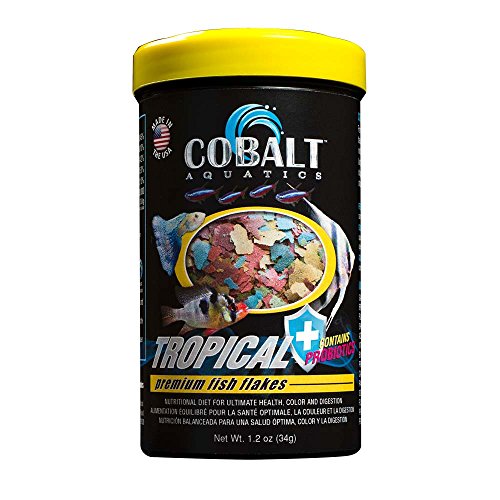 | Cobalt Aquatics Tropical Flake |
| Buy On AmazonBuy On Chewy |
Saltwater Fish Choice! 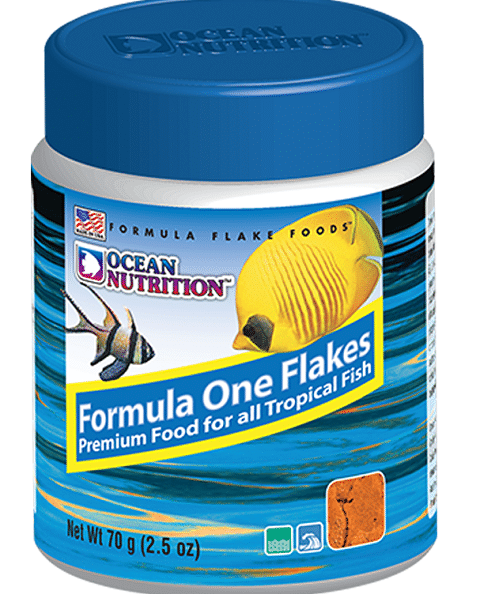 | Formula One Flake Food |
| Click For Best PriceBuy On Amazon |
 | Fluval Bug Bites Flakes |
| Buy On Amazon |
 | Xtreme Aquatic Community Crave Fish Food |
| Buy On AmazonBuy On EBay |
 | Cobalt Aquatics Spirulina Flakes |
| Buy On AmazonBuy On Chewy |
 | Formula Two Flake Food |
| Click For Best PriceBuy On Amazon |
Avoid!  | Wardley Tropical Fish Food Flakes |
| Buy On Amazon |
The 7 Best Flake Foods (Reviewed)
Now that you know what made the cut, let’s get into why each one earned its spot.
1. Cobalt Aquatics Tropical Flake Food
Best Tropical Fish Flake Food
Cobalt offers a premium level flake food with probiotics. A color enhancing formula that works great for all tropical fish
If you want a staple flake food for your freshwater fish, this is the one I’d put in your hands. Cobalt was the first fish food company to include probiotic bacteria in their flake formula. That’s not a marketing gimmick, it makes a measurable difference. The benefits you get from a probiotic product include:
- Better digestion and less waste pollution
- Improved coloration in fish
- Cleaner aquarium water between feedings
This formula uses Bacillus subtilis and Bacillus licheniformis. Subtilis has been proven to increase fish food digestibility and help prevent disease in both shrimp and fish. Licheniformis has shown measurable health improvements in Tilapia research. These aren’t random ingredient additions. This is the highest quality flake available for freshwater tropical fish. It won’t cloud your water and it supports your fish’s long-term health. Full recommendation.
Pros and Cons
- Probiotics
- Works for all tropical fish
- Made in the USA
- More expensive than generic brands
- Larger flakes may need crushing for very small fish
MARK’S TOP PICK
Cobalt Aquatics Tropical Flake is my #1 for freshwater fish. The probiotic formula is the real differentiator. I’ve used a lot of flake foods over the years and nothing comes close to Cobalt for keeping freshwater tropicals healthy, colored up, and your water clear. If you’re only going to keep one freshwater flake on hand, this is it.
2. Ocean Nutrition Formula One Flakes
Best Flake Food For Saltwater Fish
Ocean nutrition offers a premium level flake food that works great for marine fish
I’ll be honest with you: I’m not a fan of flake food for saltwater fish. The frozen food options available today, especially from quality brands like LRS, are so much better for marine fish that flakes shouldn’t be your primary feeding strategy in a reef or FOWLR tank. But I understand that convenience is a real factor. When you need something quick and reliable, my recommendation for saltwater fish is Ocean Nutrition.
This food is made in the USA and has a solid nutrient profile built for marine species. You’ll find salmon, mussels, kelp, and brine shrimp in the formula. It’s essentially the flake version of Ocean Nutrition’s well-regarded frozen line. If you have to feed flakes to your saltwater fish, this is the one to use. Ocean Nutrition has been in the hobby for decades and their distribution means you can actually find it when you need it.
Pros and Cons
- Quality marine ingredient profile
- Works for all saltwater fish
- Made in the USA
- Frozen food is a better long-term option for marine fish
- More expensive than freshwater flake options
3. Fluval Bug Bites Flakes
A flake version of Fluval’s amazing pellet bug bites products. Great for all tropical fish and high in protein.
I love the Fluval Bug Bites food line. They built their formula around black soldier fly larvae, which freshwater fish go absolutely crazy for. It’s not just about feeding response, because insect protein is closer to what most freshwater fish eat in the wild, it’s more bioavailable and easier on their digestive system. This is the flake version of that formula, with color enhancement built in.
High protein, great amino acid profile, easily digestible. That last part matters: poorly digested food leads to waste and bloat. Bug Bites flakes don’t have that problem. One honest note: their pellet product is the better buy if you have to choose one. The flake version is great for variety and smaller fish, but if you’re feeding adults and can do pellets, go that route instead.
Pros and Cons
- Insect-based protein (bioavailable and natural)
- Works for all tropical fish
- Made in the USA
- More expensive than generic brands
- Their pellet version is the better buy
4. Xtreme Aquatics Community Crave
Extreme Aquatics Fish Food offers a high quality flake food. A 60/40 mix of spirulina and krill
Xtreme has built a real reputation in the serious hobbyist community. They’re not a massive corporate brand like Hagen or Tetra. They built their name through direct relationships with passionate fishkeepers and have been featured at Aquashella, which tells you a lot about who their audience is.
Their Community Crave formula is built for mixed community tanks. The 60/40 spirulina-to-krill ratio gives you both the plant-based nutrition and the marine protein that most community fish need. The feeding response this food triggers is impressive for a flake product. The texture is noticeably higher quality than generic brands. My only reason it sits below Cobalt: I’m a believer in probiotics for long-term fish health, and Community Crave doesn’t include them. If probiotics aren’t a priority for you, this is a legitimate alternative that some experienced hobbyists prefer. You really can’t go wrong with Xtreme.
Pros and Cons
- 60/40 spirulina and krill formula
- Works for all tropical community fish
- More expensive (larger sizes)
- Harder to find at local stores
5. Cobalt Aquatics Spirulina Flakes
Cobalt Offers a great spirulina flake formula with probiotics. Great for fish that need greens in their diet
For herbivore and omnivore fish that need plant matter in their diet, spirulina flakes are what you want. Combining spirulina with Cobalt’s probiotic formula makes this a standout option. No other product in this category does both.
This food works perfectly for algae eating fish like mollies, African cichlids, and saltwater fish like tangs and rabbitfish. It’s easy to feed, digestible, and won’t cloud your water. For algae-eating and plant-eating fish, this is the best flake option available. Full stop.
Pros and Cons
- Spirulina plus probiotics (unique combination)
- Great for herbivore and omnivore fish
- More expensive than basic spirulina options
6. Ocean Nutrition Formula Two Flakes
Formula Two flake food is a great option for saltwater fish. Made of marine algae, spirulina, and kelp. Great for tangs and angelfish.
For algae-eating saltwater fish, nori is the gold standard. But nori isn’t always practical when you’re in a hurry or traveling. Ocean Nutrition Formula Two is a solid convenience option for tangs, rabbitfish, and saltwater angelfish. The formula combines marine algae, spirulina, and kelp. It also includes garlic, which triggers a strong feeding response in marine fish, a nice bonus for finicky eaters.
Like Formula One, this is best used as a supplemental food rather than a primary diet. Ocean Nutrition’s frozen version is the better long-term choice, but for easy day-to-day feeding for your plant-eating saltwater fish, Formula Two gets the job done.
Pros and Cons
- Three types of marine greens in one formula
- Garlic for feeding response
- Readily available
- Frozen food is a better primary option for saltwater herbivores
7. Wardley Tropical (Avoid)
Wardley is a basic brand you’ll find in grocery stores. Your fish will eat it, but it’s not a good long-term choice. OK in an emergency only.
Wardley is what you find at Walmart and grocery stores. Your fish will eat it because they’re hungry. That’s the nicest thing I can say about it. These lower-quality foods contain fillers, cloud up your water badly after feeding, and provide minimal nutrition compared to everything else on this list. The convenience of 24-hour availability isn’t worth the tradeoff in fish health. If you’re in a pinch and it’s all you can get, fine. But order quality food online and stop buying this as a routine.
Pros and Cons
- Easy to find anywhere
- Available 24 hours at major retailers
- Cheap filler-heavy formula
- Clouds water after feeding
- Minimal nutritional value
- Strong unpleasant odor
WHAT MOST PEOPLE MISS
Most hobbyists never think about flake food shelf life. Once opened, flake food starts degrading nutritionally within a few months, even if it smells fine and looks normal. I replace my open containers every 6 months regardless of expiration date. The other thing people miss: rotating food types matters as much as choosing the right brand. Even the best flake food shouldn’t be the only thing your fish eat. Rotate in frozen or freeze-dried options at least a few times a week.
Knowing The Food Hierarchy
While this is a flake food article, I’d be doing you a disservice if I didn’t put flake food in context. From lowest to highest nutritional quality: flake food, pellet food, freeze-dried food, frozen food, cultivated live food.
Pellets
Pellet food is less processed than flakes. This is where most serious hobbyists land for their staple food. Higher quality brands are easier to find in pellet form, and you get better control over portion size. The downside: pellets expand with water and can cause bloat in fish prone to it. Choose a quality pellet formula and feed sparingly.
Freeze Dried
Freeze-dried food is whole food in a shelf-stable form. The nutritional profile holds up well and you can soak freeze-dried food in liquid vitamins to boost it further. Most freeze-dried options are single-ingredient (krill, bloodworms, tubifex) so they work best as supplements rather than staples. More expensive than pellets, but worth keeping on rotation.
Frozen
This is where the real quality lives. Frozen food combines whole ingredients and variety in a way nothing else matches. Your fish will look noticeably better on a frozen food diet. The tradeoff is cost and access: the best frozen foods are only at specialty retailers or online. Easy to overfeed. Harder to portion for small fish. Worth the effort.
Cultivated Live Food
Live food from a store carries disease risk. The better approach is cultivating your own: blackworms, brine shrimp, and rotifers are all doable at home. Live foods deliver gut bacteria your fish need for long-term health that no processed food provides. The commitment level is high, which is why most hobbyists never get there. But if you do, your fish will show it. Most people keep very healthy fish on frozen food and a rotation of quality dry foods without ever going live, and that’s perfectly fine.
Knowing What Type Of Fish You Have
Flake food works best for surface and midwater fish. Knowing where your fish feed helps you choose the right food format.
Surface Feeders
Fish like bettas and gouramis hunt at the surface and will hit flakes immediately when you drop them in. Most community fish fall into the surface or midwater category. Flakes are ideal for these fish.
Midwater Feeders
Fish like angelfish, most tetras, and barbs feed as food starts to sink. Flakes work fine for these fish. Pellets work better for most of them, especially the larger species.
Bottom Feeders
Bottom feeders rarely get much flake food. By the time flakes reach the substrate, other fish have eaten most of them. Wafers and sinking pellets are what you need for corydoras, plecos, and other bottom-dwelling species. Don’t assume your flake food is feeding them.
FAQs
Which flake food brand is best?
The best flake food has quality protein sources at the top of the ingredient list, not corn or soy fillers. For freshwater fish, Cobalt Aquatics is my top pick because of their probiotic formula. For saltwater fish, Ocean Nutrition is the most reliable choice. Both brands do serious research on their formulas and have earned long-term trust from experienced hobbyists.
Is flake food actually good for fish?
Quality flake food works as a staple diet, but it’s not the best food available. Pellets, freeze-dried, and frozen foods all offer better nutrition. The key is to use quality flake food (not grocery store brands) and rotate it with other food types for the best long-term results.
Is it better to feed flakes or pellets?
Pellets are generally superior in quality to flakes. They’re less processed and easier to portion. That said, flakes are easier for very small fish to eat, and quality flake brands like Cobalt can hold their own nutritionally. Use pellets as your primary staple for adult fish and flakes for smaller or surface-feeding species.
How long is flake food good for?
Flake food has the longest shelf life of all fish food: anywhere from 18 months to 3 years depending on the brand. But nutritional value degrades well before the expiration date once opened. I recommend replacing open containers every 6 months regardless of what the label says. Store in a cool, dry place and keep the lid tight.
Should I crush flakes for small fish?
Yes. For small fish like nano tetras, rasboras, or fry, crush flakes between your fingers before dropping them in. Smaller pieces are easier to eat and less likely to be ignored. Crushed flakes are also less attractive to larger fish, so if you have a mixed tank, crush only what the small fish need and let the bigger pieces go to the adults.
Closing Thoughts
After 25 years in this hobby, my feeding recommendation is always the same: spend a little more on food and a little less on everything else. The difference between Cobalt and Wardley is maybe a few dollars a month. The difference in your fish’s health, color, and the clarity of your water is not small.
For freshwater fish, start with Cobalt Aquatics Tropical Flake and don’t second-guess it. For saltwater, get Ocean Nutrition and be honest with yourself that frozen food should be your primary feeding strategy. Whatever you feed, rotate it. Your fish need variety, and no single food gives them everything they need.
If you’re also looking for live fish, Flip Aquatics (flipaquatics.com) and Dan’s Fish (dansfish.com) are the two sources I trust most for healthy, quality fish. Good fish deserve good food. Start there.
References
- Seriously Fish: Species profiles and care data
- FishBase: Taxonomy and scientific data
- Practical Fishkeeping: Husbandry and care advice
- About the Author
- Latest Posts

I’m Mark Valderrama, founder of Aquarium Store Depot and a fishkeeper with over 25 years of hands-on experience. I started in the hobby at age 11, worked at local fish stores, and have kept freshwater tanks, ponds, and reef tanks ever since. I’ve been featured in two best-selling aquarium books on Amazon and built this site to share practical, experience-based fish keeping knowledge.

Leave a Reply