
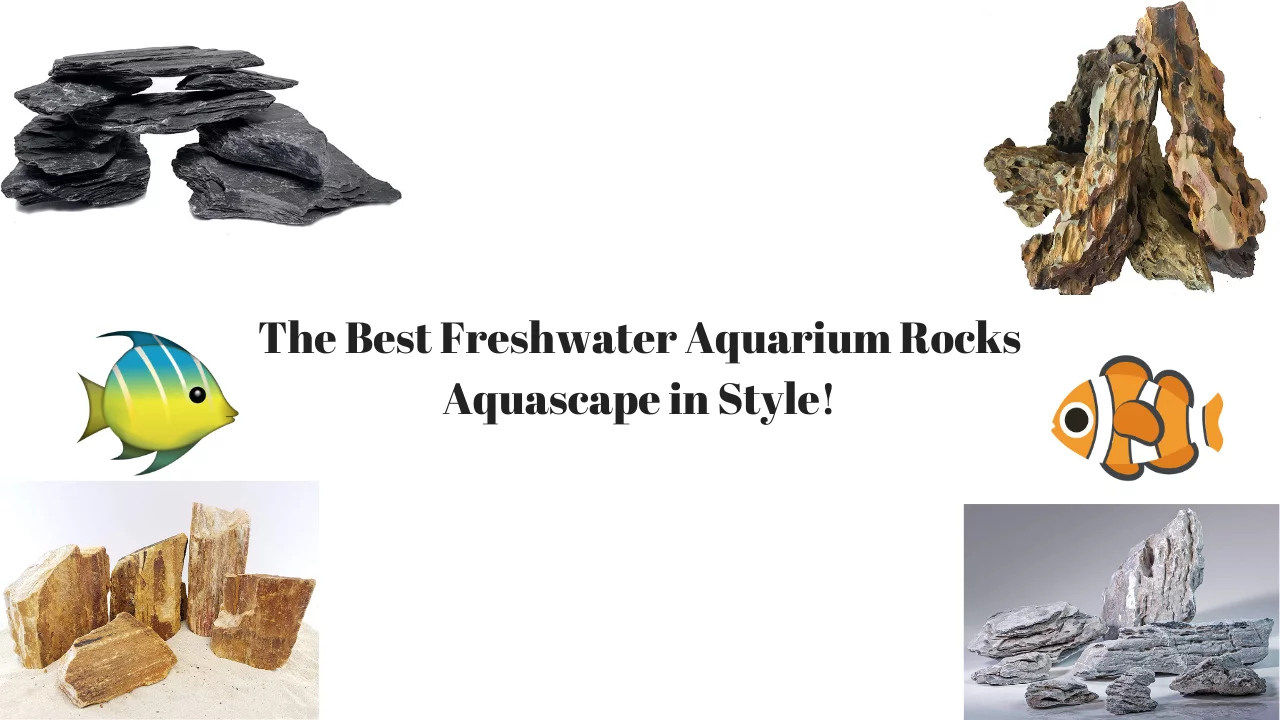
Last Updated: June 25, 2026
Thank you for visiting! By the way… any links on this page that lead to products on Amazon and other stores/partners are affiliate links Aquarium Store Depot earns a commission if you make a purchase.
EXPERT TAKE | MARK VALDERRAMA
After 25 years setting up freshwater aquariums and managing fish stores, the rock question trips people up constantly. Most hobbyists pick rocks based on looks. That is the wrong approach. Chemistry comes first. If the rock raises pH and hardness, it will work against every plant and soft-water fish in the tank. I have seen beautiful Seiryu-style aquascapes fail because the keeper did not test their water first. At one store I managed, we had a 75-gallon planted display tank that ran stable at pH 7.0 for months. A customer donated several large pieces of what turned out to be limestone. Within two weeks the pH had climbed to 7.6 and the CO2 injection was fighting a losing battle. We pulled the rocks, did a water change, and it came back down. Know your rock before it goes in the tank.
Rock selection shapes your aquarium more than almost any other decision. Pick the wrong rock and your pH creeps up week after week, your plants stop growing, and your soft-water fish start showing stress. Pick the right one and the entire scape looks intentional and the chemistry stays stable. After 25 years in this hobby, including time running fish stores, I have seen both outcomes plenty of times. This guide gives you the straight answer on which rocks work, which ones will quietly wreck your water chemistry, and which is right for your specific setup.
The number one mistake: choosing a rock based on appearance without knowing how it affects your water.
WHY THIS RANKING
Every rock on this list was evaluated against three criteria: chemistry impact (does it alter pH or hardness?), practical availability for aquarists, and real-world performance in freshwater setups. Rocks are split by use case: planted tanks, general freshwater, and African cichlid setups. A rock ranked highly for planted tanks would be a disaster in an African cichlid build, so the context matters.
What People Get Wrong About Aquarium Rocks
Most people assume any rock from a garden center or river is fine for a fish tank. It is not. Rocks containing calcium carbonate will dissolve slowly and raise both pH and hardness, sometimes dramatically. In a planted tank aiming for pH 6.8 to 7.0, a chunk of limestone can push you to 7.8 or higher within weeks. Your plants stall, your tetras and rasboras get stressed, and the problem is hard to diagnose because the water still looks clear.
The other common error: thinking all rocks are either safe or unsafe. The reality is more useful than that. Some rocks raise pH on purpose and that is exactly what African cichlid keepers want. Knowing what a rock does is what matters.
This is not just hobbyist observation. Research on aquarium water chemistry and carbonate dissolution rates consistently shows that calcium carbonate-bearing rocks produce measurable pH and hardness increases within days to weeks of submersion, depending on surface area and tank volume. A 2019 study published in Aquaculture Reports confirmed that limestone additions to soft-water systems can raise pH by 0.5 to 1.2 units within 48 hours. For a planted tank or soft-water community setup, that shift is significant.
What to Look For When Purchasing A Rock for a Freshwater Aquarium
In general, the vast majority of freshwater fish and plants prefer softer water and lower pH. Knowing this fact, we want to avoid rocks that are high in calcium. Rocks high in calcium will alter the water chemistry of our aquarium. It will result in our water becoming hard. They also will alter the pH of the aquarium making our aquarium alkaline in nature. That is great for African Cichlids and Saltwater Tanks, but will be disastrous for most tropical fish we can purchase.
We need to break down rocks further to understand what makes a good freshwater aquarium rock. Let’s dive into the types of rocks.
The Three Types For Your Tank
We can separate freshwater aquarium rocks into three categories: igneous, sedimentary, and metamorphic rocks.
Igneous
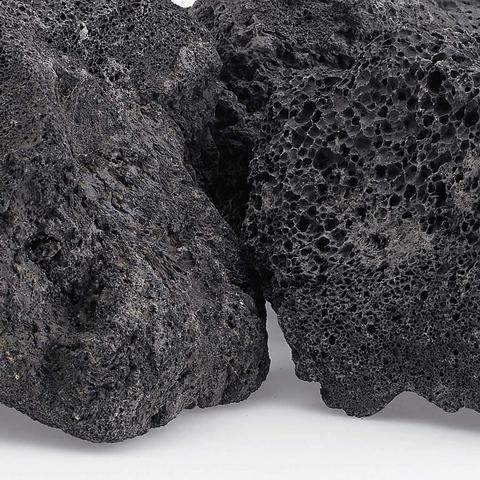
Igneous rock is any type of crystalline or glassy rock. These are formed by the cooling and solidification of molten earth material. Aquarium rocks in our trade of this type would include dolerite, gabbro, granite, basalt, and lava rock.
Sedimentary
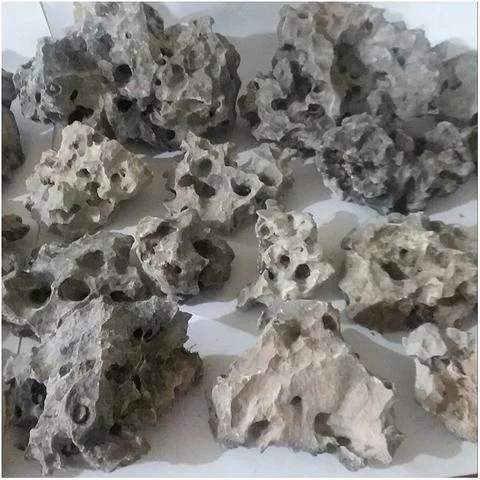
Sedimentary rock are rocks that are formed by the accumulation or deposition of small particles and subsequent cementation. Aquarium rocks in our trade of this type would include marl, limestone, sandstone, breccia, conglomerate, and shale.
Metamorphic
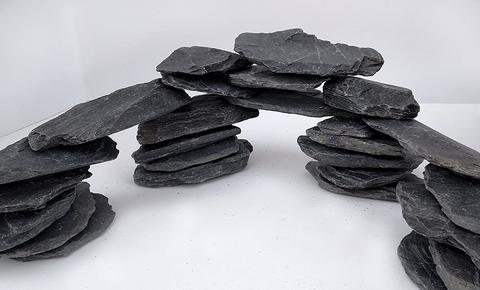
Metamorphic rocks arise from the transformation of existing rock types. The original rock form was subjected to heat and pressure which cause physical or chemical change. Aquarium rocks in our trade of this type would include quartzite, dolomite, marble, schist, slate, and hornfels.
They Can Alter Chemistry
Now that I explained the types of rocks, let’s talk about the aquariums rocks that can alter the chemistry of our tanks. We can separate them into two types.
- Aquarium Rocks that lower pH and soften water
- Aquarium Rocks that increase pH and harden water
If we are looking to lower pH and soften our water, we want to use aquarium rocks like sandstone and basalt. If we are looking to increase pH and harden our water, we want to use aquarium rocks like marble and limestone
There are also rocks that serve functions with planted aquariums. For example, lava rocks can be used to fertilize aquatics plants. Granite is one of the safest rocks to use in an aquarium due to its neutral nature. It is also one of the heaviest.
Should You Buy Rocks For Your Aquarium?
Good fit if:
- You are building a planted tank or Iwagumi-style aquascape and want a focal point
- You keep African cichlids and need pH buffering from limestone
- You want natural hiding spots for bottom-dwelling or territorial fish
- You understand how to test your water and will monitor chemistry after adding rocks
Avoid if:
- You keep soft-water species like discus or wild-type cardinal tetras and do not want to test water frequently
- You are buying rocks from a garden center without knowing their mineral content
- You want to add rocks from a river or local source without researching rock type first
BUY OR SKIP?
Buy aquarium rocks if you care about the long-term look and chemistry of your tank. Skip the cheap garden-store options and go with proven aquarium-grade sources. The rock matters more than most people realize, and getting it wrong creates ongoing water chemistry problems that are genuinely frustrating to diagnose and fix.
9 That Are Safe For Fresh Tanks
Now that we have a base understanding of rocks for freshwater aquariums, it’s time to talk about the best ones to buy. Below is a recommended list of the best freshwater aquarium rocks you can purchase online. I’ll go in more detail in my reviews of each.
In a hurry? I recommend Ohko Dragon Stone!
| Picture | Name | Best For | Link |
|---|---|---|---|
Editor’s Choice! 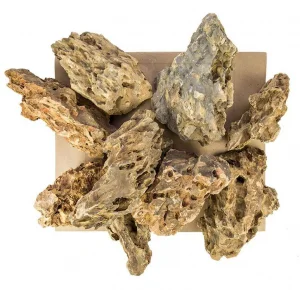 | Ohko Dragon Stone | Planted Tanks | Click For Best PriceBuy On Glass Aqua |
Best Value 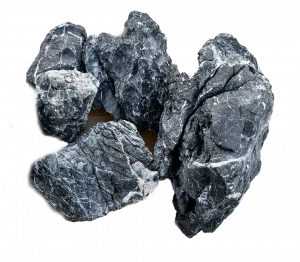 | Black Mountain Seiryu Stone | Planted Tanks | Click For Best Price |
Budget Option 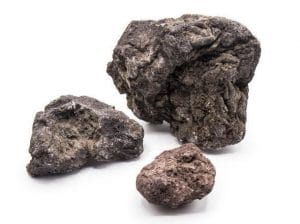 | Black Lava Rock | Planted Tanks | Click For Best Price |
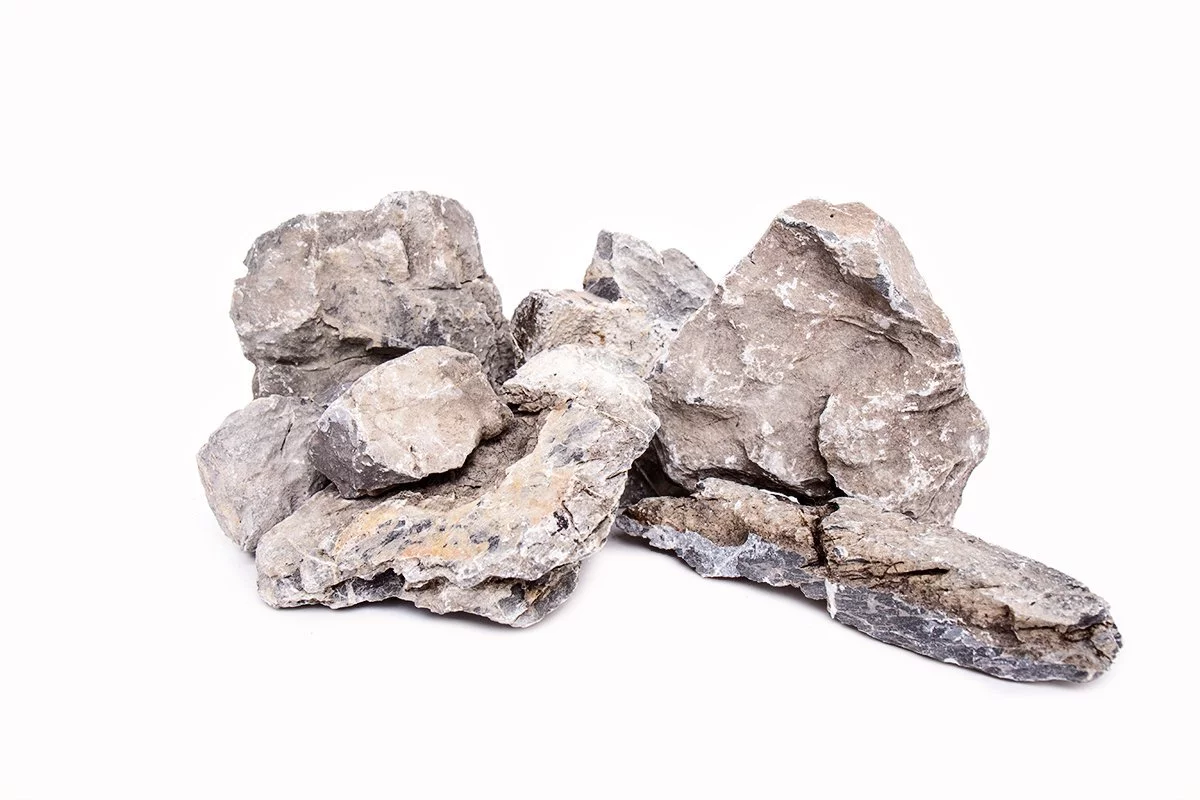 | Traditional Seiryu Stone | Planted Tanks | Click For Best PriceBuy On Glass Aqua |
Premium Pick! 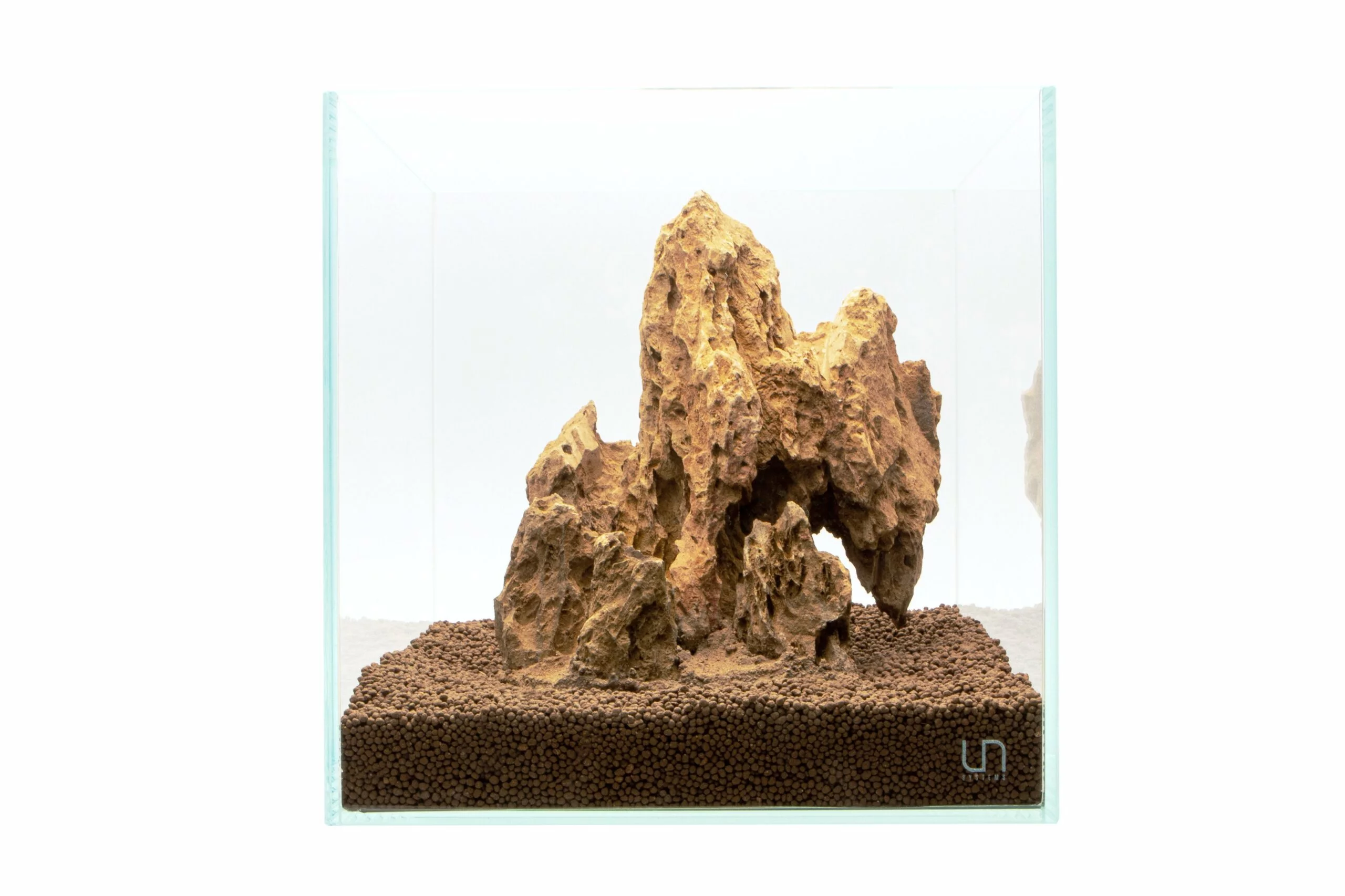 | Buceplant WYSIWYG Stones | Planted Tanks | Click For Best Price |
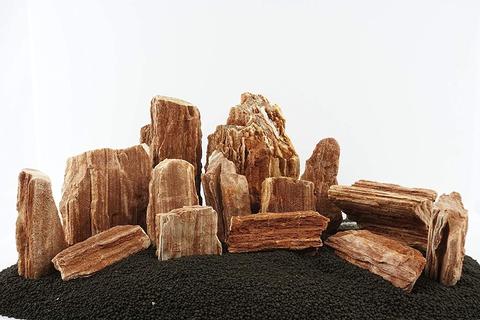 | Lifegard Aquatics Redwood Petrified Stone | Planted Tanks | Buy On AmazonBuy On Chewy |
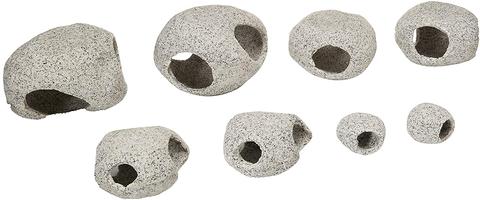 | Penn-Plax Deco-Replicas Ornament Series | Cichlids | Buy On Amazon |
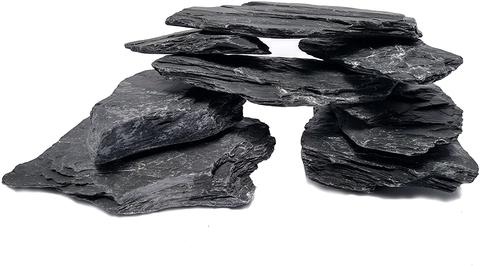 | Small World Slate & Stone Rock | Freshwater Tanks | Buy On Amazon |
| | Texas Holey Rock | African Cichlids | Buy On Amazon |
Let’s take a closer look as to why these rocks stand out so much!
1. Ohko Dragon Stone – Great for Planted Tanks

Editor’s Choice
Ohko is the premier aquascaping rock today. Granite based with amazing shapes and selection
Ohko Dragon Stone is one of the preferred aquarium rocks to use in Iwagumi Aquascapes. These rocks are not only beautiful, they are also natural in nature. They will not alter your pH or hardness being granite based. They will look fantastic in any planted tank setup. They are full of holes, nooks and crannies making them very good rocks for natural shelter for your fish.
These are the hot rocks for pro aquascaping projects these days. Check out the video above from BucePlant to see how amazing they look. Like any preferred aquascaper rock, they do have a higher price tag.
Pros
- Rocks do not alter pH or hardness
- Great looking rocks
- Lots of sizes available
Cons
- Price
Best For – Planted Tanks
MARK’S TOP PICK
Ohko Dragon Stone is my go-to for planted tanks. It is granite-based so it will not budge your pH or hardness, and the irregular shapes and deep crevices photograph better than any other rock in this category. If budget is tight, Black Lava Rock from BucePlant is the closest alternative that delivers on both chemistry safety and visual texture without the premium price.
2. Black Mountain Seiryu Stone – Best Value In Unique-Looking Stones

Best Value
With an amazing black and white contrast, black mountain is an excellent choice for any aquascape. It is reasonably priced!
If you are looking for a unique looking aquarium rock, check out Black Mountain Seiryu Stone. The unique white veins really pop in an aquascape. They will not alter your pH or hardness so you can add them to any aquarium setup. These rocks are hard to find so be on the look out if you like them and want to buy one. The great thing from buying from our link is that Buce sells super high quality Black Seiryu and in packs up to 30lbs!
Pros
- Rocks do not alter pH or hardness
- Amazing unique look
- Lots of sizes available
Cons
- Availability
- Price
Best For – Planted Tanks
3. Black Lava – A Great Budget Aquascaping Stone

Budget Option
Great choice for budgets. Won’t alter your chemistry and provides housing for beneficial bacteria
Quality lava rock is hard to find online. It’s pretty common to see listings of lava rock being used as biomedia or fireplaces. This makes sense given they are great for housing beneficial bacteria and are great stones for fire places. This does limit what you can buy on online though.
When it comes to aquarium lava rock these Black Lava Rocks by BucePlant are exactly what we are looking for. These are large rocks with unique shapes unlike what you will find at most pet stores. If you are looking to quality lava rock, check out their store and selection.
Pros
- Black color works well with aquascapers
- Price
- Lava Rock has multiple beneficial properties
Cons
- Not as pretty as the major aquascaper rocks
Best For – Freshwater Tanks
4. Traditional Seiryu – The Aquascaper’s Choice
A go to classic. Highly recommended for Iwagumi aquascapes
If you want a pro quality aquascaping rock, but the Ohko is out of your budget, I would highly recommend Buce Seiryu Rock. Seiryu is the godfather of all aquascaping rocks. These are hand picked stones from Buce. With their excellent customer service and high quality reviews, you can’t go wrong with them!
You will not be disappointed in going with them! Great details and texture comes with these rocks.
Pros
- Great rock specimens
- Great reviews and testimonials
- Hand picked stones
Cons
- Price
Best For – Planted Tanks
5. BucePlant WYSIWYG Stones – For the Pro Aquascapers
The Finest Available Online
Buceplant offers the premium stones online. Showpiece What You See Is What You Got (WYSIWYG) stones. Get your centerpiece today!
We start off this list with high end aquarium rocks. These rocks offered by BucePlant are what we call in the industry What You See Is What You Get (WYSIWYG) rocks. This seller lists individual rocks or sets of rocks for you to purchase and you get the exact rocks in the picture. This is the best way to get large aquarium rocks for aquascapes if you are looking to do big projects.
In my mind, WYSIWYG vendors are the sellers to go to if you are looking for a large display stone. These are excellent for planted tanks and highly recommended if they are within your budget.
Pros
- You get exactly what you see in the photo (WYSIWYG)
- Large aquarium rocks available
- High quality rocks
Cons
- Limited quantities
- Expensive
Best For – Planted Tanks
6. Lifegard Aquatics Redwood Petrified Stone – Made For You Aquascape Sets!

A complete set done for you. This is a great choice for someone completely new to aquascaping
Are you looking for a done for you aquascape set? If so, the Lifegard Aquatics Petrified Wood Sets are right up your ally. These aquarium rocks are sold in packages for specific tank sizes. All you do is order the place for your aquarium and you are good to go. No need to guess or pick rocks. These sets use pertified wood instead of stone. As a result, the look is very unique for your aquascape.
Lifegard also offers another variant called the Klondike Petrified Stone set if you are looking for a different shade or color. I love these sets for first time aquascapers. It is wood versus stone, which may bother a purist, but not a problem for a newcomer. The price is pretty reasonable as well!
Pros
- Will not alter pH or hardness
- Done for you sets
- Unique look
Cons
- It’s wood versus stone – some purists may not be fans
Best For – Planted Tanks
7. Penn-Plax Deco-Replicas Ornament Series – Great for Territorial Fish
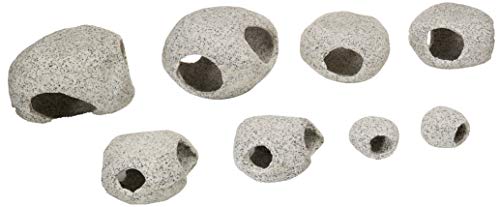
Simple and designed for Cichlids. These rock provide shelter for your territorial fish
Penn-Plax Deco-Replicas Ornament Series are resin ornaments that resemble natural granite. They are great for territorial fish like cichlids. Each aquarium rock acts like an individual home or condo for your fish. Because they are resin based, so they do not affect your water chemistry and are very easy to clean due their smooth outer surface. They are also very easy to stack and create a community of homes.
The thing I do not like with these rocks is they are rough on the inside. This is due to their resin makeup. The resin has been smoothed out on the outside but not on the inside. This leads to rough and sharp edges inside the structure. This does not make them safe for delicate species like Betta Fish. You can make them smooth with a file, but given their price point it’s probably better to look at another product if you have delicate fish.
Pros
- Cheap
- Easy to clean
- Great for territorial fish
Cons
- Rough on the inside – not safe for delicate fish like Bettas
Best For – Cichlids
8. Small World Slate & Stone – Slate for a Great Price

Great price and selection. Small world offers an affordable solution for quality aquarium slate
These Slate Aquarium Rocks by Small World are an amazing deal. The product pictured above is the 5-7 inch stone sets. These are high-quality slate pieces sourced from the USA. Small World Slate and Stone is a small family-run business and its customer service is top-notch.
Slate will not alter your pH or hardness. They are great for Aquascaping and for creating caves and structures. They are also great for reptiles since they hold heat well. Slate is one of the most popular stones for garden and pond hardscaping.
Slate is easy to break or crack. Be very careful with handling the stones as they can chip easily.
Pros
- Good price
- Will not alter pH or hardness
- Soured from the USA and small business owned
Cons
- Easy to chip or break
Best For – Freshwater Tanks
9. Texas Holey – Perfect for African Cichlids
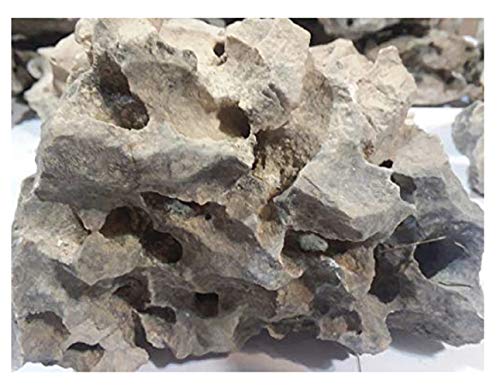
With its ability to raise pH and hardness, this rock is an excellent choice for African Cichlids
If you own African Cichlids, these limestone rocks are perfect for them. Texas Holey Rock has several benefits for African Cichlids. Being made of calcium carbonate, these rocks buffer pH and hardness, which solves your aquarium water chemistry issues with Africans. The holes are great for shelter and curb aggressively in your freshwater tank.
These rocks are sourced locally in Austin, Texas. The team selects these rocks to take care to find quality specimens for aquarium usage. The Company was built by a Cichlid tank owner who understands the need for quality hardscaping.
Given their limestone makeup, these rocks are only appropriate for fish that need a higher pH or hard water. The white appearance is also not for everyone. You can mitigate the white look by using low-light aquarium plants like Java Fern, and Java Moss which easily attach to these rocks.
Pros
- Buffers pH and hardness for African Cichlids
- Hand picked selection
- Holes are great for shelter
Cons
- White appearance is not for everyone
- Only for fish that need hard water and higher pH
Best For – African Cichlids
WHAT MOST PEOPLE MISS
Traditional Seiryu Stone is popular for good reason, but it does raise pH and hardness gradually. That is not a problem in every tank, but in a planted setup targeting soft, slightly acidic water it will work against you. If you love the look of Seiryu but need chemistry-neutral rock, Black Mountain Seiryu Stone gives you a nearly identical aesthetic without the pH consequences. It is a direct swap that most people overlook.
Our Expert Pick
I listed a number of aquarium rock selections. Which one is best for you? I’m going to split these in several categories and explain.
- Best Aquarium Rock for Planted Tanks – Ohko Dragon Stone
- Best Aquarium Rock for African Cichlids – Texas Holey Rock
- Best Value Aquarium Rock – Black Lava Rock
FAQS
Which Are Safe For Fresh Tanks?
The safest rocks are ones you can purchase at a pet store, local fish store, or online. That being said, the best rocks to use are Ohko dragon stone, Seiryu Stone, and Lava Rock. You can also use rocks like slate for building levels and Holey Rock for setups that require hard water or higher pH.
Can You Put Any Kind In A Fish Tank?
No. You cannot just put any rock in a fish tank. Some rocks will alter the chemistry of the water like its pH or hardness, which can have negative effects on your fish and plants. Rocks collected from outside or rivers may also contain organic material, which may die off and cause ammonia spikes. It’s best to purchase your rocks from a reputable pet store whether in person or online.
Can Live Stones Be Used In Fresh Tanks?
No. Live rock is rock that is either pulled from the oceans or grown aquaculturally to be used in saltwater tanks. They contain saltwater bacteria and organisms, which would die off if placed in a freshwater tank.
Which Ones Raise the pH in the Tank?
Rocks that are made of calcium carbonate like limestone will raise the pH in an aquarium. These rocks are ideal for fish that prefer higher pH and hard water like African Cichlids.
Closing Thoughts
The right rock makes or breaks a freshwater aquarium. Get the chemistry match wrong and you are fighting your water parameters for the life of that tank. Get it right, and the rock becomes a natural anchor point that the whole layout builds around.
For planted tanks, Ohko Dragon Stone is my top pick. It does not touch your pH or hardness, and the shapes are genuinely impressive. For African cichlid setups, Texas Holey Rock handles the water chemistry work and provides the cave structure those fish need. If budget is the priority, Black Lava Rock from BucePlant is chemistry-safe, functional, and far better looking than fireplace lava rock from a hardware store.
If you want to explore where to source quality aquascaping rock alongside live plants and hardscape, Flip Aquatics and Dan’s Fish are both reputable options worth checking out for your overall tank build.
🌿 Want to learn more? This article is part of our complete Planted Tank & Aquascaping Guide. your ultimate resource for aquarium plants, aquascaping styles, substrates, and more.
References
- Seriously Fish: Species profiles and care data
- FishBase: Taxonomy and scientific data
- Practical Fishkeeping: Husbandry and care advice
- About the Author
- Latest Posts

I’m Mark Valderrama, founder of Aquarium Store Depot and a fishkeeper with over 25 years of hands-on experience. I started in the hobby at age 11, worked at local fish stores, and have kept freshwater tanks, ponds, and reef tanks ever since. I’ve been featured in two best-selling aquarium books on Amazon and built this site to share practical, experience-based fish keeping knowledge.


Leave a Reply