Generic selectors

Exact matches only

Search in title

Search in content

Post Type Selectors

Tag: Aquarium Equipment Reviews

  • Betta Fish Toys and Enrichment: What Actually Works (And the Mistake Most Owners Make)

    Betta Fish Toys and Enrichment: What Actually Works (And the Mistake Most Owners Make)

    EXPERT TAKE | MARK VALDERRAMA

    Bettas are more intelligent and more sensitive to their environment than most people realize. After 25 years in this hobby and time managing fish stores, I have seen the difference a well-structured tank makes on a betta’s behavior, color, and lifespan. The fish that live in bare tanks with nothing to interact with are not thriving, they are surviving. Enrichment is not a luxury. It directly affects how long and how well these fish live. The Zoo Med Floating Log is the one item I point most people toward first, and the bigger lesson is this: structure beats novelty every time.

    Bettas are more curious and intelligent than most people give them credit for. Enrichment makes a real difference in how they behave and how long they stay healthy. I’ve seen a lot of these products come through fish stores over 25 years, and the Zoo Med Floating Log is the one I’d point most people toward first. But the bigger point is this: don’t overthink it. The most common mistake owners make is trying too hard, constantly rearranging the tank, adding new objects, too much stimulation. Bettas do best with good structure they can settle into and explore on their own terms.

    A bored betta is a stressed betta. And a stressed betta is a sick betta.

    WHY THIS RANKING

    Each item on this list was evaluated on three criteria: how likely a betta is to actually interact with it, ease of use for the owner, and safety for the fish. Items that look fun in marketing photos but go untouched in real tanks did not make the list. Items that cause stress with overuse are noted clearly. Enrichment that mimics natural behavior ranks highest.

    What People Get Wrong About Betta Enrichment

    The most common misconception is that bettas need constant novelty to stay engaged. They don’t. What they need is a stable, structured environment with places to hide, rest, explore, and occasionally interact. A betta in a well-planted tank with a floating log and a leaf hammock is more enriched than one in a bare tank with ten rotating toys.

    The second mistake is leaving stimulation items in permanently. The Zoo Med Exercise Mirror is a good example: brief exposure triggers natural territorial behavior and provides real engagement. Leave it in all day and the betta cannot escape the perceived rival. That turns stimulation into chronic stress. The same principle applies to rearranging tank decor constantly. Bettas establish territory. Disrupting that territory repeatedly stresses them out.

    FROM THE STORE FLOOR | MARK VALDERRAMA

    At the fish stores I managed, we kept display bettas in well-structured tanks with floating logs, silk plants, and leaf hammocks. The difference in behavior and fin condition compared to the bettas in bare demo cups was visible within weeks. Better color, less fin clamping, more active movement through the tank. That is not anecdotal, we saw it consistently across multiple fish. Structure and rest spots matter more than any single enrichment toy.

    Should You Buy Betta Enrichment Items?

    Good fit if:

    • Your betta is in a bare or minimally decorated tank and shows low activity or frequent glass-surfing
    • You keep a single betta without tankmates and want to provide mental stimulation
    • You are interested in training your betta or interacting with it during feeding
    • You want to replicate more natural hiding and resting behavior

    Skip if:

    • Your betta is already in a well-planted tank with driftwood, caves, and floating plants, you likely do not need additional toy items
    • You plan to add toys and then ignore them permanently (unused enrichment items become clutter and potential water quality issues)
    • You want a mirror or training kit but won’t commit to 5 to 10 minutes of supervised interaction time

    BUY OR SKIP?

    Buy one or two items from this list, not all of them. The Zoo Med Floating Log and a leaf hammock cover the basics for most bettas. Add a ping pong ball if you want cheap interactive enrichment. Only add training kits and mirrors if you are going to actively use them, not just drop them in the tank and walk away.

    Why They Need Enrichment

    Betta fish, otherwise known as Siamese fighting fish, are naturally curious fish that need both physical and mental engagement to remain healthy and content. Betta fish get stressed and bored with nothing to interact with. I’ve seen bettas self-mutilate in barren setups, similar to what happens with captive birds that have no stimulation.

    This is backed by research as well. A study by the University of Gothenburg in Sweden discusses the effect of environmental enrichment on captive fish:

    We find that enrichment can affect several aspects of the biology of captive fish, for example, aggression, stress, energy expenditure, injury and disease susceptibility.

    I can take this study and further link this to their natural habitats. In the wild, bettas live in shallow waters with a lot of vegetation, where they encounter various objects, plants, and other species. Males especially are constantly involved in chasing rivals away from their bubble nests. Stimulus is all around them.

    To recreate these conditions at home, owners need access to living or silk plants that not only provide hiding spots but also resemble nature more accurately. Using items like ping pong balls and floating logs can provide entertainment during playtime, causing increased stimulation within the tank environment.

    The 5 Best Betta Fish Toys

    Let’s take a deep dive into the best betta fish toys so you can make an informed decision about what would work best in your betta’s tank. For all these toys I’m recommending, I’m looking at the following:

    • The chances of your betta actually interacting with the toy
    • The ease of use for the owner
    • Quality of the toy and a reasonable price

    All these toys should be easy for you to find online or at a local pet store. Let’s look at the first one.

    1. Zoo Med Floating Log

    Editor’s Choice


    Zoo Med Floating Log

    The floating log is an excellent environmental enhancer for your Betta fish. Offers a place to hide and rest at the top of their tank. Contains a feeding hole for ease of use


    Buy On Amazon


    Buy On Petco

    The Zoo Med Floating Betta Log is my top recommendation on this entire list. It imitates the native habitat of bettas by providing a hollow floating structure where they can investigate, rest, or stay hidden near the surface. The feeding hole on top lets you drop food directly inside, which most bettas figure out quickly.

    The suction cup occasionally lets go, which some keepers find annoying. I don’t. In nature, fallen logs drift. Low flow in a proper betta tank means the log moves gently and the betta follows it. Most bettas take to it within a day or two. It’s one of those items that works exactly as it should.

    Specifications:

    • Material: Durable, non-toxic resin
    • Dimensions: 6.5 x 3.5 x 2.75 inches

    Pros:

    • Provides a natural-looking hiding spot
    • Encourages exploration and relaxation
    • Can double as a betta hammock
    • Easy to install with a suction cup

    Cons:

    • May require additional suction cups for stability
    • Paint has been known to chip off over time

    MARK’S TOP PICK

    The Zoo Med Floating Log is my first recommendation for any betta keeper without a heavily planted tank. It provides the near-surface hiding and resting space that bettas naturally seek, and most fish use it within 48 hours of it going in. If you only buy one item from this list, this is the one.

    2. R2 Training Kit
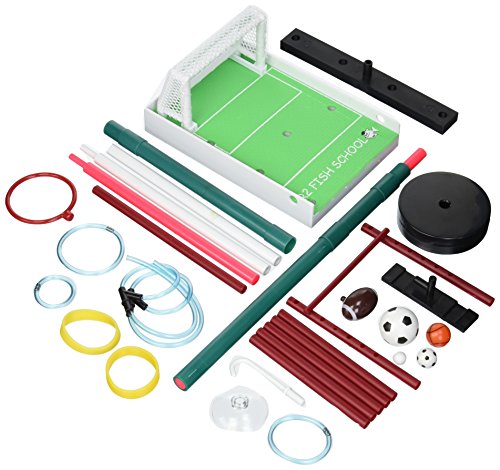

    R2 Training Kit

    A great comprehensive kit that can be used to train your fish with a variety of tricks. Created by a father and son team!


    Buy On Amazon

    Want to teach your betta actual tricks and record them? This is the kit for that. Created by Dr. Dean Pomerlau and his son Kyle, this kit includes soccer balls and nets, a limbo bar, goal posts, tunnels, and hoops. Training works through positive reinforcement with a feeding wand.

    One important caveat: not all bettas take to this equally. In my experience, Plakat bettas are active enough to engage with training kits. Fancy long-fin varieties like elephant ears struggle physically with some activities. Know your betta before investing in this kit.

    Specifications:

    • Training method: Positive reinforcement
    • Includes: Hoops, balls, limbo poles, goal posts, feeding wand

    Pros:

    • Provides mental stimulation and interactive playtime
    • Teaches betta fish tricks using positive reinforcement
    • Includes various accessories for different training exercises
    • Includes training lessons and instructions

    Cons:

    • Not suitable for all betta types or temperaments
    • Requires dedicated time and effort to train fish

    3. Zoo Med Exercise Mirror


    Zoo Med Exercise Mirror

    The exercise mirror by Zoo Med offers a way for your Betta to show it’s natural territorial behavior. Only use for short periods of time


    Buy On Amazon


    Buy On Petco

    The Zoo Med Betta Exercise Mirror is a floating device that gives your betta a brief confrontation with its own reflection. The betta flares, displays natural territorial behavior, and gets both physical and mental engagement from a short session. This is legitimate enrichment when used correctly.

    The hard rule here: never leave the mirror in the tank long-term. One to two minutes of mirror exposure is plenty, every other day at most. The goal is to mimic a natural encounter where a rival betta appears, the fish responds, and then the rival retreats. Remove the mirror after each session. A betta that cannot escape a perceived rival will show chronic stress. Clamped fins, faded color, reduced appetite. I have seen this in stores when mirrors were left in display tanks by accident.

    Specifications:

    • Type: Floating mirror
    • Usage: Flaring aid for occasional enrichment only

    Pros:

    • Provides short-term stimulation and exercise
    • Encourages natural territorial behaviors
    • Easy to use and remove from the tank

    Cons:

    • Prolonged use causes stress and is harmful

    4. CAVN Pen Light


    CAVN Pen Light

    This pen light is a high quality LED light that can be used as a pointer to train or to entertain fish


    Buy On Amazon

    This is not a fish toy in the traditional sense. It’s a medical penlight that hobbyists have repurposed for betta interaction. You can use the light point to direct a betta around the tank, train it to follow your finger, or get it positioned for photos. I have seen it used in aquascaping competitions to position schooling fish for shots, and the principle works with bettas too.

    The interaction is engaging and costs almost nothing relative to dedicated toy kits. One firm rule: never point the light directly into the betta’s eye. Keep it on the glass or substrate and let the fish track it from outside the direct beam.

    Specifications:

    • Material: Plastic
    • Color: White
    • Size: 5.3 x 0.5 x 0.5 inches
    • Weight: 0.32 ounces

    Pros:

    • Inexpensive
    • Works for training and directing fish movement
    • Compact and easy to use

    Cons:

    • Not specifically designed for betta fish enrichment

    5. Zoo Med Leaf Hammock
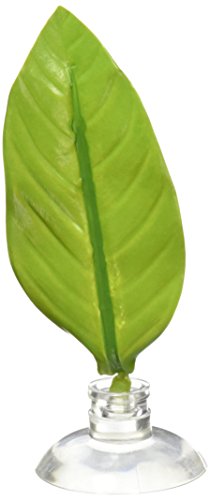

    Zoo Med Leaf Hammock

    This Betta Hammock is a great alternative in the absence of live plants for your Betta to rest on


    Buy On Amazon


    Buy On Petco

    The Zoo Med Leaf Hammock is more of a decoration than a toy, but it serves a real behavioral purpose. Bettas are labyrinth fish that breathe air from the surface. They rest near the top of the tank frequently. The leaf hammock gives them a stable platform to do that without expending energy constantly swimming.

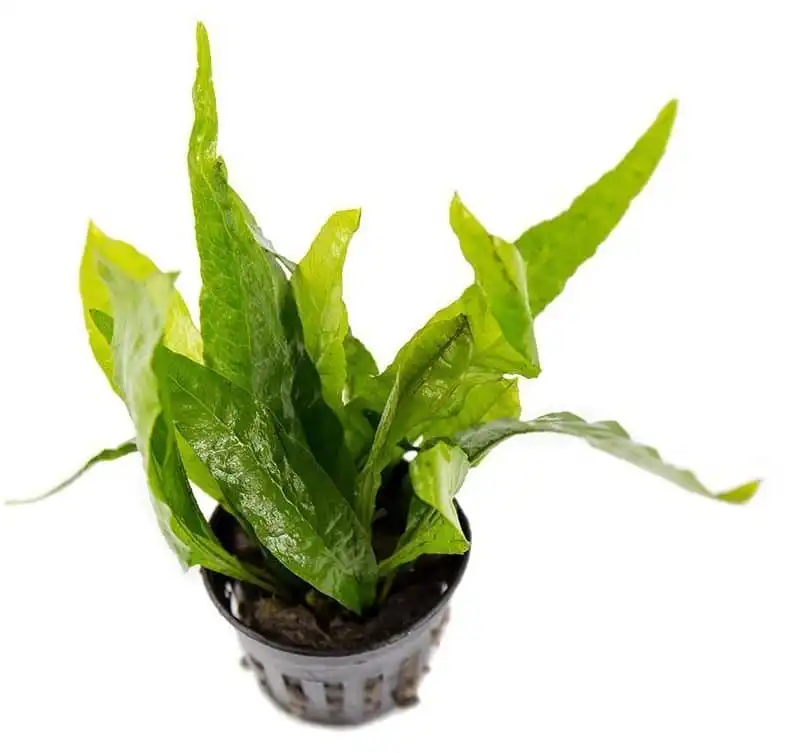
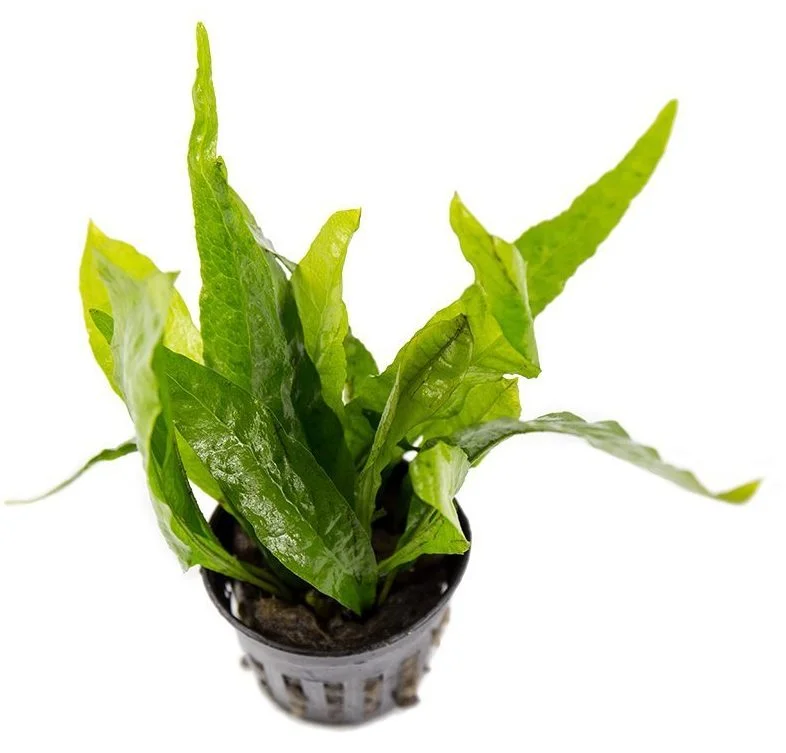
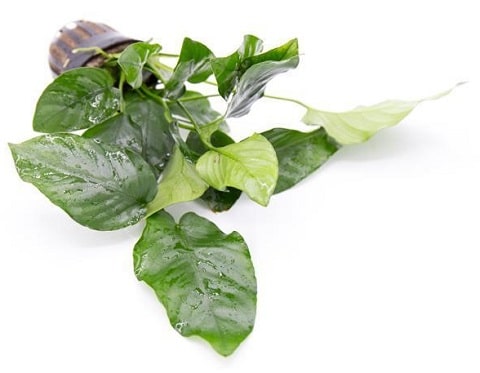
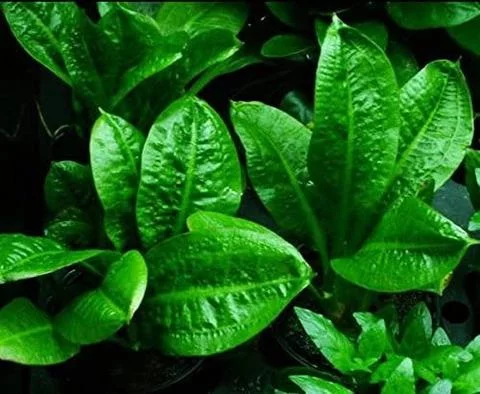
    Results vary by individual fish. Some bettas use it immediately. Others ignore it completely. If your betta has broad-leafed live plants or floating plants already, this product is largely redundant. For a minimally planted or bare tank, it’s a useful addition. I prefer recommending live plants when possible: Amazon swords, anubias, and floating plants like frogbit provide the same resting function with the added benefit of water quality improvement.

    Specifications:

    • Material: Soft plastic
    • Attachment: Suction cup

    Pros:

    • Provides a comfortable resting place near the water’s surface
    • Easy to install with a suction cup
    • Blends well with aquarium decor

    Cons:

    • May require occasional adjustments for stability
    • Not all bettas will use it

    WHAT MOST PEOPLE MISS

    The most overlooked betta enrichment option is also the cheapest: a ping pong ball. Drop a clean, new ping pong ball in a betta tank and watch what happens. Most bettas will push it around the surface, follow it, and interact with it more than many purpose-built toy products. It costs almost nothing, it’s safe, and bettas respond to it reliably. If you want a simple, low-effort enrichment add-on, start there before spending money on specialty products.

    Bonus – A Ping Pong Ball

    Ping Pong Ball

    A ping pong ball is one of the cheapest and most effective enrichment options you can give a betta. Bettas push it around the surface, follow it, and interact with it more than many purpose-built products. If you have one at home, drop it in. Use a brand-new ball straight from the package so there are no contaminants. Bettas can even be trained to push it into a goal with the R2 training kit. Simple, free, and it works.

    Choosing The Right One

    When selecting enrichment for a betta, prioritize items that match their natural behaviors: hiding, resting near the surface, exploring, and occasional territorial display. All items should be aquarium-safe with no sharp edges or toxic materials. With the exception of a ping pong ball, stay away from items not designed for aquarium use.

    One practical consideration: know what type of betta you have. Plakat bettas are active and physically capable of training kits and active interaction. Long-fin fancy varieties like halfmoons and elephant ears have heavier fins that limit their physical range. They benefit more from resting structures like the floating log and leaf hammock than from active training setups.

    Non-Toy Ideas

    Toys are nice, but natural environmental enhancers are better in the long run. Here are a few non-toy options worth considering.

    Indian Almond Leaves

    Indian Almond leaves (also called catappa) release tannins into the water, softening it and adding antibacterial and antifungal properties. Bettas in tannin-rich water rest on the leaves, behave more naturally, and show better color over time. These leaves were historically used by betta fighters to help injured fish heal faster. They are not a toy but genuine environmental enrichment that improves conditions at the same time.

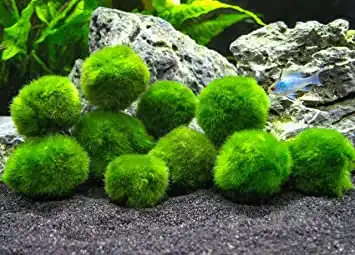
    Moss Balls

    Budget Option


    Marimo Moss Ball

    Budget Option

    A cheap and easy to care for aquarium plant. Thrives in low light and very low maintenance


    Click For Best Price

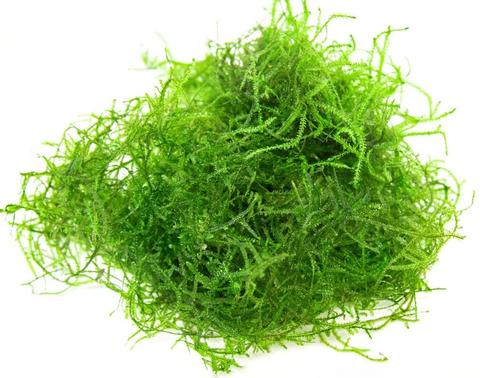
    Bettas are genuinely curious about Marimo Moss balls. Adding one or two to the tank sparks investigation and gives them something to nudge and explore. They also absorb nitrates and remove toxins from the water, which makes them double-duty enrichment. Inexpensive, low maintenance, and effective in small tanks.

    Tankmates
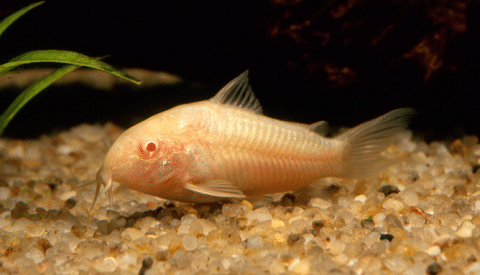
    Albino Cory Catfish

    The best long-term enrichment for a betta is appropriate tankmates in a large enough tank. Bettas interact with other fish, monitor territory, and generally show more natural behavior in a community setup. You need at least a 10-gallon tank to add tankmates, and species selection matters. Avoid anything that looks like a betta, anything with long flowing fins that a betta might nip, and anything fast or aggressive enough to stress the betta out. Good options include:

    Frequently Asked Questions

    Do betta fish use toys?

    Bettas are curious fish and will interact with a variety of enrichment items. Ping pong balls, floating logs, and mirrors all trigger different natural behaviors. The key is matching the enrichment type to what your specific betta actually responds to, since individual fish vary in personality and activity level.

    How do you keep a betta entertained?

    The most effective long-term enrichment is a well-structured environment: a floating log or caves near the surface, live or silk plants for cover, and Indian almond leaves for water enrichment. Adding appropriate tankmates in a 10-gallon or larger tank provides ongoing natural interaction. Toys like ping pong balls and brief mirror sessions supplement the baseline but don’t replace good tank setup.

    How often should I use the Zoo Med Betta Exercise Mirror?

    Use the mirror for one to two minutes every other day at most. Remove it immediately after each session. Never leave it in the tank permanently. Overuse causes chronic stress rather than enrichment. Think of it as an occasional exercise session, not a permanent fixture.

    Are there any alternatives to betta fish toys?

    Live plants, driftwood, floating plants, and Indian almond leaves all provide enrichment without the limitations of plastic toys. In most cases, a well-planted tank provides more ongoing enrichment than any toy product. For interaction, dedicating a few minutes of feeding-time engagement is more valuable than leaving toys in the tank and walking away.

    What should I avoid when choosing betta fish toys?

    Avoid anything with sharp edges, rough interior surfaces, or materials not designed for aquarium use. Avoid leaving mirrors or high-stimulation items in the tank long-term. Avoid over-stimulation from constant rearranging of tank decor. Bettas establish territory and disrupting that repeatedly causes stress rather than enrichment.

    Closing Thoughts

    Enrichment for bettas is not about buying the most products. It’s about giving the fish structure, variety, and the occasional controlled interaction. The Zoo Med Floating Log is the foundation. A ping pong ball gives you free interactive enrichment. Indian almond leaves improve the environment while providing something to rest on. Brief mirror sessions once every couple of days add behavioral stimulation without the stress risk of permanent exposure.

    Get those basics right and your betta will be more active, show better color, and hold up far longer than one in a bare tank with no stimulation. The difference is real and it shows up over months, not days.

    For quality betta supplies and live fish, Flip Aquatics and Dan’s Fish are both reputable sources worth checking out for bettas and compatible tankmates.


    📘 Want to learn more? This article is part of our complete Betta Fish Guide. your ultimate resource for betta care, types, tank setup, feeding, tank mates, and more.
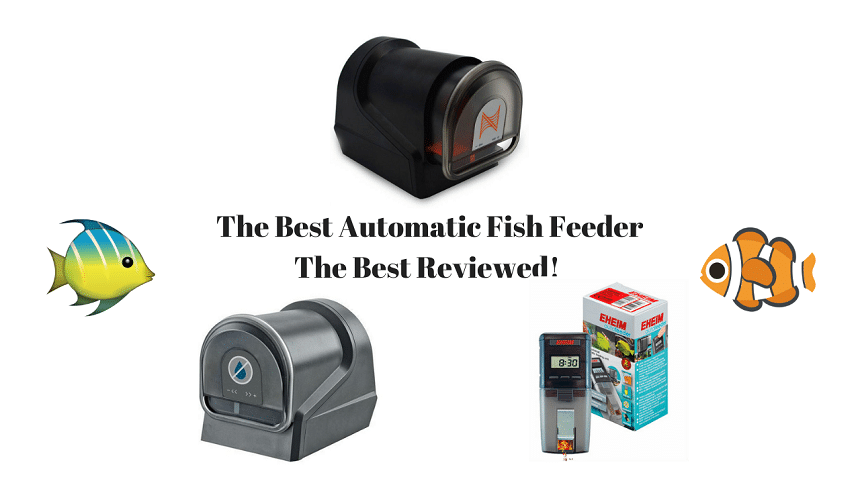
  • The 7 Best Automatic Fish Feeders: Tested and Reviewed by a 25-Year Hobbyist

    The 7 Best Automatic Fish Feeders: Tested and Reviewed by a 25-Year Hobbyist

    An automatic fish feeder sounds optional until you’re stuck at an aquarium trade show 400 miles from home and realize you forgot to arrange for someone to feed your tank. I’ve been there. I travel regularly for events like Aquashella and Reefapalooza, and over the years I’ve tested a lot of these feeders in real conditions. Most fail the same way: they dump too much food, they jam up from humidity, or the timer drifts and starts feeding at 3 AM. The ones that work keep working quietly for years.

    Overfeeding with an auto feeder doesn’t just waste money. It crashes tanks.

    EXPERT TAKE | MARK VALDERRAMA

    In 25 years of keeping fish and running aquarium stores, I’ve seen more tanks trashed by auto feeders than by vacation neglect. Here’s the calibration rule I use: run your feeder for a full week before any trip and watch the food landing zone after every feeding. If there’s uneaten food on the substrate within 5 minutes, you’re overfeeding. Dial it back. A slightly underfed fish survives a vacation. An ammonia spike from rotting food doesn’t.

    The Top Picks

    Editor’s Choice

    Eheim Everyday

    • Name brand
    • Easy to use
    Best Value

    NICREW Auto Feeder

    • Lithium powered
    • Easy to use
    Best For Frozen Food

    Innovative Marine Frozen Food Feeder

    • Best for saltwater fish
    • Works with frozen food

    WHY THIS RANKING

    Rankings here are based on four things: portion consistency across multiple feedings, resistance to humidity jamming, timer accuracy over 7-plus days, and real-world longevity. A feeder can have every feature on the box and still fail in a humid fishroom. The products at the top of this list have proven themselves in actual use, not just initial testing. Price was a secondary factor, not the primary one.

    What People Get Wrong About Auto Feeders

    Most people treat auto feeders as “set it and forget it.” That’s exactly what gets fish killed. The calibration step is not optional. Every feeder dispenses differently depending on the food type, the drum rotation speed, and even ambient humidity. Pellets flow differently than flake. In a humid fish room, flake can clump in the drum and block the opening completely, starving your fish. Or it can clump in a partial jam that dumps a huge portion all at once. Either way, your tank pays for it.

    The second common mistake: people buy an auto feeder specifically for vacation and then never test it before they leave. Test for at least a full week before any trip. Watch the first few feedings. If you see food sitting on the bottom after 5 minutes, the portion is too large.

    The Biggest Mistake

    Overfeeding on an auto feeder is worse than overfeeding by hand, because you’re not there to see it and correct it. Uneaten food rots, ammonia spikes, and in a tank without someone watching, that spike can wipe out fish before you get back. I’ve seen it happen. If you’re going away for 7 days, your fish will be fine eating two small meals per day. They will not be fine if your feeder jams and dumps a week’s worth of food in one shot.

    The Candidates: A Quick Overview

    Picture Name Features Link
    Editor’s Choice!

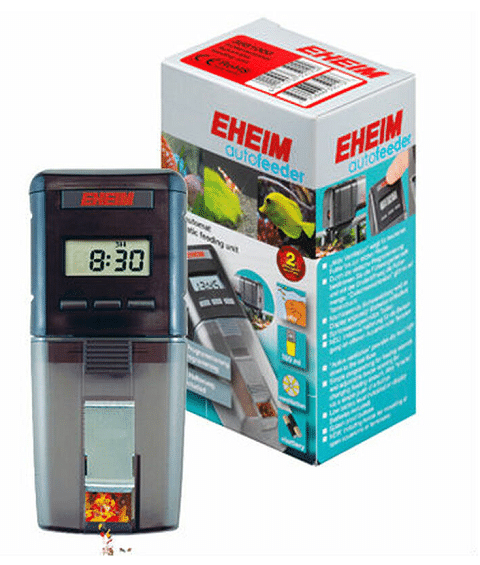
    Eheim Everyday Fish Feeder

    Eheim Everyday Fish Feeder
    • Great Price
    • Easy To Use
    • Battery Operated
    Click For Best PriceBuy On Amazon
    Budget Option

    NICREW Automatic Fish Feeder

    NICREW Automatic Fish Feeder
    • Easy To Use
    • Battery or Lithium Powered
    Buy On Amazon
    Works With Frozen Food!

    Innovative Marine Frozen Food Feeder

    Innovative Marine Frozen Food Feeder
    • Algae and spirulina based
    • For saltwater Fish
    Click For Best PriceBuy On Amazon
    Neptune Apex AFS Neptune Apex AFS
    • Works With Controllers
    • Multiple Feedings A Day
    Click For Best Price
    OASE Fishguard OASE Fishguard
    • 3 Year Warranty
    • Made In Italy
    Click For Best PriceBuy On Amazon
    Lifegard Aquatics Intellifeed Lifegard Aquatics Intellifeed
    • Easy To Use
    • Locally Available
    Buy On PetcoBuy On Amazon
    Omega One 7 Day Feeder Block Omega One 7 Day Feeder Block
    • Last 7 Days
    • Feeding Block
    Buy On ChewyBuy On Amazon

    The 7 Best Automatic Fish Feeders Reviewed

    1. Eheim Everyday

    The Eheim Everyday is the feeder I’ve recommended more than any other over the years, and it’s not a close decision. Eheim built it to last, priced it fairly, and kept the programming simple enough that anyone can calibrate it without reading a manual twice. The feeding chamber is aerated to keep food dry, which is the main reason cheap feeders jam: no air circulation means humidity does its damage slowly until the drum stops turning.

    It handles both rimless and rimmed aquariums with included brackets. Multiple feedings per day are easy to program. The battery warning system tells you before you lose power, not after. I’ve watched hobbyists ditch expensive controller-integrated feeders and go back to the Eheim because it’s simply more reliable. Don’t place it near an air stone or power filter output where humidity can reach the drum.

    Pros
    • Proven brand reliability
    • Easy programming
    • Aerated drum prevents jamming
    Cons
    • Doesn’t fit all rimmed aquariums
    • Portion control requires calibration time

    2. NICREW Automatic Fish Feeder

    For a budget feeder, the NICREW does the basics right. Lithium charging option is a real advantage over AA-battery units, especially if you’re leaving it unattended for extended periods. The programming is straightforward. The portion control is decent for a feeder at this price. It won’t outlast the Eheim, and the build quality reflects the price, but for a first feeder or a backup unit for a secondary tank, it earns its spot on this list.

    Pros
    • Rechargeable lithium option
    • Budget-friendly
    • Simple operation
    Cons
    • Build quality reflects the price
    • Less precise portion control than premium units

    3. Innovative Marine Frozen Food Feeder

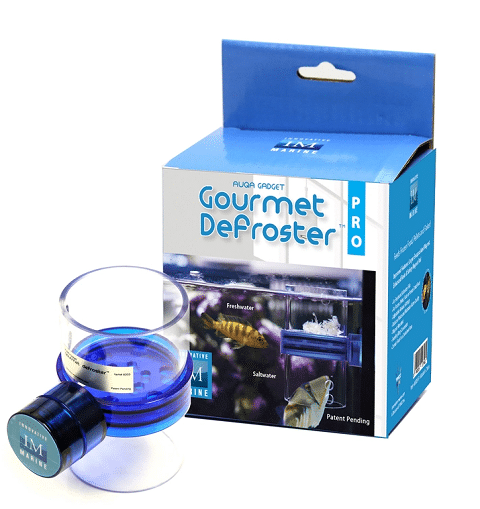
    This one solves a problem every saltwater hobbyist runs into: how do you feed frozen food automatically? Most auto feeders only handle dry pellets or flake. The Innovative Marine Gourmet Gadget Defroster is built specifically to thaw and release frozen food, making it genuinely useful for reef tanks and fish-only saltwater setups where frozen mysis or brine shrimp is part of the regular feeding routine. If you’re running a freshwater setup with only dry food, skip this one. It’s overkill. If you’re keeping saltwater fish that need frozen food, this solves a real problem.

    Pros
    • Works with frozen food
    • Ideal for saltwater reef feeding
    • Reduces water pollution from unthawed food
    Cons
    • Specialty product, not for dry food only tanks
    • Higher cost than standard auto feeders

    4. Neptune Apex AFS

    The Apex AFS is not a standalone feeder. It’s a module for the Neptune Apex controller system, which means it’s only relevant if you’re already running an Apex. If you are, it integrates directly with the controller: you can trigger feedings from the app, pause feeding during a water change, and get alerts if something goes wrong. For serious saltwater setups running full Apex automation, this is the right feeder. For anyone else, it’s an expensive answer to a simple problem.

    Pros
    • Full Apex controller integration
    • Remote app control
    • Feeds can pause automatically during water changes
    Cons
    • Requires Apex controller (not standalone)
    • Expensive entry for controller-only users

    5. OASE Fishguard

    OASE’s Fishguard comes with a 3-year warranty and Italian build quality, which puts it in a different durability tier than most auto feeders. The programming is clean and intuitive. For someone who wants a feeder that’s built to last and doesn’t want to think about replacing it in two years, the OASE Fishguard justifies its higher price with engineering that’s noticeably better than the budget options.

    Pros
    • 3-year warranty
    • Italian engineering, solid build
    • Intuitive programming
    Cons
    • Higher price point
    • Less widely available than Eheim

    6. Lifegard Aquatics IntelliFeed

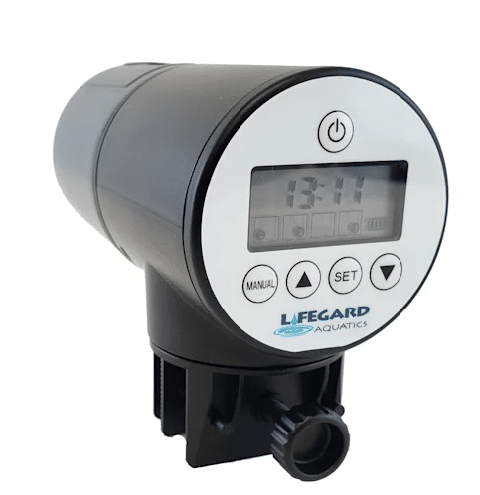
    The IntelliFeed is a reliable mid-range option that’s actually findable at Petco, which matters if you need a replacement fast. It handles the basics: multiple feedings per day, adjustable portions, simple programming. Nothing flashy, nothing revolutionary, but it works consistently and it’s locally available. Choose it if you want an Eheim-tier experience at a slightly lower price and you don’t need specialty features.

    Pros
    • Available at Petco
    • Reliable operation
    • Mid-range price
    Cons
    • Less precise than Eheim
    • Basic feature set

    7. Omega One 7 Day Feeder Block

    The feeder block is not an auto feeder in the traditional sense. It’s a compressed food block that dissolves slowly over 7 days. No batteries, no programming, nothing that can malfunction. That’s both its strength and its limitation. For a short trip with a simple community tank, it works. The downside is portion control: the rate of dissolution depends on water temperature and flow, which means it’s not a predictable feeding system. Use it as a backup or for very short absences, not as a primary feeding solution.

    Pros
    • No batteries, no failure modes
    • Very cheap
    • Good nutrition from Omega One
    Cons
    • Unpredictable portion release rate
    • Not suitable for tanks with sensitive water quality

    BUY OR SKIP?

    Buy if: You travel regularly, work long hours, or want consistent feeding schedules that support fish health regardless of your schedule. Auto feeders are not optional for anyone who travels. Skip if: You’re home every day and can feed manually. Manual feeding lets you observe your fish at every feeding, which is actually valuable behavioral monitoring. Auto feeders remove that check-in point. Use them when you need to, not by default.

    Should You Buy an Auto Feeder?

    Good Fit If:

    • You travel or have unpredictable work schedules
    • You want to split daily feedings into multiple small portions for finicky eaters or fry
    • You’re managing a saltwater tank where feeding consistency is critical
    • You have multiple tanks and manual feeding every one isn’t realistic

    Avoid If:

    • You’re not willing to do a calibration week before leaving for any trip
    • Your fish eat live or frozen food exclusively (the Innovative Marine excepted)
    • You’re feeding very fine foods like live baby brine that clog standard drums

    MARK’S TOP PICK

    The Eheim Everyday. It’s not even a close call. I’ve tested more expensive feeders and more budget options, and the Eheim keeps coming back as the one that just works without surprises. The aerated drum, reliable timer accuracy, and Eheim’s build quality make it worth the price difference over generic brands. If you’re running a controller-integrated setup on the Neptune Apex, use the AFS. If you want frozen food delivery for a saltwater tank, get the Innovative Marine. For everyone else: Eheim.

    WHAT MOST PEOPLE MISS

    Placement matters as much as the feeder itself. Even the best auto feeder will jam or deliver inconsistent portions if it’s positioned where humidity from the tank reaches the drum. Keep it away from air stones, powerhead outputs, and any surface agitation that throws moisture into the air. A small gap between the feeder and the tank rim makes a real difference. This is the detail that separates the people whose feeders work from the people who keep replacing them.

    Closing Thoughts

    Auto feeders are a real tool, not a gimmick. Used correctly, they let you travel without anxiety, feed on a consistent schedule your fish will adapt to, and handle situations where manual feeding isn’t possible. The calibration step is the part people skip, and it’s the step that determines whether the feeder helps or hurts your tank.

    My pick is the Eheim Everyday for most situations. For saltwater and frozen food, the Innovative Marine Gourmet Gadget. For Apex users, the AFS. Calibrate before you use it, keep it away from humidity, and check in on your first few trips even with a trusted feeder running.

    For healthy fish that deserve consistent feeding, I send people to Flip Aquatics and Dan’s Fish. Quality livestock and reliable automation go hand in hand.

  • 7 Best Foods for Saltwater Fish: What I Actually Feed My Reef Tank

    7 Best Foods for Saltwater Fish: What I Actually Feed My Reef Tank

    Feeding saltwater fish well is something I take seriously. my 125-gallon reef has a mix of fish with genuinely different dietary needs, from omnivores to dedicated herbivores, and the wrong food either gets ignored or causes water quality issues. The biggest mistake I see with saltwater fish food is products loaded with land-based or freshwater ingredients as fillers. Marine-based diets with real ocean ingredients. mysis, krill, spirulina, marine protein. make a visible difference in color and health. After years of testing products across my reef tank, here are the 7 best saltwater fish foods I’d actually recommend.

    What Are We Looking For? (Our Criteria For Selection)

    Picking the best saltwater fish foods isn’t an easy task, with various foods available at various price points. I’m taking the view that you are looking for premium-level products. Keeping a saltwater tank is expensive, so I expect my readers to be looking for high-end products. I’m not going to skip out on sub-par foods knowing this. Let’s dig deeper into what I’m looking for.

    Marine Based Foods

    This is number one on my list. I want nothing to do with a product containing many freshwater or land-based food as its main ingredients. The ocean is vast with ideal foods for your fish. I’m looking for ingredients like krill, Mysis shrimp, and clams for proteins. Ingredients like spirulina, plankton, seaweed, and marine algae are what I like to see for my greens.

    Probiotics

    Live cultures of bacteria are vital for your saltwater fish. These cultures boost your fish’s immune system, keep their digestive tracts clear, and enhance color. It’s still rare to find foods with probiotics in the saltwater aquarium trade. Even so, I give preference to products that have it.

    Feeding Response

    I want foods that have a great feeding response for your fish. It’s difficult enough as it is with new saltwater fish to get them to eat. You want food that triggers their feeding response. Getting your new fish to eat is one of the big milestones you have to get through when they are accumulating. I’m giving an extra look towards anything that can get a timid or picky fish to eat.

    Brand Name

    I do go for small brands or brands without a proven reputation. It’s hard enough to find quality fish food in the industry. I want a brand that is proven and readily available to my readers. I am also aware that some brands of foods are not going to be available online, and I’m perfectly happy telling my readers to find them at a local fish store.

    Saltwater Fish Food Candidates

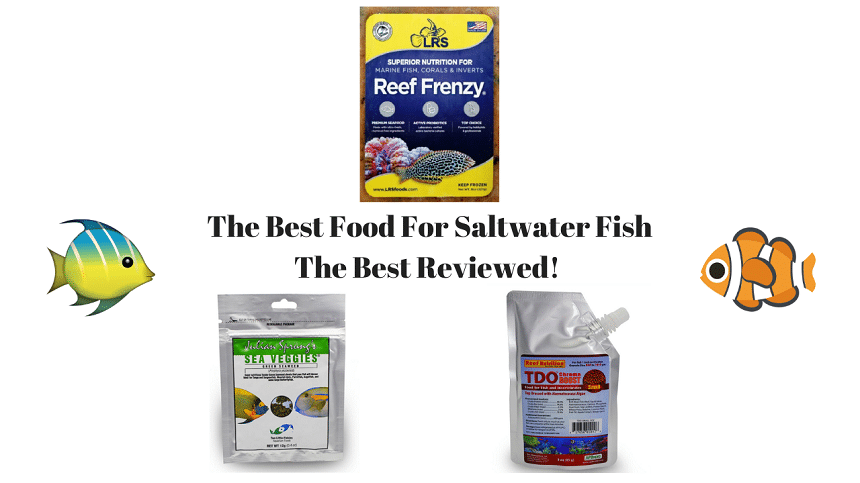
    In a hurry? I recommend LRS Reef Frenzy and Reef Nutrition Chroma Pellets!

    Here are the foods that made the list after going through my criteria. I’ll go into further detail about each product below.

    PictureNameFeaturesLink
    Editor’s Choice
    LRS Reef Frenzy

    LRS Reef Frenzy

    • Whole ingredients
    • Great feeding response
    • Highly nutritious 
    Click For Best Price
    Best Pellet Food
    Reef Nutrition Chroma Boost

    Reef Nutrition Chroma Boost

    • Coral and Fish Food
    • Works in Auto Feeders
    Click For Best PriceBuy On EBay
    Best Flake Food
    Formula One Flake Food

    Formula One Flake Food

    • Marine formula
    • For all saltwater fish
    Click For Best PriceBuy On Amazon
    Masstick Fish Food

    Masstick Fish Food

    • Great for picky eaters
    • Easy to feed
    Click For Best PriceBuy On Amazon
    Sea Veggies

    Sea Veggies

    • Great for algae eaters
    • Easy to feed
    Click For Best PriceBuy On Amazon
    SF Bay Brand Saltwater Multipack

    SF Bay Brand Saltwater Multipack

    • Multiple formulas
    • For all saltwater fish
    Buy On Petco
    Cobalt Omni Flakes

    Cobalt Omni Flakes

    • Probiotics
    • Great for small fish
    Buy On AmazonBuy On Chewy

    The Best Food – 7 Best (2023 Reviews)

    You have seen the list. Let’s see why these fish foods made the cut!

    1. LRS Reef Frenzy

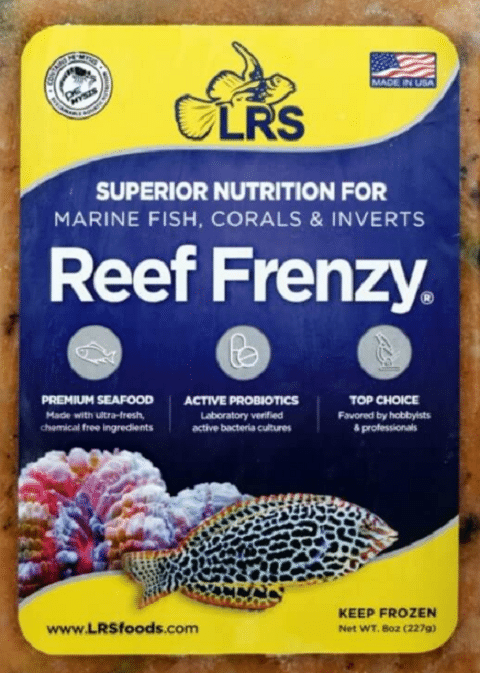
    If you want the absolute best fish you can purchase for your money, LRS Reef Frenzy is what you have been looking for. LRS goes further than any other food maker in the industry at producing the highest quality saltwater fish food. Let’s take a look at the ingredients list:

    • Fresh Wild Caught Scallop
    • Fresh Wild Caught, Hand Peeled Shrimp
    • Fresh Wild Caught Ocean Perch and Whitefish
    • Premium Piscine Energetics Mysis Shrimp
    • Squid
    • Euphausia pacifica krill
    • Fresh Shucked Oysters and Clams
    • Zooplankton and Rotifers
    • Seaweed
    • Blanched Broccoli Flowers
    • Oyster Eggs and Ovarian Tissue
    • D. salina algae

    No other fish food maker has all these ingredients in one. LRS is transparent about its production process. They invited Mr. Saltwater Tank several years back to tour their facility. Check out the video below:

    You get a ton of whole fresh ingredients with LRS. You also get probiotics. Probiotics, as mentioned in our best flake fish food post, are proven in the aquaculture industry to enhance the health of fish. LRS goes so far in their transparency that they have had their blends tested in labs. The sample of their labs shows Lactobacilli in a food sample that has been frozen for 30 days. The results are posted here.

    This is the ultimate fish food for reef tanks. It comes at a high price and is mainly available at local fish stores. I recommend this frozen blend to anyone who owns a saltwater tank.

    Pros and Cons

    Pros
    • Great feeding response
    • Great for fish and corals
    • Whole ingredients
    Cons
    • Expensive
    • Difficult to find

    2. Reef Nutrition Chroma Boost Pellets

    Reef Nutrition’s Chroma Boost is a new pellet food on the market, and it’s probably the best pellet food to come into the industry in many years. Its pellets are dressed in algae called Haematococcus, which is an excellent source of astaxanthin. A study performed by Virginia Tech showed astaxanthin had a positive effect on the coloration of clownfish.

    This pellet formula is not only great with fish, but corals love it too. To me, it combines the benefits of LRS in a pellet formula. You will get coloration from your fish that you have never seen before with this product. Because it’s a pellet product, you can place it in an auto feeder. This makes it one of the highest quality foods you can place in an automatic fish feeder.

    It isn’t easy to find online and in stores. You will need to visit a specialty local fish store to get it. You can order it online at the links above if you have trouble getting it. You won’t regret trying this out!

    Pros and Cons

    Pros
    • Great feeding response
    • Enhances colors
    • Researched backedN
    Cons
    • Expensive
    • Not the best for larger fish

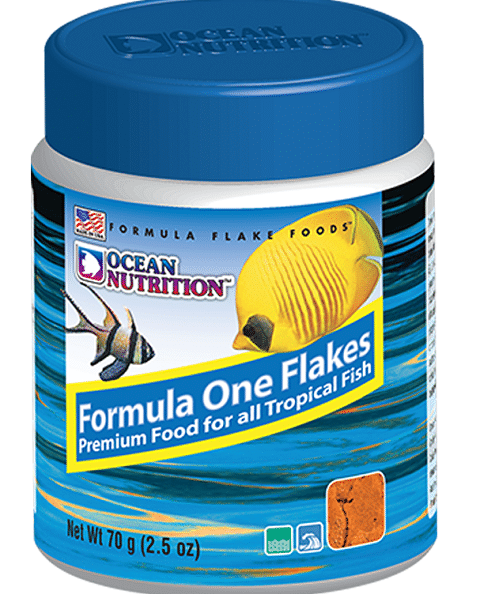
    3. Formula One Flake Food

    Here’s the thing about saltwater fish food – there are way better options these days. You should be eating balanced frozen foods like LRS instead of letting your fry get hooked on most flake foods or treating them with unbalanced dry stuff that will compromise their immune and digestive systems later.

    However, I understand there is a need for convenient foods for busy people or when you are traveling. Fortunately, we have quality brands like Ocean Nutrition that have researched and provided quality flake food that I am okay with recommending to saltwater tank keepers. Made in the USA and containing a solid nutrient profile, this fish food supports all saltwater aquarium inhabitants.

    The great thing about this formula is that it includes high-quality ingredients such as salmon, mussels, kelp, and brine shrimp. This flake variation of Ocean Nutrition’s frozen food has been designed explicitly for our freshwater fish to get all the nutrients their bodies need to be healthy!

    What puts Ocean Nutrition ahead of other flake food makers is its availability. They can be found in any fish store, including chain pet stores.

    Pros and Cons

    Pros
    • Probiotics 
    • Works for all tropical fish
    • Made in the USA
    Cons
    • Expensive
    • Larger flakes

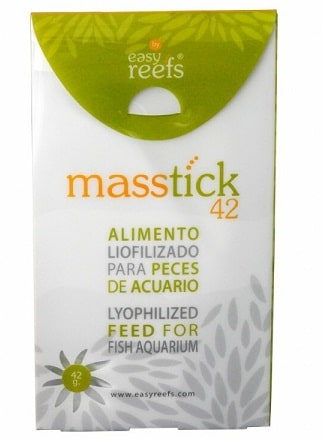
    4. Masstick Fish Food

    Masstick is an amazing food made by Easy Reefs that has been designed for the pickiest fish in the hobby. It contains a blend of natural ingredients that are only of marine origin. This creates premium-level food great for all fish and inverts in your saltwater or reef aquarium.

    What makes this food excellent for finicky fish is that you stick this to the glass of your aquarium, and your fish will pick it up when they feel safe to do so. Because the food lasts for hours on the glass and doesn’t break down easily, your more shy fish can take their time. You can see the food in action from the video below by Dutch Reefer. Watch his Cooper Band Butterfly go crazy for it.

    Pros and Cons

    Pros
    • Great feeding response
    • Lasts for hours in the tank
    • Best food for picky eaters
    Cons
    • Expensive
    • Messy to make

    5. Two Little Fishies Sea Veggies

    Do you have an algae-loving fish? If you have angelfish, tangs, or rabbitfish, you know how important it is to feed marine greens to these types of fish. Sea Veggies by Two Little Fishies provides a high-quality green product specially formulated for these fish.

    This product won’t break apart easily and is easy to feed. Just get a veggie clip and mount it on your glass. Your fish will pick it apart. Because it’s a passive fish food, you can put it on the clip and give your fish time to eat the sea veggies. This makes it an excellent product for finicky and shy fish. They can take their time to venture out and pick at the clip.

    This product is more expensive than others, and you do not get a lot, but it is the go-to sea greens product for serious reef keepers.

    Pros and Cons

    Pros
    • Tangs and angels love it
    • Easy to feed
    • Holds shape in water
    Cons
    • Expensive
    • Low quantity

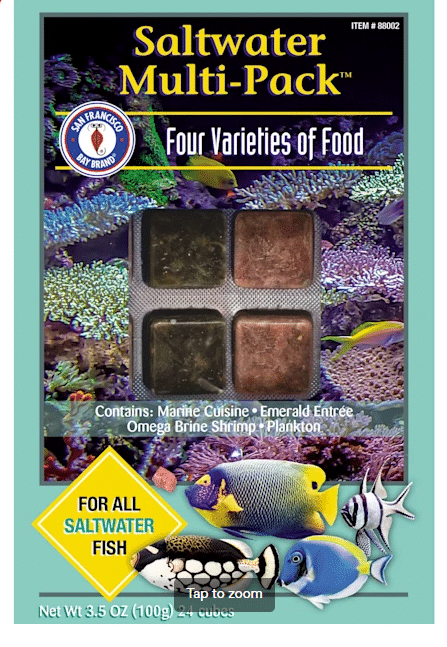
    6. San Francisco Bay Brand Saltwater Multipack

    For aquarists venturing into frozen foods for the first time, this multi-pack by San Francisco Bay Brand is a great first choice. This pack contains the following blends:

    • Marine Cuisine – Mysis Shrimp, Krill, Spirulina
    • Emerald Entrée – Spirulina, Mysis Shrimp, Fish Oil
    • Omega Brine Shrimp – Brine Shrimp, Carrageenan
    • Plankton – Plankton, Carrageenan

    These blends cover all saltwater fish you can keep in the hobby and has enough variety to provide a balanced diet for your fish. It’s one of the best packages to purchase if you keep a fish only or fish only with live rock setup.

    The other benefit to this product is you will find it at chain pet stores. Don’t be fooled thinking it’s low quality because it’s sold at a general pet store. This has excellent ingredients and you can purchase this locally at later hours from these pet stores.

    Pros and Cons

    Pros
    • Multiple formulas
    • Easy to find
    • Good for all fish
    Cons
    • Expensive
    • Large cubes

    7. Cobalt Aquatics Marine Omniflakes

    Contains Probiotics!
    Cobalt Aquatics Marine Omni Flakes

    One of the better flake foods available for marine fish today

    Buy On Amazon Buy On Chewy

    Cobalt was the first flake food on the market that contained probiotics in its formula. This omniflake product is a universal flake food designed for all saltwater fish. It is packed with squid and salmon proteins. It has spirulina, plankton, and krill for enhanced coloring.

    The Cobalt blue flakes contain the probiotics that support a healthy digestive and immune system for your fish. It will not cloud your water like lower-quality flake food.

    If you are going to use flake food, this is a good one to purchase. It’s not as available as Ocean Nutrition’s product, but I believe the overall quality of the formula is better. If you are going to purchase it, plan to buy it online as most fish stores won’t carry it.

    Pros and Cons

    Pros
    • Probiotics
    • Great for small fish
    • Works in autofeeders
    Cons
    • Expensive
    • Hard to find

    FAQS

    What Is The Best Thing To Feed This Type?

    The best thing to feed saltwater fish would be a blend of frozen food or cultured live foods. For frozen food, a blended product with probiotics like LRS Reef Frenzy is the best-prepared food you can purchase today. Plankton-infused brine shrimp or rotifers have excellent nutritional value for cultured live foods. California black worms are also fantastic to feed if you are willing to grow them.

    What Kind Of Food Do They Eat?

    Most saltwater fish are omnivores. This means they will prefer a mixed blend of foods. Generally, they will like Mysis shrimp, krill, squid, and calms for proteins. For greens, they will prefer spirulina, seaweed, and marine algae.

    Is Saltwater And Freshwater Fish Food The Same?

    No. Saltwater and freshwater fish food will have difficult ingredients. When looking for saltwater fish food, you will want marine-based ingredients. Avoid any land-based ingredients, fillers, and artificial enhancers. What comes from the ocean is what is best for saltwater fish!

    Are Tropical Flakes Good For Them?

    No. Tropical flakes are not suitable for saltwater fish. If you want flake food, you will want to purchase a flake food specifically formulated for marine fish. Brands like Ocean Nutrition and Cobalt provide some of the best flake foods. That being said, flake food should not be the primary food for your saltwater fish.

    How Long Can They Go Without Eating?

    Generally speaking, saltwater fish can go a few days to a week without eating. If you have trouble with a fish not eating, consider adding garlic to the food to trigger a feeding response. Foods like LRS and Masstick are known for having strong feeding responses. If your fish is still not responding, take a lot of signs for marine fish diseases.

    How Many Times A Day Should I Feed Them?

    You should feed your saltwater fish twice a day, assuming you have the filtration. This keeps your fish well-fed. If you have corals and pick the right foods, they will appreciate the extra food.

    Closing Thoughts

    It’s essential to feed your fish various foods to ensure they are getting the best possible nutrition. I have listed some of my favorite saltwater fish foods, but it’s essential to do your research before buying anything. What are your go-to saltwater fish foods? Let me know in the comments below!

    References

  • 7 Best Flake Fish Foods: What I’ve Actually Used After 25 Years in the Hobby

    7 Best Flake Fish Foods: What I’ve Actually Used After 25 Years in the Hobby

    Flake food looks simple. Sprinkle some in, fish eat it, done. After 25 years in this hobby and years managing fish stores, I can tell you that this assumption kills fish slowly.

    The brand of flake food you choose matters more than most beginners realize.

    I’ve watched customers lose color in their fish, deal with chronic fin rot, and burn through disease treatments, never connecting the dots back to cheap filler-packed flakes. The gap between a quality flake and a grocery store brand shows up in your fish: in their color, their immune response, and how much cloudy uneaten waste is fouling your water. The main thing I look at is the ingredient list. Fish meal and marine proteins should be at the top, not corn starch or soy fillers. Here are the 7 flake foods I’d actually put in my tanks.

    EXPERT TAKE | MARK VALDERRAMA

    Flake food is not interchangeable. After 25 years keeping and selling fish, I’ve seen quality flakes make a real difference in fish color, disease resistance, and digestion. Don’t let the price gap fool you into grabbing the cheap stuff. Cobalt is my go-to for freshwater. Ocean Nutrition for saltwater. For anything else, I want to see real protein at the top of the ingredient list, not corn or soy.

    What People Get Wrong About Flake Food

    Most beginners think all flake food is basically the same. It’s not. The difference between Wardley from Walmart and Cobalt Aquatics is not just marketing. It’s ingredient quality, protein sources, digestibility, and whether there’s any probiotic support for gut health. Cheap flake food often contains wheat flour, soy protein, and artificial color enhancers. Your fish will eat it because they’re hungry. That doesn’t mean it’s good for them.

    The other mistake I see constantly: people feed flakes as the only food, forever. Even the best flake food isn’t a complete long-term diet on its own. Rotate it with frozen foods, freeze-dried options, or pellets. Variety is what keeps fish looking their best.

    The Biggest Mistake Flake Food Buyers Make

    Buying based on price and availability alone. I get it. You’re at a pet store, you need food, you grab the big container because it’s cheap and looks familiar. Two months later your fish are pale, your water is murky after every feeding, and you’re wondering what’s wrong. The filler-heavy flakes aren’t breaking down properly. They’re polluting the tank and providing minimal nutrition. This is where bad flake food quietly does damage that looks like a mystery disease problem but is actually a feeding problem.

    WHY THIS RANKING

    I ranked these based on four things I care about: ingredient quality (real protein sources first on the label), digestibility (do they foul the water?), probiotic or functional additions that actually benefit fish health, and whether serious hobbyists, not just casual buyers, actually use them. Price mattered less than performance. Wardley made the list specifically as a warning.

    Our Criteria

    There are hundreds of fish foods and dozens of brands available. Not all are created equal. Filtering through all the types of foods available is a major task, and I’m here to make it easier. Here’s what I looked at when building this list.

    Probiotics

    Probiotics are relatively new in the fishkeeping hobby but have been used in other pet industries since the 1970s and are recommended by veterinarians for cats and dogs. Fish need gut health support just like other animals. Gut health prevents disease. Foods with probiotics deserve a hard look.

    Whole Foods

    Fish food that uses whole ingredients like krill, shrimp, and plankton is what you want to see. Avoid artificial color enhancers and cheap fillers. If the first ingredient is corn or soy, put it back on the shelf.

    Brand Name

    Buy from brands that have done the research and earned the trust of serious hobbyists. Brands like Ocean Nutrition and Xtreme have built real reputations in the community. Cobalt pioneered probiotics in fish food and pushed product innovation in this industry.

    Availability

    You need to be able to find these foods locally or online when you run out. I’ve focused on brands with solid distribution, not obscure small sellers. Reliable sourcing matters when you can’t go a week without feeding your fish.

    BUY OR SKIP?

    Good fit if: You keep a community freshwater or saltwater tank and want a convenient daily staple. Flake food works well for surface and midwater fish. You’re rotating it with other food types and not relying on it exclusively.

    Skip if: You keep bottom feeders only (flakes rarely reach them), you have fish that need specialized diets like carnivore cichlids or discus, or you’re looking for the single highest-nutrition option available. In those cases, move up to quality pellets or frozen food.

    The Fish Flake Food Candidates

    Below are the flake foods that made the cut. I’ll go into detail below.

    In a hurry? I recommend Cobalt Flake Food for freshwater and Ocean Nutrition Flakes for saltwater fish!

    Picture Name Features Link
    Tropical Fish Choice!

    Cobalt Aquatics Tropical Flake

    Cobalt Aquatics Tropical Flake
    • Probiotics
    • Color enhancing
    Buy On AmazonBuy On Chewy
    Saltwater Fish Choice!

    Formula One Flake Food

    Formula One Flake Food
    • Marine formula
    • For all saltwater fish
    Click For Best PriceBuy On Amazon
    Fluval Bug Bites Flakes Fluval Bug Bites Flakes
    • High protein
    • Made of insects
    Buy On Amazon
    Xtreme Aquatic Community Crave Fish Food Xtreme Aquatic Community Crave Fish Food
    • Omnivore mix
    • Good for all fish
    Buy On AmazonBuy On EBay
    Cobalt Aquatics Spirulina Flakes Cobalt Aquatics Spirulina Flakes
    • Spirulina Based
    • Good for plant and algae eaters
    Buy On AmazonBuy On Chewy
    Formula Two Flake Food Formula Two Flake Food
    • Algae and spirulina based
    • For saltwater Fish
    Click For Best PriceBuy On Amazon
    Avoid!

    Wardley Tropical Fish Food Flakes

    Wardley Tropical Fish Food Flakes
    • Easy to find
    • Cheap
    Buy On Amazon

    The 7 Best Flake Foods (Reviewed)

    Now that you know what made the cut, let’s get into why each one earned its spot.

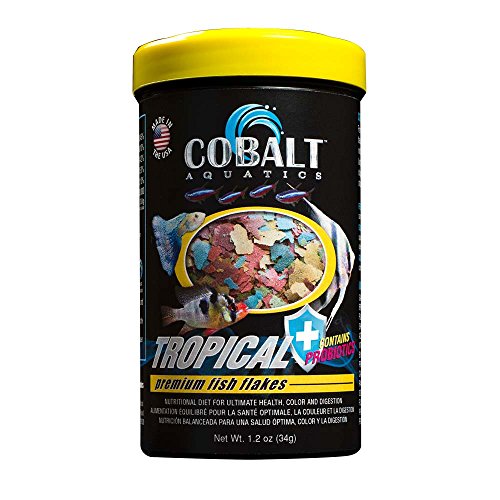
    1. Cobalt Aquatics Tropical Flake Food

    Best Tropical Fish Flake Food


    Cobalt Aquatics Tropical Flake

    Best Tropical Fish Flake Food

    Cobalt offers a premium level flake food with probiotics. A color enhancing formula that works great for all tropical fish


    Buy On Amazon


    Buy On Chewy

    If you want a staple flake food for your freshwater fish, this is the one I’d put in your hands. Cobalt was the first fish food company to include probiotic bacteria in their flake formula. That’s not a marketing gimmick, it makes a measurable difference. The benefits you get from a probiotic product include:

    • Better digestion and less waste pollution
    • Improved coloration in fish
    • Cleaner aquarium water between feedings

    This formula uses Bacillus subtilis and Bacillus licheniformis. Subtilis has been proven to increase fish food digestibility and help prevent disease in both shrimp and fish. Licheniformis has shown measurable health improvements in Tilapia research. These aren’t random ingredient additions. This is the highest quality flake available for freshwater tropical fish. It won’t cloud your water and it supports your fish’s long-term health. Full recommendation.

    Pros and Cons

    Pros
    • Probiotics
    • Works for all tropical fish
    • Made in the USA
    Cons
    • More expensive than generic brands
    • Larger flakes may need crushing for very small fish

    MARK’S TOP PICK

    Cobalt Aquatics Tropical Flake is my #1 for freshwater fish. The probiotic formula is the real differentiator. I’ve used a lot of flake foods over the years and nothing comes close to Cobalt for keeping freshwater tropicals healthy, colored up, and your water clear. If you’re only going to keep one freshwater flake on hand, this is it.

    2. Ocean Nutrition Formula One Flakes

    I’ll be honest with you: I’m not a fan of flake food for saltwater fish. The frozen food options available today, especially from quality brands like LRS, are so much better for marine fish that flakes shouldn’t be your primary feeding strategy in a reef or FOWLR tank. But I understand that convenience is a real factor. When you need something quick and reliable, my recommendation for saltwater fish is Ocean Nutrition.

    This food is made in the USA and has a solid nutrient profile built for marine species. You’ll find salmon, mussels, kelp, and brine shrimp in the formula. It’s essentially the flake version of Ocean Nutrition’s well-regarded frozen line. If you have to feed flakes to your saltwater fish, this is the one to use. Ocean Nutrition has been in the hobby for decades and their distribution means you can actually find it when you need it.

    Pros and Cons

    Pros
    • Quality marine ingredient profile
    • Works for all saltwater fish
    • Made in the USA
    Cons
    • Frozen food is a better long-term option for marine fish
    • More expensive than freshwater flake options

    3. Fluval Bug Bites Flakes


    Fluval Bug Bites Flakes

    A flake version of Fluval’s amazing pellet bug bites products. Great for all tropical fish and high in protein.


    Buy On Amazon


    Buy On Petco

    I love the Fluval Bug Bites food line. They built their formula around black soldier fly larvae, which freshwater fish go absolutely crazy for. It’s not just about feeding response, because insect protein is closer to what most freshwater fish eat in the wild, it’s more bioavailable and easier on their digestive system. This is the flake version of that formula, with color enhancement built in.

    High protein, great amino acid profile, easily digestible. That last part matters: poorly digested food leads to waste and bloat. Bug Bites flakes don’t have that problem. One honest note: their pellet product is the better buy if you have to choose one. The flake version is great for variety and smaller fish, but if you’re feeding adults and can do pellets, go that route instead.

    Pros and Cons

    Pros
    • Insect-based protein (bioavailable and natural)
    • Works for all tropical fish
    • Made in the USA
    Cons
    • More expensive than generic brands
    • Their pellet version is the better buy

    4. Xtreme Aquatics Community Crave


    Xtreme Aquatic Community Crave Fish Food

    Extreme Aquatics Fish Food offers a high quality flake food. A 60/40 mix of spirulina and krill


    Buy On Amazon


    Buy On Ebay

    Xtreme has built a real reputation in the serious hobbyist community. They’re not a massive corporate brand like Hagen or Tetra. They built their name through direct relationships with passionate fishkeepers and have been featured at Aquashella, which tells you a lot about who their audience is.

    Their Community Crave formula is built for mixed community tanks. The 60/40 spirulina-to-krill ratio gives you both the plant-based nutrition and the marine protein that most community fish need. The feeding response this food triggers is impressive for a flake product. The texture is noticeably higher quality than generic brands. My only reason it sits below Cobalt: I’m a believer in probiotics for long-term fish health, and Community Crave doesn’t include them. If probiotics aren’t a priority for you, this is a legitimate alternative that some experienced hobbyists prefer. You really can’t go wrong with Xtreme.

    Pros and Cons

    Pros
    • 60/40 spirulina and krill formula
    • Works for all tropical community fish
    Cons
    • More expensive (larger sizes)
    • Harder to find at local stores

    5. Cobalt Aquatics Spirulina Flakes


    Cobalt Aquatics Spirulina Flakes

    Cobalt Offers a great spirulina flake formula with probiotics. Great for fish that need greens in their diet


    Buy On Amazon


    Buy On Chewy

    For herbivore and omnivore fish that need plant matter in their diet, spirulina flakes are what you want. Combining spirulina with Cobalt’s probiotic formula makes this a standout option. No other product in this category does both.

    This food works perfectly for algae eating fish like mollies, African cichlids, and saltwater fish like tangs and rabbitfish. It’s easy to feed, digestible, and won’t cloud your water. For algae-eating and plant-eating fish, this is the best flake option available. Full stop.

    Pros and Cons

    Pros
    • Spirulina plus probiotics (unique combination)
    • Great for herbivore and omnivore fish
    Cons
    • More expensive than basic spirulina options

    6. Ocean Nutrition Formula Two Flakes

    For algae-eating saltwater fish, nori is the gold standard. But nori isn’t always practical when you’re in a hurry or traveling. Ocean Nutrition Formula Two is a solid convenience option for tangs, rabbitfish, and saltwater angelfish. The formula combines marine algae, spirulina, and kelp. It also includes garlic, which triggers a strong feeding response in marine fish, a nice bonus for finicky eaters.

    Like Formula One, this is best used as a supplemental food rather than a primary diet. Ocean Nutrition’s frozen version is the better long-term choice, but for easy day-to-day feeding for your plant-eating saltwater fish, Formula Two gets the job done.

    Pros and Cons

    Pros
    • Three types of marine greens in one formula
    • Garlic for feeding response
    • Readily available
    Cons
    • Frozen food is a better primary option for saltwater herbivores

    7. Wardley Tropical (Avoid)

    Avoid!


    Wardley Tropical Fish Food Flakes

    Wardley is a basic brand you’ll find in grocery stores. Your fish will eat it, but it’s not a good long-term choice. OK in an emergency only.


    Buy On Amazon

    Wardley is what you find at Walmart and grocery stores. Your fish will eat it because they’re hungry. That’s the nicest thing I can say about it. These lower-quality foods contain fillers, cloud up your water badly after feeding, and provide minimal nutrition compared to everything else on this list. The convenience of 24-hour availability isn’t worth the tradeoff in fish health. If you’re in a pinch and it’s all you can get, fine. But order quality food online and stop buying this as a routine.

    Pros and Cons

    Pros
    • Easy to find anywhere
    • Available 24 hours at major retailers
    Cons
    • Cheap filler-heavy formula
    • Clouds water after feeding
    • Minimal nutritional value
    • Strong unpleasant odor

    WHAT MOST PEOPLE MISS

    Most hobbyists never think about flake food shelf life. Once opened, flake food starts degrading nutritionally within a few months, even if it smells fine and looks normal. I replace my open containers every 6 months regardless of expiration date. The other thing people miss: rotating food types matters as much as choosing the right brand. Even the best flake food shouldn’t be the only thing your fish eat. Rotate in frozen or freeze-dried options at least a few times a week.

    Knowing The Food Hierarchy

    While this is a flake food article, I’d be doing you a disservice if I didn’t put flake food in context. From lowest to highest nutritional quality: flake food, pellet food, freeze-dried food, frozen food, cultivated live food.

    Pellets

    Pellet food is less processed than flakes. This is where most serious hobbyists land for their staple food. Higher quality brands are easier to find in pellet form, and you get better control over portion size. The downside: pellets expand with water and can cause bloat in fish prone to it. Choose a quality pellet formula and feed sparingly.

    Freeze Dried

    Freeze-dried food is whole food in a shelf-stable form. The nutritional profile holds up well and you can soak freeze-dried food in liquid vitamins to boost it further. Most freeze-dried options are single-ingredient (krill, bloodworms, tubifex) so they work best as supplements rather than staples. More expensive than pellets, but worth keeping on rotation.

    Frozen

    This is where the real quality lives. Frozen food combines whole ingredients and variety in a way nothing else matches. Your fish will look noticeably better on a frozen food diet. The tradeoff is cost and access: the best frozen foods are only at specialty retailers or online. Easy to overfeed. Harder to portion for small fish. Worth the effort.

    Cultivated Live Food

    Live food from a store carries disease risk. The better approach is cultivating your own: blackworms, brine shrimp, and rotifers are all doable at home. Live foods deliver gut bacteria your fish need for long-term health that no processed food provides. The commitment level is high, which is why most hobbyists never get there. But if you do, your fish will show it. Most people keep very healthy fish on frozen food and a rotation of quality dry foods without ever going live, and that’s perfectly fine.

    Knowing What Type Of Fish You Have

    Flake food works best for surface and midwater fish. Knowing where your fish feed helps you choose the right food format.

    Surface Feeders

    Fish like bettas and gouramis hunt at the surface and will hit flakes immediately when you drop them in. Most community fish fall into the surface or midwater category. Flakes are ideal for these fish.

    Midwater Feeders

    Fish like angelfish, most tetras, and barbs feed as food starts to sink. Flakes work fine for these fish. Pellets work better for most of them, especially the larger species.

    Bottom Feeders

    Bottom feeders rarely get much flake food. By the time flakes reach the substrate, other fish have eaten most of them. Wafers and sinking pellets are what you need for corydoras, plecos, and other bottom-dwelling species. Don’t assume your flake food is feeding them.

    FAQs

    Which flake food brand is best?

    The best flake food has quality protein sources at the top of the ingredient list, not corn or soy fillers. For freshwater fish, Cobalt Aquatics is my top pick because of their probiotic formula. For saltwater fish, Ocean Nutrition is the most reliable choice. Both brands do serious research on their formulas and have earned long-term trust from experienced hobbyists.

    Is flake food actually good for fish?

    Quality flake food works as a staple diet, but it’s not the best food available. Pellets, freeze-dried, and frozen foods all offer better nutrition. The key is to use quality flake food (not grocery store brands) and rotate it with other food types for the best long-term results.

    Is it better to feed flakes or pellets?

    Pellets are generally superior in quality to flakes. They’re less processed and easier to portion. That said, flakes are easier for very small fish to eat, and quality flake brands like Cobalt can hold their own nutritionally. Use pellets as your primary staple for adult fish and flakes for smaller or surface-feeding species.

    How long is flake food good for?

    Flake food has the longest shelf life of all fish food: anywhere from 18 months to 3 years depending on the brand. But nutritional value degrades well before the expiration date once opened. I recommend replacing open containers every 6 months regardless of what the label says. Store in a cool, dry place and keep the lid tight.

    Should I crush flakes for small fish?

    Yes. For small fish like nano tetras, rasboras, or fry, crush flakes between your fingers before dropping them in. Smaller pieces are easier to eat and less likely to be ignored. Crushed flakes are also less attractive to larger fish, so if you have a mixed tank, crush only what the small fish need and let the bigger pieces go to the adults.

    Closing Thoughts

    After 25 years in this hobby, my feeding recommendation is always the same: spend a little more on food and a little less on everything else. The difference between Cobalt and Wardley is maybe a few dollars a month. The difference in your fish’s health, color, and the clarity of your water is not small.

    For freshwater fish, start with Cobalt Aquatics Tropical Flake and don’t second-guess it. For saltwater, get Ocean Nutrition and be honest with yourself that frozen food should be your primary feeding strategy. Whatever you feed, rotate it. Your fish need variety, and no single food gives them everything they need.

    If you’re also looking for live fish, Flip Aquatics (flipaquatics.com) and Dan’s Fish (dansfish.com) are the two sources I trust most for healthy, quality fish. Good fish deserve good food. Start there.

    References

  • 7 Best Aquarium Backgrounds: My Picks After 25 Years of Tank Setups

    7 Best Aquarium Backgrounds: My Picks After 25 Years of Tank Setups

    A good aquarium background is the cheapest upgrade you can make to a display tank. A $200 setup with the right background looks like a $500 setup. A $500 setup with no background looks unfinished. I’ve been setting up tanks for over 25 years, and the background decision comes up every single time.

    Most hobbyists treat backgrounds as an afterthought. They’re not. They set the entire visual tone of the tank.

    This guide covers the 7 backgrounds I’d actually recommend, why background color matters more than most people realize, and when to skip a flat background entirely and go 3D.

    Expert Take | Mark Valderrama, AquariumStoreDepot

    On my own display tanks, I run black as the default. It makes fish colors pop in a way that blue or printed backgrounds just don’t. I switched my main planted tank from a printed tropical scene to a solid black SPORN cling years ago and the difference was immediate. People who visit assume I got new fish. The Serene backlit kit is the one product I push for aquascapers who want that frosted glow behind their hardscape. It’s the single upgrade that elevates a tank from “hobbyist setup” to “showpiece.” I’ve installed it in demo tanks at stores I’ve managed and the reaction from customers is always the same: they want to know what that light is behind the tank.

    An aquarium background is one of those things that seems minor until you take one off a tank, and then you realize how much it was doing. A good background hides the equipment behind the tank, eliminates reflections that can stress fish, and gives depth to the aquascape. I prefer solid black or dark blue for planted tanks because it makes the colors of fish and plants pop. The 3D foam backgrounds are impressive but add significant depth to the tank and can reduce swimming space.

    Our Criteria (How These Backgrounds Made The Cut)

    I’ve been involved in aquariums since I was 11. Through 25+ years of experience setting up various aquariums, there are certain things I look for in a fish tank background. Here is what I focused on when selecting the best to buy:

    • Backlight Features. Backlighting comes from Nature Scape aquascaping. When you have a backlit aquarium background, you can replicate a sky environment in freshwater tanks, with color changes on some models.
    • Static Clings. A backlit aquarium background is usually a panel you mount. For traditional backgrounds, you want a cling product. These adhere to the back of your aquarium and won’t peel away like the cheap tape-on backgrounds you find in chain pet stores.
    • Brand. You want a solid brand that makes backgrounds for serious hobbyists. A pet store brand fish tank background is usually going to be cheap, taped on, or fall apart easily. An aquarium background needs to last through the life of the tank.

    How We Ranked These Aquarium Backgrounds

    1. Visual impact: how much it improves the tank’s overall appearance
    2. Fish color enhancement: whether it makes fish colors pop vs. wash out
    3. Ease of installation: clean application without bubbles or peeling
    4. Durability: doesn’t fade, peel, or discolor over time
    5. Value: cost relative to the visual upgrade it provides

    What People Get Wrong About Aquarium Backgrounds

    The most common mistake I see is hobbyists defaulting to that printed blue ocean scene from the pet store because it “looks like water.” Here’s the problem: blue or busy printed backgrounds compete with the fish visually. Your eye gets confused about where to look. Dark backgrounds, especially black, push all the visual weight forward onto the fish and hardscape where it belongs.

    The second mistake is using the wrong color for the fish species. Running a blue background behind dark-bodied cichlids like frontosas or black ghost knife fish washes them out completely. Black is the right call. Running a black background behind a bright white sand Malawi setup with yellow labs and electric blues looks wrong too. In that case, a lighter or natural-toned background works better. Background color is a decision, not a default.

    The third mistake is skipping the background entirely because the tank “looks fine.” It doesn’t. Bare glass reflects light back into the tank, causes glare, and exposes every cord, hose, and filter intake behind the glass. Even a cheap static cling in solid black fixes all of that instantly.

    The Hard Rule on Background Color

    Black is the default for most freshwater and saltwater display tanks. It makes fish colors pop, eliminates reflections, and gives the aquascape visual depth. If you’re uncertain, go black. You can always swap a static cling background, but you can’t get back the weeks you spent looking at a washed-out tank.

    Which Background Is Right for Your Tank?

    Good Fit

    • Black background: most freshwater and saltwater display tanks
    • 3D background: show tanks where depth and naturalism are priorities
    • Dark blue or green: planted tanks with green-heavy aquascapes
    • Any color background: better than no background for most setups

    Skip or Reconsider

    • Bright blue on dark-bodied fish: washes them out
    • 3D background in a small tank: eats valuable space
    • Pattern backgrounds (ocean scenes, etc.): usually looks cheap
    • White or light backgrounds for most setups

    The Fish Tank Background Candidates

    Now that you know my criteria, here’s who made the cut. I’ll go into further detail below.

    In a hurry? I recommend Serene Background Kits. Use discount code ASD15 at checkout!

    Picture Name Features Link
    Editor’s Choice

    Serene Backlight Light Kit

    Serene Backlight Light Kit
    • Backlight
    • Static Cling
    Click For Best PriceBuy On Amazon
    Best Value

    SPORN Black Aquarium Blackground

    SPORN Black Aquarium Blackground
    • Static Cling
    • Dark Background
    Buy On AmazonBuy On Chewy
    FJARDE Lit Background FJARDE Lit Background
    • Backlight
    • Multiple Colors
    Buy On Amazon
    DUOFIRE Frosted White Background DUOFIRE Frosted White Background
    • Static Cling
    • Great For Planted Tanks
    Buy On Amazon
    SPORN Coral Background SPORN Coral Background
    • Static Cling
    • Photo background
    Buy On AmazonBuy On Chewy
    SPORN Tropical Background SPORN Tropical Background
    • Static Cling
    • Photo Background
    Buy On AmazonBuy On Chewy
    Seaview Sea of Green Background Seaview Sea of Green Background
    • Photo Background
    • Tape attached
    Buy On PetcoBuy On Amazon

    7 Best Aquarium Backgrounds (Reviews)

    Let’s look at each one below and why they made the cut.

    1. Serene Backlit Light Kit

    Mark’s Top Pick

    The Serene Backlit Light Kit is my top pick and it’s not close. I use it on my own display tanks and I’ve installed it in store demo setups. The frosted panel plus the color-changing LED strip gives you that deep, luminous background that the ADA unit is famous for, at a fraction of the cost. Use code ASD15 to knock 15% off at checkout. If you’re building a serious aquascape or planted tank, this is the one to get.

    In the aquascaping world, there is a gold standard when it comes to aquarium backgrounds: backlit panels that come in frosted white. Current USA’s Serene kit meets that standard, costs far less than the ADA equivalent, and adds color-changing capability on top.

    What I love about this kit (aside from the price) is its ability to change colors. You set the mood you want for the tank and the living space around it. Because the light is backlit, it doesn’t interfere with your plant lighting. The color range is genuinely impressive.

    Installation is straightforward. You can use the included static cling or the mounting clips Current USA provides. This is the background I point people toward when they want their tank to look like something out of a magazine. Give it a try with code ASD15. You won’t be disappointed.

    Pros and Cons

    Pros
    • Frosted default background
    • Multiple color options
    • Easy to install
    Cons
    • More expensive than flat clings
    • Color-change feature isn’t for every setup

    2. SPORN Black

    Best Value

    SPORN Black Aquarium Background

    SPORN backgrounds are static cling aquarium backgrounds that are easy to install and look great. Best for saltwater aquariums.


    Buy On Amazon


    Buy On Chewy

    Static cling aquarium backgrounds are some of the most reliable products in the hobby. I’m still surprised that pet stores keep selling cheap tape-on backgrounds to new hobbyists. Static clings are just better in every way.

    SPORN makes high-quality backgrounds that are both affordable and easy to install. The classic black works especially well for saltwater tanks, African cichlid tanks, brackish water tanks, and betta tank setups.

    This is a great buy. You can’t go wrong with this brand.

    Pros and Cons

    Pros
    • Static cling
    • Easy to install
    • Easy to cut to shape
    Cons
    • Black doesn’t work for all setups

    3. FJARDE Background Light


    FJARDE Backgrounds

    An ADA backlight aquarium background clone. Cheaper than ADA with a few extra features.


    Buy On Amazon

    ADA’s backlit panel is widely considered the best in the hobby for backlit backgrounds. The FJARDE is a direct clone of that concept, but with gradient color options added on top.

    This panel is designed for rimless aquariums and uses a mounting clip system that keeps everything clean and flush. Install is simple.

    If you’re shopping for a premium backlit screen and want to compare against the Serene, this is the other contender. It’s more expensive than the Serene and doesn’t quite match it on features, which is why it ranks at #3. But if rimless mounting compatibility is a priority for your setup, give it a look.

    Pros and Cons

    Pros
    • Gradient and solid color options
    • Easy rimless mounting
    • Premium panel quality
    Cons
    • Expensive
    • Designed specifically for rimless tanks

    4. DUOfire Frost White


    DUOFIRE White Frosted Background

    A frosted static cling film that works beautifully on planted aquariums. Built for residential use, durable enough for aquariums.


    Buy On Amazon

    Not everyone wants a backlit panel. For planted freshwater setups, a frosted white static cling is a great choice, especially in Nature Style and Iwagumi aquascapes where the bright diffuse background complements the hardscape.

    DUOFIRE makes this as a residential window film, but it works perfectly on aquariums and is built for humid, high-stress environments like bathrooms. That durability translates directly to long-term aquarium use.

    It’s more expensive than the SPORN line, but frosted white in an aquarium-specific brand is hard to find. The premium is worth it.

    Pros and Cons

    Pros
    • Frosted white look
    • Easy to install
    • Static Cling
    Cons
    • More expensive
    • Not ideal for saltwater tanks

    5. SPORN Coral


    SPORN Coral Background

    A high-definition static cling coral backdrop for saltwater fish tanks.


    Buy On Amazon


    Buy On Chewy

    If you want a photo background behind a saltwater tank, you need one that holds. The problem with traditional tape-on photo backgrounds is they don’t adhere cleanly and they degrade over time. SPORN solves this with a static cling version.

    SPORN’s coral background gives you HD print quality with static cling durability. It adheres cleanly to the back of the tank and lasts. The coral print works well for fish-only saltwater setups where you want the ocean scene effect without paying for live rock all the way to the back wall.

    For freshwater, look at the tropical option below instead.

    Pros And Cons

    Pros
    • High quality print
    • Easy to install
    • Static Cling
    Cons
    • Needs backlighting to show at full quality

    6. SPORN Tropical


    SPORN Tropical Background

    A static cling planted tank background. Great for freshwater aquariums.


    Buy On Amazon


    Buy On Chewy

    For freshwater tanks, SPORN offers a tropical photo background in the same static cling format. Easy installation, durable, and a better-looking freshwater scene than anything you’ll find in a local pet store.

    One note: if your tank is on the smaller side, the scene proportions look off. This background works best on tanks 24 inches wide and longer. On a 36-inch or 48-inch tank, it looks great.

    Pros and Cons

    Pros
    • High quality print
    • Easy to install
    • Static Cling
    Cons
    • Needs backlighting to show at full quality
    • Image scale looks off on small tanks

    7. Seaview Sea of Green

    The Seaview is the kind of background you see at every pet store. It’s taped on, and that’s the problem. The tape doesn’t hold over time. The image washes out without proper backlighting. I include it here because it’s widely available and some people want the taped option, but I’m recommending it with reservations.

    If you go this route, add the mounting and illumination kit. It converts the tape-on into something closer to a properly mounted cling and backlights the image properly. Without it, the background looks flat and washed out. With it, it’s acceptable. But at that combined price point, you’re better off buying SPORN.


    Seaview Mounting and Illumination kit

    A mounting kit that adheres a traditional aquarium background and backlights it properly.


    Buy On Amazon

    Adding this kit properly mounts the background and brings it in line with the lighting. It converts a tape-on into a glue-mounted cling with backlighting. That’s a meaningful upgrade, but the Seaview background plus this kit ends up costing more than just buying a SPORN static cling directly. I’d only go this route if you already have the Seaview on hand.

    Pros and Cons

    Pros
    • Cheap
    • Easy to find locally and online
    Cons
    • Tape-on only
    • Needs the illumination kit to show properly
    • More expensive once you add upgrades

    3D vs. Flat Background: Which Is Right for Your Tank?

    This question comes up constantly, and the answer depends entirely on what you’re trying to do with the tank.

    Flat backgrounds (static clings, frosted panels, backlit panels) are the right call for 90% of setups. They’re easy to install and remove, don’t reduce tank volume, and create the visual depth you need without complicating anything. A black static cling on a 75-gallon African cichlid tank looks incredible. Zero complications.

    3D backgrounds (foam rock panels, resin walls) are show tank territory. They look genuinely impressive when done right, and some fish (like cichlids and loaches) actively use the caves and crevices built into them. But they have real drawbacks you need to understand before buying.

    First, they eat tank volume. A 3-inch foam background on a 20-gallon tank turns it into a functional 14-gallon tank. On a small tank, that’s not acceptable. Second, they’re a pain to remove. Unlike a static cling you can peel off in ten minutes, a foam background that’s been siliconed in is essentially permanent. Third, debris collects in the crevices, which creates maintenance headaches.

    My recommendation: use a flat cling or backlit panel on anything under 75 gallons. Reserve 3D backgrounds for larger tanks where you’re specifically building the aquascape around the background, and where you’re committed to that look long-term.

    How To Install

    Installing an aquarium background is straightforward. Here’s the video from SPORN that shows the exact process for static clings, plus my additional tips below.

    Install Before You Fill the Tank

    Install the background on an empty tank. Static clings need a clean, dry glass surface to adhere properly. If you’re stuck installing on a running tank, use a mounted backlit panel instead of a cling. Always measure your tank before ordering.

    Clean the Glass First

    Clings need a clean surface to adhere. Use a household cleaner on the outside of the back glass, but avoid ammonia-based products like Windex. Method brand (available at Target) is a good aquarium-safe option.

    Use a Squeegee, Not a Credit Card

    You need to squeegee out the bubbles for a proper cling. A credit card works in a pinch, but a proper squeegee gives you better leverage and a flatter result.

    Use a Straight-Edge Razor for Final Cuts

    Make your initial cuts to rough size before mounting. Once it’s on the glass, use a straight-edge razor or X-Acto knife to trim the edges flush. Scissors leave a rougher edge and are harder to control on the glass.

    Why Static Clings Are the Standard

    Cling backgrounds are the best practice solution in the hobby. Here’s why:

    • They’re removable. Don’t like your background? Peel it off and swap it.
    • Easy to install.
    • Last longer and stay more durable than tape-on backgrounds.
    • Because they adhere directly to the glass surface, they illuminate better with backlighting.

    To understand how static clings work at a technical level, 858 graphics has a good breakdown below. The short version: aquarium backgrounds are printed on white opaque material, which is what gives them a solid, non-transparent look. Don’t buy clear cling film for an aquarium background. It won’t show properly in a display tank.

    What Most Background Reviews Miss

    • Background color directly affects how fish colors read. A blue background washes out dark-bodied fish. A black background saturates colors. This is the most important decision in background selection and most reviews skip it entirely.
    • Light reflection matters. Some backgrounds, especially lighter ones, cause glare under strong LED lighting. If you run high-output reef lighting over a freshwater display tank, test your background choice before committing.
    • Adhesive vs. static cling installation is a completely different experience. Adhesive backgrounds are effectively permanent. Static clings are removable. Most reviews treat these as equivalent options.
    • 3D backgrounds reduce tank volume and are nearly impossible to remove once siliconed in. Most reviews mention them as a premium option without explaining this tradeoff clearly enough.

    FAQs

    Are Backgrounds Good For Tanks?

    Aquarium backgrounds improve every tank they’re on. They hide equipment, eliminate reflections that stress fish, and give the aquascape visual depth. Every display tank should have a background unless it’s designed to be viewed from multiple sides, like a peninsula-style setup.

    Are They Tacky?

    The cheap tape-on backgrounds from pet stores can look tacky. These are usually printed scenes in colors that don’t suit most fish, and they crack, fade, and fall off over time. Solid-color static clings and backlit panels look clean and modern. The upgrade cost is minimal.

    Is A White Color Good For A Tank?

    A solid white background doesn’t work well for most setups. A frosted white background is a different story. Frosted works beautifully in planted tanks, especially Nature Style and iwagumi aquascapes.

    Can I Put A Mirror Behind A Fish Tank?

    You can, but it’s not a good idea long-term. A mirror causes fish to see their reflection and react to it constantly, which is stressful. It may redirect aggression in some cases, but it’s not a substitute for a proper background and shouldn’t stay on the tank permanently.

    Can I Paint The Back Of My Tank?

    Yes. Paint the exterior back glass only, never the inside. Use aquarium-safe spray paint. Krylon Fusion is the standard choice hobbyists have trusted for years. Two coats of flat black on the outside back glass gives you a clean, permanent background for almost no cost.

    Closing Thoughts

    A background is the single cheapest visual upgrade you can make to a display tank. I’ve seen hobbyists spend hundreds of dollars on fish and hardscape and then leave the back glass bare, and the tank looks unfinished. Twenty dollars worth of static cling changes that entirely.

    Start with black. It works for most setups, makes your fish look better, and costs almost nothing. If you want to step it up, the Serene backlit kit is my personal pick and the one I reach for on show tanks. Everything else falls in between.

    The right background doesn’t just finish the tank. It makes the fish you already have look like a completely different collection.


    Want to learn more? This article is part of our complete Aquarium Equipment & Gear Guide, your ultimate resource for filters, heaters, lights, pumps, tanks, and more.

  • 5 Best Fish Tank Coffee Tables: Honest Picks for a Unique Living Room Statement

    5 Best Fish Tank Coffee Tables: Honest Picks for a Unique Living Room Statement

    A fish tank coffee table is a lifestyle purchase, not a fish-keeping purchase. I want to be honest about that upfront, because people who buy these thinking they’re getting a serious aquarium are consistently disappointed. The tanks are small. The filtration is limited. The top-down viewing angle is awkward compared to a front-viewing standard tank. And access for maintenance is genuinely inconvenient.

    That said, a well-chosen coffee table aquarium in the right living room is one of the most striking conversation pieces in the hobby. I’ve seen them done well and done poorly. The difference almost always comes down to expectations and fish selection, not the tank itself.

    EXPERT TAKE | MARK VALDERRAMA

    After 25 years in this hobby, I’ll say this plainly: fish tank coffee tables work best when you treat them as furniture first and aquariums second. The fish selection has to be driven by what the tank can support, not what you want to keep. That means cold-tolerant nano fish, no heater wires running across the living room floor, and no aggressive or large species. The people who love these tanks built the tank around that constraint from day one. The people who regret them tried to force a standard aquarium stocking into a furniture piece.

    What People Get Wrong About Coffee Table Aquariums

    The two most common mistakes I see are saltwater attempts and tropical fish in unheated setups. Saltwater in a coffee table aquarium is a bad idea full stop. Salt creep reaches the furniture, the smell becomes noticeable in the living room, and the equipment requirements conflict directly with the aesthetic you’re trying to achieve. Tropical fish without a heater fare no better: most people don’t realize their living room sits around 68 to 72 degrees Fahrenheit (20 to 22 degrees Celsius), which is too cold for bettas, tetras, and most community fish. You end up with sluggish, stressed fish that die faster than they should.

    The Biggest Mistake

    Buying the table first and figuring out the fish later. These tanks dictate the fish, not the other way around. The filtration is limited, the volume is fixed, and the temperature fluctuates with your room. Pick the table that fits your space, then stock it with fish that work within those constraints. Danios, cherry barbs, and white cloud mountain minnows are the species that genuinely thrive in this type of setup. Anything on the tropical side requires a heater, and heaters in coffee table tanks create wire management headaches that undermine the whole aesthetic point.

    BUY OR SKIP?

    Buy if: You want a living room statement piece, you’re comfortable with the fish limitations, your home stays between 68 and 74 degrees Fahrenheit (20 to 23 degrees Celsius) year-round, and you have the budget for a Midwest Tropical or similar quality unit.

    Skip if: You want a serious fish-keeping setup, you have young children or large pets who will regularly impact the table, you live somewhere with significant temperature swings, or you’re hoping to keep tropical fish without dealing with heater equipment.

    Our Criteria (How These Coffee Tables Made the Cut)

    • Features: Built-in filtration, clean wire management, furniture-grade presentation.
    • Build: Acrylic construction is required. These tanks sit low, take accidental kicks, and need to handle years of living room use. Glass is not appropriate for this application.
    • Dimensions: The footprint and height have to work as furniture first. The fish selection follows from what the volume supports.

    WHY THIS RANKING

    I ranked these on three factors: fish capacity (more volume means healthier fish and more stocking options), furniture quality (how well it passes as a piece of furniture without wires and equipment visible), and build durability (acrylic over glass, resistance to impact). The Midwest Tropical brand dominates this category because they’ve been building dedicated aquarium furniture for over 30 years and their acrylic construction holds up. The Aquatic Furnish option ranks last on aesthetics but first on fish-keeping function.

    The Aquarium Coffee Table Candidates

    In A Hurry? I recommend Midwest Tropical Coffee Tables!

    Picture Name Best For Link
    Editor’s Choice

    Midwest Tropicals - Long Octogon Tank

    Midwest Tropicals – Long Octogon Tank
    • 28 Gallons
    • 45 x 26 x 15.5 inches
    Buy On AmazonBuy On Petco
    Midwest Tropicals Octogen Table Midwest Tropicals Octogen Table
    • 40 Gallons
    • 30 x 30 x 16 inches
    Buy On Amazon
    Midwest Topicals Square Table Midwest Topicals Square Table
    • 28 Gallons
    • 25 x 27.5 x 28 inches
    Buy On Amazon
    Midwest Tropical End Table Midwest Tropical End Table
    • 15 gallons
    • 21 x 21 x 21 inches
    Buy On Amazon
    Aquatic Furnish Coffee Table Aquatic Furnish Coffee Table
    • 29 Gallons
    • 24 x 36 x 24 inches
    Buy On Etsy

    5 Best Fish Tank Coffee Tables (Reviews)

    1. Midwest Tropical Long Octogen

    Editor’s Choice


    Midwest Tropical Long Octogen Table

    Best overall coffee table aquarium. 28 gallons across 4 feet of length. Acrylic construction from a 30-year specialist in aquarium furniture.


    Buy On Amazon


    Buy On Petco

    Midwest Tropical has been building custom water features and aquarium furniture for over 30 years. This Long Octogen is their flagship product, and it shows. At 28 gallons across 45 inches (114 cm) of length, it gives you the largest swimming space in the coffee table category and works as actual furniture in a large living room. The cell-cast acrylic body handles the accidental kicks, bumps, and heavy-object drops that all coffee tables take over the years. Glass doesn’t survive that environment long-term. This does.

    The included filter, plant decor, and blue gravel give you a functional starting point. The filtration is basic, so I’d recommend upgrading to an OASE Bioplus Thermo if you want to keep tropical fish and run a heater cleanly. The built-in heater compartment on that filter solves the wire management problem that normally kills the aesthetic of a heated coffee table setup.

    Pros and Cons

    Pros
    • 4 feet long, largest swimming space in category
    • Acrylic construction, durable under living room conditions
    • 30-year specialist manufacturer
    Cons
    • Expensive
    • Requires large living room footprint

    2. Midwest Tropical Octogen


    Midwest Tropicals Octogen Table

    40 gallons in an octagon shape. More symmetric footprint for square living rooms. Best fish capacity of any coffee table aquarium on this list.


    Buy On Amazon

    At 40 gallons, this is the largest capacity option in the coffee table category. The octagon shape fits square living rooms better than the Long Octogen, and the symmetric footprint reads as a deliberate design choice rather than an aquarium dropped into a piece of furniture. The top is heavy to remove for maintenance, which is the most honest downside: plan for a two-person job when you need full access to the tank.

    Choose this over the Long Octogen when your room layout calls for a more centered, symmetric piece rather than a linear table. Choose the Long Octogen if you have a large rectangular living room and want the most linear surface space.

    Pros and Cons

    Pros
    • 40 gallons, best fish capacity on the list
    • Octagon shape, works in square rooms
    • Acrylic body
    Cons
    • Expensive
    • Heavy top, awkward for solo maintenance

    3. Midwest Tropical Aqua Square


    Midwest Tropical Aqua Coffee Table

    28-gallon square format for modern spaces. Clean footprint, acrylic body. Best fit for contemporary decor styles.


    Buy On Amazon

    This 28-gallon square format works cleanly in modern, minimalist rooms where the octagon shapes would feel out of place. At 25 x 27.5 inches (64 x 70 cm), the footprint is compact enough for smaller living rooms without sacrificing meaningful water volume. One practical warning: the glass corner edges are sharp. If you have young children or large dogs, add bumper guards before the tank goes live. This is a real safety consideration, not a minor inconvenience.

    Pros and Cons

    Pros
    • Clean square footprint, fits modern spaces
    • 28 gallons, good fish capacity
    • Acrylic body
    Cons
    • Expensive
    • Sharp corners, hazard with children and pets

    4. Midwest Tropical End Table


    Midwest Tropical End Table

    15 gallons in a small footprint end table format. Best option for bedrooms, smaller spaces, or as an accent piece rather than a centerpiece.


    Buy On Amazon

    Not every room has space for a 28 to 40-gallon centerpiece. The End Table format at 15 gallons and 21 x 21 inches (53 x 53 cm) fits naturally as a bedroom or office accent piece. It works as a side table rather than a primary table, which reduces the pressure on the fish selection: with the table next to a couch rather than in the center of foot traffic, the safety concerns around sharp edges and accidental kicks are reduced. Fish capacity is limited at 15 gallons, but for a small school of danios or a planted nano setup, it’s workable.

    Pros and Cons

    Pros
    • Small footprint, fits in tight spaces
    • Works in bedrooms, offices, not just living rooms
    • Acrylic body
    Cons
    • Expensive for 15 gallons
    • Limited fish capacity

    5. Aquatic Furnish Coffee Table

    The Aquatic Furnish tables from Etsy are for hobbyists who prioritize fish keeping over furniture aesthetics. You’ll see the bracing, the glass body, and the equipment more obviously than with the Midwest Tropical units. At 29 gallons in a 24 x 36 inch (61 x 91 cm) footprint, the fish capacity is excellent for this category and customization is available by contacting the maker directly. If you want maximum fish-keeping functionality and you’re willing to accept a more industrial look, this is the one. If the table needs to look like furniture first, go Midwest Tropical.

    Pros and Cons

    Pros
    • 29 gallons, excellent fish capacity
    • Customizable dimensions
    • More affordable than Midwest Tropical
    Cons
    • Glass body, less durable than acrylic
    • Looks like an aquarium, not furniture

    MARK’S TOP PICK

    The Midwest Tropical Long Octogen is the best overall pick for most living rooms. The combination of 28 gallons, 4-foot acrylic construction, and 30-year manufacturer experience makes it the most defensible choice. Choose the Octogen (40 gallon) if your room layout suits a square centerpiece and you want maximum fish capacity. Choose the Aquatic Furnish if budget is a primary constraint and you’re a hobbyist first, decorator second.

    Why You Should Consider a Coffee Table Aquarium

    Your Tank Will Be in the Most Active Hub of the Home

    Outside of the kitchen, the living room gets more daily foot traffic than any other room. A coffee table aquarium puts your fish where you actually spend time, not in a bedroom corner you visit twice a day. You’ll observe your fish more, catch health problems earlier, and genuinely enjoy the tank rather than checking in on it.

    The Health Benefits Are Real

    Research consistently shows that watching fish reduces stress and lowers blood pressure. Aquariums appear in medical and dental waiting rooms for that reason. A coffee table tank you actually sit in front of for an hour each evening delivers those benefits far more consistently than a display tank in a less-frequented room.

    Disadvantages to Know Before You Buy

    Equipment Is Limited

    You cannot run a canister filter or a sump on a coffee table aquarium. The included filtration is typically a basic internal filter. This limits bioload capacity and restricts you to fish that are not heavy waste producers. If you want to upgrade, the OASE Bioplus Thermo is the best internal filter option: it holds a heater inside the unit, which solves the wire management problem for tropical setups.

    Editor’s Choice


    OASE Bioplus Thermo

    The Best Internal Filter

    The only internal filter I trust for aquascapes. Built-in heater compartment solves the wire management problem in coffee table setups.


    Buy On Amazon


    Buy On Petco

    Saltwater Is a Bad Idea

    Saltwater tanks generate salt creep, produce an ocean smell in an enclosed living space, and require equipment that conflicts with the furniture aesthetic. You might get away with a simple fish-only setup or a very basic soft coral nano reef, but generally, this is a freshwater application. Don’t fight that constraint.

    Fish Selection

    Best Without a Heater

    Wire management and clean aesthetics matter in a living room setting, so running without a heater is the cleanest approach. Your room temperature dictates your fish options. Most living rooms stay between 68 and 74 degrees Fahrenheit (20 to 23 degrees Celsius), which is suitable for cold-tolerant nano fish that are not temperature-sensitive.

    The Filtration Is Limited

    The included filters on these tanks are basic internal units. Keep the fish load light. Nano fish that produce minimal waste are the right choice. Large fish add bioload that the filtration cannot handle, and the water quality deteriorates faster than it does in a well-filtered standard tank.

    Good Fish to Consider

    Fish to Avoid

    WHAT MOST PEOPLE MISS

    White cloud mountain minnows are the single most underrated fish for coffee table aquariums. They’re cold-tolerant (they prefer 60 to 72 degrees Fahrenheit, or 16 to 22 degrees Celsius), they’re active, they school tightly, and they look visually striking in a group of 8 to 10. They’re also cheap and hardy, which means a beginner mistake doesn’t result in expensive losses. Most people default to guppies or danios, which work fine, but white clouds are purpose-built for this type of unheated, low-filtration setup.

    FAQs

    Can you put a fish tank on a coffee table?

    You can put a nano tank on a sturdy coffee table if it supports the weight. A 10-gallon tank weighs around 110 pounds (50 kg) filled. Most standard coffee tables are not rated for that. The Midwest Tropical units are designed as coffee tables that are also aquariums, which solves the structural problem. Building your own DIY setup on a standard table is possible but requires knowing your table’s weight rating.

    How do I turn my fish tank into a coffee table?

    The cleanest approach is to buy a tank designed as a coffee table like the Midwest Tropical models. The DIY alternative is building a frame around an existing aquarium and placing a glass top over it. The top needs to be tempered glass rated for the load, and you need clear sight lines down into the tank. Most DIY versions end up looking like a table with an aquarium in it rather than an integrated unit.

    How much weight can you put on tempered glass?

    It depends on the glass dimensions and thickness. A glass calculator tool is available at dullesglassandmirror.com where you can input dimensions and thickness to get a load estimate. Generally, 3/8-inch (10 mm) tempered glass on a well-supported frame handles significant weight, but get the calculation before relying on any glass top.

    What is the difference between tempered glass and regular glass?

    Tempered glass is heat-treated to be roughly four times stronger than standard annealed glass. When it breaks, it shatters into small rounded pieces rather than sharp shards. For a coffee table application, tempered glass is the only appropriate choice. Standard glass breaking in a living room environment is a genuine safety hazard.

    Closing Thoughts

    A fish tank coffee table done right is one of the most impressive aquarium setups you can have in a home. Done wrong, it’s an expensive mistake and a fish welfare problem. The key is matching the setup to what the tank can actually support: cold-tolerant nano fish, limited bioload, clean wire management, and realistic maintenance expectations. Go with a Midwest Tropical unit for the best combination of furniture quality and fish capacity, or the Aquatic Furnish option if you’re a hobbyist who wants more customization and fish-keeping flexibility at a lower price.

    For stocking recommendations and quality livestock to fill your new coffee table tank, check out Flip Aquatics and Dan’s Fish. Both stock the kind of cold-tolerant nano fish that work well in this type of setup and have solid track records for shipping quality.


    🔨 Want to learn more? This article is part of our complete Aquarium Equipment & Gear Guide, your ultimate resource for filters, heaters, lights, pumps, tanks, and more.

    References

  • 5 Best 100 Gallon Fish Tanks: What to Know Before You Buy (From a 125g Reef Keeper)

    5 Best 100 Gallon Fish Tanks: What to Know Before You Buy (From a 125g Reef Keeper)

    A 100-gallon tank is a serious commitment. and I mean that in the best way. My main display tank is a 125-gallon reef, and moving up to that size changes what’s possible in the hobby. You get genuine stability (larger water volume means slower swings in temperature, pH, and chemistry), room for fish that would be cramped in a 55 or 75, and the kind of visual impact that makes people stop and stare. The practical reality: 100 gallons of water weighs over 800 pounds before you add substrate, rocks, and the tank itself. You need a proper stand and ideally floor support below it. Get those logistics sorted first, then choose the tank. Here are 5 worth considering.

    Our Criteria (How These Aquariums Made The Cut)

    I’ve been involved in aquariums since I was 11. Through my over 25 years of experience as a fish tank keeper, There are certain things I look for when purchasing an aquarium. Here is what I focused on when I made this list:

    • Features – Aquariums of this size are usually more than just the aquarium. I like systems that have everything in one because you don’t need to guess what your fish needs! The equipment is also better than most entry-level setups and budget builds
    • Build – For a good quality product, it’s important to look for the right manufacturer. You should make sure that they have warranties and reviews of their workmanship if you want your purchase protected or even replace any broken pieces in case something goes wrong later on down the line! Brace aquariums have been around for a very long time, while rimless are new and need more vetting to determine if they are a smart buy
    • Dimensions – A 100-gallon fish tank can be 4 or 6 feet. If the tank is 4 feet, you will more space for aquascaping, and spend less on other equipment like lighting. A 6 feet length will be better for most fish as they prefer more horizontal swimming space.

    The 100 Gallon Fish Tank Candidates

    In A Hurry? I recommend Red Sea Reefers for Saltwater and UNS Aquariums for Freshwater!

    PictureNameTypeLink
    Editor’s Choice!
    Red Sea Reefer 425 XL
    Red Sea Reefer 425 XL
    • Reef Ready
    • All In One
    • Saltwater
    Click For Best Price
    Budget Option
    SC Aquariums 120
    SC Aquariums 120
    • Reef Ready
    • Euro Braced
    • Great Dimensions
    Buy On Amazon
    UNS 120U UNS 120U
    • Rimless
    • Best For Freshwater
    Click For Best Price
    Planet Aquariums 125 Planet Aquariums 125
    • Rimless
    • Made in the USA
    Click For Best Price
    Top Fin 125 Ensemble Top Fin 125 Ensemble
    • Cheap
    • Best For Freshwater
    Buy On PetSmart

    Top 5 Picks (2023)

    Let’s look at each aquarium and see why they made the cut!

    1. Waterbox 4820 Peninsula

    Peninsula aquariums are great for living rooms or room splitters. With a 100 gallon fish tank, their size makes them ideal to purchase one with this configuration. Waterbox offers an excellent choice when it comes to a Peninsula-style aquarium.

    This aquarium is 48 inches in length with a total water volume of 108.5 gallons when you include the sump. The Peninsula style allows you to either keep saltwater or freshwater fish. The drain is a bean animal style, which is going to be of better quality than anything else you will find at a chain pet store or even some local fish stores.

    The sump comes with dual filter socks, which you can convert to a media cup. A media cup setup is more useful for freshwater setups. The sump is well-sized with both a skimmer section and a refugium section. For a freshwater setup, you can load your skimmer section with biological media like marine pure and the fuge section with floating plants if you want some nitrate control. For reef tanks, this is a get setup to house microorganisms in the fuge section.

    Peninsula aquariums do come with a hefty price tag. This aquarium is a statement piece. If you are looking for high-quality and looks, you can’t go wrong with this fish tank.

    Pros and Cons

    Pros
    • Great brand
    • Peninsula style
    • Great sump
    • Can be used for Fresh or saltwater
    Cons
    • Expensive

    2. Red Sea Reefer 425 XL

    Editor’s Choice
    Red Sea Reefer 425 XL

    The newest generation Red Sea Reefers offer a great all in one system for anyone looking for a saltwater aquarium

    Click For Best Price

    The Red Sea Reefer 425XL is a top-of-line rimless aquarium that comes with a sump and overflow. It was one of the first ready-to-run large saltwater tanks in history. It started up an entire craze for those who want their worry-free premium setup! You can see how proud they are about this process below:

    This 425 XL model is the best choice if you’re looking for more space to customize your scaping. It is wider as it’s 4 feet long and the piping is already assembled for you. The pipes require no gluing.

    I also love how well setup the newest generation models are with the sump. The ATO container sits at the top of the sump, freeing room on the opposite side of the aquarium stand to place all your equipment and wire manage efficiently.

    Red-Sea-Reefer-Sump

    Red Sea Reefers are expensive but are a great way to get started in the reefing hobby. They have everything you need and look great too!

    Pros and Cons

    Pros
    • Great Brand
    • ATO Container saves space
    • Easy to assemble
    Cons
    • Price
    • Designed for reef tanks only

    3. INT 100

    Innovative Marine is well known for developing premium quality all-in-one aquariums. They have to lead the aquarium industry with larger all in aquariums like this INT 100 model. This model is a 100 gallon, 4 foot long aquarium with its overflow built into the back.

    This is the one of the few internal overflow systems of its kind that incorporates a bean animal drain system for added safety. The overflow is a trapezoid style, which doesn’t put as big of a footprint as typical internal overflow box systems.

    The stands that comes with these systems are premium quality. They are made of anodized aluminum, which makes them corrosion-resistant. They will not warp or swell and provide better long-term reliability then wooden cabinets. Because of their aluminum structure, they are lightweight as well. The white or black aquarium stand also have a modern look to them and they are easy to assemble.

    Innovative also sells their own line of aquarium equipment, most of which are designed to work and fit in this aquarium.

    If you are looking for a premium quality all in one aquarium at this size, this is the aquarium to buy. It can be suited to work with both freshwater and saltwater aquariums. Keep in mind that these do not come with sumps.

    Pros and Cons

    Pros
    • Great brand
    • Best cabinet of any ready to run system
    • Internal overflow
    Cons
    • Expensive
    • No sump included

    4. UNS 120U

    UNS 120U

    The UNS 120 is a premium rimless aquarium that is designed for freshwater aquascapers

    Click For Best Price

    UNS is the leading brand for high-quality freshwater fish aquariums. They have world class manufacturing process with 45 degree precision cut mitered edges that are made from low iron glass, which has 91% Diamant grade material making it ideal to be used in commercial applications like restaurants or hotels where heavy wear may come about due other factors such as temperature changes.

    This 24″ tall and wide aquarium is perfect for scaping. It has plenty of room to roam, with a large number of schooling fish in the tank as well as larger ones like angels and discus fish! The clear background also makes it better looking for planted tanks than the other reef ready systems showed beforehand. You can plant things without worrying about covering up your beautiful decorations because they’ll still be visible through their water surface

    It’s not best to picture this tank if you are looking for a saltwater setup and the price can be up there. However, if you are looking for a large aquascape tank, this is the one to buy.

    Pros and Cons

    Pros
    • High quality
    • Clear background
    Cons
    • Expensive
    • Best for saltwater

    5. SC Aquariums

    SC Aquariums 120

    The SCA while not a 125 gallon is the perfect dimensions for a 4 foot long tank. 24 inches high and wide gives it plenty of space for scaping and fish

    Buy On Amazon

    A great choice if you want a sump and good price is to look at SC Aquariums 100 gallon fish tanks. They are a eurobaced glass aquarium, which is a good compromise from the rimless aquariums we have seen so far.

    The overflow is three drains in a bean animal configuration. The aquarium stand is closer to the standard wood cabinets you will see at a fish store, except they use oak instead of MDF that you would find in cheaper builder.

    What you get here is a high quality setup at a more reasonable price. The aquariums come with a 3 year warranty and black background is removable if you want to swap out for another or need it clear for a freshwater tank setup. Overall, it’s an excellent buy if you want an sump system.

    Pros and Cons

    Pros
    • Great price
    • 6 foot long tank
    • Easy to find locally
    Cons
    • Rimmed Tank
    • Low cabinet quality
    • Limited space in cabinet

    Buying Guide

    What Do You Want

    Figuring out which type of fish you want in your 100 gallon fish tank will narrow down what equipment is necessary for running and maintaining it. Do have a particular species or setup that suits YOU better than others do – like:

    • Saltwater versus freshwater aquariums
    • Saltwater fish only vs. Fish only with live rock (FOWLR) vs. Reef aquarium
    • Planted tanks vs un-planted ones
    • Particular species of fish only tanks like Discus Fish

    There are so many ways to find inspiration for what you want in your fish tank. You can visit forums, go to an aquarium club meeting, or check out Pinterest and get a few ideas from there!

    Budget Concerns

    Aquariums of this size are expensive. They are even more so than 2 or 3 foot long tanks. When you get into 4 and 6 foot long tanks, the amount of equipment can double and it goes up higher the more complex the setup. Fish only is reasonable compared to a aquascape or a reef tank.

    You should expect to spend over $45 per gallon on a reef aquarium setup vs 10 – $30 dollars a gallon for a freshwater setup. If you want to save some money, consider getting a carpenter friends to build a cabinet for you or purchase cheap aquariums second hand locally.

    Equipment Investment

    When you get to aquariums over 100 gallons, you usually start looking at higher end filtration systems to run your tank regardless if your goal is fish only, a planted tank, or reef tank. This has to do with the amount of bioload these tanks will be handling.

    When you get to aquariums over 100 gallons, the type of filtration system is important for maintaining clean water. For example if your goal is just fish only then a simpler filter will be sufficient but when planning on keeping plants or reefs there are more expensive options that will be needed. For example, you may need to get RO water for a planed tank and RODI water for a reef tank.

    A canister filter is the best choice for a freshwater aquarium. It has large media capacity and will keep your tank more stable than other systems, you won’t need to place heavy hang-on back filters on top of it or add ugly equipment that stick out like sore thumbs with this size!

    The best way to keep a saltwater tank is with an aquarium sump. Sumps offer ultimate flexibility and the ability to hide away equipment in the sump instead of the display thank.

    Even if you purchase a used tank, you can always convert an aquarium to a sump system either by drilling it or installing a hang on back overflow box system. A drilled overflow box will be the most reliable.

    You will also need to consider a CO2 system if you want to keep a lot of plants and dosing pumps for a major reef tank setup.

    Aquarium lighting is the last major piece of equipment to look at. This will vary depending on if you go with a saltwater or freshwater setup. For either setup, Current USA offers great options at reasonable prices. Note that your lighting costs will increase significantly if you go with a 6 foot format versus a 4 foot format.

    Best Value
    Serene RGB Pro LED

    Current USA’s offering into aquascaping is an incredible value. Spectrum, spread, easy to program and great PAR output.

    Click For Best Price Buy On Amazon

    Maintenance

    A 100 gallon fish tank will be more maintenance extensive than smaller aquariums. The water changes are larger and the amount of glass cleaning will be greater. Pruning a tank like this can be a major chore as well!

    For saltwater tanks, you will be using lots of aquarium salt and RODI water for water changes. A freshwater tank will be cheaper and take less time to maintain. There are some saltwater reef tanks however, that can get to the point of requiring minimal water changes. You can achieve the same with planted tanks, but you will still need to prune.

    Keep maintenance in mind when you are determining if a 100 gallon tank is for you.

    Types

    Rimless vs Rimmed Tanks

    Rimmed Tank With Kids

    Rimless vs rimmed tanks becomes a big consideration at this size. Not only is a 100-gallon fish tank large, there is also a noticeable black rimmed on standard glass tanks of this size. The appeal of a rimless really shows cosmetically when you get to 4 and 6-foot-long tanks.

    Rimmed tanks will use standard glass, which will have a green hue to them. You will notice a clarity difference at this size. Rimless tanks will use low iron glass, which will be more transparent, and also more expensive than rimmed tanks.

    The extra cost for this clarity is totally worth it! The look and more transparent hue are noticeable when looking at 4 or 6-foot-long tanks.

    Glass vs Acrylic

    Acrylic Panels

    Another consideration will be glass vs acrylic. There are pros and cons to both:

    • Glass is very difficult to scratch
    • Acrylic is much lighter
    • An acrylic tank will have the best clarity of any tank type
    • Glass are offered in rimless formats. Acrylic tanks have bracing
    • Glass can crack, acrylic is difficult to break
    • Acrylic is easier to drill than glass

    I did not include any acrylic tanks in this list. Acrylic tanks sold online are pretty subpar compared to the glass tanks you can find online. To get a higher quality acrylic tank, you will need to go to a local fish store or work with a custom manufacturer. Buying locally is the best bet for arycilic tanks.

    Keep in mind that fish with sharp teeth like Trigger Fish or big sucker fish will put bite marks on the acrylic surface.

    4 foot or 6 foot format

    6 Foot Long Tank

    A 100 gallon can be purchased in a 4 foot or 6 foot long format. The 4-foot format is going to be more readily available. There are some factors to consider when thinking about a 4 vs 6-foot tank:

    • The 4-foot format will be wider than taller making it more ideal for aquascaping
    • Because of the shorter length, a 4-foot tank will generally be cheaper to set up. You only need one or two light fixtures and less substrate over a 6-foot format!
    • Most premium level ready-to-run setups are going to be in 4 foot sizes over 6.
    • Because of its long length, the 6-foot format gives you plenty more options when it comes to what fish can be placed in a tank
    • Longer fish tanks will have fewer territorial disputes amongst tank mates
    • You will have more room to store equipment in a longer tank

    If you are purchasing a 100-gallon tank primarily for fish, I would recommend that you purchase the 4-foot format. You tend to get a thin tank with at the 100 gallon size. If you want a 6-foot long tank, I would suggest looking at 125 gallon aquariums.

    Best Options

    For those who are looking at the 100 gallon aquarium, we’ll discuss what types of setups suit this size best. Let’s look at the different options!

    Aquascape Aquariums

    An Aquascape Aquarium is an incredible display tank. It typically isn’t seen at 6 feet as many will cap out around 4′ in length, but if you’re looking to go this route then your options for fish open up quite significantly. Angelfish and discus are ideal for this size!

    African Cichlid Tanks

    African Cichlids are beautiful, colorful fish that need space to thrive. The size of a 100-gallon tank allows them plenty room for to settle territory – making it the perfect choice for them!

    Discus Fish Tanks

    A large tank like this is great for Discus Fish. Discus need tall and long tanks to thrive. You get both with a 100 gallon setup. It’s also large enough to consider tank mates for them.

    Reef Tanks

    A 100 gallon tank is great entry level aquarium at the 4 foot size for a reef tank. You get a lot of stability with this volume and have great size for corals. Dwarf angelfish and some Tangs can be housed at this size.

    The height and length of a 4 foot 100 gallon tank works great for mixed reefs, softy, or LPS coral tanks.

    FAQs

    How Big Is this size of Aquarium?

    A standard 6 foot long 100 gallon tank is 72″ x 18″ x 20″. In the 4 foot format, it will be 48″ x 20″ x 24″. When filled up, they can easily weigh over 1100 lbs. They will need to placed in an area of your house that can support its weight. This makes a 1st floor or basement location ideal. If you are going to run a reef tank, try to working with a 15 or amp circuit breaker.

    What Are The Dimensions?

    A standard 100 gallon aquarium will measure 72″ x 18″ x 20″. A 4 foot 100 gallon aquarium will measure 48″ x 20″ x 24″

    How Many Fish Can I Put In This Size of Aquarium?

    How many fish you can put in a tank will depend on your setup and the type of fish you want to keep. You can use an advisor as a great tool for freshwater tanks. I don’t feel this is a good tool for saltwater fish though. For saltwater, it does depend on the fish, but generally, 1 inch for every 5 gallons is the rule of thumb for saltwater. This is about 20 inches of fish which will get you about 4-5 fish that average 5 inches in length.

    You can certainly get more saltwater fish, however, most fish are semi-aggressive and territorial. Because of this, most reef keepers will mix in more corals to fill up their tanks.

    What size sump for this size of an aquarium?

    You have plenty of options with a 100 fish tank regarding a sump. Most aquarium sumps you can buy will be at 36 inches and should fit in your aquarium stand. 48 inch sumps are hard to come across. You can make a DIY sump out of a 55 gallon aquarium.

    What Size Heater?

    According to my best aquarium heater article, 300 watts is what you will need. It is best to run two heaters for this size (150W each) and to pair it will a quality heater controller or aquarium controller to prevent failure.

    Closing Thoughts

    I hope that this article was able to help you in your quest for the perfect fish tank. If you have any questions or concerns, please leave a comment below, and let’s have a conversation. I’ll do my best to answer any questions you may have and continue to update this post as more information comes to light. Thanks for reading and happy fishkeeping!


    🔧 Want to learn more? This article is part of our complete Aquarium Equipment & Gear Guide. your ultimate resource for filters, heaters, lights, pumps, tanks, and more.

  • The 7 Best Betta Foods: What I Actually Feed My Bettas

    The 7 Best Betta Foods: What I Actually Feed My Bettas

    EXPERT TAKE | MARK VALDERRAMA

    Bettas are insectivores. That one fact should drive every food decision you make. After 25 years in this hobby and plenty of time managing fish stores, the most common mistake I see is people feeding generic tropical flakes to a fish that evolved eating insects off the water surface. Flakes are not a betta diet. They are a convenience product. The fish can survive on them, but they won’t thrive. Color fades, fins deteriorate, and lifespan shortens. The difference between a betta that lives two years and one that lives four often comes down to what you put in the tank every day.

    With over 25 years of experience in the aquarium hobby, I’ve helped countless hobbyists and store customers pick the right food for their betta. I’ve tested these products in real setups and watched the difference quality food makes over time. This list reflects what I’d actually put in front of a betta fish, not just what looks good on a shelf.

    Feeding your betta generic tropical flakes is one of the most common mistakes in the hobby. It’s not a betta diet. It’s a shortcut with real consequences.

    WHY THIS RANKING

    Rankings are based on four factors: ingredient quality (insect and whole-food sources rank above filler-based formulas), betta-specific formulation, feeding practicality for daily use, and real observed feeding response. Each food type is represented: pellet, freeze-dried, and frozen. A well-fed betta needs variety, not just one product.

    What People Get Wrong About Betta Food

    The biggest misconception is that bettas are easy to feed and not picky. They are picky, and for good reason: they evolved to hunt insects at the water surface. When you feed them a filler-heavy pellet or flake food, they eat it because they have no choice. But look at a betta fed properly on insect-based pellets and frozen foods over six months, compared to one on generic flakes. The color difference is visible. The activity level is different. The fin condition is different.

    The second mistake: overfeeding. Bettas beg constantly. Their stomach is roughly the size of their eye. Four to six appropriately sized pellets per feeding is plenty. Feed once a day, skip one day per week. That fasting day helps prevent bloat and constipation, which are the two most common diet-related health issues in bettas.

    Should You Upgrade Your Betta’s Food?

    Good fit if:

    • Your betta is on generic flake food or a low-quality pellet with corn or wheat as first ingredients
    • You have noticed color fading, low activity, or digestive issues
    • You want your betta to live 3 to 5 years instead of 1 to 2
    • You are willing to use a rotation of 2 to 3 foods instead of one

    Skip the upgrade if:

    • You are not willing to monitor portion size (overfeeding quality food still causes bloat)
    • You need fully automated feeding with a basic auto-feeder (frozen and freeze-dried foods don’t work in most feeders)

    BUY OR SKIP?

    Buy quality betta food. The difference in fish health and lifespan is real and visible. The price gap between a generic flake and Fluval Bug Bites or Northfin Betta Bits is small. The difference in what you get from your fish is not. This is one of the easiest upgrades any betta keeper can make.

    The Top Picks

    Editor’s Choice

    Fluval Bug Bites

    • Insect based
    • High protein
    Most Available

    Northfin Bits

    • Pellet food
    • Made for bettas
    Beginner Friendly

    Hikari Bio-Gold

    • Easy to find in stores
    • Easy to feed

    For those of you in a hurry, let’s cut to the chase. My top recommendation is Fluval Bug Bites. This product is made from soldier fly larvae and provides everything a betta needs as a main food staple. Northfin Betta Bits is also an excellent choice and well priced for what you get. It has no fillers and is better than the vast majority of pellet products available. The most available and best budget option would be Hikari Betta Bio-Gold. This is sold in an easy-to-measure packet that makes it very easy to feed your betta the correct portions.

    The Candidates – A Quick Comparison

    Going through all the various fish food products out there, here are the products that made the cut for me. Each are high quality foods. I select a product for each type of fish food.

    Picture Name Best For Link
    Editor’s Choice

    Fluval Bug Bites

    Fluval Bug Bites
    • Pellet food
    • Natural
    • High protein
    Buy On PetcoBuy On Amazon
    Best Value

    Northfin Betta Bits

    Northfin Betta Bits
    • Pellet food
    • Made for bettas
    Buy On AmazonBuy On Chewy
    Beginner Friendly

    Hikari Betta Bio-Gold

    Hikari Betta Bio-Gold
    • Pellet food
    • Easy to feed
    Buy On AmazonBuy On Chewy
    Freeze Dried Blackworms Freeze Dried Blackworms
    • Freeze dried
    • Can be soaked in vitamins
    Buy On Amazon
    Hikari Freeze Dried Daphnia Hikari Freeze Dried Daphnia
    • Freeze dried
    • Multi-vitamin enhanced
    Buy On Amazon
    SF Bay Multi-Pack SF Bay Multi-Pack
    • Frozen food
    • Great variety
    Buy On Petco
    Frozen Bloodworms Frozen Bloodworms
    • Frozen food
    • Great source of protein
    Buy On Petco

    The 7 Best Betta Food Products

    Let’s go into detail and see why each product made this list below.

    1. Fluval Bug Bites

    As I mentioned earlier, bettas are primarily insect eaters. This is their staple diet in the wild. Fluval’s bug bites formula replicates this by using Black Soldier Fly larvae as the primary ingredient. This particular line is made for bettas, with a small enough granule size to accommodate their mouths.

    What you get is a natural and protein-rich food in an easy-to-digest pellet. These pellets break apart easily and function more like freeze-dried food. From a digestive perspective, it’s the best pellet on this list. It can be messy to feed, so be mindful of portions. Once you get the hang of it, this is the best overall staple food you can buy. I use it as the base and rotate in the other foods below.

    Pros and Cons

    Pros
    • High quality ingredients
    • Made for bettas
    • Insect derived
    Cons
    • Can be messy to feed
    • Doesn’t always float

    MARK’S TOP PICK

    Fluval Bug Bites is my number one staple betta food. The insect-based protein matches what bettas actually eat in the wild, and the feeding response is noticeably stronger than standard pellets. If you want a single food to anchor your betta’s diet, this is it. Pair it with a frozen food two or three times a week and you have a complete diet.

    2. Northfin Bits

    Best Betta Pellet Food


    Northfin Betta Bits

    A pellet fish specially formulated for Betta Fish. This is a great staple pellet food to add to your Betta’s diet!


    Buy On Amazon


    Buy On Chewy

    Looking for high-quality pellet food to feed your betta? Northfin Betta Bits are made in Canada, packed with protein, and contain no fillers. You know exactly what your betta is getting. The pellets are sized right for bettas and produce a strong feeding response.

    More expensive than budget pellets, but worth it. I rate these above Omega One and New Life Spectrum in the betta pellet category. They sink a bit faster than other pellets, which can be a minor issue for surface feeders, but soaking them for a few seconds before adding them solves that.

    Pros and Cons

    Pros
    • High quality ingredients
    • Made for bettas
    • Ideal sized pellets
    Cons
    • Sink quicker than other pellets
    • Expense for a pellet food

    3. HikariBio-Gold Baby Pellets


    Hikari Betta Bio-Gold

    Hikari’s Betta Bio-Gold formula. Contains high quality ingredients in an easy to use feeding package. A great beginner food


    Buy On Amazon


    Buy On Petco

    For beginners, Hikari’s Betta Bio-Gold is the easiest to start with. The package design actually helps you count pellets and avoid overfeeding, which is one of the most common beginner mistakes. Hikari has been formulating species-specific fish foods longer than most brands and the quality is consistent.

    You get less food per package than other options, and the packaging is fragile over time. Keep the package sealed and dry. But as a starter food or a rotation food alongside Fluval Bug Bites, it earns its spot on this list.

    Pros and Cons

    Pros
    • High quality ingredients
    • Easy to feed
    • Great price
    Cons
    • Not a lot of food
    • Package can break

    4. Freeze Dried California Blackworms

    Blackworms have impressed me for years as a superior live food for both saltwater and freshwater fish. They are also outstanding for bettas. I consider freeze-dried blackworms superior to freeze-dried bloodworms for betta use because their nutritional profile is better and they are a more natural prey item. These freeze-dried ones are easy to feed and soak up vitamin supplements beautifully.

    Add Vita-chem for freshwater fish as a soak before feeding. That combination pushes color and activity noticeably. These are filling foods, so portion control matters. A learning curve is involved, but the results justify it.

    Pros and Cons

    Pros
    • Great protein source
    • Can be vitamin dosed
    • Very filling
    Cons
    • Doesn’t float much
    • Can be messy

    5. Hikari Freeze Dried Daphnia


    Hikari Bio-Pure Freeze Dried Daphnia

    Daphnia is a great food source for fish. Comes multi-vitamin enhanced and easy to feed.


    Buy On Amazon

    Daphnia is the go-to recommendation for bettas dealing with bloat or constipation. In the aquarium trade, daphnia is well known as a digestive aid, acting as a mild laxative. This Hikari version comes vitamin enhanced out of the box, which saves you the extra step. It produces one of the best feeding responses of any freeze-dried food on this list.

    This is a great stepping-stone food that bridges the gap between pellets and frozen whole foods. If your betta has been finicky about trying new food types, daphnia usually gets them interested.

    Pros and Cons

    Pros
    • Vitamin enhanced
    • Best feeding response
    • Laxative for fish
    Cons
    • Expensive
    • Can be messy

    6. San Francisco Bay Brand Frozen Freshwater Multipacks

    Anyone who has been in this hobby for years raves about whole frozen foods. The SF Bay Multi-Pack solves the single-ingredient problem by including four formulas: Freshwater Frenzy (bloodworms, cyclops, daphnia), Emerald Entree (spirulina, mysis shrimp, fish oil), Spirulina Brine Shrimp, and Bloodworms. These are whole foods, rich in protein and vitamins, and bettas go after them hard.

    The cubes are large for a single betta. Plan to break them up before feeding. It’s also messy and takes freezer space. But two or three times a week as a supplement alongside a pellet staple, this is as good as it gets for home bettas.

    Pros and Cons

    Pros
    • Variety
    • Highly nutritious 
    • Very filling
    Cons
    • Doesn’t float
    • Messy

    7. Gamma Frozen Bloodworms

    Frozen blood worms are a great treat for bettas. Natural protein, pathogen-free, and bettas respond to them immediately. These are filling. A tiny pinch is all you need. Watch portions closely because it is easy to overfeed frozen bloodworms and end up with bloat or constipation.

    Use as a treat, not a staple. Two or three times a week alongside a quality pellet is the right approach.

    Pros and Cons

    Pros
    • Great feeding response
    • Very filling
    Cons
    • Expensive
    • Messy

    WHAT MOST PEOPLE MISS

    Most betta keepers do not realize that feeding bloodworms as a daily staple is one of the fastest ways to cause bloat. Bloodworms are high in protein and fat but low in the chitin and roughage bettas need for digestion. They work beautifully as a 2-3x weekly treat alongside a pellet staple, but bettas fed bloodworms as their main food regularly develop digestive problems. Freeze-dried daphnia or blackworms provide that roughage element much better, which is why they earn a spot on a rotation diet.

    What Kinds Of Things Do They Actually Eat In The Wild?

    Betta fish are insectivores, meaning they primarily eat insects in the wild. They hunt insects and insect larvae at or near the water surface. This means you want a diet rich in protein with the natural roughage of chitin from arthropods like brine shrimp and krill. Low-grade processed food with corn or wheat as primary ingredients simply does not match this dietary profile.

    Our Criteria

    When it comes to figuring out the best betta food in the aquarium trade, I look at several factors when going over the options you can buy today.

    • Natural foods – I want food bettas actually eat in the wild and that is nutritious to them
    • No fillers – Fillers are in low quality food. I want more whole food and natural food for your pet
    • Quality brands – No generic or unproven brands. Sticking to tried and true here
    • All types of foods – I’m selecting foods from pellet, freeze dried, and frozen

    By working through this list, you should have a well-balanced menu for your betta fish.

    Types

    Let’s look at the various types of food available on the aquarium trade for bettas. Generally, the hierarchy of food from worst to best goes: Flake Food > Pellet Food > Freeze Dried Food > Frozen Food > Live Food.

    Live food is the best option nutritionally but impractical for most keepers. I’ll explain the trade-offs below.

    Flake

    Flake food is cheap and available everywhere. It is also the lowest quality food category. Use it only in a pinch or as an auto-feeder fill. Do not rely on it as a betta’s primary diet.

    Pros of Flake

    • Cheap
    • Easy to feed
    • Can be placed in an auto feeder

    Cons of Flake

    • Highly processed
    • Typically the poorest quality fish food

    Pellets

    Pellet Foods

    Pellet food is a step up from flake and has excellent brands like Northfin and Hikari available. A quality pellet is a solid staple for a betta, but do not over-rely on it. Pellets fed exclusively and in excess cause constipation and bloat. Soak pellets briefly before feeding to help with digestion. Rotate with freeze-dried and frozen foods.

    Pros of Pellets

    • Good brands available
    • Easy to use
    • Can be placed in an auto feeder

    Cons of Pellets

    • Can cause constipation or bloat
    • Quality can vary

    Freeze Dried

    Freeze-dried food offers whole food that is less processed than pellets or flakes. It looks more natural to bettas and triggers a strong feeding response. It soaks up vitamin supplements well. Use it as a rotation food several times a week.

    Pros of Freeze Dried

    • Whole food
    • Takes vitamins well
    • Can be placed in an auto feeder

    Cons of Freeze Dried

    • More expensive
    • Can be messy

    Frozen

    Frozen food delivers the highest nutritional value and is the most filling. Bettas come alive at feeding time with frozen food. It is also the messiest and requires freezer space. Easy to overfeed, so go small on portions.

    Pros of Frozen

    • Very nutritious
    • Very filling
    • Lots of variety

    Cons of Frozen

    • Messy
    • Expensive

    Live Foods

    Daphnia

    Live foods are the best you can feed a betta. The feeding response is unmatched and even the pickiest fish takes live food. The downside is practical: sourcing live food from a store risks disease transfer, and culturing your own daphnia, brine shrimp, or California blackworms takes real time and setup.

    If you want to culture your own, daphnia, brine shrimp, and California blackworms are the best choices. Rewarding hobby within the hobby, but not for everyone.

    Pros of Live

    • Best feeding response
    • Best nutrition
    • Great for picky fish

    Cons of Live

    • Risk of disease
    • Time consuming

    How Much Do You Feed Your Pet?

    This is a very popular question I get from readers. Bettas always look hungry and beg constantly. Their stomach is roughly the size of their eye. While it feels kind to feed them every time they beg, overfeeding causes real digestive problems and degrades water quality fast.

    Feed your betta once a day, six days a week. That seventh day is an intentional fast to clean out the digestive system. Bettas can go nearly a week without food, so a single weekly fast day causes no harm and significant benefit. Start with four pellets per feeding and adjust based on your fish’s belly shape after eating. It should look slightly rounded, not extended or pineconed.

    FAQs

    What is the best food to feed them?

    The best food to feed betta fish would be cultured live foods like daphnia and blackworms. However, this is time-consuming and not practical for most hobbyists. A high-quality insect-based pellet like Fluval Bug Bites as a staple, combined with frozen foods and freeze-dried options a few times a week, is the best practical diet. Look for brands like Fluval, Hikari, and Northfin when shopping for betta food.

    Do they prefer flakes or pellets?

    Bettas prefer pellets over flake foods. Pellets replicate their natural prey better and can be gulped in one bite. Overall, quality pellet food is substantially better than flake food for bettas.

    How many pellets should I feed my pet?

    The number of pellets depends on pellet size and your fish’s size. Generally, 4 to 6 pellets per day is appropriate for most bettas. Look at your betta’s belly after eating: it should be slightly rounded, not extended or bloated. Start small and adjust upward as needed.

    Why is mine spitting out his pellets?

    The most common reason is that the pellets are too large. Bettas have small mouths and need small pellets. Another possibility is that the pellets are stale or the food is not something the betta is responding to. Try soaking pellets briefly before feeding to soften them. If the problem continues, switch to a different food type or try frozen or live food to see how the fish responds.

    Closing Thoughts

    Feed a betta like a carnivore and the difference shows up in weeks. Better color, more activity, healthier fins, longer lifespan. These are not marketing claims. They are what happens when a fish gets a diet that matches what it evolved to eat.

    Start with Fluval Bug Bites as your daily staple. Rotate in frozen bloodworms or the SF Bay Multi-Pack two or three times a week. Add freeze-dried daphnia or blackworms as a middle-ground option. That rotation gives your betta variety, complete nutrition, and the digestive roughage it needs to stay healthy long term.

    For live betta food and quality fish supplies, Flip Aquatics and Dan’s Fish are both worth checking out for availability on quality frozen and freeze-dried options.


    📘 Want to learn more? This article is part of our complete Betta Fish Guide. your ultimate resource for betta care, types, tank setup, feeding, tank mates, and more.

  • 11 Best Plants For Betta Fish – Tested by a 25-Year Hobbyist

    11 Best Plants For Betta Fish – Tested by a 25-Year Hobbyist

    Most people plant a betta tank to make it look good. That’s the wrong starting point. Bettas are display fish, but they’re also behaviorally complex animals that use their environment constantly. The plants you choose determine whether your betta rests comfortably at the surface, hides during stressful moments, and moves through the tank with confidence, or spends its time wedged in a corner or stressed near the filter output. Plants in a betta tank aren’t decoration. They’re infrastructure.

    After 25 years in this hobby and time spent managing fish stores, I’ve set up more betta tanks than I can count. The ones that look stunning and produce genuinely healthy, active fish have one thing in common: the plants were chosen for function first, beauty second. This guide covers the 11 best plants for betta fish based on that standard.

    Expert Take | Mark Valderrama, AquariumStoreDepot

    My go-to plants for betta tanks are java fern, anubias, and something floating: frogbit or water lettuce. Those three together cover every function a betta actually needs: broad leaves to rest on, mid-water structure to navigate around, and surface cover to feel secure near the waterline. I’ve seen bettas in bare tanks and bettas in planted tanks. The behavioral difference is not subtle. A well-planted betta tank produces a calmer, more active fish. At the stores I managed, the planted betta displays always drew the most attention, and the fish in them always looked better.

    The Top Picks

    Editor’s Choice

    Java Fern

    • Adaptable plant
    • Easy to care
    Easy To Maintain

    Anubias Nana

    • Slow growth
    • Stately leaves
    Budget Friendly

    Marimo Moss Balls

    • Cheap
    • Works great in small spaces

    The best plant for a betta tank is java fern. It’s available everywhere, handles low light without complaint, tolerates the warm water bettas need, and its broad leaves give your fish an actual resting surface. Anubias is the runner-up: slower-growing, equally forgiving, and its larger varieties produce leaf surfaces big enough to hold a full-grown betta. The budget pick is marimo moss balls: low maintenance, fits any size tank, and does a solid job of absorbing ammonia and nitrate.

    How We Selected These Plants

    How We Selected These Betta Plants

    1. Smooth leaves and stems: no sharp edges that damage betta fins
    2. Low light tolerance: thrives without CO2 injection in basic betta setups
    3. Surface or mid-water coverage: provides resting spots near the waterline
    4. Betta compatibility: doesn’t create excessive flow resistance in the water column
    5. Hardiness: survives in the warmer water temperatures bettas need (78-80°F)

    What People Get Wrong About Betta Plants

    The most common mistake is buying plants that look good in photos but are wrong for a low-tech betta setup. CO2-dependent plants like glosso, dwarf hairgrass, and most carpeting plants need high light and injected CO2 to stay healthy. Put them in a basic betta tank and they melt within weeks. The fish ends up with decaying plant matter releasing ammonia into the water, exactly the opposite of what you wanted.

    The second mistake is ignoring the surface. Bettas are labyrinth fish. They breathe atmospheric air and spend a significant amount of time near the waterline. A tank with no floating plants or surface structure leaves a betta exposed and stressed in the area it uses most. I’ve seen bettas with no surface cover develop stress stripes and spend hours pressed against the glass near the filter output, trying to find shelter. Floating plants fix that immediately.

    The third mistake is using plastic plants. Plastic edges tear betta fins. It’s that simple. If you can’t do live plants, use silk.

    Hard Rule: A betta tank without surface cover is a betta tank with a stressed betta.

    Should You Add Live Plants to Your Betta Tank?

    Live Plants in a Betta Tank: Right for You?

    Add Live Plants If

    • You want to reduce stress behaviors in your betta
    • Tank has any standard LED lighting
    • You want natural cover and hiding spots
    • You’re keeping a community betta tank and need visual breaks

    Skip or Use Silk Instead

    • Very small tank under 3 gallons (plants need space to establish)
    • No light at all in the setup
    • You can’t commit to basic plant care (liquid ferts, occasional trimming)
    • You specifically want a bare, show-display setup

    The 11 Best Plants For Betta Fish

    Let’s go over the best plants for betta fish below. I included a video from our channel for visual learners. I go into further detail below. If you like our content, give us a like and sub on our YouTube channel.

    1. Java Fern

    • Scientific Name: Microsorum pteropus / Leptochilus pteropus
    • Common Name: Java Fern
    • Origin: Widely distributed in Southeast Asia
    • Skill Level: Easy
    • Light Level: Low-Moderate, 40-125 PAR (Umols)
    • Temperature Range: 64 – 82°F
    • Flow Rate: Low, Moderate
    • CO2 Requirement: No

    Java Fern is my top recommendation for betta tanks because it covers everything. It tolerates low light, needs no CO2, handles warm water up to 82°F without issue, and its broad, elongated leaves give bettas a real resting surface they’ll actually use. I’ve had bettas park on java fern leaves like they own them. That’s the behavior you want to see.

    Attach it to driftwood or rock with thread or super glue gel. Do not bury the rhizome in substrate, that kills it. Java fern is available at virtually every fish store and online supplier, so price is rarely an issue. This is the plant to start with if you’re new to live plants in a betta setup.

    Mark’s Top Plant for Betta Tanks

    Java fern is my number one betta plant, and it’s not close. It doesn’t need CO2, doesn’t care about your light intensity, tolerates betta temperatures without struggling, and produces leaves wide enough for a betta to actually rest on. I’ve recommended this plant to beginners for years. It’s never failed. Pair it with some floating frogbit for surface cover and you’ve built the foundation of a functional betta tank.

    2. Anubias

    Great Beginner Plant


    Anubias Nana

    Hardy, forgiving and easy to grow. The Anubias Nana is your ticket to the incredible hobby that is aquascaping!


    Click For Best Price


    Buy Tissue Culture

    • Scientific Name: Anubias barteri var. nana
    • Common Name: Dwarf anubias, nana anubias, petite anubias
    • Origin: Cameroon, equatorial West Africa
    • Skill Level: Easy
    • Light Level: Low to medium light, 40-125 PAR (Umols)
    • Temperature Range: 72 – 82°F
    • Flow Rate: Low, Moderate
    • CO2 Requirement: No

    Anubias is a betta-specific favorite because of its leaf structure. The broad, smooth, waxy leaves are exactly what bettas look for when they want to rest. Bettas are notorious for using anubias as hammocks, sitting midwater on an anubias leaf near the surface is normal, healthy behavior. Anubias barteri produces the largest leaves, while Anubias Nana and Anubias Petite are better suited to smaller tanks.

    One real caveat with anubias: it grows slowly, which makes it prone to algae on the leaves. If you notice green coating on the leaves, wipe them down manually or recruit a nerite snail or otocinclus if your tank size allows. Attach the rhizome to driftwood or rock, same rule as java fern, never bury it in substrate.

    3. Marimo Moss Balls

    • Scientific Name: Aegagropila linnaei
    • Common Name: Moss balls
    • Origin: Japan
    • Skill Level: Easy
    • Light Level: Low to medium light, 40-125 PAR (Umols)
    • Temperature Range: 72 – 78°F
    • Flow Rate: Low, Moderate
    • CO2 Requirement: No

    One note of caution on marimo moss balls: their preferred temperature tops out around 78°F. That’s the low end of a betta’s comfort zone. They can survive at betta temps, but they won’t thrive long-term in tanks running 80°F and above. For a betta kept at 78°F, marimo works fine as a low-effort addition. For warmer setups, consider a different option.

    The Marimo Moss Ball is technically algae, not a plant, but it behaves like one and does a solid job absorbing ammonia, nitrites, and nitrates. It grows at about 5mm per year, so maintenance is minimal. You can also cut them apart and mount the pieces on driftwood for a moss-like effect.

    4. Cryptocoryne Wendtii

    Low Tech Plant!


    Cryptocoryne Wendtii

    A great low tech plant for multiple aquascape types and setups. Forgiving and hardy, the Cyrptocoryne Wendtii is a great introduction to rooted plants!


    Buy Tissue Culture


    Buy Potted

    • Scientific Name: Cryptocoryne wendtii
    • Common Name: Wendt’s water trumpet, Wendt’s cryptocoryne, Wendt’s crypt
    • Origin: Sri Lanka, Asia
    • Skill Level: Easy
    • Light Level: Low-high, 50-200 PAR (Umols)
    • Temperature Range: 68 – 82°F
    • Flow Rate: Low, Moderate
    • CO2 Requirement: No

    Cryptocoryne Wendtii is one of the best rooted plants for betta tanks. Unlike java fern and anubias, crypts go into the substrate, which helps fill in the mid-ground and lower levels of the tank. They grow at a moderate pace, come in multiple color variants (green, brown, red), and adapt to a wide range of light levels without complaint.

    Fair warning: crypts sometimes melt when first introduced to a new tank. Don’t pull them out, the roots almost always survive and the plant regrows. This is normal adjustment behavior, not a sign that something’s wrong. Propagation is simple: cut new plantlets from the mother rhizome and replant.

    5. Water Sprite


    Water Sprite

    Readily available and easy to grow. This fast growing plant will soak up nutrients and thrive in low light


    Click For Best Price


    Buy On Amazon

    • Scientific Name: Ceratopteris thalictroides
    • Common Name: Water Sprite, Indian Water Fern, Oriental Water Fern, Water Stag-horn Fern
    • Origin: Northern Australia, Southeast Asia, India, East Africa, and Central America
    • Skill Level: Easy
    • Light Level: Moderate 30-80 PAR (umols)
    • Temperature Range: 72 – 82°F
    • Flow Rate: Low
    • CO2 Requirement: No

    Water Sprite does double duty in a betta tank. Planted in the substrate, it grows quickly into a dense background plant that soaks up excess nutrients and keeps nitrates in check. Floated at the surface, it becomes a natural canopy that diffuses light and gives your betta the surface cover it needs. Either way works, and the plant is fast enough to actually outcompete algae for nutrients in a low-tech setup.

    If you float water sprite, watch your lower plants. It shades aggressively once it spreads. Keep lower-level plants limited to shade-tolerant species like java fern and anubias. Propagation is simple: cut stems and replant.

    6. Amazon Sword


    Amazon Sword

    A classic background aquarium plant. Grows large and will be a centerpiece in your aquarium


    Click For Best Price


    Buy On Amazon

    • Scientific Name: Echinodorus amazonicus / Echinodorus bleheri / Echinodorus grisebachii
    • Common Name: Amazon sword
    • Origin: Brazil, South America
    • Skill Level: Easy
    • Light Level: low-high, 40-250 PAR (Umols)
    • Temperature Range: 72 – 82°F
    • Flow Rate: Low
    • CO2 Requirement: No

    Amazon sword plants work in betta tanks with one important caveat: tank size. Amazon swords grow large, sometimes reaching 20 inches tall in a mature setup. In a 5-gallon betta tank, an amazon sword will eventually dominate the entire space. In a 10-gallon or larger, it becomes an impressive centerpiece that provides genuine mid-tank cover and a sense of depth the fish will navigate around.

    Keep in mind that amazon swords are heavy root feeders. Root tabs in the substrate will make a visible difference in growth rate and leaf quality.

    7. Vallisneria

    • Scientific Name: Vallisneria
    • Common Name: Val, Eelgrass, Tape Grass, Jungle Val
    • Origin: Africa, North America, South America, Asia, Australia, Europe
    • Skill Level: Easy
    • Light Level: low-high, 40-200PAR (Umols)
    • Temperature Range: 59 – 86°F
    • Flow Rate: Moderate, High
    • CO2 Requirement: No

    Vallisneria creates a dense jungle effect in the background of a tank. Its long, ribbon-like leaves reach the surface and sway in the current, which gives a betta structure to navigate through and breaks up line of sight, important in community betta setups where visual breaks reduce aggression.

    The one compatibility issue with vallisneria and bettas is flow. Vallisneria prefers moderate to strong current; bettas prefer low flow. The fix is positioning: plant vals in the background behind the filter output and use floating plants or hardscape in the foreground to buffer the current before it reaches the open swimming area. That setup works well in practice.

    8. Banana Plant


    Banana Plant

    A unique looking plant that can be used floating or attached to hardscape.


    Click For Best Price


    Buy On Glass Aqua

    • Scientific Name: Nymphoides aquatica
    • Common Name: Banana Plant
    • Origin: Southeastern United States
    • Skill Level: Easy
    • Light Level: Medium-high, 100-250 PAR (Umols)
    • Temperature Range: 68 – 81°F
    • Flow Rate: Low, moderate
    • CO2 Requirement: No

    The banana plant earns its spot for one specific reason: it sends lily-pad-style leaves to the surface. Those floating leaves become natural resting platforms right at the waterline, exactly where bettas want to be. The distinctive banana-shaped tubers anchor it to the bottom while the stems extend upward, giving your betta a direct route from the bottom of the tank to the surface. It’s a functional layout plant, not just a novelty.

    Note that banana plants need medium to high light (100-250 PAR) to do well. They’re not for truly dim setups. Prune surface leaves occasionally to prevent them from blocking light to lower plants.

    9. Java Moss

    • Scientific Name: Taxiphyllum barbieri
    • Common Name: Java moss
    • Origin: Southeast Asia
    • Skill Level: Easy
    • Light Level: Low-High, 40-200 PAR (Umols)
    • Temperature Range: 64 – 86°F
    • Flow Rate: Moderate
    • CO2 Requirement: No

    Java moss is underrated in betta tanks because people think of it as a shrimp plant. It’s actually a great betta plant too. Tied to driftwood or rocks, a dense clump of java moss creates a textured hiding spot that breaks up the visual monotony of a bare tank floor. Bettas explore it, hide behind it, and use it as cover during rest periods. It also softens the look of hardscape considerably.

    Java moss handles a wide temperature range (64-86°F) and isn’t fussy about light. Java moss can be used in breeding setups as a spawning surface, which makes it useful if you’re ever planning to breed bettas.

    10. Bucephalandra


    Bucephalandra

    Bucephalandra is a slow-growing plant that’s perfect for anyone looking to grow their first aquatic plant. They are great for attaching to hardscape


    Click For Best Price


    Shop Tissue Culture

    • Scientific Name: Bucephalandra spp.
    • Common Name: Buce plant, Buceps
    • Origin: Borneo, Southeast Asia
    • Skill Level: Easy, moderate
    • Light Level: Low, 40 PAR (Umols)
    • Temperature Range: 71 – 79°F
    • Flow Rate: Moderate, High
    • CO2 Requirement: No, but recommended

    Bucephalandra is a premium plant for betta tanks. The leaves are smooth, rounded, and slow-growing, no fin damage risk, no aggressive growth to manage. It thrives at the low 40 PAR light level typical of most betta setups, and the wide variety of cultivars means you can find colors ranging from deep green to blue-green to near-purple. Attach it to driftwood or rock with super glue gel or thread; burying the rhizome kills it.

    The main consideration with Bucephalandra is temperature: it prefers 71-79°F. At 80°F and above, growth slows considerably. It stays alive but won’t thrive. For betta tanks running at 78°F, it works well. For tanks running warmer, java fern is a safer choice.

    11. Anacharis

    • Scientific Name: Egeria densa, Elodea densa
    • Common Name: Anacharis, Elodea, Giant Elodea, Brazilian Elodea, Brazilian Water Weed
    • Origin: South America, Brazil, Uruguay, Argentina, introduced widely
    • Skill Level: Easy
    • Light Level: Moderate-high, 100-250 PAR (Umols)
    • Temperature Range: 50 – 77°F
    • Flow Rate: Low
    • CO2 Requirement: No

    Anacharis is one of the hardiest aquatic plants in the trade, which makes it a solid beginner choice. It can grow rooted in the substrate or free-floating, soaks up nutrients aggressively, and is one of the few stem plants that gives meaningful nutrient competition to algae in a low-tech tank.

    There’s one temperature caveat worth knowing: anacharis prefers cooler water, ideally under 77°F. For betta tanks running at 78-80°F, it will survive but won’t grow as vigorously. It’s not a top-tier pick for warm betta setups, but if you’re running 77°F or keeping a fish that tolerates it, anacharis is one of the most forgiving plants you can buy. Give it a try if you’re new to live plants, it’s hard to kill. Check out the full Anacharis care guide for more detail.

    What Makes a Plant Right for a Betta Tank

    Keeping aquarium plants with a Betta fish is different from planting a community tank. Bettas aren’t destructive and won’t eat your plants, but they have specific requirements that make some plants a much better fit than others.

    Temperature

    Bettas do best at 78-80°F. That narrows your plant options more than most people realize. Many popular aquarium plants, including anacharis and some carpeting species, prefer cooler water. Working with plants that tolerate warm water is non-negotiable in a betta setup. It also means algae growth is accelerated, so recruit compatible algae eaters or plan on more manual maintenance than you’d need in a cooler planted tank.

    Low Light Requirement

    Betta fish are not comfortable in high-energy, high-light planted tanks. High-intensity lighting stresses them. This makes bettas incompatible with competitive planted aquascape setups unless you use shading from driftwood, rocks, or floating plants to create dim zones. Stick to low light plants and you stay out of trouble.

    Low Flow

    Bettas are slow swimmers with large fins. Strong current exhausts them. Plants that prefer low flow, java fern, anubias, crypts, are natural fits. If you’re using vallisneria or other current-loving plants, position them near the filter output and use floating plants or hardscape to diffuse flow before it reaches the main swimming area. A sponge filter or spray bar on a canister is another good option in a betta tank.

    Tank Size Matters for Plant Selection

    Most bettas live in 5 gallon or 10 gallon tanks. In a 5 gallon, large background plants like amazon sword and vallisneria will take over quickly. Stick to compact options: anubias, java fern tied to small driftwood, java moss, and a handful of floating plants. In a 10 gallon, you have enough space to add one larger background plant and still maintain proportion.

    Bettas Use Plants Functionally

    Bettas love to rest on plants. They use floating plants as cover near the waterline. They navigate around mid-level structure and use dense planting clusters for temporary hiding during stressful periods. Thin-leaf grasses look good but don’t give a betta anything functional. Broad leaves and surface cover are what actually matter.

    What Most Betta Plant Lists Miss

    What Most Betta Plant Lists Miss

    • Recommending plants that need CO2 injection or high light in a basic betta setup. Glosso, dwarf hairgrass, and most carpeting plants melt without pressurized CO2. They don’t belong on a betta plant list.
    • Not mentioning that some plants have sharp or stiff leaf edges. Hardscape plants with rigid, pointed tips can catch and tear betta fins over time. Always run your finger along a leaf before placing it in the tank.
    • Ignoring floating plants entirely. Bettas are labyrinth fish and spend significant time at the surface. A tank with no floating cover leaves the most-used area of the tank completely exposed.
    • Not flagging temperature conflicts. Anacharis and several other commonly recommended plants prefer water under 76°F. That’s cooler than an ideal betta tank. These plants belong on a qualified list, not an unqualified one.

    Live Plant Alternatives

    Live plants are ideal, but they’re not for every keeper. If you can’t commit to plant maintenance or your setup doesn’t support live plants, here are the honest alternatives.

    Silk Plants

    Silk plants are the only acceptable artificial option for a betta tank. Plastic plants have rough or sharp edges that tear fins. Period. If you’re using artificial plants, choose silk. Marina Naturals makes a well-regarded silk plant line designed specifically for betta and fancy goldfish tanks.

    Great For Delicate Fins!


    Marina Naturals Plants

    Silk plants that are designed to be gentle on fish with fancy fins like Bettas and Fancy Goldfish


    Buy On Amazon

    Aquarium Rocks and Caves

    Aquarium rocks work well as a backdrop in betta setups as long as they have smooth surfaces. Run your hand over any rock before adding it to the tank. Seiryu stone is popular for aquascaping and generally safe, but check the edges before placing it.

    Betta caves are also worth adding. Bettas like enclosed hiding spots, and a coconut shell cave provides that without any risk of fin damage.


    SunGrow Betta Caves

    These Coconut shells are ideal Betta fish homes. Smooth to the touch, these will not damage your Bettas delicate fins


    Buy On Amazon

    Live Plants vs. Fake: What Actually Matters

    This debate comes up constantly. Here’s the honest version.

    Live Plants

    Live plants filter nitrates, produce oxygen, compete with algae for nutrients, and create genuine behavioral enrichment for bettas. The difference between a betta in a bare tank and a betta in a planted tank is visible within days. That said, live plants require some commitment.

    Pros

    • Removes nitrates from the water
    • Provides oxygen to the fish
    • Source of behavioral enrichment for betta
    • Looks natural in the tank
    • Provides resting spots, hiding spots, and surface cover

    Cons

    • Rooted plants need appropriate substrate
    • Increases tank maintenance (trimming, occasional fert dosing)
    • Slow-growing plants can develop algae on leaves without a cleanup crew

    Silk Decor

    Silk plants offer the look of a planted tank without the maintenance. They provide hiding spots and surface texture for the betta to interact with. They’re a legitimate option if you genuinely can’t commit to plant upkeep.

    The non-negotiable: no plastic. The frayed edges that develop on plastic plants over time will shred betta fins. Silk only.

    Pros

    • Looks natural
    • Zero plant maintenance
    • Provides shelter and visual structure for your fish

    Cons

    • Quality silk plants aren’t cheap
    • No water quality benefit (no nitrate removal, no oxygen production)
    • Plastic plants, the cheap alternative, are actively harmful to betta fins

    FAQs

    Do betta fish need plants in their tank?

    No, but they benefit significantly from them. Plants provide hiding spots, resting surfaces near the waterline, and visual breaks that reduce stress. A betta’s behavior changes noticeably in a planted tank, they explore more, rest on leaves near the surface, and show fewer stress behaviors like glass surfing. Plants also help filter nitrates and oxygenate the water. Good options for low-effort planted betta tanks: java fern and anubias.

    Are real plants good for betta fish?

    Yes. Real plants help oxygenate the water, absorb nitrates, and create behavioral enrichment that keeps bettas active and healthy. A tank with live plants is almost always a healthier tank than one without, as long as the plants are properly chosen for low-tech betta setups.

    Can I put a bamboo plant in my betta tank?

    True bamboo is a terrestrial plant and will eventually rot underwater. What’s often sold as “lucky bamboo” or “aquarium bamboo” is actually Dracaena sanderiana. It can be kept with roots submerged and the stalks above the waterline. It will survive and help oxygenate the water, but it’s not a true aquatic plant. Keep the leaves out of the water and change the water regularly if you use it this way.

    Are plastic plants safe for betta fish?

    Plastic plants are non-toxic, but they’re not safe for betta fins. The edges on plastic plants, especially as they age, are sharp enough to catch and tear betta fins. Bettas with long, flowing fins are particularly vulnerable. Use silk plants if you want an artificial option.

    What plants do betta fish like best?

    Bettas gravitate toward floating plants and plants with broad, horizontal leaves, these give them resting surfaces near the waterline. Java fern, anubias, floating frogbit, and water lettuce all fit that profile. Thin-leaf grass plants look appealing but don’t provide the functional structure bettas actually use.

    Do I need CO2 for plants in a betta tank?

    No. None of the plants on this list require CO2 injection. All 11 grow well in low-tech betta setups with standard LED lighting and liquid fertilizer dosing. Avoid CO2-dependent plants (glosso, dwarf hairgrass, most carpeting species) in a betta tank entirely, they won’t survive the low-tech conditions and the CO2 equipment creates the kind of strong water movement bettas dislike.

    Closing Thoughts

    The right plants don’t just make a betta tank look good. They make it function like a real habitat. A betta with broad leaves to rest on, floating cover near the surface, and mid-tank structure to navigate will behave differently from one in a bare tank. More active. Less stressed. More interesting to watch. That’s the real value of plants in a betta setup.

    Start with java fern and something floating. Those two cover the most important behavioral needs with the least effort. Build from there as you get comfortable. And if live plants aren’t for you right now, silk is a legitimate middle ground, just stay away from plastic.

    Plants don’t just fill a betta tank. They complete it.

  • Best Nano Protein Skimmer – 7 Best (2026 Reviews)

    Best Nano Protein Skimmer – 7 Best (2026 Reviews)

    Most nano protein skimmers are underpowered junk. That’s the reality nobody tells you before you spend $80 on a skimmer that produces barely any foam and sits in your tank chamber looking busy while your water chemistry slowly drifts. I’ve been in this hobby for over 25 years and sold equipment through my aquarium stores for most of that time. I’ve watched hobbyists buy the wrong skimmer over and over, usually because the box rating says “up to 30 gallons” and they believe it.

    Nano skimming is harder than sump skimming. The margin for error is smaller, the equipment is more temperamental, and the wrong choice will cost you corals.

    This list covers the skimmers I actually trust in small systems. If it’s on here, it earned its spot through proven performance, not flashy marketing.

    What People Get Wrong About Nano Skimmers

    The biggest misconception is that any skimmer is better than no skimmer. That’s not true. A poorly performing nano skimmer that produces wet, watery skimmate instead of dark, concentrated foam gives you a false sense of security. You think your tank is being skimmed. It isn’t, not effectively. Meanwhile, dissolved organics build up, your nitrates climb, your alkalinity gets harder to hold stable, and if you’re keeping corals, you start seeing bleaching and poor polyp extension before you understand why.

    The second mistake: buying based on tank rating alone. A skimmer rated for 30 gallons in a sump will not perform the same in an all-in-one chamber where the water level constantly fluctuates and the footprint is severely restricted. Nano skimmers need to handle variable water depth and tight spaces. Most can’t do both well.

    The Biggest Mistake Nano Reef Owners Make

    Going cheap on the skimmer to spend more on lighting. I get it. Lights are sexy. A skimmer sitting in the back chamber is invisible. But your corals will tell the difference. Unstable organic levels crash tanks. I’ve seen it happen after thousands of dollars in coral investment. The skimmer is the foundation of your chemical stability in a small reef. Don’t treat it as an afterthought.

    EXPERT TAKE | MARK VALDERRAMA

    After 25 years in this hobby and time managing aquarium stores, the pattern I see is clear: most reef crashes in nano systems trace back to skimmer failures or skimmer neglect. The Tunze 9001 is the one piece of equipment I’ve recommended more than any other for sub-40 gallon reef systems. It’s not glamorous, but it works, and it keeps working. That consistency is worth more than any fancy feature list on a cheaper unit.

    How I Selected These Nano Skimmers

    I use three non-negotiable criteria for this list:

    Reliability

    Nano protein skimmers should last for years without constant babysitting. For a skimmer this size, that comes down to pump quality. The pump is the heart of the unit. If it fails, the whole skimmer fails, and in a nano reef, there’s no backup. I only list skimmers where I have confidence the pump holds up through years of salt exposure.

    Brand Name

    I avoid generic marketplace brands. Not because they can’t occasionally produce a decent skimmer, but because you have no service support, no warranty you can actually enforce, and no track record to evaluate. Brands like Tunze, Innovative Marine, and CoralVue have been in the saltwater hobby long enough to prove themselves. If a smaller brand makes the list, they’ve earned it through something the big names don’t offer.

    Footprint

    These are nano skimmers. They go in tight spaces: all-in-one chambers, internal corners of rimless builds, small sump compartments. If the footprint is too large to fit in the majority of nano systems, it doesn’t make the list. Period.

    WHY THIS RANKING

    These skimmers are ranked on a combination of real-world reliability, skimmate quality at nano water volumes, footprint practicality for all-in-one and AIO-adjacent builds, and brand service record. Price is a consideration but never the deciding factor. A skimmer that fails at 18 months is never good value, regardless of what it cost upfront.

    The Nano Protein Skimmer Candidates

    Nano protein skimmers are becoming more popular as more hobbyists try to keep smaller reef tanks. There are more models being released each year. However, the same trusted brand names show up time and time again at this size. Below is a list of the nano skimmers I’ve reviewed.

    In a hurry? I recommend the Tunze Comline DOC 9001!

    Picture Name Best For Link
    Editor’s Choice

    Tunze Comline DOC 9001

    Tunze Comline DOC 9001
    • Reliable
    • Small Footprint
    Click For Best PriceBuy On Amazon
    Best Value

    Innovative Marine BioSkim NANO

    Innovative Marine BioSkim NANO
    • Built for AIO tanks
    • DC powered
    Click For Best PriceBuy On Amazon
    Budget Option

    Aquatic Life 115 Mini

    Aquatic Life 115 Mini
    • Budget option
    • Small footprint
    Click For Best Price

    The 7 Best Nano Protein Skimmers (2026 Reviews)

    I’ve narrowed this down to 7. Here’s why each made the cut and what you should know before buying.

    1. Tunze Comline DOC 9001

    Tunze developed the Comline DOC 9001 and then left it alone, because it didn’t need to change. This skimmer has been the benchmark for nano reef performance for well over a decade. That kind of longevity doesn’t happen by accident. It happens because the unit is built right from the start: a reliable pump, a tight design, and a magnetic mount system that actually handles the variable water levels you get in all-in-one tanks.

    The Tunze 9001 is rated for tanks up to 37 gallons and is designed to be as close to set-and-forget as a nano skimmer gets. You mount it, adjust for water depth, and empty the collection cup when it fills. That’s it. Yes, it’s finicky if your water level swings significantly, but the magnetic mount makes those adjustments quick and tool-free.

    If it fits your budget, this is the one to buy. Not because it’s the flashiest option, but because it will still be running reliably in five years when cheaper units have long since failed.

    Pros
    • Tunze build quality
    • Proven long-term reliability
    • Compact magnetic mount
    Cons
    • Higher price point
    • Sensitive to water level changes

    2. Innovative Marine BioSkim NANO

    The Innovative Marine BioSkim DC is the Tunze’s closest competition in the all-in-one category. It’s DC powered, energy efficient, and at 4 inches wide it fits in nearly every AIO chamber on the market. Rated for tanks up to 34 gallons.

    Innovative Marine learned from their earlier Ghost skimmer, which wasn’t great. The BioSkim produces significantly more foam and performs much more consistently. If the Tunze is out of your budget, this is where to go next. It’s not quite at the Tunze’s reliability level over the long term, but it’s close, and it’s notably cheaper.

    Pros
    • DC power efficiency
    • Fits most AIO chambers
    • Strong brand support
    Cons
    • Small collection cup
    • Pricier than budget options

    3. Aquatic Life 115 Mini Internal

    The Aquatic Life 115 Mini is the cheapest skimmer on this list and also one of the smallest. A 3.25-inch footprint fits in virtually any AIO chamber. The tradeoff is skimmate production: this is not a high-output skimmer. For lightly stocked nano tanks without heavy coral loading, it’s fine. For a serious reef build, step up to the BioSkim or Tunze.

    Pros
    • Very small footprint
    • Budget-friendly price
    Cons
    • Lower foam production
    • Small collection cup

    4. IceCap K1 Nano

    IceCap K1

    Budget CoralVue offering with in-sump skimmer construction in a nano footprint

    Click For Best Price
    Buy On Amazon

    The IceCap K1 Nano packs a 2.7 x 3.2 inch footprint and runs on IceCap’s DCair 200 pump. It fits in small AIO systems like the Nuvo 10 and Pro Fusion 20. The build quality is better than you’d expect for the price, with an adjustable dial and bubble cage design that mimics larger in-sump skimmers.

    It’s slightly cheaper than the Tunze but doesn’t have the long-term reliability track record. For hobbyists who want more performance than the Aquatic Life budget option but don’t want to pay Tunze prices, this is a solid middle ground.

    Pros
    • Tiny footprint
    • In-sump style construction
    • Good skimmate production for size
    Cons
    • Entry-level pump
    • No K2 nano option available

    5. AquaMaxx HOB 1.5 Hang-On-Back

    Best HOB Skimmer
    AquaMaxx HOB 1.5

    Best HOB Skimmer

    Needle wheel performance in an HOB design rated to 90 gallons

    Click For Best Price
    Buy On Amazon

    The Aquamaxx HOB 1.5 is the power option on this list. It runs a modified SICCE pump and is rated to 90 gallons, which means it’s genuinely overpowered for a nano system. That’s not a bad thing if aggressive skimming is your priority and you’re running a heavily stocked or coral-loaded small tank.

    The tradeoff is aesthetics. This skimmer hangs on the back of your AIO, which disrupts the clean flush look these systems are designed for. If you can live with that, you get the most powerful skimming available in the nano format.

    Pros
    • Most powerful nano-compatible skimmer
    • Modified SICCE pump
    • Proven design
    Cons
    • Hangs on back, visible from exterior
    • More expensive

    6. Reef Glass Nano

    Great For Nano Reefs
    Reef Glass Nano

    The Smallest Skimmer

    Pyrex glass, USA-made, woodstone-driven. The only air-driven skimmer worth considering.

    Buy On EBay

    The ReefGlass Nano is the smallest skimmer on this list, built from Pyrex glass and made in the USA. It’s the only air-driven skimmer I’ll recommend to readers. Every other woodstone skimmer you’ll find at a chain store is unreliable junk. This one is different. The Pyrex construction and proprietary woodstone design actually produces consistent bubbles without the degradation issues that plague cheap airstone skimmers.

    It’s best suited for pico tanks and builds under 20 gallons. Reef Glass claims 30-gallon capability, but in practice, I’d keep expectations to 20 gallons and under. You need an aquarium air pump to run it, which adds to the cost and the clutter.

    Pros
    • Smallest footprint available
    • Pyrex glass construction
    • Made in USA
    Cons
    • Requires separate air pump
    • Expensive for what it is

    7. Aquamaxx NF-1 Nano

    AquaMaxx NF-1 Nano

    Compact SICCE-powered nano skimmer with in-sump build quality

    Buy On Amazon

    Aquamaxx listened to their customers. The HOB 1.5 was too big for most AIO systems, and the WS-1 wasn’t much better. The NF-1 Nano solves both problems: same SICCE pump family, 4-inch footprint, fits in most all-in-one chambers. It outperforms other nano skimmers in its price range on raw skimmate production.

    One known issue: the intake clogs with salt creep faster than the competition. You’re cleaning this one more often than the Tunze or BioSkim. If you’re committed to regular maintenance, that’s a minor inconvenience. If you prefer a set-it-and-forget-it experience, lean toward the Tunze instead.

    Pros
    • SICCE pump performance
    • In-sump build quality
    • Strong skimmate production
    Cons
    • Intake clogs with salt creep
    • Requires more frequent cleaning

    BUY OR SKIP?

    Buy if: You run a nano reef tank (any size under 40 gallons) and keep corals, have a heavily loaded fish-only tank where organics build up between water changes, or you’re running an all-in-one system and want reliable chemical stability without constant intervention. Skip if: You run a lightly stocked fish-only freshwater tank (skimmers are saltwater equipment), or your nano reef is very lightly stocked with infrequent water changes as your only maintenance strategy and you’re comfortable with that approach.

    MARK’S TOP PICK

    The Tunze Comline DOC 9001 is the top pick, and it’s not close. Twenty-plus years of watching equipment come and go has taught me that reliability is worth paying for. The Tunze will be running when cheaper skimmers are already in the trash. If your budget genuinely can’t stretch to the Tunze, the Innovative Marine BioSkim NANO is the next best option for AIO setups.

    Popular Types to Avoid

    Now that I’ve covered the good options, let’s talk about what to stay away from. At this size, it’s genuinely easy to select a skimmer that won’t work well. Here are the types I skip every time:

    1. Fluval SP

    Popular because of the Fluval EVO XIII’s popularity, not because it performs well. The SP’s main problem is persistent micro-bubbles. Bubbles entering the display chamber irritate fish, stress corals, and annoy everyone. This isn’t a minor quirk you tune out of, it’s a design limitation. Avoid it.

    2. Seaclone

    A classic chain pet store recommendation based on shelf availability, not performance. The Seaclone runs on an old-school venturi pump, overstates its tank capacity, and underperforms compared to everything else on this list. The Tunze Comline is actually cheaper and does the job better. There’s no reason to buy a Seaclone in 2026.

    3. Generic Airstone Skimmers

    The airstone (woodstone) skimmers you find at chain stores produce inconsistent foam, degrade quickly, and won’t fit in most AIO systems. The only exception is the ReefGlass, which is engineered properly and worth its price for pico applications. Every other woodstone skimmer you’ll find at a chain store: skip it.

    WHAT MOST PEOPLE MISS

    The nano skimmer that most hobbyists overlook is the AquaMaxx HOB 1.5 for heavily loaded tanks. Everyone assumes hang-on-back means compromise, but for a serious nano reef with high bioload, the SICCE pump in this unit delivers more skimmate per day than any internal skimmer on this list. The aesthetics tradeoff is real, but so is the performance gap. If your tank is packed with livestock and corals, this is actually the smarter choice over the Tunze at that specific application.

    What Is a Nano Protein Skimmer?

    A nano protein skimmer is a skimmer designed for aquariums 40 gallons and under. Standard protein skimmers are built for larger tanks or aquarium sumps and won’t fit in a small system’s footprint. Nano skimmers are specifically designed with slim profiles to install internally or inside an all-in-one chamber without taking up the space you need for other equipment.

    How To Install a Nano Protein Skimmer

    Installation differs from traditional protein skimmers. Nano skimmers go into an all-in-one chamber and need adjustment to accommodate the water level in that specific chamber. You won’t get the visual confirmation of watching foam rise through a neck like you do with sump skimmers. Instead, you set the dial or adjust the magnetic mount, give it a few days to break in, then fine-tune based on skimmate consistency.

    Here’s a visual from Tunze showing assembly and installation for their 9001:

    Should You Get a Nano Protein Skimmer?

    Good fit if:

    • You keep corals in any nano reef setup
    • Your tank is heavily stocked relative to its size
    • You want longer intervals between water changes
    • You’re running a mixed reef with high bioload

    Avoid if:

    • You run a freshwater tank (skimmers are saltwater equipment)
    • Your nano reef has very light stocking and you do weekly water changes consistently
    • Your budget forces you toward a skimmer rated well below your actual tank volume

    FAQs

    Should I Run a Skimmer on a Nano Tank?

    Yes, if you’re keeping corals or have a heavily stocked system. A quality nano skimmer adds chemical stability that water changes alone don’t provide consistently. If your tank is lightly stocked fish-only with weekly water changes, you can manage without one, but the safety margin a skimmer provides is real and worth it for most reef applications.

    What Is the Smallest Nano Protein Skimmer Available?

    The ReefGlass Nano. It’s built from Pyrex glass and made in the USA. Nothing else at this footprint size is worth recommending.

    Do You Need a Protein Skimmer for a Nano Tank?

    No, it’s not mandatory. Plenty of successful nano reefs run without skimmers, relying on regular water changes and careful stocking. But it’s added insurance, especially in a small water volume where parameter swings happen faster. For coral-heavy builds, I strongly recommend it.

    Do I Need a Sump to Run a Nano Skimmer?

    No. Most nano skimmers on this list install directly in an all-in-one chamber or internally in the display. The AquaMaxx HOB 1.5 hangs on the back and doesn’t require a sump at all. You have options regardless of your system setup.

    How Often Do I Need to Empty the Collection Cup?

    It depends on your bioload and the skimmer’s output. For a moderately stocked nano reef, expect to empty the cup every 1 to 2 weeks for most of these units. Higher-output skimmers like the AquaMaxx HOB 1.5 will fill faster in loaded systems. Check it weekly until you know your tank’s baseline.

    Closing Thoughts

    The right nano protein skimmer for your reef depends on your system, your stocking level, and your budget. If you can stretch to the Tunze Comline DOC 9001, do it. You’ll spend less time troubleshooting and more time enjoying the tank. If you’re budget-constrained, the Innovative Marine BioSkim NANO is a genuine second choice for AIO systems, and the IceCap K1 is a solid middle-ground option.

    What I’d tell anyone standing in front of these options: don’t cut corners on the skimmer to save money for something else. In a nano reef, your water chemistry stability depends on it. Buy it right the first time.

    For livestock to stock your nano reef, check out Flip Aquatics and Dan’s Fish, two of the most reliable online fish retailers in the hobby.


    Want to learn more? This article is part of our complete Aquarium Equipment & Gear Guide, your ultimate resource for filters, heaters, lights, pumps, tanks, and more.

  • 7 Best 20 Gallon Fish Tanks – Reviews & Setup Tips

    7 Best 20 Gallon Fish Tanks – Reviews & Setup Tips

    The 20 gallon is the sweet spot for hobbyists stepping up from a nano. it opens up far more fish options than a 10 gallon while still being manageable in terms of maintenance and space. I’ve set up 20 gallon tanks as community tanks, species tanks, and planted setups, and it’s a size I recommend constantly for beginners who want more creative flexibility. The 20 gallon long (as opposed to the tall) is particularly good for most fish since it offers more horizontal swimming space. something I always point out when helping people decide between configurations.

    Today, we’ll be talking about the best 20-gallon aquariums for you and what fish to get. Let’s start by discussing criteria!

    Mark’s Expert Take

    The 20-gallon is the sweet spot for beginner aquarists and I said that to every new hobbyist who walked into my stores. You get enough water volume to buffer early mistakes and enough footprint to do a real community stocking. The one choice that matters most: 20-long vs. 20-high. The 20-long (30×12 in / 76×30 cm) wins for almost every fish because of horizontal swimming space. I steered beginners toward the 20-long almost every time. The 20-high (24×12 in / 61×30 cm) has its place for vertical species like angelfish at juvenile size or rope fish, but that’s a short list. If you’re not sure which to buy, get the long.

    , Mark Valderrama, AquariumStoreDepot • 25+ years fishkeeping • former aquarium store owner

    What Is The Best 20 Gallon Aquarium (Our Criteria)

    I used to own a 20 gallon long aquarium. It was one of those 30 inch long standard tanks you purchase at the chain pet store. Nowadays, the options are plenty. There’s an aquarium, aquarium kit, or fully decked out system for every taste and budget – but what really makes one preferable over another? Here is how I determined my favorite choice! You can also check out our video above from our YouTube Channel.

    Aquarium Layout

    The rimless aquarium is a style that’s gaining popularity for its sleek design. At this size, it’s purchased at an affordable price. I want to provide multiple purchase opens and setups for you to consider.

    Filtration

    Several of these aquariums are all in one tanks complete with a 3 stage filtration system. For kits, I want to make sure I find a glass aquarium kit with a decent starter filter that you won’t outgrow or will fall apart on you. If it is a basic fish tank, I want to make sure it’s the right dimensions to allow for multiple filter setups.

    There’s a new trend in the fishkeeping world – a fish tank kit with everything included! These kits come complete with three-stage filtration systems – often times with the system built into the fish tank! Tanks made this way make it so you’ll never have to buy another filter again. Other kits may include a power filter or internal filter. I’m looking to list packages that have solid equipment so you start out on the right foot.

    Lighting

    Some of these aquariums will come with lighting systems. If they do, I want to lean on systems that can support low light aquarium plants if they are designed for freshwater tanks or soft corals if they are designed for saltwater.

    I want to lean on systems that can support at minimum low light aquarium plants if they are designed for freshwater tanks. For saltwater tanks, they need to be the correct spectrum and have enough par to support soft corals and easy to care for LPS corals.

    Price

    Price is always a considerations when it comes to building your dream aquarium. The most basic of glass tank are available for as little at $50, but high-end models will set you back more than that! This article aims at helping those who want an affordable and durable setup with great features while still being able stay within their budget constraints. An aquarium kit may also help with costs as they’re cheaper than buying all the equipment separately.

    Why One 20-Gallon Tank Beats Another: What I Actually Look At

    1. 20-Long vs. 20-High footprint , The 30×12 in long footprint gives fish room to swim in a natural horizontal pattern. The 24×12 in high forces most mid-water fish into vertical pacing. This single spec changes the whole keeping experience.
    2. Filtration rated for real turnover , A minimum of 150 GPH for a 20-gallon. Kits that ship with undersized 80-100 GPH filters will struggle with bioload the moment you add a full stocking. I look for 150 GPH or higher, ideally with a proper multi-stage media chamber.
    3. Heater reliability and thermostat accuracy , Cheap preset heaters run 2-4°F hot and can’t be adjusted. For species that care about temperature (which is most of them), a dial-adjustable heater is worth the extra $15-20. I’ve had preset heaters cook fish. It’s not worth the savings.
    4. Glass thickness and lid design , Thin glass on discount tanks flexes under full water pressure and the seals fail faster. Plastic hinged lids crack within a year in humid environments. A sliding glass lid or frameless top is worth the investment.
    5. Equipment quality included in kits , Most big-box starter kits bundle a tank with cheap generic equipment. The better kits (Aqueon, UNS, Waterbox) include branded filters and heaters that actually perform. Cheap kit equipment often needs to be replaced within 6 months.

    The 20 Gallon Aquarium Candidates

    Below is the list of 20 gallon fish tanks that made the cut. They are from various price ranges and cover both freshwater and saltwater tanks. I’ll go over each one in detail.

    In a hurry? I recommend the UNS 60!

    Picture Name Features Link
    Editor’s Choice

    UNS 60

    UNS 60
    • Rimless
    • Excellent Quality
    • Great Price
    Click For Best PriceBuy On Amazon
    Best Value

    Waterbox 20 Cube

    Waterbox 20 Cube
    • Cube Format
    • Built In Filtration
    • Rimless
    Click For Best PriceBuy On Amazon
    Budget Option

    Aqueon 20 Gallon Aquarium Kit

    Aqueon 20 Gallon Aquarium Kit
    • All In One Kit
    • Price
    Click For Best PriceBuy On Amazon
    Red Sea Max Nano Red Sea Max Nano
    • Built In Filtration
    • Great For Nano Reefs
    • Premium Setup
    Buy On ChewyBuy On Amazon
    Fusion Pro 20 Fusion Pro 20
    • All In One Aquarium
    • Rimless
    • Great For Nano Reefs
    Click For Best PriceBuy On Amazon
    Aqueon Neo Glow Tank Kit Aqueon Neo Glow Tank Kit
    • Designed For GloFish
    • Great Value
    Buy On Amazon
    Aqueon 20 Gallon Tank Aqueon 20 Gallon Tank
    • Cheap
    • Easy to Find
    Buy On PetcoBuy On Amazon

    Buy a 20-Gallon If…

    • This is your first community freshwater tank
    • You want the 20-long specifically for schools of tetras, rasboras, danios, or corydoras
    • You have space for 30×12 in (76×30 cm) on a sturdy stand
    • You want room to plant without a major planted tank budget
    • You’re stepping up from a 5- or 10-gallon and want more stocking flexibility

    Skip the 20-Gallon If…

    • You’re starting saltwater , a 40-60 gallon breeder is a far better first reef
    • You’re buying a 20-high for active mid-water swimmers (wrong footprint)
    • You’re determined to keep species that need 30+ gallons (cichlids, larger plecos, goldfish)
    • You want a beginner tank but can’t commit to weekly water changes

    The 7 Best (2023 Reviews)

    So, you’ve seen the list. Now it’s time for some fish tank knowledge! Let me show ya each one below and tell ya what makes them special in their own unique way…

    Mark’s Top Pick for Most Beginners

    A bare UNS 60U paired with a quality hang-on-back filter (Aquaclear 50 or Seachem Tidal 55) and an adjustable heater (Aqueon Pro 100W). Here’s why: the all-in-one kit filters that ship with most 20-gallon sets are underpowered. Buying the glass and equipment separately costs roughly the same once you upgrade, but you start with components that’ll last years, not months. The UNS 60U is rimless, low-iron glass, and sized identically to a standard 20-gallon long so finding a stand is easy. The Aquaclear 50 moves 200 GPH, takes any media you want, and runs for a decade without issues. That’s the setup I’d point a beginner toward today.

    Runner-up all-in-one: Aqueon 20 Gallon Kit for those who want a single-purchase solution and don’t want to spec equipment separately. Better filtration than most kit competitors at this price.

    1. UNS 60U

    The UNS 60U is a great 20 gallon glass tank. It has the same dimensions as a traditional 20 gallon fish tank, but is rimless. UNS is well known in the planted fish tank community for building high quality rimless aquariums. These aquariums are well built and are actually cheaper than other rimless tanks you may find online.

    This aquarium is very popular among the aquascaping community. There are plently of videos online of builds that will get your inspiration going. Here is a great example of wjhdrew’s fish tank below:

    Because this aquarium is the same dimensions as a rimmed 20 gallon fish tank, it should be easier to find a cabinet, or you can purchase your own. Just make sure the surface the aquarium is sitting on has support all around it. Many discount cabinets will have large gaps, which won’t work with a rimless fish tank.

    It’s a great brand and a great fish tank if you want a rimless fish tank. It’s on the pricey side if you are comparing it to a rimmed fish tank, but beauty and looks does have a price!

    Best For – Freshwater Tanks, Aquascapes

    Pros
    • Rimless
    • Great price
    • Excellent quality
    Cons
    • No filter included
    • No background

    2. Waterbox 20 Cube

    The Waterbox 20 Cube offers a great looking cubed fish tank with all the bells and whistles to get you started. It’s an all-in-one fish tank with a built in filtration system. The filtration systems comes with a filter sock, which is a type of mechanical filtration that is superior to most other filtration systems in this aquarium size. The socks are replaceable or washable and can be more maintenance then foam. Waterbox also includes bio-balls, carbon, and a filter sponge to round out the system.

    The system is more designed for saltwater systems, but this fish tank can also be a great freshwater planted tank. It comes with a black background versus a frosted or clear background that you will see with many planted style scapes. While this might take away from the landscape look, you can balance it out by using more colorful nano fish that stand out when setting these up.

    For saltwater tanks, this cube is a perfect glass tank. it has great dimensions for building up rock scape for corals and the footprint means the AI Prime a perfect light for this system. Most reefs will end up using the filter sock and opt-in for a protein skimmer for added filtration. It’s great that this system can function with either setup.

    This is a great value for a cubed rimless given all the features offered for this fish tank. The price is high for a lot of hobbyists, but the next option offers another great value at a lower price.

    Pros
    • Cube format
    • Great brand
    • Built in filtration
    Cons
    • Black background
    • Expensive

    Best For – Nano Reef, Freshwater Tanks

    3. Aqueon 20-Gallon Aquarium Kit

    The Aqueon aquarium starter kit is an excellent budget option for those who want to get started with fish keeping. This because they offer a multitude of equipment in one package, most or which performs well and remove any guesswork about what you need when starting out

    This package includes everything you need to get started with fishkeeping, including a standard fish tank and hood, a fish net, fish food, and tap water conditioner. You save money by purchasing the complete set over buying each item separately! I believe this kit is one of the best 20 gallon glass aquariums because it has a better quality equipment than other kits including the Marina led aquarium kit, Tetra whisper 20, and generic brand kits.

    The main difference between the Aqueon kit and the other competitors is the power filter. The Aqueon filter is a 3 stage filtration system that can tell you when it needs to be replaced, so there is no guesswork when to do maintenance. The hood is good for fish only tanks, but not good for planted tanks.

    The main separator between Aqueon’s offering and the others is the power filter. Aqueon’s filter is a true 3 stage filter and as a feature that tells you when you should change the filter cartridges. The hood is good, though not ideal for planted tanks. The water heater is decently made. I’ve personally used these heaters for either a hospital tank or quarantine tank and never had an issue, but the preset heater bit too hot if you want to keep your temperature lower than 78 degrees Fahrenheit (26 Celsius).

    This package is perfect for those who want an easy and stress-free experience when selecting their fish tank kit. This is the best 20 gallon fish tank kit to buy if you want cheap, yet good equipment to start.

    Pros
    • Complete kit
    • Good price
    • Quality brand
    Cons
    • Rimmed tank
    • Okay heater

    Best For – Freshwater Tanks

    4. Red Sea Max Nano

    Best Nano Reef Tank!


    Red Sea Max Nano

    Editor’s Choice

    A high end plug and play reef system. Top shelf reef equipment and design


    Click For Best Price


    Buy On Amazon

    Red sea offers the best nano reef tank available starting at 20 gallons. It offers all the benefits of your classic red sea reefer, but in the small footprint of a 20 gallon fish tank.

    It offers ultra-clear glass with bevealed edges at the top and bottom for the best viewing experience you can get. The water pump provided offers 240 gallons per hour, which puts this at the 10 times turn over level you want for many desirable corals in the hobby. It’s designed to be adjusted to ensure there aren’t any dead spots in your aquarium.

    The filtration system is powered by a micron filter bad and a protein skimmer can be detached from the fish tank. This is the only nano reef tank package I have seen that offers a protein skimmer out of the box – and the protein skimmer is actually pretty good. You also get a media shelf to place any chemical or biological media you want. The system also comes with an auto-top off system that has a has a built in reservoir that supply 3 days worth of freshwater.

    The led lighting system is designed for reef tanks. The kit comes with a ReefLED 50, which Red Sea’s competitor to the AI Prime and AI LED lighting units. It’s a great light for corals. The light is powered by the ReefBeat App, which connects all your red sea devices together.

    This is bar none the best nano reef tank you can buy today, but it comes with a big price. As the most expensive tank kit on this list, it’s not for everyone. However, this is a premium quality fish tank kit for reef setups. If you are looking for a high quality setup with the guess work taken out of it, look no further!

    Pros
    • Great brand
    • Built in filtration
    • Premium quality
    Cons
    • Expensive
    • Designed only for reef tanks

    Best For – Nano Reef Tanks

    5. Innovative Marine Fusion Pro 20

    Best Value


    Innovative Marine Nuvo Fusion PRO

    Best Value

    Complete with pump and filter, this rimless nano tank screams value


    Click For Best Price


    Buy On Amazon

    Innovative marine is the originator of the modern all in one nano aquariums you see in the saltwater tank hobby. This Fusion Pro 20 is their latest line of aquariums and really comes in offering premium features. This extraordinary fish tank kit comes with a mesh lid and micro glass cleaner to keep your favorite dweller from jumping out, plus it has an algae scrapper for removing unwanted algae.

    The Innovative Mighty Jet DC water pump is a great option for any nano reef tank. It’s got adjustable flow rates so you can customize it to your needs, no matter what type of corals are going into the aquarium!

    Innovative is a company that has been making stellar aquariums for years. Their products are worth every penny and they’re one of our favorite brands!

    Pros
    • Great brand
    • Built in filtration
    • Peninsula style
    Cons
    • Expensive

    Best For – Nano Reef Tanks

    6. Aqueon NeoGlow Tank


    Aqueon NeoGlow LED

    A 20 gallon aquarium kit that is specially designed for Glofish.


    Buy On Amazon


    Buy On Petco

    Want something really unique? Try Glofish. This aquarium is a kit that is specially designed for Glofish in mind.

    What are Glofish? Glofish are a specialized type of fish that have a fluorescent glow to them. These fish aren’t injected like the old painted glass fish we used to see 20 years ago. These fish are specially bred. Their colors are hereditary traits that are passed down from generation to generation. Their breeding has helped us understand cellular disease and development1.

    What you get here is a 20 gallon fish tank, a Aqueon power filter, a specialized LED lighting system and hood, artificial plants, rocks, and gravel that all show well in fluorescent lighting.

    There are many Glofish fish species available these days including:

    The price isn’t too shabby with everything that’s included here. If you want something unique, then this Glofish fish tank kit might just be what you need!

    Pros
    • Good value
    • Designed for GloFish
    • Multiple color options
    Cons
    • Limited setup use
    • Rimmed aquarium

    Best For – GloFish Tanks

    7. Aqueon 20 Gallon Long Tank

    The Aqueon 20 gallon long is a great glass tank for getting length at a cheap price. While the price may seem great at first impression, it can actually end up costing more than an Aqueon glass kit to build out your system – not that there’s anything wrong doing this!

    I included the links to go purchase this if you want. It’s an affordable 20 gallon fish tank and will last a long time. It’s just not my first choice, as I prefer to work with rimless aquariums these days or all-in-one systems for smaller aquariums. If you want a rimless or an all in one system, consider the other aquariums on this list.

    Pros
    • Cheap
    • Long format
    • Easy to find
    Cons
    • Not ideal for aquascaping
    • Rimmed aquarium

    Best For – Freshwater Tanks

    What Fish Can I Get For This Size of Tank?

    Nano fish are the best choice for new aquarium keepers. They’re small, colorful and adorable! Some common nano fish species options include:

    Nano reef tanks are great-looking and challenging tanks to keep. You need to be mindful when selecting freshwater fish species that will get along in a small tank like this. Here are a few options:

    The clownfish and the damselfish are the two riskiest fish species of the bunch. Clownfish are iffy trying to pair at this size as a non-paired couple will fight it out until one of them submits. With the damselfish, their aggression is too much for many on this list. If you are going to attempt a damselfish and clownfish, it’s best to pair them together as the clownfish and damsel can work through their aggression – while most other fish will be harassed to death.

    Setup Guide

    Setting up a 20 gallon fish tank can be stressful if it is the first time for you. Luckily, it’s easier than you think if you are guided.

    I go for planted tanks or reef tanks. Here is a good video from Shawn Hineidi that shows a simple aquascape that can be installed in a 20 gallon fish tank. Check it out below:

    To start building your own aquarium from scratch, you will need the following:

    • Filter
    • Heater (if going with tropical fish or marine fish)
    • Lighting
    • Decorations
    • Live Plants or Corals

    Aquarium Filtration for The Tanks

    There are a ton of options when it comes to 20 gallon fish tanks. If you want to go with a canister filter, I would recommend the OASE Biomaster 350. This is the smaller version of the Biomaster 600. It’s great for a 20 gallon fish tank. If you are looking for a pro level 20 gallon planted tank, you might want to consider upgrading to the 600 model.

    You can try power filters, which are a great choice. My go to for power filters are Hagen Aquaclears. In my mind, the aquaclear is the best power filter you can purchase in the hobby.

    Editor’s Choice


    Hagen AquaClear

    The Best Aquarium Power Filter

    The worlds best selling and most reliable power filter on the market. Unchanged for years because it’s so reliable and versatile


    Buy On Amazon


    Click For Best Price

    Aquarium Heaters

    You want to have a quality heater in order to keep your tank temperatures stable. it’s important to consider a brand like Eheim when shopping around. The heaters that come with OASE filters and controllers are also excellent choices – you’ll have no problem getting the job done!

    Hooking up your heater to a controller is the best way for added safety. Inkbird has great controllers with wifi capability, and they even have an app on you phone that you can download that will send you alerts.

    Protects Against Heater Failure!


    Inkbird Heater Controller

    Protect your investment with this heater controller. An excellent choice for small tanks. WiFi models now available!


    Buy On Amazon


    Click For Best Price

    Aquarium Lighting

    The range of led light options is as vast and diverse, from basic to advanced. You have the option of two great choices at this size whether you want to go with a freshwater planted tank or a saltwater reef tank.

    The freshwater Serene RGB Pros have a variety of led light features that will help you grow your favorite live plants. They come with an easy-to control and adjustable controller, making this led light perfect for anyone looking to add some lushness into their aquarium!

    Best Value


    Serene RGB Pro LED

    Current USA’s offering into aquascaping is an incredible value. Spectrum, spread, easy to program and great PAR output.


    Click For Best Price


    Buy On Amazon

    For saltwater aquariums, the AI Prime is the best led light you can purchase for nano reef tanks. With the AI Prime, you can grow just about anything short of hardcore SPS corals. They work amazing for Zoas – a very popular beginner coral that’s great in Nano reef tanks! This led light is good for 24×24 footprints. You may have to plan a different led light if you go with a 20 gallon long. For 20 gallon longs, I would recommend the Current USA IC Pros.

    Great For Zoas


    AquaIllumination AI Prime

    The AI Prime is a great overall all light for Zoas. It contains the correct, PAR, spectrum, and spread needed to get you going with growing your own Zoa colony!


    Buy On Amazon


    Click For Best Price

    Decorations

    Driftwood make a solid decorative piece for 20 gallon aquariums, but you can use any type of decoration that suits your needs. Some people prefer driftwood with low tannins and others like those made from manzanita. Manzanita are reasonably placed and easy to place in an aquarium.

    Editor’s Choice


    Manzanita Driftwood

    Editor’s Choice

    Manzanita offers it all. Great shape, low tannins, quick to water log and reasonably priced. It’s the ultimate driftwood!


    Click For Best Price


    Click For Branch Pieces

    For saltwater tanks, I would recommend purchasing live rock at your local fish store. These are so small you really don’t need much to get started! A couple pounds is plenty – 7-10 lbs should do it for starters. Fill the rest of the aquarium up with dry rock.

    Live Plants or Corals

    If you’re just getting started with keeping fish, it’s best to start off by adding some beginner plants. There are many different types that will thrive in a 20 gallon tank and they can make fish’s home look more appealing too! Some great options include:

    All of these live plants feeds off the aquarium water column, so you can glue them to driftwood. If your looking for a high-quality live plant seller consider buying from an online retailer like Buce Plant

    My Pick


    Buce Plant

    Buce Plant offers a wide variety of aquatic plants for sale. With one of the largest selections in the US, you’ll find what you need here. They are also a great source for freshwater shrimp!


    Click For More Info

    What Cheap Starter Kits at This Size Get Wrong

    • Undersized filtration , Generic 20-gallon kits often ship with 80-100 GPH hang-on filters. At a standard 20-gallon stocking, you’ll see ammonia spikes within weeks. You need 150 GPH minimum. Most budget kits fall short.
    • Preset heaters that run hot , Cheap preset heaters are calibrated to hold 78°F (26°C) but regularly read 2-4°F higher. That’s the difference between a thriving community tank and dead neon tetras. Spend $20 more on an adjustable heater.
    • Plastic hinged lids that crack , The hinges on budget tank hoods crack within a year under normal humidity. When the lid warps or cracks, fish jump and evaporation accelerates. A proper glass slide top or a rimless tank with a mesh cover is worth it.
    • Thin glass with weaker silicone seams , Discount tanks use thinner glass (often 4mm vs. 6mm on better brands) and basic silicone. The seams can weep or fail within a few years. It’s not common, but it happens and it’s a mess.
    • Lighting that won’t grow plants , Budget LED strips included in starter kits rarely put out enough PAR to support anything beyond java moss. If you want live plants, plan on upgrading the light or buying separately from the start.

    FAQs

    What Fish Are Good In A 20-Gallon Tank?

    Guppies, rasboras and danios all make excellent choices for aquariums of this size. Small tetras are another great addition if you want something with more color! Corydoras catfish can’t be beat either- they’re easy to care for and require very little maintenance once established in their tank or pond surroundings. A betta sonority is also a great option.

    On the saltwater side, nano reef fish like firefish gobies, clown goby, clownfish, or an azure damsel would work. Aggression is a major factor with tanks these small. Clownfish and azure damsels will be too aggressive for timid fish like fishfish.

    How many can this size of tank support?

    The smaller the fish, the more you’ll want to house them in a tank of their own. 10-16 small schooling freshwater fish can live together with proper filtration and decoration (or even better: live plants) for company!

    Is This Size of Tank Good?

    A 20 gallon tank is a great first timer’s fish tank if it is setup as a freshwater aquarium and the filtration system is of good quality. It’s sizable enough to build a good filtration system and not as maintenance heavy as a 40 or 55 gallon tank.

    On the saltwater side, a 20 gallon tank is considered at the moderate end of a nano reef tank. These tanks can be a challenge to maintain and keep stable. A 40 or 60 gallon breeder are the best first time saltwater tanks to start with.

    Is This Size of Tank Hard To Maintain?

    No. The ease of maintenance for a 20 gallon tank is one reason it’s so popular. You can keep your stocking reasonable while still having enough space to grow plants without worrying about maintenance issues that come with larger tanks- which means you won’t be spending as much time monitoring water quality or trimming plants!

    If you plan on a heavily planted tank, the trimming and water changes and add up to a lot of maintenance time for many aquarists.

    Is This Tank Big?

    20 gallon tanks aren’t that big in size. The 20 gallon tank is a great size for home or office use. The standard dimensions of this type are 24″ x 13″, and they can easily be found in most stores! The 20 gallon tank is a great size for home or office use. It’s not too big, but it can hold enough water and fish to make your space feel more complete!

    How much would a tank this size cost?

    A basic 20-gallon tank will be about $20-$25 per gallon or $400-$500 to set up for a freshwater glass tank. For a saltwater tank, expect to pay $40-$60 per gallon or $800-$1200. You can definitely pay less than what I’m suggesting, however, keep in my the ranges I throw out are for higher-quality setups not discount store kits which tend to have low-quality equipment that won’t last. A glass tank will also be cheaper than an acrylic tank in most cases.

    Closing Thoughts

    The 20-gallon long is where most serious hobbyists started, and there’s a reason it’s still the default recommendation after 25 years in this hobby. It’s not glamorous. It’s not the flashiest tank on the shelf. But it gives you enough volume to build real biological stability, enough footprint to stock a proper school, and enough flexibility to grow as a fishkeeper without outgrowing the tank in six months.

    If you’re debating between a 10-gallon starter and a 20-gallon, get the 20-long. The extra water volume forgives beginner mistakes that a 10-gallon won’t. If you’re debating between a 20-high and a 20-long, get the long. Most fish never needed the height. They needed the horizontal space you weren’t giving them.

    Don’t get talked into a fancy all-in-one kit if the filtration specs don’t hold up. Buy the glass. Buy real equipment. The tank you set up right the first time is the one you’ll still enjoy three years from now.


    🔧 Want to learn more? This article is part of our complete Aquarium Equipment & Gear Guide. your ultimate resource for filters, heaters, lights, pumps, tanks, and more.

  • 7 Best 10 Gallon Fish Tanks – Reviews From a 25-Year Hobbyist

    7 Best 10 Gallon Fish Tanks – Reviews From a 25-Year Hobbyist

    The 10 gallon is probably the most popular beginner tank size in the hobby. it’s widely available, affordable, and gives you just enough room to create something interesting. I’ve owned 10 gallon tanks at various points over 25 years and have watched the quality of all-in-one kits improve dramatically. They work great for bettas, small community setups, shrimp, and easy planted tanks. The main thing to know is that not all 10 gallon tanks are equal. filtration quality and build durability vary a lot between the budget options and the better kits.

    Mark’s Expert Take

    The 10-gallon is the most popular tank size I sold in 25 years of retail, and it’s also the most commonly returned. That’s not a coincidence. It’s enough room to build something meaningful, but small enough that mistakes compound fast. A cycled 10-gallon with a proper stocking plan is a great beginner tank. An uncycled 10-gallon stuffed with fish from a big-box store is a death sentence. I’ve seen both versions hundreds of times. The tank is not the problem. The setup and stocking decisions are.

    Mark Valderrama, AquariumStoreDepot.com | 25+ years in the hobby

    Mark’s Expert Take

    The 10-gallon is the most popular tank size I sold in 25 years of retail, and it’s also the most commonly returned. That’s not a coincidence. It’s enough room to build something meaningful, but small enough that mistakes compound fast. A cycled 10-gallon with a proper stocking plan is a great beginner tank. An uncycled 10-gallon stuffed with fish from a big-box store is a death sentence. I’ve seen both versions hundreds of times. The tank is not the problem. The setup and stocking decisions are.

    Mark Valderrama, AquariumStoreDepot.com | 25+ years in the hobby

    What Is The Best 10 Gallon Aquarium (Our Criteria)

    I’ve owned 10 gallon aquariums and see the evolution in the industry. There are simple aquariums and fully decked out all in one systems. Here is what I used to determine the best.

    Why Ranking #1 Matters for a 10-Gallon Tank

    Not all 10-gallon tanks are built the same. Here’s what I weigh when separating the best from the rest:

    • Glass vs. acrylic clarity: Glass stays crystal clear for years. Acrylic scratches easily and yellows over time.
    • Included filtration quality: Does the kit filter actually cycle properly, or is it a cartridge trap that locks you into expensive media replacements?
    • Heater wattage: A 10-gallon needs 50 to 100 watts. Undersized heaters fail to hold temp when ambient drops.
    • Lid gap: Small fish are escape artists. Bettas especially. A lid with large gaps around cables is an accident waiting to happen.
    • Build quality: Rimless tanks at this size should still have clean seams and thick enough glass not to bow under water pressure.
    • Customer support and warranty: Leaks happen. Companies that stand behind their product are worth the price premium.

    Why Ranking #1 Matters for a 10-Gallon Tank

    Not all 10-gallon tanks are built the same. Here’s what I weigh when separating the best from the rest:

    • Glass vs. acrylic clarity, Glass stays crystal clear for years. Acrylic scratches easily and yellows over time.
    • Included filtration quality, Does the kit filter actually cycle properly, or is it a cartridge trap that locks you into expensive media replacements?
    • Heater wattage, A 10-gallon needs 50 to 100 watts. Undersized heaters fail to hold temp when ambient drops.
    • Lid gap, Small fish are escape artists. Bettas especially. A lid with large gaps around cables is an accident waiting to happen.
    • Build quality, Rimless tanks at this size should still have clean seams and thick enough glass not to bow under water pressure.
    • Customer support and warranty, Leaks happen. Companies that stand behind their product are worth the price premium.

    Aquarium Layout

    Everyone wants a rimless aquarium. I’m primarily going to be looking at this style of fish tank because you can rimless tanks at this size at an affordable price. It’s way too easy to point out a discount fish tank kit. You didn’t come here for that, you came here for high quality and style.

    Filtration

    Several of these aquariums are going to be all in one tanks compete with a 3 stage filtration system. For kits, I want to make sure I find a glass aquarium kit with a decent starter filter that you won’t outgrow or will fall apart on you. If it is a basic fish tank, I want to make sure it’s the right dimensions to allow for multiple filter setups.

    Lighting

    Some of these aquariums will come with lighting systems. If they do, I want to lean on systems that can support low light aquarium plants if they are designed for freshwater tanks or soft corals if they are designed for saltwater.

    Price

    Price is always a factor in any aquarium build. I’m looking at a price of aquariums here from high end to the most basic. If it’s priced high, I want to make sure it has premium features like being rimless or including a good light. If it is priced low, I want to make the aquarium will last.

    Buy or Skip?

    Buy a quality 10-gallon if you’re setting up:

    • A betta tank (10 gallons is the real minimum, not 5)
    • A small community with nano fish, shrimp, or a single pair of dwarf cichlids
    • A planted tank where you want clean lines without a heavy footprint
    • A quarantine or grow-out tank that pulls double duty

    Skip the all-in-one kit if it has:

    • A cartridge-only filter (you’ll spend more on media than the tank cost)
    • A cheap plastic heater with no thermostat
    • A light barely bright enough to support Java moss
    • No customer support worth calling

    Upgrade the filtration on any all-in-one kit that uses cartridge-only filtration. It’s the single most important change you can make.

    Buy or Skip?

    Buy a quality 10-gallon if you’re setting up:

    • A betta tank (10 gallons is the real minimum, not 5)
    • A small community with nano fish, shrimp, or a single pair of dwarf cichlids
    • A planted tank where you want clean lines without a heavy footprint
    • A quarantine or grow-out tank that pulls double duty

    Skip the all-in-one kit if it has:

    • A cartridge-only filter (you’ll spend more on media than the tank cost)
    • A cheap plastic heater with no thermostat
    • A light barely bright enough to support Java moss
    • No customer support worth calling

    Upgrade the filtration on any all-in-one kit that uses cartridge-only filtration. It’s the single most important change you can make.

    The 10 Gallon Aquarium Candidates

    Below is the list of aquariums that made the cut. They are from various price ranges and cover both freshwater and saltwater tanks. I’ll go over each one in detail.

    In a hurry? I recommend Serene Aquariums!

    Picture Name Features Link
    Editor’s Choice

    Serene Aquarium

    Serene Aquarium
    • Comes with light
    • Frosted background
    • Rimless
    Click For Best PriceBuy On Amazon
    Best Value

    Waterbox 10 CLEAR Mini

    Waterbox 10 CLEAR Mini
    • Rimless
    • Great Value
    Click For Best Price
    Budget Option

    Aqueon 10 Gallon Aquarium Kit

    Aqueon 10 Gallon Aquarium Kit
    • All In One Kit
    • Price
    Buy On AmazonBuy On Chewy
    Water Box Nano Water Box Nano
    • Built In Filtration
    • Great For Nano Reefs
    Click For Best PriceBuy On Amazon
    Fusion Pro 10 Fusion Pro 10
    • All In One Aquarium
    • Rimless
    • Great For Nano Reefs
    Click For Best PriceBuy On Amazon
    Dennerle 10G Shrimp Tank Dennerle 10G Shrimp Tank
    • Gentle Filter
    • Shrimp Tanks
    Click For Best PriceBuy On Amazon
    Aqueon 10 Gallon Tank Aqueon 10 Gallon Tank
    • Cheap
    • Easy to Find
    Buy On PetcoBuy On Amazon

    The 7 Best (2023 Reviews)

    You have seen the list, now it’s time to learn more about each fish tank. Let’s look at each one below.

    1. Serene Aquariums

    Mark’s Top Pick

    Serene Aquarium

    This is the tank I’d put in front of any first-time aquascaper. The frosted background hides cords and equipment clutter, the rimless design looks clean from every angle, and it ships with dragonstone rock so you’re not starting from zero. The included light handles low to medium light plants without complaint. You’ll still want to add a quality sponge filter or small canister, but the tank itself is built right. No flex, no cheap seams, and the glass clarity holds up over time. It’s the upgrade beginners don’t know they need until they’ve used one.

    Mark’s Top Pick

    Serene Aquarium

    This is the tank I’d put in front of any first-time aquascaper. The frosted background hides cords and equipment clutter, the rimless design looks clean from every angle, and it ships with dragonstone rock so you’re not starting from zero. The included light handles low to medium light plants without complaint. You’ll still want to add a quality sponge filter or small canister, but the tank itself is built right. No flex, no cheap seams, and the glass clarity holds up over time. It’s the upgrade beginners don’t know they need until they’ve used one.

    Current USA’s Serene aquariums are a new entrant into rimless aquariums, but it’s one of the best freshwater focused kits you can buy today. What I love the most about this aquarium is they design it so you can have a low maintenance tank. It comes with a frosted background that is backlit. This is a feature you don’t get with any fish tank manufacturer. In fact, to get similar, you would have to purchase a background and lighting system from ADA, which is as much as this tank! The frosted background is the perfect color for freshwater aquascapes.

    The light that comes with this aquarium is Current USA’s Serene line. While it is not the Pro RBG light, it is still good enough to grow lots of low light plants. The Serene light has a ton of features. See the video below from Current USA to see some of the features below.

    This is a rimless aquarium with a very good price. You get a 13 gallon fish tank (yes, it’s slightly better than 10 gallons, but I felt it’s close enough to be on this list), the Serene light, a frost background, and you even get some decorations. This aquarium is a stand-alone tank that is a better quality offering than some of the all-in-one aquariums you will see like the Waterbox or Innovative Marine. It is also designed for freshwater aquascaping versus reef tanks.

    Current USA has several aquascaping packages to choose from. The one I linked to is the dragonstone package. They also have a Manzanita and a planted package. You can chose these other packages and get the aquascaped look without live plants.

    The main cons with this package is the price. It is on the pricey side, but there also is a nice 15% offer you can get from me to help with the price (use offer code ASD15).It is also missing a filtration unit. I would either use a canister filter or opt with OASE’s Bioplus Thermo. It’s a great buy and highly recommended!

    Best For, Freshwater Tanks, Aquascapes

    Pros
    • Comes with light
    • Frosted background
    • Comes with decor
    Cons
    • Expensive
    • Light is best for low light plants

    2. Waterbox 10 CLEAR Mini

    Best Value


    Waterbox 10 Mini

    The Waterbox 10 Mini offers a great rimless tank at a great price. Perfect for a mini aquascape!


    Click For Best Price

    When you are looking for a rimless aquarium only, the Waterbox 10 Mini offers an excellent price to get into a high clarity fish tank. Waterbox is really putting in efforts to penetrate the freshwater hobby with this well priced package. They are well known for their great all in one aquariums that comes with aquarium sumps and easy to install plumbing.

    The CLEAR aquarium is roughly the same dimensions as your standard 10 gallon tank. The straight edged silicone gives the glass aquarium a seamless look. You won’t see ugly silicone on the edges of your aquarium or a plastic rim. The aquarium comes with a self leveling mat, so you do not need to purchase your own. Waterbox also offers cabinets, though they pretty expensive. The Serene offers more equipment, a background, and decorations, but the CLEAR is cheaper and gives you the freedom to buy your own gear.

    In looking at the Clear aquarium, I like the design and simplicity. I prefer this name brand over similar offerings I’ve found on Amazon, and the customer support with Waterbox is pretty responsive in my opinion.

    If you are looking for a pure rimless aquarium with a great brand behind it, this is the aquarium to get. It is more expensive as a traditional rimmed tank, but it looks a lot better and well suited for planted tanks.

    Pros
    • Rimless
    • Good price
    • Quality brand
    Cons
    • Tank only
    • No background

    Best For, Freshwater Tanks, Aquascapes

    3. Aqueon 10 Gallon Aquarium Kit

    It would be really easy for me to place Aqueon’s standard 10 gallon tank as the budget pick here, but I felt Aqueon’s aquarium starter kit is a great budget option. This is because Aqueon takes the guesswork away from select equipment and most of the equipment they offer in the package is pretty good.

    The package comes with the standard fish tank, a hood with standard LED light, Aqueon’s power filter, a heater, a fish net, themometer, water conditioner, and some sample fish food. You save a bit of money purchasing this package over buying everything separately. I feel the overall quality of the package is better than most other 10 gallon glass aquarium kits, including the Marina led aquarium kit, Tetra’s, and generic brand competitors.

    The main separator between Aqueon’s offering and the others is the power filter. Aqueon’s filter is a true 3 stage filter and as a feature that tells you when you should change the filter cartridge. The hood is good, though not ideal for planted tanks. The heater is decent in quality. I’ve personally used these heaters for quarantine tanks and never had an issue. The main thing I don’t like about the preset heater is that you can’t adjust it, it is designed to keep temperatures at 78 degrees.

    Overall, this is a great fish only starter package if you are looking for good equipment and stress free selection.

    Pros
    • Complete kit
    • Good price
    • Quality brand
    Cons
    • Rimmed tank
    • Okay heater

    Best For, Freshwater Tanks

    4. Water Box Nano


    Waterbox Nano

    A classy rimless nano reef tank that won’t break the bank! Great design with a well design all in one chamber


    Click For Best Price


    Buy On Amazon

    Are you looking for a nano reef tank? If so, The Water Box Nano is an excellent choice at the 10 gallon aquarium size. This all-in-one fish tank offers a built in filtration system, return pump, black background, and rimless style aquarium.

    The cubed dimensions of this aquarium allow for more aquascaping space then a regular 10 gallon. The built in filtration unit is large enough to house an auto top off system and aquarium heater. In my personal experience with dealing with this tank, they are prefer for softy nano reef setups. The filtration is basic enough for them and a simple lighting fixture is all you need.

    There are a few things here that could be improved. The return pump isn’t that great and the price is on the higher end. However, if you want a better return pump, you can opt for the next option below.

    Pros
    • Great all in one filter
    • Rimless
    • Built for nano reefs
    Cons
    • Okay return pump
    • Expensive

    Best For, Nano Reef Tanks

    5. Innovative Marine Fusion Pro 10

    Innovative marine is the originator of the modern all in one nano aquariums you see in the saltwater tank hobby. This Fusion Mini is their latest line of aquariums and really comes in offering premium features. It comes with a mesh lid and micro glass cleaner to keep your fish from jumping and algae a breeze to scrape. It has superior features, build quality, and a higher price compared to the Waterbox.

    The return pump included is Innovative’s Might Jet DC pump. This DC pump is one of the best DC pumps you can put into a nano reef tank. With its adjustable features, you can adjust the flow to suit whatever corals you plan to keep.

    This package is what I call a premium package and commands a premium price. It’s the most expensive fish tank on this list. If you are looking or the best nano reef tank at this size, this is the aquarium to purchase. My personal recommendation is purchase this over the Waterbox if you want more than soft corals. I’ve worked on LPS and mixed reef tanks from this line and seen plenty of successful setups.

    Pros
    • Manufacturer designs upgrades for tank
    • Rimless
    • Built for nano reefs
    Cons
    • Expensive

    Best For, Nano Reef Tanks

    6. Dennerle Shrimp Aquarium

    Looking for a freshwater shrimp tank? If so, this 10 gallon tank by Dennerle is a great option for a larger shrimp tank. This is aquarium is built for the purpose of keeping shrimp. Starting with the Eckfilter internal filter, this gentle filter can keep your fish tank clean while keeping your shrimp safe. The filter is simple, making it easy to clean and maintain. It also comes with a LED light with a color output of 6500K. While it is not the best-planted tank LED, it is adequate for low-light plants.

    The aquarium itself is a rimless tank that is a bit wider than your standard ten-gallon aquarium. This allows you to play with the depth space and give your shrimp more space to run around in. The aquarium is built as a curved corner glass tank. Keep this in mind as this can give an odd look when looking at the corners.

    My affiliate partner, Flip Aquatics loves these tanks for his customers. It offers a simple yet effective setup. This is a great tank if you are looking for a shrimp-only tank. If you are looking to build a community tank that includes freshwater shrimp, consider the Serene instead. They are more expensive to set up over the Dennerle, but you get a higher-quality glass tank and the option of installing better filtration.

    Overall, the Dennerle, with its Eckfilter and LED lights great option for shrimps and offers a great overall value for everything it comes with. It has the functionality, is built for shrimps, and has better looks than rimmed glass aquariums. It’s a great first shrimp tank.

    Pros
    • Built for freshwater shrimp
    • Gentle filter
    • Good price
    Cons
    • Not good for community tanks
    • Expensive

    Best For, Freshwater Shrimp Tanks

    What Cheap Plastic Starter Kits Get Wrong

    I’ve seen the inside of enough fish stores to know what kills beginner fish. It’s not the fish. It’s the kit. Here’s what budget plastic starter kits consistently miss:

    • Undersized filtration, A filter rated for 10 gallons on the box is usually rated for 10 gallons of empty water, not a tank with fish, substrate, and decoration displacing volume.
    • Cheap heaters with no thermostat accuracy, These run hot or cold, not the temperature printed on the dial. I’ve seen them swing 5 degrees off and cook fish.
    • Cartridge filter lock-in, The business model is the replacement cartridge. You toss the beneficial bacteria colony every time you swap the cartridge. That’s a nitrogen cycle reset in a box.
    • Weak lid design, Gaps around the filter intake and heater cord are a betta escape route. Small fish jump. Assume they will.
    • Light bars that can’t grow anything, Low-output strip lights look fine in the store and won’t keep a java fern alive under water.

    What Cheap Plastic Starter Kits Get Wrong

    I’ve seen the inside of enough fish stores to know what kills beginner fish. It’s not the fish. It’s the kit. Here’s what budget plastic starter kits consistently miss:

    • Undersized filtration: A filter rated for 10 gallons on the box is rated for 10 gallons of empty water, not a tank with fish, substrate, and decoration displacing volume.
    • Cheap heaters with no thermostat accuracy: These run hot or cold, not the temperature printed on the dial. I’ve seen them swing 5 degrees off and cook fish.
    • Cartridge filter lock-in: The business model is the replacement cartridge. You toss the beneficial bacteria colony every time you swap the cartridge. That’s a nitrogen cycle reset in a box.
    • Weak lid design: Gaps around the filter intake and heater cord are a betta escape route. Small fish jump. Assume they will.
    • Light bars that can’t grow anything: Low-output strip lights look fine in the store and won’t keep a java fern alive under water.

    7. Aqueon Ten-Gallon Aquarium

    I left this aquarium for last. This is the aquarium you will typically see when you go to Petco or Petsmart’s dollar-per-gallon sale. While the price may be great at first impression, you can actually end up spending more than the Aqueon glass aquarium kit to build out a suitable system.

    I included the links to go purchase this if you want. It’s cheap and Aqueon aquariums should last a long time. It is longer than most all-in-one aquariums (20” L x 10” W x 12” H).

    It’s just not my first choice for building out a good-looking display tank. If you are looking for a classy rimless tank or want to do a premium setup, consider going with the other tanks on the list.

    That’s not to say you can’t build a great-looking setup with this over the Serene tank. I’ve built plenty of great 10 gallon setups using these tanks from aqueon including community fish and betta fish tanks.

    Pros
    • Cheap
    • Easy to Find
    • Standard Dimensions
    Cons
    • Rimmed Tank
    • Bare bones

    Best For, Freshwater Tanks

    What Fish Can I Get For A 10 Gallon Fish Tank?

    A common question when purchasing an aquarium at this size is what type of fish species can you put in these tanks. The preferred options would be nano fish like the following:

    If you want the most stunning fish you can buy at 10 gallon aquariums, I would recommend a betta fish. The link below is from Glass Aqua, which favors Plakat Betta fish. These types of betta are the best to purchase for larger tanks because they are more active, hardy, and can compete for fish food from other fish tank mates.

    WYSIWYG Available!


    Betta Fish

    Use Coupon Code ASDFISH at Checkout

    Betta Fish are a top beautiful varieties of freshwater fish available in the hobby. Easy to care for with plenty of varieties!


    Buy Premium Varieties


    Buy On Petco Online

    If you are looking at a nano reef tank, your options are going to be limited. The best fish to buy at 10 gallons would be:

    • Firefish Gobies
    • Clown Goby
    • Single Azure Damsel

    Check out my full list of the best fish for 10 gallon tanks here.

    How to Setup a 10 Gallon Fish Tank

    Setting up a 10 gallon fish tank can be stressful if it is the first time for you. Luckily, it’s easier than you think if you are guided. For those of you who are video inclined, I provided a video below from Waterbox that explains their process of setting up their mini aquariums. I’ll go in more detail below.

    Assuming you building everything with just an aquarium to start, you will need the follow to setup:

    • Filter
    • Heater (if going with tropical fish or marine fish)
    • Lighting
    • Decorations
    • Live Plants or Corals

    Aquarium Filtration for 10 Gallon Fish Tanks

    There are a ton of options for 10 gallon fish tanks. If you want to go with a canister filter, I would recommend the OASE Filtosmart 100. This is a mini version of their Biomaster Thermo, but small enough not to be over kill for this size.

    You can try power filters, which are a great choice. My go to for power filters are Hagen Aquaclears. They do not display very well in rimless aquariums though.

    Editor’s Choice


    Hagen AquaClear

    The Best Aquarium Power Filter

    The worlds best selling and most reliable power filter on the market. Unchanged for years because it’s so reliable and versatile


    Buy On Amazon


    Click For Best Price

    For rimless aquarium options, I would consider an OASE BioPlus Internal Filter or Filtosmart 100. Either filtration system will get the job done.

    Aquarium Heaters for 10 Gallon Aquariums

    You want to have a quality heater in order to keep your tank temperatures stable. Consider a high quality brand like Eheim when shopping around. The heaters that come with OASE filters are also excellent choices. You can hook up your heater to a heater controller for added safety. Inkbird has a great line of controllers that have wifi capability. The controller comes with an app that you can download on your phone that sends you alerts.

    Protects Against Heater Failure!


    Inkbird Heater Controller

    Protect your investment with this heater controller. An excellent choice for small tanks. WiFi models now available!


    Buy On Amazon


    Click For Best Price

    Aquarium Lighting for 10 Gallon Aquariums

    Lighting can be basic or advanced depending on what you are looking for. The great thing is at this size there are two great choice depending on whether you go freshwater or saltwater. More options are led lighting systems.

    For freshwater, the Serene RGB Pros are a great value and will grow just about any freshwater plant available in the hobby. It comes with a great controller and adjustable features

    Best Value


    Serene RGB Pro LED

    Current USA’s offering into aquascaping is an incredible value. Spectrum, spread, easy to program and great PAR output.


    Click For Best Price


    Buy On Amazon

    For saltwater aquariums, the AI Prime is the best light you can purchase for nano reef tanks. Just buy this light and you can grow just about anything short of hardcore SPS corals. They work amazing for Zoas, a very popular beginner coral.

    Great For Zoas


    AquaIllumination AI Prime

    The AI Prime is a great overall all light for Zoas. It contains the correct, PAR, spectrum, and spread needed to get you going with growing your own Zoa colony!


    Buy On Amazon


    Click For Best Price

    Decorations for 10 Gallon Aquariums

    For a 10 gallon aquarium. I prefer to go with a solid piece of driftwood and decorate from there. Manzanita driftwood offers a great value, has low tannins, and has a reasonable price. You can also use plastic plants or silk plants if you want to use artificial plants as decorations.

    Editor’s Choice


    Manzanita Driftwood

    Editor’s Choice

    Manzanita offers it all. Great shape, low tannins, quick to water log and reasonably priced. It’s the ultimate driftwood!


    Click For Best Price


    Click For Branch Pieces

    For saltwater tanks, I would consider purchase live rock at your local fish store. These tanks are so small you really don’t need much to get started. A 5 to 7 pound rock is all you need. Fill the rest up with dry rock.

    Live Plants or Corals for 10 Gallon Fish Tanks

    Beginner plants are the best plants to add for a 10 gallon fish tank. The following are great plants you can add to your tropical fish tank:

    All the plants above feed off the aquarium water column, so you can glue them to driftwood. If you are looking for a quality live plant seller, considering buying from an online retailer like Buce Plant.

    My Pick


    Buce Plant

    Buce Plant offers a wide variety of aquatic plants for sale. With one of the largest selections in the US, you will find what you need here. They are also a great source for freshwater shrimp!

    Click For More Info

    FAQs

    What Fish Are Good In A 10 Gallon Tank?

    On the freshwater side, nano fish like guppies, rasboras, danios, small tetras, and corydoras catfish all make excellent choices. A single male betta is also a great choice.
    On the saltwater side, nano reef fish like firefish gobies, clown goby, or an azure damsel would work. Note for a 10 gallon tank, you will likely only be able to house 1 or 2 saltwater fish depending on the aggression levels of the fish. Clownfish are generally too large for 10 gallon fish tanks

    How many fish can a 10 gallon tank support?

    If the fish are small schooling fish, 4-6 small freshwater fish can be housed in a 10 gallon tank with proper filtration and shelter from decorations (or even better live plants)

    Is A 10 Gallon Tank Good?

    A 10 gallon tank is a great first timer’s fish tank if it is setup as a freshwater aquarium and the filtration system is of good quality. While not as stable as a 20 or 40 gallon tank, you can still enjoy success with this size tank.

    On the saltwater side, a 10 gallon tank is considered at the low end of a nano reef tank. These tanks can be a challenge to maintain and keep stable.

    Is A 10 Gallon Tank Hard To Maintain?

    Definitely not. A 10 gallon tank will have one of the lowest maintenance commitments due to its size. You sacrifice stability for maintenance time with small tanks. As long as you keep your stocking reasonable and

    Is A 10 gallon Fish Tank Big?

    10 gallon tanks aren’t that big in size. The standard dimensions of a 10 gallon tank is 20″ x 10″ x 12″. Most rimless and all in one aquariums will actually be built with shorter lengths to accommodate a smaller footprint on a desk or countertop. You shouldn’t have any trouble finding a place for it in your home or office.

    How much would a 10 gallon tank cost?

    A basic 10 gallon tank will be about $20-$25 per gallon or $200-$250 to setup for a freshwater tank. For a saltwater tank, expect to pay $40-$60 per gallon or $400-$600. You can definitely pay less than what I’m suggesting, however, keep in mind the ranges I throw out are for higher quality setups not discount store kits which tend to have low quality equipment that will not last.

    Closing Thoughts

    The 10-gallon is forgiving enough to learn on and small enough to actually manage. Give it a proper nitrogen cycle, don’t overstock it, and it’ll run itself week to week with a water change and a quick wipe of the glass. I’ve seen beautifully planted 10-gallon tanks that outshine much larger setups. The tank size isn’t a limitation. The decisions you make inside it are.

    Pick the right tank for what you’re building, upgrade the filtration if your kit came with cartridge-only, and cycle before you stock. Do those three things and you’re ahead of 80% of beginners I’ve watched struggle in store.

    Questions? Drop them in the comments below and I’ll answer. Thanks for reading.


    🔧 Want to learn more? This article is part of our complete Aquarium Equipment & Gear Guide. your ultimate resource for filters, heaters, lights, pumps, tanks, and more.