Last Updated: June 25, 2026
Thank you for visiting! By the way… any links on this page that lead to products on Amazon and other stores/partners are affiliate links Aquarium Store Depot earns a commission if you make a purchase.
Koi food is not interchangeable. What you feed your koi directly determines how fast they grow, how vivid their colors stay, and how well they fight off disease. Cheap food produces dull fish with compromised immune systems. The right food, fed correctly through every season, produces the koi you actually wanted when you bought them.
The bag of pond pellets at your local hardware store is not koi food. It is filler with a koi picture on it.
I’ve worked with koi and pond fish for over 25 years. I’ve seen what happens to collections fed on bargain-bin pellets for a few seasons and what quality nutrition does for the same fish long-term. The difference is not subtle. This guide covers the 7 best koi foods on the market in 2026, when to use each one, and what most keepers get wrong about seasonal feeding.
What People Get Wrong About Koi Food
The most common mistake is treating koi food like a single year-round product. It isn’t. Koi are cold-blooded. Their metabolism is directly controlled by water temperature. In cold water, their digestive systems slow dramatically. Feed them a high-protein diet when water temperatures drop below 50 degrees F (10 degrees C) and you’ve created a serious problem: undigested food rotting in their gut, leading to internal infections and bacterial issues.
The second mistake is buying whatever is cheapest per pound. Koi food is one area where ingredient quality has a direct, visible effect on your fish within weeks. Color, body condition, growth rate, and immune function all respond to nutrition. A slightly more expensive food that produces better health outcomes is almost always the more economical choice when you’re keeping fish that cost $50 to $300+ each.
Third mistake: overfeeding. Koi eat aggressively, which feels like they’re always hungry. They’re not. Feed only what they consume in 5 minutes, maximum. Uneaten food breaks down fast in warm water and your water quality tanks with it.
The Seasonal Feeding Hard Rule
This is not a suggestion. It’s how koi biology works.
- Water below 50 degrees F (10 degrees C): Stop feeding entirely or switch to a wheat germ formula only. Koi cannot digest protein at these temperatures.
- 50 to 60 degrees F (10 to 16 degrees C): Wheat germ-based food only, once daily at most. Digestive systems are still slow.
- 60 to 75 degrees F (16 to 24 degrees C): Transition to your regular maintenance food. Feed 2-3 times daily.
- Above 75 degrees F (24 degrees C): Full nutrition regime. This is peak growth season. If you want maximum color enhancement or growth, this is when high-protein and color-enhancement foods do their best work.
Ignoring this seasonal pattern is one of the leading causes of spring bacterial infections in koi ponds. Fish come out of winter already stressed, and hitting them with protein-heavy food before the water warms is a recipe for ulcers and internal disease.
Should You Upgrade Your Koi Food?
Yes, if:
- Your koi colors have faded or look washed out compared to when you bought them
- You’ve had repeated bacterial infections or ulcer problems
- Growth has stalled despite good water quality
- You’re feeding a generic pet-store pellet with no color enhancer listed in the ingredients
Stick with what you have if:
- Your fish are thriving, colors are strong, and health is consistent
- You’re already feeding a quality brand from this list
The Top Picks
- Koi and Goldfish
- Premium quality
EXPERT TAKE | MARK VALDERRAMA
After 25 years in this hobby, the single most impactful thing you can do for your koi’s color and health is switch to a quality food with actual color enhancers and probiotics, and feed it on a seasonal schedule. Blue Ridge Probiotic Plus is what I recommend for year-round maintenance. When water temps push above 75 degrees F and you want to push color, that’s when you bring in a food with Spirulina and Canthaxanthin. Two different tools for two different goals.
The Candidates: A Quick Comparison
| Image | Product | Best For | Link |
|---|---|---|---|
Editor’s Choice! 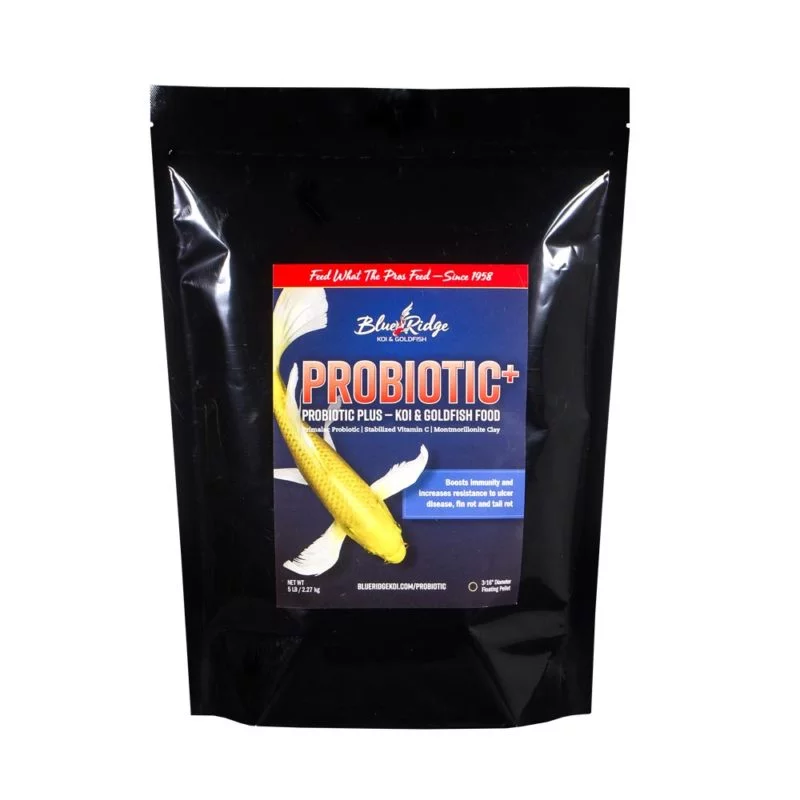 | Blue Ridge Probiotic Plus | All seasons, all koi | Click For Best PriceBuy On Amazon |
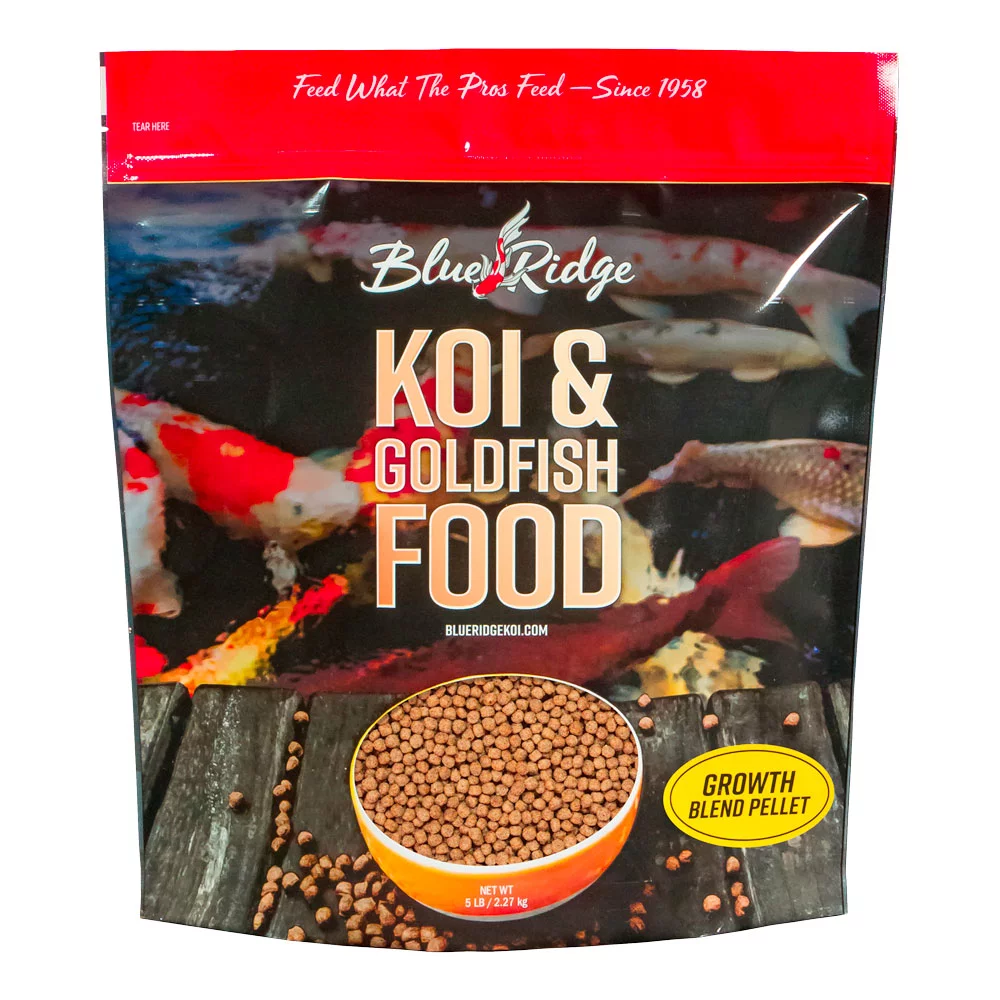
Best Value | Blue Ridge Koi & Goldfish Food | Koi and goldfish, small pond fish | Click For Best PriceBuy On Amazon |
Budget Option 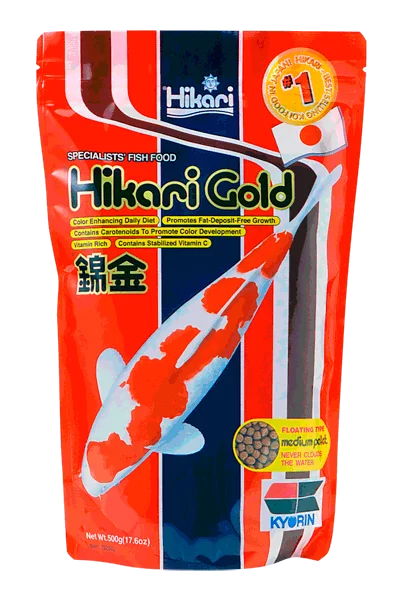 | Hikari USA Gold | All koi, color focus | Buy On AmazonBuy On Petco |
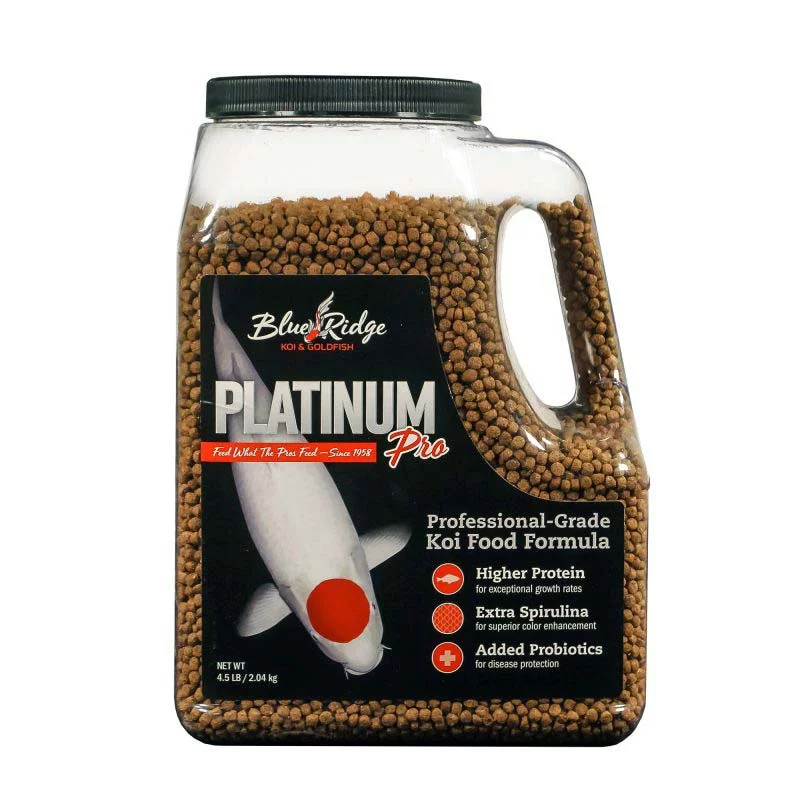 | Blue Ridge Platinum Pro | Show koi, champion color | Click For Best Price |
WHY THIS RANKING
Ranked on four criteria: ingredient quality (protein sources, color enhancers, probiotics), pellet design (floating is better for monitoring), seasonal flexibility, and value per pound for the quality delivered. Blue Ridge Probiotic Plus tops the list because it addresses immune function, growth, and color in a single formula that works year-round. The other spots reflect specific use cases where a different food outperforms.
The Top 7 Best Koi Foods Reviewed
1. Blue Ridge Probiotic Plus
The Best Koi Food
Formulated with Primalac probiotics, Vitamin C, and montmorillonite clay to support immunity, digestion, and color in all seasons.
Nutritional Analysis: Season: All seasons | Pellet: Large floating | Crude protein: 36% | Crude fat: 6% | Crude fiber: 5% | Probiotic CFU: 280,000/g | Color enhancer: Yes
Blue Ridge Probiotic Plus is my top recommendation for koi keepers who want a single, reliable year-round food. The formula combines three things that most koi foods don’t bundle together: Primalac probiotics, stabilized Vitamin C, and montmorillonite clay.
The Primalac is what separates this from standard koi pellets. It delivers beneficial bacteria directly through food, supporting gut health and reducing the risk of ulcer disease, which is one of the most common and destructive bacterial problems in koi ponds. Ulcer disease is fast. A fish that looks fine Monday can have open wounds by Friday. A well-supported immune system from consistent probiotic feeding helps reduce that vulnerability significantly.
The montmorillonite clay is worth understanding. It binds toxins in the gut, aids mineral absorption, and has a documented effect on color enhancement, specifically deeper reds and cleaner whites. Those are the two colors judges and experienced keepers evaluate most critically on Gosanke koi. If you’re keeping Kohaku or Sanke and want to maintain color clarity, this ingredient matters.
This is the food I’d use as the backbone of any koi feeding program. It performs in all seasons and handles the immune support role most effectively during the high-stress transition periods of early spring and late fall.
2. Blue Ridge Koi and Goldfish Food
The Best Value in Koi Food
Premium ingredients at a lower price point. Ideal for ponds with mixed koi and goldfish, or for keepers who want quality without the premium cost.
Nutritional Analysis: Season: All seasons | Pellet: Small floating | Crude protein: 36% | Crude fat: 6% | Crude fiber: 5% | Phosphorus: 0.75% | Color enhancer: No
This is the right food for mixed ponds. If you’re keeping koi and pond goldfish together, this formulation suits both. The smaller floating pellets are accessible to fish of all sizes and the nutritional profile matches the Probiotic Plus baseline without the probiotic additive, which keeps the price lower.
The tradeoff is no color enhancer and no probiotic. For a healthy, established pond with no immune challenges, this is a perfectly solid maintenance food. For anyone dealing with bacterial history, color fade, or high-density stocking, the Probiotic Plus is worth the premium. Choose this if budget is a constraint and your fish are healthy. Choose Probiotic Plus if you want maximum immune support.
3. Hikari USA Gold
Budget Option
A widely available, color-enhancing food with Carotene. The best easily accessible option at pet store prices.
Nutritional Analysis: Season: All seasons | Pellet: Medium floating | Crude protein: 40% | Crude fat: 4% | Crude fiber: 4% | Color enhancer: Carotene
Hikari Gold is the best option you’ll find at a standard pet store. It’s widely stocked at Petco and similar retailers, making it the most accessible quality koi food for most hobbyists. The 40% protein is solid, and the Carotene color enhancer genuinely works, especially on red-based patterns.
The soybean meal inclusion is a thoughtful formulation choice. Koi are omnivores but they digest plant protein more efficiently than pure animal protein. The soybean component improves overall digestibility, which means less waste breaking down in your pond.
Where it falls short: no probiotics, and Carotene alone is less effective than a Spirulina/Canthaxanthin combination for broad-spectrum color enhancement. This is a reliable budget option for healthy ponds. If you’re chasing show-quality color or managing an immune challenge, step up to Probiotic Plus or Platinum Pro.
4. Blue Ridge Platinum Pro
Champion Koi Food
Spirulina and Canthaxanthin color enhancement, 41% protein, Primalac probiotics. The food for serious koi collections and show fish.
Nutritional Analysis: Season: All seasons | Pellet: Large floating | Crude protein: 41% | Crude fat: 6.5% | Crude fiber: 5% | Color enhancer: Spirulina and Canthaxanthin
Platinum Pro is the food for serious koi collections. The combination of Spirulina and Canthaxanthin is the most effective color enhancement stack available in a commercial koi food. Spirulina enhances red and orange pigmentation. Canthaxanthin deepens and intensifies existing color. Together, they work on both the intensity and the clarity of pattern color, which is exactly what competitive koi keepers and serious hobbyists want.
At 41% protein with Primalac probiotics included, this is a premium all-in-one food. The price reflects it. This is not the food for a casual garden pond with three pet koi. It’s the food for a collection you’ve invested significantly in, where color quality and health outcomes matter most.
5. Kaytee Premium Koi Food

A well-balanced all-purpose pond food. Good for mixed ponds and keepers who want a simple maintenance option with natural color enhancers.
Nutritional Analysis: Season: All seasons | Pellet: Medium/large | Crude protein: 35% | Crude fat: 5% | Crude fiber: 4% | Color enhancer: Wheat germ and alfalfa meal
Kaytee is a practical, well-rounded option for keepers who want a simple year-round food that covers the basics. The 35% protein is on the lower end of this list but sufficient for maintenance feeding. Wheat germ and alfalfa meal provide natural color enhancement that works more subtly than synthetic carotenoids, which some keepers prefer for a more natural feeding approach.
This food is suitable for all pond fish sizes, which makes it useful for mixed ponds. It’s not a food I’d run as the sole diet for high-investment koi, but it’s a legitimate option for a casual garden pond where simplicity and cost matter more than maximum performance.
6. Mazuri Koi Pond Nuggets
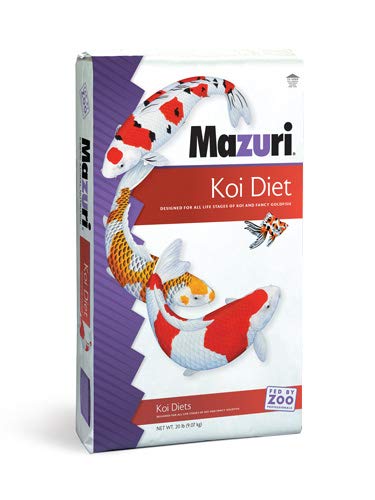
Stabilized Vitamin C and Spirulina algae. Best for koi 6 inches or larger. Zoo-grade formulation from a trusted nutritional brand.
Nutritional Analysis: Season: All seasons | Pellet: Small round | Crude protein: 33% | Crude fat: 2.5% | Crude fiber: 6% | Color enhancer: Spirulina algae
Mazuri is the zoo nutrition brand, which tells you something about the rigor behind their formulations. The Spirulina algae inclusion is a genuine color enhancer, and the stabilized Vitamin C protects against ulceration. The nugget format is smaller than most koi foods, making it a better fit for fish 6 inches and smaller, or as a supplemental food for a mixed-size pond.
The lower fat content (2.5% versus 6% for Blue Ridge options) makes this a leaner formula. For ponds in warmer climates where fish are active year-round, that can be an advantage. For colder climates where fish need fat stores heading into winter, you’d want to supplement with something richer in the fall.
7. Tetra Pond High Protein Growth

Designed for young koi and growth phases. High protein formulation for ponds in peak summer feeding season.
Tetra Pond High Protein Growth is a warm-season, high-growth-phase food. It’s designed for young koi and ponds during summer when water temperatures are at their peak and koi metabolism is running full speed. High protein formulations during peak season produce the most significant growth gains.
The caveat: don’t run this as a year-round food. High protein in cool water is the mistake I mentioned at the top of this guide. Use this food from late spring through early fall when water is above 70 degrees F (21 degrees C), then transition back to a maintenance or wheat germ formula as temperatures drop.
WHAT MOST PEOPLE MISS
Most koi keepers rotate between one or two foods all year long. The keepers with the best-looking, healthiest fish rotate intentionally: a probiotic-supported maintenance food as the backbone, a color-enhancement food as a supplement during peak growing season, and a wheat germ food as water temperatures drop. It’s not complicated, but it makes a significant difference in color vibrancy and disease resistance over a full year.
Frequently Asked Questions
What is the best koi food overall?
Blue Ridge Probiotic Plus. It covers immune support, growth, and color enhancement in a single formula that works year-round. For the money, nothing else on this list delivers as much in one bag.
How often should I feed my koi?
Two to three times daily during warm months (water above 60 degrees F / 16 degrees C). Once daily or less when water is between 50 and 60 degrees F (10 to 16 degrees C). Stop feeding entirely when water drops below 50 degrees F (10 degrees C). Feed only what your koi consume in 5 minutes. Remove any uneaten food.
What food makes koi colors brighter?
Foods containing Spirulina, Canthaxanthin, Carotene, or Astaxanthin enhance color most effectively. Blue Ridge Platinum Pro uses Spirulina and Canthaxanthin together, which is the strongest color combination on this list. Hikari Gold uses Carotene and works well for red enhancement specifically. For the best color results, pair a quality color-enhancing food with clean water and quality genetics. No food fixes poor water quality.
Should koi food float or sink?
Floating. Koi are surface feeders and floating pellets allow you to see exactly how much they’re eating, monitor for abnormal feeding behavior, and remove uneaten food before it sinks and breaks down. Sinking pellets disappear below the surface and become a water quality problem. Every food on this list uses floating pellets for this reason.
What do I feed koi in winter?
Wheat germ-based food when water is between 50 and 60 degrees F (10 to 16 degrees C). Below 50 degrees F (10 degrees C), stop feeding entirely. Koi metabolism slows dramatically in cold water and undigested protein creates serious gut health issues. The wheat germ formula is easily digestible at low temperatures. Most quality brands make a specific cold-water or wheat germ formula for this purpose.
Closing Thoughts
The food you feed your koi is not a minor decision. It directly determines color quality, growth rate, immune resilience, and long-term health. A koi that costs $100 or $200 deserves food that actually supports it, not a bargain-bin pellet from the garden center.
My starting point for most ponds is Blue Ridge Probiotic Plus. It handles the immune support and maintenance functions that matter most across all seasons. If you’re running a serious collection and pushing for show-quality color, add Blue Ridge Platinum Pro during peak summer feeding. When temperatures drop, transition to wheat germ. That three-food rotation covers everything a koi needs across a full year.
For quality koi food direct from a specialty dealer, Next Day Koi carries the Blue Ridge lineup. Check out Flip Aquatics and Dan’s Fish for pond supplies and live food options to supplement your feeding program.
BUY OR SKIP?
If you’re currently feeding a generic pet store pellet with no listed color enhancer or probiotic, upgrade now. The difference shows within weeks. If you’re already on Blue Ridge Probiotic Plus or similar quality food and your fish look great, stick with what’s working. Don’t fix what isn’t broken, but do implement the seasonal feeding schedule if you haven’t already.
MARK’S TOP PICK
Blue Ridge Probiotic Plus. Year-round, all pond sizes, any collection level. The Primalac probiotic is what no other food in this price range delivers, and it’s the single ingredient that most meaningfully reduces bacterial disease risk across seasons.
- About the Author
- Latest Posts

I’m Mark Valderrama, founder of Aquarium Store Depot and a fishkeeper with over 25 years of hands-on experience. I started in the hobby at age 11, worked at local fish stores, and have kept freshwater tanks, ponds, and reef tanks ever since. I’ve been featured in two best-selling aquarium books on Amazon and built this site to share practical, experience-based fish keeping knowledge.

Leave a Reply