
Last Updated: May 13, 2026
Thank you for visiting! By the way… any links on this page that lead to products on Amazon and other stores/partners are affiliate links Aquarium Store Depot earns a commission if you make a purchase.
An automatic fish feeder sounds optional until you’re stuck at an aquarium trade show 400 miles from home and realize you forgot to arrange for someone to feed your tank. I’ve been there. I travel regularly for events like Aquashella and Reefapalooza, and over the years I’ve tested a lot of these feeders in real conditions. Most fail the same way: they dump too much food, they jam up from humidity, or the timer drifts and starts feeding at 3 AM. The ones that work keep working quietly for years.
Overfeeding with an auto feeder doesn’t just waste money. It crashes tanks.
EXPERT TAKE | MARK VALDERRAMA
In 25 years of keeping fish and running aquarium stores, I’ve seen more tanks trashed by auto feeders than by vacation neglect. Here’s the calibration rule I use: run your feeder for a full week before any trip and watch the food landing zone after every feeding. If there’s uneaten food on the substrate within 5 minutes, you’re overfeeding. Dial it back. A slightly underfed fish survives a vacation. An ammonia spike from rotting food doesn’t.
The Top Picks

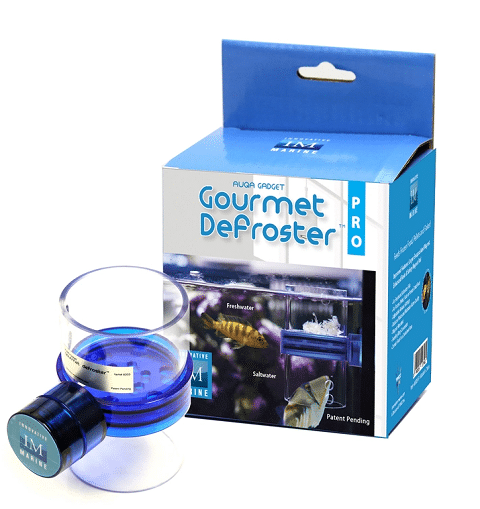
- Best for saltwater fish
- Works with frozen food
WHY THIS RANKING
Rankings here are based on four things: portion consistency across multiple feedings, resistance to humidity jamming, timer accuracy over 7-plus days, and real-world longevity. A feeder can have every feature on the box and still fail in a humid fishroom. The products at the top of this list have proven themselves in actual use, not just initial testing. Price was a secondary factor, not the primary one.
What People Get Wrong About Auto Feeders
Most people treat auto feeders as “set it and forget it.” That’s exactly what gets fish killed. The calibration step is not optional. Every feeder dispenses differently depending on the food type, the drum rotation speed, and even ambient humidity. Pellets flow differently than flake. In a humid fish room, flake can clump in the drum and block the opening completely, starving your fish. Or it can clump in a partial jam that dumps a huge portion all at once. Either way, your tank pays for it.
The second common mistake: people buy an auto feeder specifically for vacation and then never test it before they leave. Test for at least a full week before any trip. Watch the first few feedings. If you see food sitting on the bottom after 5 minutes, the portion is too large.
The Biggest Mistake
Overfeeding on an auto feeder is worse than overfeeding by hand, because you’re not there to see it and correct it. Uneaten food rots, ammonia spikes, and in a tank without someone watching, that spike can wipe out fish before you get back. I’ve seen it happen. If you’re going away for 7 days, your fish will be fine eating two small meals per day. They will not be fine if your feeder jams and dumps a week’s worth of food in one shot.
The Candidates: A Quick Overview
| Picture | Name | Features | Link |
|---|---|---|---|
|
Editor’s Choice!
|
Eheim Everyday Fish Feeder |
|
Click For Best PriceBuy On Amazon |
|
Budget Option
|
NICREW Automatic Fish Feeder |
|
Buy On Amazon |
|
Works With Frozen Food!
|
Innovative Marine Frozen Food Feeder |
|
Click For Best PriceBuy On Amazon |
 |
Neptune Apex AFS |
|
Click For Best Price |
 |
OASE Fishguard |
|
Click For Best PriceBuy On Amazon |
 |
Lifegard Aquatics Intellifeed |
|
Buy On PetcoBuy On Amazon |
 |
Omega One 7 Day Feeder Block |
|
Buy On ChewyBuy On Amazon |
The 7 Best Automatic Fish Feeders Reviewed
1. Eheim Everyday
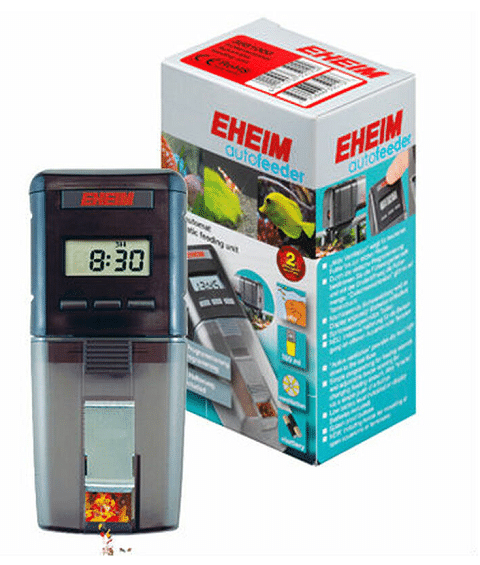
Best Auto Fish Feeder
Eheim’s auto fish feeder is reliable, reasonably priced, and easy to use. A must for any busy fish keeper!
Click For Best PriceBuy On Amazon
The Eheim Everyday is the feeder I’ve recommended more than any other over the years, and it’s not a close decision. Eheim built it to last, priced it fairly, and kept the programming simple enough that anyone can calibrate it without reading a manual twice. The feeding chamber is aerated to keep food dry, which is the main reason cheap feeders jam: no air circulation means humidity does its damage slowly until the drum stops turning.
It handles both rimless and rimmed aquariums with included brackets. Multiple feedings per day are easy to program. The battery warning system tells you before you lose power, not after. I’ve watched hobbyists ditch expensive controller-integrated feeders and go back to the Eheim because it’s simply more reliable. Don’t place it near an air stone or power filter output where humidity can reach the drum.
- Proven brand reliability
- Easy programming
- Aerated drum prevents jamming
- Doesn’t fit all rimmed aquariums
- Portion control requires calibration time
2. NICREW Automatic Fish Feeder
For a budget feeder, the NICREW does the basics right. Lithium charging option is a real advantage over AA-battery units, especially if you’re leaving it unattended for extended periods. The programming is straightforward. The portion control is decent for a feeder at this price. It won’t outlast the Eheim, and the build quality reflects the price, but for a first feeder or a backup unit for a secondary tank, it earns its spot on this list.
- Rechargeable lithium option
- Budget-friendly
- Simple operation
- Build quality reflects the price
- Less precise portion control than premium units
3. Innovative Marine Frozen Food Feeder
This one solves a problem every saltwater hobbyist runs into: how do you feed frozen food automatically? Most auto feeders only handle dry pellets or flake. The Innovative Marine Gourmet Gadget Defroster is built specifically to thaw and release frozen food, making it genuinely useful for reef tanks and fish-only saltwater setups where frozen mysis or brine shrimp is part of the regular feeding routine. If you’re running a freshwater setup with only dry food, skip this one. It’s overkill. If you’re keeping saltwater fish that need frozen food, this solves a real problem.
- Works with frozen food
- Ideal for saltwater reef feeding
- Reduces water pollution from unthawed food
- Specialty product, not for dry food only tanks
- Higher cost than standard auto feeders
4. Neptune Apex AFS
The Apex AFS is not a standalone feeder. It’s a module for the Neptune Apex controller system, which means it’s only relevant if you’re already running an Apex. If you are, it integrates directly with the controller: you can trigger feedings from the app, pause feeding during a water change, and get alerts if something goes wrong. For serious saltwater setups running full Apex automation, this is the right feeder. For anyone else, it’s an expensive answer to a simple problem.
- Full Apex controller integration
- Remote app control
- Feeds can pause automatically during water changes
- Requires Apex controller (not standalone)
- Expensive entry for controller-only users
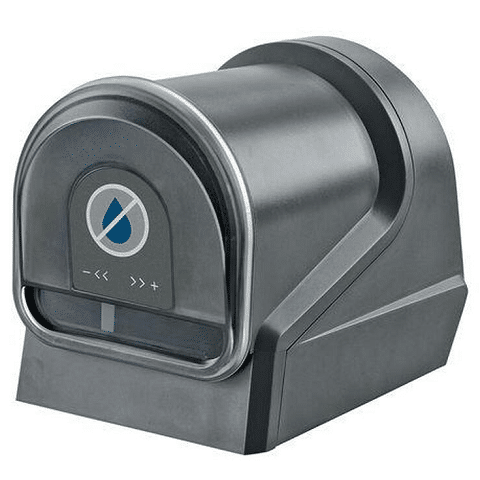
5. OASE Fishguard
OASE’s Fishguard comes with a 3-year warranty and Italian build quality, which puts it in a different durability tier than most auto feeders. The programming is clean and intuitive. For someone who wants a feeder that’s built to last and doesn’t want to think about replacing it in two years, the OASE Fishguard justifies its higher price with engineering that’s noticeably better than the budget options.
- 3-year warranty
- Italian engineering, solid build
- Intuitive programming
- Higher price point
- Less widely available than Eheim
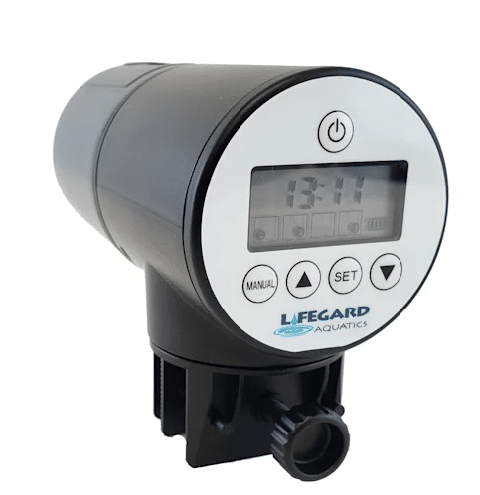
6. Lifegard Aquatics IntelliFeed
The IntelliFeed is a reliable mid-range option that’s actually findable at Petco, which matters if you need a replacement fast. It handles the basics: multiple feedings per day, adjustable portions, simple programming. Nothing flashy, nothing revolutionary, but it works consistently and it’s locally available. Choose it if you want an Eheim-tier experience at a slightly lower price and you don’t need specialty features.
- Available at Petco
- Reliable operation
- Mid-range price
- Less precise than Eheim
- Basic feature set
7. Omega One 7 Day Feeder Block
The feeder block is not an auto feeder in the traditional sense. It’s a compressed food block that dissolves slowly over 7 days. No batteries, no programming, nothing that can malfunction. That’s both its strength and its limitation. For a short trip with a simple community tank, it works. The downside is portion control: the rate of dissolution depends on water temperature and flow, which means it’s not a predictable feeding system. Use it as a backup or for very short absences, not as a primary feeding solution.
- No batteries, no failure modes
- Very cheap
- Good nutrition from Omega One
- Unpredictable portion release rate
- Not suitable for tanks with sensitive water quality
BUY OR SKIP?
Buy if: You travel regularly, work long hours, or want consistent feeding schedules that support fish health regardless of your schedule. Auto feeders are not optional for anyone who travels. Skip if: You’re home every day and can feed manually. Manual feeding lets you observe your fish at every feeding, which is actually valuable behavioral monitoring. Auto feeders remove that check-in point. Use them when you need to, not by default.
Should You Buy an Auto Feeder?
Good Fit If:
- You travel or have unpredictable work schedules
- You want to split daily feedings into multiple small portions for finicky eaters or fry
- You’re managing a saltwater tank where feeding consistency is critical
- You have multiple tanks and manual feeding every one isn’t realistic
Avoid If:
- You’re not willing to do a calibration week before leaving for any trip
- Your fish eat live or frozen food exclusively (the Innovative Marine excepted)
- You’re feeding very fine foods like live baby brine that clog standard drums
MARK’S TOP PICK
The Eheim Everyday. It’s not even a close call. I’ve tested more expensive feeders and more budget options, and the Eheim keeps coming back as the one that just works without surprises. The aerated drum, reliable timer accuracy, and Eheim’s build quality make it worth the price difference over generic brands. If you’re running a controller-integrated setup on the Neptune Apex, use the AFS. If you want frozen food delivery for a saltwater tank, get the Innovative Marine. For everyone else: Eheim.
WHAT MOST PEOPLE MISS
Placement matters as much as the feeder itself. Even the best auto feeder will jam or deliver inconsistent portions if it’s positioned where humidity from the tank reaches the drum. Keep it away from air stones, powerhead outputs, and any surface agitation that throws moisture into the air. A small gap between the feeder and the tank rim makes a real difference. This is the detail that separates the people whose feeders work from the people who keep replacing them.
Closing Thoughts
Auto feeders are a real tool, not a gimmick. Used correctly, they let you travel without anxiety, feed on a consistent schedule your fish will adapt to, and handle situations where manual feeding isn’t possible. The calibration step is the part people skip, and it’s the step that determines whether the feeder helps or hurts your tank.
My pick is the Eheim Everyday for most situations. For saltwater and frozen food, the Innovative Marine Gourmet Gadget. For Apex users, the AFS. Calibrate before you use it, keep it away from humidity, and check in on your first few trips even with a trusted feeder running.
For healthy fish that deserve consistent feeding, I send people to Flip Aquatics and Dan’s Fish. Quality livestock and reliable automation go hand in hand.
- About the Author
- Latest Posts

I’m Mark Valderrama, founder of Aquarium Store Depot and a fishkeeper with over 25 years of hands-on experience. I started in the hobby at age 11, worked at local fish stores, and have kept freshwater tanks, ponds, and reef tanks ever since. I’ve been featured in two best-selling aquarium books on Amazon and built this site to share practical, experience-based fish keeping knowledge.

Leave a Reply