
Last Updated: May 16, 2026
Thank you for visiting! By the way… any links on this page that lead to products on Amazon and other stores/partners are affiliate links Aquarium Store Depot earns a commission if you make a purchase.
If your parameters are not stable, the coral will not survive the first month. Corals do not die from wrong numbers. They die from unstable numbers. The difference between a thriving reef and a dying one is consistency, not perfection.
Stable mediocre parameters beat perfect parameters that swing. Every time.
I have over 20 years of experience as a reefkeeper and have helped build dozens of client reef tanks. My clients want results with minimum drama, so I have become very good at identifying which corals deliver on that promise and which ones will frustrate you. This guide focuses on corals that are genuinely beginner-friendly, not just “sold as easy” but actually easy when you understand what they need.
EXPERT TAKE | MARK VALDERRAMA
The “beginner coral” label gets misused constantly in this hobby. Zoanthids are genuinely beginner-friendly. A lot of LPS corals are marketed as beginner corals when they are really intermediate, they will survive beginner mistakes for a while but will not thrive without deliberate placement and stable water. The one thing I tell everyone starting a reef tank: your first corals should be soft corals, and you should not add your first coral until you have three to six months of stable parameters in the tank. An unstable reef tank with beginner corals is just a slow way to kill things. A stable tank with any of the corals on this list is something you can build on.
How I Selected These Corals
Every coral on this list was chosen for four reasons: variety of colors and forms available, genuine ease of care, manageable invasiveness, and representation across soft coral, LPS, and SPS categories. I deliberately excluded xenia and green star polyps from the main recommendations, they are easy, but they are also invasive and will take over your tank if you are not managing them actively. Easy to care for and easy to control are not the same thing.
What People Get Wrong About Beginner Corals
The biggest mistake I see is buying the “hardy” label without researching what that coral actually needs. Hardy relative to what? Hardy relative to SPS means it can handle some parameter variability. It does not mean it can handle the parameter swings of an uncycled or immature tank.
Chemical warfare is the other thing new reefers underestimate. Corals compete for space using chemical allelopathy. Zoanthids, leather corals, and LPS corals release compounds into the water that can stress or even kill neighboring corals. Activated carbon and regular water changes help, but placement matters too. Give corals space. Do not pack them together in a new tank.
And SPS corals are not beginner corals under any circumstance. Anyone who tells you otherwise is selling you something.
Beginner Coral Tiers
TIER BREAKDOWN
Beginner (Soft Corals): Zoanthids/Zoas, Mushroom corals (Discosoma, Rhodactis, Ricordea), Toadstool leather coral, Pulsing xenia (easy but invasive, manage carefully), Kenya tree coral
Intermediate (LPS): Frogspawn, Hammer coral, Duncan coral, Torch coral, Blasto coral, Brain corals (Favites, Lobophyllia)
Advanced (SPS): Birdsnest coral (Seriatopora), Montipora capricornis, Pocillopora (more forgiving SPS entry), Acropora (expert only, not a beginner coral by any definition)
Beginner Corals: Quick Comparison
| Coral | Type | Difficulty | Placement | Key Trait |
|---|---|---|---|---|
| Zoanthids (Zoas) | Soft coral | Beginner | Anywhere | Unlimited color; easiest reef coral |
| Mushroom Corals | Soft coral | Beginner | Bottom to mid | Very forgiving; low light tolerant |
| Toadstool Leather | Soft coral | Beginner | Mid to top | Hardy; releases chemicals when disturbed |
| Frogspawn | LPS | Intermediate | Bottom to mid | Best beginner LPS; sweeper tentacles |
| Hammer Coral | LPS | Intermediate | Bottom to mid | Hammer-shaped tentacle tips |
| Blasto Coral | LPS | Intermediate | Bottom to mid | Colorful; slow but steady growth |
| Birdsnest Coral | SPS | Advanced | Mid to top | Most forgiving SPS entry point |
| Montipora Cap | SPS | Advanced | Mid to top | Encrusting; requires stable alk/cal/mag |
| Pocillopora | SPS | Advanced | Top to mid | More forgiving SPS; branching growth |
The 9 Best Beginner Corals for Reef Tanks
1. Zoanthids (Zoas)
- Type: Soft coral
- Lighting: Low to moderate (adaptable)
- Water Flow: Low to moderate
- Placement: Anywhere in the tank
- Temperament: Mostly peaceful; can release palytoxin when fragged (use gloves)
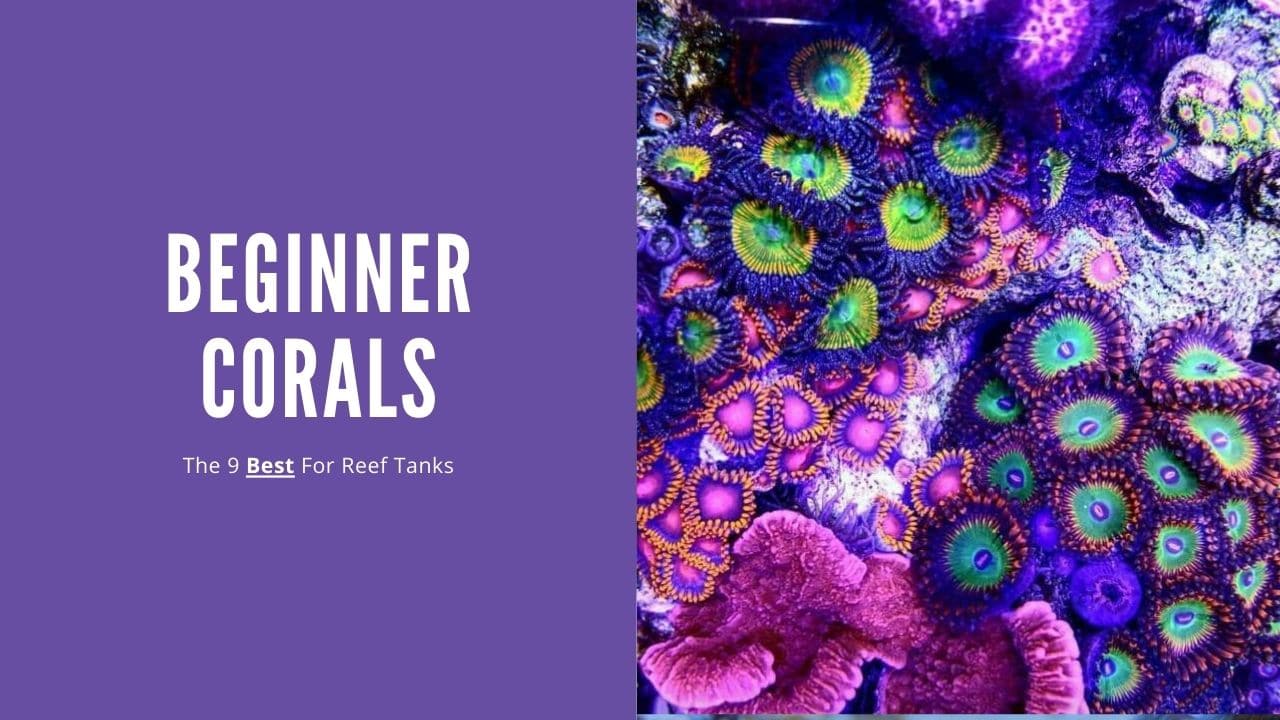
Zoanthids are the best beginner coral in the hobby. They are inexpensive, available in virtually every color combination imaginable, grow fast, frag easily, and tolerate the kind of imperfect lighting and moderate parameter variation that a newer reef tank will have. You can place them anywhere from the sandbed to the rock structure. They will adapt.
The color diversity is genuinely extraordinary. Budget zoas can be had from other hobbyists for almost nothing. Collector morphs can sell for hundreds of dollars per polyp. You can build an entire aesthetically diverse reef tank using only zoanthids and it would look stunning. They are the foundational reef coral for a reason.
One important note: always wear gloves when fragging zoanthids. Some contain palytoxin, one of the most potent biological toxins known. It is not a risk during normal viewing and aquarium maintenance, but direct contact with coral tissue during cutting is a different matter.
2. Frogspawn (Euphyllia divisa)
- Type: LPS coral
- Lighting: Low to moderate
- Water Flow: Low to moderate
- Placement: Bottom to mid-tank
- Temperament: Has sweeper tentacles, give it 6 inches (15 cm) of space from neighbors
Frogspawn is the best beginner LPS coral. It is hardy, widely available, forgiving of moderate parameter variability, and visually striking, the long flowing tentacle tips look like clusters of eggs or frogsawn, hence the name. It will sway gently in flow and expand fully when happy.
The only significant management note: frogspawn has sweeper tentacles that extend at night. Give it at least 6 inches (15 cm) of space from neighboring corals. It will sting anything it touches. This is normal LPS behavior, but it catches beginners off guard when their nearby corals start receding.
3. Mushroom Corals (Discosoma, Rhodactis, Ricordea)
- Type: Soft coral
- Lighting: Low to moderate (do not expose to intense light)
- Water Flow: Low
- Placement: Bottom to mid-tank, shaded areas acceptable
- Temperament: Peaceful but will expand into neighboring space
Mushroom corals are among the most beginner-tolerant corals in the reef hobby. They thrive in lower light conditions that would stress most other corals, they multiply freely once established, and they do not need the same parameter precision that LPS and SPS corals demand. Discosoma mushrooms are the easiest. Rhodactis are more textured and slightly more demanding. Ricordea (Florida and yuma) are the most colorful and command higher prices.
Keep water flow gentle, mushrooms do not like direct strong flow and will shrink or detach if blasted continuously. They will move on their own if unhappy with placement, which can be disconcerting the first time you see it.
4. Toadstool Leather Coral (Sarcophyton sp.)
- Type: Soft coral
- Lighting: Moderate to high
- Water Flow: Moderate
- Placement: Mid to upper tank
- Temperament: Releases chemicals when stressed, keep away from sensitive LPS
Toadstool leather corals are large, dramatic soft corals that look like a mushroom cap on a stalk. They are very hardy once established and grow quickly under good light. The chemical warfare aspect is real: when disturbed or stressed, they release compounds that can irritate neighboring corals, especially LPS. Activated carbon and regular water changes mitigate this. Keep them separated from sensitive neighbors and run carbon continuously in a mixed reef with leather corals.
One behavior that worries new reefers: toadstool leathers periodically go into a “shedding phase” where they close, look deflated, and shed a waxy film. This is completely normal and lasts several days to a week. It is not disease. It is not dying. Let it go through the cycle.
5. Hammer Coral (Euphyllia ancora)
- Type: LPS coral
- Lighting: Low to moderate
- Water Flow: Low to moderate
- Placement: Bottom to mid-tank
- Temperament: Has sweeper tentacles; same as frogspawn rules apply
Hammer coral is related to frogspawn but with T-shaped or hammer-shaped tentacle tips instead of round ones. It is equally hardy and equally recommended for LPS beginners. Branch and wall (flat/plate) forms exist, branching hammers tend to grow faster and frag more easily. The sweeper tentacle caution applies here too. Give it space from neighbors.
6. Blasto Coral (Blastomussa wellsi)
- Type: LPS coral
- Lighting: Low to moderate
- Water Flow: Low
- Placement: Bottom to mid-tank
- Temperament: Peaceful; minimal allelopathy
Blasto coral is one of the most underrated beginner LPS corals. It grows slowly but steadily, accepts low light better than most LPS, and is relatively peaceful. It comes in stunning reds, pinks, and greens. The slow growth is actually an advantage for beginners, it does not spread aggressively and is easy to manage in a small tank. It benefits from occasional target feeding with small meaty foods.
7. Duncan Coral (Duncanopsammia axifuga)
- Type: LPS coral
- Lighting: Moderate
- Water Flow: Low to moderate
- Placement: Mid-tank
- Temperament: Peaceful; responds very well to target feeding
Duncan corals are a great intermediate LPS choice. They grow in colonies of individual polyp heads on branching stalks, each polyp opening fully with tentacles extended. They respond well to target feeding (small meaty foods, liquid reef foods) and will grow noticeably faster with regular feeding. A small colony bought for $30 can become a large impressive specimen within a year or two of good care.
8. Birdsnest Coral (Seriatopora hystrix)
- Type: SPS coral
- Lighting: High (PAR 200–400+)
- Water Flow: High
- Placement: Middle to upper tank
- Temperament: Peaceful; sensitive to parameter swings
If you want to move into SPS corals, birdsnest is the most forgiving entry point. It is a true SPS, so it requires stable alkalinity, calcium, and magnesium, and it needs high light. But within the SPS category, it tolerates moderate parameter variation better than most. It grows quickly under good conditions and frags easily. I would not recommend any SPS coral until you have 6 months or more of stable parameters in a mature reef tank. Birdsnest is where you start when you are ready for SPS, not before.
9. Montipora Capricornis (Monti Cap)
- Type: SPS coral
- Lighting: Moderate to high (PAR 150–300)
- Water Flow: Moderate to high
- Placement: Mid to upper tank
- Temperament: Peaceful; encrusting growth pattern
Monti cap is an encrusting SPS that grows in plating or whorling growth forms across rock surfaces. It comes in orange, red, purple, and green variants. It is more forgiving than most SPS and requires somewhat lower light than Acropora. Still needs stable dosing of alkalinity, calcium, and magnesium. As SPS go, this is one of the more approachable ones for someone transitioning from an LPS reef to an SPS tank. Not a beginner coral, an experienced intermediate coral keeper’s first SPS, yes.
Mark’s Pick: Best First Coral
MARK’S PICK
Zoanthids, without hesitation. They are the most forgiving coral in the hobby, they come in more color combinations than anything else in the reef trade, and they give you real-time feedback about tank conditions. If your zoas are closed for multiple days in a row, something is off with the water or flow. They are the canary in your reef tank. Start with zoas, learn what healthy coral behavior looks like, and build from there. The best reef tanks I have seen started with a solid zoanthid collection and grew outward from that foundation.
Avoid These Corals If…
AVOID IF
Your tank is under six months old, even “hardy” corals need a mature, cycled tank with stable nutrient levels. A new tank will swing parameters and kill corals during the diatom and algae bloom phases.
You want to start with SPS (Acropora, Montipora, Millepora), these are not beginner corals by any definition. SPS requires stable alkalinity, calcium, and magnesium, high light, and a mature tank. Start with soft corals first.
Your parameters are not tested weekly, corals will not tell you something is wrong until they are already dying. If you are not testing alkalinity, calcium, and magnesium regularly, you are not ready for LPS or SPS corals.
You want to pack corals in close together, chemical warfare between coral types is real. Give every coral at least 6 inches (15 cm) of space and run activated carbon. An overcrowded reef tank is a chemistry war that nobody wins.
You have high nitrates (above 20 ppm) or phosphates (above 0.1 ppm), soft corals can tolerate moderate nutrients, but LPS and SPS will struggle. Get nutrient control established before adding coral.
Closing Thoughts
A reef tank built correctly is one of the most rewarding things in this hobby. The key word is “correctly.” The coral list matters less than the foundation, a mature, stable tank with tested parameters and reasonable nutrient control. Get that right and almost everything on this list will thrive. Rush it and even the hardiest zoanthids will struggle.
When you are ready to add your first corals, check out the selection at Flip Aquatics or Dan’s Fish for quality reef corals shipped directly to your door.
- About the Author
- Latest Posts

I’m Mark Valderrama, founder of Aquarium Store Depot and a fishkeeper with over 25 years of hands-on experience. I started in the hobby at age 11, worked at local fish stores, and have kept freshwater tanks, ponds, and reef tanks ever since. I’ve been featured in two best-selling aquarium books on Amazon and built this site to share practical, experience-based fish keeping knowledge.
Leave a Reply