Tag: ReefKeeping

  • 21 Popular Types of Saltwater Fish: My Personal Guide After 25+ Years of Reef Keeping

    21 Popular Types of Saltwater Fish: My Personal Guide After 25+ Years of Reef Keeping

    Saltwater fish keeping has been my passion since I was 11 years old โ€” itโ€™s where I started in this hobby and itโ€™s never left me. Over the decades Iโ€™ve kept marine angelfish, basslets, blennies, gobies, butterflyfish, cardinalfish, clownfish, tangs, rabbitfish, triggers, lionfish, groupers, wrasses, and eels. I also co-authored Saltwater Aquarium For Dummies and have appeared on NBC Nightly News as a reef fish expert. This is my personal guide to 21 of the most popular saltwater fish โ€” with honest picks, personal favorites, and the warnings that donโ€™t always make it into care guides.

    Key Takeaways

    • The average price of a saltwater fish is typical $15 to $100 depending on the species
    • Examples of peaceful saltwater are clownfish and goies
    • Examples of aggressive would be Pufferfish and non-reef safe Triggerfish
    • Research the compatibility of any species you want to keep together
    • Examples of popular saltwater would be Marine Angelfish and Basslets

    Introduction To Saltwater Fish

    There are believed to be more than 20,000 species of saltwater fish on this planet1. The marine aquarium hobby has taken some of the biggest and brightest fish and adapted them to the community settings found in the home aquarium with large success.

    Unfortunately, most marine fish species cannot adapt to aquarium conditions. This may be due to space requirements, migratory dependency, specialized diet, or water quality. Over time, more and more species have been introduced into the hobby and optimized for the best chances at survival.

    As a result, a few special ones have become favorites, like the clownfish that is the staple of every new saltwater aquarium setup. Though stocking lists may change every year based on what’s popular, there are a few species that will forever be in the home reef tank.

    How Much Do They Cost?

    In general, the most popular saltwater fish bred in captivity will start at about $15 with most staying under $100. Wild-caught fish tend to be at least $10 more expensive per individual, though it depends on the fish.

    Because some species of saltwater fish are more popular than others, there is usually a large difference in price. This is mainly due to the most common saltwater fish being successfully captive-bred. This greatly reduces risk and yields more healthy fish, ultimately lowering prices.

    Other fish that are not as common might be much more expensive than captive-bred fish. This is due to demand as well as the risks involved with obtaining and quarantining the fish. As a result, prices are higher.

    In general, there are not many differences between captive-bred and wild-caught fish, though some fish, like wild clownfish, are believed to host anemones more naturally. Captive-bred fish are also usually hardier and healthier than their wild counterparts. Otherwise, the only difference can be seen in price.

    It should be noted that some captive-bred fish are more expensive. This can be due to the fish species being recently bred for the first time, where supply is short but hardiness is improved.

    In recent years, prices have generally risen across all fish, invertebrates, and corals. This is mainly due to various laws and fishing regulations being put into place for specimen collection and trade, like the Hawaiin ban greatly limiting the number of tangs that become available in the hobby.

    To put this in perspective: saltwater fish keeping typically runs 2โ€“3x more expensive than freshwater, from equipment to livestock. What rarely gets mentioned though: a well-established reef tank with quality live rock and simpler corals can become largely self-sustaining over time. Most of my long-term reef tanks eventually reached that point โ€” stable, thriving, and requiring much less daily intervention. The initial investment is real, but so is the long-term payoff.

    Stocking A Salt Tank

    Now that you have a good idea as to how much a new saltwater fish will cost you, you need to think about what kind of tank you want to set up and understand fish compatibility.

    In general, there are community saltwater tanks and predatory tanks. A community tank can be stocked around a reef setting with many peaceful and semi-aggressive fish. A predatory tank will often have fewer fish stocked, with larger and more aggressive individuals.

    What Is The Most Peaceful?

    If you’re wanting to start a community reef tank, then you will want peaceful species that can be kept together without any problems.

    Here are some of the most popular saltwater fish available that won’t attack other fish:

    • Clownfish (Amphiprion sp. and Premnas sp.)
    • Banggai cardinalfish (Pterapogon kauderni)
    • Firefish goby (Nemateleotris magnifica)
    • Yellow watchman goby (Cryptocentrus cinctus)
    • Tangs

    While most of these fish will live harmoniously with one another, there is always the possibility that your individual fish becomes the bully of the tank.

    For instance, many hobbyists have difficulty keeping yellow tangs away from their other fish. As long as the tank is big enough, then aggression should be able to resolve itself over time, though sometimes intervention is necessary.

    What Is The Most Aggressive?

    Aggressive saltwater fish are some of the coolest fish available in the entirety of the hobby. These fish are often large, colorful, and full of personality.

    Unfortunately, due to size and aggression, only a couple of these beautiful fish can be kept in the same tank together, but there are plenty of options to choose from.

    Here are some of the most popular saltwater fish available that are not good fits for the community reef tank:

    • Damselfish (most – some will be okay check here for good ones)
    • Non reef safe Triggerfish
    • Pufferfish
    • Large angelfish

    One of the most important things to remember about marine fish is that their size does not determine their aggression. For example, most species of damselfish stay under a couple of inches at maturity but they can quickly dominate a tank and terrorize other fish.

    The 21 Most Popular Types For Aquariums

    The first time shopping for saltwater fish at an aquarium store can be overwhelming. These are expensive and beautiful fish that you want to make sure you research before bringing them home to your own tank!

    The secret to having a successful saltwater aquarium is stocking. While some fish might be right for how your tank is set up, they might not be right for the corals or other fish that you already have. When in doubt, it’s best to go with tried and true combinations.

    Above is a video from our YouTube channel you can follow along. We go over more detail in our blog post below! If you like our content give us a sub. We post new videos every week!

    Here is a full list of the 21 most popular saltwater fish species available!

    1. Marine Angelfish
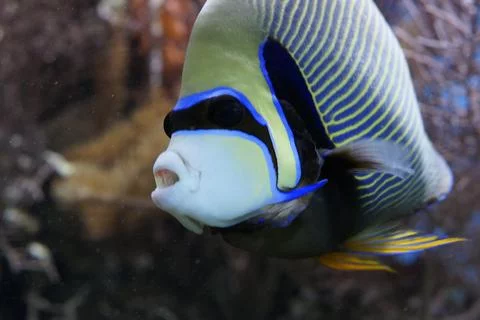
    Emperor Angelfish

    Marine Angelfish are one of the most popular saltwater fish to have in the marine aquarium. However, not many hobbyists can actually comfortably house these beautiful fish due to size, aggression, or coral concerns.

    In general, both large and small angelfish are not considered to be reef-safe, though some hobbyists have luck with the smaller speices. Large angelfish can also be very aggressive, which limits them to aquariums that are only 200 gallons or more.

    Large Angelfish

    • Family: Pomacanthidae
    • Popular Species Types: Pomacanthus, Holacanthus
    • Popular Varieties: Emperor angelfish, blueface angelfish, koran angelfish, queen angelfish
    • Size Range: 15-18 inches
    • Origins: Atlantic, Indian, and Pacific Oceans
    • Tank Size Range: 200+ gallons
    • Reef Safe: No
    • Available As Tank Bred: No

    Large angelfish are statement fish that can be seen gliding along the perimeters of the reef, picking at algae and other sessile invertebrates they come across on the rockwork. These fish are some of the most colorful and impressive with bold markings and personalities.

    However, these beautiful saltwater fish grow to extreme sizes and need large tanks. They are largely not reef-compatible, which further limits their access to most aquarium hobbyists.

    Small Angelfish
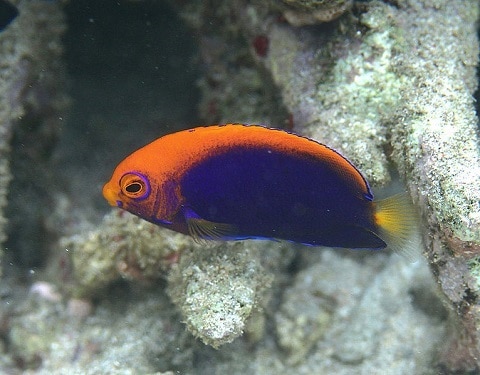
    Flameback Angelfish in Reef
    • Family: Pomacanthidae
    • Popular Species Types: Centropyge, Chaetodontoplus, Genicanthus, Pygoplites
    • Popular Varieties: Flame angelfish, coral beauty angelfish, flameback angelfish, Lamarckโ€™s angelfish, rock beauty angelfish
    • Size Range: 3-15 inches
    • Origins: Atlantic, Indian, and Pacific Oceans
    • Tank Size Range: 55+ gallons
    • Reef Safe: With caution
    • Available As Tank Bred: Yes

    Small angelfish are some of the most popular types of angel to have in the aquarium, especially dwarf species like the coral beauty angelfish (Centropyge bispinosa) and the flame angelfish (Centropyge loricula).

    These small fish can be just as colorful and aggressive as their larger counterparts but are much more manageable for the average hobbyist. Some species of small angelfish have even been successfully kept in reef settings; members of the Genicanthus are considered to be the most reef-safe.

    2. Anthias
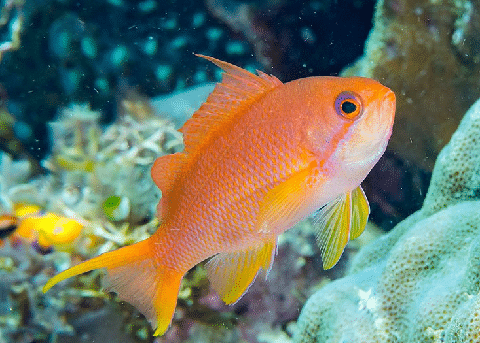
    Anithias Fish Species
    • Family: Serranidae
    • Popular Species Types: Pseudanthias
    • Popular Varieties: Lyretail anthias, dispay anthias, sunset anthias, squareback anthias
    • Size Range: 3-8 inches
    • Origins: Indo-Pacific
    • Tank Size Range: 70+ gallons
    • Reef Safe: With caution
    • Available As Tank Bred: Uncommon

    Contrary to popular belief, many of the anthias species available in the aquarium hobby are not true members of the Anthias genus. Instead, most of these schooling fish belong to Pseudanthias, feeding mainly on zooplankton and forming harems.

    Anthias are fun and brilliantly colored fish in the aquarium because they can be kept in group settings. They are also reef-safe, making them an attractive addition for full reef setups. However, they heavily rely on food always being present in the water column, which can make them a little more challenging to own.

    3. Basslets
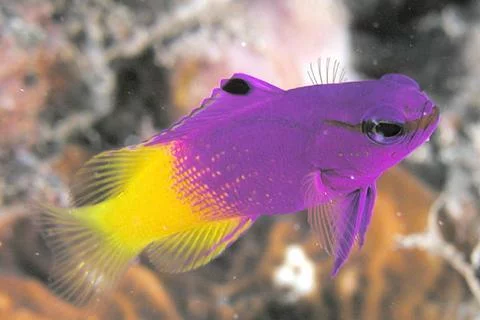
    Royal Gamma
    • Family: Grammatidae
    • Popular Species Types: Gramma, Lipogramma
    • Popular Varieties: Royal gramma, black cap basslet
    • Size Range: 3-6 inches
    • Origins: Caribbean, Atlantic, Indian, and Pacific Oceans
    • Tank Size Range: 30+ gallons
    • Reef Safe: Yes
    • Available As Tank Bred: Uncommon

    The royal gramma (Gramma loreto) is one of the most popular saltwater fish due to its small size and contrasting colors. However, these fish can be aggressive and aren’t always the best addition to smaller saltwater tanks.

    Basslets from the Lipogramma genus are rarer to come across, though a few species become available every now and then: L. trilineatum, L. klayi, L. evides, and L. robinsi. These small fish differ from those in the Gramma genus as they originate mainly from deep reefs in the Atlantic Ocean as opposed to the tropical climate of the Indo-Pacific.

    These aquarium fish may be confused with similar-looking fish from the Pictichromis genus.

    My beginner pick from this group is the Chalk Bass โ€” one of the most underrated starter saltwater fish out there. Hardy, peaceful, and beautiful. The Royal Gramma is another excellent choice Iโ€™d confidently recommend to any new reefer looking for a striking splash of color.

    4. Blennies
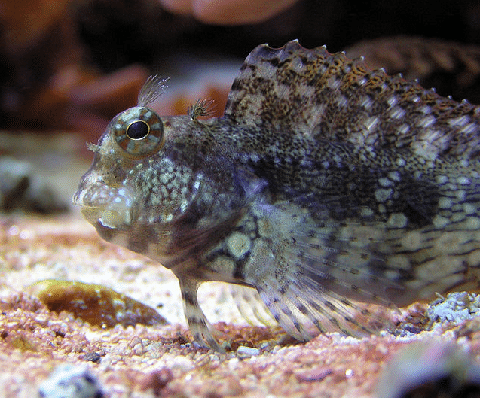
    Saltwater Blenny In Reef Tank
    • Order: Blenniiformes
    • Popular Species Types: Salarias, Meiacanthus, Ecsenius, Synchiropus
    • Popular Varieties: Algae blenny (lawnmower blenny), tailspot blenny, bicolor blenny, Midas blenny
    • Size Range: 3-6 inches
    • Origins: Coastal waters worldwide
    • Tank Size Range: 10+ gallons
    • Reef Safe: Yes
    • Available As Tank Bred: Uncommon

    Blennies are some of the most diverse fish in the aquarium trade. These peaceful fish come in all shapes and sizes, but always remain perfect for the small community tank.

    These are good beginner fish for hobbyists as they are very hardy, inexpensive, and easy to find. Aquarists should know that some of these aquarium fish are venomous, mainly those in the Meiacanthus genus.

    Also, note that some other fish labeled as blenny are not scientifically true blennies, like the unrelated scooter blenny (Neosynchiropus ocellatus) that is in a different taxonomic order altogether.

    5. Gobies
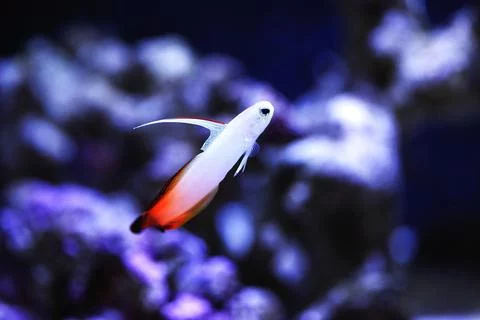
    Firefish
    • Order: Gobiidae
    • Popular Species Types: Elacatinus, Valenciennea, Cryptocentrus, Gobiodon, Amblyeleotris
    • Popular Varieties: Yellow watchman goby, diamond watchman goby, clown goby, hi fin red banded goby, firefish goby, neon goby
    • Size Range: 1-5 inches
    • Origins: Coastal/tidal waters worldwide
    • Tank Size Range: 5+ gallons
    • Reef Safe: Yes
    • Available As Tank Bred: Uncommon

    There are many species of goby that may look very similar to one another but are not closely related. This results in many different shapes, colors, and temperaments between individual gobies. In fact, gobies can be found in freshwater, brackish water, and saltwater ecosystems all around the world.

    Gobies are very similar to blennies but are typically smaller and more slender. Many of these small reef fish burrow into the substrate and depend on organics caught in the substrate for food, making them good members of the cleanup crew.

    6. Butterflyfish
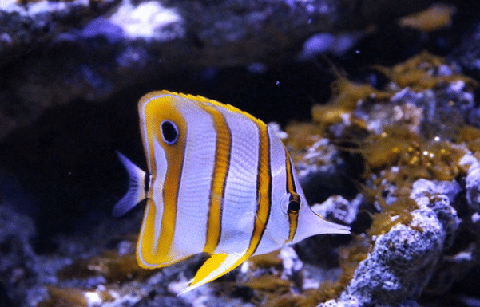
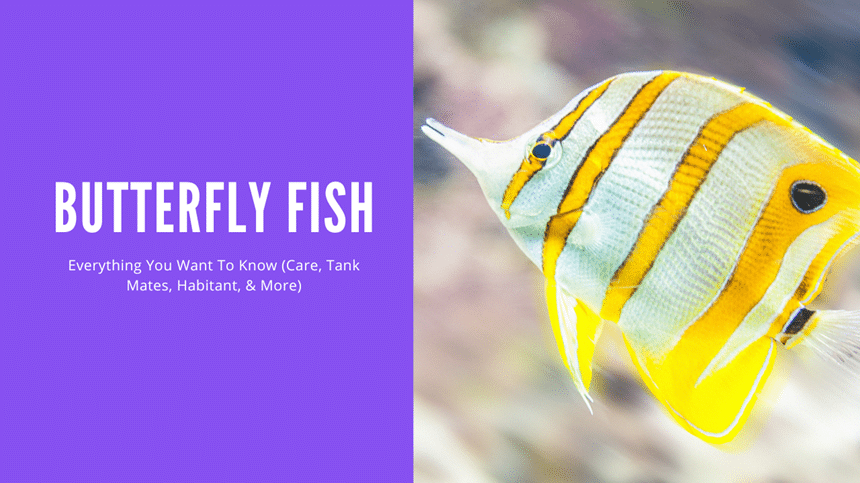
    Copper Band Butterfly in Tank
    • Order: Chaetodontidae
    • Popular Species Types: Chaetodon, Forcipiger, Prognathodes, Heniochus, Chelmon
    • Popular Varieties: Yellow longnose butterfly, Pakistan butterfly, copperband butterfly, Heniochus black and white butterflyfish, racoon butterflyfish
    • Size Range: 5-12 inches
    • Origins: Atlantic, Indian, and Pacific Oceans
    • Tank Size Range: 75+ gallons
    • Reef Safe: With caution
    • Available As Tank Bred: Uncommon

    Butterflyfish are beautiful additions to the fish only or fish only with live rock (FOWLR) setup. These aquarium fish are big, colorful, and relatively peaceful. However, most species of butterflyfish have been known to nip at corals, making them incompatible with corals and other sessile invertebrates.

    At the same time, some species, like the copperband butterfly (Chelmon rostratus), are some of the best saltwater fish to help with pest anemone problems.

    7. Cardinalfish
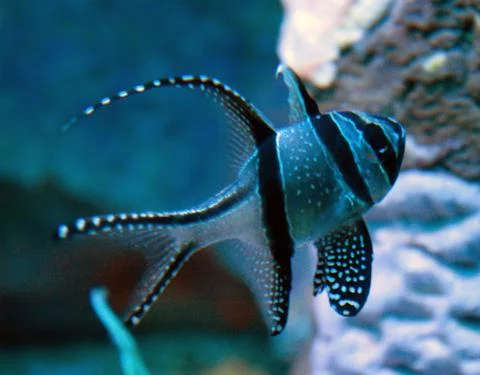
    Banggai Cardinal
    • Family: Apogonidae
    • Popular Species Types: Sphaeramia, Pterapogon
    • Popular Varieties: Pajama cardinalfish, Banggai cardinalfish
    • Size Range: 3-4 inches
    • Origins: Atlantic, Indian, and Pacific Oceans
    • Tank Size Range: 20+ gallons
    • Reef Safe: Yes
    • Available As Tank Bred: Yes

    There are only two species of cardinalfish available in the saltwater aquarium hobby: pajama cardinalfish (Sphaeramia nematoptera) and Banggai cardinalfish (Pterapogon kauderni). These mouthbrooding saltwater fish are unique with their small rounded bodies and large eyes. They are not the most colorful fish available, but their hardiness and ease of breeding make them a favorite.

    It is important to note that the Banggai cardinal is a threatened species due to limited ecosystems and overharvesting. For these popular aquarium fish, in particular, try to find captive-bred individuals instead of wild-caught ones.

    8. Clownfish
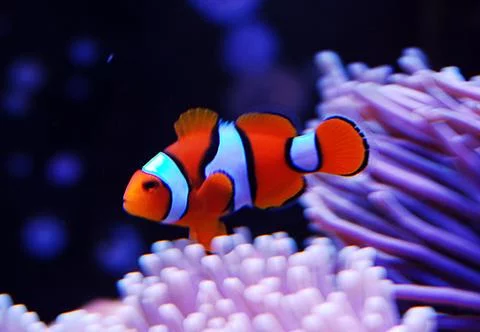
    Editor’s Choice
    Tank Raised Clownfish

    Best Choice For Reef Tanks!

    Clownfish are hardy, full of personality, and are safe for all corals. They are an icon for any saltwater tank

    Click For Best Price Purchase ORA Clownfish
    • Family: Pomacentridae
    • Popular Species Types: Amphiprion, Premnas
    • Popular Varieties: False percula clownfish/ocellaris clownfish, percula clownfish, tomato clownfish, maroon clownfish, Clarkii clownfish, skunk clownfish
    • Size Range: 3-6 inches
    • Origins: Indo-Pacific
    • Tank Size Range: 10+ gallons
    • Reef Safe: Yes
    • Available As Tank Bred: Yes

    Every day, there are more and more new varieties of clownfish discovered with different markings and temperaments. These small and colorful fish rose to stardom after their starring in the Pixar animated film, Finding Nemo. Their unmistakable orange, black, and white stripes have become a staple for the home reef aquarium.

    Though ocellaris clownfish (Amphiprion ocellaris) are the most popular variety of clownfish, you can find clowns with long fins or short fins, yellow or maroon coloration, and community and aggressive temperaments. No matter which species you choose, clownfish are one of the best choices for the beginner’s saltwater aquarium.

    Clownfish are my #1 recommendation for anyone starting saltwater โ€” theyโ€™re iconic for a reason. Iโ€™ve kept a clown harem and theyโ€™re hardy, personable, and fascinating to watch. One important warning: avoid designer clownfish morphs. The aggressive overbreeding behind these fish produces specimens that are significantly less robust than the original varieties. Stick with classic ocellaris or percula clownfish and youโ€™ll have fish that thrive for years.

    9. Damselfish
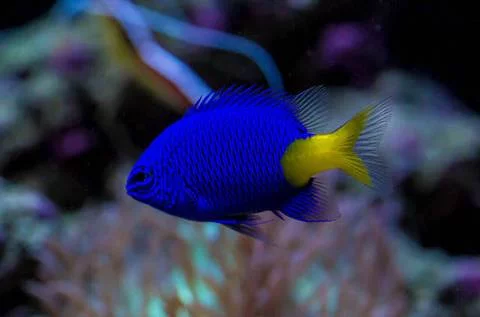
    Yellow Tail Damsel
    • Family: Pomacentridae
    • Popular Species Types: Dascyllus, Pomacentrus, Chrysiptera, Chromis, Microspathodon
    • Popular Varieties: Azure damsel, Starckโ€™s damsel, yellowtail damsel, Springerโ€™s damsel, three stripe damsel, Fiji blue devil damsel
    • Size Range: 2-4 inches
    • Origins: Atlantic, Indian, and Pacific Oceans
    • Tank Size Range: 10+ gallons
    • Reef Safe: Yes
    • Available As Tank Bred: Yes

    At the beginning of this article, we listed the damselfish as one of the most aggressive fish species you could get for your saltwater aquarium. Though their size might not seem like they could be aggressive, these small reef fish have been known to overrun a saltwater tank without mercy.

    The most aggressive species of damsel is the Fiji blue devil damsel (Chrysiptera taupou) while the most community tank friendly one is the Springer’s damsel (Chrysiptera springeri). Though hobbyists have had luck keeping a Springer’s damsel in a community tank, there is always the possibility that your individual fish ends up aggressive. You lower your chances by introducing them last, having plenty of space, housing larger fish that can push back like angelfish and tangs, and lots of rockwork.

    10. Tangs

    Tang in Fish Tank
    • Family: Acanthuridae
    • Popular Species Types: Zebrasoma, Ctenchaetus, Acanthurus, Naso
    • Popular Varieties: Yellow tang, purple tang, sailfin tang, naso tang, unicorn tang, clown tang
    • Size Range: 6-24 inches
    • Origins: Indo-Pacific
    • Tank Size Range: 70+ gallons
    • Reef Safe: Yes
    • Available As Tank Bred: Uncommon

    Tangs are bright, active, and fun to watch in the reef aquarium. They are also constantly looking to eat algae and will continuously pick the rock clean of any food that they happen to find. However, most hobbyists can’t have tangs due to their potential size and high activity level. Some tangs, like the yellow tang (Zebrasoma flavescens) can also be unexpectedly aggressive.

    In the past couple of years, the price of tangs has risen dramatically. This is in direct response to Hawaiian bans that limit how tangs are collected and exported. This is an effort to help save some currently collapsing ecosystems.

    11. Rabbitfish

    Foxface
    • Family: Siganidae
    • Popular Species Types: Siganus
    • Popular Varieties: Foxface lo rabbitfish, gold spotted rabbitfish, magnificent foxface rabbitfish, two barred rabbitfish
    • Size Range: 6-9 inches
    • Origins: Indo-Pacific
    • Tank Size Range: 125+ gallons
    • Reef Safe: With caution
    • Available As Tank Bred: Yes

    Rabbitfish are not the most popular saltwater fish to come across, but there are some benefits they can bring to the home aquarium.

    Rabbitfish, especially the foxface lo (Siganus vulpinus), are excellent algae eaters that will spend most of their time picking at the live rock. One of the main attractions to this aquarium fish is their diet for bubble algae, which can be near-impossible to manage and remove otherwise.

    At the same time, these hardy fish may pick at corals and have venomous spines. Caution should be used when introducing them into a reef tank setting and when putting your hands into the tank.

    I kept two-barred rabbitfish and named them Usagi โ€” they were some of my all-time favorite fish Iโ€™ve ever owned. Enormous personality and they really made themselves at home in my reef. The venomous spine warning is genuinely real though: be careful during tank maintenance. Getting stung isnโ€™t life-threatening, but it is painful and very memorable.

    12. Pufferfish
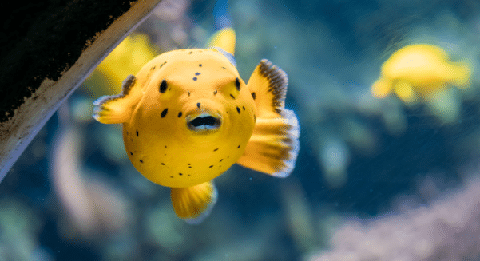
    Golden Pufferfish in Aquarium
    • Family: Tetraodontidae
    • Popular Species Types: Canthigaster, Diodon, Arthron, Chilomycterus
    • Popular Varieties: Saddle pufferfish, saddle valentini pufferfish, porcupine pufferfish, spotted puffer
    • Size Range: 10-30 inches
    • Origins: Atlantic, Indian, and Pacific Oceans
    • Tank Size Range: 55+ gallons
    • Reef Safe: With caution
    • Available As Tank Bred: No

    Most species of pufferfish are not reef-safe. There is a big difference between some of the largest species and the smallest ones regarding diet, temperament, and space requirements; owning a small and manageable saddle puffer (Canthigaster coronata) is much different from having a starry puffer (Arothron stellatus) that needs a 300 gallon specialized setup.

    That being said, one thing is true for most of these large fish and that is that they have a toxin in their skin and internal organs called tetrodotoxin. Hobbyists don’t need to worry as this is only harmful when ingested.

    โš ๏ธ Most puffer species are highly aggressive tank-mates and will destroy any inverts in the tank. Theyโ€™re best kept species-only or with very large, robust fish. They are also highly intelligent with real personalities, which makes them fascinating to keep โ€” just go in knowing they are not community fish.

    13. Triggerfish
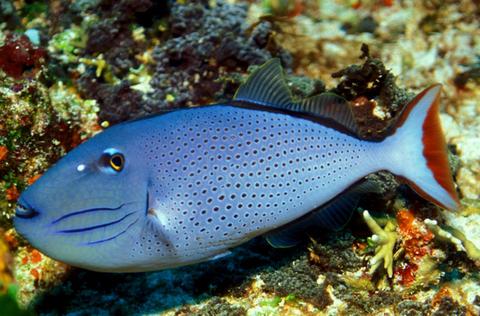
    Sargassum Triggerfish
    • Family: Balistidae
    • Popular Species Types: Xanthichthys, Rhinecanthus, Balistoides, Melichthys
    • Popular Varieties: Niger triggerfish, undulate triggerfish, humu Picasso triggerfish, blue throat triggerfish
    • Size Range: 9-20 inches
    • Origins: Caribbean, Indo-Pacific
    • Tank Size Range: 125+ gallons
    • Reef Safe: With caution
    • Available As Tank Bred: Uncommon

    Triggerfish are named after their unique ability to wedge themselves into the rock, only being released once their dorsal fin spine has been relaxed. In the saltwater tank setting, this rarely happens and these popular saltwater fish remain excited and active, though aggressive towards other fish.

    There are several species of triggerfish commonly available in the aquarium trade. Many of these saltwater fish require large tank setups, with some being fully reef-safe and others not so much.

    I kept a bluethroat trigger and it was one of my favorite reef fish Iโ€™ve ever owned. Triggers have extraordinary personalities โ€” interactive, intelligent, and they genuinely recognize you. The bluethroat is one of the more reef-compatible species, but always research your specific species carefully. Many triggers will rearrange your rockwork and make short work of any inverts in the tank.

    14. Lionfish
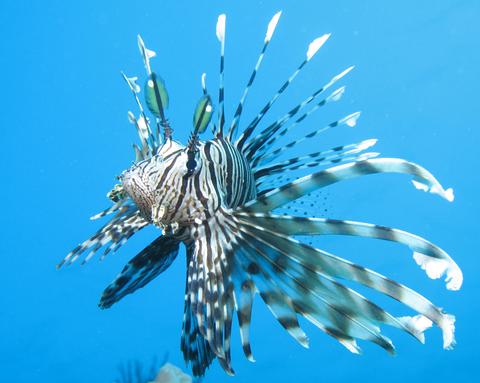
    Lionfish in Aquarium
    • Family: Scorpaenidae
    • Popular Species Types: Dendrochirus, Pterois
    • Popular Varieties: Volitan lionfish, dwarf/zebra lionfish, miles lionfish
    • Size Range: 7-15 inches
    • Origins: Atlantic, Indian, and Pacific Oceans
    • Tank Size Range: 55+ gallons
    • Reef Safe: With caution
    • Available As Tank Bred: Uncommon

    There is some controversy about lionfish being available as pets in the saltwater aquarium hobby. The problem is that these fish are a highly invasive species in some ecosystems throughout the world and aquarists believe that shouldn’t be capitalized on. Regardless, there are several larger species available with a convenient dwarf type that fits into smaller saltwater aquariums.

    Lionfish are venomous and will inflict injury if stung by their spines. Care is needed when handling. They have a cousin named Frogfin which is a unique poisonous fish that has leg like appendages.

    โš ๏ธ Strong warning: lionfish are one of the most destructive invasive species in Atlantic and Gulf of Mexico ecosystems, and keeping them as pets drives demand. They are also genuinely venomous โ€” the spines cause serious pain. If you do keep one, they are spectacular display fish. But please, never under any circumstances release one into open water. The ecological damage is severe and irreversible.

    15. Groupers

    Panther Grouper with Cleaner Wrasse
    • Family: Serranidae
    • Popular Species Types: Cephalopholis, Gonioplectrus, Pogonoperca, Cromileptes
    • Popular Varieties: Panther grouper, miniatus grouper, red flag grouper, blue line grouper
    • Size Range: 12+ inches
    • Origins: Atlantic, Indian, and Pacific Oceans
    • Tank Size Range: 125+ gallons
    • Reef Safe: With caution
    • Available As Tank Bred: No

    Groupers are very important and popular game fish in aquaculture. These great saltwater fish eat anything they can fit into their mouth and grow to extreme sizes. One of the most notable fish in this family is the critically endangered goliath grouper (Epinephelus itajara) that can reach 8 feet in length and weigh over 800 pounds.

    Even smaller aquarium grouper species, like the panther grouper (Cromileptes altivelis), need to be kept in an extremely large tank to accommodate waste output and potential size.

    โš ๏ธ Groupers are one of the most commonly misrepresented fish in the hobby. People buy adorable juveniles without realizing they can grow to 12โ€“24 inches and produce enormous bioloads. Research the adult size of any grouper species carefully before you buy โ€” not the juvenile size in the store tank.

    16. Hawkfish
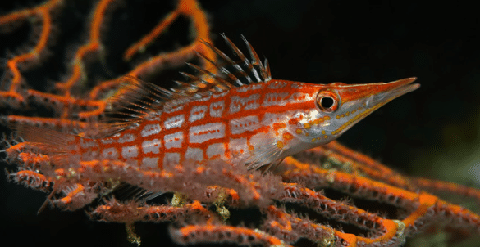
    Longnose Hawkfish on Coral
    • Family: Cirrhitidae
    • Popular Species Types: Neocirrhites, Neocirrhites, Oxycirrhites
    • Popular Varieties: Longnose hawkfish, flame hawkfish, spotted hawkfish
    • Size Range: 3-5 inches
    • Origins: Indo-Pacific
    • Tank Size Range: 30+ gallons
    • Reef Safe: With caution
    • Available As Tank Bred: No

    Hawkfish are one of the less popular bottom-dwelling fish for the saltwater aquarium. These small fish earn their name from their unique behavior of perching on the rocks, diligently waiting for live food to swim past.

    Though hawkfish are considered a community fish and can be reef-safe, they are very active and won’t hesitate to eat smaller invertebrates like cleaner shrimp or fish.

    17. Wrasses
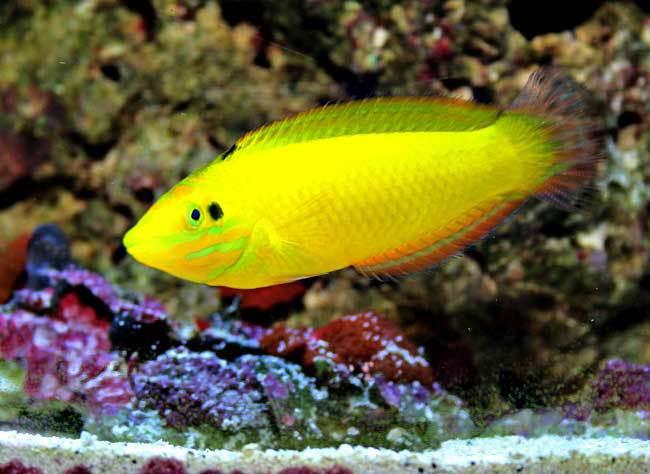
    Yellow Coris Wrasse in aquarium
    • Family: Labridae
    • Popular Species Types: Anampses, Cirrhilabrus, Wetmorella, Halichoeres, Pseudocheilinus, Paracheilinus, Labroides, Thalassoma 
    • Popular Varieties: Sixline wrasse, Carpenter’s wrasse, cleaner wrasse, melanus wrasse, possum wrasse, yellow coris wrasse, fairy wrasse, cleaner wrasse
    • Size Range: 3-7 inches though some species grow to be much larger
    • Origins: Atlantic, Indian, and Pacific Oceans
    • Tank Size Range: 20+ gallons
    • Reef Safe: With caution
    • Available As Tank Bred: Uncommon

    With so many different species to choose from, there is a saltwater wrasse for every enthusiast. These fish come in every color imaginable, though some are reef-safe while others are not.

    Some of the most notable species of wrasse are the sixline wrasse (Pseudocheilinus hexataenia), Carpenterโ€™s wrasse (Paracheilinus carpenteri), and melanurus wrasse (Halichoeres melanurus).

    Some species of wrasse can help monitor pest populations, like marine worms, in the reef aquarium, while others will heavily depend on microorganisms that already live in and around the rock.

    My personal favorite wrasse is the melanurus wrasse โ€” beautiful, active, and genuinely useful in a reef for keeping pests in check. Wrasses as a group are some of the most underappreciated fish in the hobby. Many species serve real functional roles while adding incredible color and movement to your tank. Iโ€™d recommend adding at least one to almost any reef setup.

    18. Eels
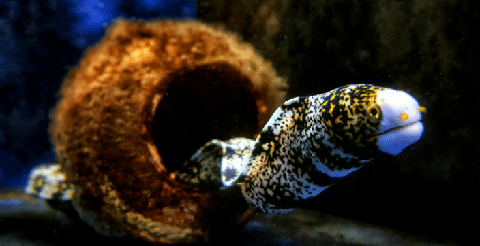
    Snowflake Eel in Aquarium
    • Family: Muraenidae
    • Popular Species Types: Echidna, Gymnothorax, Enchelycore, Rhinomuraena, Muraena
    • Popular Varieties: Snowflake eel, blue ribbon eel, tessalata eel, jeweled moray eel
    • Size Range: 12+ inches
    • Origins: Atlantic, Indian, and Pacific Oceans
    • Tank Size Range: 55+ gallons
    • Reef Safe: With caution
    • Available As Tank Bred: No

    Eels aren’t the first thing you think of when you imagine a saltwater aquarium, but they can actually make a great addition to the minimal reef or predatory tank. Most species of eel get to be several feet long, but there are a few, like the dwarf moray eel (Gymnothorax melatemus cf.), that stay under a foot long.

    Still, eels are incredible escape artists with a messy appetite. They need a specialized set up with lots of hiding spot, tight-fitting lid, and varied diet. Feedings need to be regularly supplemented with larger live and frozen foods.

    19. Dragonets
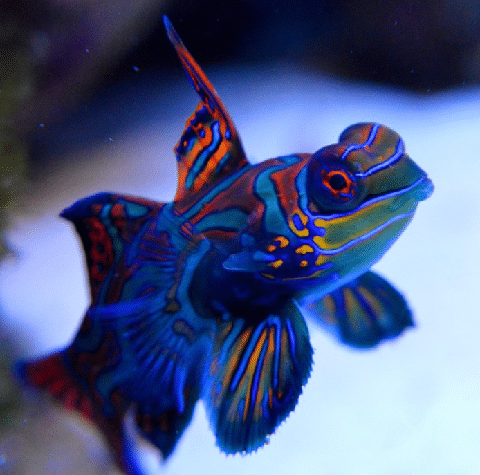
    Mandarin Goby Fish
    • Family: Callionymidae
    • Popular Species Types: Synchiropus
    • Popular Varieties: Scooter blenny, green mandarin, ruby red dragonet, red scooter dragonet
    • Size Range: 3-4 inches
    • Origins: Indo-Pacific
    • Tank Size Range: 30+ gallons
    • Reef Safe: Yes
    • Available As Tank Bred: Yes

    Dragonets are similar to gobies and blennies, but more demanding in regard to diet. Most species of dragonet available in the aquarium hobby, namely the scooter blenny (Synchiropus ocellatus) and green mandarin (Synchiropus splendidus), heavily rely on copepods as their main source of food.

    In order to successfully keep a dragonet, the tank must be mature and regularly seeded with copepods. It may also be necessary to harvest copepods in the sump or in another aquarium to keep up with their dietary needs. Though some dragonets have successfully been moved to a frozen food diet, this isn’t guaranteed.

    20. Squirrelfish
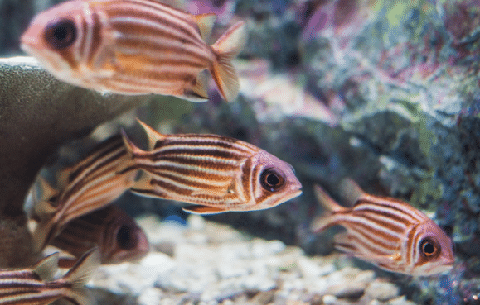
    Squirrel Fish In Aquarium
    • Family: Holocentridae
    • Popular Species Types: Myripristis, Sargocentron, Neoniphon, Heteropriacanthus
    • Popular Varieties: Striped squirrelfish, scarlet fin soldier, big eye black bar soldierfish, glass eye squirrelfish
    • Size Range: 6-14 inches
    • Origins: Atlantic, Indian, and Pacific Oceans
    • Tank Size Range: 70+ gallons
    • Reef Safe: With caution
    • Available As Tank Bred: Yes

    Squirrelfish are a unique addition to the saltwater aquarium. These fish are generally peaceful, though relatively active at night since they are nocturnal; they have been known to pick at small invertebrates but are generally reef-safe. Squirrelfish are very abundant on the natural reef, which can help bring a piece of nature into the home aquarium.

    Some species of this shy reef fish are venomous, but there is little to no threat to humans.

    FAQS

    What is the Most Common?

    Clownfish are the most common saltwater fish in the marine aquarium trade. They come in many varieties, nearly all are tank bred now, and are hardy fish that get along with most fish.

    What is the Prettiest?

    Overall, Marine angelfish and butterflyfish are considered the prettiest saltwater fish in the aquarium trade. There are individual beauties among other species.

    Final Thoughts

    With so many saltwater fish to choose from, it can be difficult picking the right ones for your own mini-ecosystem. You can go with the more popular species of fish, like clownfish and tangs, or venture into the less commonly-kept fish, like eels and squirrelfish.

    As long as these popular saltwater fish are compatible tank mates with each other, then you won’t have any problems! If you have any questions, leave a comment. Thanks for reading!
  • Aquarium Water for Plants: What Iโ€™ve Learned After 25 Years of Freshwater Fishkeeping

    Aquarium Water for Plants: What Iโ€™ve Learned After 25 Years of Freshwater Fishkeeping

    Iโ€™ve been doing water changes on my freshwater tanks for over 25 years, and for most of that time Iโ€™ve been routing that water straight to my garden instead of down the drain. As long as your tank is freshwater and hasnโ€™t been medicated, that nutrient-rich water is liquid gold for plants โ€” Iโ€™ve seen the difference firsthand. Hereโ€™s everything you need to know about using aquarium water on your plants and why it works so well.

    Key Takeaways

    • Aquarium water is rich in macro and micronutrients, like nitrogen and phosphorus, that are commonly found in popular fertilizer options.
    • The parameters of your tank water may be influenced by tap water, food ingredients, and fish output.
    • Chemically treated water should not be used on edible plants.
    • Aquaponics is a large field in agriculture and encourages growing plants in a fish-based system.

    Why It Works

    Before we can see how fish tank water can be used to feed terrestrial plants, we need to understand what makes this water special. Like anything in the aquarium hobby, it all ties back to the nitrogen cycle.

    Iโ€™ve always thought of my water change water as free fertilizer. Instead of dumping it, I walk it straight to my garden beds โ€” my freshwater community tanks produce some of the richest free plant food you can find.

    When you cycled your tank, you needed to introduce a source of ammonia into your aquarium. This could have been done organically or chemically. After a while, beneficial bacteria started to reproduce and process the ammonia into other compounds, like nitrite and nitrate. Once enough bacteria had populated the aquarium, ammonia and nitrite could be maintained at 0 ppm while nitrate was controlled through water changes.

    Just because ammonia and nitrite aren’t readable in your current tank through test kits doesn’t mean that they’re not present though. In fact, fish are constantly creating ammonia through respiration and waste. Most test kits don’t read to this precision.

    Plants and Nutrients

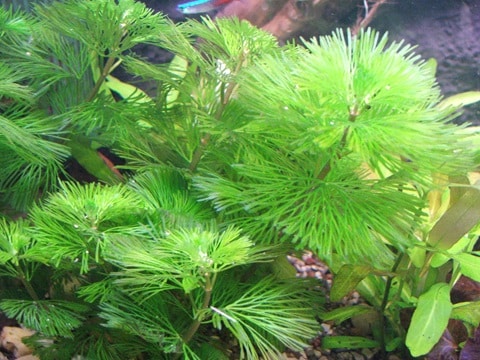
    Ambulia-Plant

    If you have a freshwater aquarium, you may have been recommended to add live plants to help cycle the aquarium and to keep an overall healthy system. There is a good reason for this! As we’ll see, aquatic plants are very similar to terrestrial plants in how they rely on nutrients; aquarium plants get most of their nutrients through the water column, though sometimes through the substrate, and most terrestrial plants rely on the soil to receive nutrients.

    Plants can absorb all of these nitrogen compounds: ammonium, ammonia, nitrite, and nitrate. Most species uptake nitrate the most, but live plants can help maintain the other levels. This is why adding live plants to an aquarium can decrease the toxicity of the water and maintain levels in the future.

    It’s important to note that freshwater aquariums also contain other important compounds, like magnesium and phosphate, that aren’t regularly tested for. Just because hobbyists don’t monitor these parameters doesn’t mean they’re not present in the aquarium. As we’ll see, they’re some of the most important compounds for growing terrestrial plants!

    How can our fish tanks help our indoor plants and possibly even help grow the food that we eat?

    Plant Fertilizer

    The next time you go into an outdoor store or gardening center, take a look at the available fertilizers. You may see a variety of powder and liquid options, each of which will provide a percent breakdown of the nutrients offered.

    Pellet-Fertilizer

    You will likely see a ratio of three values on the front, which read N-P-K1, or nitrogen-phosphorus-potassium. These are some of the most important nutrients for plant growth, and the ratio needed will depend on the species of plant being grown.

    While you likely won’t get this precise ratio with fish tank water, nitrogen, phosphorus, and potassium are present in your aquarium. While nitrogen is predictable, phosphorus, potassium, and micronutrient levels will vary as they are influenced by tap water, food ingredients, and other inputs.

    Now that we know how aquarium water acts as a fertilizer, how can we use what we have?

    Watering and Water Changes

    The best way to use your aquarium water as a plant fertilizer is by not wasting what you already have! More than likely, you perform water changes on your aquarium anywhere from once a week to several times a month. Chances are that you’ve been throwing that old water down the drain.

    Before you get rid of that water, get a watering can! Use an aquarium siphon or cup to remove the water from the tank and into your container. As long as there isn’t a ton of fish waste or other organic debris, this water can be directly used to water plants. It really is as easy as that!

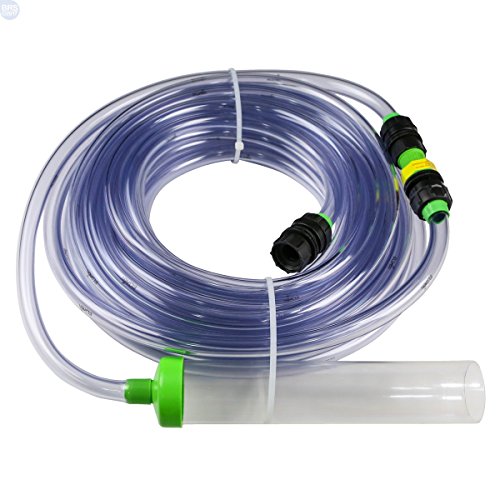
    Python Cleaner

    The Python is a mainstay in the fish hobby. Easily clean your aquarium by connecting this to your sink!

    Buy On Amazon

    If you’re siphoning your substrate during your water change, then you may want to take some time to let that gunk settle at the bottom of your container. While it is unlikely to hurt your plants, fish waste left sitting on top of the soil can attract other garden pests and lead to a nasty smell.

    But wait! Don’t throw that fish poop out either. In fact, this organic matter can be directly added to a compost pile along with any excess water.

    Storing Water

    Unless you have a ton of plants, you’ll probably end up with leftover water from your fish tank. This water can be discarded as usual, or you may consider setting up a reserve for later use.

    This reserve is like setting up another fish tank but in a closed tub or bucket. Here is one way of setting up an aquarium water reserve:

    Use a bucket, tub, or other large container. This container should not let light in as this will facilitate algae growth that will end up stealing nutrients. In the worst-case scenario, this nutrient-packed algae can be used for composting!

    This container should also be closed so that no contaminants, like aerosols, insects, or a thirsty pet, can make their way in. If you use a trash cute, the Brute brand is a great mainstay in the hobby. Make sure it is labeled as food grade.

    Use filter media. Contrary to popular belief, beneficial bacteria do not live in the water column. Instead, they live on the surfaces in our fish tanks, mainly in porous filter media. While new amounts of ammonia or nitrite are unlikely to enter your container, beneficial bacteria will continue to make your used fish tank water a healthy environment. You can also squeeze out your sponges during water changes to release some of the bacteria and the nutrients.

    Install a pump. Even though this water will be processed by beneficial bacteria, stagnant water will still invite unhealthy microbes. Stagnant water will likely grow algae and other slime while also depleting the water of oxygen. This could create anaerobic conditions, which would not be healthy for ornamental plants.

    Check your water regularly. Fish tank water won’t store indefinitely, and we don’t recommend hanging onto it for more than a week, especially if there is sediment or other organics present. If you notice a funky smell or any other signs of contamination, dispose of the water.

    Indoor Plants In Your Aquarium

    Aquarium water can be used to water plants with a watering can, but it can also be used straight from the source. Many hobbyists have begun growing indoor plants, and even some fruits and vegetables, straight out of their aquariums. This removes the need to store water and gives plants direct access to some of the best plant fertilizers available. In return, the plant helps remove excess nutrients from the water column.

    In order to grow terrestrial plants out of your aquarium, you will need an additional grow light. Also, some plants cannot have constantly submerged roots, so some special selection is needed.

    Considerations When Using Aquarium Water For Plants

    Aquariums make some of the best plant fertilizers available, but you might have a few questions about keeping healthy fish and healthy plants.

    Should you add more nutrients directly into your aquarium?

    It would make sense that adding more nitrogen compounds and other nutrients to your aquarium would make your fertilizer even better, but aquariums have a delicate balance of parameters. Too much ammonia or nitrite can lead to poisoning your fish; even high levels of nitrates can eventually impact your aquarium.

    However, many hobbyists add nitrogen additives to their aquariums to help their aquatic plants grow. In moderation, this is a great way to facilitate growth and even get more desirable colors out of your live plants. In terms of dosing other macro and micronutrients, like magnesium and phosphate, it’s generally not necessary unless you are certain your aquarium is lacking in them.

    Editor’s Choice!
    APT Complete

    Editor’s Choice

    Made by an aquascaper for aquascapers. This is the best all around aquarium plant fertilizer on the market. Marco and micronutrients in one bottle!

    Use Coupon Code ASDComplete for 10% off your order!

    Click For Best Price Buy On Amazon

    Being able to water plants with fish tank water is an added benefit of your aquarium, not its main purpose (though we’ll discuss more in the aquaponics section later).

    Should you be worried about aquarium chemicals?

    Yes, there are some potential hazards associated with using fish tank water that has been treated with chemical products. This is especially a concern if using the water on edible plants.

    Most hobbyists dose their fish tanks with at least one chemical. Most often, this is a dechlorinator that removes chlorine and chloramine to make water safe for fish, but can also include medications. However, most of these chemicals are not food-grade and cannot be ingested safely for certain. Some fish keepers use alternatives, like ascorbic acid, as a dechlorinator, but this takes some special measuring.

    One product you might not consider a threat to plants is aquarium salt. Most plants cannot physiologically process salt and may start to die as a result. You should never use saltwater for a garden if you keep a marine tank.

    โš ๏ธ From my experience: The two setups I always warn people about are saltwater/reef tanks and African cichlid tanks. Reef tanks have obvious salt issues, but cichlid tanks also tend to run high pH and sometimes have added salt โ€” both can damage or kill garden plants. Stick with a standard freshwater community tank and youโ€™ll be fine.

    If the tank has been medicated in the past or is currently being medicated, you should also not use the water on your garden.

    In general, you should avoid using chemically treated fish tank water on plants you intend to eat.

    Does pH matter?

    So far, we have not discussed pH. Freshwater aquariums typically have a neutral pH of around 7.0, but some blackwater or cichlid tanks might have well above or below that. Most plants thrive in the neutral zone, though some species prefer acidic or basic conditions respectively.

    Another important parameter to consider is alkalinity, or the ability of water to buffer changes in pH. This parameter is rarely discussed in freshwater aquariums, with general hardness being a bigger concern. However, a high alkalinity can also impede plant growth and start to affect the effectiveness of pesticides and other enhancers.

    Aquaponics

    If you’re serious about using your fish tank’s water to facilitate your plant growth, you might be interested in the greater field of aquaponics.

    This takes growing plants with fish tank water to a whole other level. Simply put, aquaponics is sustainable farming using a closed-loop system that is dependent on the nitrogen cycle: fish create waste and the plants uptake the nutrients. Plants are grown directly in the water for easy nutrient uptake without the need for soil.

    Some plants that can be grown in these systems include lettuce, tomatoes, peppers, and herbs.

    Can I use fish tank water to water my plants?

    Yes! Freshwater fish tank water is a great source of nutrients required for healthy plant growth, like nitrates. However, too much watering with aquarium water can overload your plants with nutrients, which can also be detrimental.

    Is aquarium water conditioner good for plants?

    If you’re planning on eating the foods you’re growing, you should not use chemically treated fish tank water. This is because these chemicals have not been evaluated for consumption. Instead, alternatives, like ascorbic acid, could be used to neutralize chlorine for fish.

    Is fish tank water good for gardens?

    Yes, you can use fish tank water on indoor and outdoor plants. Make sure to avoid plants that you will eat as aquarium water is often treated with various chemicals, like dechlorinator.

    Conclusion

    If you love aquariums and gardening, then there are many reasons to start using your tank water to feed your plants! Aquarium water is packed with important nutrients, like nitrate, that can fertilize your plants as needed. Avoid using water that has been chemically treated on edible plants, but save your water change leftovers for later use.


    ๐ŸŒฟ Want to learn more? This article is part of our complete Planted Tank & Aquascaping Guide โ€” your ultimate resource for aquarium plants, aquascaping styles, substrates, and more.

  • Fish Tank Filter Not Working? My Troubleshooting Guide After 25 Years

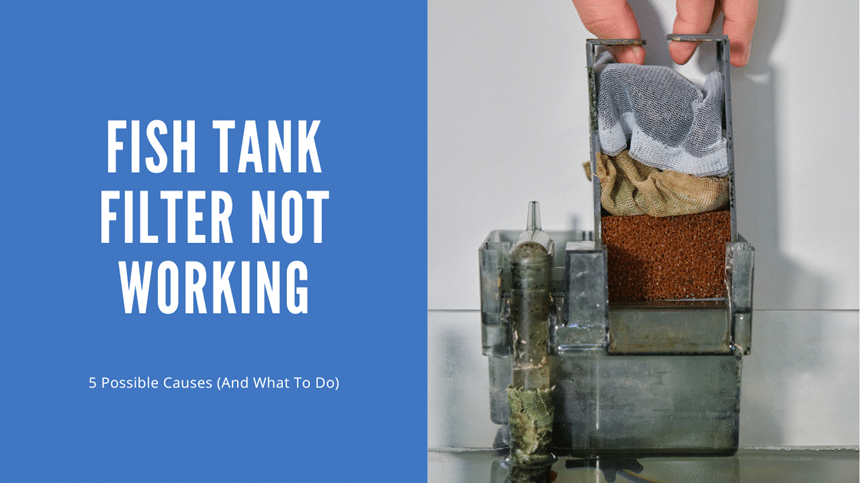
    Fish Tank Filter Not Working? My Troubleshooting Guide After 25 Years

    Is your fish tank filter not working?

    Aquarium filters are essential in this hobby, so when they stop working, you can expect some problems! But what should you do if your filter malfunctions? Well, don’t rush off to buy a new one too soon because there’s a good chance you can fix it yourself!

    In this guide, I’m going to help you get your aquarium filter up and running again. We’ll start off with some pretty obvious stuff and progress to more technical issues, so read through until the end and you should have the solution you need.

    Key Takeaways

    • Aquarium filters can stop working for many different reasons, but it’s often possible to fix the problem at home.
    • Start with the simplest solutions before taking drastic actions. Sometimes all you need to do is check your filter’s electrical plug.
    • A lack of aquarium maintenance can cause various filter problems, so invest a little time every week or two to inspect and maintain your equipment.
    • ELECTRICITY IS DANGEROUS. Unplug your filter before inspecting it and please leave electrical work to competent individuals.

    Troubleshooting – First Steps and Clues

    Are you sure it’s not working?

    This may seem like a silly question, but some filters are almost completely silent so you really need to look or feel to know if they’re running. Look for water flow near the filter’s outflow to know if water is moving through the pump.

    If you’re sure your filter is not running, it’s time to figure out why.

    When did it stop working?

    Doing a little detective work can help you figure out some potential causes of your fish tank filter not working.

    Let’s take a look at a few scenarios:

    • After a power outage: Some filters need to be primed each time you start them. So, if your power went out, you might be able to re-prime your filter and get it up and running again.
    • After a power surge: Lightning strikes, tree falls, and power outages can all cause surges that could damage electrical equipment1.
    • Gradual loss of performance: If your filter has been weak or noisy for some time, it could be a sign of a clogged impeller or filter media. These problems tend to build up over time.

    Fish Tank Filter Not Working – 5 Possible Causes

    Finding the problem with your aquarium filtration system is much easier when you know where to look. Continue reading to discover five possible causes and what you can do to solve them.

    1. Power Problems

    Aquarium filters need electricity to run, so that’s the first place to look when your fish tank filter stops working. Before we go any further, I just want to remind you of something obvious: ELECTRICITY IS DANGEROUS. Please leave electrical work to trained professionals.

    With that out of the way, let’s look at some safe tests that you can do.

    • Check the power source

    If your filter isn’t running at all, don’t be too quick to assume that the filter is the problem! The issue could also lie with your power supply, power strip, or any of the connections between your electrical panel and the filter itself.

    Start by making sure the filter is plugged in at a power outlet. Some outlets have a dedicated on/off switch, so make sure that’s in the ‘on’ position.

    If it’s definitely plugged in but still not running, your next step is to test the outlet. You can do this by unplugging the filter and plugging in a different electrical appliance like a lamp. If that doesn’t work either, your filter is probably not the problem.

    • Check your power strip

    Sometimes there’s nothing wrong with the power source or the filter. Your powerstrip might be faulty or need to be reset. Some power strips include a reset button that will need to be pressed after a power surge or overload.

    • Inspect the cable

    Electrical cables are pretty prone to damage, so it’s a good idea to visually inspect them for signs of wear or breaks. If you’re handy, you may be able to repair a worn cable yourself, but I recommend getting help from a pro if you’re not sure.

    • Are you using a timer?

    It’s best to set your aquarium lights on a timer to keep a regular day/night schedule. However, your fish tank filter should be set to run constantly.

    It’s annoyingly easy to get your plugs mixed up during the aquarium cleaning process, and sometimes the solution is as simple as switching plugs! If this happens to you, consider putting a zip tie or some colored tape on your filter cable to help you identify it easily.

    2. Clogged Filter

    Beneficial Bacteria from Existing Filter

    Your filter is designed to collect debris from the water, but sometimes, these waste particles build up to such an extent that they create blockages that prevent your filter from working properly.

    • Rinse regularly

    Many fish tank filters use a synthetic sponge material as a filtration media. These sponges do not need to be replaced until they begin to fall apart, although they do require regular maintenance to avoid blockages.

    The dirt that collects in your aquarium filter media will reduce water flow and mechanical filtration, but you can avoid this by simply rinsing the sponge outside of your aquarium in some tank water. Avoid using chemicals or hot water when cleaning your sponge media as this can kill the good bacteria that are essential for proper filtration.

    Check out my detailed guide to the aquarium cycle to learn more about beneficial bacteria and the nitrogen cycle.

    • When to replace

    Some filters are designed to use cartridges that must be replaced regularly. This type of media should be replaced at the intervals recommended by the manufacturer to avoid a reduced water flow rate. Filter floss is another filter media that clogs easily and will need to be replaced regularly.

    3. Air Locks

    Sometimes, air gets into the filter and causes an air lock which reduces your flow rate or even prevents your filter from moving water. This often happens when the filter intake is not positioned below the water’s surface, although it also occurs if you run an airstone near the intake. You may need to prime your filter to get it restarted, although the procedure will differ depending on the type of filter you have.

    • Hang on back filters

    Many hang-on-back (HOB) filters need to be primed before they can operate or they may be very noisy and fail to operate correctly. However, some models have self-priming technology.

    To prime a HOB, simply fill the impeller chamber with water from the aquarium until it begins to flow through the outflow and back into the tank. Then, you can adjust the flow rate to suit your needs.

    • Canister filters

    Many canister filters have self-priming technology, but some must be manually primed using the built-in pump. You may also need to rock your canister filter back and forth or side to side to dislodge any air trapped in the impeller housing. These filters should be placed below your aquarium for best results.

    4. Disrupted Water Flow

    Each aquarium filter type works differently, but they are all designed to suck water from the aquarium and pass it through some sort of filter media. The obvious exceptions are sponge or under gravel filters that work with an air pump.

    Your filtration system will not work properly if water can’t flow through the media as it should, so it’s important to inspect your filter and ensure that everything is clean and put together properly.

    • Water intake obstructions

    The water intake is a common source of problems since this is the first place where blockages can occur. Inspect the intake grid or tubes for obstructions like plant leaves or hiding snails.

    Sometimes, the intake tube of your filter may become dislodged, which disrupts the flow of water through the system. Make sure this component is seated properly as it can make a huge difference.

    • Flow valves and flow rate adjustment

    Many modern aquarium filters come with an adjustable flow rate, so this is a good place to start if your filter just seems a little weak. Check out your user manual or look for a dial or lever to increase the flow rate.

    Canister filters have valves on both the intake and output valves. Water will not be able to flow through the canister if either of these valves are shut, so make sure the tabs of each valve are in the open position, or at least open enough for water to pass through.

    • Water level in the tank

    Over time, water will evaporate from your aquarium, leading to a slow decrease in water level. If the level gets below your filter’s intake, the unit will begin to suck air, and it may overheat or malfunction. Keep your aquarium full with regular top-ups and water changes.

    5. Filter Motor Problems

    • Clogged impeller

    Internal power filters, canister filters, and hang-on-back filters all have a part known as an impeller, and this is a very common cause of filter issues.

    The filter impeller is the part of the pump that spins, creating a water current that sucks water through the filtration media and back into the tank. Sometimes, this crucial part becomes dislodged from its correct position or it may get clogged with gravel or wrapped up in fibers or hairs that prevent it from spinning.

    • Impeller maintenance

    You can usually access the impeller pretty easily without any special tools, but make sure the filter is unplugged before opening it up. Gently remove the impeller with your fingers or a pair of tweezers and clean it off, paying attention to the blades and the steel impeller shaft. You should also look for obstructions in the impeller housing and clean it out if necessary.

    • Impeller replacement

    You can often get your aquarium filter back up and running by simply cleaning out the impeller and housing, but eventually, you might need to replace some parts. Impellers don’t last forever, so order a replacement when yours becomes grooved, worn, or broken.

    What To Do If You Can’t Fix It – 5 Helpful Tips

    You’re going to need to take action if you’ve tried all the options listed above and you still can’t get your filter to run. Here’s what you should do:

    • Aerate your aquarium water

    Your aquarium is not going to crash instantly without a filter, although the situation can become more serious after a few hours.

    In the meantime, use an air pump and air stone to oxygenate your aquarium water. This will help your fish breathe and supply dissolved oxygen to the beneficial bacteria that live within your substrate and on surfaces within the tank.

    • Run a spare filter

    I recommend keeping a cheap spare filter for this kind of situation, but it’s very important to use it correctly here. If you’ve got an idea of how aquarium cycling and the nitrogen cycle work, you’ll know that special bacteria live in the media in your filter and that it can take several weeks to build up a decent colony.

    Put the media from your faulty filter into your spare until you can get a new filter or fit replacement parts. You may have to trim the old sponge down to size, but that shouldn’t be a problem. Bio balls and other media types can also be transferred to your spare filter if the design allows custom media.

    • Buying replacement parts

    You can usually buy replacement parts if you have a decent brand-name fish tank filter, although it may make more sense to buy a new filter in some cases. You can ask your local fish store to order replacement parts or simply purchase them online.

    • What if you don’t have a spare filter?

    It is possible to care for the beneficial bacteria in your old filter media, although it can get a little messy if the old media hasn’t been rinsed in a while. Gently remove the media and place it in the tank near an air stone to encourage some water movement through the media and keep the good bacteria oxygenated until you can get a new filter up and running.

    Note that if you purchase the same filter to replace your broken one, you can swap the filter media into the new filter. This will help prevent losses in the bacteria colony as the colony will still function in the new filter.

    • Running a second filter

    Did you know that you can run two or even three filters in the same aquarium? Most aquarists will run a single powerful filter, although two smaller fish tank filters can provide adequate filtration while giving you that extra insurance in case one fails.

    Understocking your tank and growing live plants are great ways to slow the build-up of nitrate levels in the long run, but you can also reduce your filtration needs by feeding your fish correctly. Uneaten food is a major cause of poor water quality.

    Why isn’t my fish tank water filter working?

    Fish tank filters don’t last forever, although you should get many years of use out of a quality product. The most common problems that affect aquarium filters are air locks, clogged media, clogged impellers, and power supply problems.

    How do I know if my fish tank filter is broken?

    Some fish tank filters are virtually silent, but all canister, hang on back, and internal power filters should create some flow from their outlet. Your filter is not working if it does not pump any water.

    How do you unclog a fish tank filter?

    Start by rinsing out your filtration media. I recommend rinsing your filter sponge and media in a separate container filled with aquarium water from a water change.

    Some filter cartridges and floss cannot be reused once clogged, so remember to replace them on a regular basis. Your filter may have indicators that tell you when to service or replace media, but you can also look for guidance in your instruction manual or check with the manufacturer online.

    How long can fish survive without a filter?

    Your fish may survive hours, days, or weeks without a filter โ€” it all depends on your aquarium size, fish species, stocking level, and water chemistry. You can keep your water safer for longer by running an airstone, reducing feeding, and by testing water parameters and performing water changes as necessary.

    What to do if your fish filter stops working?

    A malfunctioning filter will reduce water quality, so this is one problem you should attend to immediately. Take a few minutes to run through the solutions mentioned in this article, including checking the power supply and looking for obstructions and clogs.

    If you can’t solve the problem, you’ll need to install a different filter. I recommend seeding the new filter media with bacteria from your old filter.

    How do I know if my filter is working in my fish tank?

    Adequate mechanical and biological filtration will keep your water clean and prevent odors. A working fish tank filter will suck water into its outtake tube and pump it back into the aquarium. This should create a gentle current that you can see, hear, or feel in the water.

    Final Thoughts

    Providing proper filtration is essential for maintaining a beautiful aquarium and healthy fish, so it can be pretty stressful when your equipment malfunctions. I hope the advice in this guide helps you fix your filter problems without ordering a replacement, but please keep safety in mind when inspecting electrical equipment.


    ๐Ÿ”ง Want to learn more? This article is part of our complete Aquarium Equipment & Gear Guide โ€” your ultimate resource for filters, heaters, lights, pumps, tanks, and more.

  • Vegetables for Fish: What I Feed My Tanks After 25 Years (And What to Avoid)

    Vegetables for Fish: What I Feed My Tanks After 25 Years (And What to Avoid)

    Iโ€™ve been feeding vegetables to my fish for years โ€” Nori sheets for saltwater tanks, and cucumbers and romaine lettuce for freshwater setups. Itโ€™s one of the most underrated things you can do for herbivorous and omnivorous fish, and once they find it, they go for it every time. One critical step most people skip: blanching. Leave it out and you risk fouling your water with pesticide residue and disintegrating plant matter. This guide covers what actually works, what doesnโ€™t, and how to prepare it correctly.

    Key Takeaways

    • Aquarium fish can be given an assortment of raw and frozen vegetables!
    • Veggies are a great way to keep fish healthy by introducing vitamins and minerals that aren’t offered in typical fish food.
    • Vegetables can be easily blanched and frozen for easy storage and long-term use.
    • Some fish don’t like vegetables or have never been offered them, so algae wafers are a good alternative instead!

    Vegetables For Fish – Which Are The Best Ones?

    The best vegetable to feed fish (video from our official YouTube Video) is one that will withstand being submerged, at least for an hour or two. This vegetable should not start to disintegrate once a hungry fish starts to get to it. Luckily, a variety of vegetable options can be blanched and eaten by fish.

    A good list of rotating veggies might look like:

    • Broccoli
    • Cucumber
    • Zucchini
    • Yellow squash
    • Spinach
    • Romaine lettuce
    • Carrot
    • Peas
    • Nori (great for saltwater fish)

    Not all fish will like all vegetables, so it might take some time to figure out which ones to include in your feeding rotation. Most hobbyists like to weigh small pieces down with a rubber band around a rock or a suction clip that attaches to the side of the glass.

    ๐Ÿ† My personal picks: For freshwater tanks, cucumbers are my go-to โ€” fish love them, they hold up well submerged, and theyโ€™re easy to prep. For saltwater, Nori (dried seaweed sheets) is the clear winner โ€” tangs and rabbitfish will go absolutely crazy for it on a clip. Iโ€™ve also had great results with romaine lettuce in freshwater setups.

    Does Your Aquatic Pal Need Them?

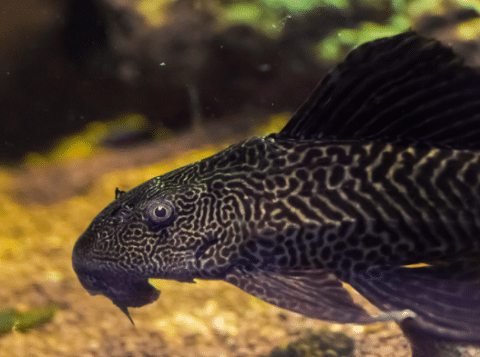
    Common-Pleco

    Before we even start to discuss how to prepare fresh vegetables for your fish, you need to know if these foods would be similar to something that they would naturally come across in the wild. A carnivorous fish will probably not eat a cucumber, no matter how appealing it might look!

    Most likely, you won’t be able to tell whether a fish is a carnivore, herbivore, or omnivore just by looking at it. There might be some signs, like sharp teeth or a sucker mouth, but even then, you can’t be fully sure. The best way to find out the natural diet of your fish species is by doing research about their natural habitat and hearing experiences from other hobbyists or your local aquarium store.

    Once you’ve established the natural diet of your fish, you can begin catering to it. If it turns out that you have a herbivore fish, then you might start to supplement blanched vegetables into their diet.

    Benefits of Veggies

    There are many benefits to giving vegetables to fish. The main benefit is keeping fish healthy by supplementing vitamins and minerals that aren’t supplied through typical fish food1.

    Spinach Photo

    The other main benefit is enrichment. By now, you’ve probably noticed that your fish waits to be fed at the top of the aquarium anytime you walk by. Feeding time is what they look forward to! Adding veggies is a great way to make feeding time even more exciting and unpredictable while also adding variety and balance to your fish’s diet.

    What Are Blanched Vegetables?

    Simply put, blanching means submerging vegetables or fruits into boiling water for a short period, quickly removing them, and then placing them into a bowl of water with ice. This process only takes a couple of minutes but helps preserve the quality of the vegetable or fruit.

    There are a few ways blanching achieves preservation. First, it inactivates enzymes that would otherwise begin to affect color, taste, and nutritional value over time. Similarly, blanching affects bacteria which would also cause the product to degrade faster.

    Blanching is especially recommended when using vegetables as fish food due to insecticides and other residues. Unfortunately, many unknowns are used to treat food for consumption, so boiling them first reduces the chances of those chemicals entering the aquarium.

    โš ๏ธ The biggest mistake I see: People skip blanching entirely. Raw, unblanched vegetables can foul your water fast as they break down, and youโ€™re putting pesticide residue directly into your tank. Blanching takes about two minutes and makes a real difference โ€” donโ€™t skip it.

    All in all, blanching fresh fruits and vegetables helps preserve them for longer and allows for easy freezing and storage. In the aquarium setting, most hobbyists only offer vegetables as fruits can be messy.

    Can You Serve Them Raw?

    Yes! Tropical fish can be fed raw vegetables. Blanching is recommended for hobbyists who want to keep vegetables on hand for future use. There are a couple of things that need to be considered, though.

    As mentioned before, veggies are often treated with chemicals and other preservatives. These should be thoroughly washed off before being added to the tank. It is also likely that these pieces of raw vegetables will end up floating on the surface of the water, so it might take some extra effort to weigh them down.

    How To Blanch Them

    Blanching Vegetables

    Almost any vegetable can be blanched, but not every blanched vegetable is good for the aquarium. Instead, certain hard vegetables, like broccoli, cucumber, zucchini, and peas, are some of the favorite feeding options for herbivores. This is because other vegetable matter can easily break down and start to affect water quality.

    Vegetables with strong aromas, like brussels sprouts and onions, should be avoided as they can start to affect water conditions as well.

    Buying Them

    This might seem obvious, but you need to purchase your vegetables at the grocery store. Your local fish store will not have fresh vegetables! Now the question comes down to picking the right veggies for your fish.

    Should you buy organic?

    You definitely want to pick the best vegetables possible to feed your fish, and you should be mindful of what you’re putting in the aquarium. However, there is likely little difference between buying organic and using regular produce. The blanching process should hopefully remove any chemicals or additives in either option.

    If you want to feed raw cucumber or another vegetable fresh from the rack, then it may be the better choice to buy organic.

    Preparation

    Depending on what type of vegetables you get for your fish, you might need to do some prep work. Think about how much food you want to give to your fish, for how long, and if you could use the leftovers for your own consumption!

    Some vegetables, like zucchini, cucumber, and broccoli, will need to be cut up into manageable pieces. The goal should be to slice to expose as much of the soft, inside flesh as possible as fish will likely eat these sections first. For something like zucchini, slice each piece to be about 0.5 inches. Most other vegetables, like spinach and lettuce, can be split apart and fed more easily.

    Now, you will want to consider how long you want to serve your fish this food. Fish eat as much as is available, so it’s not recommended to give it all at once. But you don’t want to be feeding the same thing for a month either! Prepare enough food for several feedings. Save some for blanching and save some for the dinner table.

    Blanching Steps

    Now it’s finally time to blanch the veggies. This process is straightforward and easy and almost impossible to mess up.

    1. Bring a pot of water to a rolling boil. The boiling water will activate those processes we talked about earlier!
    2. Fill a separate bowl with water and ice.
    3. Add the sliced vegetables to the boiling water.
    4. Allow them to boil for 1-3 minutes depending on the size of the slices.
    5. Remove the vegetables when they’re crispy. A crunchy vegetable needs more time and a mushy vegetable has gone too long.
    6. Add the veggies to the ice bath. Let them sit in the cold water for a minute or two.
    7. If you’re planning on freezing the vegetables, then wait until they’re completely cooled and dried. Then, store them in a plastic bag in the freezer.

    Feeding Your Fish

    When you’re ready to feed your fish, make sure to fully thaw the frozen vegetable matter. You may need to weigh it down with a rock or clip so that it doesn’t float.

    Allow your fish to eat. It might take some time for them to find and understand that the vegetable matter is food. Snails are also naturally slow!

    After a couple of hours, remove what remains of the veggies. If your fish and snails liked what they were given, you might just find vegetable skin left over.

    How Often To Feed Vegetables?

    How often you feed your fish fresh or frozen vegetables will depend on how many fish are present and their feeding habits.

    If you have a larger tank with lots of tropical fish, shrimp, and snails, then you will need more food to make sure that everyone is getting fed. Always make sure to keep an eye on uneaten food and remove any pieces that could potentially get stuck in the back of the tank.

    In general, fresh and frozen vegetables can be given one to two times a week to create a well-balanced diet.

    Alternatives

    While most aquarium fish enjoy a veggie snack every now and then, some fish simply don’t like vegetables, even if they’re herbivores.

    It makes sense why a carnivorous fish might not eat veggies, but why wouldn’t a herbivore?

    It is possible that your fish was never introduced to any foods other than flake or pellet foods. They might not know how to eat veggies! In cases like this, you can continue to offer your fish fresh vegetables until they take a nibble, or you could settle with a high-quality algae wafer or pellet.

    For saltwater fish, consider a product like Julian Sprung’s Sea-Veggies

    FAQs

    What vegetables can I feed my fish?

    Tropical fish love most vegetables! But every fish will have its own appetite. The best veggies to feed fish include lettuce, peas, zucchini, and cucumber. These can be given raw or frozen as long as they are prepared and thawed before serving.

    Can I feed my fish fruits?

    While fruits can be blanched and stored for serving later, it’s not recommended to give fruits to fish. This is because fruit is high in sugar, which can easily start to affect aquarium water. Because of this, it’s generally recommended to only give fish vegetables.

    How do I make prepared fish foods?

    Feeding vegetables to fish is quick and easy! Depending on the type of veggie you’re giving, you may need to cut it up into small pieces. These pieces can then be washed and added directly to the tank or blanched and saved for later.

    Why didn’t my fish eat vegetables?

    Every fish is different and yours might not enjoy vegetables! Instead, you can supplement those vitamins and minerals with algae wafers or pellets.

    How do I make prepared fish foods?

    Feeding vegetables to fish is quick and easy! Depending on the type of veggie you’re giving, you may need to cut it up into small pieces. These pieces can then be washed and added directly to the tank or blanched and saved for later.

    Why didn’t my fish eat vegetables?

    Every fish is different and yours might not enjoy vegetables! Instead, you can supplement those vitamins and minerals with algae wafers or pellets.

    Can saltwater fish eat vegetables?

    Yes! Saltwater fish can also be given vegetables even though they’re unlikely to experience plant matter in their natural habitats. Because of this, saltwater fish are more likely to ignore vegetable offerings, but some might take a nibble.

    Instead, saltwater fish can be offered different types of macroalgae and seaweed sheets. The most common type of veggie before Nori was popular was romaine lettuce.

    Conclusion

    Most fish love a selection of fresh veggies in addition to their staple fish flakes or pellet, though some fish don’t! These vegetables can be served raw or blanched and frozen for later use. Some options include lettuce, peas, carrots, and broccoli, but an algae wafer will substitute for more picky fish.

    Keep in mind that feeding fresh veggies can be messy and not all fish will enjoy the offer! Uneaten food should be removed if left untouched after a couple of hours.


    ๐ŸŸ Want to learn more? This article is part of our complete Aquarium Care Guide โ€” your ultimate resource for water chemistry, maintenance, feeding, disease prevention, and everything you need for a healthy tank.

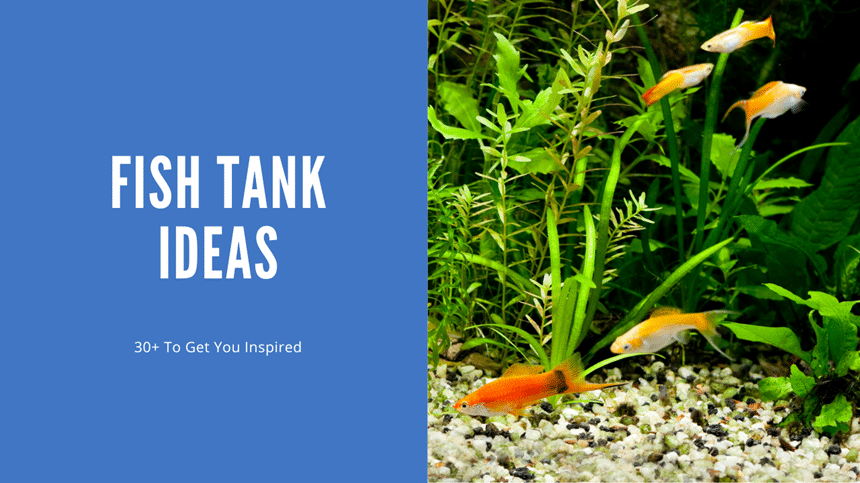
  • Fish Tank Ideas: 30+ Setups That Have Inspired My Own Builds

    Fish Tank Ideas: 30+ Setups That Have Inspired My Own Builds

    I’ve been keeping fish for over 25 years, and few things in this hobby beat the moment a tank design truly clicks. Aquascapes, cichlid rockscapes, and nano planted betta tanks have all inspired setups in my own fishroom over the years โ€” and they still do. If you’re looking for your next build or just some inspiration for what’s possible, this is one of my favorite topics to cover. Here are 30+ fish tank ideas from across the hobby that I keep coming back to.

    Key Takeaways

    • Designing an aquarium is a great chance to let your creativity run wild and create something truly unique. However, drawing some inspiration from other setups can be very helpful.
    • Aquarium decorations are a great way to add some style and personality to your aquarium, but live plants and natural materials like wood are the best choice for nature-style fish tanks.
    • Stick to hardscape and decorations designed specifically for aquariums. Natural decorations like rocks can be used if you clean them carefully, but some natural materials like sea shells and limestone can change your water chemistry.
    • Be sure to include a filtration system if you’re creating a shrimp or fish tank, and a heater if you’re keeping tropical species.
    • Don’t be afraid to think out of the box! Paludariums and emersed planted tanks are excellent aquarium ideas.

    Nano Fish Tank Ideas

    In the aquarium hobby, small aquariums are usually referred to as nano tanks. How small is small? Well, the definition varies, but you can call anything smaller than about 20 gallons a nano tank.

    There are many different nano tank styles, ranging from species-only setups to thriving communities. Continue reading for some nano tank inspiration!

    10-gallon Nano Betta Fish Tank Idea

    Betta fish are one of the most popular nano fish in the hobby, but we see them in tiny bowls and other containers way too often. This beautiful 10-gallon nano betta fish tank deserves a round of applause1!

    The combination of live aquatic plants, driftwood, hardscape, and a little beach area gives this tank a feeling of balance and tranquility. I bet that’s one happy betta.

    5-Gallon Betta Setup

    You can also go a little smaller for a single betta, although you’ll still need a filtration system and a heater. Maintaining high water quality will also become more challenging, but regular water changes and cleaning will keep your fish happy and healthy.

    At 5 gallons, this well-planned fish tank is about the smallest you should go for bettas or other live fish. However, you can make a nano tank look much roomier than it really is by decorating it carefully.

    Notice how the dark substrate makes the plants stand out even more? Black sand or gravel can also make fish look brighter and it’s great for some shy fish species that prefer a dark habitat.

    ๐Ÿ† My Pick: If I had to recommend one starting point for beginners who want to build something beautiful without overwhelming themselves, it’s the natural planted betta tank. The footprint is small, the cost is manageable, and the results can look incredible. I’ve set up many of these over the years and they never get old โ€” it’s the best entry point into seriously impressive aquarium design.

    Community Aquarium

    It is possible to keep multiple nano fish species together in a small tank, but you’ll need to step up to an aquarium in the 15 to 20-gallon range to house your fish safely.

    This elegant tank is home to multiple fish species and some beautiful aquatic plants. Most fish that grow to about 2.5 inches or less can be kept in this tank size, although it’s important to research the minimum school size and parameters of each species.

    Themed

    There are some awesome aquarium decorations out there for setting up a themed fish tank. Check out these fun but contrasting examples from across the web!

    Spongebob

    Spongebob-themed aquarium decorations can turn a nano tank into a fun and exciting fish tank, especially for the kids. This themed aquarium looks just like a scene from the popular TV show, and those yellow fish fit right in!

    Bamboo Forest

    Looking for something a little more zen? Check out this peaceful betta tank, complete with its own bamboo forest. This fish tank theme is perfect for your work desk, especially if you have a stressful job.

    Planted Aquariums

    If you ask me, all freshwater aquariums should include some live plants! Live plants have many benefits for your fish, and they look great too! Let’s take a look at some amazing planted tank eye candy.

    Submerged Bonsai

    Plants dominate this incredible aquascape, although its creator has chosen to create a scene that looks more like a dry landscape than an underwater scene!

    It would take many years to grow an actual bonsai that looks this good, but by cleverly planting a small plant like Anubias barteri var. nana on a great piece of driftwood, you can achieve much faster results.

    The addition of carpet plants and that inviting clearing under the ‘tree’ make this peaceful scene really aesthetic. Can you picture a few shrimp or a betta hanging out under the shade of those branches?

    Dutch Style

    This amazing Dutch style planted fish tank ticks all the right boxes for aquarists who like a lot of color! This orderly aquascaping style requires dedication and a real eye for design, but the results are incredible.

    โš ๏ธ A Word of Caution: The biggest mistake I see people make when trying to recreate a tank they found online is skipping the research on plants and aquascape layout concepts. Aquascaping has its own language โ€” rule of thirds, foreground/midground/background layers, plant selection based on light and CO2 requirements. If you dive in without understanding these principles first, you’ll spend a lot of money on plants that die and layouts that fall apart. Study the style you love before you buy anything.

    The rimless tank and open-top design add another dimension of viewing pleasure to this tank. Sometimes, plants look the best when viewed from above!

    Dutch-style planted tanks are all about the plants, but that doesn’t mean you can’t add some movement. The vertical bars on those angelfish really complement this tank!

    Emersed Growth

    There’s something special about a planted tank with emerging plants. This stunning aquarium is a true underwater paradise, complete with lush vegetation growing out of the water, just as it does in nature.

    Many common aquarium plants, including Ludwigia and Rotala, can be grown emersed in a hoodless tank with suspended lighting.

    Fish safety is an important consideration when planning an open-top fish tank. Fish are surprisingly good at jumping out of tanks, so it’s a good idea to cover the top with some kind of screen.

    Paludariums

    Giving your plants the freedom to grow up and out of the water creates a unique look, but you can go even further and create a truly amphibious tank. Paludariums, like this exquisite example, include an underwater section and a land section.

    Depending on the size and design of your paludarium, you could house aquatic life like fish, shrimp like red cherry shrimp, or dwarf frogs in the water. The land section is great for frogs, and turtles that like to spend time in and out of the water.

    The land section of your paludarium could take the form of an island that sticks out of the water in the center, or you could add a simple shelf, complete with some rocks, soil, and plants.

    The Living Wall

    A planted wall is another spectacular design, although this limits some of the animals you can keep. This example provides some swimming space for shrimp or nano fish, and plenty of planting space for those awesome tropical plants.

    African Cichlids

    African cichlid tanks are the ultimate choice for freshwater aquarists who want a large tank that bursts with color and movement. Although you can grow some plants in African cichlid tanks, these setups are usually all about the fish.

    Rock Pile

    Some fishkeepers house African cichlids in pretty open, bare-bottom fish tanks, but if you ask me, these fish look so much better with some dramatic rocky hardscape!

    This tank creates wonderful cichlid habitats and makes a bold statement as a display tank. The white sand contrasts with the round rocks to make this simple but effective tank really pop.

    Just make sure you secure round rocks properly if you set up a tank like this, they could easily injure your fish or crack your tank if they come tumbling down.

    Rock Walls

    When we talk about aquarium hardscape, most people think of arranging and stacking rocks or driftwood on the bottom of the fish tank. However, the back and side walls can be used to create an amazing effect.

    You could simply use a life-like stick-on aquarium background, or go this route and create something with real texture!

    Angelfish

    Angelfish are stunning freshwater cichlids that come from South America. These distinctive fish have a very ‘tall’ body shape, so they need a tank with some real height.

    These fish thrive in planted tanks and can be housed with many other peaceful community fish in a big enough aquarium – just avoid tiny tank mates that your angels might see as a tasty snack.

    Altum Angel Aquarium

    This gorgeous designer fish tank is home to a big group of Altum angelfish, a large species native to the Rio Negro and Orinoco rivers in South America. The dramatic driftwood contrasts against a backlit background to make an aquarium that no one is walking by without stopping to stare!

    Aquascapes

    Most aquascapes include live plants, but you can also create a stunning scene by arranging hardscape features like rocks and driftwood. Let’s take a look at some interesting aquascapes.

    Forest Scapes

    This inspiring aquascape looks just like a forest scene from the great outdoors, complete with mountains! This kind of project takes real dedication and a lot of experience, but the results are absolutely amazing.

    Iwagumi

    This iwagumi masterpiece by George Farmer highlights the simple beauty of this unique aquascape design. Each rock is carefully arranged in the frame to create a simplistic yet bold look, and the dense carpet of plants only adds to its appeal.

    This type of fish tank looks best with a small group of schooling fish like neon tetras, which create the effect of a flock of birds flying over the aquascape.

    The Nature Aquarium

    This jaw-dropping tank is a prime example of a nature aquarium. The style was popularized by the legendary Takashi Amano, a pioneering aquascaper from Japan. The style aims to create a unique natural world, rather than recreating a scene directly from nature.

    A variety of different plant types are used in this style, but hardscape features like rocks, roots, and driftwood are equally important in creating different zones and textures in the tank.

    Glofish Tanks

    Have you ever heard of Glofish? These neon-colored fish were originally genetically modified to identify toxins in water, but today they are very popular in the aquarium hobby for their vibrant colors.

    Neon Glow

    Glofish come in exotic colors like sunburst orange, electric green, and galactic purple, and they include popular species like corydoras catfish, tetras, danios, and rainbow sharks. These fish really stand out under blue LED lighting, and so do the special glofish gravels, aquarium decorations, and artificial plants.

    Nano Glofish Setup

    Glofish tanks are a perfect idea for the kid’s room or anyone who loves bright colors! This low-maintenance example shows off the amazing colors you can achieve with the right lighting and some cool glofish tetras.

    Goldfish

    The goldfish is another freshwater species that looks nothing like their wild ancestors. Hundreds of years of selective breeding have created the amazing variety of fancy goldfish breeds we know today.

    Some people still think goldfish can live in little fish bowls, but these fish actually grow surprisingly large, so they need a fish tank of at least 30 gallons for long-term care.

    Keeping goldfish is all about the fish. These adorable underwater pets have a long lifespan, and it’s really rewarding to watch them grow and thrive in a healthy fish tank.

    The Minimalist

    Many aquarists choose to keep their goldfish in open, minimalist tanks like this setup because they are easy to clean and place all the attention on the tank inhabitants. The addition of that long airstone adds another layer of interest to this fish tank while increasing oxygen levels in the water.

    Eastern Elegance

    This 60-gallon goldfish aquarium still has a low-maintenance design but includes a little more structure, including some great aquarium decorations that reflect the goldfish’s east Asian origins.

    60 gallons is a great size for two or three fancy goldfish, and you could even consider some goldfish tank mates in a tank of this size.

    Check out my guide to 11 goldfish tank mates for some great goldfish companions!

    Nature Style Goldfish Aquarium

    Unfortunately, goldfish love to snack on most plants, but that doesn’t mean you can’t create a natural home for your fishy friends. Some attractive river stones and soft artificial plants or tough live plants like Java fern and Anubias look great in a goldfish tank.

    Big Tank Inspirations

    Most of us can only dream of the kinds of tanks in this next section. Oh well, it doesn’t mean we can’t drool over them! Keep reading to learn about some amazing aquariums from across the world.

    Outdoor Koi Pond with Glass Front

    Don’t have space in your home for a big fish tank? These fish-lovers went ahead and designed a Koi tank/pond hybrid, which combines the best of both worlds!

    Large koi are traditionally viewed from above, but this stylish setup allows you to enjoy your fish from every angle.

    Kanye West’s Bathtub Aquarium

    Stepping back inside, Kanye West’s super-stylish bath-tub tank is a great example of creative aquariums.

    This tank helps you feel like you’re swimming in nature, every time you take a bath. The tank is filled with some awesome fancy goldfish.

    The Mirage

    Now, if money or space isn’t a problem, you might want to go with an aquarium like this beauty from the Mirage in Las Vegas. This mega 20,000-gallon fish tank is home to over 80 species of saltwater fish from tropical waters across the globe.

    Atlantis The Palm

    Some hotels go one step further, and let their guests view their amazing aquariums from within their suites! The Lost Chambers Aquarium in Atlantis Dubai allows viewers to enjoy sightings of over 60,000 ocean animals in the Ambassador Lagoon, all from their own suite!

    Final Thoughts

    So there you have it, 25 fantastic fish tank ideas that you can use to design your next aquarium. You could choose a nano-themed aquarium filled with cool decorations, an aesthetic nature aquascape full of aquatic life, or splash out on an impressive celebrity-style installation – the choice is yours!

    Which of these 25 fish tank styles do you like the most? Share your view in the comments below!


    ๐Ÿ”ง Want to learn more? This article is part of our complete Aquarium Equipment & Gear Guide โ€” your ultimate resource for filters, heaters, lights, pumps, tanks, and more.

  • Fish In Cycling: The Emergency Guide I’ve Walked Countless Customers Through

    Fish In Cycling: The Emergency Guide I’ve Walked Countless Customers Through

    Over the years, I’ve had countless customers reach out to me in a panic โ€” fish dying, tank cloudy, water parameters all over the place. Most of the time, they’d skipped cycling or didn’t even know what it was. Fish-in cycling is the method you use when there’s no other choice and livestock is already in the tank. It’s not ideal, but it’s survivable if you know what you’re doing. Here’s exactly what I walk people through when they find themselves in this situation.

    Key Takeaways

    • Adding fish to a new aquarium is never recommended, but you should know what to do in case it happens to you.
    • Fish-in cycles are dangerous due to ammonia, nitrite, and nitrate that are left unprocessed because beneficial bacteria aren’t present in the aquarium yet.
    • Regularly testing water parameters, daily water changes, limited feedings, adding fish slowly, adding plants, and dosing bacteria can all help in reducing the negative effects of a fish-in cycle.

    The Aquarium Cycle

    The aquarium nitrogen cycle is a complicated process in which bacteria grow and populate an aquatic system to sustain life. Bacteria take toxic ammonia and nitrite levels and convert them into safer nitrates. Cycling an aquarium without fish can take up to 6 weeks, but is usually finished between 2 to 4.

    The main reason why hobbyists wait to add fish until after the nitrogen cycle is because fish create a large amount of ammonia through waste and respiration. This becomes a problem as the population of bacteria in a new aquarium can’t keep up with the demand. As a result, ammonia levels spike, followed by nitrite levels, and eventually nitrates. This can lead to water parameters literally off the charts!

    Even when an aquarium is freshly cycled, most hobbyists wait several weeks or months for the tank to reach stability, only adding a couple of fish here and there. This ensures that the bacteria populations grow alongside the increasing influx of ammonia.

    Reasons Why It Isn’t the Best Practice

    While fish-in cycling is generally looked down upon in the aquarium hobby, it can sometimes be an honest mistake. Unfortunately, many new hobbyists are eager to start their tanks and rely on only one source of information or don’t do any research at all!

    If the only source of information is an employee at a local pet store, then the information might be incorrect or outdated. This is especially true if the employee works based on commission, where they are especially eager to sell the new hobbyists as much as they can, including a bag full of fish. Lack of research can also lead to impulsive buys and sudden fish deaths.

    Are there any benefits to fish-in cycling?

    No, there aren’t any benefits to fish-in cycling. An aquarium can only complete the nitrogen cycle with time and other methods won’t make a bacteria population grow any faster.

    If you’ve already started fish-in cycling though, then you’ll want to be prepared for the next steps.

    How To Successfully Pull Off Fish In Cycling (In 7 Steps)

    Remember, it’s not recommended to do fish-in cycling for your aquarium, but it’s best to be prepared if you find yourself in this situation.

    Here is how to handle an uncycled tank safely that already has fish in it!

    1. Test Water Parameters

    The most important aspect of any aquarium cycling is testing water parameters, even more so for fish-in cycling as fish can easily be affected by unsuitable conditions. In a fishless cycle, water parameters can largely be left uncontrolled, but fish need stability and nontoxic conditions.

    While there are no acceptable ammonia and nitrite levels for fish, it’s best to keep both under 1.0 ppm to keep fish safe; this should be enough to keep the nitrogen cycle going while making more tolerable conditions for your fish.

    Along with ammonia and nitrite, nitrate levels should also be tested daily. Nitrate might take longer to appear in the aquarium as it’s one of the last compounds created by the nitrogen cycle. In general, nitrate levels can reach moderately high levels before they become toxic to fish, but a water change will be needed to reduce levels once past 20.0 to 40.0 ppm.

    Another crucial water parameter to test is pH. Water’s pH can be difficult to control, and it’s usually best to leave it untouched. However, if your tank is experiencing daily swings of 0.5 to 1.0, then some moderation will be needed.

    2. Water Changes

    More than likely, you will need to do many water changes between the time of the first fish being added and several weeks after the cycle has officially finished. Water changes are the best way of having an immediate effect on water parameters, so long as the source water is reliable.

    Depending on what your testing kit reads, you may need to do water changes once or twice a day until the parameters stabilize. How often a water change is needed will depend mostly on ammonia and nitrite levels, but nitrate can also become deadly at high levels and under extended exposure.

    How To Make A Water Change

    If you find your aquarium has nitrite or ammonia levels above 1.0 to 2.0 ppm, then a water change is needed. However, a large water change can also stress out fish and disrupt beneficial bacteria even more than they already are. Because of this, it’s recommended to do smaller, more consistent water changes.

    In general, one or two 25% water changes throughout the day will help keep levels manageable, though this will be different with every fish tank. If ammonia, nitrite, or nitrate levels skyrocket, then it may be necessary to complete a near-100% water change.

    Keep in mind that bacteria mostly colonize filter media and don’t live in the water column, so replacing the water is safe as long as the source water is safe.

    3. Source Water

    Understanding your source water is important for all stages of your fish tank’s life. Whether you decide to use tap water, distilled water, RO water, or RO/DI water, you should always know its baseline parameters.

    Unfortunately, many tap water options contain ammonia as a byproduct of chloramine treatment. Products like Seachem Prime can help detoxify harmful compounds. Increasing or lowering pH may also be necessary depending on the origin of the tap water.

    4. Add Fish Slowly

    The worst thing you can do for any new tank is add too many fish too quickly. Adding a lot of fish at once causes ammonia spikes due to the additional bioload and the bacteria’s inability to process increased amounts.

    โš ๏ธ The #1 Killer: In my experience helping customers through this, overstocking is the thing that turns a manageable fish-in cycle into a full wipeout. Too many fish means too much ammonia, and beneficial bacteria simply can’t multiply fast enough to keep up. If you’re stuck cycling with fish, fewer fish in the tank dramatically increases your chances of pulling it off. If that means temporarily rehoming some fish, it’s worth it โ€” you can add them back once the cycle is established.

    Adding a few hardy fish that can withstand less than ideal aquarium conditions is also a good way to give your tank a better chance of surviving its first few weeks. If able, add new fish the second day after the tank is set up. This will allow for some parameters, like water temperature, to stabilize. Even then, it is likely you will lose a few fish.

    If you’ve already added all the fish you’re ever going to get into a brand new, day-one, uncycled tank, then you will want to test water parameters daily–if not several times a day–and follow the other protocols on this list.

    5. Feeding

    Another way to make the cycling process safer is by limiting feeding. During this time, fish will naturally be stressed and won’t need to eat as often as they usually do. Limiting the amount and frequency of feeding also has a few other benefits to keeping toxic levels down.

    In any established tank, overfeeding can cause ammonia or nitrite to spike. This is because uneaten food breaks down like any other organic in the aquarium, causing it to contribute to ammonia, nitrite, and nitrate levels. This is also why leftover food should be removed from the tank within 5 minutes of being offered. To help prevent overfeeding and increasing waste load, only a flake or two should be offered at any given time.

    Even though your fish might ask you for food, most aquarium species are hardy fish that can easily go several days without feeding. For an uncycled aquarium, it’s recommended to only feed one small portion every other day. This will also naturally decrease the amount of waste entering the system as less fish food is being processed.

    6. Add Plants

    Aquatic plants benefit any freshwater system, but they’re especially helpful when trying to keep toxic compounds out of an uncycled tank. The main reasons for having a planted tank include processing waste, increasing oxygen levels, and introducing pre-established beneficial bacteria colonies.

    In order to grow, plants process nutrients from the water column and the substrate. These essential nutrients just so happen to be nitrate and some parts of ammonia and nitrite. Plants can be used to decrease the impact of ammonia buildup, though how much will depend on how many plants are added. There are also some plants that are more suited for nutrient reduction, such as Azolla, Hornwort, and Watersprite

    A planted aquarium will also have more available oxygen than one without plants. In addition to nutrients, live plants also require carbon dioxide to complete photosynthesis. Oxygen is a byproduct of this process and is introduced into the water column. Additional oxygen is crucial for fish experiencing ammonia or nitrite poisoning as those compounds can start to burn the gills and affect breathing ability.

    Lastly, adding plants will help transfer some beneficial bacteria from one cycled aquarium to an uncycled one via plants. Many bacteria will be lost in the transfer, but some should be able to be established in the new uncycled tank. This should help increase beneficial bacterial growth and population.

    7. Add Beneficial Bacteria

    Bottled beneficial bacteria is a relatively new product available at most local fish stores. Often, these products are advertised as being able to instantly cycle an aquarium, making conditions safe for the immediate addition of fish. While bottled bacteria should help introduce bacteria into the aquarium, it doesn’t guarantee that they’ll actually grow.

    My Pick For Freshwater Bacteria
    Fritz Turbo Start 700 Freshwater

    Fritz Turbo Start is known in the industry as the fastest acting nitrifying bacteria you can purchase. This 700 version is specialized for freshwater tank and has my highest recommendation

    Buy On Amazon Click For Best Price

    The idea behind bottled beneficial bacteria is that you’re instantly introducing a colony of bacteria that can process fish waste and other contaminants1. This doesn’t mean that you’re skipping the nitrogen cycle, but rather that you’re facilitating the bacterial growth necessary to complete it.

    For some tanks, this works. But for others, it’s a false promise. While it won’t hurt your aquarium to dose beneficial bacteria during the cycling process, continue to follow the other recommendations on this list for extra security.

    ๐Ÿ† Mark’s Take: When customers call me in a panic about an uncycled tank, my three-part answer is always the same: dose a quality bottled bacteria product, stay on top of daily water changes to knock back ammonia, and reduce your fish load if you can. Those three things together give you the best shot at getting through this without losing fish. Don’t try to ride it out with just one of the three โ€” you need all of them working together.

    Other Tips And Tricks

    The best way to safely make it through having fish in an uncycled tank is by monitoring it and making changes gradually. Remember that making big changes on top of already stressful conditions will only make things worse.

    A few tips to getting through an uncycled fish tank emergency, on top of the other methods on this list, include: adding filter media from another cycled aquarium and asking your local fish if they’ll hold your fish for you.

    As mentioned before, most of the bacteria that live in an aquarium grow within the filter cartridge and media. The easiest way to introduce, and sometimes even complete aquarium cycling, is by transplanting media from an already-established tank to the new one.

    Some hobbyists also transfer ‘aquarium gunk’, which is the sludge-like organic matter often at the bottom of the tank or filter, which is teeming with biodiversity and bacteria. This transfer will effectively allow beneficial bacteria to continue processing the new tank just as it was in the previous one.

    If everything on this list fails and your new fish are gasping for air, then it might not be too late to ask your local fish store or a fellow hobbyist for help. Many aquarium stores are willing to help out their patrons in regards to quarantining a few fish. They may provide a space for fish to stay while the aquarium cycling continues. If not, a fellow hobbyist may also have the means to make accommodations.

    FAQS

    What does a fish-in cycle mean?

    A fish-in cycle means that fish are present in the tank during the initial nitrogen cycle. This is often a fishless process as fish depend on beneficial bacteria to make the aquarium safe; fish produce toxic ammonia, nitrite, and nitrate that need to be processed by bacteria for safe conditions.

    Fish-in cycles were once a popular method due to a lack of research and bad information. Information about the aquarium industry and husbandry was difficult to come by, and many store employees were–and still are–uneducated about the true process.

    How long should a fish-in cycle take?

    A fish-in cycle can take a week but it can also take two months. How long your tank takes to cycle will depend on how quickly your bacteria can grow, which varies from tank to tank.

    A fish-in cycle should be fast but as thorough as possible; while you want conditions to be safe as soon as possible, you also want to give your bacteria time to grow and colonize the aquarium for future stability.

    In general, a fish-in cycle can become a ‘ghost’ cycle in as little as a week, especially if it is a heavily planted aquarium. A ghost cycle is when the nitrogen cycle is happening in the aquarium, but goes undetected due to ammonia, nitrite, and nitrate being processed faster than can be tested. As mentioned above, plants take up nutrients, decreasing their presence in the tank water. This can make it seem like it’s a fully cycled tank, but the process is still happening.

    Can I add fish during cycling?

    It is not recommended to add fish during a cycle, but you might find yourself in this scenario. Check water parameters, change water as necessary, add only a few fish at a time or stop entirely, make feeding adjustments, add plants, and dose bottled bacteria.

    Which fish are best for cycling?

    If you must add fish to a new tank, then it’s best to add extremely hardy species, like danios, guppies, and platys.

    Should I do water changes during a fish-in cycle?

    Yes! Water changes are the best way to keep parameters in check at any stage of a new tank. Especially in a fish-in cycle, testing water parameters and performing water changes as necessary to keep ammonia, nitrite, and nitrate levels down may just be what keeps your fish alive.

    Final Thoughts

    It is never recommended to add fish to a completely new tank, but you might not have known or were given bad information. Luckily, there are a few ways to mitigate the harsh effects of ammonia, nitrite, and nitrate created by more fish waste and respiration. Some of these methods include water changes, limited feeding, and dosing bottled bacteria. If all else fails, you may ask your local fish store or a fellow hobbyist to hold your fish while the cycle continues.

  • 15 Fish That Look Like Snakes: My Picks From 25 Years in the Hobby

    15 Fish That Look Like Snakes: My Picks From 25 Years in the Hobby

    Snake-like fish are one of those categories that genuinely surprises new hobbyists โ€” the variety out there is wild, and they add a completely different visual element to any tank. Of the fish on this list, moray eels are the ones I’ve personally kept over the years. They’re endlessly fascinating but come with their own unique demands. If you’re drawn to the elongated, serpentine look, there are options here for every skill level and tank setup โ€” but keep one rule in mind across almost all of them: always cover your tank.

    Key Takeaways

    • Most snake like fish species are eel shaped fish that are found in both; freshwater habitats and saltwater habitats.
    • Most species of snake looking fish including Zebra moray and Snakeheads are medium to large sized fish and are agggressive
    • There are smaller peaceful fish like the Kuhli Loach that work in community thank

    15 Fish That Look Like Snakes

    1. Kuhli Loach

    • Scientific Name: Pangio kuhlii
    • Difficulty Level: Easy 
    • Temperament: Peaceful and sociable 
    • Adult Size: 3 to 5 inches
    • Minimum Tank Size: At least 20 gallons for 3 to 5 individuals 
    • Diet: Omnivores 
    • Origin: Southeast Asia
    • Temperature: 75ยฐF to 82ยฐF

    The reason why I put Kuhli Loaches in the first place is because their slender body looks exactly like a snake. Despite their body shape, their behavior tends to be like a snake because they are nocturnal, active, and super sneaky creatures.

    Kuhli Loaches are beginner friendly fish species that are hardy and easy to keep in a freshwater fish aquarium. Therefore, if you’re new to aquarium hobby, you should definitely pet these amazing creatures. 

    Make sure to add lots of hiding places and sandy, soft substrate to make them feel at home!

    ๐Ÿ† My Top Pick: If you want a genuinely snake-like fish that won’t cause trouble in a community tank, the Kuhli Loach is where I’d start. They’re peaceful, hardy, and beginner-friendly โ€” and their slender, banded body makes them one of the most convincingly snake-like fish you can keep alongside other species. Just do your research on tank mates and keep them with calm, non-aggressive fish.

    2. Rope Fish

    • Scientific Name: Erpetoichthys calabaricus
    • Difficulty Level: Intermediate 
    • Temperament: Peaceful and sociable 
    • Adult Size: 2 feet 
    • Minimum Tank Size: 50 gallons
    • Diet: Carnivores
    • Origin: West & Central Africa
    • Temperature: 73ยฐ to 82ยฐF

    The Rope fish, commonly known as the Reedfish or snake fish, looks like a combo of fish, eel, and snake. Like a snake, the Rope fish can live inside and outside of water because it possesses lungs. Like eels and snails, they have long cylindrical bodies with dorsal finlets that resemble a rope. 

    They get large reaching around 20 inches with a maximum size of around 36 inches. Therefore, you need a large size tank mainly because of their nocturnal leaping activities. 

    โš ๏ธ Universal Warning for This Entire List: Almost every fish on this list is an escape artist. Kuhli Loaches, Rope Fish, Fire Eels, Tire Track Eels โ€” they will find any gap in your lid and be on the floor by morning. This is the most common way hobbyists lose these fish. Always use a tight-fitting lid with no gaps around heaters, filters, or air lines. This is non-negotiable with any eel-bodied species.

    3. Fire Eel

    Fire-Eel
    • Scientific Name: Mastacembelus Erythrotaenia
    • Difficulty Level: Difficult 
    • Temperament: Semi-aggressive 
    • Adult Size: 20 to 40 inches 
    • Minimum Tank Size:
    • Diet: Omnivores 
    • Origin: Southeast Asia
    • Temperature: 24-28โ„ƒ

    Contrary to its name, the Fire eel is not a true eel. They are one of the most common freshwater fish species with protruding snouts as eels. Mostly, they gain their popularity because of their unique color and big size, reaching around 40 inches in length.

    Like a snake, they have those creepy sneaky vibes with no abdominal fins on their long cylindrical bodies with dark brown or gray color. 

    Though they rarely bite, Fire eels are particularly dangerous because of their spines and toxins. Therefore, proper caution and care are essential, especially with kids.

    4. Snakeskin Discus

    Snakeskin-Discus
    • Scientific Name: Symphysodon spp.
    • Difficulty Level: Difficult
    • Temperament: Semi-aggressive
    • Adult Size: 6 to 8 inches
    • Minimum Tank Size: 50 gallons
    • Diet: Omnivores
    • Origin: South America 
    • Temperature: 82-88ยฐF

    A gift of selective breeding, the Snakeskin discus looks nothing like a snake. However, their spotted appearance with thin striations and intricate scale patterns resembles the skin of snakes. Hence, the name.

    With a beautiful and eye catching appearance and a peaceful nature, the coloration varies with Snakeskin Discusโ€”red, brown, and blue, which all are phenomenal looking. Therefore, Snakeskin Discus makes a fitting choice for many aquarium enthusiasts. 

    However, they have special requirements to meet for their happy and healthy survival. Thus, maintaining the water quality and temperature is essential. Check out my discus guide for more tips on how to properly keep them.

    5. Tire Track Eel

    • Scientific Name: Mastacembelus Favus
    • Difficulty Level: Intermediate
    • Temperament: Semi-aggressive
    • Adult Size: 28 inches
    • Minimum Tank Size: 80 gallons
    • Diet: Carnivores
    • Origin: Riverine fauna of India, Bangladesh, Pakistan, and Sri Lanka.
    • Temperature: 72-82ยฐF

    Long cylindrical bodies, irregular dark brown patterns, and zig zag markings with snout-like faces with no pelvic fins make the Tire Track Eel a fitting match for a snake. 

    Also known as the ZigZag Eel or Reticulated Spiny Eel, they are a popular freshwater aquarium fish with shy and timid personalities. Mostly active during the night time, the Tire Track Eels are usually found burrowing in the substrate and other decors. 

    Therefore, choosing a sandy and soft substrate with lots of tank decors, such as large pieces of driftwood, smooth rock caves, PVC pipes, and plant thickets, are essential to keep them happy and healthy. 

    6. Snakeskin Barb

    • Scientific Name: Puntius rhomboocellatus
    • Difficulty Level: Intermediate
    • Temperament: Semi-aggressive
    • Adult Size: 2 inches
    • Minimum Tank Size: 60-gallon tank
    • Diet: Omnivores 
    • Origin: Borneo, Indonesia
    • Temperature: 73 to 82 degrees Fahrenheit

    At first glance, you will not relate Snakeskin barb to snakes. However, upon careful observation, you’ll notice that Snakeskin Barbs have Python like markings all over their bodies that earn the name. 

    The Snakeskin barbs are barb fish that are relatively small fish and thrive in a group of 6 to 8 fish species. 

    They are an ideal choice for experienced aquarists who appreciate some mid and upper level activities in their freshwater fish aquarium.

    7. Northern Snakehead fish

    • Scientific Name: Channa Argus
    • Difficulty Level: Difficult
    • Temperament: Aggressive, predatory 
    • Adult Size: 40″ long
    • Minimum Tank Size: 500 gallons
    • Diet: Carnivores 
    • Origin: China, Southern Siberia, and North Korea
    • Temperature: 41 to 60ยฐ F

    Northern snakehead fish is named after the snake like head shape that hunts in packs. Northern snake eels are one of the largest freshwater habitats that are usually found in cool waters and can endure massive temperature changes ranging from 32ยฐ to 85ยฐF, which is insane1.

    However, they are legally banned in the United States, Europe, and Australia, so you need a special permit to own one in your home aquarium. 

    8. Senegalus Eel 

    Bichir
    • Scientific Name: Polypterus senegalus
    • Difficulty Level: Intermediate 
    • Temperament: Semi-aggressive 
    • Adult Size: 20 inches
    • Minimum Tank Size: 90 gallons
    • Diet: Carnivore 
    • Origin: Egypt, Kenya, Nigeria, and Senegal
    • Temperature: 75-82ยฐ F

    If you’re someone who’s obsessed with snakes and dinosaurs, you should definitely check out the Senegalus Eel, also commonly known as the Dinosaur Bichir.

    Dinosaur Bichirs are large sized fish that require a tank size of a minimum 90 gallons. However, if your Senegalus Eel is a juvenile, you can keep it in a 40 gallon tank and upgrade later. However, make sure to provide them with optimal water conditions and a varied diet that compliments their active nature. 

    9. Cobra Guppy 

    Cobra Guppies
    • Scientific Name: Poecilia reticulata
    • Difficulty Level: Easy
    • Temperament: Peaceful and easy going 
    • Adult Size: 2 to 3 inches
    • Minimum Tank Size: 10 gallons
    • Diet: Omnivores 
    • Origin: Northeast South America
    • Temperature: 70ยฐF to 81ยฐF

    When it comes to exotic freshwater fish, cobra guppies are one of the fanciest and most beautiful exotic fish you’ll ever find. The coloration varies from Red to yellow, blue, white, black, Albino and blue, and Goldโ€”Each one is beautiful in its own unique way. 

    These guppy fish get their name because of their distinctive body markings that resemble the hood of a cobra. Since they are hardy fish that are also active swimmers, they are excellent for beginner aquarists as long as you provide them with a well maintained aquarium with a good oxygen supply and water quality. 

    10. Pipefish

    Pipefish
    • Scientific Name: Syngnathinae
    • Difficulty Level: Difficult 
    • Temperament: Depends on species 
    • Adult Size: 8 inches
    • Minimum Tank Size: 30 Gallons
    • Diet: Carnivore 
    • Origin: Atlantic and Pacific Oceans
    • Temperature: 72.0 to 77.0ยฐ F
    • Reef Safe: Depends on species
    • Available As Tank Bred: Yes

    Pipefish look more like seahorses than snakes with an extraordinary ability to camouflage in the background of their environment. 

    The long snouts and bony rings around their bodies make them unique looking fish that change color to blend in with their surroundings. 

    Though, smaller in size than other average marine creatures, Pipe fishes are difficult to keep and require an experienced aquarist’s skills for a better life. Therefore, if you’re a beginner, Pipe fish are not recommended.

    11. Moray Eel 

    Morary Eel In Tank
    • Scientific Name: Gymnothorax kidako
    • Difficulty Level: Intermediate 
    • Temperament: Large, aggressive, predatory
    • Adult Size: 39.4 inches
    • Minimum Tank Size: 160 Gallons
    • Diet: Carnivore 
    • Origin: Western Central Pacific
    • Temperature: 66.0 to 78.0ยฐ F
    • Reef Safe: With caution (Requires specialized filtration and lighting equipment)
    • Available As Tank Bred: Yes

    Many people believe that eels are just sea snakes with gills. However, true aquarists know that eels are basically snake shaped fish that are a rare beauty in the aquarium hobby, just like the Moray eel.

    Frankly speakingโ€”the Moray eel just looks like a cross between a snake and an eel with no pectoral fins or pelvic fins. Also, there are small holes in the elongated gill openings but they don’t possess any bony plate covers like most fish. They possess a continuous dorsal fin and anal fin but no scales. 

    However, if you’re willing to keep a Moray eel, make sure to provide plenty of space. They get large and are aggressive. They are a better fit for experienced hobbyists.

    12. Bichir

    • Scientific Name: Polypterus bichir
    • Difficulty Level: Intermediate 
    • Temperament: Semi-aggressive
    • Adult Size: 1 to 2.5 feet
    • Minimum Tank Size: 90 gallons
    • Diet: Carnivores 
    • Origin: Northeast Africa
    • Temperature: 74ยฐF to 82ยฐF

    Bichirs are one of the most fantastic fish that are ancient and add a very sophisticated appeal to your tank. 

    In fact, it is one of my favorite larger sized fish that looks like a snake. 

    Granted, they come from shallow water, their eyesight is terrible and they have to rely on other senses to navigate properly and find food. 

    One of the most interesting features of Bichirs is the presence of lungs that allow them to come to the water’s surface to get oxygen. While easy to keep, Bichirs are very hard to breed.

    13. Banded Snake Eel (Ophichthidae)

    • Scientific Name: Myrichthys colubrinus
    • Difficulty Level: Easy
    • Temperament: Somewhat aggressive
    • Adult Size: 4 feet
    • Minimum Tank Size: 150+ gallons tank
    • Diet: Small fishes, crabs and shrimps
    • Origin: Indo-Pacific
    • Temperature: 82 ยฐF
    • Reef Safe: Yes
    • Available As Tank Bred: Yes

    Snake eels stay true to their name by the way they burrow very fast with the tips of their tails just like a snake. As nocturnal as they are, they remain hidden during the day in the soft substrate and come out at night to hunt. 

    Maintenance wise, they are easy to keep and feed. Just provide them with optimal normal saltwater fish parameters including pH, saliny, temperature, and water movement, and they are good to go!

    14. Snakeskin Gourami

    Snakeskin Gourami
    • Scientific Name: Trichopodus pectoralis
    • Difficulty Level: Easy
    • Temperament: Peaceful
    • Adult Size: 9.8 inches
    • Minimum Tank Size: 35 Gallons
    • Diet: Omnivore 
    • Origin: Asia
    • Temperature: 72.0 to 86.0ยฐ F

    The Snakeskin Gourami might not be the most common freshwater fish as other fish in the Gourami family, but the scales and patterns on their bodies bear a striking resemblance to that of a snake. 

    In their native land, they are sought after as a good food fish and cultivated for purpose. However, in the aquarium hobby, they are one of the more peaceful gourami fish that are hardy and easy to breed. Hence, perfect for beginner aquarists. 

    15. Orangethroat Pikeblenny

    • Scientific Name: Chaenopsis alepidota
    • Difficulty Level: Easy
    • Temperament: Peaceful
    • Adult Size: 6 inches
    • Minimum Tank Size: 20+ gallons tank
    • Diet: Small fish, crustaceans
    • Origin: Eastern Pacific Ocean
    • Temperature: 82.4 ยฐF
    • Reef Safe: Yes
    • Available As Tank Bred: Yes

    The Orangethorat Pikeblenny is one of the hardiest saltwater fish that looks like and is found in coastal shallows.

    In the aquarium hobby, they are hardy fish species that should be kept with other peaceful tank mates with lots and lots of hiding places.

    However, make sure to house only one Pikeblenny in an aquarium. They will fight amongst members of their own species.

    Fun Fact: An Orangethroat PikeBlenny (Chaenopsis alepidota), displays its colors to attract a mate.

    FAQS

    What kind of fish looks like a snake?

    Some freshwater and saltwater fish that look like a snake are Moray eels, Orangethorat Pikeblenny, Snake eels, Northern pike, Dragon goby, Zebra moray, and Bichirs with elongated body.ย 

    What is a long, thin fish that looks like a snake?

    Most eel shaped fish have long, laterally compressed body that looks like a snake.ย 

    What is a saltwater snake like fish?

    Ophichthidae or Banded snake eels are saltwater snake like fish.ย Moray eels are another example and are readily available at specialized fish stores.

    What is the black fish that looks like a snake?

    Snakehead fish are black head fish that look like a snake.ย 

    Final Thoughts

    Snakes are sneaky little creatures that are curious and confident. No wonder why many people insist on keeping snakes as pets. 

    If you’re a seasoned aquarist who loves snakes but cannot keep them as pets, you can definitely go for any snake like fish from the list above and have fun with them!

  • The 10 Best Aquariums in the US: Ranked by 175 Analyzed Reviews

    The 10 Best Aquariums in the US: Ranked by 175 Analyzed Reviews

    As someone who’s been in the aquarium hobby for over 25 years, I’ve visited a lot of public aquariums โ€” and they’re not all created equal. The famous names get the most attention, but some of the most impressive displays I’ve seen are at lesser-known institutions. To give this question a more objective answer, we ran a study analyzing TripAdvisor reviews from 175 public aquariums across the US, scoring them by the frequency of words like “beautiful,” “breathtaking,” and “picturesque.” The results had some surprises.

    How about ones not named Georgia, Sheed, or the Monterey aquarium? I got you covered. A new study by us at Aquarium Store Depot ranked Belle Isle Aquarium in Detroit, MI, as Americaโ€™s most beautiful aquarium. 

    We analyzed the number of Tripadvisor reviews1 that contained words such as โ€˜beautiful,โ€™ โ€˜breathtaking,โ€™ and โ€˜picturesqueโ€™ for 175 public aquariums across America. Each was then ranked based on the percentage of reviews containing these beauty keywords, to determine Americaโ€™s most eye-catching aquariums. 

    Key Takeaways

    • Belle Isle Aquarium in Detroit, MI, is found to be Americaโ€™s most beautiful aquarium, with 30.7% of visitor reviews referencing its beauty. 
    • Butterfly House & Aquarium in Sioux Falls, SD, is second, with 30.1% of reviews talking about its beauty. 
    • Birch Aquarium in La Jolla, CA, is third, with 25.8% of reviews mentioning its beauty. 

    The People’s Choice for 10 Best Aquariums In US

    Let’s get straight to our topic and discuss our top ten from this analysis and review. Below is is a video from our YouTube channel. If you like our content, be sure to subscribe. We go into greater detail in the blog post below.

    1. Belle Isle – Detroit, Michigan 

    Topping the list of Americaโ€™s most beautiful aquariums is Belle Isle Aquarium in Detroit, Michigan, where 30.7% of its reviews contain keywords describing its beauty.  

    First opened in 1904, it is one of the oldest aquariums in America, hosting more than 200 different saltwater and freshwater species. The historic building hosts tropical fish from all over the world, with the majority of species coming from the Great Lakes region. The aquarium was closed in 2005 but was reopened in 2012 after the community showed there was enough demand to support it. 

    2. Butterfly House – Sioux Falls, South Dakota 

    Second on the list of Americaโ€™s most beautiful aquariums is the Butterfly House & Aquarium in Sioux Falls, South Dakota, with 30.1% of its reviews containing beauty keywords.  

    The only public saltwater aquarium in the Dakotas, Butterfly House & Aquarium hosts hundreds of species of fish and corals. The fish on display come from all over the world, ranging from the Indo-Pacific region to the Caribbean. At the aquariumโ€™s Under the Dock exhibit, visitors can see species such as yellow stingrays, horseshoe hawkfish, and princess parrotfish. 

    3. Birch – La Jolla, California 

    In third place is Birch Aquarium in La Jolla, California, where beauty keywords featured among 25.8% of its reviews. Birch Aquarium was first established in 1903 and went through a series of relocations until establishing itself at its current location at the University of California, San Diego.  

    Also known as Scripps Aquarium, it boasts a vast selection of marine life, such as a Loggerhead Sea turtle and a giant Pacific octopus and is home to a huge two-story tall kelp forest. 

    4. Point Defiance Zoo – Tacoma, Washington 

    With 24.6% of its reviews containing beauty keywords, the Point Defiance Zoo & Aquarium in Tacoma, Washington, is the fourth most beautiful aquarium in America.  

    Featuring species from the Pacific Ocean, Point Defiance is home to animals such as the scalloped hammerhead shark and the giant Pacific octopus. This is in addition to having one of only two jelly globes in the country, which is part of their wider jellyfish display.  

    5. Seacoast Science Center – Rye, New Hampshire 

    In fifth is the Seacoast Science Center in Rye, New Hampshire where beauty keywords featured in 23.3% of its reviews. The Seacoast Science Center showcases species from the Gulf of Maine and further afield. Exhibits include tropical reef habitats, interactive edge of the sea touch tanks, and a whale exhibit that is situated underneath a 32-foot whale skeleton suspended from the ceiling.  

    6. VIA – Schenectady, New York 

    The sixth most beautiful aquariums in the USA is VIA Aquarium in Schenectady, New York, with 21.7% of its reviews featuring beauty keywords. The VIA Aquarium features 45 exhibits of marine and reptile life.  

    It offers experiences such as stingray feeding, behind-the-scenes tours to discover how the aquarium runs, and the chance to be a junior aquarist for a day. 

    7. Sea Life Park Hawaii โ€“ Waimฤnalo, Hawaii 

    Sea Life Park Hawaii is the seventh most beautiful aquarium in America, with 21.3% of its reviews containing beauty keywords.  

    It is located on the east coast of the Hawaiian island of Oโ€™ahu and features an aquarium, marine mammal park, and bird sanctuary that boasts a wide range of flora and fauna for visitors to experience.  

    Visitors can also learn about native Hawaiian sharks inside the Shark Cave exhibit and interact with natureโ€™s smartest aquatic marine mammals in the Dolphin Lagoon. 

    8. Mississippi Aquarium – Gulfport, Mississippi 

    With 20.1% of its reviews containing beauty keywords, Mississippi Aquarium ranks as the eighth most beautiful aquarium in America. 

    Opened in 2020, the Mississippi Aquarium hosts more than 200 aquatic species across 12 fresh and saltwater exhibits. Species on display include sharks, stingrays, and Atlantic bottlenose dolphins โ€“ the latter of which visitors can book an interactive experience with. 

    9. Branson (At The Boardwalk) – Branson, Missouri 

    In ninth place is the Aquarium at the Boardwalk in Branson, Missouri where 20.1% of reviews describe its beauty.  

    Also known as Branson Aquarium, the Aquarium at the Boardwalk boasts many unique ways to experience the aquatic habitats on display, such as underwater tunnels where you can view sharks and stingrays swimming above, as well as their interactive Jelly Infinity room that showcases jellyfish. 

    10. Cape Cod Museum of Natural History – Brewster, Massachusetts 

    Rounding out Americaโ€™s top ten most beautiful aquariums is the Cape Cod Museum of Natural History in Brewster, Massachusetts, where 19.8% of its reviews feature beauty keywords.  

    The museum and accompanying aquarium showcase the wide variety of flora and fauna that live in the capeโ€™s land and water habitats, with both freshwater and saltwater aquatic species on display. The museum provides plenty of learning opportunities for visitors, especially about horseshoe crabs, which have been a focus of the museumโ€™s conservation efforts through their horseshoe crab head start program. 

    Mark Valderrama, Owner of Aquarium Store Depot, said:  

    โ€œThe waters of our planet are home to all kinds of weird, wonderful, and beautiful life. While many people might not get the chance to experience this life in its natural habitat, aquaria provide people the opportunity to see the wonders of aquatic life from all over the world, as well as learn of their important conservation and restoration efforts. 

    โ€œBelle Isle Aquarium is not only one of Americaโ€™s oldest aquaria but also one the countryโ€™s most beautiful to experience. This stands to reason, given that the historic building hosts a range of aquatic life from all over the world, giving visitors the chance to not only admire the exhibits but also to learn about both local Great Lakes species and those from further afield.โ€ 

    Methodology

    Tripadvisor reviews for 175 American aquariums were analyzed to determine the prevalence of keywords in their reviews relating to beauty. These keywords were โ€˜beautiful,โ€™ โ€˜breathtaking,โ€™ โ€˜stunning,โ€™ โ€˜pretty,โ€™ โ€˜gorgeous,โ€™ โ€˜cute,โ€™ โ€˜picturesque,โ€™ and โ€˜scenic.โ€™ Aquariums were then ranked according to the percentage of reviews that contained any of these keywords. 

    Rank Aquarium Location Total Reviews Beauty Keywords Count Beauty Keyword Percentage 
    1. Belle Isle Aquarium Detroit, Michigan 127 39 30.7% 
    2. Butterfly House & Aquarium Sioux Falls, South Dakota 521 157 30.1% 
    3. Birch Aquarium La Jolla, California 1,956 504 25.8% 
    4. Point Defiance Zoo & Aquarium Tacoma, Washington 1,012 249 24.6% 
    5. Seacoast Science Center Rye, New Hampshire 150 35 23.3% 
    6. VIA Aquarium Schenectady, New York 143 31 21.7% 
    7. Sea Life Park Hawaii Waimanalo, Hawaii 1,533 327 21.3% 
    8. Mississippi Aquarium Gulfport, Mississippi 134 27 20.1% 
    9. Aquarium at the Boardwalk Branson, Missouri 717 144 20.1% 
    10. Cape Cod Museum of Natural History Brewster, Massachusetts 303 60 19.8% 
    11. Long Island Aquarium and Exhibition Center Riverhead, New York 662 122 18.4% 
    12. Moody Gardens Galveston, Texas 2,841 522 18.4% 
    13. Seymour Marine Discovery Center Santa Cruz, California 257 47 18.3% 
    14. Discovery World Milwaukee, Wisconsin 553 96 17.4% 
    15. Waikiki Aquarium Honolulu, Hawaii 1,822 311 17.1% 
    16. Columbus Zoo and Aquarium Columbus, Ohio 2,704 457 16.9% 
    17. Discovery Bay at Minnesota Zoo Apple Valley, Minnesota 841 141 16.8% 
    18. South Carolina Aquarium Charleston, South Carolina 2,429 406 16.7% 
    19. Atlantic City Aquarium Atlantic City, New Jersey 481 79 16.4% 
    20. ECHO, Leahy Center for Lake Champlain Burlington, Vermont 576 93 16.1% 

    Aquariums with fewer than 100 total reviews were omitted from the ranking. 

    Here are other aquariums that missed the list, but are still worth visiting:

    • Georgia aquarium
    • Shedd aquarium
    • Monterey bay aquarium
    • Audubon aquarium
    • National aquarium
    • New England aquarium
    • Oregon Coast aquarium
    • New York Aquarium
    • Seattle Aquarium
    • Tennessee aquarium
    • Florida aquarium
    • Newport aquarium
    • Dallas World Aquarium
    • Mystic Aquarium – Functions as a conservation center to protect aquatic animals

    Why Is Georgia, Sheed, And Monterey Excluded?

    I know I will get this question a lot about this post and study. These three are, without a doubt some of the best aquarium exhibits you can visit in the US. In fact, you can make an argument for the Georgia aquarium being one of the world’s best. However, in this study, I wanted to focus on the smaller aquariums and work on a methodology that would highlight them more. You see these three on EVERY list, so why not work on a method that will highlight many aquariums that are overlooked and are great to visit?

    What’s Your Favorite One?

    Have you visited an aquarium that you are raving about? Let us know in the comments below. We love to hear about your experiences. Maybe we will go visit one of your choices on our tour of aquariums.

  • Aquarium KH Explained: What I’ve Learned Managing It in Reef and Freshwater Tanks

    Aquarium KH Explained: What I’ve Learned Managing It in Reef and Freshwater Tanks

    KH comes up constantly in this hobby, and my approach to managing it has evolved quite a bit over 25 years of keeping both freshwater and reef tanks. In a reef setup, it’s about regular supplementation to keep levels stable โ€” the coral depends on it. In freshwater, the smarter play is usually to stop trying to fight your source water and instead match your fish to what naturally comes out of the tap. That shift in thinking โ€” from “how do I fix my water” to “what fish work best with my water” โ€” makes the hobby a lot less stressful and a lot more successful.

    Key Takeaways

    • KH (Also known as carbonate hardness/ buffering capacity) is one of the most important water parameters in a fish tank.
    • Aquarium KH levels buffer the pH of your water and help to avoid pH swings that can harm your fish.
    • KH levels naturally decrease over time, so it’s important to test your tank water regularly.
    • You can raise or lower KH in your aquarium, but it may be better to choose fish that are suited to your natural water parameters if you’re new to the aquarium hobby.

    What Is Aquarium KH?

    Aquarium KH measures the concentrations of carbonates and bicarbonate ions dissolved in water. These concentrations vary depending on the geology of your area, so your tap water may have different levels to the next state or town.

    You can measure and adjust your KH levels at home using products that are easily available at pet and local fish stores. A range of about 4-8 degrees or 70-140 parts per million is generally recommended for most freshwater aquariums, although different fish and plants have different water parameter needs1.

    Why Does It Matter?

    Minerals are essential for fish health, but they also play a vital role in regulating your aquarium water chemistry. The minerals that determine your KH levels ‘absorb’ natural acids and prevent them from changing your water chemistry.

    Author Note: You can think of KH as a sort of safety net for your aquarium. Without the buffering effect of KH, acids in the water can have immediate effects on your water chemistry, and that can be harmful to your fish.

    So, the higher your KH, the more potential it has to neutralize or ‘buffer’ acids in the water before they can affect your pH.

    What Is The Difference Between KH and GH?

    GH (general hardness) is another important water chemistry parameter that is often confused with KH. While KH is a measure of carbonate and bicarbonate ions, GH describes the levels of magnesium ions and calcium ions dissolved in the water.

    General water hardness does not have such a direct effect on pH levels, although hard water typically measures higher on the pH scale.

    What is pH?

    pH-Scale

    pH (short for ‘Potential of Hydrogen’) is a chemical measure of the acidity or basicity of a liquid. All liquids have a pH level, including your tank water.

    The pH scale ranges from 0 to 14. Aquarium water between 0 and 6 on the pH scale is acidic, and from 8 to 14 is basic. Neutral water is right in the middle at 7 on the pH scale.

    You can measure pH at home using an aquarium test kit, and it is possible to adjust your pH levels, although it’s better to aim for a stable pH than to chase a specific number on the scale.

    Why Does pH matter?

    Each fish and aquatic plant species has a preferred pH range, although many species are pretty adaptable as long you can maintain a stable pH.

    Some aquarium fish do well in pH levels as low as 5 (discus) and as high as 8+ (African cichlids), but most freshwater fish prefer a stable pH level between roughly 6.5 and 8.

    Maintaining a stable pH level can be difficult if your water has a low KH or buffering capacity, and rapid swings in pH can cause major stress on your fish.

    What Affects pH Levels?

    KH and pH are usually related in the aquarium, so if you have a low KH, you’re likely to have a low pH too. If you’d like to adjust your pH to keep specific fish species, you’re going to need to change your KH first.

    pH levels tend to decrease over time, and the change can happen gradually or even suddenly in the case of a pH crash, but what causes these changes in water chemistry? Let’s take a look at four common causes of aquarium pH shifts.

    Nitrates

    You’re probably familiar with the aquarium nitrogen cycle, and how beneficial bacteria in your filter convert ammonia from fish waste into nitrite and nitrate. Well, nitrites and nitrates are acidic, which means they lower the pH of your water.

    The best way to manage the nitrates in a fish tank is by performing regular water changes to remove them from the system, but you can also reduce the build-up by understocking your tank, growing live aquatic plants, and avoiding overfeeding.

    Tannins

    Have you ever added a piece of driftwood or some almond leaves to your tank, only to see the water stain yellow or brown?

    Tannins are acidic chemical compounds found in plants that can leach into the water, causing the ‘black water’ seen in many tropical freshwater environments. The effect is usually pretty weak, but tannins can reduce the pH in a freshwater aquarium, especially if you have low KH levels.

    Carbon Dioxide

    Carbon dioxide is acidic, which means it lowers the pH of aquarium water. Many aquarists use pressurized CO2 to increase plant growth, which is perfectly safe as long as the system runs on a timer to switch off at night when plants no longer photosynthesize. During the night, pH levels rise as the CO2 leaves the system.

    Substrates and Rockwork

    Crushed coral or dolomite substrates and limestone-based rock work like texas holey rock can increase the pH of acidic water.

    Great For African Cichlids
    Texas Holey Rock Natural Limestone

    With its ability to raise pH and hardness, this rock is an excellent choice for African Cichlids

    Buy On Amazon

    How To Test Carbonate Hardness

    So now you know why KH is so important for maintaining healthy water chemistry, but how do you manage something you can’t see, touch, or smell?

    You can test your water’s KH levels or buffering capacity at home using water test kits. Most strip test kits will measure KH, and these are a good option for testing general water parameters. However, liquid test kits tend to be more accurate, even if they do take a little more effort.

    Start by measuring your source water, whether it comes from a tap, a well, or any other source. This will give you a good baseline reading that you can monitor over time.

    Now, KH levels tend to decrease over time as acids are released into the water, so you’re going to need to test regularly to find out how long you can go between water changes or treatments. Once a week is a good schedule if you’re starting out with naturally low KH levels.

    Suggested Carbonate Hardness

    So now that you know what carbonate hardness (KH) is and how to measure it, you’re probably wondering what your levels should be in your tank water. The answer depends on which kind of fish you keep, so keep reading to learn about suggested levels for specific fish types.

    • African Cichlid Tank: about 200 – 400 ppm/ 11-22 dKH
    • Discus Tank: about 50 ppm/ 0-3 dKH
    • Planted Tank: about 50 – 100 ppm/ 3 – 6 dKH
    • Brackish Water Tank: 200 – 400 ppm/ 11 – 22 dKH
    • Koi Pond: about 125 ppm/ 7 dKH
    • Shrimp Tank: 18 ppm or 1 dKH for Caridina shrimp. 54 – 180 ppm/ 3 – 10 dKH for Neocaridina
    • Typically Community Tank: 70 – 140 ppm/ 4 – 8 dKH
    • Saltwater Tank: 140 – 2000 ppm/ 8-12 dKH
    Author Note: KH is described either as parts per million (PPM) or degrees (dKH/ยฐKH), and one degree is roughly equivalent to 18 ppm.

    The figures mentioned above are good general guidelines, but you should definitely research the preferred KH range of each fish species you keep to make sure you can provide a healthy tank environment. Remember, each fish in a community setup should be comfortable in the same tank.

    How To Adjust Levels

    Sometimes you need to adjust your KH to keep certain fish species or to increase your tank’s ‘safety net’ against pH swings. Continue reading to learn how.

    How to increase carbonate hardness

    Water Changes

    Carbonate hardness naturally decreases over time as acids are neutralized and carbon escapes the tank in the form of carbon dioxide. Performing regular water changes and sucking up decaying organic matter from the substrate will remove acidic nitrates from your water.

    Topping up your tank also reintroduces carbonate and bicarbonate ions to increase your KH levels. However, water changes are not going to increase your carbonate hardness above your source water’s (tap, well, etc.) natural KH level.

    So how do you increase KH above the levels of your source water? Continue reading to learn about five things you can add to the water to increase your KH.

    Alkaline Buffers

    Alkaline buffers, like the range produced by Seachem, make raising and maintaining your KH levels very easy. These products provide excellent dosage instructions to make your adjustments much safer and more precise.

    After regular water changes, alkaline buffers are the best option for beginners, and you might even find a product designed specifically for the type of fish you keep.

    Crushed Coral

    Crushed coral is mostly made up of calcium carbonate, which is great for increasing your water’s buffering capacity.

    Crushed coral is my go-to recommendation for anyone who needs to raise KH in a freshwater setup. It’s inexpensive, widely available, and low-maintenance โ€” you can mix it into your substrate or tuck a mesh bag of it into your filter’s media basket and let it work passively over time. Unlike baking soda or liquid buffers, it releases slowly and won’t cause sudden swings. I’ve pointed more beginners toward crushed coral than any other KH solution over the years.

    It is easy to find and easy to use, simply pick up a bag from your local pet store or order it online and mix it in with your gravel at the bottom of the tank. Alternatively, add some to your filter’s media basket in a mesh bag.

    Aragonite and Dolomite Substrate

    Aragonite is a natural form of calcium carbonate, which is the same mineral that makes up crushed coral. It has a fine, sand-like texture and it makes an ideal substrate for raising KH levels in African Cichlid tanks.

    Great For African Cichlids
    Carib Sea Aragamax Sand

    Boosts pH

    Aragamax is great for African setups as it keeps pH and hardness levels stable

    Buy On Amazon Click For Best Price

    Dolomite is a mineral composed of calcium magnesium carbonate. It is another popular substrate that raises both the KH and general water hardness of your tank water.

    These substrates provide a long-lasting effect, but you can’t remove them without completely draining and re-scaping your tank.

    Baking Soda and Soda Ash

    Baking soda (sodium bicarbonate) and soda ash (sodium carbonate) are easily available and highly affordable minerals that can be used to raise KH and pH in aquariums.

    However, they must be used very carefully since they can cause sudden and powerful swings and may need frequent dosing to maintain stable KH levels. While they can be effective, they are not as safe or easy to use as purpose-made aquarium alkaline buffers.

    How to Decrease Carbonate Hardness

    Some animals, like Caridina shrimp and discus fish, need very soft water to stay healthy, so what do you do if the KH levels in your source water are too high?

    It’s not practical to remove carbonate hardness from your tap water, so your best option may be to cut your high KH water with something with a lower carbonate hardness. If you want to go really low, you may need to switch to a completely different water supply.

    Here’s the honest advice I give every beginner dealing with high KH source water: the path of least resistance is almost always choosing fish that prefer those parameters rather than fighting to lower them. African cichlids, guppies, and mollies thrive in hard, high-KH water โ€” and they’re genuinely beautiful, interesting fish. Going to great lengths with RO systems and buffers to chase low-KH conditions for discus or Caridina shrimp is a rewarding challenge when you get it right, but it’s genuinely hard to maintain consistently. Know your source water first, then choose your fish accordingly.

    Let’s take a look at some of the best options.

    Reverse osmosis water

    Reverse osmosis (RO) is a process that removes minerals from water by passing it through a membrane, leaving it with practically no carbonate hardness. It is safe for use in aquariums, but only if you add essential minerals to the water using products like Seachem equilibrium and Alkaline Buffers.

    My Pick
    Seachem Equilibrium

    A great remineralizer for freshwater tanks. Best used with RO, RODI, and distilled water. Completely aquarium safe

    Click For Best Price

    You can also mix RO water with your regular source water to reduce your KH levels, although you’ll need to use your test kit to work out the correct ratio for the type of fish you keep. A 50/50 mix of this pure water and your regular water will halve the KH and GH of your tank water.

    Reverse osmosis is often available for sale as drinking water, but using this in your aquarium will become expensive, especially if you have many fish tanks. RO filtration systems have become more affordable and easier to source, so it might make more economic sense to set up your own dedicated system in the long run.

    Distilled Water

    Distilled water has similar properties to reverse osmosis water but the purification method differs. This water is purified by boiling and collecting the evaporated H2O molecules.

    Pure distilled water contains none of the minerals that fish and aquatic plants need for healthy biological functions, so you should not use it without adding minerals or mixing it with tap or well water.

    Buying distilled water is a good option for small freshwater tanks, but it will get expensive for larger aquariums.

    Organic Matter

    You can also decrease your KH levels a little by adding aquasoils, driftwood, and peat moss to your tank, although the effect may last just a few weeks or months.

    Reducing the frequency of water changes is another possible option, but you will need to monitor your nitrate levels carefully to prevent any health issues in sensitive fish species.

    Acid Buffers

    You can also lower the KH levels in your water using purpose-made aquarium products. Acid buffers convert KH into carbon dioxide, which can be great for freshwater aquariums with live aquatic plants.

    FAQs

    What is KH in fish tanks?

    KH (also known as carbonate hardness or buffering capacity) is the measure of carbonates and bicarbonates dissolved in the water. It is an important water parameter in both saltwater aquariums and freshwater aquariums that stabilizes the pH levels.

    Is KH and GH the same thing?

    GH (general hardness) and KH (carbonate hardness) are both important water parameters, although they have different effects in a fish tank. General hardness measures the dissolved calcium and magnesium ions, rather than the carbonate and bicarbonate ions in the aquarium water. While KH and GH levels tend to be related, you should always test for both.

    Which fish can live in high KH?

    Many popular aquarium fish thrive in water with high KH levels. African Cichlids, livebearers like guppies and mollies, goldfish, and brackish water fish are all examples of fish that prefer water with high pH, GH, and KH water parameters.

    Final Thoughts

    KH is an important water parameter that all aquarists should understand, especially when keeping sensitive fish or species with very specific pH requirements. Fortunately, you don’t have to be a qualified chemist to understand the basics of aquarium water chemistry.

    A good quality water test kit and half an hour each week for a quick water change is usually all you need. However, there’s also a range of excellent products available to the modern hobbyist that can make managing high or low aquarium KH levels really easy.

    How do you manage the KH levels in your aquarium? Let us know in the comments below!


    ๐ŸŸ Want to learn more? This article is part of our complete Aquarium Care Guide โ€” your ultimate resource for water chemistry, maintenance, feeding, disease prevention, and everything you need for a healthy tank.

  • The 21 Types of Butterfly Fish: My Honest Guide After Keeping Them

    The 21 Types of Butterfly Fish: My Honest Guide After Keeping Them

    I’ve kept butterflyfish in my tanks over the years โ€” Raccoon and Copperbands specifically โ€” and while they’re some of the most visually striking fish in the saltwater hobby, they’re genuinely not easy keepers. They’re sensitive, many species will pick at corals, and weaning them onto prepared foods can be a real challenge. Honestly, I don’t keep them as often as I used to for those reasons. That said, if you’re set on one, there are species that hold up better than others in the home aquarium. Klein’s butterfly is my top recommendation โ€” it’s about as forgiving as this family gets.

    Fun Facts And Takeaways

    • There are around 130 Butterflyfish species spanning 12 genera1.
    • There’s a black spot on the back of the butterflyfish to distract the predators.
    • They live for around 10 years or longer.
    • Butterflyfish are nocturnal; most active during the night and sleep through the day.
    • They can change their colors automatically depending on the situation.

    Let’s learn more exciting things about the different types of butterflyfish species individually.

    The Top 21 Types of Butterfly Fish Species

    Here are the 21 common types of butterflyfish species in the aquarium hobby. For each species, I’ll go over key states such as:

    โš ๏ธ Before You Buy: The biggest mistake I see is people buying butterflyfish for a reef tank. Most species will nip at corals, anemones, and other invertebrates โ€” and even so-called “reef safe with caution” species are a real risk with LPS and soft corals. On top of that, many butterflyfish are notoriously sensitive and can be difficult to wean onto prepared foods. They’re beautiful fish, but they demand more care and the right system.

    • Scientific Name
    • Common Name
    • Size
    • Origin
    • Tank Size
    • Available As Tank Bred

    We have a YouTube video from our official channel you can check out below. We go into more details in the blog post below. If you enjoy our content, be sure to subscribe.

    1. Heniochus

    Heniochus-Fish
    • Scientific Name: Heniochus
    • Common Name: Longfin Bannerfish, Bannerfish, Pennant Coralfish, Wimple Fish, Featherfin Coralfish, Coachman, Threadback, and Reef Bannerfish
    • Size: 9.8 inches
    • Origin: Pacific region and Arabian Gulf or Indo-west Pacific regions
    • Tank Size: 55 gallons
    • Available As Tank Bred: Yes.

    Heniochus or the false Moorish Idol, also known as Longfin Bannerfish is an enchanting marine fish from the family Chaetodontidae. With a white base and two wide black stripes, the graceful patterns of this fish make it a real eye-catcher in the aquarium hobby. The dorsal fins and caudal fins are yellow with black marks above the eye area. The black and white species of Heniochus are reef-safe and prefer a meaty varied diet.

    If you’re someone who is tempted to keep Moorish Idol in the tank, go for Heniochus as it is hardier and easy to care for in aquarium conditions.

    2. Klein’s

    Klein's-Fish
    • Scientific Name: Chaetodon Kleinii
    • Common Name: Sunburst Butterflyfish, Orange Butterflyfish, Bluehead Butterflyfish, Yellowspot Butterflyfish, and Brown Butterflyfish.
    • Size: 5 inches
    • Origin: Red Sea, in the Indo-Pacific and Eastern Pacific oceans
    • Tank Size: 55 Gallons
    • Available As Tank Bred: Yes

    If you fancy a beginner friendly marine fish, I’d vote for Klein’s butterflyfish because it is small and easy to care for. Also, reasonably priced. In the wild, they grow to up to 6 inches in length. However, in captivity, they hardly reach 5 inches, provided that they are taken care of.

    ๐Ÿ† Mark’s Pick: Klein’s is my go-to recommendation for anyone who really wants a butterflyfish. It’s the most beginner-friendly of the bunch โ€” smaller, hardier than most of its relatives, and less destructive in the right system. If you want something with a bolder, more active presence, the Pyramid butterfly is my other pick. After keeping Raccoon and Copperbands over the years, Klein’s is the one I’d feel comfortable pointing most hobbyists toward.

    Appearance wise, they are not the typical flashy and vibrant butterflyfish species as their counterparts. Klein’s butterflyfish has an oval body with brownish yellow color and white bands that run vertically down their oval bodies. They have a protruding snout with a small mouth. Depending on their origin, there are color and pattern variations in the Klein’s fish.

    3. Longnose

    Longnose-Butterfly
    • Scientific Name: Forcipiger Flavissimus
    • Common Name: Big nose butterflyfish, Forceps butterflyfish, Yellow longnose butterflyfish
    • Size: 8.7 inches
    • Origin: Indo-west Pacific and Central Pacific regions
    • Tank Size: 75 Gallons
    • Available As Tank Bred: Yes

    The Yellow long-nosed butterflyfish have long snouts with strong jaws and a graceful appearance with their distinctive yellow fins and bodies.

    The Yellow long nose fish are larger fish reaching over 8.7 inches in length. However, the added length is from the nose!

    Because of their color, many aquarists believe they are delicate and fragile. However, it’s quite the opposite. Yellow long nose fish are relatively hardy with great appetite that usually won’t have problems eating in captivity.

    But, they require a big tank of around 75 gallons with some live rock and lots of free swimming space. Nonetheless, they are a great community fish that are peaceful, hardy, and absolutely gorgeous.

    4. Pyramid

    Pyramid-Butterfly
    • Scientific Name: Hemitaurichthys Polylepis
    • Common Name: Yellow Pyramid Butterflyfish
    • Size: Around 8 inches
    • Origin: Hawaii, Indonesia, New Caledonia
    • Tank Size:
    • Available As Tank Bred: Yes

    Want some golden ray of sunshine in your marine aquarium? Let me introduce you to the beautiful Pyramid butterflyfish.

    They are peaceful and schooling fish in the wild. Therefore, a couple of fish in your aquarium would thrive together. These are medium sized fish around 5 to 6 inches in length, so you will need a larger tank to keep multiple.

    The bodies of Pyramid fish are mostly white with a yellow or golden base color and dark bands or stripes running down vertically. Because of their small size, they have a small mouth with a short snout. The head is mostly brown in color with a broad, white pyramid-shaped pattern on the flanks.

    This is also one of the few butterfly fish on this list that are truly reef safe. They are safe around corals and inverts. They eat plankton in the wild and will not seek our most corals.

    Fun fact: They are shy fish. Therefore, provide as many hiding places as you can to make them comfortable in their new home.

    5. Tinkeri

    • Scientific Name: Chaetodon Tinkeri
    • Common Name: Hawaiian butterflyfish, Tinker’s Butterflyfish
    • Size: 5ยฝ inches
    • Origin: Tropical reefs around the Indo pacific oceanic regions
    • Tank Size: 120 gallons
    • Available As Tank Bred: Yes

    Tinkeri or the Hawaiian Butterflyfish are attractive and rare sea creatures with shades of yellow and orange on the face, dorsal fin, and tail. The backs of Tinkeri are usually back with a yellow tail.

    They inhabit shallow reefs and don’t appreciate intense lighting in the aquarium setting. Also, they require an aquarium of 120 gallons or more with lots of hiding places in the form of rocks, and caves.

    Tinkeri Butterflyfish are not coral reef safe and should be administered with caution if kept in reef aquariums.

    6. Threadfin

    Threadfin-Butterfly
    • Scientific Name: Chaetodon Auriga
    • Common Name: Auriga Butterflyfish, Cross-stripe Butterfly, Whip Butterflyfish, Threadfin Coralfish, Diagonal Butterflyfish, and Yellow butterflyfish.
    • Size: 9 inches
    • Origin: Pacific Region
    • Tank Size: 125 gallons
    • Available As Tank Bred: Yes

    Threadfin Butterflyfish can seem intimidating due to their huge size but they are the most peaceful fish species that are shy and timid. However, they can be aggressive with conspecifics and other species of the same size or color.

    The visual aesthetics of Threadfin fish are a sight for sore eyes. They have a bright pearl white body on the front and bright yellow from the rear with several diagonal black lines, creating a masterpiece of a fish.

    If you plan to keep it as a community fish, make sure to provide a huge tank to make up for their big size and energy levels.

    7. Raccoon

    Racoon-Butterfly
    • Scientific Name: Chaetodon Lunula
    • Common Name: Crescent-masked Butterflyfish, Lunula Butterflyfish, Bandit Butterflyfish, Redstriped Butterflyfish, and Spotted Butterflyfish
    • Size: 7.9 inches
    • Origin: Indo-Pacific from East Africa to Hawaii, southern Japan, and the Lord Howe and Rapa Islands
    • Tank Size: 75 Gallons
    • Available As Tank Bred: Yes

    As the name suggests, Raccoon butterflyfish has a mark on their face just like raccoons.

    And like raccoons, these fish are famous for their nocturnal behavior, i.e., they stay active throughout the night time and hide during the daylight.

    Raccoon butterflyfish are attractive species, especially due to their high-contrast bandit-type color patterns. The best part about these fish is they are easy to care for and appropriate for beginners. Therefore, if you’re looking for a beginner-friendly, fascinating marine fish, Raccoon fish ticks all the right boxes.

    This is also a butterfly fish that is reef to use in SPS tanks. They will eat soft corals, but they are known by many hobbyists for not eating SPS corals.

    8. Sunset

    • Scientific Name: Chaetodon Pelewensis
    • Common Name: Pelewensis Butterflyfish, Dot-Dash Butterflyfish
    • Size: 4.9 inches
    • Origin: Reefs of the South Pacific
    • Tank Size: 55 Gallons
    • Available As Tank Bred: Yes

    Appearance wise, the Sunset butterflyfish resembles a lot of their close cousins: Spot-banded butterflyfish. However, Sunset butterflyfish have a brownish yellow body with deep brown bands running vertically throughout their bodies. Besides yellow coloration, they have an orange area on the caudal peduncle, an orange band edged by black through the eye, and a black spot on the nape. Hence, the name.

    Even though hardy, Sunset butterflyfish are recommended for intermediate aquarists because of their varied diet requirements. These fish will gladly accept substitute fish foods along with a protein rich diet, including algae and live meaty foods. Furthermore, the water quality requirements of this fish are not as easy as a beginner friendly fish. Therefore, if you’re an experienced fish keeper, you will enjoy having Sunset butterflyfish in your fish tank.

    9. Spotfin

    Spotfin-Butterflyfish
    • Scientific Name: Chaetodon Ocellatus
    • Common Name: Butterbun, Common butterflyfish, Katy, School mistress
    • Size: 3 to 6 inches in length
    • Origin: Western Atlantic; found in the Bahamas, Gulf of Mexico, and the Caribbean.
    • Tank Size: 125 Gallons
    • Available As Tank Bred: Yes

    You will normally find these saltwater fish in the sandy bottom around reefs in the Western Atlantic region. The Spotfin butterflyfish has beautiful oval white bodies with captivating yellow fins. At the base of their dorsal fin and face, there is a black bar that looks absolutely stunning combined with the hues of yellow and white.

    In the wild, they usually feed on sea anemones and tube worms. Therefore, in captivity, you can feed them sponge based frozen foods and other live foods, live corals, and stony corals. So, if you’re not willing to get live corals for food, avoid this fish at all costs.

    10. Pakistan

    Pakistan-Butterflyfish
    • Scientific Name: Chaetodon Collare
    • Common Name: Red-tailed Butterflyfish, Collare Butterflyfish, or Redtail Butterflyfish
    • Size: 7.9 inches
    • Origin: Indian and Pacific oceans. Also, found in some regions of the Philippines and Indonesia.
    • Tank Size: 75 Gallons
    • Available As Tank Bred: Yes

    Pakistan Butterflyfish are popular for their unique and ever-so-gorgeous red tail. Therefore, it is commonly known as the Redtail Butterflyfish.

    The average size of these fish is around 7.9 inches. Therefore, it requires a large tank with lots of swimming space and hiding spots. The color and pattern distribution of this fish are incredible. With a chocolate brown body adorned with cross hatch pattern with golden and orange spots, this fish is a vision to behold in your marine aquarium.

    However beautiful, Pakistan Butterflyfish are relatively challenging to keep in home aquariums as they are known to eat coral polyps and fan worms in their natural habitat. Therefore, they are best suited for experienced hobbyists.

    11. Mitratus

    • Scientific Name: Chaetodon Mitratus
    • Common Name: Indian butterflyfish, black and yellow butterflyfish
    • Size: 5.5 inches
    • Origin: Western Indian oceans
    • Tank Size: 55 Gallons
    • Available As Tank Bred: Yes

    Indian Butterflyfish will become your instant favorite as it is a moderately hardy, easy to care for, and peaceful fish. They will even come to the surface to accept food from their owners.

    Mitratus have distinctive triangle shaped bodies with protruding a snout and small mouth. The dorsal fin is graced with a rounded tail fin that looks beautiful while swimming.

    In the wild, they eat small invertebrates and planktonic animals. However, in captivity, they accept a varied diet with lots of meaty options like frozen foods, dried flakes, brine shrimp, live brine, mysis shrimp, and other foods. Young fish need more frequent feedings of specialized diet than adult fish. As a rule of thumb, feed your adult Indian Butterflyfish twice a day and juveniles, thrice a day. 

    12. Copperband

    Copper-Band
    • Scientific Name: Chelmon rostratus
    • Common Name: Copper banded butterflyfish, beaked coralfish
    • Size: 7.8 inches
    • Origin: Indo pacific region
    • Tank Size: 70 Gallons
    • Available As Tank Bred: Yes

    Copper band butterflyfish have long snout, elegant form, and striking colors that catch attention instantly. They are known and used to help rid reef aquariums of aiptasia anemones (Racoons are known for doing the same).

    Despite their small size, they need a spacious tank because of their activity levels in the open water. Also, they need lots of hiding places such as table corals where they can hide freely or lie motionless.

    These fish can be challenging to keep for a beginner. Therefore, it is suitable for intermediate to advanced aquarists. There are tank bred species available now and I would highly recommend you find a vendor who has them, as they will adjust to an aquarium environment easier.

    13. Golden

    • Scientific Name: Chaetodon semilarvatus
    • Common Name: Bluecheek butterflyfishes
    • Size: 11 inches
    • Origin: Western Indian Ocean: Red Sea and Gulf of Aden
    • Tank Size: 100 Gallons
    • Available As Tank Bred: Yes

    Golden Butterflyfish are one of the most popular yet largest species found in the aquarium hobby. Despite their peaceful nature and large size, they are gorgeous with vibrant colors and swimming movements.

    Luckily, these fish are moderately hardy and are can be kept by someone with experience. They accept a variety of foods including frozen foods, live foods, and other dried food options. However, a bigger tank with lots of hiding places is a prerequisite for Golden fish. They will happily eat any coral, so they are best in fish only tanks.

    14. Black Back

    • Scientific Name: Chaetodon Melannotus
    • Common Name: Black-back, Blackback and Black-backed butterflyfish
    • Size: 6 inches
    • Origin: Indo-Pacific area from the Red Sea and East Africa to Samoa
    • Tank Size: 120 gallons
    • Available As Tank Bred: Yes

    If you want to keep a black back butterflyfish, make sure it’s the only one in the tank (unless you can get a mated pair). Also, make sure the tank has numerous hiding places and lots of room to swim freely.

    Black back butterflyfish have white bodies with black diagonal lines on the sides yellow fins and yellow faces. They swim gracefully with an intimidating demeanor that screams elegance. It is not reef safe and will consume corals.

    15. Falcula

    • Scientific Name: Chaetodon falcula
    • Common Name: Blackwedged butterflyfish, Saddle Back Butterflyfish.
    • Size: 7.8 inches
    • Origin: Indian oceans
    • Tank Size: 125 gallons
    • Available As Tank Bred: Yes

    The Falcula Butterflyfish are relatively hardy but semi-aggressive. Therefore, practice caution while keeping it with other fish. In nature, they eat invertebrates. Therefore, they thrive the best in a mature fish setup with lots of live rock and swimming space. Like many on this list, they are not reef safe and will eat just about any coral and even anemones you place in the tank.

    16. Orange Margin

    • Scientific Name: Prognathodes basabei
    • Size: 5 to 6 inches
    • Origin: Central and Western Pacific Oceans
    • Tank Size: 75 Gallons
    • Available As Tank Bred: Yes

    With a disk-shaped body and pointed snouts, Orange Margin Butterflyfish are stunning, relatively small fish around 5 to 6 inches in length.

    They are popular for their beautiful appearance and active nature. Generally kept in larger aquariums for no less than 75 Gallons.

    17. Bank

    • Scientific Name: Prognathodes Aya
    • Common Name: Bank Butterflyfish, Doubleband Butterflyfish
    • Size: 6 inches
    • Origin: Western Central Atlantic: North Carolina and the northeastern Gulf of Mexico to Yucatan in Mexico; unknown in Bahamas and Antilles.
    • Tank Size: 75 Gallons
    • Available As Tank Bred: No

    Bank Butterflyfish are beautiful, with striking patterns and vibrant coloration. Their white body is meticulously designed with yellow fins and dark bands on their body.

    One of the most interesting things about Bank butterflyfish is their mating behavior in which once they find a suitable partner, they stay committed to them during breeding. It is a very expensive fish, often commanding a 4 figure price. They are considered reef safe with caution and they may pick or eat some corals.

    18. Banded

    Banded-Butterflyfish
    • Scientific Name: Chaetodon striatus
    • Size: 6.5 inches
    • Origin: the Gulf of Mexico, the Caribbean, and the eastern central Atlantic Ocean close to St. Paulโ€™s Rocks. 
    • Tank Size: 125 gallons
    • Available As Tank Bred: No

    They are super active Butterflyfish species and add a lot of movement and life to your tank. I also suggest keeping them in small groups since they are peaceful with fish of their sizes and colors. However, make sure to add a lot of hiding places in the form of live rocks, so they can hide if they feel threatened.

    It is a peaceful fish that as a young fish will act as a cleaner fish eating parasites off other fish. It will eat corals and inverts so house them in a fish only tank.

    19. Double Saddle

    Double-Saddle-Butterflyfish
    • Scientific Name: Chaetodon ulietensis
    • Common Name: False Falcula Butterflyfish or Saddled Butterflyfish
    • Size:6 inches
    • Origin: Central Indo-Pacific region
    • Tank Size: 120 gallons
    • Available As Tank Bred: Yes

    They are peaceful and hardy marine fish species that are loved by most aquarists. Double Saddle butterflyfish do great in pairs or alone. However, always introduce them into tanks that have been established for several months.

    To keep them healthy and happy, feed them a varied diet, including mysis shrimp, clams, krill, bloodworms, commercially prepared food, and plankton. It should not be placed in a reef tank as it will eat soft and hard corals and anemones.

    20. Arabian

    Arabian-Butterflyfish
    • Scientific Name: Chaetodon melapterus
    • Size: 4 to 6 inches
    • Origin: North Western Indian Ocean
    • Tank Size: 55 Gallons
    • Available As Tank Bred: No

    Beautiful, small, bright yellow fish with a butterfly pattern that swims close to corals and feeds on invertebrates, algae, and plankton. Since they usually feed on coral polyps, they are not suitable for a reef tank.

    They also will generally not survive in a tank without a steady diet of coral polyps to eat. If you can get them to eat prepared foods, they are relatively easy to keep. However, many will not. They are best for advanced aquarists and should be only purchased by a vendor that conditions their fish with a quarantine process to ensure they are eating before purchase.

    21. Wrought Iron

    • Scientific Name: Chaetodon daedalmahe
    • Size: 6 inches
    • Origin: Western Pacific Ocean, near central and southern Japan
    • Tank Size: 70 Gallons
    • Available As Tank Bred: No

    As the name suggests, wrought iron butterflyfish (video source) is the most metallic of all the fishes that are fascinating and peaceful simultaneously. Since they can live in pairs or alone, you can keep a group of fish with similar size and temperament in the same aquarium without worry.

    They are prized fish and rare. These fish will easily sell for over $2,000 online. They should only be purchased from a vendor that offers a guarantee and quarantines them, given their price tag.

    Honorable Mentions

    We only included 21 on this list but there are plenty others that you can keep. Here are a few we didnt’ mention that you can look up:

    • Vegabond butterflyfish
    • Teardrop butterflyfish
    • Eastern triangular butterflyfish

    FAQs

    Are saltwater butterfly fish reefs safe?

    Generally, no. Most species of butterflyfish are obligate coral feeders and feed on soft corals and gorgonians. Therefore, they are usually not reef tank safe. However, there are some species that are considered reef tank friendly, such as the Copperband butterfly, but nothing is 100%.

    What size tank does a saltwater butterflyfish need?

    Depending on the species, size, and age of the butterfly fish, the tank requirements are different. However, there’s no doubt that they require a bigger tank of no less than 55 Gallons per fish.ย 

    Do butterflyfish live in saltwater?

    Yes, Butterflyfish live in saltwater as they are marine fish species found near coral reefs.

    Are butterflyfish difficult to keep?

    Yes, many species of butterflyfish are meant for more experienced hobbyists. There are some like the longnose that are better for beginners, but for the most part you should consider them moderate to difficult fish. They should be fed a varied diet with lots of careful observation.ย 

    What is the difference between a butterflyfish and an angelfish?

    Butterflyfish and Angelfish are closely related to each other and are collectively called Coralfish. However, the head of angelfish is blunt while the head of butterflyfish has a beak-like snout. Also, angelfish have one prominent sine on the posterior edge of their gill cover and butterflyfish have spiny dorsal fins.ย 

    Are butterflyfish aggressive?

    They are usually timid, shy, and peaceful, but Butterflyfish can be extremely territorial and aggressive with other butterflyfish if they come too close. Therefore, caution is recommended.

    Final Thoughts

    Butterflyfish are beautiful saltwater fish species with lots of variations in colors and patterns. With over 129 species of Butterflyfish, it can be overwhelming to choose the best one for your marine tank. Hopefully this list helped.

    Have you kept any butterfly fish in your aquarium? If so, let us know in the comments what your experience has been. I’ve personally have kept the Klein’s and a Raccoon butterfly and have had great experiences with both.


    ๐Ÿ“˜ Want to learn more? This article is part of our complete Saltwater Fish & Reef Guide โ€” your ultimate resource for marine fish, coral care, reef setup, and more.

  • 15+ Types of Blennies: My Favorites and What to Know Before You Buy

    15+ Types of Blennies: My Favorites and What to Know Before You Buy

    My favorite blenny is the tailspot โ€” I’ve kept one in my own reef and they’re exactly the kind of fish that makes a tank feel alive. Blennies are a staple of the saltwater hobby for good reason: they’re personable, reef-safe, and most species do a great job keeping algae in check. In this guide I’ll walk you through the best types you can actually find and keep, and what you need to know to set them up for success.

    Takeaways

    • Blennies are some of the most popular marine aquarium fish due to their hardiness, personalities, and colors as well as their compatibility with tank mates and invertebrates.
    • Some popular choices include the Tail Spot, Lawnmower, Midas, and Stripped blennies
    • Some blennies have been known to pick at corals, so it’s important to choose the right species for your tank.
    • Other blennies are proficient algae eaters and can clear a tank of nuisance algae, like hair algae.
    • Blennies come in all shapes and sizes and are kept in pico, nano, or full reef setups.

    Introduction

    Blennies are some of the most popular fish available in the saltwater aquarium hobby. These fish usually stay under 5 inches long, have a peaceful demeanor, and are reef safe. This makes them perfect for pico, nano, and full sized setups. All species require at least 10 gallons.

    These fish are enormously varied in coloration, with some being bright yellow and others being pitch black. They are easily recognizable by their slender bodies and short faces with whisker-like appendages. These marine aquarium fish groups are even more identifiable by their unique behavior, including using their pectoral fins to perch on rocks and glide between crevices. These fish are full of personality as they hop from one rock to the next, watching as the world turns around them.

    It’s also something to note that many blennies do not actually have a swim bladder. These blennies exhibit a rock skipper type of behavior, which means rockwork important to have as pat of the tank.

    Some species of blenny excel at eating algae and can be used to control growth as long as dietary needs are met in the long term. On the other hand, there are more carnivorous species that require additional protein on top of a plant based diet. Regardless, these fish are hardy and adaptive and will readily accept most live, frozen, and freeze-dried foods.

    Types Of Blennies

    With so many different types of blenny available in the aquarium trade (Our channel source), there is a species that’s right for everyone! Just keep in mind that most blennies do not get along with each other or with similar-looking fish, so it’s generally best to keep one blenny per tank unless the system is especially large.

    โš ๏ธ Three Things to Know Before Buying a Blenny: First, blennies need plenty of rock and caves โ€” they perch, dart in and out, and will stress out in a sparse tank. Second, most species do best in a mature reef with established algae growth; a brand-new tank with no biofilm is a tough start. Third, never keep two blennies of the same or similar species together. They are highly territorial with each other and will fight โ€” sometimes to the death. One blenny per tank is the rule.

    1. Lawnmower

    • Scientific Name: Salarias fasciatus
    • Adult Size: 4-5 inches
    • Origin: Indo Pacific
    • Tank Size: 30 gallons

    The lawnmower blenny isn’t the most colorful marine aquarium fish species, but these nano-sized bottom-dwellers are easy to keep in a community tank setup.

    Also known as for it’s more common name the algae blenny or sailfin blenny, lawnmower blennies are a popular addition to aquariums struggling with algae problems. While eager herbivores, the aptly named lawnmower blenny can be picky about what kind of algae they eat. This can be frustrating to hobbyists looking to eradicate a hair algae problem and their blenny completely ignores it. It should be said that these preferences are largely based on an individual scale.

    The lawnmower blenny originates from the Indo-Pacific and can be found around reef ecosystems. They are often found alone but may form pairs in the wild. In the aquarium setting, they are generally aggressive towards their own species but are completely safe with other reef species.

    2. Tail Spot

    Tailspot-Blenny
    • Scientific Name: Ecsenius stigmatura
    • Size: 2-3 inches
    • Origin: Western Pacific Ocean
    • Tank Size: 10 gallons

    The tail spot blenny is one of the most popular species for the nano aquarium under 40 gallons. These fish stay relatively small and have a beautiful orange-brown coloration that other species can’t offer. The tail spot blenny is obviously named after its small black and white-outlined spot at the base of its tail fin.

    ๐ŸŸ Mark’s Pick: Tailspot Blenny
    The tailspot is my personal favorite and my top recommendation for anyone looking to add a blenny to their reef. I’ve kept them myself โ€” they’re reef-safe, personable, great at grazing surface algae, and they have a big personality for a small fish. Mine would perch on rocks and watch everything going on in the tank. If you want one blenny that checks every box, start here.

    In the aquarium, tail spot blennies offer a burst of personality, which makes them easy to pair with other community saltwater species. However, these fish may become shy if kept with overly active or aggressive fish.

    These fish are labeled as herbivores but rely on small crustaceans and invertebrates for some protein as well. They are not generally considered algae eaters but may pick at some film algae and other tufts of longer algae that may be present.

    Tail spot blennies originate from the Western Pacific Ocean, along the coasts of the Philippines and Indonesia. There, they are found in sheltered reefs, sometimes in small groups.

    3. Bicolor

    Bicolor-Blenny
    • Scientific Name: Ecsenius bicolor
    • Size: 4 inches
    • Origin: Indo-Pacific
    • Tank Size: 30 gallons

    Similar to the tail spot blenny in personality and color, the bicolor blenny is another popular choice of blenny for reef tanks. These fish are half grey and half orange, which makes them camouflage among the rocks when facing forward and provide a splash of color once they turn away.

    The bicolor blenny is slightly larger than the tail spot blenny and needs a larger tank of 30 gallons or more. It should also be said that these fish have been known to nip at corals, especially if not provided with an adequate diet. Though this may be the result of mistaken identity of algae or messy eating of other food, some blennies might just have an appetite for corals. In general, though, these fish are perfectly reef-safe.

    Bicolor blennies originate from reef systems throughout the Indo-Pacific. They form distinct mating pairs in their natural habitat but can become aggressive towards similar-looking fish in the home aquarium.

    4. Midas

    Midas-Blenny
    • Scientific Name: Ecsenius midas
    • Size: 4-6 inches
    • Origin: Indo-Pacific
    • Tank Size: 30 gallons

    Another fan favorite, the Midas blenny is named after its bright gold appearance. These are one of the most boldly colored blenny species available. They also have a slight eel-like appearance, especially when they swim.

    Unlike the previous blenny species on this list, Midas blennies are omnivores that need a healthy balance between available algae and supplemented protein-based foods. These marine fish are also one of the larger aquarium blennies available, growing to be 6 inches long. While relatively long fish, Mids blennies claim a rock territory and tend to stick with it. They can become aggressive towards other fish that might try to invade their territory, especially in smaller tanks.

    The Midas blenny originates from a variety of reef ecosystems throughout the Indo-Pacific. Interestingly, these fish can be found living alongside other similar-looking species and may even change appearance when moving through the water column.

    5. Striped

    Stripped-Blenny
    • Scientific Name: Meiacanthus grammistes
    • Size: 5 inches
    • Origin: Western Pacific Ocean
    • Tank Size: 30 gallons

    Also known as the striped fang blenny, striped blennies are venomous blennies that can be safely kept in the home aquarium.

    These are very interesting fish that are generally harmless unless provoked. Striped fang blennies have fangs along with venom glands that are used to attack predators. This venom causes the predator to relax and release the fish. This unique venom is currently being studied for medical value.

    Otherwise, the striped blenny is a colorful fish with black and white alternating stripes and a faint yellow head. They live throughout the Western Pacific Ocean in schools, though they are mostly kept solitary in the aquarium setting.

    6. Orange Spotted

    Orange-Spot-Blenny
    • Scientific Name: Blenniella chrysospilos
    • Size: 5 inches
    • Origin: Indo-Pacific
    • Tank Size: 30 gallons

    Also known as the red spotted blenny fish, the orange spotted blenny is named after its white and orange-red mottled color. While this might seem like a high-end blenny due to its bright coloration, orange spotted blennies are widely available and affordable. They’re also very hardy and adapt well to full reef setups (image source).

    While a herbivorous species, the orange spotted blenny has been seen picking at some corals from time to time. Like other blennies, this may be an accident or on purpose, and appetite will vary from one fish to the next.

    Orange spotted blennies originate from the Indo-Pacific and feed on coral reefs covered with microalgae. Most often, these fish will claim a hole in their rockwork as their territory and live peacefully with other fish as long as they stay out of their space.

    7. Scooter

    Scooter-Blenny
    • Scientific Name: Synchiropus ocellatus
    • Size: 3-5 inches
    • Origin: Pacific Ocean
    • Tank Size: 30 gallons

    Though these fish are commonly known as scooter blennies, they are actually not true blennies and belong to the Callionymidae family instead. These fish are often seen alongside the red scooter blenny (Synchiropus stellatus) and green mandarin (Synchiropus splendidus).

    In recent years, marine hobbyists have fought to inform novice aquarists about the true care requirements these fish need. Unfortunately, scooter blennies and mandarins are often showcased alongside easy and hardy fish, which makes hobbyists believe that they are also easy to keep. They are also relatively inexpensive, which makes them more appealing.

    The truth is that scooter blennies are very difficult to keep for even the most experienced marine aquarist. These fish require a near-constant supply of copepods and other small invertebrates that they can pick at. In fact, they are named scooter blennies because of the stop-and-go motion they display while hunting for food along the substrate and rockwork.

    To successfully keep a scooter blenny in the saltwater aquarium, the tank must be fully mature and copepods must be farmed. Otherwise, these fish will slowly starve to death.

    8. Starry

    Starry-Blenny
    • Scientific Name: Salarias ramosus
    • Size: 5-6 inches
    • Origin: Western Central Pacific Ocean
    • Tank Size: 30 gallons

    The starry blenny, also known as the snowflake blenny, is a beautiful species of blenny that is easy to find and easy to keep. These fish have a reddish-brown base color that is spotted with tiny white dots that earn them their name.

    These fish are very similar in behavior to the lawnmower blenny and will hop from one rock to the next searching for food. They are mainly herbivorous and get a good amount of their nutrition from the algal films that are already growing in the tank. However, starry blennies will readily accept other common live and frozen foods.

    The starry blenny is native to the Western Central Pacific Ocean. They are found in groups in protected reefs and estuaries but do best as one of the only bottom-dwellers in an aquarium setup.

    9. Smith’s

    • Scientific Name: Meiacanthus smithii
    • Size: 3 inches
    • Origin: Indo-West Pacific
    • Tank Size: 10 gallons

    The life of the party, the Smith’s blenny (video source), also known as the disco blenny, is a small fish that can fit in many reef tank setups. These fish are yellowish-silver with a black stripe that runs along their dorsal fin. Like others in the Meiacanthus taxonomic group, the Smith’s blenny has venomous fangs that it can use to escape predators.

    Smith’s blennies do well in a minimum tank size of 10 gallons as long as there is plenty of live rock for them to hide. Otherwise, they will need at least 30 gallons or more.

    10. Harptail

    • Scientific Name: Meiacanthus mossambicus
    • Size: 3-4 inches
    • Origin: Western Indian Ocean
    • Tank Size: 30 gallons

    Harptails, also known as the Mozambique fangblenny (video from the Basement Reef), are venomous blennies originating from the eastern coast of Africa. They are found on small coral reefs that feature more live rock than coral. These fish use their venom to bite the mouths of other fish if ingested. The predator will then hopefully release the blenny, unharmed.

    Not much is known about the natural behavior of harptail blennies, but they are a good tank mate choice for reef aquariums with minimal invertebrates. While these fish mainly stay in tiny nooks in the rockwork, they will move through the tank looking to eat small crustaceans and other micro food. Harptail blennies are omnivores, but they are more likely to accept brine shrimp and mysis shrimp than blanched vegetables.

    11. Canary

    • Scientific Name: Meiacanthus oualanensis
    • Size: 5 inches
    • Origin: Western Central Pacific Ocean
    • Tank Size: 30 gallons

    The blenny with the brightest color, the canary blenny is a beautiful deep orangey-yellow. Another Meiacanthus spp., the canary blenny has venomous fangs that it can use to escape the mouths of predators. It should be noted that canary blennies can become aggressive fish if kept with other similar-looking species, like the Midas blenny.

    Canary blennies (video source) originate from the Western Central Pacific Ocean, specifically around the coasts of Fiji. They are omnivores and will appreciate a balanced diet of plant- and meat-based foods. High-quality food, like vitamin-enriched brine shrimp, will help increase your blenny’s already vibrant colors.

    12. Blackline

    • Scientific Name: Meiacanthus nigrolineatus
    • Size: 3 inches
    • Origin: Western Indian Ocean
    • Tank Size: 10 gallons

    The backline goby is named after its dark, black line that cuts across the dorsal of the fish. The front of the head is greyish-blue and the tail is pale yellow. This is a smaller species of blenny and can comfortably be kept in a 10 gallon size tank as long as there are plenty of hiding spots. Blackline blennies are reliably reef-safe and are unlikely to pick at present invertebrates.

    These fish are native to the Western Indian Ocean, namely in the Red Sea and the Gulf of Aden. They are a type of fang blenny and are capable of delivering a venomous bite.

    13. Black Sailfin

    Brown coral blenny (Atrosalarias fuscus)
    • Scientific Name: Atrosalarias fuscus
    • Size: 4-5 inches
    • Origin: Indo-Pacific
    • Tank Size: 30 gallons

    The black sailfin blenny moves in the crevices of an aquarium nearly undetected. These fish are very dark brown and sometimes black. They may have some dark red or yellow highlights.

    These fish are most aquarist’s favorite specimens as they can easily tackle a green hair algae problem. However, like most blennies that eat algae, appetite will vary from one individual to the next; while one black sailfin might clear a tank of hair algae, one might leave it untouched in another. That being said, these fish still require a mainly herbivorous diet, supplemented with spirulina and blanched vegetables.

    The black sailfin is native to sheltered reefs and estuarine ecosystems throughout the Indo-Pacific Ocean.

    14. Two Spot

    • Scientific Name: Ecsenius bimaculatus
    • Size: 1-2 inches
    • Origin: Western Pacific Ocean
    • Tank Size: 10 gallons

    The tail spot blenny, also known as the twin spot blenny, is a perfect fish for a nano or pico aquarium. These fish only grow to be a couple of inches big and stick to one spot in the tank, meaning that hobbyists have had luck keeping them in aquariums as small as 5 gallons. Bigger tanks may allow multiple two spots as these fish are generally peaceful to one another. However, they will easily be outcompeted and intimidated by more active and aggressive species.

    The two spot blenny is specific to parts of the Philippines and northeast Borneo. They are often found alone on shallow reefs and especially find shelter among marine sponges.

    15. Linear

    • Scientific Name: Ecsenius lineatus
    • Size: 3-4 inches
    • Origin: Indo-West Pacific
    • Tank Size: 30 gallons

    The linear blenny is identified by the white line that cuts through the segmented brown patches on its dorsal portion; the underside of the fish is nearly pure white, which is an unusual color to see on a bottom-dweller.

    This species is peaceful and reef-safe like other fish in its own taxonomic group. Some care should be given when placing these fish with corals though as they have been known to nip at small polyp stony (SPS) corals and immature colonies of large polyp stony (LPS) corals.

    The linear blenny can be found throughout much of the Indo-West Pacific in distinct pairs. They live in coral-rich shallow waters but may venture to greater depths in varying regions.

    16.Molly Miller

    • Scientific Name: Sartella cristata
    • Size: 4 inches
    • Origin: Carbbean Ocean
    • Tank Size: 30 gallons

    The Molly Miller Blenny (video source) also known as the Combtooth blenny, is a fish with a thick appearance than the others on this list. Their head has two hair like appendages and they have larger eyes. It’s also one of the few fish that are reported to eat Aiptasia as well as cyanobacteria. It’s one of the lesser known blennies that offer a lot of utility to their owners.

    Blenny Vs Goby

    It’s often common to mistaken both of these species if you are new to the hobby, but there are several signs to know that differentiate them. As described by Jeff Kurtz from TFH Magazine:

    Gobies typically have two distinct dorsal fins while blennies (with exceptions, of course) have one long continuous dorsal fin. The aforementioned cirri can also be a distinguishing characteristic, as they are not present on gobies.

    The pelvic fins of many gobies are fused together. In some species, the fins are fused to the extent that they form a suction disc, which helps secure the fish to its rocky purchase on the reef. However, one could argue that fused pelvic fins are not necessarily easy to spot while looking over a specimen that is resting on the bottom of a tank at your local aquarium store.

    TFH Magazine

    FAQs

    What is the best blenny for a reef tank?

    The best blenny will be the one that fits your tank best. In general, algae blennies, starry blennies, Midas blennies, and tail spot blennies seem to be the most commonly kept.

    There are a few things to consider before choosing a blenny for your tank though, like if the species is known for eating coral and invertebrates, and if they rely on natural-growing algae for a big chunk of their diet.

    What is the best blenny for eating algae?

    Lawnmower blennies are some of the best algae-eating fish available. That being said, some individuals can be picky eaters and might not even touch the algae growing in your tank.

    Another good alternative would be the starry blenny.

    Can you have 2 blennies in a tank?

    In general, it’s recommended to only keep one bottom-dwelling species of fish per aquarium, including blennies. Most species of blenny are aggressive towards similar-looking fish in terms of shape and color.

    It is possible to keep a bonded pair of blennies together though, and some hobbyists do keep multiple females or males of the same species together if the tank is big enough.

    What marine fish is similar to the blenny?

    Goby fish are sometimes mistaken as blennies, like the scooter goby. These fish belong to the Gobiidae family and feature the same blunt heads and elongated bodies that blennies do.

    What is the most peaceful blenny?

    Most species of blenny found within the aquarium hobby are peaceful and reef-safe. In fact, some blennies are so peaceful that they get overwhelmed by more active fish, like the two spot blenny.

    As long as you only keep one blenny species in the lower level of the water column, then these fish should get along with the majority of tank mates.

    What type of fish are blennies?

    Blennies are bottom-dwelling fish that belong to the Blenniiformes order. Nearly 900 different species of blenny have been described, though many aquarium blennies originate from the Meiacanthus and Ecsenius genera.

    Only certain members of this family are considered to be true blennies:

    • Blenniidae
    • Chaenopsidae
    • Clinidae
    • Dactyloscopidae
    • Labrisomidae
    • Tripterygiidae

    What do blenny fish do?

    Many species of blenny are bottom dwelling fish that originate from shallow water ecosystems, often with rich coral life and diversity. These fish swim from one rock to the next, perching and waiting until they find algae to graze on or small invertebrates.

    It is also not uncommon to find a blenny digging a crevice out from between a rock and the substrate as a home base.

    What does a blenny fish eat?

    Some blennies are only herbivores, while others have a meat-dependent omnivorous diet. What your blenny eats will depend entirely on the specific type of blenny. If keeping a mainly herbivorous species, then the aquarium should be mature with algae. Supplemental plant based foods may also need to be given.

    Final Thoughts

    Saltwater blennies are a staple of the marine hobby. These saltwater fish bring life and color to the bottom of the aquarium, get along with most tank mates, and can be safely kept with a variety of corals and invertebrates. That being said, some species of blenny have been known to pick at corals, but there are plenty of species that offer algae eating services as well.


    ๐Ÿ“˜ Want to learn more? This article is part of our complete Saltwater Fish & Reef Guide โ€” your ultimate resource for marine fish, coral care, reef setup, and more.

  • Pet Seahorse Care Guide: What I’ve Learned From Keeping Them at the Fish Store

    Pet Seahorse Care Guide: What I’ve Learned From Keeping Them at the Fish Store

    I haven’t kept seahorses in my own tank, but I’ve cared for them at fish stores โ€” and they’re one of the most fascinating creatures in the hobby, and also one of the most misunderstood. They’re not a beginner fish and they’re not a community reef fish. They need captive-bred specimens, a species-only setup, and very specific feeding. If you’re seriously considering seahorses, here’s what I wish more people understood before they bought one.

    Key Takeaways

    • Choose captive bred seahorses for a healthier aquarium
    • Provide 30 gallons per pair, 24โ€ of vertical space and compatible tank mates
    • Monitor water parameters, feed varied diets & provide preventive care to keep your seahorse healthy

    Species Overview

    Scientific NameHippocampus spp
    Common NamesCommon Seahorse, Yellow Seahorse, Spotted Seahorse
    FamilySyngnathidae
    OriginIndo-Pacific Ocean
    DietCarnivore
    ColorsVarious shades including yellow, brown, and black with potential for white spots
    Care LevelModerate to Advanced
    TemperamentPeaceful
    Minimum Tank Size30 gallons (114 liters) for a pair. A taller tank is preferable.
    Max SizeUp to 8 inches (20 cm)
    Temperature Range72ยฐF to 78ยฐF (22ยฐC to 25.5ยฐC)
    pH Range8.0 โ€“ 8.4
    Salinity1.025 or 35 PPT
    Reef SafeYes
    Available As Tank Breed?Yes, preferred

    Choosing the Right Pet Seahorse: Why Captive Bred is Best

    Aquarists are encouraged to opt for captive bred seahorses rather than wild ones. These chosen specimens carry a reduced risk of pathogens and possess higher survival rates compared to their non-captive counterparts caught in nets or the wild. Captive breeding has also made it easier as these magnificent creatures can now easily be acquired from your local fish shop or qualified breeders. (see video from our YouTube Channel)

    Not only does selecting captive bred animals assist with keeping an intact habitat, but they have usually acclimated better when placed into aquariums. You will find that frozen foods such as mysis shrimp and brine shrimp tend to be more accepted by them, which helps ensure your pet is obtaining all necessary dietary requirements. Ultimately, choose carefully wherever possible. Always pick those born in captivity!

    ๐Ÿ  Mark’s Take: Captive-Bred Only โ€” And Species-Only Tank
    This is non-negotiable: captive-bred seahorses only. Wild-caught specimens almost always struggle to adapt to prepared foods, are far more susceptible to disease, and have a much lower survival rate in home aquariums. Beyond that, seahorses need a species-only setup. Most people try adding them to a community reef and it goes badly โ€” fast-moving tank mates out-compete them for food, stress them out, and some will nip at them. A dedicated seahorse tank is the right call.

    Creating The Ideal Tank

    The health of your aquatic pets hinges on having a perfect seahorse tank. Make sure to provide ample spaceโ€“ at least 30 gallons per pair is optimal, with 50 or larger being preferableโ€“ and adequate vertical height (24โ€ minimum) for courtship rituals. Be cautious when picking compatible fish, as the more aggressive varieties may harm seahorses due to their limited swimming ability. Maintain good water quality through protein skimmers, filter flosses or socks in order to control messy eating habits. Secure steady flow without strong currents that could endanger the safety of your pet seahorses. An aquarium sump is preferred for added stability.

    Tank Size And Vertical Space

    When it comes to seahorse aquariums, a reef tank or other type of fish tank should include plenty of vertical height. This is due to the fact that these fascinating creatures possess small fins which allow them swim in an upright posture through the water column. Allowing sufficient space for this maneuvering eliminates any risk of stress and harm caused by lack of room during their unique movements such as swimming and courtship dancing rituals. Cube aquariums excel for providing that extra height.

    Best Value
    JBJ Flat Panel

    The JBJ Flat Panel is an excellent all in one rimless tank. Well built with a quality stand. It’s one of the best medium size starter tanks you can purchase!

    Click For Best Price

    Maintaining Optimal Water Conditions

    Seahorse keepers must ensure that the aquatic environment for their pet seahorses remains stable and safe. The water temperature should typically be kept between 68ยฐF to 74ยฐF, while filtration systems are essential as these creatures generate considerable waste due to their continuous feedings.

    Keeping an eye on several water parameters is necessary in creating a beneficial habitat where your pets can live happily. They include pH levels, undetectable ammonia levels, calcium so they can maintain their bodies, alkalinity readings, and salinity values. Quality test kits are essential for monitoring your parameters.

    Editor’s Choice – Saltwater
    Red Sea Marine Care Kit

    The Aquarium Test Kit For Saltwater

    This kit from Red Sea has all the essentials need to start your Saltwater Aquarium journey!

    Buy On Amazon Click For Best Price

    I recommend using a reef specific salt with these animals as these types of salt will maintain stable parameters to maintain their bony plates. You will want to consider an auto top off system to maintain salinity and consider dosing your tank if you plan on maintaining hard corals.

    Best Value
    BrightWell Aquatics NeoMarine Salt

    Best Value

    The salt of choice for World Wide Corals. It is a top tier salt mix with a reasonable price

    Click For Best Price Buy On Amazon

    Temperature Control

    Having an appropriate water temperature is crucial for the health and contentment of your seahorses. Different species need different temperatures: Hippocampus erectus should be kept in a range between 68ยฐF to 74ยฐF, while seahorse species H. reidi, H. comes, and H. kuda thrive best with higher levels around 72ยฐF to 74ยฐF .

    To ensure that you maintain ideal conditions within your home aquarium these aquatic creatures it may be necessary install fans or chillers as additional sources of cooling if things get too hot inside their environment. Your best way to keep them cool is to keep your home cool too, but hotter climate a chiller or fan is going to be needed to maintain the low temperatures.

    Water Parameters And Filtration

    Maintaining proper water parameters in a seahorse aquarium is critical for the health of your seafaring pets. Check regularly on pH, ammonia, calcium and alkalinity as well as salinity levels to ensure that your tank remains habitable.

    Nitrates should be kept at or below 20 ppm in order to help avoid stress. To keep up with optimal water quality for these unique animals itโ€™s beneficial to invest in an effective filtration system using sponges, filter floss and/or socks, which are excellent choices when looking into keeping their home clean & safe from excessive waste buildup within saltwater aquariums housing sea horses.

    Diet And Nutrition

    For your sea creatures to stay healthy, it is essential that they eat a varied and nutritious diet. Seahorses consume different types of food such as mysis shrimp, brine shrimp, and copepods for protein. Feeding them multiple times in one day ensures your seahorse gets the necessary nutrients needed for their wellbeing.

    To provide additional nutrition you can offer fresh seafood like shrimps too. This will also make sure your pet enjoys its meals! The variety of foods consumed by these creatures keeps them contented while preventing any malnutrition issues from arising.

    Hand feeding is recommended if you are comfortable doing it. You can hear the same sentiment from FAMA Magazine below:

    Handfeeding sea horses has several important advantages for both the aquarist and his pampered pets. First of all, it breaks the sea horseโ€™s dependency on live foods, allowing the hobbyist to offer them a wide assortment of nutritious foods that would otherwise have to be excluded from their diet. Unlike live foods and frozen fare, which are limited to prey that is small enough to be swallowed whole, the food that is used for handfeeding can be cut into convenient, bite-sized pieces. 

    Pete Giwojna โ€“ from the December 1996 issue of Freshwater and Marine Aquarium magazine (FAMA)1

    Quarantine And Conditioning

    When introducing newly acquired seahorses, even captive bred ones, to their permanent tank it is essential that a period of quarantine and conditioning first takes place. This practice helps them acclimate smoothly into the new environment as well as give them time to rebuild lost strength due to transportation stressors. Quarantine also gives pet owners an opportunity for detection and treatment of any health problems before placing in the display aquarium.

    The recommended quarantining duration should be no less than 30 days where closely monitoring activities such feeding behaviors, identifying potential illness can take place beforehand, guaranteeing your seahorseโ€™s health before transferring over to your display tank permanently.

    Selecting Compatible Tank Mates

    Trumpet Coral

    When it comes to the safety and health of your seahorse, having compatible tank mates is essential. To ensure that no harm befalls them, you should make sure to stay away from fast-moving or aggressive fish which could cause distress in their environment. Here are some species I would recommend:

    โš ๏ธ The Biggest Mistake I See: People add seahorses to a community reef assuming that “peaceful” fish will be fine together. They’re usually not. Seahorses are slow, deliberate hunters that can’t compete with fast-swimming fish for food โ€” they’ll quietly starve. High flow is also a serious stressor; seahorses come from calm, low-current environments and don’t belong in a typical high-flow reef setup. Stick to a species-only tank or pair them only with very slow, calm companions like pipefish or small, non-competitive gobies.

    • Small blennies
    • Clown Gobies, Eel Gobies
    • Dragonets and Scooters
    • Royal Gramma (medium risk)
    • Small cardinalfish (medium risk)
    • Flasher wrasses (medium risk)
    • Young clownfish (not compatible as adults)

    Invertebrates And Coral Compatibility

    Blue Hornet Zoas

    When introducing invertebrates and corals to a seahorse aquarium, it is important to choose species that are compatible with the aquatic mammals. Shrimp and snails should be safe additions but clams or scallops could potentially cause harm. Seahorses can get along fine with most soft coral types such as:

    Some Large Polyp Stony (LPS) varieties are compatible, but avoid any with large mouths or stinging abilities. Euphyllias would be examples of LPS corals that are not compatible with seahorses

    SPS corals are difficult to keep with seahorses do due to the seahorses higher nurient level requirements and the fact that their hitching behavior will bother your SPS corals.

    Breeding: Tips and Challenges

    Breeding seahorses can be an incredibly rewarding experience, offering a unique opportunity to watch the male bear and hatch its eggs. It is important to keep in mind that there are various challenges involved such as maintaining adequate water conditions and supplying enough nourishment for their fry.

    You can read an excerpt from TFH Magazine about breeding. I’ll include a link to their article so you can get more information about them as depth in breeding is outside of this blog post:

    The fishes of the genus Hippocampus, commonly known as seahorses, are reported to frequently reproduce in captivity. Most of the literature is also optimistic about the viability of seahorse fry. However, my experiences with maintaining and reproducing several species of Hippocampus demonstrates that a labor-intensive effort is required to obtain a new generation of adult seahorses, and even then the final outcome is uncertain.

    TFH Magazine2

    Health: Preventive Measures And Treatment

    Having a healthy seahorse aquarium takes proactive steps to avert diseases and have the right medication in your medicine cabinet. Regular water changes, quarantining new arrivals, and keeping space from overcrowding will help minimize illness risks for tank dwellers.

    As well as employing preventive measures, stocking up on medicines can allow you to react quickly when sickness develops. Here are some medications to stock up:

    • Seachem Kanaplex (Anti-bacterial)
    • Seachem Neoplex (some hobbyists recommend Neosporin, but I’ll stick to aquarium-related products) – Antibiotic
    • Seachem Metroplex – Anti Parasitic

    Note that Copper and Chloroquine Phosphate will not work on Seahorses. For hard parasites like Ich your only options are malachite green combos like Kordon Rid Ich and API Super Ich Cure.

    ๐Ÿ“ Mark’s Note on Medications: I spent considerable time researching Chloroquine Phosphate treatments for reef fish โ€” it’s a subject I know well. This warning about CP and copper is important: seahorses are scaleless and extraordinarily sensitive to medications that work fine on other saltwater fish. Before treating a seahorse for anything, research that specific treatment for seahorses. What’s standard for a clownfish can be lethal here.

    Frequently Asked Questions

    Can I have a seahorse as a pet?

    Owning seahorses as pets can be a very fulfilling experience if you are willing to make the right investments in their aquarium, tankmates, and diet. By providing them with an adequate environment they will become special members of your family!

    How long do seahorses live as pets?

    The life expectancy of seahorses kept as pets can range from three to five years, depending on their size. It is essential to consider this fact when making the decision whether or not one should purchase a pet.

    Do seahorses recognize their owners?

    Seahorses are capable of recognizing their owners, which is evident by their responding to and even initiating greetings. Their ability to remember those they see frequently is impressive!

    Do seahorses need saltwater or freshwater?

    Seahorses require saltwater to thrive, as most of their species are found in the ocean. Although one type can inhabit brackish rivers, it is recommended that they be housed in a specialized salt water tank for optimal safety. They are not compatible with freshwater fish.

    What is the ideal temperature range for a seahorse aquarium?

    When it comes to seahorse aquariums, the preferred temperature range is 68ยฐF to 74ยฐF for optimum conditions. This optimal environment provides these fascinating marine animals with an ideal habitat in

    Closing Thoughts

    The experience of caring for captive bred seahorses is highly rewarding. Itโ€™s essential to create an aquarium environment suitable for these extraordinary creatures, with appropriate water conditions, a balanced diet, and compatible tank mates in order to ensure their care needs are met. Dedication and attention are vital components when creating the perfect home for your seahorse pets!


    ๐Ÿ“˜ Want to learn more? This article is part of our complete Saltwater Fish & Reef Guide โ€” your ultimate resource for marine fish, coral care, reef setup, and more.