
Last Updated: June 25, 2026
Thank you for visiting! By the way… any links on this page that lead to products on Amazon and other stores/partners are affiliate links Aquarium Store Depot earns a commission if you make a purchase.
Most goldfish tank mate advice on the internet is wrong. Not slightly off, fundamentally wrong. People throw neon tetras, guppies, and bettas into a goldfish tank and wonder why something dies within weeks. The answer is always the same: temperature. Goldfish are cold-water fish. They thrive between 65–72°F (18–22°C). Most tropical fish need 76–82°F (24–28°C). There is no middle ground that works for both.
Goldfish aren’t the problem. Putting them in the wrong tank is.
There’s also the bioload issue. Goldfish produce more waste per inch than almost any other common aquarium fish. Any tank mate you add has to survive in that high-nutrient environment, and your filtration has to handle even more pressure. Skip that calculation and the tank crashes. This guide covers the 11 species that genuinely work, and explains exactly why everything else doesn’t.
What People Get Wrong
The most common mistake is treating goldfish like a community fish. They’re not. Goldfish are large, cold-water, heavy-waste producers that happen to be sold in the same aisle as tropical community fish. That proximity creates the illusion of compatibility.
Here’s what actually happens when you mix goldfish with tropicals: you set the heater to 76°F (24°C) as a compromise, the goldfish runs chronically too warm and becomes stressed, the tropical fish generate additional bioload, ammonia spikes faster than your filter can handle, and within a month you’re doing emergency water changes and wondering what went wrong. The goldfish didn’t fail you, the stocking decision did.
The second mistake is ignoring fin-nipping. Fancy goldfish have long, flowing fins that are irresistible targets for nippy species like tiger barbs or serpae tetras. A fancy goldfish cannot outswim a barb. It will get shredded.
The third mistake is underestimating tank size. A single common goldfish needs a minimum 30 gallons (114 L) to thrive long-term. Add tank mates and that number goes up fast.
The Biggest Mistake
Putting goldfish in a tropical community tank is the most common goldfish-keeping error I see. I managed fish stores for years and this scenario played out constantly, someone sets up a 29-gallon (110 L) community tank, adds a couple of fancy goldfish, runs the heater at 78°F (26°C) for the tetras, and wonders why the goldfish looks lethargic within weeks. Chronic heat stress weakens the immune system. The goldfish gets ich or bacterial infections. The tropical fish start dying from ammonia spikes because goldfish waste overwhelms the filter. The whole tank collapses over 6–8 weeks, slowly enough that people blame bad luck instead of bad stocking.
The Reality of Keeping Goldfish With Tank Mates
A goldfish community tank is a genuine commitment. Goldfish produce two to three times the waste of a comparably-sized tropical fish. Weekly 25–30% water changes are not optional, they’re the baseline. I’d run a filter rated for double the tank volume on any goldfish setup, that’s not a suggestion, it’s what I’ve done in every goldfish tank I’ve maintained. Under-filtering a goldfish tank is the fastest way to lose fish.
Fancy goldfish are slow, clumsy swimmers. They can’t compete for food against faster fish. If you’re adding zebra danios or rosy barbs, you need to target-feed your goldfish to make sure they’re actually eating. Feeding time with goldfish and active tank mates requires a plan, drop the flakes and walk away and your fancy goldfish goes hungry.
When the setup is right (cold water, heavy filtration, correct tank mates) a goldfish community tank is one of the most visually striking cold-water setups you can build. The problem is most people never get the setup right.
Choosing Goldfish Tank Mates – What You Need To Know
When it comes to choosing goldfish tank mates, their needs come first. Goldfish are the centerpiece. Every stocking decision supports that.
Temperament
Tank mates must not nip fins or bully goldfish. Goldfish are not aggressive, but they will eat anything that fits in their mouth. Avoid anything territorial, nippy, or small enough to be swallowed.
Size
Tank mates need to be large enough not to be eaten and small enough not to out-compete goldfish for food. Fancy goldfish breeds are slow. Any fast, aggressive feeder will starve them out.
Competition
Every animal in the tank needs fair access to food. Target-feed slow fancy breeds if you add fast species.
Parameters & Setup
Every tank mate must be comfortable in goldfish conditions:
- Temperature: 65–72°F (18–22°C): this is the filter. Everything else is secondary.
- pH: 7.0–7.4, moderate hardness
- Tank size: minimum 30 gallons (114 L) for one goldfish; more for community setups
- Water flow: gentle: fancy goldfish struggle in strong current
Author Note: Temperature is the single biggest limiter for goldfish tank mates. Any species that needs 76°F+ (24°C+) is incompatible. Don’t compromise on this. The fish pays the price, not the water.
11 of the Best Goldfish Tank Mates
Every species below is cold-water tolerant, peaceful enough to coexist with slow-moving fancy breeds, and hardy enough to handle goldfish-level bioload. Read the notes on each: some require specific conditions or suit slim-bodied goldfish better than fancy varieties.
Expert Take
After 25+ years in this hobby, I’ve seen goldfish kept with small tetras end exactly the way you’d expect, the tetras didn’t last. Goldfish tank mates work in theory and fail in practice more often than almost any combination in the hobby. Goldfish are cold-water, heavy waste producers that need powerful filtration and clean water. They’re also omnivores that will eat anything that fits in their mouth. And they’re slow, so any fish that nips fins will target them. Most ‘compatible’ suggestions online ignore one or more of these constraints. — Mark Valderrama, AquariumStoreDepot
Quick-Reference Comparison Table
| Species | Adult Size | Min Tank | Ease | Compatibility |
|---|---|---|---|---|
| Other Types | 6-8 inches | 20 gallons | 7/10 | High |
| Japanese Rice Fish | 1.5 inches | Varies | 9/10 | High |
| Dojo Loach | Up to 12 inches | 55 gallons | 9/10 | High |
| White Cloud Mountain Minnows | 1.5 inches | 10 gallons | 9/10 | High |
| Bristlenose pleco | 4-5 inches | 15 gallons | 7/10 | High |
| Hillstream Loach | 2-2.5 inches | 20 gallons | 7/10 | High |
| Rosy Barbs | 2.5-3.5 inches | 25 gallons | 9/10 | High |
| Variatus Platy | 2-2.8 inches | 15 gallons | 9/10 | High |
| Hoplo Catfish | 6 inches | 30 gallons | 9/10 | High |
| Zebra Danio | 1.5-2 inches | 10 gallons | 9/10 | High |
| Mystery Snails | 2 inches | 5 gallons | 9/10 | High |
1. Other Types
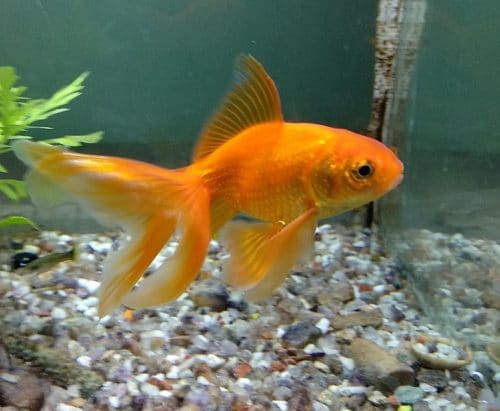
- Scientific Name: Carassius auratus
- Adult Size: 6-8 inches
- Water Temperature: 65-72°F
- Minimum tank size: 20 gallons
- Care Level: Moderate
- Diet: Omnivorous
- Origin: China and surrounding Asian countries
- Swimming Level: Midwater
This might seem like an obvious choice, but it’s important to note that different breeds of goldfish aren’t always compatible with other fish species and even other goldfish.
There are many amazing goldfish breeds, and they fall into two categories to make things a little easier:
Fancy Breeds
Fancy goldfish are some of the most colorful and ornamental fish breeds in the aquarium hobby. They often have long, flowing fins and strange body features like telescopic eyes and missing dorsal fins.
These slow-moving goldfish are tough to find tank mates for because they’re clumsy and can struggle to get to the food before other fish do. They are often uncomfortable in flowing water because they are poor swimmers. On the plus side, these fish are super peaceful and no threat to their tankmates.
The following breeds are all known as fancy goldfish:
- Fantail
- Oranda
- Ryukin
- Ranchu
- Lionhead
- Oranda
- Telescope eye and black moor
- Bubble eye
Fast-moving (AKA Slim-Bodied)
Goldfish are not particularly fast fish, but the wild types and other slim-bodied goldfish are stronger swimmers that can even catch other small fish sometimes! These goldfish are less likely to be outcompeted for food by faster tankmates.
- Common goldfish
- Comet goldfish
- Wakin goldfish
- Shubunkin goldfish
Keep fancy goldfish with similar fancy breeds. Keep common and slim-bodied goldfish with other slim-bodied breeds. Mixing the two categories is asking for trouble at feeding time.
2. Japanese Rice Fish
Ease: 9/10: One of the safest choices for this tank setup.

Japanese Rice Fish
Japanese rice fish are a commonly overlooked fish suitable for freshwater aquascapes. Very peaceful and hardy fish that color up with companions
- Scientific Name: Oryzias latipes
- Adult Size: 1.5 inches
- Compatible with: Fancy goldfish breeds
- Water Temperature: 61-72°F
- Minimum tank size: 10 gallons
- Care Level: Easy
- Diet: Carnivorous
- Origin: East Asia
- Swimming Level: bottom, middle, and top
The Japanese rice fish, or Medaka fish as it is also known, is a great nano cold-water fish that can live with goldfish. These schooling fish are available in a variety of colors, including silver, golden, and orange.
Japanese rice fish are hardy and make ideal fancy goldfish tank mates. Even though they are small enough to be eaten by hungry goldfish, they are way too fast to be caught.
3. Dojo Loach
Ease: 9/10: One of the safest choices for this tank setup.
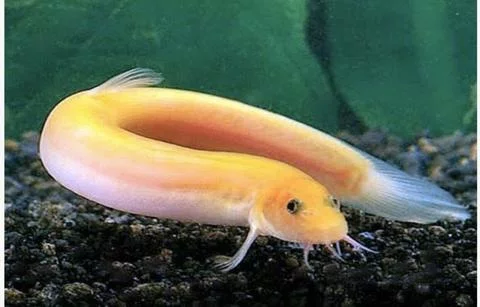
- Scientific Name: Misgurnus anguillicaudatus
- Adult Size: Up to 12 inches
- Compatible with: Most goldfish breeds
- Water Temperature: 64-74°F
- Minimum tank size: 55 gallons
- Care Level: Easy
- Diet: Carnivorous
- Origin: Eastern & Central Asia
- Swimming Level: Bottom
Dojo loaches make great goldfish tank mates because they are peaceful and enjoy the same water parameters. These guys get pretty large, however, so you’ll need a tank of at least 55 gallons to give them enough swimming space.
Dojo loaches are also known as weather loaches. They are bottom dwellers that are happy to feed on the same food sources as your goldfish, which makes them very easy to care for.
4. White Cloud Mountain Minnows
Ease: 9/10: One of the safest choices for this tank setup.
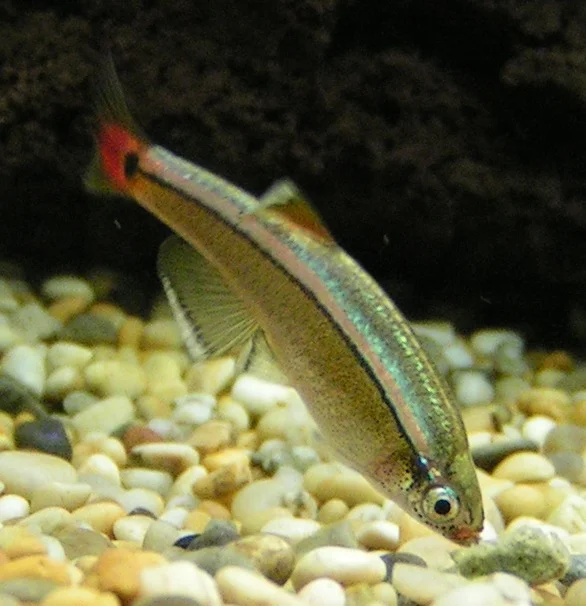
- Scientific Name: Tanichthys albonubes
- Adult Size: 1.5 inches
- Compatible with: Fancy goldfish breeds
- Water Temperature: 57-71°F
- Minimum tank size: 10 gallons
- Care Level: Easy
- Diet: Carnivorous
- Origin: China
- Swimming Level: Middle
White cloud mountain minnows are very popular tank mates for goldfish. These peaceful freshwater fish are also comfortable in relatively cold water. They come in some beautiful varieties, including golden and long-finned forms.
White cloud mountain minnows are colorful fish that grow to just 1.5 inches or so, which means it is possible for a full-grown goldfish to swallow them whole. It is safer to keep them with slow-moving fancy goldfish that are too clumsy to catch them.
5. Bristlenose pleco
Ease: 7/10: Good choice with a few conditions to watch.
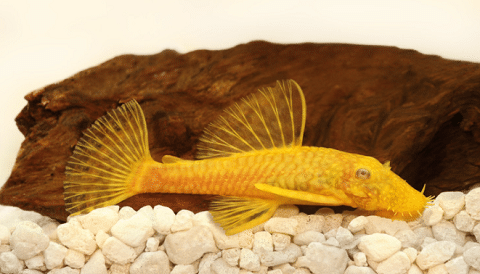
- Scientific Name: Ancistrus sp.
- Adult Size: 4-5 inches
- Compatible with: Fast-moving goldfish breeds
- Water Temperature: 70-78°F
- Minimum tank size: 15 gallons
- Care Level: Moderate
- Diet: Herbivorous
- Origin: Argentina
- Swimming Level: Bottom
The bristlenose pleco is a sucker fish that can make a good goldfish tank mate for more experienced keepers. These interesting fish require plenty of driftwood to graze on as well as some hiding places to feel secure.
Bristlenose plecos prefer 70–78°F (21–26°C), which barely overlaps with goldfish’s ideal range of 65–72°F (18–22°C). This pairing works only if you settle on 70–72°F (21–22°C) and hold it steady. Run them warmer and the goldfish suffers. Run them cooler and the pleco becomes lethargic. It’s a narrow window, which is why this one earns a 7/10 and not higher.
Hard Rule: Never mix goldfish with tropical fish. Goldfish need 65–72°F (18–22°C) and tropical fish need 76–82°F (24–28°C). Keeping them at a compromise temperature stresses both. One will die faster than you expect.
6. Hillstream Loach
Ease: 7/10: Good choice with a few conditions to watch.
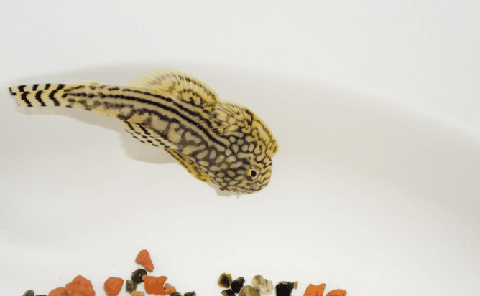
Hillstream Loach
A unique-looking loach fish that prefer fast-flowing water. Not picky eaters and readily accept most foods
- Scientific Name: Sewellia lineolata
- Adult Size: 2-2.5 inches
- Compatible with: Fast-moving goldfish breeds
- Water Temperature: 68-75°F
- Minimum tank size: 20 gallons
- Care Level: Moderate
- Diet: Eats algae
- Origin: Vietnam & Laos
- Swimming Level: Bottom
The hillstream loach must be one of the coolest looking aquarium fish in the hobby. They can make a great tankmate for goldfish, but there is one important catch.
These fish need good water flow and oxygenation to replicate their natural environment. You could use an internal filter or a small powerhead to create an area in the tank with good flow, but this will mean avoiding weak swimming fancy goldfish breeds.
7. Rosy Barbs
Ease: 9/10: One of the safest choices for this tank setup.
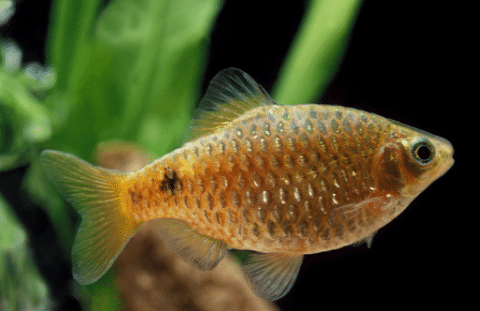
- Scientific Name: Pethia conchonius
- Adult Size: 2.5-3.5 inches
- Compatible with: Fast-moving goldfish breeds
- Water Temperature: 61-75°F
- Minimum tank size: 25 gallons
- Care Level: Easy
- Diet: Omnivorous
- Origin: Bangladesh, Pakistan, Nepal, India
- Swimming Level: Middle
Rosy barbs, like goldfish, are part of the Cyprinid family. These social fish get nippy and territorial if kept in small numbers. Keep a group of at least 8 to 10 rosy barb fish to ensure they remain peaceful.
8. Variatus Platy
Ease: 9/10: One of the safest choices for this tank setup.
- Scientific Name: Xiphophorus variatus
- Adult Size: 2-2.8 inches
- Compatible with: Fast-moving goldfish breeds
- Water Temperature: 68-79°F
- Minimum tank size: 15 gallons
- Care Level: Easy
- Diet: Omnivorous
- Origin: Mexico
- Swimming Level: bottom, middle, and top
The variatus or variable platy fish is another colorful freshwater fish that makes a great tank mate for goldfish. They enjoy cooler water temperatures and they are both peaceful and very easy to keep.
Platys are livebearers, which means they will produce plenty of fry if you keep both males and females in the same tank. The fry will be eaten by the goldfish, which is good for keeping the population down, but not great if you want your platies to multiply!
9. Hoplo Catfish
Ease: 9/10: One of the safest choices for this tank setup.
- Scientific Name: Megalechis thoracata / hoplosternum thoracatum
- Adult Size: 6 inches
- Compatible with: All goldfish breeds
- Water Temperature: 64-82°F
- Minimum tank size: 30 gallons
- Care Level: Easy
- Diet: Omnivore
- Origin: South America
- Swimming Level: Bottom
The hoplo catfish (video source) is a very hardy and peaceful nocturnal catfish. They are perfectly safe to keep with goldfish, but they can eat small fish like white cloud minnows or rice fish.
Hoplo catfish love to dig through the substrate, so keep them over fine sand, and expect them to rearrange the floor somewhat. These fish should be kept in a group of at least 5 and be sure to provide some hiding places like driftwood or caves.
10. Zebra Danio
Ease: 9/10: One of the safest choices for this tank setup.
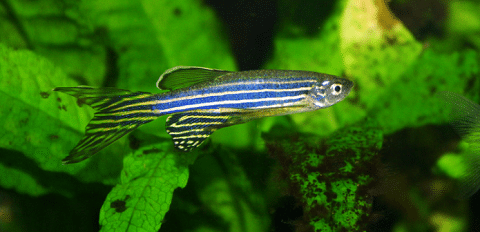
- Scientific Name: Brachydanio rerio
- Adult Size: 1.5-2 inches
- Compatible with: Fancy goldfish breeds
- Water Temperature: 64-77°F
- Minimum tank size: 10 gallons
- Care Level: Easy
- Diet: Carnivorous
- Origin: India
- Swimming Level: middle and top
Zebra danios are a great little schooling fish species that also do well in cooler temperatures. These peaceful fish can make good goldfish tank mates, even though they are technically small enough to be eaten. Danios are speedy and lively fish, so this isn’t a problem, but keeping them with slower goldfish is the safest bet.
11. Mystery Snails
Ease: 9/10: One of the safest choices for this tank setup.
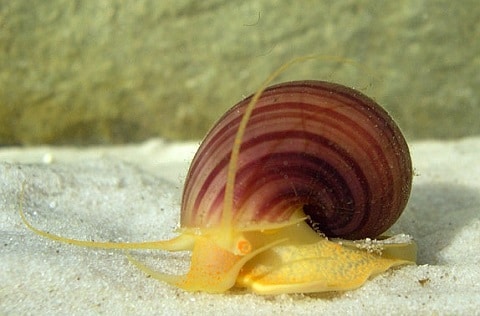
- Scientific Name: Pomacea bridgesii
- Adult Size: 2 inches
- Compatible with: All goldfish breeds
- Water Temperature: 68-84°F
- Minimum tank size: 5 gallons
- Care Level: Easy
- Diet: Eats algae
- Origin: Brazil, Peru, Paraguay, Bolivia
- Swimming Level: Bottom
Mystery snails make excellent tankmates for goldfish. These colorful aquarium snails look great and help to keep your tank clean by eating leftover food scraps. They are hard-working creatures and can even help to keep your glass and substrate clean by feeding on algae!
Unfortunately, young specimens and other freshwater snails will not be safe from a hungry and curious goldfish. Mystery snails can grow to over two inches, however, which is too big to be on your goldfishes menu!
Companions To Avoid
Now that you know eleven of the best goldfish tank mates, let’s run through a few species that you should avoid.
Tropical Fish
Goldfish are coldwater fish that do not occur in tropical regions. They prefer to live in a temperature range between about 65°F and 72°F. Any tropical fish that needs warmer water temperatures will not make a suitable tank mate. Common examples that get mixed with goldfish by mistake:
- Betta Fish
- Discus Fish
- Warm water tetras like Cardinal Tetras
Aggressive, Territorial & Fin-nipping Fish
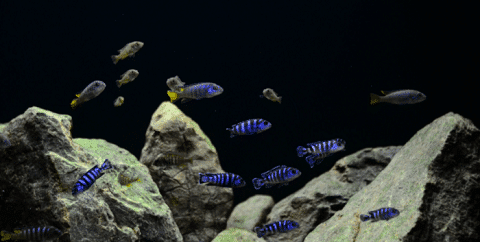
Goldfish should never be kept with aggressive tank mates. Long goldfish fins are prime targets for fin-nipping fish, and fancy breeds are not strong enough to defend themselves against bullies. In the aquarium hobby, there are a few ‘prime suspects’ to watch out for like:
- Semi-aggressive barb species like the Tiger barb
- Pea puffers
- Serpae tetras
- Chinese algae eater
- African cichlids
- Larger South American cichlids
You’ll also want to avoid keeping any smaller fish that is dangerous if swallowed like:
Freshwater Shrimp
Goldfish are omnivorous, which means they feed on both plant and animal matter. Inverts like cherry shrimp and bamboo shrimp are definitely on the menu, so you can expect a hungry goldfish to see them as a tasty snack.
They might survive fine with plenty of hiding spaces, but it’s not worth the risk. Even slow-moving fancy goldfish are likely to eat freshwater aquarium shrimp eventually.
Community Tank Setup
Now that you know more about suitable goldfish tank mates, let’s take a look at how to set up your own peaceful goldfish community aquarium!
Introducing Tankmates
While all the species in this list have been proven to get along great with goldfish, it’s important to understand that fish can have individual personalities and their behavior is complex.
Make sure you have some sort of backup plan in place in case there’s any unexpected conflict. It’s also a good idea to quarantine any goldfish tank mate for at least 2 weeks before introducing it to your aquarium.
Tank Size
The size of your goldfish community aquarium will depend on the number and type of fish you keep. A single goldfish needs a tank of 20 gallons at the very least, and this should be increased by a further 20 gallons for every additional goldfish you keep.

Aqueon 20 Gallon Kit
Aqueon’s 20 gallon aquarium kit offers all the basics to start off on the right foot.
White cloud mountain minnows, for example, are nano fish that is kept in aquariums as small as 10 gallons, so adding a small school will not have a big effect on the bioload of your goldfish tank. The dojo/weather loach on the other hand is a large fish that should be kept in a tank of at least 55 gallons.
Heating
Goldfish prefer cooler water temperatures than tropical fish so they can often be kept in an unheated aquarium. Naturally, this will depend on the temperature in your home, office, or wherever you keep your goldfish tank.
Author Note: If the room temperature range varies between 65°F and 72°F, you will not need a heater to keep goldfish. You will need to heat or cool the water if the temperature rises or falls below these values, however..
The temperature preferences of the 10 goldfish tank mates in this list all vary, but they do overlap with the goldfish’s preferred parameters by at least a few degrees in each case. Running a heater can make it a lot easier to keep your aquarium temperature dialed into that ‘happy medium’.
Filtration & Aquarium Maintenance
Goldfishes create a large bioload in the aquarium, and adding tank mates will put even more pressure on your filtration system. This means excellent filtration is necessary to maintain great water quality.
Goldfish are not the strongest swimmers, and the fancy breeds in particular will not enjoy a strong water current. A good-quality canister filter is a great option for your goldfish tank, especially if fitted with a spray bar to minimize the water flow and oxygenate the water.
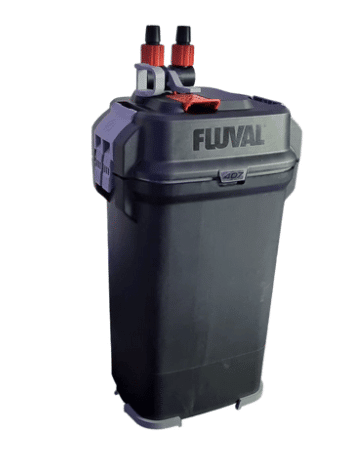
Fluval Canister Filters
Our Subscriber’s Choice
Top name brand, Italian made, and updated design. The next gen Fluval Canisters are a best buy!
Supplementing this with a hang-on back, or sponge filter is a good way to increase your filtration capacity and can also be seen as a great ‘insurance policy’ in case either filter fails.
Your filtration system will keep your aquarium water looking beautiful while working to convert the ammonia in fish waste and uneaten food into nitrates. These nitrate levels should be monitored regularly using your test kit. At high levels, nitrates become toxic to your fish, so work out a partial water change schedule that keeps your nitrate levels to 20 ppm or less.
Live Plants
Growing live plants in your aquarium has a number of great benefits for your goldfish- and they look great too! Unfortunately, goldfish are notorious for eating aquarium plants, so you need to choose your species carefully. Here are a few goldfish-friendly plants that you can grow in your tank:
- Java Fern
- Anubias species
- Marimo moss ball
- Water sprite
Keep in mind that even if your goldfish doesn’t eat your plants, they can uproot them. Plants that do not need to be planted in substrate or float will work best with goldfish.
Substrate & Decorations
A layer of aquarium sand or gravel on the bottom of your tank can create a more natural habitat for your fish to forage on. Many goldfish tanks are successfully run without any substrate at all, however. This is a great way to keep your aquarium spotless and clean, but it does not create a very natural environment.

Adding decorations and hardscape features like rocks and driftwood is a great way to add structure to your tank and provide your goldfish and their tank mates with a more natural home. Goldfish with long, flowing fins are vulnerable to tears and damage from sharp objects, so make sure that everything in your aquarium has smooth, rounded edges to avoid any injuries.
Where To Buy
Most of the species on this list are available at well-stocked local fish stores. For online orders with reliable livestock guarantees, these are the two sources I recommend:
- Flip Aquatics: excellent selection of cold-water and community fish, strong live arrival guarantee
- Dan’s Fish: reliable source for white cloud minnows, dojo loaches, and other cold-water species
White cloud mountain minnows and dojo loaches are the most commonly available species on this list. Japanese rice fish and hoplo catfish may require an online order or a specialist retailer.
Mark’s Pick: Other goldfish. A single-species goldfish tank is healthier, easier to maintain, and more visually striking than any mixed setup. If you want tank mates, white cloud mountain minnows are the only consistently safe choice, same temperature range, fast enough to avoid being eaten, and hardy.
FAQs
Can goldfish live with tropical fish?
No. Goldfish need 65–72°F (18–22°C) and tropical fish need 76–82°F (24–28°C). There is no stable compromise temperature that works for both. One group will be chronically stressed, and stressed fish get sick and die sooner. Keep goldfish with cold-water species only.
What is the safest goldfish tank mate?
White cloud mountain minnows are the safest choice. They thrive at 57–71°F (14–22°C), are fast enough to avoid being eaten, peaceful, and hardy enough to handle goldfish bioload. They work with both fancy and slim-bodied varieties. If you can only pick one tank mate, this is it.
How many goldfish tank mates can I add?
That depends entirely on your filtration capacity and tank size. For every goldfish, plan at least 20 gallons (76 L) of water. Adding tank mates means adding bioload, increase your filtration accordingly. Don’t stock to the limit. Goldfish waste output is high enough that you want headroom in your filter capacity at all times.
Can fancy goldfish live with common goldfish?
It’s not recommended. Common goldfish are faster swimmers and more aggressive feeders. Fancy goldfish with telescopic eyes or missing dorsal fins are at a disadvantage at feeding time and more vulnerable to fin-nipping. Keep fancy breeds together and slim-bodied breeds together for the best results.
Do goldfish eat their tank mates?
Yes, if the tank mate fits in their mouth. Goldfish are omnivores with no restraint about eating small fish, fry, shrimp, or snails. White cloud minnows and Japanese rice fish survive because they’re fast enough to stay out of reach. Any slow-moving nano fish will get eaten. Shrimp will get eaten regardless of speed.
Can I keep goldfish with snails?
Large mystery snails (2+ inches / 5 cm) are generally safe because they’re too big to be swallowed. Smaller snails (pond snails, nerites, ramshorns) will be eaten. Even mystery snails are at risk when they’re juveniles. Add them at full adult size if possible.
Who Is This Setup Right For?
Good Fit If:
- You want a cool-water setup and are committed to proper goldfish husbandry (large tank, powerful filtration, regular water changes)
- You’re adding white cloud mountain minnows as the only tank mate species
- You have a pond-style setup where temperature and bioload can be managed at scale
- You’re keeping fancy goldfish varieties with other similar-sized goldfish
Avoid If:
- You want to mix goldfish with tropical fish: the temperature requirements are incompatible
- You have small, delicate fish: goldfish will eat anything they can fit in their mouth
- You have a lightly filtered tank: goldfish produce enormous waste that overwhelms community systems
- You want to add shrimp or snails: goldfish will eat them
Final Thoughts
Goldfish are easy to mishouse and genuinely rewarding when housed correctly. The cold-water requirement isn’t a limitation, it’s a filter. Once you commit to it, the compatible species list gets clear fast: white cloud mountain minnows, dojo loaches, rosy barbs, zebra danios, and other goldfish. That’s a short list, but it’s a good one.
The tank mate question matters less than the tank setup question. Get the filtration right, get the water changes consistent, and pick cold-water species. Do those three things and a goldfish community tank will run cleanly for years.
Do you keep companion fish with your goldfish? Drop a comment below, I’d like to hear what combinations have actually worked for you.
📘 Want to learn more? This article is part of our complete Freshwater Fish Guide. Your ultimate resource for freshwater species, care tips, tank setup, and more.
- About the Author
- Latest Posts

I’m Mark Valderrama, founder of Aquarium Store Depot and a fishkeeper with over 25 years of hands-on experience. I started in the hobby at age 11, worked at local fish stores, and have kept freshwater tanks, ponds, and reef tanks ever since. I’ve been featured in two best-selling aquarium books on Amazon and built this site to share practical, experience-based fish keeping knowledge.
Leave a Reply