Author: Mark Valderrama

  • 5 Steps to Consider When Selecting a Saltwater Tank (From a 25-Year Hobbyist)

    Choosing your first saltwater tank is a decision I see beginners rush through. and it sets up problems that are hard to undo. I’ve set up tanks ranging from a small 30-gallon FOWLR to my current 125-gallon SPS reef, and each taught me something about what really matters at the selection stage. Get this right and everything downstream gets easier. Here are the five questions I always walk first-timers through.

    Picking the right saltwater tank is a decision most beginners don’t give enough thought. and it shapes every purchase that follows. After 25 years in this hobby, the best advice I can give before you buy anything is simple: slow down and plan. The tank itself is just the start of a series of decisions about equipment, livestock, maintenance, and budget. In this guide I walk through 5 key steps I’d take before selecting any saltwater aquarium. working through these upfront prevents a lot of expensive course corrections later.

    Step 1 – Budget

    I’m not going to sugar coat it.  A fish tank in general is expensive and a saltwater tank is even more expensive.  If you put me on the spot without any research whatsoever and ask me “how much a saltwater tank setup will cost” my answer is “At least $1,000.”  Keep in mind, however, that a lot of the costs will be upfront investments in the tank, equipment, rock, stand, substrates, etc.  You can certainty spend less on a smaller setup and can cut cut with DIY work or used equipment, but I am going to assume that you are not a big DIYer.  Over time, as you get more advanced in this hobby, it is natural to begin DIY solutions, but beginners should generally stay away from DIY. Set your budget and continue your research from there.

    Step 2. Determine How Big of a Tank You Can Keep/Afford

    After you determined your budget, itโ€™s time to determine how big of a tank you can keep. Tanks come in a variety of size, but there are four rules to keep in mind that will help with your selection:

    1. The more gallons, the more stability – bigger is better
    2. The longer the tank, the more room for fish to swim
    3. The wider the tank, the easier to aquascape
    4. The taller the tank, the harder for maintenance

    With these rules explained, tanks are usually divided by lengths.  The key lengths are 2, 3, 4, and 6 feet.  Most tank manufacturers do not produce 5 foot length tanks and if you find one, you may have a hard time getting a stand.  I recommend 3, 4, or 6 foot length tanks. 3 feet I feel is the best length for those on a budget or a beginner.  4 feet allows for a complete mixed reef setup and most lighting systems are designed for 4 foot aquariums.  6 feet in length is when you get to the territory of being able to house larger fish like tangs.

    Tank height is another consideration.  When you go over two feet in height, you will have additional room for fish to swim up and down instead of just side to side, but you will sacrifice ease of maintenance.  Saltwater tanks more than 2 feet in height will be out of reach for most hobbyist’s hands so you will have trouble cleaning algae.

    Step 3. Where to Put your Tank

    Your aquarium is going to be a sizable investment and will easily become the showcase and talk of your home.  When friends and family visit your home, everyone is going to want to see your tank.  Because of this, you really want your aquarium in a place where you can enjoy it on a daily basis.  That being said, there are a few rules to follow when it comes to placement:

    1. Keep your tank out of direct sunlight – this will lead to spikes in temperature and algae outbreaks
    2. Think of the first floor of your home or basement before upstairs – any tank over 40 gallons in size is going to weigh a sizable amount.  Tank water is about 8 pounds per gallon and then you will have sand and rock as part of the mix.  If your tank will be directly placed on a floor that is part of the foundation, there are virtually no concerns with placement.
    3. Place your tank near an outlet – or get one installed by an electrician.  Your tank is going to be using power to run and so the closer the better.  Make sure it is on its own circuit if you plan on having a tank more than 40 gallons as a fully setup aquarium will draw a lot of power.
    4. Do not place your tank directly below a vent –  heating and A/C vents can drastically change the temperature of your aquarium.  Having a stable water temperature is critical to a healthy aquarium.  Placing your tank away from a vent will prevent this issue.
    5. If you are dead set on having an aquarium upstairs – hire a structural contractor to get advice if you are going to place a 40+ gallon tank upstairs. Better safe than sorry.  A couple hundred dollars could be worth tens and thousands of dollars of prevented repairs.
    6. Level the area – if your placement is a slightly off-level, get some shims to adjust.  If the location is way off level – consider another spot

    Flooring is another consideration to keep in mind.  The most ideal floor for a tank would be directly on a foundation or on top of tile.  Carpet can be risky because water spills will eventually build mold in the padding. Laminate can also be hit or miss, with only the higher quality laminates been ideal and sealing being key.  Hardwood floors are not ideal because the saltwater from your tank can eventually wrap the hardwood.   You can seal your hardwood, but it is at your risk.  If you have a spill, you will need to clean it up right away.  Having a wet/dry vacuum can be a lifesaver for such times.

    Step 4. Standard, All in One, Reef Ready, or Custom Tank

    In the industry there are four types of tanks you find available for purchase:

    • Standard Aquariums – Usually found at general pet stores
    • Reef Ready Aquariums – Pre-drilled and ready for a sump
    • All-In-One Aquariums – Pre-designed for ease of use
    • Custom Built Aquariums – Very expensive, but showcase quality

    Standard aquariums are mass produced aquariums made with glass. They are of good quality and will come with black trim and rims to provide structural support.  The vast majority of these tanks will have tempered glass on the bottom of the tank, which will limit your drilling of tank if you chose to do so to the back of the aquarium.  Many hobbyists will purchase these tanks and customize them by drilling them and even painting the back of the tank.  Standard aquariums are the best choice for a budget conscious build.

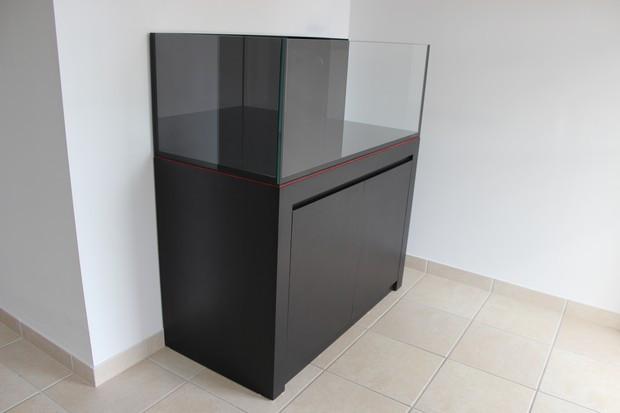
    Reef Ready Aquariums are aquariums that are pre-drilled and will come with an overflow system.  An overflow system is designed to skim the water surface of your aquarium to pull dissolved organics and waste out of your tank.  These tanks are designed to work with a sump setup.  A reef ready aquarium is the best choice for flexibility and long-term investment.  They provide the best starting point for a hobbyist looking to build a complete system.  The main advantage from a reef ready system over a drilled standard tank is that the reef ready tanks are drilled at the bottom.  This allows you to setup a very clean and seamless look in the back of the tank without pipes sticking out.  Many of the new reef ready tanks coming out these days are coming equipped with innovative overflow systems as well.  If you want to start out on the best foot possible, a reef ready tank is the way to go.

    All-In-One Aquariums are a recent development in the industry.  They are tanks complete with overflows and even sumps to provide either a fully integrated system or as close to a plug and play solution as possible.  Some All-In-One will have a Sump in the back of the tank, which will eliminate plumbing that would be required in a sump setup.  All-In-One Aquariums can be more expensive then a fully setup Reef Ready Aquarium and can have limitations over a customized setup.  One of the biggest limitations is the equipment you can place in it.  For example, sometimes the protein skimmer chamber may be very small so you will be limited on the type of skimmer you can place or the sump that comes with the all-in-one may not have room for a refugium. If you are looking for ease of use and seamless look (as many of these tanks have wonderful aesthetics), an All-In-One Aquarium would be the choice for you.

    Jimmy Butler’s Custom Boom Box Aquarium as seen on “Tanked”

    Custom Built Aquariums are the most expensive setups.  You can obtain an extremely unique and world class look.  Custom tank makers are usually found locally as custom aquarium makers are very seasoned hobbyists or companies that create custom aquariums.  If you want the “Tanked” look, a custom built aquarium is where to look to.

    Step 5 – Glass vs. Acrylic


    Glass vs. acrylic is a common debate when it comes to tank selection.  Below is a table to show the strengths and weaknesses of glass and acrylic:

    CharacteristicGlass Acrylic
    WeightGlass is usually about 4 times heavier than acrylic and up to 10 times heavier on larger aquariumsLightweight and easier to move
    Breaking and CrackingWith a strong enough force – Glass will crack and leakVery impact resistant
    SupportGlass can support itself over distances so they can be placed in stands with an open top with little to no riskNeeds support throughout the length of the tank.  Stands are limited due to this.
    ClarityThe thicker the glass, the more noticeable the distortion.  Distortion can be mitigated in thicker glass by the use of low-iron glass.No distortion in clarity – superior to glass even against low-iron glass.
    ScratchingVery difficult to scratch.  You can even clean algae with a razor blade and be fine with glassProne to scratching.  Fish with strong jaws can directly scratch acrylic and you can even scratch the outside accidentally with jewelry.  The outside scratches, however, can be repaired with a repair kit.
    CostGenerally cheaper and mass-producedGenerally more expensive due to shipping

    Overall, I would recommend going with a glass aquarium as the pros outweigh the cons.  You might want to consider acrylic or even plywood though if you are considering a tank over 500 gallons due to the weight and clarity issues of glass.

    Closing Remarks

    I hope this guide was very useful to you.  Here at AquariumStoreDepot, we like to pass down knowledge to our customers.  A well informed customer is a successful hobbyist and will enjoy this hobby for years to come.  We would be happy to guide you on your journey to saltwater reefing!


    ๐Ÿ“˜ Want to learn more? This article is part of our complete Saltwater Fish & Reef Guide. your ultimate resource for marine fish, coral care, reef setup, and more.

  • Aquarium Stand Selection Guide โ€“ 5 Things You Must Check Before Buying

    Aquarium Stand Selection Guide โ€“ 5 Things You Must Check Before Buying

    An aquarium stand is one of those purchases people treat as an afterthought. and I’ve seen that mistake end badly. A 125-gallon tank full of water weighs over 1,400 pounds, and a stand that isn’t rated for that load or isn’t level is a disaster waiting to happen. I’ve bought and assembled stands for multiple setups over the years and know exactly what to check before committing. Here are the five things I always verify first.

    An aquarium stand is one of the most important pieces of equipment you’ll buy. and one of the most overlooked. I learned this the hard way: a stand that can’t handle the weight or isn’t perfectly level will cause serious problems, and at 125 gallons (over 1,200 lbs fully loaded) the stakes are very real. Whether you’re buying a stand for a 20 gallon community tank or a large saltwater system, there are five things I always check before recommending any stand, and this guide walks through all of them.

    #1 Know the Type of Aquarium Stand

    Before I can get into more detail about aquarium stands, we need to address the various types of aquarium stands you will come across.  When shopping for an aquarium stand, there is a high amount of variety in quality.  When it comes to a saltwater aquarium and larger freshwater aquariums, the importance of quality needs to be taken into account. and when it comes to the needs of a saltwater aquarium. The importance of quality needs to be taken into account. We are going to break down stands into four types:

    • Standard Aquarium Stands – AKA big store stands
    • Brand Name Stands
    • Custom Built Stands
    • DIY Stand

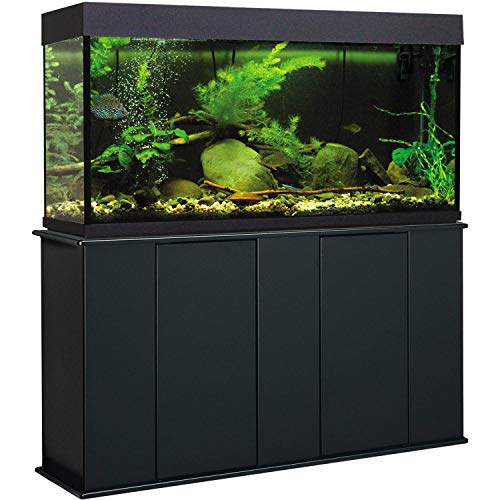
    A standard aquarium stand is ones you will commonly find in a general pet store or online like the All Glass Pine Stands. They are typically made of particle board and MDF.  Many of these stands are made as cheap as possible.  While they can work in a freshwater setup or no sump setups, they will not suit the needs of a saltwater tank or larger freshwater aquarium in the long run.  The reason why is because if a sump is installed the stand, the high humidity produced inside the tank from the sump can cause wrapping from the inside of the stand.  Furthermore, spills inside of the stand from maintenance can also cause problems.  Once the warping occurs, the damage cannot be reversed and can compromise the structure of the stand. It is for these reasons, that I do not recommend a standard aquarium stand from general pet stores for a saltwater or larger freshwater setup.  There is simply too much investment made into your tank setup for it to be ruined by going cheap on a stand.

    A Better Option
    Aquatic Fundamentals Stand

    A cleaner and more modern looking stand over the old all glass stands

    Buy On Amazon

     A brand name stand is furniture made by high-end manufacturers who specialize in making stands for hobbyist.  The best example of these stands would be the stands that you find in all-in-one aquariums and rimless aquarium kits.  These stands are very well designed with a wood or metal frame (typically aluminum or stainless steel).  If they are wood, they will usually be designed with plywood instead of MDF.  They will often have features that suit the hobby (Storage shelves, cable ports, etc). A common brand at fish stores are R&J Enterprises cabinets, which are a step up from the chain store cabinets. These stands are great choices for anyone getting into the hobby.

    Best For Planted Tanks
    UNS Aquarium Stand

    UNS are top of the line aquarium stands designed for planted tanks

    Click For Best Price

    A stand is typically built by custom aquarium manufacturers or Brand name specializing in high-end builds.  They are typically made to order and are the most expensive types of aquarium stand.  They can be made of wood or metal.  They will typically be designed with customized cabinet doors and shelves to suit the requirements of the aquarium.  They are of superior quality, but suited for a high-end budget.

    Custom Fish Tank Stand
    Custom Fish Stands are Usually Built for Maximum Utility

    #2 Know the Materials

    There are several types of materials for a stand that you should be familiar with when looking at either purchasing or building your own:

    • MDF/Particle Board
    • Plywood
    • Metal

    MDF or particle board is the cheapest type of wood used for stand manufacturing.  It is commonly used with store chain brand stands or stands that are imported. They usually do not hold up in a saltwater aquarium because of the high humidity from your sump or wrapping over time.  MDF would only be okay to use if you are either hiring a carpenter to build your stand or you are familiar with woodworking and know how to paint and seal it.  

    Plywood is the standard when it comes to quality aquarium stand building.  It is typically used in higher-end branded stands and is the go-to material if you are considering a DIY stand.  Plywood is a very strong building material and less susceptible to water damage than MDF.  Plywood is also the material used to build higher-end kitchen cabinets due to its durability.  It is stainable and several veneers are available for you to produce a custom look.  They can be painted or sealed and the quality of the material will stand the test of time.

    A metal stand is typically used for larger aquariums.  They have great structural support and a mix of metal and wood can be used to build a custom stand. Because of the greater structural strength, a metal stand will be more open which will increase your access to your sump and back-end electronics stored in your stand.   Metal frames are usually made with stainless steel or aluminum. Aluminum is particularly popular outside of the US, but is gaining traction in the US as they are lightweight. A stand built from T-Slot Aluminum Framing Systems is particularly useful for those attempting a custom build for a large aquarium – though can be very expensive.

    Metal Aquarium StandMetal Stands are Typically Used for Large Custom Aquariums

    #3 Know about Openings and Stand Heights of your Tank

    In general, a stand will be open at the top.  While this will work well for glass aquariums, you will need to support the entire bottom of the tank if it is made of acrylic. For rimless aquariums, it is recommended that you purchase a self-leveling mat. This is because, in a rimless aquarium, the wood can cause pressure points in the glass.  Many manufacturers will sell the support needed for an acrylic and rimless tank.  It is helpful to have an opening at the top if you are going to place a sizable sump as sometimes when the sump is placed in the stand, it will be impossible to move out of the aquarium stand once your tank is installed.

    Another consideration when purchasing or making a stand is the amount of room available for equipment underneath the aquarium. Large door openings and plentiful space help in hiding the amount of equipment associated with reef aquariums. If you plan on keeping a sump under your aquarium, you will need to consider having enough room to hold all your equipment and sump while still having room to maintain it. One of the main disadvantages of many standard aquarium stands is that they have a brace in the middle of the stand that will get in the way of maintenance. Many high-end and DIY aquarium stand configurations do not have this brace.

    The height of the stand will also impact your viewing enjoyment. Ask yourself if you are going to be spending most of your viewing time standing or sitting.  A standard sized aquarium stand is built for viewing while sitting down and will usually be shorter than 30 inches. Many of the all-in-one aquariums and higher end aquarium stands these days will have taller stands – usually 30 to 36 inches. Most DIYers will also build a stand to 36 inches in height.

    #4 Consider a DIY for Maximum Utility

    Making a stand versus purchasing one is a serious consideration for experienced reefers or those with carpentry skills.  Purchasing a stand is typically going to be more expensive, but you will not have to worry about constructing the stand yourself and if you are following this guide it is very likely you will end up purchasing a high-quality stand that will last throughout your aquarium journey.

    For those of you considering a DIY aquarium stand, most of the DIY stands are constructed out of wood.  Below is a picture frame and guide from the reefcentral forums by member RocketEngineer.  This is a 21 piece design that has been used by many reefers who have ventured into DIY stands.   This is a simple yet solid design that can be created with the use of common tools and common wood sizes and should work for most standard size aquariums:

    DIY Aquarium StandThe basic principle of the design is two box frames connected by four legs. The legs are made of several pieces of 2X4’s to assist in construction and seething the stand in plywood for strength and cosmetics. The bottom frame transmits the load of the tank into the floor. Covering the sides of the stand with plywood will help to stiffen the stand against twisting and shifting. Doors could then be mounted to the legs as desired.  The design can also be modified to include flooring at the bottom of the tank.

    If you want more of a step by guide to building a custom stand, you can check out GARF’s stand calculator. This calculator is a great tool as all you do is enter in your desired dimensions and the calculator will product a cut list, tools needed, and assembly instructions.

    When painting your stand, considering sealing the inside of your stand with a Spar or Marine Varnish. An oil based primer is ideal.

    #5 Canopy or No Canopy

    With the advent of rimless aquariums and ceiling and tank mounted lighting systems, the canopy is starting to become less common these days.  It’s really up to you regarding the look of your aquarium.  Not purchasing a canopy can save you some money, but there are still a number of hobbyists who still use them.  If you are concerned about fish jumping out of your tank with a topless system, you can opt for mesh screening to prevent jumping. 

    Ceiling Hung Aquarium LightingTop-Less Setups are More Common Now with Rimless Aquariums

    Closing Comments

    I hope this guide provides you with a lot of insights on what to look for when it comes to selecting a quality aquarium stand.  A stand in a key part of your aquarium and needs to stand the test of time. Please share and thank you for reading.


    ๐Ÿ”ง Want to learn more? This article is part of our complete Aquarium Equipment & Gear Guide. your ultimate resource for filters, heaters, lights, pumps, tanks, and more.

  • Saltwater Aquarium Selection Guide: How to Choose the Right Tank From the Start

    Saltwater Aquarium Selection Guide: How to Choose the Right Tank From the Start

    The saltwater aquarium you start with shapes everything that comes after. your equipment choices, your livestock options, your maintenance routine. I’ve watched beginners pick tanks that were too small for their goals, or all-in-ones that couldn’t be upgraded, and they ended up restarting from scratch within a year. After setting up and advising on dozens of reef systems over 25 years, I have a clear picture of what actually matters when you’re making this choice.

    The saltwater aquarium you choose at the start determines nearly every other decision you’ll make. what equipment fits, what fish you can keep, what your maintenance looks like long-term, and what your total budget needs to be. After 25 years in this hobby and helping countless people set up their first saltwater tanks, the advice I give most often contradicts what beginners expect: bigger tanks are more stable and more forgiving, not harder. The “start small” instinct usually leads to frustration. And the tank itself is just the beginning of the budget conversation. In this guide I walk through everything you need to consider when selecting a saltwater aquarium.

    Saltwater Aquarium

    Owning a successful aquarium depends greatly on the time of time spent planning and researching the setup for the fish and/or corals you choose to have.  There are a large number of choices when it comes to tank selection.  This article should provide you some in-depth detail on saltwater fish tank selection and what to look for when purchasing an aquarium.

    Saltwater Aquarium Budget

    I’m not going to sugarcoat it.  A fish tank in general is expensive and a saltwater tank is even more expensive.  If you put me on the spot without any research whatsoever and ask me “how much a saltwater tank setup will cost” my answer is “At least $1,000.”  Keep in mind, however, that a lot of the costs will be upfront investments in the tank, equipment, rock, stand, substrates, etc.  You can certainty spend less on a smaller setup and can cut cut with DIY work or used equipment, but I am going to assume that you are not a big DIYer.  Over time, as you get more advanced in this hobby, it is natural to begin DIY solutions, but beginners should generally stay away from DIY.  If you are going to DIY, I would suggest you join a local aquarium society.  There are plenty of very seasoned hobbyists in an aquarium society who will be more than willing to teach you the ropes or even offer to do DIY solutions for cheap (e.g. – drill your tank or build you a sump).  

    Aquarium SocietyAquarium Societies are Treasure Troves of Knowledge

    Saltwater Tank Size

    Tanks come in a variety of size, but there are four rules to keep in mind that will help with your selection:

    1. The more gallons, the more stability – bigger is better
    2. The longer the tank, the more room for fish to swim
    3. The wider the tank, the easier to aquascape
    4. The taller the tank, the harder for maintenance

    With these rules explained, tanks are usually divided by lengths.  The key lengths are 2, 3, 4, and 6 feet.  Most tank manufacturers do not produce 5 foot length tanks and if you find one, you may have a hard time getting a stand.  I recommend 3, 4, or 6 foot length tanks. 3 feet I feel is the best length for those on a budget or a beginner.  4 feet allows for a complete mixed reef setup and most lighting systems are designed for 4 foot aquariums.  6 feet in length is when you get to the territory of being able to house larger fish like tangs.

    40 Gallon BreederA beautiful 3 foot 40 Gallon Breeder tank

    Tank height is another consideration.  When you go over two feet in height, you will have additional room for fish to swim up and down instead of just side to side, but you will sacrifice ease of maintenance.  Saltwater tanks more than 2 feet in height will be out of reach for most hobbyist’s hands so you will have trouble cleaning algae.

    Tank Placement

    Your aquarium is going to be a sizable investment and will easily become the showcase and talk of your home.  When friends and family visit your home, everyone is going to want to see your tank.  Because of this, you really want your aquarium in a place where you can enjoy it on a daily basis.  That being said, there are a few rules to follow when it comes to placement:

    1. Keep your tank out of direct sunlight – this will lead to spikes in temperature and algae outbreaks
    2. Think of the first floor of your home or basement before upstairs – any tank over 40 gallons in size is going to weigh a sizable amount.  Tank water is about 8 pounds per gallon and then you will have sand and rock as part of the mix.  If your tank will be directly placed on a floor that is part of the foundation, there are virtually no concerns with placement.
    3. Place your tank near an outlet – or get one installed by an electrician.  Your tank is going to be using power to run and so the closer the better.  Make sure it is on its own circuit if you plan on having a tank of more than 40 gallons as a full-setup aquarium will draw a lot of power.
    4. Do not place your tank directly below a vent –  heating and A/C vents can drastically change the temperature of your aquarium.  Having a stable water temperature is critical to a healthy aquarium.  Placing your tank away from a vent will prevent this issue.
    5. If you are dead set on having an aquarium upstairs – hire a structural contractor to get advice if you are going to place a 40+ gallon tank upstairs. Better safe than sorry.  A couple of hundred dollars could be worth tens and thousands of dollars of prevented repairs.
    6. Level the area – if your placement is slightly off-level, get some shims to adjust.  If the location is way off-level – consider another spot
    Fish Tank Living RoomAn Aquarium is Best Placed Away from Direct Sunlight

    Flooring

    Flooring is another consideration to keep in mind.  The most ideal floor for a tank would be directly on a foundation or on top of the tile.  Carpet can be risky because water spills will eventually build mold in the padding. Laminate can also be hit or miss, with only the higher quality laminates being ideal and sealing being key.  Hardwood floors are not ideal because the saltwater from your tank can eventually wrap the hardwood.   You can seal your hardwood, but it is at your risk.  If you have a spill, you will need to clean it up right away.  Having a wet/dry vacuum can be a lifesaver for such times.

    Shape of Fish Tanks

    You will find multiple shapes if you go shopping for an aquarium.  We are going to focus on the four most popular on the market

    • Rectangle – Most flexible and ideal shape for fish, width can be an issue in long formats
    • Corner – Good for corner setups, but sacrifices on swimming space
    • Bowfront – Great for viewing, but more expensive than rectangle shaped
    • Cube – Great for coral aquascaping, but sacrifices length for larger fish

    Our recommendation is to go with a rectangular tank.  They offer the most flexibility, most economical, and most fish will prefer long over tall setups.

    Types of Tanks

    In the industry there are four types of tanks you find available for purchase:

    • Standard Aquariums – Usually found at general pet stores
    • Reef Ready Aquariums – Pre-drilled and ready for a sump
    • All-In-One Aquariums – Pre-designed for ease of use
    • Custom Built Aquariums – Very expensive, but showcase quality
    Standard AquariumStandard Glass Aquarium

    Standard aquariums are mass-produced aquariums made with glass. They are of good quality and will come with black trim and rims to provide structural support.  The vast majority of these tanks will have tempered glass on the bottom of the tank, which will limit your drilling of the tank if you chose to do so to the back of the aquarium.  Many hobbyists will purchase these tanks and customize them by drilling them and even painting the back of the tank.  Standard aquariums are the best choice for a budget-conscious build.

    Reef Ready Aquarium
    Reef Ready Tank

    Reef Ready Aquariums are aquariums that are pre-drilled and will come with an overflow system.  An overflow system is designed to skim the water surface of your aquarium to pull dissolved organics and waste out of your tank.  These tanks are designed to work with a sump setup.  A reef ready aquarium is the best choice for flexibility and long-term investment.  They provide the best starting point for a hobbyist looking to build a complete system.  The main advantage from a reef ready system over a drilled standard tank is that the reef ready tanks are drilled at the bottom.  This allows you to setup a very clean and seamless look in the back of the tank without pipes sticking out.  Many of the new reef ready tanks coming out these days are coming equipped with innovative overflow systems as well.  If you want to start out on the best foot possible, a reef ready tank is the way to go.

    Innovative Marine All-In-One Aquarium
    All-In-One Tank

    All-In-One Aquariums are a recent development in the industry.  They are tanks complete with overflows and even sumps to provide either a fully integrated system or as close to a plug-and-play solution as possible.  Some All-In-One will have a Sump in the back of the tank, which will eliminate plumbing that would be required in a sump setup.  All-In-One Aquariums can be more expensive then a full setup Reef Ready Aquarium and can have limitations over a customized setup.  One of the biggest limitations is the equipment you can place in it.  For example, sometimes the protein skimmer chamber may be very small so you will be limited on the type of skimmer you can place or the sump that comes with the all-in-one may not have room for a refugium.   If you are looking for ease of use and a seamless look (as many of these tanks have wonderful aesthetics), an All-In-One Aquarium would be the choice for you.

    Jimmy Butler Aquarium
    Jimmy Butler’s Custom Boom Box Tank as seen on “Tanked”

    Custom Built Aquariums are the most expensive setups.  You can obtain an extremely unique and world-class look.  Custom tank makers are usually found locally as custom aquarium makers are very seasoned hobbyists or companies that create custom aquariums.  If you want the “Tanked” look, a custom-built aquarium is where to look to.

    Glass vs. Acrylic Tanks

    Glass vs. acrylic is a common debate when it comes to tank selection.  Below is a table to show the strengths and weaknesses of glass and acrylic:

    CharacteristicGlass Acrylic
    WeightGlass is usually about 4 times heavier than acrylic and up to 10 times heavier on larger aquariumsLightweight and easier to move
    Breaking and CrackingWith a strong enough force – Glass will crack and leakVery impact resistant
    SupportGlass can support itself over distances so they can be placed in stands with an open top with little to no riskNeeds support throughout the length of the tank.  Stands are limited due to this.
    ClarityThe thicker the glass, the more noticeable the distortion.  Distortion can be mitigated in thicker glass by the use of low-iron glass.No distortion in clarity – superior to glass even against low-iron glass.
    ScratchingVery difficult to scratch.  You can even clean algae with a razor blade and be fine with glassProne to scratching.  Fish with strong jaws can directly scratch acrylic and you can even scratch the outside accidentally with jewelry.  The outside scratches, however, can be repaired with a repair kit.
    CostGenerally cheaper and mass-producedGenerally more expensive due to shipping

    Overall, I would recommend going with a glass aquarium as the pros outweigh the cons.  You might want to consider acrylic or even plywood though if you are considering a tank over 500 gallons due to the weight and clarity issues of glass.

    Drilling vs. Not Drilling a Tank

    A common consideration when one is deciding between a standard tank or reef-ready tank is drilling vs. not drilling.  There are many benefits to drilling your tank – the most beneficial being the inclusion of a sump.  When you drill your tank and install a sump, your setup becomes extremely flexible with equipment.  You will be able to purchase the best equipment, hide everything outside of the tank, be able to build a section for beneficial reef organisms (known as a refugium), install tank maintenance automation (auto water top-offs, controllers, and dosing pumps), and a separate work area for most of your maintenance outside of your display tank.  You miss out on all this flexibility when you do not drill and going from a not drilled to a drilled setup would require a hang-on overflow.  Hang-on overflows have usually been fail-prone, the main reason why we chose not to carry them.  The drilling decision is something made early on because of the large amount of work required to transition to a drilled setup.  Therefore, I feel that it is best to strongly consider a drilled setup from the start.

    Drilling Fish TankA Standard Tank Can be Drilled with Basic Power Tools

    Rimmed vs. Rimless Fish Tanks

    Rimmed tanks have been the tried and true traditional aquarium type for many years.  There has been a development of rimless tanks that have a very modern, aesthetically pleasing look.  Many higher-end aquariums you will come across will have rimless designs.  They are very beautiful aquariums, with main drawback being the price difference and water possibility leaking out when you clean algae near the top of the tank.  You can’t go wrong either way.

    Rimless TankRimless Tanks Have Great Aesthetics!

    Low-Iron vs. Traditional Glass Tanks

    These days, there are tanks you can purchase that have what the industry calls “low-iron” or “high-clarity” glass.  This is glass with low amounts of iron, which remove the green tint you may see from a standard tank.  It is a softer glass that will scratch easier than traditional glass (though still way more scratch resistant than acrylic).  Low-iron glass is more expensive than traditional glass, but some manufacturers will opt for just the front of the tank to be low-iron while the rest of the tank is traditional glass.  The most important place to have low-iron glass is on the front, so if you are considering the price, low-iron on the front of the tank only can achieve a good balance of cost and clarity.  Low-iron tanks also tend to come into play on larger tanks.  If you are considering a small tank (3 feet or less), the difference is likely going to be minimal between the two glass types. 

    Low Iron GlassLow-Iron on the Left, Traditional Glass on the Right

    Closing Remarks

    I hope this guide was very useful to you.  Here at AquariumStoreDepot, we like to pass down knowledge to our customers.  A well-informed customer is a successful hobbyist and will enjoy this hobby for years to come.  If you are past these steps and looking into what livestock might work with your tank, check our Top 10 Best Saltwater Fish for Any Reef Tank post.  We would be happy to guide you on your journey to saltwater reefing!


    ๐Ÿ“˜ Want to learn more? This article is part of our complete Saltwater Fish & Reef Guide. your ultimate resource for marine fish, coral care, reef setup, and more.