Tag: Fish Profiles

  • Venezuelan Cory Care Guide: Tank Setup, Diet, Breeding & More

    Venezuelan Cory Care Guide: Tank Setup, Diet, Breeding & More

    Table of Contents

    The Venezuelan cory is one of the most colorful corydoras species available, with warm orange and iridescent green coloration that makes people do a double take. Most hobbyists have never seen one in person, and those who have often mistake it for a different species entirely. It is a small, peaceful cory that thrives in standard conditions with sand substrate and a group of at least six.

    In the right lighting, the orange and green tones on a Venezuelan cory are genuinely surprising for a bottom-dwelling catfish. This guide covers what you need to know to keep them healthy and colorful, because the Venezuelan cory looks like someone painted a corydoras in tropical sunset colors. It is real, and it is underrated.

    If you think all corydoras are brown and gray, the Venezuelan cory will change your mind.

    What Most Care Guides Get Wrong About the Venezuelan Cory

    The Venezuelan Cory (sometimes sold as Venezuelan Orange or Venezuelan Black) is often confused with the Bronze Cory, but it is a different species with different color morphs. The misconception is that the orange coloration you see in photos is permanent and automatic. It is not. The orange intensifies with diet, water quality, and maturity. Newly purchased fish often look pale and need time to color up. The other mistake is assuming this species is as bulletproof as the Bronze Cory. While hardy, it is slightly more sensitive to water quality and does not tolerate neglect as well.

    What sets the Venezuelan cory apart from the standard bronze is that rich golden-orange coloration that covers the body, especially along the flanks and head. It’s the kind of color that pops under good lighting, and it looks particularly impressive against a dark substrate. Combine that with classic corydoras personality, constantly scooting along the bottom, sifting through sand, and doing that endearing little “wink” when they roll their eyes, and you’ve got a fish that’s as entertaining as it is beautiful.

    Whether you’re new to fishkeeping or have been at it for decades, the Venezuelan cory is one of the most forgiving corydoras you can keep. Here’s everything you need to know to give them the best life possible in your aquarium.

    This guide is part of our Corydoras: Complete A-Z Species Directory. Browse all corydoras species we have profiled.

    The Reality of Keeping Venezuelan Cory

    The Venezuelan cory is one of the most colorful corydoras available, with an orange body and iridescent green flanks that rival species costing three times as much. The problem is availability. It shows up in batches at specialty retailers and then disappears for months, making it hard to assemble a proper group.

    This species prefers warmer water than most corydoras, doing best in the 75 to 82F range. That makes it compatible with warm water setups that would stress cooler-water species like the peppered or panda cory. If you keep discus or rams and want a colorful bottom dweller, the Venezuelan cory is an alternative to the sterbai.

    Color development depends heavily on environment. Dark substrate, tannin-stained water, and a varied diet bring out the orange and green hues. Light substrate, bright lighting, and flake-only feeding produce a washed-out fish that looks nothing like the photos that made you want one in the first place.

    Biggest Mistake New Owners Make

    Keeping them on light-colored substrate under bright lights and wondering where the color went. The Venezuelan cory’s orange and green iridescence needs dark substrate and subdued lighting to display properly. White sand and overhead LEDs at full power will wash this fish out completely.

    Expert Take

    The Venezuelan cory is the most underrated colorful corydoras in the hobby. In a properly set up tank with dark sand, driftwood, Indian almond leaves, and moderate lighting, a group of six displays orange and green coloration that makes people ask what they are. It is one of those fish that photographs cannot capture properly. You have to see it in person to understand.

    Key Takeaways

    • One of the hardiest corydoras available, an excellent choice for beginners and experienced keepers alike
    • Distinguished by warm orange-gold body coloration that sets it apart from the standard bronze cory
    • Taxonomically debated, sometimes classified as a color variant of C. Aeneus, but widely sold as a separate species in the hobby
    • Keep in groups of 6 or more in at least a 20-gallon tank with fine sand substrate
    • Tolerates a wide range of water parameters (pH 6.0 to 8.0, 2 to 15 dGH), making it adaptable to most community setups
    • Easy to breed compared to many corydoras species, with standard T-position spawning behavior
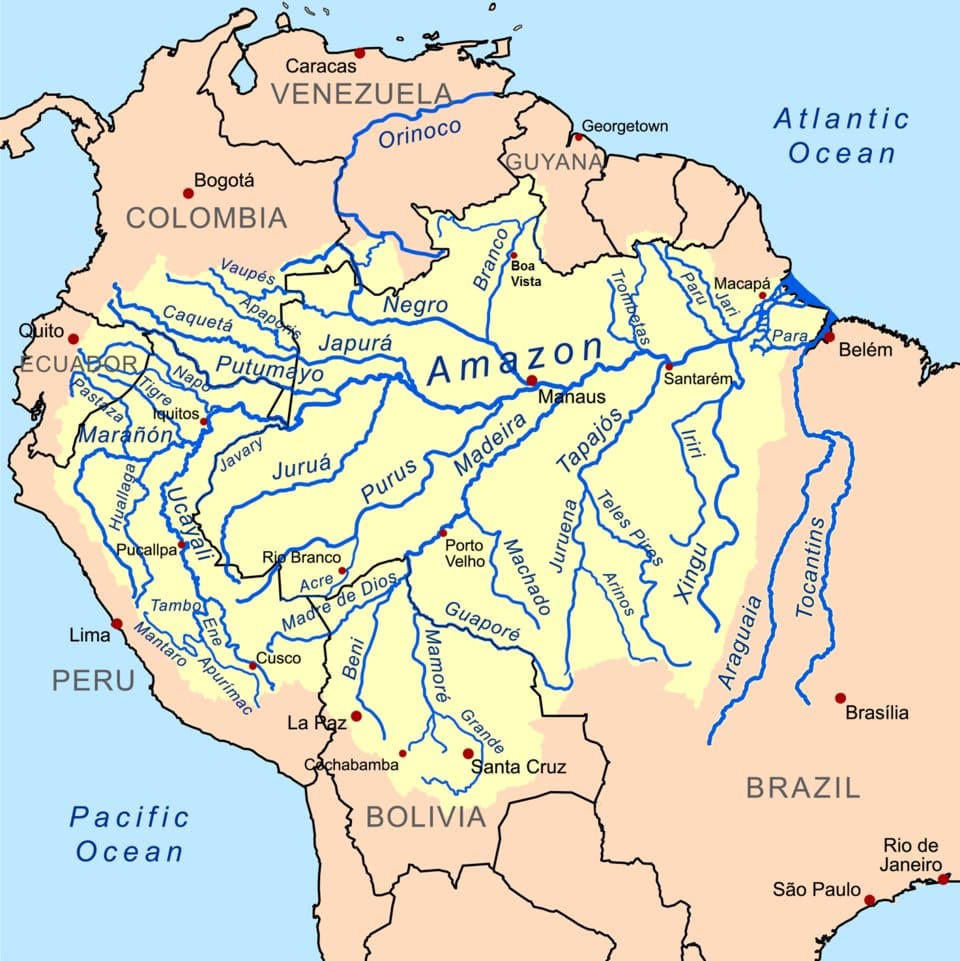
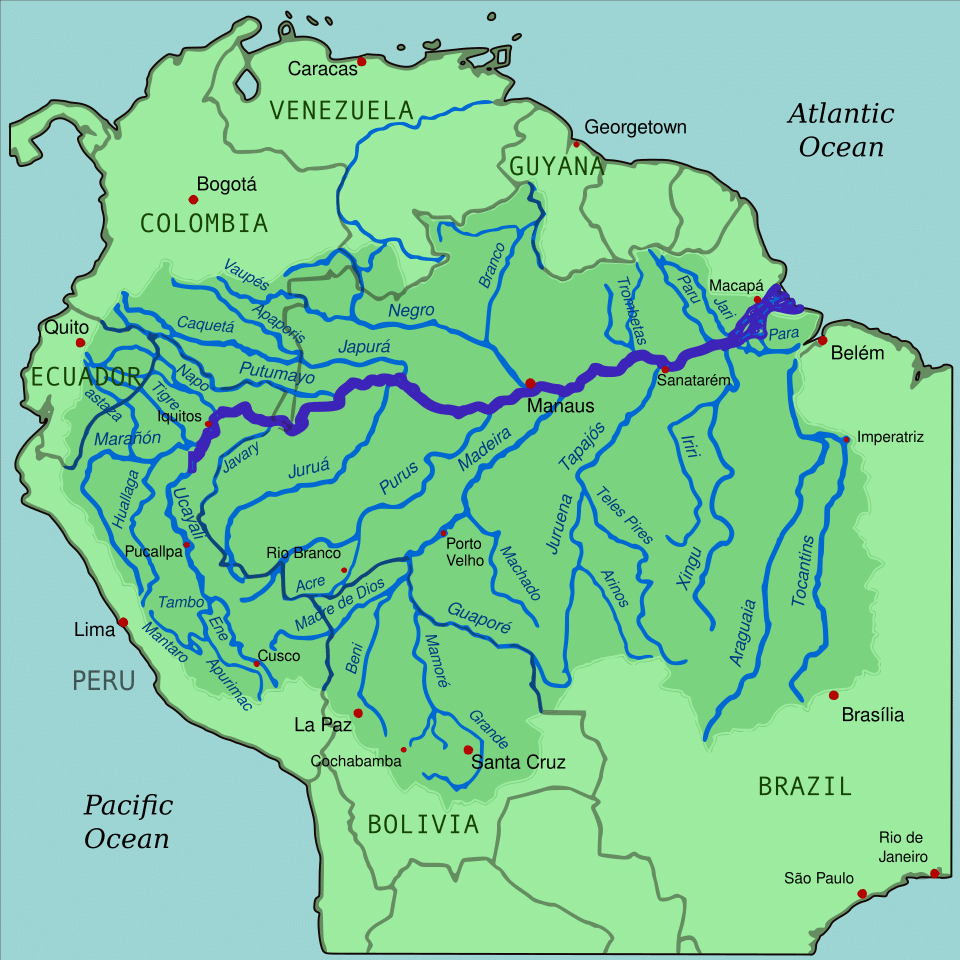
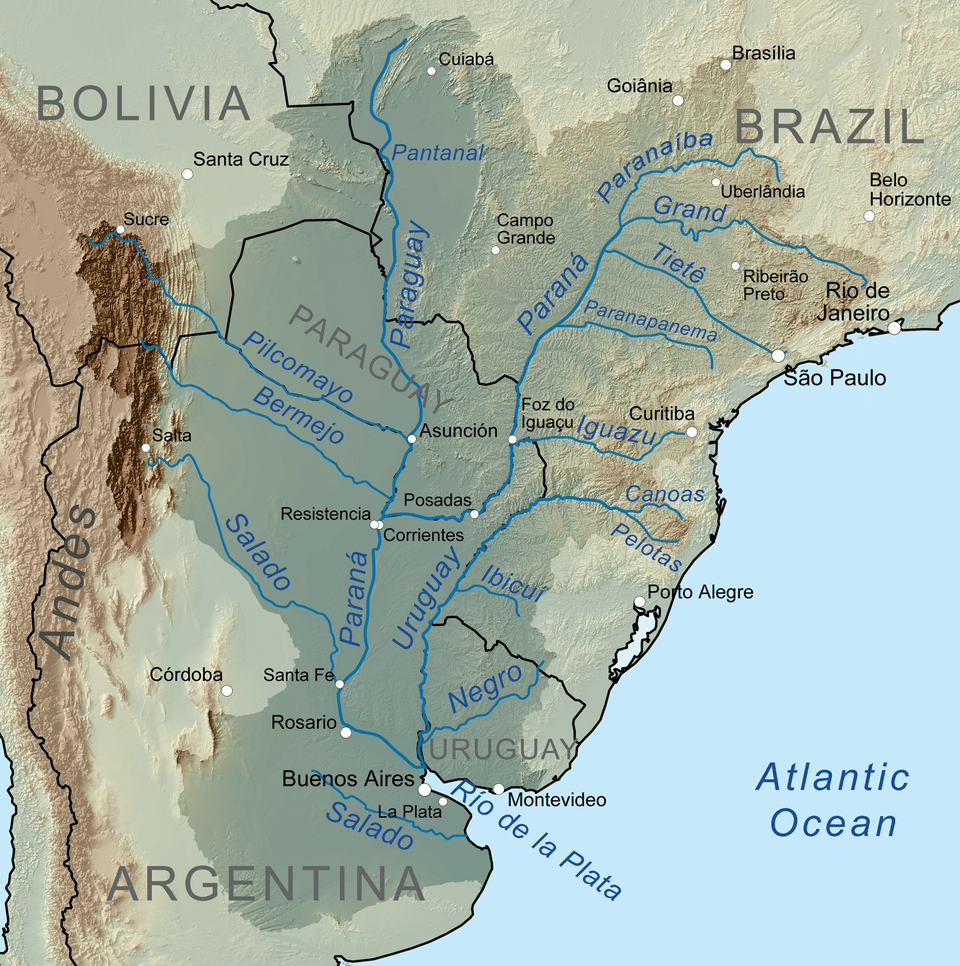
    Map showing the Amazon River Basin in South America
    Map by Kmusser, CC BY-SA 3.0, via Wikimedia Commons

    Species Overview

    Field Details
    Scientific Name Corydoras venezuelanus
    Common Names Venezuelan Cory, Orange Cory, Orange Venezuelan Cory
    Family Callichthyidae
    Origin Coastal river systems in northern Venezuela (Valencia Lake basin area)
    Care Level Easy
    Temperament Peaceful
    Diet Omnivore
    Tank Level Bottom
    Maximum Size 2.5 inches (6 to 7 cm)
    Minimum Tank Size 20 gallons (76 liters)
    Temperature 72 to 79ยฐF (22 to 26ยฐC)
    pH 6.0 to 8.0
    Hardness 2 to 15 dGH
    Lifespan 5+ years
    Breeding Egg depositor (T-position spawning)
    Breeding Difficulty Easy to Moderate
    Compatibility Community
    OK for Planted Tanks? Yes

    Classification

    Taxonomic Level Classification
    Order Siluriformes
    Family Callichthyidae
    Subfamily Corydoradinae
    Genus Corydoras
    Species C. Venezuelanus (Ihering, 1911)

    The taxonomic status of the Venezuelan cory is one of the more interesting debates in the corydoras world. Corydoras venezuelanus was originally described by Ihering in 1911 from specimens collected in Venezuela. However, many ichthyologists have since synonymized it with Corydoras aeneus, the common bronze cory, treating it as nothing more than a geographic color variant from northern Venezuela.

    The argument for synonymy is straightforward: the two fish share nearly identical morphological features, and the main difference is coloration. Bronze corys across their massive range (which spans from Trinidad to Argentina) show considerable color variation depending on where they were collected. From that perspective, the Venezuelan form is just one more variant in a highly variable species.

    On the other side, some taxonomists and many experienced hobbyists point out that the Venezuelan form consistently breeds true for its distinctive orange coloration, that it comes from a geographically isolated population, and that there may be subtle differences in body proportions. For now, the question remains open. What matters for you as a fishkeeper is that the hobby treats them as separate fish, they’re sold under the C. Venezuelanus name, and the care requirements are essentially the same regardless of which taxonomic camp you fall into.

    Origin & Natural Habitat

    Map of northern Venezuela showing the general region where Venezuelan corys are found
    Map of northern Venezuela. The Venezuelan cory is native to coastal river systems in the Valencia Lake basin region of northern Venezuela.

    The Venezuelan cory comes from coastal river systems in northern Venezuela, specifically from drainages associated with the Valencia Lake basin (Lago de Valencia) area. This is a very different environment from the massive Amazonian river systems where most corydoras species originate. The Valencia basin sits in a relatively warm, low-altitude valley between two mountain ranges in the north-central part of the country.

    In the wild, these corys inhabit slow-moving streams and tributaries with sandy and muddy bottoms. The water is warm and relatively neutral to slightly alkaline compared to the soft, acidic blackwater habitats of many Amazon-basin corydoras. Fallen leaves, submerged branches, and aquatic vegetation provide shelter, while the substrate is rich with organic debris, insect larvae, and small invertebrates that the corys continuously forage through.

    This origin story is important because it explains why the Venezuelan cory is so adaptable in aquariums. Unlike species from extreme blackwater environments that need very specific water chemistry, C. Venezuelanus evolved in conditions that are much closer to what most fishkeepers have coming out of the tap. That natural flexibility is a big part of why this species is so beginner-friendly.

    Appearance & Identification

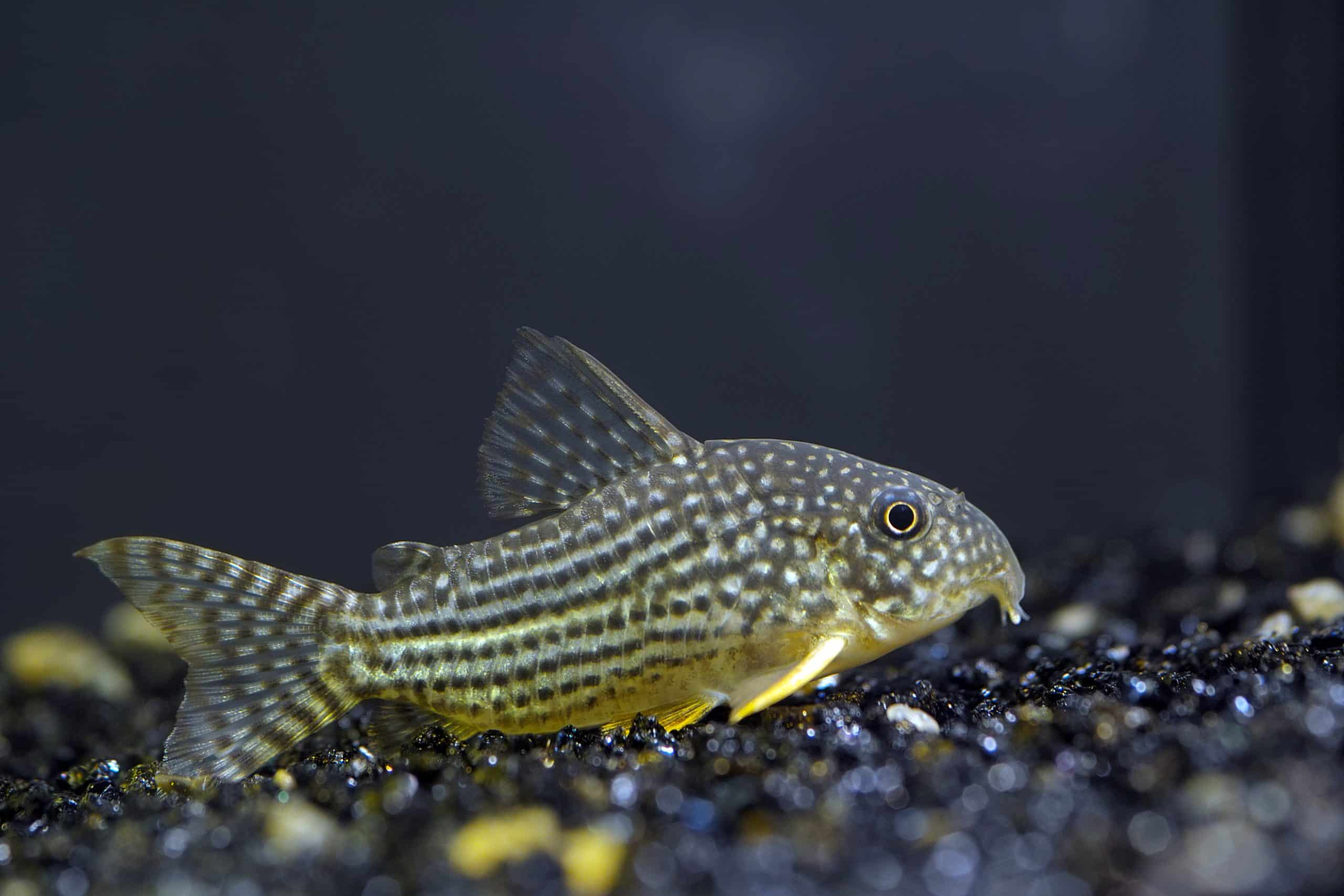
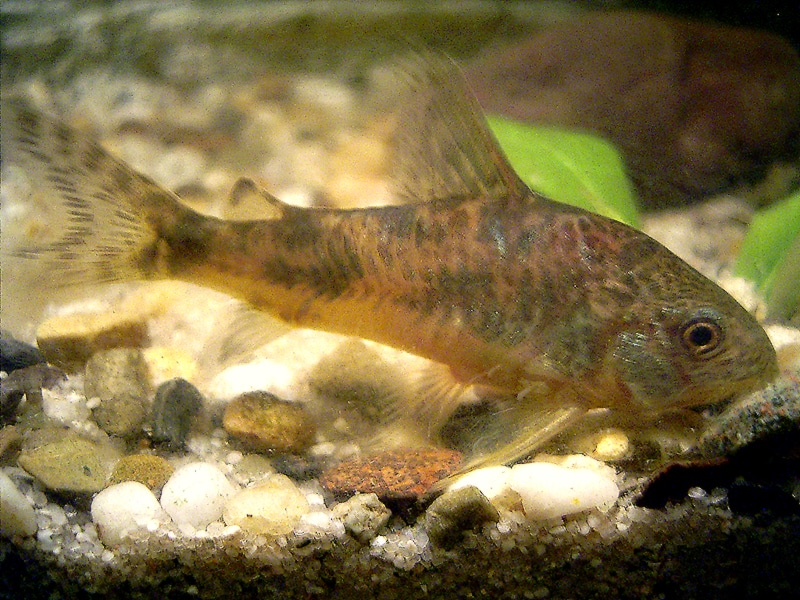
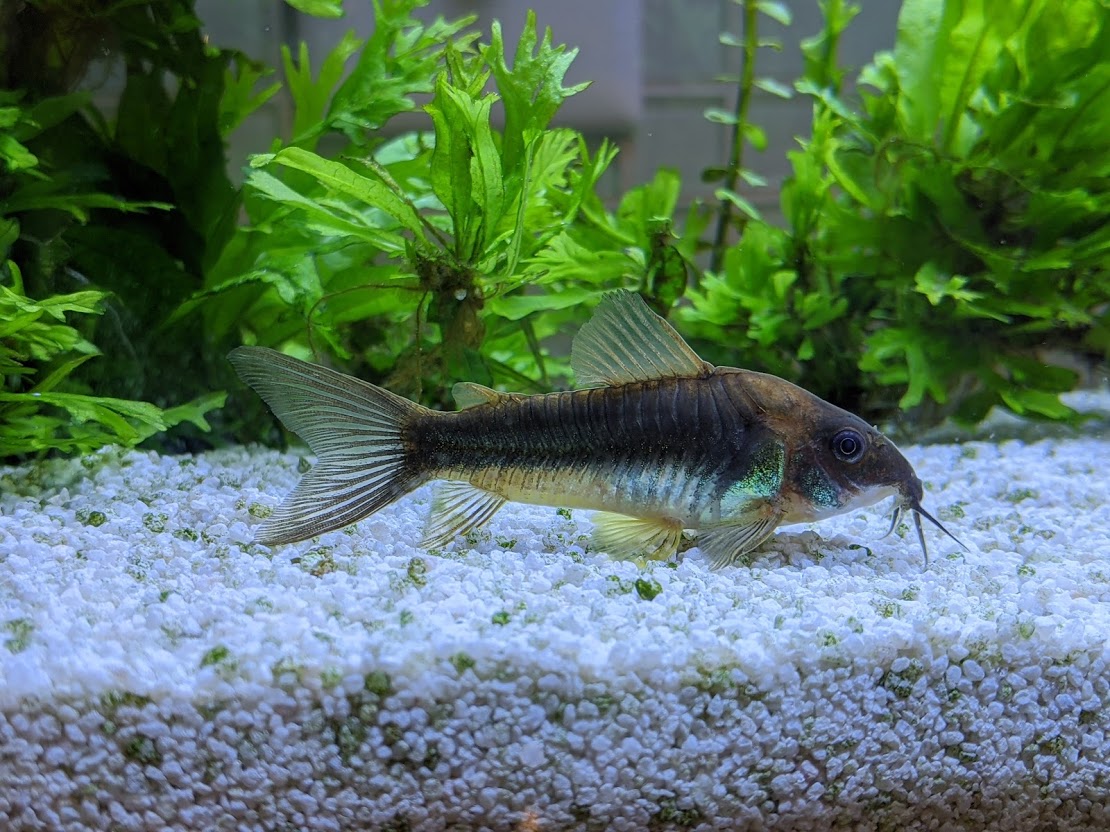
    Venezuelan cory (Corydoras venezuelanus) showing distinctive orange-gold body coloration
    Venezuelan cory. Photo courtesy of Flip Aquatics

    The Venezuelan cory’s defining feature is its warm, golden-orange body color. While the standard bronze cory typically shows a greenish-bronze or olive-gold sheen, the Venezuelan form has a noticeably warmer, more orange tone that covers the head, body, and extends into the flanks. Under good aquarium lighting, this orange coloration really stands out and gives the fish a glow that the typical bronze cory simply doesn’t have.

    The body shape follows the classic corydoras blueprint: a compact, laterally compressed body with two rows of overlapping bony plates (scutes) running along each side. The head is broad and rounded, with a downturned mouth flanked by two pairs of barbels that the fish uses to probe the substrate for food. The dorsal fin is tall and triangular, the pectoral fins are well-developed (with a hardened spine at the leading edge, like all corydoras), and the adipose fin is present as a small, fleshy tab on the back near the tail.

    A dark greenish stripe runs along the upper portion of the body through the dorsal area, and there is often a darker spot or blotch on the upper portion of the dorsal fin. The belly is pale cream to white. The fins are transparent to lightly tinted with a yellowish wash.

    The biggest identification challenge is distinguishing the Venezuelan cory from a standard bronze cory. The orange coloration is the primary giveaway, if the fish has a distinctly warm, orange-gold tone rather than a greenish bronze, you’re most likely looking at the Venezuelan form. That said, coloration can vary with diet, water conditions, and stress level, so newly imported or stressed fish may not show their best color right away.

    Male vs. Female

    Sexing Venezuelan corys is the same process as most corydoras species, and it gets easier with practice. Females are larger, noticeably rounder, and have a wider body when viewed from above, especially when they’re carrying eggs. They will look almost plump compared to males. Males are slimmer, slightly smaller, and more streamlined in profile. The pectoral fins on males also appear slightly more pointed, though this is a subtle difference.

    Both sexes display the same orange-gold coloration and patterning, so color won’t help you tell them apart. Body shape, particularly when viewed from above or head-on, is the most reliable method. If you’re keeping a group of six or more (as you should), you’ll typically end up with a mix of both sexes, and the differences become much more obvious as the fish mature.

    Average Size & Lifespan

    Venezuelan corys reach a maximum size of about 2.5 inches (6 to 7 cm), with females typically being slightly larger than males. Most specimens sold in the hobby are juveniles around 1 to 1.5 inches, so expect some growth once they’re settled into your tank. They won’t get much bigger than that 2.5-inch mark, which makes them a great fit for moderately sized community aquariums.

    With proper care, Venezuelan corys can live 5 years or more. Some keepers have reported specimens reaching 7 to 8 years in well-maintained aquariums. As with all corydoras, longevity depends heavily on water quality, diet, and stress levels. A clean tank, consistent water changes, good food, and a proper group size all contribute to a longer, healthier life.

    Care Guide

    The Venezuelan cory is about as easy to care for as corydoras get. It’s forgiving of a wide range of water parameters, eats practically anything, and doesn’t need a complicated setup. If you can keep a basic community tank running, you can keep these fish happy. That said, there are a few things worth getting right to bring out their best color and behavior.

    Tank Size

    A 20-gallon tank is the minimum for a group of 6 Venezuelan corys. Corydoras are social fish that need to be kept in groups, and a 20-gallon gives them enough bottom space to forage and interact naturally. If you want a larger group (which they’ll always appreciate) or plan to keep them with other bottom dwellers, go with a 30-gallon or larger. A longer, wider footprint is more useful than height for these bottom-dwelling fish, a standard 20-gallon long is ideal as a starting point.

    Water Parameters

    Parameter Recommended Range
    Temperature 72 to 79ยฐF (22 to 26ยฐC)
    pH 6.0 to 8.0
    General Hardness (GH) 2 to 15 dGH
    Ammonia 0 ppm
    Nitrite 0 ppm
    Nitrate Below 20 ppm

    That pH range of 6.0 to 8.0 is impressively wide for a corydoras. Most people’s tap water will fall somewhere in that window without any adjustments, which is part of what makes this species so approachable. Temperature-wise, aim for the mid-70s as a sweet spot. They can handle the upper end of the range, but prolonged high temperatures (above 80ยฐF) can stress them out and reduce dissolved oxygen levels, something corydoras are particularly sensitive to.

    The most important water quality factor for any corydoras is keeping ammonia and nitrite at zero and nitrates as low as possible. Weekly water changes of 25 to 30% are a good standard practice. Clean water is the single biggest factor in keeping these fish healthy and colorful.

    Filtration & Water Flow

    Venezuelan corys don’t need anything special for filtration, just a reliable filter that turns over the tank volume at least 4 to 5 times per hour. A hang-on-back filter, sponge filter, or canister filter will all work fine. The key is consistent mechanical and biological filtration to keep the water clean.

    Water flow should be gentle to moderate. These fish come from slow-moving streams, and while they can handle some current, they don’t want to fight a strong flow along the bottom of the tank. If your filter output is creating a lot of turbulence at substrate level, consider adding a pre-filter sponge or redirecting the output to reduce flow near the bottom.

    Lighting

    Standard aquarium lighting is perfectly fine for Venezuelan corys. They’re not particularly light-sensitive, but they do are more active and show better color under moderate lighting rather than intense, bright lights. If you’re running a planted tank with higher light levels, make sure there are shaded areas where the corys can retreat when they want a break. Floating plants are a great way to create dappled light zones without changing your overall setup.

    Plants & Decorations

    Venezuelan corys do well in planted tanks and won’t damage your plants. They spend their time at substrate level, so they’re not going to uproot anything with an established root system. Good plant choices include Java fern, Anubias, Amazon swords, Cryptocoryne species, and Vallisneria. These plants provide cover and help maintain water quality without interfering with the corys’ bottom-dwelling lifestyle.

    For decorations, include driftwood, smooth rocks, and pieces of PVC pipe or coconut shells to create hiding spots. Corydoras appreciate having places to tuck into during the day, even if they’re generally bold and active fish. Avoid anything with sharp edges that could damage their barbels or body plates.

    Substrate

    This is the one area where you really need to get it right. Venezuelan corys, like all corydoras, need fine sand substrate. They spend their entire day sifting through the bottom, pushing their faces into the substrate and filtering sand through their gills to find food particles. Coarse gravel, sharp-edged substrates, and rough materials will damage their sensitive barbels over time, leading to barbel erosion and infections.

    Fine pool filter sand, play sand, or a dedicated aquarium sand like CaribSea Super Naturals are all good options. A substrate depth of 1 to 2 inches is plenty. If you want to add a more natural look, scatter some dried Indian almond leaves or oak leaves on top, the corys will love foraging through them, and the tannins released are beneficial for their overall health.

    Is the Venezuelan Cory Right for You?

    Before you buy, run through this honest checklist. The Venezuelan Cory is a great fish for the right keeper, but it is not for everyone.

    • You want a cory with warm orange or deep black coloring that stands out from the typical Bronze
    • You can provide high-quality foods including frozen and live options to enhance coloration
    • You keep a group of 6+ on sand substrate in a 20-gallon or larger tank
    • You maintain consistent water quality with regular weekly water changes
    • You want something more visually interesting than a standard Bronze Cory
    • You are patient enough to let the full coloration develop over weeks to months

    Tank Mates

    Venezuelan corys are peaceful, non-aggressive community fish that get along with virtually any similarly tempered species. Their main requirements in tank mates are that the other fish won’t harass them, won’t outcompete them for food at the bottom, and share compatible water parameters. Given the Venezuelan cory’s wide parameter tolerance, that last point is rarely an issue.

    Best Tank Mates

    • Tetras, Neon tetras, cardinal tetras, rummy-nose tetras, ember tetras, and most other small to mid-sized tetras
    • Rasboras, Harlequin rasboras, chili rasboras, lambchop rasboras
    • Livebearers, Platies, endlers, and guppies (avoid mollies in very soft water setups)
    • Dwarf cichlids, Apistogramma species, Bolivian rams, German blue rams
    • Other corydoras, They do fine with other cory species, though they will school most tightly with their own kind
    • Peaceful catfish, Otocinclus, bristlenose plecos
    • Shrimp, Amano shrimp, cherry shrimp (adults are safe with corys)
    • Snails, Nerite snails, mystery snails, Malaysian trumpet snails

    Tank Mates to Avoid

    • Large or aggressive cichlids, Oscar, Jack Dempsey, green terror, and other large Central/South American cichlids will bully or eat corydoras
    • Aggressive bottom dwellers, Red-tailed sharks, rainbow sharks, and aggressive loaches can harass corys at substrate level
    • Large predatory fish, Anything big enough to swallow a cory whole. Corydoras have hardened pectoral spines that can lodge in a predator’s throat, potentially killing both fish
    • Fin nippers, Tiger barbs, serpae tetras, and other known nippers can stress corys out, even though their armored bodies offer some protection

    Food & Diet

    Venezuelan corys are omnivores and enthusiastic eaters. In the wild, they spend most of their waking hours sifting through the substrate for insect larvae, worms, small crustaceans, and organic debris. In the aquarium, they’re not picky at all, but you do need to make sure food actually reaches them at the bottom.

    A high-quality sinking pellet or wafer should form the foundation of their diet. Hikari Sinking Wafers, Repashy Bottom Scratcher gel food, and similar products are all solid choices. Supplement this with frozen or live foods like bloodworms, brine shrimp, daphnia, and tubifex worms. These protein-rich foods help with growth, coloration, and breeding condition.

    One common mistake is assuming that corydoras will survive on scraps that fall from mid-water and surface feeders. They won’t. Active top and mid-water fish like tetras and rasboras are fast eaters, and very little food makes it to the bottom in a well-stocked tank. Always drop sinking foods specifically for your corys, ideally near their favorite hangout spots, and consider feeding them after lights out when the other fish are less active.

    Feed once or twice daily, and only as much as the fish can consume in a few minutes. Uneaten food sitting on the substrate will break down and spike ammonia levels, exactly the kind of water quality issue that corydoras are most sensitive to.

    Breeding & Reproduction

    Venezuelan corys are among the easier corydoras species to breed in captivity, making them a great choice if you’re interested in trying your hand at breeding catfish. Like all corydoras, they’re egg depositors that use the distinctive T-position spawning method.

    Breeding Difficulty

    Easy to moderate. If you have a healthy, well-fed group in a clean tank, spawning often happens without any deliberate effort on your part. The challenge isn’t so much getting them to spawn as it is raising the fry successfully.

    Spawning Tank Setup

    A dedicated breeding tank of 10 to 20 gallons works well. Keep the bottom bare or use a thin layer of fine sand for easy egg collection. Include some smooth surfaces for egg deposition, the glass walls of the tank, broad-leafed plants like Anubias, or even a piece of slate propped against the side. A sponge filter is ideal for filtration since it provides gentle flow without risking fry getting sucked in.

    Water Conditions for Breeding

    The classic trigger for corydoras spawning is a large, cool water change. Do a 50 to 70% water change with water that’s a few degrees cooler than the tank temperature. This simulates the onset of the rainy season in their natural habitat and is often enough to trigger spawning behavior within hours. Slightly dropping the water hardness and adding some tannins (via Indian almond leaves or alder cones) can also help set the mood.

    Conditioning & Spawning

    Before attempting to breed, condition the group with plenty of high-protein foods for 2 to 3 weeks. Frozen bloodworms, live brine shrimp, and daphnia are all excellent conditioning foods. You’ll know the females are ready when they look noticeably plump with eggs.

    During spawning, the male and female assume the characteristic T-position, where the female presses her mouth against the male’s vent area. She releases a small clutch of eggs (usually 2 to 4 at a time) into a pouch formed by her pelvic fins, fertilizes them, and then swims to a chosen surface to deposit the sticky eggs. This process repeats many times over several hours, with a total of 100 to 200 eggs being laid in a single spawning event.

    Egg & Fry Care

    Once spawning is complete, remove the adults or move the eggs to a separate hatching container. Corydoras will eat their own eggs if given the chance. The eggs are adhesive and can be gently rolled off the glass with a finger or a credit card.

    Eggs typically hatch in 3 to 5 days at 75ยฐF (24ยฐC). Adding a few drops of methylene blue to the hatching container helps prevent fungal growth on unfertilized eggs. Once the fry hatch, they’ll absorb their yolk sacs over the next day or two before becoming free-swimming. At that point, feed them microworms, baby brine shrimp (BBS), or powdered fry food several times daily. Keep the water impeccably clean, small daily water changes of 10 to 15% are essential during the fry-rearing stage.

    Common Health Issues

    Venezuelan corys are hardy fish, but they’re not immune to common freshwater diseases. Good water quality and a proper diet will prevent most problems before they start.

    Barbel Erosion

    This is the number one health issue in corydoras keeping, and it’s almost always caused by poor substrate choice or dirty conditions. Sharp gravel wears down the barbels, and bacteria in a dirty substrate can cause infections. Symptoms include shortened, reddened, or missing barbels. The fix is simple: use fine sand substrate and keep it clean. Mild cases can recover on their own once conditions improve.

    Ich (White Spot Disease)

    Corydoras can contract ich, which shows up as small white spots on the body and fins. Treat with heat (raise temperature to 82 to 86ยฐF gradually) and aquarium salt at half the standard dose. Corydoras are sensitive to medications, so avoid harsh chemical treatments when possible. Never use full-dose copper-based medications on corydoras, they can be lethal.

    Bacterial Infections

    Red blotches on the body, frayed fins, or cloudy eyes can indicate bacterial infections, usually brought on by poor water quality or stress. Improve water conditions immediately with extra water changes, and treat with a mild antibacterial like API Melafix or Seachem PolyGuard if symptoms don’t improve. In severe cases, a broad-spectrum antibiotic like Kanaplex may be necessary.

    Fungal Infections

    White, cotton-like growths on the body or fins indicate a fungal infection. This often follows a physical injury or develops on damaged barbels. Treat with an antifungal medication and address the root cause (usually water quality or substrate issues).

    Common Mistakes to Avoid

    • Using gravel substrate, The most common mistake by far. Corydoras need fine sand to forage properly and protect their barbels. Coarse gravel will damage them over time, guaranteed.
    • Keeping them alone or in pairs, Corydoras are schooling fish. A lone cory is a stressed cory. Keep at least 6 together for natural behavior and reduced stress.
    • Relying on leftover food, Don’t assume your corys will get enough food from scraps. They need their own dedicated sinking foods, fed directly to the bottom.
    • Skipping water changes, Corydoras are bottom dwellers, and waste accumulates at the bottom. They’re often the first fish in a tank to show signs of poor water quality. Stay on top of weekly water changes.
    • Overmedicating, Corydoras are scale-less fish with bony plates, and they’re sensitive to many medications, especially copper-based ones. Always use reduced dosages and avoid harsh chemical treatments when gentler options exist.
    • Not covering filter intakes, Smaller corys and fry can get trapped against or sucked into unprotected filter intakes. Use a pre-filter sponge on all intake tubes.

    Where to Buy

    Venezuelan corys are becoming more widely available in the hobby, though they’re not as common as standard bronze corys. You might find them at well-stocked local fish stores, especially those that carry a diverse corydoras selection, but your best bet for healthy, properly identified specimens is usually an online retailer that specializes in freshwater fish.

    Two great places to check are Flip Aquatics and Dan’s Fish. Both are reputable online retailers that carry a wide selection of corydoras species and ship healthy, well-acclimated fish. Their stock rotates, so if you don’t see Venezuelan corys listed right away, check back regularly or sign up for restock notifications.

    When buying online, look for sellers who can confirm whether the fish are captive-bred or wild-caught. Captive-bred Venezuelan corys are hardier and more adaptable to a wider range of water conditions. Expect to pay a modest premium over standard bronze corys, though they’re still one of the more affordable corydoras species overall.

    Frequently Asked Questions

    Is the Venezuelan cory the same as the bronze cory?

    It depends on who you ask. Some taxonomists consider Corydoras venezuelanus a synonym of Corydoras aeneus (the bronze cory), while others treat it as a valid separate species. In the hobby, they’re sold as distinct fish, and the Venezuelan form is recognized by its warmer orange-gold coloration compared to the greenish-bronze of the standard bronze cory. Care requirements are essentially identical either way.

    How many Venezuelan corys should I keep together?

    At least 6, and more is always better. Corydoras are social, schooling fish that rely on group behavior for security and stress reduction. A group of 6 or more will be more active, show better color, and display more natural behaviors like synchronized foraging and playful chasing. Keeping fewer than 6 results in shy, stressed fish that often hide.

    Can Venezuelan corys live with shrimp?

    Yes, adult shrimp are safe with Venezuelan corys. Corydoras aren’t predatory and won’t actively hunt shrimp. However, very small baby shrimp can be eaten if a cory happens to scoop one up while foraging. If you’re trying to breed shrimp in the same tank, provide plenty of dense plant cover (like Java moss) where shrimplets can hide.

    Do Venezuelan corys need sand substrate?

    Yes, absolutely. Fine sand is a non-negotiable requirement for all corydoras species. They feed by plunging their faces into the substrate and sifting material through their gills. Coarse gravel prevents this natural behavior and will gradually wear down and damage their sensitive barbels, leading to infections and reduced quality of life. Pool filter sand, play sand, or aquarium-specific sand all work well.

    Why do my Venezuelan corys dart to the surface?

    Corydoras are facultative air breathers. They have the ability to gulp air at the surface and absorb oxygen through their intestinal lining. Occasional dashes to the surface are completely normal. However, if your corys are doing it constantly, every few seconds rather than every few minutes, it could indicate low dissolved oxygen levels in the water. Check your aeration, water temperature (warmer water holds less oxygen), and make sure the tank isn’t overstocked.

    Are Venezuelan corys good for beginners?

    They’re one of the best corydoras for beginners. The Venezuelan cory tolerates a wide range of water parameters, eats just about anything, is extremely hardy, and has an easygoing temperament. As long as you provide sand substrate, keep them in a proper group, and maintain clean water, they’re very forgiving fish that rarely cause problems. They’re a fantastic introduction to the corydoras world.

    How the Venezuelan Cory Compares to Similar Species

    Venezuelan Cory vs. Bronze Cory

    The Bronze Cory is hardier, cheaper, and more forgiving. The Venezuelan Cory is the visual upgrade with better coloration but slightly higher care demands. If you want a no-fuss beginner cory, go Bronze. If you want more color and are willing to put in extra effort on diet and water quality, the Venezuelan is worth it.

    Venezuelan Cory vs. Sterbai Cory

    Both are attractive corys that justify a higher price point than the Bronze. The Sterbai has detailed spotted patterning and orange pectoral fins, while the Venezuelan has overall body color intensity. The Sterbai handles warmer water better. Both are excellent choices for the keeper who wants a premium cory.

    What It Is Actually Like Living With Venezuelan Cory

    Venezuelan cories are the most visually rewarding corydoras to watch under the right conditions. The orange body catches ambient light and the green flanks shift with angle, creating an iridescent effect that changes as the fish moves. No photograph captures this accurately.

    They are active and confident feeders. Where some cories are hesitant around larger tankmates at feeding time, Venezuelan cories push right in. They know where the food is and they get to it.

    Breeding behavior is more readily triggered in this species than in many corydoras. A large water change with slightly cooler water often sends the group into spawning mode, with females depositing eggs on plant leaves and glass. If you have both sexes in the group, expect fry at some point.

    Closing Thoughts

    The Venezuelan cory in the right setup has orange and green coloration that makes people ask if it is even a corydoras. In the wrong setup, it is just another brown cory.

    The Venezuelan cory is one of those fish that quietly wins you over. It’s not flashy in the way a discus or a betta is, but that warm orange glow, combined with classic corydoras charm and practically bulletproof hardiness, makes it a fish you’ll be glad you added to your tank. Whether you care about the taxonomic debate or not, there’s no denying that this is a beautiful, personable, and easy-to-keep catfish.

    If you’re exploring the world of corydoras, the Venezuelan cory is a great place to start, or a great addition to an existing collection. For more corydoras species profiles and care guides, check out our Corydoras: Complete A-Z Species Directory, where we cover everything from the ever-popular peppered cory to some of the more exotic and hard-to-find species in the hobby.

    This guide is part of our Corydoras: Complete A-Z Species Directory. Visit the hub page to explore care guides for all popular corydoras species.

    Check out our corydoras tier list video where we rank the most popular corydoras in the hobby, including the Venezuelan cory:

    References

  • Bandit Cory Care Guide: Tank Setup, Diet, Breeding & More

    Bandit Cory Care Guide: Tank Setup, Diet, Breeding & More

    Table of Contents

    The bandit cory has a distinctive black eye mask that makes it instantly recognizable and gives it a look no other corydoras can match. It is not just a visual gimmick either. Bandit corys are hardy, active, and social in a way that makes them one of the most enjoyable corydoras to keep. They thrive in standard community conditions with sand substrate and a group of at least six.

    In a well-maintained tank, the contrast between the pale body and the dark mask pattern is genuinely striking. This guide covers the care it needs, because the bandit cory is one of those fish where the looks draw you in and the personality keeps you. Its black eye mask makes it the most recognizable cory in any tank.

    If you want a cory that looks different from every other cory, the bandit cory is the obvious choice.

    What Most Care Guides Get Wrong About the Bandit Cory

    The Bandit Cory gets its name from the dark eye mask pattern, and the biggest misconception is that this species is common and easy to find. It is actually less widely available than the Bronze, Peppered, or Sterbai, and many stores mislabel other corys as Bandits. The care misconception is simpler: people keep this species in water that is too warm. The Bandit Cory does best at 72 to 77F, making it better suited to standard tropical tanks than warm-water setups. It is also more sensitive to poor water quality than the Bronze or Peppered Cory, so regular water changes are not optional.

    Beyond that signature mask, the bandit cory is a peaceful, hardy, and easy-to-keep bottom dweller that does well in most community setups. It hails from Colombia’s Meta River basin, part of the Orinoco drainage, and it’s been a steady presence in the hobby for decades. In my 25+ years in the hobby, I’ve always appreciated how reliably good these fish are for community tanks. They’re not flashy in the way some corydoras are, but they have genuine character and they’re about as trouble-free as bottom dwellers get. Here’s everything you need to know to keep them healthy and active.

    This guide is part of our Corydoras: Complete A-Z Species Directory. Visit the hub page to explore care guides for all popular corydoras species.

    The Reality of Keeping Bandit Cory

    The bandit cory gets its name from the black mask that runs across its eyes, and it is one of the more visually distinctive corydoras in the hobby. The contrast between the pale body and the bold eye stripe gives it a character that many plain-colored cories lack.

    This is a Colombian species that does well in slightly harder water than many Amazonian cories. If your tap water runs neutral to slightly alkaline, the bandit cory handles it better than species like the Adolfo’s that want soft, acidic conditions.

    Group dynamics are strong with this species. Bandits are noticeably more social than some of the less gregarious corydoras, and they form tight schools that move through the tank together rather than scattering independently. This makes them more entertaining to watch but also means you really do need the minimum of six.

    Biggest Mistake New Owners Make

    Keeping just two or three because they looked interesting at the store. The bandit cory is one of the more strongly schooling corydoras. Solitary or paired bandits hide constantly and show none of the social behavior that makes them worth keeping. Six is the minimum, eight is better.

    Expert Take

    The bandit cory is the best corydoras for keepers with moderately hard water who want something more interesting than a bronze cory. It tolerates a wider pH and hardness range than most Amazon-origin species, and the black eye mask gives it visual impact that plain cories lack. A group of eight on fine sand in a 20 gallon long is a clean, effective setup.

    Key Takeaways

    • Named for its “bandit mask”, a bold dark band across both eyes that makes this one of the most recognizable corydoras species in the hobby
    • Easy to care for and well-suited for beginners who provide the basics: sand substrate, clean water, and a proper group
    • Keep in groups of 6 or more in a minimum 20-gallon (76 liter) tank for proper social behavior and reduced stress
    • Sand substrate is non-negotiable, their delicate barbels are easily damaged by gravel, which leads to infections and inability to forage
    • Moderate breeding difficulty, they deposit eggs on flat surfaces and glass, and spawning can be triggered with cool water changes
    • Native to Colombia’s Meta River, part of the Orinoco basin, preferring soft, slightly acidic water in the 72 to 79ยฐF (22 to 26ยฐC) range
    Map showing the Amazon River Basin in South America
    Map by Kmusser, CC BY-SA 3.0, via Wikimedia Commons

    Species Overview

    Field Details
    Scientific Name Corydoras metae
    Common Names Bandit Cory, Bandit Catfish, Meta Cory, Masked Cory
    Family Callichthyidae
    Origin Meta River basin, Colombia (Orinoco drainage)
    Care Level Easy
    Temperament Peaceful
    Diet Omnivore
    Tank Level Bottom
    Maximum Size 2 inches (5 cm)
    Minimum Tank Size 20 gallons (76 liters)
    Temperature 72 to 79ยฐF (22 to 26ยฐC)
    pH 6.0 to 7.5
    Hardness 2 to 12 dGH
    Lifespan 5+ years
    Breeding Egg depositor (T-position spawning)
    Breeding Difficulty Moderate
    Compatibility Community
    OK for Planted Tanks? Yes

    Classification

    Taxonomic Level Classification
    Order Siluriformes
    Family Callichthyidae
    Subfamily Corydoradinae
    Genus Corydoras
    Species C. Metae (Eigenmann, 1914)

    The bandit cory was first described by Carl H. Eigenmann in 1914 and named after the Meta River in Colombia where it was collected. The species name metae is a direct geographical reference to its type locality. Unlike some corydoras that were reclassified into new genera during the 2024 Dias et al. Revision, C. Metae has remained within Corydoras sensu stricto. So the scientific name you’ve always known is still the correct one.

    Origin & Natural Habitat

    Map of the Orinoco River basin in South America highlighting the native range of the bandit cory in Colombia
    Map of the Orinoco River basin, South America. The bandit cory is native to the Meta River within this drainage system in Colombia.

    The bandit cory is native to the Meta River basin in Colombia, which is a major tributary of the Orinoco River. The Meta River flows eastward from the Andes through the Colombian llanos (tropical grasslands) before joining the Orinoco near the Venezuelan border. This region has a distinct wet-dry seasonal cycle that heavily influences water conditions throughout the year.

    In their natural habitat, bandit corys inhabit slow-moving streams, shallow tributaries, and flooded areas with sandy or muddy bottoms. The water is typically soft and slightly acidic, with moderate temperatures that stay cooler than what you’d find in lowland Amazon species. Leaf litter, submerged wood, and marginal vegetation provide cover and create shaded areas where the fish feel secure.

    Like all corydoras, they spend their time sifting through the substrate for food, turning over organic debris to find insect larvae, worms, and other small invertebrates. The soft, fine substrate of their natural environment is why providing sand in the aquarium is so important. Their barbels evolved for probing soft material, not grinding against sharp gravel.

    Appearance & Identification

    Bandit cory catfish showing distinctive dark mask band across both eyes
    Bandit cory. Photo courtesy of Flip Aquatics

    The bandit cory’s defining feature is right there in the name. A thick, dark band runs horizontally across both eyes, connecting them like a bandit’s mask or a blindfold. This marking is unmistakable and is the single easiest way to identify this species. No other commonly available corydoras has the same bold eye band.

    The overall body color is a warm, creamy beige to light tan, which provides a clean backdrop that makes the dark mask really pop. There’s also a dark blotch at the base of the dorsal fin and a dark band running along the dorsal ridge from the back of the head toward the tail. The fins are mostly clear to pale, sometimes with a faint yellowish tint. The body shape is compact and rounded, typical of the genus, with two rows of overlapping bony scutes along each flank and two pairs of barbels on the downturned mouth.

    One species that sometimes gets confused with the bandit cory is Corydoras melini, the false bandit cory. Both have a dark eye band, but C. Melini has a diagonal dark stripe that runs from the dorsal fin down toward the base of the tail, which the true bandit cory lacks. If the stripe angles downward toward the caudal peduncle, you’re looking at melini, not metae.

    Male vs. Female

    Sexing bandit corys follows the same general rules as most corydoras. Females are noticeably rounder and wider when viewed from above, especially when they’re carrying eggs. They are slightly larger overall. Males are slimmer and more streamlined, with a narrower body profile. Both sexes display the same coloration and mask pattern, so body shape is the primary way to differentiate them. The difference becomes much more obvious once the fish reach full maturity at around 12 to 18 months of age.

    Average Size & Lifespan

    Bandit corys are a small corydoras species, reaching a maximum size of about 2 inches (5 cm) in total length. Females are typically slightly larger and heavier-bodied than males. Most fish sold in stores are juveniles around 1 to 1.25 inches, so they still have some growing to do when you bring them home.

    With proper care, bandit corys can live 5 years or more in captivity. Hobbyists have reported specimens reaching 7 to 8 years in well-maintained tanks with consistent water quality and a varied diet. As with all corydoras, longevity depends heavily on substrate choice, water cleanliness, and being kept in a proper social group. A single bandit cory in a neglected tank won’t come close to its full lifespan potential.

    Care Guide

    Tank Size

    A 20-gallon (76 liter) tank is the minimum recommended size for a group of 6 bandit corys. A 20-gallon long is the better option because it provides more floor space than a standard 20-gallon tall, and floor space is what matters most for bottom-dwelling fish. If you’re planning a group of 10 or more, or want to include other bottom-dwelling species, step up to a 30-gallon (114 liter) tank or larger. More bottom real estate means less competition and more natural foraging behavior.

    Water Parameters

    Parameter Recommended Range
    Temperature 72 to 79ยฐF (22 to 26ยฐC)
    pH 6.0 to 7.5
    Hardness 2 to 12 dGH
    Ammonia / Nitrite 0 ppm
    Nitrate Below 20 ppm

    Bandit corys prefer cooler temperatures compared to some tropical fish, so they do best in unheated tanks in warm rooms or with a heater set to the mid-70sยฐF. They’re not a good match for high-temperature setups like discus tanks. If you need a cory for warmer water, look at sterbai corys instead.

    Soft to moderately hard water with a slightly acidic to neutral pH suits them well. They’re reasonably adaptable, but consistently hard, alkaline water isn’t ideal and can cause long-term stress. Keep ammonia and nitrite at zero, and nitrate below 20 ppm through regular water changes. Like all corydoras, they’re sensitive to poor water quality, especially elevated nitrates.

    Filtration & Water Flow

    A good hang-on-back filter or canister filter works well for bandit corys. They don’t need strong current and actually prefer moderate to gentle water flow along the bottom of the tank. Strong currents can make it difficult for them to rest and forage comfortably. If your filter creates too much flow at the substrate level, angle the output toward the surface or use a spray bar to diffuse it. A sponge filter is another solid option that provides excellent biological filtration without creating excessive water movement.

    Good oxygenation matters. While bandit corys are facultative air breathers that regularly dart to the surface to gulp air (which is completely normal behavior), consistently poor oxygen levels will stress them. Surface agitation from your filter output helps with gas exchange.

    Lighting

    Bandit corys have no special lighting requirements. Standard aquarium lighting for a planted or community tank is fine. They are more active in subdued lighting, so if your tank has very bright lights, providing shaded areas with floating plants or dense plant cover near the bottom will encourage more natural behavior. They’ll still come out to forage under bright lights, but you’ll see more activity with some dimmer zones available.

    Plants & Decorations

    Bandit corys are completely plant-safe. They don’t eat or uproot plants, making them ideal for planted tanks. Good plant choices include java fern, anubias, cryptocorynes, and vallisneria. These plants provide cover and create shaded resting spots without occupying too much of the bottom space where the corys forage.

    Driftwood, smooth stones, and caves are all appreciated as hiding spots. Leaf litter (Indian almond leaves or dried oak leaves) is an excellent addition that mimics their natural environment and encourages foraging. The tannins released from the leaves also slightly acidify the water, which these fish appreciate. Just make sure decorations don’t have sharp edges that could injure the fish as they swim past.

    Substrate

    This is the most important care decision you’ll make for any corydoras. Sand substrate is absolutely essential for bandit corys. Their barbels are delicate sensory organs they use to probe and sift through the substrate for food. Rough gravel, sharp-edged substrates, or coarse materials will erode and damage these barbels over time, leading to bacterial infections, reduced ability to forage, and a significantly lower quality of life.

    Fine play sand, pool filter sand, or aquarium-specific sand all work well. The grain should be smooth and small enough that the fish can comfortably sift through it. You’ll know you’ve got the right substrate when you see your bandit corys actively plunging their faces into it and blowing sand out through their gills. That’s natural, healthy foraging behavior. If they’re avoiding the substrate or their barbels look shortened, that’s a red flag.

    Is the Bandit Cory Right for You?

    Before you buy, run through this honest checklist. The Bandit Cory is a great fish for the right keeper, but it is not for everyone.

    • You want a corydoras with a distinctive bandit mask eye pattern
    • You keep your tank at 72 to 77F with consistent water quality
    • You can commit to regular water changes and good maintenance practices
    • You have a 20-gallon or larger tank with sand substrate and a group of 6+
    • You want something more distinctive looking than the common Bronze or Peppered Cory
    • You enjoy patterned corys and can verify identification before purchase

    Tank Mates

    Bandit corys are peaceful, non-aggressive fish that do well with a wide variety of community species. The main considerations are temperature compatibility (they prefer cooler water than some tropical species) and avoiding anything large or aggressive enough to harass them.

    Best Tank Mates

    • Tetras (ember, neon, cardinal, rummy-nose, glowlight)
    • Rasboras (harlequin, chili, lambchop)
    • Small peaceful barbs (cherry barbs)
    • Dwarf gouramis and honey gouramis
    • Other corydoras species (they’ll often shoal together)
    • Otocinclus catfish
    • Small peaceful livebearers (endlers, platies)
    • Freshwater shrimp (amano, cherry shrimp)
    • Nerite and mystery snails

    Tank Mates to Avoid

    • Cichlids (except very small, peaceful dwarf species)
    • Large or aggressive fish (oscars, jack dempseys, green terrors)
    • Aggressive bottom dwellers (red-tailed sharks, Chinese algae eaters)
    • Fish that require very warm water (discus, rams) since bandit corys prefer cooler temps
    • Crayfish or large crabs that may injure or eat small bottom dwellers

    Food & Diet

    Bandit corys are omnivores and not at all picky about food. The biggest mistake people make is assuming they’ll survive on whatever falls to the bottom from feeding the mid-water fish. They won’t thrive that way. Corydoras need their own dedicated feeding, not just leftovers.

    A good staple diet includes high-quality sinking pellets or wafers designed for bottom feeders. Supplement with frozen or live foods like bloodworms, brine shrimp, daphnia, and tubifex worms. These protein-rich foods help with conditioning and overall health. Blanched vegetables like zucchini or cucumber slices are also appreciated occasionally.

    Feed once or twice daily, offering only as much as they can consume in a few minutes. Drop the food in the same spot each time so the corys learn where to find it. Feeding in the evening or with lights dimmed often encourages more active feeding behavior since they’re naturally more active in low-light conditions.

    Breeding & Reproduction

    Breeding bandit corys is achievable for hobbyists with some experience, though it’s not as straightforward as breeding bronze or peppered corys. They use the classic corydoras T-position spawning method and deposit their eggs on flat surfaces throughout the tank.

    Breeding Difficulty

    Moderate. While not the easiest corydoras to breed, bandit corys will spawn in captivity when properly conditioned and given the right environmental triggers. Having a well-established group with a good ratio of males to females (2 to 3 males per female works well) gives you the best chance of success.

    Spawning Tank Setup

    A dedicated breeding tank of 10 to 15 gallons works well. Keep it simple: bare bottom or thin layer of sand, a sponge filter for gentle filtration, and some flat surfaces like broad-leaved plants (anubias), slate tiles, or the aquarium glass itself where the female can deposit eggs. The tank should be well-cycled before introducing the breeding group.

    Water Conditions for Breeding

    The classic technique for triggering corydoras spawning is a large, cool water change that simulates the onset of the rainy season. Replace 50 to 70% of the water with dechlorinated water that is several degrees cooler than the tank temperature. Dropping from 77ยฐF down to 70 to 72ยฐF (21 to 22ยฐC) often does the trick. A slight drop in pH (toward the 6.0 to 6.5 range) during water changes can also help. Repeat this daily for several days if spawning doesn’t happen immediately.

    Conditioning & Spawning

    Condition the breeding group with protein-rich live and frozen foods for 2 to 3 weeks before attempting to trigger spawning. Bloodworms, brine shrimp, and daphnia are all excellent choices. Well-fed females will become noticeably rounder as they develop eggs.

    When spawning begins, you’ll see the T-position behavior that’s characteristic of all corydoras. The female presses her mouth against the male’s vent area, and they form a T shape. The female collects sperm and then moves to a chosen surface to deposit a small clutch of adhesive eggs, often 2 to 4 at a time. She repeats this process with multiple males over the course of several hours, depositing eggs in small groups across different surfaces. Total egg counts typically range from 50 to 100 per spawn.

    Egg & Fry Care

    Remove the adults after spawning is complete, as they will eat the eggs if given the opportunity. The eggs are adhesive and can be gently rolled off the glass or surface with a finger and transferred to a separate hatching container with matching water parameters. Adding a few drops of methylene blue to the hatching container helps prevent fungal growth on the eggs.

    Eggs typically hatch in 4 to 5 days depending on temperature. The fry are tiny and will absorb their yolk sacs over the first 2 to 3 days. Once free-swimming, feed them infusoria or commercially prepared liquid fry food initially, then transition to freshly hatched baby brine shrimp and microworms as they grow. Keep the water exceptionally clean during this stage with small, frequent water changes. Growth is slow but steady, and the fry will begin to show the characteristic bandit mask marking within a few weeks.

    Common Health Issues

    Barbel Erosion

    This is the most common problem with corydoras and it’s almost always caused by inappropriate substrate. Gravel, sharp sand, or rough materials wear down the barbels over time, leaving them shortened or completely eroded. Once damaged, the barbels are vulnerable to secondary bacterial infections. The fix is prevention: use fine, smooth sand and maintain clean substrate conditions.

    Ich (White Spot Disease)

    Bandit corys can contract ich like any freshwater fish. The challenge with corydoras is that they’re sensitive to many common ich medications, particularly those containing copper or malachite green at full strength. If you need to treat, use half-strength medication or opt for the heat method by gradually raising the temperature to 86ยฐF (30ยฐC) over 48 hours while increasing aeration. Salt treatments should be avoided or used at very low concentrations, as corydoras are sensitive to salt.

    Bacterial Infections

    Red blotches on the belly, cloudy eyes, or fin rot are signs of bacterial infection, usually triggered by poor water quality. Corydoras sit directly on the substrate, so they’re the first fish exposed to waste buildup and dirty substrate conditions. Regular gravel vacuuming (or in this case, sand surface cleaning) and consistent water changes are the best prevention. Treat confirmed infections with a broad-spectrum antibiotic appropriate for scaleless fish.

    Internal Parasites

    Wild-caught bandit corys may carry internal parasites. Signs include weight loss despite eating, white stringy feces, and a sunken belly. Quarantining new arrivals for 2 to 4 weeks before adding them to your main tank is always recommended. If parasites are suspected, treat with a medication containing praziquantel or levamisole.

    Common Mistakes to Avoid

    • Using gravel instead of sand. This is the number one mistake and will lead to barbel damage and chronic health problems. There is no gravel that is “fine enough” for corydoras. Use sand.
    • Keeping them alone or in pairs. Bandit corys are social fish that need a group of at least 6 to feel secure. Solitary corys are stressed, inactive, and hide constantly.
    • Relying on leftovers for feeding. Corydoras need targeted feeding with sinking foods. They cannot survive on whatever scraps fall from the surface feeders.
    • Skipping quarantine. Especially with wild-caught specimens, skipping quarantine is a good way to introduce parasites and disease to your display tank.
    • Overstocking the bottom. Just because your tank’s mid-water zone is well-stocked doesn’t mean the bottom layer can handle more fish. Bandit corys need floor space for foraging.
    • Ignoring water quality. Because they live on the bottom where waste settles, corydoras are often the first fish affected by deteriorating water conditions. Stay on top of your water changes.
    • Pairing with warm-water fish. Bandit corys prefer cooler temperatures (72 to 79ยฐF). Putting them in a tank heated to the mid-80s for discus or rams will stress them over time.

    Where to Buy

    Bandit corys are moderately common in the hobby. You won’t find them at every local fish store the way you would bronze or peppered corys, but they show up regularly from specialty retailers and online vendors. They’re available as both wild-caught and captive-bred, with captive-bred specimens generally acclimating more easily to aquarium life.

    Here are two reputable online retailers where you can find quality corydoras:

    • Flip Aquatics. Great selection of corydoras species with careful shipping practices.
    • Dan’s Fish. Known for healthy, well-acclimated livestock and transparent sourcing.

    When buying bandit corys, try to purchase a group of 6 or more at once from the same source. This ensures they settle in together and reduces the stress of integrating new fish into an existing group at different times. Look for active fish with intact barbels, clear eyes, and no signs of disease or damage.

    Frequently Asked Questions

    How many bandit corys should I keep together?

    A minimum of 6 is recommended. Corydoras are social, shoaling fish that become stressed and inactive when kept alone or in small numbers. In a group of 6 or more, you’ll see much more natural behavior: active foraging, playful chasing, and the characteristic synchronized swimming that makes corydoras so enjoyable to watch. If your tank can support it, groups of 8 to 10 are even better.

    Can bandit corys live with other corydoras species?

    Yes, different corydoras species coexist peacefully and will often shoal together. Just make sure each species has enough of its own kind (ideally 6 or more per species) so they can engage in species-specific social behavior. Also verify that all the species in the tank have compatible temperature ranges.

    Do bandit corys need sand substrate?

    Yes, without exception. All corydoras species need fine, smooth sand substrate. Their barbels are delicate sensory organs used for foraging, and rough gravel or sharp substrates will damage them over time. Barbel erosion leads to infections, inability to forage, and reduced quality of life. Sand is the only appropriate choice.

    What’s the difference between the bandit cory and the false bandit cory?

    The true bandit cory (Corydoras metae) and the false bandit cory (Corydoras melini) both have a dark eye band, but the key difference is in the dorsal stripe. On C. Metae, the dark coloring stays along the upper back. On C. Melini, a diagonal dark stripe runs from the dorsal fin area downward toward the base of the tail. If the stripe angles down toward the tail, it’s a false bandit. Care requirements for both species are very similar.

    Why do my bandit corys keep going to the surface?

    Occasional dashes to the surface to gulp air are completely normal. Corydoras are facultative air breathers and can absorb oxygen through their intestinal lining. This is a natural adaptation, not a sign of distress. However, if your corys are doing it constantly and frantically, that can indicate low oxygen levels, poor water quality, or elevated temperatures. Test your water parameters and increase surface agitation if needed.

    Are bandit corys good for beginners?

    Yes, they’re one of the easier corydoras species to keep. As long as you provide the fundamentals (sand substrate, clean water, proper group size, and dedicated feeding), bandit corys are hardy and forgiving. They’re a great choice for beginners who are setting up their first community tank and want an active, interesting bottom-dwelling species.

    How the Bandit Cory Compares to Similar Species

    Bandit Cory vs. Panda Cory

    Both have distinctive facial markings. The Panda has dark eye patches and saddle markings on a pale body, while the Bandit has a clean mask stripe. The Panda Cory is more sensitive to water quality and prefers slightly cooler water. The Bandit is moderately hardy. Both are excellent mid-range corys.

    Bandit Cory vs. Schwartz’s Cory

    The Schwartz’s Cory has a bold horizontal body stripe, while the Bandit Cory has the eye mask pattern. Both are similarly priced and hardy. They look completely different and can actually be combined in the same tank for visual variety, provided you keep proper group sizes of each.

    What It Is Actually Like Living With Bandit Cory

    Bandit cories are some of the tightest schoolers in the corydoras family. Where bronze cories spread out and forage independently, bandits move as a unit. The group drifts across the substrate together, pauses together, and rests together. It is synchronized in a way that other cories are not.

    The black mask makes them instantly identifiable even at a distance. In a planted tank with a dark background, the eye stripe pops against the pale body. It is one of those subtle design elements that makes the whole tank look more polished.

    They are active during the day, not just at dawn and dusk. You get consistent visibility from bandits, which is not always the case with more secretive corydoras species.

    Closing Thoughts

    The bandit cory is one of those fish that doesn’t need to be flashy to be appealing. That dark eye band gives it a personality before it even does anything, and once you watch a group of them working the substrate together, you’ll understand why corydoras fans love this species. They’re hardy, peaceful, and easy to care for, which is exactly what you want from a bottom-dwelling community fish.

    If you get the substrate right and keep your water clean, the rest falls into place. Give them a group of their own kind, feed them well, and they’ll reward you with years of active, entertaining behavior at the bottom of your tank. They’re the kind of fish that makes you pay attention to a part of the aquarium most people overlook.

    Looking for more corydoras species to explore? Check out our complete Corydoras species directory for care guides on sterbai corys, peppered corys, pygmy corys, and many more.

    Have you kept bandit corys? Drop a comment below and share your experience!

    Check out our corydoras tier list video where we rank the most popular corydoras in the hobby, including the bandit cory:

    References

    1. Seriously Fish, Corydoras metae species profile. seriouslyfish.com
    2. FishBase, Corydoras metae (Eigenmann, 1914). fishbase.se
    3. Planet Catfish, Corydoras metae. planetcatfish.com
    4. The Aquarium Wiki, Corydoras metae. theaquariumwiki.com
  • Corydoras Species Directory: Complete A-Z Care Guide List

    Corydoras Species Directory: Complete A-Z Care Guide List

    Corydoras catfish are the backbone of the freshwater community tank. These armored bottom-dwellers have been a staple in the hobby for over a century, and for good reason. They are peaceful, hardy, endlessly entertaining to watch, and they help keep your substrate clean. With over 170 described species (and many more undescribed C-number and CW-number types), there is a cory for virtually every tank setup.

    This A-Z directory covers every corydoras species we have profiled at Aquarium Store Depot. Use the alphabet links below to jump to any section, and click on any species name to read its full care guide. We are actively adding new species, so check back regularly as this directory grows.


    A | B | C | D | E | F | G | H | I | J | K | L | M | N | O | P | Q | R | S | T | U | V | W | X | Y | Z


    A

    • Adolfo’s Cory (Corydoras adolfoi) — Striking black head band and orange nape, a premium species from the Rio Negro

    B

    • Bandit Cory (Corydoras metae) — Attractive cory with a dark mask-like band across its eyes, from Colombia
    • Bronze Cory (Corydoras aeneus) — The most popular and widely available cory catfish, extremely hardy and beginner-friendly

    E

    • Elegant Cory (Corydoras elegans) — Unique cory that swims in the mid-water column rather than staying on the bottom
    • Emerald Cory (Corydoras splendens) — The largest commonly available cory with a stunning metallic green body

    H

    J

    • Julii Cory (Corydoras julii) — True julii with isolated spots (rarely sold in stores; most “julii” are actually three-line corys)

    P

    • Panda Cory (Corydoras panda) — Adorable black-and-white cory named for its panda-like eye markings
    • Peppered Cory (Corydoras paleatus) — Classic cold-hardy cory that thrives in unheated tanks, one of the first species kept in aquariums
    • Pygmy Corydoras (Corydoras pygmaeus) — Tiny mid-water cory perfect for nano planted tanks, schools beautifully in large groups

    S

    • Schwartz’s Cory (Corydoras schwartzi) — Handsome cory with a bold horizontal stripe, sometimes confused with the three-line cory
    • Skunk Cory (Arched Cory) (Corydoras arcuatus) — Named for the dark stripe running along its back like a skunk’s marking
    • Sterbai Cory (Corydoras sterbai) — The go-to cory for warm water tanks, pairs perfectly with discus and rams

    T

    • Three-line Cory (False Julii) (Corydoras trilineatus) — The fish almost always sold as “julii cory” in stores, with connected reticulated markings

    V

    Species Coming Soon

    We are actively working on care guides for more corydoras species. In addition to the species listed above, there are hundreds of described and undescribed corydoras identified by C-numbers and CW-numbers in the hobby. Check back regularly as we expand this directory.

    Check out our corydoras tier list video where we rank the most popular cory catfish in the hobby:

    References

  • GloFish With Betta: Why It Almost Never Works (And the One Exception I’d Try)

    GloFish With Betta: Why It Almost Never Works (And the One Exception I’d Try)

    GloFish and bettas in the same tank works sometimes and fails spectacularly other times. It depends entirely on the betta temperament and the GloFish species.

    Some bettas ignore GloFish. Some attack them relentlessly. You will not know which you have until you try.

    Key Takeaways

    • The only GloFish that is compatible with a betta are GloFish cories.
    • Bettas have particular requirements that do not mix well with other GloFish, like tank size, aggression, and overall compatibility.
    • Many GloFish, like tetras, are known nippers and are ill-suited for a slow-moving, long-finned betta.
    • Another alternative to getting an entirely new fish species is getting a GloFish betta instead!

    The Quick Answer – Glofish With Bettas Don’t Work

    The answer is mostly no. Many of the GloFish species available are incompatible with betta fish due to overactivity, aggression, or other behaviors that we will go over in this post. That being said, the GloFish corydoras are one of the most successful pairings.

    What Are GloFish?

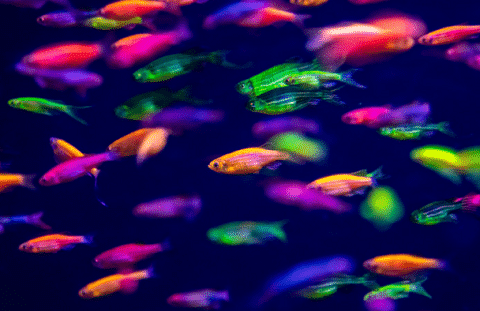
    If you’ve ever gone to your local fish store, you might’ve seen blacked-out tanks with various fluorescent pink, yellow, orange, blue, and red fish. These are often different tetra, danio, barb, shark, and cory catfish species. You might find yourself asking what these fish are, whether or not they are safe to keep, and if they is kept with your other community fish.

    Glo-Fish

    GloFish are genetically modified fish that have been fundamentally altered to express their trademarked bright colors. Contrary to popular belief, GloFish are not injected with artificial dyes and do not have genetic defects, though consumers should be wary of off-market fakes.

    Instead, GloFish DNA has been altered to express certain colorful traits that get passed down from one generation to the next, meaning that their colors will never fade. It should be noted that breeding GloFish is trademarked and should not be intentionally tried in the aquarium setting.

    In general, GloFish are no more or less ‘safe’ to keep than the wild-type variety of the given species., bright individuals are just as hardy and adaptable as their regular-colored counterparts. There is a lot of discussion about the ethics of GloFish and what their adaptation could mean for the future of fishkeeping.

    GloFish can safely be kept with a variety of tropical fish species. However, this isn’t done as they require special lighting, like a black light, for best viewing, which isn’t always best for other species. Because of this, many hobbyists set up a GloFish-only tank with a variety of compatible species.

    Things To Consider

    Pairing any fish with a male or female betta is tricky. These are individualistic fish with varying temperaments. Whether or not your betta fish is kept with other fish will depend solely on the personality of your fish.

    There are a few ways to increase the likelihood of success, though.

    Water Temperature

    Betta fish enjoy a stable water temperature between 78 to 80ยฐ F. Most tropical fish options fall within this range, but some popular GloFish options, like zebra danios, do not.

    Aquarium Size

    No, betta fish cannot live in a bowl with GloFish. In fact, bettas should never be kept in anything smaller than a 5 gallon fish tank, with 3 gallons being regarded as the absolute minimum.

    While a single male or female betta fish is happy in a small tank, any addition of a tank mate will call for a larger tank due to the betta fish’s natural aggression and territorial behavior.

    Unfortunately, most GloFish varieties grow to be over 2 inches big and often need to be in a group, so a minimal 20 gallon aquarium is necessary to prevent territories from overlapping.

    Temperament

    In addition to tank size, temperaments will be the determining factor as to whether or not your betta fish will get along with other fish species. Male and female bettas, also known as Siamese fighting fish, are naturally aggressive fish as they try to protect their territories. They are willing to attack and sometimes kill intruders, especially if they have vibrant colors.

    On top of aggression, overactivity is a problem for slower-moving bettas. Many of the GloFish species available are active swimmers, which can easily outcompete a long-finned male betta, especially during feeding times.

    โš ๏ธ Biggest Mistake: The most common error I see is people not knowing the original species behind the GloFish they’re buying. GloFish Danios are one of the worst choices. Danios are naturally fast, relentlessly active schoolers, and that constant darting motion stresses bettas out significantly. Many other GloFish varieties come from semi-aggressive base species with zero natural compatibility with bettas. Always look up the base species before adding anything to a betta tank.

    The ideal temperament match would be a relatively docile betta with other shy but present fish.

    Competition

    All in all, a betta fish pairing is based on compatibility and competition. Water parameters must match and temperaments should align for different species to live in the same tank.

    Though you might want your fish to interact together in the fish tank, it’s actually more ideal if they completely ignore each other.

    Why Cories Work

    Corydoras are one of the most popular freshwater fish available, with many different species coming in all shapes and sizes. These fish range anywhere from under an inch long to some reaching almost 5 inches.

    GloFish cories are derived from the bronze or green cory, Corydoras aeneus, which are arguably the most popular species available. Bronze cories grow to be about 2.5 inches long. They need a 20 gallon aquarium as they are schooling fish that need to be kept in groups of at least 6 or more. Corydoras are most active at the bottom of the aquarium, so a longer aquarium is better than a taller one.

    Betta fish are known for their aggression and low-level activity. Any other fish that enters their territory, has similar coloration, or otherwise disrupts their natural float-through-life attitude can greatly stress them out. This is why GloFish cories can make great tank mates for bettas!

    Corydoras are peaceful fish that stick with their schools at the bottom of the aquarium. This leaves a ton of space in between your betta fish, who likes to live in the upper portions of the aquarium, and your bottom-dwellers. However, this pairing cannot be kept in a regular 5 gallon tank meant for a solitary betta.

    ๐Ÿ† Mark’s Take: Cories are the rare GloFish exception that actually makes sense with a betta. They’re peaceful, they school at the bottom of the tank, and bettas naturally claim the top and middle. So they occupy completely different zones without ever needing to interact. I’ve seen this work well because neither fish has a reason to bother the other. Just make sure you have at least a 20 gallon tank and a group of 6+ cories so they feel secure enough to stay calm.

    Instead, a GloFish betta pairing will require at least a 20 gallon long tank with a 30 gallon increasing the chances of the two species living peacefully. Adding a soft substrate along with lots of plants and structures will also keep your corydoras interested and sheltered while also giving your betta surfaces to rest and explore, which will help keep these two worlds separate.

    With the right setup, GloFish cories and male or female bettas can live peacefully together in the same tank.

    Why These Others Do Not Work

    But what if corydoras aren’t your first choice for a GloFish-betta tank setup? Like any other fish pairing, there are reasons why some species get along and others don’t.

    While it is tempting to try adding one of the species below, there are many reasons why these tank mates are less common or just won’t work in the long term.

    Pristella Tetras

    GloFish tetras are a modification of the pristella tetra (Pristella maxillaris). These are big, middle-water-column swimming fish that are active and come in a lot of bright colors. Right off the bat, all three of these considerations are reasons why these GloFish tetras are not compatible tank mates.

    As mentioned before, bettas live in the upper portions of the aquarium. Though not active swimmers, they like to have a wide array of surfaces available for resting, when they want it. GloFish are active loose schooling fish that will happily spread out across the middle and upper layers of the water column, leaving a betta fish to hide or become overly aggressive. Bettas might also flare at and attack timid GloFish due to their bright colors.

    Another important aspect to consider is feeding time. GloFish tetras is hasty feeders that can easily outcompete a slower-swimming betta. Even if you were somehow able to happily house both of these species together, special attention would need to be given to ensure that both fish were getting enough to eat.

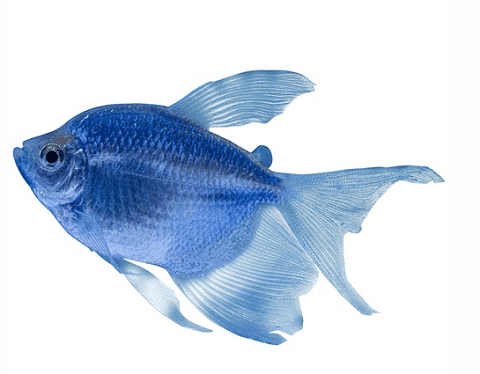
    Long Fin Tetras

    Longfin Tetras

    Longfin Tetras are a variety of blackskirt tetra. Available in several colors. Don’t house with nippy fish

    Buy On Petco Online

    GloFish long fin tetras are another popular option of bright-colored fish, but an even worse option than pristella tetras! These GloFish are altered black skirt tetras (Gymnocorymbus ternetzi). They have long-flowing fins that become a target for both each other and for bettas.

    For the most part, long fin tetras have the same behavior as pristella tetras. At first, long fins might even seem more relaxed, but don’t be fooled. These fish are known fin-nippers and will go after each other and slow-moving species. This makes bettas a prime target for harassment. Even if you luck out and get a docile school of GloFish tetras, a betta fish might try to nip at their fins instead.

    Danios

    Danios

    Danios are the original fish that started it all. Great dither fish. Gets along with many fish. Should be housed in at minimum 10 gallons and in a group

    Buy On Petco Online

    Danios are some of the best beginner fish, but there is little to no compatibility between them and bettas.

    GloFish danios are a type of Danio rerio. These fish originate from fast-flowing, coldwater environments where they like to swim against the current at the surface of the water. These water conditions need to be matched in the aquarium setting. That means a lower water temperature, moderate water flow, and plenty of room to zigzag around.

    As you can see, these conditions directly contrast those required for bettas. Even if you were able to acclimate GloFish danios to similar water conditions needed by betta fish, there is still a huge difference between activity levels. Simply put, these neon zebra danios require different water parameters and are too active to safely be kept with bettas.

    Barbs

    Tiger Barb

    Tiger barbs are one of the more aggressive fish available. Should kept in groups of 12 to curb aggression. Should not be housed with fish with long fins.

    Buy On Petco Online

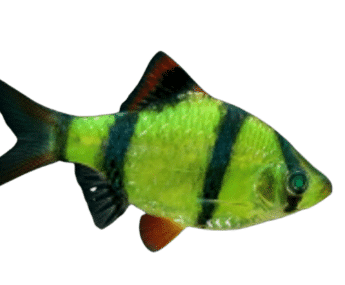
    GloFish barbs are one of the coolest-looking GloFish species due to the contrast created by their black vertical bars. These are tiger barbs (Puntius tetrazona), a long-term favorite in the aquarium hobby. However, these are often misunderstood fish even though they’re one of the top beginner choices.

    Tiger barbs were long sold as a community fish. While there are ways to increase the chances of tiger barbs living harmoniously with other peaceful species, like by keeping them in a large tank with plenty of schoolmates, these needs are often not met. This can lead to frenzy-like behavior that confuses and stresses out other fish. They are also notorious fin nippers.

    Because of their high potential to be semi-aggressive, GloFish barbs are not compatible tank mates for bettas.

    Sharks

    A common tank mate for barbs but not for bettas are sharks. Most often, rainbow sharks (Epalzeorhynchos frenatum) are altered for GloFish gene expression.

    These are relatively large fish that can grow up to 6 inches long. They are not schooling fish and only one is safely kept per every 55 gallons.

    While GloFish sharks stay at the bottom of the tank like corydoras, they are very territorial and will chase away any fish that tries to stay in the bottom portions of the aquarium. This, in addition to their need for a larger aquarium, makes them impractical to keep with male or female bettas.

    Other Fish To Consider

    While many of the GloFish species available aren’t compatible with bettas, there are many traditional tropical fish that can fill the space instead.

    Neon Tetras

    The neon tetra is one of the most popular freshwater fish, period. These are small schooling fish that can comfortably fit in a 10 gallon aquarium alongside a betta fish as long as there are plenty of hiding places.

    Chili Rasboras

    These are very tiny fish that is bullied by a more assertive betta. Chili rasboras only grow to be about an inch long and prefer to stay toward the upper portions of the water column. If you plan on keeping a school of rasboras with a betta, the betta should be slightly more tolerant of an active fish that swims at the surface.

    Ember Tetras

    Ember tetras are similar to neon tetras and should be compatible with most friendly female or male bettas. One benefit to ember tetras is that they’re slightly smaller than neons, which means that you will fit more in a tank.

    GloFish Bettas

    If you want to skip tank mates altogether, then GloFish bettas have grown in popularity over the past couple of years. GloFish produces these fish, but they only come in a bright neon yellow for right now. They have the same care requirements as regular Betta splendens, but glow in the dark!

    Does keeping a GloFish betta mean that you can keep a bigger variety of GloFish species?

    Unfortunately, no. GloFish bettas are regular bettas, just with altered genes. They still need special consideration regarding tank size and aggression. However, it is possible to keep a GloFish betta and a school of GloFish corydoras together.

    Important Note: Glofish Bettas are no longer available at retail stores as Glofish stopped selling the fish. Your best option is to purchase one from a fellow hobbyist.

    Conclusion

    GloFish are genetically modified fish that can make good tank mates for betta fish, especially neon corydoras. Like any other fish pairing, tank size, aggression, and overall compatibility still need to be considered whenever trying to keep a different species with bettas., GloFish corydoras are the most successful as they are peaceful, stay at the bottom of the tank, and don’t outcompete bettas during feeding times.

  • Hermit Crab Care: My 7-Step Guide After Years of Keeping Them in Saltwater Setups

    Hermit Crab Care: My 7-Step Guide After Years of Keeping Them in Saltwater Setups

    Hermit crabs need humidity, heat, salt water, fresh water, and shell options. Most pet store setups provide none of these things properly.

    Everything sold in a pet store hermit crab kit is wrong. Start from scratch.

    If your crab has no way to climb out of the water, your setup is wrong.

    The Hermit Crab needs a paludarium-style setup with both land and water access. That is a different kind of maintenance commitment than a standard aquarium.

    Crabs are escape artists with opinions. If your lid has a gap, they will find it.

    What It Is Actually Like Living With Hermit Crab

    The Hermit Crab is more active and aware of its surroundings than most people expect. In a properly set up tank, it shows behaviors that generic care guides never mention.

    Feeding becomes a routine both you and the fish look forward to. The Hermit Crab learns your schedule and responds to your presence near the tank within the first few weeks.

    Maintenance is consistent, not difficult. Regular water changes and parameter monitoring become second nature. The fish rewards consistent care with better color, more activity, and visible health.

    Over time, you notice personality traits unique to your individual fish. Some are bold explorers. Others are cautious observers. That individual personality is what turns casual fishkeeping into a genuine hobby.

    Key Takeaways

    • A spacious, natural habitat with a deep sand and coconut fiber substrate is critical for hermit crabs to dig, molt, and feel at home.
    • Hermit crabs need a carefully controlled environment. Maintain temps between 72-82ยฐF and relative humidity between 60-80% for their health and comfort.
    • Hermit crabs thrive socially and need spare shells and companions to swap shells with, but avoid painted shells due to toxicity.
    • The Reality of Keeping Hermit Crab
    • What It Is Actually Like Living With Hermit Crab

    The Reality of Keeping Hermit Crab

    Most crabs are semi-terrestrial. A fully submerged tank is a death sentence for most freshwater and brackish crabs. They need land access, humidity, and the ability to climb above the waterline. A paludarium-style setup is the only correct approach for most species.

    Escape prevention is a daily concern. Crabs climb everything. Heater cords, filter intakes, airline tubing, tank decorations. If there is a path to the rim, they will find it. A tight-fitting lid with no gaps is mandatory.

    Aggression is always present. Crabs are territorial and will fight other crabs, eat small fish, and destroy plants. Tankmate selection is limited and must be carefully planned.

    Biggest Mistake New Owners Make

    Keeping crabs in a fully aquatic setup without land access. Most freshwater crabs need to leave the water regularly. Without a dry area, they drown. Yes, crabs can drown.

    Expert Take

    Build the land area first, then add the water section. If you start with water and try to add land later, you will redesign the entire setup. Trust me on this.

    Before You Get Started

    • A glass tank – at least 10 gallons in size
    • Screen lid with clips or an aquarium lid
    • Heater source – under tank heater or a heat lamp
    • Water declorinator/ water conditioner
    • Substrate
    • 2 water bowls for salt and freshwater that is deep enough for them to submerge into
    • Thermometer and Hygrometer
    • Extra shells – same size and larger than what the crab already has
    • Food bowl
    • Hand Mister – or electric fogger
    • Calcium source – Cuttle, crushed coral, or egg shells

    Hermit Crab Care In 7 Simple Steps

    Aquarium Example

    Hermit crabs, sometimes known as land crabs, are intriguing creatures found in tropical habitats. To make sure they live comfortably and healthily at home, they need the right habitat with enough food for them to munch on plus empty shells that hermits naturally need. Setting up an ideal environment suitable for these little crustaceans before bringing them into our homes is essential.

    Step 1 – The Tank

    To create a great living space properly equipped for your tiny companions, hereโ€™s what you should know: prepare spacious surroundings where the crabs can move around freely like their natural setting, choose bedding options accordingly, never forget to provide sufficient amounts of food such as fruits or vegetables along with several available empty shells. The ideal tank for a hermit crab will be 10 gallons for small crabs, but tanks as large as 75 gallons are preferred for fully grown hermits and for community of them.

    ๐Ÿ† Mark’s Take: Of all 7 steps, the tank is the one most beginners get wrong. Specifically the size. I’ve seen hermit crabs kept in enclosures way too small for their needs. A 10-gallon is the bare minimum for a small group, and bigger is always better. They need space to explore, forage, and molt safely without being disturbed. Skimping on the tank size is the fastest way to stress them out and shorten their lifespan.

    Your tank must be secured with a lid or a mesh cover. All hermit crabs are great climbers and are strong for their size. The lid must be secured as hermits have been known to pop up the lids on their own. A heat resistant cover is preferred either use a glass cover used in aquariums or a cover designed for reptiles.

    Step 2 – Selecting The Right Substrate

    Hermit crabs need an ideal habitat that contains a mix of sand and coconut fiber (also known as eco earth) for their bed, playground and dining area. A 5:1 mix of sand and coconut fiber is a popular mix among keepers.

    This substrate should be 6-12 inches deep at least. Three times higher than its largest crab occupant to permit burrowing comfortably when needed. Introducing drainage components is essential in keeping air circulation high so these hermits can breathe properly while helping retain moisture levels.

    Step 3 – Temperature Control

    Under Tank Heater

    This nifty tank works great with reptiles and hermit crab tanks

    Buy On Amazon

    To keep hermit crabs warm and happy, an under tank heater such as ultratherm heat pads is ideal. By maintaining a consistent temperature of 78ยฐF or above with the help of a heater, these low wattage density elements provide just enough warmth to their habitat without getting too hot. Proper temperatures between 78-85ยฐF are what you should shoot for.

    Note that some species can tolerate lower temperatures. Purple pinchers are a good example as they can tolerate lower temperatures down to 75 degrees Fahrenheit.

    โš ๏ธ Temperature Is the Silent Killer: In my experience, temperature issues are the most common reason hermit crabs die without an obvious cause. People set up the enclosure and forget that these animals need consistently warm conditions. Drop below 72ยฐF for any extended period and you’ll start losing them. An under-tank heater is not optional. Don’t rely on room temperature alone, especially in cooler months.

    Step 4 – Understand Your Humidity Requirements

    Maintaining a correct humidity level is essential for hermit crabsโ€™ survival. This should be somewhere between 60-80% as this environment encourages them to thrive. To check the moisture levels, you could use an electronic hygrometer. If the humidity drops too low, it can lead to the suffocation of these animals.

    Step 5 – Feeding And Nutrition

    Feeding-Hermit-Crabs

    Hermit crabs enjoy a range of foods from insects to plant matter. They are omnivores and scavengers in nature. Here are a few hermit crab food selections you can offer on the menu:

    • Fruits – mange, apple, bananas, grapes
    • Protein Sources – Insects (mealworms), seafood, beef (beef lung/beef tripe
    • Vegetables – Oak/Maple leaves, carrots, squash, tomatoes

    Step 6 – Water Essentials

    Hermit crabs need special water dishes filled with an ocean salt mix to ensure the biggest crab can submerge. For the saltwater bowl, this must be prepared with a marine salt mix that should be of similar saliny than you would have for a saltwater tank (1.025 salinity or 35 PPT).

    These deep bowls also create perfect little โ€˜crab digsโ€™ by giving them access to moisture while keeping their environment humidified. All water must be treated for chlorine using a declorinator like Seachem prime

    Step 7 – Provide Proper Shells

    You will need 3 to 5 shells per crab. They must be slightly larger than what the crab is currently wearing. Look for something natural. You can purchase shells at craft stores or even online. The ideal shell is a circular or oval shaped opening and should be sterilized before adding to their habitant. As long as shells are natural, you should be good to go.

    What To Avoid Doing

    Want a fully aquatic invertebrate? Get shrimp. Want a semi-terrestrial paludarium project? Get crabs. The setup is completely different.

    • Don’t offer painted or glazed shells – these are dangerous and toxic to your crab!
    • Do not feed any plant matter that has been treated with pesticides. Hermits are very sensitive to treated plants.
    • Never add tap water directly into your crabs bowl
    • Never use non-marine grade salt when making your saltwater bowls
    • Avoid anything chrome in the tank. Nickel, arsenci, and cadmium are also highly toxic to them. Research what your decor is made of to avoid any issues. Natural is your friend!
    • Avoid iron and other rust prone items – humidity will make metals prone to rust

    Species Overview

    Scientific NameCoenobita clypeatus (Caribbean hermit crab) and Coenobita compressus (Ecuadorian hermit crab)
    Common NamesHermit Crab, Land Hermit Crabs
    FamilyCoenobitidae
    OriginCaribbean
    Skill LevelModerate
    Average Life Span10 years
    Average Adult Size2-6 inches
    DietOmnivorne
    Minimum Tank Size10 gallon tank
    Humidity Range70% to 85%
    Temperature Range75 – 85 degrees F

    Social Dynamics

    Group-Hermit-Crabs

    Hermit crabs, despite the moniker theyโ€™ve been given, are quite social creatures and enjoy being part of a group. As each crab needs around five to ten spare shells for growth over their lifespan as well as exchanging them on occasion. Itโ€™s essential that small hermit crabs have access to hiding places for comfort when in groups.

    One great thing about hermits is that their size doesn’t matter. Unlike fish where you have to worry about little fish getting eaten by larger ones, your hermits will not care. Aggression will occur if you do not have enough shells around for everyone. Other than that concern, hermit crabs love to be around each other.

    However, hermits should only be housed with other hermits. Do not mix them with reptiles or amphibians. Quarantining before release hermit crabs to their new environment is recommended. Do so for a month for each addition to prevent mites (more on this later).

    Health and Safety Practices

    Taking care of your pet hermit crab is not difficult. While molting, itโ€™s best for them to have some space away from the other crabs so they can do it safely and without interruption.

    You will deal with issues humidity related such as mold. Remove mold as soon as you see it and allow the affected decoration to completely dry before adding them back.

    Pests are your main issue with hermit crabs, not so much disease. Heat and humidity will attract pests like mites, isopods, and fruit flies. Mites is prevented by quarantining new additions. Fruit flies is eliminated with the use of a non-toxic trap.

    Maintenance And Upkeep of the Habitat

    Hermits are amazingly simple to keep. Your main daily concerns aside from feeding will be humidity and heat. Here are a few things that you should do routinely.

    DailyWeeklyMonthly
    Check temperatureClean out water bowlsChange water (for cycled water)
    Check humidityClean out decor
    Remove uneaten food

    Closing Thoughts

    Caring for hermit crabs may seem intimidating, but it is incredibly rewarding and enriching when done right. A successful experience is determined by creating an adequate home environment to suit the crustaceansโ€™ needs as well as comprehending their social behaviors, nutrition requirements and dietary habits. Itโ€™s more than just meeting these fundamentals though. In order to gain a deep understanding of your hermit crabโ€™s individual personality quirks, you must learn about them through observation. Embark on this unique journey with the helpful guidance needed to become true pet parents!

    Frequently Asked Questions

    Are hermit crabs easy to take care of?

    Hermit crabs are relatively easy to look after, since theyโ€™ve adapted to survive on land and can live for up to 15 years when cared for properly. These creatures appreciate company, so owning several of them is recommended.

    Do hermit crabs recognize their owner?

    Hermit crabs have the remarkable ability to learn and recognize their ownersโ€™ voices, and even come when called by name. Itโ€™s quite astonishing how these particular kinds of crab can form such a strong bond with human companions.

    How many hermit crabs should be kept together?

    Hermit crabs should be housed together in pairs or small groups with no fewer than 10 gallons of space for each two hermits, so they can prosper.

    How do you take care of a hermit crab for beginners?

    If youโ€™re a beginner looking to keep hermit crabs, make sure that their environment has the correct temperature (75-85 degrees) using either heaters or lamps and also maintain humidity at 70-85% by spraying dechlorinated water in its tank. Light needs to be present for 8-12 hours each day with fluorescent/LED bulbs but avoid UVB lighting as it is too strong.

    Can hermit crabs eat lettuce?

    Hermit crabs can consume romaine lettuce as a nutritional supplement and enjoyable treat alongside other fruits and vegetables. These little crustaceans require essential vitamins that the nutrient-rich plant matter found in these foods offer them, making it an integral part of their diet.

    References

  • Keyhole Cichlid Care Guide: The Most Underrated Dwarf Cichlid in the Hobby

    Keyhole Cichlid Care Guide: The Most Underrated Dwarf Cichlid in the Hobby

    Table of Contents

    Keyhole cichlids are the most peaceful cichlid in the hobby, and that is exactly why most people fail with them. They get bullied by aggressive tank mates, stressed by fast moving fish, and fade into the background of busy tanks. This fish needs calm, not chaos. I have kept keyholes for years and the biggest mistake is putting them with fish that treat their timidity as an invitation to harass. Get the tank mates right and this fish is a gem. Get them wrong and it hides until it dies. The cichlid that hides behind a leaf when a tetra swims by.

    The cichlid that hides behind a leaf when a tetra swims by.

    What Most Care Guides Get Wrong About Keyhole Cichlid

    The keyhole cichlid is criminally underrated, and the main misconception is that they’re boring. Most people see them in a store tank where they’re washed out, stressed, and hiding, and they pass them by. But in a well-planted tank with proper care, keyhole cichlids develop beautiful gold and cream coloring, and their behavior is endlessly interesting. They’re also the most peaceful cichlid I’ve ever kept. And I mean genuinely peaceful, not “peaceful for a cichlid.” They won’t bother shrimp, they won’t harass other fish, and they won’t destroy your plants. The other myth is that they don’t have personality. Keyholes are shy initially, but once settled in, they become curious, interactive fish that recognize their keepers.

    The Reality of Keeping Keyhole Cichlid

    Keyholes are genuinely gentle fish, and that gentleness defines everything about how you need to keep them.

    They are extremely shy. New keyhole cichlids hide for days or weeks. This is normal and you cannot rush it. Forcing them into the open by removing hiding spots will stress them further. Give them caves, plants, and time.

    They cannot handle aggression. Even mildly aggressive tank mates like tiger barbs or some tetras will stress keyholes into declining health. They need tank mates that are genuinely peaceful and non-confrontational.

    They color up slowly. Keyholes are not flashy fish when you first get them. The colors develop gradually as they settle in and feel secure. A keyhole that has been in your tank for six months looks completely different from one you just brought home.

    They are underrated. Keyholes are one of the most overlooked cichlids in the hobby because they are not aggressive or flashy. But their personality, hardiness, and community compatibility make them excellent fish for the right keeper.

    Biggest Mistake New Keyhole Cichlid Owners Make

    Keeping them with aggressive or even semi-aggressive tank mates. Keyholes are not equipped to handle confrontation. They shut down, stop eating, and waste away. Choose only the most peaceful community fish as companions.

    Expert Take

    A pair of keyhole cichlids in a heavily planted 30 gallon with corydoras and small tetras is one of the most peaceful, attractive cichlid setups you can build. If you want cichlid behavior without cichlid aggression, this is your fish.

    Key Takeaways

    • Keyhole Cichlids are sociable, adaptable freshwater fish that can live up to 10 years with proper care.
    • Create an ideal tank setup by mimicking their natural habitat and providing plenty of cover, such as plants and caves.
    • These fish prefer calmer waters and an acidic pH
    • Choose compatible tank mates like corydoras catfish, larger tetras, and angelfish

    Species Overview

    Scientific NameCleithracara maronii
    Common NamesKeyhole Cichlid
    FamilyCichlidae
    OriginSouth America, primarily in slow-moving waters of the Orinoco River basin
    DietOmnivore
    Care LevelEasy to Intermediate
    ActivitySlow to Moderate
    LifespanUp to 10 years
    TemperamentPeaceful (Mildly aggressive when breeding)
    Tank LevelMiddle to bottom
    Minimum Tank Size20 gallon (long format) otherwise, 30+ gallons
    Water Temperature Range74ยฐ-80ยฐF
    Water Hardness5 to 20 DH
    pH Range5.0. 7.0
    Filtration / Water MovementLow
    Water TypeFreshwater
    BreedingEgg layer
    Difficulty to BreedEasy to breed
    CompatibilityCommunity fish
    OK, for Planted Tanks?Yes

    Classification

    OrderCichliformes
    FamilyCichlidae
    SubfamilyCichlinae
    GenusCleithracara
    SpeciesC. Maronii (Steindachner, 1881)

    Understanding Them

    Keyhole Cichlids are native to the clear coastal creeks and river basins of South America and make great additions to community tanks for all levels of fish keepers. Slow moving water, rich in decaying wood, is what these freshwater creatures prefer along with their regular diet consisting of worms, crustaceans and insects.

    ๐Ÿ† Mark’s Take: From what I’ve heard consistently from fish store colleagues who’ve worked with them. Keyhole Cichlids are one of the most genuinely chill cichlids you can add to a community tank. They don’t carry the popularity of rams or apistogrammas, which is honestly a shame, because they’re easier to keep than either. If you want a cichlid that won’t demolish a planted community setup and gives you minimal stress, this fish deserves to be at the top of your list.

    What sets them apart from others is that they can change their coloring pattern depending on threats, which makes them even more appealing! This characteristic of this fish has lead to get the nickname “chamelon cichlid.”

    Fun Fact: The Keyhole Cichlid was named one of the forgotten cichlids per Tropical Fish Hobbyist Magazine. 

    As well as being peaceful by nature, Keyholes also like company so having multiple males or females together. They may have to bicker a little to establish their pecking order, but once they do that they should become peaceful among each other. However, one a breeding pair occurs, more aggression may occur.

    Origin And Distribution

    Keyhole Cichlids (Cleithracara maronii) have a wide distribution across various coastal regions, including Suriname, French Guiana, Venezuela and Guyana, as well as Trinidad & Tobago. These hardy aquarium fish need plenty of space to thrive. They inhabit small creeks and rivers, which offer the perfect habitat for young fish along with other smaller species.

    Average Size

    Considering their eventual adult size of 4 to 4.9 inches (10-12.5 cm), it is important for any aquarist to account for an appropriate tank space when setting up a home environment for keyhole cichlids, as they still need adequate room. They will technically qualify as dwarf cichlids to hobbyists and is kept in tanks as small as 20 gallons if the long configuration is used. Fortunately for you, this cichlid species grows slower than most.

    โš ๏ธ Size Warning: The label ‘dwarf cichlid’ is misleading here. At 4 to nearly 5 inches, Keyhole Cichlids are on the larger end of what most people expect from a dwarf species. That surprises keepers who assumed they’d stay small like an apistogramma or a pea puffer. This is one of the main reasons hobbyists feel the fish outgrew their plans. A 30-gallon minimum is a much more realistic starting point than the bare minimums you’ll sometimes see listed.

    Appearance

    Keyhold-Cichlid-In-Tank

    Keyhole Cichlids, compared to other dwarf cichlid species, will seem dull in appearance with their muted colors. The body is round and compressed with muted colors that allow it to blend into the surroundings when needed, while thereโ€™s a black stripe above the eye, which contrasts effectively against this subtle coloration. The fish will become more yellow with its body color over time as it ages.

    Keyholes possess an unmistakable key shaped mark on their head, giving rise to its common name. During mating season, male and female specimens become even more attractive due to changes in color. Males turning white while females take on the black bar design resulting from where they got their title of โ€˜keyhole cichlid.โ€™ Adding both genders of this fish species is truly captivating for any home aquarium setup making it stand out amongst other similar types of fish.

    Males are larger than females while sporting longer dorsal fins compared with a femaleโ€™s rounder shaped ones. Both sexes hold equal beauty making it difficult not love this unique species!

    Lifespan

    When taken care of correctly, Keyhole Cichlids can live for 7-10 years in aquariums. This is quite a lengthy lifespan which makes them good companions to fish lovers who are looking for longterm enjoyment as well as educational opportunities.

    To maximize the health and lifespan of these cichlids, itโ€™s essential that their environment remains stable with optimal water parameters and few stress factors present.

    Ideal Tank Setup For Keyhole Cichlids

    Keyhold cichlids will need a tank at minimum of 20 gallons. However, the tall style 20 gallon will not work at this size. You will need at least a 20 gallon tank so you have enough hortizontial space so the fish will not become overly territorial.

    Substrate And Decorations

    On top of this basic setup, cover like plants or caves are essential if they want these species feeling safe, so adding decoration such as driftwood, rocks, & aquatic plants will help recreate a more organic environment similar to their native habitats, make sure not pick bright lighting nor aggressive neighbors which can easily upset them.

    Fine grained substrates such as soft sand should be used to replicate their natural setting. Decorations, including driftwood and rocks, can add even more visual appeal, plus provide safe hiding spots in the tank.

    This is an excellent cichlid species for a planted tank. They will not eat plants or dig them up. They will also get along with most community fish as long as you don’t keep them with smaller fish that they can fit their mouths. If you want to replicate their natural environment Cabomba or floating varieties are best for them. Heavily planted tanks are encouraged as these are known for being shy fish.

    Is the Keyhole Cichlid Right for You?

    Before you commit to this species, here’s an honest assessment of whether it fits your setup and experience level.

    • The most peaceful cichlid in the hobby. If you want cichlid personality without any aggression whatsoever, this is your fish.
    • Excellent for planted community tanks. Won’t uproot plants, won’t eat shrimp, won’t bully tank mates.
    • Need patience. They’re shy for the first few weeks and need time to settle in before showing their personality.
    • Not a flashy fish. Their beauty is subtle. Cream and gold tones with the distinctive keyhole marking. If you want bright colors, look elsewhere.
    • Hardy and forgiving. Tolerant of a range of water conditions and very disease-resistant once established.
    • Best in groups or pairs. They’re social fish that do better with conspecifics than as singles.

    Water Parameters

    For your Keyhole Cichlids to stay healthy and happy, it is important to adhere to the required water parameters. The pH should be from 5.0 – 7.0 while they should have a stable temperature of 74-80ยฐF. These fish prefer softer water as well.

    Given their higher temperature requirements, they are based setup with a reliable aquarium heater to keep the temperatures stable. In addition, you should also maintain the following nutrient parameters:

    Filtration And Water Flow

    Creating a healthy environment for Keyhole Cichlids necessitates the need for efficient filtration, although their response to strong currents is negative. Many power filters and canister filters will be too strong for them and planted aquariums require water that is not compatible with their preference.

    To mitigate this, consider keeping a heavily planted tank that will have pockets of lower water flow where your fish can feel safe. Note their colors when they are swimming, if they start to display more black marks on their body, this is a result of their reaction to stress around them. This is sometimes your first warning sign that something is amiss with their environment.

    For canister filters, you can use a spray bar attachment to lessen the flow into the tank. The fish is large enough to not get sucked up by intakes, but it is the output speed that will stress them out. Others will use sponge filters, don’t I’m not a fan as I prefer to hide as much equipment as possible in my setups.

    Compatible Tank Mates

    Paleatus-Cory-Fish

    Being a medium sized fish with a docile demeanor, there is a large amount of potential keyhole cichlid tank mates you can add with your Keyhole Cichlid. Possible tankmates include:

    In addition, you can also consider other cichlids such as:

    For these fish, make sure they are either smaller or near the same size as your Keyhole cichlid when they are first introduced.

    Lastly, due to these fish being naturally shy, it’s could help bring them out if you add dither fish in the tank. Look for dithers that are at least 2.5 inches long to prevent them from getting eaten.

    Bad Tankmates

    Avoid the following fish as they will be hostile to your Keyhole Cichlid:

    There are a few fish I’ll include here as maybe. Sometimes they work, and other times they don’t. It’s up to you if you want to consider them. Just have a backup plan if it doesn’t work out:

    Feeding And Nutrition

    Keyhole Cichlids are omnivores and need a diverse diet consisting of both plant and animal based proteins. This mimics their natural habitat, where the primary sources of food are detritus, larvae, as well as small crustaceans such as shrimp.

    To deliver that nutrition to them, provide them with varied dry foods like flakes or pellets alongside live insects and frozen items on occasion, all while making sure not to overfeed by monitoring portion size, as food fed should be consumed within two minutes. Ron’s Cichlid food is a great brand of food to use for these fish to ensure they get a good mix of ingredients.

    Great Balanced Food
    Ron's Cichlid Food

    Ron is an African Cichlid breeder with over 25 years in experience who created a line of food that is well balanced. A great option when you can’t use frozen foods.

    Buy On Amazon

    Breeding Keyhole Cichlids

    Breeding Keyhole Cichlids is relatively straightforward since they form pairs and bond for life as monogamous substrate spawners. To raise their success rate, providing an optimal breeding tank with the right water parameters combined with a diet containing live or frozen foods is key having a successful breeding spawn.

    Female keyhole cichlids can lay up to 600 eggs at a time and both parents will actively care for their young. These eggs is laid on rocks, driftwood, plants, and even on the aquarium glass itself! A spawning site is recommended to create for them. You use flat pieces of rock, wood, or even title or pots so the fish have something to lay their eggs on.

    Parental Care And Fry Development

    One of the more noteworthy characteristics of Keyhole Cichlid breeding is that both male and female fish put forth exceptional efforts when it comes to caring for their eggs and larvae. The parents actively protect them from danger, seeing to it they remain safe until hatching occurs (video source).

    While these fish will get more aggressive when breeding, they are not as bad as other cichlids. They will often push away a threat versus damaging or attacking tank mates. Even so, to keep fry from being eaten by other tankmates, consider moving the parents to their own breeding tank.

    Once hatched, parental care will continue often lasting a few months, as they feed small organisms like infusoria or newly born brine shrimp on behalf of their fry. It is one of the most rewarding things to take part in the hobby.

    Health And Disease Prevention

    To properly care for Keyhole Cichlids, stay on top of water quality parameters. Some common diseases you may come across are:

    • Ich
    • Velvet
    • Flukes

    Less common ailments include infections like fin rot and columnaris.

    Quarantining is your best method of prevent, though I know most hobbyist will not practice this. In the even you do not practice quarantine, keep your tank as stable and stress free as possible.

    Frequently Asked Questions

    What do keyhole cichlids eat?

    Keyhole cichlids are omnivorous, and will eat a variety of food items such as small crustaceans, insects, larvae, worms or small fish. These fish also enjoy eating plant matter. To flakes and pellets that can be bought from the store. Frozen options are great too!

    What color are keyhole cichlids?

    Keyhole cichlids display a yellow-cream color, but when the fish is stressed it can change to brown. An identifiable feature of these species is their black spot situated at its center that looks like a keyhole.

    What cichlids are nice?

    Beginners looking for an easy, peaceful fish can find the keyhole cichlid to be a great option. Not needing much space and having hardiness on its side makes it simple to keep this species in aquariums.

    What size tank do Keyhole Cichlids need?

    Keyhole Cichlids require at least a 20 gallon tank long. If you do not have a long tank, then a 30 gallon would be the minimum tank size.

    Are Keyhole Cichlids compatible with other fish species?

    Keyhole Cichlids are harmonious with other aquatic life like larger tetras, peaceful barbs, and corydoras. As long as the fish won’t fit in its mouth and it’s hostile, your Keyhole should get along with them.

    South American Cichlid Species Directory

    This article is part of our South American Cichlids: Complete A-Z Species Directory. Visit the hub page to explore care guides for all 32 South American cichlid species we cover.

    What It Is Actually Like Living With Keyhole Cichlid

    This is the part no other care guide gives you. Forget water parameters for a minute. Here is what it is actually like to share your tank with this species.

    They change color with mood. Keyholes shift between pale cream and dark brown depending on their mood. The keyhole-shaped marking on their side becomes more or less prominent. Reading their color is like reading their emotions.

    They are gentle parents. Keyhole cichlids are attentive parents, but even their parental aggression is mild by cichlid standards. They escort fry around the tank without the violent territory defense you see in other species.

    They thrive in planted tanks. Unlike many cichlids, keyholes leave plants alone. They do not dig, uproot, or eat plants. A densely planted tank is their ideal habitat.

    They are slow eaters. Keyholes take their time with food. In a tank with fast, aggressive eaters, they get outcompeted and go hungry. Make sure food reaches them during feeding time.

    How the Keyhole Cichlid Compares to Similar Species

    The Bolivian ram is the closest comparison. Both are hardy, peaceful South American dwarf cichlids. Bolivian rams are more colorful and slightly more assertive during breeding. Keyhole cichlids are calmer and even more community-compatible. If you want a dwarf cichlid that will absolutely never cause problems in a community tank, the keyhole wins. If you want more color and don’t mind mild breeding aggression, the Bolivian ram is the better pick.

    The festivum cichlid is another overlooked South American cichlid worth comparing. Festivums are larger (reaching 6-8 inches) and need more space, but they share the keyhole’s gentle temperament. Both are peaceful enough for community tanks with smaller fish, which is unusual for cichlids of their respective sizes. If you have a larger tank and want a similarly gentle cichlid with more physical presence, the festivum is an excellent option.

    Closing Thoughts

    Keyhole cichlids are proof that the quietest fish in the room still needs the right room.

    Fish keepers of all levels can have a rewarding experience with the Keyhole Cichlids, thanks to their remarkable adaptability and peaceful disposition. If you want to create an environment in which these fish thrive, make sure that your tank is set up according to its natural habitat as well as providing adequate care for them.

    Have you kept this fish before? Let us know your experience in the comments below. I love to hear back from my readers. Until next time!

  • Pet Seahorse Care Guide: What I’ve Learned From Keeping Them at the Fish Store

    Pet Seahorse Care Guide: What I’ve Learned From Keeping Them at the Fish Store

    Seahorses need a species-only tank with gentle flow, live or frozen mysis shrimp multiple times daily, and pristine water quality. They are not decoration. The daily feeding commitment alone eliminates most hobbyists.

    Seahorses require more daily attention than any other marine fish. They are a commitment, not an impulse buy.

    Table of Contents

    The Pet Seahorse is one of the most popular saltwater fish for a reason, but popularity does not mean easy. This fish has specific requirements that reef store employees rarely explain. After 25 years of reef keeping, I know what separates a healthy specimen from a slow decline.

    Saltwater fish do not forgive mistakes the way freshwater fish do.

    Saltwater fish require stable parameters, quality food, and a mature tank. The startup cost and ongoing maintenance are significantly higher than freshwater.

    In saltwater, the tank runs on stability. Every shortcut you take shows up weeks later as a problem.

    What Most Care Guides Get Wrong About Pet Seahorse

    The single most damaging myth about pet seahorses is that they’re beginner saltwater fish. They are absolutely not. In my 25 plus years in the hobby, I would rank seahorses among the most demanding marine animals to keep. They need species-specific tanks with gentle flow and frozen mysis shrimp feedings multiple times daily. Only purchase captive-bred specimens.

    The Reality of Keeping Pet Seahorse

    A mature tank is mandatory. Most saltwater fish need a tank that has been running and stable for at least 3 to 6 months. New tanks have unstable parameters that stress saltwater fish far more than freshwater species.

    Diet is not just flake food. Many saltwater fish need frozen mysis, brine shrimp, or specialty foods to thrive. A pellet-only diet leads to malnutrition, faded colors, and immune suppression. Variety is not optional.

    Quarantine is essential. Marine ich and velvet are common in newly purchased saltwater fish. A proper quarantine tank before adding fish to your display tank prevents devastating disease outbreaks.

    Biggest Mistake New Owners Make

    Skipping quarantine and adding a new saltwater fish directly to the display tank. One infected fish introduces marine ich to your entire system. Treatment in a reef tank is nearly impossible because copper kills corals and invertebrates.

    Expert Take

    Quarantine every new fish for 4 to 6 weeks before adding it to your display. I have never met a serious reefer who regretted quarantining. I have met dozens who regretted skipping it.

    Key Takeaways

    • Choose captive bred seahorses for a healthier aquarium
    • Provide 30 gallons per pair, 24โ€ of vertical space and compatible tank mates
    • Monitor water parameters, feed varied diets & provide preventive care to keep your seahorse healthy

    Species Overview

    Scientific NameHippocampus spp
    Common NamesCommon Seahorse, Yellow Seahorse, Spotted Seahorse
    FamilySyngnathidae
    OriginIndo-Pacific Ocean
    DietCarnivore
    ColorsVarious shades including yellow, brown, and black with potential for white spots
    Care LevelModerate to Advanced
    TemperamentPeaceful
    Minimum Tank Size30 gallons (114 liters) for a pair. A taller tank is preferable.
    Max SizeUp to 8 inches (20 cm)
    Temperature Range72ยฐF to 78ยฐF (22ยฐC to 25.5ยฐC)
    pH Range8.0. 8.4
    Salinity1.025 or 35 PPT
    Reef SafeYes
    Available As Tank Breed?Yes, preferred

    Classification

    OrderSyngnathiformes
    FamilySyngnathidae
    GenusHippocampus
    SpeciesH. Erectus, H. Reidi, H. Kuda (common captive-bred species)

    Choosing the Right Pet Seahorse: Why Captive Bred is Best

    Aquarists are encouraged to opt for captive bred seahorses rather than wild ones. These chosen specimens carry a reduced risk of pathogens and possess higher survival rates compared to their non-captive counterparts caught in nets or the wild. Captive breeding has also made it easier as these magnificent creatures can now easily be acquired from your local fish shop or qualified breeders. (see video from our YouTube Channel)

    Not only does selecting captive bred animals assist with keeping an intact habitat, but they have acclimated better when placed into aquariums. You will find that frozen foods such as mysis shrimp and brine shrimp are more accepted by them, which helps ensure your pet is obtaining all necessary dietary requirements. Ultimately, choose carefully wherever possible. Always pick those born in captivity!

    ๐Ÿ  Mark’s Take: Captive-Bred Only. And Species-Only Tank
    This is non-negotiable: captive-bred seahorses only. Wild-caught specimens almost always struggle to adapt to prepared foods, are far more susceptible to disease, and have a much lower survival rate in home aquariums. Beyond that, seahorses need a species-only setup. Most people try adding them to a community reef and it goes badly. Fast-moving tank mates out-compete them for food, stress them out, and some will nip at them. A dedicated seahorse tank is the right call.

    Creating The Ideal Tank

    The health of your aquatic pets hinges on having a perfect seahorse tank. Make sure to provide ample space. At least 30 gallons per pair is optimal, with 50 or larger being preferable. And adequate vertical height (24โ€ minimum) for courtship rituals. Be cautious when picking compatible fish, as the more aggressive varieties may harm seahorses due to their limited swimming ability. Maintain good water quality through protein skimmers, filter flosses or socks in order to control messy eating habits. Secure steady flow without strong currents that could endanger the safety of your pet seahorses. An aquarium sump is preferred for added stability.

    Tank Size And Vertical Space

    When it comes to seahorse aquariums, a reef tank or other type of fish tank should include plenty of vertical height. This is due to the fact that these fascinating creatures possess small fins which allow them swim in an upright posture through the water column. Allowing sufficient space for this maneuvering eliminates any risk of stress and harm caused by lack of room during their unique movements such as swimming and courtship dancing rituals. Cube aquariums excel for providing that extra height.

    Best Value
    JBJ Flat Panel

    The JBJ Flat Panel is an excellent all in one rimless tank. Well built with a quality stand. It’s one of the best medium size starter tanks you can purchase!

    Click For Best Price

    Maintaining Optimal Water Conditions

    Seahorse keepers must ensure that the aquatic environment for their pet seahorses remains stable and safe. The water temperature should be kept between 68ยฐF to 74ยฐF, while filtration systems are essential as these creatures generate considerable waste due to their continuous feedings.

    Keeping an eye on several water parameters is necessary in creating a beneficial habitat where your pets can live happily. They include pH levels, undetectable ammonia levels, calcium so they can maintain their bodies, alkalinity readings, and salinity values. Quality test kits are essential for monitoring your parameters.

    Editor’s Choice – Saltwater
    Red Sea Marine Care Kit

    The Aquarium Test Kit For Saltwater

    This kit from Red Sea has all the essentials need to start your Saltwater Aquarium journey!

    Buy On Amazon Click For Best Price

    I recommend using a reef specific salt with these animals as these types of salt will maintain stable parameters to maintain their bony plates. You will want to consider an auto top off system to maintain salinity and consider dosing your tank if you plan on maintaining hard corals.

    Best Value
    BrightWell Aquatics NeoMarine Salt

    Best Value

    The salt of choice for World Wide Corals. It is a top tier salt mix with a reasonable price

    Click For Best Price Buy On Amazon

    Temperature Control

    Having an appropriate water temperature is crucial for the health and contentment of your seahorses. Different species need different temperatures: Hippocampus erectus should be kept in a range between 68ยฐF to 74ยฐF, while seahorse species H. Reidi, H. Comes, and H. Kuda thrive best with higher levels around 72ยฐF to 74ยฐF.

    To ensure that you maintain ideal conditions within your home aquarium these aquatic creatures it may be necessary install fans or chillers as additional sources of cooling if things get too hot inside their environment. Your best way to keep them cool is to keep your home cool too, but hotter climate a chiller or fan is going to be needed to maintain the low temperatures.

    Water Parameters And Filtration

    Maintaining proper water parameters in a seahorse aquarium is critical for the health of your seafaring pets. Check regularly on pH, ammonia, calcium and alkalinity as well as salinity levels to ensure that your tank remains habitable.

    Nitrates should be kept at or below 20 ppm in order to help avoid stress. To keep up with optimal water quality for these unique animals itโ€™s beneficial to invest in an effective filtration system using sponges, filter floss and/or socks, which are excellent choices when looking into keeping their home clean & safe from excessive waste buildup within saltwater aquariums housing sea horses.

    Diet And Nutrition

    For your sea creatures to stay healthy, it is essential that they eat a varied and nutritious diet. Seahorses consume different types of food such as mysis shrimp, brine shrimp, and copepods for protein. Feeding them multiple times in one day ensures your seahorse gets the necessary nutrients needed for their wellbeing.

    To provide additional nutrition you can offer fresh seafood like shrimps too. This will also make sure your pet enjoys its meals! The variety of foods consumed by these creatures keeps them contented while preventing any malnutrition issues from arising.

    Hand feeding is recommended if you are comfortable doing it. You can hear the same sentiment from FAMA Magazine below:

    Handfeeding sea horses has several important advantages for both the aquarist and his pampered pets. First of all, it breaks the sea horseโ€™s dependency on live foods, allowing the hobbyist to offer them a wide assortment of nutritious foods that would otherwise have to be excluded from their diet. Unlike live foods and frozen fare, which are limited to prey that is small enough to be swallowed whole, the food that is used for handfeeding is cut into convenient, bite-sized pieces. 

    Pete Giwojna. From the December 1996 issue of Freshwater and Marine Aquarium magazine (FAMA)1

    Quarantine And Conditioning

    When introducing newly acquired seahorses, even captive bred ones, to their permanent tank it is essential that a period of quarantine and conditioning first takes place. This practice helps them acclimate smoothly into the new environment as well as give them time to rebuild lost strength due to transportation stressors. Quarantine also gives pet owners an opportunity for detection and treatment of any health problems before placing in the display aquarium.

    The recommended quarantining duration should be no less than 30 days where closely monitoring activities such feeding behaviors, identifying potential illness can take place beforehand, guaranteeing your seahorseโ€™s health before transferring over to your display tank permanently.

    Selecting Compatible Tank Mates

    Trumpet Coral

    When it comes to the safety and health of your seahorse, having compatible tank mates is essential. To ensure that no harm befalls them, you should make sure to stay away from fast-moving or aggressive fish which could cause distress in their environment. Here are some species I would recommend:

    โš ๏ธ The Biggest Mistake I See: People add seahorses to a community reef assuming that “peaceful” fish will be fine together. They’re not. Seahorses are slow, deliberate hunters that can’t compete with fast-swimming fish for food. They’ll quietly starve. High flow is also a serious stressor; seahorses come from calm, low-current environments and don’t belong in a typical high-flow reef setup. Stick to a species-only tank or pair them only with very slow, calm companions like pipefish or small, non-competitive gobies.

    • Small blennies
    • Clown Gobies, Eel Gobies
    • Dragonets and Scooters
    • Royal Gramma (medium risk)
    • Small cardinalfish (medium risk)
    • Flasher wrasses (medium risk)
    • Young clownfish (not compatible as adults)

    Invertebrates And Coral Compatibility

    Blue Hornet Zoas

    When introducing invertebrates and corals to a seahorse aquarium, it is important to choose species that are compatible with the aquatic mammals. Shrimp and snails should be safe additions but clams or scallops will cause harm. Seahorses can get along fine with most soft coral types such as:

    Some Large Polyp Stony (LPS) varieties are compatible, but avoid any with large mouths or stinging abilities. Euphyllias would be examples of LPS corals that are not compatible with seahorses

    SPS corals are difficult to keep with seahorses do due to the seahorses higher nurient level requirements and the fact that their hitching behavior will bother your SPS corals.

    Is the Pet Seahorse Right for You?

    Before you add a Pet Seahorse to your tank, here is an honest assessment of what you’re signing up for. I’d rather you know exactly what to expect now than find out the hard way after you’ve already bought one.

    • Experience level: Pet Seahorses are best suited for intermediate to advanced keepers. They have specific requirements that can overwhelm beginners.
    • Tank size commitment: You’ll need at least 30 gallons, though bigger is always better. Make sure you have room for the tank before buying.
    • Tank mate planning: Pet Seahorses is territorial, so plan your community carefully. Not every fish will work as a tank mate.
    • Maintenance demands: Expect regular water testing and consistent water changes. Pet Seahorses are sensitive to parameter fluctuations.
    • Budget reality: Keeping Pet Seahorses costs more than typical setups. Budget for ongoing costs, not just the initial purchase.
    • Time investment: Beyond daily feeding and weekly maintenance, regular observation is the best way to catch health issues early.
    • Long-term commitment: These are living animals that depend entirely on you. Make sure you’re ready for the ongoing responsibility.

    Breeding: Tips and Challenges

    Breeding seahorses is an incredibly rewarding experience, offering a unique opportunity to watch the male bear and hatch its eggs. It is important to there are various challenges involved such as maintaining adequate water conditions and supplying enough nourishment for their fry.

    You can read an excerpt from TFH Magazine about breeding. I’ll include a link to their article so you can get more information about them as depth in breeding is outside of this blog post:

    The fishes of the genus Hippocampus, commonly known as seahorses, are reported to frequently reproduce in captivity. Most of the literature is also optimistic about the viability of seahorse fry. However, my experiences with maintaining and reproducing several species of Hippocampus demonstrates that a labor-intensive effort is required to obtain a new generation of adult seahorses, and even then the final outcome is uncertain.

    TFH Magazine2

    Health: Preventive Measures And Treatment

    Having a healthy seahorse aquarium takes proactive steps to avert diseases and have the right medication in your medicine cabinet. Regular water changes, quarantining new arrivals, and keeping space from overcrowding will help minimize illness risks for tank dwellers.

    As well as employing preventive measures, stocking up on medicines can allow you to react quickly when sickness develops. Here are some medications to stock up:

    • Seachem Kanaplex (Anti-bacterial)
    • Seachem Neoplex (experienced keepers recommend Neosporin, but I’ll stick to aquarium-related products) – Antibiotic
    • Seachem Metroplex – Anti Parasitic

    Note that Copper and Chloroquine Phosphate will not work on Seahorses. For hard parasites like Ich your only options are malachite green combos like Kordon Rid Ich and API Super Ich Cure.

    ๐Ÿ“ Mark’s Note on Medications: I spent considerable time researching Chloroquine Phosphate treatments for reef fish. It’s a subject I know well. This warning about CP and copper is important: seahorses are scaleless and extraordinarily sensitive to medications that work fine on other saltwater fish. Before treating a seahorse for anything, research that specific treatment for seahorses. What’s standard for a clownfish is lethal here.

    Frequently Asked Questions

    Can I have a seahorse as a pet?

    Owning seahorses as pets is a very fulfilling experience if you are willing to make the right investments in their aquarium, tankmates, and diet. By providing them with an adequate environment they will become special members of your family!

    How long do seahorses live as pets?

    The life expectancy of seahorses kept as pets can range from three to five years, depending on their size. It is essential to consider this fact when making the decision whether or not one should purchase a pet.

    Do seahorses recognize their owners?

    Seahorses are capable of recognizing their owners, which is evident by their responding to and even initiating greetings. Their ability to remember those they see frequently is impressive!

    Do seahorses need saltwater or freshwater?

    Seahorses require saltwater to thrive, as most of their species are found in the ocean. Although one type can inhabit brackish rivers, it is recommended that they be housed in a specialized salt water tank for optimal safety. They are not compatible with freshwater fish.

    What is the ideal temperature range for a seahorse aquarium?

    When it comes to seahorse aquariums, the preferred temperature range is 68ยฐF to 74ยฐF for optimum conditions. This optimal environment provides these fascinating marine animals with an ideal habitat in

    How the Pet Seahorse Compares to Similar Species

    If you’re considering a Pet Seahorse, you’ve probably also looked at the Pipefish. Both fill similar roles, but the differences matter when planning your tank. The Pet Seahorse has its own distinct personality and care needs. In my experience, the choice often comes down to the specific community you’re building and whether your water parameters favor one over the other.

    The Mandarin Goby is worth considering as well. While the Pet Seahorse and the Mandarin Goby share some overlap in care, they bring different energy to a tank. If you have the space, keeping both in separate setups gives you a great chance to compare their behavior firsthand.

    Closing Thoughts

    Want a hardy first saltwater fish? Get clownfish. Want more personality? Get a six-line wrasse. Want a showstopper? This fish is worth the effort if your tank is ready.

    The experience of caring for captive bred seahorses is highly rewarding. Itโ€™s essential to create an aquarium environment suitable for these extraordinary creatures, with appropriate water conditions, a balanced diet, and compatible tank mates in order to ensure their care needs are met. Dedication and attention are vital components when creating the perfect home for your seahorse pets!

  • Top 10 Saltwater Puffer Fish: My Picks and What You Need to Know Before You Buy

    Top 10 Saltwater Puffer Fish: My Picks and What You Need to Know Before You Buy

    I’ve kept both porcupine and dog face puffers, and they’re some of the most personable fish I’ve ever had in a saltwater tank. They recognize you, they beg for food, and the character they bring is hard to match. But they’re not for everyone. They need serious swimming space, they’re not reef safe, and they can get aggressive. In this guide I’ll walk through the top 10 saltwater puffer types and tell you which ones I’d actually recommend.

    Key Takeaways

    • Saltwater pufferfish are one of the best fish you can have in your saltwater aquarium.
    • These fish are full of personality and relatively easy to keep if dietary and spatial needs is met.
    • Many large species of puffer need several hundred gallon tank systems, but there are also a few that is kept in smaller tanks.
    • Pufferfish are poisonous and have crushing teeth and/or a sharp beak.

    Intro To Species

    Pufferfish are some of the most interesting and fun fish to keep in the freshwater, saltwater, and brackish water aquarium. These fish have big personalities with interesting feeding habits that let them fill up a tank all on their own.

    Saltwater puffers are not community fish. They bite, they destroy, and they eat anything that fits in their beak. The tank you build for a puffer is the puffer’s tank. Everything else is a target.

    Saltwater pufferfish is found in tropical and subtropical oceans around the world. These fish vary greatly in size, with species in the Canthigaster genus staying under 5 inches in length, with most other puffer species surpassing 20 inches.

    In general, pufferfish are hardy fish. They can adapt to most aquarium settings and conditions as long as other major requirements are met, like tank size and diet. The tank size will depend on the specific type of puffer being kept as there are small, medium, and large puffers available within the aquarium hobby. Regardless of size, pufferfish are voracious carnivores that need hard-shelled, high-protein content.

    Saltwater Puffer Fish Types (Top 10)

    There are many different types of pufferfish within the realm of saltwater puffers. Though many of these fish grow to large sizes, some stay medium-sized and even small. This means that there is a puffer right for every fish only aquarium!

    โš ๏ธ What Most Guides Don’t Tell You: Saltwater puffers need significantly more space than most people expect. They’re active, constant swimmers. They’re also not reef safe; they’ll eat corals, inverts, and anything they can fit in their beak. Beyond that, they is surprisingly aggressive with tank mates, even large ones. And during transport or stress, they inflate with air rather than water, which puts real strain on them. These are experienced-hobbyist fish that belong in a large, dedicated FOWLR system. Not a community reef.

    1. Porcupine

    Porcupine-Puffer
    • Scientific Name: Diodon holocanthus
    • Size: 1-2 feet
    • Origin: Worldwide
    • Tank Size: 180+ gallons
    • Available As Tank Bred: No

    The porcupine puffer fish, also known as the long-spine, spiny, or balloon pufferfish, is one of the most recognizable species of puffer due to its spiky appearance. This puffer is a light tan with darker brown and black spots. The lower half is very light tan or white.

    Diodon are some of the larger puffers available, and Diodon holocanthus is no exception. These fish can surpass 2 feet in length but stay a little smaller in aquarium settings. Even though they are poor swimmers, they need a large tank with large tank mates, like mature angelfish and tangs, that won’t get eaten or picked on.

    Porcupine puffers is found around the coasts of most tropical continents, including Australia, Asia, and North America. They is found in a variety of habitats, ranging from muddy substrates to coral reefs.

    2. Stars and Stripes

    Stars-And-Stripes-Puffer
    • Scientific Name: Arothron hispidus
    • Size: 1-2 feet
    • Origin: Indo-Pacific
    • Tank Size: 180+ gallon
    • Available As Tank Bred: No

    The stars and stripes puffer is appropriately named after the light blue spots and light tan stripes over a light tannish-grey body. As the fish matures, the stars and stripes puffer change, and darker bands may develop across the body of the fish.

    The stars and stripes puffer is often sold in small sizes. Don’t let this fool you into thinking it does well in smaller tanks, though! These puffers can grow to be close to 2 feet in length and need a large aquarium setup. Despite their size, stars and stripes puffers is shy. That being said, they still do best in a tank of their own, or with other tank mates that won’t bother them and that won’t be bothered in return.

    These pufferfish originate from the Indo-Pacific in deeper reefs. They have been known to eat coralline algae, but prefer a variety of invertebrates.

    3. Golden

    Golden-Pufferfish-in Aquarium
    • Scientific Name: Arothron meleagris
    • Size: 1-2 feet
    • Origin: Indian and Pacific Oceans
    • Tank Size: 180+ gallons
    • Available As Tank Bred: No

    The golden puffer, also known as the spotted puffer, guinea fowl puffer (sometimes spelled guineafowl puffer), or Arothron puffer, comes in three different color variations. One is dark blue, almost black, and white-spotted. Some are a mottled combination of this dark blue and yellow, while others are fully yellow.

    Another unique feature of these fish is their prominent beaks. These help catch and eat prey, but are especially adapted to scraping food, like corals, off of rock.

    The golden puffer originates from the Indo-Pacific and Eastern Pacific Oceans, in clear lagoons brimming with coral. They eat large amounts of coral and do best when kept in a large aquarium without any invertebrates. Some sources say that these fish can comfortably live in a 125 gallon aquarium, but at least 180 gallons or more is recommended for long-term housing.

    4. Dog Face

    Dogface-Puffer
    • Scientific Name: Arothron nigropunctatus
    • Size: 1 foot
    • Origin: Indo-Pacific
    • Tank Size: 150+ gallons
    • Available As Tank Bred: No

    The dog face puffer is one of the most popular species of saltwater puffer for the saltwater aquarium. Oscar fish (Astronotus ocellatus) is the puppies of the freshwater world, but dog face puffers are the puppers of the saltwater world with eyes and a snout that really look like a dog!

    ๐Ÿก Mark’s Pick: Dog Face (or Go Bold with a Golden)
    I’ve kept both porcupine and dog face puffers, and the dog face is my go-to recommendation if you have the tank space. They’re one of the most interactive fish you’ll ever own. They recognize you, beg for food, and have a personality that’s genuinely hard to match. If you want to go big and you have a truly massive system, the golden puffer is a stunning fish. Just know it’s an advanced keep. Either way, budget for a large FOWLR setup first.

    These puffer fish come in a few different colors, including light tan and yellow. These fish originate from shallow waters near reef slopes. They feed on corals, algae, sponges, and other invertebrates. This makes them not reef-safe.

    However, some hobbyists have had luck keeping a dog face puffer with less aggressive puffer species. They also do well with large angelfish, triggers, and other fast and semi-aggressive fish species. If keeping a dog face puffer with other fish, a tank larger than 150 gallons is strongly recommended.

    5. Saddle Valentini

    Valentini-puffer
    • Scientific Name: Canthigaster valentini
    • Size: 4 inches
    • Origin: Indo-Pacific
    • Tank Size: 30+ gallons
    • Available As Tank Bred: Rarely

    The saddle valentini puffer is one of the smallest pufferfish species available in the saltwater aquarium trade. These fish only grow to be 4 inches big and aren’t overly active, allowing them to live in a 30 gallon aquarium. Because these fish are a manageable size, some hobbyists have begun breeding them, though there haven’t been any fully successful attempts yet.

    The saddle valentini puffer, also known as the black saddle pufferfish, comes from coral reefs throughout the Indo-Pacific. There, they eat small crustaceans and mollusks along with marine worms and algae. Though these fish might seem like they’re more reef-safe than larger species, they do best in a fish only aquarium.

    Interestingly, the saddle valentini puffer is seen shoaling with a similar-looking fish, the black saddle filefish (Paraluteres prionurus).

    6. Central American Sharpnose

    Central-American-Sharpnose-Puffer
    • Scientific Name: Canthigaster punctatissima
    • Size: 3-4 inches
    • Origin: Western Atlantic Ocean
    • Tank Size: 30+ gallons
    • Available As Tank Bred: No

    The Central American sharpnose puffer is one of the most attractive puffer species on this list, with a red body and tightly fitted white spots that cover the body. These are also one of the smallest puffers, only growing to about 3.5 inches in length on average.

    As its name suggests, the Central American sharpnose puffer originates from the western Atlantic Ocean. Unlike the other pufferfish on this list, this Central American species primarily lives among seagrass beds. There, they eat seagrasses, sea urchins, starfish, and algae.

    Central American sharpnose puffers have an absolute minimum tank size of 30 gallons as the only fish in a well-maintained tank. Otherwise, they do best in 55 gallon or larger aquariums.

    7. Blue Spotted Puffer

    Canthigaster solandri
    • Scientific Name: Canthigaster solandri
    • Size: 4-5 inches
    • Origin: Central Pacific Ocean
    • Tank Size: 55+ gallons
    • Available As Tank Bred: No

    Another species of Canthigaster, the blue spotted puffer is a beautiful fish from rocky reefs throughout the Central Pacific Ocean. Interestingly, they were thought to exist in the Indian Ocean, but that species has been reidentified as Peter’s puffer (Canthigaster petersii).

    Similar to the Central American sharpnose, blue spotted puffers have a red body with electric-blue spots and stripes. These fish stay relatively small and have a minimum tank size of 55 gallons. They should not be kept with invertebrates, however, it’s possible to keep them with their own species in larger tanks.

    In the wild, blue spotted puffers are often seen in pairs. These fish are monogamous and may even pair up in the aquarium setting. However, no successful spawnings have been reported.

    8. Scribbled Puffer

    Map-Puffer
    • Scientific Name: Arothron mappa
    • Size: 2+ feet
    • Origin: Indo-Pacific
    • Tank Size: 300+ gallons
    • Available As Tank Bred: No

    The scribbled puffer, more commonly known as the mappa puffer, is one of the largest species of puffer on this list. These saltwater fish grow to be well over 2 feet in length and require a 300 gallon tank or bigger! Because of this, only extreme hobbyists and public aquariums may be able to comfortably house a scribbled puffer.

    Scribbled puffers have an interesting pattern with light squiggles outlined in yellow and black. Their most noticeable feature is their orange eyes!

    The scribbled puffer originates from the Indo-Pacific and lives alone among shallow reefs. Larger individuals find a cave deeper down and take shelter.

    9. Immaculatus Puffer

    • Scientific Name: Arothron immaculatus
    • Size: 1 foot
    • Origin: Indo-West Pacific
    • Tank Size: 125+ gallons
    • Available As Tank Bred: No

    The immaculate puffer (video source) is sometimes mistaken for a dog face puffer. Immaculatus puffers have a similar tan coloration but have a distinctive yellow tail fin that is outlined in black. Other fins may also be black.

    This coloration allows the immaculatus puffer to blend in with its natural surroundings throughout the Indo-West Pacific Ocean, which includes mangrove forests, estuaries, and seagrass beds. This fish has not been bred in the aquarium trade as fry and juveniles often stay in protected areas of brackish water.

    In the aquarium, the immaculatus puffer can grow to an impressive 1 foot. Though one of the smaller types of large puffer available, these puffers still need big tanks to thrive with the minimum being 125 gallons.

    10. Starry Puffer

    Starry-Puffer
    • Scientific Name: Arothron stellatus
    • Adult Size: 2-3 feet
    • Origin: Indo-Pacific
    • Tank Size: 300+ gallons
    • Available As Tank Bred: No

    It’s agreed that starry pufferfish should not be kept by the average saltwater hobbyist. These fish can surpass 3 feet in length and need a monster sized fish tank. That being said, they are readily available and relatively easy to find in most specialized pet stores.

    The starry puffer is named after its black body with tons of tiny white spots; these fish can also have reverse coloration with a white body and black spots or a yellow body with black spots.

    These fish originate from reefs and lagoons around the Indo-Pacific. Juveniles often float into estuaries, where they are further protected from predators.

    Diet

    Both freshwater and saltwater pufferfish are carnivores. These fish mainly rely on crustaceans and other invertebrates as their source of food. Some favorite foods include clams, mussels, squid, shrimp, krill, and sometimes other fish.

    Not only are these foods important for nutritional content, but hard-shelled mollusks keep pufferfish beaks and teeth trimmed. Pufferfish beaks and teeth never stop growing, so they need to keep them filed down by eating hard foods. In the aquarium, this can make for a demanding diet.

    An aquarium diet for puffers should replicate their natural diet as best as possible. This means purchasing a variety of seafood products., it is cheaper and more convenient to go to a local grocery store for restaurant-grade snails, clams, and shrimp. Local fish stores may provide better options for krill, silversides, and seafood blends. Some popular aquarium options are LRS Fish Frenzy Chunky Frozen Food and Rod’s Predator Blend Frozen Food.

    This food is purchased frozen in bulk for longer use; frozen food should be dethawed before being given to fish. Cubes and frozen sheets may be easier to feed to smaller species or juveniles. In addition to meaty foods, pufferfish will also enjoy a sheet of nori from time to time.

    On top of being eager eaters, pufferfish are messy eaters. These fish love sifting through the substrate for their next meal and vigorously cracking open shells to get out the meat. While this is a sign of a healthy puffer, water quality needs to be maintained.

    Water Quality

    As mentioned before, saltwater pufferfish are hardy fish. They can adapt to a broad range of water parameters and don’t stress easily. However, they will quickly succumb to toxic water parameters, with high ammonia, nitrite, and nitrate.

    Saltwater aquariums should be fully cycled with 0 ppm ammonia, 0 ppm nitrite, and minimal nitrates. Pufferfish are tropical fish that need a constant water temperature between 72-80ยฐ F. PH should stay between 8.0-8.4 with alkalinity between 8-12 dkH. Salinity must remain constant between 1.020-1.025.

    Good filtration is a must for saltwater pufferfish. These fish can tolerate a higher water flow, so return rates is strong enough to move leftover food and waste off the substrate. Filtration media, especially filter floss and socks, should be rinsed out weekly or as needed to prevent pieces of food from building up. Water changes are also recommended to help keep nutrients down. A sump is highly recommended for any type of puffer.

    Editor’s Choice!


    Trigger Systems Triton

    The Best Aquarium Sump

    Developed for the triton method and feature rich, this the best overall sump you can purchase today


    Click For Best Price

    Reef Considerations

    In general, saltwater pufferfish are not considered to be reef safe. They will happily eat any present invertebrates and may even go after smaller fish. However, some hobbyists have had luck keeping puffers with hardy, fast-growing corals that can survive being picked at. It’s important to remember that even if your pufferfish doesn’t directly eat corals, then it can also be very challenging to maintain water parameters needed to keep corals happy.

    In general, saltwater pufferfish do best in a fish only aquarium with other large fish. That being said, most pufferfish are aggressive to each other so only one puffer should be kept per tank. This is true unless keeping an extremely large system where each fish has plenty of space.

    Transportation And Acclimation

    Once you know everything that comes along with owning a saltwater pufferfish, you need to know how to bring one home. Transporting and acclimating these fish is slightly more challenging than with other fish, though puffers will adapt quickly once in the tank.

    The main concern when transporting pufferfish is having them inflate. Pufferfish are poisonous when eaten by predators, but inflation is their main defense mechanism. When puffers feel threatened or stressed, these fish intake water to make them look bigger than they really are to predators. Some species of puffer have spikes around their body that make them even more intimidating.

    However, this behavior is not ideal during high periods of stress throughout the transportation and acclimation processes. If pufferfish inflate while outside of water, they intake air instead. When placed back into the water, they may have trouble swimming and might even float to the top.

    If this happens, it’s recommended to observe the fish for a few more minutes. They may be able to pass the air bubble by themselves. If a considerable amount of time has gone by and your fish is still swimming wobbly, then you need to burp your fish. The following excerpt explains the process:

    “If your puffer takes in air or you find one that has, find either a glove or a net to hold the puffer. Take the puffer in your hand using a net or glove, to protect the puffer from oils and other undesirables. You want to position the puffer underwater with its head pointed toward the surface of the water. Carefully take hold of the puffer supporting its entire body.

    To do this and restrict the movement of the fish, hold the head and body, the bones of your hand parallel to the fishโ€™s spine and along its back and the fingers wrapping the head, avoiding the eyes as much as possible. Use your other hand to gently nudge the stomach to help the puffer release the air. Throughout the process, the puffer may attempt to reinflate.

    This is okay because the puffer is underwater and will refill with water, further helping to expel the air. If you need to โ€œburpโ€ a puffer larger than 6 or 7 inches, it may be necessary to enlist the help of a few extra hands. Also, with a large puffer, gloves will work better than a net to hold the puffer.”

    Source – https://www.thepufferforum.com

    To help prevent your fish from filling with air, try to keep your puffer submerged at all times. If your pufferfish has spikes, then a container should be used instead of a net. I found this video from stumperhead on how to burp a puffer. Note he’s not wearing gloves. Wear gloves to be safe!

    Enrichment

    Once your fish has gotten comfortable in its tank, then it’s time to make it feel at home. Pufferfish are very intelligent fish that need a good amount of enrichment to keep them thriving. While food is the main way to keep your fish interested, there are a couple of other ways you can add some fun to your puffer tank:

    1. Interact with your puffer. Pufferfish easily recognize their owners and are very willing to form a relationship. You can use unique signals for feeding times and water changes, letting your fish know what’s coming. Some hobbyists have even trained their puffers to do certain behaviors when someone is close to or in the tank. Just watch your fingers!
    2. Change your puffer’s environment. Another great way to keep your fish guessing is by changing its environment. This can mean moving decorations around or adding new scenery. It can also mean changing the amount and direction of water flow in the aquarium. It should be noted that it is not recommended to change lighting parameters in the aquarium as this can scare fish and cause them to inflate.

    FAQS

    Are saltwater pufferfish aggressive?

    Yes, pufferfish are largely considered to be semi-aggressive to aggressive fish. However, this isn’t because they’re overly territorial.

    Pufferfish are aggressive because their natural diet consists of aquarium life that hobbyists like to keep alive in their tanks, like snails, crabs, corals, and algae. That being said, pufferfish are very capable of using their teeth to damage a finger that gets too close to them or that resembles food.

    How big of a tank do saltwater pufferfish need?

    How big your pufferfish tank needs to be depends on the size of the pufferfish. There are several pufferfish that stay under 5 inches big and need a ‘normal size’ aquarium, smaller than 125 gallons. Many other puffers require monster size aquariums of well over several hundred gallons.

    Are there small saltwater pufferfish?

    Yes! There are a few small saltwater pufferfish that derive from the genus Canthigaster. Some possible options include the saddle valentini puffer (Canthigaster valentini) and the Central American sharpnose puffer (Canthigaster punctatissima).

    What is the best saltwater pufferfish?

    The best saltwater pufferfish is the one that fits your tank size and setup most comfortably. Many pufferfish is kept in the aquarium as long as their basic needs are met.

    Make sure to also consider if the puffer will be kept as the only fish in the tank.

    Are pufferfish poisonous?

    Yes! Almost all pufferfish are poisonous. These fish belong to the Tetraodontidae family, which means that they contain the toxin, tetrodotoxin. The good news is that the fish must be eaten to have an effect.

    Final Thoughts

    Pufferfish are some of the most fascinating and fun fish to keep in the saltwater aquarium hobby. While some hobbyists think these fish need huge setups, there are many other pufferfish species apart from the biggest ones that can comfortably fit in a smaller setup. Just make sure that you’re able to provide longterm housing, diet, and maintenance.

    Also, watch out for their breaks and sharp spines!

  • Betta Fish Vertical Death Hang: Causes and How to Treat It

    Betta Fish Vertical Death Hang: Causes and How to Treat It

    Vertical death hang is one of those alarming behaviors that sends betta keepers into a panic. and understandably so. I’ve seen it in my own bettas and helped other hobbyists troubleshoot it many times. The causes range from swim bladder issues to temperature shock, and knowing which one you’re dealing with determines the fix.

    If you see your betta hanging vertically near the surface. head up, tail down, barely moving. that’s what the hobby calls the vertical death hang, and it’s one of the more alarming things you can witness in a fish tank. I’ve seen it more times than I’d like over 25+ years. The good news: it’s not always fatal. The underlying cause is almost always swim bladder related, but what’s triggering the swim bladder problem is the real question. and that’s where the treatment path splits. Here’s how to read the situation and what to do about it.

    Key Takeaways

    • Betta fish vertical death hang is caused by swim bladder disorder, environmental factors, and other health issues.
    • Early intervention is key to treating it – adjust diet, improve water quality & ensure proper filtration.
    • Monitor behavior & educate yourself on betta care for prevention of this fatal issue.

    What Is It?

    Betta fish can suffer from a worrisome issue known as vertical death hang. This condition is seen when the betta has difficulty keeping itself upright, and it becomes trapped in an almost vertical position while struggling until its demise unless treated properly. Often linked to swim bladder disease or environmental problems that hinder the ability of these little guys to remain afloat while swimming vertically, this behavior – also called betta fish hanging – deserves more attention for anyone caring about their pet fishโ€™s wellbeing.

    To gain insight into what causes this phenomenon, we must look at two primary culprits: issues with swim bladder regulation and potential challenges coming from the environment.

    Swim Bladder Disorder

    Betta fish are prone to swim bladder disorder which can result in their vertical death hang. This occurs when the gas filled sac located within them, helping with buoyancy and swimming horizontally, is not functioning correctly. Symptoms of this disorder include erratically swimming along with a crooked posture or swelling around the stomach as well as lethargy. As such, itโ€™s important to identify what causes the issue before attempting treatment so that betta fish do not suffer from unnecessary stress from treatment.

    Environmental Factors

    The environment plays a big role in preventing your betta fish hanging vertically in your tank. This includes keeping the water temperature between 76-82 degrees Fahrenheit, using proper filtration systems and providing enough space for them to swim freely by having at least 5 gallons of tank size. High levels of ammonia, nitrites, and nitrates as well as low oxygen concentrations, are all detrimental factors that can lead to said condition.

    Common Causes

    We have a clearer understanding of what leads to betta fish vertical death hang, so letโ€™s take an in-depth look at some common factors. Such as inappropriate water quality, not having efficient filtration systems installed, tank size being too small for the species, wrong dietary intake and bacterial infections that could upset the pH levels.

    Betta in Planted Aquarium

    Awareness on these potential issues will allow you to move swiftly if needed. Thus guaranteeing your bettaโ€™s well-being.

    Poor Water Conditions

    Maintaining the right water quality is paramount for your betta fishโ€™s well-being, particularly in regard to controlling ammonia levels and making sure its environment remains at an appropriate temperature. Not heeding these two points could lead to a phenomenon known as โ€˜betta fish vertical death hangโ€™, so itโ€™s important that you keep up with regular water changes along with investing in a trustworthy heater and thermometer apparatus. Always make sure you treat your tap water with a dechlorinater also.

    On top of looking out for proper temperature and ammonium readings, one should also pay attention to ensuring there are no pH levels discrepancies within your betta tank. Optimal values falling between 6.5 – 7 will ensure they remain safe from any potential occurrence of this unfortunate health issue. which can happen otherwise if good care isnโ€™t taken!

    Inadequate Filtration

    Using the correct filter for your betta fish tank is key to maintaining good water quality and reducing stress levels, which can lead to vertical death hang. Low-flow filters are recommended as they cause less damage to fins while still effectively filtering out toxins. Regularly cleaning the filter and changing its disposable media will ensure healthy conditions in the aquarium, thus helping prevent a potential occurrence of betta fish or other speciesโ€™ vertical death.

    Editor’s Choice
    Hikari Bacto Surge Sponge Filter

    The Best Sponge Filter

    With a name brand and high quality reputation, the Bacto Surge separates itself from the pack

    Buy On Chewy Buy On Amazon

    For bettas, internal filters and sponge filters are the most gentle. You can use power filters or canister filters if you dial down the flow and cover the intake with a sponge.

    Incorrect Tank Size

    It is suggested to have a tank of 5 gallons or larger for betta fish in order to reduce the chances of them suffering from vertical death hang. This will allow an appropriate space where they can spread their territory without having to face any stress due to insufficient size and also help maintain good water quality. A small tank like a bowl or tiny aquarium is not recommended.

    An inadequate aquarium could lead these aquatic creatures into developing issues that could cause problems like vertical death hang. Bettas do best in community tanks. I would encourage anyone who wants to keep a Betta fish to consider at least a 10 or 20 gallon tank in order to house them in a school full of other community fish.

    Poor Diet

    Feeding your betta fish a nutritious diet with the right portions is key to preventing constipation and swim bladder problems. Offering different types of food such as freeze-dried bloodworms, brine shrimp, daphnia, or live foods like mosquito larvae and tubifex worms can help stop the issues that may lead to vertical death hang in these creatures. Dry foods can become problematic overtime, as they will expand in the belly and could cause bladder diseases. In order to prevent that you should offer a mix of foods and offer plenty of insect or worm matter. Foods like bug bites are a good source for a staple and do not expand as much as lower quality pellet foods.

    If untreated by adjusting their dietary plan, this phenomenon could be fatal for our finned friends. Thus making sure they eat balanced meals regularly will ensure proper health and guard against potential conditions such as swimming bladder complications which ultimately might cause vertical betta fish hang!

    Bacterial Infections

    Betta fish are prone to diseases such as a swim bladder issue and vertical death if exposed to harmful bacteria. To ensure that your bettaโ€™s health is not compromised, it is vital to maintain a clean tank environment for optimal swimming behavior. Infections can also occur due to a poor accumulation process. Ask the vendor you are purchasing your fish from about their water parameters and have your water prepped close to theirs. Also consider drip accumulation for fish that are purchased locally (do not do this with fish purchased online)

    This can be done through regular water changes, using proper filtration systems and removing debris from the aquariums which would help reduce the development of infections in sick fish leading them towards their own natural way of living, swimming! Keeping an eye on this level of hygiene also reduces any chances they may have had with enduring vertical death hangs due to bacterial related problems.

    pH Levels

    Maintaining the right pH levels in a betta fish tank is very important to keep them healthy, as imbalances can lead to vertical death hang. The optimal level for these fish lies between 6.5 and 7. Using water testing regularly allows you to monitor your aquariumโ€™s acidity degree accordingly.

    If something goes wrong with your tanks PH values, there are certain solutions that could help out like peat moss or driftwood if you need it more acidic or limestone/coral sand when trying to increase alkalinity instead – thus providing an appropriate environment for avoiding any issue related to their fishโ€™s โ€œvertical death hangโ€ health-wise speaking.

    Keeping the correct pH conditions will provide welfare benefits directly connected with this danger so all betta fish owners should take into account such essential factor regarding Fish Vertical Death Hang prevention today!

    Treatment

    Acting quickly is necessary in order to deal with betta fish vertical death hang. Ensuring better water quality, appropriate filtration, and sufficient space can help the betta fish recover from such a situation as well as reduce the chances of it occurring again in the future. To this effect, monitoring your petโ€™s behavior carefully while learning more about proper care should result in early recognition of any possible problems that could lead to or cause vertical death hang for a betta fish. By looking into their diet and implementing adjustments accordingly, you will be able to provide assistance when needed most.

    Adjusting Diet

    To help prevent constipation and swim bladder problems in betta fish, one should ensure their diet is balanced. This could include a combination of freeze-dried bloodworms, brine shrimp, daphnia and live foods like mosquito larvae or tubifex worms. Itโ€™s essential to control proper feeding portions as overfeeding can result in vertical death hang for the fish. Adjusting dietary habits can reduce the risks associated with this issue while also preventing any future complications due to constipation or swim bladder issues on the overall health of your betta fish.

    Improving Water Quality

    To avoid betta fish suffering from vertical death, the water quality in their tank needs to be kept consistent. Temperature should stay between 76-82 degrees Fahrenheit and you must maintain adequate filtration with regular water changes so that it has a healthy pH level.

    Maintaining good aquatic conditions will help reduce the likelihood of problems such as fish falling over due to poor health – resulting in better overall well being for your pet betta swimming straight up!

    Ensuring Proper Filtration

    Maintaining proper filtration is essential for providing a healthy habitat and preventing harmful toxin build up in your betta fishโ€™s tank. Ensure that the correct aquarium filter type – low-flow, gentle on fins, is used so as to create an environment conducive to keeping aquarium water quality optimal while decreasing levels of stress, which could lead to Vertical Death Hang in your pet fish.

    Cleaning filters regularly and changing out media when needed can assist with sustaining top notch quality H2O, thereby avoiding the accumulation of toxins detrimental to their health. Taking these measures will ensure that you are adhering correctly in order for optimum well being ensuring a happy & calm life for your beloved Betta Fish vertical friend!

    Providing Adequate Space

    When it comes to betta fish, a tank size of at least 5 gallons is recommended in order to reduce the risk of vertical death hang. This amount of space allows for your fish to swim freely and claim their own territory with less stress. To create an environment that reduces tension, decorations, and plants are highly recommended as well.

    Seeking Outside Help

    I have seen cases where a Vet can see a Betta Fish. For swim bladder related issues, this can sometimes be a good choice if one is available. Swim bladder problems sometimes require an invasive procedure of venting the fish or injecting medications, both of which are difficult to do as a hobbyist. It is an expensive option, though.

    If you seek out a vet, expect to pay at least $100 for the consultation plus any related treatments. It’s worth the fees if you want the best advice and want immediate help. However, this option is not available to everyone. If a vet is not available, try asking at your local aquarium society or check with other hobbyists who are local who may have worked with this condition before.

    Preventing Betta Fish Vertical Death Hang

    In order to avoid betta fish vertical death hang, it is important for the owner of these fish to monitor their behavior regularly and be aware of proper care instructions. By monitoring your bettaโ€™s behavior, you can identify signs in its early stages and act accordingly. By following basic guidelines on tank setup, dieting habits, and maintenance correctly, this problem may not occur at all or appear much later on. All those points fall into two categories: observing the changes in a fishโ€™s conduct carefully and being informed about appropriate methods that go with looking after such aquatic species.

    Monitoring Behavior

    By keeping an eye on your betta fishโ€™s swimming patterns, eating habits and activity levels regularly, you can potentially notice any changes in their behavior, which could indicate signs of vertical death hang. Thus allowing for the necessary steps to be taken to ensure its safety from this condition.

    Monitoring your petโ€™s well-being is easy as long as you remain vigilant. Thus reducing any likelihood that it may succumb to a situation where it will require more intensive attention due to suffering vertical death or even potential fatality from said cause.

    Add Indian Almond Leaves

    Indian Almond Leaves offer a host of benefits to a Betta fish. There are some hobbyists that have stated that many common aliments can be prevented using these leaves. I’ll leave you with an actual study that backs up the claim here.

    Educating Yourself

    Having proper knowledge of betta fish care is a key element in warding off vertical death hang. Itโ€™s important to become familiar with the correct tank setup, nutrition requirements and cleaning procedures for offering your fish an optimal living atmosphere, which can decrease any risks of illnesses.

    Frequently Asked Questions

    Why is my fish hanging vertically?

    My fish is swimming vertically because it likely has an issue with its swim bladder, which can be caused by eating too many dry food pellets, bloodworms, or brine shrimp. As this causes the fish to become bloated, the swim bladder gets blocked and leads to an injury that makes them float vertically.

    How do I know if my betta fish is dying?

    If the color of your betta fish is becoming dull it is not energetic or hungry anymore, then these could be signs that your pet may be nearing its end.

    Why is my fish hanging vertically?

    My fish is swimming vertically because it likely has an issue with its swim bladder, which can be caused by eating too many dry food pellets, bloodworms, or brine shrimp. As this causes the fish to become bloated, the swim bladder gets blocked and leads to an injury that makes them float vertically.

    How do I know if my betta fish is dying?

    If the color of your betta fish is becoming dull it is not energetic or hungry anymore, then these could be signs that your pet may be nearing its end.

    How can I prevent betta fish vertical death hang?

    Taking note of your bettaโ€™s actions, making sure the water quality is suitable, having correct filtration, and allowing enough space can promote a healthy life for your fish and prevent them from succumbing to vertical death hang.

    What is the ideal tank size for betta fish?

    Betta fish will do best in a tank that is at least 5 gallons, which provides enough room for them to move and swim freely. Itโ€™s important they have adequate space to live out their natural behaviors.

    Closing Thoughts

    To ensure your betta fish enjoys a happy, healthy life and to avert vertical death hang, it is imperative that you understand its causes as well as educate yourself on proper care of the species. Monitor their behavior frequently in order for any symptoms or signs of this condition to be picked up early. Doing so will allow you to be proactive rather than reactive when addressing the Vertical Death Hang, which can potentially have fatal consequences if not addressed swiftly.

  • 15 Most Unusual Deep Sea Fish Ever Discovered (With Photos)

    15 Most Unusual Deep Sea Fish Ever Discovered (With Photos)

    Deep sea fish are the one category where even someone with 25 years in the hobby just gets to be a spectator. none of these species can be kept in captivity, and most have never been seen alive at depth. What draws me to them is how extreme the adaptations are: bioluminescence, hinged jaws, pressure-resistant biology that we still don’t fully understand. As someone who’s spent decades obsessing over what makes fish thrive in controlled environments, the deep sea is a reminder of how much of the ocean is still completely outside our reach. Here are 15 of the most unusual species ever documented.

    Unfortunately, none of these fish will ever be able to make their way into the home aquarium. Still, they’re some of the most interesting species ever discovered. Lets look at 15 of the most unusual Deep Sea Fish to be discovered.

    Key Takeaways

    • There is an incredible amount of life at the bottom of the ocean.
    • The better majority of the ocean has yet to be discovered and new species are regularly discovered.
    • Deep sea organisms have had to make extreme adaptations to their environments.
    • New technology is allowing for deep sea observation, collection, and preservation.

    An Overview

    What is the deep sea and how deep is it actually?

    It’s believed that the deepest part of the ocean is about 35,876 feet below the surface1.

    There are many layers to the ocean which can be divided into 5 different pelagic zone (s) based on depth below sea level: the Epipelagic (0-660 ft), Mesopelagic (660. 3,300 ft), Bathypelagic (3,300. 13,000 ft), Abyssopelagic (13,000. 20,000 ft), and Hadalpelagic (20,000-36,000 ft) zone.

    The deep sea is largely considered the part of the ocean without light and where continental shelves start to turn into continental slopes; light begins to fade at about 660 feet which is part of the Mesopelagic zone, also known as the twilight zone. This means that the majority of the ocean is considered the deep sea. We have learned the most from Alan Jamieson, a well-known marine biologist who has participated in over 65 deep sea expeditions and runs the Deep-Sea Podcast. Definitely check it out after reading this article if you want to learn more about these creatures.

    What fish live in the deep sea?

    Many fish live in the deep sea! It is impossible to say just how many fish and species are living at the bottom of the ocean as the ocean is largely unexplored. Some of the most recognizable deepest fish species are anglerfish, sleeper sharks, and lanternfish.

    What fish goes the deepest?

    As of now, the deepest fish ever recorded is a Mariana snailfish (Pseudoliparis swirei) at 26,135 feet.

    What is the newest species discovered?

    Earlier this year, an estimated 5,000 new species of deep sea organisms were found in the Pacific Ocean. One of these new species is a gummy squirrel (Psychropotes longicauda), which is a type of sea cucumber2.

    Some Crazy Facts About Creatures Here

    As of now, only about 20% of the ocean has been documented and understood. Even within that 20% are numerous microcolonies and ecosystems that have yet to be imagined. As marine science technology advances, scientists are finally able to get a glimpse into the world that exists at extreme depths.

    One of the major factors preventing further research is pressure, which makes exploration and collection extremely difficult. As depth increases, temperature decreases while pressure increases.

    Interestingly, the bottom of the ocean always remains just above slightly freezing at about 39ยฐ F. While this temperature may be adaptable for some creatures, the other extreme factors experienced in the ocean’s depths have caused many animals and bacteria to become highly specialized.

    Light begins to dissipate after about 660 feet below sea level. Even in complete darkness, life found a way. Interestingly, many deep sea fish still have eyes. While it is still not fully understood why the deepest fish have eyes that would otherwise be used to sense visible light, it is strongly believed that they interpret bioluminescence instead.

    Bioluminescence

    Bio Lit Jellyfish

    Bioluminescence, or a chemical reaction between luciferin and oxygen that generates internal light, is a common method of both predation and protection in deep sea organisms. It is believed that up to 75% of deep sea organisms generate their own light.

    For example, some species of anglerfish (Lophiiformes order) are able to light up their fishing lure appendage to attract prey in front of their large mouth. Other fish, like the marine hatchetfish (Sternoptychidae family), use bioluminescence for counter-illumination; this is a method of camouflage where the fish lights up the bottom of its body to better blend in with any light that is perceivable by a predator below.

    Absence Of light

    What happens to the organisms that depend on light, though? Photosynthetic organisms do not exist past the sunlight zone of the ocean. However, there are known species of coral and sponge that thrive outside of this layer.

    Deep sea corals grow extremely slowly and are incredibly old as a result. Instead of using light for energy, these organisms rely on consuming other organisms. As we’ll see with other creatures, a lot of their nutrition is made up of organic material that falls from the ocean surface above.

    Chemosynthesis

    Even at the bottom of the ocean, life depends on bacteria. The nitrogen cycle looks a little different down here, though and organisms chemosynthesize instead3.

    Chemosynthesis is the process that organisms use to create energy from other inorganic materials. For example, giant tube worms (Riftia pachyptila), contain symbiotic bacteria that use oxygen and hydrogen sulfide to provide the worm with essential nutrients.

    Extreme Pressure

    As ocean depth increases, pressure increases and conditions quickly become uninhabitable for most species. Most terrestrial and superficial marine organisms have gas-filled cavities, like lungs. Under high pressure, these cavities would collapse. As a result, deep sea species have had to evolve.

    One of the ways organisms do this is by being comprised of mostly water. This way, internal pressure matches external pressure. Other ways of combatting extreme water pressure are by having flexible bodies, specialized lungs, slower movement, and reduced metabolic processes.

    One instance of extreme adaptation to high pressure is the sperm whale (Physeter macrocephalus). These whales regularly exhibit vertical migration, sometimes spanning 1,000 feet. As you can imagine, pressure greatly varies across this distance. In response, sperm whales have collapsable ribs and lungs that can adjust as needed.

    Collecting deep sea fishes becomes difficult for scientists due to these pressure gradients. Under these high pressures, the body works as intended with compacted functions. If the organism is brought to the surface, things are left to expand. So much so that, sadly, organs are sometimes forced out of the orifices of the animal, resulting in death.

    New research and technology will hopefully allow deep sea fish and other specimens to be brought to the surface for continued observation. For now, scientists must rely on washed-up carcasses and real-time discovery on the sea floor.

    Unique Ecosystems

    While the ocean floor is a unique ecosystem in itself, there are self-sustaining environments with species found only in those locations. One of these ecosystems surrounds hydrothermal vents.

    Hydrothermal vents are fissures in the deep ocean where seawater is cycled through the sediment and geothermically heated. The water is then released back into the ocean, filled with important minerals and gases. Hydrothermal vents are often located near areas with high volcanic activity.

    Hydrothermal vents are rich in minerals and gases. If these factors don’t kill the organism, then the intense heat will sometimes reach 700ยฐ F. However, some deep sea organisms are found only in these ecosystems, such as the yeti crab (Kiwa spp.) and the scaly-foot gastropod (Chrysomallon squamiferum).

    Another mini ecosystem that emerges in the deep ocean is known as whale fall. This is when a deceased whale falls to the ocean floor and becomes a temporary ecosystem, though sometimes lasting a few decades.

    Whale falls are very important for local ecosystems as well as those towards the sea surface. Some common deep sea fish seen around whale falls are hagfish (Myxinidae family) and sleeper sharks (Somniosus spp.). Many other invertebrates and small crustaceans also make their homes in whale falls, like mussels, clams, and octopuses.

    Top 15 Deep Sea Fish

    While you might not know any deep sea fish off the top of your head, there are a few unmistakable species. Here are some of the most common deep sea species you may have only seen in pictures or may not be familiar with at all! We have a video below for you from our YouTube Channel. Check it out along with the blog post as the blog goes into more detail. Subscribe if you enjoy our content as we post videos every week!

    1. Anglerfish

    Deep Sea Female Angler Fish
    • Scientific Name: Lophiiformes order
    • Diet: Carnivorous
    • Size: Up to 3 feet; most individuals stay under 7 inches
    • Origin: Worldwide
    • Depths: Epipelagic to mesopelagic (<3,300 ft)
    • Unique Features: Fishing rod predation

    There are over 200 species of anglerfish. A select few of shallow water species are available in the aquarium hobby, such as species from the Antennarius genus.

    Anglerfish are one of the most recognizable deep sea fish, but they can also live in shallower zones. Deep sea species are easily identifiable by the modified fin ray that dangles in front of their mouths and acts as bait for their prey. Most times, the bait on this fishing rod is bioluminescent.

    Another interesting fact about anglerfish is that most species display high degrees of sexual dimorphism. For anglerfish, this means that the male is significantly smaller than the female. In some cases, the male becomes a parasite attached to the female purely for reproduction purposes.

    2. Black Seadevil

    • Scientific Name: Melanocetus spp.
    • Diet: Carnivorous
    • Size: 1-7 inches
    • Origin: Atlantic, Pacific, and Indian Oceans
    • Depths: Mesopelagic to bathypelagic (660. 13,000 ft)
    • Unique Features: Dark body coloration

    One notable genus of anglerfish is the group of black seadevils (video source). These fish have pitch-black skin that allows them to blend in across the twilight zone and deeper.

    Within this genus is one of the most recognizable species, the humpback anglerfish (Melanocetus johnsonii).

    3. Viperfish

    Viperfish
    • Scientific Name: Chauliodus spp.
    • Diet: Primarily carnivorous
    • Size: 12 inches
    • Origin: Atlantic, Pacific, and Indian Oceans
    • Depths: Mesopelagic to bathypelagic (660. 13,000 ft)
    • Unique Features: Vertical migration; bioluminescent lure

    At first glance, the viperfish is a very intimidating fish. These fish lack scales and seem to be almost transparent. They have large bottom teeth and an extendable jaw that can open large for bigger prey.

    Like many other fish in the meso- and bathypelagic zones, viperfish display bioluminescence. To attract prey, viperfish have a modified bioluminescent fin ray they use to dangle in front of their mouths, similar to anglerfish. To hide from predators, viperfish can also counter-illumination to better blend into their surroundings.

    Lastly, viperfish exhibit vertical migration, specifically diel vertical migration where they live in deep water during the day and move to shallower conditions at night. There, they hunt for shallow water fish and invertebrates. Due to their slow metabolism, these fish probably don’t need to migrate every night.

    4. Sleeper Shark

    • Scientific Name: Somniosidae family
    • Diet: Carnivorous
    • Size: 20+ feet; most individuals average 12 feet
    • Origin: Arctic Ocean
    • Depths: Mesopelagic to bathypelagic (660. 13,000 ft)
    • Unique Features: Anti-freeze proteins

    The sleeper shark (video source) is one of the more well-known species of shark, namely the Greenland shark (Somniosus microcephalus) which has been known to live to 500 years. These sharks live in greater depths in polar and subpolar waters and have had to adapt to cold temperatures. They have done this by using an anti-freeze protein that prevents their blood from freezing.

    It is believed that these cold conditions, in addition to their slow movement and metabolism, allow these sharks to live for such long times. Sleeper sharks may migrate during warm and cold seasons, but they regularly move across ocean zones between the day and night.

    5. The Sarcastic Fringehead

    Fridgehead Fish
    • Scientific Name: Neoclinus blanchardi
    • Diet: Carnivorous
    • Size: 8 inches
    • Origin: Pacific Ocean
    • Depths: Epipelagic (0-660 ft)
    • Unique Features: Large mouth

    The sarcastic fringehead fish doesn’t come from the deepest parts of the ocean but still lives towards the edge of the epipelagic zone at an average depth of 300 feet.

    These fish make the list due to their giant mouths that open up triangularly on the sides. While these large mouths may be used for prey, they’re largely used for competition between males battling for space and territory. These fish live in tight crevices in shallow waters and regularly need to defend their homes.

    6. Stoplight Loosejaw

    • Scientific Name: Malacosteus spp.
    • Diet: Carnivorous
    • Size: <1 foot
    • Origin: Worldwide
    • Depths: Mesopelagic to bathypelagic (660. 13,000 ft)
    • Unique Features: Open mouth; pharyngeal teeth; fang-like teeth; suborbital photophores

    A light in the dark, the stoplight loosejaw has fearsome sharp teeth and a flashing red light. The stoplight loosejaw (video source) is aptly named for its hanging, bottomless lower jaw which gives way to many fang-like teeth and pharyngeal teeth. To help catch prey, these fish use red suborbital photophores that emit from their head to view prey; it is believed that many fish that live in low light conditions cannot see red light.

    For being such a large fish with high evaluation traits, stoplight loosejaws prefer smaller foods, like copepods and crustaceans.

    7. Chimaera

    • Scientific Name: Chimaeriformes order
    • Diet: Carnivorous
    • Size: 5 feet
    • Origin: All oceans besides the Antarctic
    • Depths: Epipelagic to bathypelagic (<13,000 ft)
    • Unique Features: Cartilagenous

    Not to be confused with the mythological chimera, chimaeras (video source) are cartilaginous fish similar to sharks and rays. These are very large fish that have become accustomed to the pitch black, though some species of chimaera can be found in shallow and coastal waters.

    Chimaeras have a unique way of swimming, which makes them appear as though they’re flying through the water. This is due to their large pectoral fins that can be used to gently push them along without much effort.

    Like many other cartilaginous fish, chimaeras use electroreception to sense their prey in the water. They mainly eat crustaceans.

    8. Mariana Snailfish

    • Scientific Name: Pseudoliparis swirei
    • Diet: Carnivorous
    • Size: <1 foot
    • Origin: Pacific Ocean
    • Depths: Hadalpelagic (20,000-36,000 ft)
    • Unique Features: Transparent skin

    One of, if not the deepest fish ever recorded, the Mariana snailfish is named after its home in the deep dark caverns of the Mariana Trench. This transparent fish is the top predator in some stretches of the trench, feasting on small crustaceans and other fish.

    An interesting discovery about the Mariana snailfish is its adaptation to laying unusually large eggs, though the exact reason for this evolution is not known.

    9. Lanternfish

    • Scientific Name: Myctophidae family
    • Diet: Carnivorous
    • Size: <6 inches
    • Origin: Worldwide
    • Depths: Epipelagic to bathypelagic (<13,000 ft)
    • Unique Features: Extremely prevalent; bioluminescence; vertical migration

    Arguably the most prevalent deep fish in all the world’s oceans, the lanternfish is believed to make up about 65% biomass of all deep sea fish. This means that they’re an extremely important food source for their immediate ecosystem as well as those above and below, including birds and other land-dwelling marine animals. They were recorded on video for the first time in 2007 and reported by National Geographic.

    Lanternfish are named after their prominent use of bioluminescence. These fish emit blue, green, or yellow light depending on species and sex. This is used to evade predators as counter-illumination.

    These fish also display diel vertical migration, where they remain in and around the bathypelagic zone during the day and move to the epipelagic zone at night to avoid predation and feed on their favorite food, zooplankton.

    10. Red Handfish

    • Scientific Name: Thymichthys politus
    • Diet: Carnivorous
    • Size: 3 inches
    • Origin: Tasmania
    • Depths: Epipelagic (<660 feet)
    • Unique Features: Red coloration; hand-like fins

    The red handfish (video source) isn’t a true deep sea species, but their appearance is similar to that of anglerfish, minus the light. Red handfish are found in very exact reef ecosystems surrounding the country of Tasmania.

    These fish have a very unique light red body speckled with darker red spots. They are especially recognizable by their hand-like fins that they use to scoot themselves across the sea floor to search for worms and other small crustaceans living in the sediment.

    The red handfish is currently recognized as a critically endangered species.

    11. Rattail Fish

    • Scientific Name: Macrouridae family
    • Diet: Carnivorous
    • Size: 4-60 inches
    • Origin: Worldwide
    • Depths: Epipelagic to bathypelagic (<13,000 ft)
    • Unique Features: Big head and slender tail

    Also known as grenadiers, members of the family Macrouridae are very abundant in the deep ocean (video source); it is believed they make up 15% of the population. There are many different species of this fish, with some growing to massive sizes. Some species may also form schools.

    These fish get their name from their large head, big eyes, and tapering tail that resembles that of a rat.

    12. Faceless Cusk Eel

    • Scientific Name: Typhlonus nasus
    • Diet: Carnivorous
    • Size: 11 inches
    • Origin: Pacific and Indian Oceans
    • Depths: Bathypelagic to abyssopelagic (3,300. 20,000 ft)
    • Unique Features: Reduced face; large nostrils

    The faceless cusk eel (video source) has a very wide vertical range of distribution. Though ‘eel’ is in its name, cusk eels are not related to true Anguilliformes that live in shallow waters.

    The faceless cusk eel is a relatively rare fish to find, though is unmistakable once seen. These fish have a large face, though often lack eyes. They have large nostrils that are sometimes mistaken as eyes. The mouth is at the very bottom of the face.

    13. Deep-Sea Lizardfish

    • Scientific Name: Bathysaurus ferox
    • Diet: Carnivorous; sometimes cannibalistic
    • Size: <28 inches
    • Origin: Atlantic Ocean and Indo-Pacific (Indian ocean)
    • Depths: Mesopelagic (660. 3,300 ft)
    • Unique Features: Upward-pointing mouth; sharp teeth

    Fearsome-looking fish, deep-sea lizardfish are ambush predators (video source). They live on the sea floor waiting for other fish, including other lizardfish, to swim above. Then, they use their large, upward-pointing mouth lined with teeth to catch their prey.

    14. Atlantic Wolffish

    Atlantic Wolf Fish
    • Scientific Name: Anarhichas lupus
    • Diet: Carnivorous
    • Size: 5 feet
    • Origin: West and east coasts of the Atlantic Ocean
    • Depths: Epipelagic to mesopelagic (<3,300 ft)
    • Unique Features: Antifreeze proteins; protruding teeth

    The Atlantic wolffish is a very recognizable species and is often caught in bycatch. These are large fish that sometimes enter the twilight zone, where they prefer to stay hidden among the rocks and caves.

    Atlantic wolffish have very large teeth and a strong bite that helps them regulate green crab and sea urchin populations. To help compensate for cooler water temperatures, wolffish have special anti-freeze proteins that stop their blood from crystallizing.

    15. Barreleye

    • Scientific Name: Opisthoproctus soleatus
    • Diet: Carnivorous
    • Size: 4-5 inches
    • Origin: Eastern Atlantic Ocean, South China Sea
    • Depths: Mesopelagic (1,600. 2,300 ft)
    • Unique Features: Tubuler eyes and transparent head

    The barreleye (also known as the spook fish), is one of the strangest fish you will come across in the ocean. It has a transparent head and tubuler. The transparent head allows it to soak in more light. These features help them hunt zooplankton. The fish has no teeth, is spineless, and fairly small, only growing to 4 – 5 inches in length.

    Conclusion

    Marine life doesn’t just stop past the reach of light. The depths of the ocean are full of life, though a very different kind of life than what we’re used to. Animals have had to make special adaptations to these extreme environments, like bioluminescence and anti-freezing proteins in their blood. Some may also take on the amazing challenge of vertically migrating hundreds of feet every day for their own protection and for food.

  • Fish With Legs: 15 Wild Species That Can Actually Walk

    Fish With Legs: 15 Wild Species That Can Actually Walk

    One of the things I genuinely love about this hobby is how often it surprises people outside of it. Tell someone there are fish that can walk on land and they look at you like you’re making things up. I’ve seen some of these species in person at tradeshows like Aquashella, and they never fail to draw a crowd. Some use modified fins to “walk,” others can breathe air and survive for extended periods out of water. each one is a reminder that fish as a group are far weirder and more adaptable than most people give them credit for.

    Key Takeaways

    • Many species of marine and freshwater fish have evolved to walk along sea beds and coral reefs or even leave the water to move over land.
    • While certain fish do have leg-like limbs, none have true legs like four-legged land-dwelling animals (tetrapods)
    • Many walking fish use their strong pectoral fins to pull themselves along, but some species also use their pelvic fins like hind legs
    • Many fascinating fish with legs are available in the aquarium hobby, but they should only be kept in aquariums or large paludariums with good water quality and plenty of swimming space

    Do Fish Have Legs?

    There are many examples of fish with leg-like fins, but no modern fish with true legs. Having ‘legs’ helps these species move, feed and escape predators and dangerous conditions.

    However, fish have a very limited ability to survive outside of the water. No matter how leg-like a fish’s limbs may appear, they are still technically fins, and fish must keep their skin wet to survive out of water.

    Keep reading to learn more about how fish use their legs.

    Can They Walk On Land?

    There are many fish that can walk out of water but most save this ability for desperate times when their homes are drying up or they need to find a new water body to live in.

    Fish like walking catfish can cover pretty impressive distances to find a new pool, but they can’t live out of the water forever.

    However, some fish actually prefer to stay out of the water. Mudskipper fish can drag themselves around on land, dig burrows, end even climb on tree roots, and they spend most of their time in the open air.

    Then you get fish with leg-like structures that never leave the water at all. Instead, these fish use their ‘legs’ to walk along the ocean floor or crawl around on the reef.

    Why Walk In The Water?

    You’re probably wondering why a fish would choose to walk on the bottom of the sea rather than simply swim. Let’s take a look at a few benefits of walking:

    Energy Saving

    The current is a lot weaker at the bottom, so fish can save energy by staying down low. Friction from contact with the ground also keeps them from drifting even in a weak current.

    Camouflage

    Some fish with legs look just like the reef or ocean floor where they live. By walking around slowly they can fool their prey into coming close enough to catch, sort of like an invisibility cloak.

    Safety

    Looking like the ground also keeps marine walking fish safe from predators who can’t see them. Walking species like the batfish and frogfish are not the greatest swimmers, so they’d have no chance of escape if a predator found them up in the open water.

    The First Tetrapods (Land Animals)

    Scientists believe the first vertebrate animals left the water to walk on land nearly 400 million years ago. It was a gradual process, but those extinct fish species paved the way for humans and land animals to walk the earth.

    This happened when fish evolved lungs to breathe air and modified fins that allowed them to leave the water. They dragged themselves around with their pectoral fins then, just a little at first, but more and more over time.

    15 Fish With Legs

    Are you ready to walk through our list of 15 amazing fish with legs? The great thing about this list is that many of the species make great aquarium pets. Just don’t try to fit number 15 into that fish tank in your living room!

    Let’s dive in.

    1. Axolotl

    Wild Type Axolotl
    • Scientific Name: Ambystoma mexicanum
    • Diet: Carnivore, eats small fish, insects, and even other salamanders
    • Size: 9 – 12 inches (sometimes up to 18 inches)
    • Origin: Mexico (Mexico City)
    • Type: Freshwater
    • Available to Hobbyists: Yes

    Ok, so Axolotls aren’t technically fish, but they are great fish tank pets, so we just had to include them here! The axolotl, or Mexican walking fish, is an adorable salamander species from a couple of lakes in Mexico.

    Unlike regular salamanders, these unusual aquatic creatures never outgrow their gills and webbed feet, so they live under the water all their lives – making them in essence a four leg fish.

    Sadly, this fish-like creature is now critically endangered in its natural habitat due to pollution, drainage, and other environmental problems, but they live on in the aquarium hobby all over the world.

    Mexican walking fish make great pets, and their albino form is a truly eye-catching creature in a freshwater aquarium. These guys need cool water and a tank of at least 20 gallons to thrive.

    2. Hillstream Loaches

    Hillstream Loach in Tank
    • Scientific Name: Sewellia sp. etc.
    • Diet: Omnivore, eats small invertebrates, algae, and biofilm
    • Size: 2.5 inches
    • Origin: Asia
    • Type: Freshwater
    • Available to Hobbyists: Yes

    Hillstream loaches are a strange group of fish. Scientists have discovered that several species have the ability to walk on land due to their enlarged pelvic girdle.

    You’re not likely to see your regular reticulated hillstream loach walking on dry land, but they are clearly adapted to move over the rocky bottom of fast-flowing streams.

    However, the cave angelfish, a tiny blind species from Southeast Asia is well known for its ability to climb waterfalls. Its special skeletal structure might give us living insights into the way legs first developed in aquatic animal life.

    3. Dinosaur Bichir

    Bichir Fish in Aquarium
    • Scientific Name: Polypterus senegalus
    • Diet: Carnivore, eats aquatic invertebrates and other fish
    • Size: 14 inches
    • Origin: Africa
    • Type: Freshwater
    • Available to Hobbyists: Yes

    The dinosaur bichir is an awesome freshwater species with the amazing ability to move on land. These fish can breathe below and above the water. Dinosaur bichirs use a wriggling serpentine motion and their specially adapted fins to propel them across the ground.

    This is a fish with legs that you can keep in a larger home aquarium, but I don’t recommend taking this pet out for walks!

    4. Mudskipper

    Mudskipper Fish
    • Scientific Name: Periopthalmus sp., etc.
    • Diet: Omnivore, most species eat small crustaceans and other tiny creatures
    • Size: up to 12 inches
    • Origin: Africa, Asia, Australia, Oceania
    • Type: Brackish
    • Available to Hobbyists: Yes

    Mudskippers are amazing animals. They are the only fish with legs that spend more time out of the water than in it! They walk using their modified pectoral and pelvic fins and can leap into the air with their tails.

    Mudskippers live in mangrove environments and dig burrows where they hide when the tide goes out. They love hanging out on tree roots above the water, and they can even bounce over the surface of the water like a skimming stone!

    5. Warty Frogfish

    Warty Frogfish
    • Scientific Name: Antennarius maculatus
    • Diet: Carnivore, eats other fish
    • Size: Up to 6 inches
    • Origin: Tropical Indo-Pacific Ocean
    • Type: Saltwater
    • Available to Hobbyists: Yes

    Our next fish walks under the water, rather than on land. The colorful warty frogfish is a member of the anglerfish family that crawls around on the reef looking for a great spot to hunt.

    These highly camouflaged creatures look just like the corals where they live, so small fish that swim too close don’t stand a chance when the frogfish opens its huge mouth!

    6. Sea Robin

    Small Sea Robin
    • Scientific Name: Prionotinae subfamily
    • Diet: Carnivore, eats mollusks and other invertebrates
    • Size: 4 to 17 inches
    • Origin: Pacific and Atlantic Oceans
    • Type: Saltwater
    • Available to Hobbyists: Yes

    Sea robins, or red gurnard as they are also known walk comfortably along the seabed using their pelvic fins, which are modified into 6 leg-like rays just behind and below their head.

    Although they can swim like regular fish, these amazing creatures look almost like insects as they crawl around looking for their next meal. Those strange legs also come in handy for digging up food under the sand- bonus!

    7. Snakeheads

    Snakehead fish
    • Scientific Name: Channa spp.
    • Diet: Carnivore, eats various species, including small fish, frogs, and even birds
    • Size: 6 – 36 inches
    • Origin: Asia and Africa
    • Type: Freshwater
    • Available to Hobbyists: Yes but with specific regulations in the USA

    There are over fifty snakehead fish species out there, ranging from the colorful rainbow snakehead at about 6 inches to large fish like the giant snakehead that can reach nearly 5 feet!

    These freshwater fish have the ability to breathe and walk on land, which helps them move between different pools and swamps.

    Unfortunately, they have been in the news for all the wrong reasons. These aggressive Asian fish have escaped captivity and are now invasive in the United States.

    8. Red Lipped Batfish

    Red Lipped Batfish
    • Scientific Name: Ogcocephalus darwini
    • Diet: Carnivore, eats marine invertebrates and small fish
    • Size: Up to 16 inches
    • Origin: Pacific Ocean near Galapagos islands
    • Type: Saltwater
    • Available to Hobbyists: Rare

    The red lipped batfish is another strange bottom dweller from the anglerfish family group that walks along the ocean floors in search of crustaceans and other aquatic creatures to snack on.

    Wondering why they’re called bat fish? These bottom-dwellers have bent pectoral fins and they look a lot like bats as they crawl along the ground.

    The red lipped batfish won’t win any beauty contests, but they sure are interesting to look at! This particular species is rarely available in the aquarium trade, but other species do turn up for sale.

    9. Walking Catfish

    • Scientific Name: Clarias batrachus
    • Diet: Omnivore, hunts and scavengers for invertebrates, vertebrates, and plant matter
    • Size: Up to 20 inches
    • Origin: Java
    • Type: Freshwater
    • Available to Hobbyists: Invasive species, Illegal in some states

    The Walking catfish (video source) is a large freshwater catfish with the amazing ability to leave the water and walk on land!

    These hardy fish must stay wet to survive, but they can breathe air and propel themselves forward by using their pectoral fins and wriggling in a swimming motion.

    Like many other ‘amphibious fish’ the walking catfish is a mostly aquatic species. However, they live in muddy, shallow water bodies, so the ability to crawl over to a new pool can really save their skin!

    10. Polypterus Lapradei

    Polypterus lapradei
    • Scientific Name: Polypterus lapradei
    • Diet: Carnivore, eats various aquatic creature species
    • Size: Can reach over 2 feet
    • Origin: Africa
    • Type: Freshwater
    • Available to Hobbyists: Yes

    Polyperus lapradei is a species of bichir fish from Africa that can walk across land using its pectoral fins and even breathe air using its swim bladder.

    These prehistoric ray finned fish fish look almost like a cross between a dinosaur and an eel, and they are popular with fish keepers.

    11. Spotted Handfish

    • Scientific Name: Brachionichthys hirsutus
    • Diet: Carnivore, eats small marine invertebrates like mollusks and crustaceans
    • Size: 4 inches
    • Origin: Tasmania
    • Type: Saltwater
    • Available to Hobbyists: No

    The spotted handfish (video source) is beautiful fish that is seriously threatened with extinction. These tiny fish lie in wait or walk along the ocean floor in shallow waters around the Derwent River in Tasmania with their hand-like pectoral fin structures, hoping to find their next meal.

    They have pectoral fins similar to batfish, but these threatened bottom dwellers differ by having all the usual fish fins in good proportions, including a large tail and dorsal fin.

    12. West African Lungfish

    • Scientific Name: Protopterus annectens
    • Diet: Omnivore, eats plant material and small animals like snails, frogs, and fish
    • Size: 3 feet
    • Origin: Widespread in Africa
    • Type: Freshwater
    • Available to Hobbyists: Yes

    The West African lungfish (video from SC Fish Keeping) is one of the closest living relatives to tetrapods (four-legged land animals), and this strange, eel-like fish with legs can take just about anything nature throws at it!

    They have elongated pelvic and pectoral fins that they use to walk along the bottom of swamps, and that’s not the strangest thing about them. Their natural habitat dries up each year, and these fish have a special way of surviving.

    This fascinating species can breathe air, and they will bury themselves under the mud to get out of the baking African sun. They secrete a mucus coating that keeps them safe and moist until the rains come and unlock them from their underground hideout.

    13. Tripod Spiderfish

    • Scientific Name: Bathypterois grallator
    • Diet: Carnivore, eats tiny fish and crustaceans
    • Size: 17 inches
    • Origin: Pacific, Indian, and Atlantic Oceans
    • Type: Saltwater
    • Available to Hobbyists: No

    These deep-sea fish live down at the bottom (video source). They have long projections from their pelvic fins and tail that create three leg-like structures which are good for standing but not walking. Their pectoral fins are also long, but these are held upwards to feel for passing prey.

    But why would a fish want to stand above the sea floor? Well, swimming takes energy, so tripod fish have developed to rest while waiting for food to drift by them. Pretty smart!

    14. Epaulette Shark

    • Scientific Name: Hemiscyllium ocellatum
    • Diet: Carnivore, eats crabs and polychaete worms
    • Size: Up to 3 feet
    • Origin: Australia and New Guinea
    • Type: Saltwater
    • Available to Hobbyists: Yes

    The epaulette shark is a small species from shallow tropical waters around Australia. These fish can survive in shallow pools when the tide goes out, but they can even walk over the exposed ground if they need to find deeper water.

    The epaulette shark is available in the aquarium hobby, but they are only suitable for experienced aquarists with big tanks and big budgets!

    15. Coelacanth

    • Scientific Name: Latimeria chalumnae
    • Diet: Carnivore, eats slow-moving fish and cephalopods like squid and cuttlefish
    • Size: over 6 feet
    • Origin: Indian Ocean off Southern and East Africa
    • Type: Saltwater
    • Available to Hobbyists: No

    The West Indian Ocean coelacanth (video source) is a remarkable fish that scientists believed went extinct millions of years ago until one was caught off the South African coast in 1938!

    Although they are often known as ‘old four legs’ these ancient fish do not actually walk but rather use their strange lobed fins for swimming.

    FAQs

    What are fish with legs called?

    ‘Walking’ fish belong to many different families and there isn’t one good definition for all of them. These unique fish species range from creatures that leave the water and breathe air to those that simply crawl around on reefs or walk across the ocean floor.

    Fish species that leave the water are known as amphibious fish, and those that walk can be called ambulatory fish.

    How many fishes have legs?

    There are no fish species with true legs. However, many species have modified fins that they can use for crawling, standing, and even walking. only a very small percentage of the over 30,000 species of fish in the world have this ability.

    What is the name of the fish with 4 legs?

    The West Indian Ocean coelacanth is a huge species of prehistoric lobe finned vertebrate that was discovered alive and well less than a century ago. This strange species is also known as ‘old four legs’ because its pelvic and pectoral fins resemble legs.

    What are legs on a fish called?

    Fish ‘legs’ are actually modified fins. Many species with walking capabilities have pectoral fins and pelvic fins that are sturdy and shaped like simple legs. In some species like the sea robins, individual fin rays act like legs, which is why these strange fish appear to be walking on six legs!

    Do fish have 4 legs?

    Fish do not have four legs like tetrapods or land animals. Fish have fins rather than legs, although many species have modified pectoral fins that they can use similar to the way land animals use their legs.

    Final Thoughts

    So there you have it, many fish have ‘legs’, but not exactly in the way land mammals do. The wonderful thing about the fishkeeping hobby is that there’s always new and peculiar fish to learn about, and I hope you’ve enjoyed this brief ‘walk-through’ of fifteen fascinating fish with legs.

    Who knows, maybe you’ll even keep some of these fish in your own tank someday!

    What’s your favorite fish with legs? Let us know in the comments below!

  • 20 Fish With Ugly Teeth: Nature’s Most Terrifying Bites

    20 Fish With Ugly Teeth: Nature’s Most Terrifying Bites

    One of the things keeping saltwater fish teaches you is that teeth in the ocean are not subtle. Pufferfish have fused beak-like teeth strong enough to crush hard-shelled invertebrates. Triggerfish can bite through coral and will absolutely bite a hand in the tank if you’re not careful. Moray eels have a second set of jaws. called pharyngeal jaws. that shoot forward to grab prey, which is genuinely unsettling the first time you learn about it. These are fish I’ve kept and respected. This list of 20 fish with ugly teeth is a reminder that the ocean is full of animals that evolved to eat things that don’t want to be eaten.

    Key Takeaways

    • All fish have teeth, but their shape, size and functions vary from species to species
    • Fish rely on their teeth for feeding, fighting, and defending themselves
    • The amazing variety of fish teeth exist to allow different species to live and feed in a variety of environments
    • Fish regrow their teeth throughout their lives, and some will lose thousands of teeth in their lifetime

    Why Do Some Fish Have Ugly Teeth?

    Fish use their teeth to eat their food, just like we do. However, these creatures don’t have little fingers and thumbs to pick up a knife and fork like us, so they rely on their dentition for pretty much everything.

    Feeding

    Many fish simply swallow their food whole, but others need to chew through tough shells or bite large meals into smaller chunks before they can swallow.

    Hunting

    Some fish don’t need their teeth for eating but rely on them for catching their prey. Bluefish use their razor-sharp teeth to bite the tails of their prey so they can’t escape.

    Other species like the payara fish have longer, needle-shaped teeth that can impale their prey, causing serious injuries but also trapping them between their jaws.

    Top 20 Fish With Ugly Teeth

    There are between 32,000 and 35,000 fish species1 in the world’s oceans, rivers, and lakes and all of them are extraordinary creatures. However, we’ve narrowed them down to just 20 remarkable examples for this list.

    Ready to meet some of the world’s ugliest toothy fish? Prepare to be amazed!

    1. Payara

    Vampire Fish
    • Scientific name: Hydrolycus scomberoides
    • Origin: Amazon basin, South America
    • Size: 12 to 36 inches and up to 40 pounds

    Also known as the vampire fish or the dogtooth tetra, the Payara is actually a species of tetra fish, although it’s a whole lot meaner than your average neon!

    Payara fish have terrifying teeth on both the upper and lower jaws, but the fangs on the lower jaw are so long that they need special holes in the upper jaw just to close their mouth.

    These fearsome South American fish eat piranhas for breakfast in their natural habitat, but they can actually make pretty peaceful tropical aquarium fish in the right setup.

    2. Frilled Shark

    • Scientific name: Chlamydoselachus anguineus
    • Origin: Oceans from 160 to 5,150 feet
    • Size: 5 – 6.6 feet

    The frilled shark is an elongated, eel-shaped shark that hunts in deep ocean waters. These ugly fish species have large green eyes and a huge mouth filled with about 50 rows of formidable backward facing teeth.

    These strange and ugly teeth are used to grasp their prey. Any unfortunate squid, fish, or small shark gripped between those teeth has little chance of escape against the Frilled Shark! (video source)

    3. Atlantic Wolffish

    Atlantic Wolf Fish
    • Scientific name: Anarhichas lupus
    • Origin: North Atlantic Ocean
    • Size: up to 5 feet and nearly 40 pounds

    The Atlantic Wolf fish is large fish that lives at the bottom on rocky seabeds. These ugly fish live in caves and use their powerful teeth to crush crabs, clams, sea urchins, and other hard-shelled prey.

    In case you were wondering, people have little to fear from these ferocious-looking ugly fish species, and they are actually popular in seafood restaurants.

    4. Sea Lamprey

    Sea Lamprey
    • Scientific name: Petromyzon marinus
    • Origin: Northern & Western Atlantic Ocean, US Great Lakes, and Connecticut Basin
    • Size: Up to 4 feet and 5 pounds

    The sea lamprey is a primitive, eel-like fish with a creepy way of feeding. These jawless ‘dracula fish’ latch onto other fish with their toothy disc-shaped mouths and eat their prey alive!

    These boneless creatures found their way into the American Great Lakes in the 1800s and really took their toll on native fish like the lake trout. Fortunately, the situation is now under control as scientists have developed a poison called lampricide to kill the lamprey larvae before they can go to become full-grown killers.

    5. Blobfish

    • Scientific name: Psychrolutes microporos
    • Origin: Pacific Ocean off the Australian Coast
    • Size: 12 inches

    So the blobfish doesn’t have any ferocious fangs, but these hideous bottom-dwelling fish just had to make this list!

    To be fair, the gelatinous appearance of the blobfish is actually the result of the low air pressure in our atmosphere. You see, these deep sea fish live at crushing depths of over 3000 feet and bringing them up to the surface really changes their features.

    6. Goblin Shark

    • Scientific name: Mitsukurina owstoni
    • Origin: Pacific, Atlantic, and Indian Oceans at 330-4,720 feet
    • Size: 10 to 13 feet

    The goblin shark is one of the coolest (and ugliest) fish species in the world. These strange creatures have a long nose and extendable jaws lined with nail-like teeth (video source).

    The goblin shark is a slow-moving species that feeds on other deepwater fish, squid, and crustaceans. They are not considered dangerous to humans, although I know I wouldn’t want to come face to face with one of these scary sea creatures!

    7. Northern Stargazer

    • Scientific name: Astroscopus guttatus
    • Origin: East Coast of the USA
    • Size: 22 inches

    The northern stargazer is an alien-looking fish with ugly teeth that lives off the northeast coast of the United States. Check out the video above from Animalogic to see how scary these fish are! These fish live down at the bottom of the ocean where they bury themselves into the substrate with their upward facing eyes and mouth ready to spot and then capture their prey.

    As if their hideous appearance wasn’t strange enough, these ugly fish species also have an electric organ in their head that can shock potential predators!

    8. Sheeps Head

    Sheeps Head Teeth
    • Scientific name: Archosargus probatocephalus
    • Origin: East Coast of North America
    • Size: Up to 30 inches

    The Sheepshead is an attractive saltwater fish that lives along the East Coast of the United States. These striped fish are popular with fishermen, although many are surprised to see their human-like teeth!

    Sheepshead fish have a row of incisors on their top jaw that look just like ours. They also have many rows of powerful molar teeth on their top and bottom jaws for crushing crustaceans, mussels, and other hard-shelled sea creatures.

    9. Anglerfish

    Deep Sea Female Angler Fish
    • Scientific name: Lophiiformes
    • Origin: Mostly Atlantic and Antarctic Oceans
    • Size: 2 to 40 inches

    Angler fish are one of the world’s weirdest fish, more like a sci-fi monster than something you’d expect to see in a fish tank! These deep-sea fish species live on the ocean floor in complete darkness and have a very clever way of catching a meal.

    Anglerfish have a long modified fin that extends from their nose to above their mouth. The end consists of a small glowing lure that attracts small fish into striking range of its fang-like teeth.

    10. Sarcastic Fringehead

    • Scientific name: Neoclinus blanchardi
    • Origin: West Coast of the USA
    • Size: 12 inches

    The sarcastic fringehead is an interesting little ugly fish species that lives from 10 to 240 feet deep in the waters from California to Mexico. These territorial fish make their homes in small caves and even discarded trash like glass bottles.

    The male fringehead is not something you want to mess with. This little bad boy lunges at any trespasser that approaches his lair with a truly huge mouth, complete with loads of needle-like teeth! Just check out the thumbnail in the video above by MaverickDiving. It’s a creepy site!

    11. Alligator Gar

    Alligator Gar
    • Scientific name: Atractosteus spatula
    • Origin: Southeast of the USA
    • Size: 6 to 8.5 feet

    The alligator gar is America’s second-largest fish, and probably its toothiest. These prehistoric monsters use their large, alligator-like mouths and sharp teeth to catch other fish and even waterfowl!

    They have other strange adaptations such as large, super tough scales, and a lung-like swim bladder that allows them to survive in oxygen-poor waters by breathing air from the surface.

    12. Great White Shark

    Great White Shark in Ocean
    • Scientific name: Carcharodon carcharias
    • Origin: Widespread in Atlantic, Pacific, and Indian Oceans
    • Size: 11 to 19 feet

    The Great white shark must be the world’s most terrifying fish. Found in all major oceans, these misunderstood and dangerous fish are occasional maneaters, although they much prefer to snack on seals, turtles, and other sharks.

    Great white sharks have about 50 razor-sharp serrated teeth exposed in their mouths at any time, but they constantly shed old teeth and replace them with new ones. In fact, these apex predators can go through over 20,000 chompers in a single lifetime!

    13. Black Piranha

    Black Piranha Swimming
    • Scientific name: Serrasalmus rhombeus
    • Origin: Northeast of South America
    • Size: 13 to 16 inches

    The black piranha is one of the largest piranha species and can reach over 6 pounds. Adults from some waters are jet black, but young fish tend to be silvery with mottled skin.

    These toothy critters are omnivores and use their terrifying teeth to eat everything from fallen fruits to smaller fish.

    The black piranha has an incredibly strong bite for its size too. Research has shown that these fish can bite down with a force of over 70 pounds – three times more than their body weight!

    14. Goliath Tigerfish

    Goliath Tigerfish
    • Scientific name: Hydrocynus goliath
    • Origin: Congo river basin, Africa
    • Size: 5 feet and 150 pounds

    The goliath tigerfish is an apex predator that embodies speed and strength, although its massive teeth and powerful jaws are just plain ugly!

    In fact, their scientific name literally means goliath water dog, and it’s easy to see why. These ferocious fish hail from Central Africa and make their living out of terrorizing other freshwater fish.

    15. Great Barracuda

    Barracuda Fish in Ocean
    • Scientific name: Sphyraena barracuda
    • Origin: Warm waters of the Atlantic, Pacific, and Indian Oceans
    • Size: 2 to 5 feet and up to 100 pounds

    The Great Barracuda is another notorious fish with big teeth and a mean attitude. Barracudas are one of the most ferocious ugly fish on the reef and they can reach an impressive speed of 36 miles per hour when pouncing on their unsuspecting prey.

    Fortunately, attacks on humans are very rare, and probably only happen in poor visibility or when the fish attempt to steal from spearfishermen. Nevertheless, this is definitely one fish you don’t want to mess with!

    16. Sloane’s Viperfish

    Viperfish
    • Scientific name: Chauliodus sloani
    • Origin: Deep waters of the Pacific, Atlantic, and Indian Oceans
    • Size: 12 inches

    Imagine a fish crossed with an alien and a venomous snake. Now take a look at the scary sea creature that is the Sloane’s Viperfish. Not far off right?

    This must be one of the ugliest fish in the world, but it’s also a remarkable predator, with the ability to unhinge its jaw and open its mouth a full 90 degrees!

    They have massive teeth too, and they can take prey more than half their own body size. Fortunately, these living fossils grow to just a foot long, so we have little to fear.

    17. Northern Pike

    Pike Fish Teeth
    • Scientific name: Esox lucius
    • Origin: Widespread in Northern Hemisphere including North America, Europe, and Asia
    • Size: 5 feet and 60 pounds

    A powerful predator lurks in lakes and rivers across the Northern Hemisphere. The Northern Pike is popular with fishermen because of the way it aggressively strikes into their baits, and to be fair, these fish do have beautiful markings and camouflage.

    Pike are top predators, with huge mouths full of razor-sharp teeth. They hunt everything from frogs to fish, and even water birds! There’s little chance of escape once those ugly teeth sink in, and these fish swallow prey whole.

    18. Deep-sea Fangtooth

    • Scientific name: Anoplogaster cornuta
    • Origin: Worldwide in deep temperate and tropical waters
    • Size: 7 inches

    Looking back over this list you might agree that the deep sea is home to some of the ugliest fish in the world. If the blobfish, angler fish, and Sloane’s Viperfish aren’t proof enough, there’s one more spooky deep sea creature with big teeth you need to meet.

    The fangtooth fish has the largest teeth relative to its own body, and these natural predators know how to use them too. These miniature killers stay down deep during the day but migrate into shallower water at night to prey on any fish or squid small enough to swallow.

    19. Titan Triggerfish

    Titan Triggerfish Closeup
    • Scientific name: Balistoides viridescens
    • Origin: Indo-Pacific reefs down to about 160 feet
    • Size: up to 30 inches

    Titan triggerfish are strange and interesting tropical reef fish from the Indian and Pacific Oceans. These fish have big, mean-looking teeth that they use to bite through tough food like sea urchins and coral.

    They can be aggressive too, and some territorial females have even bitten unwary divers that approach too close to their nest.

    20. Wolffish (Giant Trahira)

    • Scientific name: Hoplias aimara
    • Origin: Northern South America
    • Size: Up to 47 inches and 88 pounds

    The giant trahira is a large ambush predator with some serious jaws. These dark brown freshwater fish hang out among tangled tree roots and rock piles, just waiting for a small animal to fall into the water or an unwary fish to pass by close to its huge head.

    FAQs

    What is an ugly fish with sharp teeth?

    There are loads of ugly fish with sharp teeth out there, with diverse species living everywhere from tropical rivers in the Amazon rainforest to the dark depths of the Atlantic and Arctic Oceans!

    There are loads of ugly fish with sharp teeth out there, with diverse species living everywhere from tropical rivers in the Amazon rainforest to the dark depths of the Atlantic and Arctic Oceans!

    What fish has weird front teeth?

    The sheepshead fish has front teeth that look just like our own. Sure, human teeth look very normal in our mouths, but a stripey fish with a mouth full of pearly whites is a really strange sight!

    Are the ugly fish good to eat?

    Ugly fish can be surprisingly tasty! Some good-eating fish like the monkfish have a face only a mother could love.

    What kind of fish have teeth?

    All fish species have teeth, but their size and shape vary tremendously. Some fish have toothless jaws with teeth only in their throat, while others have huge crushing molars or even razor-sharp fangs.

    Final Thoughts

    So there you have it, twenty of the world’s ugliest toothy fish. To be fair, each of these incredible creatures is awesome and beautiful in its own way. Still, you might want to check out a few of our other fascinating articles first if you’re getting ready for bed – we don’t want anyone having nightmares!

    Which species do you think is the ugliest fish? Share your choice in the comments below!