Goldfish have a long history of breeding. In fact, carefully selected male and female fish have been bred over hundreds of years to express the bright orange, red, yellow, and white metallics we know and love today. In the current trade, many hobbyists continue breeding these fish in their own home aquariums for the experience and to achieve the best physical expressions possible.
To breed these beautiful fish, you first need to be able how to tell if goldfish is male or female.
Key Takeaways
Goldfish are relatively easy to breed, but their intense care requirements and large brood sizes should be considered before attempting to do so.
Male fish are smaller yet brighter in coloration and may display breeding tubercles. Female goldfish may develop a noticeable vent and grow rounder in body shape but lack tubercles.
Goldfish are egg scatterers that will eat their eggs once done with the spawning process. Because of this, they do best when bred in a separate tank with controlled settings.
Introduction To Goldfish
Goldfish are not a naturally-occurring fish. Goldfish, scientifically known as Carassius auratus, are largely domesticated forms of crucian carp (Carassius carassius). Over centuries, goldfish have been bred to express the brightest colors and to feature interesting ‘fancy’ body modifications, such as telescope eyes and unique tail fin shape. Each modification is considered a breed of Carassius auratus despite the many differences between each individual.
In the past, goldfish were bred for luck and fortune. Today, some of the rarest breeds of goldfish can also go for large amounts of money, like the Tosakin breed which can sell for several hundred dollars. However, most hobbyists breed their goldfish for the experience as they are relatively easy to breed. Goldfish populations can easily sustain themselves in outdoor ponds and lakes as long as conditions are met.
It should be noted that goldfish produce large broods and hobbyists can become overwhelmed with the number of goldfish they end up with. No matter what, never release domesticated, invasive fish into the wild. This can be destructive to the native ecosystem and to the individual fish.
How To Tell If Goldfish Is Male Or Female
Whether you intend to breed your fish or not, you should identify the gender of your goldfish. This could potentially stop any unwanted broods as well as give a better idea of your available breeding stock; for example, if you’re trying to breed a certain color or feature, you will need to know what breed the parents need to be in order to achieve those desired effects. We have a video below from ThinFrog for a visual ad.
Luckily, telling male and female goldfish apart is straightforward as they express sexual dimorphism, or outward differences between the two genders.
There are several differences between male and female goldfish. These physical and behavioral differences include:
Presence of tubercles. When sexually mature, male goldfish develop small white dots on their gills called breeding tubercles (also known as breeding stars). These are a cluster of small, white dots that rise above the skin of the gill covers; they may also sometimes appear on the pectoral fins. This can immediately be alarming to hobbyists as breeding tubercles are very similar in appearance to parasitic ich.
However, if the white dots stay isolated to the gill plates and other displayed behaviors align with breeding patterns, then these are most likely breeding tubercles.It is not fully understood why male goldfish develop these breeding tubercles, but it’s strongly believed that they help demonstrate strong genes to prospective females.
It should be noted that not all males display breeding tubercles, especially young goldfish that are still in their juvenile stage. However, female goldfish will never develop breeding tubercles.
Rich appearance. Like other fish and animals, male goldfish tend to be more flashy than their female counterparts. In general, male goldfish are brighter and more intense in coloration and have longer, more flowy fins. They also have more pointy pectoral fins and anal fins that are closer to the tail fin than female goldfish.
Different body shapes. On top of differences in cosmetic appearance, male and female goldfish have different body shapes that make them pretty easy to tell apart. Again, like other fish, females are much larger, rounder, and plumper than the more compact and streamlined body shape of their male gold fish counterparts.
Different vents. Another way to tell male and female goldfish apart is by looking at their vents, or the fish’s opening to their digestive and reproductive tracts. This difference between male and female fish can only really be seen during the spawning season but is very obvious otherwise.When the female goldfish becomes ready during the spawning season, the fish will have a noticeable, often white, protruding vent near its anal fin. This is in contrast to male goldfish that will have a flat vent shape.
Behavioral differences. Lastly, goldfish gender can be determined by observing behavioral changes during the breeding season; male goldfish are generally more dominant outside of these periods, but this becomes especially noticeable when there is a viable female nearby.When the female goldfish is ready to breed, the male will begin to chase after her. The female is chased while the male goldfish is the chaser.
Can They Be Both Genders?
No, goldfish are not hermaphrodites. This means that when they are born, they are born one gender and stay that gender for the entirety of their lives.
Can They Change Genders?
No, the gender of your goldfish cannot change. While some tropical fish can change their gender based on changing environmental circumstances, goldfish will stay either male or female for their entire life.
Introduction To Breeding
Goldfish are not difficult to breed, but this doesn’t mean they should be bred by anyone. Unfortunately, there is an overflow of goldfish available, namely common goldfish. As a result, they’re sold as feeder fish or as prizes at carnivals. Because of their low expense and ease of breeding, they are usually kept in horrible pet store conditions. Their low cost also fools beginner hobbyists into believing they are easy fish to keep.
As a responsible breeder, you must be able to safely and confidently rehome potentially hundreds of fish after the mature goldfish pair has spawned. In fact, it isn’t unheard of for goldfish to lay 1,000 eggs at a time. Also, keep in mind that these fish can spawn several times throughout the spawning season.
Goldfish breeders should be aware of goldfish needs, including some handicaps that come along with owning fancy goldfish breeds. For example, some fancy goldfish struggle to swim due to excess finnage.
Otherwise, breeding goldfish is straightforward and easy as long as you are able to tell males and females apart.
Why Are They Chasing Each Other?
As mentioned before, male goldfish will chase females when they’re ready to spawn. This is considered a dancing behavior that encourages the female to release her eggs. However, this can become overwhelming for the female if the male is especially persistent.
If your male goldfish is chasing your female goldfish outside of the breeding season, then there could be a problem regarding space, water quality, or compatibility. These fish may need to be separated at this point.
How Do You Know If Your Fish Is Pregnant?
Goldfish do not become pregnant. Goldfish are egg scatterers. This means that when ready, the female goldfish will release her eggs into the water column for the male the fertilize them. These are sticky eggs that can get caught on live plants, aquarium equipment, or other spawning aids.
However, female goldfish tend to become rounder in body shape when they’re full of unfertilized eggs. This can definitely give them the appearance of being pregnant though they’re not actually carrying goldfish fry.
How Do You Know When They Are Laying Eggs?
Goldfish eggs are macroscopic and easily seen by the human eye. Eggs that are white or clear in color are unfertilized. Fertilized eggs are light brown or yellow in color. As the fertilized eggs develop, a noticeable dark spot will grow in the center of the egg.
There are many obvious signs that your male and female goldfish are ready to spawn, including physical and behavioral changes. When ready, you will see the female releasing her eggs.
How To Breed Them
The best way to breed goldfish is by setting up a separate breeding tank with the same parameters as the display tank or pond. Keeping the goldfish pair in the same tank as other fish and their eggs/fry greatly decreases the chances of success at raising them until adulthood, as the adults are likely to eat their own babies.
Aquarium Setup
In a pond setting, goldfish spawn as soon as temperatures start to rise. Goldfish go into hibernation in the winter and emerge during late spring and early summer for the breeding season. Most goldfish reach sexual maturity around 1 year of age.
In the aquarium, this change in temperature can be replicated by gradually increasing the water temperature. Depending on the initial temperature of your goldfish tank, you may need to first lower the temperature to replicate winter conditions, though this is not usually necessary.
Ideally, the starting water temperature should be between 50-54ยฐ F. Over the course of a few days, gradually increase the temperature by about 3 degrees per day until the water reads between 68-74ยฐ F. These water temperature changes should encourage breeding behavior and eventual spawning.
Goldfish aren’t overly aggressive fish during the breeding season, but males tend to become overambitious when courting a female. The ideal setup would include several females to one male to avoid over-harassment due to the increased chasing behavior. Many hobbyists are successfully able to breed a solitary pair of goldfish without involving other males or females.
The breeding aquarium should be empty without substrate or decorations. A strong sponge filter with seeded media should be used to cycle the aquarium. As goldfish are messy fish, they need good filtration while keeping delicate eggs and fry safe. A sponge filter allows for good circulation and filtration while not sucking up the babies.
Live plants, like water lettuce (Pistia stratiotes) or Java moss (Vesicularia dubyana), may be used to collect the fertilized eggs. However, goldfish may also see these plants as a snack and make a messy aquarium instead. If you’re looking for a cleaner and more controllable alternative to live plants, then you may use a plastic egg crate or a specific aquarium spawning mat that will catch the eggs and keep them safe.
Once the water temperature has been adjusted to mimic the breeding season and the tank is made comfortable for both the male and female goldfish, spawning may occur. This is a lengthy process and can take several hours. Remember, it’s possible for goldfish to lay 1,000 eggs at a time!
The female will begin releasing eggs and the male will follow close behind, releasing milt. This can cause the water to become temporarily cloudy. The eggs are sticky and will adhere to the live plants or other spawning material. Unfertilized eggs will be clear while fertilized eggs will be yellowish-tan.
Raising The Fry
Once spawning has finished, both the male and female fish should be removed from the tank to prevent them from eating the eggs.
Over the course of the next 3 days, the eggs will develop. Dark structures will begin to form in the middle of the egg until the fry is ready to hatch. After that, the fry will survive on their yolks for about another 3 days. During this time, they will stay stuck to the aquarium glass or other surfaces and do not need to be fed during this time.
Once their yolks have been depleted, they will become free swimming. At this time, they can be fed small foods until ready to accept regular fish food. After a couple of months, they may be released into the main aquarium or pond or given to other goldfish keeper enthusiasts.
Conclusion
Breeding goldfish is relatively straightforward, but their potential adult size, large brood size, and space requirements should be considered before starting the process. If you have everything you need to raise hundreds of goldfish, then you will need to be able to tell if your fish is male or female. This can be determined through physical and behavioral changes.
From there, spawning can take place and the fry can be successfully raised.
๐ Want to learn more? This article is part of our complete Freshwater Fish Guide โ your ultimate resource for freshwater species, care tips, tank setup, and more.
Aquascaping is a beautiful way to make any freshwater aquarium extraordinary. Think bonsai growing underwater and you’ll get a hint of the true art of aquascaping. The idea is to create visually stunning underwater landscapes using aquatic plants, rocks, wood, and other decorative elements in order to imitate scenes naturally found in nature.
And to do it all in a way thatโs aesthetically pleasing to the eye as well as creating a perfectly balanced habitat for fish and other aquatic animals to thrive in. Although it may sound daunting, it’s actually pretty doable once you understand a few of the basic principles and even a complete โnewbieโ can get started with just a little passion and talent.
Let’s go through an overview and then a few aquascape ideas.
Key Takeaways
Aquascaping is an underwater living art form that creates stunning underwater landscape
There are several popular styles that are used in aquascaping with Nature Aquariums being the more predominant
They involved aquascaping rocks, driftwood, and aquatic plants
They often will require CO2 injection to enhance growth
How to Get Started?
If you’re completely new to aquascaping, the very first thing you’ll need to do is decide on what type of critter are you looking to keep, or if this is going to be a one hundred percent horticulturist endeavor?
And I say critter because with all the options of aquascaping available, it’s possible to keep anything from fish to small shrimp and even frogs. So the more you understand what type of aquatic creatures you’re trying to make happy, the easier it will be to try and replicate their natural habitat, or at least somewhere they’d enjoy living.
For example, if I wanted to have a beautiful nature aquariums with small freshwater shrimp and a few tetras, I would opt for an Iwagumi style set up. Or for fish like Cichlids, I would use the Biotope Style.
But if this is simply for your enjoyment and have no plans on keeping any specific aquatic pets, then there’s a whole world for you to consider.
Understanding what’s going to live in your newly created natural habitat, or not, can help narrow down your focus and shorten the learning curve considerably.
Considerations
What will live in the tank
How big is your tank
How much are you willing to spend
How much time do you have for maintenance
Your personal aesthetics
What’s Next?
Now that you have an idea of what will live in your freshwater aquarium and a taste of what’s involved, it’s time to see what style you would want to recreate in your own tank.
This is aquascaping, simply landscaping under water in a confined space. So the best place to see what you might like is to look at some regular landscaping pictures.
Type in something like ‘beautiful landscapes’ into your search engine and click ‘images’. You’ll be presented with thousands of images, all of them potential aquascapes for you to clone and experiment with.
Choose a few images that really inspire you, and notice what they all have in common. Are they all sprawling grass fields, or forest covered mountains?
This is what you feel is beautiful or have some sort of connection with, and it’s also what you should be working towards in your own aquascape ideas. After all, it’s you that needs to see it everyday!
Once you have an idea of what you connect with, explore the different styles of aquascaping to see which style most resembles your personal choices. It’ll be easier to understand one style’s complexities than trying to learn the whole hobby at one go.
Just like in ‘real’ landscaping, there are a lot of styles of aquascaping and you just need to figure out which aquascape ideas float your boat.
Once you narrow your focus on which style resonates with you, then you can go deeper into researching everything that goes into that particular aquascape.
Here Are A Few Of The Main Aquarium Styles
Nature Aquarium Styles
Nature aquariums are definitely one of the most popular aquascaping ideas and was originally developed by Takashi Amano from Japan. Takashi took what he knew, and incorporated the lush high mountain peaks of Japan into his art using aquascaping rocks, mosses and other aquatic plants and hardscapes.
His style is one in tune with nature and wanting to bring the beauty of large landscapes into a small underwater space. Everything is as natural looking as possible and well balanced for a sense of serenity when looking at one of his creations.
Dutch Aquarium Style
Originating in the Netherlands, Dutch aquascaping is characterized as vibrant and full of color and variety. This planted aquarium style focuses on aquatic plants rather than other materials.
More of an underwater flower garden, Dutch aquarium aquascapes contain patches of a wide variety of plant species that are arranged neat rows and patterns. The densely planted aquariums are well manicured and are reminiscent of the old traditional gardens of the Netherlands.
Iwagumi Style
The Iwagumi aquascape originated with the same man who started the Nature Aquarium style, Takashi Amano. Only this time, he went for a super minimalist appearance creating sprawling low landscapes that bring the eye to a few key focal points, usually strategically placed stones all having their own importance in the overall balance of the Iwagumi aquascape.
Short aquatic mosses help create a sense of grandeur of the jutting rocks while giving the Iwagumi aquascape a life form all its own.
Biotope Style
Biotope aquascapes are great when you have a certain species of aquarium fish you want to keep and pamper as best you can. The aquascapes are literal miniature ecologically correct environments that replicate the fish’s natural habit down to the last detail.
These can include what you’d naturally find in rivers, swamps, or other aquatic terrains. Done right, your aquarium fish should never realize they are in a fish tank and not in their natural habitat.
Paludarium Style
One of the more difficult aquascaping styles to pull off, these aquascaping ideas require three key components; water, land, and a canopy portion. That means your tank will never be completely filled with water which is perfect if you want to keep a small frog or two. You can see a world class Paludarium below from Green Aqua’s YouTube channel.
They include terrestrial plants and aquatic plants, making them a true biozone. And although they may be a bit more complicated, they do open up the possibilities when it comes to what you can keep in your tanks.
Setting Up Your Tank
When it comes to your aquarium, you really want to go with the largest freshwater aquarium you can afford or fit in your space. A twenty gallon fish tank and a few plants is a great start, but a hundred gallons is even better. Only go with small aquariums if you’re working with a really tight budget.
Youโll also want to use a rimless tank that doesnโt have any braces or other materials that take away from your aquascape. You want a tank that is pure glass and a solid stand.
As far as a stand, itโs a good idea to get a cabinet type. Youโll need a few tools and possibly a CO2 tank for your aquascape, and it makes it easier to hide all your equipment so everything looks as clean and professional as possible.
Personally, I like a very dark colored cabinet stand so when the aquascaping lights are on, you donโt even notice whatโs underneath the aquarium.
Substrates
Substrates are extremely important in a planted tank due to all of the live plants you’ll be working with. It’s needs to be both fertile enough to sustain your aquatic plants, and hardy enough for the plants to root in and support rooting plant growth.
If you’re only working with carpeting plants like mosses, then your plant substrate isn’t as important. But even small plants need something to grow in.
And just like the live plants that grow in your yard, many aquatic plants pull nutrients from the soil using their roots. That means your plant substrate will need to include these nutrients and possibly be easy enough to change or add more when they’re depleted.
The best method for achieving a well balanced planted tank is the Walstad Method.
This method of growing aquatic plants in aquascapes is named after the woman named Diana Walstad who literally wrote the book on it, (see: ‘ECOLOGY of the PLANTED AQUARIUM – A Practical Manual and Scientific Treatise for the Home Aquarist’).
When done correctly, this method provides all the nutrients your aquatic plants will need and you won’t need to change the soil or add any additional nutrients. You can see an example of this setup from Ceyhun Derindere Aquatics’ YouTube Channel.
This is because the plants will quickly create a chemically balanced biological ecosystem within your tank and break down any fish refuse to be used by your plants as fertilizer.
Once established, you shouldn’t even need to use a filtration system for your tank as the plant life and biological ecosystem created naturally does all the work for you.
All you need to do is get some quality potting soil that you can find at any garden center. Just make sure there are no added chemical fertilizers!
Add at least one inch of the soil in the bottom of your tank. Then add a thin layer of sand, or 2 inches of medium fine gravel so the soil can always breathe. That’s it!
The only thing you need to be aware of is you must give your fish tank a minimum of two months to stabilize and be ready for your fish.
Sand and Gravel
Both sand and gravel make great substrates depending on the aquascaping plants you’re growing. Both come in all sorts of sizes and colors and are easy enough to source.
Just be sure that your aquatic plants match they type and size you’re looking to use. Tall plants find it hard to root in small particle sized sand whereas mosses will have problems rooting in large gravel substrates.
And also take your fish into account. Don’t use substrates with sharp edges if you’re going to include catfish or other bottom dwellers.
Hardscape Materials
Hardscape materials will either make or break your entire design. Everything about them is important, their size, color, material, everything. After all, these are the focal points of your aquascape and should be added after you’ve finished adding your substrate.
Rocks
Although you may think rocks are pretty boring, there are actually a massive amount of different kinds of rocks. And each one you place in your tank will have an effect on the overall experience of your aquascape. So take your time finding that perfect aquascaping rock!
Obviously what look you’re going for will determine a lot as far as choosing your rocks. For a Nature Aquascape you’ll usually want dark colored rocks with interesting designs that can look like mountain peaks or far away mountains.
If you’ll be adding rocks to a Dutch style tank, then you should be looking for colors that play off the types of plants you’ll be using. Or sizes that won’t overpower the rest of the scene.
Some great rock types to start with are Dragon stone, Lava rock, Ryuoh or Seiryu, Ohko and Elephant Skin rocks are all used in aquascaping.
Which one you choose to use is going to depend on how you want your finished aquascaping design to look.
Driftwood
I absolutely love the look of ragged, aged driftwood in a tank. Driftwood has so much character, and the colors are perfect for a natural tank. But you can use other types of wood like petrified woods,
Best used in Nature, Biotope and Paludarium Styles of aquascaping, driftwood can be used as a central focal point or for layering to bring depth of field to a scene.
Coupled with plants like Java Moss or Anubias Barteri, your wood becomes a living organism that looks amazing with a few freshwater invertebrates grazing on them.
Filtration
Great filtration is a must for any aquarium, and even more so when you include soil, wood and plant life into the mix. Rotting plant material decomposes over time and add a lot of different elements to your water that must be filtrated out.
And that’s not to mention the addition of fish to your tank. Even small fish species produce waste that needs to be filtered out in order to keep your water well balanced.
The best and most natural way of handling all this when you can is to use the Walstad Method I described above. Then instead of waste, you have fertilizer.
But if that isn’t possible, then you’ll need to think about the best sort of filtration system yo use for your specific aquascape. Usually, some sort of external hang-on back (HOB) filter or canister filter.
Canister filters are the best you can get. They can be hidden underneath your tank, and you can use almost any type of filtration medium you can find. They come in all sizes and can handle even the biggest water volume. The only problem is they’re also the most expensive type of filter system.
A less expensive type is the HOB filter. These filters simply hang on the back of your tank and are simple in terms of how they’re used. So they can be a solid starting point for a new aquarist.
But they also have many drawbacks. The first being that they hand on your tank. For aquascaping, this is definitely not ideal. Furthermore these filters can’t hold nearly the amount of filtration media that canisters can, nor are they as quit when running.
They are also not meant for larger tanks as they aren’t all that powerful.
So if you have the funds, I highly suggest just going for the canister filtration system.
Lighting
Since aquascaping relies heavily on plants to complete their overall scene, having the correct lighting for plants to photosynthesize and fish to thrive is going to matter a lot.
Unlike other types of aquarium lighting, we are looking for lighting options that are specifically designed for growing aquatic plants. This is one area where the needs of your fish take a back seat.
In a traditional aquarium set up, fluorescent light bulbs would be fine for most plants and fish. But they aren’t well suited for aquascaping plants and should be your last choice.
The very best lights for your aquascapes would be bulbs that mimic natural daylight. And they need to be strong enough to reach the depths of your tank while not creating a lot of heat and effecting the water temperature.
LEDs are the perfect choice for aquascaping. They can do all of that and more. In fact, you can do all sorts of cool things with LED. They can be easily timed when they come on and off.
You can dim your lighting, or even dim or brighten certain areas of your tank all with the same light source. You can even add different colors or light spectrums to the mix.
There really isn’t much you can’t do with LEDs today. And they are much more energy efficient than other types of grow lights. So over time they can end up saving you money.
Plants
Obviously, plants are going to play a major role in any aquascape. Your plant choices will ultimately depend on the overall aesthetic you’ve chosen and the type of aquascape style you want to achieve.
You’ll also need to take into consideration the individual requirements of each plant. It’s best if you have similar species of plants that require the same lighting, temperatures and water hardness so it’s easier to maintain your tank. And slower growing plants will need less pruning.
There are actually four groups of plants you need to consider when planning your aquascape based on their size and where they will be placed in your setup. The idea is to vary the heights of your plants to give your tank an overall feeling of depth to the scene.
Background โ Background plants will usually be the largest plants in your aquarium. The ones I’ve listed here are the easiest to source and grow to about 12 inches (30 cm) or more. They do come in a variety of leaf shapes and sizes, but the only color variations are greens and reds.
Midground โ Your Midground plants are next. They only grow to a medium height of about six inches tall and should be used somewhere in the middle of your tank in front of your background plants.
Foreground โ The area closest to you as your viewing your tank, most aquascaped foregrounds will include some of your smallest plants so you have a clear vision of the entire scene.
Some species are also called carpeting plants, and many types of mosses are incorporated here giving your aquascape a lawn effect, or rolling hills like in the Iwagumi style of aquascaping.
Staurogyne repens (S. repens)
anubias nana petite
dwarf hairgrass (Eleocharis acicularis)
Micro sword (Lilaeopsis brasiliensis)
dwarf chain sword or pygmy chain sword (Helanthium tenellum)
Floating – Floating plants are helpful in low to medium light conditions as they can provide cover and can be arranged in ways to shed shade on the areas of your tank that need less light.
And since these types of plants do not grow in the substrate, they can be added or taken away easily. Plus, the species with roots can add a lot of drama to the overall feel of an aquascape as the plant roots hand down into the scene.
Your fish should be the last thing that’s added to your aquarium. Your aquascape will need some time to take hold and after you first finish, you will probably want to make some adjustments which means arranging aquatic plants which your fish won’t take kindly to.
And it also takes some time for the water to become more stable and establish a healthy ecosystem. This can take as long as two months, so be patient.
Give your aquascape the chance to cycle through and the plants to take root. then when you introduce your fish, they’ll feel right at home with no disturbances.
As far as which fish to keep, remember, the aquascape is the focus, not the fish. They are just the decoration. So you want fewer and smaller fish than you would otherwise.
This also helps to give the aquascape more of a sense of largeness or openness. A big fish would just look really out of place!
Just try to match your fishes requirements with that of your plants. If all of your plants need strong light or warm water, make sure the plant safe fish you include can tolerate these same conditions.
Small schooling fish like Neon Tetras are perfect for these types of tanks since they are easy to care for, don’t pull up plants and can live in all types of freshwater aquariums.
These fish only grow to an inch and a half and are inexpensive and easy to source. There are many different tetras and any of these colorful fish would do well in an aquascaped environment.
Harlequin Rasboras are another great choice reaching less than an inch and a half full grown, they are easy to source and are very inexpensive. They’re easy to keep, school well in groups and don’t disturb your plants. Overall a great choice.
Celestial Pearl Danios, or Galaxy Rasboras are beautifully colored fish and work well in Natural or Iwagumi tanks where there isn’t much color. These easy to care for fish are still a bit rare and much more expensive than the Tetras or Rasboras, but they are worth the cost.
The best part is these fish naturally live in heavily planted ponds and grow to less than two inches, so an aquascaped tank would be the best option to keep these fish healthy and happy.
The Spotted Blue-eye is another easy choice. Colorful and timid, this fish’s natural habitat is heavily planted shallow pools. They rarely grow to over an inch and a half and add some pizazz to any planted tank.
The Neon Blue Tux Guppy (Poecilia reticulata) is another peaceful fish that looks great in aquascapes. You should keep at least six as they like to school, and you can keep up to 20 or 30 if your tank is large enough. This brilliant blue tailed fish grows to be about around 1.5 inches and is easy to manage and find at most fish stores.
Another fish you should include is a Otocinclus Catfish. These are small busy fish and should be kept in groups of three or more. These guys will help you keep your tank clean by eating most forms of algae which is always a bit of a problem when it comes to heavily planted tanks. If you have a larger aquarium, keep five to ten to help out with your tank maintenance.
Shrimp are another great way to combat algae growth and are very interesting to watch and even breed. Neocaridina Shrimp are probably the best ones to start off with. They are stunningly colored and come in reds, blues, yellows, and greens.
They’re also easy to find and care for and if your tank is properly maintained, they’ll breed with no problems.
You can also try Caridina multidentata, or ‘Amano Shrimp‘ respectfully named after Takashi Amano after he made these crustaceans ‘famous’ using them as a way to keep down algae in his creations, especially in his Iwagumi Style aquascapes.
When it comes to keeping a healthy planted aquarium, Amano Shrimp are the best. These hard-working crustaceans will dutifully wipe your plants and rockwork clean of algae. Their appetite for different types of algae that can’t be matched by other shrimp breeds!
These little translucent shrimp will eat almost any type of algae and are cheap and easy to find at most pet shops.
Maintenance
Since you’re primarily keeping an underwater garden, it’s smart to focus on your aquatic plants as much as possible since your plants will end up helping you maintain you aquarium once they’re established and happy. Yes, plants can be happy too!
The perfect aquascape should rely on the miniature ecological environment in the tank to take care of most issues. Your plants should be absorbing the carbon dioxide from your fish, and the fish should be breathing the oxygen from the plants.
Any fish waste should be fertilizer for the aquatic plants and food for your catfish and shrimp.
Think of how nature works and that’s what you should be trying to replicate inside your aquarium. The closer you get, the less maintenance you’ll need to do.
Daily Tasks
Do daily inspections of your plants, fish and anything living in the tank. notice if your fish are loosing their colors, or seem lethargic.
See that your plants are steadily growing and there are no brown spots or dying leaves.
Check for algae growth and ensure your filters and lights are all working correctly.
Water changes are the most important thing you can do to keep your aquascapes pristine. And it’s far better to do a 10% or 20% daily water change that a 50% change once a week.
If you’re unable to stick to a regime like this, do the best you can. Even every other day or every two days is better than weekly changes. Just be sure the water you’re adding is close to the same temperature of your tank’s water so as not to shock your pets inside.
Weekly Tasks
Clean the aquarium glass inside and outside the aquarium. Even if it looks clean, small algae spores may begin to collect and it’s best to never give them a foot hold on your tank.
Check your plants and trim any ones that are not growing the way you want. Really look at them and be sure their leaves are clean and smooth and nothing is eating them.
You may need to vacuum your substrate if possible from time to time. But you need to be very careful as not to bring up any soil under the substrate if you’re using the Walstad method for your aquatic plants.
Test you water’s pH range and carbon dioxide levels to make sure your plants and fish are happy and safe.
And if you haven’t done daily water changes, you must do at least weekly changes or you’ll run into problems! If done weekly, you need to do at least a 50% change. Just make sure the water temperature stays stable when making such a large change.
Wrapping Up!
Getting started aquascaping is as easy or complex as you want it to be. And the diversity of the hobby is enough for anyone to keep busy for a life time. All you need is a bit of imagination, a few bucks and an aquarium. After that, the rest is up to you.
๐ฟ Want to learn more? This article is part of our complete Planted Tank & Aquascaping Guide โ your ultimate resource for aquarium plants, aquascaping styles, substrates, and more.
Are you looking for a large, impressive fish with great color and heaps of personality? The red devil cichlid could be the perfect choice for you!
However, keeping large aggressive fish is not for everyone, and arming yourself with the right knowledge is key to your success in the long run. That’s why I’ve decided to write this comprehensive guide to red devil cichlid care. We’ll cover everything you need to know from tank setup to diet and even breeding.
So let’s get started!
Key Takeaways
The red devil cichlid is a large, aggressive freshwater fish that needs a large tank
They grow over 12 inches with males being larger
They make wonderful pets for experienced fish keepers, but they are known to attack other fish and even bite human hands
It is easiest to keep the red devil cichlid in its own tank without other fish
Fish Species Overview
Scientific Name
Amphilophus labiatus
Common Names
Red devil cichlid
Family
Cichlidae
Origin
Nicaragua, Central America
Diet
Omnivore
Care Level
Moderate
Activity
High
Lifespan
10 to 12 years
Temperament
Aggressive
Tank Level
All levels
Minimum Tank Size
75 gallons
Temperature Range
70 – 78 ยฐF
Water Hardness
6 – 25 dGH
pH Range
6.0 – 8.0
Filtration/Water Flow
Moderate to high
Water Type
Freshwater
Breeding
Egg Layer
Difficulty to Breed
Moderate
Compatibility
Limited, Species-only tank
OK, for Planted Tanks?
No
Origins
The red devil cichlid is native to Lake Managua and Lake Nicaragua, two large freshwater lakes in the Central American country of Nicaragua. These Nicaraguan lakes provide naturally warm waters throughout the year.
These feisty fish have been introduced to a few places in the world, and wild populations exist in Florida and Hawaii today.
Appearance
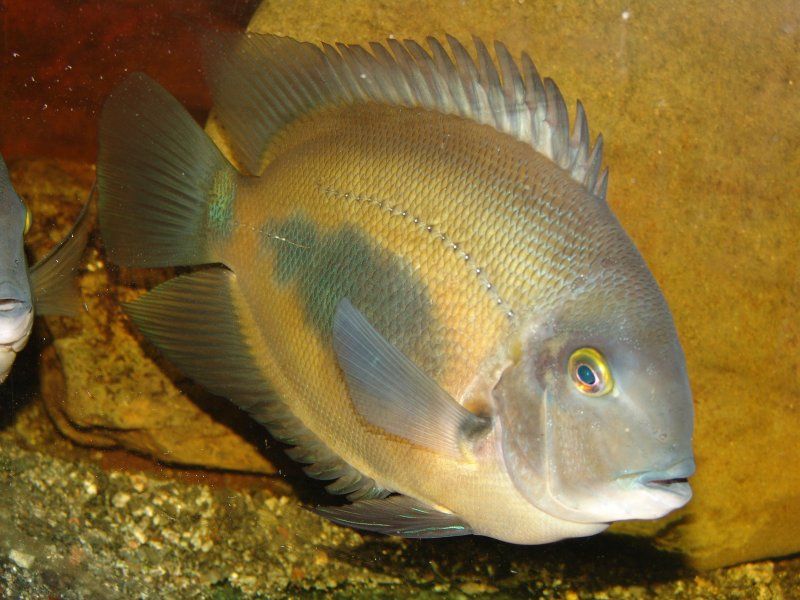
The red devil cichlid is a large, attractive freshwater fish that comes in a range of colors. Wild fish are often gray or dark brown but specimens in the aquarium trade stand out with white, yellow, orange, and even bright red shades.
They may be a single color or a combination, with many fish having attractive spots and patterns. Many specimens change color as they mature, so a full-grown adult may look quite different from when you first bought it.
Male red devil fish are larger than females and develop a pronounced bump (nuchal hump) above their heads. Red devils are characterized by their large, thick lips, although this feature is much more pronounced in wild-caught fish.
Red devil cichlids have large dorsal and anal fins that end in a sharp point, sometimes extending to the end of their fan-shaped tails.
The red devil cichlid is easily confused with another popular Central American species known as the Midas Cichlid (Amphilophus citrinellus). However, the red devil grows larger and tends to have thicker lips.
How Big Can They Get?
The red devil cichlid is a large, heavily built fish. Adults can measure 12 to 15 inches when fully grown, and males are the larger sex.
Red devil cichlids are often sold at just an inch or two, but they grow to reach adult size in just three years or so.
How Long Do They Live?
The red devil cichlid can live for over ten years with good care. Their average lifespan is about 10 to 12 years, making them a similar commitment to the average dog.
These fish will live longest if given plenty of tank space, high water quality, and a healthy, balanced diet.
What Do They Eat?
Feeding your red devil cichlid is one of the easiest aspects of its care. These true omnivores eat insect larvae, snails, small fish, and plant material in nature.
Captive specimens are not fussy, and high-quality cichlid pellets are the best option for their daily needs, although young red devil cichlids will eagerly accept tropical fish flakes.
Ron is an African Cichlid breeder with over 25 years in experience who created a line of food that is well balanced. A great option when you can’t use frozen foods.
Live foods provide a great natural source of nutrition for your red devil cichlid. These fish regularly hunt live prey in nature, so they certainly have that killer instinct. Live foods like earthworms, crickets, and cockroaches are great choices.
How Often and How Much to Feed them
Feed your red devil cichlid at least twice each day, providing only as much food as your fish will eat. Remove any uneaten food before it spoils in your tank water.
Red devil cichlids can be very excitable around mealtimes, and they will often crash into the hood of your aquarium when taking food from the surface. Make sure your lid is securely fitted and solidly built.
Weigh down lightweight hoods to keep them securely in place, and take care when feeding these fish, as an accidental bite could be pretty painful.
Temperament and Behavior
The red devil cichlid is an aggressive fish, and they aren’t called devils for nothing! However, these colorful cichlids usually make wonderful pets that love to interact with their owners.
Nevertheless, many specimens will bite the hand that feeds them, and larger fish can easily draw blood. In extreme cases, you may need to use a divider to keep your fish to one side when performing tank maintenance.
Red devils are not fish you can add to a community aquarium. These guys need careful planning and a tank that is designed around their needs. However, it is possible to keep them with some other fish types.
Continue reading to learn about the best red devil cichlid tank mates.
Red Devil Cichlid Tank Mates
Choosing tank mates for your red devil cichlid is challenging because these fish are just so aggressive. It is best to keep them in a species-only tank because they have such great personalities that you don’t need any others.
Nevertheless, multi-fish tanks are possible, but you should always have a plan B in case things don’t work out. Keeping your red devil cichlid with other fish will require an enormous aquarium, so consider the size and weight of a 180 + gallon aquarium before committing to this kind of setup.
Best Tank Mates For Them
It is possible to keep these fish with other red devil cichlids when they are young, but they will become increasingly aggressive as they mature. Introducing all the tank mates when they are young is the best chance of creating a harmonious fish tank, but there are no guarantees when it comes to the red devil.
Some freshwater fish have lived side by side with the red devil cichlid. Plecos are one of them, although these bottom feeders may become strictly nocturnal to stay out of the red devil’s way.
Other possible options are large cichlids like Jack Dempseys, Texas, Midas, and jaguar cichlids, but again, having a spare tank is important if things go wrong.
Least Compatible Fish For Them
Most fish will not get along with the red devil cichlid. Smaller fish may be eaten, while others may be attacked and killed.
Red devil cichlids become particularly aggressive when breeding. They will kill any other fish in their tank during this time.
Care
Red devil cichlids are not ideal for beginner aquarists. That being said, their care is relatively straightforward for more experienced fishkeepers, especially if you start out with the right tank setup.
Read on to learn more about red devil cichlid care, their tank size, and setup needs.
Tank Requirements
The red devil cichlid needs a large aquarium with stable decorations, a secure hood, and a fine sand substrate. Keep reading for more information.
Tank Size
Red devil cichlids are large fish that need plenty of room. You can start out with a 55-gallon tank, but a 75-gallon setup will be best for a single fish in the long run. You could also keep a pair in this size tank, but stepping up to a larger size is a better bet.
Setup
Keeping red devil cichlids is all about the fish, so don’t design a complicated aquascape. These fish rearrange their tank regularly, so choosing the right decor is very important.
Decor
Providing a cave or shelter is a great way to ensure your fish has a place to relax and feel secure. However, safety is a very important consideration when choosing decorations for red devil cichlids.
These fish love to dig, and they can destabilize rock piles and driftwood arrangements, causing them to collapse. This could cause injury to your fish or even crack your aquarium!
Avoid placing decorations on top of deep sand. If you don’t want to make a rock arrangement for your fish, secure each component with an aquarium and fish-safe epoxy.
Substrate
A fine sand substrate is ideal because it will allow your fish to dig without scratching or injuring themselves.
Live Plants
Red devil cichlids are not recommended for a planted aquarium because they are notorious for tearing up all sorts of aquatic plants.
Water Quality And Filtration
Maintaining high water quality is essential in any aquarium; your red devil tank is no exception.
Filtration & Aeration
Powerful filtration is vital when keeping these large and messy fish. Red devils can be very hard on aquarium equipment like filters and heaters, so external hardware is often the best choice. Canister filters with integrated heaters (or you can get an in-line heater) are a great option because they limit the amount of hardware that your red devil cichlid can reach.
A sump system is recommended for larger tanks. Larger hang-on back and internal power filters typically do not have enough to capacity to house adult cichlids. Their activity might also damage internal filters and sponge filters.
Red devil cichlids are native to stillwater environments, so aim for moderate water movement to avoid stressing your fish. Although it’s not essential, an airstone or two will increase aeration in your red devil cichlid tank and increase the activity levels of your fish.
Water Parameters
Red devil cichlids can be kept in water with a pH of 6 to 8, although right around neutral is preferred. Ideal temperatures range from about 70 to 78 degrees Fahrenheit, and they will thrive in water hardness of 6 to 25 dGH.
Aquarium Maintenance
Regular aquarium maintenance is essential for keeping your red devil cichlid tank looking great and keeping your fish in excellent health.
Perform a 25-30% water change on your aquarium each week to reduce the build-up of nitrates in your water. This is also a great time to clean up your glass, vacuum up waste from the substrate, and perform any maintenance on your equipment.
Testing Tank Conditions
The only way to really know what’s going on in your water chemistry is to test regularly. Red devil cichlids can survive in a reasonable range of water parameters, but you should strive to maintain stable conditions in your tank.
Breeding red devil cichlids is relatively easy – just make sure you’ll be able to find homes for all the young freshwater fish before you start!
Sexing
The first step toward breeding red devil cichlids is to acquire a breeding pair. Fortunately, adult red devil cichlids are relatively easy to sex. The male red devil cichlid is bigger (up to 15 inches) and has a bigger nuchal hump. Females max out at about 10 inches and have a lighter build and a flatter forehead.
However, forming a pair is easier said than done since males can kill females if they don’t hit it off. Growing out a few young red devils in a large tank and allowing a pair to form naturally is one safe technique, but the other fish will need to be removed for their safety.
These fish can reach spawning age when they are about 6 inches long if healthy and well-conditioned.
Conditioning
Your fish should be in excellent condition before starting your breeding project. Pay extra attention to their water quality through frequent maintenance and provide plenty of live and frozen foods.
Raising the tank temperature to 75 – 78 degrees, Fahrenheit can trigger spawning since this replicates the natural temperature increase in their breeding season.
The Breeding Process
Red devil cichlids usually spawn on hard, level surfaces like a flat rock, or the walls or ceiling of a cave. The female will lay hundreds of eggs which the male then fertilizes.
The fertilized eggs will begin to hatch after about three days and will be closely guarded by the adult fish. After hatching, the young fry will be moved to a hole in the substrate and become free swimming within another week or so.
Males can become aggressive toward female red devil cichlids at this point, so make sure you include a few secure hiding places and caves that are too small to fit the male. A divider is necessary in some cases.
Caring for Fry
Red devils are large fish, and you can expect a lot of babies after a successful spawn. Be prepared to see 300 to 800 red devil cichlid fry! The fry gets all the nutrients they need from their yolk sac, but they will require food after their fourth or fifth day.
Baby brine shrimp and crushed flakes are great starter foods for these fish. You can feed the fry directly using a turkey baster or a large syringe with some airline tubing.
The adult fish (video source) are usually very protective over their fry, although you can move the baby fish to their own tank to avoid any chance of them being eaten by their parents. Move the female to her own tank, if you choose to separate the fry as this can trigger extra aggression from the male.
Health And Disease
Red devil cichlids are not particularly prone to health problems, and they tend to be relatively trouble-free if maintained in good conditions. Like any fish species, they are most likely to develop problems when stressed by poor water quality, inappropriate food, or conflict with other fish.
Evaluating their Health
The best way to monitor your fish’s health is to observe their physical appearance and behavior. Make the time to watch your fish for a few minutes in the morning and evening each day, and pay attention to any noticeable changes.
Healthy fish have vibrant colors, complete fins that are not held clamped against the body, and a healthy appearance without sores or wounds.
Buoyancy issues like floating or sinking are something to watch out for, as well as low activity levels and a lack of appetite.
Common Health Issues
Red devil cichlids can contract various illnesses that commonly affect freshwater fish species. Consult your veterinarian for more information on treating illnesses in your fish.
Ich
Ich or white spot disease is one of the most common illnesses that affect freshwater fish, and it is serious if left untreated. This parasitic infection is caused by protozoa and often flares up in stressed fish.
Ich can be treated with aquarium salt, heat treatments, or specially formulated medications like ich-X.
Fungal infections
Fungal infections can cause fluffy growths on your fish’s skin, gills, and fins. This form of illness often arises from poor water conditions, so a targeted treatment with antifungal medication and better aquarium hygiene are recommended for the best results.
Physical injuries from fighting
Red devil cichlids have an aggressive nature, and they are often kept with other aggressive freshwater fish. Fights happen, and these powerful cichlids can easily damage each other with their powerful jaws and sharp teeth.
It’s very important to have a spare fish tank available if you keep red devil cichlids with other fish, even of the same species. Separate your fish immediately if you see signs of serious aggression and treat their wounds when necessary.
Bacterial infections
Fish are susceptible to many bacterial infections, particularly when injured or kept in poor water quality conditions. These infections can be treated with antibiotics, available online, from aquarium stores, or from your local veterinarian.
Where To Buy
Red devil cichlids are very affordable if bought young. You can find these aggressive cichlid species online or at many aquarium stores. Unfortunately, red devils often hybridize with other cichlid species like Midas and Texas, so buy from a reputable breeder to be sure your fish are purebred.
FAQs
Do They Eat Fish?
Red devil cichlids are omnivorous fish with large mouths and they will eat any fish small enough to swallow. However, avoid providing feeder fish as this can introduce infectious diseases to your tank.
How Can You Tell If They Are Male Or Female?
Young red devil cichlids are very difficult to sex, although older fish develop distinct physical differences as they mature. An adult male will grow larger and develop a more prominent nuchal hump above his head than a female red devil.
What Do They Eat?
Red devil cichlids will eat just about anything you give them. A balanced diet of quality cichlid pellets supplemented with live/frozen foods and vegetables will keep your red devil cichlid healthy.
What Is The Difference Between This Fish And Midas Cichlid?
The red devil cichlid is easily confused with the Midas cichlid. Both fish come from the same family and genus, and they will readily interbreed to produce hybrids. Younger red devils look very similar, but adults grow longer, have thicker lips, and have a longer sloped forehead than Midas cichlids.
How Fast Do They Grow?
Red devil cichlid fry grow quickly and begin to change color by the time they reach about two inches long. They may reach 8 to 10 inches within a year if well-fed and cared for, but their growth rate slows after that.
How long does it take for them to reach full size?
Red devil cichlids take about three years to reach their adult size. However, they can live for over ten years and will continue to grow slowly throughout their lives.
Final Thoughts
The red devil cichlid is not for everyone. However, If you want a feisty, aggressive, and exciting pet that loves to interact, it might be the perfect option for you! Just make sure you read through this guide carefully before adopting one of these amazing cichlids from Central America.
Do you keep red devil cichlids? Tell us about your experiences in the comments below!
๐ Want to learn more? This article is part of our complete Freshwater Fish Guide โ your ultimate resource for freshwater species, care tips, tank setup, and more.
Tired of seeing the same fish in every tank? Rainbowfish may already be popular additions to the freshwater aquarium, but we think they deserve more attention. These fish are easy to keep, colorful, and active. They can happily live with various community fish species and shine in a planted tank setup.
Key Takeaways
Boesemani rainbowfish are colorful fish that can grow to be slightly larger than other freshwater community species.
These fish don’t have any special requirements, but they do best in heavily planted setups.
Boesemanis can sometimes outcompete other species for food, so tank mates need to be carefully chosen or a specific feeding method needs to be used.
These rainbows can be bred in the home aquarium, which lessens the impact on dwindling natural populations.
Overview Of The Fish Species
Scientific Name
Melanotaenia boesemani
Common Names
Boesemani Rainbowfish, Boeseman’s Rainbowfish
Family
Melanotaeniidae
Origin
Indonesia
Diet
Omnivore
Care Level
Moderate
Activity
Moderate activity
Lifespan
5 to 10 years
Temperament
Peaceful
Tank Level
Middle
Minimum Tank Size
40 gallons
Temperature Range
72 โ 77ยฐ F
Water Hardness
9 โ 19 KH
pH Range
7.0 โ 8.0
Filtration/Water Flow
Low to moderate
Water Type
Freshwater
Breeding
Egg Layer
Difficulty to Breed
Moderate
Compatibility
Community tanks
OK, for Planted Tanks?
Yes
Introduction To Boesemani Rainbowfish
Everybody has tetras in their tank. We don’t blame them. Tetras are small yet colorful fish that can make any tank come to life.
But isn’t there another, more unique alternative that’s just as colorful and exciting?
Yes! Past the tetras and the rasboras, there’s a wide variety of rainbowfish species available for beginner to expert hobbyists. These fish have all the characteristics that make tetras desirable but offer a new shape and personality to the community fish tank. The Boesemani rainbowfish, scientifically known as Melanotaenia boesemani, is one of the most popular species of rainbowfish available in the aquarium hobby.
Though these fish are very popular in the hobby and have been successfully bred commercially, they are, unfortunately, endangered in their wild natural habitat ecosystems and listed on the IUCN Red List of endangered species. This is a direct result of harvesting done by the aquarium hobby, so it is strongly encouraged to ethically source the next rainbowfish that you add to your tank.
Otherwise, rainbowfish are large, active schooling fish that can be kept in moderately sized aquariums. They get along with most freshwater community fish species and are hardy to most aquarium water parameters.
Origin and Habitat
The Boesemani rainbowfish is one of the most colorful species of fish that occurs naturally in the wild. These blue and orange fish have a very limited natural range, with populations existing only in the tri-lake region of Indonesia known as Ajamaru. Some other populations have been found in nearby lakes, namely Lake Hain and Lake Aitinjo.
There, Boesemani rainbowfish stay in the shallow waters. They can be found in dense vegetation where they school and reproduce. Though the waters from these lakes are naturally hard with high pH, Boesemani rainbowfish have been found in various hardness and pH conditions. This has made acclimating them to the water parameters preferred by aquarium fish that much easier.
As we’ll see, these fish do best in heavily planted aquariums with low to moderate water flow.
Appearance
Rainbowfish have unique appearances that make them attractive to hobbyists who want something a little different from your typical tropical fish. There are many different species of rainbowfish available, with some staying small and others growing large with special features.
The true appeal of this rainbowfish is its colors. There is no other fish that compares! The Boesemani rainbowfish is brightly colored with blues, yellows, oranges, and even greens. Male Boesemani rainbows feature the greatest contrast in colors, with the first half of their body being a dark blue that slowly fades into a deep orange by their tail fin. In contrast, females are solid silver or yellowish-green with lighter-colored bellies.
The Boesemani rainbow also has an interesting body shape. They have a deeper body with long dorsal and anal fins. Female fish aren’t as deep-bodied, but can still easily be told apart from other species.
How Big Do They Get?
The Boesemani rainbowfish is a moderately sized species of rainbow. Male fish grow to be slightly larger than females, maxing out at about 5 inches. Females generally stay under 4 inches at adult size.
Boesemani Rainbowfish Care
Boesemani rainbowfish care is relatively easy, though there are some special considerations that should be taken into account before buying them. If given the right aquarium setup, though, these fish can live for relatively long times and will bring new colors to a fish tank.
Are They Easy To Keep?
In general, Boesemani rainbowfish are very easy to keep: they’re hardy fish that have been bred to withstand most conditions seen in the aquarium hobby. However, they are large, active fish that can sometimes be overbearing for other species.
Despite their larger size, they can also be somewhat skittish fish. Because of this, it’s essential to keep them in sizeable groups with an appropriate ratio of female to male fish. This grouping setup will also help increase color expression from the males while also lessening the harassment between males and females.
To help make your fish even more comfortable in its tank, a heavily planted setup is recommended.
Aquarium Setup
Unlike tetras and other popular tropical fish, Boesemani rainbows should be given some special consideration when setting up their tank. These fish shine best when given the right conditions.
An ideal Boesemani aquarium setup would be filled with dense vegetation at all levels of the aquarium. These fish mostly swim in the middle but will gladly venture to the tops and bottoms of the tank to look for food. To help make them more comfortable, add live plant species that grow in the foreground, midground, and background. Otherwise, regularly prune plants to create a layered effect.
Rocks, driftwood, and other natural aquarium decorations may be added to create depth and interest as well as various hiding spots for your fish. Make sure to keep plenty of space open in the middle of the tank as these rainbows like to swim! While unlikely to jump out of the aquarium, it’s recommended to use an aquarium lid that stops any overly adventurous fish.
Tank Size
We list Boesemani rainbowfish as moderately difficult fish to keep due to their relatively demanding tank size. These are larger-than-average tropical fish that need plenty of room to swim and school. That being said, they don’t require a massive setup, either.
Boesemani rainbowfish need a minimum tank size of 40 gallons. Any smaller than this reduces the number of rainbows that can be kept together and the other species that can be added. Any aquarium larger than this greatly increases the possibility of keeping other rainbows and species.
Remember that a lot of aquarium space will be lost to plants and decorations in a heavily planted tank.
Water Parameters
Boesemani rainbows are hardy fish. They’ve been successfully bred in the aquarium industry, meaning they have been comfortably kept in many different water parameters. This also means that they’ve been exposed to many common freshwater diseases, helping their immune systems recognize and overcome pathogens faster and easier.
These rainbowfish do best when kept in tropical water conditions with a constant water temperature between 72 โ 77ยฐ F. While a tropical species, hobbyists report having greater success keeping their Boesemanis in slightly cooler water temperatures.
As mentioned before, Boesemani rainbowfish have been found in varying pH levels. In general, the aquarium should be kept at neutral pH, between 7.0 โ 8.0. Water hardness should remain between 9 โ 19 KH, but they are highly adaptable to changing hardness levels as well.
Filtration and Aeration
Boesemani rainbows don’t mean to be messy, but their size, activity, and willingness to eat anything can make for a high bioload. Luckily, plants help uptake nutrients and other wastes to perform food production. This reduces the need for extensive tank maintenance, though some care is still needed.
An adequately sized filter is highly recommended for a Boesemani rainbowfish tank. This filter should be rated for at least 2x the tank size to help remove waste and provide water circulation. These rainbows are strong swimmers and are able to swim against a moderate water flow but need areas of lower flow. Consider the types of live plants you plan on keeping too. Many species prefer gentle water movement.
Additional aeration is always welcomed and can be achieved through a sponge filter and/or air stone. A large sponge filter or several smaller ones can create low water movement while also facilitating gas exchange, which is important for plant health. An air stone can also be attached to an air pump for aesthetic purposes or for better gas exchange.
Lighting
The type of lighting you need for your tank depends on the types of plants being kept. Boesemani rainbowfish can be skittish with other active species and sudden shadows, but they can typically be kept under higher lighting setups as long as an aquarium lid is secured. In other words, these rainbows won’t avoid swimming out in the open just because of high lighting conditions.
Instead, base the amount of lighting on the species of live plant being kept. Even with high lighting, rainbowfish will use their natural habitat to hide if they feel uncomfortable or stressed; if you do find that your fish is hiding in the shadows, try adding more live plants, floating plants, or structures to increase available areas for relief.
Aquarium Plants and Decorations
Aquarium plants are a must for Boesemani rainbows. These fish originate from very densely planted areas which provide them with food and shelter. It seems counterintuitive, but the more places you have available for your fish to hide, the more likely they’ll be out in the open.
Aquarium plants also make for a healthy tank. In order to perform photosynthesis and grow, plants need nutrients. The fish and invertebrates provide these nutrients in the aquarium. As these excess nutrients are used, the water is cleaned, meaning less work for the hobbyist. This also means that additional fertilization may be necessary if enough nutrients aren’t naturally entering the system.
In addition to plants, rocks, and driftwood, other aquarium-safe decorations may be added to your rainbowfish tank. Make sure that these objects are securely placed, as Boesemanis can bump into them and knock them over when going at high speeds.
Tank Maintenance
Because most rainbowfish are kept in well-planted tanks, tank maintenance is low. In fact, some aquarium keepers leave their Boesemani tanks unfiltered, leaving the live plants and fish to find a balance between nutrient input and output; we only recommend this Walstad method for very experienced hobbyists.
Still, regular weekly or biweekly 10-25% water changes are recommended. Performing water changes helps remove waste caught around the stems of plants while also introducing new, nutrient-rich water for plants to use. If using a pure source of water, like from reverse osmosis, then minerals will need to be manually added back in.
If dosing fertilizers, regularly use a dependable water testing kit to see how nutrients are moving throughout the system.
Substrate
Boesemani rainbowfish can be kept on any substrate. A dark substrate will help complement and intensify their coloration but it isn’t necessary to make these fish bold.
Instead, the substrate should be chosen with plants in mind. For this reason, many hobbyists use plant-specific substrates that facilitate healthy root growth. Another good alternative is aquarium-purpose river sand that comes in various color grades.
Community Tank Mates
For the most part, Boesemani rainbowfish are peaceful fish that can be kept with various species. The main concerns in choosing suitable tank mates for them are matching preferred water temperatures and activity levels.
Can They Go In A Community Tank?
Yes! Boesemani rainbows thrive in a community tank setting. They are often used as the featured species of the tank, with all other fish complimenting their movement and colors.
Some of the best Boesemani rainbowfish tank mates include:
Because these rainbows prefer harder water, some hobbyists have had luck keeping them with some of the more peaceful species of African rift lake cichlids. Avoid smaller, slow-moving fish tank mates that could easily be overwhelmed and outcompeted.
Boesemani rainbowfish are schooling fish that love to be in their own company. However, an imbalance of males to females can lead to harassment, so it’s recommended to keep 2 to 3 females for every male fish. At least 6 rainbowfish should be kept together at any given time.
Can They Live With Angelfish?
Boesemani rainbowfish can live with angelfish under certain conditions. Angelfish are slow-moving fish, but as cichlids, they can defend themselves. This pairing can work if the angelfish are larger than the rainbowfish and more aggressive. Otherwise, the Boesemanis may be too overwhelming and outcompete the angels.
Food and Diet
These rainbows happily accept any and all foods. They are active swimmers that need a lot of food to keep them going. A small portion of high-quality flake food may be given a couple of times throughout the day. This will help keep costs down while also encouraging your fish’s colors while fulfilling their appetite.
For a treat, Boesemani rainbowfish may be given a mixed diet of freeze-dried, live, and frozen foods. They especially love brine shrimp, bloodworms, tubifex worms, and mosquito larvae. As omnivores, they will also eat green vegetables, like spinach and cucumber. While these rainbows aren’t overly messy fish, regular feedings of protein-rich food can lead to water quality issues.
While Boesemani rainbows might seem like they have large mouths, they actually have small throats, which can limit what they eat. Make sure to feed appropriately-sized live foods and cut up any pieces that might seem too big.
Another concern with Boesemani feeding is that they are too ambitious. These are fast fish and even faster eaters. This can cause other fish to miss out and become stressed. To help mitigate this problem, try feeding Boesemanis sinking foods and the other fish floating foods. This should help keep all fish occupied with eating at different levels of the tank.
Breeding Boesemani Rainbows
Breeding Boesemani rainbowfish has been achieved at the commercial level. They are relatively easy to breed in the home aquarium setting though it’s recommended to use a breeding tank. Raising their fry can be somewhat challenging, and a breeding tank will provide the most control over conditions.
To start breeding your Boesemani rainbowfish, place a group of females with one to two males. Feed high-quality food and a steady diet while raising the water temperature to about 80 โ 84ยฐ F and pH to slightly basic at 7.5. When ready, females will become plump, and males will intensify in color.
As egg scatterers, female Boesemanis will freely release their eggs, and the males will fertilize them. Fine-leaved plants, like Java moss, or egg crate, can be used to catch the eggs. Once the eggs have been fertilized, the adult fish may be removed from the tank to prevent them from eating the eggs.
After about a week, the fry hatch. They will need to be given small foods, like infusoria, until they’re big enough to accept bigger foods, like baby brine shrimp. After a few months, they are ready to be given to another hobbyist or moved back to the display tank.
Conclusion
Boesemani rainbowfish are great fish for hobbyists looking for something new. These fish are just as easy as tetras and rasboras but offer new colors and shapes to add to the community fish tank setup. There are a few considerations needed when picking tank mates, as these rainbows can be overly active and ambitious feeders, but they are not aggressive. They are also relatively easy fish to breed for beginner hobbyists looking for a new challenge!
Freshwater pufferfish are some of the most interesting and entertaining fish in the aquarium hobby. Many fishkeepers are surprised to learn that these fish live outside of saltwater, and there are several awesome species available that thrive can in a regular tropical fish tank.
Puffers are not the easiest fish to keep, and some species are best left to experienced pufferfish keepers. However, with the right knowledge and planning, a freshwater puffer could easily become your new favorite fish!
Are you ready to learn about the different types of freshwater puffer fish? Then let’s get started!
Key Takeaways
Freshwater puffer fish range from tiny nano species to real tank busters
Most pufferfish do best in a species-only setup, although some can work in a carefully planned community tank
Freshwater puffer fish need meaty, hard-shelled food like snails and shellfish to keep their beaks worn down
What Are They?
Puffer fish belong to the Tetraodontidae family, a group of fish that are found in fresh, brackish, and saltwater environments in many parts of the world.
These fish are called puffer fish because they have the ability to expand their body size by two or three times by sucking in water or air. Puffing up makes them look much larger than they really are, and this deters predators.
However, puffer fish have another defense if that trick fails. Although the concentration varies between species, all puffers carry a poison called tetrodotoxin in their skin. Captive fish are relatively safe, but of course, they should never be eaten or fed to pets!
Why Keep Them?
Freshwater puffer fish are beautiful animals and often have interesting patterns and bright colors. However, these fish are just as popular for their behavior as their looks.
Puffer fish are more like pets than display animals. These inquisitive fish love to interact with their owners, especially around meal times!
Freshwater puffer fish have an interesting way of moving through the water. They have fairly large tails but they generally hover around using their smaller pectoral fins. This swimming style makes them pretty slow movers, but they can be surprisingly quick when grabbing a meal.
These freshwater puffer fish generally range from semi-aggressive to full-blown killers, so they are not good fish to simply add to your tropical community aquarium. With their sharp teeth and quick bursts of speed, they can do some serious damage to their tank mates.
All in all, freshwater puffer fish are right for you if you want an interesting carnivorous pet fish with enough personality to fill its own tank!
13 Best Freshwater Puffer Fish for Tropical Aquariums
Now that you know a little more about freshwater puffer fish, let’s dive right in and meet 13 species that you can keep. We have a video from our YouTube Channel you can check out. We go into more detail in the blog post below. If you like our content, be sure to subscribe as we have no videos posted every week!
I’ve included some key information about each species and its needs, so take note of the following stats if you’re looking for your own freshwater puffer fish:
The dwarf puffer fish is an awesome little nano species that is easy to find and won’t cost more than a few dollars. These tiny fish grow to just an inch long, so you can keep a single fish in a tank as small as 5 gallons.
Dwarf puffers may be cute, but they can be mean and keeping more than one can be risky. A trio of one male and two females in a heavily planted 15-gallon is worth trying, but make sure you have a backup plan to separate your pea pufferfish if there is conflict.
2. Imitator
Scientific name: Carinotetraodon imitator
Common names: Dwarf Malabar puffer fish
Origin: India
Adult size: 1 inch
Minimum tank size: 5 gallon
Temperament: Aggressive
Community safe?: With caution
pH: 6.8 – 7.5
Water temperature: 76 – 82ยฐF
The imitator puffer fish is a tiny pufferfish species, very similar to the dwarf puffer fish, and has the same general care requirements. This is a rarer species that can be distinguished by its brighter yellow color and fewer spots.
3. Mbu
Scientific name: Tetraodon mbu
Common names: Giant puffer fish
Origin: Central Africa
Adult size: 20 – 30 inches
Minimum tank size: 500 gallons
Temperament: Aggressive
Community safe?: With caution
pH: 7 – 8
Water temperature: 75 – 79ยฐF
Unlike the previous two species, there’s nothing nano about the mbu puffer fish! This is the world’s largest puffer1, and it makes an amazing pet for dedicated and experienced fish keepers.
These huge freshwater puffer fish require a massive tank that holds hundreds of gallons of well-filtered water. They can be kept in a community tank, but avoid slow-swimming bottom dwellers that might make a tasty snack for the mighty mbu puffer.
4. Hairy
Scientific name: Tetraodon baileyi
Origin: Laos & Thailand, Southeast Asia
Adult size: 5 inches
Minimum tank size: 30 gallons
Temperament: Aggressive
Community safe?: No
pH: 6.5 – 7.5
Water temperature: 74 – 81ยฐF
The hairy pufferfish is an awesome ambush-hunting puffer from Asia. These unique freshwater puffer fish get their name from the hair-like growths on their body that break up their outline.
Hairy puffers hang out at the bottom of the tank, just waiting for something tasty to swim or crawl by. They are not a community species and will do best in a species-only tank with a sandy substrate that they can burrow in.
5. Green Spotted
Scientific name: Tetraodon nigroviridis
Origin: South & Southeast Asia
Adult size: 6 inches
Minimum tank size: 30 gallons
Temperament: Semi-aggressive
Community safe?: With caution
pH: 7.5 – 8.5
Water temperature: 75 – 82ยฐF
The green-spotted puffer fish is one of the best-looking species if you ask me. These adorable fish have dark spots on a yellow/green back, and a plain white belly.
The green-spotted puffer is a medium-sized species. You could keep them in a 30-gallon tank, but 55 is a better option. They are usually aggressive towards their own species except in very large aquariums.
It’s important to note that this puffer is a brackish water species. Although the young are often sold as freshwater fish, adults are going to need a slightly salty setup to really thrive.
6. Spotted Congo
Scientific name: Tetraodon schoutedeni
Origin: Democratic Republic of Congo
Adult size: 4 inches
Minimum tank size: 40 gallons
Temperament: Semi-aggressive
Community safe?: With caution
pH: 6.5 – 7.5
Water temperature: 78 – 81ยฐF
The spotted congo puffer is the smallest of the African species, maxing out at about 4 inches. They are relatively peaceful and can live in small groups or with other peaceful fish. Just avoid any slow-swimming tankmates with long fins!
Like all puffers, these guys need great water quality and a steady supply of hard-shelled food to thrive. If you can provide that, you should have no problem keeping this awesome African species.
7. Amazon
Scientific name: Colomesus asellus
Common names: South American puffer fish
Origin: Amazon River Basin, South America
Adult size: 3 – 4 inches
Tank size: 30 gallons
Temperament: Semi-aggressive
Community safe?: With caution
pH: 5.5 – 8
Water temperature: 75 – 80ยฐF
The Amazon puffer is one of the few species on this list that works well in community aquariums. You can keep just one, but this species forms shoals in the wild so it will do best if kept in groups of at least six.
8. Red-Tailed Dwarf
Scientific name: Carinotetraodon irrubesco
Common names: Red-tailed redeye puffer fish
Origin: Southeast Asia
Adult size: 1.5 – 2 inches
Minimum tank size: 15 gallons
Temperament: Aggressive
Community safe?: No
pH: 6 – 7.5
Water temperature: 68 – 82ยฐF
The Red-tailed dwarf puffer fish (video source) is true freshwater species that lives in forest streams in Asia. These fish have really cool markings and bright red eyes.
Like other puffers, these guys will nip slow-moving fish, so choosing tank mates should be done carefully. They can be kept in small groups if you have enough plants and hardscape to break up their line of sight, but try to add just one male and a few females.
9. Fahaka
Scientific name: Tetraodon lineatus
Common names: Globe fish, Nile puffer fish
Origin: Central & North Africa
Adult size: up to 17 inches
Tank size: 100-150 gallons
Temperament: Highly aggressive
Community safe?: No
pH: 6.5 – 7.5
Water temperature: 75 – 79ยฐF
The Fahaka puffer fish (video source) is another giant species from Africa. They require a hard-shelled diet of snails, crab legs, and whole mussels and clams to keep their sharp beaks worn down.
The fahaka puffer has awesome markings and makes a great ‘wet pet’ for a species-only tank. However, these fish are extremely aggressive, even toward their own species, so avoid adding any tank mates.
10. Golden
Scientific name: Auriglobus silus
Common names: Gold green puffer fish, avocado puffer fish, bronze puffer fish
Origin: Southeast Asia
Adult size: 4 inches
Minimum tank size: 20-30 gallons
Temperament: Highly aggressive
Community safe?: No
pH: 6 – 7.8
Water temperature: 74 – 80ยฐF
The golden puffer is still pretty rare in the hobby, but these freshwater puffer fish definitely have great looks! They are said to be very aggressive toward other fish species and even their own kind, so it’s easiest to give each specimen its own fish tank.
The ocellated puffer fish is another rare species that can make a great pet. This fish will do best in a well-planted tank with some caves and hiding places. A sandy substrate and moderate water flow will help to recreate their natural habitat.
12. Arrowhead
Scientific name: Tetraodon suvattii
Common names: Pignose puffer fish
Origin: Laos & Thailand
Adult size: 6 inches
Minimum tank size: 20 gallons
Temperament: Aggressive
Community safe?: No
pH: 6.5 – 7.5
Water temperature: 72 – 79 ยฐF
The arrowhead puffer fish is an ambush predator that stays down on the substrate. These fish are highly aggressive and will eat any smaller fish that fits in their mouth. They will also bite chunks out of larger freshwater fish, so they are only really suitable for a species-only tank.
Arrowhead puffers are pretty inactive, so they don’t need a large tank. However, they do need a deep layer (2 – 3 inches) of a fine substrate to bury into.
13. Crested
Scientific name: Carinoteraodon lorteti
Common names: Red-eyed puffer
Origin: Southeast Asia
Adult size: 2 inches
Minimum tank size: 15 gallons
Temperament: Semi-aggressive
Community safe?: No
pH: 5 – 7.5
Water temperature: 75 – 82 ยฐF
The crested puffer fish is another dwarf puffer fish that is suitable for smaller fish tanks. This species looks similar to the red-tailed dwarf puffer, although it grows a little larger.
Keep these interesting puffer fish in a well-planted aquarium that mimics their natural habitat. They should not be kept with other fish species, although experienced aquarists may have success keeping a small group in a large tank with dense vegetation and plenty of hardscape to create multiple territories.
Tank Setup
Most types of pufferfish do not have any unusual tank requirements, although giant African species like the mbu pufferfish and the fahaka pufferfish need huge tanks.
Puffers are messy feeders so regular water changes and high-quality filtration are a must. These fish do not do well in high nitrate water parameters, so you’ll need to test your water frequently at first to work out a good maintenance routine.
Freshwater puffers are tropical fish, which means you’re going to need a heater to keep them comfortable. Choose a model that matches your tank size, and add a thermometer to make monitoring the temperature easier.
It might not look like it, but some puffers are adapted to high water flow. Those species will appreciate a powerhead or two to recreate their natural river habitat, but make sure there are some sheltered spots where they can rest and relax.
All freshwater puffer fish types will benefit from live plants, but the larger species can be hard on plants, so they are not the ideal choice for a prize-winning aquascape.
Grow hardy aquatic plants like Java ferns and fast-growing stem plants like limnophila and anacharis to improve your water quality and add more structure to your fish’s home.
Feeding
Pufferfish have specialized diets, and they will not eat regular fish food like flakes and pellets. They are carnivores, and their specialized beaks allow them to feed on some pretty tough meals!
In fact, these tooth-like structures grow continuously, so puffers need a regular supply of hard-shelled food to keep their teeth growth in check.
Live snails are the ideal food for most puffers, and maintaining a steady supply can be tricky. The best way is to grow your own snails in a separate tank or container. Ideal snails for this are pond, bladder, and ramshorn snails. Avoid Malaysian trumpet snails as their shell is just too hard.
The large species require shellfish like clams, and keeping them fed can get expensive. Factor this in before taking on the responsibility- these freshwater puffer fish can live for many years!
In general, freshwater pufferfish can be fed the following live and frozen food:
Feed your puffers two or three times per day, but be sure to remove any uneaten food before it can spoil in your aquarium.
Tank Mates
Many readers are probably wondering which tank mates work with pufferfish, and the answer is relatively few. Most puffers are naturally aggressive creatures, and their sharp beaks do serious damage to other fish.
It’s not impossible to keep other fish with freshwater puffers, but the easiest option will be a species-only setup in most cases. Generally speaking, the best tank mates will be other larger fish that are not shy to defend themselves.
It’s also possible to keep small, fast-moving fish species as tank mates, but just know that larger puffers will eat them if they can catch them.
Tank size matters too, and the larger your tank, the less risk you run of aggression. If you really want to add puffer fish to a community aquarium, choose the more peaceful species like the South American Puffer.
Health and Disease
Freshwater puffer fish are generally hardy to a range of water parameters, but they all require excellent water quality. Avoid overfeeding their tank, and make sure you perform regular water changes on your fish tank to keep nitrates down.
These fish should only be added to mature, cycled aquariums. Poor water quality causes stress in freshwater puffer fish and opens them up to a variety of illnesses.
Stress and injuries from fighting with other puffers are also common causes of illness, so choosing appropriate tank mates and setting up their tanks correctly is so important.
Many freshwater pufferfish are wild-caught and arrive at your local fish store in pretty poor condition, often with loads of internal parasites. Quarantine your fish before adding them to a tank with any other fish, and consider deworming as an extra precaution.
FAQs
Are Puffers Easy To Keep?
Puffers are not a good choice for beginner fish keepers. These guys have a specialized diet, and usually do not get along very well with other fish. However, aquarists that have kept fish for a few years should have no problem caring for these fascinating creatures if they are willing to provide the right food and maintenance.
Can They Live With Other Fish?
Pufferfish can live with other fish species, but there’s a high chance of fin nipping and other aggressive behaviors if you don’t choose the right tank mates. Species like the South American puffer get along great with many freshwater fish, but others like the Fahaka puffer are extremely territorial and aggressive.
Are They Good Pets?
Pufferfish are well known for being great ‘wet pets’. These fish are naturally inquisitive and highly interactive with their owners. However, keeping them happy and healthy requires more dedication than many air-breathing pets.
Are these fish species aggressive?
Freshwater puffer fish temperaments vary between species and even individuals. They are generally semi-aggressive or aggressive and they often bite other fish and even other members of their own species.
How Big Do They Get?
Freshwater puffer fish range in size from the tiny dwarf puffer and imitator puffer fish at an inch long to the massive mbu puffer fish that grows to 30 inches. There are many species that grow to just a few inches, and these are great for a mid-size aquarium.
Final Thoughts
Pufferfish are rockstars in the fishkeeping world. Their fascinating behaviors and larger-than-life personalities make them a great choice for more experienced fish keepers who want an exotic pet.
Do you have a favorite freshwater puffer fish species? Share your opinion below!
๐ Want to learn more? This article is part of our complete Freshwater Fish Guide โ your ultimate resource for freshwater species, care tips, tank setup, and more.
Forget about interesting-looking freshwater fish, let’s about tropical fish that fly!
Hatchetfish, also known as common hatchetfish, or river hatchetfish is the most bizarre-looking fish you’ll ever find. Not because of their unusual colors or erratic nature. But because of the shape of their body that resembles a hatchet. Hence, the name.
In this article, we will discuss everything about the hatchetfish species. From their unique body shape to their feedings and breeding, there’s much more to cover.
Let’s jump in further.
Key Takeaways
Hatchetfish get their name from their unique ‘Hatchet-like’ body shape.
It is a peaceful community fish that enjoys the company of at least 6 to 12 fish.
They are the only true flying fish with large pectoral muscles that work like wings.
Many species of hatchetfish have bioluminescence with their own pattern of lights in order to communicate, attract prey, and camouflage.
An Overview Of The Fish Species
Scientific Name
Gasteropelecus sternicla
Common Names
River hatchetfish, common hatchetfish, silver hatchetfish
Family
Gasteropelecidae
Origin
South America in Brazil and in the southern tributaries of the Amazon river basin
Diet
Omnivore
Care Level
Moderate
Activity
Moderate
Lifespan
5 years
Temperament
Peaceful
Tank Level
Surface dwellers
Minimum Tank Size
20 gallons
Temperature Range
72 โ 81ยฐ F
Water Hardness
2 – 15 dGH
pH Range
6.0 โ 7.5
Filtration/Water Flow
Moderate
Water Type
Freshwater
Breeding
Egg Layer
Difficulty to Breed
Difficult
Compatibility
Community tanks
OK, for Planted Tanks?
Yes
Origin And Habitat
Linnaeus in 1758 discovered the common hatchetfish; Gasteropelecus sternicla species. They originate in South America in Brazil and mainly in south and central America (Southern tributaries of the Amazon river basin). Common hatchetfish are also found in the small streams of Guyana and Surinam with dense vegetation (floating aquatic plants).
In their natural habitat, they are found in regions that are densely populated with aquatic plants. In the wild, the common hatchetfish are mostly found at the water surface and retreat occasionally when threatened or in danger. Mostly, you will find these fish species flying from the surface of the water, trying to catch flying insects.
Fun Fact: Certain hatchetfish species participate in the largest migration in the world, migrating from 1,500 meters (about 5,000 feet) of depth to shallower seas. They gather with their twilight zone neighbors in the shadows to eat at the zooplankton feast, where they consume crustaceans, copepods, floating fish larvae, mosquito larvae, and ostracods. But as soon as the sun comes up, it's time to head back to the twilight zone. The hatchetfish has no control over when the axe will fall.
The Definition Of Hatchetfish
The common hatchetfish species go by their scientific name, Gasteropelecus sternicla. They are known for their unique but strange-looking body that looks like the head of the hatchet. Hence, the term Gasteropelecus in their scientific name also refers to a hatched-shaped belly.
One of the leading reasons for their popularity is not their particular body shape, but their ability to leap from the water’s surface and fly through the air. River hatchetfish or common hatchetfish can also flap their large pectoral fins and catch flying insects. Thus, in the fish-keeping world, the hatchetfish bag the title of the only true flying fish.
Species of hatchetfish are able to fly more than 4 feet and move their pectoral fins like a bird’s wings in the air. As astounding as it sounds, the flying power of hatchetfish is a problem in hatchetfish aquariums as this ability also develops the need for a tight-fitting lid.
Characteristics
The common hatchetfish are small, shiny silverfish with a hatchet-shaped bodies. They are tropical fish found in mostly warm temperature regions at a depth of around 200 to 1000 meters.
Hatchetfish have deep bodies that are flattened from side to side. The tails are slender with big eyes. The common hatchetfish are often mistaken as their cousin relative, the silver hatchetfish. However, the common hatchetfish species are slightly larger than the Silver hatchetfish.
What Is The Average Size Of These Tropical Fish Species?
The average size of Hatchetfish is around 2.6 inches in captivity. However, the wild-caught fish is a bit smaller in size, around 1 1/2 inches.
How Long Do They Live?
On average, hatchetfish lives for about 3 to 5 years in captivity. Since they are social and peaceful fish, it is recommended to keep a group of 8 or more fish to improve their life quality.
What Are The Different Types?
There are five different species of hatchetfish found in the aquarium hobby.
Silver
The most common type of Hatchetfish is the silver hatchetfish. They have silver bodies that seem almost transparent and a unique ‘hatchet-like’ body shape. The silver hatchetfish are great swimmers and are known for their ability to jump out of the aquarium. Therefore, always choose a tight-fitting lid for your aquarium.
Blackwing
The Blackwing hatchetfish are larger than the other species of hatchetfish. They grow around 3 inches in length with darker bodies adorned with metallic green or blue hues on the fins. Temperament-wise, they are semi-aggressive fish but generally peaceful fish, ideal for a community tank.
Marbled
The marbled hatchetfish are somewhat similar in appearance to the popular silver hatchetfish. However, they have smaller bodies and marble-like mottled coloration on their bodies. Marbled hatchetfish are schooling fish that enjoys the company of other species of hatchetfish. Thus, I advise keeping a group of 8 or more to keep your fish healthy and thriving.
Carnation
Carnation hatchetfish are the species that experienced fishkeepers would enjoy. That’s because they are sensitive to water quality and conditions, so little attention is required. Size-wise, they are a smaller species with a pink or peach-colored body.
Pygmy
The smallest species of hatchetfish are the pygmy hatchetfish (video source). They grow only up to 1 inch in length. Also, they have silver bodies with a black stripe along their dorsal fin.
Common Hatchetfish Care
The freshwater Hatchetfish is a particularly hardy fish. However, it is still recommended for aquarists with some previous fish-keeping experience. That’s because they are active fish and need lots of free swimming space. Also, they are highly prone to fish diseases such as Ich, especially when introduced to a new tank.
Therefore, it is recommended to quarantine the new fish before introducing them into the community tank.
Are they hard to care for?
No, they are not difficult to keep and care for. However, you need a certain level of expertise in keeping their water conditions optimal. Species of hatchetfish are sensitive to water conditions. Therefore, a little maintenance goes a long way. It’s crucial to maintain your tank and clean all the decomposing organic matter, check water quality regularly, and clean fish waste.
These toxins pollute the fish tank and affect the wellness of your fish. Therefore, to cater to these water conditions, I recommend replacing the water on a daily basis. If your tank is densely populated with a group of fish, at least 50% of the water should be replaced every week.
Aquarium Setup
The natural habitat of hatchetfish undergoes rainy season and floods. So, thankfully, they can survive in a wide range of pH, GH, and other water parameters. Hatchetfish are tropical freshwater fish that appreciates water temperature between 75โ80ยฐF.
Since they are schooling fish, they thrive in a group of 6 to 12 or more. I recommend keeping at least 12 fish in the community tank because they feel safer and more comfortable. Though hatchetfish are active fish, but not exceptional.
Therefore, the minimum tank size should be 20 gallons or larger. Regardless of the tank size, install a tight-fitting lid or hood because you will find them jumping out of the aquarium often. Besides, if you have installed a filter, heater, or pumps, you are sure to cover any openings with aquarium-safe materials such as craft mesh, etc.
Tank Size
Hatchetfish are not super active fish but they do require free swimming space, considering the fact that they thrive in a community of at least six fish.
The minimum tank size should be20 gallons. I recommend a long tank with sufficient surface space as they tend to jump out of the water.
Even though hatchetfish are moderately hardy aquarium fish. There are specific water parameters to maintain for them to thrive in your aquarium.
The ideal water temperature should be between 75โ80ยฐF.
Hatchetfish prefers slightly acidic water with a pH between 6.0 to 7.5 and it’s crucial to maintain the ideal pH range because changes in pH lead to stressful behavior in the fish.
They thrive in slightly hard water so the water hardness should be between 2 – 15 dGH.
Ammonia and nitrites are toxic for hatchetfish and harmful to their overall health. Therefore, install filters to avoid ammonia and nitrite buildup and test your water daily.
Nitrates: Hatchetfish can survive low levels of nitrates, but high levels can be detrimental to their health. Therefore, consider keeping nitrate levels as low as possible. The ideal range is less than 20 ppm.
Water movement: Hatchetfish are slow-moving fish that mostly swims at the top of the aquarium. They prefer slow-moving water and gentle current. The use of a filter is recommended, and aeration should be minimized to keep them healthy.
Filtration And Aeration
Hatchetfish are highly sensitive to ammonia and nitrites. Therefore, installing a quality filter is important.
If you have a small tank of around 15 gallons, Hang-on-back filters are easy to install and maintain, and they provide excellent filtration. However, if you have a larger aquarium of around 20 gallons or more, I recommend installing canister filters as they are more powerful than HOB and ideal for larger aquariums.
For hatchetfish tanks, I advise installing sponge filters as they don’t produce strong currents and are gentle.
No matter what type of filter you use, it’s crucial to clean and maintain them daily for efficient results.
For aeration, it’s important to avoid strong currents in the tank as they can lead to stressful behavior. The use of air stones and air pumps is recommended for tank aeration.
Lighting
Hatchetfish occupies the surface of the water tank and does best in tanks with moderate to low lighting. Therefore, the ideal lighting for hatchetfish is moderate to low, depending on various factors, including plants, and species of hatchetfish. Low light aquarium plants are most ideal for them.
Aquatic Plants and Decorations
Aquatic plants and decorations are important for a hatchetfish tank because it provides hiding places and a fun natural environment for your fish. That’s because their natural habitat is laden with hiding places and vegetation. Also, plants improve the quality of water by absorbing excess nutrients and promoting a healthy balance of microorganisms in the water.
Some of the best aquatic plants for your hatchetfish are:
Freshwater hatchetfish are simple to keep and take care of. To maintain their water in the best possible condition, you need to have a particular level of competence. Because hatchetfish species are sensitive to water quality, a little upkeep may go a long way. Maintaining your tank is essential, as is cleaning out all of the fish waste, nitrate, nitrite, and phosphate buildup.
These chemicals contaminate the fish tank and harm your fish’s health. I advise refilling the water every day in order to address these water conditions. If you have a lot of fish in your tank, you should change the water every week by at least 50%.
Substrate
Hatchetfish are surface dwellers. Thus, choosing a substrate for their tank is not challenging. However, you need to consider the size of the tank, and the type of plants in your aquarium before choosing the right substrate.
Fortunately, you can keep any substrate you want as long as it suffices your tank’s needs. Fine sand is the most popular option for substrate because it does no harm to your fish’s fins. Gravel and Aqua soil are also common substrate options.
Community Tank Mates
Hatchetfish are peaceful fish that are relatively shy. Therefore, they should be kept with compatible fish that is not hostile or aggressive towards them. Since they are schooling fish, always keep them in a group of 6 or more.
The bigger the school, the happier the fish. Some of the suitable tank mates for hatchetfish are:
Hatchetfish are carnivorous fish that mostly feed on crustaceans and insects in their natural habitat. They have their mouths on the top of their bodies so they prefer eating surface foods such as fruit flies, mosquito larvae, and small vinegar flies.
In captivity, they accept live food, fish flakes, flake foods, and frozen foods. Basically, any food that is on the surface of the water. It’s recommended to feed them protein-rich food such as brine shrimp or blood worms, daphnia every day, etc. You can also feed them vegetables occasionally such as blanched spinach, zucchini, and cucumber.
You should feed them several feedings a day. Ideally three times a day. However, make sure not to overfeed your hatchetfish otherwise, it will create health issues or water quality problems.
Breeding
Hatchetfish are egg layers. But in captivity, the common hatchetfish has failed to breed. However, the marbled hatchetfish are hardy and easy to breed as compared to other species.
Overall, the breeding of hatchetfish is challenging, but with the right conditions, it’s certainly possible.
Choose A Breeding Tank
Hatchetfish need a spacious tank with lots of hiding places, floating plants, and other] vegetation. Adjust the lighting to mimic daylight or use some natural sunlight to escalate the process. The breeding tank should have ideal water parameters with a pH range of around 6.0 to 7.5
Feed The Breeding Fish
Feed your breeder fish with high-quality protein-rich food that includes live or frozen foods such as daphnia, mosquito larvae, blood worms, and brine shrimp. This will help in the breeding and spawning process. Once they are well-fed and nourished, introduce the pair into the breeding tank.
The Perfect Timing
Hatchetfish breed in the early morning hours, therefore, mimic the natural environment of fish in the breeding tank. Gradually increase the light intensity and then reduce it in the evening to trigger the breeding behavior.
Keep An Eye On The Floating Plants
You will find the fish eggs mostly on the underside of floating plants or on the tank glass. Remove the adult fish as soon as they lay eggs as the adult fish might end up eating eggs. The fish eggs hatch in around 3 days. The baby fish need to be fed small amounts of brine shrimp with other small live food at least thrice a day.
Fish Diseases
The hatchetfish are susceptible to Ich. Therefore, it is crucial to quarantine the new fish in a separate tank before introducing it to the community tank. However, if you don’t keep a check on water conditions, there are higher chances of your fish developing diseases.
Like most fish, these freshwater fish are subject to many other fish diseases, such as skin flukes, parasitic infections, and fungal or bacterial infections. Despite being hardy, these fish species still get diseases. Thus, whatever you add to your aquariumโnew fish, tank decorations, aquatic plants, substrate, properly clean and quarantine everything before moving to the main tank.
FAQs
How Many Should I Keep?
Hatchetfish enjoys being in a school of at least 6 to 12 and even more.ย
What Fish Can Live With Them?
They are peaceful fish that are also shy. Therefore, they should be kept with compatible fish that is not hostile or aggressive towards them. The ideal tank mates for hatchetfish are:
Tetras Rasboras Corydoras Gouramis Dwarf cichlids Dwarf shrimps Other hatchetfish
Are They Easy To Keep?
Yes, they are hardy and easy to keep. However, they are not recommended for beginners as they demand particular water conditions and tank maintenance.ย
What Do They Eat?
They are carnivorous that need a diet rich in protein. Frozen foods, live food, frozen fried foods, meaty foods, brine shrimp, tubifex, fruit flies, and daphnia are excellent sources of nutrition for Hatchetfish.
Are They Aggressive?
No, they are very peaceful and non-territorial. In fact, they are a great choice for a community tank. However, if they are kept in small tanks or containers where they feel threatened, they might become semi-aggressive toward other hatchetfish.ย
Are They Hardy?
Yes, they are moderately hardy fish recommended for aquarists with some prior experience.ย
Final Thoughts
Hatchetfish, like their unique name, are interesting and intriguing fish with unusual bodies, shimmery scales, and peaceful nature. The fish species, despite their many different types, share similar characteristics and behavior. Hence, ideal for community tanks and a treat to watch and care for.
๐ Want to learn more? This article is part of our complete Freshwater Fish Guide โ your ultimate resource for freshwater species, care tips, tank setup, and more.
Are you looking for some great fish to keep with your platies? Well, I’ve got some good news for you. There are stacks of great platy tank mates out there, and in this post, we’ll be covering the 15 best!
We’ll also cover the most important tips you need to know about setting up a great aquarium for your platy community, so read along to the end for that. So let’s get started!
Key Takeaways
Platies are wonderful community fish with many potential tank mates
Choose non-aggressive fish that are not big enough to eat your platies
Fish species that come from similar natural habitats are ideal because they share the same tank requirements
Many community fish need to be kept in schools, so make sure you have enough room in your tank
Caring For Your Platies- A Brief Recap
Before you can start choosing the perfect platy fish tank mates, it’s really important to know what they need to stay healthy. So let’s start out with a quick recap on how to care for this species.
Types of Platies
There are two species of platy fish in the fish-keeping hobby, the Southern Platy (Xiphophorus maculatus) and the variable platy (X. variatus). Selective breeding has resulted in a huge variety of different breeds, including the following:
Variegated platy
Mickey mouse platy
Swordtail platy
High fin platy
Wagtail platy
Balloon platy
The good news is that all these fish have pretty much the same care requirements, so if you stick to the following guidelines, they should do great.
Aquarium Size & Parameters
Platy fish come from the warm waters of Mexico, Central America, and South America. These tropical fish are most at home in water temperatures of about 68 to 79 ยฐF, so most people will need an aquarium heater to mimic their natural habitat.
These fish are pretty adaptable when it comes to water parameters, but they will do best in the following conditions:
pH: 7 – 8.2
Water hardness: 10-30 dGH
Minimum Tank Size: 15 gallons
Platies are a great choice for smaller tanks, with 15 gallons being the minimum size required. If you wish to keep them with other species, a 30-gallon or larger tank would be more suitable.
Of course, it goes without saying that Platy fish need good water quality. That means their tank needs a good quality aquarium filter and regular maintenance, including partial water changes.
If you haven’t already got one, spend a few dollars and get yourself a water test kit to monitor the water quality and parameters in your tank.
Breeding Platies
If you’ve been keeping platy fish for a while, you probably already know how easy these fish are to breed. Of course, platy fry are vulnerable to being eaten by most freshwater fish, and even their own species.
If you want to breed these fish, I’d recommend setting up a separate breeding tank. Female platies produce live, free-swimming fry, so moving the pregnant platy to a safe tank to give birth and allowing the small fish to grow safely is your best bet.
Feeding
Platy fish have a varied diet, and they are very easy to feed. Fortunately, most of the platy fish tank mates in this article will thrive on the same foods, but I’ll give you a heads-up wherever each species needs a specialized diet.
Feed your platy fish once or twice a day, and only as much as they can eat in a few minutes. A high-quality flake or micro-pellet food will work great as a daily staple, but add a small helping of live or frozen foods every few days to supplement their diet.
Top 15 Tank Mates for Platy Fish
The secret to a successful community aquarium is making sure all your fish are happy in the same environment and that they don’t fight or harass each other. We have a wonderful video just for you from our YouTube Channel. Subscribe if you enjoy the video and following along with our blog post.
Each of the recommended platy fish tank mates in this post is an excellent option, but it’s still really important to ensure that your tank setup and parameters overlap with the tank requirements of each species. Take note of the following stats to help you choose your next fish:
Size
Tank size
Scientific name
Origin
Swimming level
pH
Water temperature
School size
Now that we’ve run over the basic concepts to remember when choosing companion fish, it’s time to move on to some recommended species. Are you ready to learn about 15 awesome platy fish tank mates for your platy fish? Then let’s dive right in!
1. Molly Fish
Size: 3-5 inches
Tank size: 30 gallons
Scientific name: Poecilia latpinna & P. sphenops
Origin: North & South America
Swimming level: Middle and upper levels
pH: 7 – 8.5
Water temperature: 70 – 79ยฐF
School size: 3+
Mollies and platies have a lot in common, and that makes them great tank mates. Like the platy, mollies come in a wide variety of color variations, and both are live-bearing fish.
Mollies are larger fish, that can reach 5 inches in length, so you’ll need a tank of at least 30 gallons to keep these hardy fish.
Guppy fish are yet another live-bearing fish, just like mollies and platies. Guppies differ in being smaller and slimmer, but even more colorful. These peaceful fish prefer neutral to slightly alkaline water, so keep that in mind when considering them for your community tank.
There are many different breeds of guppies, but males are always the smaller and more colorful sex. Guppy fish are prolific breeders, but their fry usually get eaten by the other fish in the tank.
The honey gourami is a beautiful little freshwater fish that can thrive in the same tank conditions as the platyfish. These interesting relatives of the betta fish can be kept as a single specimen or in a pair.
Betta fish are hugely popular for their amazing looks and the fact that they can be kept in just 5 gallons or more. They are aggressive fish that are usually kept alone, but they can thrive in a community setup if they are the only betta in the tank.
If you do go this route, try choosing a betta fish that is a different color from your platies, and avoid introducing bettas if you have platy fish with long fins. The idea is to ensure your betta doesn’t think the platies are other bettas!
Add just one female or male fish and provide plenty of hiding spaces and a large tank to avoid aggression in a cramped environment.
5. Zebra Danio
Size: 2 inches
Tank size: 20 gallons
Scientific name: Brachydanio rerio
Origin: India
Swimming level: All levels
pH: 6 – 8
Water temperature: 64 – 75 ยฐF
School size: 6
The zebra danio is an awesome community fish, and they get along great with platies! Keep these hardy fish in a school of at least 6 individuals (more is better) to enjoy their natural behaviors.
Zebra Danios are very fast and active fish so add them to a community tank of at least 20 gallons or larger.
6. Cory Catfish
Size: 1 – 3 inches
Tank size: 20 – 30 gallons
Scientific name: Corydoras spp.
Origin: South America
Swimming level: Bottom
pH: 7 – 8
Water temperature: 74 – 80ยฐF
School size: 4+
Including a few bottom-dwellers in your platy community tank can add a whole new level of activity and interest. The corydoras catfish is an ideal choice and an amazing platy fish tank mate.
Cory catfish are small, peaceful fish that hang out in schools at the bottom of the tank. There are loads of different species, including spotted, speckled, and striped options.
Their care requirements are pretty similar, but check out each species’ needs and be sure to buy small groups of at least four specimens to enjoy their entertaining social behavior.
The bristlenose pleco is probably the strangest species on this list, but a great choice if you want a small bottom-dweller that can help control algae in your tank.
These fish are generally peaceful, but they can fight amongst themselves if you keep more than one. Bristlenose plecos also need plenty of driftwood to graze on and hiding places to stay happy and healthy.
There are many amazing rasbora species in the aquarium hobby, but one stands out as a firm favorite for community tanks. The harlequin rasbora is a beautiful schooling fish with an interesting black triangular marking on its side.
These Harlequins are very easy to care for, and they get along perfectly with platies. Rasboras are very social fish, so keep them in small groups to enjoy all they have to offer.
The other species of rasboras can work too, but avoid very small fish like chili rasboras as they may be intimidated or even eaten by their larger tank mates.
Platy fish do eat algae, but they are not always able to keep their tank completely clean. The amazing little otocinclus catfish is an ideal choice for algae control in your community tank, and these little fish are really fascinating to watch.
Otos rely on a steady algae supply to stay healthy, so avoid adding them to a new aquarium without a good food source. They are completely vegetarian, so this is one species that you can safely keep with platy fry.
10. Boeseman’s Rainbowfish
Size: 4 inches
Tank size: 30 gallons
Scientific name: Melanotaenia boesemani
Origin: Papua New Guinea
Swimming level: Upper & middle levels
pH: 7 -8
Water temperature: 72 – 77ยฐF
School size: 6+
Boeseman’s rainbow fish is a medium-sized species that makes quite a statement in any aquarium. These fish have neon blue shades on the front half of their body and vivid yellow-orange on the back, creating a striking two-tone appearance.
These rainbowfish are most happy when kept in a group of their own kind. You’ll want at least 6 of them in the same tank, so consider this species only if you can provide 30 gallons or more space.
The Boeseman’s rainbow fish is just one of many awesome species in this family. Check out my guide to 15 popular types of rainbowfish to learn about the other great species you can keep!
White cloud mountain minnows are graceful and peaceful freshwater fish that you can keep with platy fish in a community tank. These small fish thrive in tanks as small as 15 gallons, and they come in some cool varieties like the long-tailed and golden options.
One important thing to note is that the white cloud minnow’s natural habitat is cold water streams, which means they can only co-habit with platies in water temperatures of 68 to 71ยฐF.
There’s a reason why neon tetras are one of the most common aquarium fish in the hobby. These brightly colored schooling fish are super peaceful, and they make an excellent platy fish tank mate.
Neon tetras thrive in well-maintained community aquariums, just make sure you keep them in a group of 6 or more- these fish are social!
The ember tetra is yet another awesome tropical fish from the tetra family. These colorful schooling fish are tiny, so they are a good tank platy fish tank mate choice if you don’t have a lot of room to play with them.
Ember tetras are bright orange, so they will complement colorful platy breeds like the sunset variatus platy in a well-planted community aquarium.
14. Angelfish
Size: 6 inches
Tank size: 29 gallons
Scientific name: Pterophyllum scalare
Origin: South America
Swimming level: Middle
pH: 6 – 7.4
Water temperature: 76 – 86ยฐF
School size: 1+
The Angelfish is an unmistakable favorite in the aquarium industry and an ideal centerpiece fish for your tropical freshwater tank. These fish have really long anal and dorsal fins that make them taller than they are long!
Angels may be on the larger side, but these stunning South American cichlids can make great companion fish for your platies. However, adult angel fish are large enough to swallow small fish, so make sure your platies are fully grown.
15. Hatchetfish
Size: 1.25 inches
Tank size: 20 gallons
Scientific name: Carnegiella strigata
Origin: South America
Swimming level: Top
pH: 5.5 – 7.5
Water temperature: 75 – 81ยฐF
School size: 6+
Hatchetfish are an exceptional addition to any tropical aquarium. These surface-dwelling fish are deep-bodied and grow to just over an inch long but can jump out of your tank. It’s important to securely cover your tank to prevent them from escaping. Because they are sensitive to water quality, they’re best kept by experienced aquarium hobbyists. Keeping a school of at least 6 of their own kind and maintaining great water quality is key to keeping them healthy and happy.
These schooling fish can be a little on the sensitive side, so they are better suited to more experienced aquarium hobbyists. Keep a nice school of at least 6 of their own kind and maintain great water quality to keep these fascinating fish in great shape.
Community Aquarium Setup Guidelines
Have you found the perfect platy fish tank mates? Before you order your new pets, take a minute to run through this quick community tank setup checklist.
The Aquarium
You will need a cycled aquarium of at least 30 gallons. However, a 20-gallon could work if you’re keeping just two or three small species. Make sure your tank has a secure hood- most fish are great jumpers!
You’ll also need a reliable aquarium heater. Almost all the species on this list are tropical fish that need water temperatures around the mid-70s (Fahrenheit).
Substrate & Decorations
Add a layer of an aquarium-safe substrate like sand or gravel to the bottom of your tank. Choose a smooth substrate if you plan on keeping small bottom-dwellers like cory catfish.
Add a few decorations too, but make sure they are designed for fish tanks. You can use natural materials like driftwood and rocks, or use artificial cave ornaments.
I recommend live plants for just about any tropical freshwater aquarium because they look great and help to keep your water quality high. Start with easy live plants like Anubias and Java ferns if you’re a first-time plant grower.
Platy Tank Mates FAQs
What fish can live with them?
A wide variety of peaceful freshwater fish live in the same water parameters as platies, and there are loads of great tank mates to choose from. The 15 species in this list are a great starting point that you can rely on.
How many of these fish species should be kept together?
In a big enough tank, there’s almost no limit to the number of species you can keep together. However, each species must be comfortable in the same water parameters and each must be kept in a big enough group of its own kind to feel comfortable.
Are platys good community fish?
Platies are excellent community fish. These peaceful creatures are adaptable to a range of water conditions, have great colors, and are really easy to keep. What more could you ask for right?
Are these livebearers easy to keep?
Platies are excellent beginner fish. The keys to keeping these fish healthy in the long run are good filtration, stable temperatures, a healthy diet, and regular aquarium maintenance. If you’ve never kept freshwater fish before, consider starting out with a small group of platies.
Final Thoughts
Platy fish are one of the most beautiful and versatile species in the aquarium hobby. I hope this post has given you some ideas and the inspiration to add a few new fish to your platy aquarium!
What’s your favorite platy fish tank mate? Share your thoughts in the comments below! If you like our content, be sure to subscribe to our newsletter or our YouTube Channel.
๐ Want to learn more? This article is part of our complete Freshwater Fish Guide โ your ultimate resource for freshwater species, care tips, tank setup, and more.
The Apistogramma are colorful freshwater dwarf cichlids originally from South America but can be found in aquarium shops worldwide.
There are about 70 documented species, but itโs believed there are still many more just waiting to be discovered, making this fish one of the most exciting to keep and follow.
Their vibrant colors can range from bright yellows to dazzling blues, and some can even have multiple color variants, which can be dramatically different from other genus.
Due to their vibrant colors and range of different species, they’re excellent candidates for aquariums and also easy enough to keep even for a beginner and in tanks as small as 20 gallons.
And in this article, weโll go over everything youโll need to know to keep, raise, and even breed these beauties successfully.
Key Takeaways
Apistogramma genus normally reach about 3 inches in size making them great for a 20 gallon freshwater aquarium
They come in a plethora of colors and have over 100 sub-species to choose from
They are mostly bottom-dwelling fish that do great with upper column schooling fish like tetras and pencil fish
Many variants are easy enough to keep even for beginner aquarist
An Overview of the Species
Scientific Name
Apistogramma
Common Names
Dwarf Cichlid
Family
Cichlidae
Origin
Vietnam, Laos, Cambodia
Diet
South America
Care Level
Moderate
Activity
High
Lifespan
5 to 10 years
Temperament
Semi aggressive
Tank Level
Bottom
Minimum Tank Size
20 gallons
Temperature Range
72 โ 86ยฐ F
Water Hardness
2 โ 15 dH
pH Range
6.0 โ 7.0
Filtration/Water Flow
Low
Water Type
Freshwater
Breeding
Egg Layer
Difficulty to Breed
Varies
Compatibility
Community tanks
OK, for Planted Tanks?
Yes
Appearance
One of the appeals of keeping Apistogramma is all of the variations of colors that can be found in these dwarf cichlids. Every color from varying shades of reds, blues, and even golds can be found, making them truly a joy to keep and admire.
Most Apistogramma also have the typical cichlid profile of being slim and long with a thick black stripe that runs the entire body length to their tail fins.
Males tend to always be the most beautiful of the Apistogramma species, while females tend to have more muted color palettes. There are a few female varieties that buck this trend, but overall itโs the males that stand out.
Some females do become much more vibrant during the breeding season, demonstrating that color may still play a role in mating for the males as well as the females. But thereโs not much scientific evidence proving this theory yet.
Types of Apistogramma Species
A. Cacatuoides
Dwarf Cockatoo Cichlids (Apistogramma Cacatuoides) are one of the most commonly kept Apistogramma due to the ease they can be bred in captivity and the โCockatooโ appearance of their prominent dorsal fins.
On males, apistogramma cacatuoides dorsal fin is almost as large as their entire body and is often speckled with bright red dots with streaks of yellow and black underneath. Apistogramma cacatuoides bodies are a muted yellow and sport a horizontal black line down the length of their body from head to tail.
The females are much less vibrant than the males, as is common with cichlids. She, too, has a thick black stripe that goes from head to tail, but her body is more silver, and her fins are much smaller and donโt include the ‘cockatoo cichlid’ appearance that male apistogramma cacatuoides do.
They are easy to care for and breed and make great additions to any freshwater tank.
A. Agassizii
Agassizโs Dwarf Cichlids are more territorial and originate in Brazil, but their variety of colors and small size still make them a favorite among aquarists everywhere.
The males look more like the normal cichlid as far as shape, and include a range of color patterns including red, blue, silver, yellow, gold and orange. The most commonly kept Agassizโs Dwarf Cichlid specimens are the yellow finned variant with a thick black stripe running the entire length of its body.
These little fish only reach around three inches which makes them perfect for smaller tanks. Theyโre also considered community fish which means they can be kept with other types of freshwater life, but just make sure they are the same size or larger as cichlids readily eat smaller fish of any species.
A. Borellii
Umbrella Cichlids have an iridescent blue-violet body with yellow tails, fins and faces making them a very uniquely colored apisto species.
Usually a female umbrella cichlid is drab and void of vibrancy both in captivity and in their natural habitat. But the female apistogramma borellii is unique in this as they are just as beautiful to look at as the males are boasting different hues of blue for their bodies with a red face and almost transparent yellow fins (video source).
The Umbrella Cichlid can reach just a tad over three inches with the females being a bit smaller overall.
They prefer densely planted aquariums with many places to hide and can be easily spooked. They can also be territorial and semi aggressive so itโs best to keep one male apistogramma borellii with at least four to seven females in order to keep the peace.
Being apistogramma borellii itโs a good idea not to keep smaller or fragile fish in the same tank set up. They will eat other fish! But fish at least the same size or larger are okay, and being a bit aggressive can be acceptable too.
A. Macmasteri
Red Neck cichlids are known for their bright red and blue facial coloration and originate from the meta river system in Columbia. These rivers are often sandy with little vegetation, something to know when youโre setting up your tank for these.
Red Necks are small and donโt reach three inches full-grown. And the females are even smaller. This makes them easy to keep in a smaller tank of 20 gallons or more. Just be sure to have some places to hide, like a clay pot or two and a few pieces of driftwood.
These are active and playful fish that like some open space to swim around in. Theyโre generally peaceful and do well with others, but during mating season, you can run into aggressive behavior problems.
So if you do plan to breed Red Necks, itโs best to place the breeding pair in a separate tank during breeding season if you have a community tank. Pencils, tetras and other calm schooling fish are the best sort of tank mates if you want to keep these in a larger set up.
A. Hongsloi
Hongsloโs dwarf cichlids are another variety of Colombian dwarf cichlids that, in the wild, are lightly colored in โboringโ tannish and white. But the strain thatโs kept in tanks today is a brightly colored red variety that is the result of selective breeding and can only be found in captivity.
The domesticated variety has the common cichlid shaped slim silver body with bright red edgings on the lower half and under their eye. Their face and โneckโ are yellow and fins are a transparent silverish purple making them a joy to look at.
These dwarf cichlids are easy to keep and are social and tolerate other species of calm fish in community tanks. They donโt really require any special care and their tanks can be bare sandy gravel with a few pieces of driftwood placed to make a few small cave like structures.
Overall this is a great beginner fish if you want to start keeping dwarf cichlids.
A. Viejita
Viejita Rednecks arenโt as common as the other Red Neck cichlids are, but that doesnโt mean they are any less beautiful to look at.
Coming in under three inches, these small nano fish are playful and clam and boast bright reds and radiant oranges. And like most cichlids they have a thick black stripe running the entire length of their body.
Another easy fish to both keep and breed, like the Hongsloโs dwarf cichlids, they are a great beginner-friendly cichlid to start with. Fairly hardy, they like a densely planted aquarium with plenty of hiding places.
A. Baenschi
Apistogramma baenschi are brilliant looking with a metallic sky blue wash covering the tail end of its body while the head half is washed in yellows. Its transparent tail is edged with black then bright red or orange making this baenschi a true stand out.
But what really separates them is the enormous fin extensions on their dorsal fin rays that make them look similar to a salt water Rooster Fish. Between their color patterns and long fin extensions, these are one of the most beautiful of the dwarf cichlids.
They come from Peru and only grow to under three inches. Theyโre also calm and do well in heavily planted tanks that host other non-cichlid calm schooling fish like tetras or rasboras.
A. Elizabethae
One of the hardier species of the genus, Apistogramma Elizabethae is one of the rarest dwarf cichlids in the aquarium trade and hails from rivers in Brazil.
These simply colored fish are a blueish gray with more vibrant blues at the edges of it transparent fins separated by a thick black stripe that runs halfway through its entire length. The underpart is both orange starting at the head that slowly progresses to a bright yellow. Small flecks of an iridescent blue can also been seen in the face of the males.
These social nano fish reach lengths of two inches and can be kept with other non-cichlids peacefully. But they do require a densely planted tank with rocks and driftwood and low lighting to really thrive.
Although rare, they are a good for beginners and do well under most circumstances. Single specimens can be kept in aquariums as small as ten gallons, but a twenty gallon tank or larger is required for any more than two.
A. Trifasciata
The Three-Striped Dwarf Cichlid is found in the sandy bottoms of the rivers of Paraguay and only grow to one to one and a half inches long making it one of the smallest dwarf cichlids on our list.
Trifasciata, like the Apistogramma Baenschi I discussed above, slightly resemble a salt water Rooster Fish with their large fin extensions on their dorsal fin rays that traditionally include iridescent blues and oranges making them quite a site to look at.
Their silver looking bodies are topped of with yellow running along the top of its back and the typical thick black stripe running through the center from head to its tail.
As with most cichlids, the females are much less colorful and dramatic other than their vibrant blue fins.
Although these are easy to keep, keep in mind males of this species often become aggressive towards each other, especially during mating. Itโs best to keep one male with many females if youโre looking to keep a few of these in your tank.
How Big Do They Get?
Being a โDwarfโ species of cichlids, these little guys pretty much never get to much more than three inches long although there are a very few that can grow as large as six inches making them the largest south american dwarf cichlids.
And some can be as small as two inches when fully grown. This makes them perfect for smaller freshwater aquariums and play a large part in their popularity. Itโs also important to note that the males are again, almost always larger than the females. This can help when youโre sexing in order to breed them.
How Long Do They Live?
Most dwarf cichlids live between three to five years in captivity. Their lifespan primarily depends on the quality of the main tank set up and how well the hobbyist can maintain their water.
A few of the reasons Apistogramma has shorter lifespans includes;
ยท Dirty Water
ยท Ph too high or low
ยท Keeping many males in the same tank
ยท Keeping inappropriate tank mates that stress Apistogramma
ยท Under or over feeding
ยท Water temperature range too high or low
These are just a few of the more common mistakes hobbyist make keeping dwarf cichlids. Itโs important to remember that your fish are living creatures and should be treated as such.
Take care of them and do some research on where they come from and how they live in their natural habitats. This information will go a long way in understanding proper tank set up and feeding.
Dwarf Cichlids Behavior & Temperament
Surprisingly, most species of Apistogramma are calm, peaceful fish and often make good tank mates, even in community tanks. And although they can be shy, as long as they have a few nooks and crannies to hide when they feel threatened or stressed, they can thrive in most tanks.
The only problem with most cichlids, regardless of size or where they come from, is their aggressive behavior during mating. Some will literally fight each other to the death.
So itโs extremely important to always look to see if your choice needs to have a harem of females per male in order to keep aggression to a minimum.
Most Apistogramma also enjoys schooling. In the wild, they can be found in school sizes of two to ten with one male and many females. So if your tank is large enough, take advantage of this and let them swim around in impressive-looking groups.
Are They Hard to Keep?
Most species of Apistogramma are quite easy to keep and thrive in many types of freshwater fish tanks.
Of course, itโs always best if you can match their natural habitats as closely as possible when it comes to pH levels, water temperature and quality, and their natural surroundings as far as substrates and flora.
But most of these dwarf cichlids are actually resilient and can survive in an array of water conditions. But of course, unfavorable conditions while being able to sustain your fish, most definitely play a role in limiting their lifespan.
But read on to find out exactly what you do need to be doing and how to set up everything so you can have a Apistogramma tank to be proud of.
Aquarium Setup
Your aquarium set up will depend on the species of apistogramma you decide to keep. Some Apistogramma like sandy substrate bottoms to feed off, while other require a lot of live plants and other vegetation, rocks and bits of wood and plant matter like Indian almond leaves. Read through our section above on what each sub-species requires to be happy.
What Size Tank Do They Need?
The saying โbigger is betterโ is true when it comes to tank sizes. Just think if you were a goldfish stuck in a tiny bowl and not allowed to swim around like fish are supposed to do. How happy would you be?
But of course we canโt all have 300 gallon tanks, nor do you need to for these apistogramma.
The minimum tank size for Apistogramma should be a twenty gallon tank. And this is if you only have one or two to house plus a few tetras or one of the other many species of schooling fish to keep them company.
The one caveat worth noting here is the Apistogramma Elizabethae which doesnโt seem to mind being in smaller shallower tanks, as long as it has room to swim lengthwise.
But otherwise, if youโre new to the hobby and setting up your first tank, start out with a 20 gallon tank.
Water Parameters(Tank Conditions)
Water is the most important factor in any set up and itโs also what youโll struggle with the entire time you have your aquarium. But since Apistogramma are fresh water fish, itโs not as difficult to get it right as some other set ups are.
Like most aquarium life, Apistogramma need certain water parameters in order to stay healthy and thrive. Deviate from them and you are putting the health of your fish at risk.
Being from South America it isnโt hard to imagine that they need warm water to live. The perfect temperature is somewhere between 72 โ 86 Degrees Fahrenheit, and if the tank retains anything less than 60 Degrees for any extended amount of time can easily kill most Apistogramma. This includes the temperature of the water, even new water, that you are adding when doing your water maintenance routine
So always pay attention to your tanks temperature!
And as far as pH goes, try to stay in the 6.0 to 7.0 range for most species. But again, please look at each individual cichlidโs specific requirements to be sure youโre going for the correct pH.
Quick Water Parameter Guide
ยท Temperature: 72 โ 86 Degrees Fahrenheit
ยท pH: 6.0 โ 7.0
ยท TDS: 100 โ 200 PPM
Filtration and Aeration
Filtration has a lot to do with the amount of aquatic life and what else is in the tank and the tankโs water capacity. The more fish you have, the more waste needs to be removed. The same goes for live plants and substrates where microorganisms can end up growing.
For Apistogramma the perfect set up would be to have both a mechanical and biological filter for your tank. Good aquarium filters will have different stages. The mechanical filter will filter large particles of debris and uneaten food. Whereas the biological filter will allow aerobic, nitrifying bacteria to grow that break down waste and other toxic compounds.
If you are on a serious budget and are starting small, a large sponge filter can be used, itโs just not the optimal filter for the job.
Depending on which Apistogramma you have, itโs best to keep your filters running slowly as many of these come from slow moving rivers or the edges of lakes where the water is more still. Replicating their natural water movements is another way to keep your apistogramma happy without really needing to do much.
Lighting
Most Apistogramma are more comfortable with medium to low light conditions in your tank. For many variants, live plants that grow and offer shade in the tank and deflect direct light are a great addition and can help with tank stability as well.
Try using LED lighting for your freshwater fish aquariums as they offer the best full spectrum lighting and donโt heat up like other types of lighting does. Theyโre also more energy efficient.
And to make things easier on yourself, use a timer so your live plants get the exact amount of lighting they need. For most situations this is somewhere between 8 to 10 hours.
Aquarium Plants and Decorations
Aquarium plants and decorations are necessary for most Apistogramma aquariums and help keep your petโs stress levels to a minimum and offer them a relatively stress free life. Most cichlids are actually shy and need hiding spaces when they are frightened or overwhelmed by tank mates.
Clay pots and driftwood make great cover and are easy enough to source and use. Just place a clay pot or two in your tank surrounded by a few small pieces of driftwood and that should be enough โcoverโ.
But donโt forget the live plants! Or think itโs to difficult to grow them, itโs not.
Plants help keep your pH stable and help to naturally improve water quality by truing waste into oxygen. They can also create canopies to fragment direct lighting.
Here are a few great choices when it comes to plants for a cichlid aquarium;
Water sprite is by far the best plant to have in a cichlid tank. This versatile plant can be grown either rooted or you can let it just float creating a natural canvas that helps block direct light.
Java Moss is next on the list as a fantastic plant for cichlids. You only need a small piece to get started and it will slowly grow out from there. Java moss is also a great water filtration plant and adds a lot of โnaturalnessโ to any sort of Apistogramma tank set up.
Java Fern is another plant that is easily available and looks great. Once your plant starts growing you can cut of the rhizomes to make more plants. And this is a hardy plant that fish donโt eat, so itโll last forever if you take care of them.
Substrate
When it comes to the substrate, you want to mimic your apistogrammasโ natural environment as much as possible. Most dwarf cichlids live in places that have either mud or sand bottoms and it will depend on which variants you choose to keep to know which to use.
One note, try keeping same species together! You donโt want one variety that prefers sand substrate tanks mixed with ones that require mud and decaying plant matter. Plan your main tank ahead and youโll have happier fish.
Tank Maintenance
Water
In the wild, dwarf cichlids are mostly from rivers and streams which means they have a constant flow of fresh water to live in. You should do all you can to give them the same clean, fresh water in their tank.
That means have a water changing routine is paramount. Clean water really does make all the difference, and weekly water changes can make all the difference in your fish’s health.
You should be changing around 50 % of your tank water every 3 to 4 days for the absolute best results. You can even go more often if you have the time. The cleaner your water is, the better your aquarium will do.
Vacuuming
Vacuuming your tank is another necessity if you have a sandy bottom tank. Debris will accumulate on the floor and can cause havoc when it comes to pH levels and cleanliness.
Once a week is fine for most tanks to be vacuumed. And the cheap hand-squeezable option is good enough for most 20 gallon tanks. Just be aware of plant roots when vacuuming and make sure there are no fry that can be vacuumed up by mistake.
Community Tank Mates
Believe it or not, dwarf cichlids enjoy having other fish around. A few appropriate apistogramma tank mates seems to make them feel calmer and less stressed. When they have the right tanks mates, youโll notice theyโll come out more often and be more inquisitive about their surrounding and even you.
But what are the best tank mates to keep with dwarf cichlids?
Tetras and pencilfish are great picks for all of the cichlid species weโve gone over here. They all swim in the upper water column and are not aggressive at all. In addition they’re big enough that your cichlids wonโt eat them.
And they look great in school sizes of ten or more. A school of tetras along with one or two cichlids can all be kept together in the same 20 gallon tank or larger with no crowding.
When it comes to feeding your Apistogramma, remember most are omnivores and require both plant based foods and live or frozen foods like shrimp in order to have a balanced diet.
Luckily itโs pretty easy to feed your them a proper diet. Some commercial fish food and frozen or even dried brine shrimp are enough to keep your fish happy and well fed.
Donโt just feed them once a day, or let them go without food for long periods of time. This will stress out your fish and theyโll start showing signs of sickness.
And try to go the extra mile by adding some live food to the mix as often as possible and not just feeding them flake food. They are semi aggressive and watching them swim around devouring tiny shrimp or glass worms is a lot of fun to watch!
What Foods To Feed them?
Frozen foods: Frozen foods are the second best option as they are still healthier alternatives to dried flakes. And they come packaged so itโs also a convenient source of protein that sinks to the bottom of the tank where your fish are. The best one to get are blood worms which arenโt worms at all, but rather larvae. Small shrimp can also be found frozen, but the blood worms are still preferable over the shrimp. But theyโll do if thatโs all you have.
Prepared Foods: These types of food are obviously the easiest to feed your fish with, but arenโt enough on their own. We highly recommend that you use live foods as often as possible. But a few times a week is okay. Instead of the flakes which to much can cause inferior water quality, we prefer using pellets as a prepared food source for our cichlids. Pellet foods hold up better and are just as easily obtainable and convenient as flaked food, but cause less pollution in your community tank. Look for the sinking type for the best results.
Brine Shrimp: The best option and most easily accessible are live shrimp. All pet stores carry these, and theyโre cheap and easy to manage. Just buy a bag and drop some into the water and watch your fish go crazy hunting them all down. Itโs one of my favorite things to watch!
White Worms: White worms are another easy choice and can be found in most aquarium shops. The great part about these worms is that if you have a little space, you can just raise them yourself. And they multiply quickly, so youโll always have a supply of healthy live food available all for free.
How Often Do I feed My Fish?
For dwarf cichlids, once in the morning and once at night is recommended. You can also split their food up as far as feeding live foods in the morning and pellet foods at night. Just go easy on the pellet foods, maybe 2 to 3 times a week only.
Breeding
Breeding Apistogramma or any bonded pair of fish for that matter is a wonder to watch and extremely rewarding experience.
This is definitely something for the more advanced aquarist, but there are many stories of people finding little fry in their tanks without even knowing they had breed apistos or something else.
So with a little knowledge and luck, even the beginner hobbyist can breed many of these types of dwarf cichlid and all without a special breeding tank set up.
Sexing
Sexing Apistogramma on the whole is petty easy. Most males are much more colorful and larger fish than the females, especially when it comes time to breed. So just by looking at your fish you should be able to tell whatโs what.
The problem comes when they are juveniles and youโre looking to buy a breeding bonded pair. Some are extremely hard to tell apart when theyโre young and it can take a very experienced hobbyist to know the difference.
So if youโre just starting out and want a juvenile pair, itโs best to consult with someone that really knows what they’re doing.
Feeding
For breeding you will definitely want to be feeding your pair live foods. Brine shrimp and larvae are best with some frozen blood worms once or twice a week for added fat seem to work very well when breeding.
The Tank Set Up
Your Apistogramma tank set up definitely plays a role in breeding successfully. First, the water quality needs to be as close to perfect as possible. Poor water conditions stress your Apistogramma and lower any chance of successful breeding, so make sure your water pH levels are in align to the type of fish youโre going to be breeding. And some people go as far as setting up a separate breeding tank for same species fish.
Shelter and Cover also play a major role. They are on the whole shy fish, so they need somewhere to hide out when theyโre feeling stressed or overwhelmed.
Plus they need a place to actually lay their eggs and for safety when the eggs hatch. All this particular species needs is a somewhat partially closed in space to lay their eggs in or a separate breeding tank with a bonded pair ready for breeding. A simple clay plant pot can work or some driftwood placed to create small caves or caverns also works.
For the best results as far as survival rates for fry, use a clay flower pot in the breeding process and make the opening big enough for the female, but not the male. Believe it or not, the male can fertilize the eggs just fine from outside the pot. And he canโt eat them or the eggs.
And for the best results, make sure the cave or crevice is always dark, especially until the fry emerge!
Males may look like theyโre being aggressive towards the female, but they are actually just showing off and trying to grab their attention, a bit like a peacock would showing off its feathers.
How Do I Know if my Female Has Spawned?
When sheโs ready to finally spawn, most dwarf cichlid females will disappear into an enclosed space for a while. So if you notice she has been hiding for a few days, itโs a good sign that she is ready to, or already has spawned.
What to Feed Them?
After they first hatch, your babies will live on their egg sack for the first to 7 days. Once that is gone and they are mobile, small microfauna that are already found in most established community tanks will be enough for a few days.
After a week to ten days, you can add a small amount of fry powder mixed with water and drop it close to the fry group using a pipet or something similar. Do this up to three times a day until they are large enough to start eating small baby brine shrimp.
You can find specialized โsmallโ shrimp meant for specifically feeding fry at most aquarium shops or online.
After about a week they should be big enough to start eating the normal foods youโre feeding your adult fish. This is also a good time to move them to a breeding tank if you planned to.
FAQs
Can they be kept in a community tank?
Yes, dwarf cichlids actually do better in community tanks. The best fish to share a tank with are top water column schooling fish like tetras and pencilfish.
Are They hard to keep?
It depends on which one you want to keep. With over 100 sub-species in the cichlid family, there are a variety of levels of difficulty. But on the whole, even beginning aquarist can be successful keeping these.
How many should be kept together?
This depends on how large the tank is. For 20 gallon tanks itโs best to keep one to two fish, while larger tanks can hold schools of seven to ten.
Can I keep a single species?
Yes, itโs recommended to keep single species as mixing species can cause aggression, especially from males during breeding season.
Are they peaceful?
Surprisingly most dwarf cichlids are peaceful and make good companion fish. There are a few that are more semi aggressive, so itโs best to do your research before choosing the exact species to keep.
Can you keep them in a 10 gallon tank?
No, you shouldnโt keep these fish in 10 gallon tanks. 20 gallon tank is considered the smallest optimum set up for these as they like the bottom of the tank. And bigger is always better.
What can you keep with them?
The ideal community tank mates for a dwarf cichlid are upper water column schooling fish like tetras and pencilfish which both make ideal buddies. But most calm schooling fish can make good tank mates.
How many can live together?
Itโs best to keep either single or pairs in smaller tanks. If you have a bigger tank, schools of 6 to 10 of the same species are okay, but itโs best to keep only one male and many females per tank to avoid aggression and possible death to the fighting males.
In Closing
Apistogramma species are amazing fish and a beautiful addition to any dwarf cichlid tank. These relatively small fish are a joy to watch, breed and even feed when using live foods.
And there are plenty of color patterns and varieties to choose from, as well as levels of difficulty in keeping. So as a beginner hobbyist you can start off with an easy dwarf cichlid, then work your way up to more advanced fish keeping with rarer and more difficult specimens like a dwarf cockatoo cichlid.
Who knows, maybe one day youโll be an Apistogramma specialist.
๐ Want to learn more? This article is part of our complete Freshwater Fish Guide โ your ultimate resource for freshwater species, care tips, tank setup, and more.
Have white fuzz growing in your fish tank? Don’t know what it is or how to explain it to others? Don’t worry, it’s most likely a type of harmless fungus that often grows on organic material in the aquarium, like driftwood. It can also be a sign that other algae in your aquarium is dying or has already died.
There are a few ways to prevent algae from growing, but white algae in aquariums is one of the easiest aliments to treat. Here’s how in our key takeaways section below.
Key Takeaways
White algae isn’t actually a type of algae. Instead, it’s more likely to be a fungus.
This algae is most likely to appear on new driftwood and other organic aquarium additions but can be the leftovers of dead algae too.
There are a few ways to get read of this algae, including removing it by hand, adding different fish species and invertebrates that eat white algae, or using aquarium-safe chemicals.
The best way to get rid of white algae is by letting it leave on its own.
Introduction To White Algae In Aquariums
Everyone dreads getting green algae in their aquarium. But when you see something that appears to be white algae showing up, you might be more confused than ever.
While algae is ugly, it’s a natural part of the ecosystem. However, we like our fish tanks to be perfect so it must go. There are a few reasons why you’re growing white algae over other green or red algae species. To get rid of white algae, you need to understand why it’s growing.
But first, what is white algae, and how do you identify it?
What Is It?
To understand what white algae is, we must understand what it’s not.
The term white algae is a misnomer. This name comes from its plant-like appearance that covers aquarium decorations and causes hobbyists headaches. In fact, it’s more likely that white algae is a bunch of filamentous fungus-like organisms instead of true algae; white algae may also be described as white mold.
But if it looks and acts like algae, then why isn’t it algae?
Algae is a scientific group of photosynthetic eukaryotic organisms, or living things that have a nucleus and membrane-bound organelles they use to gather energy from the sun. There are many species of known algae with many different varieties growing in freshwater, saltwater, and brackish ecosystems.
In nature and in the aquarium, species of algae thrive when given plenty of light, nutrients, and little competition. While unwanted in home fish tank setups, algae is a natural part of any aquatic system and aren’t inherently bad. However, it can smuggle other aquarium plants and corals, lessen light penetration, and become unsightly over time. Some algae growth is easy to control, while others quickly overtake an aquarium.
That being said, there are only three main divisions of algae: Rhodophyta, Chlorophyta, and Heterokontophyta1. Simply put, Rhodophyta is red algae, Chlorophyta is green algae, and Heterokontophyta is largely recognized as brown algae. Though these associated colors don’t always tell the correct species of algae, you can see that there is no white algae mentioned.
Plants get their green colors from how light interacts with their chlorophyll, or pigments of the plant; different plants produce other pigments, which can result in the red or brown coloring of algae outside of Chlorophyta.
If the plant does not contain chlorophyll, then it will lack color and be unable to photosynthesize. While some parasitic plant species can survive without chlorophyll, white algae do not fit in this group. Thus, white algae is not considered a plant or a type of algae.
What Is This Fuzzy Stuff In My Aquarium?
Have you noticed a thick, white, slimy surface over your new driftwood or other aquarium decorations in your freshwater fish tank? You might be dealing with white algae.
We established that white algae isn’t actually a type of algae and is, instead, a type of fungus. This means that it doesn’t thrive from high lighting or excess nutrients. Instead, we’ll see that it mostly originates from the availability of carbohydrates.
Is It Harmful To Fish Or Invertebrates?
Don’t worry, though! White algae is harmless to aquarium fish and invertebrates and is oftentimes a natural part of the tank’s changing ecosystem. The biggest problem about having white algae in your fish tank is its appearance.
It’s important to note that there are a few other reasons why your freshwater aquarium has white fuzzy stuff growing in it. Some of which are not as safe or easy to deal with as white algae.
Why It’s In Your Fish Tank (Causes)
There are two main causes for white algae growing in your freshwater fish tank. Often, white algae appear around new driftwood and other organic structures placed in the aquarium. However, white algae growth may also appear to come from other aquarium plants or algae.
New Driftwood
One of the biggest problems new hobbyists face in their aquariums is the growth of white algae. This can happen simultaneously throughout the nitrogen cycle, with fish or without.
A few days after adding new driftwood to the aquarium, beginner hobbyists may start to notice an unsightly white coating on their new driftwood. This progresses into a thick layer of white or transparent slime that covers the entire structure. As you can imagine, this can become concerning very quickly.
This is perfectly natural and to be expected. In fact, there aren’t any ways to prevent it from happening. Even the most popular driftwood treatments, like leaving the pieces out in the sun, boiling them, or preserving them, will likely result in white algae growth.
Why does white algae grow over new driftwood?
Hobbyists must remember that everything they put into fish tanks affects the ecosystem. This is especially true when placing organic items into the aquarium, like plants, wood, or decorations, and filter media that have been transferred from another tank.
In the case of driftwood, unfamiliar organics, , are introduced into the aquarium. The beneficial bacteria that help your fish tank run are determined to keep your aquarium safe from outside threats while also being highly attracted to carbohydrates. As a result, they start to process them and break them down. This results in the growth of white algae fungus and an unnecessary headache for hobbyists.
Remember, a white algae invasion is not harmful to fish or invertebrates and does not immediately indicate an issue with nutrients or lighting. In about one to four weeks, all white algae should disappear from the aquarium; as quickly as it appeared, it will leave.
In fact, it’s better to create stability during this time instead of trying to remove the white algae as quickly as possible. But if you really can’t stand the sight of it, then there are a few ways to get rid of white algae before it leaves on its own. These methods include manual removal, introducing a cleanup crew, and dosing aquarium products.
Manual Removal
In most cases, persistence and manual removal are the best ways to tackle any algae problem in both freshwater and saltwater aquariums. This holds true for a white algae problem–if you want to be proactive about it.
We can’t lie. White algae is slimy and messy to remove. Because of this, we strongly recommend removing the affected driftwood from the aquarium and using a toothbrush or other scrubber to lightly detach the algae. Take a bucket of aquarium water from the fish tank to rinse off the driftwood. Remember that there are beneficial bacteria on these pieces of driftwood that you want to disturb as little as possible. Using tap water or other untreated water could kill the present bacteria, leading to even bigger problems than unwanted white algae growth.
It is likely the white algae will grow back a couple of times more after being removed but will return as less and less every time. To help diminish returns, increase water circulation.
If removing the white algae while still inside the main fish tank display, it’s strongly recommended to use an aquarium vacuum to help clean up the detached pieces in the water column. Unlike other algae, white algae will not self-propagate when transferred to other parts of the aquarium. Still, it’s recommended to remove any possible decaying organic matter that could lead to other issues.
If you have white algae, you’re most likely in the beginning stages of your freshwater aquarium. At some point or another, you should add a cleanup crew and algae eaters to help keep your aquarium system running.
A cleanup crew should not be seen as a way to solve the algae problems in your tank, but rather, a natural part of the ecosystem that helps remove decaying organic material before it can start to affect water parameters. Remember that snails and shrimp will not eat fish waste! Although freshwater snails and shrimp are great at what they do, some species can reproduce very quickly and add to the overall bioload of the aquarium.
It’s true that there are some excellent algae eaters out there, though. Some of the best algae eaters belong to the Otocinclus genus. These fish are hungry for green algae and will clean up a tank in a few days. However, their green appetite can quickly lead to food shortages, so they’re only recommended for more experienced fish keepers. They also won’t take care of a white algae bloom.
In fact, nothing really eats white algae while it’s developing. Fish and invertebrates will pick at it as it starts to die off, though. And keep in mind that algae eaters will help clean up after the other main cause of white algae: algae die-off. But we’ll get to that in a bit.
Aquarium Products
We never recommend using aquarium products to treat algae problems, and especially not to get rid of white algae from the fish tank. But if you’re desperate to get your tank clean and free from white algae, then there are some readily available solutions.
Hydrogen peroxide is a household item that is very effective at treating algae problems in saltwater and freshwater aquariums. Specifically, spot treat with a mixture of 3 ml of 3% hydrogen peroxide for every 1 gallon of water. Use a syringe or turkey baster to target the affected area while the equipment is off.
The white algae should start to recede in the next day or so, though several treatments may be needed.
The other readily available aquarium product is Seachem Flourish Excel. This is a bioavailable organic carbon that acts as an algaecide. The idea is that other plant species outcompete the algae with the added supplement, leaving the algae to die. While this is mainly meant for pest algae, like green hair algae, it has worked with white algae as well.
If planning to keep aquarium plants long-term, then Seachem Flourish Excel can be a great supplement even after your algae problem is gone.
Doing Nothing
Our favorite method on this list, doing nothing, is one of the best, least expensive, and least time-consuming ways to deal with white algae growth in the aquarium.
Remember that white algae is the result of beneficial bacteria feeding on new organics, including carbohydrates, entering the ecosystem. This means that these are limited resources that will be depleted over time. In fact, most white algae growth stops in a couple of weeks, with all remaining coverage receding by the end of the month.
To help speed things up, we recommend continuing to do regular fish tank maintenance, including using an aquarium vacuum. While in the tank, feel free to suck up any loose white algae. Try to remove food residue and other waste on top of the algae to prevent poor water quality.
Dead Algae
While white algae is often the result of new driftwood being placed in the tank, it’s not the only reason.
Sometimes, pieces of dead algae turn white. This is especially true if treating excess growth with chemicals that cause sudden death. Again, there is no reason to try to treat white algae as aquarium fish, and other invertebrates will often eat whatever is leftover. If they don’t, then a well-working mechanical filtration system will clean up the rest.
There are some occasions when white algae growth actually indicates the growth of the algae. This can be seen in calcareous species of algae, like Halimeda. Halimeda is a saltwater genus of algae that grows a hard, white skeleton underneath its fleshy green cover; when Halimeda dies, the white skeleton may also be exposed, making it the truest species of white algae on this list!
This growth and receding effect is very similar to that seen on the white tips of corals.
How To Treat (If It’s the Other Species)
If the cottony growth isn’t due to driftwood or dead algae, then you might have misidentified the initial problem. While it’s unlikely that a new type of algae appears in your fish tank, stranger things have happened.
To treat algae, we need to understand what causes it. There are three main influences of algae growth:
1) Too much light
2) Excess nutrients
3) Poor water quality
Excess Or High Lighting
Fish tanks need a lot of light, but not too much lighting. They also need a balance of intensity, spectrum, and photoperiod. Unfortunately, algae can be caused by one or all of these factors.
There are many aquarium lights available for purchase today. Luckily, most models can be customized for the needs of the specific tank, allowing for intensity, spectrum, and photoperiod to be manually adjusted.
Any adjustments made should be made over long periods of time. Plants need time to adjust to sudden changes in lighting, which can slow their rates of photosynthesis and allow algae to outcompete them.
For saltwater fish tanks, remember that white, red, and green light highly contributes to algae growth.
Excess Nutrients
It’s hard to tell the water and tank conditions of your system if you’re not regularly testing parameters. Even if things are okay one day, the next, you can end up with an algae bloom due to high phosphates and nitrates.
The best way to prevent excess nutrients in your fish tank is by regularly checking water parameters and performing aquarium maintenance accordingly. Make sure that you stock your aquarium correctly without adding too many fish. Have an adequately sized aquarium filter to help process waste and create water circulation throughout the tank. Remove leftover food and waste as needed.
Poor Water Quality
While excess nutrients can cause poor water quality, the quality of your water starts at its source.
Freshwater aquariums can be filled with tap water as long as algae-causing nutrients, like phosphate and nitrate, are low (and the water is treated for chlorine). Unfortunately, many beginner hobbyists do not check their source water quality, causing them to do more fish tank maintenance that only introduces more excess nutrients.
A good aquarium setup starts with good aquarium water.
Fungal Infections
If you start to notice a white fuzz growing on the body or fins of your fish, you’re most likely dealing with a fungal infection. This can look like a piece of white algae that is stuck to the side of the fish but is indicative of an open wound.
Fungal infections are often secondary infections that are due to incorrect water parameters. Improving water quality and dosing medications can lead to a full recovery and a completely healthy fish.
Final Thoughts
Contrary to popular belief, there is no such this as white algae. But if you see white stuff growing from a new piece of driftwood you put in the tank, you’re most likely dealing with a type of harmless fungus that will leave on its own.
If you don’t want to wait for it to clear up over the course of a few weeks, then you may manually remove it and keep the tank clean, add algae eaters, or use chemical intervention. We think it’s best to leave it alone, though!
๐ฟ Want to learn more? This article is part of our complete Planted Tank & Aquascaping Guide โ your ultimate resource for aquarium plants, aquascaping styles, substrates, and more.
๐ Want to learn more? This article is part of our complete Aquarium Care Guide โ your ultimate resource for water chemistry, maintenance, feeding, disease prevention, and everything you need for a healthy tank.
Welcome to my aquarium blog, fellow fishkeeper ๐!
Have you seen a Hillstream Loach and wondered why they look the way they look and if you could own them? Or you landed on here because you had no idea what they are? These fish are like your typical sucker fish but with more of a coolness factor, and they are smaller to boot.
While these fish are relatively mellow, they have specific requirements that you need to play attention to for them to thrive. With the knowledge drops Iโll offer today, you will be ready to embark on keeping these unique fish in your aquarium.
Letโs learn all we can about this odd-looking fish. Time to dive in!
Key Takeaways
The Hillstream Loach is a peaceful fish that grows up to 3 inches
It is a social fish that prefers to be kept in groups
They are bottom-dwelling fish that will eat pest snails
They will not bother plants and are great for aquascapes
Introduction to Hillstream Loaches
Hillstream loaches might not be found on a top 10 freshwater fish to buy list, but that doesn’t mean that they don’t make a great addition to any beginner or expert aquarium! These fish are one of the most attractive algae-eating species available, but they have some special requirements when it comes to their tank setup and feeding. It’s also important to note that these are expensive fish, with individual fish fetching upwards of $10-$20.
In general, the hillstream loach, scientifically known as Sewellia lineolata, is considered a coldwater species that prefers water temperatures in the mid 60s to low 70s. This makes them compatible with goldfish and cooler-water fish, like white cloud minnows (Tanichthys albonubes) and zebra danios (Danio rerio); they especially like being kept in small groups with one another. That being said, many hobbyists have successfully kept these fish with typical tropical fish in water temperatures up to 80ยฐ F.
The common name ‘hillstream loach’ also refers to the overall Balitoridae scientific family instead of the singular species; this group may also be known as river loaches. From this family, many members of the Sewellia genus are available for trade in the aquarium hobby.
Appearance
The appearance of the hillstream loach can tell you everything you need to know about the natural habitats of this fish. These fish are undeniably flat!
The flat body of the hillstream loach and its strong suckermouth are designed to keep these fish attached to hard surfaces when up against a strong water current. Their flattened fins allow them to scoot across these surfaces and the substrate without having to swim up into the water column, where they would easily be pushed away. All these features make these loaches resemble tiny little freshwater stingrays!
Hillstream loaches have unique reticulated black and yellowish-green spots and stripes that help them blend in against sandy and rocky surfaces. They have very short barbels that help them locate food.
It can be near impossible to tell male hillstream loaches apart from females, especially if trying to differentiate between juveniles. Adult hillstream loaches can be told apart due to the broadness of their heads. Females have very broad heads that are nearly the same width as their pectoral fins. Males have square heads that stick out from the rest of the body. Male hillstream loaches also develop ‘fences’, or small raised bumps, along their pectoral fin and head area.
How Big Do They Get?
Adult hillstream loaches only grow to about 3 inches. As we’ll see though, these small fish like to be kept in groups which can start to increase bioload.
Are They A Type of Pleco?
At first glance, it’s easy to confuse a hillstream loach with a pleco fish from the Loricariidae family. However, hillstream loaches and plecos are not even remotely related. In fact, their similarities end with their matching colors and body shapes.
The differences begin when they diverge as different taxonomic species at the order level, where hillstream loaches are members of the Cypriniformes family and plecos are members of the Loricariidae family. The biggest difference between these two fish is that hillstream loaches originate from Southeast Asia, while plecos are found throughout South America. Other morphological differences also become apparent when put side to side.
Take a guess where the hillstream loach originates. If you answered with hill streams, then you’d be correct!
Hillstream loaches come from shallow and well-oxygenated, fast-moving rivers and streams throughout Vietnam, Laos, and Cambodia1. They’ve been documented in some veins of the famous Mekong River, which houses some of the largest freshwater fish ever recorded.
Due to the high water flow of these waterways, the substrate is usually composed of smooth rocks and gravel. Because of this intense water movement, most plant species cannot take root. Instead, these shallow areas receive high amounts of sunlight, facilitating biofilm and other algae growth for hillstream loaches to feed on.
Hillstream Loach Care
Hillstream loaches are considered a moderate fish species to keep in terms of difficulty. These are peaceful freshwater fish that have a few specific requirements, though they might be more adaptable than we think.
Are They Hard to Keep?
There are a few reasons why hillstream loaches are considered more difficult to keep than your average tropical fish, but there are a few myths behind their care too.
One of the main reasons the hillstream loach might be seen as a difficult species to keep is due to its price tag–it’s true! These fish are expensive to buy, and so logic follows that they’re hard to keep. Unfortunately, this creates a lot of rumors about these fish and limits them to a certain group of hobbyists.
Another reason why hillstream loaches are seen as difficult is that many hobbyists believe they only do well in fish tank setups that match the exact parameters as seen in their natural habitat ecosystems. This includes oxygen-rich water with high currents and lots of biofilm. While these conditions should try to be met as best as possible, it’s been proven that they’re not necessary to ensure that hillstream loaches thrive.
In fact, a hillstream loach tank can look very different from one hobbyist to another. Some people keep them with coldwater goldfish, while others keep them with typical tropical fish species. Like all other fish species, the key to keeping these beautiful loaches is maintaining water parameters and quality.
Aquarium Setup
A hillstream loach tank can look like a lot of different things. These are versatile fish that can be kept in various aquarium setups.
There are four main hillstream loach aquarium setups you can consider:
1. Goldfish Tank
Hillstream loaches originate from cool waters, which allow them to live in the lower temperatures preferred by goldfish. However, there are a few things that need to be considered before just throwing these loaches in with any goldfish. Hillstream loaches still prefer well-oxygenated, fast-flowing water with stable parameters. Many fancy goldfish cannot swim against an overly strong current, and large goldfish can create a lot of waste that creates instability in water chemistry.
If planning on keeping hillstream loaches with goldfish, only keep goldfish breeds capable of swimming against a strong current while also maintaining water quality. This aquarium setup should have minimal decorations to meet goldfish requirements, but still have some structures for your loaches to hide and graze.
2. Coldwater Setup
Goldfish aren’t the only type of coldwater fish. A coldwater fish tank can house a variety of fish and plant species that prefer cooler temperatures. These setups can be complex or straightforward in design, but plenty of space and the surface area should be allotted to your loach.
3. River Tank
A river tank is the most natural habitat you could give your hillstream loach. This aquarium setup would mimic the fast-moving, boulder-filled streams and rivers these fish originate from. Powerful filtration and powerheads circulate water to create a constant current that agitates the surface water to introduce oxygen. Plants would be minimal, with intense lighting that facilitates algae growth.
4. Tropical Community Tank
Lastly, hillstream loaches can be kept in a community tank setting. You may be wondering how to keep a coldwater species in warm water temperatures, but these fish are surprisingly adaptable. Most hillstream loaches have adapted to aquarium water parameters, meaning that they can comfortably survive in water temperatures up to 80ยฐ F.
These community tanks can be filled with your favorite tetras, rasboras, and featured fish. However, make sure to ask the previous owner the water temperature at which your fish was being kept so that you can acclimate it correctly.
There are many ways that you can keep a hillstream loach in your aquarium. There are a few additional rules to keeping them safe within your setup, though.
One thing to consider is that hillstream loaches are agile fish that have the ability to travel upstream and over waterfalls. The glass wall of an aquarium is no feat and they can easily travel their way up the side and out. To help prevent this, make sure to use a tight-fitting aquarium lid.
Another thing to consider is that these fish are relatively delicate. They also have very strong suckermouths that can easily become attached to a filter intake or other equipment. Make sure to use a filter guard to prevent this from happening while also giving your fish more room to graze!
Tank Size
The hillstream loach is a relatively small fish that stays on the bottom of the aquarium. However, they are relatively active and appreciate plenty of room for grazing on algae so they won’t do well in an overly small tank.
What Size Tank Do They Need?
The best tank size for a small group of 3 hillstream loaches is 20 gallons; a longer tank will provide more open swimming space and surfaces for algae to grow for your loaches. Some hobbyists keep a single hillstream loach in a 10 gallon fish tank, but these fish do best when kept in groups.
Any aquarium larger than 20 gallons will comfortably house hillstream loches as long as there is enough room for adequate water flow and filtration. You will also need to consider which hillstream loach tank mates you plan on keeping and if you want to keep them in a group. These fish are very sociable with each other, but will largely leave other fish unbothered.
Water Parameters
Hillstream loaches aren’t necessarily sensitive fish, but they will thrive when freshwater aquarium conditions are stable. They should be kept in a mature tank with 0 ppm ammonia, 0 ppm nitrite, and minimal nitrates. Hillstream loaches can adapt to a wide range of pH and hardness levels but do best in water that tests between 6.5-7.5 and 10-15 KH, respectively.
Depending on the type of freshwater tank you plan on keeping your hillstream loach in, water temperature should remain stable between 64-80ยฐ F.
Filtration and Aeration
Filtration and aeration are some of the most important factors of this hillstream loach care guide. These fish come from very fast-moving waterways that are filled with oxygen! Recreating that in the aquarium can be difficult, but it’s also unnecessary.
If you want to keep your hillstream loaches in a setup that resembles their natural habitats most, then you will need strong filtration and aeration. Together, a powerful filter and an aerator can create a unidirectional water flow that carries dissolved oxygen; additional wave pumps may be needed to create the desired effect. The filter will create surface movement while the wave pump pushes the rest of the water column. The aerator can be placed anywhere in the tank to help introduce additional oxygen.
Lighting
Hillstream loaches are one of the few species of bottom feeders that stays active throughout the day. These peaceful fish have diurnal sleep cycles where they are awake during the day and sleep at night. This is in contrast to most loaches and catfish that wait until the cover of night to emerge.
Remember, the hillstream loach can usually be found eating algae in shallow waters under direct sunlight. This means that they can withstand relatively high lighting intensities in the aquarium, though shade from driftwood and smooth rocks should be provided throughout the tank in case they want to hide.
Aquarium Plants and Decorations
Though tank conditions might allow for live aquarium plants with intense lighting, they’re not necessary for the success of your hillstream loach. Unlike most other fish species in the wild, hillstream loaches take shelter under rocks and other structures instead of plants.
In the aquarium, hillstream loaches will appreciate plants for coverage and shade. They will also gladly eat any algae that grow on the leaves without eating any of the healthy ones.
If keeping your hillstream loach in high-flow conditions, then you’ll need sturdy plants that can withstand the current. Some recommended species are Java fern (Leptochilus pteropus), Amazon sword (Echinodorus grisebachii), and members of Bolbitis.
This loach species isn’t the most difficult to keep, but water quality needs to be maintained. Hillstream loaches are sensitive to excess nutrients and rapid changes in parameters. Regular tank maintenance is necessary to keep nutrients down and replenish the tank water.
In general, 10-25% weekly or biweekly water changes are recommended for any tank. During water changes, the substrate can be siphoned for leftover food and other fish waste. Keep in mind that planted tanks will process nutrients better than those without any plants.
Since these fish can be kept in coldwater setups, it might be necessary to chill new water than warm it up, as most tropical fish keepers need to do otherwise.
Substrate
Hillstream loaches can be kept on a variety of substrates, but it’s important that whatever you choose doesn’t cause injury to the underside of your fish. In the wild, the substrate is eroded down by fast-moving water. This allows the smooth bodies of hillstream loaches to stay safe from jagged rocks and twigs.
The best aquarium substrate for a hillstream loach would be sand or fine gravel.
Though beautiful fish, a group of hillstream loaches won’t fill a tank on their own. You need tank mates that stay active in the middle and top portions of the water column! Again, the best hillstream loach tank mates will depend on the type of aquarium setup you keep them in.
For goldfish tanks, hillstream loaches will do well with active goldfish breeds that aren’t weighed down by excess finnage or appendages. For general coldwater tank setups, your loach can get along with danios and white cloud minnows.
There aren’t too many aquarium fish that originate from the exact same areas as the hillstream loach, but there are a few species that do well in a river tank setup. This includes freshwater gobies and danios as well.
Hillstream loaches can also be kept in the same tank as popular tropical fish, like tetras, gouramis, and other bottom-dwellers as long as they are with other peaceful species. They can even be safely kept with dwarf shrimp!
Aggressive and predatory fish will stress out and even injure unprotected loaches.
Are They Schooling Fish?
The reticulated hillstream loach isn’t a schooling fish, but these fish thrive when surrounded by their own species.
How many hillstream loaches you should keep in your tank depends on the size and setup of your aquarium. In general, a small group of about 3 hillstream loaches requires a minimum of 20 gallons. A group of 4 needs a slightly bigger tank.
Food and Diet
Though they greatly enjoy benthic algae, hillstream loaches are omnivores that need both meat- and plant-based foods. One of the difficult aspects of keeping hillstream loaches is ensuring they get enough to eat as other fish may eat their food before them.
Hillstream loaches will enjoy a variety of live, frozen, and freeze-dried options including brine shrimp, insect larvae, and bloodworms. They can be given algae wafers and a variety of blanched vegetables, including lettuce and cucumber, to supplement their vegetative needs.
To help make sure that your loaches are getting enough to eat, feed the rest of the tank floating fish flakes while providing your hillstream loaches with sinking food. This should keep the other fish in the aquarium distracted while your hillstream loaches eat.
Breeding Them
Hillstream loaches have been successfully bred in the aquarium hobby and are considered one of the easiest loach species to breed in general. This is great due to their high retail price!
It should be noted that hillstream loach breeding is possible in all aquarium setup types, not just coldwater ones. Differentiating males from females can also be difficult if they’re not fully mature adults.
Hillstream loaches can be bred in a separate tank or in the main display. It’s strongly believed that sudden warm to cold water temperature changes encourage spawning, which can be replicated with a succession of water changes. Eventually, the male will begin to entertain and chase the female; the male may even try to dislodge the female from her attached surface.
When ready, the couple will pair up freely in the water column. This often happens in the area with the most flow. The theory is that the fertilized eggs will be transported downstream to more relaxed water conditions. In the aquarium, this can lead to many eggs and fry being sucked up by the filter.
Once the eggs hatch, the fry should be fed infusoria. They are not able to suction themselves to surfaces as well as their parents at small sizes, so they will mainly be found along the substrate. Parents are unlikely to eat their young, but it’s still advised to separate them as soon as possible to have the most success.
Conclusion
You won’t find the hillstream loach on many top-fish-to-buy lists, but there’s no reason you can’t add one of these beautiful fish to your coldwater or tropical fish tank. Hillstream loaches originate from unique ecosystems, but they’ve adapted well to hobby tank conditions and will even be willing to breed. The only problem you may run into with these loaches is making sure they get enough to eat, but otherwise, hillstream loach care is straightforward and easy.
๐ Want to learn more? This article is part of our complete Freshwater Fish Guide โ your ultimate resource for freshwater species, care tips, tank setup, and more.
Have you ever seen a blood parrot cichlid? These adorable fish leave a lasting first impression on many aquarists, but their hybrid origin discourages many from actually taking them home. However, these unusual fish make great pets, so if you’d like to keep your own blood parrot cichlids, this article is just for you!
Read along to learn everything you need to know about blood parrot cichlid care and how to keep your fish healthy.
Key Takeaways
The blood-red parrot cichlid is a hybrid fish that was developed through cross-breeding practices in 1986.
These fish have some difficulties feeding, but they are otherwise very easy to care for.
Blood parrot cichlids make great community fish but should not be kept with large aggressive species or with smaller fish that they might swallow.
Blood parrot cichlids should not be confused with saltwater parrotfish.
Fish Species Overview
Scientific Name
Hybrid
Common Names
blood parrot cichlid, blood red parrot cichlid, freshwater parrot fish
Family
Cichlidae
Origin
Captivity
Diet
Omnivore
Care Level
Easy
Activity
Moderate
Lifespan
10 – 15 years
Temperament
Semi-aggressive
Tank Level
All levels
Minimum Tank Size
55 gallons for a single fish, increase by twenty gallons for each individual
Temperature Range
72 – 82ยฐF
Water Hardness
6-18 dGH
pH Range
6.5 – 8.0
Filtration/Water Flow
Low
Water Type
Freshwater
Breeding
Egg-layers
Difficulty to Breed
Difficult
Compatibility
Compatible with larger community fish
OK, for Planted Tanks?
With Caution
What Is Are They?
The blood-red parrot cichlid is a medium to large tropical freshwater fish from the Cichlidae family. These strange, ball-shaped fish are instantly recognizable with their huge eyes and very small mouth. Their mouth is unusual in that it looks somewhat like a parrot’s beak, but it is actually a deformation.
These cichlids are pretty controversial because they are man-made fish and we don’t know exactly which parent species were used to breed the blood parrot cichlid. They are probably a hybrid of two or more Central American Cichlids. The prime suspects are the well-known Midas Cichlid and the Redhead cichlid.
Regardless of their controversial ancestry, these fish make excellent pets. Sure, they might look strange, but in a really cool way! These fish have bright colors and the most expressive eyes.
Blood parrot cichlids are also very interactive fish. They often swim up to meet you, especially if you’re the person who provides their dinner!
Origin And Habitat
The blood parrot cichlid is a hybrid fish, which means it was bred from two or more different species. They were first developed in Asia in the 1980s, and today they are popular in the aquarium trade all over the world.
Some hybrids can occur in nature, but blood parrots are only found in captivity. You could say that their natural habitat is the aquarium! In fact, it’s pretty unlikely that these unusual fish would be able to survive in the wild at all.
Appearance
Blood parrot cichlids are instantly recognizable by a combination of their bright orange colors, round body, humped shoulders, huge eyes, and small parrot-like mouths that can’t fully close.
They are clearly recognizable as cichlids, although their strange features make them look more like cartoon characters than wild fish!
Orange is the most dominant color, but there are other breeds too. Their large fins are usually the same color as their body, although they can be darker, lighter, or even translucent.
The blood parrot’s eyes are one of its most unique features. Their pupil is large and often strangely shaped. The iris around their pupil contrasts strongly with blue or gold.
These features have become less extreme since they were first bred, but the parrot cichlid is still a very distinctive freshwater fish.
Blood parrot cichlids change a little as they grow older. Young fish often have dark markings toward the tail and less color than adults.
Common Varieties (Types)
Blood parrot cichlids come in a few different colors and breeds. Natural blood parrot cichlids vary from white to yellow and orange.
You might also come across the king kong blood parrot. This is a larger breed that usually has a normal mouth.
Unfortunately, there are some blood parrot breeding practices that should not be supported. If you ever come across a heart-shaped blood parrot cichlid, take a closer look. These fish have no tails because they have been cut off (video below).
Jellybean parrots are fish that have been dyed, and they are available in just about any color. Some breeders also tattoo their fish to enhance their colors or write messages on them. Rather get yourself a regular blood parrot. These fish have all the color, charm, and cuteness that you could ever need!
Lifespan
Blood parrots can make long-lived pets if properly cared for. This hybrid fish species has a typical lifespan of five to fifteen years.
Of course, there are many factors that decide the actual life span of any fish, including genetics, diet, water quality, and more. Take note of the care tips in this article to keep your pet healthy and live longer.
Average Size
Blood parrot cichlids are often sold at just two or three inches, which can catch beginner fishkeepers off guard. They will grow a lot larger as they mature and usually reach 6 or 7 inches in length.
Fortunately, these hybrid fish are relatively slow growers, which gives you plenty of time to upgrade their aquarium if necessary. Regular blood parrots usually max out around 8 inches, but there are some larger breeds too. The rarer king kong blood parrots can reach an impressive 12 inches.
Blood Parrot Cichlid Care
Blood parrot cichlids are easy to care for once you understand their feeding needs. Read on to learn how to create the perfect home for these adorable hybrid fish.
Aquarium Setup
The blood-red parrot cichlid is pretty undemanding when it comes to its care and aquarium setup. These fish will thrive in just about any tank that provides enough space.
If you’re setting up a new aquarium for blood parrot cichlids, you’re going to need some basic hardware like a heater, filter, and lighting. You’ll also need to cycle your tank before introducing your first fish.
Tank Size
The Blood red parrot cichlid is a big fish, so it needs a big fish tank. An 8-inch specimen is much bigger than it sounds when you factor in how tall and wide these ball-shaped hybrids can get!
They are fairly slow-growing fish, but it’s best to start out with a big enough tank from the beginning. You could keep a young specimen in a 29-gallon aquarium, but 55 is a much better bet. Add 20-30 gallons for each additional parrot cichlid you want to house.
Blood parrot cichlids are not the fastest fish in the world, but they sure can jump. Make sure your aquarium has a secure-fitting hood to avoid any mishaps.
Water Parameters
The blood parrot cichlid is pretty adaptable when it comes to water parameters. They are tropical fish, so they will need warm, stable water temperatures. Their preferred temperatures seem to be around 80ยฐF, although they can be kept down to about 75 ยฐF.
Blood parrots are adaptable to soft or hard water, and they do great in pH levels between 6.5 and 7.5.
Ammonia and nitrite levels should always read zero when you test your water. However, these fish are not overly sensitive to nitrates if you perform regular water changes.
Filtration and Aeration
Good quality filtration is essential for keeping parrot cichlids healthy in the long run. Parrot cichlids are not the strongest swimmers, so they won’t appreciate a powerful current in their tank.
However, their inefficient eating habits mean a lot of uneaten food might accumulate in the tank. Therefore, high-volume but low-flow filtration is ideal. A canister filter with plenty of filtration media is always a good bet.
Additional aeration is helpful but not essential. You can run an airstone to increase oxygen levels in the water or aim your filters outflow toward the surface of the water. Breaking the water surface will allow more oxygen to mix into the water.
Lighting
Blood parrot cichlids do not have any particular lighting needs, but they should have access to a natural day/night cycle. The easiest way to do this is to use a timer set to 6 to 10 hours per day.
Of course, you don’t want your tank to receive any direct natural sunlight, as this can cause high temperatures and serious algae problems.
Aquatic Plants
Live plants can help to maintain great water quality for your blood parrot cichlids while making their tank more natural and attractive. Unfortunately, blood parrot cichlids are not the ideal fish for planted tanks, but that doesn’t mean it can’t be done. However, a lot will depend on your individual fish.
Some blood parrots will tear up plants, while others won’t touch them. Fortunately, most blood parrots have weak mouths, so they can’t do too much damage.
The biggest problem is that these fish may dig up the regular stem and rosette-type plants. Fortunately, you can still grow some amazing plants that don’t root themselves in the substrate.
Epiphytes like Java ferns and anubias are safe bets if secured to some sturdy hardscape. Floating plants like red root floater, Salvinia, and hornwort are also great options.
Decorations
Blood parrots often dig, and this can be a problem for your decorations too. Carefully arranging rock piles and driftwood can be pretty dangerous if your fish tip them over into the glass or onto themselves.
Blood parrot cichlids can be very shy, especially while they are still adjusting to a new fish tank. Caves and tunnels between your hardscape make great hiding places, and broken clay pots work just as well.
Avoid using tall, heavy ornaments, especially near the walls of your tank. However, driftwood, flatter rocks, and aquarium-safe ornaments are great choices.
Substrate
Sand is the ideal substrate for blood parrot cichlids because it is safe for them to dig. However, rounded gravel is also a great choice.
Avoid sand or gravel with sharp edges, and don’t bother with aquarium soils for rooted plants because these fish might just dig up your aquascape.
Tank Maintenance
Blood parrot cichlids are not particularly sensitive to nitrates, but like all fish, they deserve the best water quality that you can provide.
Testing
Purchase a water test kit before you add your parrotfish. You will need it during the aquarium cycling process. You’ll also need to test your water regularly once your tank is ready and you have added your fish.
Testing is the best way to monitor the build-up of nitrates in your aquarium, and this information will help you design a tank maintenance schedule that is perfect for your setup.
Vacuuming
These messy fish leave a fair amount of food to sink to the bottom, so remove whatever doesn’t get eaten. Vacuuming your gravel while performing a water change is the best way to remove poop and waste particles trapped between your substrate.
Partial water changes are essential for maintaining your blood parrot cichlid aquarium. Depending on the size and stocking of your tank, you might need to do this every one or two weeks.
Remember to dechlorinate new water before adding it to your aquarium. Some of the chemicals found in tap water can be harmful to your aquarium bacteria, plants, and animals.
Community Tank Mates
One of the great things about blood parrots is that they are pretty safe with other fish. Sure, they can be pretty aggressive, especially when spawning, but they just don’t have the tools to do a whole lot of damage.
However, some modern blood parrots are bred with larger mouths, and these fish will not be safe with smaller tank mates.
One of the best tank mate species for blood parrot cichlids is other blood parrot cichlids. That’s right, and these funny fish can get along great with their own kind. However, they can be kept with many other cichlids too.
The following cichlid species can make good tank mates for blood-red parrots:
In fact, most peaceful fish species that enjoy the same water parameters will make good blood parrot tank mates. However, you should avoid very small fish because your blood parrot will try to swallow them!
Here are some potential tank mates that you can try:
Avoid aggressive fish that can hurt your blood parrots. Any large, carnivorous species that could swallow your parrotfish whole is a risky choice!
Small fish like rasboras, badis, and endler’s livebearers can make a nice snack for your blood parrot cichlids. Sure, these hybrids aren’t exactly built for the kill, but they can be persistent!
Fish species that have special care requirements like cool water or fast currents should be avoided. Unfortunately, that rules out fancy goldfish as tank mates.
Breeding
Male Blood parrot cichlids are generally sterile, so these hybrid fish are very difficult to breed in the home aquarium. They do form pairs, and they may even lay eggs, but they are usually infertile and rarely hatch.
Pairs will be very aggressive towards other fish at this time, and they tend to dig up the substrate to create a spawning area. However, the adults usually end up eating the eggs when they begin to develop fungi.
Female blood parrot cichlids are often fertile, and they can actually breed with other cichlid species like red devils. Sexing blood parrot cichlids is tricky, although males generally have longer and more pointed fins.
Food And Diet
Feeding is probably the trickiest part of keeping blood parrot cichlids. Firstly, their small mouths don’t open and shut like other fish, so they struggle to get food into their mouths. Secondly, they are easily outcompeted by faster-moving fish in their tank.
Avoid overfeeding your tank to overcome these issues, as this will only impact your water quality. One, two, or three meals per day is enough; just keep an eye on your fish to make sure they are getting a good meal.
Keep reading to learn about the best foods to feed blood parrots.
Daily Diet
There are some excellent pellets formulated specifically for the blood parrot, but you can provide any high-quality, soft pellet that is small enough for them to swallow.
Sinking foods are better since they lessen the chance of swim bladder problems, but many fishkeepers use floating foods without any issues.
Supplements
Supplements are foods that you can provide once a week or so to boost your fish’s condition. Frozen foods like blood worms and brine shrimp are great supplements, but your blood parrots might struggle to feed on them.
Supplementing your parrot cichlid diet with shelled peas once per week can be beneficial too. Simply boil them briefly and remove the outer shell.
Common Health Problems
Blood parrot cichlids are generally very hardy and not prone to disease if kept in good conditions.
In the early days, blood-red parrot cichlids were quite heavily deformed and prone to various illnesses. These days the fish tend to be more robust. Nevertheless, this hybrid species can be susceptible to swim bladder problems.
Swim Bladder Disease
Swim bladder disease is a common condition in aquarium fish that causes swimming difficulty. Affected fish might sink to the bottom of the tank or float at the surface, and some even swim upside down.
Mild cases can be solved by feeding shelled peas, but Epsom salt baths might be necessary for more serious situations.
Other Health Issues
Blood parrot cichlids are susceptible to most of the common aquarium fish illnesses. These usually show up after introducing diseased fish to the tank or when your fish are under stress from poor water quality or bullying from other fish.
Keep an eye out for the following symptoms:
White spots on your fish’s body. This is a common symptom of a parasitic infection called ich.
Flashing. Fish scratch their itches by rubbing against the substrate or decorations in their tank. This behavior can be a sign of infection or poor water quality.
Torn fins and sores on the body. Torn fins can be a sign of fin nipping and bullying by other fish, but it can also be a symptom of other conditions like bacterial infections and a compromised immune system.
Rapid Breathing. A variety of stressors can cause rapid breathing. Testing your water quality for issues is the first step when identifying health problems in your fish, and increasing oxygen levels with an airstone can be helpful.
FAQs
What fish can live with them?
Blood parrots are pretty peaceful fish and they get along with many other species. You can keep them with similar fish like severums or even other blood parrots. It’s best to avoid much larger or smaller fish and stick with species that enjoy the same water parameters.
Are they peaceful?
Blood Parrots are relatively peaceful as far as cichlids go, but they can be very aggressive when attempting to spawn. Fortunately, they are pretty harmless bullies due to their weak mouths.
Are these fish smart?
The blood parrot is known as a smart and interactive pet fish. They learn to recognize their owner’s face and will often swim up to the glass to greet you.
Can parrot fish live with other fish?
Blood parrots can be great community fish if kept with the right tank mates. However, they should only be kept with other freshwater fish that enjoy the same kind of water conditions. Tiny tetras and other nano fish are not safe.
What do these type of freshwater fish eat?
Blood parrots are omnivorous fish that will thrive on a diet of small sinking or floating pellets. They will appreciate frozen foods like bloodworms and vegetables like shelled peas as a weekly snack.
How long do they live?
Freshwater parrot cichlids can live for a long time if well cared for. Some specimens survive as long as 15 years.
How many should you keep together?
You can keep one blood parrot cichlid, or three or more. Two blood parrot cichlids might fight a lot unless you have plenty of space and structure in your aquarium. A big group of these hybrid fish works great, just make sure you provide 20 gallons or so for each additional fish you add.
How big of a tank do they need?
A single adult blood parrot cichlid should be kept in at least 55 gallons. Young fish can be housed in a 29-gallon tank.
Final Thoughts
Parrot cichlids are one of the most adorable freshwater fish in the hobby. They might not be for everyone, and it’s understandable that many aquarists prefer to steer clear of hybrids. Keep these fish if you want a pet with great color and personality, but be prepared to provide for its special feeding needs.
Do you keep blood parrot cichlids? Share your experiences in the comments below!
๐ Want to learn more? This article is part of our complete Freshwater Fish Guide โ your ultimate resource for freshwater species, care tips, tank setup, and more.
We all want clear glass and clear water in our fish tanks. However, sometimes we have bubbles messing up our view, and then we wonder – “why are there bubbles in my fish tank.” There are various reasons why (we will cover the top 9), and there are several ways to prevent bubbles (we’ll go over 7). Want to learn more? Read on!
Key Takeaways
Bubbles in your fish tank can be good, bad, or somewhere in between.
These bubbles can be the result of many factors, such as the aquarium filter, water quality, or labyrinth fish.
The best way to stop little bubbles from forming in your aquarium is by finding the thing that’s causing them.
What Causes Air Bubbles In Your Tank?
H2O, also known as water. The science behind our aquariums.
In order to make the water for our fish tanks, hydrogen needs to bond with oxygen. This means that there is always oxygen available in your aquarium in the form of H2O! But sometimes oxygen can start to appear in the form of annoying microbubbles that stick to the sides of the aquarium and decorations and might even create a mat at the surface of the water.
While they might look out of place, microbubbles are usually temporary in both freshwater and saltwater aquariums. In most cases, air bubbles will only stick around for a few days. But what causes these bubbles, and are they harmful to fish and invertebrates?
1. New Fish Aquarium
The most common time to see air bubbles form in the aquarium is in the few days following a new tank setup. Small bubbles clinging to the side of the aquarium and the surface of the water often leads new hobbyists asking “why are there bubbles in my fish tank”? It’s a good question!
Bubbles in a new tank are nothing to worry about and should be expected. This is perfectly normal and is the result of oxygen escaping from the substrate, decorations, and surfaces of the aquarium. They should dissipate within a week.
2. Air Stones And Filtration
The next obvious source of air bubbles in your aquarium is direct oxygen inputs, like an air pump or your filtration system. This equipment pumps oxygen into your tank in an attempt to create surface water agitation, which facilitates the gas exchange of oxygen and carbon dioxide between the aquarium and the atmosphere.
Both air stones and filters are great ways to introduce dissolved oxygen into the aquarium. The bubbles produced should be clear in color and pop almost immediately. Some bubbles created by the air pump may not pop right away and create an area of tiny bubbles on the surface of the water. This is usually nothing to worry about.
3. Water Changes
Water changes can also cause microbubbles. This can result from tank water agitation causing more oxygen to enter the tank, but it can also be due to differences in water temperature.
Cold water holds more oxygen than warm water. If new aquarium water is cooler than that already in the tank, this oxygen may be released through tiny bubbles that stick to the aquarium glass. This is not ideal if there are fish and invertebrates present in the tank due to stressful changes in water temperature.
Water change water should be the same water temperature as the existing aquarium water to prevent fish from going into shock. A several-degree difference can lead to tiny bubbles forming while also stressing out fish.
To help prevent this, new water should be heated with an aquarium heater to the desired temperature.
Another reason why tiny air bubbles might form on the water’s surface is due to medication use. Many medications, like Hikari’s PraziPro1
Thus, any bubbles that form in the aquarium during this time are thicker than usual, leading to longer-lasting bubbles. This effect can be decreased by increasing water agitation, which is normally recommended when using strong medications. The bubbles formed should be clear, though some medications can cause an unusual shimmer or foam bubbles.
5. Oily Surface Layer
Look down at your aquarium. Do you see a rainbow or off-white swirls? This could be a sign that a contaminant is in your fish tank. Don’t worry just yet, though.
This contaminant can be organic or inorganic. The natural oil from fish food as well as from hobbyists’ arms and hands, can leak into the aquarium over time. Other organic waste and proteins can also build up and create an oily surface layer. In addition to the discoloration, this layer of oil and protein foam will prevent bubbles from rising all the way to the top of the aquarium.
Some hobbyists use paper towels to remove this layer periodically, but this is a temporary fix. The best way to prevent this is by improving surface movement. Hands and arms should also be thoroughly washed before performing fish tank maintenance.
The real problem happens if this sheen isn’t from a natural source and is the result of soap residue or contamination from other cleaning tools and products. Not only will this result in foamy bubbles on the water’s surface, but will also affect your fish’s ability to breathe, which can quickly prove to be deadly.
Keep cleaning products far away from the tank (including out of the air) and never use soap to clean an aquarium!
6. Poor Water Quality
Bubbles forming in the aquarium can be a sign of poor water quality, specifically concerning ammonia. Ammonia is a toxic compound that can burn fish’s gills and cause them to suffocate. Excess ammonia greater than 5 ppm can also cause the nitrogen cycle to stall in the aquarium, preventing beneficial bacteria from detoxifying the compound.
If bubbles seemingly appear out of nowhere in your fish tank, check for improper water conditions with a reliable water test kit.
7. Fish Nest
Not all foamy bubbles are bad, though. In fact, creating a bubble nest is the main way labyrinth fish species reproduce. This is most commonly seen with male betta fish (Betta splendens), but can be seen in gouramis (Osphronemidae family) as well.
Bubble nests are made up of many microbubbles on the surface of the water, usually attached to aquarium plants, aquarium glass, or other equipment. These nests can have a foamy appearance.
It is often said that betta fish only make bubble nests when they’re perfectly happy in their environment. While this is largely true, bubble nests don’t always indicate that your fish is thriving. If your fish is creating bubble nests more than usual, make sure to check for poor water quality, as it might be a sign of stress.
The male betta fish typically maintain bubble nests for several days; some hobbyists have noted a bubble nest lasting more than a week. Eventually, the bubbles will dissipate, even quicker if they’re near areas of water flow.
8. Pearling
Another good reason why you might have bubbles in your fish tank is due to a sought-after phenomenon called pearling. This is the visualization of aquarium plants releasing oxygen into the water column; the oxygen produced is released faster than it can dissolve into the water. This is regarded as a sign of a healthy tank with rapid aquarium plant growth.
Pearling can result in bubbles covering the plant or floating to the surface of the water.
Do They Hurt Your Aquarium?
In general, air bubbles aren’t good or bad. There are many reasons for them to occur, with some reasons being neutral while others being good or bad. Small bubbles may be present in new fish tanks but they can also appear in well-established ones that have good a filtration system or that have regular water changes.
At the same time, foam in your fish tank can either be a sign of recent medication use and bad water parameters or a healthy betta tank with pearling. If you aren’t expecting air bubbles to be present in your aquarium, then it’s worth questioning.
9. Lookalikes
It’s pretty easy to identify air bubbles in a fish tank, but there are one saltwater pest algae that you need to keep an eye out for bubble algae (Valonia ventricosa). This presents small, green jewel-like bubbles that cover the surface of rocks, corals, and equipment. These bubbles can even get stuck in the intake of a powerhead or aquarium filter.
Newly-formed bubbles can have a more transparent appearance than older ones, making it confusing to realize they’re a type of algae. Some hobbyists like the appearance of bubble algae, but most try to eliminate it with regular maintenance as well as chemical and biological intervention.
How To Get Rid Of These In The Aquarium
Like anything in the aquarium hobby, to fix bubbles from appearing in your fish tank, you need to understand the root of the problem. Once that’s been discovered, small and large bubbles can be eliminated.
1. Preventing Them In A New Aquarium
There’s no reason to get upset over bubbles appearing in a new fish tank, but some hobbyists want to skip the waiting. There are a few ways to keep these bubbles out:
Thoroughly rinse and soak all substrate, decorations, aquarium equipment, and filter media before use.
Fill the aquarium with warm or hot water to lessen the amount of oxygen that enters the aquarium.
Perform water changes to remove any foam bubbles that may appear on the water’s surface.
Use an algae scrubber to wipe away any bubbles that form on the aquarium glass.
2. Decreasing Due To Air Stones And Filtration
Most hobbyists want to increase the amount of available oxygen in their fish tanks, just not in the form of microbubbles. While surface agitation is good, there are a few ways to prevent too many bubbles from entering your water column.
Make sure equipment is securely installed. Connections and joints within the equipment should be fully submerged to prevent air from being introduced.
Keep the air stone away from the filter. Bubbles can get sucked up and returned via the aquarium filter, creating additional bubbles.
3. Increasing Oxygen And Dosing Medications
Bubbles should be the least concern when dealing with dosing medications, but we understand that you want comfortable conditions for a sick fish.
The best way to stop thick bubbles from forming in a medicated fish tank is by increasing water surface agitation. This will introduce some bubbles on its own but should help break up the viscosity caused by the medications. Increased oxygen and carbon dioxide exchange will also help combat lowered oxygen levels due to treatment.
4. Removing An Oily Surface Layer
Natural oils are to be expected in both freshwater and saltwater fish tanks. These can be removed through improved water surface agitation, manual removal, or physical removal through something like a protein skimmer.
If your oily surface layer is due to a type of chemical, then there is more reason to be concerned. By the time these bubbles form, it’s usually too late for fish and invertebrates. However, a large water change can help save the remaining inhabitants.
In the future, steer clear of traditional cleaning products in and around your fish tank. Instead, use hot water and vinegar to clean what you need to.
5. Improving Water Quality
Improving water quality and reaching more ideal water parameters is a long game. It takes time and patience, and the road to a healthy ecosystem isn’t linear.
That being said, each fish tank is unique in how it runs. This means that the water parameters that work for one tank might not work for the next. However, no tank runs well with poor water quality.
Here are a few ways to improve the overall health of your aquarium:
Use good source water. Source water should be within the ideal parameters needed for your fish tank or a blank slate; many saltwater keepers use RO/DI water that is completely customizable for what their tank requires.
Perform regular tank maintenance. The importance of aquarium maintenance cannot be overstated. Vacuuming the substrate, introducing fresh water, and rinsing filter media can easily keep waste down and parameters where you want them to be.
Take regular water tests. As you understand your fish tank more, you won’t need to do water tests as often. However, in the beginning, stages, and future problems, you want to know how your tank operates across days. This will identify the problem and stop it from reoccurring in the future.
Check on your fish tank daily. The best way to track your fish tank progress is by checking on it daily. Most problems happen over time and not overnight (though things can go south very quickly!). Be there to see it as it happens and stop it before it gets out of hand.
6. Keeping Your Betta Fish Busy
There is some discussion as to how to ‘treat’ bubble nests. Betta fish work hard on their nests and can get stressed when they’re prematurely disturbed or destroyed.
At the same time, bubble nests are a great form of enrichment for betta fish. By destroying your betta fish’s nest by removing it or breaking it up, you are giving your fish something to do. Still, this can stress out your fish and cause a change in their demeanor.
7. Reduce Pearling
In general, pearling from aquarium plants is never a bad thing; it’s a highly desirable effect that many hobbyists dream of! But if you don’t like the look of it, then there is an easy way to fix it.
The best way to deal with aquatic plant pearling is by increasing water flow. This will dislodge and disperse any bubbles that form and rise. Be careful not to push your aquarium plants over with too much water flow, though.
Final Thoughts
Microbubbles can make a fish tank look unkempt and dirty. On the contrary, tiny bubbles are usually a good sign or the result of something else in the aquarium! Sometimes, bubbles are a sign that something is wrong in the aquarium, so any first or unexpected appearance of them should be taken into consideration.
๐ Want to learn more? This article is part of our complete Aquarium Care Guide โ your ultimate resource for water chemistry, maintenance, feeding, disease prevention, and everything you need for a healthy tank.