Tag: Planted Tank

  • Dwarf Hairgrass Care – An Easy to Follow Guide

    Dwarf Hairgrass Care – An Easy to Follow Guide

    This plant will grow in almost anything. But if you want it to actually look good, you need to understand what it wants. The gap between alive and thriving is lighting, nutrients, and consistency.

    Any plant stays alive. Making it look good takes understanding.

    Dwarf hairgrass, Eleocharis pusilla (parvula), is very popular with aquarists who want a bright and vibrant carpeting plant. In this article, I’ll be explaining the basics Dwarf Hairgrass care. This is a type of grass that’s commonly found in planted aquariums and can create a beautiful underwater landscape for your fish. It’s important to know how to properly maintain the plant so you’re able to enjoy it for longer!

    These aquarium plants are great for beginners, provided they start out with decent lighting, carbon dioxide injection, and the right substrate. Read on to learn how to grow and care for this aquarium grass!

    Species Overview

    Scientific Name Eleocharis Parvula
    Common Names Dwarf Hairgrass, Dwarf Spikerush, Small spikerush
    Family Cyperaceae
    Origin Australasia (Australia)
    Skill Level Easy
    Lighting Low, 35-50 PAR (Umols)
    Tank Placement Foreground, Midground, Carpeting
    Flow Rate Moderate
    Temperature Range 50. 85 F
    Height 2 – 3 inches
    pH Range 6.5 – 7.5
    Propagation Division of runners
    Growth Rate Moderate
    Feed Type Root Feeder
    CO2 Requirement Yes

    Origins And Habitat

    Dwarf hairgrass is an aquarium plant with a confusing heritage. Although this freshwater plant is sold and known as Eleocharis parvula, experts have determined that the popular plant we grow in our home aquariums is, in fact, correctly known as Eleocharis pusilla.

    E. Parvula is a species from North America, Europe, Asia, and South America that prefers brackish conditions in habitats like estuaries and coastal mudflats.

    The dwarf hairgrass that is commonly sold in the aquarium trade is actually a plant from Australia and New Zealand. Dwarf hairgrass natural habitat consists of shallow freshwater environments like wetlands, marshes, and along slow-flowing rivers.

    These aquatic plants are adapted to the fluctuating water levels that result from dry seasons and rainy periods so they can survive underwater or emersed.

    Dwarf Hairgrass Appearance

    What Does Dwarf Hairgrass Look Like

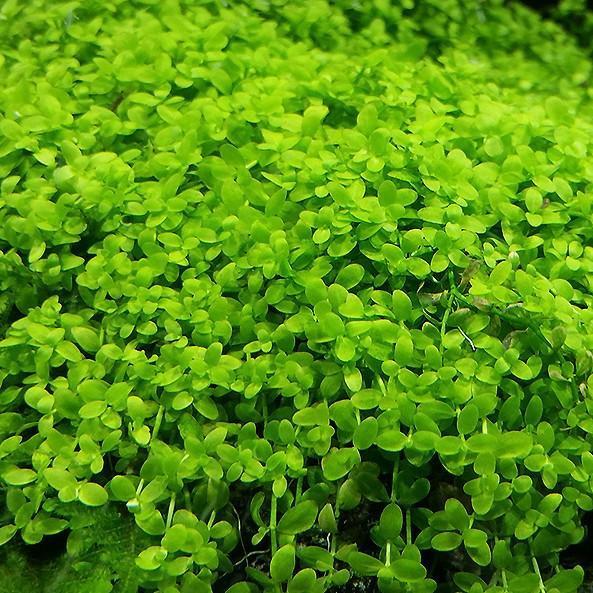
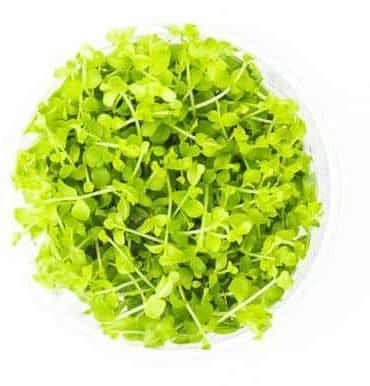
    Dwarf hairgrass (picture source) is a vibrant bright green carpeting plant with fine, slightly curled leaf blades. It creates a very soft, lush green texture on the bottom of the tank.

    Dwarf hairgrass grows very densely in good growing conditions and produces fine white roots. The roots are not visible above the substrate surface but look very interesting if the plant is grown up to the glass of the tank.

    In appearance, the dwarf hairgrass plant is one of the closest matches for the kind of grass we see out on dry land. It is a small species, not growing taller than about 3 inches, and it creates a very dense lawn.

    Placement And Lighting

    Dwarf hair grass is essentially a carpeting plant that can work anywhere on the bottom of the aquarium. In larger tanks, this species also makes a great foreground plant.

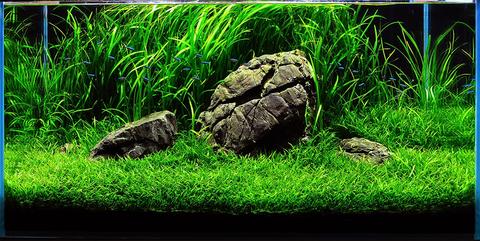
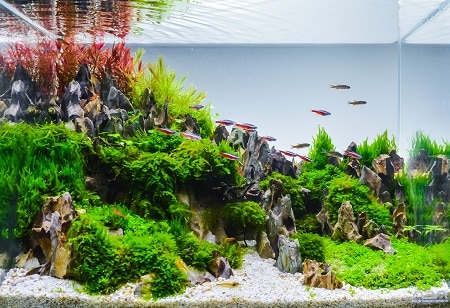
    This plant provides a beautiful green look to the aquascape and looks amazing in Iwagumi and minimalist aquascapes. Its grass-like texture makes it an ideal choice for complimenting driftwood bonsais.

    Dwarf hairgrass is mixed with other carpet plant species for nature aquariums but they can outcompete other smaller groundcovers if allowed to.

    Once planted, these aquatic plants will spread widely by runners so keep that in mind when laying out your aquascape.

    In nature, hairgrass is not found growing in the shade, and that is the first clue in how to keep your dwarf hairgrass growing well in your aquarium. It does not need powerful lighting, but it will not do well in low light.

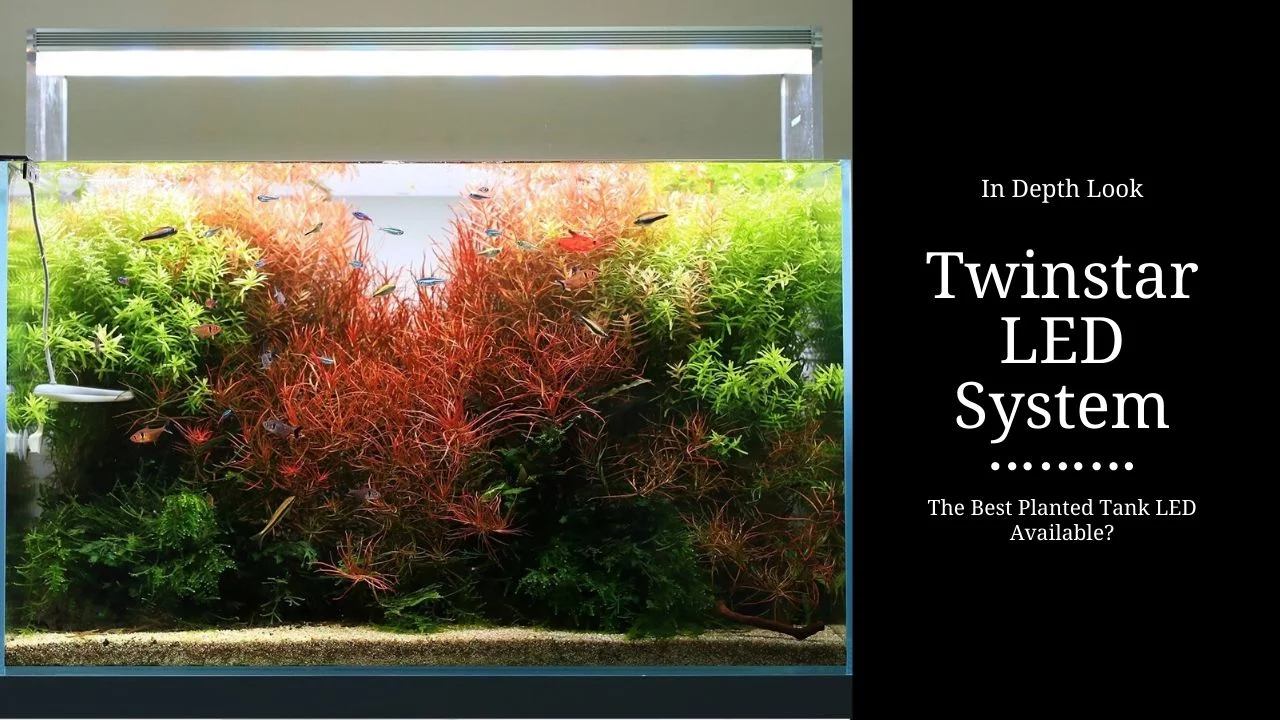
    Use decent lights if you want a dense, vibrant, and healthy carpet, particularly because this is a low-growing carpeting plant, and light intensity diminishes quickly with depth. If you want a lush carpet, you will want to invest in a stronger planted tank light. A good light to look into would be a Chihiros WRGB II or a Twinstar E series.

    Editor’s Choice


    Twinstar LED

    The Best LED for Planted Tanks

    Twinstar nails the spectrum, has the proper spread and comes with a sleek design. Perfect for aquascapers


    Buy On Buce Plant


    Buy On Glass Aqua

    What Are Good Tank Mates?

    Hairgrass has some real benefits for the fish in your aquarium. It oxygenates the water well and creates ideal micro-habitats for fish tank inhabitants.

    As a spreading plant that grows at a healthy rate, dwarf hairgrass is also great for soaking up excess nutrients in the system.

    Good Tank Mates

    Small freshwater fish and shrimp species enjoy foraging and sheltering between the blades of grass. Shrimp are ideal tank mates for this plant because they can really get to work cleaning up around the roots and helping to keep your aquarium clean.

    Most freshwater tropical fish and shrimp species kept in tropical fish tanks make ideal tank mates for dwarf hairgrass. Small fish that forage in the lower levels and on the bottom of the aquarium will enjoy the habitat this plant creates. Great fish to look into would be fish that are nano fish or schooling such as:

    • Black Shirt Tetras
    • Neon Tetras
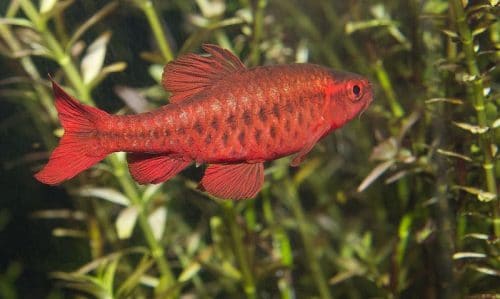
    • Cherry Barbs
    • Danios
    • Livebearers

    Fish Species To Avoid

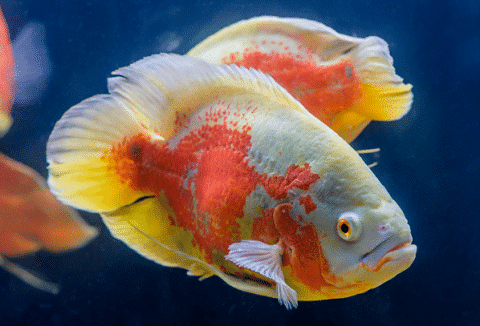
    Oscar Cichlids in Aquarium

    Large cichlids like Oscars should be avoided because they will damage this plant when shifting the substrate and rearranging the bottom of the aquarium.

    Dwarf Hairgrass requires CO2 to carpet properly. Without it, you get thin, patchy growth that never fills in. That is not a maybe. That is how the plant works.

    Other small community fish like corydoras can cause some frustration when first establishing dwarf hairgrass because while foraging, they tend to disturb and dislodge the roots from the substrate. Fortunately, root establishment happens pretty quickly and this is just a temporary problem.

    Feeding (Fertilization)

    Since Dwarf hairgrass is primarily a root feeder, a nutrient-rich medium is necessary for a healthy carpet. There are a few options here and the easiest is probably to use a suitable aquarium plant soil.

    You can also plant dwarf hairgrass in inert substrates like sand or fine gravel, but you will need to feed the roots from time to time with root tabs.

    Hair grass will also benefit from column feeding, although this on its own will not be a great substitute for providing nutrients directly to the roots.  Your substrate should be in an aquatic plant soil that absorbs nutrients from aquarium fertilize and the water. Brands like ADA and Tropica are designed for top notch aquascapes.

    For a fertilizer, I would recommend using an all-in-one fertilizer like APT Complete and supplement with root tabs over time.

    Editor’s Choice!


    APT Complete

    Editor’s Choice

    Made by an aquascaper for aquascapers. This is the best all around aquarium plant fertilizer on the market. Marco and micronutrients in one bottle!

    Use Coupon Code ASDComplete for 10% off your order!


    Click For Best Price


    Buy On Amazon

    How Much And How Often To Feed

    Root tabs are capsules of a slow-release fertilizer that are pushed into the substrate at the root zone. These substrate fertilizers provide nutrients for a few months, but it is best to follow the instructions on the specific product that you have to get a rough idea.

    Of course, the rate of nutrient uptake by your hairgrass is going to vary from tank to tank, depending on a couple of different factors. Plant size, species, planting density, carbon dioxide availability, light quality, and aquarium water temperature all play a role in how often you’ll need to add new root tabs.

    CO2 Injection

    It is important for aquarists to remember the 3 basic growing requirements for photosynthesis in plants. These requirements are light, nutrients, and carbon dioxide, and all three are needed in a balanced ratio for optimum plant growth. CO2 and a proper CO2 system are at the heart of lush growth. After all, 50% of our plant’s dry mass is carbon!

    Since dwarf hairgrass grows best under moderate lighting, and with good access to nutrients in the substrate, it will need access to carbon dioxide as well to grow at its best.

    How Much CO2 Do You Need?

    In tanks where fish are kept, carbon dioxide levels must always be kept within a safe range of below 30 ppm. Carbon dioxide levels above this range cause suffocation and is deadly to fish.

    To get your levels right, you’ll need to use a combination of a bubble counter and a drop checker. It takes a little fine-tuning, so start out on the conservative side for the safety of your fish. You should need 1 bubble per second for every 100 liters or 25 gallons of water volume.

    Just be sure you measure your levels well away from where the CO2 enters your tank for accuracy. It also takes a few hours (depending on the volume of your aquarium) for the available CO2 levels in the water to rise.

    How Long Should You Run CO2?

    Hairgrass cannot use CO2 without light so there is no use in running CO2 after your lights have been shut off for the day.

    That being said, when you start up your carbon dioxide for the day, it takes about 2 hours for the water column to accumulate the gas.

    For this reason, your CO2 injection system should run on its own timer that starts up about 2 hours before the lights go on, and then shuts off at the same time as the lights. If you are in the market for a CO2 system, CO2art systems are top notch!

    The Ultimate CO2 Kit


    CO2Art Pro Elite Series Bundle

    Use Offer Code ASD10%Off

    The highest end offering by CO2Art. This package includes everything you need to perform consistent and the highest quality CO2 injection in the industry!


    Click For Best Price

    Types

    There are a few other species of hairgrass available in the aquarium hobby and unfortunately, there is often a lot of confusion over which one is which. Mislabeling of Eleocharis pusillis as Eleocharis parvula is the norm, and confusion with other species like Eleocharis acicularis does happen from time to time.

    Other hairgrass species:

    • Eleocharis ‘belem’ is a shorter growing form that has more curled leaf blades than typical dwarf hairgrass. There is some confusion around the accurate identification of this hairgrass to species level.
    • E. Acicularis- This species has a slightly thicker leaf blade that grows straighter than E. Pusillis. It grows to about 6 inches tall.
    • E. Acicularis ‘Mini’- This dwarf cultivar is excellent for nano aquariums because it is even smaller than E. Pusillis.
    • E. Montevidensis– Giant hairgrass
    • E. Vivipara– Tall hairgrass

    Care

    Dwarf Hairgrass

    Dwarf hairgrass care is really about providing your plant with a decent substrate and enough lighting and CO2.

    While your carpet is becoming established, trimming with a pair of curved or double-curved aquascaping scissors will help to stimulate runners and lateral growth. Trimmed dwarf hairgrass, especially when planted in a grid pattern, looks pretty artificial and unattractive, but hang in there, this plant will close up the gaps.

    Once established, you’ll still want to give it a trim from time to time. A popular technique is to trim shortest in the front, increasing in height towards the back to create depth.

    Varying the heights also creates a more natural and varied look, but you should experiment and find the pattern that best suits your aquascape.

    Being a dense carpet plant, organic material and waste collect around the root zone and can lead to a build-up of organic material that can potentially result in some nasty swings in water quality.

    Situations like this tend to happen in over-stocked, and overfed tanks in particular. Disturbing the carpet to free up debris and vacuuming around the root zone is very helpful, especially after trimming. Fortunately, the cut leaf blades float well after trimming, but being such a fine plant, there will be hundreds if not thousands to collect. A little patience and a fine mesh aquarium net are all that is needed.

    Planted Tank Parameters

    Growing a dwarf hairgrass carpet is most successful in neutral water conditions with a pH of between about 6.5 and 7.5.

    As far as temperature is concerned, this plant grows well in any cool water or tropical freshwater aquarium between 50 and 85ยฐF.

    Carbonate hardness of between 0. 14ยฐdKH, and general hardness of 0. 30ยฐdGH are recommended.

    Dwarf hairgrass is a versatile plant that is used in a variety of different tank setups. Being a small plant that is trimmed, it makes a great choice even for nano tanks.

    It is probably best suited for a tank size of 10 gallons or more because it will spread in time to dominate small tanks. If you like the idea of a full carpet of dwarf hairgrass, it can also be grown in smaller aquariums as well.

    Water Quality

    Dwarf hairgrass is not known to be particularly fussy about water quality. Of course, you should always strive to maintain the best possible water quality for the sake of other plants and fish.

    Be sure to keep the spaces between leaf blades and around the root zone clean by vacuuming when necessary to avoid water quality issues that could affect other species and livestock in your aquarium.

    Filtration

    A healthy carpet doesn’t tend to break up a whole lot, but being such a fine-leaved grass, trimmings is an issue with your filter. Plants that are left to melt and decay can also cause these problems.

    You can simply turn off your filter temporarily when trimming this plant and carefully remove all the trimmings, or consider using a filter with a prefilter sponge fixed to its intake to keep solid debris out. Because an aquarium covered with ground cover like an iwagumi scape will produce a lot of plant waste, this will create a lot of ammonia production. To fight ammonia, you need to have a top notch aquarium filter with lots of biologicial filters. For serious planted tanks, a quality canister filter is highly recommended!

    Flow

    Dwarf hairgrass has no obvious preference when it comes to flow rate. They grow in still water like marshes as well as alongside rivers and are therefore able to grow in still or flowing water.  

    A decent flow will help to distribute dissolved CO2 in your aquarium and for that reason, some current is a good thing. A full aquascape should get 5-10 times turnover. Another reason why I push for high quality canister filters in planted aquariums.

    Aquarium Maintenance

    Regular maintenance is an unavoidable part of keeping a healthy, thriving ecosystem in your aquarium. A dwarf hairgrass carpet does require some focused maintenance in the form of trimming and vacuuming.

    Further than that, standard maintenance is all that is needed.

    Testing Water Conditions

    Test your water parameters regularly using a liquid test kit or strips.

    Nitrate, nitrite, and ammonia levels are the most important levels to test on a regular basis but when first filling your tank, you should take note of your pH and hardness levels as well.

    How To Set Up Your Aquarium Tank

    The most important part of your tank setup for dwarf hairgrass is a good layer of substrate. The Dwarf hairgrass is a root feeder and will grow best in a nutrient-rich substrate.

    Sand or fine gravel also works well as a medium to grow dwarf hairgrass, but because they are inert, you will need to use root tabs.

    Dwarf hairgrass is sold in pots or bare root clumps, and before planting, you should split the bunch up into as many small sections with roots as possible. Take care to not damage the plants and plant out in a grid pattern.

    Planting dwarf hairgrass is easiest with a pair of aquascaping pincettes or tweezers. An offset pair works well to avoid pulling these tiny plugs back out when lifting out the tweezers.

    How To Propagate

    Dwarf hairgrass is a very easy plant to propagate. If your tank conditions are good, the plants will soon send out runners and spread to close the gaps and create a full carpet.

    If you wish to create more plants for planting out in other tanks, simply remove a runner with leaves and roots and replant.

    Health And Disease

    Grass in Aquarium

    Signs Of Good Health

    Healthy dwarf hairgrass has a really vibrant bright green coloration and firm, wiry foliage.

    The leaves of the plant should be able to support themselves when held out of the water. Healthy plants should also have a healthy set of fine white roots.

    Signs Of Poor Health

    Unhealthy dwarf hairgrass plants will turn yellow and then light brown as they melt. The leaf blades become soft and are unable to support their own weight.

    Look for bright green hairgrass with firm, upright leaves and have a strong, healthy root system.

    Common Health Issues And Treatment

    Even the healthiest plants can melt back pretty badly when first planted and this is often because they were farmed emersed.

    Plants that have been grown emersed will need to adjust to growing completely underwater and grow new foliage.

    In this case, stay on top of removing melting leaves from your tank to avoid them from spoiling in your tank or being taken up in your filter.

    This melting can begin at your local aquarium store but avoid purchasing any plants that are clearly showing signs of stress or yellow or brown leaf blades and tips.

    Flowing strands of hair algae flowing on the blades of hairgrass is a frustrating problem. Algae growth is the result of lighting that is too strong or an imbalance of light, nutrients, and carbon dioxide.

    Plants with discolored leaves showing yellow or brown patches are often the result of a lack of macronutrients. Consider fertilizing your substrate if you notice this problem or try dosing with a suitable liquid fertilizer.

    Plant Pests

    When adding a new plant to your aquarium, there is always the chance of accidentally introducing pest animals and even plants.

    As exciting as it is to get started with a new species in your fish tank, resist the urge to plant it right away!

    At the very least, you should take care in inspecting the plant and give it a good rinse. Take this time to remove any dead or dying plant parts while you’re at it.

    Before planting out a hairgrass carpet, the aquarist will separate the plant’s roots into as many little complete plants as possible, taking care not to damage them.

    Splitting the plants up like this gives you the ideal chance to wash off each section and remove any eggs or snails you might find.

    Fortunately, dwarf hairgrass is available as a tissue culture.

    These selections are grown under controlled laboratory conditions and are completely pest-free so you have very little to worry about when planting them in your tank.

    Where To Buy

    Dwarf hairgrass is easy to find at your local fish store, but it’s is difficult to know exactly which Eleocharis species you’re getting sometimes. It also difficult to find a tissue culture variant locally. For this reason, many hobbyist will look to an online fish store to get quality plants.

    A good option is to buy them online from a trusted source like Buceplant.com. That way you know exactly what you’re getting. They have both cuttings and tissue culture available. I recommend going tissue culture.
    Easy To Grow Carpet!


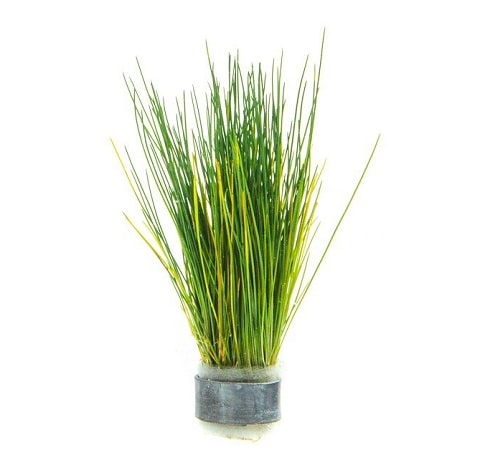
    Dwarf Hairgrass

    Dwarf hairgrass is an easy to grow carpet that is great for beginners. Purchase tissue culture plants to ensure pest free plants!


    Click For Best Price


    Buy On Glass Aqua

    FAQS

    Is it easy to grow?

    A hairgrass carpet pretty is easy to grow if your tank setup is suitable. You should have no problems growing it with fair lighting, injected CO2, and a nutrient-rich substrate.

    Can I grow this plant without CO2?

    Dwarf hairgrass is grown without added CO2, although the results is pretty underwhelming. Added carbon dioxide will definitely improve plant health and vigor.

    Can it grow in gravel?

    You can plant dwarf hairgrass in gravel, although coarse gravel is not an ideal medium. This plant has fine roots and spreads by runners, which means it will struggle to shift the gravel and spread itself.

    Is this plant low light?

    Dwarf hairgrass is one of the better carpet plants for lower light setups, but it is not a true low light plant and will need decent lighting.

    Does it need soil?

    Dwarf hairgrass does need to be planted in some form of substrate. It does not necesarily require soil, but it is a good option. You can also grow dwarf hairgrass in sand or fine gravel if you feed it with root tabs when needed.

    Closing Thoughts

    Dwarf hairgrass are pretty undemanding but really attractive aquarium plants. Melt is a frustration at first but provided your parameters are in order, you will enjoy a vibrant green element in the tank with great movement and texture. These carpeting plants are recommended for any planted tank enthusiast.


    ๐ŸŒฟ Want to learn more? This article is part of our complete Planted Tank & Aquascaping Guide. Your ultimate resource for aquarium plants, aquascaping styles, substrates, and more.
  • The Secrets To Keeping A Planted Aquarium โ€“ An Aquascaper’s Approach

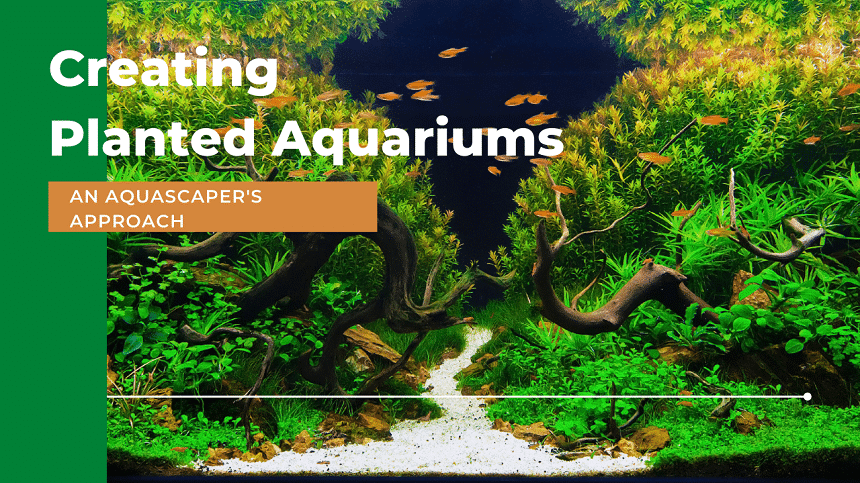
    The Secrets To Keeping A Planted Aquarium โ€“ An Aquascaper’s Approach

    I’ve been keeping planted tanks for over 25 years, and the biggest thing I’ve learned is that success comes down to understanding a few core principles. not collecting more gear or more plants. I’ve set up everything from simple low-tech tanks to high-tech CO2-injected setups, and the fundamentals are what separate thriving planted tanks from the ones that turn into algae disasters within a month. This guide gives you an aquascaper’s honest perspective on what actually matters when keeping a planted aquarium.

    The Basic Question – What Do You Want Out Of A Planted Aquarium?

    This is the number 1 question you need to ask yourself when setting up a planted aquarium. To make it simple for you I will ask you this question

    What Type Of Planted Aquarium Do you Want?

    Are you looking for easy maintenance? Championship level? Do you want one of those crazy planted tanks you see on Pinterest and Instagram? All of this is attainable if you set your goals. It all starts on if you are in the low-tech or high-tech side of the hobby. This all relates to CO2 usage. There are four levels of planted tanks that you should be aware of and they are:

    • Level 1 – Low-tech non-CO2
    • Level 2 – Low-tech CO2 supplementation with SeaChem Excel
    • Level 3 – High-tech CO2 with low light (Most aquascapers will eventually fall here)
    • Level 4 – High-tech CO2 with high intensity lighting

    Before we can go over each level we should understand the role of CO2 in our aquariums.

    Planted Aquariums and CO2

    CO2 levels drives grows in a planted aquarium. It’s not nutrients, proper lighting, or substrates. CO2 is the center and driver to rich, fast, and supple healthy plant growth in your aquarium plants. There are multiple levels of non-CO2 usage and CO2 usage. 50% of plants dry mass is carbon. As we learned in my CO2 System Article, aquatic plants in the wild enjoy evaluated levels of CO2 as high as 50 PPM.

    Since CO2 drives the growth in our planted aquariums, we have to design the rest of our system around it. Let’s next talk about the decision to do CO2 or not.

    To Add or Not to Add CO2

    CO2 Injected Planted Tank

    What do you sacrifice the most when you decide to not use CO2? What you sacrifice is growth and the showcase look. There are plenty of low light aquarium plants that will do well without CO2, however, you will sacrifice their growth rate and thickness by excluding CO2.

    In essence, they are generally living in a non-CO2 environment. These non-CO2 low light plants will grow, but their true potential is unleashed with a CO2 system.

    This is why I recommend even if an aquarist is planning on not using CO2, that they at least consider dosing CO2 using SeaChem Excel. SeaChem Excel functions as an alternative to CO2 injection. While not as effective, Excel will still improve the growth rate of aquarium plants 2 – 4 times versus the traditional 10 – 25 times plant growth rate you will experience with injection.

    Excel dosing puts us in level 2 territory. We can still build plenty of wonderful aquascapes with this and not have to deal with the added complexity and cost of a CO2 system. I am definitely an odd ball compared to many bloggers online, as I do not recommend level 1 if one is getting into planted aquariums. Call me vain, a purist, or spoiled – but I do love me some killer looking aquascapes and I want you to have the ability to enjoy building to that level.

    For those of you looking to do amazing aquascapes and looking to get into reds, stem plants, and lush carpeting plants, CO2 injection is a must. It’s hard to visualize what these aquascapes will look like, so I will explain that later in this post when we get into aquascape styles and examples.

    When it comes to a quality CO2 system, I highly recommend CO2Art. They sell an excellent combo package that gives you all the essentials you need to get start. The box below comes with a inline diffusor, my favorite method of diffusor. I would love a CO2 reactor, but unfortunately those cool looking AquaMedic CO2 reactors can’t be found in the US – so this is the best you can get in the states.

    The Ultimate CO2 Kit
    CO2Art Pro Elite Series Bundle

    Use Offer Code ASD10%Off

    The highest end offering by CO2Art. This package includes everything you need to perform consistent and the highest quality CO2 injection in the industry!

    Click For Best Price

    Which Substrate is Best?

    When it comes to planted aquascapes the hierarchy I believe in is CO2>Substrate>Lighting>Fertilizer. CO2 drives the 3 others, substrate is our next starting point, planted aquarium lighting pushes CO2 intake, and fertilizer is how we balance everything.

    Substrate comes into planted tanks as this is our base for nutrients for our aquarium plants. Whether you decided on column feeding plants or roots plants, substrate will still play a role. A good substrate for a planted aquarium will be an active, nutrient-rich substrate to serve as a baseline for nutrient uptake for our aquatic plants.

    When it comes to planted tank substrates, many articles you may come across may stop at a basic overview of substrates. I’m going to give you the professional aquascapers view first then break it down to a more realistic senario for beginner. You should always understand the professionals perspective so you know the end goal and why quality investments are key for long term success.

    The secret for professional aquascapers is utilizing a layer system. This layer system is founded on ADA principals and are the following:

    • Layer 1 – Nutrient-Rich Planted Aquarium Power (Base Powder)
    • Layer 2 – Nutrient-Rich Aqua Soil
    • Layer 3 – Inert substrates and decorative caps

    Each layer plays a role in a professional aquascape. Let’s dive in!

    Layer 1 – Nutrient-Rich Substrates (Powder)

    This is the first level in a professional aquascape, This is also known as “power sand” or power soils with ADA being the major brand and benchmark in this field. This fine powder serves as a bottom layer in a planted aquascape. This substrate only covers the first 1.5 inches of the bottom. The rest of the layers will have other substrates.

    The purpose of this power sand is to provide a nutrient rich base to the bottom floor for our rooted and carpeting plants. This will ensure your bottom level has a strong base and can be refreshed with root tabs in the future.

    Unfortunately, ADA power sand is difficult to find online. It is best to purchase from an LFS or directly from AquaForest Aquarium – the main US distributor of ADA products.

    Layer 2 – Nutrient-Rich Aquarium Substrates (Soil)

    Layer 2 are our Aquasoils or our active substrates. This is what many planted aquarium enthusiasts work with. They will work primarily with this soil and spread it across their tank so they can use rooted plants and carpeted plants to cover their aquarium. It is also designed to be sloped and can maintain its shape when doing so. The most famous aqua soil is ADA Amazonia. It is the most nutrient rich and can be difficult for new aquascapers to use.

    Editor’s Choice!
    ADA Aqua Soil

    The Best Planted Tank Substrate

    The world’s standard in active substrates for planted tanks. Created by brand that founded modern aquascaping

    Buy On Amazon

    For new aquascapers, Tropica aquasoil is a great alternative that is well proven in Europe and touted by the likes of world famous aquascaper George Farmer.

    If you are working with rooted plants, it is a good idea to use layer 1 and this layer in combination to have a rich base for your aquatic plants to absorb in as they grow. There are DIYers who like to use organic soil as an active substrate. I’m guilty of being a purist, so I won’t cover it in this post, but I will have one of my other aquascapers cover it in a future post.

    The next layer can be decorative or functional

    Layer 3 – Inert Substrates

    Planted Tank With Inert Substrate

    These can have two functions in a planted tank. In a planted aquarium that is low tech with mostly column feeding aquatic plants, this substrate can be spread all across the aquarium to cover the bottom. There are also beginner based substrates like Caribsea Eco Complete that can be use as a functional substrate for beginner friendly rooted tanks.

    The second function is decorative. In a professional aquascape, you will see inert substrates cover the other 2 layers and “cap” the substrates for aesthetic purposes. Other times, the functional layers are separated into sections in the aquascape where layer 1 and 2 are together for carpeting and rooted plants and there is a separate area of the fish tank with the inert substrate that serves as a foreground and an area for bottom dweller fish and shrimp.

    One awesome accent you can do with inert substrates with separate sections is make pathways in the aquascape that make your aquarium look like a living underwater forest. These can create spectacular scapes and are often features you will see in award winning Aquascapes

    Purpose of Lighting

    A proper light has the right PAR, spread, and spectrum. I preach these 3 principles in any aquarium lighting topic I cover.

    PAR

    PAR (or Photosynthetically Active Radiation) is the measurement of light intensity in our aquarium. Quality manufacturers will have done their R&D and will have their PAR figures published for customers to see. PAR levels by plant species varieties. The ones that require the least amount of PAR are known as low-light plants in our tech.

    For PAR, I have this sheet from the Barr Report below that shows you the ranges. The lights I’m going to talk about today will get you in these ranges. Check out my best LED lights for Planted Tanks post for more in-depth detail on PAR.

    PAR for Planted Tanks

    Spectrum

    Spectrum is all about hitting the hitting the desired wavelengths in the Red, Green, and Blue spectrum as shown below from ADA. Spectrum is another complex topic. The lights I’m going to mention below have this covered. To break it down simply, the best lights that hit these desired wavelengths are branded as “RGB” lights in our hobby.

    Spread

    Spread is the last principle. Because these are LEDs, they need to be spread and diffuse. All the best LED systems will have a diffusor built in to work around the limitations of LED as they are naturally focused lights. This prevents shading and ensures even coverage in your fish tank.

    The 4 levels of Lighting Systems

    A high quality light will have all 3 principles checked. When it comes to the plant tank market, I can separate planted aquarium lighting into 4 categories:

    • Level 1 – Entry Level Lights
    • Level 2 – Lights For Dense Planting (Most of you will fall here)
    • Level 3 – Lights For Advanced Aquaccapes
    • Level 4 – Professional Level Lights

    Level 1 – Entry Level Plant Lights

    Entry level lights are for simpler aquascapes. This lights will allow you to keep the low light plants and easier to maintain aquatic plants. These lights will include such lights like the Twinstar B and C Series, Chihiros A-Series and C-2, and the Fluval Planted 3.0.

    Level 2 – Lights for Dense Planting

    This is the level I look at when it comes to Aquascaping. At this level level, you should be able to keep around 3/4 of the live plants available in the trade. If you desire carpeting plants like Monte Carlo and densely planted aquascapes this is where we start.

    For these lights, we look at the Twinstar E Series, Chihiros WRGB, ONF Flat Nano.

    Level 3 – Lights for Advanced Aquascapes

    These are the lights you go to where you want to grow a bunch of harder to care for plants and red plants. These lights have the ideal PAR, Spectrum, and spread and will successfully grow all aquatic plants. Your main concern here is balancing light, CO2, and nutrients so you don’t have a bunch of algae growth. For this range you would be looking at the Twinstar S Series, Chihiros WRGB, Chihiros C2 RBG3, and ONF Flat One+

    Level 4 – Professional Lights

    These are the lights that the pros use and competition entrants. These would include lights like the ADA Solar RGB, Chihiros Vivid 2, and UNS Titan. This lights are not for beginners and requires an advanced understanding of aquascaping.

    For most plant tanks owners. I would recommend you look at level 2 lights.

    Nutrients and Fertilizers

    Aquatic plants use macro and micro nutrients to grow. Macro nurients include Nitrates, Phophate, and Potassium. Micro nutrients include Iron, Manganese, and trace elements. Some plants feed primarily through their leaves, while others are root-feeders. I go through in detail in my best aquarium fertilizer post. The main takeaway are live plants need Macro and Micronutrients and fertilizers supply that in mass planted tanks.

    Fertilizer Requirements

    Every aquarium is unique, so it is advisable to look at your aquatic plants over the course of the first month or two and look for signs of deficiency. Fertilizers come more into play as you use CO2 as the nutrients your fish produce will not be enough for them to grow. Plants use nutrients continuously just like CO2.

    When selecting a good liquid fertilizer, look for a supplement with trace elements such as iron, manganese, boron, zinc, etc. Look for a good ratio of nitrogen (N), phosphorus (P), and potassium (K), otherwise known as the NPK ratio1. Regular water changes also replenish other elements, such as dissolved minerals (calcium, magnesium) and carbonate salts in the water, which are a necessity for fish.

    This is can get super confusing very quick and turn into a massive post. To take out the guesswork, I’ll recommend that you work with daily dosing with a branding all in one liquid fertilizer. The best in the business in my opinion is APT Complete by 2Hr Aquarist. Just follow their instructions and you should be well on your way in A CO2 injected tank. They even back it up with a 100 day guarantee.

    Editor’s Choice!
    APT Complete

    Editor’s Choice

    Made by an aquascaper for aquascapers. This is the best all around aquarium plant fertilizer on the market. Marco and micronutrients in one bottle!

    Use Coupon Code ASDComplete for 10% off your order!

    Click For Best Price Buy On Amazon

    Filtration

    There are two schools of thought when it comes to planted tanks. The first is what I call the more casual approach where an aquarist feels that you can run a planted aquarium with a massive amount of plants will little or no filtration. The second school of thought is the aquarist that feels that you filtration is the heart of every successful system.

    I fall under the second school of thought. Live plants have the potential to produce more ammonia (aka fish waste) that your fish ever will in a densely planted aquarium. The leaves they drop will decay and need to be picked up by your filter. You need to have a ton of biological filtration to reduce ammonia because it becomes problematic and leads to algae growth.

    This is why I feel if you are going to be serious about aquascaping, you need to consider buying the best canister filter you can afford. Personally, I’m a OASE fanboy. They are in my mind, the best canister filter ever built. The prefilter section comes out for easy maintenance and the aquarium heater chamber is innovative. The prefilter feature sells itself!

    All you need to do is modify the setup by removing all the filtrations chambers and replacing it with a superior biological filtration like SeaChem Matrix and putting Purigen to keep your water clear. Add a fine polishing filter pad and you are good to go!

    Types of Plants and Their Lighting Requirements

    All types of plants require different lighting levels, some require bright light and others survive on less. Let’s start with the types of plants first. For these plant examples, I’ll focus on low light plants or low energy/low tech plants.

    Foregound Plants

    These are smaller plants that are on the shorter side. They can be placed in the substrate or placed near the beginning of the hardscape. Examples of these plants would include plants like:

    Mid-Ground Plants

    Anubias Plant

    These are taller plants best suited in the middle of the aquarium. These would include plant species like:

    Background plants

    Background plants are tall plants that serve as a background to your aquarium. These would include plants like:

    When it comes to aquarium lighting requirements, reds, stem plants and carpeting plants will require the most light. The good thing is a solid online retailer will give you the ability to search plants by light level so you can determine which ones work for you.

    Carpeting plants

    Some carpet plants are Dwarf baby tears (Hemianthus callitrichoides) and dwarf hairgrass. These are famous for their vibrant natural look and require a lot of light. Staurogyne Repens is one of the more popular carpeting plants for low tech/low energy setups. Monte Carlo is one of the most popular carpeting plant species used in aquascapes due to its easier to grow nature and spread in CO2 injected tanks.

    To have the best success with carpeted plants, CO2 injection is recommended. You can also give yourself a good head start if you use a dry start method to grow out your carpet.

    Red Plants

    Red plants is a whole section in itself as many have more advanced care requirements. If you are beginner, I would recommend to avoid red plants until you have more experience. That being said if you really want a red plant, consider plant species like Ludwigia Natans Super Red, Ludwigia Repens, or Alternanthera Rosanervig. As with carpeting plants, CO2 injection is recommended.

    Live Plant Selection

    Live plant selection can be overwhelming with over 400 aquarium plants to choose from in our hobby. The best place to start is determine what you are looking for. If you are looking for low energy/low tech plants, stick with those. Stem plants require more maintenance as they grow fast.

    I also recommend starting with low energy/low tech plants, then moving into CO2, then move into more advanced plants. These easier to care for plants will thrive even more in CO2. Always shop with a plan and never walk into a local fish store not knowing what you are looking for.

    Selecting Live Plants

    Aquarium selection I feel is easier these days if you use the rimless aquarium selections available. I would recommend a rimless aquarium if you want to do an aquascape as it offers the highest clarity and aesthetics. They also offer them in ideal sizes. If we use ADA standards here are the dimensions for selecting an aquarium.

    • 60P (Small) – 24″ x 12″ x 14″ or 60 x 30 x 36 cm (17 gallons)
    • 90P (Medium) – 36″x 18″ x 18″ or 90 x 45 x 45 cm (48 gallons)
    • 120P (Large) – 48″ x 19.7″ x 19.7″ or 120 x 50 x 50 cm (80 gallons)

    If you work off these dimensions at the 2, 3, and 4 foot fish tank length, you will have an ideal space to build an aquascape and show depth. You can purchased rimmed tanks for less. They will offer less clarity and aesthetics, but it will save you money. The most available rimless for aquascapers online will be from Landen and UNS Aquariums.

    Determining Your Aquascape

    Sanzon Iwagumi

    Aquascapes are beautiful yet complex. I’m going to list out the main three aquascaping styles in our aquarium hobby then will link to articles that go more in-depth. The top three scaping styles are:

    Of the 3 styles, the most trendy currently is the Nature Aquarium. This style has been popularized by ADA and featured in many aquascaping competitions.

    Selecting Fish

    When it comes to fish for aquascapes, schooling fish are going to be the more ideal. There is are also design elements to keep in mind when selecting fish. This would be:

    • Smaller and long fish add a dynamic effect to a planted aquarium
    • Tall and round fish add calm and peacefulness

    There are also sizes of the aquarium to keep in mind to. I’ll split this by size so you can determine what fits for you and include links to the fish profiles:

    Rasboras

    There are other inhabits you can include such as freshwater shrimp and algae eaters like Otocinclus. The schooling fish are the heart of the scape. The other fish and inhabitants are functional fish that serve a role such as algae eating.

    How to Set Up a Fish Tank with Live Plants

    We are going to work with level 2 setup here – low-tech with CO2 supplementation using SeaChem Excel. I’ll use a 60P tank to build. Here would be the list to setup:

    • Aquarium. UNS 60U orย Landen 60P
    • Stand. Aqua Worx Aquarium Stand. 60U
    • Filtration. Oase Biomaster 350
    • Driftwood . ย Manzanitaย or Spiderwood Driftwood
    • Substrate. Tropica Aquarium Soil. Powder Granule
    • Aquarium Lighting. Fluval Plant 3.0 orย Twinstar E-Series
    • Plants (examples below)
      • Easy To Care For- Bucephalandra, Anubias Nana, Crypts
      • Carpets. Micranthemum โ€˜Monte Carloโ€™, Dwarf Hairgrass
      • Mosses. Java Moss,ย Christimas Moss
      • Reds. Ludwigia Natans Super Red, Ludwigia Repens

    This is likely a higher end setup than what you would typically see. I want to set you up for success. This setup is more future proof as you can step up to CO2 and more aggressive growing aquatic plants as the foundation of the system is setup to handle this. You may have to upgrade the light if you push to high light demand plants, but this should get you going well.

    Common FAQS

    Are they hard to maintain?

    If setup with a beginner in mind, they will not be hard to maintain. Planted aquariums can be as easy to maintain or as difficult as you want. It all depends on your plant selection, your light intensity, and CO2 injection. A fish tank with high intensity aquarium lighting and CO2 injection will require lots of pruning. A tank with low intensity and no CO2 will requirement less pruning, but may struggle with excessive algae growth.

    Do these tanks need water changes?

    Most planted tanks will require water changes. There are some low tech setups that can be designed to live without water changes. They are not the best looking, but one of the easiest to maintain aquariums. Most high energy planted tanks will require regular water changes due to purposely overdoing aquarium fertilizers to reset the system (known as the estimative index1).

    What is the best substrate?

    The best substrate for a planted aquarium would be an active substrate. The best beginner active substrate for an aquascape would be Tropica aquarium soil powder. The best advanced active substrate would be ADA’s Amazonia substrate system.

    Can I use LED lights?

    Yes, you can use LED lights for planted aquariums. They have come a long way since they were first introduced. Many even include timers, dimmers, and color spectrum customizations that can all run off your smart phone! They are the new wave of lighting in our hobby.

    Further Reading

    This blog article is fairly long and there is a whole bunch I could get into. The best way to get more in-depth on this is with books. Here is what I would recommend for reading:

    Aquascaping – By George Farmer

    My Pick
    Aquascaping

    Created by UK Aquascaper and co-founder of the UK Plant Society, George Farmer. This book is a full color 317 page deep drive into the incredible world of aquascaping!

    Buy On Amazon

    This to me is the modern aquascaping bible. Created by world renowed aquascaper and YouTube personality George Farmer, this book offers a lot of information well beyond the scope of this blog post. I highly recommend this to anyone who is serious about getting into aquascaping.

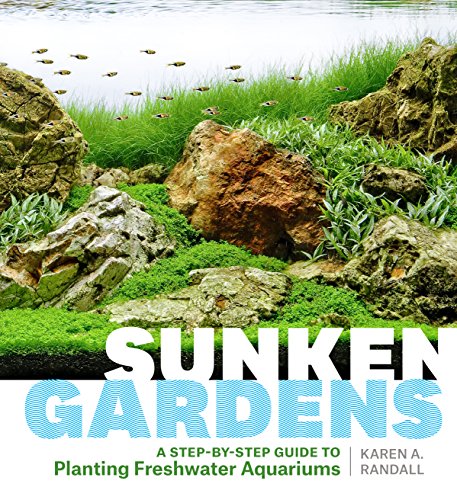
    Sunken Gardens – A Step By Step Guide To Planting Freshwater

    Also Great
    Sunken Gardens

    Written by American Aquascaper, ADA Judge, and editor of AGA magazine Karen Randall. This 252 page book offers an in-depth look into your first aquascape build!

    Buy On Amazon

    Karen is a seasoned aquascaper and past president of the Boston Aquarium Society and chairs several aquascaping competitors every year. Her book goes into great detail about planted aquarium setup and has several how to picture tutorials.

    Closing Thoughts

    This article was a joy to write up. Passionate subjects like this I can write for days ๐Ÿ˜….I hope youโ€™ve found this article helpful in understanding how to maintain a planted aquarium. If you have any other questions, please donโ€™t hesitate to leave them in the comments below and I will get back with an answer for you as soon as possible! Happy scaping!


    ๐ŸŒฟ Want to learn more? This article is part of our complete Planted Tank & Aquascaping Guide. your ultimate resource for aquarium plants, aquascaping styles, substrates, and more.

  • BUCEPHALANDRA – Buying, planting and caring for your first One

    BUCEPHALANDRA – Buying, planting and caring for your first One

    This plant will grow in almost anything. But if you want it to actually look good, you need to understand what it wants. The gap between alive and thriving is lighting, nutrients, and consistency.

    Any plant stays alive. Making it look good takes understanding.

    Are you looking to buy your first Bucephalandra plant? Look no further! This blog post will show you how to find the best one for your needs and care instructions. You’ll learn about what they are, where to get them, what kind of light they need, and much more! We hope this helps make choosing a new plant that much easier.

    Species Overview

    Scientific Name Bucephalandra spp.
    Common Names Buce plant, Buceps
    Family Araceae
    Origin Borneo, Southeast Asia
    Skill Level Easy, moderate
    Lighting Low, 40 PAR (Umols)
    Tank Placement Foreground, Midground
    Flow Rate Moderate, High
    Temperature Range 71-79ยฐF
    Height 1-10 inches
    pH Range 6.0 – 8.0
    Propagation Rhizome division
    Growth Rate Slow growth rate
    Feed Type Column or Root Feeder
    CO2 Requirement No, but recommended

    Origins And Habitat

    In nature, the Bucephalandra species are mostly found growing densely over stones and aquarium rocks. They grow in and along streams and rivers in tropical forests in Borneo.

    In these habitats, the plants are flooded in the rainy season, growing submerged. In the dry season, water levels drop and they continue to grow emersed. Bucephalandra, or buce plants as they are often known, are great low-maintenance plants for beginners or more experienced aquarists. These tough little plants come in a huge range of cultivars, but all are small, slow-growing aquarium plants.

    What Do They Look Like?

    How Does Bucephalandra Look Like

    Bucephalandra species are broadleaf flowering plants that grow from a creeping rhizome that tend to run across rocks and driftwood. Although they are pretty new to the hobby, there are already a huge variety of cultivars and varieties available.

    The shape and color of the leaves vary, but the upper sides tend to be glossy, and sometimes even iridescent. The edges of the leaves in the different varieties is wavy, like as in ‘Wavy Green’ or flattened and leaf shape varies from teardrop-shaped, elongated, to rounded.

    The size of the leaves varies a lot as well, depending on the species or variety you have. They measure anything from less than a half an inch long in a type like ‘Black Tears’ to leaves of about 3 inches long in ‘Green Broad Leaf’.

    The undersides of the leaves is spotted in different colors and are often interestingly marked in red, yellow, or white. The tops of leaves can also have interesting white spotting. For many of these species, their new leaves may have strong coloration.

    These plants vary in size with some species staying lower than an inch in height, and others reaching over 2 feet. Most plants in the hobby measure between 1 and 10 inches tall.

    Placement And Lighting

    Being small rhizome plants, buce plants look great when grown rooted in the foreground or on hardscape elements in the midground of the planted aquarium. They are adapted to life in flowing water and this makes them an ideal choice for aquascapes with some current, like hillstream biotopes for example.

    Bucephalandra species grow from a creeping rhizome where branches readily emerge them. This new growth will be bigger than the original.

    Due to how their new growth and new leaves emerge, they should not be planted in the aquarium substrate. It is possible to grow these aquatic plants rooted, provided only the root system is covered by the gravel.

    These plants is grown attached to aquarium rocks or driftwood and will attach themselves better to surfaces that are heavily textured. Until they are properly attached, they is secured with thread or glue.

    Being a slow-growing broadleaf aquarium plant, the buce plant is vulnerable to algae growth on the leaves, which can happen quickly in a tank with strong planted aquarium lighting and unbalanced parameters. Buce plants are really easy to care for if grown under low light or shaded out by other aquarium plants or hardscape features.

    What Are Good Tank Mates?

    Bucephalandra plants are suitable for most species only and community freshwater tropical aquariums. These are hardy plants that most fish will not damage or eat.

    Good Tank Mates

    Good fish species to keep with these aquatic plants include those that enjoy slightly cooler water with a good flow. Hillstream loaches for example may do well with this aquarium plant.

    That being said, Bucephalandra is quite an adaptable group and will survive in warmer conditions with a lower flow as well. As a plant with a low growth rate, buceps can easily be overtaken by algae.

    Grazers like Otocinclus catfish, Stiphodon gobies, and siamese algae eaters make great tank mates because they will actively clean the surfaces of the leaves. Inverts like Amano shrimp and nerite snails will also help to keep the leaves clean.

    Schooling fish like cherry barbs and cardinal tetra do an excellent job of contrasting the wavy green leaves of the buce plant.

    Fish Species To Avoid

    Buce plants are pretty tough and hardy specimens in the aquarium. It is probably best to avoid keeping them with large fish like oscars that might disturb them, especially if you plan on growing them rooted.

    As a plant that does well in aquariums with a good flow, avoid keeping fish like fancy goldfish or bettas that are not strong swimmers. Buceps are one of the best options for African cichlid and goldfish tanks but this doesn’t mean they’re completely immune to these plant-eaters.

    If you do want to grow buceps in a cichlid or goldfish tank, be sure to plant a few plants (the more the better), to spread out the damage and give the plants a chance to recover.

    Feeding and Fertilization

    How Much And How Often To Feed

    Being a slow-growing plant with a low light demand, bucephalandras don’t necessarily need to be fed to maintain good health. Unused nutrients in the water will tend to promote algae growth that the plants may not be able to compete with.

    If you wish to grow these plants under more high-tech conditions with stronger lighting and CO2 injection, light feeding in the water column will help these aquatic plants grow faster in these conditions. An all in one aquarium fertilizer like APT Complete is great to use for feeding plants in aquascapes.

    Editor’s Choice!


    APT Complete

    Editor’s Choice

    Made by an aquascaper for aquascapers. This is the best all around aquarium plant fertilizer on the market. Marco and micronutrients in one bottle!

    Use Coupon Code ASDComplete for 10% off your order!


    Click For Best Price


    Buy On Amazon

    If planted in coarse gravel with good water flow to the roots, water column feeding will still provide all the nutrients they need.

    Types

    There are at least 30 different plant species in the Bucephalandra genus and the taxonomy of plants in the aquarium trade is quite confused. Most buce plant species do not have common names.

    There are a huge variety of trade names out there, but the following types are all popular choices:

    • Bucephalandra sp. ‘Brownie Ghost’
    • Bucephalandra sp. ‘Brownie Brown’
    • Bucephalandra sp. ‘Titania’
    • Bucephalandra pygmaea ‘Green Wavy’
    • Bucephalandra sp. ‘Kedagang’
    • Bucephalandra sp. ‘Black Pearl’
    • Bucephalandra sp. ‘Green Tears’
    • Bucephalandra sp. ‘Super Blue’
    • Bucephalandra sp. ‘Deep Blue’
    • Bucephalandra sp. ‘Rainbow Marble’

    There are a large variety of Buce Plants available. They are best illustrated by a video. This one by iConic Scape is a great slide show of over 20 varieties to see!

    Bucephalandra grows slowly. If you expect fast results, you will pull it out before it establishes. Patience is the only care requirement most guides forget to mention.

    Bucephalandra Care Guide

    Bucephalandra is similar in its care requirements to the more familiar anubias species. These are not difficult plants to grow, provided you maintain suitable and stable water parameters.

    Even under ideal conditions, buce plants are always going to be slow-growing. This makes for a great, low-maintenance option for a planted tank.

    Planted Tank Parameters

    Bucephalandras are not that particular about water parameters, as long as they are stable. Ideal water temperatures are on the cooler side, but these aquatic plants do well in standard tropical freshwater aquarium temperatures between 71-79ยฐF. If you live in a colder climate, consider purchasing a quality aquarium heater.

    If you do run a CO2 system in your tank, begin injection 2 hours before your lights start up and keep your carbon dioxide levels below 30ppm.

    Tank size is not very important because these plants don’t get very big and have very slow growth rate. For this reason, bucephalandra plants are great low-maintenance options for nano tanks of about 5 gallons or more, provided you can keep your water parameters stable.

    Water Quality

    Although bucephalandra plants are easy to keep, they do require good water quality. A buce plant grown in an uncycled, or overstocked aquarium with unstable water parameters is likely to melt.

    There is loads of information out there on the aquarium nitrogen cycle, but without going into too much detail, a cycled aquarium is one that has an established colony of beneficial bacteria living especially inside the media of its filter.

    These good bacteria convert the ammonia in fish waste and uneaten fish food into nitrites and then nitrates which are much safer for plant and animal life. It takes a little while to get a new aquarium cycled, which is why you shouldn’t stock an uncycled aquarium for at least a month or so.

    Filtration

    Adequate filtration is key to success when growing any bucephalandra species. Good filtration will provide the plants with the flow they prefer as well as assist in maintaining good water quality by maintaining a healthy colony of beneficial bacteria.

    Use a filter that creates a good amount of movement in the tank, and processes the volume of your tank at least 4-6 times in an hour. For mass planted tanks, it is best to consider a high end canister filter as plant waste will produce ammonia and added waste matter that a good filter will pick up.

    Flow

    Bucephalandras are naturally adapted to grow along streams and rivers with a decent amount of flow, particularly in the rainy season. For this reason, it is best to keep them in an environment with a good flow rate to mimic these conditions. The lily pipe is a great way to distribute flow across the aquarium.

    Aquarium Maintenance

    Testing Water Conditions

    Buceps are sensitive to poor water quality and changing water parameters. For this reason, testing water conditions regularly is definitely recommended when growing these aquarium plants.

    Pick up some liquid aquarium test kits and start by testing your water before buying the plant. In this way, you can figure out whether your parameters are good.

    Record the test results and compare them with your findings the next time you test. By doing this, you’ll be able to figure out how stable your water conditions are.

    Retest your water parameters before and after a water change to see how much the conditions are changing and decide whether your water changes are frequent and or large enough. Remember, the smaller your aquarium and the more heavily stocked it is, the more water you’re going to need to change.    

    How To Set Up Your Aquarium Tank

    Buceps grow really well on hardscape elements like aquarium driftwood or lava rock. You can use super glue or fishing wire to attach them.

    The best types of super glue for the job are the gel types. Another simple trick is to use a rubber band to secure the plant until it has grown roots around the feature.

    If you want to grow them rooted, coarse aquarium soil or gravel is recommended. You might want to anchor the plant to the substrate for a few weeks until the roots have had the chance to become established.

    Temporarily anchoring the plant will be especially helpful if you have a good water flow in your aquascape. If the conditions in your aquarium are suitable, the roots will grow pretty fast.

    How To Propagate

    Since bucephalandras grow from a creeping rhizome, the easiest way to propagate new plants is to divide the rhizome. It is important that each portion of the rhizome is large enough, and a good minimum size to aim for is about 1.5 inches.

    Health And Disease

    Signs Of Health

    Even though these plants have a slow growth rate, healthy specimens should produce a new leaf structure or two every few weeks or so. Another sign of a healthy buce plant is flower production. The flowers are pretty short-lived when grown submerged, however.

    Signs Of Ill Health

    Unhealthy plants will be limp and the leaves will have a light brown coloration. These plants will melt back or become covered in algae.  

    Common Health Issues And Treatment

    Algae growth on the leaves is a common problem in poor water quality because bucephalandra is a slow growth rate plant and their wavy green leaves have large surfaces.

    If your plants have lost the fight against algae issues, it is possible to treat them using a product like Seachem Excel or hydrogen peroxide, but remember that some algae in the aquarium is needed if you have algae-eating livestock. Prevention is definitely better than cure though so be sure to figure out the cause and take steps to avoid the algae growing back.

    Another common problem with buceps is melt. This often happens just after planting or when moving plants between tanks with different parameters. Melt is less likely to be a problem in tanks with good water flow and added CO2.

    Other common causes for melt are unstable water conditions in overstocked, overfed, or uncycled aquariums. Probably the easiest cause of melt to treat is when they are rooted with the rhizome buried. Adjust the position of these plants so that the creeping rhizome is clear of the substrate and prune out any melting growth before it fouls your water.

    Plant Pests

    The safest way to add a new bucephalandra to your aquascape without introducing any unwelcome pests is to purchase tissue culture specimens. These plants are grown in a sterile, pest-free lab environment.

    If you get a potted plant from your local fish store or a cutting from a friend, be sure to inspect the plant carefully for any snails that is hiding on its leaves. Remove anything you find and also prune out any unhealthy or badly damaged leaves to avoid them melting in your tank.

    Dipping your buceps in a very mild bleach solution (20 parts water: 1 part bleach) is another option, just take care not to overdo it and burn your plants. Take care to rinse the plant very well after treatment.

    Where To Buy

    Although Bucephalanda is a fairly new plant to the hobby, it is quite widely available. You are not going to find them in chain pet stores as a result. They are only going to be available at local fish stores and online. Often the plants you buy at your local fish store have been grown emersed and do not look quite like they will when established underwater, making selecting a specific type or species even more confusing. Buying online ensure you get the correct plant variety, and when it comes to online, there is one place I highly recommend.

    That would be a store with the very name Buce in it, Buceplant. Their business was founded by a local aquascaping who loves Buce plants so much that he created a store so there is a reliable source of high quality and less expensive Bucephalandra. If you are shopping online, this is the destination to get these wonderful plants.


    Bucephalandra

    Bucephalandra is a slow-growing plant that’s perfect for anyone looking to grow their first aquatic plant. They are great for attaching to hardscape


    Click For Best Price


    Shop Tissue Culture

    Wherever you end up buying your buceps, make sure you get them from a reputable dealer because the collection and trade of wild buce plant species is a risk to wild populations and their habitat.

    FAQS

    Are they easy to grow?

    The bucephalandra plant species are easy to grow in low-tech aquariums. The best colors and plant growth rate is achieved with stronger light and CO2 injection and this is where more experience is required to limit algae growth on the leaves.

    Can they grow on wood?

    Bucephalandra is an ideal plant for growing on wood. You will need to attach the rhizome to the wood in some way until the roots have become established enough to keep the aquarium plant anchored.

    Where do they grow?

    In nature, the Bucephalandra species grow in and along shallow streams and rivers in the tropical jungle environments of Borneo, Southeast Asia.

    Does Bucephalandra need substrate?

    Bucephalandra does not need substrate and grows well as an epiphyte. These plants is attached to the hardscape using various methods and will gather their nutrients from the water column.

    Why is this so expensive?

    The price of bucephalandra plants be pretty high because they are such slow-growing plants, meaning growers can’t produce a lot of plants for the market. Fortunately, authorities have also clamped down on illegal harvesting of wild plants from their natural environment, which is eliminating cheap illegal exports.

    Can they grow emersed?

    Buce plant species grow well emersed and are great plants for humid ripariums and paludariums as well. Buceps may take slightly different growth forms when grown emersed and they tend to flower better.

    Closing Thoughts

    As far as low-maintenance aquarium plants go, bucephalandra is pretty hard to beat. They might cost a little more, but these plants offer a great alternative to the similar but more common Anubias nana.

    We hope this blog post has helped you learn more about the Bucephalandra plant, and that it’s made your decision to purchase one a little bit easier. If there are any questions we didn’t answer or if something isn’t clear enough for you, please leave us a comment below! Thank you so much for reading our blog – we appreciate your feedback and time!


    ๐ŸŒฟ Want to learn more? This article is part of our complete Planted Tank & Aquascaping Guide. Your ultimate resource for aquarium plants, aquascaping styles, substrates, and more.

  • Anubias Nana Care guide: The Beginner’s Aquarium Plant

    Anubias Nana Care guide: The Beginner’s Aquarium Plant

    This plant will grow in almost anything. But if you want it to actually look good, you need to understand what it wants. The gap between alive and thriving is lighting, nutrients, and consistency.

    Anubias nana grows on rocks, driftwood, and patience. Bury the rhizome and you have killed it.

    Any plant stays alive. Making it look good takes understanding.

    Table of Contents

    The Anubias Nana is sold as an easy plant, but easy does not mean neglect-proof. Wrong lighting, wrong substrate, or wrong CO2 approach will turn this plant into a melting mess. After growing aquarium plants for 25 years, I have learned what actually works and what the packaging never tells you.

    Healthy plants grow. If yours is not growing, something fundamental is off.

    This plant thrives when given consistent conditions over weeks and months. Quick fixes do not work in planted tanks. Patience and consistency are the real requirements.

    A well-grown aquarium plant does more for water quality than any filter media you can buy.

    Anubias nana, or to use its more technical name, Anubias barteri var. nana has to be one of the best freshwater plants for beginners. These great-looking plants for freshwater aquariums are really forgiving and is grown without powerful light or CO2 injection.

    If you’re new to the hobby of keeping plants alive in an aquarium, you may be unsure of which plant is best for your first. If so, Anubias Nana is just the ticket! These hardy little plants are perfect for beginners because they tolerate a wide range of water conditions and grow slowly enough that it’s easy to keep up with their maintenance. This article will teach you everything you need to know about caring for these beautiful aquatic plants.

    What Most Care Guides Get Wrong About Anubias Nana

    Want the easiest plant? Get java fern or anubias. Want a carpet? Get dwarf sagittaria. Want the best balance of easy and impressive? This plant delivers.

    Most guides treat anubias nana like a plug-and-play plant. Just drop it in and it grows. In my experience, that oversimplification leads to a lot of failed attempts. Lighting matters more than people think, and placement is critical. I see people making the same mistakes over and over: burying the rhizome, placing it in too much direct light, or expecting instant growth. Getting the basics right from the start saves you weeks of watching your plant slowly deteriorate. Even easy plants need consistent care and some baseline nutrition.

    The Reality of Growing Anubias Nana

    Melting after purchase is normal. Most aquarium plants go through a transition period where emersed-grown leaves die off and submersed growth takes over. This is not a sign of failure. It is the plant adapting. Do not pull it out or move it during this phase.

    Lighting is not one-size-fits-all. Too little light and the plant grows leggy or stops entirely. Too much light without CO2 supplementation causes algae explosions. Match your lighting to your CO2 and fertilization strategy.

    Nutrient deficiencies show up in the leaves. Yellow leaves mean iron or nitrogen deficiency. Holes mean potassium deficiency. Black spots mean phosphate issues. Learning to read your plants saves you from guessing.

    Biggest Mistake New Owners Make

    Cranking up the light intensity without adding CO2 or fertilizers. High light without nutrients does not grow plants faster. It grows algae faster. Balance your light, CO2, and nutrients together or keep all three low.

    Expert Take

    If your plant is not growing, check your lighting duration and nutrient levels before changing anything else. Nine times out of ten, the problem is one of those two factors.

    A Brief Overview Of Anubias nana

    Scientific NameAnubias barteri var. nana
    Common NamesDwarf anubias, nana anubias, petite anubias
    Family NameAraceae
    OriginCameroon, equatorial West Africa
    Skill LevelEasy
    LightingLow to medium light, 40-125 PAR (Umols)
    Tank PlacementForeground or Midground
    Flow RateLow, Moderate
    Temperature Range72 – 82 F
    Height6 inches
    pH Range6-7.5
    PropagationRhizome division
    Growth RateSlow
    Feed TypeColumn or Root Feeder
    CO2 RequirementNo

    Classification

    DivisionMagnoliophyta
    ClassLiliopsida
    OrderAlismatales
    FamilyAraceae
    GenusAnubias
    SpeciesA. Barteri var. nana (Engler, 1899)

    Origins And Habitat of Anubias Nana

    This plant was originally collected from around riverbanks near Victoria, Cameroon in West Africa. In nature, it grows wild as a semiaquatic marsh plant. It rarely grows completely submerged in the wild. It is known as an African with the moniker of “the plastic plant that grows” due to it’s dark green leaves that can make it look plastic with its leathery shine.

    What Do They Look Like?

    How Does Anubias Nana Look Like

    Anubias barteri var. nana is a highly attractive little plant that grows from a thick horizontal rhizome. They are the smallest variety in the Anubias genus that are commonly kept in the aquarium trade.

    The plants are firm in texture and the leaves, stems, and rhizome are deep green in color. This is a compact, stocky plant with rounded, horizontally arranged leaves that measure about 1.5-3.5 inches long and about 1.5 inches across. The leaves have secondary veins that are laid out diagonally from the center vein.

    Anubias nana is one of the few aquarium plants that can flower fully submerged underwater. The flowers are not particularly impressive but are definitely interesting in the aquascape. You can see an example of the flower from this video by Aquascaping the World By BM.

    Placement And Lighting

    Anubias nana is a small plant that looks great in the foreground or attached to hardscape features in the midground of the aquascape. They work best in nature-style aquascapes and look especially good when anchored to driftwood in heavily structured, tropical biotopes.

    This anubias grows from a thick rhizome that should not be covered by the substrate. The roots growing from the rhizome can, however, be set into the substrate where they will develop and anchor the plant.

    With smaller plants, this is done by carefully pushing the plant’s rhizome into the substrate until the roots are buried and then pulling the rhizome back out slowly and carefully until just the root system are covered and the rhizome is clear.

    These dwarf anubias plants can also feed from the water column, and they look great when tied to driftwood or rocks with fishing line, cotton thread, or even glued with a product like Seachem Flourish glue.

    Some growers even leave these plants to float, although they are not ideal for this. At least in my experience, when not anchored they will drift around until becoming trapped against another plant, often upside-down.

    Anubias Nana is a slow grower in a planted tank, with relatively large leaves, and low to medium light requirements. When grown under strong lighting, they will develop problems with algae growth on the leaves.

    Is the Anubias Nana Right for You?

    Before you add a anubias nana to your tank, it’s worth asking whether this species actually fits your setup and your goals. Here’s a quick breakdown to help you decide.

    This species is a good fit if:

    • You want a relatively low-maintenance plant that adds natural texture to your aquascape.
    • Your lighting is at least moderate. Even easy plants need consistent light to grow well.
    • You’re willing to provide basic nutrients, whether through root tabs, liquid fertilizer, or a nutrient-rich substrate.
    • You have a stable tank. Newly cycled tanks with fluctuating parameters can cause melting and die-off.
    • You’re not relying on this plant to solve an algae problem. Plants help with algae over time, but they’re not a quick fix.
    • You’re prepared to trim and maintain. Most aquarium plants grow continuously and need periodic pruning.

    If most of those points line up with your setup, the anubias nana is worth serious consideration. If several don’t, it’s better to choose a species that matches your tank now rather than trying to make it work.

    What Are Good Tank Mates?

    These plants work great with all sorts of freshwater aquarium fish. Because of their tough leaves, they are one of the few species for the planted tank that most herbivorous fish won’t feed on.

    Good Tank Mates

    Rasboras

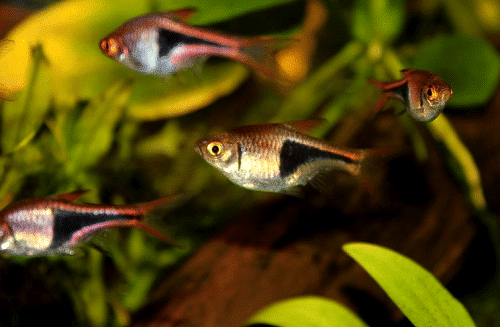
    Algae eaters like otos (Otocinclus spp.), siamese algae eaters, and neon blue gobies (Stiphodon spp.) are excellent fish to keep with this plant. These little freshwater fish will actively feed directly from the leaves of the plant. They also do well with any schooling fish like tetras, cherry barbs, and Harlequin Rasboras.

    This is one of the few plants that is safely grown with goldfish and African cichlids. Even though these plants will prefer lower pH, they will do fine in the alkaline water in African cichlid tanks.

    Tank Mates To Avoid

    Even though this is one of the best plants for destructive freshwater aquarium fish species, you will still be taking a risk by growing this Anubias with fish like silver dollars and oscars. In an oscar tank, you might have better results by growing this plant attached to the hardscape rather than near the soil.

    Feeding And Fertilization

    Being a slow-growing plant that will grow in a low tech/low energy tank, fertilizing with aquarium fertilizers isn’t necessary or recommended. If you are keeping fish with your plants, the nutrients in their food and waste are likely to be more than enough for these tough little plants.

    How Much And How Often To Feed

    Fertilizing these plants is not necessary and might do more harm than good. The only time feeding is a good idea is if you keep these plants in a heavily planted tank with other fast-growing column feeders like stem plants and floating plants that will use up the nutrients and out-compete any algae growth in the system. In situations like this, rooted anubias plants might well benefit from a substrate fertilizer. It would also benefit the plants in general to use an active substrate as this releases nutrients for the plants and will soak in nutrients as bacterial colonies establish themselves.

    Different Types

    The plant commonly called Anubias nana is actually a variety of the species Anubias barteri. These plants are, therefore, most correctly calledby the name Anubias barteri var. nana.

    There are a few other varieties of this species, all of which grow to a larger size and height than nana. Without going into too much detail, Author Christel Kasselmann, in his book, Aquarium Plants describes the following other closely related anubias barteri species:

    • Anubias barteri var. barteri ‘coffeefolia’
    • Anubias barteri var. angustifolia
    • Anubias barteri var. caladiifolia
    • Anubias barteri var. glabra
    • Anubias Nana Petite

    One very popular form of Anubias barteri species in the planted tank hobby is Anubias barteri var. Nana ‘petite’. These plants are most often called Anubias nana petite, or sometimes Anubias nana bonsai, and are great little low-maintenance plants. The care of this petite anubias is the same as that of regular Anubias nana except theyare a smaller plant, maxing out at a size of about 2 inches tall.

    Care

    Anubias barteri var. nana is one of the easiest aquarium plants to care for because of its slow growth rate and low nutrient, low to medium light requirement, and carbon dioxide requirements. In time, you might want to give these plants a trim or remove leaves that have become covered in algae growth but they are very low-maintenance. Anubias nana can live for many years, and will survive all the mistakes of people that are new to the hobby.

    Anubiarium 9L v2

    Planted Tank Parameters

    Anubias nana and nana petite are hardy in quite a wide range of water parameters. A stable temperature of anything between 72 and 82ยฐF is preferred and pH values of 6.0 – 7.5 are ideal. These plants do, however, will do better in mildly acidic conditions. Water hardness does not seem to have much of an effect on these adaptable plants.

    Water Quality

    Being a robust variety, Anubias nana is more tolerant of changes in water quality than many other freshwater plants. That being said, the aquarist should always strive to keep the conditions in their tank as stable as possible. Maintaining a stable water temperature is also important, so be sure to use an aquarium heater and monitor its performance with a thermometer or aquarium controller.

    Filtration

    Filtration is extremely important in the planted tank. These plants don’t have any specific filtration needs, but without a good filter, your chances of developing problems with algae are much higher.

    So be sure to run a good quality filter in your tank and if you keep fish or other animals, be sure to stock appropriately. The general advice when selecting a filter is to choose a model with a flow rate that is 4-6 times the volume of your aquarium. In a causally planted tank, a hang-on filter will suffice.

    However, in a mass planted tank, one needs to factor in the waste many aquatic plants produce. This added bioload demands for a higher end filtration unit. I highly recommended canister filters for mass planted and high end aquascaped tanks.

    Flow

    Anubias nana and Anubias nana petite are robust and compact little plants that will do well in a wide range of flow strengths. They is difficult to keep anchored when growing rooted, and a strong flow will probably frustrate you by uprooting your plants. In tanks with faster currents, use a hardscape feature like a rock to protect the plant from any strong and direct flow. The use of a lily pipe will also allow you to use a higher flow filter while spreading the flow throughout the tank.

    Aquarium Maintenance

    While easy to care for, this plant still requires a good home that is well maintenance. Let’s talk about needs.

    Testing Water Conditions

    Before buying any new plant, start by testing your water conditions to see if your setup is suitable for that species. You can do this at home quite easily using liquid water test kits.

    Water quality can change or fluctuate, especially in tanks with high fish stocking rates. These changes happen especially quickly in small aquariums so be sure to test regularly.

    A good time to perform these tests is once every one to two weeks when you’re doing your regular partial water changes. The results will indicate whether your water changes are being done often enough. You will want to test for:

    • Ammonia
    • Nitrite
    • Nitrate
    • pH
    • Water Hardness

    If any of these are off, consider remedying the situation before you plant other aquarium plants.

    How To Set Up Your Aquarium Tank

    This aquarium plant doesn’t have any really specific tank requirements. They stay small and compact so they are a great choice for smaller tanks, anywhere from about 5 gallons and up. Anubias nana petite could even be grown in smaller aquariums, provided you keep a close eye on your water quality.

    A great way to grow this species is by attaching its rhizome to driftwood, rocks, or even an aquarium decoration, so look out for a nice fish-safe piece to use for this purpose.

    This variety also grows well when rooted, as long as you keep the rhizome uncovered. The root system will hold well in a fine medium like sand, although a nutrient-rich medium like an aquarium soil will help these plants grow stronger.

    How To Propagate

    Although they are very slow-growing plants, Anubias nana propagation is easy, even for aquarists with low experience levels. To create new plants, one simply has to divide a mature rhizome. The rhizome is easy to spot, it’s the stem-like structure that the roots grow from.

    This structure grows parallel to the ground and, if grown in the right conditions, will grow in length, developing new stems in time. By taking a section of the rhizome with its own leaves and stems, you can easily grow a new plant.  

    A great video by The Small Scape has one of the best in-depth videos on how to perform rhizome division on these little guys. Check it out below and give her a sub if you like it!

    Health And Disease

    Signs Of Health

    Healthy Anubias nana and nana petite plants will produce new leaves regularly. This is a slow process, but young new growth will have a bright green color, unlike the dark green of mature foliage. Plants with a few small, light-colored leaves are in good health.

    Signs Of Ill Health

    Avoid plants that are covered in algae, have a damaged rhizome without roots or have full-grown but discolored leaves.

    Common Health Issues And Treatment

    The most common health issue in Anubias nana and Anubias nana petite is algae infestation. The most common cause of this condition is excessively strong lighting and too many nutrients in the water.

    This problem mostly affects plants that have been recently added to the aquarium and have not established strong and healthy root systems and adapted to your water parameters. The best thing to do in this case is to shade these plants by growing them under a floating species or consider adjusting your light strength.  

    Anubias nana plants that have their rhizome planted below the surface of the soil will melt and slowly die. Reposition these plants so that the rhizome is clear of the soil to solve this problem.

    Some growers may be concerned about the slow growth of these plants, but rest assured, this is completely normal and healthy for the species.

    Plant Pests

    The easiest way to start out with pest-free plants, and avoid introducing unwanted hitch-hikers to your tank is to grow tissue culture plants that are propagated under strict lab conditions.

    When growing regular potted Anubias nana plants, be sure to inspect them for snails or any other organisms and remove anything you find. Go ahead and remove any dead or diseased plant parts while you’re at it and then wash the plants off carefully before adding them to your aquascape.

    You can go one step further and give your plants a bleach dip to kill off anything you might have missed. Use a very weak solution of 20 parts water to 1 part bleach and dip the plant in the mixture for a minute or two. After dipping your plant, be sure to wash it off very carefully to avoid adding bleach to your aquarium.

    Where To Buy

    Anubius nana and Anubias nana petite are very popular and common aquarium plants. They are easy to find in pet stores, local pet stores, or they is bought online.

    If purchasing online, I would highly recommend purchasing your plants from BucePlant. They offer the highly quality aquatic plants you can find online and offer an amazing selection of both potted and tissue culture plants. Local fish stores that specialize in aquascaping are difficult to find. Give BucePlant a chance if you have no store local to you!

    Great Beginner Plant
    Anubias Nana

    Hardy, forgiving and easy to grow. The Anubias Nana is your ticket to the incredible hobby that is aquascaping!

    Click For Best Price Buy Tissue Culture

    How the Anubias Nana Compares to Similar Species

    Want the easiest plant? Get java fern or anubias. Want a carpet? Get dwarf sagittaria. Want the best balance of easy and impressive? This plant delivers.

    Choosing between similar species is tricky. Here’s how the anubias nana stacks up against some common alternatives.

    Anubias Nana vs. Java Fern: Both are rhizome plants that attach to hardscape rather than being planted in substrate, and both are excellent beginner plants. The main difference is growth pattern. Anubias nana stays compact and low, making it ideal for foreground and midground placement. Java fern grows taller with longer fronds, making it better suited for background or mid-tank positions. Both tolerate low light and don’t need CO2, but anubias is more prone to algae growth on its slow-growing leaves. Check out our Java Fern care guide for a detailed breakdown.

    What It Is Actually Like Growing Anubias Nana

    The first two weeks after planting are ugly. Emersed-grown leaves melt, new growth starts slow, and your tank looks worse before it looks better. This is normal. Do not rip out the plant and start over.

    Once established, this plant grows. You will be trimming it regularly, replanting cuttings, and giving away excess. The transition from fragile newcomer to aggressive grower happens faster than you expect.

    Algae will try to grow on the leaves. Healthy, fast-growing plants outcompete algae naturally. Slow-growing or struggling plants get covered in it. The plant’s health and algae presence are directly related.

    In the right conditions, aquarium plants produce visible oxygen bubbles called pearling. Watching tiny bubbles stream from the leaves during peak lighting is one of the most rewarding sights in planted tanks.

    FAQS

    Does they need soil?

    Anubias nana plants do not need soil. These plants is grown quite easily without soil by attaching them to a hardscape feature like driftwood, rocks, or even an ornament.

    Can you plant them petite?

    Just like its larger form, Anubias nana petite is planted, as long as its rhizome is kept clear of the substrate.

    Does they need CO2?

    Of course, all plants need CO2 injection for rapid and healthy growth. When it comes to Anubias nana petite, however, the background carbon dioxide levels in most home aquariums is enough for healthy growth.

    Injecting CO2 could well result in faster, healthier growth. The challenge is to match the lighting and feeding in a way that will not result in unwanted algae growth.

    Do they need fertilizer?

    These plants don’t need any fertilizer. If you keep fish in your tank, the nutrients in their waste and feed should be more than enough for this species.

    Can you plant them in substrate?

    This species is planted in the soil and will grow very well if set up this way. The key to success with this method is to make sure that rhizomes are not covered by the soil.

    Roots from the rhizome will grow into the soil in time, and it is best to anchor the plant with a few stones or something similar until it is secure.

    What Questions Do You Have?

    Want the easiest plant? Get java fern or anubias. Want a carpet? Get dwarf sagittaria. Want the best balance of easy and impressive? This plant delivers.

    Anubias Nana is a wonderful plant for beginners because it tolerates a wide range of water conditions and grows slowly so that maintenance is easy. If you’re new to the hobby of keeping plants alive in an aquarium, this article should have helped teach you everything you need to know about caring for these beautiful aquatic plants. Leave us your thoughts on whether or not this was helpful by leaving a comment below! We’d love to hear from you!

  • Ludwigia Repens Plant Care: A Guide to Growth and Maintenance

    Ludwigia Repens Plant Care: A Guide to Growth and Maintenance

    This plant will grow in almost anything. But if you want it to actually look good, you need to understand what it wants. The gap between alive and thriving is lighting, nutrients, and consistency.

    Any plant stays alive. Making it look good takes understanding.

    Healthy plants grow. If yours is not growing, something fundamental is off.

    This plant thrives when given consistent conditions over weeks and months. Quick fixes do not work in planted tanks. Patience and consistency are the real requirements.

    A well-grown aquarium plant does more for water quality than any filter media you can buy.

    Looking for an easy to care for red plant? Ludwigia repens may for you then. Reds are a major challenge for beginner planted tank owners due to their more complex care over green aquatic plants. However, this plant bucks the trend with its forgiving nature. Ludwigia repens, or the red leaf ludwigia is a great beginner plant that is grown under a wide range of different lighting conditions, and with or without CO2 injection. This is one of the best red plants for beginners to start out with. Read on to learn everything you need to know about growing the red leaf ludwigia.

    What It Is Actually Like Growing Ludwigia Repens Plant

    The first two weeks after planting are ugly. Emersed-grown leaves melt, new growth starts slow, and your tank looks worse before it looks better. This is normal. Do not rip out the plant and start over.

    Once established, this plant grows. You will be trimming it regularly, replanting cuttings, and giving away excess. The transition from fragile newcomer to aggressive grower happens faster than you expect.

    Algae will try to grow on the leaves. Healthy, fast-growing plants outcompete algae naturally. Slow-growing or struggling plants get covered in it. The plant’s health and algae presence are directly related.

    In the right conditions, aquarium plants produce visible oxygen bubbles called pearling. Watching tiny bubbles stream from the leaves during peak lighting is one of the most rewarding sights in planted tanks.

    Species Overview

    Scientific Name Ludwigia repens
    Common Names Red leaf ludwigia, red repens, creeping primrose-willow, water primrose
    Family Onagraceae
    Origin United States of America, Mexico (North and Central America)
    Skill Level Easy
    Lighting Moderate, but grows best at 100-200 PAR (Umols)
    Tank Placement Mid ground & Background
    Flow Rate Low, Moderate
    Temperature Range 72 – 82ยฐF
    Height 8 – 20 inches
    pH Range 6.5 – 7.5
    Proprogation Stem cuttings
    Growth Rate Fast
    Feed Type Column and Root Feeder
    Co2 Requirement No

    Origins And Habitat

    Ludwigia repens is an amphibious flowering plant from the United States and Mexico in North and Central America. In the wild, it is found growing in ditches, ponds, and along sandy and muddy stream banks.

    What Does They Look Like?

    Ludwigia Repens Stems

    Ludwigia repens is a stunning red stem plant with foliage color that varies from dark green to deep red. Overall color depends a lot on growing conditions, but the leaves on these aquatic plants are mostly green to brownish red.

    Color will vary according to the strength of the lighting the plants receive and also the variety of creeping primrose willow you have. These aquatic plants will be greener in low-light tank conditions becoming redder under strong light.

    This effect can often be seen where lower leaves remain an olive-green color while leaves towards the top of the tank have a red tint. This beautiful color makes this an ideal specimen plant that captures your attention.

    This is an upright but narrow plant, that reaches heights of about 20 inches and grows 2-3 inches across. It has oppositely arranged oval leaves.

    Placement And Lighting

    Being a fairly tall plant, Ludwigia repens is best grown in the mid ground to background of planted tanks. Although these plants is grown under pretty low light, they will tend to drop some leaves (especially at the bottom of the stem) under these conditions.

    This is a versatile plant that works great in a wide range of aquascapes. They work particularly well as a background plant in nature-style biotopes but also in Dutch Aquascape style planted tanks.

    Moderate to strong planted tank lighting will bring out the best colors in this plant and ensure fast and vigorous growth.

    What Are Good Tank Mates?

    Ludwigia repens works great in most tropical community tanks where peaceful fish species are kept. Although not ideal, it is a fast-growing species and might even survive being fed on occasionally.

    Good Tank Mates

    Good tank mates for this plant include:

    The Reality of Growing Ludwigia Repens Plant

    Melting after purchase is normal. Most aquarium plants go through a transition period where emersed-grown leaves die off and submersed growth takes over. This is not a sign of failure. It is the plant adapting. Do not pull it out or move it during this phase.

    Lighting is not one-size-fits-all. Too little light and the plant grows leggy or stops entirely. Too much light without CO2 supplementation causes algae explosions. Match your lighting to your CO2 and fertilization strategy.

    Ludwigia Repens stays green without strong light. It only turns red when you push the intensity and nutrients. If your Ludwigia is green and you wanted red, the fix is more light. Period.

    Nutrient deficiencies show up in the leaves. Yellow leaves mean iron or nitrogen deficiency. Holes mean potassium deficiency. Black spots mean phosphate issues. Learning to read your plants saves you from guessing.

    Biggest Mistake New Owners Make

    Cranking up the light intensity without adding CO2 or fertilizers. High light without nutrients does not grow plants faster. It grows algae faster. Balance your light, CO2, and nutrients together or keep all three low.

    Expert Take

    If your plant is not growing, check your lighting duration and nutrient levels before changing anything else. Nine times out of ten, the problem is one of those two factors.

    Basically, any non-herbivorous, tropical freshwater fish that does not disturb the substrate too much will work well with Ludwigia repens, provided they share the same parameter ranges.

    Fish Species To Avoid

    Fantail Goldfish Swimming

    Avoid keeping fish like silver dollars, goldfish, and Buenos Aires tetras which will feed on this and other aquarium plants in your fish tank. Large, aggressive species like Oscars are likely to damage these delicate plants and are not recommended as fish tank mates.

    Feeding and Fertilization

    Although not considered a heavy feeder, this plant, like all red species, needs enough iron to maintain healthy growth. A supplement like Seachem Flourish Iron added in small amounts on a weekly basis will provide for these needs.

    Ludwigia repens is both a root and water column feeding plant that should be grown in a good quality aqua soil for best results. These aquatic plants will also thrive in dirt substrates capped with gravel.

    How Much And How Often To Feed

    It is important to remember that a plant’s nutrient needs has a lot to do with how fast it is growing. For example, a plant that is grown under bright light, with a long photoperiod, and added carbon dioxide will naturally need a steady supply of nutrients to keep up with the fast growth it is like to achieve.

    In low-tech environments, especially where fish are kept, established red leaf ludwigias will need very little in the way of supplementary feeding., a good quality aqua soil will provide all the nutrients these aquatic plants need to thrive. In a high tech environment, the growth of the aquatic plant will accelerate, requiring more nutrients. When it comes to aquarium plant fertilizers, I feel no one does it better than APT Complete. It’s designed for Dutch aquascapers, which makes it perfect for a red plant like this.

    Editor’s Choice!


    APT Complete

    Editor’s Choice

    Made by an aquascaper for aquascapers. This is the best all around aquarium plant fertilizer on the market. Marco and micronutrients in one bottle!

    Use Coupon Code ASDComplete for 10% off your order!


    Click For Best Price


    Buy On Amazon

    Types

    Ludwigia repens comes in a variety of subtypes. Here are a few of the more popular variants you will find in stores:

    • Ludwigia repens ‘Rubin’ is a popular variety with a rich red color. To get the most out of this form, you will need bright lighting and CO2 injection in your aquarium. The result is a real eye-catching specimen plant with a compact growth form.
    • Ludwigia repens ‘Mini Super Red’ is a spectacular compact form with a deep red color, just like its name suggests. These plants do best in hi-tech setups.
    • Ludwigia repens ‘Mesakana’ is an orange to red form with larger, more rounded leaves than regular L. Repens. These plants require better lighting than other varieties as well but are otherwise just as easy to grow.

    Care Requirements

    This is a fast-growing stem plant that benefits from being pruned regularly. Trimming encourages a denser growth form, and pruned plants will also develop rooted nodes faster.

    Being an upright, narrow growing aquatic plant, it is best to plant Ludwigia repens in groupings to create a dense stand that will create a more dramatic effect in the aquascape. A bunch of stems growing together will also provide more structure and shelter for livestock like shrimp and fish.

    Don’t worry if you only have a few stems to start out with, they are easily propagated and you can develop a group fairly quickly. As it does in nature, this plant will grow emersed in shallow tanks if left untrimmed.

    Planted Tank Parameters

    Red leaf ludwigia repens grows best in slightly acidic water but will survive in neutral to slightly alkaline environments as well. Soft water is preferred but these are hardy plants and will tolerate hard water.

    This aquarium plant does best with a growth temperature of 75-79ยฐF but will grow in much cooler environments, just at a slower rate. Although a CO2 system is not strictly necessary, it is advised, particularly when growing these plants under the recommended lighting intensity.

    If you are equipped for it, aim for a CO2 injection rate of not more than 30ppm and time your CO2 injection to begin 2 hours before your photoperiod begins in the morning.

    Water Quality

    Ludwigia repens is a pretty undemanding plant to grow, but it doesn’t appreciate unstable water conditions. When grown in poor quality water, these aquarium plants are likely to melt, and decaying plant material in your fish tank can result in even worse conditions.

    To prevent this, stay on top of your regular maintenance routine by performing regular partial water changes. This is especially important in smaller aquariums where fish and other livestock are kept. Remember, the smaller an aquarium is, the faster the water quality can swing.

    Use a water conditioner like Seachem prime when adding new water to your aquarium to neutralize harmful chemicals like chlorine in tap water.

    Filtration

    All planted tanks should have a good filtration system in place to maintain stable and healthy water conditions. These aquatic plants don’t have any special filtration requirements but should be grown at a reasonable distance from your filter’s uptake and outflow to prevent any mechanical damage to the plants.

    Plants in general have the potential to generate more ammonia than fish do in mass plantings. If you are planting a heavily planted tank, you should consider a canister filter so you have proper filtration to handle the added bioload from plant waste in the aquarium.

    Flow

    Being a pretty delicate plant, strong flow is not recommended for these plants. They will show some nice movement in a tank with some current or if grown just ahead of a gentle spray-bar type outflow. Take care not to focus the outflow of your filter directly on these plants as they will tend to fold right over in a strong current.

    Aquarium Maintenance

    Testing Water Conditions

    It is vitally important to test your water quality parameters regularly. Start by testing your water before introducing L. Repens to make sure that your parameters are suitable for the plant.

    After that, test your water before each water change to determine how stable your water conditions are. Various aquarium test kits are available that you can use at home to test pH, hardness, ammonia, nitrate, and nitrite levels in the water.

    How To Set Up Your Aquarium

    Red leaf ludwigia repens reaches a height of about 20 inches and might require frequent trimming in shallow tanks. For this reason, medium to large aquariums are best, unless you enjoy growing emersed species of course. A minimum tank size of around 10 gallons or so is recommended.

    A good quality aquarium substrate is best, although organic dirt substrates capped in gravel will work well too.

    Only finely textured, sand substrates should be avoided because this plant’s roots will not develop strongly or be able to feed well. Fine, compacted substrates can even suffocate the roots.

    How To Propagate

    Red leaf ludwigia repens is easily propagated in the planted aquarium. Simply take a cutting from a stem that holds a few healthy leaves.

    Remove the lower leaves at the node because this is where new roots will develop. Often, however, roots and new stems will develop at nodes, making these the ideal cuttings to take.

    Then simply plant your cutting into the substrate using your aquascaping tweezers. In nature, this species will flower and drop seeds when grown emersed.

    Health And Disease

    Signs Of Health

    Ludwigia repens is a naturally soft and somewhat fragile species. Healthy plants will have some red coloration and intact leaves when bought. Healthy aquarium plants should also be developing new growth at the nodes in the form of roots and stems.

    Signs Of Ill Health

    If possible, avoid plants that show signs of damaged stems, excessive melt, and decaying leaves.

    Common Health Issues And Treatment

    It is common for red leaf ludwigia repens to melt back when first planted in your aquarium. The plants are grown in very different environments and parameters before you buy them and there is a natural adjustment period.

    If this happens, don’t panic, the plants will recover to establish healthy root systems and grow back stronger. Be sure to remove any dead or dying plant matter before it can foul up your water though.

    Plant Pests

    Unfortunately, there’s always a chance of introducing unwanted pests when adding new plants to the aquarium. The easiest way to avoid this from the start is to grow tissue culture plants that have been grown under carefully controlled laboratory conditions.

    Tissue cultures aren’t quite as hardy as regularly grown stock so be sure you have your water parameters where they need to be before introducing them to the system. They also require more aquarium fertilizer to start since they lack the root system that steam cuttings may have.

    When introducing regularly grown ludwigias, start by giving the plants a good inspection. Remove any unhealthy-looking leaves or stems and look out for snails while you’re at it.

    To be extra-safe, you might want to consider giving your plants a bleach dip in a very mild solution (20 parts water: 1 part bleach) to kill off any pests. Ludwigia repens are delicate plants, however, so don’t go much over a minute in the dip and rinse them off thoroughly before introducing them to your aquascape.

    How To Plant

    A how to on planting the Ludwigia Repens is best served with a video. This is a straight to the point video by Otter Creek Aquatics and shows you how to maximize your purchase by spliting up the stems into individual pieces when planting.

    Where To Buy

    Ludwigia is a popular and common aquarium plant that is available from local fish stores and online fish stores. I personally recommend purchasing your live plants online from BucePlant. They offer both stem and tissue culture Ludwigia Repens.

    My Pick


    Ludwigia Repens

    Buceplant offers both stem and tissue culture Ludwigia Repens at great prices. A great beginner red plant to try!


    Buy Stem Plants


    Buy Tissue Culture

    FAQS

    Do they need CO2?

    Ludwigia repens does not strictly require CO2 for healthy growth. That being said, these plants will definitely benefit from the addition of CO2.

    How fast do they grow?

    The rate of growth in this species will vary according to parameters like temperature, nutrient availability, and water temperature. In most tropical fish tanks, however, these are fast-growing stem plants that will need to be trimmed from time to time.

    How do you plant these in gravel?

    Ludwigia is quite a delicate plant and should be planted carefully in coarse, gravel substrate to avoid damaging its root system. They are fast-growing plants and will recover well after an initial melt, however. Create a depression in your substrate using your finger or your aquascaping tweezers, place your plant in the depression, root carefully, and then cover lightly with the gravel.

    Can they grow floating?

    These plants can grow floating, and this one possible way of propagating new cuttings until they’ve developed a root structure. There are much better-looking floating plants though, so you’ll probably want to grow them rooted in the substrate.

    Can they grow in cold water?

    Ludwigia repens is suitable for use in cool-water aquariums and will survive in pretty cold water, although you can expect the plant to have a much slower growth rate in cold conditions.

    Closing Thoughts

    Ludwigia repens is a great choice for aquarists looking for a stem plant to add colors to the mid-ground or background of their planted tanks. These plants are pretty beginner-friendly but will do well in high-tech setups with CO2 injections and offer something for aquarium plant growers at all levels.


    ๐ŸŒฟ Want to learn more? This article is part of our complete Planted Tank & Aquascaping Guide. Your ultimate resource for aquarium plants, aquascaping styles, substrates, and more.

  • A care and info guide on the Monte Carlo Plant

    A care and info guide on the Monte Carlo Plant

    This plant will grow in almost anything. But if you want it to actually look good, you need to understand what it wants. The gap between alive and thriving is lighting, nutrients, and consistency.

    Any plant stays alive. Making it look good takes understanding.

    The micranthemum Monte Carlo plant is one of the most popular carpeting plants for moderately lit freshwater tropical aquascapes. These aquatic plants are great for beginners and they grow fast, creating a dense and beautiful bright green carpet. That isn’t all they is used for, however, these tiny plants is grown as epiphytes too. Grown this way, they make for an eye-catching cascading carpet over hardscape features like driftwood and rock.

    This blog post will teach you how to care for your Monte Carlo Plant while also providing information about where it comes from, what it looks like, and more. Let’s get started!

    A Brief Overview Of The Monte Carlo Plant

    Scientific Name Micranthemum tweediei
    Common Names Monte Carlo
    Family Scrophulariaceae
    Origin South America (Argentina)
    Skill Level Easy to Moderate
    Lighting Moderate 30-50 PAR (umols)
    Tank Placement Foreground, midground
    Flow Rate Low, Moderate
    Temperature Range 68-77ยฐ F
    Height 1-2 Inches
    pH Range 6-7.5
    Propagation Division
    Growth Rate Moderate, Fast
    Feed Type Column and Root Feeder
    CO2 Requirement Yes

    Origins And Habitat

    Micranthemum tweediei ‘Monte Carlo’ is a green freshwater plant from Argentina in South America. In nature, these aquatic plants are found in shallow freshwater systems like streams, lakes, and bogs that get plenty of sunlight.

    They are amphibious plants that is found growing underwater, on saturated ground, or growing emersed.

    What Does This Plant Look Like?

    How Does a Monte Carlo Plant Look Like

    Monte Carlo1 is a beautiful, light green-colored carpeting aquarium plant that grows as a dense, low, and spreading mound. Under good light, these aquarium plants spread laterally at a good rate, and don’t grow much taller than about 2 inches.

    Micranthemum Monte Carlo leaves are small and rounded and these plants have tiny roots. In appearance, this aquatic plant has a lot in common with another well-known carpeting plant, Dwarf Baby Tears.

    This aquatic plant works really well in Iwagumi and Dutch-style aquascapes but will suit any layout that demands for carpeting plants. With care and maintenance you can create foreground planted carpets that will be eye popping.

    Placement And Lighting

    Monte Carlo is most often grown as a carpet plant in the foreground and midground. The aquarium plant is pretty versatile, however, and works just as well if grown as an epiphyte.

    To grow this plant as an epiphyte, you can attach it to hardscape elements like driftwood, cave ornaments, or lava rock. If your hardscape element does not have suitable holes or cracks to hold the roots of this plant, you need to attach it using nylon thread or superglue.

    These aquarium plants need medium to high lighting to maintain a dense, low, and compact growth form. Plants grown under inadequate lighting will tend to grow tall and thin.

    Plants grown on hardscape features tend to be closer to the light source and therefore might do well under weaker light, but it’s always important to factor in the depth of the water.

    What Are Good Tank Mates?

    Micranthemum Monte Carlo is great for community or species-only fish tanks. Especially where schooling fish are kept. Most species of tropical freshwater fish is kept with this aquarium plant, as long as they share the same water parameter needs. Some great smaller fish would include:

    Male Cherry Barb

    Fish Species To Avoid

    One of the greatest challenges to growing a beautiful carpet of Monte Carlo is getting the plants to stay put when you first plant them. Fish like corydoras catfish and Kuhli loaches that forage by sifting through the substrate can easily dislodge these plants before the carpet becomes well established.

    Monte Carlo carpets without CO2 in the right conditions. But right conditions means high light, nutrient-rich substrate, and patience. Skip any of those and the carpet never forms.

    Avoid growing this aquatic plant in goldfish tanks since this is a plant they will feed on. Other fish to avoid keeping with Monte Carlo are:

    Feeding A Plant (Fertilization)

    As an aquarium plant that gathers nutrients from both the substrate and the water column, Micranthemum Monte Carlo will benefit from a fertile growing medium as well as a liquid fertilizer. If grown in an inert substrate like gravel or sand, this excellent foreground plant will definitely benefit from the addition of root tabs.

    Plants grown on rocks and other hardscape features will need to get all the nutrients they need from the water column, making liquid fertilizer essential for good growth. For any carpeting and other heavy feeding plants, I recommend APT complete. It is the best all around liquid fertilizer on the market.

    Editor’s Choice!


    APT Complete

    Editor’s Choice

    Made by an aquascaper for aquascapers. This is the best all around aquarium plant fertilizer on the market. Marco and micronutrients in one bottle!

    Use Coupon Code ASDComplete for 10% off your order!


    Click For Best Price


    Buy On Amazon

    How Much And How Often To Feed

    How frequently you choose to feed this aquarium plant is going to depend on a couple of factors. Under high lighting and CO2, Micranthemum ‘Monte Carlo’ will require a steady supply of nutrients to keep up with the fast growth that these conditions stimulate.

    This could mean daily to weekly doses of a supplement like Seachem flourish in the water column are needed. In tanks with only moderate lighting and a healthy stock of fish, you can get away with feeding once every week or two.

    CO2 Injection

    Monte Carlo, like all plants, needs light and carbon dioxide to grow. The background level of CO2 in aquariums is too low for this aquarium plant to develop into a tight, compact carpet. For this reason, CO2 injection is recommended for optimal growth.

    How Much CO2 Do You Need?

    The aquarist should aim to maintain dissolved CO2 levels of about 30ppm (parts per million) in their aquarium. This is the ‘sweet spot’ that results in optimal aquarium plant growth while remaining safe for fish and other livestock.

    Getting your CO2 levels to 30ppm can take a little fine-tuning, but with a bubble counter and drop checker, you should be able to get it dialed in. It takes a little while for dissolved CO2 levels to rise in the aquarium so start off slow. Keep an eye on the color of your drop checker and once it stays stable at the right levels, observe your bubble count.

    Whether you’re using a standard or an in-line diffuser, make sure you set your drop checker well away from the CO2 entering the tank for more accurate results. If you are looking for a combo package for a CO2 regulator. Check out this link.

    Premium Pick


    Pro-SE Complete Bundle

    Premium Pick

    Everything you need to get started. A professional level CO2 system.


    Click For Best Price

    How long Should You Run CO2?

    Plants can only grow effectively when they have access to enough CO2 and light. They use these energy sources at the same time so you only really need to run your pressurized CO2 system when the lights are on.

    It takes a little while for the CO2 in your aquarium to build up to that sweet spot of 30ppm, however, so ideally, you should be running your CO2 system on a separate timer that starts up about 2 hours before the lights go on. You can have your CO2 injection system shut down at the same time as the lights, or a little earlier because some CO2 will remain available in the system for a while.

    Plant Care

    Under good light and proper conditions, Micranthemum Monte Carlo grows pretty fast and is pretty invasive, which is great if you enjoy working on your aquascape, or maybe not that great if you’re looking for a low-maintenance option.

    This species also has a habit of crowding out other aquatic plants so if you’re looking for a mixed species carpet, this may take a bit of extra trimming on your part.

    Apart from trimming with a sharp pair of curved trimming scissors, it’s also possible to thin out your Monte Carlo carpet using a fine pair of aquascaping tweezers or pincettes. This is a delicate procedure though, the aquarist needs to take care not to uproot more of the aquarium plant than is necessary. Regular trimming is a must to keep the dense shape of this plant.

    My Pick


    Aquascape Tool Kit

    This aquascape set will get you started with pruning and trimming your prized plants to maintain that show winning look!


    Buy On Amazon

    Planted Tank Conditions

    The Monte Carlo plant does best in freshwater tropical aquariums that are on the cooler side, say between 68-77ยฐ F. These plants have a pretty wide tolerance for water hardness.

    They need a decent amount of light, especially if you want a dense, low growing carpet in the foreground and midground of your aquascape. Although these plants is grown without added CO2, they will perform better if this is provided.

    Maintaining parameters

    Monte Carlo in Aquarium

    Being a dense carpeting aquarium plant, Micranthemum Monte Carlo will tend to capture fish waste and detritus and keep it trapped within its foliage (Picture Source). Although this can provide nutrients to the plant, it will result in ammonia spikes in time if left unmanaged.

    For this reason, a dense carpet of Monte Carlo is not advised in tanks with high stocking rates and a lot of waste. A good clean-up crew of small inverts like freshwater shrimp is also helpful in this regard.

    It is possible to vacuum over a Monte Carlo plant carpet to capture waste that has collected beneath it but special care should be taken to not uproot the plants in the process as they tend to have pretty week root systems. Some aquarists have had success by fitting a grid-like material over the end of their vacuum to help to prevent sucking up the plants.

    Water Quality

    Maintaining great water quality and tank conditions is important for all aquarium plants and animals, and Monte Carlo is no exception. In tanks with fish, a partial water change every week or two is recommended and this is a great time to test water parameters with aquarium test kits and give your plants a trim too.

    Be sure to use a water conditioner during water changes to neutralize harmful chemicals that may be present in your local tap water.

    Filtration

    It is best to use a filter with a pre-filter sponge over its inlet when growing fine aquarium plants like Monte Carlo. This is because trimmings or small plants that have come loose from the substrate can get sucked into your filter and cause blockages. Due to the nature of this plant, a high quality hang on the back filter or canister filter is recommended to keep the aquarium clear of plant and matter debris.

    Flow

    Micranthemum Monte Carlo has pretty small, fine roots that are easily loosened from the substrate. For this reason, direct, strong flow is a bad idea as it can dislodge your carpet.

    Some flow is important, however, as this ensures a good distribution of CO2 and nutrients throughout your tank and keeps waste particles from settling on your plants before they is processed in the filter. Grow this aquarium plant in a tank with a low to moderate flow for best results.

    Aquarium Maintenance

    Testing Water Conditions

    Regular testing of water conditions should be part of your aquarium maintenance routine. You can use either strip tests or liquid tests, but be sure to keep an eye on parameters like ammonia and nitrites, particularly if you have livestock in your aquascape.

    Other important parameters to keep an eye on in the aquarium are pH, general hardness, and carbonate hardness. You should, of course, also have a thermometer and keep an eye on your water temperature regularly to alert you to a malfunctioning heater.

    How To Set Up Your Aquarium

    Monte Carlo is grown in a few different ways. These plants is started off using the dry-start method or simply planted into the substrate of an established aquascape using a pair of fine aquarium tweezers. The video below from WASABI describes how to plant and prep this plant.

    Use a good quality aqua-soil as your substrate, or if using an inert substrate, be sure to use root tabs from time to time to provide nutrients to the root zone. A third substrate option is to use a layer of an inert material like sand or gravel over a layer of nutrient-containing dirt.

    Monte Carlo plant roots will develop better in gravel than sand, although the plants is pretty easily dislodged from the substrate in a really coarse medium, so go for a substrate with a moderate texture.

    As a small, carpeting plant, this species is grown in just about any size aquarium, from just a few gallons and up.

    Although it is possible to grow this aquatic plant without added Co2, Monte Carlo will definitely perform better if this is provided.

    How To Propagate

    Micranthemum Monte Carlo spread quickly and is easily propagated by division, as long as the sections you take have both healthy leaves and roots.

    When planting out in your tank to create a carpet effect in your aquascape, simply break up a mass of Monte Carlo into sections of about half an inch or less across, each with its own roots, and then plant them in a grid pattern at a spacing of an inch or two apart. Although this looks pretty unnatural at first, the plants will spread quickly to fill the gaps and create a beautiful natural lawn-like effect.

    You will find that the plants come loose from the substrate very easily when you first plant them and this is pretty frustrating. One way to avoid this is to plant them a little deeper than you think they should go.

    With more of the plant beneath the surface of the substrate, they tend to sit a lot more firmly. Use a fine pair of tweezers or pincettes for this job and push each plant into the substrate at a 45ยฐ angle.

    If you’re still having trouble getting your plants anchored, consider keeping them in their pot and letting them spread out and root themselves naturally from a central point. The process will take a little longer but could save you some frustration.

    Health And Disease

    Signs Of Health in Plants

    Healthy Monte Carlo will grow pretty vigorously and spread quickly in the aquarium. In good conditions, this aquarium plant stays low and compact, with short stems and small bright green leaves.

    Signs Of Ill Health

    Plants that are not happy will show you a few signs. Monte Carlo plants that turn yellow or brown, or grow tall and thin require attention.

    Plants that grow tall and thin are looking for light and this is a sure sign that your aquarium lighting is not strong enough. Yellowing leaves can signal a lack of nutrients or even a lack of carbon dioxide.

    If you find that your plants are getting covered in algae, you need to adjust the amount of fertilizer you’re dosing and the strength and hours of light you’re running.

    Common Health Issues And Treatment

    It is common for an aquatic plant to melt back when newly planted in the aquarium. If conditions are otherwise good, your plant should adapt to its new environment pretty quickly and bounce back with healthy new growth.

    Plant Pests

    To avoid introducing unwanted pests like snails into your aquascape, consider buying your Monte Carlo as a Tissue culture vs potted plants that’s grown in pest-free lab conditions.

    If you’re growing your plants from material propagated in more traditional ways, you’ll want to make sure to wash your plants off properly under running water and remove any dead or dying leaves.

    Have a good look at the plant and remove any unwanted critters if you can see any. You can also dip your plants in a very mild solution (20 parts water to 1 part bleach) of bleach to kill unwanted parasites and creatures. You need to be very careful with delicate plants like Monte Carlo as the bleach can damage the plants too.

    If you do go this route, be sure to dip them for less than about 2 minutes and give them a good rinse afterward to remove all traces of bleach.

    Where To Buy

    Monte Carlo is a common aquarium plant in the aquarium trade and is found at many fishkeeping and online fish stores. I recommend purchasing tissue culture plants vs potted plants as they are a great way to get pest free live plants and they have great shelf lives.


    Monte Carlo Tissue Culture – UNS

    Tissue culture plants are grown in labs and are completely pest free and have great shelf lives


    Click For Best Price


    Buy On Amazon

    FAQS

    Are they easy to grow?

    Monte Carlo is an easy carpet aquarium plant for tropical aquariums. In optimal conditions with good light and CO2, this plant can grow pretty quickly, and cover the substrate in your aquarium in just a few weeks.

    Can they grow without soil?

    Micranthemum Monte Carlo is grown as an epiphyte, without any contact with soil. If attached to a hardscape element like driftwood or an ornament by wedging it into a hole or gluing, this aquarium plant will grow by taking all the nutrients it needs from the water column.

    How do you take care of a your plant?

    Monte Carlo is an easy carpet aquarium plant to take care of once it is established in the aquascape. Provided you maintain the correct water parameters, and have enough light, nutrients, and CO2, these plants will grow fast.

    All you really have to do then is trim your Monte Carlo carpets regularly to prevent them from growing too thick and shading out the lower stems and leaves.

    Can they grow on rock?

    Micranthemum Monte Carlo can grow on rock, provided you find a good way to attach it. This is easiest if the rock you have has a good texture like lava rock with cracks and holes for the roots to hold on to.

    Monte Carlo grown as an epiphyte in this way might need extra liquid feeding though because they aren’t getting any nutrients from the substrate.

    Closing Thoughts

    Micranthemum ‘Monte Carlo’ is a wonderful plant for vibrant green dense carpets in the aquascape. This plant is easy to care for and grows at a good rate if given the proper growing conditions.

    This plant has other uses besides carpeting and works well as an epiphyte on hardscape features as well. Using the tips and information in this guide, you can make Monte Carlo a beautiful new addition to your aquascape. We hope you enjoy this blog post about Monte Carlo Plants! Leave us your comments below on what you think of these miniature green beauties or if there’s anything else you want to know more about them?


    ๐ŸŒฟ Want to learn more? This article is part of our complete Planted Tank & Aquascaping Guide. Your ultimate resource for aquarium plants, aquascaping styles, substrates, and more.

  • How To Care For Your Water Sprite – A Complete Guide

    How To Care For Your Water Sprite – A Complete Guide

    This plant will grow in almost anything. But if you want it to actually look good, you need to understand what it wants. The gap between alive and thriving is lighting, nutrients, and consistency.

    Water sprite floats or plants. Either way, it grows fast enough to be your best nitrate control.

    Any plant stays alive. Making it look good takes understanding.

    Table of Contents

    Water sprite is one of those plants I always keep on hand for new tank setups. It grows fast, competes with algae, provides cover for fry, and doesn’t demand much in return. I’ve used it floating and planted, and both work well. It’s one of the best plants for anyone cycling a new tank or setting up a breeding setup where you need quick biological filtration assistance and hiding spots.

    If you’ve just brought home a water sprite or are thinking of having one, you may be wondering how to care for it. With the proper knowledge and equipment, caring for your water sprite is simple! There are so many different types of aquarium plants available today that choosing the right one for your aquascape is a bit daunting. Water Sprite is an great option for many aquarists both experienced and new to the hobby.

    If youโ€™re looking for a delicately textured floating, mid-or background plant, Water Sprite is just the plant for you. Read on to learn everything you need to know about growing and caring for the Water Sprite.

    What Most Care Guides Get Wrong About Your Water Sprite. A

    Most guides treat the your water sprite. A like a plug-and-play plant. Just drop it in and it grows. In my experience, that oversimplification leads to a lot of failed attempts. Lighting and nutrient balance matter more than people think. Another common issue is placement. I see people burying rhizome plants or planting stem plants too shallow. Getting the basics of placement right from the start saves you weeks of watching your your water sprite. A slowly melt away. The biggest myth is that “low tech” means zero effort. Even easy plants need consistent water changes and some baseline nutrition. I’ve watched your water sprite. A thrive in simple setups and die in expensive ones because the fundamentals were ignored.

    A Brief Overview Of The Water Sprite (Ceratopteris thalictroides)

    These fast-growing aquatic plants are adaptable to a wide range of water parameters and are so versatile that they is grown in many different ways in your aquascape. Water Sprite is a great plant for freshwater aquascapes and is safe to grow with most fish and shrimps.

    Scientific NameCeratopteris thalictroides
    Common NamesWater Sprite, Indian Water Fern, Oriental Water Fern, Water Stag-horn Fern, Water Hornfern
    FamilyPteridaceae
    OriginTropical regions, including Northern Australia, Southeast Asia, India, East Africa, and Central America
    Skill LevelEasy
    LightingModerate 30-80 PAR (umols)
    Tank PlacementMidground, Background, Floating
    Flow RateLow
    Temperature Range72-82ยฐF
    Height5.0 – 8.4
    Growth RateFast
    Feed TypeColumn and Root Feeder
    Co2 RequirementNo

    Classification

    DivisionPolypodiophyta
    ClassPolypodiopsida
    OrderSalviniales
    FamilyPteridaceae
    GenusCeratopteris
    SpeciesC. Thalictroides (Linnaeus) Brongniart

    Origins And Habitat

    The Water Sprite plant is a beautiful aquatic plant that is found growing in and around freshwater bodies in tropical regions across the globe. Water Sprite plants occur in Northern Australia, Southeast Asia, India, East Africa, and Central America.

    Ceratopteris thalictroides is an adaptable species that grows naturally in a wide range of different habitats. It is found in fresh or stagnant, standing water, marsh habitats, or gently flowing streams and grow emersed or submersed in sunny or partially shaded positions.

    What Does They Look Like?

    Water Sprite in Aquarium

    Water Sprite is a beautiful green species for aquascapes that looks a lot in appearance like terrestrial ferns do. This fern takes different forms depending on how it is grown in the fish tank and what kind of lighting it gets. Ceratopteris thalictroides grow from a short rhizome and their foliage varies from vibrant light to deep dark green.

    Plants that are allowed to float in the fish tank will take on a more spreading, flattened appearance. This floating plant also developed a large interesting white, hanging root system. 

    Indian Fern plants that are grown rooted in the substrate have broad, pale leaves arranged in a rosette from a single stem. Interestingly, these plants have two different types of fine leaves. Both smaller sterile leaves and larger fertile leaves is found on the same plant. 

    In very shallow aquariums, rooted Water Sprite plants will happily grow up and out of the tank water if left to grow to their full size of about 15 inches tall.

    Placement And Lighting

    Water sprite is a really versatile and useful species that is used in a number of different ways in the aquascape. In the planted aquarium, the fine leaves work well to soften and break up harsh lines.

    Depending on the size of your aquarium, this plant could make a great midground or background plant. In smaller aquariums, these water ferns grow tall enough as rooted specimens to create a beautiful, finely textured backdrop to your aquascape. 

    In larger aquariums, Water Sprite makes a great mid-ground plant that is rooted or attached to a hardscape feature like rocks or driftwood. When grown this way with good light, Water Sprites is very effective at hiding the base of taller stem plants in the background. 

    Another popular option is to allow this plant to float at the waterโ€™s surface. Bear in mind of course that floating Water Sprite plants will shade out the plants rooted below it, so be sure to grow only low light species under your floating plant. 

    Wherever you plant your Water Sprite, make sure it has access to at least moderate plant light to ensure vibrant color and a healthy growth rate. Rooted plants will need stronger light than floated plants because they are further from the light source.

    What Are Good Tank Mates (Fish)?

    Good Tank Mates

    <a href=Neon tetra” class=”wp-image-40509″/>

    The Water Sprite plant is great for community tanks and will work well with most fish and invertebrate species. Nano fish species, fry, and freshwater shrimp will appreciate the safety and shelter provided by the dense foliage of this plant.

    Water Sprite works equally well in species-only aquariums, as long as the freshwater fish you keep isn’t herbivore or prone to digging through the substrate.

    Floating Water Sprite plants can develop really cool root systems that trap food particles and detritus in the water column, making a great place for shrimps and small fish to forage.  

    Fish Species To Avoid

    Avoid keeping plant-eating freshwater fish like goldfish, Buenos Aires Tetras, and some cichlids with Water Sprite as they will feed on this plant.

    Feeding and Fertilization

    Water Sprite grows fast and vigorously and does not require much feeding if rooted in a nutrient rich plant substrate. Water Sprite plants also take nutrients from the water column and are great at soaking up excess nutrients from fish food and waste. This property makes water sprite a really helpful plant for maintaining stable water parameters and preventing algae blooms.

    How Much And How Often To Feed

    Since Water Sprite does not necessarily need to be on a strict feeding schedule, the timing and amount of fertilizer you use will probably be more dependent on the needs of other species you is keeping in your planted tank.

    It is best to feed your plants regularly to maintain stable water parameters. Of course, it is difficult to know exactly what your plant’s nutrient requirements are without measuring so it is best to test regularly.

    The best way to determine the right feeding schedule for your plants is with caution and through a process of trial and testing. Feed your plants daily or every second day and dial the amount of aquarium fertilizer in to where water parameters stay as stable as possible.

    Fast Growing

    Being a fast-growing plant, Water Sprite will need to be pruned from time to time. This is especially true under strong light and when they are taking a lot of nutrients from the water. Below is a quick video from Tropica that provides a handling and growth care video on the plant.

    Use a sharp pair of aquascaping scissors to remove minor stems, rather than trimming individual leaves, because any damaged leaves or stems left attached to the plant could turn brown and rot. Be careful never to pull on a rooted Water Sprite plant or damage its primary stem as this could hurt the whole plant.

    Planted Tank Parameters

    Water Sprite grows well across a wide range of tank parameters. Water temperatures between 72ยฐF and 84ยฐF are ideal and this plant will do fine in both hard and soft water. KH values of 3-8 are ideal for this plant.

    They also grow well in pretty much any pH value that you’re likely to find in an aquarium. That being said, it has been noted that water Sprite grows best in slightly acidic to neutral water.

    Maintaining parameters

    To maintain stable water parameters in your planted fish tank, be sure to set your lighting on a timer to provide a regular and consistent light schedule. Always stock your tank appropriately and be careful not to overfeed your fish and animals.

    Use a heater to maintain a stable water temperature and a filter that provides effective mechanical, chemical, and biological filtration. From time to time, you will need to rinse out your filtration media or replace the cartridges in your filter.

    When rinsing out your filter media, be sure to use water that you have collected from your tank during a water change. By doing this you will avoid killing the beneficial bacteria that colonize your filter with the harsh chemicals found in most tap water.

    Water Quality

    Good water quality and tank conditions are the cornerstone of all thriving planted aquariums, and by far the most important piece of equipment for maintaining the water quality in your planted fish tank is your filter.

    Filtration

    As good as Water Sprite is at absorbing excess nutrients in the water, youโ€™ll still want good filtration in your aquarium to maintain a healthy system. These plants have fine, delicate leaves that do break apart from time to time. For this reason, itโ€™s a good idea to use a filter with a prefilter sponge on its intake to prevent plant material from being sucked in.

    Flow

    Water Sprite is not adapted to life in fast-flowing water. Use a slow to moderate water flow in your aquarium to maintain healthy plants. In aquariums with higher flow rates, position these plants away from the outflow of the filter, or grow them behind a hardscape feature that blocks out the current. 

    Aquarium Maintenance

    Testing Tank Conditions

    Before introducing a new plant to your fish tank, be sure to test the conditions of the water. This way you will know if the parameters in your planted tank are suitable for the species you want to grow. You will need an aquarium test kit to do this at home. 

    The most important water conditions for you to keep an eye on are the levels of Ammonia, Nitrites, Nitrates, pH, general hardness, and carbonate hardness in the water. Itโ€™s a good idea to get into a routine of testing your tank water conditions every week before you perform a water change.

    Set Up Your Aquarium

    Water Sprite is a very versatile aquatic plant and will easily adapt to most setups. If you plan on growing this as a rooted plant, provide at least 2 inches of substrate to allow your plant to develop a strong root system.

    Rooted Water Sprites do not have any particular substrate requirements and is grown in sand or gravel. In the right conditions, Water Sprite has a pretty fast growth rate in the planted tank.

    This reason, coupled with the species potential height of about 15 inches, means you should grow this species in tanks of at least 10 gallons. In smaller tanks, Water Sprite can quickly take over your aquascape.

    Propagate

    Water Sprite is a very easy plant to propagate. Healthy, mature plants will form miniature daughter plantlets on the edges of their leaves. In time, the little Water Sprite plantlet will break free and will grow as a floating plant or attach itself to the substrate in your aquarium. 

    These little plantlets is pulled from the leaves and planted in the gravel or sand once they have established their own root system. You can also attach these young plants to a hardscape feature like driftwood or rock using nylon or even super glue. The video above by gmluv illustrates the daughter leaves.

    Another easy way to propagate new Water Sprite plants is to simply cut off a secondary stem from the mother plant that has healthy leaves on it. Allow this cutting to float freely in the tank and it will often develop its own healthy root system pretty quickly.

    Health And Disease

    Water Sprite be a fast-growing, vigorous species that has few problems in the planted tank. There are always things that can go wrong, however, especially in smaller freshwater tanks. The successful aquarist is always alert to possible problems by keeping a close lookout for changes in their plants.

    Signs Of Health

    Healthy Water Sprite plants will have vibrant green foliage and stems and a well-developed root system. Plants grown in pots should be able to grow and support themselves without bending over under their own weight.

    Signs Of Ill Health

    Different mineral deficiencies affect how these plants grow and often show up as characteristic discoloration and damage to the leaves of the Water Sprite. Look out for yellowing or browning of the green leaves. The appearance of rotting leaves and roots are also clues that signal poor health in this plant

    Common Health Issues And Treatment

    The most important needs for all aquarium plants are light, nutrients, and carbon dioxide. If you have too much, or not enough of any of these things, you could start to pick up problems with your plants. Fortunately, Water Sprite is a hardy plant that isnโ€™t too picky about aquarium parameters. 

    Nevertheless, there are a few important points to remember about caring for your plants. A common problem when growing these plants in the substrate is not providing enough light and planting the roots too deeply. The crown of the plant should always be above the level of the substrate. 

    Another common problem with aquarium plants is an excess of nutrients like phosphates in the water. This can cause a build-up of algae in the tank and on your plants. To prevent this, make sure not to overfeed your fish and get into the habit of doing partial water changes on a weekly basis.

    Plant Pests

    Plant eating snails can really take their toll on this plant. If you do keep snails, be sure to keep them well-fed for your best chance at protecting your plant. Snails and other pests are often introduced to your aquarium accidentally on new plants. 

    The best way to prevent this is to give new plants a good wash and a dip before introducing them to your aquascape. Start by removing any dead or unhealthy-looking leaves from the plant with a sharp pair of scissors. Inspect the plant for any snails and remove them. 

    Dipping your Water Sprite plants briefly in a very mild solution of bleach (20 parts water to 1 part bleach) is a great way of killing off parasites and unwanted organisms before introducing them to your aquarium. Plants should be dipped for a period of not more than 2 minutes and then washed and rinsed thoroughly before planting out.

    Where To Buy

    These plants can often be found at local aquarium stores or bought from an online fish store. Personally, my recommendation is to purchase from Buceplant if purchasing online. They also still Tropica tissue grown aquarium plants, which is a great way to prevent introducing pests into your aquarium.

    Water Sprite

    Readily available and easy to grow. This fast growing plant will soak up nutrients and thrive in low light

    Click For Best Price Buy On Amazon

    Frequently Asked Questions

    Is This low light?

    Water Sprite has moderate light requirements. Although Water Sprites will survive in low-light tanks, they will grow much better in medium light conditions. In low light, these plants will grow a bit tall and thin, unlike the dense, compact, and deep green plants you get under good light.

    Where Can I get Them?

    Water Sprite is a common aquarium plant that you can pick up at many pet stores. A great place to order your plants online is from BucePlant.com.ย 

    Does the They need Co2?

    You can easily grow Water Sprites in low-tech setups but they will grow faster and look better if given good light and Co2. Plant growth is accelerated with Co2, but plant thrives without Co2 injection.

    Are they a good floating plant?

    Yes, Water Sprite is a great floating plant that develops an interesting root system. These plants will do better if allowed to float in lower light setups.ย 

    Is the Your Water Sprite. A Right for You?

    Before you add a your water sprite. A to your tank, it’s worth asking whether this species actually fits your setup and your goals. Here’s a quick breakdown to help you decide.

    This species is a good fit if:

    • You want a relatively low-maintenance plant that adds natural texture to your aquascape.
    • Your lighting is at least moderate. Even easy plants need consistent light to grow well.
    • You’re willing to provide basic nutrients, whether through root tabs, liquid fertilizer, or a nutrient-rich substrate.
    • You have a stable tank. Newly cycled tanks with fluctuating parameters can cause melting and die-off.
    • You’re not relying on this plant to solve an algae problem. Plants help with algae over time, but they’re not a quick fix.
    • You’re prepared to trim and maintain. Most aquarium plants grow continuously and need periodic pruning to stay healthy and looking good.

    If most of those points line up with your setup, the your water sprite. A is worth serious consideration. If several don’t, it’s better to choose a species that matches your tank now rather than trying to make it work.

    How the Your Water Sprite. A Compares to Similar Species

    Choosing between similar species is tricky. Here’s how the your water sprite. A stacks up against some common alternatives.

    The your water sprite. A occupies a specific niche in the aquarium hobby, and direct comparisons really depend on what you’re looking for. In my experience, the most common question people ask is whether they should choose the your water sprite. A or something similar that’s more widely available. The answer comes down to three things: tank size, water parameters, and what other fish you’re keeping. If your setup matches what the your water sprite. A needs, it’s hard to beat. If not, there are alternatives worth exploring.

    Closing Thoughts

    Have you ever considered adding water sprite into your aquarium? If not, itโ€™s time to give this versatile plant a shot. Water Sprite offers great benefits for the fish in your tank and is low maintenance too! You can find these plants at any local pet store or online retailer. It’s hardy enough that there are no special care requirements, so if you’re new to keeping an aquarium, don’t be afraid of trying out something new like water sprite!

    Leave us a comment below on what type of aquatic life you have and how much success with your current setup has been had with other types of plants such as moss balls, java moss, or java ferns! We’d love to hear from you and learn more about what kind of setups you have.

  • Christmas Moss – Care, Propagation, & Issues

    Christmas Moss – Care, Propagation, & Issues

    This plant will grow in almost anything. But if you want it to actually look good, you need to understand what it wants. The gap between alive and thriving is lighting, nutrients, and consistency.

    Any plant stays alive. Making it look good takes understanding.

    Are you looking for the most attractive aquatic moss species you can purchase for your planted tank? If so, Christmas Moss is a plant you should consider. Today, I’m going to do a full overview on the plant and discuss why it is such a staple in our aquarium hobby!

    As you may have read in my Best Beginner Aquarium Plants round up article, Christmas Moss was featured as an excellent ground cover plant. It is an extremely hardy plant that will survive a wide range of aquarium parameters. This moss has been used in award winning aquascapes and is easy to groom. It’s easy to shape it so it takes over the spots that you intend for it to grow over. Let’s look into this wonderful plant more shall we?

    My overview will cover the following on this plant:

    • Difficulty and Care
    • Lighting Requirements
    • Growth Rate and Maintenance
    • Fertilization and CO2 Needs

    In a hurry? I recommend purchasing Christmas Moss from BucePlant

    Christmas Moss has a branching growth pattern that no other moss replicates. But it grows slowly. If you want instant coverage, this is not your plant.

    Christmas Moss Difficulty

    Aquarium moss in general is very hardy. This is what makes them great for beginners. Christmas moss is no exception. It is just as hardy as Java moss and Flame moss. Personally, I find it the most attractive of all the aquatic mosses you can purchase. The plant comes from Asia, India, and Japan. In the wild, you will it find it growing outside of water of all things. However, it grows well in an aquatic environment.

    As long as your parameters stay stable, this is a easy plant to care for. If your parameters are out of wack a common issue with Christmas Moss is the moss will “melt” away. This will also happen if the tank gets too cold or too warm. As always, test your aquarium parameters to ensure you have the proper levels using an aquarium test kit.

    Care

    Difficulty: Easy pH: 5.0 – 7.5
    Size: 3″ tall Hardness: 5 – 15 dKH
    Propagation: Creeping and clippings Placement: Foreground
    Fertilizer: Liquid Origin: Southeast Asia
    Grow: Moderate Temperature: 72 – 82F

    Christmas Moss is an overall easy plant to care for. You can see the stats above for quick reference. Let’s talk about how to place this moss in your aquairum.

    How To Attach

    The best way to attach Moss is using Superglue. There is an excellent video on this technique posted by Jurijs Jutjajevs on YouTube. I posted the video below so you can view it easily. Jurijs is an Aquascaping expert in our aquarium hobby and someone I would highly recommend you subscribe to if you are looking for advanced aquascaping content. He walks you through the process below.

    Another method of attaching moss is by using thread. Personally, I am not a fan of this method as it is messy and mostly will work best on driftwood. The superglue method is superior in my mind because it is easy to do and the gel will cure as soon as you place it in water. Other people will try fishing line. This is a similar technique and another one I’m not a fan of. The main issue with using fishing line is that it will stay permanently in your tank. Thread will deteriorate over time while fishing line will not. The base of the super glue will not be seen over time as the moss grows over.

    In my mind, if superglue is the preferred method for attaching corals, why can’t it be the go to for aquarium plants? It’s super simple and easy to do.

    Light Conditions

    Christmas Moss is a moderately demanding plant when it comes to lighting requirements. I wouldn’t consider it a low-tech moss like Java Moss. You will need a specialty planted tank light to grow it. You will want to place the plant in an area where it is not going to get shadowed by other aquatic plants. If you grow it under high light, it will grow more horizontally then vertically. If it grows up, then you know that you lighting is not that strong.

    You can adjust your lighting intensity or move the moss up in order to get it to grow horizontally. Horizontal grow is more appealing when it comes to mosses.

    For planted tank lights I would consider two. Either a TwinStar LED or a Serene RGB light. You can see the full review of the Twinstar LED here.

    Editor’s Choice


    Twinstar LED

    The Best LED for Planted Tanks

    Twinstar nails the spectrum, has the proper spread and comes with a sleek design. Perfect for aquascapers


    Buy On Buce Plant


    Buy On Glass Aqua

    Growth Rate

    Christmas moss is a moderate grower. It does not grow at fast as Java Moss. This is helpful for a busier hobbyist who does not want to be pruning all the time. You can slow down the grow of the moss by not using CO2 injection at the cost of a less thick moss. Pruning is very easy to do. You just trim with pruning scissors and can even shape the moss if you chose to. If you have a piece of moss that is overgrowing in an area, you can slice a piece of the carpet and remove it from the aquarium.

    Trimming techniques for moss are best shown through a video and Jurijs delivers again with an excellent video on how the pros do it.

    Other Mosses To Consider

    There are various other mosses in your aquarium that you can consider growing. Here are a few others that you can mix:

    Fertilizer and CO2 Needs

    Christmas Moss can grow with or without an active substrate. It’s completely optional. However, for it to thrive you will want to use liquid fertilizer to get it going. For liquid aquarium plant fertilizers, I highly recommended APT Complete. This is the most comprehensive fertilizer you can purchase online and is designed by a professional aquascaper.

    Editor’s Choice!


    APT Complete

    Editor’s Choice

    Made by an aquascaper for aquascapers. This is the best all around aquarium plant fertilizer on the market. Marco and micronutrients in one bottle!

    Use Coupon Code ASDComplete for 10% off your order!


    Click For Best Price


    Buy On Amazon

    Christmas moss will grow without CO2 injection. However, if you want to bring out the full potential of its growth and have a thicker moss CO2 will help with this greatly. For CO2 systems, I would highly recommend CO2 Art regulators. You can see a full review here.

    Best Value


    CO2 Art Pro-Elite

    Best Value

    A budget friendly version of the SE series. This has the quality of CO2 art with a great price. Highly recommended!


    Click For Best Price

    Common Issues

    Below are a few issues that come up with keeping aquarium mosses. Moss plants in general are easy to care for and the issues described below are easy to address.

    Melting

    Moss Melting

    This is one of the most common issues with aquatic plants upon introduction. Even more so if the plants were grown above water in lab like conditions. Most plants grown like this will shed the old growth in order to establish foliage that is more suited for being submerged in water. When this happens, pull out the melted or brow pats before they rot away and give it some time for the new growth to replace it. If this is an established plant, check your water parameters with your test kits to see if something is out of wack.

    Algae

    Algae on is a major problem on all aquatic plants. Once algae grows on a moss, it is very difficult to remove. This is a sign of imbalance in your ecosystem. There should be excessive nutrients in the water or too much light with not enough CO2 to support plant growth. The fast step is to test your water parameters and see what is our of wack then evaluate your CO2 injection, lighting, and fertilization dosage and frequency.

    Debris

    Debris is another common issue with moss plants as they can accumulate a lot with their makeup. If you have a shrimp tank, snails, or dealing with fry, the issue isn’t as pronounced as both will happily feed off it. However, if you have none of those or just can’t tolerate the look of the debris, you may want to look at it further. This is a water flow and filtration issue

    Filtration

    It is common with lots of plants to accumulate lots of debris in your aquarium filters. It is best to equip your aquarium with a high quality canister filter if you are going to go for a planted tank. These filters do a much better job of cleaning and providing circulation then power filters and are also more silent. I would highly recommend the OASE BioMaster canister filters for any planted tank setup.

    FAQS

    Which is Better Java Moss or CM?

    Java moss is hardier and easier to care for. Christmas moss is better looking and more suitable for fry and shrimp. Both are great plants for beginners and will grow in low light and without CO2 injection.

    Do they Attach?

    Yes, Christmas Moss will is attached to any piece of driftwood or aquarium rock. All you need is superglue. Some sellers will actually sell the moss already attached to a piece of wood, rock, or steel grid.

    How Fast Do They Grow?

    Christmas Moss is a slow grower. It is sped up with CO2 injection and ample fertilizer feedings. It’s slower growing rate makes this a better fit for those who desire a lower maintenance tank

    Conclusion

    Christmas the best looking and more appealing moss available in the hobby. It isn’t as easy to care for as Java Moss, but it’s requirements are basic enough for it to be beginner friendly. I would recommend it for any beginner or advanced aquascaper looking to have a striking moss in their tanks. As always, I recommend you purchase the moss as a reputable fish store.

    If you do not have one available near you, I would highly recommend purchasing from BucePlant. They are the premier seller if live plants in the industry. Excellent customer service and I have had great experience with them. I left a ratings at the bottom of this point for easy reference. If you have any experience with this plant, feel free to comment below and let me know what you think about it. Thanks for reading!


    ๐ŸŒฟ Want to learn more? This article is part of our complete Planted Tank & Aquascaping Guide. Your ultimate resource for aquarium plants, aquascaping styles, substrates, and more.

  • Twinstar LED review – An IN-DEPTH look

    Twinstar LED review – An IN-DEPTH look

    Planted tank lighting is one of those areas where the wrong choice sets you back months of growth and algae frustration. I’ve evaluated a lot of LED fixtures over the years for planted setups, and Twinstar has carved out a strong reputation in the high-end segment. particularly for tanks that need both excellent PAR and a natural spectrum. Here’s my in-depth look at whether it lives up to that reputation.

    Looking for the very best planted tank LED available for your aquarium today? If so, you have come to the right place. Today, I go in-depth and do a Twinstar LED review. I’ll go through what’s new, their features, and what makes them so superior compared to all other planted tank led systems on the market.

    As you may have read in my Best Planted Tank LED round up article, LEDs have become the technology to use for growing plants. The energy efficiently and programmability of the units have created easy to use lights. Twinstar’s focus on their lights is performance and aesthics. What you will see in this review is that not all LED are created equal. Twinstar nails full spectrum and spread like no other planted LED maker on the market. among the various players out there.

    My reviews are fairly structured. Iโ€™m going to be reviewing the following with Twinstar LED light series:

    • Features
    • Craftsmanship
    • Ease of Use
    • Value For Money
    • Product Support
    • Price

    In a hurry? I recommend purchasing the Twinstar E Series!

    Twinstar LED Review. Light Features

    The Twinstar prides itself as the a true full spectrum aquarium light system. When it comes to assessing the fit of an LED fixture for aquarium usages we look at the following factors

    • PAR Strength (Intensity)
    • Spectrum
    • Spread

    PAR1 strength is something that many LED fixture will easily meet. LEDs in general are very intense so this isn’t the sole metric we should focus on in assessing a planted tank LED. However, it is something that is readily available from Twinstar. Below are the values of the 600E series. The PAR values below here are good enough to light up the vast majority of plants in a planted aquarium.

    Twinstar 600E Par Values

    Having a true full spectrum is the big difference factor between a cheap light and a high quality light. Very few LEDs on the market can really bring out the reds of red plants. The benchmark for planted tank LEDs are the ADA Solar RGBs. The problem is the Solar RGB is not only hard to find, but also very expensive. The Twinstar LED light is considered a copy of the ADA Solar RGB spectrum. It’s the gold standard in planted LEDs, without the extreme price of the ADA. The Twinstar LED light also does not have fans, which make them excellent for quiet rooms

    Let’s talk about another factor in these lights. These lights come with a diffuser built in. Look at the photo below. You can see the diffuser in action. A diffuser is a must in the planted tank world. If you are growing an aquascape of mostly tall plants like a Dutch Aquascape, shadowing becomes a major deal. The diffuser eliminates the problem. You won’t see this feature in many planted tank LEDs and I’m puzzled why it’s excluded is many other fixtures on the market.

    Twinstar Diffusor LED

    The Twinstar is feature heavy on the core function of the light – PAR, full spectrum, and spread. Regarding controllability that’s where this fixture falls short. There is no fancy controller or app that runs on wifi and you can’t mess with the spectrum through a tuner. I rather like it that way. It makes it simple to use and less prone to electronic failure.

    Craftsmanship

    Twinstar’s craftsmanship is top notch. The thing I love about this light is there are no fans. That makes the light ideal for quiet rooms. The light is not made in China, and it shows. It’s sleek smooth, and looks very clean presented on a tank. They can either come in aluminum brackets or acrylic ones. I personally prefer the acrylic bracket

    Twinstar LED Craftsmanship

    Ease of Use

    This is by far one of the easiest planted tank LEDs for advanced hobbyists. The light comes with brackets that hold up the light at the ideal height for proper spread and PAR output. Because the LED is designed for the best full spectrum not the highest PAR, it is not necessary to use a PAR meter to adjust the intensity. It’s a plug and play system. All you need is a mechanical timer or smart timer. It’s completely dummy proof. Excellent marks overall by Twinstar!

    Value For Money

    The Twinstar LED family of lights actually come in multiple flavors that fit every budget and need. Twinstar has a model for all budgets starting from their budget friendly CA series to their premium S series. Their most popular model is the E series. The E series can handle the vast majority of planted tank needs and grow plants efficiency. I would say their E and S series have the most value of all their models. The CA series will have other competitors that may be a better value.

    Models For Everyone!

    Below is a table showing the main Twinstar LED light models

    FeatureTwinstar CATwinstar ETwinstar S
    PictureTwinstar CA SeriesTwinstar E SeriesTwinstar S Series
    Price$$$$$$
    OutputLow-LightMid to High LightAll
    Models300C , 600C300E, 360E, 450E, 600E, 900E600S, 900S
    BucePlant LinkClick for Best PriceClick for Best PriceClick for Best Price
    Amazon Link

    Product Support

    Product support scores the lowest in my review. Twinstar as a whole doesn’t have much in the way of product support. They have a few videos and their distributor sites are not very helpful. The main source of support you will find is from hobby forums and other aquascapers who use the light to get success. That’s a big difference compared to say Fluval that actually does a number of videos and support behind them.

    One way to migrate the lack of support is to purchase the fixture from a high quality seller like BucePlant. Buce has been around for a number of years and their know planted tanks well. Their customer service is excellent and I would prefer to purchase the fixture there over Amazon for that very reason!

    Regarding warranty, Twinstar offers a 2 year warranty on all their lights. That is higher than most lower quality aquarium light makers that offer only 1 year, but lower than the 3 year warranty offered by Fluval. I have not heard of many Twinstar lights failing prematurely however. Many last for years due to their simple electronics design.

    Price

    For many of you looking at this point, the Twinstar will likely be the most expensive light fixture you are researching. There are more expensive units like the Kessil and ADA out there, but most will be comparing these to Fluval, Finnex, and cheap aquarium light alternatives on Amazon. The Twinstar offers the best spectrum and design of all these brands and models. From a spectrum and spread prospective, it’s not even close.

    Closing Thoughts

    This is the best planted tank LED on the market you can buy today. Best full spectrum, best spread, best value for money. You can see the ratings below from me and my editor’s choice badge that Twinstar earns. Since Iโ€™m open to all reviews, you can leave your own reviews below. This provides the community with an unfiltered source of reviews. If you have any questions, please leave them in the comments below. Thanks for reading!

  • CO2Art Pro-Elite Regulator review – AN IN-DEPTH LOOK

    CO2Art Pro-Elite Regulator review – AN IN-DEPTH LOOK

    A quality CO2 regulator is one of the most important investments in a planted tank. it determines whether your CO2 injection is stable, consistent, and safe for your fish. I’ve tested several regulators over the years and the CO2Art Pro-Elite stands out for specific reasons I’ll break down here. This is my honest review after hands-on use.

    Looking for the very best CO2 regulator available for planted tanks today? Well you are in a treat today as I review the CO2 Art Pro-Elite Series CO2 Regulator. I had the pleasure of taking to the CO2Art people about their product and got the full scope on their latest CO2 regulator. If you are a serious aquascaper, or looking to be one, this is the product review for you!

    As a reminder for my viewers, this post will contain affiliate links. An affiliate link means I may earn advertising or referral fees if you make a purchase through my link. With that disclose away let’s get started! Let’s find out what makes CO2Art’s regulator stand out from the crowd!

    My reviews are fairly structured. I’m going to be reviewing the following for this product:

    • Features
    • Craftsmanship
    • Ease of Use
    • Value for Money
    • Product Support
    • Price

    In a hurry? I recommend Purchasing the CO2ART Pro-Elite Combo Bundle!

    CO2Art Pro-Elite Series Regulator Features

    CO2 Art Pro-Series Regulator Series Features

    This is a world class CO2 regulator. It is designed for aquarium safety and precision. The unit can handle systems from nano systems all the way up to 1000 gallons. It is a dual stage regulator. This next gen model now comes with a fully customized solenoid block with a high precision needle value and bubble counter. The System is powered via DC with a power adapter that accepts universal voltage from 100V – 240V. It’s a nice plus from CO2 that they will offer you the plugs for your country and it is a product that is available in both the UK and US.

    Having a dual stage regulator is a great idea for planted tanks because it allows you to directly control the consistently of the pressure of the CO2 system. This is a huge advantage compared to single gauge systems that will run into issues with pressure consistency as the CO2 tank empties. The gauges are very easy to read and the brand dial are nice features they have added to this new generation model. The prior generator had plainer looking gauges and the dial looked more standard like what you would see on a CO2 regulator at a bar.

    The bubble counter and the needle valve on this regulator are top notch. The needle valve is extremely precise. It doesn’t take a ton of them to bed down. It is fast and accurate from the start!

    Craftsmanship

    Let’s talk about the craftsmenship of CO2 products and why they are amazing buys. They are top German quality, reliability built regulators. These are not your budget build short-term warranty regulators that you will find on Amazon. CO2Art backs up this top of the line model with a 10 year warranty. The stainless steel finish is great and the power adapter does a good job of getting too hot in your aquarium cabinet. Nothing in this regulator package looks cheap. No corners were cut with this regulator. Amazing work by the CO2Art team.

    Ease Of Use (Installation)

    CO2 Art Pro Series Ease Of Install

    Installing the CO2Art Pro Series is fairly simple with the YouTube videos that CO2 Art suppliers on their YouTube channel and with their offer of tech support to their customers. They have no problems getting on on customer support ticket to walk you through the process.

    If you are lost on the install – CO2Art offers their instruction manual online here.

    Value For the Money

    The price for these units are not cheap. This top of the line model is up there with similar top end models. What makes their value stand out though is the warranty and customer support behind the product. There is also a wonderful combo package that CO2Art offers that gets you everything you need. This to me makes this Regulator the best value on the market.

    CO2 Art Pro Series Regulator Combo

    This package comes with the following:

    • Pro Series CO2Art Regulator
    • Aluminum Aquarium CO2 bubble Counter
    • CO2 Art Inline Diffusor
    • Aquarium CO2 Drop Checker
    • CO2 Resistant Tubing

    All of these comes together at an excellent price price and backed by a 10 year warranty. Want a better discount? Try my discount code ASD10%Off at checkout.

    Click for Best Price

    Legendary Customer Support

    The biggest differentiating standpoint from CO2Art and every other CO2 regulator seller is their customer support. The customer support is top notch and CO2 offers lifetime technical support for all their customers. The CO2Art team patiently answers all your questions and concerns about install and setup. They will also happily ship this product to multiple countries – US, Canada, UK, Signapore, etc the CO2 will ship internationally. The support team offers you a support portal with online instructions, articles and FAQS. I love their support and they have always been there for me to answer any questions I had.

    Price

    This is the biggest knock on the Pro-Elite Series CO2 Regulator. It is premium priced and may be too expensive for some. CO2Art does offer a more budget friendly version in the Pro-Series Model. You can also purchase the product off Klarna’s pay later program, which will break up the purchase in 4 installments.

    Closing Thoughts

    This is the best CO2 Regulator you can buy today. It has it all. The features, the quality, the customer service, and warranty. You can see the ratings below from me. The product gets my editor’s choice rating. Since I’m open to all reviews, you can leave your own reviews below. This provides the community with an unfiltered source of reviews. If you have any questions, please leave them in the comments below. Thanks for reading!