Tag: Reptile Keeping

  • Turtle Tank Setup (A 7 Step How To Guide)

    Turtle Tank Setup (A 7 Step How To Guide)

    Turtle tanks are a different challenge than fish tanks — the filtration requirements, space needs, and habitat complexity are in a completely different category. I’ve helped set up turtle enclosures and know exactly where beginners go wrong. A proper setup makes the difference between a thriving animal and a stressed one.

    Are you setting up a new tank for a pet turtle? Creating the perfect turtle habitat is a little different from planning a fish tank, but don’t worry; the process is fun and easy once you understand their basic needs!

    In this guide, we’ll run through seven steps on Turtle Tank Setup that will help you create the best environment for your pet.

    Let’s dive in!

    Key Takeaways

    • Fish tanks make great habitats for small and medium-sized semi-aquatic turtles, but large plastic containers are also suitable.
    • Setting up the right turtle tank from the start can save you some headaches down the road, but there’s nothing wrong with choosing a small size tank if you have a very young turtle.
    • Pet turtles need heat, UVB light, and good filtration for long-term care.
    • Your turtle’s tank must include a dry area above the water surface where your pet can bask.

    Step 1: Selection

    Semi-aquatic turtles need both land and water areas in their habitat. There are many options when it comes to enclosures, although your turtle’s home should be able to hold water and provide enough space for your pet to explore.

    Tank Size

    The recommended turtle tank size varies depending on the size and species of your turtle, as well as the number of individuals you keep in the same tank. However, it’s important to provide enough room for your pet turtle to swim comfortably.

    You could start out with an enclosure as small as 20 gallons if you have a young turtle, but be prepared to upgrade to a much larger tank when your pet grows up.

    A basic rule of thumb when choosing a turtle tank is to provide about ten gallons for every inch of shell, so a four-inch turtle should a 40 gallon tank. However, you should definitely research the needs of the species you keep because some semi-aquatic turtles are more active than others.
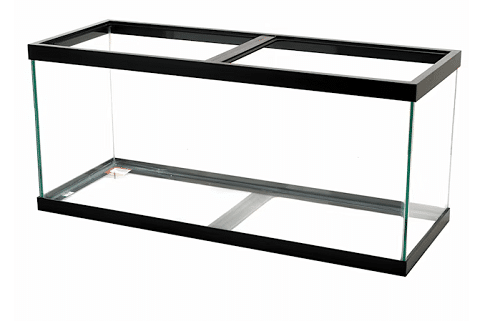
    Recommended Tank Sizes for Popular Turtle Species

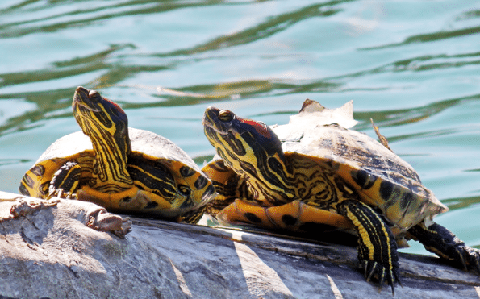
    • Red-ear Slider: 50+ gallons1
    • Musk Turtles: 30+ gallons
    • Spotted turtles: 30+ gallons
    • Striped mud turtles: 30+ gallons
    • Diamondback terrapin: 55+ gallons

    Choose a Material

    There are various options when setting up a turtle habitat. With some modifications, a regular glass or acrylic fish tank works great for most species and will allow you to view your pet from the side as it swims and explores its home. However, you can also use a large plastic container if you’re happy to view your pets from above.

    Add a Cover

    Turtles don’t necessarily need a hood over their tank if the water level is kept well below the rim. However, you don’t want your pet to escape, so it’s best to use a cover that will keep your turtle in and other animals out. This is especially important if you have other pets like cats and dogs.

    A simple mesh screen works well and will not reduce the effect of your UV and heat lamps too much. However, you can use a regular aquarium hood if you have made modifications to allow for your pet’s special lighting needs.

    Step 2: Decorate

    Decorating your turtle tank can make it more visually appealing for yourself, and more interesting for your turtle. Unfortunately, adding too many decorations can make your tank more difficult to clean. Read on for more tips on turtle tank decorations.

    Substrate

    Substrate is not strictly necessary in a turtle tank. In fact, many turtle owners prefer bare-bottom aquariums because they are easier to clean and maintain. However, a layer of sand or river pebbles can create a more natural-looking environment and allow your turtle to dig and enjoy its environment.

    You can use pool filter sand or play sand to save a few dollars or choose an aquarium sand substrate with a color of your choice. Just remember to rinse your substrate well before adding it to your aquarium as new sand and gravel may cloud your water or introduce unwanted chemicals.

    Regular aquarium gravel is a bad idea because turtles can swallow small stones and suffer from impaction.

    Hardscape

    A few large rocks or pieces of driftwood can make your turtle tank look more natural and give your pets a place to explore. However, carefully arranged objects will make cleaning more difficult and can be a hazard for your pet, so keep things as simple as possible.

    Premium Pick
    Buce WSYSIWYG Driftwood

    What You See Is What You Get!

    Buce offers a WSYSIWYG show pieces. Great for aquascaping. They make your aquascapes pop like no other!

    Click For Best Price

    Aquarium hardscape materials are often pre-cleaned, but it’s always a good idea to wash your hardscape properly before adding it to your tank. Boiling driftwood before adding it to your tank will reduce the amount of tannins that leach into the water, although this step is not strictly necessary.

    Plants and Backgrounds

    Turtles tend to damage live plants, but aquarium-safe plastic plants are a great way to make your turtle tank setup look and feel a little more natural. Some turtles will chew on plastic plants, so be prepared to remove these decorations from the tank if necessary.

    A plastic or paper aquarium background with plants and other natural designs can also make your turtle tank a more attractive and enriching environment for your pet.

    Step 3: Create a Basking Area

    Turtles love to spend time in the water, but these aquatic reptiles also need a place to hang out above the surface. Set up a tank with a basking area (AKA Turtle Dock) above the water, and there are a few different options here.

    • Floating and Sinking Basking Areas

    Pet stores sell ornaments made for this purpose, although it’s important to choose an option that will match the depth of your tank. Floating or clip-on basking areas are also available, although they tend to be more suitable for juveniles and smaller aquatic turtle species.

    If you are pretty handy, you can also build your own basking area from PVC pipe and egg-crate material to suit your tank and turtle. Just be sure to use non-toxic materials that won’t rust, rot, or release harmful chemicals into the water.

    • Natural Materials

    You could also slope the substrate into the water or arrange rocks or driftwood on one side of the tank for a more natural look, although this adds a lot of weight while limiting the swimming space. If you do make a rock pile, make sure your basking area is packed very securely to avoid injuries to your pet or damage to a glass fish tank.

    • Above-tank Basking Areas

    Basking platforms and lofts that attach above the aquarium are also available for turtles, and they are usually made to fit standard aquarium sizes. These products are great because they provide plenty of space above the surface and allow you to use all of the water in an aquarium rather than filling it halfway.

    Step 4: Add and Heat the Water

    The water in your turtle tank should be maintained at a comfortable, constant temperature. Unless you keep your home warm and temperature controlled, the best way to do this is with a submersible heater.

    Selecting a Heater

    Regular aquarium heaters are dangerous for turtles because they can knock them over and crack the housing or chew the cable with their strong beaks.
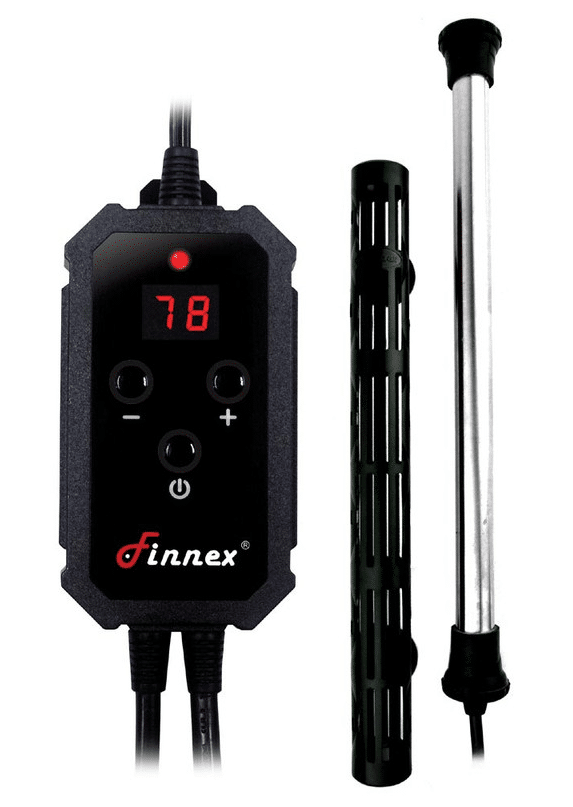
    Editor’s Choice
    Finnex STE Series

    Best Aquarium Heater

    Finnex has achieved what we as hobbyist have asked for decades. A reliable heater that won’t fail. Japanese components. Receives our top recommendation.

    Click For Best Price Buy On Amazon

    You can protect your heater with a heater guard or purchase a special turtle heater with a plastic or titanium construction and cable guard. Alternatively, Choose a canister filter with a built-in heater and house your equipment outside of the tank.

    • Heater Sizes

    Aquarium heaters come in various sizes and wattages, so it’s important to select a model that will maintain the correct temperature in your tank size and indoor conditions. Heaters in the 75 to 200-watt range are typically used in small and medium-sized turtle tanks.

    The recommended tank size for each model will be stated on the heater’s packaging, but you should also factor in the ambient temperature of your home when choosing a heater size.

    Monitoring Water Temperature

    Most aquarium heaters can be set to automatically maintain the proper temperature for your turtle. However, the settings are not always completely accurate, so I recommend including a thermometer in your tank to monitor the water temperature. Just be sure to use something sturdy that your pet cannot damage!

    Step 5: Install a Filter

    Turtles can be messy creatures, so the water in their tank will become dirty and smelly pretty fast without good filtration and regular maintenance.

    Selecting a Filter

    There are many different filters available in the aquarium hobby but not all of them are recommended for turtle tanks. Read on to learn which filters work best for semi-aquatic turtles.

    • Canister Filter

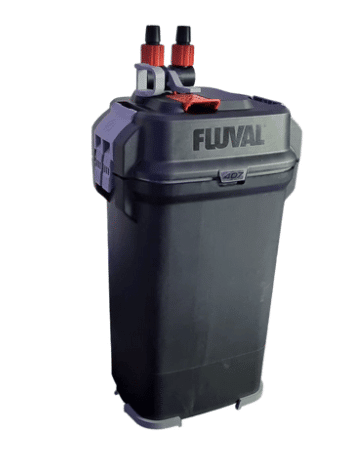
    Canister filters are probably the best option because they are housed outside the aquarium. These filters can hold a lot of filter media without taking up any space in the tank, although they tend to be more expensive than other designs.
    Best Value
    Fluval Canister Filters

    Our Subscriber’s Choice

    Top name brand, Italian made, and updated design. The next gen Fluval Canisters are a best buy!

    Buy On Amazon Buy On Petco
    • Internal Power Filter

    An internal filter is also a good option for small turtle species, although you may need to protect the cable and any weak plastic parts. These filters are generally the most affordable option and a decent product will be very quiet.

    • Other Options

    Depending on the depth and layout of your turtle tank, you may also be able to use a hang-on-back filter, although these filters can be pretty noisy in tanks that aren’t filled to the rim.

    Air-powered sponge filters are generally unsuitable for turtle tanks because they take up a lot of space and are easily damaged.

    Water Quality and Maintenance

    You could cycle your aquarium for a few weeks before you add your turtle to its new home, although you can speed up the process by using some filter media from a mature tank.

    Fortunately, it isn’t absolutely necessary to cycle your turtle tank beforehand, but there are a few steps you should take to keep your pet healthy in the first few weeks.

    Bottled bacteria can be used to jump-start the cycle once you have added your turtle or you can perform regular large water changes to keep ammonia levels as low as possible while the nitrogen cycle establishes in your turtle tank.

    Remember to treat tap water with water conditioner before adding it to your aquarium. This will help to neutralize chemicals like chloramine that can be harmful to your pet.

    Step 6: Add Lighting

    Lighting is one of the most important components of your turtle tank setup. A regular aquarium lamp will help to light up your tank but it won’t provide the heat and ultraviolet light that your turtle needs. Read on to learn more about your turtle’s special light requirements.

    Basking Light

    If you keep your turtle in an outdoor pond, it will get all the warmth and UVB rays it needs from natural direct sunlight, but an indoor turtle tank needs some special equipment. However, you will need a heat lamp and a UV basking lamp above your turtle’s basking area if you house your pet indoors.

    Read on to learn about the importance of ultraviolet light.

    • UVA and UVB Light

    Turtles need UVB light to produce vitamin D and absorb calcium, but most regular lamps and aquarium lights do not provide this important energy.
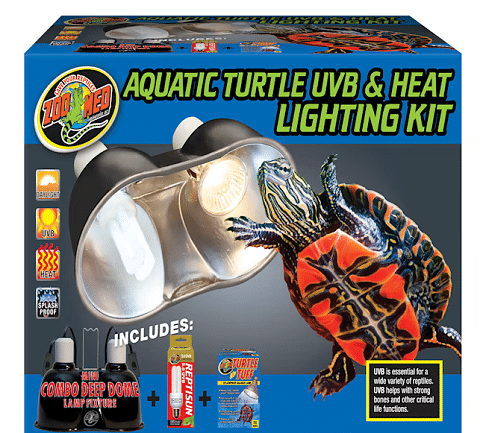
    Unfortunately, glass filters out the UVB rays in natural sunlight so your pet can get very sick if kept indoors without this special light. However, UVA and UVB lights are easily available online or from your local pet store.

    • Heat Lamp

    Turtles are cold-blooded animals that can only remain healthy and active in a certain range of temperatures. In nature, turtles regularly bask in the sun to warm up. Each species has slightly different heat requirements, but most require temperatures between about 80 and 90 degrees Fahrenheit in their basking spot.

    Simply adjust the distance from between the lamp and the basking spot to dial in the temperature. The best way to get an accurate measure of the temperature on your turtle’s basking spot is to use a digital heat gun/thermometer.

    You can use separate heat and UVB lamps or select a single mercury vapor bulb. These powerful lamps are great ‘all in one’ options that produce both heat and UVB.

    General Lighting

    There are a few options for lighting your turtle tank. You may be happy with the amount of light produced by the UV and heat lamps, or you could include regular aquarium lighting or even submersible LED lighting to enhance your display.

    Light Timing

    It’s best to set your lights on a timer so that you don’t need to manually switch them on and off every day. 10 to 14 hours of UV light per day is recommended to simulate a natural daylight period for your pet.

    Step 7: Add Your Pet

    Congratulations, your turtle tank is nearly ready for your pet! The last step is to test the water temperature with your thermometer to make sure it isn’t too hot or cold. Once the water is at a comfortable temperature, you can introduce your turtle and watch it explore its new home.

    Additional Turtle Tank Setup Safety Tips

    • Avoid any objects or decorations that your turtle could get caught in or trapped under. Turtles can survive for a long time underwater but they need to return to the surface to breathe.
    • Measure water parameters regularly with an aquarium test kit. Ammonia and nitrites are not as dangerous for turtles as they are to fish but you should strive to maintain excellent water quality for your wet pet.
    • UVB lights should be replaced once or twice each year. You may not notice the difference, but they are only effective for a few months.
    • Use sturdy, turtle-safe filters and heaters. This is especially important for larger species.
    • Turtles are known to swallow gravel while feeding. Avoid gravel that is coarser than sand but smaller than your turtle’s head.

    FAQs

    What do turtles need in a tank?

    Turtles need a tank with enough room to swim comfortably while foraging and exploring. These animals also need a heater and a filter to keep their water warm and clean.

    One side of their enclosure must include a land area or basking platform where your pet can crawl out of the water and soak up some heat and UV rays. Install a UVA and UVB lamp above this area of the tank.

    Can turtles live in a tank full of water?

    Most turtles cannot survive long-term in a tank full of water. These reptiles also need a dry area above the water where they can spend time basking.

    What do you put on the bottom of a turtle tank?

    Turtle tanks do not need substrate, although a layer of sand and smooth rocks will create a more natural and comfortable environment for your pet. Avoid gravel that is small enough to eat since this can be very dangerous for your pet.

    How high should the water be in a turtle tank?

    Your turtle tank should include enough water and space for your pet to swim comfortably. As a general rule, the minimum depth should be at least twice the length of your turtle’s shell so that it can turn right-side-up if it flips over.

    Ideally, the tank should hold as much water as possible while also including driftwood or other objects that create areas of different depths.

    What is needed to set up a turtle tank?

    You will need the following items and equipment to set up your turtle tank.

    • Suitable tank with cover
    • Substrate and decorations
    • Turtle basking area
    • Light fixtures and lamps
    • Aquarium heater
    • Thermometer
    • Aquarium filter
    • Water test kit

    Final Thoughts

    So, that’s everything you need to know to set up a basic turtle tank! I hope this guide has answered all your questions and helped you create an amazing home for your new aquatic pet.

    Do you have a pet turtle? Share your experiences and tips in the comments below!
  • 7 Best Turtles for Aquariums: My Picks After Keeping Sliders

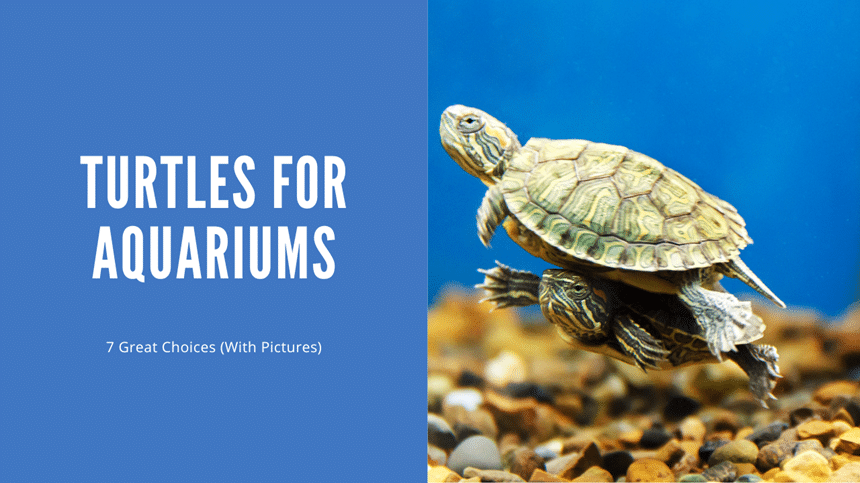
    7 Best Turtles for Aquariums: My Picks After Keeping Sliders

    I’ve kept red-eared sliders, and I’ll tell you upfront: aquarium turtles are a bigger commitment than most people expect. They live for decades, grow surprisingly large, and produce more waste than their size suggests. But they’re also some of the most interactive and personable animals you can keep—rewarding in a way that fish simply can’t replicate. In this guide I cover 7 of the best aquarium turtle species and give you the honest care information you need before bringing one home.

    Key Takeaways

    • There are many different types of freshwater turtles in the aquarium trade, and each has its own unique needs and preferences
    • Captive-bred turtles can make fascinating pets, although they do not like to be touched or handled
    • Aquariums can make excellent turtle habitats, although these amphibious reptiles require some dry land in their tank where they can bask
    • Your turtle’s tank must include a basking platform or secure floating log where your pet can crawl out to warm up
    • Turtles also need a special UV bulb if kept indoors. This essential requirement helps turtles make vitamin D and absorb calcium.

    7 Best Turtles For Aquariums

    1. Red Ear Slider

    Red Eared Slider
    • Scientific name: Trachemys scripta elegans
    • Care level: Intermediate (Suitable for beginners)
    • Temperament: Calm and friendly but does not enjoy being handled
    • Minimum tank size: 50 gallons
    • Potential lifespan: Up to 40 years in captivity
    • Recommended temperatures: 70-85°F ambient, 85-90°F basking spot, 75-85°F water

    The red-ear slider is the first species on my list because these colorful reptiles are one of the most popular and attractive pet turtle species in the world! These turtles are suitable for beginners, although they need regular care and water quality maintenance to stay healthy.

    This species is easily available from pet stores, but you can often find mature specimens up for adoption too. These large and colorful reptiles are naturally beautiful, although albinos and various other awesome morphs are available from breeders.

    Keeping these wonderful animals is a long-term commitment since they can live for over 30 years. Red-eared sliders can reach 12 inches when full-grown, so they need an enclosure of at least 50 gallons for long-term care.

    The red-eared slider is my personal top pick, but I want to be upfront: they require significant planning. A juvenile slider looks manageable in a small tank, but within a few years you’re looking at a 12-inch reptile needing 75–100 gallons of clean water, a powerful canister filter, and a proper basking setup. Sliders that are improperly housed are among the most frequently rehomed turtles in the hobby. Have a realistic plan for the adult setup before you buy the juvenile.

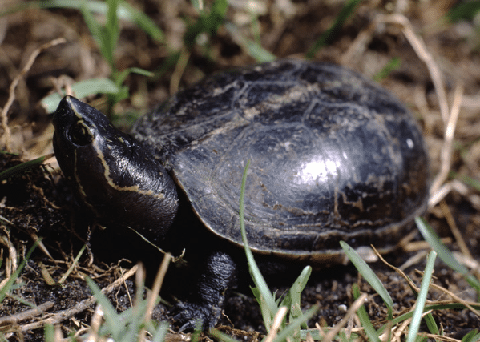
    2. Striped Mud

    Striped-Mud-Turtle
    • Scientific name: Kinosternon baurii
    • Care level: Intermediate
    • Temperament: May scratch and bite, should not be handled
    • Minimum tank size: 30 gallons
    • Potential lifespan: Up to 50 years
    • Recommended temperatures: 80-85°F ambient, 87-92°F basking spot, 75-80°F water

    The striped mud turtle is a small species that grows a shell length of just 3.5-4.5 inches. Despite their size, these miniature creatures can live for half a century with good care!

    These turtles are characterized by three pale stripes on their oval shell, although these markings may fade as the animal matures. They are omnivorous turtles that feed on invertebrates and plant material in the wild.

    Striped mud turtles can be kept in a smaller tank than the red-eared slider, although they require good water quality, UVB bulbs, and a suitable basking area just like other species.

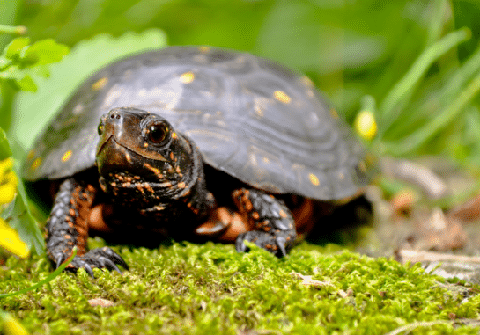
    3. Spotted

    Spotted-Turtle
    • Scientific name: Clemmys guttata
    • Care level: Intermediate
    • Temperament: Alert and active but does not enjoy handling
    • Minimum tank size: 30 gallons
    • Potential lifespan: Up to 50 years
    • Recommended temperatures: 80-85°F ambient, 95°F basking spot, 70-75°F water

    The spotted turtle is an attractive North American species that grows to about 5 inches or so. These turtles are identified by their dark overall coloration and yellow spots on the head and upper shell.

    Spotted turtles will eat some plant matter, although they are mostly carnivorous. Captive specimens will thrive on quality commercial pellets supplemented with meaty foods like worms and crickets.

    These turtles are not the best swimmers, so keep their water shallow enough for them to breathe at the surface while standing and provide plenty of dry land where they can hang out and bask.

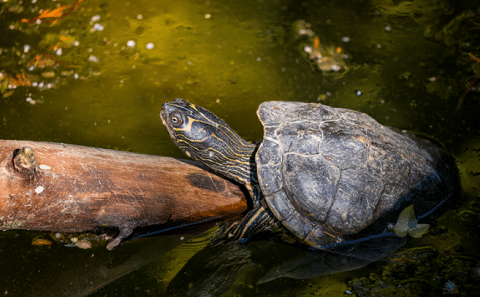
    4. Maps

    Missippi Map
    • Scientific name: Graptemys spp.
    • Care level: Intermediate-advanced
    • Temperament: Naturally active but shy around people
    • Minimum tank size: Species dependent. Large species may require over 100 gallons
    • Potential lifespan: Can live for over 30 years
    • Recommended temperatures: 75-85°F ambient, 90-95°F basking spot, 70-80°F water

    Map turtles are some of the most beautiful semi-aquatic turtles available in their pet trade. There are many species, and some have interesting patterns on their skin and shells and textured scales on their upper shells (carapaces) that make them excellent display animals.

    However, map turtles require very clean living conditions and a varied diet. They are not recommended for beginners, although dedicated turtle keepers with moderate experience should have no problems.

    5. Musk

    Stinkpot Musk
    • Scientific name: Sternotherus odoratus
    • Care level: Intermediate
    • Temperament: May scratch and bite. These turtles should not be handled
    • Minimum tank size: 30 gallons
    • Potential lifespan: May live for over 60 years
    • Recommended temperatures: 83-86°F ambient, about 90°F basking spot, 72-78°F water

    Common musk turtles (also known as stinkpots) get their name from the smelly odor they produce when frightened, although captive-bred pets are less likely to react this way once they get used to you.

    These small aquatic turtles grow to about 4 inches and spend most of their time in the water. However, they require a dry basking spot just like the other species in this list.

    Musk turtles are suitable for beginners and their small enclosure requirements make them a popular choice for people with limited space.

    6. Diamondback Terrapins

    • Scientific name: Malaclemys terrapin
    • Care level: Intermediate
    • Temperament: Generally peaceful but may bite if handled
    • Minimum tank size: 55-75 gallons
    • Potential lifespan: Up to 40 years
    • Recommended temperatures: 80-85°F ambient, about 90°F basking spot, 75-78°F water

    Diamondback terrapins are the only species on this list that aren’t naturally found in freshwater habitats. These colorful reptiles are at home in brackish water systems along the East and Gulf coasts of North America. While captive-bred specimens are often kept in freshwater, you will need to increase the salinity to create conditions that match their natural habitat.

    This is a medium-sized species and females can reach a shell length of about 9 inches. In common with many other turtle species, the males are much smaller, maxing out at a shell length of about 5 inches.

    Diamondback terrapins are carnivorous reptiles that feed on small animals like snails. However, captive specimens do well on commercially sold turtle foods like floating sticks.

    7. Eastern Box Turtle

    • Scientific name: Terrapene carolina carolina
    • Care level: Advanced
    • Temperament: Generally docile but males can be aggressive toward each other
    • Minimum enclosure size: Approximately 15 square feet
    • Potential lifespan: May live for over 50 years
    • Temperature requirements: 65-75°F ambient, 80-90°F basking spot

    Box turtles are unique land-dwelling reptiles with a high, dome-shaped shell that can be closed off with a special hinge on the lower shell (plastron). There are several species of box turtles in North America, although the Eastern box turtle is one of the more commonly available captive-bred pet species.

    These colorful reptiles are not suitable for aquariums due to their mostly terrestrial nature, although they love soaking in water and they can swim and even submerge themselves. They should be kept in large outdoor enclosures, preferably planted with vegetation that will provide shade and shelter. However, they can also be kept in large indoor terrariums if you manage the temperature and provide UV lighting.

    Before You Pick One

    There are many different turtle species available in the hobby, so choosing the perfect species can be tough if you’re just getting started. Here are four quick tips for choosing your first turtle.

    • A Long-term Commitment

    Some turtles can live for over 50 years, and many of them outlive their owners. Many turtles that are bought as juveniles will outlive their first owners, so consider buying an adult or adopting a pet from someone who can no longer care for it.

    • Insist on Captive-bred

    Your turtle’s health should be your first priority, so choose healthy, captive-bred animals and never buy animals that were taken from the wild. I recommend choosing a species that is easily available and easy to care for.

    • Turtle Tank Size

    You’ll notice that each species has a different minimum tank size, although your turtle will definitely appreciate a larger habitat. Some turtles need very large enclosures when they reach adult size, so factor this in when choosing your pet.

    • Plan Ahead

    It’s important to consider your new turtle’s care requirements and create a suitable habitat before you bring it home – it will be a whole lot less stressful for you and your pet!

    Care – The Basics

    Enclosure size

    Freshwater turtles can be kept in aquariums, large plastic containers, or even indoor ponds. The size of their habitat will depend on the size of the species, although your pet will appreciate plenty of room to explore. Small species like mud and musk turtles can be kept in enclosures as small as 30 gallons, while larger types may need enclosures of at least 5 feet long and wide. A 55 gallon tank is usually a good start for many of the turtles on this list.

    Basking Spot

    Most freshwater turtles leave the water regularly to bask in the sun. They do this to warm their bodies and absorb Ultraviolet rays. A turtle tank must include a dry area where your pet can hang out above the water line.

    A floating shelf above the water is a great option as it does not take up any swimming space. However, the shelf must be secured below your tank lighting and be sturdy enough for your pet to climb on and off. You can see that egg crate plastic and acrylic can work for a turtle ramp.

    You can also use a large piece of driftwood or rocks to create a more natural look, although this can take up a lot of space in your turtle’s tank.

    Layout

    Fishkeepers enjoy creating beautiful underwater scenes in their aquariums, but experienced turtle keepers know to keep things simple. A tank without substrate, decorations, and plants is much easier to clean and maintain.

    Care and Maintenance

    Maintaining Water Quality

    Turtles are surprisingly messy eaters and they produce plenty of waste. You will need good filtration to keep their habitat clean and maintain healthy water quality. Internal power filters and canister filters work well for turtles. Canister filters are usually preferred given the amount of waste a turtle can produce.

    This is where most beginners go wrong. Turtles are significantly messier than fish—they eat messily, defecate in the water, and can overwhelm a standard aquarium filter rated for fish their tank size. I recommend running a canister filter rated for at least double your actual tank volume. And don’t underestimate tank size: a slider in a 40-gallon seems fine for a year, but you’re building a problem that costs more to fix later. Bigger tank and oversized filtration from the start will save you money and stress.

    Great For Large Tanks
    Fluval FX Series

    High flow, large filtration capacity, and quality plumbing – The FX series is designed for monster fish keepers

    Buy On Amazon Click For Best Price

    Neglected turtles in dirty water are prone to health problems, so regular maintenance is really important. Perform regular water changes in your turtle tank and give it a thorough cleaning from time to time to maintain hygienic conditions.

    Lighting

    Turtles kept indoors need access to ultraviolet light to grow healthy bones and shells and to prevent a serious health condition called metabolic bone disease. Without a special UVB light, turtles cannot produce vitamin D and absorb the calcium they need to stay healthy.

    While natural sunlight provides UVA and UVB light, most artificial light sources do not. Purchase a special UV bulb designed specifically for turtles and other reptiles. The light source should be positioned above the basking spot and be run on a timer for ten or more hours each day.

    Heating

    Turtles are cold-blooded animals that require external heat sources to warm their bodies. Your UVB bulb may double as a heat lamp or you may need to install a separate basking lamp to create the perfect temperature.

    The water in your turtle’s tank may need to be heated with a fish tank heater to maintain a comfortable temperature. Use a thermometer to monitor the temperature and create a safe and comfortable environment for your pet.

    Diet

    Turtles are easy to feed, although a varied diet is recommended to keep them happy and healthy. Provide a pellet/stick food made for turtles and supplement it with some fresh foods like romaine lettuce, crickets, and mealworms.

    Most species are omnivores that feed on insects and soft plant material, although different species have different diets. Be sure to research the needs of your pet to create a healthy meal plan.

    Feeding

    Overfeeding can cause health problems so fight the temptation to provide too many snacks! Young turtles can be fed every day while adult specimens should do well with a meal every other day.

    Some turtle keepers move their pets to a separate container at feeding time so they can simply discard the dirty water and uneaten food to keep their main enclosure cleaner for longer. However, this is not recommended for new pets that are still adapting to their new home as unnecessary handling can be stressful.

    Veterinary Care

    Turtles are exotic pets that may need the care of specialist veterinarians. It’s a good idea to contact an exotic pet veterinarian in your area if your pet requires medical care.

    What kind of turtle can live in a fish tank?

    Some aquatic turtles can live with fish, although it is risky to keep them together because turtles will snack on fish and other small animals. Turtles also have different habitat requirements to fish, so it’s better to keep these reptiles in an enclosure designed specifically for their needs.

    Is it OK to put a turtle in an aquarium?

    Many aquatic turtles can be kept in glass aquariums, although they have some special requirements. Their aquarium must include a basking platform where they can crawl out of the water and a special UV light bulb to keep them healthy.

    You should never take a turtle from the wild and keep it as a pet. Many species are now endangered in the wild, and captive-bred specimens tend to be much healthier and easier to care for anyway.

    Can turtles live in a tank full of water?

    Some aquatic turtles can be kept in a tank full of water, although some semi-aquatic turtles need shallow water so that they can keep their head above the surface. Almost all species will require a dry basking spot where they can climb out of the water and heat up.

    Terrestrial turtles and tortoises should not be kept in water!

    What is the easiest turtle to care for?

    Musk and mud turtles are relatively easy to care for because they stay small and do not require a very large habitat. However, the larger red-eared slider is hardy and easy to care for if you have the space.

    How big of a tank do I need for 2 turtles?

    The minimum tank size for two turtles will depend on their age and species. You can keep a pair of small turtles in a tank of about 50 gallons, although larger animals will require more space.

    Final Thoughts

    Keeping turtles is great for people of all ages and each of the aquatic turtles in this guide make great pets if given a good home and properly cared for. I hope the information in this article has helped you choose your new friend for life and given you some insight into the basics of aquatic turtle care and husbandry.

    My final advice for new turtle owners is to factor in their impressive lifespan, especially when buying a juvenile specimen. It’s also important to research the specific needs of the species you choose so that you can provide a happy home for your new companion!

    Do you have an aquatic turtle tank? Tell us about your favorite species in the comments below!

  • Aquatic Turtles: Types, Tank Setup, and What They Actually Need

    Aquatic Turtles: Types, Tank Setup, and What They Actually Need

    Aquatic turtles appeal to a lot of people who come from a fishkeeping background — you already have the tank, the filtration knowledge, and the water maintenance habits. But turtles are a different challenge entirely. They’re messy, they need basking areas and UVB lighting, and they will eat fish tankmates given the chance. The care requirements are well-documented but consistently underestimated by first-time keepers. If you’re coming in with realistic expectations, this guide covers the main species and what each one actually needs.

    In this in-depth guide, we’ll introduce 15 of these amazing creatures, and learn more about how to care for them the right way. Read along to learn about their diet, habitat requirements, health precautions, conservation, and so much more.

    Key Takeaways

    • Aquatic turtles kept indoors need a temperature-controlled environment with access to a dry basking spot and UVB light.
    • Turtles need plenty of swimming space and strong filtration system to keep their water quality high.
    • Turtles can be pretty messy, so regular weekly water changes are important in aquariums and other small turtle tanks.
    • Most turtles are omnivorous. Commercial turtle foods are a great staple diet, but your pet will love supplements like live insects and vegetables.

    15 Popular Aquatic Turtle Species

    Are you ready to dive in and learn about 15 awesome aquatic turtle species (check out the video above from our YouTube Channel)? Whether you’re a beginner looking for an adorable musk turtle or an experienced enthusiast hoping to keep an impressive snapping turtle, there’s something here for everyone!

    Each species has different characteristics and care needs to stay healthy in captivity. That’s why I’ve included important stats like their temperament, diet requirements, tank size specifications, and other necessary information like ambient temperature and basking spot requirements.

    1. African Sideneck

    African Sideneck
    • Scientific Name: Pelusios spp.
    • Common Names: West African mud turtle
    • Family: Pelemodusidae
    • Origin: Africa
    • Diet: Omnivorous
    • Care level: Moderate
    • Lifespan: 25 to 50 years
    • Temperament: Calm but shy
    • Minimum Habitat Size: 100 gallons
    • Ambient Temperature Range: 75 – 85 °F or 24 – 29°C
    • Basking Spot: 95 °F or 35 °C
    • Water Temperature: 75 – 80 °F or 24 – 27 °C

    African sideneck turtles are one of the most adorable species in the hobby. These fascinating aquatic reptiles come from rivers, lakes, and ponds in Africa. Like false map turtles, these inquisitive creatures do not fully retract their heads into their shells.

    The diet for this long-lived omnivorous species should include meaty foods like cooked chicken, beef heart, and fish, which can be supplemented occasionally with vegetables and fruit to provide a balanced diet.

    2. Red Eared Slider

    Red Eared Slider
    • Scientific Name: Trachemys scripta elegans
    • Common Names: Red-eared terrapin
    • Family: Emydidae
    • Origin: Southeast USA
    • Diet: Omnivore
    • Care level: Moderate
    • Lifespan: 20 – 40 years
    • Temperament: Does not enjoy handling
    • Minimum Habitat Size: 50+ gallons
    • Ambient Temperature Range: 70 – 85 °F or 21 – 29 °C
    • Basking Spot: 85 – 90 °F or 29 – 32 °C
    • Water Temperature: 75 – 85 °F or 24 – 29 °C

    The Red Eared Slider is widespread in the southeast of the United States and has become one the most popular pet turtle species. These social creatures need plenty of space, UV lighting, and a quality water filtration system in their habitat to live to their full potential lifespan.

    They are omnivorous creatures that will thrive on a balanced diet of commercial turtle foods supplemented with vegetables and meaty foods like crickets and minnows. You could keep a young pair in a tank of thirty gallons or so but the minimum tank size for two adults would be about 100 gallons, along with enough basking sites.

    3. Caspian Pond

    Caspian-Turtle
    • Scientific Name: Mauremys caspica
    • Common Names: Caspian turtle
    • Family: Geoemydidae
    • Origin: Mediterranean, Middle-east, Russia
    • Diet: Omnivore
    • Care level: Easy
    • Lifespan: 20 – 40+ years
    • Temperament: Peaceful but does not enjoy being handled
    • Minimum Habitat Size: 50 gallons for a single specimen
    • Ambient Temperature Range: 60 – 80 °F or 16 – 27 °C
    • Basking Spot: 100 °F or 37 °C
    • Water Temperature: 60 – 82 °F or 16 – 28 °C

    Caspian pond turtles might not be the most colorful species, but their interesting tan markings and long tails still make them great aquatic display animals. Unfortunately, these reptiles have experienced a decrease in numbers out in nature1, so please ensure that your specimens are captive-bred and not wild-caught.

    4. River Cooter

    River Cooter
    • Scientific Name: Psuedemys concinna
    • Common Names: River cooter turtle
    • Family: Emydidae
    • Origin: Central & eastern USA
    • Diet: Omnivorous, mostly herbivorous as adults
    • Care level: Easy
    • Lifespan: 25 – 40+ years
    • Temperament: Peaceful
    • Minimum Habitat Size: 300 gallons for adults of 5 ft x 5ft
    • Ambient Temperature Range: 72 – 95°F or 22 – 35°C
    • Basking Spot: 85°F or 29°C
    • Water Temperature: 75°F or 24 °C

    Several cooter turtle species are native to North America, although the river cooter is one of the most popular pet species in the hobby.

    These large turtles can reach 16 inches and over ten pounds, so they need a big habitat and great filtration to keep their water clean. This aquatic species can live for over thirty years, and they will switch to a mostly vegetarian diet as they mature.

    5. Map

    Missippi Map
    • Scientific Name: Graptemys spp.
    • Common Names: Mississippi map turtle, northern map turtle, Ouachita map turtle, false map turtle
    • Family: Emydidae
    • Origin: North America
    • Diet: Omnivore
    • Care level: Moderate
    • Lifespan: 20 – 30 years
    • Temperament: Timid
    • Minimum Habitat Size: 3 ft or 75 gallons for males, 5 ft or 125 gallons for females
    • Ambient Temperature Range: 80 °F or 27 °C
    • Basking Spot: 86 – 90 °F or 30 – 32 °C
    • Water Temperature: 72 – 77 °F or 22 – 25 °C

    The Mississippi map turtle is a beautiful American species that makes a wonderful pet for more experienced keepers. These stunning reptiles have a unique pattern on their skin and shell that looks like the topographic lines on a map.

    Female map turtles grow larger than males, but both need plenty of swimming space and a land portion where they can hang out and bask. This species is easy to feed and will thrive on a diet of turtle pellets supplemented with some meaty insect foods and greens.

    6. Painted

    Painted-Turtle
    • Scientific Name: Chrysemys picta
    • Common Names: Painted turtle, Western painted turtle, eastern painted turtle, southern painted turtles
    • Family: Emydidae
    • Origin: Widespread in North America
    • Diet: Omnivorous
    • Care level: Easy
    • Lifespan: 25 – 50 years
    • Temperament: Tame & peaceful
    • Minimum Habitat Size: 100 gallons for an adult
    • Ambient Temperature Range: 80 – 85 °F or 27 – 29 °C
    • Basking Spot: 85 – 95 °F or 29 – 35 °C
    • Water Temperature: 75 – 80 °F or 24 – 27 °C

    Painted Turtles are an excellent choice for beginner turtle keepers, but only if you are ready for a long-term commitment. These colorful pet turtles are active and fascinating to observe if you keep them in a large enough habitat.

    The painted turtle is a great species for keepers who want to keep more than one turtle because they are so peaceful with other species.

    7. Snapping

    Snapping-Turtle
    • Scientific Name: Chelydra serpentina
    • Common Names: Common snapping turtle
    • Family: Chelydridae
    • Origin: Widespread in North America
    • Diet: Omnivorous
    • Care level: Expert
    • Lifespan: 30 – 40 years
    • Temperament: Aggressive
    • Minimum Habitat Size: 120 gallons +
    • Ambient Temperature Range: 75 – 85 °F or 24 – 29 °C
    • Basking Spot: 90 °F or 32 °C
    • Water Temperature: 75 – 78 °F or 24 – 26 °C

    Snapping Turtles are amazing creatures with a truly prehistoric look! However, these omnivorous turtles are probably best left in the wild unless you’re an experienced and dedicated reptile keeper.

    They might be cute when they are babies, but these reptiles grow huge and quickly outgrow most turtle habitats. Oh, and these turtles can give a nasty bite too!

    8. Razor-Backed Musk

    Razor Back Musk
    • Scientific Name: Sternotherus carinatus
    • Common Names: Razor-backed musk turtle, musk turtle
    • Family: Kinosternidae
    • Origin: Southeastern United States
    • Diet: Omnivore
    • Care level: Beginner
    • Lifespan: 20 – 50 years
    • Temperament: Shy
    • Minimum Habitat Size: 20 gallons
    • Ambient Temperature Range: 75 – 82 °F or 24 – 28 °C
    • Basking Spot: 82 – 90 °F or 28 – 32 °C
    • Water Temperature: 74 – 79 °F or 23 – 26 °C

    The razor-backed musk turtle is an ideal species to keep in a fish tank because it does not need much dry land. However, they will certainly appreciate a warm, dry rock where they can bask and soak up some UVB.

    These aquatic turtles spend most of their time down at the bottom and rise to the surface to breathe. They have a deep shell shape, with a distinctive ridge or keel that runs along the top of their carapace.

    These small pet turtles grow to just 6 inches, so they are suitable for smaller habitats with good-quality filtration. However, they need plenty of floor space and aquatic plants to really feel at home.

    9. Reeves

    Reeves Or Chinese Pond
    • Scientific Name: Mauremys reevesii
    • Common Names: Reeves turtle, Chinese pond turtle, Chinese three-keeled pond turtle
    • Family: Geoemydidae
    • Origin: East Asia
    • Diet: Omnivorous
    • Care level: Easy
    • Lifespan: 10 – 20 years
    • Temperament: Peaceful, can co-habit
    • Minimum Habitat Size: 55 gallons
    • Ambient Temperature Range: 75 – 85 °F °C
    • Basking Spot: 85 – 95 °F °C
    • Water Temperature: 70 – 80 °F or °C

    Chinese Pond Turtles, also known as Reeves turtles, are a small species that makes a wonderful pet. This hardy and adaptable turtle can be kept in a variety of turtle tanks, from glass aquariums to plastic containers, both indoors and outdoors.

    One of the great benefits of this species is its small adult size. With a maximum length of about 6 inches, most specimens will thrive in a standard 55-gallon aquarium with good filtration and a dry basking spot. Like all freshwater turtles, reeves turtle requires access to UVB light and heat to stay happy and healthy.

    10. Stinkpot Musk

    Stinkpot Musk
    • Scientific Name: Sternotherus odoratus
    • Common Names: Common musk turtle, stinkpot turtle
    • Family: Kinosternidae
    • Origin: Southeastern Canada and Eastern USA
    • Diet: Mostly carnivorous
    • Care level: Moderate
    • Lifespan: 30 – 50 years
    • Temperament: Semi-aggressive, may bite and scratch
    • Minimum Habitat Size: 30 gallons
    • Ambient Temperature Range: 83 – 86 °F or 28 – 30°C
    • Basking Spot: 90 °F or 32 °C
    • Water Temperature: 72 – 78 °F or 22 – 26 °C

    The stinkpot musk is one of the smallest turtle species, reaching just four inches in length. A full-grown adult should ideally have at least 40 gallons, although you can house this species in a 20-gallon at first.

    This is a highly aquatic species that spends most of its time in the water. However, you should still provide a small basking area in case your pet wants to catch some rays. Stinkpot musk turtles can excrete a nasty scent when handled, although they only do this if they feel threatened.

    11. Striped Mud

    Striped-Mud-Turtle
    • Scientific Name: Kinosternon baurii
    • Common Names: Striped mud turtle
    • Family: Kinosternidae
    • Origin: Southeastern United States
    • Diet: Omnivorous
    • Care level: Moderate
    • Lifespan: Up to 50 years
    • Temperament: Semi-aggressive, may bite and scratch
    • Minimum Habitat Size: 30 gallons
    • Ambient Temperature Range: 80 – 85 °F °C
    • Basking Spot: 87 – 92 °F °C
    • Water Temperature: 75 – 80 °F or 24 – 27 °C

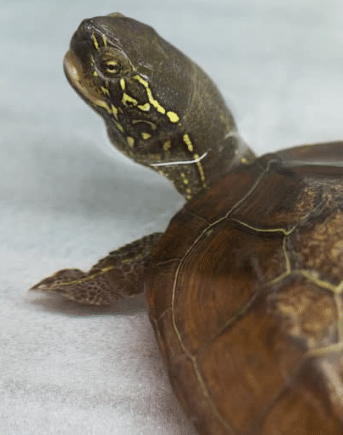
    Striped mud turtles are a miniature species with yellow stripes that grow to just four inches or so. These adorable creatures are not the strongest swimmers and prefer to crawl around at the bottom of their tank. However, these tiny also turtles need a decent land section where they can crawl out to bask and warm up.

    Striped mud turtles are an excellent choice for keepers who want a fascinating pet that won’t need a big habitat. This makes them a better choice for indoor turtle care than some common species like red-eared sliders, which can grow surprisingly large.

    12. Spiny Softshell

    Spiny Softshell
    • Scientific Name: Apalone spinifera
    • Common Names: Spiny Softshell turtle
    • Family: Trionychidae
    • Origin: United States, Mexico, & Canada
    • Diet: Mostly carnivorous
    • Care level: Moderate to Advanced
    • Lifespan: up to 50 years
    • Temperament: Aggressive if handled
    • Minimum Habitat Size: 90 gallons for a male only. Females should be kept in ponds
    • Ambient Temperature Range: 80 – 85 °F or 27 – 29 °C
    • Basking Spot: 85 – 90 °F or 29 – 32 °C
    • Water Temperature: 75 °F or 24 °C

    The Softshell turtle is a unique aquatic reptile with a flat shell and long, pointed nose. Despite their goofy look, these large turtles can and will bite, so they are not pets that you should handle.

    Spiny softshells need loads of swimming space in their turtle tank, and since males stay much smaller, they are the better option for most keepers. These soft shell turtles are only suitable for more experienced turtle keepers.

    13. Wood

    Wood-Turtle
    • Scientific Name: Glyptemys insculpta/ Clemmys insculpta
    • Common Names: North American wood turtle
    • Family: Emydidae
    • Origin: Northeastern United States
    • Diet: Omnivorous
    • Care level: Easy
    • Lifespan: 40 to 58 years
    • Temperament: Peaceful & tame
    • Minimum Habitat Size: 5 ft x 5ft with 2 ft water depth
    • Ambient Temperature Range: 70 – 80 °F or 21 – 27 °C
    • Basking Spot: 85 °F or 29 °C
    • Water Temperature: 60 – 70 °F or 16 – 21 °C

    The wood turtle is an excellent choice for turtle keepers who live in cooler areas because this species needs cool water between 60 and 70 degrees Fahrenheit to survive.

    This medium-sized turtle can reach about 9 inches, so they need plenty of swimming space. An outdoor enclosure is usually the best choice, but only if you live in a cool climate. North American wood turtles are an endangered species, so insist on keeping captive-bred specimens that are legally sold.

    14. Spotted

    Spotted-Turtle
    • Scientific Name: Clemmys guttata
    • Common Names: Spotted turtle
    • Family: Emydidiae
    • Origin: Eastern United States
    • Diet: Omnivorous
    • Care level: Moderate
    • Lifespan: 30 – 50 years
    • Temperament: Active but shy
    • Minimum Habitat Size: 50 gallons
    • Ambient Temperature Range: 80 – 85 °F or 27 – 29 °C
    • Basking Spot: 95 °F or 35 °C
    • Water Temperature: 70 – 75 °F or 21 – 24 °C

    The spotted turtle is one of the most beautiful species, which explains its great popularity among reptile keepers. With a maximum size of just 5 inches, they are also a great option for medium to large fish tanks.

    Unfortunately, spotted turtles have become an endangered species in the wild, so you should only keep legal, captive-bred specimens or choose one of the other amazing species on this list.

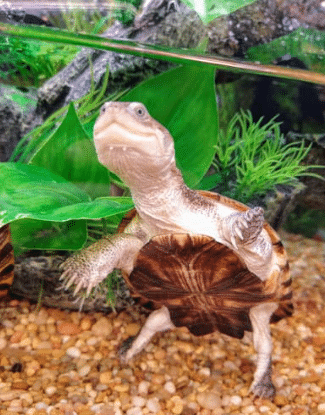
    15. Snake Necked

    Snake-Necked-Turtle
    • Scientific Name: Chelodina longicollis
    • Common Names: Eastern snake-necked turtle, common snake-necked turtle
    • Family: Chelidae
    • Origin: Eastern Australia
    • Diet: Carnivorous
    • Care level: Moderate
    • Lifespan: 30 – 40 years
    • Temperament: Docile & peaceful
    • Minimum Habitat Size: 4ft x 4ft or 150 gallons
    • Ambient Temperature Range: 80 – 85 °F or 26 – 29 °C
    • Basking Spot: 85 °F or 29 °C
    • Water Temperature: 70 – 75 °F or 21 – 24°C

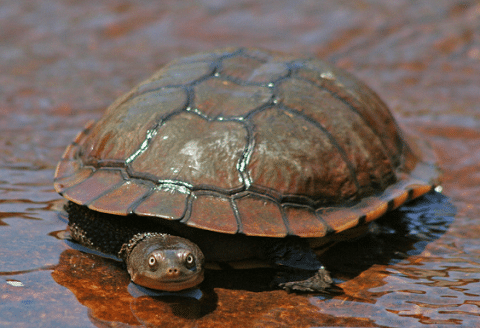
    Snake-necked turtles are a fascinating Australian species known for their strange, long necks. These are large and active turtles that can hit shell lengths of 12 inches, so full-grown adults will need a large habitat with plenty of swimming space and a dry spot under a UVB lamp where they can warm up and bask.

    Snake-necked turtles are fully carnivorous so feed your pet a commercial pellet food supplemented with meaty foods like insects. These turtles can emit a potent smell to deter predators, but fortunately, they tame up fairly quickly. Nevertheless, these animals should not be handled too often.

    Choosing Your Aquatic Turtle

    Before buying your first turtle, make sure you have the budget, space, and time available to care for your pet. Most turtles will easily live for over 25 years, making them a life-long pet! You will need to dedicate time to feeding your turtle and cleaning its habitat for all those years too, so buying a turtle is not something you should rush into.

    Be sure to study the care needs of your favorite species and start off with an easy species to ensure a fun relationship. It’s also important to consider the conservation status of your pet and avoid keeping wild-caught threatened species. Bear in mind that the legal status of each turtle species differs by state and country.

    Choose a healthy specimen from a reliable pet store or reputable breeder that only sells turtles bred in captivity. This will improve your chance of success, reduce the chance of illness, and ensure ethical practices and stamp out illegal poaching.

    Creating The Ideal Habitat

    Setting up a great turtle habitat from the start is the best way to go. Remember to take your time in planning your turtle tank and always buy the best quality equipment you can afford. Let’s take a closer look at how to create the perfect home for your pet turtle.

    Tank Setup

    The turtle’s shell length will determine the size and depth of your turtle’s tank. A great rule of thumb is go with a guideline of 10 gallons per inch of the turtle’s body measurement.

    The aquarium also needs to be two to two and a half times as deep as the length of your turtle’s shell in order for them to swim and bask comfortably. It’s very important to keep your tank deep enough for the turtle to right itself safely if it gets flipped over.

    In nature, turtles climb out of the water to bask in the sun. In captivity, your pet turtle will also need a dry basking spot above the water with a heat and UV light spot. This area should be large enough for the turtle to rest comfortably but can be as small as a single rock for the more aquatic species.

    Water Quality And Filtration

    Turtles are very messy creatures, so keeping their water clean and safe requires good equipment and some hard work. If you’re using tap water in your turtle habitat, make sure to dechlorinate it with a regular aquarium water conditioner.

    A powerful filter is essential for your turtle tank, although the type and size will vary depending on your setup. Canister and internal power filters are both good options, but make sure the model you choose can process the volume of water in your tank at least three times every hour.

    Best Value
    Fluval Canister Filters

    Our Subscriber’s Choice

    Top name brand, Italian made, and updated design. The next gen Fluval Canisters are a best buy!

    Buy On Amazon Buy On Petco

    You’ll also need to perform a weekly water change on your turtle tank to remove the excess waste and improve the general water quality in your tank. A weekly 50% water change is a good starting point, but you may need to perform more frequent maintenance if you notice the water turning cloudy.

    Temperature, Basking, And UV Lighting

    Aquatic turtles must have basking areas and UV lighting to stay healthy. They need this light to synthesize Vitamin D3, which is essential for bone growth and good health. Without it, they will die a slow and painful death, so please, do not skip this step!

    Aquatic turtles need a special UVB (2.5, 3, or 5%) light above their basking spot. It should not be more than 12 inches or 30 centimeters above the ground.

    Turtles are cold-blooded creatures, so they also need external heat to keep their body temperature in a comfortable range. You will need an aquarium water heater to keep their water warm and a heat lamp to keep the temperature at their preferred range on the basking spot.

    While all turtle species are cold-blooded, different types of turtles have different needs. Be sure to set your temperature to suit your pet.

    Diet & Feeding Requirements

    Feeding your aquatic turtle a healthy and balanced diet is critical for their health and happiness. Provide a well-rounded diet that includes staples, treats, and supplements to ensure that they are getting all of the essential nutrients they need. A varied diet will prevent any health deficiencies while also keeping your beloved pet vibrant and energetic!

    Staple Foods

    Specially formulated turtle pellets are a great staple diet for your pet. However, you should include natural foods like insects, fish, fruits, and leafy greens for a well-rounded diet. Remember that each species has a slightly different natural diet, so do your research when designing a healthy meal plan.

    Mazuri Turtle Food

    Mazuri is a brand of food started by Zoo professionals. This gel food is a great food staple for aquatic turtles

    Buy On Amazon Buy On Petco

    Treats And Supplements

    Aquatic turtles need various essential nutrients to keep them healthy, and you can provide these using treats as well as supplements.

    Fruits such as apple, cantaloupe, bananas, blueberries, and mango are great treats for omnivorous species, while non-toxic aquatic plants like water hyacinth or duckweed can also offer variety. Terrestrial plants like romaine lettuce will work too. Cooked meats like beef and chicken are also great if provided as an occasional treat.

    Providing supplements like calcium, Vitamin A, and Vitamin D3, are also helpful, but it’s worth consulting a veterinarian or experienced professional about what dosage suits your particular species.

    Feeding Schedule

    A regular feeding schedule is recommended for keeping your pet turtle well-fed. Remember, overfeeding can be just as unhealthy as underfeeding in the long run!

    Young turtles less than a year old should be fed every day, and you can provide them with as much food as they can eat in about 5 minutes. Older turtles should eat every two or three days, and you can provide about 75% as much food as they can finish in about 15 minutes. Remember to adjust their pellet and portion size as they grow.

    Health And Wellness

    Preventative Care

    Poor water quality, incorrect temperatures, lack of UVB light, and overfeeding are the major causes of poor health in aquatic turtles. If you have set up your turtle tank correctly and are keeping up with regular maintenance and a healthy feeding schedule, all you really need to do is monitor your pet’s health.

    Signs Of Illness

    The best way to monitor your pet turtle’s health is to observe its condition and behavior on a daily basis. It is important to be aware of any signs that your aquatic turtle may not be feeling their best. Look out for the following ‘red flags’ when observing your turtle:

    • Sluggishness
    • Lack of appetite
    • Difficulty swimming or staying afloat in the water
    • A discolored or darkened shell – A evidence of shell rot
    • Keratin shedding out of the ordinary pattern
    • Bleeding spots on its carapace, with a softer texture, and foul smell
    • Respiratory symptoms like struggling to breathe or excessive mucus production from mouth, nose, and eye areas

    Contact an experienced exotic pet or reptile veterinarian immediately if you notice any of these symptoms. Be sure to remove your turtle from the water if they are having trouble swimming because turtles can drown. Recognizing these warning signs early on will definitely improve your pet’s chance of survival.

    Turtles Vs Tortoises

    There is a difference between both of these species, namely that Turtles can go in water, while Tortoises are land based creatures. Tortoises also have more rounded and dome shaped shells, while the turtle’s body is shaped better for swimming. The feet are also difference with Tortoises having stumpy or scaly toes while the turtles have webbed feet or long claws used for swimming.

    Turtles are made to be in water while turtles are designed to be in water most of the time.

    Legal Considerations And Conservation

    It’s important to be aware of the legal matters as well as conservation efforts regarding turtles because many species are threatened by illegal collection, and some can be invasive when released outside of their natural range.

    Examples of endangered turtle species include:

    • Asian yellow pond turtles
    • Spotted turtle
    • Wood turtle

    Only buy turtles from legal sources, and avoid collecting wild animals or supporting the illegal trade in wildlife. As much as you might want that rare or endangered turtle, these animals are much better off left in the wild!

    FAQs

    What is the best type of aquatic turtle?

    The red-eared slider turtle is one of the most popular choices for its ease of care and amazing looks. These colorful turtles can be kept in a tank of about 60 gallons where they will keep you entertained with their active nature. They are long-lived too, so this is one pet you could call a life-long companion!

    Are there any fully aquatic turtles?

    The musk turtles of the genus Sternotherus are practically fully aquatic and spend almost all of their time in the water. These tiny turtles grow to just a few inches long, making them a great choice for a fish tank of about 30 gallons.

    How long do aquatic turtles live for?

    Most captive aquatic turtles have a life expectancy of 20 to 30 years, although some may live for over 50 years with good care! With such an impressive lifespan, it’s important to plan carefully before getting a pet turtle.

    What is the ideal tank size for an aquatic turtle?

    A 55-gallon tank is a good size for most small to medium-sized aquatic turtles, although some species are more active than others. As a general rule, allow 10 gallons of tank space per inch of your turtle’s shell length.

    How often should I change the water in my turtle’s tank?

    Change the water in your turtle’s tank at least once a week to keep it healthy and happy. If your turtle’s water is turning cloudy or smelly before the week is up, go ahead and change the water sooner.

    Final Thoughts

    Turtles are wonderful pets, but they need special care, equipment, and plenty of maintenance. Think carefully before staring out with a turtle, but be prepared for a fascinating and beautiful long-lived companion. This guide is a great starting point, but please research each species carefully before making the commitment, we support happy pets and happy pet owners here at Aquarium Store Depot!

    Do you keep freshwater turtles? Tell us about your favorite species in the comments below!