Tag: Saltwater Fish Profiles

  • Six Line Wrasse Care Guide: The Popular Reef Fish With a Reputation (and How to Manage It)

    Six Line Wrasse Care Guide: The Popular Reef Fish With a Reputation (and How to Manage It)

    The six line wrasse is one of the most popular reef fish in the saltwater hobby โ€” and one of the most frequently regretted. After 25+ years in the saltwater side of this hobby and running a 125-gallon reef, I’ve seen both sides of this fish. When introduced correctly, they’re spectacular: that pattern of six vivid orange lines on a blue-purple body is unlike most reef fish, and their willingness to hunt flatworms, pyramidellid snails, and other pests makes them genuinely useful. The issue is aggression. Six line wrasses can become highly territorial toward fish added after them โ€” particularly small, passive species. The rule is simple but non-negotiable: add them last, after all other fish are established. Follow that rule and you’ll likely have an excellent experience. This guide covers everything you need for successful six line wrasse care.

    Species Overview

    Scientific NamePseudocheilinus hexataenia
    Common NamesSix line wrasse and six stripe wrasse
    FamilyLabridae
    OriginIndo-Pacific and the Red Sea
    DietOmnivore
    ColorsPurplish-pink, blue, yellow, orange, green
    Care LevelEasy
    TemperaturementSemi-aggressive to Aggressive
    Minimum Tank Size40 Gallons
    Max Size3 inches
    Temperature Range76 โ€“ 82 degrees F
    pH Range8.0 โ€“ 8.4
    Salinity1.025 or 35 PPT
    Reef SafeYes

    Origins And Habitat

    Six line wrasses are a widespread species found throughout the Red Sea and Indo-Pacific. More specifically, they can be found in warm waters all the way from the west coast of southern African, up to the coasts of India, across to Japan, and down to Fiji; they can be found near surrounding islands as well1.

    These attractive fish are found in shallow reefs no deeper than about 65 feet. They especially favor dense reefs with close-knit branched corals where they can easily hide and forage for small crustaceans.

    Though six line wrasses are not very social, they may sometimes be seen in mating pairs or loose shoals as they forage the reef for food.

    How Long Do They Live?

    There is no average lifespan for six line wrasses, but it’s safe to say that they have the possibility to live 10 years or more.

    In general, six line wrasses are incredibly hardy fish once established in the reef aquarium. There can be some difficulty with stress from improper care or poor acclimation, but these fish do extremely well once settled in.

    What Do They Look Like?
    Six Line Wrasse in Reef Tank

    Six line wrasses are very colorful and active fish. They are also very small, staying under 3 inches when fully mature, which can make them appealing to hobbyists with nano tanks. As we’ll discuss later, even though this fish is small it is by no means an appropriate nano species.

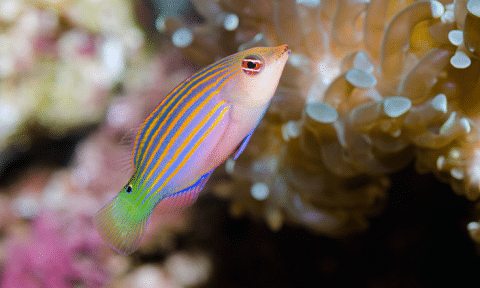
    These fish have beautiful colors and patterns. They have a purplish-pink base color that can sometimes appear as dark red in different settings; the underbelly is usually the lightest portion of the body and can have a tan appearance against the bluish anal and ventral fins. In shape, the body is very aerodynamic with exact curvature for quick and efficient travel.

    Six line wrasses are named after the six alternating blue and orangey-yellow stripes along the sides of their body that run from behind the gill, onto the dorsal fin, and onto the caudal (tail) fin. The tail fin can be green at the base and transition into yellow or become transparent. At the top of the base of the tail, there is also a black eyespot which can be used to confuse predators.

    Six line wrasses also have very characteristic red eyes with two horizontal stripes at either side of the pupil.

    Hermaphroditism

    While six line wrasses have not been successfully bred on a large scale in the aquarium hobby, their reproductive habits and life stages have been closely studied.

    Like many other species of wrasse, the six line wrasse is a protogynous hermaphrodite. This means that the individual fish are born as females and transition into males as they mature in response to internal and external factors.

    This is very unlikely to happen in the aquarium setting which is a closed system without additional environmental factors.

    Tank Requirements

    There is a lot of debate surrounding six line wrasse tank and care requirements. For many years, they were eagerly shoved into small tanks due to their small size. However, over the past few years, hobbyists have generally agreed that they need a lot more space than was originally believed.

    Still, some hobbyists have had success keeping six line wrasses in 20 gallons. Other hobbyists find that 55 gallons is the bare minimum. We believe that a standard 40 gallon fish tank with intricate rockwork should be enough space for your six line wrasse to freely roam.

    As they heavily rely on the structure of reefs and corals in the wild, live rocks are a necessity for this species. It is also recommended to use a sand substrate as six line wrasses, like many other species of wrasse, will use the sandbed to hide if stressed. Some will even sleep in the sandbed, though this is usually a sign that something else is wrong in the tank.

    Otherwise, six line wrasses are incredibly hardy. They can be a little tricky to acclimate and don’t do well with sudden changes in water parameters but will thrive once established. There is no special care or maintenance needed to make sure your six line wrasse does well once introduced into the aquarium.

    However, it is also a necessity to have a tight-fitting lid on the tank. Remember, these fish are aerodynamic and can easily jump out of small openings in the top of the aquarium. If you have a rimless aquarium, consider getting a mesh net to prevent your fish from jumping.

    Temperament

    https://youtu.be/3Ck-0ZQKLRY

    Not only are six line wrasses known for their activity levels, but they can also be very big bullies. There are a few benefits to having them in the tank though as they can sometimes act as a type of cleaner fish and will even control some pest populations (Video source).

    Six line wrasses are often the most active fish in any aquarium setup. They can quickly dash across the front of the reef tank or take their time maneuvering in and out of the rocks, looking for some microorganism to nibble on. No matter what they’re doing, they’re always moving.

    However, when they’re not looking for food they might be bothering other fish. There are many stories from hobbyists who have had to trade in or give away their six line wrasse after a year of having them because they turn into a menace overnight. This is one of the risks you take when adding one of these fish to your aquarium!

    Six line wrasses are generally labeled as being semi-aggressive, though they’re usually either peaceful or aggressive with no in-between. The problem with these fish is that they can be model citizens until they’re not. One day, they may start terrorizing other peaceful fish in the aquarium and they won’t stop; six line wrasses are very persistent at pestering other fish, which can quickly lead to weakened, sick, and dead tankmates.

    As mentioned before, many hobbyists end up giving their six line wrasses away as the aggression only gets worse with time. However, increasing feedings and providing more hiding places may help deter some aggression, though this is not guaranteed.

    If you’re looking for a fish that’s not as aggressive but still as colorful, then you may consider the eight line wrasse (Pseudocheilinus octotaenia); note that these fish are considerably larger and can also be relatively aggressive. Other larger peaceful wrasses like the Yellow Coris do not exhibit this behavior, but may harass and eat shrimp.

    Are They Cleaner Fish?

    It has been said that six line wrasses can act as a cleaning species for other fish, though this isn’t often observed. In general, a cleaner shrimp is going to do a better job.

    Some hobbyists have seen their six line wrasse approach other fish and pick at parasites and other foreign bodies that might be present. While some wrasses, like the bluestreak cleaner wrasse (Labroides dimidiatus), are known for having a mutualistic cleaning relationship with fish, this behavior is largely undocumented with six lines.

    If you find that your six line wrasse is picking at the sides of other fish in a friendly manner, then you may have a cleaner six line wrasse! Keep an eye out for if this turns into aggression and/or starts to bother the other fish.

    Pest Control

    Bristle Worm Upclose

    Though your wrasse might not be a natural cleaner, there is a good chance that it will control some pests in your saltwater aquarium. Six line wrasses are foragers and advantageous scavengers. They will happily eat any small invertebrates they come across as they swim in and out of the rocks.

    Some of the six line’s favorite quick snacks include flatworms and bristle worms. This can be beneficial for hobbyists struggling with flatworm or nudibranch hitchhikers, like those commonly found on small polyp stony (SPS) corals. They can also help hobbyists who don’t enjoy the appearance of bristle worms, though these worms can be some of the best cleanup crew members.

    At the same time, six line wrasses will eagerly eat any copepods they come across. Hobbyists work years to establish a healthy copepod population in their aquariums, especially if they have a finicky eater like the mandarin goby (Synchiropus splendidus). If this applies to your tank, you should not add a six line wrasse.

    It should also be said that six line wrasses will not eradicate a pest infestation. Though they will definitely help control populations, there are simply too many pests for one fish to eat. In addition, these fish should never be added to a tank simply to help with a pest problem!

    Are They Reef-Safe?

    Past their aggression and interesting behaviors, six line wrasses make a great reef-safe fish; of course, there will always be one individual that is not reef-safe from this sample, but in general, six line wrasses are reef-safe.

    In fact, these fish feel especially at home in between the branches of elaborate SPS colonies. In the wild, they use these branches for protection and this natural behavior will translate into the saltwater aquarium setting as well.

    Tankmates
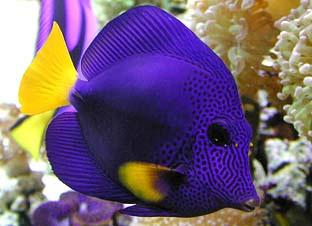
    Purple Tang

    Six line wrasses are largely regarded as a community species fit for any fish only (FO), fish only with live rock (FOWLR), or reef setup. However, they shouldn’t be treated as just another community fish.

    In general, you want tankmates that can stand against your six line wrasse, either in terms of speed or aggression. Species like tangs, angelfish, and damsels, will be able to escape or hold their own against the tyranny of an aggressive six line wrasse.

    There are a few methods to increase the chances of compatibility among your tankmates.

    1. Add the six line wrasse last. Adding this species to the tank last leaves little room for a hierarchy to form among other fish and even less physical space for a large territory to be established.
    2. Acclimate slowly. In this case, we don’t mean acclimation in the sense of matching water parameters. Instead, use a glass or plastic container to slowly introduce your wrasse to the rest of the tankmates. Simply submerge or float this container with your wrasse inside for several days. This should get all fish familiarized with each other so there is less immediate aggression.
    3. Get a pair of six line wrasse. Pairs of wrasses are difficult to come by. This method only really works if you know with certainty that the two fish are already a mated pair. Some hobbyists have found that keeping six line wrasses in pairs completely diminishes aggression.

    Lastly, you want to stock your tank accordingly. There are definitely a few species you will want to avoid if you’re trying to eventually add a six line wrasse to the stock list.

    Can They Live With Clownfish?

    Whether or not six line wrasses can live with clownfish is completely up to the personality of the individual fish. I, personally, kept a six line wrasse with ocellaris clowns (Amphiprion ocellaris) and never had a problem. Other hobbyists have had their clownfish killed overnight.

    If you desperately want to keep your clownfish alive, then do not add a six line wrasse. There are also a few other species of clown that might be able to tolerate possible aggression instead.

    Some varieties of maroon clown (Premnas biaculeatus) can grow to be very large, which could possibly intimidate the wrasse. Tomato clowns (Amphiprion frenatus) can also get to be very big and are one of the most aggressive species, making them a good candidate as a six line wrasse tankmate.

    Can They Live Together?

    Yes, some hobbyists have successfully kept pairs of six line wrasse together, though this is rare. In fact, pairs often help diffuse aggression.

    More importantly, though, wrasses of different species should not be kept with six lines. It is not unheard of for a six line wrasse to kill another, larger species of wrasse. The territories, body shapes, and behaviors can overlap too much and the six line may see the other fish as a threat.

    Of course, some hobbyists have had complete success keeping an assortment of wrasses together, though this is uncommon.

    What Do They Eat?

    Six line wrasses are very opportunistic feeders. On top of the many bristle worms, snails, and microorganisms they find among the rocks, they will readily eat fish flakes and pellets. They will also appreciate meaty foods like live, frozen, and freeze-dried options like brine shrimp and mysis shrimp as well. Blackworms are also a good option. For frozen foods, I highly recommend LRS foods.

    Will They Eat Peppermint Shrimp?

    While these fish gladly eat small invertebrates, they generally leave bigger snails, crabs, and shrimp alone. This includes peppermint shrimp (Lysmata wurdemanni) that are much larger than the very small mouth of the six line wrasse.

    Of course, if your fish is especially hungry, it might try to go after bigger prey and it’s not unheard of for them to eat snails and smaller shrimp. As long as you keep your fish fed and watch for signs of aggression, there should be no problems with keeping other invertebrates.

    Final Thoughts

    Six line wrasse have been misunderstood for a very long time. Just recently, hobbyists have come to understand their true needs and aggression levels. Though these fish are relatively peaceful and reef-safe, they definitely have the capability of attacking and killing other fish in the tank.

    Keeping aggression in mind, these popular saltwater aquarium fish bring color to the home display like no other and are exceptionally hardy once established in the tank.


    ๐Ÿ“˜ Want to learn more? This article is part of our complete Saltwater Fish & Reef Guide โ€” your ultimate resource for marine fish, coral care, reef setup, and more.

  • Cleaner Shrimp Care Guide: The Reef Tank’s Most Fascinating Cleanup Crew Member

    Cleaner Shrimp Care Guide: The Reef Tank’s Most Fascinating Cleanup Crew Member

    Cleaner shrimp are one of my favorite additions to any reef tank โ€” and genuinely one of the most fascinating invertebrates in the saltwater hobby. After 25 years in saltwater and keeping them in my own reef, I still get a kick out of watching them work. They set up actual cleaning stations in the rock work, and fish will actively position themselves to be serviced โ€” having parasites and dead tissue picked off by the shrimp. It’s one of those real wildlife behaviors you can witness right in your living room. Beyond the entertainment value, they contribute genuine parasite control and are peaceful with virtually everything in a reef tank. This guide covers everything you need to keep them thriving long-term.

    A Brief Overview of Cleaner Shrimp

    Scientific NameLysmata amboinensis
    Common NamesCleaner shrimp, skunk cleaner shrimp, scarlet skunk cleaner shrimp, red skunk cleaner shrimp, and Pacific cleaner shrimp
    FamilyHippolytidae
    OriginIndo-Pacific and the Red Sea
    DietOmnivore
    Care LevelEasy
    TemperaturementPeaceful
    Minimum Tank Size10 Gallons 
    Max Size2 – 3 inches with very long antennae
    Temperature Range76 – 82 degrees F
    pH Range8.0 – 8.4
    Salinity1.025 or 35 PPT
    Reef SafeYes
    Available As Tank BredRare
    Filtration/Water FlowLow
    Water TypeSaltwater
    BreedingEgg-layer
    Difficulty to BreedDifficult to breed
    CompatibilitySpecies-only tank or community tank 

    Origins And Habitat

    As one of their common names suggests, the Pacific cleaner shrimp can be found throughout the Pacific Ocean, more specifically in the Indo-Pacific around Indonesia and Australia. Some populations have also been observed in the Red Sea and have some variation in appearance.

    There, these invertebrates play an important role in shallow reef ecosystems. They can be found hiding in the cracks and crevices of the rockwork all the way from 16 to 131 feet in depth. As we’ll discuss more later, these saltwater shrimp set up cleaning stations where fish knowingly travel to get cleaned1.

    Interestingly, cleaner shrimp are born as males but transition into hermaphrodites as they mature. This is known as protandric simultaneous hermaphroditism and is unique to the Lysmata genus as well as a few other decapods.

    On the reef, cleaner shrimp will commonly be seen in pairs but are relatively solitary creatures. They will also form pairs in the aquarium and breeding them is relatively straightforward. However, raising the fry after the eggs hatch is incredibly difficult. This makes coming across tank-raised cleaner shrimp very rare or even nonexistent.

    Why Are They Called So?

    Cleaner shrimp are very aptly named after their mutualistic relationship with fish. These invertebrates set up service stations on the reef where they wait for both predatory and nonpredatory fish to swim by to be cleaned. As the fish floats near the rock, the shrimp picks at the sides and gills of the fish–sometimes even venturing inside the mouth–to clean parasites, dead tissue, mucus, and other microorganisms.

    In both the wild and in the reef aquarium, these shrimp have a unique habit of rocking their legs side to side. Studies have found that this behavior increases when predatory fish are present, possibly signaling their beneficial intentions and asking them to not be eaten.

    This study also shows that shrimp are much less likely to clean when in the presence of predatory species and unideal cleaning conditions than when servicing nonpredatory fish in a comfortable environment.

    Cleaners vs. Fires

    Fire Shrimp

    When talking about cleaner shrimp, in general, hobbyists are referring to Lysmata amboinensis. However, fire shrimp (Lysmata debelius), also known as blood shrimp and scarlet cleaner shrimp (pictured above), are also considered as a type of cleaner shrimp.

    In comparison, fire shrimp are often a lot less reliable at cleaning than true cleaner shrimp. These bright red invertebrates are great at bringing color to the home aquarium, but they fail to set up true cleaning stations and often stay hidden in the rockwork instead. On top of that, many hobbyists have experienced their fire shrimp going after and killing less active invertebrates, including cleaner shrimp.

    There are some benefits to having a fire shrimp, though. For one, their intense color is unparalleled. Though they might stay hidden a better majority of the time, their bright red coloration does not go missed.

    In addition, they have been known to eat small pest anemones, like Aiptasia. However, if you’re dealing with an extensive Aiptasia problem, then there are much better shrimp options to choose from, like peppermint shrimp (Lysmata wurdemanni), which form hunting groups that specifically prey on those anemones.

    Though you may get lucky and have an especially Aiptasia-hungry fire shrimp!

    What Do They Look Like?

    What Does A Cleaner Shrimp Look Like

    Cleaner shrimp are a very simple-looking, yet appealing shrimp species. All cleaner shrimp will look the same, with red, white, and yellow coloration. There have been some observed variations between those collected from the Red Sea and Indo-Pacific individuals, but the difference is minimal.

    Cleaner shrimp are also known as scarlet skunk cleaner shrimp due to their colors. They have two brilliant red lines along their back with dark yellow legs. Against those red lines, they have a long white stripe reaching from the antennae to the top of the head and all the way to the telson (tail). On the tail itself, there are multiple white spots.

    This white line greatly resembles the signature patterns of a skunk, earning the skunk cleaner shrimp its name!

    As a decapod, cleaner shrimp have ten legs. Cleaner shrimp also have small pincers that help them pick off foreign objects from fish as well as any microorganisms that might be living in the crevices of the rockwork.

    Tank Requirements

    Cleaner shrimp do not need much to thrive, though they may sometimes die for apparently no reason at all. On average, they only live for a few years.

    These shrimp are one of the larger shrimp species available in the saltwater aquarium, but one can still comfortably be kept in a 10 gallon aquarium; some hobbyists have kept them in 5 gallons, but those pico tanks should be kept for other smaller and more ornate species, like pistol shrimp (Alpheidae family).

    While cleaner shrimp won’t explore all a reef tank has to offer, they can be very active within their own given territory. These shrimp set up stations for fish to get cleaned, often at the top or side of the rockwork. They’ll usually use these rocks as areas to sleep and to hide while molting as well. There, they will scavenge for food in and around the rocks and accommodate any fish that want to be cleaned.

    Cleaner shrimp do not require any special water parameters. However, like other invertebrates, they are extremely sensitive to traces of copper in the water as well as high nitrates. Contrary to popular belief though, invertebrates do need some traces of copper present in the water for healthy shell growth. Large amounts, like those found in some aquarium medications, will be deadly.

    Otherwise, cleaner shrimp are generally hardy and can withstand some minor deviations from ideal water conditions.

    Acclimation

    Perhaps even more important than correct water conditions is giving ample time to slowly acclimate your new shrimp to your tank. Though hardy once established, this shrimp species can be very sensitive to large and sudden changes in water parameters.

    There are a few methods to guarantee that the transition from store to home aquarium is as safe as can be for your new cleaner shrimp:

    1. Bring a cooler or insulated bag to carry home the shrimp from the store. This will keep your cleaner shrimp in the dark while preventing drastic water temperature fluctuations and ultimately reducing stress.
    2. Once at home, turn off the aquarium light and float the bag in the aquarium for about 15-20 minutes. This will give time for temperatures to match between the store water and the display water.
    3. For almost all invertebrates, it is best to drip acclimate. Empty the store water and shrimp into a bucket and attach a drip acclimator. If you do not have one available, simply tie a loose knot in a piece of airline tubing to slow the flow.
    4. Allow the water volume to double in the bucket. This usually takes about an hour, though you may continue acclimation for up to two hours for extra precaution.
    5. When enough time has passed, it’s time to transfer the shrimp into the tank. It is best to use your hand or a plastic container as their legs and antennae can get stuck in netting. Your shrimp will likely head straight to the back of the tank and find coverage under a rock. Over the next few days, your cleaner will start to return to normal and set up a cleaning station somewhere in the tank.
    Get For Acculimation
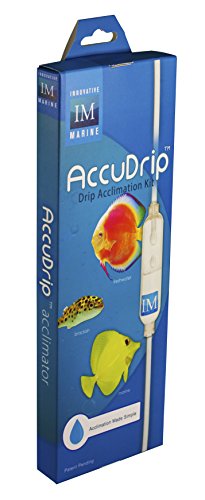
    Accudrip Acclimator

    Most of us know that fish and shrimp are sensitive creatures, who don’t do well with sudden changes. The Accudrip Acclimator is here to help adjust your aquatic creatures to new tanks and conditions

    Click For Best Price Buy On Amazon

    If your shrimp does happen to lose a leg or antennae during the process, don’t worry. Shrimp have the incredible ability to rejuvenate lost limbs when they molt. Though this is not ideal, they should be okay as long as water conditions are favorable!

    Temperament

    Many beginner hobbyists see cleaner shrimp and see other shrimp, like fire shrimp, and think that the two species will get along in the same tank. Though cleaner shrimp are very peaceful, they can actually be a little temperamental towards other related species.

    As mentioned before, cleaner shrimp set up very distinct territories. If another shrimp were to accidentally enter this territory, the cleaner shrimp would be very capable of defending itself. For this reason and for controlling bioload, multiple species of marine shrimp are not typically kept together unless it is a larger system.

    Molting

    As a crustacean, cleaner shrimp go through the molting process. This is when the shrimp sheds its exoskeleton in order to grow. This happens about every month or two and can make you believe that your shrimp is dead!

    When cleaner shrimp molt, they shed their exoskeleton in one complete piece. This empty shell looks exactly like the shrimp only lifeless, which leads many hobbyists to believe that the molt is actually a carcass. During this time, your shrimp is at its most vulnerable and will usually be hiding in the back of the tank.

    Make sure that your shrimp reappears after a few hours. Leave the molt in the tank as the shrimp will eat it and regain some calcium as well as other important nutrients. If you don’t see your shrimp after a few hours and you notice that bristle worms and other scavengers are starting to circle around it, then this might actually be your dead shrimp.

    Are They Reef Safe?

    Yes, cleaner shrimp are almost always reef safe; of course, there is always that rogue shrimp that will go off and consume a whole colony of zoanthids overnight. Generally, there is no cause for concern.

    The biggest concern with cleaner shrimp, though, is them swimming over and irritating corals. If your shrimp decides to set up its territory right next to a sensitive coral, then it could cause some indirect irritation. This is usually nothing to worry about though, and the coral should adapt over time.

    Tankmates

    In addition to being reef safe, these shrimp can also be kept with an assortment of tankmates. They do best in community saltwater settings with wrasses, clownfish, and tangs. Cleaner shrimp will even do well with fish that aren’t reef safe like, butterflyfish and small angelfish.

    As we mentioned earlier, though, they do service predators in the wild so those aren’t completely off the table either. Check out the video below by NatureFootage of a cleaner shrimp working on a Moray Eel!

    What Fish Eat Them?

    Many saltwater aquarium fish will gladly take the opportunity to munch on a shrimp. This includes obvious predators, like triggers, groupers, and puffers, though larger angels and wrasses might even try to nip at them.

    As cleaner fish have gotten more expensive over the past few years in the aquarium hobby, it’s usually not recommended to try keeping them with larger, more aggressive species. However, some hobbyists intentionally introduce cleaner shrimp into their tanks as a live food option. Not only do cleaner shrimp naturally increase predatory instincts, but their hard chitin shells help keep beaks and teeth trimmed.

    It is also important to note that on rare occasions, sea anemones have been known to catch and digest cleaner shrimp that may walk over their mouths.

    What Do They Eat?

    Cleaner shrimp are omnivores. While they get a lot of their required diet from picking parasites off of fish, this is not enough to sustain them. Luckily, they are not particularly picky about what they eat otherwise.

    For the most part, cleaner shrimp will gladly eat any pellet or flake foods that are added to the tank. They will even help dispose of any fish or invertebrates that might have died and gotten stuck under a rock or in the back of the tank.

    One thing cleaner shrimp won’t do though is treat an algae problem. Cleaner shrimp are sometimes lumped together with other cleanup crew members. While they are opportunistic feeders and largely scavengers, they won’t help contain algae or clean up fish waste. In fact, they’ll usually avoid setting up stations in algae-covered areas.

    Can They Treat Ich?

    Parasites contribute to cleaner shrimp diet to an extent. Though these invertebrates will definitely eat ich (cryptocaryon irritans) off of the sides and gills of fish, they shouldn’t be entirely depended on to treat the whole reef tank for an infestation.

    In short, there are simply way too many parasites to control by one shrimp. The cryptocaryon irritans life cycle is also pretty complex and shrimp won’t eat them at all stages, leaving them to reproduce freely and replace those that have already been eaten.

    This goes for other parasitic infestations as well, like marine velvet (Oodinium spp.); cleaner shrimp will eat those parasites, by they will by no means serve as a full treatment for those parasites.

    Final Thoughts

    If you’re looking for something to fill your tank up with something other than a fish, then a cleaner shrimp is definitely something to consider. Though they’ve become reasonably more expensive over the past few years, their fascinating cleaning mutualism with fish is a behavior that can’t be seen with other invertebrates.

    Keep in mind that these shrimp carry the bioload of a small fish and should not be considered a member of the cleanup crew. Otherwise, they are very forgiving of small fluctuations in water parameters as long as they are acclimated correctly!


    ๐Ÿ“˜ Want to learn more? This article is part of our complete Saltwater Fish & Reef Guide โ€” your ultimate resource for marine fish, coral care, reef setup, and more.

  • 15 Beautiful Types of Clownfish (With Pictures)

    15 Beautiful Types of Clownfish (With Pictures)

    Clownfish are one of, if not, the most popular fish in all of the aquarium hobby. These saltwater fish have been made popular by Pixar’s animated film, Finding Nemo, but their bright colors and easy care secure their spot at number one. There are many types of clownfish that you can purchase due to breeder efforts.

    Introduction to Clownfish

    Believe it or not, there are actually 30 different species of clownfish currently known in the Amphiprioninae subfamily, all varying in shape, size, and temperament. The saltwater aquarium hobby has further diversified this classic fish, introducing more ornate patterns and designs as well as some longfin variations.

    By far, the most common species to come across are:

    • False percula clownfish/ocellaris clownfish (Amphiprion ocellaris)
    • Percula clownfish (Amphiprion percula)
    • Tomato clownfish (Amphiprion frenatus)
    • Clarkii clownfish (Amphiprion clarkii)
    • Pink skunk clownfish (Amphiprion perideraion)
    • Maroon clownfish (Premnas biaculeatus)

    Clownfish are usually most recognized by their orange body and alternating three white stripes outlined in black. These saltwater fish are commonly seen in pairs as they are sequential hermaphrodites. This means that fish are initially born as males and have the unique ability to become females if the need arises; at this point, the female will become larger in size.

    Clownfish are also known for their symbiotic relationship with sea anemones: the clownfish receives shelter from predators while the anemone is protected and delivered food and waste from the fish. Clownfish have evolved to excrete a protective mucus that keeps them safe from the damaging sting of anemones; interestingly, some clownfish already have this mucus present in their skin while others need to acclimate themselves to the specific sting of the anemone.

    However, this mutualism does not always translate to the aquarium setting. The truth is that many clownfish are aquacultured and may not feel the need to host an anemone. While this may disappoint many new hobbyists, clownfish are still arguably one of the best fish you can have for any saltwater aquarium setup.

    How Long Can They Live?

    Clownfish can live a considerably long time so it’s important to make sure that the species you choose is completely compatible with your reef tank.

    On average, clownfish live 3 to 5 years in captivity. However, it’s not unheard of for them to live close to a decade with ideal conditions. They are extremely hardy and will survive most tank crashes and tank transfers, though we definitely recommend keeping those to a minimum!

    Tank Requirements

    Most species of Clownfish are incredibly hardy and can adapt to most conditions. They can be kept in fish only (FO), fish only with live rock (FOWLR), or full reef setups. Most hobbyists like to keep them in pairs, though they will do just fine on their own as well. They are great saltwater fish for beginners.

    The minimum tank size recommended for a pair is 10 gallons, though a 20 gallon tank will allow for more space to swim as well as additional tank mates. Clownfish establish territories and don’t venture far from those areas they claim as their own in the tank.

    If an anemone is introduced, the pair may host it, though this is not guaranteed even if they are wild-caught. On the other hand, you may have a pair that completely ignores the anemone and hosts something like a powerhead instead.

    Other funny clownfish behavior includes sleeping in odd positions at night. This can be unsettling to see at first as you see your marine fish swimming parallel to the side of the glass, but this is typical clownfish behavior and nothing to worry about.

    Which Anemone Is Right For Them?

    Though it’s never guaranteed, there are some clownfish/anemone pairings that work better than others. Here are some of the most common pairings with the greatest success (video source).

    As most species of clownfish derive from the ocellaris clownfish species, most hobbyists will need to look for a bubble tip anemone (Entacmaea quadricolor), magnificent sea anemone (Heteractis magnifica), sebae anemone (Heteractis crispa), or giant carpet anemone (Stichodactyla gigantea).

    Keep in mind that clownfish do not need to have an host anemone to live a full life. In fact, they mainly use their anemones in the wild for protection, which they shouldn’t need in the reef aquarium setting. However, if you really want your clownfish to host an anemone, then you might need to train them.

    It should also be noted that clownfish may host other similar-looking corals in the tank as well, like Euphyllia. This can be stressful and detrimental to the overall health of the coral.

    The Candidates

    In a hurry? I recommend purchasing your clownfish from ORA via Saltwater Aquarium

    No matter what kind of clownfish you end up choosing, their care requirements are very similar in regard to water conditions. However, it is still important to consider the mature size of the fish and temperament as spatial needs and aggression can vary greatly across different species.

    Thanks to the saltwater aquarium hobby though, they are many different varieties of clownfish available with one for every kind of tank setup. Here are 15 that we are going to look at today:

    PictureNameAttributesLink
    Editor’s Choice!
    Snowflake Clownfish
    Snowflake Clownfish
    • Wide white stripes
    Buy Premium GradeClick For Best Price
    Picasso Clownfish Picasso Clownfish
    • Multiple Grades
    Buy Premium GradeClick For Best Price
    Frostbite Clownfish Frostbite Clownfish
    • Gets darker as they age
    Click For Best PriceBuy Premium Grade
    Wyoming White Clownfish Wyoming White Clownfish
    • Mostly White
    Click For Best PriceBuy Premium Grade
    Phantom Clownfish Phantom Clownfish
    • Black and White
    Click For Best PriceBuy Premium Grade
    Domino Clownfish Domino Clownfish
    • Mostly black
    Click For Best PriceBuy Premium Grade
    Darwin Black Ocellaris Darwin Black Ocellaris
    • Black and White
    Click For Best Price
    Midnight Clownfish Midnight Clownfish
    • All Black
    Click For Best PriceBuy Premium Grade
    Black Storm Clownfish Black Storm Clownfish
    • Black and White
    Click For Best Price
    Snow Storm Clownfish Snow Storm Clownfish
    • Mostly White
    Click For Best Price
    Tomato Clownfish Tomato Clownfish
    • Red and White
    • Single Stripe
    Click For Best PriceBuy On SWF
    Gold Stripe Maroon Clownfish Gold Stripe Maroon Clownfish
    • Large
    • Red and Gold
    Click For Best PriceBuy Premium Grade
    DaVinci Ocellaris DaVinci Ocellaris
    • Three grades available
    Click For Best PriceBuy Premium Grade
    Nearly Naked Clownfish Nearly Naked Clownfish
    • Single Stripe
    Click For Best Price
    Longfin Mocha Clownfish Longfin Mocha Clownfish
    • Long Fins
    Click For Best Price

    The Best 15 Varieties

    The ocellaris clownfish (Amphiprion ocellaris), also known as the false percula clownfish, is the most classic species of clownfish available. They are easily identifiable by their three white stripes against their vibrant orange body, though they may also come in black and white as well.

    These 15 saltwater fish stay small, growing to about 3 inches at mature size. This allows them to be comfortably kept in nano tanks. Ocellaris clowns are also relatively easy to breed, which has allowed for them to be aquacultured. This reduces their price, produces a much hardier fish, and makes them that much more available to hobbyists.

    I included a video below from our YouTube channel. We include links to purchase these fish and more details in the blog post below. If you like our content, subscribe to us on YouTube as we post new videos each week.

    Because they are so classic and easy to breed, these fish have also become the basis for many designer breeds as we will see. Let’s look in detail at these fish below.

    1. Snowflake

    The snowflake clownfish is a relatively common breed to come across. These fish are the result of the selective breeding of ocellaris clowns and vary in grade.

    In general, snowflake clownfish grow to be about 4 inches when fully mature. The main difference between snowflake and ocellaris clowns is the width of the white stripes, which varies across individuals. There are three grades of snowflake clown depending on the extent of this variation: snowflake ocellaris, premium snowflake ocellaris, and ultra snowflake ocellaris.

    Snowflake ocellaris clownfish. This grade is the most available and shares the most similarities with the common ocellaris clownfish. The snowflake ocellaris has irregular, broadened white stripes. The orange background may be darkened and gradient into the white stripes.

    Premium snowflake ocellaris clownfish. These clownfish are mostly white with some apparent orange. The first two stripes have joined together and the third stripe near the caudal fin is greatly exaggerated, extending onto the tail.

    Ultra snowflake ocellaris clownfish. The ultra snowflake ocellaris is the highest grade of this breed and has the least visible orange. All three stripes have fused together, leaving only portions of the head and fins orange.

    Regardless of which grade your snowflake ocellaris is, they are very hardy fish and can be kept in a variety of setups.

    2. Picasso

    The Picasso clownfish is another popular breed of clownfish that is relatively common to come across at your local aquarium store. These fish are based on the percula clownfish (Amphiprion percula) and grow to be about 3 inches.

    Similar to the snowflake clown, Picasso clownfish have extended white stripes that are based on a grading system. Because they are percula clownfish, their orange base coating can sometimes have more hints of yellow. There are two main grades of Picasso clownfish: regular and premium.

    Picasso clownfish. The regular grade of the Picasso clownfish has soft extended white stripes, usually most notable in the middle and third bar.

    Premium Picasso clownfish. This grade is a much more exaggerated version of the regular Picasso and should have at least two conjoined white stripes.

    There are misbar variations of the Picasso clownfish, which may cause the stripe closest to the caudal fin to be missing or broken.

    3. Frostbite

    Frostbite Clownfish

    A nearly all white clownfish. Gets darker as they age. Younger fish have more orange

    Click For Best Price Buy Premium Grade

    Here is where identifying clownfish breeds can start to become tricky. The frostbite clownfish is a variety of ocellaris clownfish and could easily be mistaken for a type of snowflake. In fact, these saltwater fish are a mix between premium snowflake clowns and Wyoming white clowns. There are a few ways to tell them apart, though!

    Frostbite clownfish grow to be 4 inches. Their bodies are entirely white except for a few spots here and there, which resembles the effects of frostbite, earning them their designer name. Interestingly, these fish get darker as they age; even though you might have a young frostbite clownfish with a lot of orange, those spots will gradually get darker and darker until they are black.

    As a type of ocellaris clown, these fish have very basic needs.

    4. Wyoming White

    These fish are very similar in appearance to Maine blizzard clownfish. However, Wyoming white clownfish were bred from ocellaris clowns while Maine blizzard clownfish were bred from percula clowns. The difference is very small but can be seen in the color of their eyes and the number of spines in their dorsal fin.

    Otherwise, Wyoming white clownfish grow to be about 4 inches. The main identifiable feature of these fish is the black spot right above their gills against their nearly all-white body. All orange marks will gradually turn black as the fish matures.

    These fish are relatively rare and have only started to be commercially bred. Again, their needs are identical to those of regular ocellaris clowns.

    5. Phantom

    The phantom clownfish is the first black-colored clown on this list, though still a variety of ocellaris. Fully grown, these fish are 4 inches long.

    These fish are a delicate mix between premium snowflake ocellaris clownfish, black ice clownfish, and super black Darwin ocellaris clownfish. This makes for a velvety black base color with jagged white stripes.

    Phantom clownfish have also been bred for a longfin variety. These fins are more rounded with a wider margin than other types of longfin clownfish, though their phantom colors stay intact.

    6. Domino

    The domino clownfish is aptly named after its singular white spot over its gills against its dark black body; sometimes this spot will be extended into a misbar around the head. The only other color on this fish is its brown snout, though the presence and intensity of this color will vary.

    These types of clownfish are derived from black ocellaris clownfish and grow to be 3 inches. As juveniles, they are a darker brown color which slowly fades to black as the fish ages.

    In addition, there are longfin varieties of the domino clownfish. However, these fish are much lighter in coloration and keep their juvenile shades of brown. They are also much more likely to have odd white markings apart from the dot on the gills. This includes misbars around the head as well as in the middle of the body.

    As a type of ocellaris clown, the domino clownfish has few extra care requirements.

    7. Darwin Black Ocellaris

    Darwin Black Ocellaris Clownfish

    A black snowflake that resembles a traditional ocellaris with a misbar stripe in the middle

    Click For Best Price

    The Darwin black ocellaris clownfish is a simple variation of the ocellaris clownfish with the same three stripes, just against a fully black body. These fish grow to be 4 inches long and have the same requirements as their more colorful counterparts.

    Darwin black clowns are named after their natural habitat off the coast of Darwin, Australia. These fish live in very confined ecosystems and harvesting is limited. Because of this, individuals that become available in the aquarium trade are largely captive-bred.

    Another variation is the Darwin misbar which features interrupted white stripes while maintaining the integrity of the black base color.

    8. Midnight

    The midnight clownfish is unmistakable. These fish are deep black and really bring a rarely seen color to the aquarium setting.

    Like other dark types of clownfish, midnight clowns are lighter shades of brown as juveniles. Some of that brown stays on their snout, but more desirable midnight clowns will have an entirely black body.

    There is another type of midnight clown with some hints of white: the midnight lightning clownfish. These fish are the result of midnight clowns and phantom clowns, resulting in a unique, short, and jagged white patch right below the dorsal fin. As you may have guessed, this streak of white greatly resembles a bolt of lighting against a black backdrop.

    Midnight lightning clowns typically have a jagged first stripe and may also have a misbar third stripe.

    Both midnight lighting and midnight clowns are breeds of ocellaris and require no special care.

    9. Black Storm

    Black storm clownfish have increased in popularity over the past few years and are pretty easy to find in aquarium stores despite their long history.

    These clownfish come from a long line of breeding through DaVinci ocellaris clownfish and black ocellaris clownfish. A very rare mutation caused the fish to be black with white spots that had crisp lines between colors. Eventually, this resulted in the white-faced black storm clownfish only just a few years ago.

    Shortly after that, a longfin black storm clownfish variety was created. Both varieties of black storm clownfish reach a mature size of about 4 inches.

    10. Snow Storm

    Another ocellaris-based breed, the snow storm clownfish, is actually a variety of black storm clownfish crossed with a phantom clownfish. They reach a maximum size of 4 inches.

    This cross resulted in an all-white fish with black eyes, fins, and lips. While most other white clownfish have color on their face, the snow storm is distinct in only having color to the eyes.

    Similarly, these fish have been bred to also feature long fins.

    11. Tomato

    Tomato clownfish (Amphiprion frenatus) are widely available, though not one of the most commonly kept types of clownfish. These fish are named after their bright red coloration and round appearance, similar to that of the fruit. They have a singular white stripe that goes across their gills as adults and two when they are juveniles.

    These clownfish are some of the larger ones available, reaching 6 inches when fully grown. They are typically more aggressive than other clownfish species and sometimes regarded as one of the most aggressive clowns. Because of this, they do best alone or in predetermined pairs. They will not tolerate other clownfish species.

    12. Gold Striped Maroon

    The gold stripe maroon clownfish is a very attractive fish and also very large. Growing to 6 inches, this is the largest clownfish species available. This fish are a variety of maroon clownfish (Premnas biaculeatus) but more ornate.

    Gold stripe maroon clownfish are very similar in appearance to white stripe maroon clownfish with a deep red body and three thin stripes; however, gold maroons have gold in their stripes and white maroons have white in their stripes. This can be tricky though as gold maroons don’t develop their signature colors until they’re at least a year old.

    An interesting feature about the gold stripe maroon clownfish is that they have spines on their cheeks below their eyes.

    13. DaVinci Ocellaris

    The DaVinci ocellaris is a mix between the Wyoming white clownfish and regular ocellaris clownfish, resulting in unique swirls that resemble an artist’s brush strokes. These fish are very similar to the Picasso clownfish but come from ocellaris clowns instead of perculas.

    There are three main grades of DaVinci ocellaris clown, all reaching 3 inches in size: DaVinci ocellaris clownfish grade B, DaVinci ocellaris clownfish grade A, DaVinci ocellaris clownfish grade extreme.

    DaVinci ocellaris clownfish grade B. These fish are the lowest grade and have three distinct swirly white stripes against a deep orange body; sometimes, two stripes are connected but only on one side of the body.

    DaVinci ocellaris clownfish grade A. This grade has the same colorations, but at least two stripes are connected on both sides of the body.

    DaVinci ocellaris clownfish grade extreme. These clownfish are the most desirable and have all three stripes connected on each side of the body to create a true masterpiece.

    14. Nearly Naked

    Probably the best-named fish in the reef aquarium hobby, the nearly naked clownfish lost its stripes. Instead, these fish are all burnt orange with only a few unique white stripe remnants here and there.

    These 3 inch fish come from a long line of selective breeding of ocellaris clowns. Because of this, they bring an oddity to the aquarium without needing any extra care.

    15. Longfin Mocha

    Admittedly, the longfin mocha clownfish is an odd-looking fish. These clownfish look just like their distant ocellaris parents in terms of colors and stripes but have extremely long fins.

    Longfin varieties haven’t quite completely caught on in many saltwater aquariums, but there is a certain elegance that comes with owning one of these fish. Though they don’t require any special care, is it best to cover intake grates with sponge to prevent injury to their delicate fins.

    What Is The Rarest Among Them?

    On the other hand, one of the rarest types of clownfish is the McCullochi clownfish (Amphiprion mccullochi), also known as the whitesnout anemonefish1.

    These saltwater fish look completely different from your typical ocellaris clownfish with a dark brown body, singular white stripe, and white-tipped mouth. However, their appearance isn’t what makes them so rare.

    Instead, these fish have a very limited natural range near Lord Howe Island, an island off the coast of Australia. These waters are rarely fished, which makes acquiring the McCullochi clownfish nearly impossible.

    Though this fish is one of the rarest clownfish, the McCullochi clownfish is not the most expensive. In 2016, a peacekeeper maroon clownfish sold for nearly $9,000. These fish are a variety of the maroon clownfish (Premnas biaculeatus), and have intricate webbing all across their bodies, making them one of the most ornate breeds available.

    Which Is The Most Common?

    Before we get into the most expensive and desirable breeds of clownfish, we have to mention one of the most common types of clownfish: the ocellaris clownfish.

    Closing Thoughts

    There are many different kinds of designer clownfish available and the list gets longer every day. You have your classic false percula clownfish, true percula clownfish, tomato clownfish, skunk clownfish, maroon clownfish, and Clarkii clownfish, but sometimes you just need something unique and different.

    Luckily, most captive bred clownfish derive from these original species, so care requirements don’t change much. However, always research the fish you plan on getting before you add them to your reef tank!

  • Damselfish – Yes, Sane Damsels Do Exist!

    Damselfish – Yes, Sane Damsels Do Exist!

    Damselfish have a reputation problem โ€” and honestly, some of it is deserved. But after 25 years in the saltwater hobby, I’ve kept enough species to know that lumping all damsels together is a mistake. A handful of species are genuinely peaceful enough for community reef tanks, and knowing which ones can save you from the nightmare scenarios most reefers associate with the group.

    Damselfish get a really bad rap in the saltwater aquarium hobby. They are highly aggressive, bite your hand if you put it in the tank, have been known to harass timid tank mates to death, and are a pain to remove if you have to take one out of your tank. Check out the video below from our YouTube Channel.

    So why would anyway ever consider a damsel for their fish tank let alone a reef tank? Well they are several:

    • They are an extremely hardy marine fish
    • They will eat just about anything you feed them
    • They have an exclusive blue color that is difficult to find 
    • They are small and do not require a large tank
    • They are reef safe when introduced correctly

    Back in the day before fishless cycling was common practice, the Damselfish was the fish you would use to cycle a saltwater tank because they could tolerate levels of ammonia, nitrite, and nitrates that would kill off many other saltwater fish. Of course, nowadays one should never consider cycling with damselfish.  However, they are extremely hardy in a tank and are a very forgiving fish for a novice.

    Damselfish will eat just about anything you feed them in the tank. They do not require a specialized diet and will do just fine with any food you buy them.

    Damselfish have a blue color that is very hard to find for a reef tank. Think about it for a second. How often have you thought about looking for a blue colored fish to compliment your coral reef tank setup?  Let’s think about likely candidates:

    • Blue Tang AKA “Dory” – Very large, susceptible to ich
    • Powder Blue Tang – Notoriously difficult to keep and best for experts
    • Mandarin Goby – Notoriously difficult to keep from starving to death and will devastate a micro-fauna population in a smaller tank
    • Large Angelfish – Not reef safe and get very large
    • Coral Beauty Angelfish – Hit or miss on reef safe; intermediate level fish
    • Blue Reef Chromis – The most suitable candidate, but get 5″ long and should be grouped

    Wow, that was pretty quick. So unless you have a large tank or pretty skilled at reefing already, your options are pretty limited for a blue fish.  

    Damsel fish - Yes, Sane Damsels Do Exist!

    Most Damsels stay very small. Only a few members get large and should be avoided for a community tank as they get very aggressive. Their compact size makes them attractive for smaller tanks, especially those under 75 gallons.

    Damselfish are reef safe, but have to be introduced in the correct manner. This means that you have to introduce them last and with the right tankmates, I’ll get into this in detail later in this article.

    So we have established the reasons why a Damselfish could be a good candidate for your saltwater aquarium, but we have all heard the horror stories of their aggressive nature. Is there such thing as a sane Damselfish?  The answer is – YES!

    Introducing the Chrysiptera Damselfish Species

    Scientific NameChrysipertera
    Common Name (Species)Damselfish
    FamilyPomacentridae
    OriginIndo Pacific
    DietOmnivore
    Care LevelEasy
    ActivityActive
    LifespanUsually to 10 years
    TempermentSemi-aggressive
    Tank LevelAll Areas
    Minimum Tank Size30 Gallons
    Temperature Range73 โ€“ 81 Degrees F
    pH Range8.1 – 8.4
    Filtration/Flow RateAll
    Water TypeSaltwater
    BreedingEgg-layers, Difficult to breed
    CompatibilitySemi-Aggressive tanks
    Ok, For Reef Tanks?Yes
    Ok, For Inverts?Mostly Yes

    These Damsels comes from the family pomacentridae and hail from the indo Pacific. There is a genus in the Damselfish family called Chrysiperta. They are just as pretty as other other Damsel relatives but far more peaceful. They will bring the lively nature and action of Damsels without the aggressiveness.

    I will break down 4 of the more colorful Chrysiperta Damsels that fit the exclusive Damsel blue that many hobbyist love:

    • Azure Damsel
    • Starck’s Damsel
    • Yellow-Tail Damsel
    • Springer’s Damsel


    Azure Damsel
    Azure – Tank Bred and tame

    Max Size – 3″
    Minimum Tank Size – 30 gallons

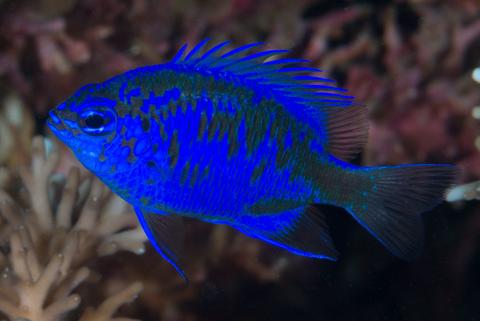
    The Azure damselfish species is the most mild-mannered of the group. It has a wonderful disposition in the group and has rarely caused disruptions in aquariums. It is the best Damselfish to choose if you are considering one that is blue. In larger tanks, they have been kept in groups. It is as of the date of this post, the only Damselfish of the 4 that is available as tank bred.

    Starck's Damsel

    Starck’s – The Beauty of the Group

    Max Size – 4″
    Minimum Tank Size – 30 gallons

    The Starck is more aggressive than the Azure but still far less than many other Damsels. It has a brilliant blue body with a broad yellow band running along the top. It can almost pass as an Angelfish to a layperson’s eye. Unfortunately the Starck’s Damsel is a hard Damselfish to find usually available part of the year and commanding a price tag equivalent to Dwarf Angelfish like Flame Angels.

    Yellow Tail Damsel

    Yellow Tail – The “Dory” Substitute

    Max Size – 3″
    Minimum Tank Size – 30 gallons

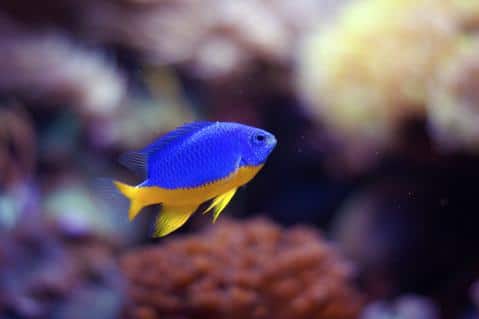
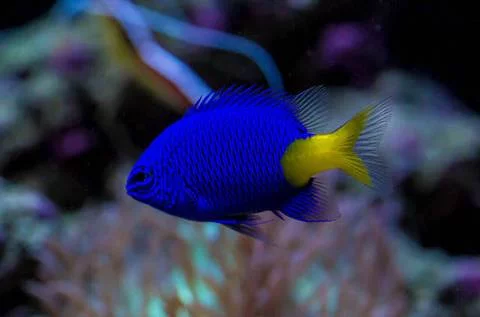
    This is the most aggressive of the four and has the most horror stories behind it. It’s on the list for two reasons. First, many of the stories I have seen have been involving timid saltwater fish or where the yellow tail was placed in first and established its territory. Both are incorrect ways on how to introduce a Damselfish. Second, the its yellow tail fin and color is often mistaken as a “Baby Dory” by children and with it’s hardiness can withstand a novice hobbyist or parent purchasing a “Dory” (AKA Blue Tang) for their children.

    I personally have recommend this marine fish to potential Blue Hippo Tang buyers along with a lot of education about the care and maintenance required to successfully keep saltwater fish. The suggestion was so common, that I actually was interviewed by the Huffington Post about my experience with this aquarium fish.

    Springer’s – The Coral Pest Slayer

    Max Size – 3″
    Minimum Tank Size – 30 gallons

    Springer's Damsel

    Of all the damsels on this list, the Springer’s Damsel offers pest control abilities. This Indo Pacific fish is well known for wiping out flatworms in a reef tank, their ability to wipe out pests have been compared with Wrasses like Six-line and Malnanrus Wrasses. The great thing about a Springer’s damsel is they are just as docile as Azures so you can get a small pest control fish without the attitude of a Six-line Wrasse in a small system! In a smaller system they cannot be beat for pest control. Keep in mind though as they mature they will look at your hands as threats to their territory and will likely attack your hands!

    So I have outlined the four best Damselfish. Now let’s break down the best practices for adding a Damsel to your tank.

    Best Practices for Adding Them

    I’m going to break this done into 3 parts:

    • Introduce them last
    • Have other semi-aggressive fish in the tank
    • Have lots of rockwork

    Damselfish are often going to be the most aggressive marine fish you will add to your tank. Because of this, you need to introduce them last into your tank where territory has already been established by your other tankmates. This will prevent your damsel from becoming the alpha fish in your tank.

    Semi-aggressive fish need to be in the tank in order to be successful in the tank. If you have timid tank mates like firefish, damsels should be avoided. Here is a quick list of semi-aggressive fish that suit a damsel’s nature:

    • Tangs
    • Dwarf Angelfish
    • Clownfish
    • Dottybacks
    • Basslets like the Royal Gramma
    • Semi-Aggressive wrasses like Malnarus. Caution with flasher wrasses
    • Bottom Dwelling Gobies

    Rockwork is the third factor on our list. You are likely going to have a lot of rockwork if you have a reef aquarium so you will likely be okay. This is mostly a consideration if you have a fish-only setup.

    When selecting damselfish for your aquarium, you pretty much wonโ€™t go wrong with these guys if youโ€™re looking for a community setup. Just make sure you have a tank that is suited for the species of fish you are getting, add them last, and pay attention to tankmates.

    Care Guide

    The damselfish on this list, with the exception of the Starcki Damsel, will grow to about 2-3 inches in length. The Starcki will be a bit bigger topping out at 4 inches. Give their more aggressive nature, it is best to keep them in a 30 gallon aquarium or larger with length being a major factor as damsels tend to claim an area of the tank as their own.

    Water temperature should remain at 73 to 81 Fahrenheit, which pH levels at 8.1 to 8.4 and salinity at 1.020 – 1.026. Open spaces are ideal for them as damsels are open swimmers. The rocks you keep in the tank should have plenty of hiding places to reduce aggression.

    Best Food For Them

    What makes damselfish great in saltwater tanks is that they tend to not be very picky eaters, but doesn’t mean that you should just feed the first fish food you find at the grocery store! Damselfish should be offered a complete diet. Let’s talk about the hierarchy of saltwater aquarium food.

    • Best – Fresh/Raw Food, Enriched Frozen Food
    • Better – Fried Dried + Nutrient Soaked Food
    • Good – Enriched Flake/Pellet Food

    The Best Frozen Food for Them – LRS Nano

    There are not many of us in this hobby who will go make fresh seafood for our marine fish. There are videos available on how to do this, but I’m going to assume it’s just not realistic for you to make your own. It’s a pretty smelly process! The next best option would be live black worms if you can somehow get it locally and grow a culture, but again your significant other may not be a fan of you keeping worms around the house or in the fridge ;-).

    So this brings us to frozen food. Without a doubt, LRS Nano frozen is the best frozen food you can get on the market. It is only available at your local fish store so if you are fortunate to have a store that carries it buy it today! The rest of the items are available online with Amazon (Affiliate Links Below) being the best way to get them quickly.

    The Best Freeze Died Food for Them – Fried Dried California Blackworms + Selcon

    California black worms have been praised by long-term reefers as a great source of nutrition and the most pickiest of fish will eat them. At least for the live black worms, but as I stated before live is tough to get and this is the next best thing you can get at a reasonable price. These freeze dried California black worms are ready to go for your Damselfish to eat 

    It is highly recommended to soak them in Selcon prior to feeding. The great thing about freeze dried food is they take vitamin soaks like Selcon very well so you know your fish are getting a vitamin rich diet!

    Selcon

    A vitamin enhancer that works great in freeze dried and frozen foods. A great choice to boost nutrition in brine shrimp, mysis, and blackworms

    Buy On Amazon Click For Best Price

    The Best Flake Food for Them – Cobalt Aquatics Marine Omni Flake Food

    While you can make a very good case for pellet food, in our experience damselfish have an easier time eating flake food given their smaller mouths. Pellets are a more appropriate food for their large cousins, Clownfish. What makes Cobalt Aquatics Marine Omni Flakes stand out is their food contains probiotics. The mix of the flake is also very comprehensive containing highly quality ingredients like squid, spirulina, plankton, krill, and mussel. The product is made in the USA and it’s highly palatable formula are great for finicky eaters and avoids the digestion/nutrition issue common with low quality flake foods.

    Contains Probiotics!
    Cobalt Aquatics Marine Omni Flakes

    One of the better flake foods available for marine fish today

    Buy On Amazon Buy On Chewy

    Are You Ready?

    Contrary to common belief that all Damsels are evil, we have listed several damselfish that are compatible in a reef community tank. As long as you add them last and pick the correct species of fish to mix them with, you should have a little blue marine fish that you can enjoy! Thanks for reading!


    ๐Ÿ“˜ Want to learn more? This article is part of our complete Saltwater Fish & Reef Guide โ€” your ultimate resource for marine fish, coral care, reef setup, and more.

  • Blue Hippo Tang Care: What “Finding Dory” Didn’t Tell You

    Blue Hippo Tang Care: What “Finding Dory” Didn’t Tell You

    Every time Finding Dory gets rediscovered on streaming, I see the same thing happen: demand for Blue Hippo Tangs spikes, and a wave of impulse purchases follows. I was working at a fish store when Finding Nemo came out and watched the same thing happen with clownfish โ€” and I’ve seen the aftermath in both cases. Blue Hippo Tangs are beautiful fish, but they’re also one of the most challenging tangs to keep long-term. They need large tanks (100 gallons minimum, and bigger is better), they’re highly susceptible to ich, and they don’t do well when stressed. Before you add one to your reef, here’s what you actually need to know.

    There are so many opportunities to teach children – biological, chemistry, trade skills from DIY projects, plumbing, software, etc. I’m going a little bit off topic in my excitement though – I promise you I will follow up in a later post about the benefits and activities you can work on with your family when you have an aquarium.  

    • What is The Dory Fish
    • Realistic Expectations Regarding the Dory Fish
    • Alternative similiar looking fish
    • Selection and Introduction
    • Nutritional requirements
    • Care requirements

    So What Is A Dory Fish?

    Scientific NameParacanthurus hepatus
    Common Name (Species)Blue Hippo Tang, Regal Tang, Blue Tang, Dory Fish, Pacific Blue Tang, Pacific Regal Blue Tang, Blue Tang Fish
    FamilyAcanthuridae
    OriginIndo Pacific
    DietOmnivore
    Care LevelModerate to Difficult
    ActivityActive
    LifespanUp to 20 years
    TempermentSemi-aggressive
    Tank LevelAll Areas
    Minimum Tank Size120 Gallons
    Temperature Range73 โ€“ 81 Degrees F
    pH Range8.1 โ€“ 8.4
    Filtration/Flow RateAll
    Water TypeSaltwater
    BreedingDifficult – tank bred available
    CompatibilitySemi-Aggressive tanks
    Ok, For Reef Tanks?Yes
    Ok, For Inverts?Mostly Yes

    The Dory Fish is known by various names including Blue Tang, Regal Tang, Blue Hippo Tang, Blue Surgeonfish, Indo-Pacific Blue Tang or by its scientific name Paracanthurus hepatus. These tangs are found in the Indo-Pacific from East Africa to Japan and swim at depths of 30 to 130 feet.  

    The terms Tang and Suregonfish actually refer to the extremely sharp spines on each side of the fish’s tail, which are said to resemble surgeon’s scalpels. These spines remain flat against the fish’s body and extend only when they are threatened or alarmed. 

    Finding Dory

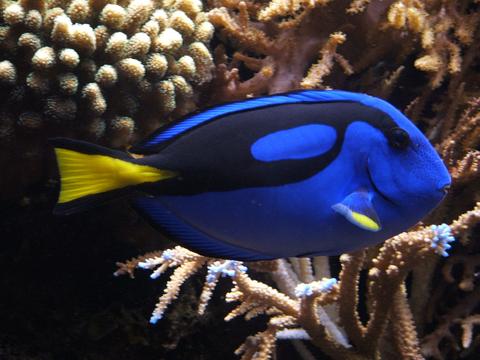
    They are recognized for their vibrant coloring, yellow tail, and bold black markings. They are capable of adjusting their color intensity of their hue from light blue to deep purple. These colors will often fad as the fish ages. 

    Adults average about 12 inches in length and can be found living alone, in pairs, or in schools of 10-12. They are known to live as long as 30 years in the wild – which is longer than any cat or dog! Blue Hippo Tang is a very active fish. It will easily swim miles a day in the ocean looking for food and may move seasonally. They feed on algae and use their sharp teeth to rip algae off rocks and corals. Their diet is not only important for the tang fish itself, but also for the health of reefs as they prevent algae from overgrowing and suffocating corals. 

    Realistic Expectations of a Dory Fish (Blue Hippo Tang) in an Aquarium

    So we have learned that a blue hippo tang can grow to a foot long, can outlive your cat or dog, and swim miles every day. What does that mean in a salwater aquarium? After all, you likely have seen a small 1 inch blue hippo tang for sale at your local fish or chain store. Please do not let this fool you. A small 1 inch blue hippo tang will quickly outgrow a small aquarium and needs a needs a proper tank tank size for a long and healthy life.

    A Blue Hippo Tang (paracanthurus hepatus) needs a proper tank with plenty of space to move around because as we all know Dory just loves to keep swimming! So what does proper tank mean? Well, I’m going to be very honest with you. Dory is a large fish and therefore requires a very large tank with lots of swimming room.  So this means the following:

    • Minimum tank length – 60 inches
    • Minimum tank volume – 120 gallons
    • Recommended tank length – 72 inches
    • Recommended tank volume – 180 gallons

    I know these recommendations are going to be outside of many people’s budgets or wants in the home, but I would rather be honest and realistic about the requirements about the blue hippo tang. I have seen far too many local store happily sell a 1″ blue hippo tang to a new hobbyist with a small tank without thinking twice about the care and requirements.  I’m all about responsible aquarium keeping and want to ensure you are successful for the long-term.

    Doryfish
    Even Petco is starting to get on-board with notices about Dory care

    If getting a large tank is something not feasible for you, but you still want a Dory you are still in good shape because there are fish are would make an excellent alternative.

    Alternatives

    The best example of a similar looking fish to a Dory or Blue Hippo Tang are yellow-tail damsels. I have been in the aquarium industry for many years and you would be surprised how often I would hear “Look – a baby Dory!” – from a child pointing at the yellow-tail damsel in a tank. In fact, my story was so interesting that I was actually interviewed by the Huffington Post about my experience with the Blue Hippo Tang and the yellow-tail damsel.  

    Yellow Tail Damsel

    Not only is the yellow-tail damsel much smaller than the blue tang, but it is also very hardy. In fact, many damsels from the Chysipetra genus would make good alternative with their vibrate blue and yellow colors. I actually wrote a blog post earlier about them that you can read about here

    There are also some fish among Nemo’s group of friends from the first movie that would make good additions to a saltwater aquarium – including the Gurgle the Royal Gamma and Nemo himself that I wrote about earlier in my Top 10 Saltwater Fish List. Even if you are going to get your own Dory, these fish make perfect tank-mates for them.

    Selection and Introduction

    If I have not scared you off in purchasing a regal blue tang, then I take it you know full well the requirements of keeping this fish so I will continue on. When selecting a blue hippo tang, it is best to purchase a tang at least 3 inches, not thin, actively feeding, and shows no physical signs of disease. The truth with the blue hippo tang is they are highly susceptible to parasites like ich and marine velvet as well as head and lateral line disease.

    I have seen far too many tank crashes where a blue hippo tang is added, they get ich, then the tank quickly crashes as the disease spreads.  Because of this, it is highly recommended that you quarantine a blue hippo tang before introducing them to your display tank. The quarantine period will help ensure that your fish is healthy before introducing them to your main tank. Outside of proper selection and quarantine, the main reason why these fish often get sick is lack of space (which I covered earlier) – and lack of nutrition.

    Nutritional Requirements

    The blue hippo tang is an omnivorous saltwater fish and providing them with a solid mix of meaty and green based foods is absolutely critical in keeping your tang healthy and happy. Seaweed probably the best green source you can feed your tang. One of the biggest secrets out there if you can get your tang to eat it is actually Nori sheets from your grocery store. They are way cheaper than the seaweed products that sellers like myself can get and you can pick them up locally.

    Please ensure that seaweed is the only ingredient and no salt is added. Romaine lettuce and spinach work as well, but there is some debate about this from purists in the reefing community that feel that greens of a marine origin are best. They also are not as nutritious as seaweed. 

    A feeding clip is incredible handy for feeding Tangs. These clips allow the blue hippo tang to naturally graze and keeps the seaweed from spreading around your tank. It may take some time for them to get used to eating this way, but once they get used to the clip it will be a feeding frenzy every time! Here is an example of a Palting from the ReefCentral forum feeding his tangs Nori from the grocery store: 

    For meaty foods, I would recommend LRS Foods. LRS foods are one of the finest saltwater fish foods in the world, used by top breeders in Europe and North America. You want to get top quality food for a blue tang as nutrition is such a critical aspect from keeping them disease food.

    Care Requirements

    A Blue Hippo Tang is a large saltwater fish that require quality water, filtration, and oxygenation. I would not recommend a hang-on back setup for tank with a Blue Hippo Tang. You absolutely have to go with a sump setup and quality protein skimmer and/or algae turf scrubber. The sump will provide you with additional tank volume, stability, and utility for added equipment like auto top offs and controllers which you will likely want to invest in order to ensure your aquarium is as stable as possible. Blue tangs live in environments with natural strong flow and lots or rocks so the flow and aquascaping of a mixed reef tank definitely suits them.

    They are generally compatible with most other aquarium fish, but be very careful with keeping more than one. Two blue tangs in a single reef tank will often show aggression except in very large tanks. They are also known for getting aggressive in smaller tanks, which is another reason I recommended a tank volume size of 180 gallons.

    FAQs

    Are They Aggressive?

    Blue Hippo Tangs are considered semi-aggressive, which means they will be territorial and harass more timid fish. You can curb aggression with a larger tank. They are also aggressive to other tangs of the same sub-species. If you are considering multiple tangs, consider a tang of a different sub-species too maximize your chances of success.

    What Do They Eat?

    Blue Hippo Tangs are omnivornes, but do better with greens in their diets. A diet with greens like nori, spirulina, and algae are healthy for a blue tang. They will also eat meaty foods like mysis shrimp, brine shrimp, and black worms. A good frozen food to try is LRS Foods Herbivore Frenzyย 

    Are They Hardy?

    They are not as hardy as other tangs can be. They are very susceptible to ich and other marine fish diseases. Tangs like the Scopas, Kole, and Tominiย tang are better candidates for first time tang keepers.

    We are here to help you!

    I have gone over what is a Dory fish, recommended tank size, introduction, nutrition, care, and even alternative fish. Following these guidelines and tips in this post will help you succeed in keeping your very own Dory (or “baby dory”). If you have any additional questions, leave me a comment below. Myself and the team here are Aquarium Store Depot are happy to help! See you next time :).