Last Updated: June 25, 2026
Thank you for visiting! By the way… any links on this page that lead to products on Amazon and other stores/partners are affiliate links Aquarium Store Depot earns a commission if you make a purchase.
African Dwarf Frogs are not fish. That distinction matters more than anything else when picking tank mates. They’re nearly blind, slow to find food, and completely defenseless, and most community fish will exploit every one of those weaknesses without you even realizing it. Picking the wrong tank mates doesn’t cause a dramatic fight. It causes your frogs to quietly starve over weeks while looking perfectly fine.
The animal that can’t find food fast enough will always lose. With African Dwarf Frogs, that’s always them.
Key Takeaways
- African Dwarf Frogs hunt by smell and vibration, they can’t compete with fast-moving fish at feeding time. Target feeding is not optional.
- The biggest mistake isn’t picking an aggressive fish. It’s picking a fast one, your frogs will slowly starve with a smile on their face.
- The safest tank mates are slow nano fish that eat at the surface while frogs are fed near the substrate. Separate feeding zones make community tanks work.
What People Get Wrong About ADF Tank Mates
The most common mistake I see? People pick “peaceful” fish and consider the job done. Peaceful means non-aggressive, it does not mean compatible. A Neon Tetra won’t bite your frog. But it will absolutely eat every bloodworm before your frog figures out where dinner is. African Dwarf Frogs locate food by smell and water vibration. They are slow hunters in a tank full of fast ones. Peaceful fish will outcompete them at every feeding, and the frog won’t complain until it’s too late. I’ve watched this play out dozens of times at the store level: keepers bring in a frog they thought was “just getting old” when the real issue was six months of losing every meal to a neon tetra.
The second big misconception: “they eat fish flakes.” They don’t, not reliably. ADFs need meaty sinking foods, bloodworms, brine shrimp, frog pellets. Flake food floats. Your frogs will miss it every time. Meanwhile every fish in the tank just got an easy meal.
The Biggest Mistake ADF Keepers Make
Keeping African Dwarf Frogs in a community tank without target feeding is the fastest way to lose them slowly. The frogs look active. They swim to the surface, they do their little wiggle dance, they seem fine. But if fast feeders are in the tank, the frogs aren’t actually getting food, they’re just not getting enough of it yet. I’ve seen frogs survive for months like this before owners noticed something was wrong, by which point the frogs were too weak to recover. The warning signs (lethargy, thinning body, sitting at the bottom) show up late. Don’t wait for them.
African Dwarf Frog: What You’re Actually Working With
African Dwarf Frogs (Hymenochirus boettgeri) grow to about 1.5–2 inches (4–5 cm) fully grown. They’re fully aquatic (they never leave the water) but they do surface to breathe air. They need to reach the surface easily, so avoid tanks taller than 12 inches (30 cm) without structure to climb. Water temperature should hold at 72–78°F (22–26°C). They’re sensitive to swings, a cheap heater that cycles up and down is a problem for them long-term.
Diet is meaty and sinking: frozen bloodworms, frozen brine shrimp, dedicated frog pellets. They eat 2–3 times per week, not daily. And they eat slowly, by feel. Any tankmate that’s faster than them at the food (which is almost every fish) needs to be managed carefully.
Size And Space Requirements
Two frogs can live in a 10-gallon (38 L) tank. Add community fish and you need at least a 20-gallon (75 L) tank: not because of the frogs, but because more fish need more water volume and filtration to stay stable. Don’t keep tank mates larger than 3 inches (7.5 cm). Anything bigger starts looking at a 1.5-inch frog as a snack. And avoid tall, deep tanks, ADFs need short swimming distances to breathe.
Water Conditions And Environment
Target temperature: 72–78°F (22–26°C). pH: 6.5–7.5. Low to moderate flow, strong current exhausts them. Dense planting matters: ADFs spend a lot of time hiding and resting on leaves near the surface. Without cover, they stress. And stressed frogs stop eating, which compounds the food competition problem. A planted 20-gallon (75 L) with a sponge filter and slow-moving surface fish is the sweet spot.
The Reality of Keeping ADFs in a Community Tank
Feeding time is where this setup succeeds or fails. In practice, what works: turn off the filter flow briefly, drop a small portion of frozen bloodworms near the frog using tweezers or a turkey baster, then feed the fish on the opposite end of the tank. Give the frogs 5 minutes to find their food before the fish get near them. It sounds like more work than it is, once you’re in the habit, it takes 90 seconds. But if you skip it, your frogs are hungry.
The other reality nobody talks about: ADFs are escape artists. Any gap in the lid is a gap they will find. I’ve known people who found their frog dried out on the floor the morning after adding one to a tank with an open canopy. Tight-fitting lid. Non-negotiable. I’ve told this to customers more times than I can count, ADFs and mesh lids do not mix.
Beyond feeding, ADFs are genuinely enjoyable to watch in a peaceful community. They’re odd in a great way, they do a thing called “singing” (males vibrate to attract females), they float spread-eagle at the surface (which looks alarming but is normal), and they have this clumsy, endearing way of moving through the water. The right community tank lets you appreciate all of that without the stress of watching them get bullied or starve.
The 21 Best African Dwarf Frog Tank Mates
Every species on this list meets three criteria: similar temperature range to ADFs (72–78°F / 22–26°C), peaceful and non-nippy, and either a mid-to-surface feeder or slow enough not to dominate the frog at mealtime. I’ve also flagged the one species on this list (White Cloud Minnow) that deserves a temperature caution before you buy.
- Scientific Name
- Adult Size
- Water Temperature Range
- Minimum Tank Size
- Care Level
- Diet
- Origin
- Swimming Level
Expert Take
After 25+ years in the hobby and time managing aquarium stores, I’ve seen more ADF community tanks fail slowly than almost any other setup, and the cause is almost always the same. African Dwarf Frogs are one of the most misunderstood community tank residents in the hobby. People treat them like they’re just small, weird-looking fish. They are not. They’re amphibians with fundamentally different sensory systems, feeding mechanics, and survival instincts. I’ve watched ADFs in community tanks slowly waste away over months while their owners thought everything was fine, because the frogs kept swimming to the surface on schedule and didn’t show obvious stress signals. The problem was that no food was actually reaching them. The fish got it first, every time. Target feeding isn’t an advanced technique. It’s basic responsible husbandry for this species in any mixed setup. — Mark Valderrama, AquariumStoreDepot
Quick-Reference Comparison Table
| Species | Adult Size | Min Tank | Ease | Compatibility |
|---|---|---|---|---|
| Betta Fish | 3 inches, | 5 gallons | 9/10 | High |
| Corydoras Catfish | 2 to 3 inches, | 10 gallons | 7/10 | High |
| Kuhli Loach | 4. 5 inches | 20 gallons | 9/10 | High |
| Neon Tetras | 1.5 inches | 10 gallons | 7/10 | High |
| Cardinal Tetra | 1.5 inches | 20 gallons | 7/10 | High |
| Rummy Nose Tetra | 1.5 inches | 10 gallons | 9/10 | High |
| Cherry Barb | 2 inches | 25 gallons | 9/10 | High |
| White Cloud Minnow | 1 inch | 10 gallons | 9/10 | High |
| Celestial Pearl Danio | 1 inch | 10 gallons | 7/10 | High |
| Harlequin Rasbora | 2 inches | 10 gallons | 9/10 | High |
| Dwarf Rainbowfish (Praecox) | 2.5 to 3 inches | 20 gallons | 9/10 | High |
| Chili Rasbora | 1 inch | 10 gallons | 7/10 | High |
| Otocinclus | 1.5 to 2 inches | 20 gallons | 7/10 | High |
| Zebra Danios | 1 inch | 10 gallons | 9/10 | High |
| Honey Gourami | 2 inches | 10 gallons | 9/10 | High |
| Fancy Guppy | 2 inches | 10 gallons | 9/10 | High |
| Platies | 2-3 inches | 10 gallons | 9/10 | High |
| Endler’s Livebearer | 1.5 inches | 10 gallons | 9/10 | High |
| Nerite Snails | 0.5 to 1 inch | 5 gallons | 9/10 | High |
| Cherry Shrimp | 1 to 1.25 inches | 5 gallons | 9/10 | High |
| Amano Shrimp | 2 inches | 5 gallons | 9/10 | High |
1. Betta Fish
Ease: 9/10: One of the safest choices for this tank setup.

Betta Fish
Use Coupon Code ASDFISH at Checkout
Betta Fish are one of the most beautiful varieties of freshwater fish available in the hobby. Easy to care for with plenty of varieties!
- Scientific Name: Corydoras spp.
- Adult Size: 3 inches,
- Water Temperature: 75°F to 80°F
- Minimum tank size: 5 gallons
- Care Level: Easy
- Diet. Carnivore
- Origin. Thailand
- Swimming Level. Top to middle
We start off the list with everyone’s favorite. While looking at color patterns and personalities, you may think they are one of the best tank mates for your fish, but that is not always the case. Males are at a higher risk of fighting, with Plakat breeds being the most risky. While it is possible to use them together, they are one of the riskiest on this list. However, they are extremely popular so I felt it was good to include them on the list. You will have your best luck with a female non plakat breed.
2. Corydoras Catfish
Ease: 7/10: Good choice with a few conditions to watch.
- Scientific Name: Corydoras spp.
- Adult Size: 2 to 3 inches,
- Water Temperature: 72°F to 79°F (22 to 26°C)
- Minimum tank size: 10 gallons
- Care Level: Moderate
- Diet. Omnivore
- Origin. South America
- Swimming Level. Bottom
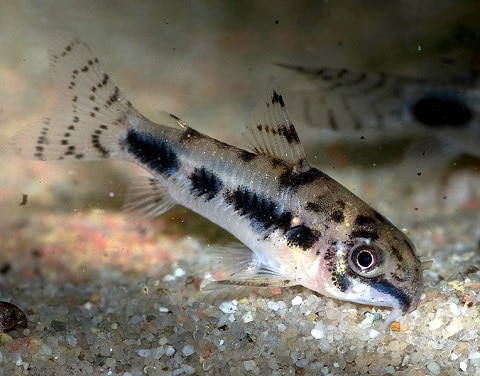
Corydoras Catfish are good companions for African Dwarf Frogs, since they both demand similar levels of care and measure around the same size. These catfish have slender figures that come in either black or brown colors with a maximum length up to 2.5 inches. Their playful attitude makes them excellent tank mates for dwarf frogs.
It is essential to provide plenty of places where they can hide away when needed. These fish enjoy taking refuge by burrowing into the substrate as well as finding snug spots elsewhere in their habitat.
3. Kuhli Loach
Ease: 9/10: One of the safest choices for this tank setup.
Kuhli Loach
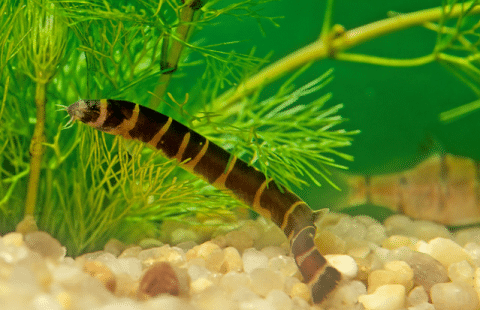
Kuhli Loaches are hardy bottom-dwelling fish. Nocturnal in nature. Gets along with many fish and tolerate of coldwater environments
- Scientific Name: Pangio Kuhlii
- Adult Size: 4. 5 inches
- Water Temperature: 73 to 86° F
- Minimum tank size: 20 gallons
- Care Level: Easy
- Diet. Omnivore
- Origin. Southeast Asia
- Swimming Level. Bottom
African Dwarf Frogs can benefit from having a Kuhli Loach as a tankmate. These fish have an eel-like appearance with their slender body and black stripe, growing up to 5 inches in size. They are peaceful creatures that prefer living in groups, which makes them great for community tanks. They are more active at night. They will hide among the plants or burrow deep down into substrate bedding during the day.
4. Neon Tetras
Ease: 7/10: Good choice with a few conditions to watch.
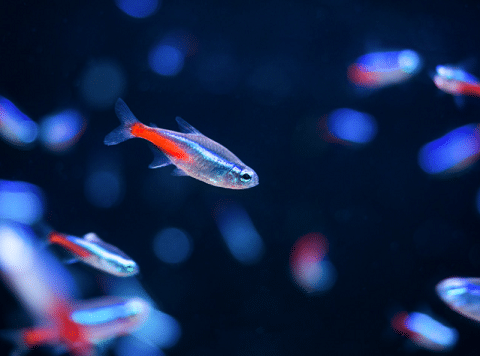
Neon Tetra
Use Promo Code ASDFLIPPROMO
One of the most popular freshwater community schooling fish available in the aquarium trade. Great neon blue colors!
- Scientific Name: Paracheirodon innesi
- Adult Size: 1.5 inches
- Water Temperature: 70 ° to 79 °F
- Minimum tank size: 10 gallons
- Care Level: Moderate
- Diet. Omnivore
- Origin. South America
- Swimming Level. Top to Middle
The Neon Tetra is a small, eye-catching fish that is kept in harmony with African Dwarf Frogs within the same tank. These species are renowned for their vibrant red and blue stripes, which bring vividness to any aquarium setup. In order to get the most out of these delightful creatures, it’s recommended they should always travel in packs of six or more – this makes them schooling fish naturally gravitating towards each other’s company.
In terms of temperature preferences and pH needs, these little beauties require 70°F. 81°F water temperature range along with 6.0. 7.0 on your pH scale. Being similar requirements between african dwarf frogs and neon tetras means coexistence together has proved easy, making for a great dwarf frog tank mate.
5. Cardinal Tetra
Ease: 7/10: Good choice with a few conditions to watch.
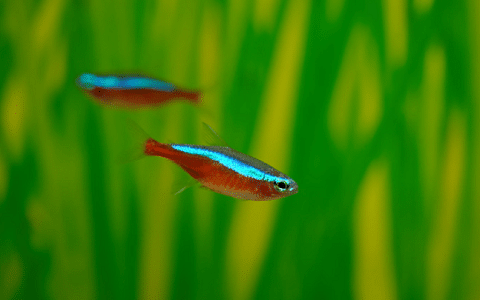
Cardinal Tetra
A very popular schooling fish. Looks like the Neon Tetra, but with longer blue and red stripes. Grows larger than a neon tetra as well
- Scientific Name: Paracheirodon axelrodi
- Adult Size: 1.5 inches
- Water Temperature: 73°F to 81°F
- Minimum tank size: 20 gallons
- Care Level: Moderate
- Diet. Omnivore
- Origin. South America
- Swimming Level. Mid to Top
Cardinal Tetras make for a cheerful addition to any community tank. These small, peaceful fish have striking coloration with red stripes that run along their bodies and are contrasted by vibrant blue streaks above them. Cardinal Tetras do best in temperatures between 73°F and 81°F. They are social creatures, too, so it is recommended to keep at least six of the same species together in one aquarium if you want an active atmosphere. African dwarfs frogs is kept successfully alongside these schooling fish since they share similar needs, such as neutral to acidic pH levels ranging from 6.0-7.0.
Hard Rule: If you cannot target feed your ADFs separately from the rest of the tank at every feeding, do not keep them in a community setup. A frog that isn’t eating isn’t just hungry, it’s dying on a slow schedule. That’s the only rule that matters.
6. Rummy Nose Tetra
Ease: 9/10: One of the safest choices for this tank setup.
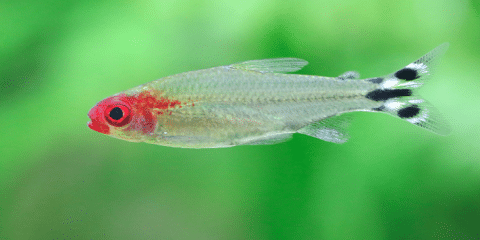
Rummy Nose Tetra
An easy to care for Tetra fish that loves to school. Very peaceful fish that are great for beginners
- Scientific Name: Hemigrammus bleheri
- Adult Size: 1.5 inches
- Water Temperature: 75°F to 85°F
- Minimum tank size: 10 gallons
- Care Level: Easy
- Diet. Omnivore
- Origin. South America
- Swimming Level. Mid to Top
The Rummy Nose Tetra is a great fit for African Dwarf Frog tanks due to their peaceful demeanor and similar care requirements. These fish are distinctive thanks to the striking black and white stripes that form on its tail, as well as its bright red nose. When kept in schools with at least six members, these creatures will thrive within an environment that maintains temperatures between 75°F-85°F paired alongside a pH range 6.4-7.0., making them perfectly suitable tank mates for African Dwarfs! Their interesting colors add something special to any frog tank setup while taking little effort from you. An ideal companion species all around!
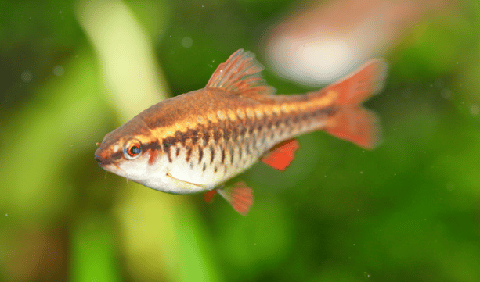
7. Cherry Barb
Ease: 9/10: One of the safest choices for this tank setup.
- Scientific Name: Puntius titteya
- Adult Size: 2 inches
- Water Temperature: 73°F to 81°F
- Minimum tank size: 25 gallons
- Care Level: Easy
- Diet. Omnivore
- Origin. Sri Lanka
- Swimming Level. All
Cherry Barbs are schooling fish that can coexist peacefully with African Dwarf Frogs. This species has a striking red coloring and is docile, making it an ideal tankmate for your dwarf frogs. When it comes to temperature range and pH level, they should have water between 73°F to 81°F and 6.0-7.0, respectively. The more colorful creatures there are in the group (at least six), the better! All things considered, the Cherry Barb, with their captivating features, plus their peaceful nature make them great companion animals for African Dwarves.
8. White Cloud Minnow
Ease: 9/10: One of the safest choices for this tank setup.
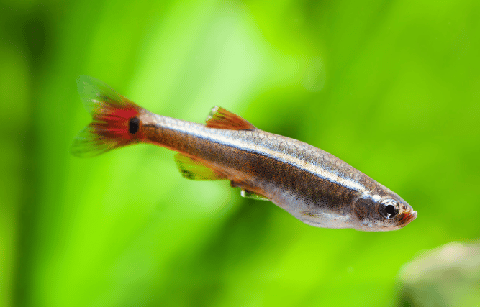
White Cloud Mountain Minnow
A very peaceful fish that does well in coldwater fish. Other minnow varieties are also available
- Scientific Name: Tanichthys albonubes
- Adult Size: 1 inch
- Water Temperature: 64°F to 72°F
- Minimum tank size: 10 gallons
- Care Level: Easy
- Diet. Omnivore
- Origin. China
- Swimming Level. Mid to Top
White Cloud Minnows are a hardy species that can live in harmony with African Dwarf Frogs when kept together in the same tank. This small fish has an elegant silver body, decorated by a thin black line and radiant red fins. For them to thrive optimally, water temperature should be between 64°F and 72°F while pH levels ranging from 6.0 to 8.0 is recommended for optimal health of these aquatic dwellers.
Given their schooling nature, at least six individuals must coexist simultaneously so they can feel relaxed around each other. Thanks also to its peaceful disposition, it will get along with your drawf frog just fine.
9. Celestial Pearl Danio
Ease: 7/10: Good choice with a few conditions to watch.
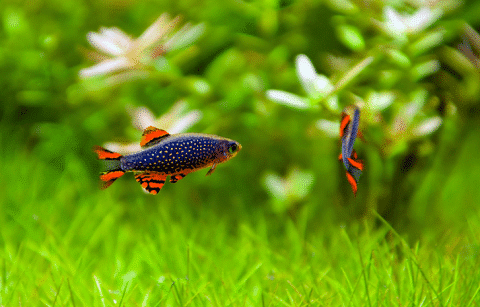
Celestial Pearl Danio
A great-looking danio fish. Males are more colorful than females. A midway dwelling fish
- Scientific Name: Danio margaritatus
- Adult Size: 1 inch
- Water Temperature: 72°F to 76°F
- Minimum tank size: 10 gallons
- Care Level: Moderate
- Diet. Omnivore
- Origin. South East Asia
- Swimming Level. Midwater
The Celestial Pearl Danio, also known as Galaxy Rasbora, is an attractive fish that can peacefully coexist with African Dwarf Frogs if given the right care. They have a blue body speckled with white spots resembling stars and require a temperature of 72°F to 76°F along with a pH range of 6.5-7.5 for ideal living conditions. These should be kept in groups at least six since they are schooling fish. It is a wonderful, colorful fish that compliments the African dwarf frog well.
10. Harlequin Rasbora
Ease: 9/10: One of the safest choices for this tank setup.
- Scientific Name: Trigonostigma heteromorpha
- Adult Size: 2 inches
- Water Temperature: 71°F to 80°F
- Minimum tank size: 10 gallons
- Care Level: Easy
- Diet. Omnivore
- Origin. South East Asia
- Swimming Level. Midwater
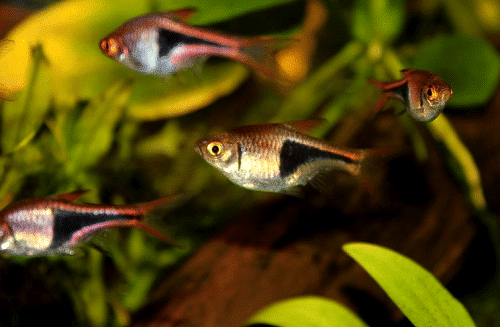
Harlequin Rasboras are schooling fish with silver bodies featuring a distinct triangular black patch. It is suggested to keep them in groups of six or more and they prefer water temperatures between 71°F – 80°F plus pH ranges from 6.0-7.0, making them an ideal addition to any African dwarf frog tank. Their peaceful nature makes it possible for the community tank setup as well! With its unique coloring, these vibrant creatures will make quite the splash in your frog tank habitat.
11. Dwarf Rainbowfish (Praecox)
Ease: 9/10: One of the safest choices for this tank setup.
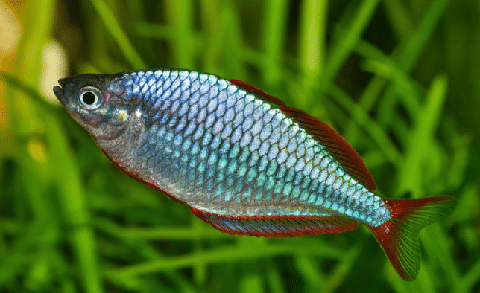
Dwarf Neon Rainbowfish
A colorful rainbowfish that only grows up to 3 inches in length. Best in groups of 8 to 10
- Scientific Name: Melanotaenia praecox
- Adult Size: 2.5 to 3 inches
- Water Temperature: 72°F to 82°F
- Minimum tank size: 20 gallons
- Care Level: Easy
- Diet. Omnivore
- Origin. Indonesia
- Swimming Level. Top to Mid
For a vibrant and compatible tankmate for your African Dwarf Frogs, the Dwarf Rainbowfish is an ideal choice. This colorful fish species can live harmoniously in well-planted tanks with its non-aggressive nature. These rainbowfish have bright blue bodies that are set off by orange or red fins. They shimmer like rainbows! To keep this species happy, you should provide water temperatures between 72°F – 82°F and maintain pH levels at 7.0 to 8.0. They need to in a group of at least six, which will pump up the tank requirements higher to at least 20 gallons to house them and frogs.
12. Chili Rasbora
Ease: 7/10: Good choice with a few conditions to watch.
Chili Rasboras
Use Promo Code ASDFLIPPROMO
A great nano schooling fish. Males display brighter colors. Best in groups of 6 or more
- Scientific Name: Boraras brigittae
- Adult Size: 1 inch
- Water Temperature: 70°F to 82°F
- Minimum tank size: 10 gallons
- Care Level: Moderate
- Diet. Carnivorous
- Origin. Southeast Asia
- Swimming Level. Midwater
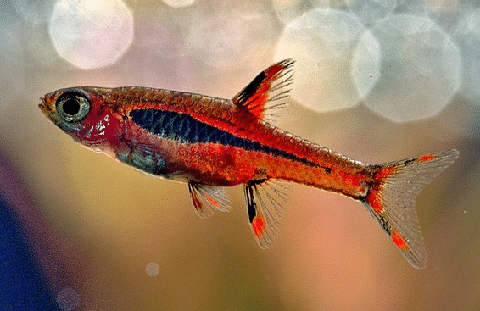
Chili Rasboras are tiny, peaceful fish with a bright red body featuring a black stripe down the side. The ideal environment for them is water between 70°F and 82°F. Recommended pH levels are from 6.0 to 7.0, though they have been known to tolerate lower pH levels. They and should be kept in groups of at least six so they exhibit their schooling behavior. They are peaceful fish that shouldn’t have issues with african dwarf frog and most other fish.
13. Otocinclus
Ease: 7/10: Good choice with a few conditions to watch.

- Scientific Name: Otocinclus spp.
- Adult Size: 1.5 to 2 inches
- Water Temperature: 74°F to 79°F
- Minimum tank size: 20 gallons
- Care Level: Moderate
- Diet. Herbivore
- Origin. Southeast Asia
- Swimming Level. Bottom to Middle
Otocinclus, a small and non-aggressive catfish species that can range from black to brown coloration with an average size of 2 inches in length. They are a great tankmate for your African dwarf frogs. These fish are good at scavenging uneaten food items and will also do an excellent job at eating algae. Their unique look adds even more visual interest to your community aquarium. Not competing with them over food resources, Otocinclus forms a safe relationship, enabling both species to thrive together peacefully. Just make sure you do supplemental feedings with food like algae wafers if you run out of algae in the tank!
14. Zebra Danios
Ease: 9/10: One of the safest choices for this tank setup.
- Scientific Name: Danio rerio
- Adult Size: 1 inch
- Water Temperature: 72°F to 81°F
- Minimum tank size: 10 gallons
- Care Level: Easy
- Diet. Omnivore
- Origin. India
- Swimming Level. All
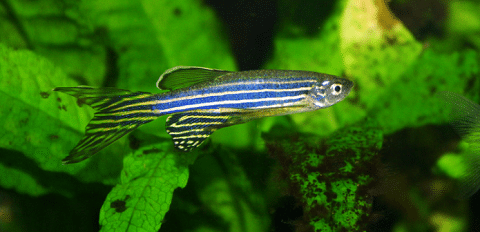
Zebra Danios are ideal for keeping in a community tank with African Dwarf Frogs. Peaceful and active, these fish have distinctive silver-blue stripes running along their bodies to make an interesting addition to the aquarium environment. With optimal water temperatures of 72°F – 81°F and pH levels of 6.5, 7.2, they should be kept in groups of six or more as schooling fish will bring out the playful side that makes them such great companions for your dwarf frog setup! Always feed these fish first before your frog as their fast nature will easily leave your frog short of food if you don’t!
15. Honey Gourami
Ease: 9/10: One of the safest choices for this tank setup.
Honey Gourami
One of the more peaceful Gourami fish available in the hobby. Has a unique yellow coloration and only grows up to 2 inches in length
- Scientific Name: Trichogaster chuna
- Adult Size: 2 inches
- Water Temperature: 74°F to 82°F
- Minimum tank size: 10 gallons
- Care Level: Easy
- Diet. Omnivore
- Origin. India
- Swimming Level. Middle to top
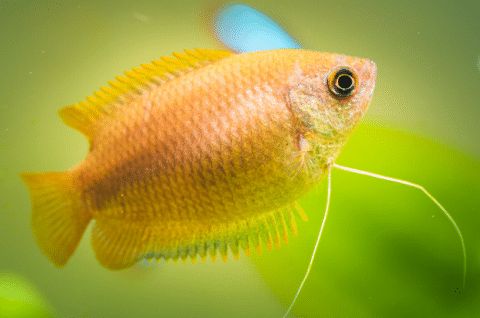
Honey Gourami is a peaceful, serene fish that could coexist with African Dwarf Frogs in an aquarium filled with plants. Their bodies have a golden hue and feature stripes running along the side from head to tail. This species of tropical fish prefers water temperatures between 74°F-82°F combined with pH levels ranging from 6.0 to 7.5.
As peaceful as they may be, Honey Gouramis tend to prefer places where they can find refuge. Thus, it’s essential you give them adequate hiding spots within your tank by having enough decorations and greenery inside their environment so these shy creatures feel more at ease around their new African Dwarf Frog tank mates.
16. Fancy Guppy
Ease: 9/10: One of the safest choices for this tank setup.

- Scientific Name: Poecilia reticulata
- Adult Size: 2 inches
- Water Temperature: 72°F to 82°F
- Minimum tank size: 10 gallons
- Care Level: Easy
- Diet. Omnivore
- Origin. South America
- Swimming Level. Middle to top
Fancy Guppies, a breed of brilliantly colored fish, is kept alongside African Dwarf Frogs in an aquarium. With males displaying more vivid colors than females, these live bearers require water temperatures between 72-82°F and pH levels from 6.8 to 7.8 for optimal health. Making them ideal tank mates for your dwarf frogs due to their peaceful nature!
As a word of caution with any livebearer, they reproduce rapidly. Actively monitor the number of Fancy Guppy individuals you have so that no overcrowding takes place within your aquascape ecosystem!
17. Platies
Ease: 9/10: One of the safest choices for this tank setup.
- Scientific Name: Xiphophorus maculatus
- Adult Size: 2-3 inches
- Water Temperature: 70°F to 82°F
- Minimum tank size: 10 gallons
- Care Level: Easy
- Diet. Omnivore
- Origin. South America
- Swimming Level. Middle to top
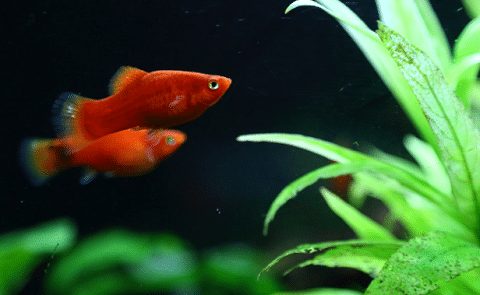
Platies make an attractive and colorful addition to any community tank. Their non-aggressive nature makes them perfect companions for African Dwarf Frogs, but due to their live-bearing status there is a need for regular monitoring in order not to overcrowd the aquarium with fry. The ideal environment should maintain water temperatures between 70°F – 82°F with a pH range of 7.0 to 8.5.
18. Endler’s Livebearer
Ease: 9/10: One of the safest choices for this tank setup.
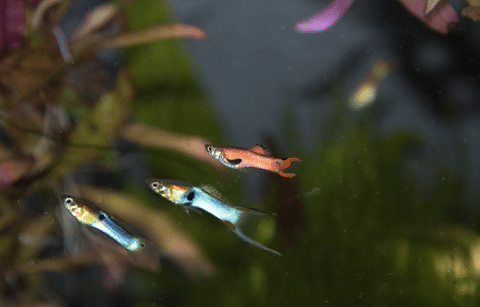
- Scientific Name: Poecilia wingei
- Adult Size: 1.5 inches
- Water Temperature: 64°F to 82°F
- Minimum tank size: 10 gallons
- Care Level: Easy
- Diet. Omnivore
- Origin. South America
- Swimming Level. Middle to top
Endler’s Livebearer, a vivid-colored fish that is peaceful and non-aggressive in nature, require a larger tank to prevent overpopulation when living with African Dwarf Frogs. These amazing creatures have various fluorescent hues, which makes them quite outstanding within the aquarium. Endlers prefer temperatures between 64°F and 82°F as well as a pH range of 5.5 to 8.0. These wide parameter tolerates make it feasible for these stunning creatures to be compatible cohabitants alongside your dwarf frogs!
Though capable of multiplying quickly due to their live-bearing characteristic, proper population management would keep overcrowding from occurring where they are housed.
19. Nerite Snails
Ease: 9/10: One of the safest choices for this tank setup.
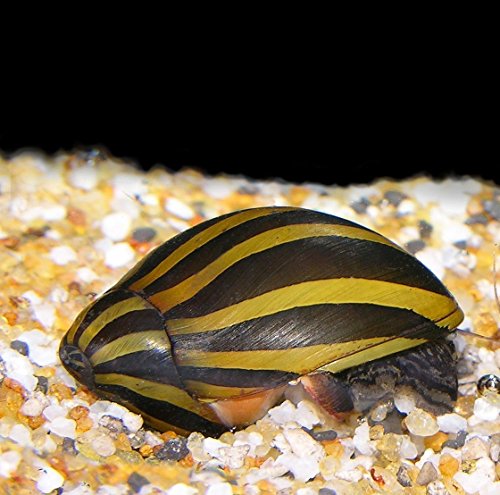
Zebra Nerite
Nerite snails are one of the best algae eating snails you can buy. Plant safe and do not reproduce in fresh water!
- Scientific Name: Neritina spp
- Adult Size: 0.5 to 1 inch
- Water Temperature: 65°F to 85°F
- Minimum tank size: 5 gallons
- Care Level: Easy
- Diet. Herbivore
- Origin. Atlantic
- Swimming Level. All
Nerite snails, with their diverse range of colors and patterns, are an interesting addition to any community tank. Ideal conditions for these peaceful non-aggressive creatures include a water temperature between 65°F – 85°F and pH 7.0. 8.5. Their wide range makes them suitable companions alongside your African Dwarf Frogs who do not compete over food resources in the same habitat. Unfortunately, they may lay eggs around the aquarium. While they won’t hatch because babies need brackish water to survive, it may be become an eyesore if they are purchased from the pet store in large numbers.
20. Cherry Shrimp
Ease: 9/10: One of the safest choices for this tank setup.
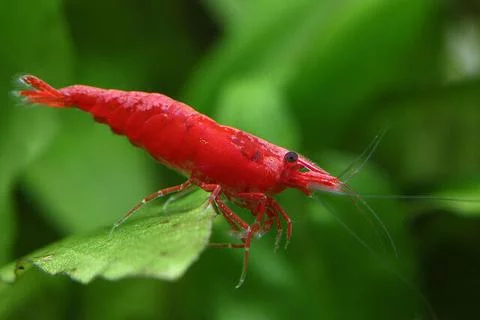
Cherry Shrimp
Great red color and very hardy. Cherry shrimp are the best beginner shrimp for shrimp tanks
- Scientific Name: Neocaridina davidi
- Adult Size: 1 to 1.25 inches
- Water Temperature: 65°F to 73°F
- Minimum tank size: 5 gallons
- Care Level: Easy
- Diet. Omnivore
- Origin. Taiwan
- Swimming Level. All
The Cherry Shrimp is a vivid, small-sized crustacean that is placed in the same tank as African Dwarf Frogs but could also potentially become their prey. This appealing shrimp requires waters with temperatures between 65°F to 73°F and pH levels of 6.0 up to 7.5 for it to thrive. They are an amiable creature and make great companions when cohabitating with dwarf frogs. They need a lot plants and your frogs need to be well fed for them not to be seen as snacks to your frog. The next shrimp will be a better option.
21. Amano Shrimp
Ease: 9/10: One of the safest choices for this tank setup.

Amano Shrimp
Best For Planted Tanks!
When it comes to keeping a healthy planted aquarium, Amano Shrimp are the best. These hard-working crustaceans will dutifully wipe your plants and rockwork clean of algae. Their appetite for different types of algae that can’t be matched by other shrimp breeds!
- Scientific Name: Caridina multidetata
- Adult Size: 2 inches
- Water Temperature: 65°F to 78°F
- Minimum tank size: 5 gallons
- Care Level: Easy
- Diet. Omnivore
- Origin. Japan
- Swimming Level. All
Amano shrimp are great candidates for tankmates to African Dwarf Frogs since they will not be eaten. These shrimps have a grey body with dark stripes across them and can survive comfortably in water temperatures between 70°F-80°F as well as pH of 6.0-7.0. These peaceful creatures help keep tanks clean by eating algae and other debris from the bottom substrate, making them perfect companions for your dwarf frogs! Bamboo shrimp also work great too.
Tank Mates To Avoid
This list is more important than the recommended list. Get this wrong and you don’t just have compatibility issues, you have a frog that’s being harassed, bitten, or slowly starved.
- Tiger Barbs, Serpae Tetras, Black Skirt Tetras: fin nippers. ADFs have flowing limbs that wave in the current. These fish will bite them constantly. The frogs can’t defend themselves and can’t escape.
- Cichlids (any species): even “peaceful” cichlids like keyhole or German Blue Rams are too territorial for ADFs. Rams may not bite the frog, but they will stake out territory and stress it into not eating.
- Bettas (male): widely recommended online, frequently a disaster in practice. Male bettas often attack the frogs’ waving legs, mistaking them for rival fish. I’ve heard from enough hobbyists who tried this to know it’s a significant risk. The aquarium internet loves this pairing. The frogs often don’t.
- African Clawed Frogs: look nearly identical to ADFs but are predatory and can grow to 5 inches (13 cm). They will eat your African Dwarf Frogs. This is one of the most common misidentification problems in the hobby. Before you buy a “dwarf frog,” check the feet, ADFs have webbed feet on all four limbs. Clawed frogs have claws on the back feet.
- Large or fast-moving fish at high stocking density: not aggressive, but they create constant motion that stresses slow-moving ADFs and dominate feeding time completely. Even if nobody gets hurt, the frogs lose.
- Goldfish: totally wrong water temperature. Goldfish need 65–72°F (18–22°C). ADFs need 72–78°F (22–26°C). You cannot meet both requirements in the same tank.
- Oscar, Jack Dempsey, or any large predatory fish: a 1.5-inch frog is a snack. Full stop.
Building a Community Tank That Actually Works
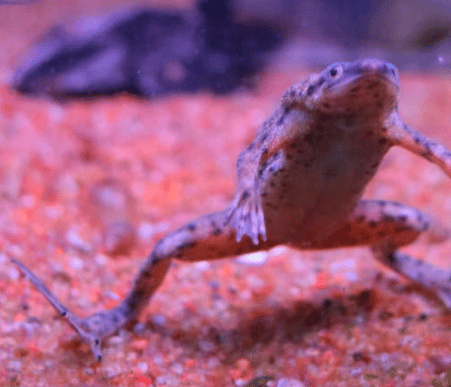
A successful ADF community tank is built around one principle: reduce competition for food. Everything else (tank size, stocking, decoration) supports that goal.
- Target feed every time. Use tweezers or a turkey baster to place sinking food directly in front of your frogs. Feed the fish on the opposite end simultaneously. This is not optional, it’s the difference between frogs that thrive and frogs that waste away.
- Layer your stocking vertically. ADFs are mid-to-bottom. Pick surface feeders like guppies or endlers for the top, mid-water fish like rasboras for the middle, and maybe a small corydoras crew for the bottom. Everyone has a zone; nobody fights over the same space.
- Dense planting is mandatory. Java fern, anubias, and floating plants give ADFs resting spots near the surface and cover when they feel exposed. A bare tank stresses them. Stressed frogs stop eating. You already know where that ends.
- Keep the flow low. ADFs are not strong swimmers. A powerhead churning the water makes their life hard. A sponge filter or a canister with a spray bar pointed at the glass is ideal.
- Check the lid. Every time. They will find the gap.
Frequently Asked Questions
Do African dwarf frogs need a companion?
African Dwarf Frogs require companionship to be healthy and happy. These social amphibians should live in a group of two or more. They will do best at minimum a 10 gallon tank with 20 gallons being recommended. It is best if they cohabit with peaceful, slow swimming fish species too.
Can African dwarf frogs live in a fish tank?
African dwarf frogs make great companions and is kept with other species. They need a minimum of 10 gallons in order to live comfortably, though if you want multiple frogs or are adding fish into the mix then a 20-gallon tank is a better choice.
Will African dwarf frogs eat guppies?
African dwarf frogs are an excellent option if you need to curb the number of guppies in your tank since they can certainly consume any fry that is born in the tank. Kept this in mind if you actually want to breed guppies.
What size should tank mates of African Dwarf Frogs be?
Tankmates for African Dwarf Frogs should not be larger than 3 inches in order to protect them from potential harm. These frogs are timid and non-aggressive, so it is essential that their tankmates also exhibit these traits, as they could otherwise cause injury or distress to the dwarf frogs.
How often should I feed beef heart to my African Dwarf Frogs?
Once a month, African Dwarf Frogs should be given beef heart as their food source. These small amphibians will benefit from this treat.
Should You Keep African Dwarf Frogs in a Community Tank?
Good Fit If:
- You’re willing to target feed every session, this is non-negotiable and takes about 90 seconds
- You keep or plan to keep slow nano fish that feed at the surface (guppies, chili rasboras, ember tetras)
- Your tank is heavily planted with dense mid-level and surface cover
- You have a stable heater that holds 72–78°F (22–26°C) without swinging
- You enjoy watching unique animal behavior, ADFs are genuinely interesting to observe
Avoid If:
- You keep fast, aggressive feeders, the frogs will quietly starve regardless of how peaceful the fish are
- You keep tiger barbs, serpae tetras, nippy species of any kind, they will injure the frogs
- You can’t commit to target feeding every session, not sometimes, every time
- You want a low-maintenance community tank where everyone feeds from the same place, that setup doesn’t work for ADFs
- You’re planning to add a betta male, the risk of aggression toward the frogs is high enough that I’d skip it
Mark’s Pick: Chili rasboras or ember tetras as tank mates, they’re small, slow relative to larger schooling fish, feed at the surface, and leave the bottom zone clear for the frogs. Pair with a small group of pygmy corydoras or kuhli loaches and you have a genuinely harmonious community. The key is that nobody competes with the frogs at feeding time.
Closing Thoughts
African Dwarf Frogs are one of my favorite animals to recommend to people who want something different in their community tank, but they come with a real caveat. They are fragile in ways that aren’t obvious. Not fragile like a discus that crashes if the pH shifts half a point, but fragile in that they simply can’t compete. Put them in the wrong tank and they’ll lose every single feeding without anyone being the villain. That’s the part that catches people off guard.
Get the tank mates right (slow, peaceful, surface-feeding nano fish) commit to target feeding, and keep the lid tight. Do those three things and an ADF community tank is genuinely one of the most interesting setups in the freshwater hobby. The frogs are bizarre in the best way. They deserve a setup built around their actual needs, not just a list of fish that “won’t hurt them.”
Have you kept African Dwarf Frogs in a community setup? What worked, and what didn’t? Drop it in the comments, I read every one. Until next time, fishkeepers.
- About the Author
- Latest Posts

I’m Mark Valderrama, founder of Aquarium Store Depot and a fishkeeper with over 25 years of hands-on experience. I started in the hobby at age 11, worked at local fish stores, and have kept freshwater tanks, ponds, and reef tanks ever since. I’ve been featured in two best-selling aquarium books on Amazon and built this site to share practical, experience-based fish keeping knowledge.

Leave a Reply