

Last Updated: May 13, 2026
Thank you for visiting! By the way… any links on this page that lead to products on Amazon and other stores/partners are affiliate links Aquarium Store Depot earns a commission if you make a purchase.
Most people plant a betta tank to make it look good. That’s the wrong starting point. Bettas are display fish, but they’re also behaviorally complex animals that use their environment constantly. The plants you choose determine whether your betta rests comfortably at the surface, hides during stressful moments, and moves through the tank with confidence, or spends its time wedged in a corner or stressed near the filter output. Plants in a betta tank aren’t decoration. They’re infrastructure.
After 25 years in this hobby and time spent managing fish stores, I’ve set up more betta tanks than I can count. The ones that look stunning and produce genuinely healthy, active fish have one thing in common: the plants were chosen for function first, beauty second. This guide covers the 11 best plants for betta fish based on that standard.
Expert Take | Mark Valderrama, AquariumStoreDepot
My go-to plants for betta tanks are java fern, anubias, and something floating: frogbit or water lettuce. Those three together cover every function a betta actually needs: broad leaves to rest on, mid-water structure to navigate around, and surface cover to feel secure near the waterline. I’ve seen bettas in bare tanks and bettas in planted tanks. The behavioral difference is not subtle. A well-planted betta tank produces a calmer, more active fish. At the stores I managed, the planted betta displays always drew the most attention, and the fish in them always looked better.
The Top Picks
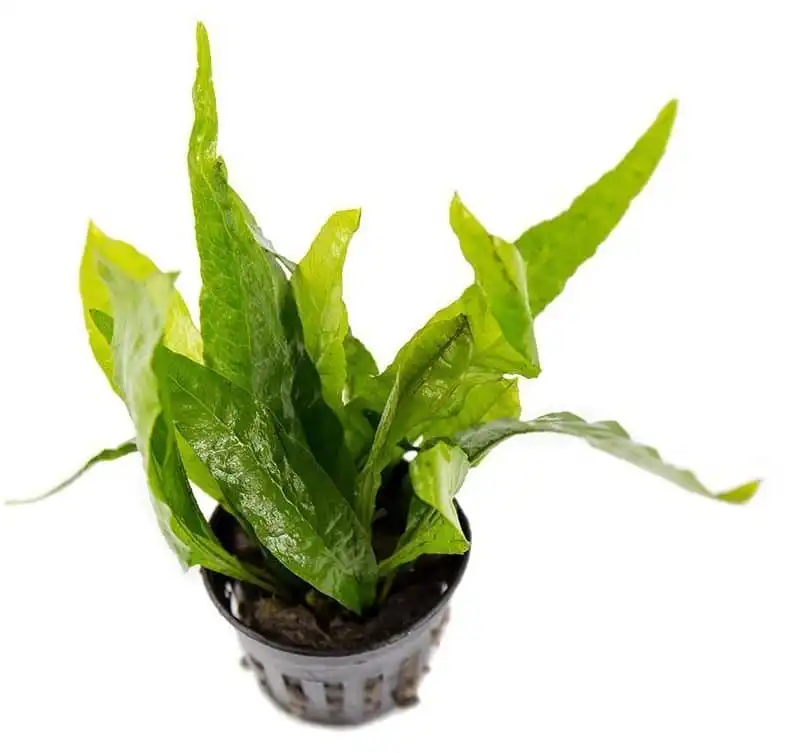
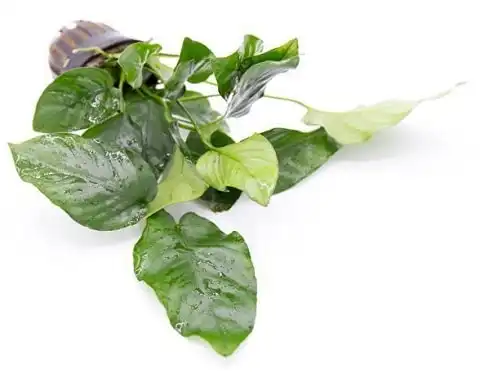
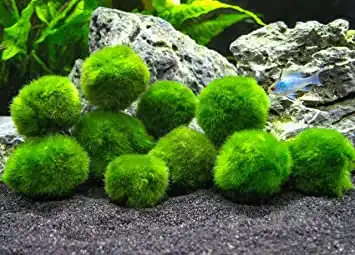
The best plant for a betta tank is java fern. It’s available everywhere, handles low light without complaint, tolerates the warm water bettas need, and its broad leaves give your fish an actual resting surface. Anubias is the runner-up: slower-growing, equally forgiving, and its larger varieties produce leaf surfaces big enough to hold a full-grown betta. The budget pick is marimo moss balls: low maintenance, fits any size tank, and does a solid job of absorbing ammonia and nitrate.
How We Selected These Plants
How We Selected These Betta Plants
- Smooth leaves and stems: no sharp edges that damage betta fins
- Low light tolerance: thrives without CO2 injection in basic betta setups
- Surface or mid-water coverage: provides resting spots near the waterline
- Betta compatibility: doesn’t create excessive flow resistance in the water column
- Hardiness: survives in the warmer water temperatures bettas need (78-80°F)
What People Get Wrong About Betta Plants
The most common mistake is buying plants that look good in photos but are wrong for a low-tech betta setup. CO2-dependent plants like glosso, dwarf hairgrass, and most carpeting plants need high light and injected CO2 to stay healthy. Put them in a basic betta tank and they melt within weeks. The fish ends up with decaying plant matter releasing ammonia into the water, exactly the opposite of what you wanted.
The second mistake is ignoring the surface. Bettas are labyrinth fish. They breathe atmospheric air and spend a significant amount of time near the waterline. A tank with no floating plants or surface structure leaves a betta exposed and stressed in the area it uses most. I’ve seen bettas with no surface cover develop stress stripes and spend hours pressed against the glass near the filter output, trying to find shelter. Floating plants fix that immediately.
The third mistake is using plastic plants. Plastic edges tear betta fins. It’s that simple. If you can’t do live plants, use silk.
Hard Rule: A betta tank without surface cover is a betta tank with a stressed betta.
Should You Add Live Plants to Your Betta Tank?
Live Plants in a Betta Tank: Right for You?
Add Live Plants If
- You want to reduce stress behaviors in your betta
- Tank has any standard LED lighting
- You want natural cover and hiding spots
- You’re keeping a community betta tank and need visual breaks
Skip or Use Silk Instead
- Very small tank under 3 gallons (plants need space to establish)
- No light at all in the setup
- You can’t commit to basic plant care (liquid ferts, occasional trimming)
- You specifically want a bare, show-display setup
The 11 Best Plants For Betta Fish
Let’s go over the best plants for betta fish below. I included a video from our channel for visual learners. I go into further detail below. If you like our content, give us a like and sub on our YouTube channel.
1. Java Fern
- Scientific Name: Microsorum pteropus / Leptochilus pteropus
- Common Name: Java Fern
- Origin: Widely distributed in Southeast Asia
- Skill Level: Easy
- Light Level: Low-Moderate, 40-125 PAR (Umols)
- Temperature Range: 64 – 82°F
- Flow Rate: Low, Moderate
- CO2 Requirement: No
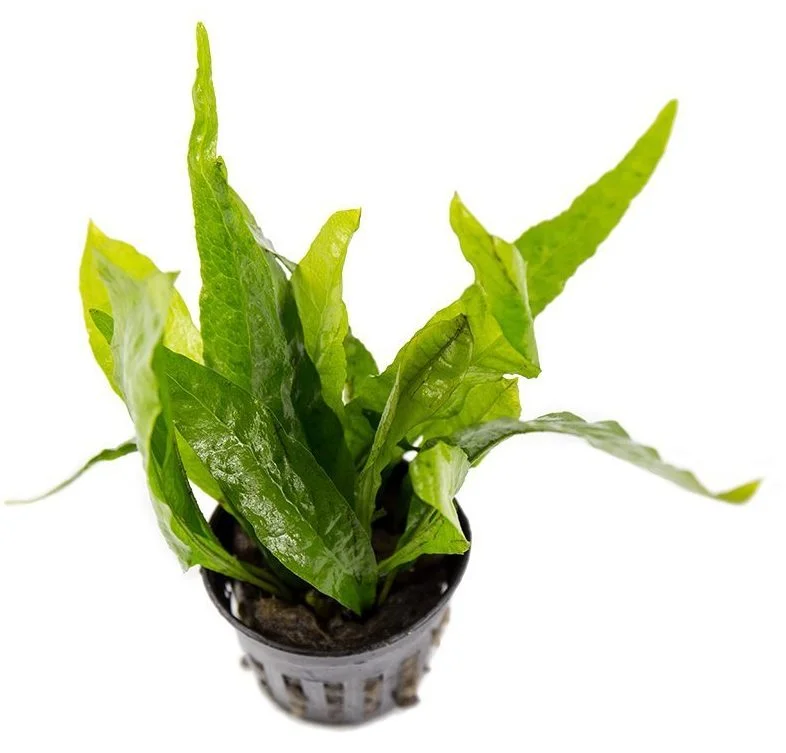
Java Fern is my top recommendation for betta tanks because it covers everything. It tolerates low light, needs no CO2, handles warm water up to 82°F without issue, and its broad, elongated leaves give bettas a real resting surface they’ll actually use. I’ve had bettas park on java fern leaves like they own them. That’s the behavior you want to see.
Attach it to driftwood or rock with thread or super glue gel. Do not bury the rhizome in substrate, that kills it. Java fern is available at virtually every fish store and online supplier, so price is rarely an issue. This is the plant to start with if you’re new to live plants in a betta setup.
Mark’s Top Plant for Betta Tanks
Java fern is my number one betta plant, and it’s not close. It doesn’t need CO2, doesn’t care about your light intensity, tolerates betta temperatures without struggling, and produces leaves wide enough for a betta to actually rest on. I’ve recommended this plant to beginners for years. It’s never failed. Pair it with some floating frogbit for surface cover and you’ve built the foundation of a functional betta tank.
2. Anubias
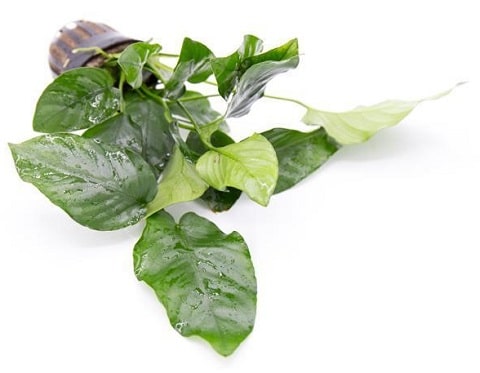
Anubias Nana
Hardy, forgiving and easy to grow. The Anubias Nana is your ticket to the incredible hobby that is aquascaping!
- Scientific Name: Anubias barteri var. nana
- Common Name: Dwarf anubias, nana anubias, petite anubias
- Origin: Cameroon, equatorial West Africa
- Skill Level: Easy
- Light Level: Low to medium light, 40-125 PAR (Umols)
- Temperature Range: 72 – 82°F
- Flow Rate: Low, Moderate
- CO2 Requirement: No
Anubias is a betta-specific favorite because of its leaf structure. The broad, smooth, waxy leaves are exactly what bettas look for when they want to rest. Bettas are notorious for using anubias as hammocks, sitting midwater on an anubias leaf near the surface is normal, healthy behavior. Anubias barteri produces the largest leaves, while Anubias Nana and Anubias Petite are better suited to smaller tanks.
One real caveat with anubias: it grows slowly, which makes it prone to algae on the leaves. If you notice green coating on the leaves, wipe them down manually or recruit a nerite snail or otocinclus if your tank size allows. Attach the rhizome to driftwood or rock, same rule as java fern, never bury it in substrate.
3. Marimo Moss Balls
- Scientific Name: Aegagropila linnaei
- Common Name: Moss balls
- Origin: Japan
- Skill Level: Easy
- Light Level: Low to medium light, 40-125 PAR (Umols)
- Temperature Range: 72 – 78°F
- Flow Rate: Low, Moderate
- CO2 Requirement: No
One note of caution on marimo moss balls: their preferred temperature tops out around 78°F. That’s the low end of a betta’s comfort zone. They can survive at betta temps, but they won’t thrive long-term in tanks running 80°F and above. For a betta kept at 78°F, marimo works fine as a low-effort addition. For warmer setups, consider a different option.
The Marimo Moss Ball is technically algae, not a plant, but it behaves like one and does a solid job absorbing ammonia, nitrites, and nitrates. It grows at about 5mm per year, so maintenance is minimal. You can also cut them apart and mount the pieces on driftwood for a moss-like effect.
4. Cryptocoryne Wendtii

Cryptocoryne Wendtii
A great low tech plant for multiple aquascape types and setups. Forgiving and hardy, the Cyrptocoryne Wendtii is a great introduction to rooted plants!
- Scientific Name: Cryptocoryne wendtii
- Common Name: Wendt’s water trumpet, Wendt’s cryptocoryne, Wendt’s crypt
- Origin: Sri Lanka, Asia
- Skill Level: Easy
- Light Level: Low-high, 50-200 PAR (Umols)
- Temperature Range: 68 – 82°F
- Flow Rate: Low, Moderate
- CO2 Requirement: No
Cryptocoryne Wendtii is one of the best rooted plants for betta tanks. Unlike java fern and anubias, crypts go into the substrate, which helps fill in the mid-ground and lower levels of the tank. They grow at a moderate pace, come in multiple color variants (green, brown, red), and adapt to a wide range of light levels without complaint.
Fair warning: crypts sometimes melt when first introduced to a new tank. Don’t pull them out, the roots almost always survive and the plant regrows. This is normal adjustment behavior, not a sign that something’s wrong. Propagation is simple: cut new plantlets from the mother rhizome and replant.
5. Water Sprite

Water Sprite
Readily available and easy to grow. This fast growing plant will soak up nutrients and thrive in low light
- Scientific Name: Ceratopteris thalictroides
- Common Name: Water Sprite, Indian Water Fern, Oriental Water Fern, Water Stag-horn Fern
- Origin: Northern Australia, Southeast Asia, India, East Africa, and Central America
- Skill Level: Easy
- Light Level: Moderate 30-80 PAR (umols)
- Temperature Range: 72 – 82°F
- Flow Rate: Low
- CO2 Requirement: No
Water Sprite does double duty in a betta tank. Planted in the substrate, it grows quickly into a dense background plant that soaks up excess nutrients and keeps nitrates in check. Floated at the surface, it becomes a natural canopy that diffuses light and gives your betta the surface cover it needs. Either way works, and the plant is fast enough to actually outcompete algae for nutrients in a low-tech setup.
If you float water sprite, watch your lower plants. It shades aggressively once it spreads. Keep lower-level plants limited to shade-tolerant species like java fern and anubias. Propagation is simple: cut stems and replant.
6. Amazon Sword
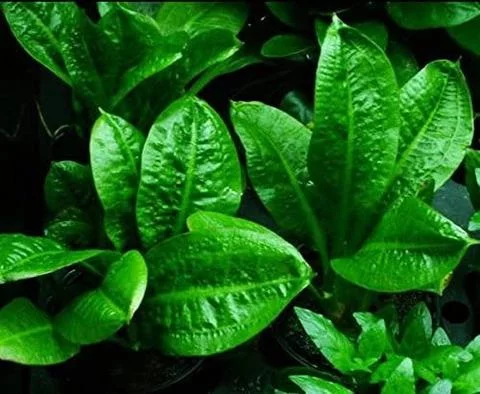
Amazon Sword
A classic background aquarium plant. Grows large and will be a centerpiece in your aquarium
- Scientific Name: Echinodorus amazonicus / Echinodorus bleheri / Echinodorus grisebachii
- Common Name: Amazon sword
- Origin: Brazil, South America
- Skill Level: Easy
- Light Level: low-high, 40-250 PAR (Umols)
- Temperature Range: 72 – 82°F
- Flow Rate: Low
- CO2 Requirement: No
Amazon sword plants work in betta tanks with one important caveat: tank size. Amazon swords grow large, sometimes reaching 20 inches tall in a mature setup. In a 5-gallon betta tank, an amazon sword will eventually dominate the entire space. In a 10-gallon or larger, it becomes an impressive centerpiece that provides genuine mid-tank cover and a sense of depth the fish will navigate around.
Keep in mind that amazon swords are heavy root feeders. Root tabs in the substrate will make a visible difference in growth rate and leaf quality.
7. Vallisneria
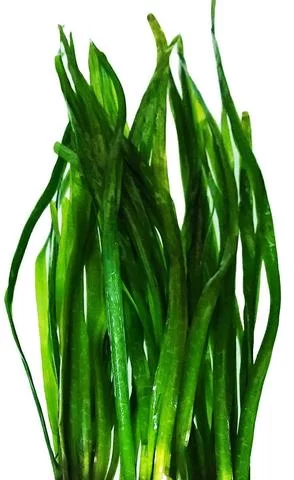
Vallisneria
One of the easiest background placement aquarium plants that can be kept. Provides excellent shelter for fish
- Scientific Name: Vallisneria
- Common Name: Val, Eelgrass, Tape Grass, Jungle Val
- Origin: Africa, North America, South America, Asia, Australia, Europe
- Skill Level: Easy
- Light Level: low-high, 40-200PAR (Umols)
- Temperature Range: 59 – 86°F
- Flow Rate: Moderate, High
- CO2 Requirement: No
Vallisneria creates a dense jungle effect in the background of a tank. Its long, ribbon-like leaves reach the surface and sway in the current, which gives a betta structure to navigate through and breaks up line of sight, important in community betta setups where visual breaks reduce aggression.
The one compatibility issue with vallisneria and bettas is flow. Vallisneria prefers moderate to strong current; bettas prefer low flow. The fix is positioning: plant vals in the background behind the filter output and use floating plants or hardscape in the foreground to buffer the current before it reaches the open swimming area. That setup works well in practice.
8. Banana Plant

- Scientific Name: Nymphoides aquatica
- Common Name: Banana Plant
- Origin: Southeastern United States
- Skill Level: Easy
- Light Level: Medium-high, 100-250 PAR (Umols)
- Temperature Range: 68 – 81°F
- Flow Rate: Low, moderate
- CO2 Requirement: No
The banana plant earns its spot for one specific reason: it sends lily-pad-style leaves to the surface. Those floating leaves become natural resting platforms right at the waterline, exactly where bettas want to be. The distinctive banana-shaped tubers anchor it to the bottom while the stems extend upward, giving your betta a direct route from the bottom of the tank to the surface. It’s a functional layout plant, not just a novelty.
Note that banana plants need medium to high light (100-250 PAR) to do well. They’re not for truly dim setups. Prune surface leaves occasionally to prevent them from blocking light to lower plants.
9. Java Moss
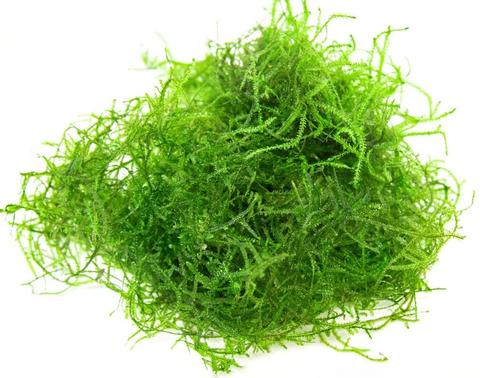
- Scientific Name: Taxiphyllum barbieri
- Common Name: Java moss
- Origin: Southeast Asia
- Skill Level: Easy
- Light Level: Low-High, 40-200 PAR (Umols)
- Temperature Range: 64 – 86°F
- Flow Rate: Moderate
- CO2 Requirement: No
Java moss is underrated in betta tanks because people think of it as a shrimp plant. It’s actually a great betta plant too. Tied to driftwood or rocks, a dense clump of java moss creates a textured hiding spot that breaks up the visual monotony of a bare tank floor. Bettas explore it, hide behind it, and use it as cover during rest periods. It also softens the look of hardscape considerably.
Java moss handles a wide temperature range (64-86°F) and isn’t fussy about light. Java moss can be used in breeding setups as a spawning surface, which makes it useful if you’re ever planning to breed bettas.
10. Bucephalandra

Bucephalandra
Bucephalandra is a slow-growing plant that’s perfect for anyone looking to grow their first aquatic plant. They are great for attaching to hardscape
- Scientific Name: Bucephalandra spp.
- Common Name: Buce plant, Buceps
- Origin: Borneo, Southeast Asia
- Skill Level: Easy, moderate
- Light Level: Low, 40 PAR (Umols)
- Temperature Range: 71 – 79°F
- Flow Rate: Moderate, High
- CO2 Requirement: No, but recommended
Bucephalandra is a premium plant for betta tanks. The leaves are smooth, rounded, and slow-growing, no fin damage risk, no aggressive growth to manage. It thrives at the low 40 PAR light level typical of most betta setups, and the wide variety of cultivars means you can find colors ranging from deep green to blue-green to near-purple. Attach it to driftwood or rock with super glue gel or thread; burying the rhizome kills it.
The main consideration with Bucephalandra is temperature: it prefers 71-79°F. At 80°F and above, growth slows considerably. It stays alive but won’t thrive. For betta tanks running at 78°F, it works well. For tanks running warmer, java fern is a safer choice.
11. Anacharis

Anacharis
Excellent as a food source and sucks up nutrients in an aquarium. One of the easiest freshwater plants to care for
- Scientific Name: Egeria densa, Elodea densa
- Common Name: Anacharis, Elodea, Giant Elodea, Brazilian Elodea, Brazilian Water Weed
- Origin: South America, Brazil, Uruguay, Argentina, introduced widely
- Skill Level: Easy
- Light Level: Moderate-high, 100-250 PAR (Umols)
- Temperature Range: 50 – 77°F
- Flow Rate: Low
- CO2 Requirement: No
Anacharis is one of the hardiest aquatic plants in the trade, which makes it a solid beginner choice. It can grow rooted in the substrate or free-floating, soaks up nutrients aggressively, and is one of the few stem plants that gives meaningful nutrient competition to algae in a low-tech tank.
There’s one temperature caveat worth knowing: anacharis prefers cooler water, ideally under 77°F. For betta tanks running at 78-80°F, it will survive but won’t grow as vigorously. It’s not a top-tier pick for warm betta setups, but if you’re running 77°F or keeping a fish that tolerates it, anacharis is one of the most forgiving plants you can buy. Give it a try if you’re new to live plants, it’s hard to kill. Check out the full Anacharis care guide for more detail.
What Makes a Plant Right for a Betta Tank
Keeping aquarium plants with a Betta fish is different from planting a community tank. Bettas aren’t destructive and won’t eat your plants, but they have specific requirements that make some plants a much better fit than others.
Temperature
Bettas do best at 78-80°F. That narrows your plant options more than most people realize. Many popular aquarium plants, including anacharis and some carpeting species, prefer cooler water. Working with plants that tolerate warm water is non-negotiable in a betta setup. It also means algae growth is accelerated, so recruit compatible algae eaters or plan on more manual maintenance than you’d need in a cooler planted tank.
Low Light Requirement
Betta fish are not comfortable in high-energy, high-light planted tanks. High-intensity lighting stresses them. This makes bettas incompatible with competitive planted aquascape setups unless you use shading from driftwood, rocks, or floating plants to create dim zones. Stick to low light plants and you stay out of trouble.
Low Flow
Bettas are slow swimmers with large fins. Strong current exhausts them. Plants that prefer low flow, java fern, anubias, crypts, are natural fits. If you’re using vallisneria or other current-loving plants, position them near the filter output and use floating plants or hardscape to diffuse flow before it reaches the main swimming area. A sponge filter or spray bar on a canister is another good option in a betta tank.
Tank Size Matters for Plant Selection
Most bettas live in 5 gallon or 10 gallon tanks. In a 5 gallon, large background plants like amazon sword and vallisneria will take over quickly. Stick to compact options: anubias, java fern tied to small driftwood, java moss, and a handful of floating plants. In a 10 gallon, you have enough space to add one larger background plant and still maintain proportion.
Bettas Use Plants Functionally
Bettas love to rest on plants. They use floating plants as cover near the waterline. They navigate around mid-level structure and use dense planting clusters for temporary hiding during stressful periods. Thin-leaf grasses look good but don’t give a betta anything functional. Broad leaves and surface cover are what actually matter.
What Most Betta Plant Lists Miss
What Most Betta Plant Lists Miss
- Recommending plants that need CO2 injection or high light in a basic betta setup. Glosso, dwarf hairgrass, and most carpeting plants melt without pressurized CO2. They don’t belong on a betta plant list.
- Not mentioning that some plants have sharp or stiff leaf edges. Hardscape plants with rigid, pointed tips can catch and tear betta fins over time. Always run your finger along a leaf before placing it in the tank.
- Ignoring floating plants entirely. Bettas are labyrinth fish and spend significant time at the surface. A tank with no floating cover leaves the most-used area of the tank completely exposed.
- Not flagging temperature conflicts. Anacharis and several other commonly recommended plants prefer water under 76°F. That’s cooler than an ideal betta tank. These plants belong on a qualified list, not an unqualified one.
Live Plant Alternatives
Live plants are ideal, but they’re not for every keeper. If you can’t commit to plant maintenance or your setup doesn’t support live plants, here are the honest alternatives.
Silk Plants
Silk plants are the only acceptable artificial option for a betta tank. Plastic plants have rough or sharp edges that tear fins. Period. If you’re using artificial plants, choose silk. Marina Naturals makes a well-regarded silk plant line designed specifically for betta and fancy goldfish tanks.
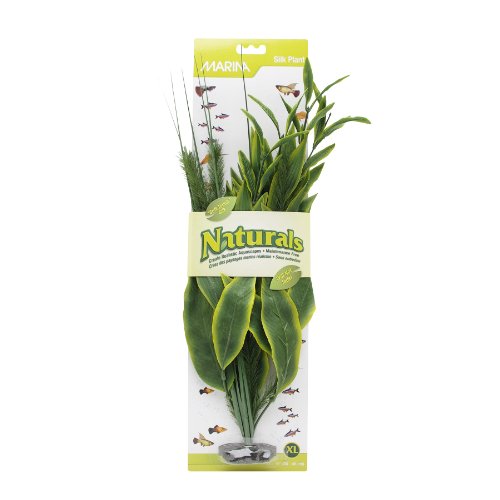
Marina Naturals Plants
Silk plants that are designed to be gentle on fish with fancy fins like Bettas and Fancy Goldfish
Aquarium Rocks and Caves
Aquarium rocks work well as a backdrop in betta setups as long as they have smooth surfaces. Run your hand over any rock before adding it to the tank. Seiryu stone is popular for aquascaping and generally safe, but check the edges before placing it.
Betta caves are also worth adding. Bettas like enclosed hiding spots, and a coconut shell cave provides that without any risk of fin damage.
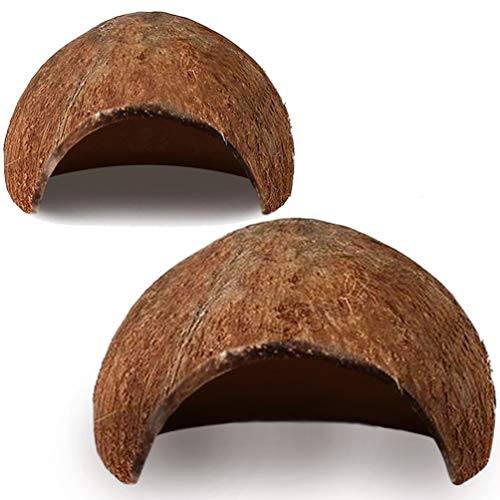
SunGrow Betta Caves
These Coconut shells are ideal Betta fish homes. Smooth to the touch, these will not damage your Bettas delicate fins
Live Plants vs. Fake: What Actually Matters
This debate comes up constantly. Here’s the honest version.
Live Plants
Live plants filter nitrates, produce oxygen, compete with algae for nutrients, and create genuine behavioral enrichment for bettas. The difference between a betta in a bare tank and a betta in a planted tank is visible within days. That said, live plants require some commitment.
Pros
- Removes nitrates from the water
- Provides oxygen to the fish
- Source of behavioral enrichment for betta
- Looks natural in the tank
- Provides resting spots, hiding spots, and surface cover
Cons
- Rooted plants need appropriate substrate
- Increases tank maintenance (trimming, occasional fert dosing)
- Slow-growing plants can develop algae on leaves without a cleanup crew
Silk Decor
Silk plants offer the look of a planted tank without the maintenance. They provide hiding spots and surface texture for the betta to interact with. They’re a legitimate option if you genuinely can’t commit to plant upkeep.
The non-negotiable: no plastic. The frayed edges that develop on plastic plants over time will shred betta fins. Silk only.
Pros
- Looks natural
- Zero plant maintenance
- Provides shelter and visual structure for your fish
Cons
- Quality silk plants aren’t cheap
- No water quality benefit (no nitrate removal, no oxygen production)
- Plastic plants, the cheap alternative, are actively harmful to betta fins
FAQs
Do betta fish need plants in their tank?
No, but they benefit significantly from them. Plants provide hiding spots, resting surfaces near the waterline, and visual breaks that reduce stress. A betta’s behavior changes noticeably in a planted tank, they explore more, rest on leaves near the surface, and show fewer stress behaviors like glass surfing. Plants also help filter nitrates and oxygenate the water. Good options for low-effort planted betta tanks: java fern and anubias.
Are real plants good for betta fish?
Yes. Real plants help oxygenate the water, absorb nitrates, and create behavioral enrichment that keeps bettas active and healthy. A tank with live plants is almost always a healthier tank than one without, as long as the plants are properly chosen for low-tech betta setups.
Can I put a bamboo plant in my betta tank?
True bamboo is a terrestrial plant and will eventually rot underwater. What’s often sold as “lucky bamboo” or “aquarium bamboo” is actually Dracaena sanderiana. It can be kept with roots submerged and the stalks above the waterline. It will survive and help oxygenate the water, but it’s not a true aquatic plant. Keep the leaves out of the water and change the water regularly if you use it this way.
Are plastic plants safe for betta fish?
Plastic plants are non-toxic, but they’re not safe for betta fins. The edges on plastic plants, especially as they age, are sharp enough to catch and tear betta fins. Bettas with long, flowing fins are particularly vulnerable. Use silk plants if you want an artificial option.
What plants do betta fish like best?
Bettas gravitate toward floating plants and plants with broad, horizontal leaves, these give them resting surfaces near the waterline. Java fern, anubias, floating frogbit, and water lettuce all fit that profile. Thin-leaf grass plants look appealing but don’t provide the functional structure bettas actually use.
Do I need CO2 for plants in a betta tank?
No. None of the plants on this list require CO2 injection. All 11 grow well in low-tech betta setups with standard LED lighting and liquid fertilizer dosing. Avoid CO2-dependent plants (glosso, dwarf hairgrass, most carpeting species) in a betta tank entirely, they won’t survive the low-tech conditions and the CO2 equipment creates the kind of strong water movement bettas dislike.
Closing Thoughts
The right plants don’t just make a betta tank look good. They make it function like a real habitat. A betta with broad leaves to rest on, floating cover near the surface, and mid-tank structure to navigate will behave differently from one in a bare tank. More active. Less stressed. More interesting to watch. That’s the real value of plants in a betta setup.
Start with java fern and something floating. Those two cover the most important behavioral needs with the least effort. Build from there as you get comfortable. And if live plants aren’t for you right now, silk is a legitimate middle ground, just stay away from plastic.
Plants don’t just fill a betta tank. They complete it.
- About the Author
- Latest Posts

I’m Mark Valderrama, founder of Aquarium Store Depot and a fishkeeper with over 25 years of hands-on experience. I started in the hobby at age 11, worked at local fish stores, and have kept freshwater tanks, ponds, and reef tanks ever since. I’ve been featured in two best-selling aquarium books on Amazon and built this site to share practical, experience-based fish keeping knowledge.


Leave a Reply to Gaylyn Cancel reply