
Last Updated: June 25, 2026
Thank you for visiting! By the way… any links on this page that lead to products on Amazon and other stores/partners are affiliate links Aquarium Store Depot earns a commission if you make a purchase.
Table of Contents
- The Reality of Keeping Cockatoo Dwarf Cichlid
- Key Takeaways
- Species Overview
- Classification
- Origin & Natural Habitat
- Appearance & Identification
- Average Size & Lifespan
- Care Guide
- Tank Mates
- Food & Diet
- Breeding & Reproduction
- Common Health Issues
- Common Mistakes to Avoid
- Where to Buy
- Frequently Asked Questions
- What It Is Actually Like Living With Cockatoo Dwarf Cichlid
- Closing Thoughts
- References
Cockatoo dwarf cichlids are the flashiest apistogramma in the hobby, and that flash comes with attitude. Males are territorial, aggressive toward other males, and will claim an area of your tank whether you planned for it or not. I have kept cockatoo apistos in planted tanks for years and the biggest mistake is underestimating how much space a single male demands. This is not a fish you cram into a 10 gallon with a group. The apisto gateway drug that turns community keepers into cichlid addicts.
The apisto gateway drug that turns community keepers into cichlid addicts.
What Most Care Guides Get Wrong About Cockatoo Dwarf Cichlid
The most common mistake with cockatoo dwarf cichlids (Apistogramma cacatuoides) is keeping them in water that’s too soft. Unlike most apistogramma species that need soft, acidic water, cacatuoides actually comes from harder, more alkaline waters than its relatives. It’s one of the hardiest apistos available, and people often baby them unnecessarily with RO water and leaf litter when they do perfectly fine in moderately hard tap water. The other misconception is that males are peaceful. Male cacatuoides are flashy and beautiful, but they’re also territorial. Especially toward other males. One male per tank is the rule unless you have a very large, well-structured setup.
What makes the cockatoo apisto particularly appealing is its tolerance. While many Apistogramma species demand soft, acidic water and punish you for any misstep, captive-bred A. Cacatuoides handles a broader range of conditions than most of its genus. That doesn’t mean you can throw one in any tank and walk away. But compared to a wild A. Macmasteri or A. Panduro, the cockatoo apisto gives beginners to the dwarf cichlid world a real chance at success. In my 25+ years in the hobby, this has consistently been the apistogramma I recommend to anyone looking to try dwarf cichlids for the first time.
The Reality of Keeping Cockatoo Dwarf Cichlid
Cockatoo dwarf cichlids are the flashiest apisto in the hobby, and they come with real personality.
Males are territorial. That dramatic dorsal fin display is not just for show. Males claim territory and defend it against anything that gets too close.
One male per tank is the safe bet. Unless you have 40 gallons or more with heavy decoration, two males will fight until one gives up or dies.
They are more adaptable than most apistos. Cockatoo apistos tolerate a wider pH range than many dwarf cichlids. They still prefer soft, slightly acidic water, but they will not crash in neutral water the way panduro or inka will.
Females turn yellow when breeding. A bright yellow female is guarding eggs or fry. She will attack anything that gets near her cave, including the male.
Biggest Mistake New Cockatoo Dwarf Cichlid Owners Make
Keeping them in a bare tank with no caves. Cockatoo apistos need coconut shells, clay pots, or driftwood caves. Without them, breeding will not happen and the fish stay stressed.
Expert Take (Mark Valderrama, AquariumStoreDepot)
Give the Cockatoo Dwarf Cichlid a 20-gallon long with sand substrate, plenty of caves, and some floating plants for cover. They are one of the most adaptable apistos and a great starting point for anyone interested in dwarf cichlids.
Key Takeaways
- The best beginner apistogramma. Captive-bred specimens tolerate a wider range of water conditions than most dwarf cichlids
- Males are spectacular with elongated, spiky dorsal fin rays and vivid coloration in red, orange, and yellow varieties
- Small but territorial. A minimum 20-gallon tank works for a pair, but provide caves and visual barriers
- Excellent for planted community tanks when paired with peaceful upper-level schooling fish like tetras and pencilfish
- Breeding is achievable for attentive hobbyists, with the female providing most parental care
Species Overview
| Field | Details |
|---|---|
| Scientific Name | Apistogramma cacatuoides |
| Common Names | Cockatoo Dwarf Cichlid, Cockatoo Apisto, Crested Dwarf Cichlid |
| Family | Cichlidae |
| Origin | Upper Amazon basin, Peru and western Brazil |
| Care Level | Moderate |
| Temperament | Semi-aggressive (territorial when breeding) |
| Diet | Omnivore (primarily carnivorous) |
| Tank Level | Bottom to Middle |
| Maximum Size | 3.5 inches (9 cm) males; 2 inches (5 cm) females |
| Minimum Tank Size | 20 gallons (76 liters) |
| Temperature | 73 to 82°F (23 to 28°C) |
| pH | 6.0 to 7.5 |
| Hardness | 2 to 15 dGH |
| Lifespan | 3 to 5 years |
| Breeding | Cave spawner |
| Breeding Difficulty | Easy to Moderate |
| Compatibility | Peaceful community (with appropriate tank mates) |
| OK for Planted Tanks? | Yes (ideal environment) |
Classification
| Taxonomic Level | Classification |
|---|---|
| Order | Cichliformes |
| Family | Cichlidae |
| Subfamily | Geophaginae |
| Genus | Apistogramma |
| Species | A. Cacatuoides Hoedeman, 1951 |
The cockatoo dwarf cichlid was described by J.J. Hoedeman in 1951. The species name cacatuoides means “resembling a cockatoo,” referring to the elongated, crest-like dorsal fin rays of the male that recall a cockatoo’s head crest. The genus Apistogramma is one of the most species-rich genera of South American cichlids, with well over 100 described species and many more awaiting formal description.
Apistogramma cacatuoides belongs to the cacatuoides species group, which also includes A. Juruensis and A. Luelingi among others. This group is characterized by robust body builds and, compared to many other apistos, relatively tolerant water parameter requirements in captive-bred populations.
Origin & Natural Habitat
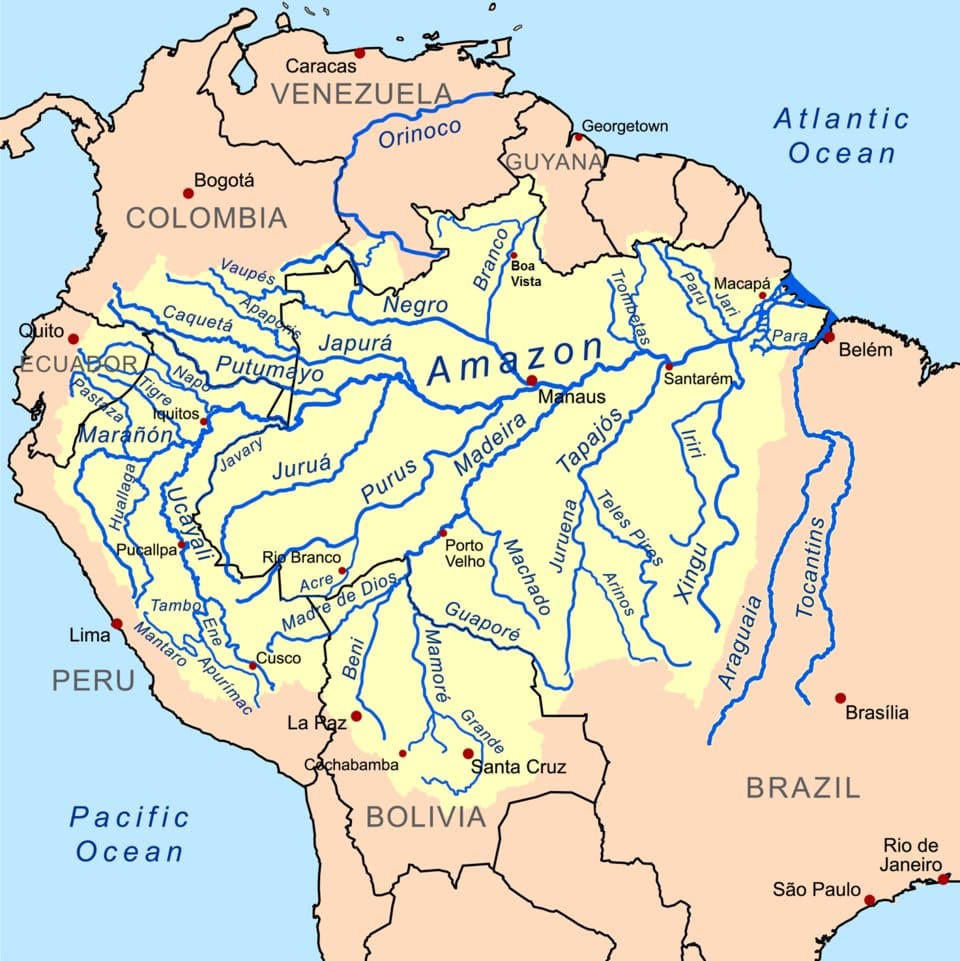
The cockatoo dwarf cichlid is native to the upper Amazon River basin, primarily in Peru along the tributaries of the Rio Ucayali and Rio Amazonas, extending into western Brazil as far as the Rio Solimoes. This is a vast region of tropical lowland forest where countless streams, creeks, and backwaters branch off from the main river channels.
In the wild, A. Cacatuoides inhabits slow-moving tributaries, backwater pools, and shallow creeks where fallen leaves and branches accumulate. The substrate is fine sand or mud covered in a thick layer of decomposing leaf litter. This leaf litter serves multiple purposes: it provides shelter, creates territories, and releases tannins and humic acids that soften and acidify the water. The water in these habitats is warm, soft, and slightly to moderately acidic.
These are not open-water fish. In their natural environment, cockatoo apistos stay close to the bottom, weaving through leaf litter, root tangles, and submerged wood. They use caves, crevices, and overhanging structures as breeding sites and refuges. Replicating this type of environment in the aquarium, with plenty of cover, caves, and low light, brings out their best behavior and coloration.
Appearance & Identification
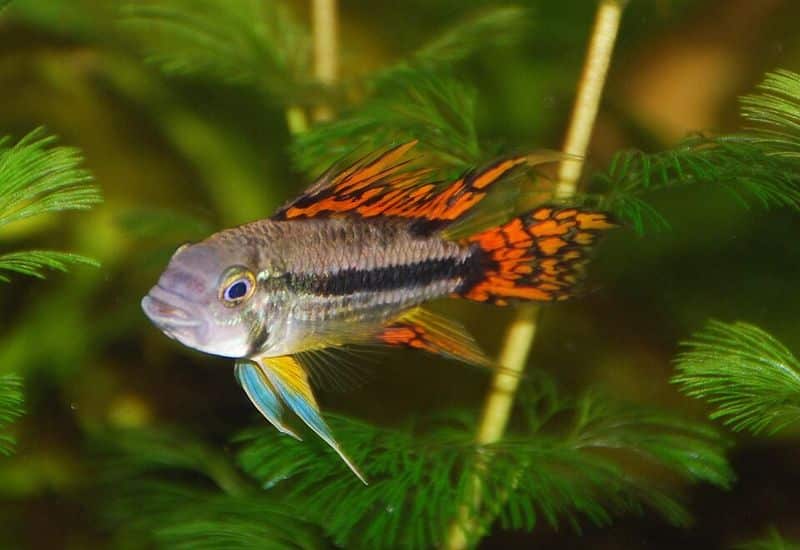
Male cockatoo dwarf cichlids are among the most visually striking dwarf cichlids in the hobby. The most distinctive feature is the dorsal fin: the first several rays are elongated and extend well above the rest of the fin, creating the spiky, crest-like appearance that gives the species its common name. When the male displays, these dorsal spines stand erect and make the fish look much larger than it actually is.
Wild-type males have a tan to olive body with a prominent dark lateral stripe running from the snout through the eye to the caudal peduncle. The caudal fin shows bold red and orange markings. Selective breeding has produced several popular color forms including “triple red” (red in dorsal, caudal, and anal fins), “double red,” “orange flash,” and “super red.” Regardless of the color variety, the basic body shape and signature dorsal crest remain the same.
Females are considerably smaller and less colorful, with a yellowish body that intensifies to a vibrant golden-yellow during breeding. They lack the exaggerated dorsal fin extensions of males and have shorter, more rounded fins overall. The dark lateral stripe may be more broken or subdued in females.
Male vs. Female
Sexing adult cockatoo dwarf cichlids is straightforward compared to most other apistos. The size difference and fin extensions make males immediately identifiable.
| Feature | Male | Female |
|---|---|---|
| Body Size | Up to 3.5 inches (9 cm) | Up to 2 inches (5 cm) |
| Dorsal Fin | Extended, spiky rays (cockatoo crest) | Short, rounded |
| Caudal Fin | Larger, lyrate (spade-shaped) with bold markings | Smaller, rounded, less colorful |
| Coloration | Bold reds, oranges, blues depending on variety | Yellowish-tan, turns bright yellow when breeding |
| Body Shape | Deeper bodied, more elongated | Smaller, more compact |
One of the fascinating behavioral aspects of this species is the female’s color transformation during breeding. A female cockatoo apisto guarding a brood of eggs or fry turns an intense, almost glowing yellow with bold black markings. This coloration serves as a warning to other fish: stay away from my babies.
Average Size & Lifespan
Males reach a maximum size of about 3-3.5 inches (7-9 cm), while females stay considerably smaller at around 2 inches (5 cm). This size difference is one of the most pronounced among commonly kept apistos. Growth is relatively quick during the first few months but slows significantly after the fish reach sexual maturity at around 4-6 months.
The typical lifespan for A. Cacatuoides in captivity is 3-5 years. This is shorter than many aquarium fish, which is typical for dwarf cichlids. Some individuals may live slightly longer with optimal care, but 5 years represents a good run for this species. Their relatively short lifespan is offset by how readily they breed, so you can maintain a self-sustaining population if desired.
ASD Difficulty Rating: Tier 2 – Intermediate
Cockatoo dwarf cichlids are approachable for intermediate keepers but need soft water, caves, and careful stocking. Breeding pairs become aggressive parents – tank mates that seemed fine before spawning will be driven out or attacked.
Care Guide
Tank Size
A 20-gallon (76-liter) tank is the minimum for a single pair. For a male with multiple females (a harem setup, which is more natural), a 30 to 40-gallon tank provides enough territory for everyone. If keeping in a community tank with other species, increase the tank size to 30 gallons or more to give the apistos their own floor space without constant conflict with tank mates.
Footprint matters more than height with this species. They’re bottom dwellers, so a long, wide tank with maximum floor space is more valuable than a tall, narrow one. A standard 20-gallon long (30 x 12 x 12 inches) is better than a 20-gallon tall for a pair of cockatoo apistos.
Water Parameters
| Parameter | Recommended Range |
|---|---|
| Temperature | 73 to 82°F (23 to 28°C) |
| pH | 6.0 to 7.5 |
| General Hardness | 2 to 15 dGH |
| Ammonia | 0 ppm |
| Nitrite | 0 ppm |
| Nitrate | Below 20 ppm |
This is one of the key advantages of the cockatoo dwarf cichlid over many other Apistogramma species. While wild specimens prefer soft, acidic water (pH 5.0-6.0), captive-bred fish have been raised for generations in a wider range of conditions and do well in moderately soft to slightly hard water with a neutral to slightly acidic pH. That said, they still won’t appreciate extremely hard, alkaline water.
For breeding purposes, softening and acidifying the water improves success rates significantly. But for general keeping, most aquarists with reasonable tap water can maintain cockatoo apistos without an RO system, which is a major advantage over many dwarf cichlid species.
Filtration & Water Flow
Gentle to moderate filtration is appropriate. These fish come from slow-moving water and don’t appreciate strong currents, especially near the bottom of the tank where they spend most of their time. A sponge filter is excellent for smaller apisto setups, providing biological filtration without excess flow. In larger tanks, a canister filter with the output directed upward or diffused through a spray bar works well.
Weekly water changes of 20-25% are sufficient. The key is consistency. Apistos respond poorly to fluctuating water conditions, so maintaining a regular maintenance schedule matters more than doing large, infrequent changes.
Lighting
Low to moderate lighting is ideal. Cockatoo apistos come from shaded forest streams and feel most comfortable under subdued conditions. Floating plants are one of the best additions to an apisto tank because they reduce light intensity at the bottom of the tank where the fish live. If you’re running a planted tank, moderate lighting for plant growth is fine as long as there are shaded retreats available.
Plants & Decorations
A densely planted tank with plenty of structure is the ideal setup for cockatoo dwarf cichlids. Live plants like java fern, anubias, cryptocoryne species, and floating plants provide shade and visual barriers. Driftwood and smooth stones create territorial boundaries and potential spawning sites.
Caves are essential. Provide small caves using coconut shells, terracotta pots (laid on their side with part of the opening blocked), commercially available ceramic caves, or natural rock formations. Each female in a harem setup needs her own cave. Males patrol between caves but don’t use them themselves except during courtship. The caves serve as spawning sites and as refuges where females feel secure enough to lay and guard eggs.
Adding dried Indian almond leaves or other botanicals on the substrate mimics natural leaf litter, releases beneficial tannins, and gives the fish another surface to forage on. Replace leaves as they decompose.
Substrate
Fine sand is the ideal substrate. Cockatoo apistos spend their time on or near the bottom, sifting through substrate for food particles. Coarse gravel can trap food waste and make it harder for the fish to forage naturally. Sand also looks more natural and is gentler on their delicate fins and barbels.
Is the Cockatoo Dwarf Cichlid Right for You?
Before you commit to this species, here’s an honest assessment of whether it fits your setup and experience level.
- The best beginner apistogramma species. Hardier and more adaptable than most of the genus. The perfect entry point.
- Males are spectacularly colorful. Extended dorsal fin rays and vibrant coloring make them one of the flashiest dwarf cichlids available.
- Works in moderately hard water. Unlike most apistos, you don’t need an RO system to keep them happy.
- One male per tank. Males are territorial and will fight other males in typical aquarium setups.
- Excellent for breeding projects. They breed readily in captivity, and watching the female guard fry is endlessly fascinating.
- Need caves and hiding spots. Females require cave-like spawning sites, and subordinate fish need retreat areas.
Tank Mates
The cockatoo dwarf cichlid is peaceful toward other species that don’t invade its territory near the bottom of the tank. The key to successful tank mate selection is choosing fish that occupy different water levels and won’t compete for the same floor space. Breeding females is surprisingly aggressive within their immediate territory, but this aggression rarely extends beyond a few inches from their cave.
Best Tank Mates
- Pencilfish (Nannostomus spp.). Perfect dither fish that stay in the upper water column and thrive in similar water conditions
- Cardinal tetras. Peaceful, appropriately sized, and excellent in soft-water setups
- Rummy-nose tetras. Stay in the mid-water column and don’t bother bottom dwellers
- Ember tetras. Tiny, peaceful, and beautiful alongside apistos in planted tanks
- Hatchetfish. Surface dwellers that completely avoid the apisto’s territory
- Otocinclus catfish. Small, peaceful algae eaters that don’t compete for territory
- Small corydoras. Can work in larger tanks, though watch for territory disputes with breeding females
Tank Mates to Avoid
- Other bottom-dwelling cichlids. Rams, other apistos (in small tanks), and kribensis will create territorial conflicts
- Aggressive or boisterous fish. Tiger barbs, serpae tetras, and similar species will stress apistos and outcompete them for food
- Large predatory fish. Anything big enough to eat a 2-3 inch fish is a threat
- Fin nippers. The male’s elaborate fins make him a target for nipping species
- Large plecostomus. Can accidentally crush or displace small apistos and disturb spawning sites
Food & Diet
Cockatoo dwarf cichlids are primarily carnivorous and prefer protein-rich foods. In the wild, they feed on small invertebrates, insect larvae, and microcrustaceans found in leaf litter and substrate. In captivity, they readily accept a variety of foods.
A good staple diet consists of high-quality micro pellets or small cichlid pellets supplemented with frozen foods. Frozen bloodworms, brine shrimp, daphnia, and cyclops are all eagerly accepted. Live foods like baby brine shrimp, microworms, and grindal worms bring out the best coloration and encourage breeding behavior. Variety is important for maintaining health and vibrant colors.
Feed small amounts 2-3 times daily rather than one large feeding. These fish have small stomachs and do better with frequent, modest meals. Because they’re bottom feeders, make sure food reaches the lower levels of the tank rather than being consumed by mid-water tank mates before it sinks.
Breeding & Reproduction
Breeding Difficulty
Easy to moderate. Apistogramma cacatuoides is one of the most readily bred dwarf cichlids in the hobby. Captive-bred specimens often spawn without any special preparation if conditions are even marginally suitable. The main challenge isn’t getting them to spawn; it’s successfully raising the fry in a community tank setting.
Spawning Tank Setup
A dedicated breeding setup is as simple as a 10-15 gallon tank with a sponge filter, sand substrate, a couple of caves, and some leaf litter. The caves are critical. Coconut shell halves with a small entrance hole are classic and effective. The female selects and prepares the cave, often rearranging sand near the entrance. Provide at least 2-3 cave options so the female can choose her preferred site.
Water Conditions for Breeding
While captive-bred cockatoo apistos can spawn in a range of conditions, softer, slightly acidic water (pH 6.0-6.5, 2-8 dGH) improves egg fertility and hatch rates. Temperature of 78-80°F (26-27°C) is ideal for spawning. A slight drop in temperature following a water change will sometimes trigger spawning activity. Clean water with low nitrates is essential.
Conditioning & Spawning
Condition breeders with live and frozen foods for 1-2 weeks before attempting to trigger spawning. When ready, the female turns bright yellow with bold dark markings and begins spending more time near her chosen cave. The male displays with flared fins and vibrant colors. The female deposits 40-80 reddish eggs on the ceiling of the cave, and the male fertilizes them during brief visits.
Egg & Fry Care
The female takes primary responsibility for egg care, fanning them and removing any that turn white. In smaller tanks, she will become aggressive toward the male, so have a plan to separate them if necessary. Eggs hatch in 3-4 days, and the fry become free-swimming approximately 5-7 days after hatching.
The mother continues to guard and lead the free-swimming fry, herding them around the tank to feed. First foods should be infusoria, vinegar eels, or commercially prepared liquid fry food, followed by freshly hatched baby brine shrimp within a few days. The female’s protective behavior is fascinating to watch. She will aggressively chase away any fish, including the male, that ventures too close to her brood.
Common Health Issues
Bacterial Infections
Apistos can develop bacterial infections when stressed or kept in poor water conditions. Symptoms include fin erosion, body sores, cloudy eyes, and lethargy. Prevention through good water quality is the most important factor. Treatment with broad-spectrum antibiotics like kanamycin or nitrofurazone is effective for active infections.
Ich (White Spot Disease)
Like most freshwater fish, cockatoo apistos can contract ich, particularly when stressed by temperature fluctuations or new additions to the tank. Treatment is straightforward: raise the temperature gradually to 82-84°F (28-29°C) and use a commercial ich medication at the recommended dose. Apistos tolerate standard ich treatments well.
Velvet Disease (Oodinium)
Velvet can look similar to ich but presents as a finer, dusty gold or rust-colored coating rather than distinct white spots. Affected fish often clamp their fins and breathe rapidly. Velvet is more dangerous than ich because it progresses faster. Treatment involves dimming the lights (the parasite is photosynthetic), raising temperature, and using a copper-based medication.
Internal Parasites
Wild-caught specimens are more prone to internal parasites, but captive-bred fish is affected too. White, stringy feces and weight loss are warning signs. Metronidazole is the standard treatment for protozoan parasites like Hexamita, while praziquantel targets intestinal worms. Always quarantine new fish to prevent introducing parasites to an established tank.
Hard Rule
Cockatoo cichlids need multiple caves and visual territory breaks – not just one cave. Without defined territory boundaries, males harass females continuously. During spawning, the pair will attack every other fish in the tank regardless of species or size.
Common Mistakes to Avoid
- Not providing enough caves. Without caves, females can’t spawn and feel perpetually stressed. Provide at least one cave per female, plus extras
- Keeping in hard, alkaline water. While captive-bred specimens are adaptable, very hard water (above 15 dGH) and pH above 7.5 cause long-term health issues and prevent breeding
- Housing with aggressive tank mates. Cockatoo apistos are tough for their size but can be bullied by larger or more aggressive fish. Choose peaceful companions
- Overstocking the bottom level. These are territorial bottom dwellers. Too many fish competing for floor space creates constant stress
- Ignoring the female. Many keepers focus on the flashy male but neglect to provide what the female needs: caves, security, and gentle conditions. Happy females = successful colonies
- Using coarse gravel substrate. Fine sand is strongly preferred for foraging behavior and prevents food waste from becoming trapped
Where to Buy
Cockatoo dwarf cichlids are one of the more widely available apistos, and you can find them at many local fish stores, especially those that carry a decent selection of dwarf cichlids. However, the best color varieties (triple red, super red, orange flash) are sourced from specialty retailers and breeders.
Flip Aquatics carries quality dwarf cichlids and is a great place to check for cockatoo apistos, and Dan’s Fish is another reliable source for healthy, well-conditioned specimens. Both ship with live arrival guarantees, which matters with a small, sometimes delicate fish.
When buying cockatoo apistos, look for active fish with vibrant coloration, intact fins (especially the male’s dorsal crest), and no visible signs of disease. If possible, buy a pair or a trio (one male, two females) rather than just a single fish. These cichlids are more interesting and display better behavior when kept in proper social groupings.
Frequently Asked Questions
Is the cockatoo dwarf cichlid good for beginners?
It’s the best Apistogramma for beginners to the genus. Captive-bred specimens tolerate a wider range of water conditions than most apistos, and they’re hardy enough to forgive minor mistakes. However, they’re not a great choice for someone completely new to fishkeeping. Some experience with basic tropical fish care, water testing, and aquarium maintenance is recommended before jumping into dwarf cichlids.
Should I keep one male with one female or a harem?
In smaller tanks (20 gallons), a single pair works fine. In larger tanks (30+ gallons), a harem of one male with 2-3 females is more natural and distributes the male’s attention so no single female is constantly pursued. Each female needs her own cave and territory. Avoid keeping multiple males together unless the tank is very large (55+ gallons) with ample visual barriers.
Can I keep cockatoo apistos in a community tank?
Yes, and it’s one of the best ways to keep them. Pair them with small, peaceful schooling fish that occupy the middle and upper water levels (tetras, pencilfish, hatchetfish). The apistos claim the bottom territory while the schooling fish provide natural “dither fish” behavior that helps the apistos feel more secure and come out into the open more often.
What are the different color varieties?
The most popular color forms include “triple red” (red coloring in the dorsal, caudal, and anal fins), “double red” (caudal and anal fins), “orange flash” (orange rather than red fin coloring), and “super red” (intensified red throughout). These are all selectively bred variants of the same species and have identical care requirements. Wild-type coloring is more subdued but still attractive.
Why do cockatoo apistos have a short lifespan?
A lifespan of 3-5 years is typical for most Apistogramma species and dwarf cichlids in general. This is simply the natural lifespan for small, fast-maturing cichlids. They compensate with easy breeding, so a well-maintained colony can perpetuate itself indefinitely even though individual fish don’t live as long as larger cichlids.
What It Is Actually Like Living With Cockatoo Dwarf Cichlid
This is the part no other care guide gives you. Forget water parameters for a minute. Here is what it is actually like to share your tank with this species.
They have more personality than you expect. The Cockatoo Dwarf Cichlid is not a fish that just sits in the background. Once settled in, they become interactive, curious, and responsive to your presence.
Feeding time reveals their character. Watch how the Cockatoo Dwarf Cichlid approaches food and you will see real personality. Some are bold, some are cautious, and their feeding behavior tells you a lot about their mood and health.
They establish routines. After a few weeks, your Cockatoo Dwarf Cichlid will have favorite spots, preferred paths through the tank, and predictable patterns. Learning these routines makes you a better keeper.
Color is a health indicator. The Cockatoo Dwarf Cichlid’s coloration is a real-time report card on your husbandry. Vibrant color means happy fish. Faded color means something is wrong. Pay attention.
How the Cockatoo Dwarf Cichlid Compares to Similar Species
The German blue ram is the most common comparison for dwarf cichlid shoppers, and the cockatoo wins on practicality. German blue rams need 82-84°F water, very soft conditions, and pristine quality. Cockatoo apistos thrive at standard tropical temperatures (75-80°F) and tolerate a much wider range of water hardness. Rams are arguably more colorful as a species, but male cockatoos with fully extended dorsal fins are nearly as impressive. For most keepers, the cockatoo is the more rewarding fish because it actually thrives instead of just surviving.
Other apistogramma species are the more nuanced comparison. Within the genus, cacatuoides is the gateway drug. Species like A. Borellii offer similarly easy care but with a different aesthetic. Less dramatic fins but beautiful blue coloring. More demanding species like A. Iniridae or A. Elizabethae offer incredible beauty but require specific soft, acidic water. Start with cacatuoides, and if you catch the apisto bug (you will), explore the genus from there.
Closing Thoughts
A male cockatoo apisto does not share territory. That fin display is a warning, not decoration.
The cockatoo dwarf cichlid earns its spot as the most popular Apistogramma for a reason. It’s hardy enough for the apisto newcomer, colorful enough to stop you in your tracks, and behaviorally fascinating enough to keep experienced cichlid keepers engaged for years. Watching a male display his dorsal crest to impress a female, or a mother guarding her brood with fierce determination, is the kind of fishkeeping experience that turns casual hobbyists into lifelong enthusiasts.
Set up a planted tank with sand substrate, good caves, and gentle filtration. Add some pencilfish or cardinal tetras as dither fish. Introduce a pair or a harem of cockatoo apistos and give them time to settle in. Within a few weeks, you’ll understand why dwarf cichlid enthusiasts consider the Apistogramma genus one of the most rewarding groups of fish in the entire hobby.
This article is part of our South American Cichlids species directory. Explore more South American cichlid care guides.
References
- Seriously Fish. Apistogramma cacatuoides species profile. seriouslyfish.com
- FishBase. Apistogramma cacatuoides Hoedeman, 1951. fishbase.se
- Römer, U. (2006). Cichlid Atlas Volume 2. Mergus Publishers, Melle, Germany.
- Practical Fishkeeping. Apistogramma cacatuoides care guide. practicalfishkeeping.co.uk
- About the Author
- Latest Posts

I’m Mark Valderrama, founder of Aquarium Store Depot and a fishkeeper with over 25 years of hands-on experience. I started in the hobby at age 11, worked at local fish stores, and have kept freshwater tanks, ponds, and reef tanks ever since. I’ve been featured in two best-selling aquarium books on Amazon and built this site to share practical, experience-based fish keeping knowledge.
Leave a Reply