AquariumStoreDepot

Tag: Corals

  • The 4 Major Types of Coral: A Reefer’s Practical Guide

    The 4 Major Types of Coral: A Reefer’s Practical Guide

    Running a reef tank for over a decade has given me a real appreciation for how different coral categories actually behave. My 125-gallon reef has housed everything from easy softies to demanding SPS, and the learning curve between those two ends of the spectrum is steep. I attend Reefapalooza every year and one thing I always notice is how many new reefers jump straight into SPS without understanding the four major coral categories first โ€” and it rarely ends well. Whether you’re setting up your first reef or trying to understand what corals you can actually keep, this guide breaks down the four main types and what each one realistically demands.

    What Exactly Is Coral?

    Live corals are the crown jewels of the natural marine world, but what exactly are they?

    This marine life comes in all shapes and sizes and can be found in almost all saltwater ecosystems. Some corals live in the most tropical and shallow waters getting direct sunlight while others can withstand freezing temperatures and complete darkness. Through all their differences, they are connected.

    Corals are animals. They are not plants and they are not parts of the rock. Instead, they are marine species that lack a vertebral column, making them a type of invertebrate. More specifically, corals belong to the phylum Cnidaria, which is a large taxonomic group that contains over 11,000 species of coral, jellyfish, gorgonian, and anemone.

    The most outstanding feature of this phylum is their inclusion of stinging cells called cnidocytes; these are what give jellyfish their stinging tentacles. There are different types of cnidocysts including nematocysts which contain venom, spirocysts which are very sticky, and ptychocysts which help the animal build a protective tube. All corals have cnidocytes though not all are dangerous to humans.

    From Cnidaria, corals can be broken into different categories.

    Corals belong to the Anthozoa class of Cnidaria. Of the 6,000 different known species of marine life in this group, corals make up over a third of its members. Even further, the Anthozoa class is broken into two main subclasses1 which then contain different species:

    • Octocorallia subclass
    • Hexacorallia subclass

    Octocorallia subclass

    The differences between these two groups are mainly in appearance and growth pattern.

    As its name suggests, corals in the Octocorallia subclass have eight tentacles and form colonies. These tentacles grow in a pinnate fashion, meaning opposite from one another. This group includes species of gorgonian, organ pipe coral, as well as the Alcyonacea order of soft corals.

    For the most part, the majority of soft corals belong to the Alcyonacea order. These corals lack a complete hard calcium carbonate skeleton but contain small sclerites that give them some structure. Instead, they have very fleshy individual polyps that are easy to divide and reproduce.

    Some of the most recognizable species in the Octocorallia subclass are:

    Hexacorallia subclass

    The Hexacorallia subclass features tentacles in multiples of six that do not grow in a pinnate fashion. These corals may grow alone or in colonial forms and are known as reef-building corals due to their internal calcium carbonate skeleton. The Hexacorallia subclass contains some of the most recognizable species of hard and stony corals.

    Though this subclass is known for having hard structures, zoanthids belong to the Zoantharia order under this categorization as well; zoanthids are colloquially known as soft corals in the aquarium hobby, though they may incorporate sand and other stronger materials into their flesh for some support.

    The other order under the Hexacorallia subclass is Scleractinia. The Scleractinia order comprises most of the available coral species in the hobby today, including both large polyp stony coral and small polyp stony coral varieties. As a result, most coral reef ecosystems are built from the hard calcium carbonate skeletons of members from the Hexacorallia subclass.

    Many marine mushrooms also fall under the Hexacorallia subclass in the Corallimorpharia order. These corals lack any sense of hard skeleton structure, which does not allow for a fossil record.

    Here are some of the most recognizable corals within the Hexacorallia subclass:

    Why Is Coral So Important?

    Why Is Coral So Important

    Now that we understand corals on a scientific level, we need to understand how each one of these species plays into their larger ecosystem.

    You might have heard that coral reefs are dying. But what does this mean exactly and why does it matter?

    Coral reef ecosystems are homes to hundreds of animals, plants, and bacteria. These are some of the most unique and biodiverse ecosystems on this planet and extend past their aquatic borders, into estuaries, lagoons, rivers, and beaches.

    Corals reefs provide food and shelter for numerous fish and invertebrates. They also provide food, protection, medicine, and recreational value to humans; corals reefs are natural structures that help preserve shorelines and prevent erosion from oncoming storms and strong tides.

    Not only would entire ecosystems collapse should coral reefs die, but human life for millions would also be severely impacted by dwindling numbers and extinction.

    Why Are The Reefs Dying?

    Coral reefs are in trouble and it’s estimated that 70-90% of coral reef ecosystems will die in the next 20 years. These mass die-offs have largely been attributed to rising ocean temperatures, pollution, ocean acidification, overharvesting, and poor fishing practices.

    Coral death is sudden and usually irreversible. Corals are animals that have a symbiotic relationship, or beneficial exchange, with a type of algae called zooxanthellae; the coral provides shelter for the zooxanthellae while the algae photosynthesize to make food to share.

    When environmental conditions change and the coral becomes stressed, it will release these zooxanthellae, leaving the coral an empty white calcium carbonate skeleton; this is known as coral bleaching and can only hope to be reversed when the original stressor is corrected.

    Unfortunately, many reefs are already dead or are on their way to becoming fully bleached. Important reef-building corals, like the staghorn coral (Acropora cervicornis) and the elkhorn coral (Acropora palmata), are critically endangered and quickly disappearing.

    Where Can You Find The Reefs?

    The most famous coral reef is the Great Barrier Reef in the tropical waters of the Indo-Pacific off the coast of Australia. This coral reef is so massive that it can be seen all the way from outer space!

    Being so large, the Great Barrier Reef is made up of at least 3,000 individual reef systems. It is home to many of the aquarium hobby’s favorite fish and invertebrates, including many types of clownfish, angelfish, and butterflyfish as well as hundreds of different soft and hard corals.

    Other famous tropical reefs include the Tubbataha Reef off of the Philippines, the Raja Ampat Reef off of Indonesia, and the Mesoamerican Barrier Reef off of Mexico. The coral reefs we are used to seeing are typically along the equator of the Atlantic, Indian, and Pacific Oceans.

    But what about the coral reefs at the bottom of the ocean?

    That’s right! There are coral reefs made of deep-sea species that have evolved to withstand high pressure and low temperatures down to about 6,000 feet towards the ocean floor. These corals do not need light and do not photosynthesize in these deeper waters. Instead, they depend on catching the many small organisms that happen to float past.

    Most of these deep-sea corals can be found in the North Atlantic Ocean, though deep-sea coral reefs thrive at great depths throughout many of the world’s oceans.

    4 Types in the Reef Hobby

    Obviously, not all types of coral can be kept in the home aquarium, though the list of species and varieties available changes every year. For the most part, new corals are always being added but sometimes trade laws and environmental concerns limit what becomes available when. This can cause big shifts in price and availability, though the focus on aquaculture and sustainable harvesting has grown greatly over the past few years.

    As a result of these sustainable efforts, the many types coral that aquarists love, are inexpensive, and easy to come by. Let’s look at the four main types:

    • SPS Corals
    • LPS Corals
    • Soft Corals
    • NPS Corals

    SPS

    Monti Cap Coral

    Hard corals, also known as SPS corals, are some of the most desirable in the hobby. These reef-building corals are big, colorful, and an indicator of a high-tech and happy system.

    Most hard corals belong to the Scleractinia order. There are two main types of hard corals: branching SPS and encrusting SPS.

    Some of the most popular shallow water species of branching SPS belong to the Acropora, Montipora, Pocillopora, and Seriatopora genera. Some of the most popular species of encrusting SPS belong to the Favia and Echinophyllia genera.

    Regardless of whether you pick a branching or encrusting type of coral, hard coral are very similar in their needs. They are some of the most challenging corals to keep, demanding high lighting, high water flow, and consistent water parameters.

    SPS are regarded as slow-growing as they need to build hard calcium carbonate skeletons. There are a few species, like Montipora and Seriatopora, that seem to grow faster than the others, though those growth rates are relatively slow in comparison to LPS and soft coral species.

    LPS

    Hammer Coral

    LPS corals, or large polyp stony corals, comprise of a large number of species that greatly vary in appearance. Some have long tentacles and aggressive tendencies, like torch corals (Euphyllia glabrescens), while others are compact and nearly harmless, like Blastomussa species.

    These types of coral actually belong to the Scleractinia order along with other hard corals. This discrepancy is largely due to the fleshy large polyps of LPS corals that cover most of their underlying hard skeleton, making them difficult to see. Their needs are also much less demanding than those of related reef-building hard corals.

    Most species of LPS need moderate lighting and moderate water flow. They grow quickly, but not as fast as slow corals as they need to build a calcium carbonate skeleton.

    Soft

    Toadstool Leather Coral

    When talking about soft coral species, LPS and true soft corals are usually lumped together even though they are in completely different taxonomic subclasses; LPS are part of the Hexacorallia subclass while true soft corals belong to the Octocorallia subclass.

    True soft corals are regarded as some of the easiest corals to keep. They don’t require high lighting, can tolerate low and moderate water flows, and are pretty forgiving about beginner’s mistakes. In addition, they’re very easy to propagate and grow quickly, making them especially inexpensive and readily available.

    Some of the most popular soft coral species may belong to the Sinularia, Capnella, and Sarcophyton genera.

    NPS

    Sun Coral Close Up

    So far we know soft corals, LPS corals, and SPS corals, but there’s actually a fourth kind of coral that can be seen in the aquarium hobby: nonphotosynthetic (NPS) corals.

    In terms of difficulty, soft corals are considered the easiest followed by LPS corals. The most advanced hobbyists will keep SPS-dominant systems or mixed reefs that contain all three. NPS corals are much more niche, though, and can certainly prove to be some of the most difficult.

    NPS corals do not have zooxanthellae (azooxanthellate) and need to obtain food through other means, mostly by catching available microorganisms in the water column. This means that a lot of food needs to be available a lot of the time in stable water parameters, making them almost as challenging as some of the more difficult hard coral species.

    There is no denying that NPS corals are some of the most unique types of coral available. They come in bright, almost fluorescent, colors and have interesting polyp shapes that allow for optimal feeding. They may sometimes be mistaken as a type of soft coral to the untrained eye.

    Hobbyists have come up with some solutions for keeping their NPS corals fed, but many fail and lose their corals within a matter of months. Daily broadcast feeding is a must. It is even better if food intake can be controlled by using a plastic or glass container to cover the coral for more direct feedings.

    In general, NPS corals are rare to come by in the average aquarium store because of their dietary needs. However, here are some of the species you’re likely to come across if you do:

    • Sun coral (Tubastraea spp.)
    • Fat head dendro (Dendrophyllia spp.)
    • Carnation coral (Dendronephthya spp.)
    • Chili coral (Nephthyigorgia spp.)
    • Some gorgonians

    Each species of NPS will come with its own set of difficulties, though sun corals are usually regarded as one of the easier types of coral in this category.

    Wild-Caught vs. Maricultured vs Aquacultured

    When shopping for corals, where they come from matters. Most types of coral that are available in the aquarium hobby once originated from the Indo-Pacific. Some are still wild-caught directly from these tropical coral reefs, while other species have been mariculture or aquacultured.

    Wild-Caught

    In reality, there are few benefits to buying wild-caught corals.

    Some of the reasons for doing so include rarity and variety. Different species may be rare due to being newly introduced into the hobby or being difficult to propagate in the aquarium setting. Many corals also differ in appearance depending on the area of collection, which can be appealing for some hobbyists that are looking for something uncommon.

    Collecting corals from the wild has a significant impact on ecosystems, though. Remember, these animals are already suffering from global warming and overharvesting and removing them more is not helping.

    In addition, wild-caught coral species come with a lot of problems: parasites, difficulty acclimating, and expense. It is safe to assume that any type of wild-caught coral bought will arrive with parasites or hitchhikers, requiring quarantine. The quarantine will also help ready your new coral for the display tank as they are extremely sensitive to changes in light, water flow, and parameters.

    Lastly, wild-caught corals are more expensive than maricultured or aquacultured ones. This is due to vendors having to take the risk of importation and acclimation. Not to mention that coral importation laws can change at any given moment.

    Maricultured

    Maricultured types of coral are a decent alternative to wild-caught corals, but they still come with a lot of problems. In theory, mariculture is the best of both worlds, growing corals in their natural shallow water ecosystems with the intent to collect.

    These coral farms are out in the wild, providing food and shelter for surrounding fish and invertebrates while also supporting local commerce when sold to hobbyists. Even better than that, these corals can easily be placed back onto the reef to start rebuilding damaged and dead ecosystems.

    However, the transfer from the wild coral reef to the home aquarium is still difficult and pests and acclimation are still problematic. Though maricultured are much more sustainable than wild-caught ones, they still carry inflated prices and increased risk.

    Aquacultured

    Aquacultured species are arguably the most sustainable, hardy, and attainable types of coral available to the average hobbyist. These corals are fully grown in captivity, far away from the sanctuary of the coral reef.

    Over the past few years, more and more coral species have been successfully aquacultured. This allows vendors to quickly and infinitely harvest corals in safe and controlled conditions, lowering costs and nearly eliminating the need for prolonged acclimation. What you see is what you get with these types of coral, with little worry of changing colors, pests, or sudden death.

    Other Invertebrates

    Though corals get all the spotlight in the coral reef aquarium, there are many other invertebrates that make these fragile systems work as they should. Some of these helpers include clams, sponges, anemones, and marine worms.

    It should be noted that most of these invertebrates are filter feeders to some extent, making their care even more challenging than that of some types of coral.

    Clams

    Clam in Reef Tank

    In recent years, clams have made their way into many home reefs. The majority of marine clams available are members of the Tridacna genus, namely the maxima clam (Tridacna maxima) and the crocea clam (Tridacna crocea).

    Marine clams are arguably even more difficult than all types of coral, making them an unrealistic addition for most average hobbyists. These invertebrates require high lighting, moderate water flow, and constant feedings.

    Interestingly, these clams also share a symbiotic relationship with zooxanthellae similar to photosynthetic corals: the zooxanthellae are protected while the clam is fed. However, like other clams, Tridacna species are filter feeders that will quickly strip the water column of any and all food.

    With the addition of their potentially large sizes, marine clams are limited to only the most expert hobbyists.

    Sponges

    Sponges are definitely one of the most underrated invertebrates in the aquarium hobby, but surprisingly difficult to keep. That being said, they are a very common hitchhiker, though most don’t survive due to limited food availability or natural predators that are already in the tank; many fish and other invertebrates won’t hesitate to munch away on small pieces of sponge.

    Sponges also require moderate water flow to ensure that planktonic foods are always being passed through and that wastes are being carried away. Though some sponges are photosynthetic, they need to be able to get sufficient food from the surrounding aquarium water alone.

    Anemones

    BTA

    Everyone wants an anemone until it becomes too much–which can happen rather quickly.

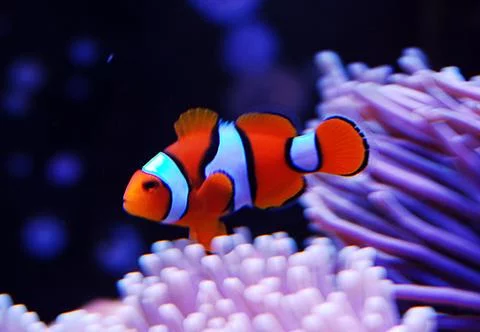
    But what is a clownfish without an anemone? Probably better off, and here’s why.

    Anemones are members of the Hexacorallia subclass in the Cnidaria phylum meaning that they’re related to many of the other types of coral found in the aquarium; this is also why they have similar stinging cells and are photosynthetic from symbiotic algae.

    The main problem with sea anemones is that they are mobile. Most corals are sessile invertebrates that will stay in one given location, moving or simply dying if conditions become unfavorable. Instead, anemones have the ability to detach their foot and float with the current until landing in a more desirable location. In the aquarium, this could mean landing on top of and stinging other corals.

    In addition, anemones can be pretty demanding when it comes to lighting, water flow, and water parameters. They are definitely more appropriate for experienced hobbyists, which limits many beginner hobbyists who want to try the anemone and clownfish pairing.

    The other major problem is that they are quick to spread. Though propagation is a sign of good health, it can quickly become unmanageable. Many hobbyists need to constantly find new homes for their sea anemones, which can be difficult to remove from the rock and handle afterward.

    If you’re up to the challenge, then some of the most popular species of anemone are:

    • Rose/green bubble tip anemone (Entacmaea quadricolor)
    • Rock flower anemone (Epicystis crucifer)
    • Sebae anemone (Heteractis crispa)
    • Long tentacle anemone (Macrodactyla doreensis)

    Marine Worms

    Feather Duster Worm

    There are thousands of species of marine worm with some being incredibly helpful, like the bristle worm, and others being slightly terrifying, like the bobbit worm (Eunice aphroditois). Hobbyists have managed to find the most beautiful of worms and incorporated them into the home coral reef aquarium.

    Some of these marine worms are feather dusters (Sabellastarte spp.), coco worms (Protula magnifica), and Christmas tree worms (Spirobranchus giganteus).

    Just like the other invertebrates on this list, marine worms are filter feeders, pulling planktonic foods out of the water column. However, marine worms are not corals and are in a different taxonomic phylum altogether called Annelida. They are not photosynthetic and will need to be fed a vast array of supplemented foods instead.

    When stressed, some marine worms have the ability to drop their crown. It is unlikely for the animal to recover after this, so remove the crown and tube as soon as possible to prevent an ammonia spike.

    Final Thoughts

    Accurate replication of the coral reef ecosystem has long been the goal of many saltwater enthusiasts. From soft corals to hard corals, these marine animals bring a dimension to the display tank that can’t be understated. With so many types to choose from, there truly is a coral species for everyone at every level.

    Before choosing a coral to bring home, make sure to research how these corals are being collected. We can all do our part to save the remaining coral reef ecosystems of our world’s oceans.


    ๐Ÿ“˜ Want to learn more? This article is part of our complete Saltwater Fish & Reef Guide โ€” your ultimate resource for marine fish, coral care, reef setup, and more.

  • Acropora Coral Care – A First-Timers Guide

    Acropora Coral Care – A First-Timers Guide

    Are you looking at those amazing SPS tanks and wonder how to care for those rare Acroporas? I got you covered today as I go over Acropora coral care. I’ll go over their origins, what they need to thrive, how to maintain stability in your reef tank, and how to frag for Acros!

    If you are getting started in what I call the pinnacle of the reef tank hobby, you have landed in the right place. Let me guide you today on this difficult to keep, but very rewarding coral. Master this coral, and you will see how amazing this experience in the hobby can be. Let’s get started!

    Species Overview

    Scientific NameAcropora spp.
    Common NamesLargely referred to as Acropora; the common name will be assigned with specific species
    FamilyAcroporidae
    OriginWidely found throughout the Indo-Pacific, few species present in the Caribbean
    Common ColorsGreens, yellows, blues, purples, reds, pinks, oranges, browns
    Care LevelDifficult
    TemperamentAggressive
    LightingHigh (200+ PAR)
    Tank PlacementMiddle, Top
    Flow RateHigh
    Temperature Range76-82 degrees F
    pH Range8.0 โ€“ 8.4
    Salinity1.025 or 35 PPT
    Alkalinity8 โ€“ 12 dKH
    Calcium Level350 โ€“ 450 PPM
    Magnesium Level1250 โ€“ 1350 PPM
    PropagationCutting/Fragging

    Origins And Habitat

    The wide majority of Acropora corals originate from the Indo-Pacific in major reef systems like the Great Barrier Reef off the coast of Australia.

    With approximately 150 known species within the genus Acropora, only three occur outside of those regions far away in the Caribbean1. These species are the staghorn coral (Acropora cervicornis), elkhorn coral (Acropora palmata), and fused staghorn coral (Acropora prolifera).

    All three Caribbean species play a major role in the reef ecosystem. They provide shelter for juvenile fish and invertebrates and house a plethora of microscopic life.

    Similarly, Acropora from the Indo-Pacific are also responsible for creating the calcium carbonate backbone of many reef ecosystems. They grow at the tops of reefs where sunlight is abundant. Their hard skeletons have adapted to withstand the constant push and pull of the waves above.

    However, these stony corals have not adapted to the destruction caused by fishing trawlers, ship anchors, or the effects of climate change. Acropora have sadly become the face of dying reefs with lifeless white branches and deserted marine structures.

    What Do They Look Like?

    Acropora Coral

    Acropora are very easy to tell apart from most other corals, but can easily be confused with other small polyp stony (SPS) corals. Given that there are many natural species of Acropora as well as modified varieties from the aquarium hobby, it can be difficult to know exactly what you’re looking at. In general, it’s best to know the appearance of Acropora and then narrow them down from there.

    It should also be mentioned that the appearance of any given Acropora can vary greatly depending on the conditions under which they’re being kept; these differences can be in coloration and extension as well as subsequent movement and growth of the coral.

    Acropora–and many other SPS species–are referred to as ‘sticks’. This is not a misnomer as these corals really do look like a series of intertwined branches, even more so when you receive a single branch as a frag.

    These corals are usually seen in branching forms in the wild as well, forming tight acropora colonies with relatively thick branches. Other times, these branches can be very skinny and spread far apart and even come in plating varieties. In the more ornamental species, the flesh is often a bright color while the polyps are highly contrasting.

    Each polyp has its own tube called a radial corallite which can create a bumpy appearance; the polyps are usually very long, which can also create a fuzzy texture. An axial corallite is located at the end of each branch and appears to have a hole in the center. These corallites are used to distinguish different species of Acropora coral from one another.

    Acropora Coral Care Guide

    Acropora need to be placed where light and water flow allows. This is typically at the top and middle portions of the reef, though some extremely high-tech setups may allow for lower portions to be utilized.

    As we will discuss, these corals need plenty of room to grow and will fight each other when placed too closely together. That, and they can also grow into very impressive structures as well!

    Temperament

    Though Acropora might seem harmless as they don’t have any apparent sweeper tentacles, they are actually very aggressive. These stony corals are determined to preserve their spot on the reef and will eagerly damage other nearby coral species.

    Are they aggressive?

    If two colonies of Acropora touch in the aquarium, there will very quickly be a winner and a loser. It is likely that both will receive some damage where their flesh recedes to expose the white skeleton underneath, but one will cause the other to recede more. Because of this, they are categorized as being aggressive.

    Some hobbyists frag their corals to prevent this from happening while others allow them to adapt and change paths. One thing is for sure though, good placement in the first place will prevent many future problems down the line.

    Maintenance

    Designer Acropora

    Acropora corals are difficult to keep. But just how difficult are they?

    Needless to say, even the most experienced hobbyists have difficulty cultivating a healthy and sustaining SPS system. There are a few reasons why they’re so challenging, though. This mainly comes down to the type of lighting, the intensity of lighting, and the spectrum of lighting as well as the direction and intensity of water flow.

    In addition, nutrients and water quality play a huge role in the color and growth of Acropora, though their needs are relatively straightforward on paper; it is almost necessary to have an automated dosing system or calcium reactor when dealing with large numbers and colonies of Acropora to ensure stability.

    Is it difficult to keep?

    Acropora species are revered as the most difficult corals to keep in the home aquarium. These corals are very temperamental and don’t adapt to change. Flow, lighting, and nutrients all need to be in ideal ranges for Acropora to thrive. Even then, they may not survive.

    There are two things that might happen to an unhappy Acropora: 1) the coral changes colors, otherwise known as ‘browning out’, or 2) the coral dies over the course of a few days or weeks regardless.

    One of the biggest achievements of having an SPS system is having a display of colors. Though some aquarists might have great coral growth, lacking color can be enough for disappointment.

    This challenge, and the large payoff for displaying intricate reef structures and bold colors, make Acropora the holy grail that keeps hobbyists coming back.

    Lighting

    In nature, Acropora are found at the very top of the reef. The aquarium hobby has made it possible to keep them from the middle and up, though a large amount of light is needed.

    The conundrum with SPS corals is that the more they grow, the more they shade out the lower branches of themselves. This, in addition to them being light-loving already, can make having a large colony for a long time very difficult.

    SPS corals are especially susceptible to browning out when they don’t receive enough light and bleaching when they receive too much and/or are moved between environments too quickly. The perfect colorations will be reached through trial and error of different lighting fixtures, intensities, and spectrums.

    At the very least, most Acropora species need at least 200 PAR. However, they usually don’t start thriving until placed under 300-500 PAR, with some systems successfully running above 600 PAR. That is a ton of light that your coral needs to adapt to over time.

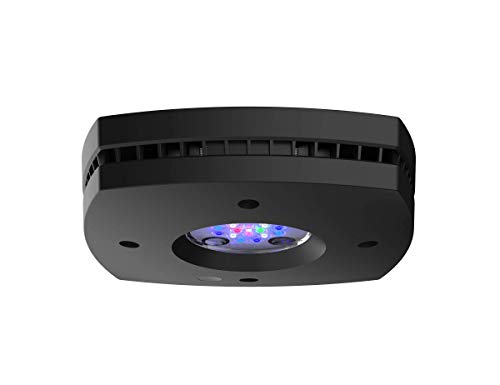
    Over the past few decades, hobbyists have argued about which light fixtures are best for Acropora. There is no clear consensus and success has been found under each type, whether it be LEDs, T5 fluorescents, or metal halides. My personal opinion, is try a hybrid system like the Aquatic Life system.

    Best For SPS Corals
    AQUATICLIFE 48″ T5/HO Hybrid Light

    For those with want a tank full of stick candy, a T5 hybrid unit like this one is the go to. Combine with Radion for the ultimate in lighting today

    Buy On Amazon Click For Best Price

    How many hours of light do they need?

    Besides intensity and spectrum, Acropora have the same photoperiod as other species, making them easy to keep alongside other SPS and large polyp stony (LPS) corals.

    In general, about 7-9 hours are recommended for peak settings with a couple of hours for ramp up and down. Of course, this will vary with each system, though anything below or above this could cause algae or other problems.

    Water Flow

    As with any coral, water flow is needed to deliver nutrients to corals while also removing waste and preventing algae and other microorganisms from settling. As mentioned before, these corals live on the top of reefs where water flow is naturally high due to wave activity.

    Not only do Acropora need high water flow but they also need random water flow. Random water flow from an aquarium wavemaker will ensure that the coral grows naturally; higher flow can result in thicker branches while lower flow will cause the coral to expand as much as possible.

    As the coral grows, the overall flow throughout the colony will naturally decrease. This can cut off nutrient exchange from the densest areas of the colony and even start to impede delivery to nearby colonies.

    The answer to this is simple: add more flow or frag the colony to increase water movement once again. Always keep an eye on how efficiently water is circulating throughout the system to maintain steady growth.

    Water Parameters

    SPS water parameters are somewhat of an oxymoron. These corals love clean water but need high, stable levels of nutrients for growth. This makes it very difficult to regulate in a home aquarium setting, though modern technology through automatic dosers and smartphone applications has made balancing nutrients that much easier.

    There are a few parameters that you need to keep a careful eye on like alkalinity, calcium, magnesium, nitrate, and phosphate.

    Alkalinity, calcium, and magnesium all work together to facilitate the growth and color of Acropora. They are usually introduced into the system through natural seawater or through marine salt mix or other supplements; as we’ll discuss later, these parameters are the most commonly dosed once coral growth becomes exponential.

    Best Value
    BrightWell Aquatics NeoMarine Salt

    Best Value

    The salt of choice for World Wide Corals. It is a top tier salt mix with a reasonable price

    Click For Best Price Buy On Amazon

    On the other hand, nitrate and phosphate can be introduced into the reef aquarium through waste from fish, invertebrates, and bacteria. These parameters need to be low, but available. Generally, reef tanks run under 40 ppm nitrate and under .01 ppm phosphate. An imbalance of these parameters can lead to algae and poor coral growth.

    For reefers who achieve this level in the hobby, the usual issue is lack of nutrients, due to the high end nature of their equipment. Dosing nitrates and phosphates are not uncommon!

    Dosing

    As corals grow, they take up nutrients. For average aquarists, these nutrients are reintroduced into the system by way of water changes, fish waste, and other natural processes in the aquarium. However, once Acropora start to grow, they can start to have high demands.

    More specifically, you will need to balance alkalinity, calcium, and magnesium. These three parameters work together to create stability. Perform regular tests to observe which and how nutrients are being used throughout the system and add as needed. It will take time and testing to find which product combinations work best for your system.

    For alkalinity, calcium, and magnesium especially, it is imperative to change parameters slowly. This is done over the course of weeks and months. However, once the deficit is realized, dosing can be done weekly or as needed by a scheduled application or machine. There are also auto tools like the Neptune Trident that can automate dosing entirely. A trident is something to consider if you are considering designer Acropora corals.

    Neptune Trident

    The Neptune Trident is a controller that automatizes dosing and monitors the most important 3 parameters of coral reef keeping โ€“ alkalinity, calcium, and magnesium. 

    Click For Best Price

    Sometimes, home aquarium systems can be too clean. In this case, phosphate and/or nitrate might need to be dosed. Though this can sometimes be fixed by feeding more heavily or even introducing new livestock into the tank.

    Feeding

    For the most part, Acropora corals get the food they need through their symbiotic relationship with photosynthetic dinoflagellates called zooxanthellae.

    These stony corals do not respond well to target feeding. Most times, they will retract their polyps and start to excrete slime and filaments to protect themselves. On the other hand, they have successfully been broadcast fed a variety of dedicated coral foods as well as zooplankton and small organisms.

    Some hobbyists like to give their SPS corals amino acids. These supplements chemically help with protein production which can lead to increased growth and more vibrant colors.

    Great For Acros
    AcroPower

    A great amino acid supplement designed for Acropora corals. Connect to your dosing pump and watch the results!

    Click For Best Price Buy On Amazon

    Do they grow fast?

    For as difficult are Acropora species are, they are relatively fast growers. Of course, this doesn’t mean that your tank will be filled out with coral in the first few months of introducing them to your system, but over years, you will have a thriving ecosystem comparable to those in the wild.

    It should be noted that it can take quite a while for some Acropora to settle in. They will likely turn brown over the first few weeks and months of introducing them into your aquarium. But they will quickly establish themselves and start to grow once stability has been reached.

    What Are Good Tankmates?

    Acropora corals can be kept with all reef-safe species. In fact, Acropora do best when they receive natural nutrients from fish waste.

    As these corals can grow very large and need intricate reef tank setups, most aquarists have as much space as they need to house a variety of fish species. Some of these options usually include tangs which can also be beneficial for picking away any algae that might start at the base and lower portions of the colonies.

    It should be noted that some fish, like butterflyfish (Chaetodontidae family), are largely regarded as being not reef-safe. That being said, many hobbyists have found that they aren’t as likely to pick at SPS coral as they are at LPS or soft corals. Still, always use caution when adding a possibly not reef-safe species.

    Fragging

    Fragging Acropora can be profitable and might be necessary over time as your corals start to grow. Fragging these corals is not difficult, though it can be intimidating to work with a very expensive or sensitive species. If you’ve ever fragged any other kind of branching SPS coral before, the method is the same.

    For a clean cut, an electric saw is recommended. Otherwise, you may use a bone cutter. Simply cut the piece of Acropora where desired and use a coral dip or iodine for better recovery. For the bone cutter method, see the video from C&M Aquatics below for a visual.

    If selling these frags, you may want to pick the more desirable tips from the colony and not just a straight stick. It is also important to take from a place on the coral where the natural contour of the colony isn’t lost or impeded.

    Sometimes you might find that you’ve accidentally knocked off a piece from one of your colonies while doing maintenance in the tank. Simply stick this piece on a piece of rock or attach it to a frag plug. Chances are that it will make a full recovery and start forming its own colony!

    Why is yours turning white?

    In most cases, your Acropora is turning white because it is not happy. Bleaching is when the coral expels the symbiotic zooxanthellae from its calcium carbonate skeleton, leaving the colony stripped of color. This is in response to unfavorable conditions or sudden changes in water chemistry.

    For most hobbyists, it will be very easy to tell where the mistake was, especially if other corals in the tank bleached too. However, sometimes these things are untraceable and seemingly have no rhyme or reason. Once the coral has fully bleached, there is little to no chance that it will recover and algae will quickly cover the white remnants.

    If only one area of the coral has started to bleach then there is some hope, though recovery will be difficult. All in all, the most important aspect of a reef tank is stability. The problem is that you need stability while also addressing the problem, which might require gradually changing parameters.

    This needs to be a slow and steady process. The coral can absolutely recover, but it will take a few months.

    If your coral isn’t experiencing bleaching but still losing flesh, then there might be a deeper underlying problem like disease, infection, or pests.

    Slow & Rapid Tissue Necrosis (STN & RTN)

    Both slow tissue necrosis (STN) and rapid tissue necrosis (RTN) are somewhat of a mystery in the aquarium hobby. These conditions cause the coral to lose its flesh gradually or all at once with no apparent reason; this can happen overnight to an aquarium that has successfully been running for years.

    Right now, it is believed that these conditions are caused by an unknown organism that causes an unfavorable reaction due to changes in environmental conditions. There is no known cure for STN or RTN either, though recovery attempts can be made through quickly fragging the coral or dipping the coral in an iodine solution.

    Flatworms

    Many SPS corals have their own designated pest invertebrate and Acropora corals are no different. These flatworms are very difficult to see but can be reflected by the overall loss of color in the coral. Small missing pieces of flesh on the coral will also gradually spread across the colony, indicating where the flatworm has eaten.

    Luckily, there are a few products available to treat Acropora-eating flatworms, though these treatments are aggressive and will need regular water changes to ensure that other corals stay safe. There are a few livestock options for pest control too, like Halichoeres species of wrasse along with leopard wrasses (Macropharyngodon meleagris), though this is not guaranteed.

    Kills Flatworms
    Flatworm Exit

    A common treatment for flatworms. It’s an aggressive treatment. Be prepared to make water changes post treatment

    Click For Best Price Buy On Amazon

    Acropora-eating flatworms can be very difficult to diagnose and even more difficult to treat. It is possible, though.

    Where To Purchase

    Acropora Corals can be purchased from either local fish stores or online reef shops. When search for Acroporas, the reputation of the seller is critical and you should only work with a what you see is what you get (WYSIWYG) coral seller if looking online.

    Acropora Coral

    Use Coupon Code ASD5 For 5% Off Your Order!

    The Acropora Coral is considered the pinnacle coral to keep in reef tank hobby. Difficult to care for, but extremely rewarding and easy to frag

    Click For Best Price Buy On Unique Corals

    Acroporas are designer corals these days. There are many Acros with their own brand names now that are associated with the coral seller or store. Many fetch for high prices. Be prepared to shop around and look to be selective if you are start looking for designer corals.

    Closing Thoughts

    Acropora are the end goal for many hobbyists: they have incredible colors and grow into immense structures. Sadly, the rumors are true and these corals are the most difficult to keep due to their need for high lighting, high water circulation, and stable water parameters.

    Still, they remain a trademark for the picturesque home reef aquarium.


    ๐Ÿ“˜ Want to learn more? This article is part of our complete Saltwater Fish & Reef Guide โ€” your ultimate resource for marine fish, coral care, reef setup, and more.

  • Montipora Coral Care – A Complete Guide

    Montipora Coral Care – A Complete Guide

    Montipora is one of the first SPS corals I recommend to reef hobbyists ready to move beyond softies and LPS. I’ve kept several species in my 125-gallon reef over the years, and they’re more forgiving than most people assume โ€” as long as your water chemistry is stable and your flow is adequate. The variety of growth forms and colors available makes them endlessly interesting to collect.

    Do you want to know all about Montipora coral care? If so, this blog post is for you! We cover all the basics in order to keep your corals happy and healthy. There are many different types of Montipora that exist today; however, they all require the same basic care. We’ll cover everything from lighting requirements, parameters, and placement. Don’t worry, it’s easy as 1-2-3! Let’s dive in!

    An Overview On The Montipora Coral

    Scientific NameMontipora spp.
    Common NamesMontipora, vase corals, velvet corals
    FamilyAcroporidae
    OriginWidely found throughout the Indian and Pacific Oceans
    Common ColorsPurples, greens, oranges, reds, blues, yellows
    Care LevelEasy for SPS
    TemperamentPeaceful
    LightingModerate-High (150-200+ PAR)
    Tank PlacementMiddle, Top
    Flow RateModerate – High
    Temperature Range76-82 degrees F
    pH Range8.0 โ€“ 8.4
    Salinity1.025 or 35 PPT
    Alkalinity8 โ€“ 12 dKH
    Calcium Level350 โ€“ 450 PPM
    Magnesium Level1250 โ€“ 1350 PPM
    PropagationFragging

    Origins And Habitat

    Species of Montipora coral can be found at all depths of the reef. They are largely found throughout the Indian and Pacific Oceans, with most specimens within the aquarium hobby originating from waters around Australia and Indonesia.

    These corals are a type of small polyp stony (SPS) coral, which means that they excrete a hard calcium carbonate skeleton that houses photosynthetic zooxanthellae. SPS corals, such as Montipora, are the foundation for coral reefs as they build hard structures that shelter a plethora of life; they have evolved to be able to withstand turbid waters where other soft corals and large polyp stony (LPS) corals would be damaged by strong waves and currents.

    SPS corals also thrive in intense light. Some of the most notable species, like those from the Acropora coral genus, can be found at the top of the water column under direct sunlight. Montipora corals are not as demanding when it comes to lighting, but they will still thrive in areas with lots of light available.

    Plating varieties that grow outwards from the reef will also choke out any other corals that might fall in the shadow below them.

    Is This Hard To Keep In The Aquarium?

    In regards to SPS, Montipora is one of the easiest species you can keep in the aquarium. That isn’t to say that they can be kept by anyone, though.

    Montipora corals need high lighting, high water flow, and stable water parameters. Though this might sound reasonable for beginners, many hobbyists aren’t at that point with their tanks yet. At the very least, an aquarium should be one year old before attempting to add any SPS. This will allow time for the tank to settle, for algae outbreaks to end, and to develop a true understanding of how this mini-ecosystem works.

    However, if you have successfully kept soft corals and LPS and have seen growth and stability, then you may be ready to try SPS corals. On top of being relatively easy to keep, Montipora coral is a popular entryway SPS species due to the many different varieties, shapes, and colors it’s available in.

    Montipora can come in branching, plating, and encrusting coral varieties in almost all colors. Alongside with birdnest corals, the montipora is considered a good stepping stone into advanced SPS species like Acropora corals.

    What Does Montipora Coral Look Like?

    What Does A Montipora Coral Look Like

    Montipora can be somewhat challenging to identify since it can come in so many varieties and be categorized under many designer names. In general, it’s best to know the general attributes of each type of Montipora coral variety regardless of the color or common name given.

    Branching

    Montipora Digitata

    The most popular branching species of Montipora coral is Montipora digitata. From there, the most common colors of Montipora digitata are orange (‘Forest Fire Montipora digitata’) and green (‘Green Montipora digitata’).

    Like other branching SPS corals, branching Montipora grows into fascinating, complex structures. These corals have thicker branches with antler-like tips. The polyps are very concentrated and can create a very fuzzy appearance. A healthy branching Montipora will have white tips that indicate new growth.

    Though these corals will grow towards the light on their own, new growth will start to shade out any old branches below. Because of this, it’s often necessary to regularly frag and trim the colony for optimal health.

    Plating

    Plating Montipora is probably the most popular variety of this particular coral species and definitely one of the easiest to recognize. Most specimens of plating Montipora coral belong to Montipora capricornis, though true identification can be difficult.

    These corals are aptly named after their mostly horizontal circular growth. Plating Montipora corals have a rough texture with polyps that do not extend very far. These corals will continue to expand outwards as far as they can, but will eventually start to plate upwards as well.

    Though plating Montipora coral brings another dimension to the reef aquarium, a colony can take up a lot of space. Due to its outwards growth, it eventually shades out anything that grows below it. This can take a lot of real estate from the rest of the reef; because of this, many hobbyists try to place them as low as lighting allows.

    Encrusting

    Encrustring Montipora

    Encrusting Montipora corals aren’t as popular as branching or plating varieties, but they’re still a good choice for bringing some additional color into the reef aquarium. Most encrusting corals will belong to Montipora verrucosa, though this is not always true.

    This coral has a very hard and bumpy appearance; the individual polyps are barely noticeable. They do not come in as many color options as the previous varieties of Montipora coral and are mostly limited to orange, green, and purple.

    Encrusting Montipora quickly grows over rock and other structures in the aquarium. Though they are not the most obvious coral in the aquarium, they can bring unique color and texture.

    Placement In The Reef Aquarium

    In general, all varieties of Montipora coral can be placed in the middle or top of the tank. They need moderate to high light and moderate to high water flow. Based on the setup of the aquarium, this could even allow Montipora to be grown farther down towards the substrate.

    The most important factors about placing Montipora coral are adequate and even water flow, especially with branching varieties. Branching Montipora can quickly create a dense cluster of coral which can lessen water flow. This means that nutrients and gas exchange lessen, which can start to affect the overall health of the coral over time.

    This can be solved by adding more water flow or fragging the corals to increase water circulation once again. In general, it is also best to have random water flow throughout the tank rather than unidirectional water flow to keep debris from piling up in one spot. This can be achieved with multiple pumps or ones that have a randomized setting.

    Do they Need High Light?

    Yes, Montipora needs high light. As one of the least light-demanding species of SPS, they still need at least 150 PAR with appropriate frequencies and intensities.

    Like other corals, Montipora can be acclimated to higher portions of the tank over time and many have successfully been kept at areas receiving 200-300+ PAR. If they are not receiving enough light, they will usually start to lose their color and may even turn brown; if they are receiving too much light, they will start to bleach.

    A brown Montipora is usually a sure sign that the coral is not receiving enough light, though this could also be due to other stressors as well. Shadowing is also a problem with SPS corals as they get larger. This is more pronounced when using LED lighting. It’s best to work with a high end LED light like an EcoTech Radion. or consider a hybrid system when working with a heavily stocked SPS tank.

    Used by World Wide Corals
    EcoTech Radion G5

    Editor’s Choice

    The newest Radion G5 is a massive update to the prior generation. It’s the light of choice for pro level reefers.

    Click For Best Price

    How Do You Place Encrusting?

    Though branching and plating Montipora corals don’t need much special consideration in regards to placement, many hobbyists choose to keep their encrusting species on rock islands.

    While SPS growth isn’t fast at first, it can start to become exponential in a very short period of time. This is especially true with encrusting Montipora that will shamelessly grow over anything that it can, including pest algae and other corals.

    In order to control the spread, many hobbyists dedicate a certain area of the tank just to encrusting Montipora. It is also a popular option to allow it to grow up the wall of the aquarium, though many hobbyists prefer a green star polyp (Pachyclavularia violacea) backdrop instead.

    Temperament In The Aquarium

    One of the best things about Montipora coral is that they are almost completely harmless to other corals. These corals have barely any sting and will not hurt other corals they come into contact with. However, this is not true if they come in contact with other corals.

    SPS are delicate animals. They do not have much ability to sting and tend to bleach if you look at them the wrong way. Because of this, it is crucial to keep more aggressive corals far away from SPS colonies.

    LPS with long sweeper tentacles are especially to blame as they can quickly hit a branch of SPS and cause injury. Though most Montipora are able to recover from injury, there is time for infection and algae to grow which can negatively impact the overall health of the coral.

    If attempting a mixed reef, make sure that there are distinct zones of aggression, allowing plenty of space for sweeper tentacles and potential growth.

    Care And Maintenance

    Montipora coral does not require a lot of maintenance. If an aquarium is stable, it is most important to keep that stability. When dealing with SPS, that mostly means maintaining water parameters through dosing.

    Because SPS corals build calcium carbonate skeletons, they need a good supply of nutrients, including trace elements and alkalinity and calcium supplementation (like E.S.V). Since Montipora coral is a faster-than-average growing coral, dosing might also be necessary to keep up with growth even if the colony isn’t large and if there aren’t many other SPS in the aquarium.

    Best For Beginners
    E.S.V. B-Ionic

    Great For Beginners

    ESV B-Ionic is a great 2 part solution that works for all levels. Approachable for a beginner to use and can be used for all reef tank builds.

    Click For Best Price Buy On Amazon

    Each system will be different and dosing frequencies and amounts can only be determined by recording and documenting how nutrients are used throughout the tank. It should also be noted that some species of Montipora are much more forgiving of instability and less-than-optimal conditions than others.

    Dosing

    The main parameters you may need to dose for successful Montipora coral growth are alkalinity, calcium, magnesium, and trace elements. It is necessary to analyze how these levels change with and in between water changes to determine how much dosing is necessary.

    As new water is circulated throughout the aquarium, nutrients are used for skeletal growth. This depletes nutrients, which can only be added through new water or through dosing; in order to minimalize maintenance and to increase daily stability, it is simpler and more effective to dose.

    Because of this need to dose, many hobbyists equip an auto-doser to their system. These can be costly at first, but they will add the exact amount of product needed to maintain ideal levels and eliminate the need for additional upkeep.

    Editor’s Choice!
    Neptune DOS

    The Best Dosing Pump

    With great premium features like the ability to auto change water and an industrial level pump, the DOS is the best piece of equipment you can purchase today for your doing needs.

    Click For Best Price

    If you are running a very clean system in regards to nutrients, then it might also be necessary to dose nitrates and phosphates–though, most reefers are usually trying to bring these two parameters down instead of increasing them.

    Feeding

    It might seem counterintuitive to feed SPS as they lack fleshy polyps that will quickly accept foods, but SPS actually appreciate broadcast feedings every now and then; target feeding is not recommended and can actually cause the coral to retract.

    Most of the food your coral needs will be given through the photosynthesis processed by symbiotic zooxanthellae. However, you may supplement feedings with amino acids and zooplankton.

    Chemically, amino acids are the backbone of proteins. Increased proteins mean increased growth, which can improve the size, color, and overall health of the coral. On the other hand, zooplankton can be processed as regular food.

    As Montipora coral gets most of its ‘nutrition’ from lighting, amino acid and zooplankton supplements are not regularly needed and should not be overdone; some systems that run higher nutrients don’t need them at all. In low nutrient systems, supplemental feedings should be done one to two times a week at the most.

    Again, the schedule will depend on how your system responds.

    What Are Good Tankmates?

    Montipora coral can be kept with all reef-safe species. SPS can be easily picked at by more advantageous species, like marine angelfish and butterflyfish, so it is best to go with those that are guaranteed to be safe, like:

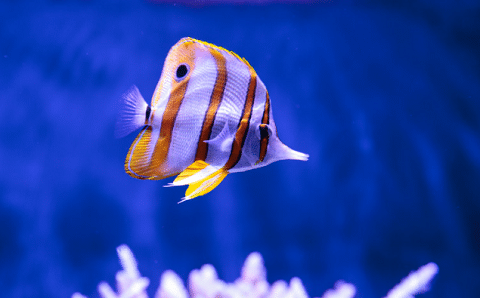
    It is not impossible to keep certain species of butterflyfish with SPS, like the copperband butterfly (Chelmon rostratus), though this will largely depend on the personality of the individual fish.

    It should also be noted that plating Montipora coral can easily be irritated by wandering snails and crabs. Though they shouldn’t cause too much damage, you might want to avoid hermit crabs and larger snails that will unknowingly scrape the top of your Montipora.

    Fragging

    Fragging Montipora coral is relatively easy (video source), especially plating varieties. In some ways, fragging SPS is easier than fragging LPS or soft corals, though the recovery rates can be a little trickier.

    In order to frag plating Montipora, simply break the plate up. This can be done inside or outside of the tank as long as you have full control over where the break is. A bone cutter can also be used to make smaller, more precise incisions.

    In order to frag branching or encrusting varieties, you will need a bone cutter to split a branch or to get an encrusted piece off the rock. Once done, simply glue the frag to a frag plug or back to a piece of rock in the aquarium.

    A coral dip, like iodine, is recommended to help speed up recovery, though this step is not entirely necessary.

    Pests

    Even though Montipora are some of the easiest SPS to keep, they come with some unique challenges. One of these challenges is that they’re one of the most susceptible corals to bring unwanted pests to the aquarium, namely the Montipora eating nudibranch (For more info, check out my friend Aaron and his video above).

    Montipora eating nudibranchs will evade most coral dips and find their way into the aquarium regardless; some adults may die during the dipping process but eggs largely remain unscathed.

    These invertebrates are small and white. They have several appendages that come out from the sides of their body that facilitate movement. They can be found on the glass of the aquarium, in the substrate, or directly on the Montipora coral. It is usually easiest to find them at night with a flashlight.

    There are a few ways to tell if you’re facing a Montipora nudibranch outbreak. These signs include:

    • Exposed areas of skeleton when there are no signs of aggression from other corals and stable water parameters
    • Random bleached areas of the coral away from the edge
    • Egg clutches on the underside of the coral
    • Visual observation of nudibranchs

    Tanks are especially susceptible to Montipora eating nudibranch if introducing a wild-caught coral. In order to prevent this and to receive a hardier coral in general, it is always best to choose aqua-cultured specimens. Still, there is always the chance that nudibranchs will be introduced from an aqua-cultured setting.

    The best way to avoid Montipora eating nudibranchs is by allowing enough time for quarantine. Several weeks should give enough time to observe the telltale signs of an infestation. Quarantine allows for much more aggressive treatments without having to worry about other more sensitive fish and corals that are waiting in the display.

    Even then, it is possible to find nudibranchs on a quarantined piece of Montipora. At this point, it will take persistence and dedication to get rid of them. There are a few options for dealing with Montipora eating nudibranchs, and usually, the solution will be a combination of all methods.

    One of the most aggressive ways for eliminating Montipora eating nudibranchs from the aquarium is to persistently dip the coral. This dip should be strong and administered regularly; basically, you want to dip as frequently as you can without risking damaging the coral. At the same time, check the undersides of the coral for eggs and manually remove them.

    In addition to dipping the corals, you may try more organic remedies, such as introducing a wrasse that is a natural predator. In particular, the yellow coris wrasse (Halichoeres chrysus) and the six-line wrasse (Pseudocheilinus hexataenia) have proved to be the most helpful.

    Keep in mind that your tank should be able to accommodate for long-term housing of these species, or plans should be made to safely rehome them after the nudibranchs have been eliminated. It is very unlikely that the yellow coris wrasse will solve this problem alone though and usually you will need to dip the corals as well.

    Lastly, you may need to sacrifice a piece of coral. Some hobbyists have found success in removing all Montipora from the aquarium except for one piece. This piece will act as a lure that can be removed once nudibranchs have occupied it. However, as nudibranchs can live in other parts of the aquarium, this method is not always guaranteed to be completely effective.

    Still, Montipora eating nudibranchs are extremely difficult to get rid of and anything is worth a try. Though these invertebrates mainly target plating Montipora, they may also go after encrusting and branching varieties as well.

    Where To Buy

    Montipora corals can be purchased at local aquarium stores or online. I tend to prefer online coral vendors as they will sell what you see is what you get (WYSIWYG), offer guarantees, and generally have a better reputation for not having corals infected with pests.

    Closing Thoughts

    Montipora is a very popular genus of hard coral to keep due to its hardiness, available varieties, and color selection compared to other species of SPS. Montipora can be plating, branching, or encrusting, and requires high lighting and high water flow.

    These corals can be more susceptible to pests than other SPS corals, but they are very easy to frag and pretty forgiving when it comes to instability in water chemistry. They are also relatively easy to find and can be an inexpensive addition to the aquarium.

    Have a question? Leave a comment below and let’s start a conversation. Welcome to the reef aquarium community :).


    ๐Ÿ“˜ Want to learn more? This article is part of our complete Saltwater Fish & Reef Guide โ€” your ultimate resource for marine fish, coral care, reef setup, and more.

  • SPS Coral Types – An Intro To SPS Reefkeeping

    SPS Coral Types – An Intro To SPS Reefkeeping

    SPS corals were a turning point in my reef journey โ€” the moment I started keeping them successfully, I knew I’d reached a new level as a hobbyist. They demand stable parameters and consistent care, but the payoff is a reef that looks genuinely spectacular. If you’re thinking about making the jump from softies and LPS, this guide will help you understand what you’re getting into.

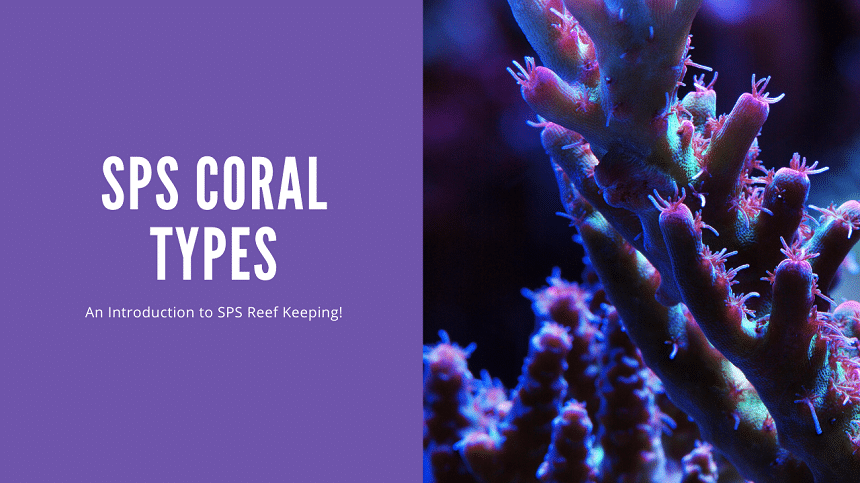
    Small polyp stony (SPS) corals are the end goal for many reef hobbyists. In the wild, these corals, like the impressive staghorn coral, define marine ecosystems and house a plethora of life on the reef. In the aquarium, they can bring the same color and depth to the tops of rockwork that other large polyp stony (LPS) corals and soft corals cannot.

    However, SPS corals are regarded as the most challenging species of coral to keep in the home aquarium setting. While it is true that they are more difficult than other types of common coral, they are not completely out of reach for more serious hobbyists.

    What Is The Difference Between Other Corals?

    SPS corals are easy to identify. They completely lack the fleshy, large colony quality that LPS and soft corals have. Instead, SPS corals have a hard branched or plated appearance with individual polyps.

    In the reef aquarium hobby, SPS are considered to be the most difficult species to keep, with LPS being for intermediate hobbyists, and soft corals being best for beginners. Apart from this, all three have very different anatomy and physiology.

    SPS Corals

    SPS corals, also known as hard corals, are responsible for building the natural reef. These animals excrete calcium carbonate skeletons that make structures for fish and invertebrates to find shelter; symbiotic zooxanthellae are also housed in these skeletons and complete photosynthesis which feeds the coral.

    Taxonomically, SPS corals belong to the Scleractinia order1. From there, they are members of the Hexocorallia subclass which means that their polyp symmetry is divisible by six. Such as they are named, they have very small polyps on the outside of their flesh-covered calcium carbonate skeleton.

    The calcium carbonate skeleton of SPS corals is built to withstand the battering from rough waves at the top of the reef where these corals are found. This also allows them to receive the most direct sunlight as their branches can grow for optimal exposure. This translates to a reef tank setting with the need for higher lighting and increased water flow.

    Soft and LPS Corals

    On the other hand, soft corals and LPS can be entirely fleshy, have a calcium carbonate skeleton, or contain sclerites, meaning they contain small pieces of hard internal structure; the main feature of soft corals and LPS corals though, is their very obvious polyps which can extend to impressive sizes.

    Some LPS corals do have a calcium carbonate skeleton, however, the polyps extend outwards and don’t cover all parts of the structure such as they do for SPS. Some soft corals may contain sclerites but are much less structured than LPS overall.

    Both LPS and soft corals are found lower down on the reef where the water current is not as strong and lighting is indirect. This translates into the aquarium with low to moderate lighting and moderate flow requirements for most species within these two categories.

    Keeping Them In The Aquarium

    SPS corals are notoriously known for being difficult to keep. But are they actually that much more demanding than other corals? Yes and no.

    Yes, SPS corals are much more demanding than soft corals and LPS corals, but this doesn’t necessarily mean that they’re all more difficult. The main difference is the setup and the maintenance: SPS corals need a high-tech setup and stable conditions while LPS corals and soft corals can adapt to less optimal conditions.

    A high-tech setup starts with good lighting, water flow, and filtration. SPS corals are some of the most light-demanding corals, and a good light fixture is necessary. This light needs to have a fully programmable spectrum, intensities, and photoperiod at the very least. The EcoTech Radion is a great example of an LED designed for the demands of an SPS tank.

    Used by World Wide Corals
    EcoTech Radion G5

    Editor’s Choice

    The newest Radion G5 is a massive update to the prior generation. It’s the light of choice for pro level reefers.

    Click For Best Price

    Water flow is almost, if not more, important than lighting. Water circulation keeps corals fed and prevents algae from taking over. Many SPS corals grow in tight colonies, which can cause dead zones in the densest parts. Water flow needs to be random in order to keep fresh water pushing past all areas of the colony at all times.

    Though some reef aquarium hobbyists run SPS-dominant reefs with simple filtration, it is usually also a must to have a sump system. Sumps allow for additional room for beneficial bacteria to grow, increased nutrient export, and adequate aeration. All of these factors play into a more stable system overall.

    Stability is arguably the most difficult part of keeping SPS. These corals are notorious for bleaching and eventually dying when conditions change too quickly. All major water parameters, along with alkalinity, calcium, magnesium, pH, salinity, and temperature all need to be constant for success.

    Many hobbyists regulate these parameters with digital monitors, auto top-offs, and doser pumps, even Calcium reactors for full high end systems. These all get get very expensive over time. However, if you’re willing to spend the money upfront for a top-of-the-line SPS system, then there is a good chance that you will succeed in keeping these corals. Of course, you may do everything right but still have problems.

    Water Parameters

    That being said, what are the perfect water parameters for an SPS reef tank?

    As always, these values can differ between tanks and hobbyists have had luck below and above the listed ranges; if your water parameters and tank conditions do not match these but your corals are healthy, do not attempt to change your system just to meet ‘ideal’ numbers.

    In general, though, these are the accepted ranges for keeping SPS corals:

    • Lighting – High (200+ PAR)
    • Flow Rate – High
    • Temperature Range – 76-82 F
    • pH Range – 8.0-8.4
    • Salinity – 1.025 and 35 PPTย 
    • Alkalinity – 8 dKH
    • Calcium Level – 350-450 PPM
    • Magnesium Level – 1200-1350 in PPM

    Note that many hobbyists keep SPS corals in lighting conditions well over 200 PAR, though this is considered to be the bare minimum for attempting them at all.

    Temperament In The Aquarium

    One of the good things about SPS is that they are not very aggressive corals. This allows multiple species to be housed very closely together without too many problems; this does not mean that they will not try to sting each other though, so it is always best to be cautious and to trim any corals that grow too close together.

    The main problem with SPS aggression is with other corals. LPS corals with long sweeper tentacles are very capable of stinging sessile SPS, which can quickly cause tissue loss and other damage. To prevent this, simply keep LPS away from SPS, possibly at another level of the tank.

    Though SPS is usually able to regrow once the problem has been addressed, this still gives time for algae to takeover exposed skeleton which can impact the overall health of the coral.

    What Is The Easiest Type To Keep?

    Though SPS corals are more difficult to keep than most corals, there are a few that are easier than others. This includes Montipora and species from the Pocilloporidae family.

    Frags of these corals are also usually cheap and easy to find, which can make the transition into keeping these corals a little less daunting.

    When Can You Add Them To The Aquarium?

    SPS corals need stability. The time for each reef aquarium to reach stability differs, but it is generally advised to not attempt keeping SPS corals until the system is at least one year old.

    This time should allow for water parameters to settle, algae blooms to be controlled, and new soft and LPS coral growth to begin. Also, keep in mind that some species of SPS might do better than others, and do not get discouraged if one species doesn’t grow at all in your tank; this may be temporary, or your system will simply not support that kind of coral.

    Common Types (Different Species)

    SPS corals make up the ‘ideal reef’ that many envision when they think about a coral reef in the ocean; SPS are branching corals that give reefs their signature appearance. However, different species of SPS corals can be difficult to tell apart to the untrained eye. This could be due to a few reasons.

    One, SPS are usually sold as small frags, which can make exact identification nearly impossible with such a small sample. Secondly, species of SPS can vary greatly in color and shape across the genus; as we’ll see, Montipora especially can come in several formations.

    It should also be said that SPS-keeping is another level of the aquarium hobby. You will often come across corals that you have never seen before and might never see again. In general, it is best to know the general attributes of each major SPS genus and try to apply them to what you see.

    Montipora

    Montipora Cap Coral

    The Monti Cap coral is a good stepping stone to serious SPS reefkeeping. Becomes large and grows very fast

    Buy On eBay
    • Scientific Name: Montipora spp.
    • Difficulty Level: Easy-Moderate
    • Temperament: Not aggressive
    • PAR Requirements: Moderate (150 PAR)
    • Flow Requirements: Moderate-High
    • Placement: Middle, High
    • Origin: Indo-Pacific

    Montipora is a genus of SPS corals with very diverse members. These corals can come in branching, plating, and encrusting varieties in almost all colors. They are not overly demanding in regards to being an SPS coral, but they do require high lighting, good flow, and stable water parameters just as the other, more advanced corals on this list do.

    The most common types of Montipora to come across are Montipora digitata and plating Montipora.

    Montipora Varieties

    Montipora digitata is a branching variety of Montipora. The two most common colors are orange (‘Forest Fire Montipora digitata‘) and green (‘Green Montipora digitata‘); these corals have been modified to express the best colors and may be assigned a designer name.

    Montipora digitata have thicker branches that sometimes grow together to form antler-like structures. Their polyps are very concentrated and have a soft appearance. The tips of these branches will typically be bare and white where new skeleton growth is forming.

    In comparison, plating varieties, like Green Montipora digitata, grow outwards in large circular disks. Similarly, the tips of these plates will be white with new growth.

    All varieties of Montipora can be attractive to most hobbyists as they’re one of the easiest and fastest species of SPS to keep.

    Pocilloporidae Family

    • Scientific Name: Pocillopora spp., Seriatopora spp., and Stylophora spp.
    • Difficulty Level: Easy-Moderate
    • Temperament: Not aggressive
    • PAR Requirements: Moderate (200+ PAR)
    • Flow Requirements: High
    • Placement: Middle, High
    • Origin: Indo-Pacific

    Members of the Pocilloporidae family are largely known as bird’s nest corals due to their interweaving branching growth. They come in many colors and are said to be even easier to keep than Montipora, but still require SPS growing conditions.

    There are three genera of bird’s nest coral commonly found in the aquarium hobby: Pocillopora, Seriatopora, and Stylophora.

    Pocillopora

    Pocillopora have thick, stubby branches. They have a moderately fuzzy appearance and are most commonly found in greens and purples.

    Due to their thick branching, these corals do best with higher rates of water flow.

    Stylophora

    Stylophora are very similar to Pocillopora. In fact, it is usually only possible to tell these two corals apart by looking at a full colony.

    Stylophora also have rounded branches with moderately fuzzy polyps. However, the overall appearance of the colony tends to be more orderly and uniform than that of Pocillopora.

    Seriatopora

    Seriatopora are largely known as the true bird’s nest corals of this family as they have pointed tips and very thin branches that create an intricate twig-like cluster of coral. These corals are also most commonly found in pinks, greens, and purple and green combinations; their polyps are much more spread apart than the other related corals.

    Seriatopora are very delicate and need to be handled with care. This can make fragging them very easy but can also make transportation quite difficult for larger colonies.

    Acropora

    Acropora Coral

    Use Coupon Code ASD5 For 5% Off Your Order!

    The Acropora Coral is considered the pinnacle coral to keep in reef tank hobby. Difficult to care for, but extremely rewarding and easy to frag

    Click For Best Price Buy On Unique Corals
    • Scientific Name: Acropora spp.
    • Difficulty Level: Hard
    • Temperament: Not aggressive
    • PAR Requirements: Moderate (200+ PAR)
    • Flow Requirements: High
    • Placement: Middle, High
    • Origin: Indo-Pacific with some species in the Caribbean

    Acropora are the end goal of many intermediate and advanced reefers. These corals are seen as some of the most difficult, yet most rewarding species in all of the hobby. There are many types of Acropora to choose from that come in nearly all colors, including more exclusive designer names.

    Even though there are many different kinds of Acropora, they are still relatively easy to identify. These corals branch and have very identifiable polyps; each polyp has its own little tube that gives the coral a bumpy appearance. The actual polyps can be long and stringy or short and flat.

    Acropora are considered the most difficult because they are easily affected by changes in water parameters. They also demand the most light and water flow out of all these species.

    Closing Thoughts

    SPS corals are thought to be some of the hardest, yet some of the most rewarding species of coral available in the aquarium hobby. Though this is true, their actual requirements aren’t as challenging as you might think. Instead, it’s their need for stability and consistency that can make their care extra difficult.

    Luckily, there are a few easier species, like Montipora spp. and members from the Pocilloporidae family, that can make the transition from LPS corals and soft corals to Acropora a little less intimidating.


    ๐Ÿ“˜ Want to learn more? This article is part of our complete Saltwater Fish & Reef Guide โ€” your ultimate resource for marine fish, coral care, reef setup, and more.

  • How To Get Rid Of Aiptasia โ€“ Control, Prevention & Removal Guide

    How To Get Rid Of Aiptasia โ€“ Control, Prevention & Removal Guide

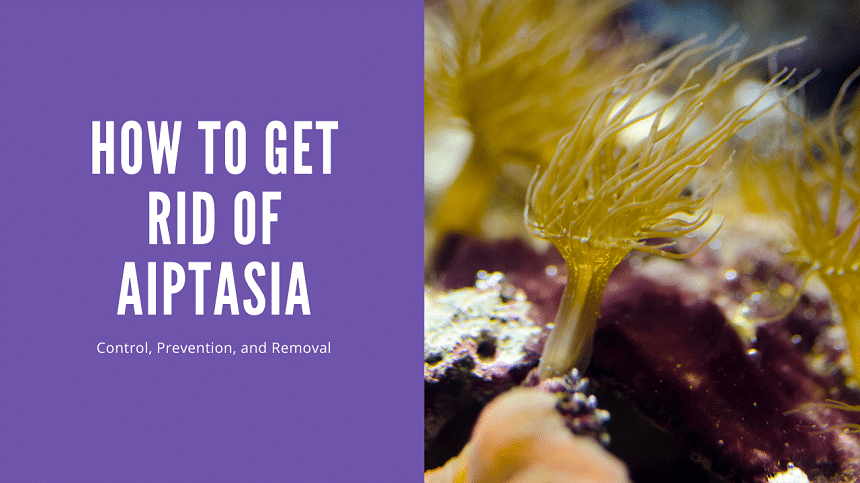
    Aiptasia is one of the most frustrating reef pests I’ve dealt with in my 125-gallon reef tank. These pest anemones showed up hitching a ride on live rock, and before I knew it they were spreading to my corals. I’ve personally tested most of the removal methods out there โ€” from Aiptasia-X to peppermint shrimp to berghia nudibranch โ€” and I can tell you firsthand what actually works and what doesn’t. This guide covers everything I’ve learned over 25 years of keeping reef tanks about controlling and eliminating Aiptasia for good.

    Hobbyists have been fighting the battle against Aiptasia for decades, and luckily, several solutions have been found to eradicate Aiptasia once and for all.

    What are Aiptaisa Anemones?

    What Is Aiptasia

    When setting up a new saltwater tank, it can be very exciting to find any signs of unexpected life during the nitrogen cycle and shortly after. Copepods start to show up on the glass and even algae can be an amazing discovery. Until suddenly, you find a small, clear what-seems-to-be coral.

    These ‘corals’ have long and thin tapered tentacles and might even resemble a kind of zoanthid at first. Usually, these tentacles will be attached to an oral disc that emerges from a long, translucent stalk. Sadly, more often than not, this unidentified polyp is actually a kind of pest anemone belonging to the Aiptasia genus.

    The main problem with Aiptasia Anemones is that they are both sexual and asexual; they can quickly split to create exponentially more anemones in a very small period of time. Like other species of anemone, they have stinging cells that can cause damage to nearby coral, fish, and invertebrates.

    They can also grow in very hard-to-reach places in the tank where you might not even see the problem forming. Their tentacles will grow in order to reach light, though their stalks may elongate and emerge from dark crevices within the rockwork.

    Naming And Other Pest Anemones

    In general, all species within the Aiptasia genus are simply referred to as Aiptasia even though there are several other known members; other common names include glass anemone and rock anemone (not to be confused with rock flower anemones of the Phymathidae family).

    Another type of pest anemone, Majano anemones (Anemonia manjano), may also be clumped together when talking about Aiptasia hitchhikers.

    Majano anemones are said to be easier to remove than Aiptasia, but they will both cause a headache at the end of the day. Majano anemones are, in some ways, prettier than Aiptasia and have rounded green tentacles with a purplish-pink oral disc; they are typically larger, have much more opaque flesh, and overall more vibrant colors than Aiptasia.

    Like Aiptasia, Majano anemones can quickly take over a tank and injure other corals and tankmates. Luckily, most of the removal methods are universal for pest anemones.

    How Do They Enter The Aquarium?

    Aiptasia Anemones are present in most aquarium systems. They can be very difficult to notice in dense rockwork and before you know it, you have a tank overrun by them. But how did they get there in the first place?

    These anemones are hitchhikers, just like any other algae or invertebrate that unintentionally enters the aquarium. This means that they can come in on live rock, corals, or even filter media. Once established in the tank, they can then spread to every part of it, including the filtration system and sump.

    In general, it’s not considered as an if these anemones will enter your system but a when.

    How Do You Prevent Them From Entering The Aquarium?

    Though Aiptasia Anemones will find its way into the aquarium if it wants to, there are some ways to protect your system.

    Mainly, observation and preparation are key.

    Observation And Identification

    It might sound simple, but observation is the best way to find and destroy Aiptasia before they get the chance to destroy your reef tank.

    Check and double-check new additions of live rock and coral. Use a flashlight to look in the crevices for any signs of tentacles popping up through the rockwork. Continue to check your tank daily for the next few weeks after a new addition.

    It is easiest to find pest anemones when they are extended in the water instead of when they are emersed. If possible, observe live rock and corals from a quarantine system. From there, use one of the following methods to remove it.

    One of the biggest mistakes beginners make is that they think an Aiptasia is a desirable coral and let it continue to grow. It is important to accurately identify the anemone first in order to go about fixing the problem. More often than not, any ‘lucky’ coral you see on new rock or a coral plug is actually an Aiptasia.

    Quarantine

    That being said, all new live rock and coral should be quarantined. No exceptions.

    Not only does quarantine help prevent disease and illness from entering the aquarium, but it also greatly reduces the risk of inadvertently introducing Aiptasia Anemones as well.

    Allowing two or more weeks of secluded observation will allow most hitchhikers to rear their ugly heads. It is much easier to fix these problems in a controlled setting than having to break down the rockwork and possibly filtration once put into a display. It also means that you can be more vigorous and widespread with treatments, such as chemical solutions.

    Remove Frag Plugs

    Frag Plug

    When buying new corals, they will often come on a frag plug. No matter if these corals were aqua-cultured in a controlled environment or gifted by a trusted fellow hobbyist, this frag plug should always be removed.

    For one reason or another, frag plugs are notorious for carrying in unwanted hitchhikers. Aiptasia are very quick to occupy free real estate and a frag plug is no exception. Most often, these anemones are very tiny and might only be able to be seen under a magnifying glass.

    When in doubt, throw it out.

    Source Rock

    Another way Aiptasia Anemones travels across tanks is by live rock and filter media. Many times, hobbyists share these with each other in order to seed a new tank with beneficial bacteria. Though this usually works flawlessly, there is always the chance that you’re introducing Aiptasia into the system.

    If you’re really worried about introducing pest anemones via live rock or filter media, do not use what has been in another tank. Instead, use brand new dry rock and cycle the tank with another method. This way, there is no chance of having any pests come in.

    The downside to this method is that many of the beneficial hitchhikers are lost as well, like copepods, and will need to be manually introduced later.

    How To Get Rid of Them From Your Aquarium (The Best Ways

    Aiptasia in Reef Tank

    The key to dealing with an Aiptasia outbreak in your aquarium is acting quickly and effectively as soon as you see one appear. The longer you wait to take action, the more chance they have to grow and spread throughout the reef tank.

    There are a few different methods based on the size, type, and amount of pest anemones in your saltwater tank. Whether the method works for you will also depend on several factors and Aiptasia removal could become a regular part of maintenance.

    Here are the best ways to get rid of Aiptasia Anemones from your saltwater aquarium.

    Manual Clean-Up

    Manual removal is one of the easiest methods, but also the least guaranteed way to fully remove Aiptasia from the aquarium. This is because these anemones are capable of growing from the smallest piece of flesh leftover, and it can be very easy to miss; in fact, Aiptasia only need a single remaining cell to regenerate into a new animal.

    For manual removal, you will need to be able to take the piece of rock out of the tank. Once removed, use scissors, razors, bone cutters, and whatever else you need to in order to get every last piece of anemone off of the rock. Some hobbyists split the rock in half entirely to ensure that there is no chance of the anemone coming back.

    Still, it is easy to miss other smaller Aiptasia that might have already propagated or left remnants behind.

    Super Glue (Cyanoacrylate)

    Super glue is one of the easiest and least damaging ways to control Aiptasia Anemones, though this method does not work all of the time.

    This method simply involves coating the anemone in a thick sarcophagus of superglue so that it is unable to extend. Simply remove the affected piece of rock from the aquarium and apply a healthy dollop of glue.

    There are a few problems with this method, though. First, it’s not always feasible to remove the piece of rock from the reef tank. Second, the anemone is very capable of growing around the glue and out through another opening, allowing it to live; some hobbyists have even seen them come out from the other side of the rock if the opportunity presents itself.

    Super glue is most effective for removable pieces of rock and small Aiptasia that can be generously coated and sealed.

    Chemical Products

    There are many chemical solutions on the aquarium market designed to eliminate Aiptasia from the aquarium. This method can be very effective when facing large colonies of pest anemone with sizable individuals.

    Kills Aiptasia
    Aiptasia-X

    A great solution for target elimination of Aiptasia in a reef tank.

    Click For Best Price Buy On Amazon

    One of the most popular Aiptasia removal chemicals is Aiptasia-X by Red Sea. This product needs to be applied to the surface of the oral disc of the anemone, where it is then forced to be ingested. Within a few minutes, the anemone implodes on itself, preventing regrowth and larvae from spreading throughout the rest of the reef aquarium.

    Other popular brands include:

    • Joe’s Juice Aiptasia Eliminator
    • Salifert Aiptasia
    • Blue Life Aiptasia Rx
    • Reef Kalkwasser (calcium hydroxide). Though not a product specifically meant for Aiptaisa, Reef Kalkwasser can be used to create a paste that can cover the disc of the anemone in a similar fashion.

    These chemicals are not effective for all reefers though, and these products can actually harm healthy corals if not applied correctly. The application can also become difficult if the anemone is situated in a hard-to-reach spot where it has time to react and retract. If only a small dosage is received, then the Aiptasia may come back stronger and start to propagate.

    Other DIY Solutions

    If you don’t have immediate access to chemical solutions, then you might need to make your own solution. It should be noted that these methods are very prone to failure and should only be done under close moderation.

    1. Lemon juice. Lemon juice has been used to successfully remove Aiptasia Anemones. Fill a syringe with lemon juice and inject it into the anemone. The acidity will theoretically cause the anemone to die.
    2. Vinegar. Similarly, vinegar can be injected and will kill Aiptasia due to its acidity.
    3. Hydrogen peroxide. Hydrogen peroxide is not likely to work when only applied over the anemone. Instead, it can be used to wipe off the remaining parts of Aiptasia that are leftover from previous attempts of removal.
    4. Boiling water. Boiling water can be mixed with lemon juice or vinegar or used by itself. Again, use a syringe to inject it into the anemone.

    These methods have worked for some hobbyists and completely failed for others. It is necessary to gauge how much solution is entering the system as both lemon juice and vinegar can start to affect pH due to their acidity. Boiling water can also burn nearby fish and invertebrates.

    If able to do so, attempt other methods first as to not encourage propagation from a failed removal.

    Lasers

    Lasers are an expensive solution but can be very effective at reaching hard-to-reach places without having to put your hands in the reef tank. They are a relatively new technology being introduced into the reef aquarium hobby for treating Aiptasia Anemones and come with mixed results that might not make their price worth it.

    These lasers need to be very strong and capable of melting away Aiptasia anemone. The problem with this is that they are also very capable of injuring other corals, fish, and invertebrates in the process.

    Some hobbyists have reported them as being completely ineffective.

    Livestock (Fish And Inverts That Love Eating This Type)

    Adding Aiptasia-eating fish and invertebrates to the tank system is usually a great alternative to the other methods mentioned. However, there is always a risk when adding something new to the tank.

    The main problem with adding additional livestock into the reef aquarium is that many of the species recommended to add cannot discriminate between a coral and an anemone. As a result, they might start to target colonies of desired corals and leave the Aiptasia nice and healthy. It is also possible that your fish or invertebrate will successfully eat Aiptasia and then starts to eat corals, too.

    Regardless, many hobbyists try their luck at adding a new fish or invertebrate species for dealing with Aiptasia problems; some can even arrange temporary housings until the anemones have been eliminated and then pass them along to another hobbyist.

    Here are some of the most common fish and invertebrates species for removing Aiptasia from your saltwater aquarium.

    Butterflyfish (Chaetodontidae family)

    Copper Band Butterfly

    For the most part, nearly all common species of butterflyfish have been used to effectively control Aiptasia populations. It is known that butterflyfish are not considered reef-safe and it should not come as a surprise if the one you add decides to go after corals.

    There are, however, a few species that seem to be more reliable than others. This includes:

    • Copperband butterflyfish (Chelmon rostratus)
    • Klein’s butterfly (Chaetodon kleinii)
    • Pearlscale butterfly (Chaetodon xanthurus)
    • Raccoon butterfly (Chaetodon lunula)

    Of course, always ensure that your setup is appropriate for the species you plan on adding. Tank size, water parameters, and diet should all be arranged to accommodate a new fish.

    Eating Filefish (Monacanthidae family)

    Aptasia Eating Filefish

    Aiptasia Eating Filefish are another popular addition for dealing with Aiptasia, though they are just as likely to nip at corals. Some hobbyists have found that buying captive-bred individuals helps deter coral picking and encourages Aiptasia Anemone hunting.

    Aiptasia Eating Filefish aren’t the prettiest to have in a reef tank display and some species can get very large. However, the most popular Aiptasia-eating species, like the matted filefish (Acreichthys tomentosus), stay small and can quickly take care of a pest anemone problem.

    It is not unheard of for filefish to suddenly start picking at corals, though.

    Peppermint shrimp (Lysmata wurdemanni)

    A group of peppermint shrimp is usually the route most reefers take for dealing with pest anemones as they are small yet effective.

    With multiple individuals, peppermint shrimp can be expensive and their high demand in the hobby can also make them more difficult to obtain. Not to mention that the peppermint shrimp has a very similar appearance to the camel shrimp (Rhynchocinetes durbanensis), which is not reef-safe, and can easily be confused.

    Overall, peppermint shrimp have a very high success rate for dealing with Aiptasia, however, they’ll typically avoid larger ones. They have also been known to graze on zoanthids as well.

    Berghia Nudibranch (Berghia stephanieae)

    If you’re limited on space but still want a natural predator of Aiptasia, Berghia nudibranchs are a great short-term solution.

    These nudibranchs can also be expensive and you will need a good amount of them depending on the size of your saltwater tank. Take into consideration that some fish and other invertebrates might also see them as food in the meantime just as they’re starting to hunt for anemones.

    The main problem with Berghia nudibranchs is that they only eat Aiptasia. This is great in the short term when you are desperate to get rid of all visible anemones, but doesn’t serve as a very long-term solution; once your anemone supply runs out, these nudibranchs will perish.

    Many hobbyists like to pass on their nudibranchs to other tanks suffering from Aiptasia so that they don’t die in the process. They can be very difficult to catch though, and often you will not be able to save them all. If you are interested in purchasing them, I recommend buying them from Salty Underground.

    Closing Thoughts

    Aiptasia are the last thing you want to see in your aquarium but are largely unavoidable. These ugly, fast-growing pest anemones can quickly take over a display and infiltrate filtration systems if left to grow.

    There are many different methods for removing them, including chemical products, more organic solutions, and livestock recommendations. Whatever method you end up choosing, you will most likely need to also use other alternatives and keep on schedule for a few months until there are absolutely no signs of Aiptasia.

    One of the best ways to prevent a pest anemone infestation is by prevention. Even then, it is good to be prepared if one ever happens to enter your system.


    ๐Ÿ“˜ Want to learn more? This article is part of our complete Saltwater Fish & Reef Guide โ€” your ultimate resource for marine fish, coral care, reef setup, and more.
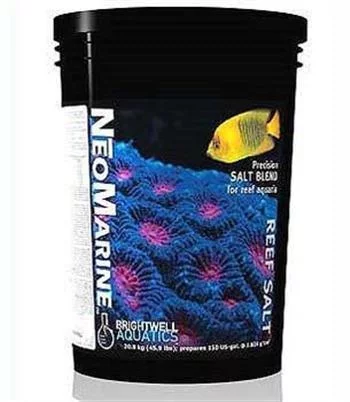
  • Green Star Polyp Care – A Complete Guide

    Green Star Polyp Care – A Complete Guide

    Green star polyps are one of the first corals I put in a new reef tank, and I still keep them in mine. They’re nearly bulletproof โ€” fast growing, tolerant of a range of parameters, and they create incredible motion in the tank when their polyps are extended and swaying in the flow. If you’re new to reef keeping, GSP is an excellent starting point that will give you quick success and build your confidence.

    When it comes to Green Star Polyp Care, there usually isn’t much to it. The main thing is learning how fast it grows, where to place it, and how to control it. It can grow quite large if given the right conditions and some reefers have event used them to create a wall of corals!

    Today’s post is all about the Green Star Poly. Come find out all there is to know about this beautiful creature with our complete guide on how best to take care of your Green Star Polyp. You’ll be glad you did!

    Species Overview

    Scientific NameBriareum spp. (widely Pachyclavularia violacea)
    Common NamesGreen star polyps (GSP), daisy corals, starburst corals, star corals
    Family
    OriginWidely found throughout the Indo-Pacific1
    Common ColorsGreens, yellows, and browns with purple skeleton
    Care LevelEasy
    TemperamentPeaceful
    LightingModerate-High (50-200+ PAR)
    Tank PlacementBottom, Middle, Top
    Flow RateModerate-High
    Temperature Range76-82 degrees F
    pH Range8.0 โ€“ 8.4
    Salinity1.025 or 35 PPT
    Alkalinity8 โ€“ 12 dKH
    Calcium Level350 โ€“ 450 PPM
    Magnesium Level1250 โ€“ 1350 PPM
    PropagationCutting/Fragging

    Origins And Habitat

    Like many other corals, green star polyps come from the warm waters of the Indo-Pacific in turbid lagoons and along shallow to moderately deep reefs. There, they can be found alongside other soft corals, such as Xenia spp. and Clavularia spp..

    Green star polyps are soft corals, meaning they do not have a calcium carbonate skeleton. Instead, they quickly grow as encrusting mats over rocks and other sessile objects.

    Naming

    In general, green star polyps are taxonomically categorized as Pachyclavularia violacea. This is a very broad name for these corals though, and it’s very likely that you have a species that is something other than Pachyclavularia violacea. The Pachyclavularia genus is also synonymous with Briareum and the two can be used interchangeably for this species.

    Green star polyps are a type of soft coral (Alcyonacea order) though they contain sclerites, or small pieces of skeleton, within their tissue for structure.

    What Do They Look Like?

    Green Star Polyp

    When fully spread, green star polyps look like a lawn of grass. Individually, they have a white center and eight radial green tentacles. These serrated-like tentacles come out from a purple base with tubes for every polyp.

    When closed, this coral looks like a pointy, purple mat. As we’ll discuss later, these corals can sometimes be temperamental and may be closed for extended periods of time if something is unfavorable in the tank.

    Varieties

    There are not many variations of green star polyp and their appearance largely depends on the type of aquarium light being used. Because they are so easy to grow, they are mostly aquacultured.

    There are a few varieties of green star polyp though, mainly with differences between shades of green, tentacle length, and skeleton branching.

    It is very common to come across ‘neon’ varieties of green star polyps where the tentacles are fluorescent green. Other variations might have a more defined white center or more tints of yellow, though the general purple and green coloration stays the same.

    Some variations of green star polyp might also be long-tentacled. It is believed that long green star polyps are hardier and grow faster than shorter ones, which can sometimes be confused with galaxea corals (Galaxea fascicularis).

    Within the aquarium, there is also said to be a branching variety of green star polyp. This variety is different from the regular encrusting type and is much more rare and desirable. The problem is that it can be very difficult to tell apart from others as there is little difference between small frags and usually no difference at all between namings.

    Branching green star polyps grow outwards, away from the rock; this means that they don’t necessarily need to grow on top of rock to spread and can create archways and limbs that extend across the reef tank.

    Still, green star polyps have not reached the brand-name-worthiness of other soft corals, which keeps their prices relatively low.

    Galaxea spp.

    To the untrained eye, green star polyps can look very similar to species of Galaxea coral. This can be a costly mistake as Galaxea have long sweeper tentacles that can severely damage other corals.

    These two corals look very similar and even have similar care requirements. Overall though, green star polyps tend to be larger, less compact, and have more tapered tips. In a mat, galaxea corals can have a shaggy appearance whereas green star polyps will have a more uniform sway.

    Green Star Polyp Care Guide

    Green Star Polyp Close Up

    Green star polyps are one of the most versatile corals in the aquarium, meaning they can be placed almost anywhere. The problem is that they will also spread everywhere they can.

    Green star polyps do best under moderate to high reef lighting with moderate to high flow; they can usually withstand conditions above and below this, though low light will result in slower or minimal growth and high light can cause bleaching and algae.

    These corals need moderate to high flow in order to keep algae off their purple skeleton. Because green star polyps are so concentrated, water flow needs to be able to remove any waste or debris from the top of the coral.

    If water flow is inadequate, algae can start to build over the opening of the tubes, which prevents the polyps from expanding. Even more so, snails, hermit crabs, and algae-loving fish might start to crawl over or pick at this algae which can result in longer periods of retraction.

    However, you also want to make sure that you don’t place your green star polyps too close to other corals. These corals grow extremely fast and won’t hesitate to grow over and shade out zoanthids or other peaceful corals.

    Because of this, many hobbyists like to keep them on a rock island of their own as they will rarely grow onto the substrate. Another option is to keep them around much more aggressive coral species (like LPS corals) that should fight back any green star polyps that try to invade their space.

    Another popular option for green star polyp placement is the back or the bottom of the reef tank. Many hobbyists choose to create a background of green star polyp or a lawn on a bare bottom setup. It only takes a small piece of frag to have a waving mat of green within a couple of months.

    Temperament In The Aquarium

    Green star polyps will not sting other corals and are very peaceful. However, they are highly invasive and will not hesitate to grow over and shade out other corals.

    As mentioned before, these corals do best when isolated. You do not need to worry about other corals being stung by them, but rather taken over by them. As long as green star polyps are kept away from other, less aggressive corals, then they should stay manageable.

    Though these corals aren’t known to have a powerful sting, it is still recommended to keep them away from other corals at all times to prevent aggression.

    Are They Toxic?

    There is some belief that green star polyps are toxic and can release damaging chemicals into the aquarium when stressed, like zoanthids. However, this is largely a myth and has yet to be proven within the hobby.

    If you are concerned about green star polyps releasing toxins, use gloves when handling and run activated carbon. Otherwise, it is extremely rare, if not impossible, to have any toxin complications due to green star polyps.

    Care And Maintenance

    Green star polyps are one of the easiest corals to care for, though some hobbyists can have difficulty with them due to the reef tank being too clean, inadequate flow, or extreme lighting.

    Otherwise, green star polyp maintenance and upkeep are straightforward.

    Dosing

    Like other corals, green star polyps need available nutrients in the water column. They need nitrates, phosphates, magnesium, calcium, and a stable alkalinity for healthy growth and vibrant colors.

    That being said, these soft corals do not need additional nutrients to be dosed other than what is introduced through feedings and fish waste. In fact, many hobbyists look to slow down green star polyp growth rather than speed it up.

    Feeding

    Many hobbyists choose not to feed their green star polyps as they get the majority of their food through photosynthesis, but they’ll definitely enjoy some supplemented foods every now and then.

    For best results, use a powder or liquid food, like zooplankton; these corals are not able to take in larger foods through their mouths.

    Trimming And Algae

    Green star polyps grow fast, and eventually, you will need to control that growth. Some hobbyists choose to frag these trimmings, though the supply might outweigh the demand.

    These corals can be difficult to completely remove from a surface and will often grow back after some time. When you see green star polyps growing somewhere you don’t want them, simply scrape them off and dispose of them. Make sure you get all the pieces as they can reseed themselves elsewhere in the tank.

    Another way to combat green star polyp growth is by shading it out with a larger object. This can affect other corals too if not carefully placed, but it is an effective way to deprive the coral of necessary light for growth.

    At the same time, you will want to look out for algae growing on the mat of the coral. It is recommended to use a turkey baster weekly to gently remove any algae or debris that might be caught. If you notice that your green star polyps have been closed more than usual lately, it could be bothersome algae.

    What Are Good Tankmates?

    Tank Raised Clownfish

    Green star polyps can be kept with nearly everything, including not reef-safe species. Here’s how.

    In theory, green star polyps can be kept with anything from clownfish and tangs to triggers and angels. This is due to the fact that this coral grows so incredibly fast. There is still the very real possibility that not reef-safe fish will eat green star polyps, but these corals are very likely to bounce right back and make up for what had been lost.

    It should also be noted that green star polyps might not look as appetizing as other fleshy large polyp stony (LPS) corals, so some coral-hungry fish might leave it alone. If you find yourself with a fish that eats everything you put into the tank but you’re still determined to have corals, then get an inexpensive frag of green star polyps and try your luck.

    Fragging

    It should come as no surprise that green star polyps are incredibly easy to frag. The hardest part will be separating the pieces from the rock.

    In order to frag green star polyps, first, find a manageable side of the rock where the mat will be easy to separate. If you can’t find a good place to cut, then choose the best spot and use a scissor, scalpel, or razor blade to cut through and detach the piece from the rock.

    For the most part, it doesn’t matter how big or small of a piece you frag as it will quickly recover and start growing. Simply attach the frag to a frag plug with superglue (cyanoacrylate). You may dip this frag in iodine or a special coral mix, but this is not necessary.

    Place the frag towards the bottom of the reef tank. The polyps should start to open in a few days, though these corals can be temperamental after handling. Do not worry as they can survive a couple of weeks of being retracted.

    As mentioned before, your green star polyps may grow too quickly for how much fragging you can manage. These excess corals can be moved to the sump to help with nutrient exportation, given to another hobbyist, or disposed of correctly. If you want a video tutorial, you can check out the video below by OceanStateAquaticsTV.

    How Long Does It Take For Them To Spread?

    Green star polyps can cover a rock in a matter of months. Growth may be slow initially and your coral might not even open for a few days when you first introduce it into the reef tank.

    If conditions are right though, you will have new growth almost every day. This can be seen on the edges of the mat, where the flesh is light purple or white instead of the dark reddish-purple of the rest of the colony.

    If you find that your green star polyps aren’t opening, try to keep conditions stable. You will want to move them around to new areas of the tank for better flow or lighting, but it is best to leave them where they are until they open. If you see algae starting to grow on top of the mat, gently waft away or turkey baster the algae off.

    At the same time, make sure there are available nutrients in the water column. It is not unheard of for green star polyps to not open when sufficient nutrients aren’t available.

    Closing Thoughts

    Green star polyps are one of the best corals and one of the worst corals. They offer vibrant colors and exciting movement to all levels of the aquarium, but they can easily outcompete other species and be extremely difficult to remove once introduced to the tank.

    They are one of the best beginner corals due to their resilience and relatively low care requirements, but can also make a beautiful backdrop or lawn for more intricate setups.


    ๐Ÿ“˜ Want to learn more? This article is part of our complete Saltwater Fish & Reef Guide โ€” your ultimate resource for marine fish, coral care, reef setup, and more.

  • These 9 Great Soft Coral Types Looking Amazing!

    These 9 Great Soft Coral Types Looking Amazing!

    Soft corals were my entry point into reef keeping, and I still think they’re the best place for any hobbyist to start. They’re forgiving with water parameters, grow quickly when happy, and many of them have a flowing, dynamic movement in the tank that you just can’t get from any other type of coral. My 125-gallon reef has always had a mix of softies alongside the SPS, and they fill the tank beautifully.

    Coral reef tanks are a great way to add some life and color to your home. They can bring out the natural beauty of your fish and other marine inhabitants while also adding intrigue in your reef aquarium. Soft corals are an excellent addition to any tank because they offer superb coloration as well as providing nutrients for other organisms that live in your tank. These 9 soft coral types I recommend will look absolutely amazing in tanks!

    Introduction

    Soft corals are largely considered to be some of the easiest corals in the hobby. These corals usually lack a calcium carbonate skeleton and have very fleshy polyps. Some of the most popular soft corals to come across are zoanthids and mushroom corals, but there are many species and variations available.

    Though these corals might seem easy, they can bring unique challenges to the tank, whether it be a toadstool coral that hasn’t opened in weeks or pulsing xenia that are taking over the rest of the display. When done correctly, they can bring as much color and excitement to the tank as any other species of more advanced coral.

    How Many Species Are There?

    In order to know how many soft coral species there are, we first need to understand the taxonomy of corals.

    At the highest rank, corals belong to the Cnidaria phylum1, which also contains jellyfish. After that, they may be part of the Octocoralia subclass or Hexacorallia subclass in the Anthozoa class. Subclasses are dependent on the symmetry of the polyps; soft corals belong to Octocoralia while stony corals belong to Hexacorallia.

    From these subclasses, corals then get broken up into four main orders that are commonly kept by reef tank hobbyists:

    • Corallimorpharia (approx. 50 species). These are considered soft corals as they lack a skeleton entirely, like mushroom corals.
    • Alcyonacea (approx. 1500 species). These corals are known as the true soft corals even though they contain sclerites, which are small pieces of calcium carbonate skeleton present in the flesh of the coral. Examples of Alcyonaceae are leather corals as well as gorgonians.
    • Zoantharia (approx. 100 species). Zoanthids are also considered soft corals, though they commonly incorporate sand and other hard materials into their flesh for structure.
    • Scleractinia (approx. 1600 species). These corals are considered true reef-building corals as they create their own calcium carbonate skeleton; this order contains large polyp stony (LPS) corals and small polyp stony (SPS) corals. Some of the most common species of Scleractinia are Acropora spp. and Euphyllia spp..

    These approximations are always changing so there can never be a sure number. However, it can be assumed that there are about 1500 species of true soft coral. Consider that not even a fraction of these are available in the home aquarium hobby, though there is still an overwhelming selection to choose from.

    It should also be noted that even though SPS and LPS are categorized together in the Scleractinia order, they are considered to be very different in the reef tank hobby.

    The 9 Best Soft Coral Types (Species of Soft Corals)

    Here are the most common species of soft coral you’re likely to come across at your local aquarium store and their care requirements.

    We got a video above from our YouTube Channel that you can follow along. If you like our content, be sure to subscribe as we post new videos every week! We go into more details below in our blog (and have links where you can purchase them).

    1. Zoanthids

    Editor’s Choice
    Zoanthids

    Editor’s Choice!

    Zoas come in multiple colors and easy to care for. The perfect choice for nano tanks!

    Shop Designer Zoas Shop For WYSIWSG Zoas!
    Scientific NameZoanthus spp.
    Difficulty LevelEasy-Moderate
    TemperamentNot aggressive
    PAR RequirementsModerate (50-150 PAR)
    Flow RequirementsModerate
    PlacementMiddle, High
    OriginWorldwide in warm, shallow waters

    Zoanthids are loved by beginner and expert hobbyists alike. There are many varieties of zoanthid available, coming in all colors and patterns. This diversity can make some zoanthids go for thousands of dollars.

    Zoanthids are very easy to care for if they like your tank; these corals are notorious for closing up for weeks at a time for apparently no reason at all. They can quickly overgrow other corals and their potential palytoxin can deter some hobbyists.

    Otherwise, multiple types of zoanthid can make a beautiful zoa garden at low, medium, and high placements of the tank with moderate flow and lighting.

    2. Mushroom Corals

    Mushroom Corals

    Mushroom corals have exploded in variety over the last few years. Multiple colors available and lots of exotic varieties. Affordable and easy to care for!

    Shop WYSIWYG Buy On eBay
    Scientific NameCorallimorpharia Order (Actinodiscus/Discosoma spp., Rhodactis spp., and Ricordea spp.)
    Difficulty LevelEasy
    TemperamentSemi-Aggressive
    PAR RequirementsLow-Moderate (<50-150 PAR)
    Flow RequirementsLow
    PlacementBottom, Middle
    OriginWidespread, mainly Australia, Tonga, the Caribbean, and Indonesia

    The Mushrooms coral at first glance may not be the most exciting coral to have, though hobbyists especially favor the Ricordea species, R. florida and R. yuma. Mushroom corals can be hairy, bumpy, or smooth and can come in purples, blues, greens, oranges, yellows, and reds.

    Mushroom corals are some of the easiest to frag, which can be good practice for beginner reefers. These corals also have a unique walking-propagation ability where they leave pieces of themselves behind to create new mushrooms. This can quickly lead to overgrowth, which can sometimes be difficult to control.

    3. Toadstool Leather

    Toadstool Leather Coral

    This leather coral offers a showpiece sized coral that is easy to care for. Requires no dosing and thrives in a variety of conditions

    Click For Best Price Buy Japanese Toadstool
    Scientific NameSarcophyton spp.
    Difficulty LevelEasy
    TemperamentPeaceful
    PAR RequirementsLow-Moderate (<50-150 PAR)
    Flow RequirementsModerate-High
    PlacementBottom, Middle, Top
    OriginThroughout the Indo-Pacific (Fiji, Australia, Tonga, Solomon Islands)

    Toadstool corals are some of the largest corals available, with some species growing 2 feet across. Luckily, these corals are also very easy to frag in order to help control rapid growth. They are limited in colors, coming only in greens, browns, tans, and yellows, but can have varying tentacle lengths.

    These corals regularly shed a thin layer of their flesh about once every month. This may be due to stress, but it is usually to help keep algae and other debris off the coral. Because of this regular shedding, they do best in moderate to high water flow.

    4. Green Star Polyps

    Green Star Polyp
    Scientific NamePachyclavularia spp.
    Difficulty LevelEasy
    TemperamentPeaceful
    PAR RequirementsLow-High (<50-200+ PAR)
    Flow RequirementsModerate-High
    PlacementBottom, Middle, Top
    OriginThroughout the Indo-Pacific (Fiji, Australia, Tonga, Solomon Islands)

    Green star polyps (GSP) are some of the fastest-growing soft corals, which is why some hobbyists avoid them entirely. It’s strongly recommended to keep them on a rock island on their own in order to prevent them from spreading everywhere; it is also very common to see them on the back of the reef tank to create a wall of shimmering green or on a glass-bottom to make a waving lawn.

    While green star polyps are one of the best choices for beginner hobbyists, many reefers regret introducing them into their tanks. Luckily, they are easy to frag as well.

    5. Pulsing Xenia

    Pulsing Xenia
    Scientific NameXenia spp.
    Difficulty LevelEasy
    TemperamentPeaceful
    PAR RequirementsLow-Moderate (<50-150 PAR)
    Flow RequirementsLow-Moderate
    PlacementBottom, Middle, Top
    OriginThroughout the Indo-Pacific (Fiji, Australia, Tonga, Solomon Islands)

    Xenias are one of the most popular soft corals next to green star polyps. These pale pink and purple corals bring immense movement to the tank as they pulsate their polyps without the need for additional water flow.

    Unfortunately, some xenia don’t pulse or stop after some time for unknown reasons even though they might be completely healthy otherwise. As long as they are kept in low to moderate flow and low to moderate lighting, they will continue growing regardless of if they stop pulsing.

    6. Kenya Tree

    Kenya Tree Coral
    Scientific NameCapnella spp.
    Difficulty LevelEasy
    TemperamentPeaceful
    PAR RequirementsLow-Moderate (<50-150 PAR)
    Flow RequirementsLow-Moderate
    PlacementBottom, Middle, Top
    OriginThroughout the Indo-Pacific (Fiji, Australia, Tonga, Solomon Islands)

    Kenya tree corals can fill up large spaces in the reef aquarium with their fluffy branches. Though they might be considered plain in their dull pink and brown colorations, these corals have a softness that not many other species offer.

    The problem with Kenya tree corals is that they spread rapidly. These corals are able to propagate by sending off their branches to other parts of the tank where they quickly establish themselves; these new frags are also hard to completely remove from the rockwork, which makes them very difficult to control.

    7. Colt

    Colt Coral
    Scientific NameKlyxum sp.
    Difficulty LevelEasy
    TemperamentPeaceful
    PAR RequirementsLow-Moderate (<50-150 PAR)
    Flow RequirementsLow-Moderate
    PlacementBottom, Middle, Top
    OriginThroughout the Indo-Pacific (Fiji, Australia, Tonga, Solomon Islands)

    Colt corals (picture source) are very similar to Kenya tree corals and difficult to tell apart even though they’re in two totally different genera. There are a few ways to tell these two species apart.

    First, colt corals have fuller and more transparent branches compared to the thick, opaque branches of Kenya trees. Second, colt corals can be described as more slimy than Kenya trees when handling, which resemble the feeling of a sturdier leather coral; remember, try avoiding touching your corals as much as possible to not stress them out.

    8. Devil’s Hand

    Devil's Hand Coral
    Scientific NameLobophytum spp.
    Difficulty LevelEasy
    TemperamentPeaceful
    PAR RequirementsLow-Moderate (<50-150 PAR)
    Flow RequirementsModerate-High
    PlacementBottom, Middle, Top
    OriginThroughout the Indo-Pacific (Fiji, Australia, Tonga, Solomon Islands)

    Devil’s hand corals are named after their unique fingerlike appearance. These corals are a type of leather coral, like toadstools, which means that they also shed due to stress or for cleaning; because of this, they need higher water flow to help remove the flaking flesh in the process.

    Unlike other leather corals, devil’s hand corals have very short tentacles which can make them look like they’re not fully expanded.

    9. Pipe Organ

    Pipe Organ Coral
    Scientific NameTubipora musica
    Difficulty LevelIntermediate
    TemperamentPeaceful
    PAR RequirementsLow-Moderate (<50-150 PAR)
    Flow RequirementsModerate-High
    PlacementBottom, Middle, Top
    OriginThroughout the Indo-Pacific (Fiji, Australia, Tonga, Solomon Islands) and the Western Pacific Ocean

    Pipe organs aren’t very common to come across in the home aquarium even though they come in beautiful floral patterns. These corals are not your typical soft coral. In fact, these soft corals have an intricate red calcium carbonate skeleton, which earns them their musical name!

    This slow-growing skeleton needs to be kept clean from algae and detritus with proper water flow. They also need available calcium and stable alkalinity to build their skeleton, which can make them more challenging than the other species on this list.

    What Is The Difference Between These and Hard Corals?

    When talking about aquarium corals, you may come across words like LPS, SPS, hard/stony, or soft corals. In general, soft corals are considered the easiest with LPS best for intermediate hobbyists and SPS being saved for only the most dedicated reefers. But anatomically, these corals are very different.

    Hard Corals

    Hard corals, also known as SPS, belong to the Scleractinia order and are responsible for reef-building. They form large calcium carbonate skeletons that house symbiotic zooxanthellae in fleshy polyps. As members of the Hexocorallia subclass, their polyp symmetry is divisible by six.

    These skeletons are usually branched and form the picturesque reefs we are used to seeing. They house a plethora of life, including fish, invertebrates, bacteria, and other microorganisms.

    Softer Corals

    Soft corals–according to the aquarium hobby–belong to the Corallimorpharia, Alcyonacea, and Zoantharia orders. These corals do not form full calcium carbonate skeletons and create very fleshy polyps. Some species, like those from Alcyonacea, form smaller skeletal structures called sclerites. As members of the Octocoralia subclass, their polyp symmetry is divisible by eight.

    Interestingly, most soft coral species do not have fossil records as the animal has no concrete structure that can be preserved.

    Keeping Them In The Aquarium

    Soft corals are considered to be some of the easiest corals to keep in the aquarium and are often recommended as corals for beginners. Many species do not require intense reef lighting or flow and they can grow very quickly in less-than-ideal conditions.

    On the other hand, some hobbyists greatly struggle with keeping some of these ‘easy’ corals. In some cases, the tank might be considered too perfect for these undemanding species and the coral fails to thrive as a result.

    For example, it is strongly believed that zoanthids favor dirtier water with plenty of available nutrients. More advanced hobbyists keeping delicate SPS might have water that is too clean and void of nutrients to sustain a healthy zoanthid colony.

    So even though soft corals do not require much special attention, there is no guarantee that they will be easy in your aquarium setup.

    What Is The Easiest Type To Keep?

    With that being said, which soft corals are the easiest to keep? For the most part, all of them.

    There are many options for beginners and advanced reefers alike to choose from. Here are the most common recommendations:

    • Green star polyps
    • Mushroom corals
    • Leather corals
    • Pulsing Xenia
    • Zoanthids

    As mentioned before, though these corals are generally considered easy, they can be some of the most challenging corals you have in your aquarium depending on your setup.

    When Can You Add Them To The Aquarium?

    If you’re a beginner just starting to explore the saltwater world of the aquarium-keeping hobby, you’ll be eager to add your first coral to the tank. In order to succeed in this hobby though, you will need lots of patience.

    Though soft corals are very forgiving of poor water parameters, they are still much more difficult to keep than marine fish or freshwater plants. They need stability, available nutrients, good lighting, and good water flow. New setups rarely have any of these.

    In short, it is not recommended to add soft corals to a newly established tank during the first 3 months. These 3 months test many new hobbyists with algae outbreaks, diatoms, Aiptasia, and livestock compatibility. Corals are expensive and it isn’t fair to them or worth the risk of introducing them into unfavorable conditions.

    Instead, allow the tank to establish a good beneficial bacteria population. Control algae and find the perfect photoperiod for your setup. Figure out if your tank runs best with weekly or biweekly water changes (or none at all if you are brave enough๐Ÿ˜…) . Trace how your nutrient import and export changes daily. Then, you may add corals.

    Soft corals are good starter corals for many as they don’t require nutrients to be dosed. As long as a reliable marine salt mix is being used and nutrients are being added into the tank via fish food, waste, and other detritus, your soft corals should be able to sustain themselves.

    For mature tanks, soft corals can be added at any time. More importantly, it is necessary to find the right placement for them in order to keep them away from other corals. Though most soft corals are not capable of stinging, they can easily overgrow and shade out other species.

    Closing Thoughts

    Soft corals are some of the easiest species to keep and come in all colors, shapes, and sizes. There are some differences between the scientific classification for soft corals, LPS, and SPS that differ from aquarium standards, but all soft coral species generally require the same care.

    With so many options to choose from, a soft coral and macroalgae setup might just be the next setup you have in mind for your own saltwater aquarium. Have any questions for me? Leave them in the comment section and let’s start a discussion. Happy Reefing!


    ๐Ÿ“˜ Want to learn more? This article is part of our complete Saltwater Fish & Reef Guide โ€” your ultimate resource for marine fish, coral care, reef setup, and more.

  • Bubble Coral Care – A Complete Guide

    Bubble Coral Care – A Complete Guide

    Bubble coral is one of those LPS corals that looks absolutely spectacular when it’s happy and fully inflated, and I’ve kept them in my reef over the years. They do require a bit more attention than beginner corals โ€” placement matters a lot, and their sweeper tentacles extend farther than the bubbles suggest. Get their care right and they’ll be a centerpiece coral that draws attention from anyone who sees your tank.

    Proper Bubble Coral Care can be a little more complicated than other types of corals. They require specific lighting and water parameters to thrive, so it’s important that you take the time to learn what they need before adding them to your tank! This guide will walk you through all the steps for setting up a bubble coral system and caring for these delicate creatures. Let’s get started!

    A Quick Overview On The Bubble Coral

    Scientific NamePlerogyra spp. and Physogyra spp.
    Common NamesBubble coral, grape coral, pearl coral
    FamilyEuphylliidae
    OriginCountry – Widely found throughout the Indo-Pacific and the Pacific Ocean (most colonies are imported from Indonesia)
    Common ColorsGreens, whites, yellows, pinks
    Care LevelEasy
    TemperamentAggressive
    LightingLow-Moderate (50-150 PAR)
    Tank PlacementBottom, Middle, Top
    Flow RateLow – Moderate
    Temperature Range76-82 degrees F
    pH Range8.0 โ€“ 8.4
    Salinity1.025 or 35 PPT
    Alkalinity8 โ€“ 12 dKH
    Calcium Level350 โ€“ 450 PPM
    Magnesium Level1250 โ€“ 1350 PPM
    PropagationCutting/Fragging (Expert Only)

    Origins And Habitat

    Bubble corals come from a wide range of environments. They have been found in dark and turbid waters as well as bright and clear seas.

    Bubbles are largely found throughout the Indo-Pacific and the Pacific Ocean, but most available colonies in the hobby originate from Indonesia specifically; more Australian colonies have entered the trade due to difficult propagation and trading bans on coral.

    Naming

    These corals are commonly known as the bubble coral, grape coral, or pearl coral due to their appearance. Though they have previously been categorized as a member of the Euphylliidae family, their exact taxonomic categorization is largely up for debate and still unknown.

    The common name ‘bubble coral’ is actually used to describe two different genera, Plerogyra and Physogyra. The difference between these two genera is that Plerogyra spp. usually have larger bubbles and a blade-like skeleton while Physogyra spp. have smaller bubbles with a flatter skeleton; Physogyra spp. are often referred to as pearl bubbles1.

    Some of the most common species to come across are Plerogyra sinuosa and Physogyra lichtensteinii. Luckily, the care requirements for these two genera do not differ.

    In the aquarium hobby, these corals may be further named according to their area of collection. For example, you may come across ‘Aussie bubble corals’, ‘Indo bubble corals’, ‘Marshall Island bubble corals’, or wherever else they might have been collected from; these names may even be carried over for those corals that have been aquacultured.

    Some hobbyists find Aussie bubbles to be more sensitive than Indo bubbles, but this is specific to each tank.

    What Do Bubble Corals Look Like?

    What Does A Bubble Coral Look Like

    These corals look exactly how you might imagine them. Bubble corals are large polyp stony corals (LPS) with a calcium carbonate skeleton and round fleshy polyps. They can grow to be several inches across and reach reasonable heights.

    There are two main types of bubble coral variety:

    • Ones with rounded, grape-shaped bubbles; some of these that have smaller bubbles may also be labeled as ‘pearl’ (Physogyra spp.)
    • Ones with irregularly shaped bubbles

    No matter what kind of bubble coral you have, your coral should always be fully extended. The level of polyp expansion can correlate to lighting. Low lighting can cause your coral to inflate more in order to optimize photosynthesis and high lighting can cause more compacted bubbles.

    Bubble corals have very jagged skeletons which can easily puncture their own bubbles. This can make transporting them very difficult, but not impossible. For as fragile as they are, hobbyists have found them to be incredibly resilient and can come back from near death.

    Along with being fully extended, your bubble coral should have bright colors; though they do not come in many different colors, the greens, whites, yellows, and pinks of your coral should be vibrant. Bubble corals have almost transparent flesh, but color should never be entirely absent.

    At night, these corals retract their bubbles. They send out long, clear sweeper tentacles that are used for feeding and attacking any corals that get too close; these tentacles do have nematocytes, or stinging cells, which can cause some irritation or inflammation to human skin and even more damage to nearby corals.

    During this time, the skeleton will be exposed and you will be able to see how jagged it really is. Remember, this skeleton should never be exposed at any other time.

    Placement In The Aquarium

    Bubble Coral Placement

    Bubble corals aren’t the most popular coral in the hobby, but they’re one of the most adaptable.

    These corals can be placed in nearly all locations of the aquarium as long as adequate acclimation is allowed for and care is given when handling; these corals can be more top-heavy than others, so long-term placement needs to be secured with superglue (cyanoacrylate) or epoxy.

    Do They Like High Water Flow?

    No, bubble corals do best with low to moderate water flow. Flow should be just enough to keep the bubbles slightly moving – aim for gentle water movement. Anything more than this could damage the coral.

    Moderate flow is needed for these corals to remove algae and debris as well as to keep them fed. At night, they use their sweeper tentacles to help catch food that needs to be moved past them with a current.

    How Much Light Do They Need?

    Naturally, bubble corals are found in a variety of light intensity conditions. They can withstand lower light (50 PAR) on the substrate or be acclimated to the top (150 PAR) of the reef.

    Because of how large they can get and how delicate they are if they fall, most hobbyists choose to keep them on or near the substrate. If choosing to keep them on the sand, make sure that the water flow is not pushing granules onto the coral. This can cause irritation which can lead to retraction and infection.

    Wherever you choose to place them, they should be secure and away from anything that could rub up against them, like rock, the aquarium glass, or other corals.

    Temperament In The Aquarium

    Though bubble corals might look harmless, they need to be given their space in the aquarium. Their sweeper tentacles are relatively long and very capable of inflicting a sting on nearby corals.

    It can be difficult to judge placement in the aquarium at first as these sweeper tentacles usually only emerge at night. In general, it is best to leave about 5-6 inches of buffer room for your coral to fully expand and extend its tentacles.

    It also isn’t uncommon for your bubble coral to change shapes throughout the day. When the lights come on, your bubble may still have its sweeper tentacles out with a lot of exposed flesh. As the day goes on and the light reaches higher intensities, it may form more compact bubbles.

    Care And Maintenance

    Bubble Coral Maintenance

    Bubble corals aren’t the easiest species of LPS, but they don’t require much special care either. As mentioned before, the biggest concern with these corals is transporting them and acclimating them correctly.

    Otherwise, they need standard reef conditions and can be kept with hang on the back, canister, or sump filtration. If you start to notice algae growing around the skeleton, it should be carefully removed with a turkey baster or by hand to prevent it from smothering the polyps.

    Dosing

    Bubble corals do not need any additional nutrients as long as a quality marine salt mix is being used. The main nutrients these corals need are nitrates, phosphates, calcium, magnesium, and stable alkalinity; contrary to once-popular belief, corals need available nitrates and phosphates for the best health.

    Because bubble corals make their own skeletons, they heavily rely on calcium, magnesium, and alkalinity for steady growth. These parameters are usually maintained through regular water changes, though they might need to be dosed if keeping larger colonies of LPS and/or keeping small polyp stony corals (SPS) as well.

    Simply track how parameters change in the tank between water changes. This will show how nutrients are being used and recycled throughout the system. If levels fall too much, then it might be time to start dosing; make sure to only dose what is needed.

    Feeding

    Unlike other species of LPS, bubble corals appreciate being fed every now and then. They get the majority of their food from the water column, but will usually willingly accept any supplemental feedings.

    In fact, these corals can be fed relatively larger pieces of meaty foods like fish, shrimp, and crab in addition to smaller foods like brine shrimp, mysis shrimp, and coral-specific products. A great coral food to try is reef-roids.

    Simply place the food near the mouth of the coral and wait for it to start moving it in. Do not overfeed as this can create unnecessary waste and start to stress out your coral in the long run.

    Are They Hard To Keep?

    Once settled, bubble corals are easy to care for. They’re not as common to come across as some of the other fleshy LPS species, like Euphyllia, but they can be just as eye-catching in a reef tank setup.

    In general, these corals can be kept by hobbyists at the beginner, intermediate, and advanced levels. Handle these corals with care and keep the skeleton clean of algae.

    What Are Good Tankmates?

    Bubble corals are one of the most tankmate-friendly coral options available. As long as it’s reef-safe, there’s a good chance it will get along with your bubble.

    Again, the main concern you should have is keeping your bubble coral undamaged. Anything with pincers or sharp teeth, like crabs or triggerfish, could easily damage your coral. Otherwise, tangs, gobies, damsels, and wrasses are all possible options.

    Unlike other LPS with longer tentacles, clownfish do not host bubble corals nearly as much. Though bubbles don’t bring as much movement to the aquarium as other similar corals, you don’t have to worry about losing your colony to an overly aggressive clownfish.

    Fragging

    Fragging bubble corals is usually not recommended for any hobbyist. But if you’re dealing with an overgrown coral, fragging is your only option.

    This process can be most likened to fragging a wall hammer coral in terms of difficulty. It is recommended to attempt fragging a bubble coral only if an electric saw is available. Here is a great video by MileHighReefers that shows the fragging process. I’ll provide a summary below.

    There are two main ways to frag your bubble coral:

    1. Just go for it. If choosing this method, first make sure all polyps are closed as much as they can be. Do this by lightly touching the coral, making sure not to cause injury. Next, look for already-defined lines of division; if your bubble coral is branched, divide the branches. It is not recommended to cut through the mouth or the flesh unless highly experienced.
    2. Have some patience. This method takes a little more time but tends to have higher success rates, especially if needing to split a large polyp. First, use a rubber band to divide the polyp; you want to force the coral to separate into two. From here, you will have a defined line that can be cut with a saw or, if done carefully, a Dremel tool.

    Both of these methods carry high failure rates, though bubble corals are known for bouncing back pretty quickly if something goes wrong.

    Why Is Your Coral Dying?

    There are three main reasons your bubble coral might be dying: water flow, injury, or water parameters.

    Bubble corals need some flow to deliver food and to keep them clean, but anything more than enough will damage their delicate flesh. If you notice your coral start to close up or recede from the base, check how much direct flow it is receiving and move accordingly.

    Injury and infection are the biggest killers for bubble corals and often happens during transportation. When purchasing a coral, but sure that it is fully extended and shows good coloration. Make sure to handle the coral from the base to prevent any further stress or injury; use a coral dip or iodine to facilitate healing. Brown jelly infections are also another common issue with bubble corals.

    Unfavorable aquarium water parameters, including lighting conditions, can also cause your coral to die back. Usually, other corals in the tank will also show signs of poor water quality, but LPS can recede very quickly once started. If you recently moved your coral to a higher spot in the tank and it is failing to extend, then you might not have allowed enough time for acclimation.

    Closing Thoughts

    Bubble corals are relatively easy to care for, but fragging and any excessive handling can cause problems. They don’t come in many colors, but their inflated appearance and full expansion bring life to the middle and lower regions of the tank. With some acclimation, they can even be moved to the top of the reef!


    ๐Ÿ“˜ Want to learn more? This article is part of our complete Saltwater Fish & Reef Guide โ€” your ultimate resource for marine fish, coral care, reef setup, and more.

  • Everything You Need to Know About Toadstool Coral Care

    Everything You Need to Know About Toadstool Coral Care

    Toadstool coral is one of my top recommendations for anyone setting up their first reef tank, and I keep them in my own reef. They’re remarkably hardy, grow relatively quickly, and the way they wave in the flow is something I never get tired of watching. One thing I always tell people: don’t panic when a toadstool sheds its slime coat and looks terrible for a few days โ€” it’s completely normal and part of how they grow.

    Looking to learn about proper Toadstool Coral Care? If so you are in luck! Toadstool Corals are a perfect choice if you are looking for a beautiful, hardy coral to add to your reef tank at home Toadstool corals are known for their bright colors and easy care. In fact, these beauties will thrive in even some of the most basic aquarium setups! Learn more about this fascinating invertebrate below so that it can become an integral part of your underwater ecosystem!

    Quick Overview

    Scientific NameSarcophyton spp.
    Common NamesToadstool, toadstool mushroom leather coral, leather coral, mushroom coral, trough coral
    Family
    OriginWidely found throughout the Indo-Pacific (Fiji, Australia, Tonga, Solomon Islands)
    Common ColorsGreens, browns, tans, yellows
    Care LevelEasy
    TemperamentPeaceful
    LightingLow-Moderate (50-150 PAR)
    Tank PlacementBottom, Middle, Top
    Flow RateModerate-High
    Temperature Range76-82 degrees F
    pH Range8.0 โ€“ 8.4
    Salinity1.025 or 35 PPT
    Alkalinity8 โ€“ 12 dKH
    Calcium Level350 โ€“ 450 PPM
    Magnesium Level1250 โ€“ 1350 PPM
    PropagationCutting/Fragging

    Origins And Habitat

    Like so many other species, the toadstool leather coral is commonly found throughout the Indo-Pacific off the coasts of Fiji, Australia, Tonga, and the Solomon Islands. These corals thrive in shallow, mixed reefs where they often grow into huge plates that can quickly overshadow life below.

    Though they will always grow towards the light, toadstool corals an be seen growing at most levels of the reef. If they are overshadowed by another coral, they can easily extend their stalk so that tentacles are once again at optimal lighting conditions.

    What Is It?

    In conversation, toadstool corals are regularly referred to as leather corals. However, there are actually several genera of leather coral, which can get confusing as they look and act pretty similar to one another; they are also all soft corals that lack an internal skeleton structure.

    The most common species of leather coral to come across in the aquarium hobby are:

    • Sarcophyton spp. are types of toadstool leather coral. Both Sarcophyton spp. and Lobophytum spp. have dimorphic polyps which means that some tentacles are extended while others stay in the flesh of the coral; toadstool leather corals have much longer extended tentacles than the other genera.
    • Lobophytum spp. include devilโ€™s hand leather corals. These corals also have dimorphic polyps, though their extended tentacles are much shorter and less present than those of toadstool corals. Devil’s hands are popular for their unique claw-shaped formations instead.
    • Sinularia spp. are even more branched than Lobophytum spp. and are largely referred to as finger corals. These corals have small tentacles close to the flesh of the coral that can make for a fuzzy appearance.

    Other leather coral genera you may come across are Kenya trees (Capnela), colt corals or finger leathers (Cladiella), colt corals or cauliflower colt corals (Klyxum), and nepthea or cauliflower corals (Nepthea).

    These corals can be very difficult to tell apart as undeveloped frag pieces. As you can also see, their names are very confusing, which can make identifying your leather very difficult even as fully grown corals.

    What Do They Look Like?

    How Does A Toadstool Leather Coral Look Like

    Toadstool corals are one of the most recognizable species of leather coral and one of the easiest corals to identify in general. A Toadstool leather coral has a singular stalk with a large cap. This cap features extended tentacles which can vary in length across species. Toadstool corals are very accurately named after their similar appearance to toadstool mushrooms.

    Though toadstool corals are relatively plain in color, only featuring greens, browns, tans, and yellows, they are a popular addition to the reef aquarium because of their impressive sizes. These corals can grow to be almost 2 feet across, though they usually stay under a foot in the aquarium setting!

    Luckily, toadstool corals are very easy to propagate so they are easy to handle if they get too big.

    Placement In The Aquarium

    Toadstools are very adaptable corals, however, they aren’t necessarily the least demanding. For being such a beginner-friendly coral, toadstools do best under low to moderate lighting with moderate to strong flow requirements.

    Many hobbyists find that lighting plays a big role in the colors expressed by your toadstool leather coral. Higher lighting will usually cause your toadstool leather coral to be brighter and more vibrant. However, these corals are a low-light species and only need about 50-150 PAR1. They need to either be acclimatized to higher areas in the tank over time or left to grow their stalk naturally.

    Keep in mind that these corals can get huge and will block out light from other corals below. While they can be placed at all levels of the aquarium, it takes some planning to make sure that you don’t lose a big chunk of real estate in your reef aquarium.

    Toadstool corals also need moderate to high flow. In most cases, flow can never be too strong as the coral will adapt and strengthen its stalk; of course, move the coral if it is being bent over by the current. On the other hand, flow can be too low.

    Shedding

    Leather corals are unique as they have the ability to shed. This happens about once every one to two months and is a natural part of how they keep algae and waste off of them. When your toadstool coral is getting ready to shed, you might notice that it changes colors and has its tentacles retracted for a couple of days.

    Eventually, you will see a thin shiny layer form on top of your toadstool coral. Over the next few days, this layer will be shed; this shed can get stuck on other rocks and corals in the tank, but it is not harmful. Once done shedding, your toadstool coral will emerge brighter and fuller than before.

    In order to make sheds easy for your toadstool leather coral, it is best to keep it under moderate to high flow.

    While shedding is a natural process to keep algae and waste from building up on your coral, it can also be a sign that something is wrong in the water column. Toadstool leather corals are notoriously temperamental with some hobbyists having corals that refuse to open on weeks on end.

    For the most part, this isn’t a concern if water parameters are stable and all other livestock is doing well. Expect your leather coral to shed towards the end of this ‘dormant’ period.

    Temperament In The Aquarium

    For being such a large coral, these corals are very peaceful and almost harmless to other species. There are two main concerns you might have if planning on getting a toadstool coral.

    Space

    These corals get huge and their growth is unpredictable. Their stalk does not take up much space on the rockwork, but their cap can spread out several inches.

    The direction of their growth also largely depends on the water flow and light, so they can take on weird shapes that you might not have allowed for. In general, it’s best to place toadstool corals first and allow some time for them to grow before adding more corals below them.

    Luckily, these corals do not have sweeper tentacles and can’t sting, so that is not a concern.

    Toxicity

    Some species of toadstool coral are toxic and can engage in chemical warfare. This might sound scary, and the effects can devastate a tank, but there are ways to be prepared should this happen.

    In most cases, toadstool leather corals release their toxins under stress and or if they’re dying. If this happens, you will see other corals also start to rot, shed, or die. For this reason, it is important to remove melting leather corals from the tank as soon as they are noticed; it is possible to frag dying corals if healthy areas still remain.

    Once the problem coral has been removed, add activated carbon to remove organic impurities (toxins) from the water and perform large water changes over the next few days. If possible, the remaining corals should also be removed from the reef aquarium and moved into quarantine until the tank is ready again.

    Care And Maintenance

    Toadstool Coral in Reef Tank

    Otherwise, toadstool coral care is easy and straightforward. These corals check all the boxes of growing quickly, bringing movement to the tank, and being easy to keep.

    There are many different species and varieties of toadstool leather coral, which can bring some difficulty to more advanced hobbyists if preferred. For example, the Fiji yellow coral (Sarcophyton elegans) is one of the hardest species to keep as it requires high light and high water flow to keep its yellow frilled appearance fully vibrant.

    Are They Easy To Keep?

    Leather corals, especially toadstool leather corals, are very easy to keep. These corals are hardy, easy to find, and easy to frag. They also grow very quickly and are very large, which can be appealing to beginner hobbyists who are looking to quickly fill their saltwater tank. In fact, there is little to no maintenance needed after adding a leather to your aquarium.

    Water Parameters And Dosing

    Toadstool corals do not need any special water parameters. As a soft coral, they do not need to build a calcium carbonate skeleton so they do not heavily rely on many nutrients to grow like large polyp stony corals (LPS) or small polyp stony corals (SPS).

    That being said, toadstool corals need average reef conditions with available nitrates and phosphates. Too often, hobbyists strive for perfect parameters with 0 ppm across the board. Though this might seem like the perfect system, limited nutrients are actually a sign of an unhealthy tank.

    Instead, nutrients should be available for coral growth. If keeping only soft corals, these nutrients usually do not need to be dosed and are introduced naturally into the tank through fish waste, food, and other debris. However, if keeping larger LPS or SPS, then it is recommended to dose those nutrients that are being used for growth.

    Feeding

    These corals do not need to be fed and will grow quickly enough on their own. In fact, these corals are actually too slow to be fed effectively; their tentacles are very slow to retract so food has the chance to be swept away or eaten by something else in the meantime.

    If you are really wanting to feed your toadstool leather coral, then small planktonic foods and specific coral foods, like coral powders, Phytoplanton, and pellets, can be given once or twice a week.

    What Are Good Tankmates?

    Toadstool corals can be kept with nearly all reef safe fish and invertebrates. It should be noted that toadstools with long tentacles may be mistaken as an anemone by clownfish. Unlike other anemone-lookalikes that retract when hosted, like Euphyllia, toadstools are typically better at withstanding annoyances from tankmates and will stay expanded.

    In fact, I have personally had hermit crabs crawl all over the tops of toadstools. Though the coral retracted when touched in that one location, it left its other tentacles open and was quick to extend to full size once the hermit crab left.

    Still, more coral-hungry fish and invertebrates should be avoided. Anything with teeth or pincers is capable of cutting through the soft flesh of a leather coral, which can lead to toxin release in extreme cases.

    Fragging

    Toadstool corals are one of the easiest corals to frag but can be a little intimidating due to their size and the possibility of toxin release. There is little reason to worry though as long as all tools and equipment are laid out ahead of time.

    First, you will need to decide if you want to frag the toadstool coral still inside the main display or if it is possible to remove it and frag it in another tank or bucket. Sometimes the coral is too large or too integrated to remove from the tank, in which case you will need to frag it directly in the aquarium. Here is a good video on how to frag a toadstool coral by How To Reef. I’ll have some details below if you want to keep reading along.

    To frag a toadstool that is still in the aquarium, simply use a scissor or a razor blade to cut pieces from the top. Be sure to avoid the stem as the parent toadstool will use this to grow a new cap. Remove the pieces of frag. It is strongly recommended to run activated carbon and perform larger water changes the following days to remove any possible toxins.

    Many hobbyists like to trim their toadstool frag pieces more uniformly in order to get a more symmetrical appearance once the coral grows; this is not required, but simply trim the pieces into squares and discard or frag the remaining scraps.

    In order to attach the frag to a frag plug or a piece of rock, you may use superglue (cyanoacrylate) or rubber bands. Superglue isn’t as effective with toadstools as these frags may shed several times before attaching to the given surface. In this case, be prepared that some frags may fall off before fully attaching.

    A more secure way to attach your toadstool frag is by using a rubber band. Simply wrap the rubber band around the frag and the rock/frag plug. Make sure that the pressure isn’t too tight as this can cause the frag to split apart.

    Once everything is done, simply dip the frag in fresh saltwater and/or a coral dip to make sure that no toxins are released back into the display aquarium and to help with recovery.

    How Fast Do They Grow?

    One of the reasons toadstools are so easy to propagate is because they recover very quickly. Most times, frags will open their tentacles immediately after being cut but will still take several weeks to completely attach to their new surface; the parent coral may take a little longer but should recover within a couple of weeks.

    After that, toadstools grow very quickly. A frag can turn into a mature coral in less than a year and continue to grow in girth and circumference.

    Why Won’t Your Coral Open?

    As mentioned before, toadstools are notoriously temperamental and have been known to close for weeks on end without any signs of improvement. But how long is too long and when should you start to be concerned?

    As mentioned before, toadstools are very hardy. However, this does not mean they will thrive in less-than-ideal conditions. Instead, they can take a long time to acclimatize to changed conditions. For example, a toadstool introduced to a new aquarium may take several weeks to fully open up even if water parameters are ideal.

    A closed toadstool leather coral can also be a sign of poor water quality, though other fish and corals will likely show signs of unhappiness first. Another reason might be that your coral is going to shed, whether it be because of stress or because it needs to clean itself. If you notice other corals closing up during this time as well, it would be best to test water parameters.

    Lastly, a closed toadstool could be a sign of brown jelly disease. These corals bruise very easily, which can invite infection, namely brown jelly disease. In which case, it is best to remove the affected coral and treat it vigorously as this can be highly contagious.

    Closing Thoughts

    The toadstool coral is a large, impressive coral that doesn’t require much extra care. Not only are toadstool leather corals easy to care for, but they’re also very affordable, quick to grow, and can be fragged easily. These corals might not be the showiest in terms of color, but their extended tentacles can bring movement to the beginner or advanced reef aquarium setup. Leave us your thoughts on this type of leathery reef builder below!


    ๐Ÿ“˜ Want to learn more? This article is part of our complete Saltwater Fish & Reef Guide โ€” your ultimate resource for marine fish, coral care, reef setup, and more.
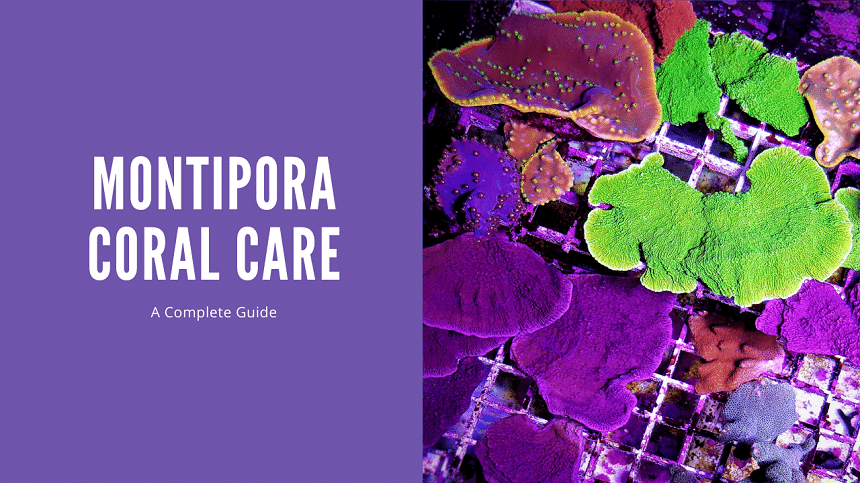
  • Everything You Need to Know About Mushroom Coral Care

    Everything You Need to Know About Mushroom Coral Care

    Mushroom corals are one of the first corals I recommend to anyone setting up a reef tank, and I keep them in my own setup as well. They’re incredibly tolerant of less-than-perfect water parameters, they spread readily, and the color variety available is genuinely impressive. If you’ve never kept corals before, mushrooms are the place to start โ€” they’ll build your confidence while actually looking great in the tank.

    Looking for a colorful and easy to care for coral? A Mushroom Coral is as easy as it gets when it comes to easy coral care. These wonderful corals are not only easy to growth, but also come in a variety of colors. They will fulfill the needs of a reefer who is just starting out and satisfy the hobbyist looks for the most exotic corals they can buy. With the popularity of bounce corals and jawbreaker mushrooms, there is a mushroom coral for everyone!

    Let’s dive in and learn how awesome these corals are!

    Species Overview

    Scientific NameCorallimorpharia Order (Actinodiscus/Discosoma spp., Rhodactis spp., and Ricordea spp. most commonly found in the reef aquarium hobby)
    Common NamesMushroom corals, mushroom anemones, disc anemones, and false corals, but commonly named after physical attributes where possible
    FamilyVarious – Corallimorphidae, Disosomatidar, Ricordeidae, and Sideractiidae
    OriginWidespread in temperate to tropical waters; major origins include Australia, Tonga, the Caribbean, and Indonesia
    Common ColorsPurples, blues, greens, oranges, yellows, reds
    Care LevelEasy
    TemperamentSemi-aggressive
    LightingLow-Moderate (<50-150 PAR)
    Tank PlacementBottom, Middle
    Flow RateLow
    Temperature Range76-82 degrees F
    pH Range8.0 โ€“ 8.4
    Salinity1.025 or 35 PPT
    Alkalinity8 โ€“ 12 dKH
    Calcium Level350 โ€“ 450 PPM
    Magnesium Level1250 โ€“ 1350 PPM
    PropagationCutting/Fragging

    Origins And Habitat

    Mushroom corals are found throughout most temperate to tropical marine ecosystems. These corals do not need much light and thrive in low flow environments. Most notably, they can be found in Australia, Tonga, Indonesia, with some of the most popular species originating from the Caribbean, namely from the coasts of Florida.

    Mushroom corals, or mushroom anemones, can spread very quickly and are often found in large colonies, covering rocks and other structures, including other corals.

    Morphology And Common Names

    The Corallimorpharia Order1 is a large taxonomic category containing nearly 50 species. However, most coral species in the reef aquarium trade belong to the Actinodiscus/Discosoma, Rhodactis, and Ricordea genera, which are collectively referred to as mushroom corals.

    The mushroom coral is a soft coral, which means that it does not produce a hard calcium carbonate skeleton like large polyp stony corals (LPS) or small polyp stony corals (SPS). As we’ll see later, this makes for easy propagation of the coral.

    Interestingly, members of the Corallimorpharia Order are very similar in morphology to SPS (Scleractinia Order), though this is difficult to see without looking at polyp segmentation. Instead, to most of us, these corals resemble the dome-shaped top and stalk of a terrestrial mushroom, earning them their most common name.

    While members of Actinodiscus/Discosoma, Rhodactis, and Ricordea are generally referred to as mushrooms, many mushroom corals have been given specific names with more rare and expensive variations being assigned brand names.

    For example, members of Actinodiscus/Discosoma are typically named after their colors, like red and blue mushroom corals. Some types of Rhodactis may be named after their color combinations as well, but this genus also contains ‘bounce’ mushroom coral variations.

    Ricordea species are simply called ricordeas most of the time due to their unique longer-tentacle appearance and can only be classified into Ricordea florida or R. yuma:

    • R. florida has a small mouth that is usually not surrounded by tentacles. The tentacles on the rest of the polyp are random in size and placement. Sometimes these tentacles will have orderly color distribution, but this may be random as well.
    • R. yuma has tentacles surrounding the mouth and is much more colorful comparatively. Their structure follows more order and usually has alternating small and large tentacles as you move to the outside of the polyp.

    Are They A Type Of Soft Coral?

    It is also possible to find mushroom corals referred to as false corals. Do not be mistaken as these animals are soft corals. Soft coral refers to their lack of defined internal structure. More specifically, mushroom corals lack any trace of skeleton, even small pieces of sclerite.

    Because of this, mushroom corals do not have any fossil records.

    Other Types Of Mushroom

    There are several other species that are present in the reef aquarium hobby, but more uncommon to find in your average hobbyist’s tank.

    This includes members of Amplexidiscus and Paracorynactis which can be very aggressive eaters.

    What Do They Look Like?

    What Does A Mushroom Coral Look Like

    Most mushroom anemones are easy to identify, though some have been modified in appearance so that they might resemble other corals at first glance.

    These are a few ways you can tell species of mushroom coral apart. Here are several different types:

    Disco Mushrooms

    Actinodiscus/Discosoma (pictured above) is considered one of the easiest and hardiest genera of mushroom coral. These corals are simple in appearance with a circular disk and a mouth in the middle and lay flatly against the surface; these disc anemones usually has a bumpy texture. Actinodiscus/Discosoma spp. grow a few across in diameter and are most commonly found in solid reds, blues, and greens.

    Rhodactis Mushroom Corals

    Rhodactis Mushroom Coral

    Rhodactis contains some of the more desirable morphs of mushroom coral, like the bounce coral. However, most species of Rhodactis are slightly more ornate than Actinodiscus/Discosoma species and have a pilled or frilly characteristic. They are usually two or more colors with nearly all combinations and gradients available. These corals can range greatly in size and may stay under one inch or grow close to two feet like elephant ear mushroom corals.

    Ricordeas

    Ricordea Mushroom Coral

    Ricordea has become very popular in recent years, specifically for biotope setups. As mentioned before, there are only two species of Ricordea. In general, ricordea mushrooms are much different from the previous two genera and can be told apart even if interspecies differences might be similar. These ricordea shrooms come in a variety of bright colors, stay pretty small, and are recognized for their bumpy appearance. The most popular variant is Ricordea florida.

    Sadly, most plainer-looking mushrooms, like those from the Actinodiscus/Discosoma genus aren’t kept in the hobby as much anymore due to more desirable morphs and because of how rapidly they can spread across an aquarium.

    If you’re looking to quickly fill a rock with color in your reef tank though, these mushroom corals can be the perfect addition.

    Why Are Bounce Corals So Expensive?

    Bounce Mushroom

    Despite some mushrooms being undesirable, others are extremely favored and go for high prices. In specific, these are bounce mushrooms, like Sunkist Bounce mushrooms and OG Bounce mushrooms, that can go for over $200 and $700 per polyp respectively.

    Bounce mushrooms are a modified type of Rhodactis. They are prized for their overgrown tentacles that are often bright colors and patterns. However, it is unknown how these morphs come about, and so they are rarer to come across. This, in addition to the market of assigning brand names, has made these corals some of the most expensive frags in the industry.

    While expensive, these mushroom corals don’t require much extra attention than other types of mushrooms Though losing one of these definitely hurts a lot more than a regular $20 polyp!

    Placement And Temperament In The Aquarium

    Though mushrooms corals greatly in size, shape, and color, their overall requirements are very similar. These corals thrive in reefs with available nutrients as well as in low to moderate reef light and low water flow movement, apart from Ricordea yuma.

    The mushroom coral is very forgiving of water parameters, but won’t tolerate being exposed to too much light and high flow conditions. Mushrooms actually have the ability to move around the rock and even completely detach if they do not like their placement. This can lead to some problems, though.

    While mushrooms do not have sweeper tentacles that can attack other corals in close proximity, they can actually be pretty aggressive; some hobbyists have even seen their mushrooms win a fight with chalice corals (Pectiniidae Family). If a drifting mushroom coral lands near other corals, there is a chance that it will start to attack.

    Because of this, it is also not a good idea to mix different species from different genera together as they will most likely damage each other. Some hobbyists have had success keeping similar mushroom corals together, but this is still a risk.

    The main problem with mushroom coral placement is that they cannot be glued to one place. These corals excrete tons of mucus that prevent the glue from sticking and allow them to slip right out of the hold. Instead, a mushroom coral polyp needs to attach itself to another surface that you can then move–though, your coral might have other plans.

    This can be done by placing the coral under a permeable container or netting with pieces of rock or frag plugs. Within a few days, the mushroom coral should have attached itself. You may then move your coral to other places of the display, in low light and low water flow.

    Otherwise, if you have no other corals in the aquarium, then you can also let your mushroom coral loose in your main display and let it find its own preferred location. Of course, this risks your coral getting stuck in the back of the tank away from light, which could kill the coral.

    Care And Maintenance

    Mushroom Coral Care

    Once your mushroom has settled, these corals are some of the easiest to take care of and to propagate. As mentioned before, most mushroom corals need the same tank conditions and maintenance besides Ricordea yuma.

    General Water Parameters

    Mushrooms do not have any specific water parameter needs. Because they are soft corals, they rarely depend on calcium or magnesium due to their lack of skeleton; this is also true for alkalinity, though alkalinity levels should remain constant.

    Unless keeping other nutrient-demanding corals, dosing is not necessary. Before you know it, you will probably reach a point where your mushroom population gets out of hand and you will have to remove some.

    Otherwise, mushroom corals can adapt to most water parameters as long as they are in the standard range recommended for a reef tank. Of all parameters, these corals will especially appreciate nitrates as too clean of an aquarium can starve the coral in the long run. Mushroom corals can safely be added to new tanks that might fluctuate more in water quality.

    In fact, many hobbyists use mushrooms as a warning coral. While most mushroom corals can adapt to changes in conditions, they will shrivel up and excrete mucus when they are stressed. This can be a good indicator that something is majorly wrong in the tank before fish and invertebrates start being affected as well.

    Feeding

    Feeding your mushroom coral is not necessary. In some cases, feedings won’t show any results and excess nutrients are introduced into the tank.

    However, some types of mushroom corals can be very eager to eat and will enjoy smaller foods. Still, it isn’t recommended to feed more than two times a week to avoid excess waste and to give your coral time to digest.

    Ricordea spp. care

    Some hobbyists have difficulty keeping ricordeas happy in their tank, specifically R. yuma. There are a few reasons why your ricordeas aren’t doing well in your aquarium and it starts with importation.

    Because ricordeas can be found close offshore of Florida, there are large populations of wild-caught mushrooms available for sale. This means that all the hardiness that aquaculture brings with other mushrooms has not been evolved by this genus. This can make ricordeas more demanding when it comes to flow, lighting, and stability.

    Ricordeas seem to do best under moderate water movement and moderate light with a good source of nutrients available. It is also important to make sure that your mushrooms are healthy when introducing them into your display as wild-caught corals can bring disease and pests into the tank.

    However, if you’ve fixed placement and lighting conditions and your ricordeas are still melting, there is not much else you can do. Some aquariums just can’t support some corals no matter how much we try. The best thing to try is finding an alternative or setting up another aquarium completely with ricordea in mind.

    What Are Good Tankmates?

    Firefish

    Mushroom corals can be kept with a variety of reef-safe fish and invertebrates. Ricordea species are a favorite for biotope setups with macroalgae and other soft corals with endemic fish species, though they can be kept in all other reef setups as well. The way mushrooms grow and their size make them ideal for nano reef tanks.

    The main problem you will want to look out for is if your mushroom seems to be closed the better majority of the time. This could be a sign that something in your display is walking over it or stinging it. For the most part, though, mushroom corals are pretty resilient and will learn goby fish or snail habits and will stop closing up at the first touch.

    Of course, fish and invertebrates that are not reef-safe should never be placed with coral. This is especially true as mushrooms can excrete a lot of mucus that can get caught around the tank.

    Are They Toxic?

    Though mushrooms can be pretty messy once they get stressed out, these strings of slime and mucus are nothing to worry about. Mushrooms don’t carry any toxins that are comparable to the deadly palytoxin contained in zoas and palys.

    If you find that your mushroom coral is shedding slime, you may run carbon in your filter and run a protein skimmer until conditions clear up.

    How To Frag

    Propagating mushroom corals is easy and is usually necessary once colonies start overcrowing rocks and other corals. These corals have a unique feature that allows them to regenerate from a small piece of flesh. First, we need to understand how mushrooms reproduce on their own.

    Mushroom corals largely undergo asexual reproduction in the aquarium. However, how they reproduce is dependent on the species of coral. These are two ways that you may see your mushrooms splitting:

    1. Mushroom corals have the ability to split into two. Your mushroom coral may start to form an odd figure-8 shape where there have noticeably short and long sides of their polyp. During this time, you might even be able to see two independent mouths forming in the center. Eventually, these two sides will split into two new polyps.
    2. Mushrooms can also leave a piece of themselves behind, which will then grow into a whole new polyp; this is known as pedal laceration. In cases like this, you will see your coral stretching in one direction with one section of the foot taut. Eventually, the main foot will detach from this part and the piece will develop a recognizable polyp within a few weeks.

    It should be noted that mushrooms that are looking to detach from rocks and move to a new place may also look like #2 and can leave behind a piece in the process.

    When fragging, we try to emulate natural splitting. There are two main ways that mushroom corals can be fragged:

    1. Take a mushroom polyp that is attached to a small piece of rock. Use a scalpel to divide the coral down the middle near the mouth as it would divide on its own. Then, take a bone cutter and split the rock in half; this helps with the issue of a mobile frag and keeps the two pieces from rejoining.
    2. If you’re dealing with a mushroom that isn’t attached to a surface, then you will need another method similar to when you first introduced the coral into your tank. Simply cut the mushroom once down the middle again, or as many times as you would like. Then, use a controlled environment with low flow or use a permeable container that gives time for the frag to attach to a new surface.

    Once the coral has attached itself and fully healed, it is time to move the mushroom to the desired place in the tank or give it away to another hobbyist.

    Mushrooms are extremely forgiving of being fragged and can survive multiple slicings. It is usually not necessary to dip them before being placed back into the display, but iodine or another coral dip may be used for extra security. If you would like a more visual guide, here is a nice video from Reef Life Aquatics.

    Controlling Coral Growth

    Though mushrooms can fill empty spaces in the aquarium, they can also quickly start to get out of hand. Because of their ability to regrow from a small piece, it can be very difficult to control populations once established.

    If your mushrooms are confined to one section then one of the easiest, but definitely not one of the most convenient, ways to fix this is by removing the whole rock from the display. Sadly, this will remove some of the beneficial bacteria from your tank but it ensures that the mushrooms are gone for good.

    If you have mushrooms growing on multiple surfaces throughout the display, then this will be much more difficult and a longer struggle. This method involves removing the mushrooms one by one by hand. Simply keep removing any mushrooms you see and try to scrape away as much of the flesh as possible.

    If you’re comfortable with bringing in some chemical options, then anything that is meant to kill Aiptasia will also work on a mushroom coral, like Aiptasia-X. You will need to be careful as these solutions can also damage other nearby corals.

    Kills Aiptasia
    Aiptasia-X

    A great solution for target elimination of Aiptasia in a reef tank.

    Click For Best Price Buy On Amazon

    One of the last ways to deal with explosive mushroom growth is by reducing the number of available nutrients in the water column. However, this can be tricky and can have ill effects on the rest of your reef.

    Mushroom corals thrive in dirtier water. Once those nutrients are taken away, growth should hypothetically decrease along with them. This method is only recommended for experts in water chemistry.

    Closing Thoughts

    Mushrooms are an understated coral that can bring color to low flow areas of the display with low light conditions. With such a large variety of mushrooms to choose from, there are colors and patterns for everyone.

    These corals can spread very quickly, so population control will be needed to keep numbers in check or to regularly frag new pieces. Otherwise, they will continue to grow wherever they can when nutrients are available.


    ๐Ÿ“˜ Want to learn more? This article is part of our complete Saltwater Fish & Reef Guide โ€” your ultimate resource for marine fish, coral care, reef setup, and more.
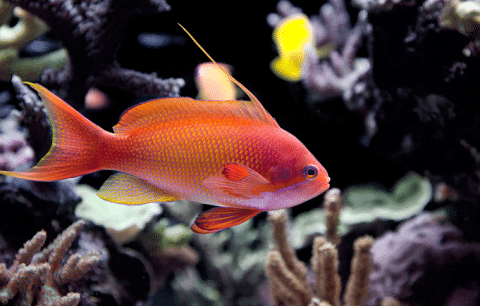
  • Zoanthids – The Soft Coral Superstar (A Care Guide)

    Zoanthids – The Soft Coral Superstar (A Care Guide)

    Zoanthids are one of my favorite soft corals to collect, and I’ve kept them in my reef for years. The color variety is absolutely insane โ€” I’ve seen zoas at Reefapalooza that looked like they were painted by an artist. They’re also very beginner-friendly, which makes them a perfect starting point for new reef hobbyists who want something visually impressive without a steep learning curve.

    Reef tank owners, are you looking for a new soft coral to add to your aquarium? If so, zoanthids may be the perfect addition! These beautiful and easy-to-care-for corals are an excellent choice for beginners. In this post we will cover everything you need to know about caring for zoanthids in your reef tank.

    A Quick Overview

    Scientific NameZoanthus spp.
    Common NamesZoas, zoos, zoanthids, and button polyps; usually referred to as their specific designer brand when applicable
    FamilyZoanthidae
    OriginMost warm, shallow waters but most species can be found universally at multiple depths
    Common ColorsAll colors, though what might appear as black is actually a very dark color instead
    Care LevelEasy-Moderate
    TemperamentNot aggressive, though can easily overcrowd other corals
    LightingModerate (50-150 PAR)
    Tank PlacementBottom, Middle, High
    Flow RateModerate
    Temperature Range76-82 degrees F
    pH Range8.0 โ€“ 8.4
    Salinity1.025 or 35 PPT
    Alkalinity8 โ€“ 12 dKH
    Calcium Level350 โ€“ 450 PPM
    Magnesium Level1250 โ€“ 1350 PPM
    PropagationCutting/Fragging

    Origins And Habitat

    Zoanthids are very closely related to sea anemones but belong to different taxonomic orders.

    Though these corals are extremely common to come across in the ocean and easy to cultivate in a laboratory setting, their species diversity is hardly understood. This can make placing certain species in the correct classification very difficult.

    Zoanthid corals can be found in most tropical water ecosystems, including the waters around the Caribbean as well as the Indian and Pacific Oceans1. That being said, they can be found at all levels of depth and different water temperatures as well.

    Interestingly, these corals have adapted to tolerate periods of emersion when the low tide goes out, which can help with collecting and fragging them for the aquarium. At the same time, other zoanthid coral species have been found all the way at the bottom of the ocean on the seafloor at colder temperatures with minimal light.

    It is believed that zoanthid corals are epizoic and like to grow on other animals, like sponges.

    What Do Zoanthids Look Like?

    Zoas

    Since they’re so closely related to sea anemones, zoanthid corals actually look like much smaller anemones! These corals form mats of polyps that individually give way to a colorful head. Zoanthids lack a calcium carbonate skeleton and are referred to as soft corals due to their fleshy structure.

    This polyp head has two rows of tentacles on the outer rim and usually has several colors as you work your way into the center towards the mouth. Zoas are sometimes confused with Palythoa spp., but zoanthids are usually smaller, more colorful, and also have shorter tentacles and a rounder mouth.

    However, some zoas and palys are impossible to tell apart and so many species are misidentified.

    Designer Names

    Zoanthids are one of the most modified corals available in the trade, coming in almost all color morphs with varying shapes, sizes, and tentacle lengths. Zoa gardens and collections have become increasingly popular over the past decade, and hobbyists can now find frags costing $5 or upwards of $2000.

    There is some controversy surrounding designer zoanthid corals. Many hobbyists believe that a desirable name increases the price of the coral to be much more than it’s actually worth. For the most part, there’s an affordable zoa for everyone.

    Here are some of the most popular designer brands you’re likely to come across:

    Blue Hornet Zoas
    • Rastas – Rasta zoanthids have yellowish-green tentacles, a bluish-purple outer rim with green, orange, and purple moving inward. These zoas tend to be smaller than other color morphs.
    • Eagle Eye – These zoas have light green tentacles, with a thin purple margin and center surrounded by orange.
    • Fruit Loops – Fruit Loops have bright orange tentacles, with a deep blue center surrounded by yellow.
    • Blue Hornets (pictured above) – These corals are one of the darker zoas available. They have neon-green tentacles with an electric blue center. There is a smaller yellow circle surrounding the mouth.
    • LA Lakers – These zoas are very similar in appearance to Fruit Loops. LA Lakers have yellow tentacles with a yellow outer rim and dark blue in the center.
    • Sunny D. – Sunny D zoanthids have longer purple tentacles that might appear to be lightly frosted. They have a striated center of greens, oranges, and yellows, with a sometimes purple mouth.
    • Ultimate Chaos – Ultimate Chaos zoanthids start moving into the next price tier and are usually only sold as one or two polyps at a time. These zoanthids look like mini galaxies with swirls of oranges, yellows, and purples. Ultimate Chaos is one of the larger zoanthids.
    • Grandmaster Krak – The Grandmaster Krak is one of the most expensive zoanthids, with normal morphs starting at several hundred dollars with the more collectible varieties going into the thousands. These corals are rich yellows, greens, oranges, and blues with a starburst effect. Typically only one polyp is sold at a time.

    Are They Corals Poisonous?

    Eagle Eye Zoanthid Coral

    Before introducing one of these corals into your reef tank, this is an important question to consider–and even more important if planning to frag. The problem is that not much is known about palytoxin and it’s hard to tell which corals actually produce it, though it’s mostly associated with those in the Palythoa genus.

    Palytoxin is a very dangerous toxin that can be life-threatening depending on exposure; palytoxin poisoning includes flu-like symptoms and skin reactions as well as muscular and cardiac complications.

    It is believed that bacteria living within the zoanthid coral polyp are responsible for making the palytoxin as opposed to the coral itself. This toxin can be released underwater as well as above and poses a risk of being inhaled or entering an orifice; consuming plants and animals that have been exposed to palytoxin can also cause poisoning.

    However, the chances that your zoas contain palytoxin are minimal. Hobbyists have kept zoas and palys in their tanks for decades with little to no problems. If you’re truly concerned about introducing this toxin into your aquarium, avoid purchasing more natural-looking varieties as it’s believed they are the most likely to be poisonous.

    Otherwise, always use protective equipment when working with your tank. Even if you’re not actively touching your zoas, there’s always the chance that they released palytoxin into the water column.

    Do not put your hands into the tank with open wounds and wash your hands with soap immediately after. Aquarium gloves, like West Chester 2920, may be appropriate if dealing with especially large colonies. Eye protection, like the 3M Cool Flow mask, is also appropriate if handling the zoanthid coral outside of the tank.

    Placement And Temperament In The Aquarium

    Even though zoas are one of the most dangerous animals on this planet, they’re not aggressive to other corals in the tank. However, there are a few potential problems that you might run into with having zoas in your aquarium outside of aggression.

    The first zoa problem you might have is rapid growth. Some zoas take months to start propagating and then start growing new heads every other day. This is great if you plan on fragging them, but can be a pain if they start growing over your other corals and/or shading out large portions of the tank.

    The other main problem with zoas is that they can grow so large and thick that they start to develop dead zones where nutrient transport suffers and algae starts to grow. This will require moving the colony to a higher area of flow, buying new equipment, fragging the colony, or routinely removing debris with a turkey baster.

    Are They Easy To Keep?

    Though zoas are regarded as one of the easiest corals to keep in the hobby, they are actually the most difficult for many hobbyists. Some hobbyists have zoas that close for months on end without any explanation.

    These corals are difficult because each morph requires different lighting, flow, and water parameters.

    Corals and Lighting

    In general, zoas need moderate lighting (50-150 PAR), but this isn’t to say that hobbyists haven’t kept them way below and way above these numbers.

    As mentioned before, zoas are found in extremely shallow waters that are sometimes left exposed when the tide goes out. This means that colonies are receiving tons of light without any moisture relief for extended periods of time. So why do most zoas melt once placed under high lighting then? Well, zoas can be placed under high reef lighting with the right steps.

    The secret to getting zoas to be happy under high lighting is proper acclimation. These corals need plenty of time to adjust to new conditions and hobbyists usually move them up in the tank too quickly or too often. Instead, start them at the bottom of your tank and gradually move them up over the course of several months.

    Great For Zoas
    AquaIllumination AI Prime

    The AI Prime is a great overall all light for Zoas. It contains the correct, PAR, spectrum, and spread needed to get you going with growing your own Zoa colony!

    Buy On Amazon Click For Best Price

    At this point, you may find that your zoas are actually happiest right next to your most demanding small polyp stony corals (SPS). Or, you might find that they start to melt right away with such high light.

    For the most part, zoas can also be kept in very low lighting. If you find that your corals are starting to extend upwards, they are probably stretching for light. This is a good indication that it’s time to move them up in the tank.

    Otherwise, leave them where they are and try not to move them around too much! Zoas are very temperamental and are used by many hobbyists as a warning coral for being the first to show distress when something is wrong in the tank.

    Flow

    Getting the water flow right for your zoas can be even more challenging than getting the lighting. Again, your corals will let you know they’re not happy with the conditions they’re in.

    As mentioned before, these corals can start to develop dead zones once the colony becomes larger. You will want to make sure that water is being moved past all parts of the coral to ensure that nutrients are being delivered and detritus doesn’t start to build up. However, too much flow can cause your zoas to retract and not open for extended periods of time.

    Start by placing your zoas in moderate flow and watch how they react. Move accordingly, but never too much at one time. An adjustable aquarium wavemaker is a great way to generate flow and adjust as needed.

    Water Parameters

    Here is where zoas can get very tricky. Though standard saltwater conditions are recommended for all zoa varieties, ideal parameters aren’t what some zoas want.

    Some hobbyists have found zoas to be very sensitive to pH, alkalinity, and nitrate levels. This can be very frustrating as one colony of zoanthids might be thriving in your tank while the other is quickly melting away.

    Unfortunately, this is mostly a game of trial and error of seeing which zoas do best in your system. It is not recommended to change conditions in your tank because of only one coral.

    Care And Maintenance

    Once you manage to establish a colony of zoas in your aquarium, then there’s not too much work to be done afterward.

    These corals can be kept in very low-tech tanks with hang on the back filters, canister filters, or sump filtration. They pull most of the nutrients they need from the water column, so a cleaner tank might not benefit from a protein skimmer.

    If keeping larger colonies, then brush off algae as it occurs and regularly flush with water to keep detritus from building up.

    Feeding

    Zoanthids do not need to be fed. These corals get most of their nutrients through fish waste as well as other detritus that is already available in the water column.

    Most hobbyists like to supplement with regular broadcast feedings or more concentrated feedings for enhanced color and faster growth rate. If wanting to feed your coral, do not try to feed larger foods. Instead, feed specific coral foods and other microorganisms, like phytoplankton.

    What Are Good Tankmates?

    Zoanthids are a great choice for any reef setup. This means that they can happily be housed with saltwater community fish, like clownfish, tangs, and cardinals.

    Tank Raised Clownfish

    However, zoas can be temperamental and they won’t appreciate fish that might annoy them. This includes species of goby and blenny that regularly rest on rock and corals while swimming around the tank. Though these fish can comfortably be kept with zoas, there’s a chance that you find your corals closed up because your fish is using them as a rest stop!

    Similarly, larger invertebrates, like urchins and shrimp, should also be avoided for the same reasons. Large crabs and invertebrates with pincers should not be kept with zoas and colonies have been known to disappear overnight due to a hungry cleanup crew.

    Of course, do not keep zoas with any fish that are known to eat corals, like angelfish and parrotfish. This can be especially dangerous if your zoa ends up containing palytoxin and releases it into the water column once injured.

    How To Propagate

    Propagating zoanthids can be a little intimidating as the threat of palytoxin is always looming. As long as you take precautions with safety equipment, wash your hands, and make sure you don’t have any open wounds, then propagating zoanthids is easy and usually becomes necessary when colonies start becoming too big.

    A few tools are recommended for propagating zoanthids, namely bone cutters for cutting rock and a scalpel or scissors for separating the coral from the rock and/or from the rest of the colony. Here is a great video by ReefAmorous showing how to frag Zoas. A simple breakout summary is below.

    1. First, break up the rock that the zoas are attached to into smaller, more manageable pieces. If only taking a small part of the colony, then simply move to the next step.
    2. Next, use your scalpel or scissor to carefully peel off some of the colony. You will want to be wearing eye protection during this part as liquids can squirt from the cut.
    3. These pieces can then be attached to a frag plug with super glue. Don’t be overly concerned with keeping the frags out of water for too long, but try to get them submerged as soon as possible.

    How Do You Get Zoas To Spread On Their Own?

    Zoanthids are one of the fastest-growing corals in the aquarium hobby. These corals are asexual and one polyp can quickly turn into 50 over the course of a few months.

    There is no secret to getting zoas to quickly reproduce. Like any coral, stability is key. If your zoa polyps are fully extended every day and tank conditions are good, then it’s only a matter of time before your zoa colony expands.

    Fragging will help spread that colony to other parts of the tank, but the healing process might delay the growth momentarily.

    How Fast Do They Grow?

    Even with perfect conditions, zoanthid coral growth rates will vary. Some hobbyists have recorded one new polyp every few days while others go months without any sign of growth.

    Zoanthid coral growth is not fully understood, and the rate seems to change tank to tank.

    How To Propagate

    Zoas can be found in any specialized local fish store. One of the biggest struggles if you are a big coral collector is finding all the designer names locally. Your best bet to find the new and best looking designer zoas is to purchase them online from specialty coral sellers or through auction sites.

    Closing Thoughts

    Zoanthids can be the easiest coral you’ve ever kept or one of the hardest. These soft corals don’t require any special care, but their preferred conditions aren’t usually straightforward as they vary with different morphs. They are a great addition to any reef tank, and we hope that you will consider placing these beautiful corals in your own. Leave us a comment below if you have any questions about zoanthids or how they can be cared for properly!


    ๐Ÿ“˜ Want to learn more? This article is part of our complete Saltwater Fish & Reef Guide โ€” your ultimate resource for marine fish, coral care, reef setup, and more.
  • Reef Tank Setup: 7 Essential Must-Knows for First-Time Reef Keepers

    Reef Tank Setup: 7 Essential Must-Knows for First-Time Reef Keepers

    Setting up a reef tank is one of the most rewarding things you can do in this hobby โ€” and one of the most intimidating if you try to research it online. After 25 years in the saltwater side of this hobby and running a 125-gallon reef of my own, I understand how overwhelming the conflicting advice can be. Everyone has strong opinions on filtration, flow, lighting, and dosing, and beginners often end up paralyzed by contradictory information. In this guide I’m cutting through that noise with 7 things I consider genuinely essential for reef tank success โ€” the fundamentals I wish someone had laid out clearly for me early on.

    Reef Tanks Setup – The 7 Essentials

    I get it, information is everywhere and not all sources of information are good to use either because some innocently tries to give you an answer not really having the knowledge because they want to help or the source of the information is biased with sponsors (looking at you YouTube). I’m completely sponsor free here and while I run a e-commerce shop, I am happy to refer folks to other sites and vendors to get the right equipment for them.

    With saltwater reef tanks, while there isn’t one definitive answer, there are concepts for success. Following these concepts will put you in the best position to succeed. These 7 essentials are:

    1. Figuring out what you want (planning)
    2. Getting the right equipment
    3. Obtaining quality saltwater
    4. Understanding light needs
    5. Knowing the flow you need
    6. Adding livestock
    7. Maintenance

    1. Figuring Out What You Want (Aquarium Planning)

    This part here can cause the biggest buyers anxiety or just get folks spread thin instead of focusing. To have success with a reef tank, you need to be focused on what you want to build. Saltwater fish and corals have various requirements and not coming up with a plan can cause all sorts of problems in the long run. The factors you want to consider are:

    • How big is your space?
    • What is your budget?
    • How much time do you want to put into your tank?

    Yes, just these three. I am not even focusing on what fish you think are pretty or what corals you think look cool. The reason why is because you aren’t grounded to the limitations you have. I don’t want you to overstretch. A saltwater aquarium contains aquatic living beings after all. It’s heartbreaking to lose them, and it does happen often in this hobby for various reasons – with planning or impatience usually being the main culprits.

    How Big Is Your Space?

    This should be the first consideration you should think about setting up your reef aquarium. Where are you going to place your reef tank? If you only have space on a desktop or have an apartment, your choices will be limited. If you have a large space, but your significant other isn’t keen on you taking up a 1/4 of the living room with a massive tank, you are going to want to size down.

    Tanks when it comes to interior design are accents to our home and a place of quiet and serenity for you and guests. You don’t want it be massive to the point where it is creating visual noise in your desired area. It needs to fit and highlight your home.

    In saying this, the largest saltwater aquarium for most people will be a 4 foot long tank. This typically has the best options for builds and livestock and the dimensions make it easier to build a high end setup. A 6 foot long reef tank can do similar in a larger space, but is going to be more expensive, which brings me to the next factor.

    What Is Your Budget?

    Budget is a major limiting factor when it comes to reef aquarium building. It’s a fact that reef tanks are expensive. And it’s not just the equipment, but the fish and corals as well that add up to the space. Think about what you can afford for your initial setup. The general rule of thumb that has worked for me on client builds is $40 per gallon on a quality saltwater aquarium setup.

    So if I take that rule then a 40 gallon reef tank should roughly cost $1600 to get it up and running with a quality setup. Can I go lower than that? Of course I can, but bear in mind we will have livestock to purchase and ongoing maintenance costs. One best practice I like to do with clients is when I get the number they are willing to work with, I try to size down.

    For example, if someone tells me they have a $5000 budget for a 120 gallon reef aquarium, I will try to talk them down to a 75 gallon tank using the same budget. This gives you more wiggle room to purchasing the fish and corals you want and also go up in quality on the equipment you can purchase. This also finally gives you a budget on the most missed part of most hobbyist’s setups – aquarium power outage readiness.

    How Much Time Do You Want To Put Into You Saltwater Aquarium?

    Time and Money In A Reef Tank

    This is the final limiting factor you will need to consider. Reef tanks require maintenance, and the more advance the setup, the more time you are going to be spending maintenance. While larger tanks are more stable and easier to be successful (hence the “bigger is always better” saying in our hobby), they also require more time to maintain.

    A good example of this is comparing the 125 gallon mixed reef tank I had versus my 40 gallon breeder. The 125 gallon reef tank required 20 gallon water changes and needed a 10 gallon auto top off container. I needed a large brute trash can to make water changes and have to had an RODI System on deck to make 0 TDS water. It got to be a chore so I make a DIY water changing station.

    The 40 gallon breeder on the other hand only needed a 5 gallon bucket to change water. I could have purchased water from the fish store at that size or could have used a more budget friendly RODI system.

    The 40 gallon reef aquarium was an all in one so I only need to care about the return pump and wavemakers for maintenance. The 125 gallon had an oversized protein skimmer, a sump, and larger fish that needed to be feed regularly. The corals were more advanced in the 125, requiring a dosing pump and more considered on the fish I selected.

    The 40 gallon was just a softie tank and got to the point where it didn’t really need water changes – a reef tank owner’s dream.

    2. Getting The Right Equipment (Setting Up A Saltwater Aquarium)

    Equipment is critical for your reef tank. With modern reefs, it has gotten to the point where equipment runs off controllers and can do all sorts of automated tasks. With this in mind, it also makes it easy for you to either buy yourself poor or just want to get every new toy manufacturers come up with every year. Here are the basics of what you need to get started. Fortunately, I have buyers guide for each one which I will link to:

    • An Aquarium – Rimless or All-In-One is what most reefers prefer these days. Waterbox Aquariums and Red Sea are the big names in premium ready to run reef tanks.
    • Aquarium Stand – Either buy a high quality one or consider DIY or hiring someone to make one
    • Return Pump – Whether you go all-in-one or with a sump everyone will need one
    • Wavemakers – Corals need flow. Wavemakers are the best source for getting consistent flow to make your corals thrive
    • Lighting – These days Reef LEDS are the rage. Consider a hybrid lighting system if SPS is your thing
    • Heater – An Aquarium Heater and a proper heater controller setup is essential. Always go with a heater controller. Heaters fail too often!
    • Reef Salt – If you want corals, you need the right salt. There is a specialized salt for every build
    • Rocks – Either live rock or dry rock. Personally I recommend a combination of live and dry rock to avoid Dinoflagellates
    • RODI System – For larger reef tanks. Consider a budget system for smaller ones

    Notice I did not include a sump? Since an all-in-one tank doesn’t need an Aquarium Sump it’s off the list. I also left off a Protein Skimmer as smaller tanks do not need one. Protein skimmers are a consideration for larger saltwater aquariums.

    3. Obtaining Quality Saltwater

    Reef tanks need 0 TDS water. Without 0 TDS water, you will run into algae problems – typically hair and cyanobacteria due to the high levels of nutrients you are introducing into your system. There are two ways to obtain this water.

    The first way is to purchase distilled water at a store or RODI water from your local fish store. Some local fish stores will sell you saltwater already mixed. All options work. The main issue you run into is if you have a tank emergency and it’s late at night or weekend, you are out of options.
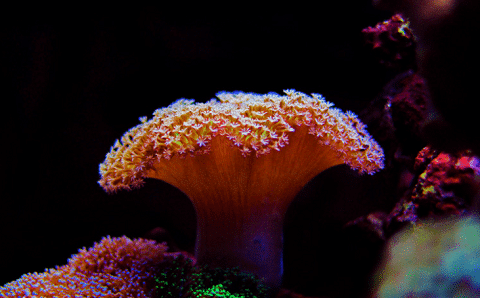
    That’s why I recommend that every reef tank owner purchase a quality RODI system for their aquarium. It is a one-time investment that will be with you on your entire reef aquarium keeping journey. Even if you decide to get out of the hobby later, you can always convert your system to a drinking water solution just running the RO piece of the system.

    Budget Option
    Aquatic Life RO Buddie

    Budget Option

    Compact and great for smaller tanks. This is the best unit if you live in an apartment or dorm

    Buy On Petco Buy On Amazon

    4. Understanding Light Needs

    Lighting is a major factor with a reef tank. It is also a consistent source of confusion and frustration with every new reef keeper. The main issue I see with out hobby is overbuying LEDs for corals that don’t really need it. I’ll attempt to break it down very simply for you. There are three factors when it comes to lighting that you must know:

    • Intensity
    • Spectrum
    • Coverage

    Light Intensity

    Light intensity with corals is measured in either Lumens or PAR. Most of us use PAR. There are three types of corals in our trade and they will have different PAR requirements they are the following:

    So when you just think about, the highest end corals will generally thrive in environments of 350 PAR. Let’s talk about this for a moment. Many manufacturers just light to boast about their high PAR figures. Really, if you can get consistent PAR, it doesn’t matter how high the PAR stated from the manufacture is. It’s just a number they like to brag about to think it is the best because it’s easier to talk about PAR versus the next factor.

    Spectrum

    Light Spectrum

    Spectrum is the holy grail when it comes to coral. I don’t care how high that PAR number is from the manufactuer. If they get a high PAR number because they use a bunch of white LEDS (a common way of upping PAR), you will not get good results with that light.

    Blues, violets, and UVs speak when it comes to coral grow, and the top manufactures like EcoTech understand this. Other manufactures like Kessil focus on Spectrum primarily over light intensity for this very reason. Spectrum is everything when it comes to coral growth. PAR is easy to manipulate. The only important manufacturer I’ve seen that gets this is Ocean Revive in the budget range, which is why many Coral Growers use them when trying to save money.

    Coverage

    So you got the right PAR and Spectrum, but still have issues? What could be the problem? That would be coverage. This is another major issue with lower quality lighting. They are build off narrow 60 or 90 degree lenses in order to pump up those PAR numbers, which leads to hotspots and board PAR ranges. The high quality manufacturers will use 120 degree lenses and double down on coverage so that PAR spreads more eventually the deeper you do into the tank.

    Despite this, with a reef aquarium that is dominated with SPS corals, you will deal with shadowing with LEDs. This is because LEDs are designed to be a focused light source. To balance out coverage in these systems, a hybrid system is often use that combines T5s and LEDs. This combines the spread of T5 lights with the decrease electricity and maintenance costs of LEDs.

    5. Knowing The Flow You Need

    Corals have various flow needs depending on what type you keep. SPS corals generally need high flow while most soft corals like Zoas and Mushrooms will do flow in lower flow. I’ll break it down simply here:

    • Soft Corals – 15-20 times gallons per hour
    • LPS Corals and Mixed Reefs – 20-30 times
    • SPS Dominated – 45 times and up

    So to provide an example, if you have a 75 gallon mixed reef tank you should be aiming for 1500 gallons an hour in flow as a minimum. You would place corals that want more flow at the top of the aquarium and those that prefer lower flow at the bottom. Flow is primarily regulated by your wavemakers.

    6. Adding Livestock

    Orange Spotted Filefish

    Once you figured out what you can work with and cycled your tank, it’s time to work on adding livestock. The great things about corals is you can add them as soon as your tank is cycled. Fish can as well, but there are other factors to consider.

    Many folks, including myself prefer to quarantine fish. Saltwater diseases are rampant today and getting more mutated with vendors using low doses of cooper in their holding tanks and with the conditions of our oceans with wild caught fish. I actually have a detailed post on How To Quarantine Saltwater Fish. Definitely give that a look!

    You can now purchase quarantined fish online. If you are looking for that, TSM Corals is my go to. They have the more comprehensive quarantine process I have seen in the industry. I use them exclusively for my high end clients. No one likes spending $200 on a fish only to have it die from marine velvet with no guarantee.

    Also check out my article on reef safe fish for good picks.

    7. Aquarium Maintenance

    Now that you got a reef tank going, you have to maintenance. It’s more than just water changes (which in all honestly you can get away with doing less of these or even none when your tank gets older!), you have to maintenance stability in your tank.

    For LPS, SPS, and Mixed reefs, this involves keeping your reef parameters up – Calcium, Alkalinity, and Magnesium. You will need to get on a regular water testing schedule to monitor your levels. You will also want to test for nitrates and phosphates. You keep up your reef parameters with doing. Most of use a two part solution. For nitrates and phosphates, if they are high we can lower with water changes or using media like GFO.

    There are also low nutrient tanks, a common issue a modern reef aquarium where you will actually need to dose phosphate and nitrates to keep your levels healthy in your aquarium.

    Ideal Parameters Are:

    • Alkalinity – 8 – 11 dKH
    • Calcium: 350-450 ppm
    • Magnesium: 1250-1350
    • Phosphate: 0.001 to 0.25 (never go zero)
    • Nitrate: 1 to 10 (for most corals — never go to zero)
    • Salinity: 35 ppt or 1.026 specific gravity

    Dosing can be done by using a dosing pump. There are even dosing systems now like the Neptune Triton that can automate dosing for you while testing your water at the same time! It’s all a matter of how much you want to invest in your tank. I always recommend people get on a regular test schedule with their reef aquarium first before going the automation route. You want to build up the discipline of checking your reef tank so you stay on top of things.

    Budget Option
    Kamoer X1 Micropump

    Budget Option

    The Kamoer X1 is an excellent dosing system that will grow as you build your reef tank. WiFi enabled, user friendly, and easy to use

    Click For Best Price Buy On Amazon

    Reef Tank equipment will need to maintained as well. RODI and white vinegar are the cleaning tools of choice here. Just do a blended solution. a 1 to 10 solution will work for general cleaning and a 50/50 will work for tougher jobs. Just get a bucket, dip your equipment in there. After a few hours, get a brush and scrub off the the parts. If you are dealing with Coralline algae, consider dipping it into the solution overnight.

    Got Any Questions? Ask For Help ๐Ÿ˜

    Got any buyer’s anxiety or not sure what to do? Ask a question in the comments and I will get back to you! I love talking to my readers and seeing them grow on their reef aquarium journey. No question is a silly one. Thanks for reading and see you next time.


    ๐Ÿ“˜ Want to learn more? This article is part of our complete Saltwater Fish & Reef Guide โ€” your ultimate resource for marine fish, coral care, reef setup, and more.