Tag: Fishkeeping

  • 10 Most Beautiful Saltwater Fish โ€“ My Personal Picks After 25 Years

    10 Most Beautiful Saltwater Fish โ€“ My Personal Picks After 25 Years

    I’ve been keeping saltwater fish for over 25 years, and one of the things that never gets old is the sheer beauty of reef fish. When I set up my 125-gallon reef, choosing fish that were both compatible and visually stunning was a real process. you want fish that pop against corals and make the tank come alive. After keeping and observing hundreds of species over the years, these are my picks for the most beautiful saltwater fish you can actually keep in a home aquarium.

    The 10 Most Beautiful Saltwater Fish

    10. Volitan Lionfish
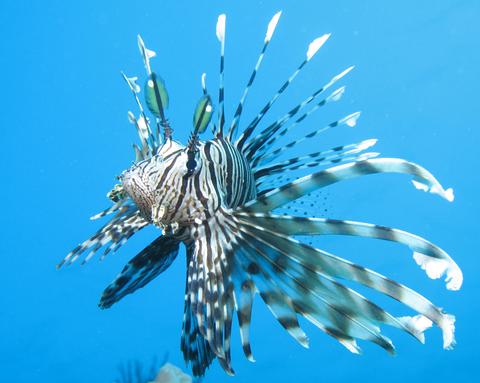
    Lionfish

    Stats:

    • Minimum Tank Size – 120 Gallons
    • Max Size – 15″
    • Reef Safe: With Caution
    • Temperament – Semi-Aggressive
    • Price – Around $40

    One of my personal favorites. The lionfish is generally known to the public due to news of their invasiveness, but in the aquarium hobby they make a great display fish. They are pretty friendly and very hardy in the aquarium – often to the point of getting bullied by some more active fish like triggers and large angelfish.  They will eat just about any fish it can fit in its mouth so they are best with larger fish. They can be kept in reef tanks as they will not harm corals, but may eat inverts.  For those with smaller tanks, you can look at dwarf zebra lionfish which only grows to about 6″ and requires a 50 gallon tank.

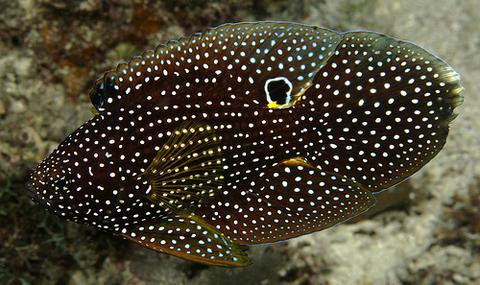
    9. Marine Betta

    Beautiful Fish

    Stats:

    • Minimum Tank Size – 55 Gallons
    • Max Size – 8″
    • Reef Safe: Yes
    • Temperament – Peaceful
    • Price – Around $80

    The marine betta is a very unique and peaceful fish. They are known for being extremely hardy with stories of them surviving tank wipe outs caused by parasitic infections and recovering from wounds without getting bacterial infections. The key with the marine betta is acclimation. They are very shy when introduced and often will do poorly with very active tank mates. They are also quite large, so they need to be placed with larger tank mates or kept well fed to prevent them from eating smaller fish.

    They are known for being reef safe and will not bother inverts as long as they are fed well. They are a nocturnal fish but will adjust to the home and be quite showy to their owner once established.   

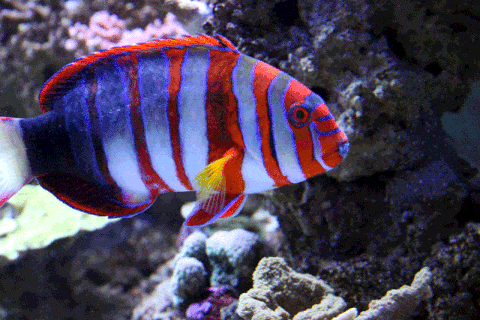
    8. Harlequin Tusk

    Harlequin Tusk

    Stats:

    • Minimum Tank Size – 125 Gallons
    • Max Size – 10″
    • Reef Safe: With Caution
    • Temperament – Semi-Aggressive
    • Price – Usually over $90

    This looker hails from the Indian Ocean and Australia. They are a great addition to a fish only with live rock setup as they will get also with many other active fish like tangs, triggers, and angelfish. They will not harm corals, but it has been known to eat snails, shrimp, and crabs. The Australian varieties tend to be more colorful and more expensive then the Indian Ocean tusks.

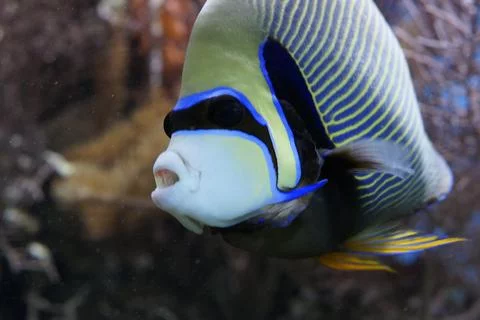
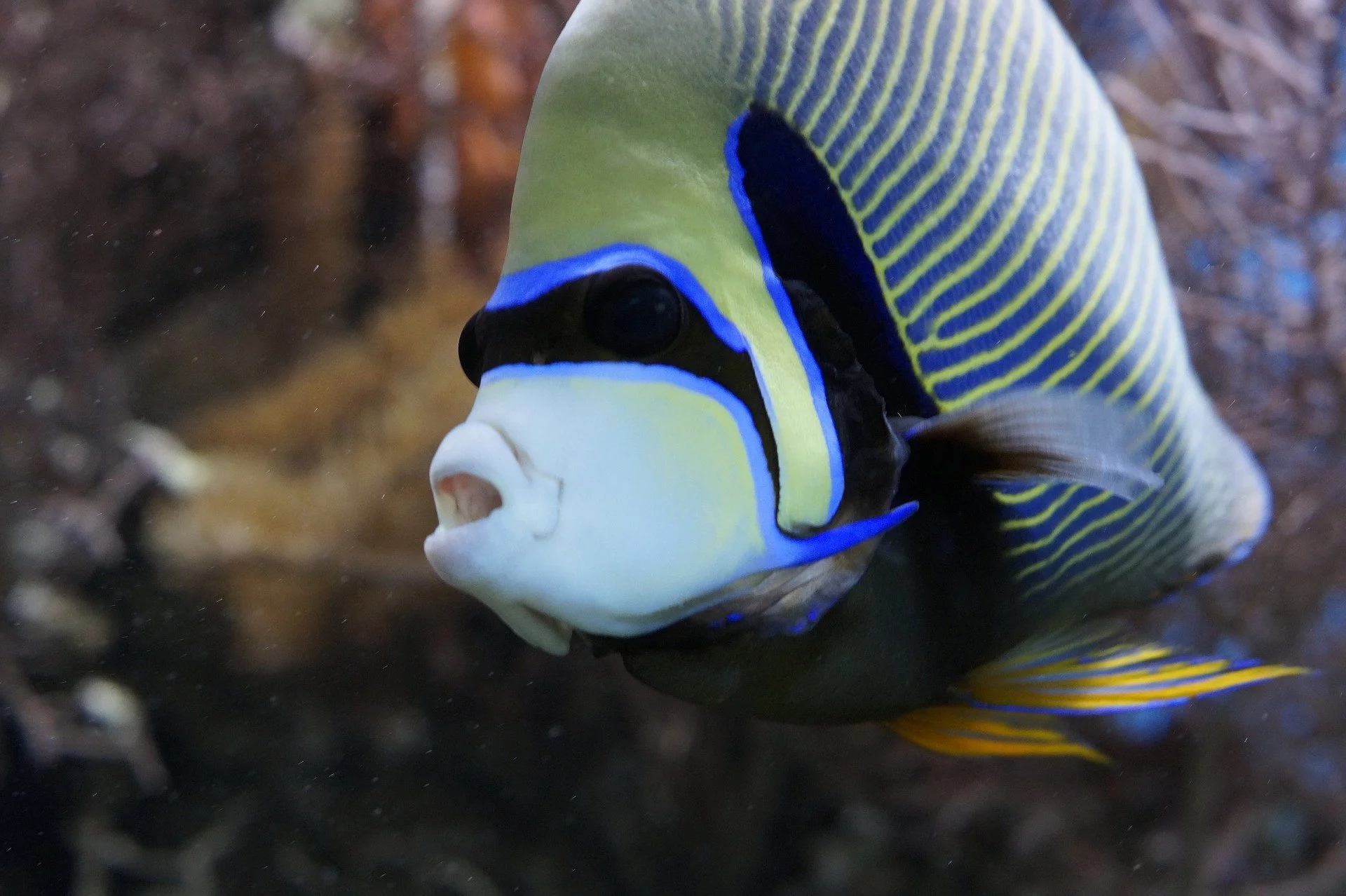
    7. Emperor Angelfish

    Emperor Angelfish

    Stats:

    • Minimum Tank Size – 220 Gallons
    • Max Size – 15″
    • Reef Safe: With Caution
    • Temperament – Semi-Aggressive
    • Price – Around $80 for juvenile and over $150 for adults

    The emperor angelfish is a very bold and large angelfish. It has striking colors with a signature blue-black mask that covers its eyes. They are an excellent addition to a fish only with live rock aquarium and have also been reported to be safe in SPS dominated tanks. It is a large fish with a lot of personality, often becoming the dominant fish in the tank. If you want to know more about angelfish compatibility with reef tanks, you can refer to this reef safe angel fish sheet published by Reef Central users.

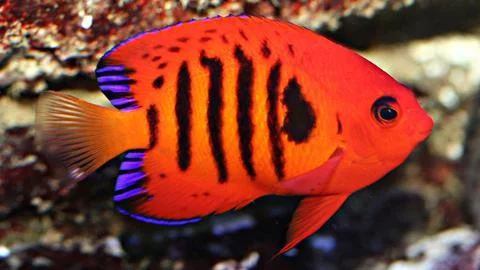
    6. Flame Angelfish

    Flame Angelfish

    Stats:

    • Minimum Tank Size – 70 Gallons
    • Max Size – 4″
    • Reef Safe: with caution
    • Temperament – Semi-Aggressive
    • Price – around $50

    Usually when one wants to add an angelfish, this is usually the fish that comes to mind. The flame angelfish is a flashy addition to any tank. In reef tanks, they will usually end up being the most aggressive fish and should be added last. They are also reef safe with caution as some of them will nip at soft and stony corals. Keeping them well fed is the best way to prevent this. They will usually nip at polyps and zoas first. They are great additions to fish only and fish only with live rock (FOWLR) setups.

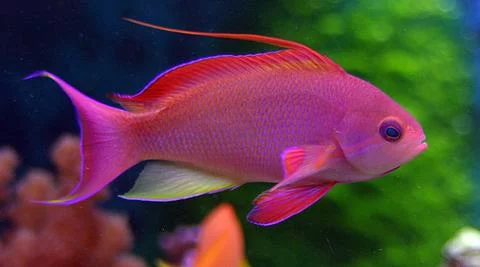
    5. Lyretail Anthias

    Lyretail Anthias

    Stats:

    • Minimum Tank Size – 125 Gallons
    • Max Size – 5″
    • Reef Safe: Yes
    • Temperament – Semi-Aggressive
    • Price – Around $30…more for males

    The Lyretail Anthias is flashy looking and a social butterfly in a community tank. Males look like the picture above while females are orange in color. They do best in groups with one male to multiple females. They are known to change sexes if a male is lacking, with the most dominant female turning to a male. They are great fish for a reef tank. 

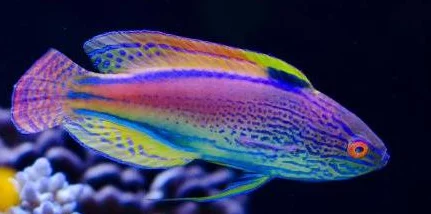
    4. Lineatus Fairy Wrasse

    Lineatus Fairy Wrasse

    Stats:

    • Minimum Tank Size – 90 Gallons
    • Max Size – 5″
    • Reef Safe: Yes
    • Temperament – Peaceful
    • Price – Over $200

    The lineatus fairy wrasse is a very peaceful and active fish that is usually not seen in aquariums. Often considered the most beautiful fish among wrasses, this fish is typically in high demand and seen under what you see is what you get (WYSIWYG) sections of online vendors or special ordered through local fish stores. They are great additions for either reef or fish only tanks.

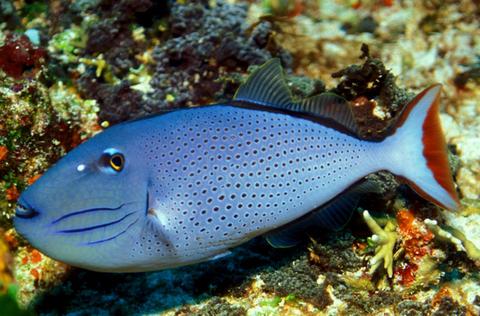
    3. Sargassum Triggerfish

    Sargassum Triggerfish

    Stats:

    • Minimum Tank Size – ย 125 Gallons
    • Max Size – 10″
    • Reef Safe: With Caution
    • Temperament – Semi-Aggressive
    • Price – About $150

    The sargassum triggerfish is known as the most reef safe triggerfish that you can add to your aquarium. Triggerfish in general are a blast to have in an aquarium because they have great personalities and the sargassum triggerfish does not disappoint. They will swim laps around your tank all day and it will vocalize using a grunting sound. The sargassum triggerfish will become a conversation piece in the home. 

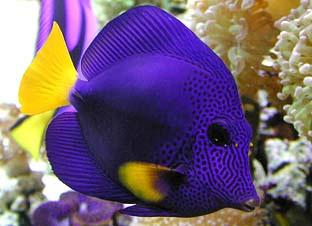
    2. Red Sea Purple Tang

    Purple Tang

    Stats:

    • Minimum Tank Size – 125 Gallons
    • Max Size – 10″
    • Reef Safe: Yes
    • Temperament – Semi-Aggressive
    • Price – Around $200

    One of the most prized tangs in the aquarium due to its coloration. It is a rewarding tang to have and becomes hardy once established. They are aggressive towards other zebrasoma tangs and generally one of the more aggressive tangs available. They are very active in the tank gazing all day and swimming at all levels of the tank. They are a must have for anyone with a large reef tank. 

    1. Designer Clownfish

    Designer Clownfish

    Stats:

    • Minimum Tank Size – 20 Gallons
    • Max Size – 3″ to 6″ depending on species
    • Reef Safe: Yes
    • Temperament – Semi-Aggressive with Maroon varieties being most aggressive
    • Price – Varies some go for over $200

    Designer clownfish are fish that are specially raised through selective breeding to produce unique looking strip and fin pattern combinations. If you are looking for a unique looking clownfish, you will definitely find one if you look at designer clownfish. Their prices can get pretty high, especially for newer varieties.

    Not everyone is a fan of designer clownfish. Natural clownfish available in the industry are beautiful in their own right and would also make it at the top of this list due to their looks, ease of care, compact size, and temperament. You can’t miss with either type in an aquarium. They are one of the best reef safe fish to own.

    Miss Any of Your Favorite Fish? Let Us Known In the Comments Below!

    What are some of your favorite fish? Let us known in the comments below. Thanks for reading.


    ๐Ÿ“˜ Want to learn more? This article is part of our complete Saltwater Fish & Reef Guide. your ultimate resource for marine fish, coral care, reef setup, and more.

  • Cheap Fish Tanks – 5 Tips to Get You the Best Deal

    Cheap Fish Tanks – 5 Tips to Get You the Best Deal

    I started in this hobby on a tight budget, and I still remember hunting Craigslist and local fish store sales for deals on tanks. Getting a good price on a fish tank is absolutely possible. I’ve helped friends score quality setups for a fraction of retail. but you need to know what to look for and what red flags to avoid. These five tips are exactly what I’d tell anyone walking into the used tank market today.

    Fish tanks are expensive. It can be very discouraging for a newcomer wants to get involved in something like a saltwater tank and then finds out how expensive the hobby is to get started. Is there such thing as cheap fish tanks? There definitely is if you know where to look and are patient to wait for good deal. Today’s post breaks down 5 tips to get you the best deal on cheap fish tanks.

    How To Get The Cheap Fish Tanks (And 5 Tips)

    1. The dollar per gallon sales

    A few times every year, the chain pet stores, namely Petco, have a dollar per gallon sale. These dollar per gallon sales have tanks from 10, 20, 29, 40, and 55 gallon tanks all selling for $1 per gallon. You might actually get lucky in your area and have 75 gallon tanks available for $1 per gallon. These tanks are made by Aqueon, which is a quality aquarium manufacturer that has been around for years. You need to be aware of when these stores have their sales, but luckily there is one site that publishes the dates of these sales.

    While you will get the tank itself for cheap, you may still be spending quite a lot of money on suitable equipment. For those looking for a cheap fish tank that has most or all of your equipment need. There is a better option.

    2. Buy Used

    Buying used is the best way to acquire cheap fish tanks. There are three sources I’m going to list here and explain why they are great way to get a tank

    • Craigslist
    • eBay
    • Aquarium Clubs
    • Friends and Family
    • Facebook groups

    Craigslist can be a cheap fish tank goldmine. You will want to search for “fish”, “aquarium”, and “tank” and then look at all the recent listings. Craigslist is a real-time classified so check often. With Craigslist, the larger the tank, the better the deal as many of these people selling are looking to off load their aquarium as soon as possible. Here are a few examples of craiglist listings that I found looking around:

    • 180 gallon 6 foot long aquarium complete reef setup with lacquer stand and canopy – $750
    • 120 gallon 6 foot long reef ready aquarium with canopy and stand – $450
    • 46 gallon bowfront tank with canopy and stand – $99

    Aquarium clubs are another great resource. The advantage with aquarium clubs is that you will usually get a high quality setup that is complete and well taken care of. You would need to check on the forums of these clubs to see if there are any tanks anyone is selling. You can check out our list of aquarium clubs to see a list of clubs in the US that are close to you.

    Friends and family are potentially an avenue to get a free tank. A lot of the time these aquariums are sitting in an attic in a garage. Friends and family are usually happy to have you take their tanks. This was actually how I started out in the hobby many years ago from a 65 gallon aquarium that was sitting in an uncle’s garage unused. Nothing beats a free fish tank. You never know what is out there unless you ask around.

    3. Know What Questions to Ask and What to Look Out For

    Buying a used fish tank requires a some due diligence on your part to ensure you purchase a good tank. Here are a few questions to ask and what to inspect.

    Questions to ask:

    • Ask for dimensions and references dimensions with this calculator – It is common for Craigslist posters to post the incorrect tank volume
    • Ask what the aquarium was used for and what it housed – do not purchase a tank used to house rodents or reptiles as these tanks may not be watertight or have damage to their seals
    • Has the tank been drilled – watch for glass patches if they have been covered up
    • Ask for a leak test – if the seller balks consider walking from the deal as most sellers should not mind this request
    • Glass or acrylic tank – Acrylic tanks will be easier to repair scratches
    • Where has the tank been stored? Tanks stored in a hot garage or outside are red flags as the heat can affect the silicone and cause leaks down the road.

    What to inspect:

    • What does the glass look like? Is it scratched, cloudy? How bad is the damage?
    • Check for cracks – obvious cracks are easy to see but check for hairline cracks as well. These can go unnoticed and can hold water, but spell long-term disaster
    • If glass, check the silicone seals – look for beads that are solid and pliable
    • If drilled, inspect the drill sites for cracks 
    • Bring a flashlight with you – this will allow you to inspect cracks and scratches more easily
    • Look at the stand for signs of warping, cracks, or mold damage. Scratches or peeled finish is fine as you can refinish the tank.
    • For acrylic tanks, inspect the bracing and for visible signs of bowing. 

    4. Don’t Purchase the Livestock

    Often times you will see a listing where the seller is trying to sell a complete setup with fish, coral/plants, live rock, etc included. I would advise against purchasing the livestock unless you are experienced with handling an aquarium move. Moving an aquarium, especially a large aquarium is one of the most stressful activities you can undertake in the hobby. If the seller has a rare fish or coral that you want, consider purchasing it separately and quarantining it until your tank is established. I would not factor in the price of livestock on a listing. Try to negotiate with the seller to purchase only the equipment.

    Often times, the seller can give the livestock to a local fish store or advanced hobbyist who has the means to handle the move. If you chose to purchase livestock, the safest livestock to purchase would be live rock (Amazon Affiliate links ahead). Live rock can be stored in a black stock tank with cheap power heads and an aquarium heater (food grade buckets work for smaller live rock purchases). Corals can be safe to purchase as well, but given the availability of frags these days, I would recommend just getting frags from a local reefer when your tank is ready.

    When purchasing live rock. The best way to move it in a display tank is to “cook” the live rock. Melev’s Reef has a great video explaining the process. The reason why we want to do this is to reset the live rock. This prevents all the pests that and the nuisance algae from entering your display tank. This also effectively quarantines the live rock from parasites if you cook it long enough (6-8 weeks while switching out containers every transfer like in the video).

    5. Prices Are Negotiable

    Prices for listing are often not firm – especially on craigslist. If you find a listing that is new and listed under the title of a moving sale or “must sell quickly” jump on it right away. The newer the listing, the better the chance you will have at negotiating a better price. Many of people who list on Craigslist just want to get the aquarium out of their hands as soon as possible versus getting the best price for it.

    Even if they have a price listed, ask the seller what they would take for it to get it off their hands that day. You would be surprised how often you will get a lower number than what it is originally listed for. The worst thing that can happen is they say no and you just wait another week for a good listing to pop up. People exit the hobby all the time and good deals are literally a dime a dozen especially if you live in a big city.

    Negotiating off an aquarium club listing is harder to do because often times the seller is willing to wait it out or knows the value of the equipment they are selling. For these listings, it may be better to consider purchasing separate components of the setup as these sellers are more open to doing this. This is a really great way on getting quality equipment. The best equipment to buy used would be:

    Cleaning the Tank and Equipment

    If you purchased a used tank setup, it will likely not be cleaned and you will need to get it ready to be used. The best cleaners to use on an aquarium and equipment would be distilled white vinegar that you can pick up cheap at a store like Target.This should be able to get most of the equipment looking like new after an overnight bath in the solution. It should be able to handle most used aquariums. I’m going to suggest some products below. Please note, affiliate links will be included for which I may make a small commission at no extra cost to you should you make a purchase) 

    For really bad stains and dirty tanks, Bar Keepers Friend Powered Cleanser would be a good safe solution to use on the aquarium only.

    Aquarium Safe
    Bar Keepers Friend

    An excellent way to deep clean used aquariums. A safe solution that handles the toughest of jobs!

    Buy On Amazon

    For aquarium stands, it’s going to be depend on the condition of the stand. If it is in good condition, a simpler cleaner like Feed N Wax should make it looks like new again.For stands that are not in good shape, you may want to consider refinishing the cabinet with an oil based primer and paint. We recommended Kilz Oil-Based Primers and Java Gel Stain for refinishing projects. You can seal stain with Spar Urethane.

    Choosing New – Cheap Aquarium Packages

    While searching for a used tank can save you money, sometimes buying new makes more sense. Below are two examples for freshwater appropriate starter kits that are smaller and will get you started on your way.

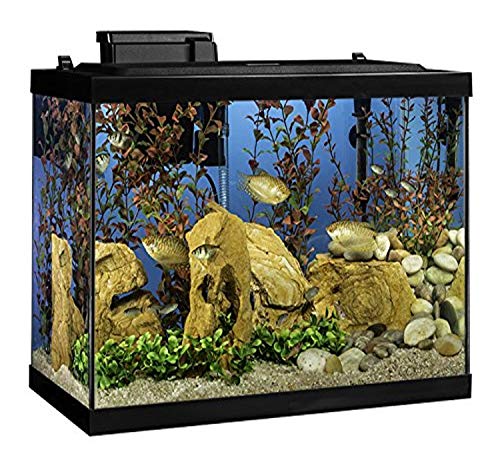
    Tetra 20 Gallon Aquarium Kit – Starter kit for the freshwater beginner

    Best For Freshwater
    20 Gallon Aquarium Kit

    A reasonably priced 20 gallon kit by Tetra. It’s a cheap way to get started if you would rather buy new

    Buy On Amazon

    Tetra glass tanks are made in the USA and this 20 gallon starter kit comes with several things to get you started. It has an LED hood, a UL rated heater, and Tetra Whisper filter, one boxwood plant mat, and four artificial plants to get you started. The 20 gallon tank has good dimensions being 24″ in length and 16″ in height and should serve a good beginner freshwater tank. The nice addition is Tetra’s aquarium app, which provides guidance, recommendations, and reminders to help you succeed! While the whisper filter isn’t the best powerfilter out there, it is a reasonable filter for a beginner and can be upgraded later.

    Aqueon 20 Gallon Aquarium Kit 

    Brand Name
    Aqueon Start Kit

    A 20 gallon aquarium kit by Aqueon. Equipped with Aqueon’s power filter and a plug and play heater.

    Buy On Amazon Buy On Petco

    Aqueon’s 20 gallon kit has a higher end power filter with Aqueon’s Quietflow 10, but it is a little undersized for the package. The heater is a plug and play preset heater configured to 78 degrees. You get to choose your plants and rocks with this kit as it does not come with either.

    Easy to Find if You Are Patient – Tell Us Your Story

    Tell us your story below in the comments about how you purchased a cheap fish tank. We also know that not all listings will include the equipment you want or need so after you purchase a used tank you can come check out our aquarium supplies for new equipment from top-quality brands. Let us know your thoughts and stories in the comment below.  

    If you want ideas of what tank you can build, check this out too. You can also check out our video above from our YouTube Channel. If you enjoy it, please be sure to subscribe! See you next time :).

  • 10 Exotic Freshwater Fish Worth Keeping (My Honest Picks)

    10 Exotic Freshwater Fish Worth Keeping (My Honest Picks)

    After 25 years in this hobby, I still get excited by freshwater species that most people overlook. The assumption that you need a saltwater tank for exotic fish is flat-out wrong. some of the most unusual, beautiful animals I’ve kept have been freshwater. These are the ten I’d recommend to anyone ready to go beyond the basics.

    Most people assume you need a saltwater tank to keep truly exotic fish. I’d push back on that hard. In 25+ years I’ve come across freshwater species that stop people cold when they see them for the first time. The issue is that many of these fish are genuinely challenging: some are hyper-aggressive, some need massive tanks, and a few are outright scary to feed. That’s part of what makes them interesting. Here are my top 10 picks that I’ve either kept personally or studied closely enough to give you real guidance on.

    10 Most Exotic Freshwater Fish

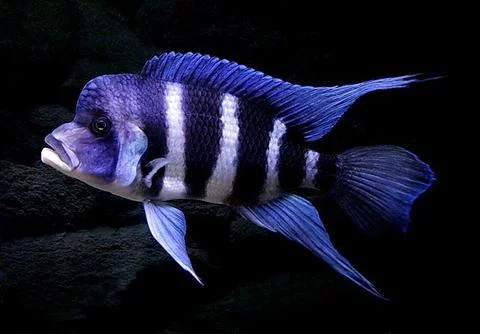
    1. Wolf Cichlid

    Wolf Cichlid

    Stats:

    • Minimum Tank Size – 75 gallons 
    • Max Size – Around 28 inches
    • Temperament – VERY Aggressive
    • Lifespan – 30 years
    • Price – $20

    A relatively plain-looking fish as an adult so you may be wondering why this Cichlid makes our most exotic freshwater fish list. Well, it’s because this fish is hyper-aggressive. It is easily the most aggressive cichlid you can buy and arguably the most aggressive freshwater fish commonly available. 

    They are a total handful, they are usually best kept alone in a tank as they will harass any other fish in the aquarium and they are scary to feed. Just look at this video by Mbuna Marcus of his Wolf Cichlid. Several times in this video his Wolf Cichlid went right for his fingers while eating and splashes water over his floors! These fish do not mess around! 

    9. Vampire Tetra

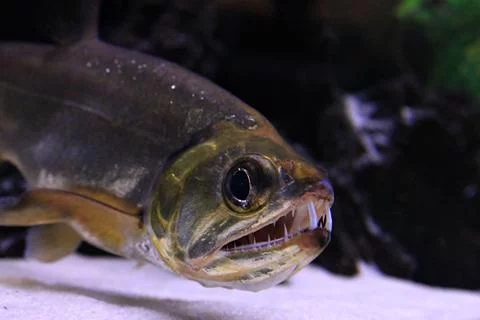
    Vampire Tetra

    Stats:

    • Minimum Tank Size – 75 gallons 
    • Max Size – Around 12 inches
    • Temperament – Aggressive
    • Lifespan – 2 years in captivity
    • Price – $75+

    This is one crazy-looking exotic freshwater fish. They have giant front teeth which are where the name vampire comes from. They are very aggressive fish that require expert-level maintenance. Most of these fish usually will not live very long in captivity, unfortunately. They usually only eat live fish and will rarely accept frozen foods. They are best suited for a species-only aquarium with most aquarists who keep them only having a single fish in the tank.  

    8. Red Texas Cichlid

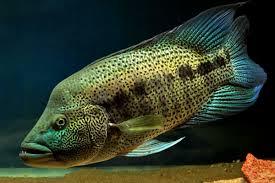
    Texas Red Cichlid

    Stats:

    • Minimum Tank Size – 75 gallons 
    • Max Size – Around 12 inches
    • Temperament – Aggressive
    • Lifespan – Around 5-10 years
    • Price – Usually around $150-200 at 6 inches

    This hybrid cichlid was created by breeding a Texas Cichlid and a Flowerhorn Cichlid. They are difficult to find and usually available seasonally from breeders. They command a high price tag since they are hard to find. 

    7. African Cichlids

    African Cichlid

    Stats:

    • Minimum Tank Size – 40 gallons 
    • Max Size – Up to 24 inches though usually 6-7 inches
    • Temperament – Semi-Aggressive to Aggressive
    • Lifespan – Around 5-10 years
    • Most Expensive – Showcase African Varieties usually $120+

    There are so many African cichlid types we could list here. Since many of them are often confused as saltwater fish by many people who see them for the first time, I felt that it was best to include most of the African lake cichlids in one group. There are some Africans that you can get for cheap like assorted Mbunas from a local fish store. However, there are specific varieties of Africans that can command prices over $100. If you are interested in learning more about African Cichlid tanks and care, please be sure to check our earlier blog post.  

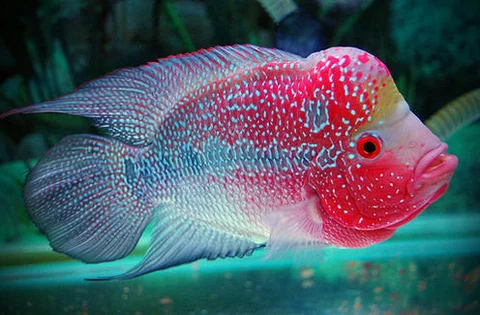
    6. Flowerhorn Cichlid

    Flowerhorn Cichlid

    Stats:

    • Minimum Tank Size – 70 gallons 
    • Max Size – 15 inches
    • Temperament – Aggressive
    • Lifespan – Around 7 years
    • Most Expensive – Breeder Showcase Varieties $500+

    A very beautiful exotic freshwater fish that originates from Malaysia. In Asia, they are considered a bringer of good luck. Flowerhorn Cichlids come in a variety of colors including reds, blues, pinks, yellows, and oranges. They are an aggressive Cichlid species and prefer large tanks all to themselves.  

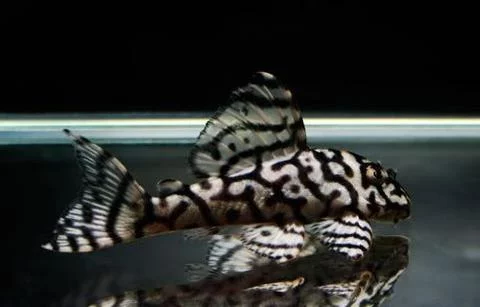
    5. Pleco

    L250 Pleco

    Stats:

    • Minimum Tank Size – 70 gallons 
    • Max Size – 18 inches
    • Temperament – Peaceful
    • Lifespan – Around 20 years
    • Most Expensive – L250 Pleco $10,000+

    While most hobbyists will think a Pleco is a common freshwater fish, they really are a unique exotic freshwater fish. Many varieties like Snowball, Zebra, Golden Nugget and Royal Plecos are examples on how exotic-looking Plecos can be. There are common plecos which can get fairly large typically around 12-18 inches in length and there are smaller varieties like Bristle Nose Plecos which are suitable for smaller aquariums.  

    The most expensive Pleco to date was the L250 Pleco sold back in 2004 for over $10,000 in Japan; however, most Plecos do not sell anywhere near that. There are several types of Plecos that will sell for over $100 though.

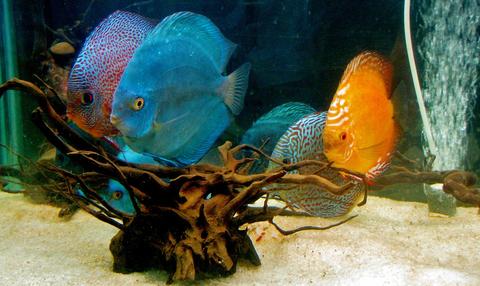
    4. Discus

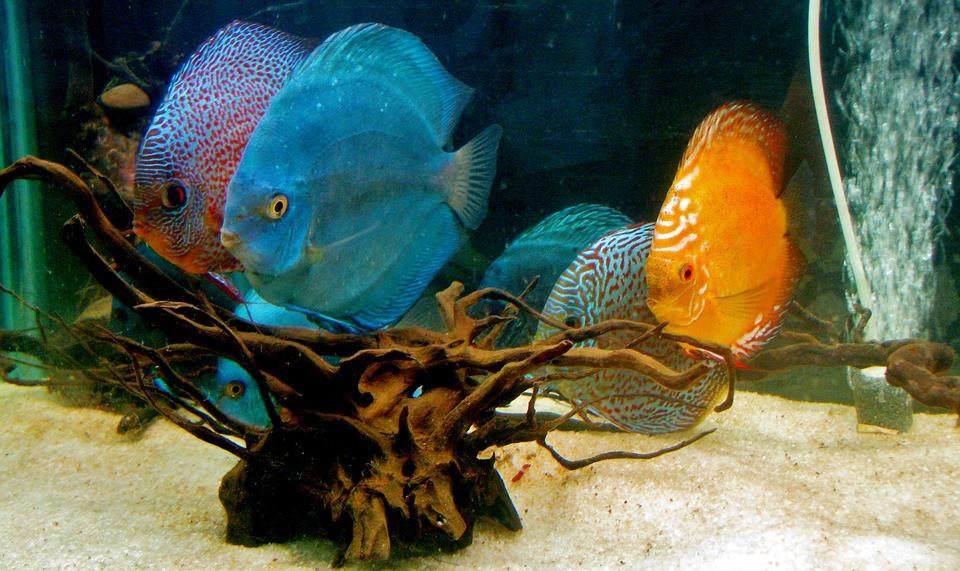
    Discus Fish

    Stats:

    • Minimum Tank Size – 75 gallons 
    • Max Size – 8 – 10 inches
    • Temperament – Peaceful
    • Lifespan – Around 10 years
    • Most Expensive – Mated Pair Discus $1,000+

    When one thinks of exotic freshwater fish, this is usually the fish most people think of. They can be expensive, have a variety of colors, are very delicate, and require excellent water parameters. Discus belong to the Cichlid genus and originate from South America. They are very social with members of their own species. They will also breed in the aquarium, which has created an industry of cichlid breeders where some top strains will sell for several hundred to thousands of dollars.

    They are considered very challenging where they even intimate advanced aquarium keepers! If you are considering Discus and are new to keeping them, starting with an easier to keep discus breeder varieties like Stendker Discus or purchasing only domestically breed discuss will increase your chances to succeed.

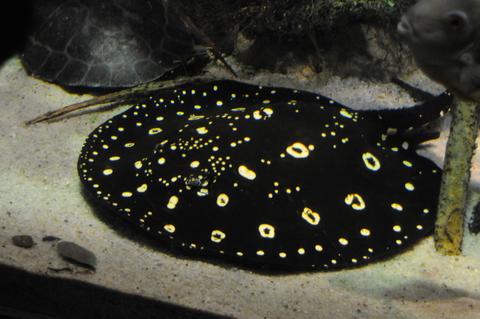
    3. Freshwater Stingrays

    Freshwater Stingray

    Stats:

    • Minimum Tank Size – 180 gallons 
    • Max Size – Up to 3 feet
    • Temperament – Semi-Aggressive
    • Lifespan – Around 10 years
    • Most Expensive – Polka Dot Stingray $100,000

    When most of us think about stingrays, we think about the saltwater variety. There are freshwater varieties that originate from the Amazon. Beautiful, bold, and unique looking they are difficult to resist if you have a big enough aquarium. This exotic fresh fish is also venomous. While there are no known cases of a freshwater stingray causing a human fatality, they have been cases where the sting has caused numbness at the wound site several years later!

    The rarest stingrays also command high price tags. One such stingray at the Taiwan Expo featured a Polka Dot Stingray with an asking price of $100,000!

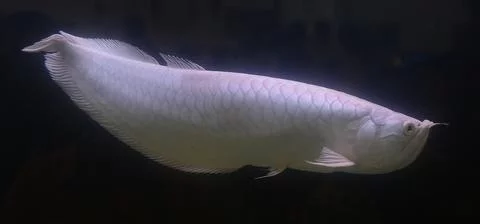
    2. Arowana

    Arowana

    Stats:

    • Minimum Tank Size – 125 gallons
    • Max Size – 3 Feet
    • Temperament – Aggressive
    • Lifespan – Up to 50 years
    • Most Expensive – Platinum Arowana $300,000

    An extremely popular freshwater fish due to its prehistoric cosmetic appearance, the Arowana is well known exotic freshwater fish. They are known for jumping as high as 6 feet in the air for prey in the wild and have been known to jump out of aquariums. They get very large and are usually housed in an aquarium at least 125 gallons or larger. A common Arowana can be purchased for around $50 to a few hundred dollars.

    However, certain Arowanas can fetch extreme price tags. Prized Arowana like the Platinum Arowana can sell for over $300,000!. These Arowanas are considered so valuable that they have microchips implanted into them before they reach sexual maturity to help identify and authenticate it. 

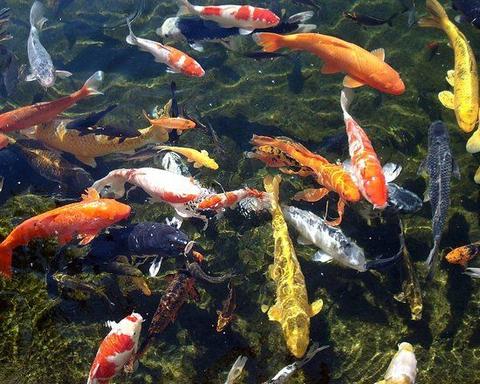
    1. Japanese Koi

    Exotic Freshwater Fish - Japanese Koi

    Stats:

    • Minimum Tank Size – 1000 gallons
    • Max Size – 3 Feet
    • Temperament – Peaceful
    • Lifespan – Around to 30 years
    • Most Expensive – Golden Carp $2,000,000+

    In Japanese culture, the Koi fish is celebrated as a noble creature. It is said that Japanese Koi are able to climb large waterfalls bravely, which symbolizes that incredible achievement is possible with hard work. It is also said in Koi lore that if a Koi fish is caught, it will lie on the cutting board awaiting its death without fear, similar to the Samurai warriors. There are also legends stating that if a Koi climbed the waterfall on the Yellow River, it would be transformed to a Koi Dragon.

    With such great history, lore, long life spans, and respect for these fish, there is no question for this fish to be #1 on our most exotic freshwater fish list. In fact, the most expensive koi on the list demands a staggering price tag of over $2,000,000! You can see the prized fish in the video below: 

    What Has Been Your Experience With These Exotic Freshwater Fish?

    Have you kept any of these fish on this list? If so, share your experiences in the comments below. We would love you hear about your experiences. 

  • 5 Real Benefits of Keeping a Fish Tank at Home (Backed by Science)

    5 Real Benefits of Keeping a Fish Tank at Home (Backed by Science)

    I’ve had aquariums at home my entire adult life. and I genuinely believe keeping fish has made me calmer, more patient, and more observant. That’s not just anecdote. There’s real research backing up what hobbyists have known for decades: there are measurable mental and physical health benefits to keeping a home aquarium. After 25+ years in this hobby, here are the five benefits I’ve seen hold up consistently, both in the science and in my own experience.

    Thinking of keeping a fish tank at home? Not only is a home aquarium enjoyable, entertaining and a good hobby for any family member, it is also a proven benefit to your health. In a time where stress is at an all time high with pandemics, high work stress, and increased anxiety an aquarium can really help alleviate stress.

    And that’s not just me being bias about my 25 years in the hobby. My statements are backed up by various medical studies made over the years. It’s not secret that keeping a pet is great for your health, and aquarium fish are no exception. Let’s good though the various benefits in this post.

    An overview on the hobby

    According to a study made by the 2021 American Pet Products Association (APPA), fish are the third most popular pet behind dogs and cats and ahead from birds

    PetNumber (in Millions)
    Dog69.0
    Cat45.3
    Freshwater Fish11.8
    Bird9.9
    Small Animal6.2
    Reptile5.7
    Horse3.5
    Saltwater Fish2.9
    Source: American Pet Products Association’s 2021-2022 National Pet Owners Survey1

    Freshwater and saltwater fish are separated into two separate categories on this survey. Adding them both up, that is nearly 15 million aquarium owners in the US!

    The Top 5 Health Benefits of Home Aquariums

    1. Reduced levels of stress

    Do you have a stressful life, high blood pressure, insomnia? Studies have shown that aquarium may provide significant health benefits to you. Studies go back as far as the 80โ€™s have shown that gazing at aquarium fish reduces stress and subsequently lowers blood pressure.  It’s no wonder why it is a common site to see aquariums in doctors and dentist lobbies – they have known about the stress reliving benefits for years!

    The recent study by the University of Exeter Medical School showed that exposure to natural environments and highly managed settings can have calming and stress relieving effects.

    Furthermore, the study found that there was an increased stress relieving and calming effect on fish, in particular tropical and marine fish.  There was a strong correlation between more biodiversity (fish and aquatic plants/corals) and reduced levels of stress and blood pressure.

    Reduced stress and blood pressure are great benefits, but it goes much further than that. According to the Women’s Heart Foundation, a number of aliments have been associated with with high stress levels in daily life including heart attacks, sleep disorders, and some ulcers.

    2. Improvements in Sleep Quality

    According to a survey conducted by the American Pet Products Associate, 66 percent of stated that their aquarium help relieve them of stress. Lower blood pressure and lower stress contributes to better sleep. After all, there is a sleep condition linked to high blood pressure and stress called Obstructive Sleep Apnea (OCA).

    We see even greater evidence in the hobby itself. I know of two such examples. The first is Travis from Fish of Hex. He was an ex-vet serving in the US Army who got deployed to Afghanistan from 2007-2008. He was diagnosed with PTSD after returning home and has stated on his about us page that keeping reef tanks has helped him cope ever since. He is so passionate about this, he created a Reef Tank for Veterans program where he builds reef tanks for sufferers of PTSD.

    3. Lowered blood pressure and heart rate

    Research has shown that keeping an aquarium can help lower blood pressure and heart rates. A study found that the presence of an aquarium reduced blood pressure and increased relaxation among patients of specialized dementia units.2

    4. Decreased pain and anxiety

    Ever wonder why so many dental offices have aquariums? It’s because the dentist know there are studies that show that dental patients viewing the aquariums in the waiting room experience less anxiety and need less pain medication3.

    In the linked study, the key factor was the living fish. Something about viewing fish swimming in an aquarium calms are minds down. It’s no wonder we see them everywhere at Dental offices.

    5. Calming effect for children and Alzheimer’s patients

    Another study made by Purdue University found that display tanks of brightly colored fish may curtail disruptive behaviors and improve the eating habits of those with Alzheimer’s disease. The study also revealed that the fish tanks stimulated cognitive thoughts in Alzheimer’s patients.

    Costs Of An Aquarium

    One of the biggest fears for beginners is the cost of keeping an aquarium. This fear comes from advanced hobbyists like reef tank owners or people who have made many mistakes in the past from their fish-keeping journey. Aquariums are not that expensive, especially if you go with a freshwater aquarium.

    Let’s compare the cost of keeping a fish to the two most popular pets in the US – cats and dogs. If we go to the ASPCA website, there is an article about annual costs for dogs and cats. According to their post, the annual cost of a dog is $1,391 while a cat is $1,149. Your initial one-time costs are $1,030 for dogs, and $455 for cats. This is before looking at grooming for a dog and dental for both pets. We total out to over $3,000 for the first year of ownership for a dog. See the summarized table below:

    TypeDogCatFreshwater Fish
    Annual Costs$1,391$1,149$100
    One-Time Cost$1,030$455$250
    Special Costs$800$300$25
    Total$3,221$1,904$375
    Source: ASPCA.org

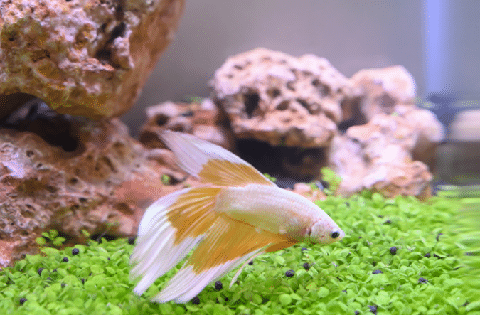
    In the chart above, I’m comparing the cost of keeping a Dog or Cat vs. a 5-gallon freshwater fish tank. Here we can see that keeping a small freshwater fish tank can be nearly 10 times less than the cost of a Dog. Why did I pick a 5-gallon fish tank? Because in the freshwater hobby, the perfect fish for a 5-gallon fish tank is a betta fish. Betta fish are great individual pets, are highly rewarding, and you can bond with them as they are a single fish versus a community of fish.

    This setup listed is on the higher end, using a premium Fluval Spec V and accounting for a quality diet and a fancier Betta Type variety.

    Why Keep An Aquarium At Home?

    Betta in Planted Aquarium

    Now that we know the health benefits and the cost, let’s go into further detail why purchasing a fish tank and keeping is a good idea. Sure the health benefits are great, but what about the other reasons? They are a pet after all that requires responsibility. Let’s see what else they have to offer.

    Peace and Quiet

    One of the biggest downsides to keeping a dog that I have personally experienced is the noise factor. Some dogs can be loud with barking or particularly needy at times. Fish tanks can be noisy as well if you invest in cheap equipment.

    With the moderation of better filtration systems like canister filters, all-in-one fish tanks, and high-quality power filters an aquarium can be virtually silent.

    Education Opportunities for Kids

    it’s quite common in schools to have science projects involving aquatic animals. This is because a child can learn a lot about ecosystems, the nitrogen cycle, and identifying and treating aliments. It also can unfortunately a way to introduce kids to the concept of death.

    Perhaps I’m sounding morbid here, but I did remember the first time my youngest son Rhys had to see a yellow tang I quarantined that ended up passed away due to marine velvet. I did the right thing quarantining the fish since that disease didn’t go into my display tank. Still, I had to explain to my son what death was.

    Fish die in our hobby. Some fish live shorter lives than other pets and they can die for various reasons. The fact that I had to explain this to a pet first instead of a family member I felt was really helping in him understanding how the cycle of life worked.

    Small Footprint

    While it is true that aquariums can get very large and showy from shows like Tanked, we also know that smaller aquariums can fit on a desktop or countertop. With homes getting smaller from increased cost of living, it’s nice to have a pet option that doesn’t require a large backyard, a litter box, or a large bird cage.

    Most aquariums that people purchase in this hobby are going to be 2 feet in length or shorter. It’s when you jump into 3 foot + fish tanks where space can be an issue in the home. Stick to smaller fish tanks and you won’t have a space issue.

    Low Maintenance

    Dogs require a lot of attention. Larger breeds require to be walked several miles a day. Cat need a little box cleaned, which can get unslightly if not regularly kept up.

    I actually see a lot of similarities with cats and fish as both in general will be okay with an autonomous existence. The main difference is fish are in their own little world. They will be happy to see you feed them and are perfectly happy if you leave them alone. Many advanced hobbyist who perform aquascaping look at aquariums like living works of art.

    The maintenance of a simple setup is low with a smaller tank and sticking to freshwater systems. Water changes are fairly painless and cleaning the tank is less work than cleaning a little box.

    The Community

    The aquarium hobby is a huge community. There are regular tradeshows like Aquashella that celebrate the diversity of the hobby and local fish clubs are great for getting mentored and getting pro tips on advanced topics like fish breeding.

    Clubs are a great place to find friends and connect with other aquarium keepers. You can take the hobby further and enter competitions or learn to make money in the hobby by selling plants, baby fish, or even corals. The opportunities are endless in this hobby!

    Aesthetics

    If you are going for a large aquarium or more premium setup, the aesthetics of an aquarium have big benefits in a house. Large well designed home aquarium setups are centerpieces in rooms. Rimless aquariums really show well in homes. They can become a focal point, even a point of envy by some of your quests. Both the outside and inside of the aquarium can be show stoppers. Even the equipment is starting to look fancy!

    I’ve seen happy owners show off their aquariums to guest. They pop up their cabinet and show off their decked out sumps with an IPad display. It’s pretty crazy how some of the tools of our trade resemble tech toys now and as our hobby advances in technology we will see more smart tools being integrated in our aquariums.

    FAQs

    Do fish like being in tanks?

    In general, yes. In the freshwater side of the hobby, fish living in aquariums oftentimes live longer and healthier lives than their wild counterparts. Fish do not have the mental capacity like birds or dogs to like or dislike their situation, however, they will get stressed out of they are uncomfortable. If the fish are kept with a responsible owner, they have the potential to live long and healthy lives!

    Why is it good to have fish as a pet?

    Fish can be great to have as pets. Not only are they long-term cheaper than owning a cat and a dog, but they have also been proven in studies to reduce stress, improve sleep quality, lower blood pressure, reduce anxiety, improve focus, and have a calming effect.

    Is it good to have an aquarium in the house?

    It is a good idea to have an aquarium in the house. Studies from the University of Exeter Medical school showed that there was stress relief and a calming effect with keeping fish.

    Is it okay to have an aquarium in your bedroom?

    Yes, it is okay to have a fish tank in your bedroom. However, there are a few things to note. Having an aquarium will increase the humidity. There is also a noise factor if you have equipment that is loud. For bedroom or study areas, using higher-end equipment like canister filters will keep noise levels down.

    Closing Thoughts

    If you are looking for a stress management activity, you might consider maintaining a home aquarium or an aquarium in your workplace. Many people maintain a home aquarium as a stress management hobby.  Check out our blog about setting up a saltwater tank or check out our store and shop around for aquarium supplies and equipment.

  • 5 Steps to Consider When Selecting a Saltwater Tank (From a 25-Year Hobbyist)

    Choosing your first saltwater tank is a decision I see beginners rush through. and it sets up problems that are hard to undo. I’ve set up tanks ranging from a small 30-gallon FOWLR to my current 125-gallon SPS reef, and each taught me something about what really matters at the selection stage. Get this right and everything downstream gets easier. Here are the five questions I always walk first-timers through.

    Picking the right saltwater tank is a decision most beginners don’t give enough thought. and it shapes every purchase that follows. After 25 years in this hobby, the best advice I can give before you buy anything is simple: slow down and plan. The tank itself is just the start of a series of decisions about equipment, livestock, maintenance, and budget. In this guide I walk through 5 key steps I’d take before selecting any saltwater aquarium. working through these upfront prevents a lot of expensive course corrections later.

    Step 1 – Budget

    I’m not going to sugar coat it.  A fish tank in general is expensive and a saltwater tank is even more expensive.  If you put me on the spot without any research whatsoever and ask me “how much a saltwater tank setup will cost” my answer is “At least $1,000.”  Keep in mind, however, that a lot of the costs will be upfront investments in the tank, equipment, rock, stand, substrates, etc.  You can certainty spend less on a smaller setup and can cut cut with DIY work or used equipment, but I am going to assume that you are not a big DIYer.  Over time, as you get more advanced in this hobby, it is natural to begin DIY solutions, but beginners should generally stay away from DIY. Set your budget and continue your research from there.

    Step 2. Determine How Big of a Tank You Can Keep/Afford

    After you determined your budget, itโ€™s time to determine how big of a tank you can keep. Tanks come in a variety of size, but there are four rules to keep in mind that will help with your selection:

    1. The more gallons, the more stability – bigger is better
    2. The longer the tank, the more room for fish to swim
    3. The wider the tank, the easier to aquascape
    4. The taller the tank, the harder for maintenance

    With these rules explained, tanks are usually divided by lengths.  The key lengths are 2, 3, 4, and 6 feet.  Most tank manufacturers do not produce 5 foot length tanks and if you find one, you may have a hard time getting a stand.  I recommend 3, 4, or 6 foot length tanks. 3 feet I feel is the best length for those on a budget or a beginner.  4 feet allows for a complete mixed reef setup and most lighting systems are designed for 4 foot aquariums.  6 feet in length is when you get to the territory of being able to house larger fish like tangs.

    Tank height is another consideration.  When you go over two feet in height, you will have additional room for fish to swim up and down instead of just side to side, but you will sacrifice ease of maintenance.  Saltwater tanks more than 2 feet in height will be out of reach for most hobbyist’s hands so you will have trouble cleaning algae.

    Step 3. Where to Put your Tank

    Your aquarium is going to be a sizable investment and will easily become the showcase and talk of your home.  When friends and family visit your home, everyone is going to want to see your tank.  Because of this, you really want your aquarium in a place where you can enjoy it on a daily basis.  That being said, there are a few rules to follow when it comes to placement:

    1. Keep your tank out of direct sunlight – this will lead to spikes in temperature and algae outbreaks
    2. Think of the first floor of your home or basement before upstairs – any tank over 40 gallons in size is going to weigh a sizable amount.  Tank water is about 8 pounds per gallon and then you will have sand and rock as part of the mix.  If your tank will be directly placed on a floor that is part of the foundation, there are virtually no concerns with placement.
    3. Place your tank near an outlet – or get one installed by an electrician.  Your tank is going to be using power to run and so the closer the better.  Make sure it is on its own circuit if you plan on having a tank more than 40 gallons as a fully setup aquarium will draw a lot of power.
    4. Do not place your tank directly below a vent –  heating and A/C vents can drastically change the temperature of your aquarium.  Having a stable water temperature is critical to a healthy aquarium.  Placing your tank away from a vent will prevent this issue.
    5. If you are dead set on having an aquarium upstairs – hire a structural contractor to get advice if you are going to place a 40+ gallon tank upstairs. Better safe than sorry.  A couple hundred dollars could be worth tens and thousands of dollars of prevented repairs.
    6. Level the area – if your placement is a slightly off-level, get some shims to adjust.  If the location is way off level – consider another spot

    Flooring is another consideration to keep in mind.  The most ideal floor for a tank would be directly on a foundation or on top of tile.  Carpet can be risky because water spills will eventually build mold in the padding. Laminate can also be hit or miss, with only the higher quality laminates been ideal and sealing being key.  Hardwood floors are not ideal because the saltwater from your tank can eventually wrap the hardwood.   You can seal your hardwood, but it is at your risk.  If you have a spill, you will need to clean it up right away.  Having a wet/dry vacuum can be a lifesaver for such times.

    Step 4. Standard, All in One, Reef Ready, or Custom Tank

    In the industry there are four types of tanks you find available for purchase:

    • Standard Aquariums – Usually found at general pet stores
    • Reef Ready Aquariums – Pre-drilled and ready for a sump
    • All-In-One Aquariums – Pre-designed for ease of use
    • Custom Built Aquariums – Very expensive, but showcase quality

    Standard aquariums are mass produced aquariums made with glass. They are of good quality and will come with black trim and rims to provide structural support.  The vast majority of these tanks will have tempered glass on the bottom of the tank, which will limit your drilling of tank if you chose to do so to the back of the aquarium.  Many hobbyists will purchase these tanks and customize them by drilling them and even painting the back of the tank.  Standard aquariums are the best choice for a budget conscious build.

    Reef Ready Aquariums are aquariums that are pre-drilled and will come with an overflow system.  An overflow system is designed to skim the water surface of your aquarium to pull dissolved organics and waste out of your tank.  These tanks are designed to work with a sump setup.  A reef ready aquarium is the best choice for flexibility and long-term investment.  They provide the best starting point for a hobbyist looking to build a complete system.  The main advantage from a reef ready system over a drilled standard tank is that the reef ready tanks are drilled at the bottom.  This allows you to setup a very clean and seamless look in the back of the tank without pipes sticking out.  Many of the new reef ready tanks coming out these days are coming equipped with innovative overflow systems as well.  If you want to start out on the best foot possible, a reef ready tank is the way to go.

    All-In-One Aquariums are a recent development in the industry.  They are tanks complete with overflows and even sumps to provide either a fully integrated system or as close to a plug and play solution as possible.  Some All-In-One will have a Sump in the back of the tank, which will eliminate plumbing that would be required in a sump setup.  All-In-One Aquariums can be more expensive then a fully setup Reef Ready Aquarium and can have limitations over a customized setup.  One of the biggest limitations is the equipment you can place in it.  For example, sometimes the protein skimmer chamber may be very small so you will be limited on the type of skimmer you can place or the sump that comes with the all-in-one may not have room for a refugium. If you are looking for ease of use and seamless look (as many of these tanks have wonderful aesthetics), an All-In-One Aquarium would be the choice for you.

    Jimmy Butler’s Custom Boom Box Aquarium as seen on “Tanked”

    Custom Built Aquariums are the most expensive setups.  You can obtain an extremely unique and world class look.  Custom tank makers are usually found locally as custom aquarium makers are very seasoned hobbyists or companies that create custom aquariums.  If you want the “Tanked” look, a custom built aquarium is where to look to.

    Step 5 – Glass vs. Acrylic


    Glass vs. acrylic is a common debate when it comes to tank selection.  Below is a table to show the strengths and weaknesses of glass and acrylic:

    CharacteristicGlass Acrylic
    WeightGlass is usually about 4 times heavier than acrylic and up to 10 times heavier on larger aquariumsLightweight and easier to move
    Breaking and CrackingWith a strong enough force – Glass will crack and leakVery impact resistant
    SupportGlass can support itself over distances so they can be placed in stands with an open top with little to no riskNeeds support throughout the length of the tank.  Stands are limited due to this.
    ClarityThe thicker the glass, the more noticeable the distortion.  Distortion can be mitigated in thicker glass by the use of low-iron glass.No distortion in clarity – superior to glass even against low-iron glass.
    ScratchingVery difficult to scratch.  You can even clean algae with a razor blade and be fine with glassProne to scratching.  Fish with strong jaws can directly scratch acrylic and you can even scratch the outside accidentally with jewelry.  The outside scratches, however, can be repaired with a repair kit.
    CostGenerally cheaper and mass-producedGenerally more expensive due to shipping

    Overall, I would recommend going with a glass aquarium as the pros outweigh the cons.  You might want to consider acrylic or even plywood though if you are considering a tank over 500 gallons due to the weight and clarity issues of glass.

    Closing Remarks

    I hope this guide was very useful to you.  Here at AquariumStoreDepot, we like to pass down knowledge to our customers.  A well informed customer is a successful hobbyist and will enjoy this hobby for years to come.  We would be happy to guide you on your journey to saltwater reefing!


    ๐Ÿ“˜ Want to learn more? This article is part of our complete Saltwater Fish & Reef Guide. your ultimate resource for marine fish, coral care, reef setup, and more.

  • Aquarium Stand Selection Guide โ€“ 5 Things You Must Check Before Buying

    Aquarium Stand Selection Guide โ€“ 5 Things You Must Check Before Buying

    An aquarium stand is one of those purchases people treat as an afterthought. and I’ve seen that mistake end badly. A 125-gallon tank full of water weighs over 1,400 pounds, and a stand that isn’t rated for that load or isn’t level is a disaster waiting to happen. I’ve bought and assembled stands for multiple setups over the years and know exactly what to check before committing. Here are the five things I always verify first.

    An aquarium stand is one of the most important pieces of equipment you’ll buy. and one of the most overlooked. I learned this the hard way: a stand that can’t handle the weight or isn’t perfectly level will cause serious problems, and at 125 gallons (over 1,200 lbs fully loaded) the stakes are very real. Whether you’re buying a stand for a 20 gallon community tank or a large saltwater system, there are five things I always check before recommending any stand, and this guide walks through all of them.

    #1 Know the Type of Aquarium Stand

    Before I can get into more detail about aquarium stands, we need to address the various types of aquarium stands you will come across.  When shopping for an aquarium stand, there is a high amount of variety in quality.  When it comes to a saltwater aquarium and larger freshwater aquariums, the importance of quality needs to be taken into account. and when it comes to the needs of a saltwater aquarium. The importance of quality needs to be taken into account. We are going to break down stands into four types:

    • Standard Aquarium Stands – AKA big store stands
    • Brand Name Stands
    • Custom Built Stands
    • DIY Stand

    A standard aquarium stand is ones you will commonly find in a general pet store or online like the All Glass Pine Stands. They are typically made of particle board and MDF.  Many of these stands are made as cheap as possible.  While they can work in a freshwater setup or no sump setups, they will not suit the needs of a saltwater tank or larger freshwater aquarium in the long run.  The reason why is because if a sump is installed the stand, the high humidity produced inside the tank from the sump can cause wrapping from the inside of the stand.  Furthermore, spills inside of the stand from maintenance can also cause problems.  Once the warping occurs, the damage cannot be reversed and can compromise the structure of the stand. It is for these reasons, that I do not recommend a standard aquarium stand from general pet stores for a saltwater or larger freshwater setup.  There is simply too much investment made into your tank setup for it to be ruined by going cheap on a stand.

    A Better Option
    Aquatic Fundamentals Stand

    A cleaner and more modern looking stand over the old all glass stands

    Buy On Amazon

     A brand name stand is furniture made by high-end manufacturers who specialize in making stands for hobbyist.  The best example of these stands would be the stands that you find in all-in-one aquariums and rimless aquarium kits.  These stands are very well designed with a wood or metal frame (typically aluminum or stainless steel).  If they are wood, they will usually be designed with plywood instead of MDF.  They will often have features that suit the hobby (Storage shelves, cable ports, etc). A common brand at fish stores are R&J Enterprises cabinets, which are a step up from the chain store cabinets. These stands are great choices for anyone getting into the hobby.

    Best For Planted Tanks
    UNS Aquarium Stand

    UNS are top of the line aquarium stands designed for planted tanks

    Click For Best Price

    A stand is typically built by custom aquarium manufacturers or Brand name specializing in high-end builds.  They are typically made to order and are the most expensive types of aquarium stand.  They can be made of wood or metal.  They will typically be designed with customized cabinet doors and shelves to suit the requirements of the aquarium.  They are of superior quality, but suited for a high-end budget.

    Custom Fish Tank Stand
    Custom Fish Stands are Usually Built for Maximum Utility

    #2 Know the Materials

    There are several types of materials for a stand that you should be familiar with when looking at either purchasing or building your own:

    • MDF/Particle Board
    • Plywood
    • Metal

    MDF or particle board is the cheapest type of wood used for stand manufacturing.  It is commonly used with store chain brand stands or stands that are imported. They usually do not hold up in a saltwater aquarium because of the high humidity from your sump or wrapping over time.  MDF would only be okay to use if you are either hiring a carpenter to build your stand or you are familiar with woodworking and know how to paint and seal it.  

    Plywood is the standard when it comes to quality aquarium stand building.  It is typically used in higher-end branded stands and is the go-to material if you are considering a DIY stand.  Plywood is a very strong building material and less susceptible to water damage than MDF.  Plywood is also the material used to build higher-end kitchen cabinets due to its durability.  It is stainable and several veneers are available for you to produce a custom look.  They can be painted or sealed and the quality of the material will stand the test of time.

    A metal stand is typically used for larger aquariums.  They have great structural support and a mix of metal and wood can be used to build a custom stand. Because of the greater structural strength, a metal stand will be more open which will increase your access to your sump and back-end electronics stored in your stand.   Metal frames are usually made with stainless steel or aluminum. Aluminum is particularly popular outside of the US, but is gaining traction in the US as they are lightweight. A stand built from T-Slot Aluminum Framing Systems is particularly useful for those attempting a custom build for a large aquarium – though can be very expensive.

    Metal Aquarium StandMetal Stands are Typically Used for Large Custom Aquariums

    #3 Know about Openings and Stand Heights of your Tank

    In general, a stand will be open at the top.  While this will work well for glass aquariums, you will need to support the entire bottom of the tank if it is made of acrylic. For rimless aquariums, it is recommended that you purchase a self-leveling mat. This is because, in a rimless aquarium, the wood can cause pressure points in the glass.  Many manufacturers will sell the support needed for an acrylic and rimless tank.  It is helpful to have an opening at the top if you are going to place a sizable sump as sometimes when the sump is placed in the stand, it will be impossible to move out of the aquarium stand once your tank is installed.

    Another consideration when purchasing or making a stand is the amount of room available for equipment underneath the aquarium. Large door openings and plentiful space help in hiding the amount of equipment associated with reef aquariums. If you plan on keeping a sump under your aquarium, you will need to consider having enough room to hold all your equipment and sump while still having room to maintain it. One of the main disadvantages of many standard aquarium stands is that they have a brace in the middle of the stand that will get in the way of maintenance. Many high-end and DIY aquarium stand configurations do not have this brace.

    The height of the stand will also impact your viewing enjoyment. Ask yourself if you are going to be spending most of your viewing time standing or sitting.  A standard sized aquarium stand is built for viewing while sitting down and will usually be shorter than 30 inches. Many of the all-in-one aquariums and higher end aquarium stands these days will have taller stands – usually 30 to 36 inches. Most DIYers will also build a stand to 36 inches in height.

    #4 Consider a DIY for Maximum Utility

    Making a stand versus purchasing one is a serious consideration for experienced reefers or those with carpentry skills.  Purchasing a stand is typically going to be more expensive, but you will not have to worry about constructing the stand yourself and if you are following this guide it is very likely you will end up purchasing a high-quality stand that will last throughout your aquarium journey.

    For those of you considering a DIY aquarium stand, most of the DIY stands are constructed out of wood.  Below is a picture frame and guide from the reefcentral forums by member RocketEngineer.  This is a 21 piece design that has been used by many reefers who have ventured into DIY stands.   This is a simple yet solid design that can be created with the use of common tools and common wood sizes and should work for most standard size aquariums:

    DIY Aquarium StandThe basic principle of the design is two box frames connected by four legs. The legs are made of several pieces of 2X4’s to assist in construction and seething the stand in plywood for strength and cosmetics. The bottom frame transmits the load of the tank into the floor. Covering the sides of the stand with plywood will help to stiffen the stand against twisting and shifting. Doors could then be mounted to the legs as desired.  The design can also be modified to include flooring at the bottom of the tank.
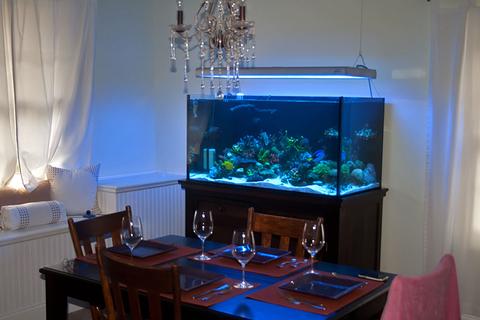
    If you want more of a step by guide to building a custom stand, you can check out GARF’s stand calculator. This calculator is a great tool as all you do is enter in your desired dimensions and the calculator will product a cut list, tools needed, and assembly instructions.

    When painting your stand, considering sealing the inside of your stand with a Spar or Marine Varnish. An oil based primer is ideal.

    #5 Canopy or No Canopy

    With the advent of rimless aquariums and ceiling and tank mounted lighting systems, the canopy is starting to become less common these days.  It’s really up to you regarding the look of your aquarium.  Not purchasing a canopy can save you some money, but there are still a number of hobbyists who still use them.  If you are concerned about fish jumping out of your tank with a topless system, you can opt for mesh screening to prevent jumping. 

    Ceiling Hung Aquarium LightingTop-Less Setups are More Common Now with Rimless Aquariums

    Closing Comments

    I hope this guide provides you with a lot of insights on what to look for when it comes to selecting a quality aquarium stand.  A stand in a key part of your aquarium and needs to stand the test of time. Please share and thank you for reading.


    ๐Ÿ”ง Want to learn more? This article is part of our complete Aquarium Equipment & Gear Guide. your ultimate resource for filters, heaters, lights, pumps, tanks, and more.

  • Saltwater Aquarium Selection Guide: How to Choose the Right Tank From the Start

    Saltwater Aquarium Selection Guide: How to Choose the Right Tank From the Start

    The saltwater aquarium you start with shapes everything that comes after. your equipment choices, your livestock options, your maintenance routine. I’ve watched beginners pick tanks that were too small for their goals, or all-in-ones that couldn’t be upgraded, and they ended up restarting from scratch within a year. After setting up and advising on dozens of reef systems over 25 years, I have a clear picture of what actually matters when you’re making this choice.

    The saltwater aquarium you choose at the start determines nearly every other decision you’ll make. what equipment fits, what fish you can keep, what your maintenance looks like long-term, and what your total budget needs to be. After 25 years in this hobby and helping countless people set up their first saltwater tanks, the advice I give most often contradicts what beginners expect: bigger tanks are more stable and more forgiving, not harder. The “start small” instinct usually leads to frustration. And the tank itself is just the beginning of the budget conversation. In this guide I walk through everything you need to consider when selecting a saltwater aquarium.

    Saltwater Aquarium

    Owning a successful aquarium depends greatly on the time of time spent planning and researching the setup for the fish and/or corals you choose to have.  There are a large number of choices when it comes to tank selection.  This article should provide you some in-depth detail on saltwater fish tank selection and what to look for when purchasing an aquarium.

    Saltwater Aquarium Budget

    I’m not going to sugarcoat it.  A fish tank in general is expensive and a saltwater tank is even more expensive.  If you put me on the spot without any research whatsoever and ask me “how much a saltwater tank setup will cost” my answer is “At least $1,000.”  Keep in mind, however, that a lot of the costs will be upfront investments in the tank, equipment, rock, stand, substrates, etc.  You can certainty spend less on a smaller setup and can cut cut with DIY work or used equipment, but I am going to assume that you are not a big DIYer.  Over time, as you get more advanced in this hobby, it is natural to begin DIY solutions, but beginners should generally stay away from DIY.  If you are going to DIY, I would suggest you join a local aquarium society.  There are plenty of very seasoned hobbyists in an aquarium society who will be more than willing to teach you the ropes or even offer to do DIY solutions for cheap (e.g. – drill your tank or build you a sump).  

    Aquarium SocietyAquarium Societies are Treasure Troves of Knowledge

    Saltwater Tank Size

    Tanks come in a variety of size, but there are four rules to keep in mind that will help with your selection:

    1. The more gallons, the more stability – bigger is better
    2. The longer the tank, the more room for fish to swim
    3. The wider the tank, the easier to aquascape
    4. The taller the tank, the harder for maintenance

    With these rules explained, tanks are usually divided by lengths.  The key lengths are 2, 3, 4, and 6 feet.  Most tank manufacturers do not produce 5 foot length tanks and if you find one, you may have a hard time getting a stand.  I recommend 3, 4, or 6 foot length tanks. 3 feet I feel is the best length for those on a budget or a beginner.  4 feet allows for a complete mixed reef setup and most lighting systems are designed for 4 foot aquariums.  6 feet in length is when you get to the territory of being able to house larger fish like tangs.

    40 Gallon BreederA beautiful 3 foot 40 Gallon Breeder tank

    Tank height is another consideration.  When you go over two feet in height, you will have additional room for fish to swim up and down instead of just side to side, but you will sacrifice ease of maintenance.  Saltwater tanks more than 2 feet in height will be out of reach for most hobbyist’s hands so you will have trouble cleaning algae.

    Tank Placement

    Your aquarium is going to be a sizable investment and will easily become the showcase and talk of your home.  When friends and family visit your home, everyone is going to want to see your tank.  Because of this, you really want your aquarium in a place where you can enjoy it on a daily basis.  That being said, there are a few rules to follow when it comes to placement:

    1. Keep your tank out of direct sunlight – this will lead to spikes in temperature and algae outbreaks
    2. Think of the first floor of your home or basement before upstairs – any tank over 40 gallons in size is going to weigh a sizable amount.  Tank water is about 8 pounds per gallon and then you will have sand and rock as part of the mix.  If your tank will be directly placed on a floor that is part of the foundation, there are virtually no concerns with placement.
    3. Place your tank near an outlet – or get one installed by an electrician.  Your tank is going to be using power to run and so the closer the better.  Make sure it is on its own circuit if you plan on having a tank of more than 40 gallons as a full-setup aquarium will draw a lot of power.
    4. Do not place your tank directly below a vent –  heating and A/C vents can drastically change the temperature of your aquarium.  Having a stable water temperature is critical to a healthy aquarium.  Placing your tank away from a vent will prevent this issue.
    5. If you are dead set on having an aquarium upstairs – hire a structural contractor to get advice if you are going to place a 40+ gallon tank upstairs. Better safe than sorry.  A couple of hundred dollars could be worth tens and thousands of dollars of prevented repairs.
    6. Level the area – if your placement is slightly off-level, get some shims to adjust.  If the location is way off-level – consider another spot
    Fish Tank Living RoomAn Aquarium is Best Placed Away from Direct Sunlight

    Flooring

    Flooring is another consideration to keep in mind.  The most ideal floor for a tank would be directly on a foundation or on top of the tile.  Carpet can be risky because water spills will eventually build mold in the padding. Laminate can also be hit or miss, with only the higher quality laminates being ideal and sealing being key.  Hardwood floors are not ideal because the saltwater from your tank can eventually wrap the hardwood.   You can seal your hardwood, but it is at your risk.  If you have a spill, you will need to clean it up right away.  Having a wet/dry vacuum can be a lifesaver for such times.

    Shape of Fish Tanks

    You will find multiple shapes if you go shopping for an aquarium.  We are going to focus on the four most popular on the market

    • Rectangle – Most flexible and ideal shape for fish, width can be an issue in long formats
    • Corner – Good for corner setups, but sacrifices on swimming space
    • Bowfront – Great for viewing, but more expensive than rectangle shaped
    • Cube – Great for coral aquascaping, but sacrifices length for larger fish

    Our recommendation is to go with a rectangular tank.  They offer the most flexibility, most economical, and most fish will prefer long over tall setups.

    Types of Tanks

    In the industry there are four types of tanks you find available for purchase:

    • Standard Aquariums – Usually found at general pet stores
    • Reef Ready Aquariums – Pre-drilled and ready for a sump
    • All-In-One Aquariums – Pre-designed for ease of use
    • Custom Built Aquariums – Very expensive, but showcase quality
    Standard AquariumStandard Glass Aquarium

    Standard aquariums are mass-produced aquariums made with glass. They are of good quality and will come with black trim and rims to provide structural support.  The vast majority of these tanks will have tempered glass on the bottom of the tank, which will limit your drilling of the tank if you chose to do so to the back of the aquarium.  Many hobbyists will purchase these tanks and customize them by drilling them and even painting the back of the tank.  Standard aquariums are the best choice for a budget-conscious build.

    Reef Ready Aquarium
    Reef Ready Tank

    Reef Ready Aquariums are aquariums that are pre-drilled and will come with an overflow system.  An overflow system is designed to skim the water surface of your aquarium to pull dissolved organics and waste out of your tank.  These tanks are designed to work with a sump setup.  A reef ready aquarium is the best choice for flexibility and long-term investment.  They provide the best starting point for a hobbyist looking to build a complete system.  The main advantage from a reef ready system over a drilled standard tank is that the reef ready tanks are drilled at the bottom.  This allows you to setup a very clean and seamless look in the back of the tank without pipes sticking out.  Many of the new reef ready tanks coming out these days are coming equipped with innovative overflow systems as well.  If you want to start out on the best foot possible, a reef ready tank is the way to go.

    Innovative Marine All-In-One Aquarium
    All-In-One Tank

    All-In-One Aquariums are a recent development in the industry.  They are tanks complete with overflows and even sumps to provide either a fully integrated system or as close to a plug-and-play solution as possible.  Some All-In-One will have a Sump in the back of the tank, which will eliminate plumbing that would be required in a sump setup.  All-In-One Aquariums can be more expensive then a full setup Reef Ready Aquarium and can have limitations over a customized setup.  One of the biggest limitations is the equipment you can place in it.  For example, sometimes the protein skimmer chamber may be very small so you will be limited on the type of skimmer you can place or the sump that comes with the all-in-one may not have room for a refugium.   If you are looking for ease of use and a seamless look (as many of these tanks have wonderful aesthetics), an All-In-One Aquarium would be the choice for you.

    Jimmy Butler Aquarium
    Jimmy Butler’s Custom Boom Box Tank as seen on “Tanked”

    Custom Built Aquariums are the most expensive setups.  You can obtain an extremely unique and world-class look.  Custom tank makers are usually found locally as custom aquarium makers are very seasoned hobbyists or companies that create custom aquariums.  If you want the “Tanked” look, a custom-built aquarium is where to look to.

    Glass vs. Acrylic Tanks

    Glass vs. acrylic is a common debate when it comes to tank selection.  Below is a table to show the strengths and weaknesses of glass and acrylic:

    CharacteristicGlass Acrylic
    WeightGlass is usually about 4 times heavier than acrylic and up to 10 times heavier on larger aquariumsLightweight and easier to move
    Breaking and CrackingWith a strong enough force – Glass will crack and leakVery impact resistant
    SupportGlass can support itself over distances so they can be placed in stands with an open top with little to no riskNeeds support throughout the length of the tank.  Stands are limited due to this.
    ClarityThe thicker the glass, the more noticeable the distortion.  Distortion can be mitigated in thicker glass by the use of low-iron glass.No distortion in clarity – superior to glass even against low-iron glass.
    ScratchingVery difficult to scratch.  You can even clean algae with a razor blade and be fine with glassProne to scratching.  Fish with strong jaws can directly scratch acrylic and you can even scratch the outside accidentally with jewelry.  The outside scratches, however, can be repaired with a repair kit.
    CostGenerally cheaper and mass-producedGenerally more expensive due to shipping

    Overall, I would recommend going with a glass aquarium as the pros outweigh the cons.  You might want to consider acrylic or even plywood though if you are considering a tank over 500 gallons due to the weight and clarity issues of glass.

    Drilling vs. Not Drilling a Tank

    A common consideration when one is deciding between a standard tank or reef-ready tank is drilling vs. not drilling.  There are many benefits to drilling your tank – the most beneficial being the inclusion of a sump.  When you drill your tank and install a sump, your setup becomes extremely flexible with equipment.  You will be able to purchase the best equipment, hide everything outside of the tank, be able to build a section for beneficial reef organisms (known as a refugium), install tank maintenance automation (auto water top-offs, controllers, and dosing pumps), and a separate work area for most of your maintenance outside of your display tank.  You miss out on all this flexibility when you do not drill and going from a not drilled to a drilled setup would require a hang-on overflow.  Hang-on overflows have usually been fail-prone, the main reason why we chose not to carry them.  The drilling decision is something made early on because of the large amount of work required to transition to a drilled setup.  Therefore, I feel that it is best to strongly consider a drilled setup from the start.

    Drilling Fish TankA Standard Tank Can be Drilled with Basic Power Tools

    Rimmed vs. Rimless Fish Tanks

    Rimmed tanks have been the tried and true traditional aquarium type for many years.  There has been a development of rimless tanks that have a very modern, aesthetically pleasing look.  Many higher-end aquariums you will come across will have rimless designs.  They are very beautiful aquariums, with main drawback being the price difference and water possibility leaking out when you clean algae near the top of the tank.  You can’t go wrong either way.

    Rimless TankRimless Tanks Have Great Aesthetics!

    Low-Iron vs. Traditional Glass Tanks

    These days, there are tanks you can purchase that have what the industry calls “low-iron” or “high-clarity” glass.  This is glass with low amounts of iron, which remove the green tint you may see from a standard tank.  It is a softer glass that will scratch easier than traditional glass (though still way more scratch resistant than acrylic).  Low-iron glass is more expensive than traditional glass, but some manufacturers will opt for just the front of the tank to be low-iron while the rest of the tank is traditional glass.  The most important place to have low-iron glass is on the front, so if you are considering the price, low-iron on the front of the tank only can achieve a good balance of cost and clarity.  Low-iron tanks also tend to come into play on larger tanks.  If you are considering a small tank (3 feet or less), the difference is likely going to be minimal between the two glass types. 

    Low Iron GlassLow-Iron on the Left, Traditional Glass on the Right

    Closing Remarks

    I hope this guide was very useful to you.  Here at AquariumStoreDepot, we like to pass down knowledge to our customers.  A well-informed customer is a successful hobbyist and will enjoy this hobby for years to come.  If you are past these steps and looking into what livestock might work with your tank, check our Top 10 Best Saltwater Fish for Any Reef Tank post.  We would be happy to guide you on your journey to saltwater reefing!


    ๐Ÿ“˜ Want to learn more? This article is part of our complete Saltwater Fish & Reef Guide. your ultimate resource for marine fish, coral care, reef setup, and more.