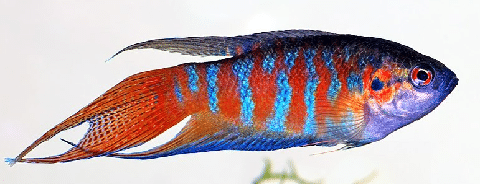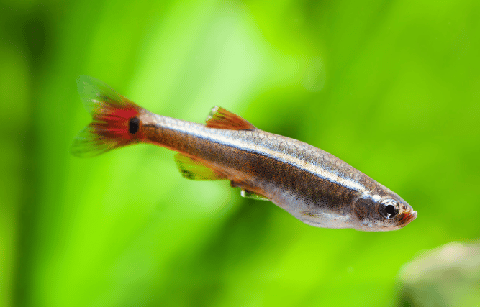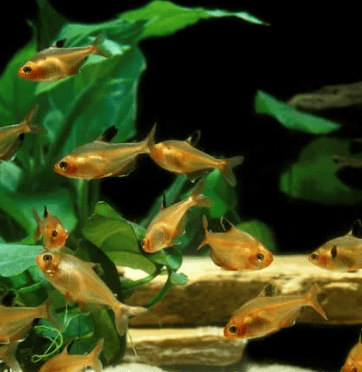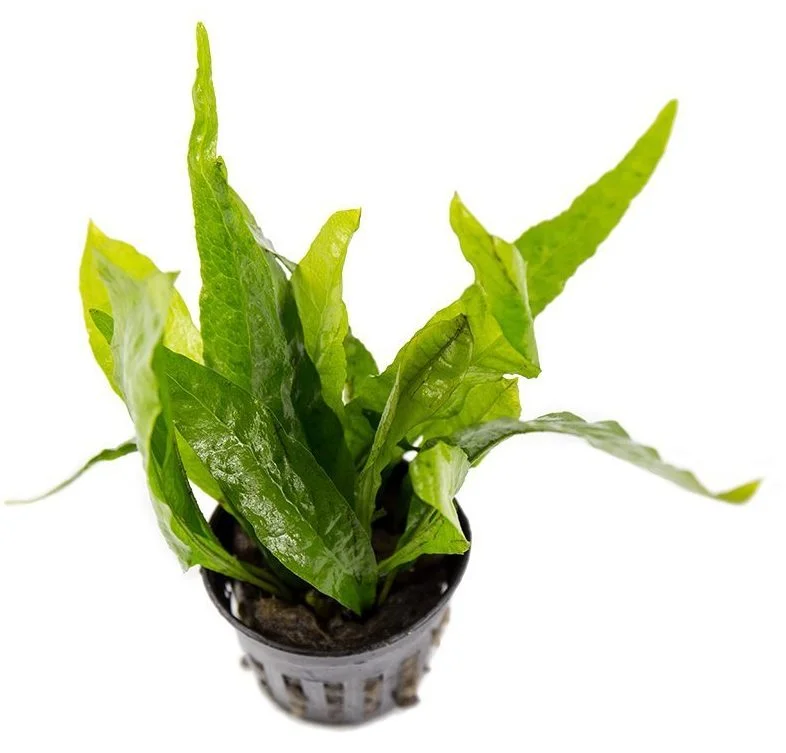
Tag: Freshwater

  • 50 Betta Fish Facts Worth Knowing (Some Will Surprise You)

    50 Betta Fish Facts Worth Knowing (Some Will Surprise You)

    Bettas are one of the most misunderstood fish in the hobby, and I’ve spent years watching bad advice get passed down from pet store employees to beginners who have no reason not to trust them. I’ve kept bettas, made my own share of mistakes early on, and put together a YouTube video on betta facts that’s racked up over 170K views. so clearly people are hungry for the real story on these fish. Here are 50 facts that will actually change how you think about them.

    https://www.youtube.com/watch?v=xKcVn7oJmOI

    Key Takeaways

    • There are many facts about betta fish, but not all of them are true.
    • It’s important to do your own research for any pet, especially for bettas where misinformation is easily spread.
    • Online communities, peer-reviewed articles, trusted websites, and fellow hobbyists can help answer questions about bettas and lead you on the path to having a happy and healthy fish!

    How To Research Your Animal

    Before buying any new fish or animal, you should know everything you possibly can about them. This is especially true when talking about betta fish. Unfortunately, there is a ton of misinformation surrounding betta fish and their aquarium husbandry.

    As betta fish (also called siamese fighting fish) are seen as a beginner fish, many new hobbyists rely on local pet stores to relay all the information they need to get their aquarium started. While some store associates give trustworthy information, it’s important to use your own due diligence and research. Never purchase a fish without knowing its care requirements.

    But how do you research bettas and how do you know what’s right information and what’s wrong?

    Research can be tricky, but this hobby is built on the trial and error of its community. To start, make a list of questions you have. Some questions might be:

    • Where do betta fish come from?
    • How big do they get?
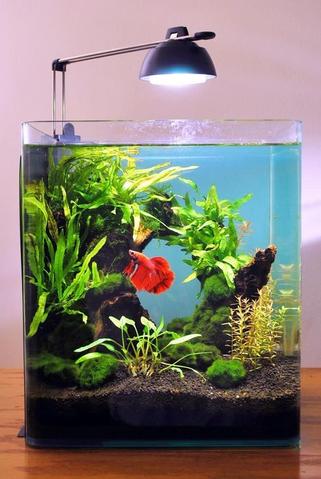
    • How big of an aquarium do bettas need?
    • What water parameters do they need?
    • Can they be kept with other fish in the same tank?

    These questions won’t lead you to a single answer. Instead, you’ll find a plethora of stories from hobbyists explaining their personal experiences with keeping these fish over decades. In addition to these firsthand accounts, search for university papers or otherwise published information. It is acceptable to do superficial searches to get started on researching a topic, but you should always cross reference and fully dig into the topic at hand.

    While you’ll find many contradicting answers to your questions, this doesn’t mean that there is no right answer. The community agrees that there are bare minimum requirements for every fish species owned. To see if you fit those requirements, you should assess your budget, time availability, dedication, and intent.

    50 Betta Fish Facts

    Here are some fun facts to get you interested in keeping betta fish (also called Japanese fighting fish) or to remind you just how great these fish are! We have a video just for you from our YouTube Channel and our blog post goes into more detail below. If you enjoy our content, please be sure to subscribe!

    1. Each One has its own unique personality

    No two bettas are the same. Some are curious and friendly while others are lazy and aggressive. There is no telling what kind of personality your fish will have until it gets comfortable in its new home. Keep in mind that a fish’s personality will change given water and tank conditions in addition to tank mate settings.

    2. They were selectively bred for competition

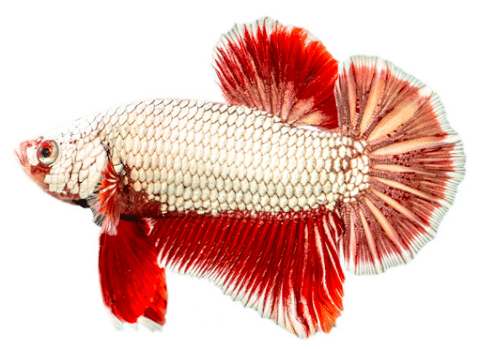
    Dragon Betta

    Almost 1000 years ago, royalty bred these fish for their best colors, tail shapes, and aggression. Through selective breeding, fish enthusiasts gambled wages with their fish in combative competitions. Later, these fish came to signify beauty and extremity in finnage and colors.

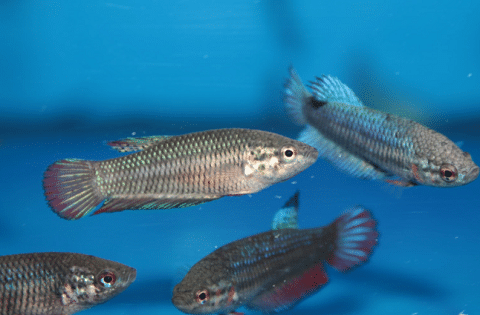
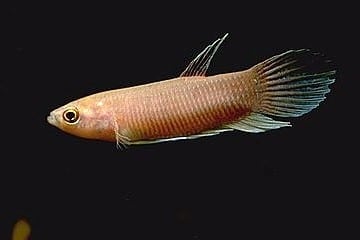
    3. They are the national aquatic animal of Thailand

    These fish are loved so much that they have been named the national aquatic animal of Thailand. In fact, some betta fish are bred to resemble the red, white, and blue stripes of Thailand’s flag.

    4. They can be found in almost every color and pattern

    This includes red, blue, green, and purple. In general, blue and red are the most common colors to come across. However, betta enthusiasts continue to push the genetic abilities of these fish, resulting in some unbelievable colors and patterns. Possible finnage has also been explored, resulting in some common occurrences such as crowntail, double tail, and halfmoon.

    5. The rarest color is true albino white

    The true rarest color is actually purple. However, no betta has been produced that is a true purple color. They are usually a lavender color instead.

    On the other hand, albinism is a rare genetic mutation that affects melanin production. This results in less melanin or the complete absence of melanin, leading to a pure white fish with red eyes.

    6. They are best kept in at least 5 gallon aquariums

    Some hobbyists successfully keep them in 3 gallon tanks, but that wouldn’t be my personal recommendation. Instead, a 5 gallon aquarium leaves plenty of room for a betta fish to demonstrate its natural abilities without getting bored or stressed. A couple of snails may also be able to be comfortably kept in this tank size!

    Editor’s Choice!
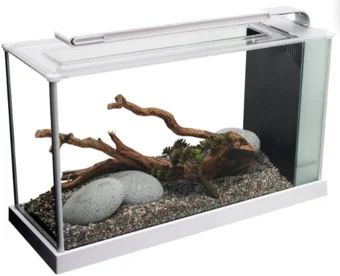
    Fluval Spec V

    The Best Betta Fish Tank

    Best filtration, best light, perfect size and with everything you need to get started. It was made for Bettas!

    Buy On Petco Buy on Amazon

    7. They need a constant water temperature

    Betta fish are relatively hardy, but they need a constant water temperature between 78 and 80ยฐ F. Some hobbyists keep their betta tanks slightly above or below this, but consistency is more important than an exact temperature. To ensure a consistent temperature, it’s always recommended to use an aquarium heater.

    8. They will fight each other and similar-looking creatures to death

    Wild betta fish are naturally aggressive, but they have been selectively bred to demonstrate the most aggressive behaviors possible. In their natural habitat, betta fish are aggressive to fish trying to take their resources away from them, like space, food, and even potential mates. In the aquarium, space is limited, and most fish become a threat.

    While this is especially true for keeping multiple male betta fish in the same aquarium, all betta fish may become aggressive towards similar-looking fish with flowing fins and bright colors. They may also be aggressive towards their own reflection in the glass!

    9. They will flare their gills and fins

    When upset, betta fish will flare their gills and fins to appear larger than they actually are. This can be very stressful for the fish if unwarranted. On the other hand, some hobbyists intentionally make their betta fish flare to provide some stimulation and enrichment. Again, this should be done sparingly to prevent your fish from getting injured.

    10. There are over 70 different species

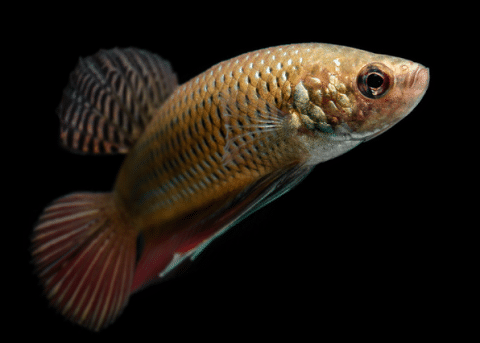
    There are many bettas within the Betta genus. Many species have started making their way into home aquariums, but many are still unavailable for purchase. Until then, Betta splendens remains the most popular and widely known.

    11. They originate from Thailand

    Thailand was previously named Siam. This, in addition to their aggressive nature, led to their second common name, the Siamese fighting fish.

    12. They can also be found across Southeast Asia

    While they originated in Thailand, many wild species of betta can be found throughout several countries in Southeast Asia, including Indonesia, Malaysia, Vietnam, Cambodia, and Laos.

    13. Betta splendens are found outside of their natural habitat

    For a long time, Betta splendens could only be found in Southeast Asia. However, they have since been discovered in parts of South America, North America, and Australia. This could potentially be due to fish being released from breeding farms and local hobbyists.

    14. They need little to no water movement in the aquarium

    In fact, betta fish do best when there is no water current. In the wild, these fish are found in very slow-moving, shallow conditions. In captivity, they have been bred to exhibit ornamental finnage which can make it difficult for them to swim against excessive water currents.

    15. They need good water quality

    While hardy fish, betta fish require 0 ppm ammonia, 0 ppm nitrite, and low nitrates. In addition to a consistent water temperature, betta fish need constant water parameters that fall within their preferred ranges. Like other fish, bettas are susceptible to ammonia and nitrite poisoning if toxins are allowed to accumulate in the aquarium.

    16. They do best in a planted aquarium

    This fish species shines best in a planted tank that resembles its natural habitat but can be kept in most aquarium setups. This includes tanks with sand and gravel substrate with live plants, artificial ones, or other decorations.

    Betta Tank Setup

    One thing is for sure, though, and that’s that betta fish love to rest on plants and decorations, especially near the surface of the water. Make sure that whatever you plan to decorate your aquarium with is safe for fish to use.

    17. They will not eat live plants

    These are one of the best fish for live plant setups! For the most part, betta fish leave live plants completely alone; these fish are naturally carnivores and won’t be interested in any greens available in the tank. That being said, some betta fish have been known to pick at plants, and some may even nip at plant roots if they’re exposed.

    18. They live in very shallow water

    In the wild, betta fish are found in shallow and often temporary pools and rice paddies. The location of bettas largely depends on the wet and dry seasons, when heavy rain floods forest floors and ditches. Their labyrinth organ and adept ability to jump allow them to survive such harsh conditions.

    19. Some species are listed on the IUCN Red List of Threatened Species

    Unfortunately, several species of betta are listed on the IUCN Red List of Threatened Species1. Some of these species include Betta simplex, Betta pinguis, Betta pardalotos, and Betta channoides. Reasons for being placed on this list include deforestation, habitat loss, and pollution.

    20. There is one breed that looks like a snake

    Not one of the most common species of betta fish to see, the snakehead betta (Betta channoides) looks like a snake! These fish have a very long body with a tapered head that resembles a reptile. Don’t worry, though. They are not dangerous and not any more challenging to keep than other bettas.

    21. Females can be just as aggressive

    Female Betta Fish

    It’s often said that female betta fish are less aggressive than their male counterparts. This is a very large generalization and some female betta fish can actually be more aggressive! This is why it’s still recommended to keep betta fish by themselves in their own tank.

    As we’ll see, some hobbyists have luck keeping all female tanks.

    22. Males are more colorful and slightly larger than females

    Female and male betta fish are pretty easy to tell apart. The biggest difference is that males are much more colorful and slightly larger than females. They also often have flowier tails and fins that can be used to attract females and intimidate predators.

    23. They stay under 3 inches long

    In general, betta fish stay under about 3 inches in length at adult size. However, some betta fish have very impressive finnage that can easily add another 1 to 2 inches in addition to their body length.

    24. The biggest species can grow to be 7 inches long

    Giant Betta

    The biggest species of betta fish is the giant betta (Betta anabatoides), which can grow up to 7 inches long! These fish should be given a little extra room in comparison to their smaller counterparts. In general, a 10 gallon tank size is recommended for one giant betta.

    25. They can live with other fish species in a community tank

    <a href=Lambchop Rasbora” class=”wp-image-1059216″/>

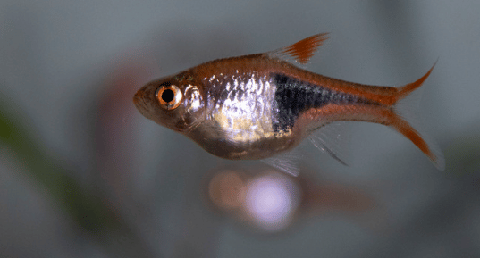
    This is only true if personalities match. Some betta fish are simply too aggressive to be kept with other tank mates. However, more docile and accepting individuals have the possibility of being kept in a community with an assortment of tetras, rasboras, and even larger fish.

    26. Some females can be kept together

    A betta sorority isn’t possible for everyone, but some hobbyists have succeeded. A betta sorority is a group of female bettas peacefully living together in the same aquarium. This takes a lot of trial and error and can go very wrong if done incorrectly.

    The keys to having a successful sorority are having a large tank, females that were raised together, and plenty of natural hiding spots and dividers that break up the line of sight.

    27. Selective breeding made them more aggressive

    While betta fish were originally bred for their bright colors, they were also bred to exhibit high levels of aggression. They would then be used to fight against each other in competition. This was a form of gambling common among nobility and royalty.

    That aggression is still present in domesticated bettas. For this reason, it’s strongly believed that wild bettas are less aggressive.

    28. Wild types are much less colorful than their domesticated counterparts

    Wild Betta Fish

    Similarly, domesticated bettas from breeding farms are much more colorful. This is because they have been selectively bred to display the most interesting and brightest colors possible. To this day, betta fish breeders study and manipulate genetics to get the best colors and combinations possible.

    29. Males are responsible for taking care of the fry

    That’s right! Female betta fish are only responsible for getting the eggs ready for fertilization. The male creates the bubble nest, fertilizes the eggs, places the eggs in the nest, and protects the eggs from predators.

    30. Males create bubble nests at the top of the water

    What Is A Bubble Nest

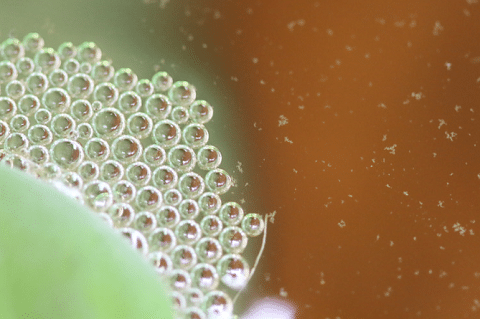
    Using their labyrinth organ, male betta fish blow bubbles at the surface of the water to create mats of bubbles. These are prepared nests, ready to house fertilized eggs once connected with a female. As the eggs are fertilized, the male will catch them and place them into the bubble nest. After a few days, the eggs will hatch and paternal care will end.

    31. Males may create bubble nests outside of reproductive periods

    A bubble nest isn’t a true indicator that your male betta is ready to mate, though. In fact, excessive bubble nest building could be an indication that something is wrong with the tank. The main reason why betta fish have a labyrinth organ is to survive unfavorable conditions. If they start to gasp for air at the surface of the water or make bubbles, it could be a sign that something is wrong with the water parameters.

    At the same time, male betta fish may create bubble nests for enrichment. This could also be a sign that your fish is bored and needs more interaction.

    32. Some species are mouth brooders

    While many betta fish build bubble nests, some are mouth brooders. This means that eggs and fry are raised in and around the mouth of the fish. One species of betta that uses mouth brooding is Betta rubra.

    33. They live to be 2 to 5 years old

    Betta fish aren’t the longest-living fish, but they can keep their owners company for a few years. Keep in mind that adult fish from the pet store are likely a couple of years old already. This can make it seem like they have an even shorter lifespan than 2 to 5 years.

    34. The oldest one in the world lived for 10 years

    While most fish only live to be about 5 years old, many surpass that average! Fish are a long-term commitment and a happy fish will easily live for a long time. Make sure that you set your aquarium up with years, possibly even decades, in mind.

    35. They can make bonds with their owners

    Betta fish are very smart and very curious. They easily recognize their owners and the person who feeds them. It is not uncommon for betta fish to welcome their owners every time they pass the tank; in many instances, they’ll also ask to be fed.

    36. These fish can experience many emotions

    Betta fish can experience a large array of emotions, like happiness, sadness, and boredom. Betta fish are very susceptible to becoming bored, lazy, and overweight. To help keep your fish engaged, make sure to regularly provide changes to the aquarium, like new decorations and toys. An occasional live food snack may also help get your fish to display its natural instincts.

    37. They are very curious and need new stimulation for enrichment

    Betta fish are extremely curious. Perhaps too curious.

    Though solitary fish, bettas love interacting and being mentally stimulated. Things like mirrors, betta logs, and live foods can help bring excitement to your fish’s life. Otherwise, your fish may start to lose its color, lively finnage, and activity level.

    38. They can be trained

    With time and dedication, betta fish can be trained to jump for their food or swim through hoops! Betta fish are very smart, and their inquisitive nature makes them open to trying new things. Hobbyists have had success teaching their fish to do different tricks with a little bit of patience. In fact, there are even betta trick kits available for purchase. Some things you can teach your betta include following your finger, jumping and swimming through hoops, playing soccer, and allowing itself to be petted by its owner.

    39. They are lazy

    Not all betta fish can be acrobats. Some individuals can be pretty lazy and enjoy resting on floating logs and leaves instead of jumping out of the water. This can become problematic if the fish lacks exercise entirely. Betta fish can become overweight, constipated, or develop swim bladder disorder if left understimulated.

    40. They are good jumpers

    A betta tank should always have a secure lid on it as bettas are great jumpers. In the wild, they jump out of the water to move between locations and catch food. In the aquarium, jumping can be a sign of stress due to poor water conditions, stress, or improper care.

    41. They are related to gouramis

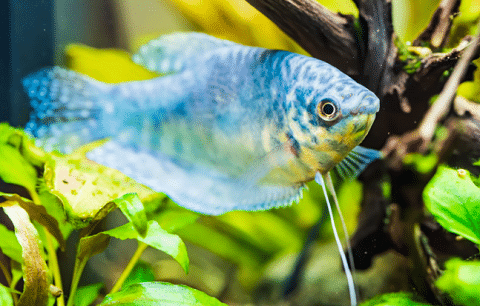
    Blue Gourami Fish

    Betta fish are members of the Osphronemidae scientific family. This technically makes them a type of gourami even though they might not look like their aquarium trade counterparts. A fun fact is that gouramis also have labyrinth organs.

    42. They have a labyrinth organ

    This is a modified lung that allows these fish to breathe air from the water’s surface. These fish developed this organ in response to their natural habitats which can quickly evaporate or deteriorate in quality. For instance, a betta fish may find itself in a very small pool which starts to dissipate in oxygen levels. The fish may be able to survive by taking in atmospheric air until conditions improve.

    43. They are mostly carnivorous

    In the wild, betta fish heavily rely on insects for their source of protein. They especially enjoy eating insects from the top of the water. In the aquarium, they’ve adapted to a more omnivorous diet, accepting both meat- and plant-based foods.

    44. One sold for over $1500!

    The most expensive betta fish ever sold was a Thai-colored plakat betta for over $1500. This fish had perfect coloration that resembled the country of Thailand’s flag.

    45. Bettas are greedy

    Betta fish are greedy fish when it comes to feeding time. Only feed bettas when it’s time for them to eat or they will take advantage of every time you pass their tank. A good feeding schedule is about 2 to 3 pellets once or twice a day. Make sure to remove any uneaten food to avoid a messy tank.

    46. A colorful specimen is a happy pet

    Like other animals, betta fish show their best colors when they’re happy and thriving. To get your betta fish to show its best colors, provide them with a high-quality pellet or flake food. Then, ensure that water conditions are the best they can be with regular water testing, water changes, and tank maintenance.

    47. Some may change colors throughout their lifetime

    One breed likely to do this is the black, white, orange, and yellow koi betta. Over their lives, their patterns may change and colors might appear or disappear completely. This is due to the genetic makeup that makes these colors and patterns possible.

    48. There is an organization specifically for them

    There is an organization called The International Betta Congress (IBC) that promotes the spirit of these fish! You can connect with other betta fish keepers and show off your fish.

    49. There are shows and conferences all about them

    Hobbyists can attend conferences and live shows to learn more about their bettas and compete against other hobbyists.

    50. They are hardy, colorful, and personable

    This makes them excellent pets! Just make sure to learn everything possible you can before going out to buy your first betta.

    Common Myths

    We mentioned before that some information available about betta fish is false. Though betta fish awareness has increased in recent years, there is still a lot of misconception surrounding these fish.

    Here are some of the most common betta myths you’ll likely hear at your local pet stores or from a mistrusted site.

    Betta fish can live in small aquariums

    No matter how many times we say it, there will always be someone trying to keep bettas in a small plastic fish bowl. No, betta fish cannot live in the small containers that you see at the pet store.

    The bare minimum tank size for a betta fish is 3 gallons, with most hobbyists recommending at least 5 gallons. Though many stores sell all-in-one 1 gallon betta fish tanks, these kits usually lack the basics for keeping these fish alive past the first few days of having them. In addition, these kits are often overpriced for what you get.

    In the long run, it’s better to buy all pieces separately, so you have full control over making a happy and healthy environment for your fish.

    Betta fish don’t need a heater or filter

    One of the pieces of equipment often lacking in these all-in-one betta kits is an aquarium heater. Or, if they do come with a heater, it’s a small, cheap flat heater that sticks to the side of the tank. While these heaters can work from reputable companies, they’re very prone to malfunctioning. On top of suddenly turning off or heating up too much, they are also impossible to calibrate.

    Editor’s Choice
    Finnex STE Series

    Best Aquarium Heater

    Finnex has achieved what we as hobbyist have asked for decades. A reliable heater that won’t fail. Japanese components. Receives our top recommendation.

    Click For Best Price Buy On Amazon

    Bettas need a constant water temperature between 78-80ยฐ F. Though they originate from tropical areas where temperatures rarely fluctuate, they are not able to live under or much above this range.

    While most betta kits include a filter, they’re usually not the best quality. Sometimes, these filters might actually be too powerful, which can knock your fish around the tank and cause injury. Bettas originate from calm, slow-moving waters. In the aquarium, water movement should be minimal to make swimming easy for your fish.

    Again, it is strongly recommended to purchase an aquarium filter separate from any kit package.

    Betta fish can be kept with other fish

    This isn’t completely a myth but shouldn’t be followed by inexperienced hobbyists. Bettas are extremely territorial fish that have been known to fight and kill other fish that come too close to their space in the aquarium. Even if the tank is big enough, the betta may still attack if the other species have a similar appearance.

    If you have a large enough tank, a docile betta, and a list of compatible species that can be kept with a single betta, then you may try introducing tank mates. It should also be noted that the vast majority of wild bettas are much more compatible with themselves and other fish than domesticated betta breeds.

    On the same note, some hobbyists try to keep multiple female betta fishes together in the same tank. This is known as a betta sorority and can be successful in some setups. The secrets to having a successful sorority are having a large tank, plenty of live plants, and multiple female bettas that have grown up around each other or are naturally docile.

    Be prepared that harems can go wrong very quickly and unexpectedly.

    Betta fish can withstand poor water quality

    Because bettas are often sold in tiny containers, new and inexperienced hobbyists sometimes believe they can be kept in those conditions indefinitely. These containers do not have filtration and are not heated, leaving toxic ammonia and other harmful nutrients to accumulate. Though this might not immediately affect the fish, bettas have developed chronic conditions due to poor water quality.

    Like other tropical fish, betta fish need proper nutrients in their aquarium. This means 0 ppm ammonia, 0 ppm nitrites, and less than 40 ppm nitrates. To help maintain these levels, it’s recommended to add live plants and/or perform weekly or biweekly water changes. During these water changes, the substrate should also be vacuumed.

    Betta fish don’t need a high-quality diet

    Betta fish are beautiful fish, but only when given the care they need. Unfortunately, the pet trade can a business that cuts corners around the fish’s health. As a result, fins get torn and colors fade. This doesn’t mean that your fish can’t shine when it arrives in your home aquarium, though.

    Many new hobbyists grab the first food they see on the shelf. This is usually a general tropical fish flake food, but we recommend Fluval bug bites for betta fish. In most cases, low quality flake is like junk food, with many preservatives, artificial dyes, and fillers.

    In the wild, betta fish are carnivores. In the aquarium, they appreciate a wide variety of foods, including live, frozen, and freeze-dried options. If you’ll notice, they have upturned mouths that make it easy for them to breathe air and catch prey on the surface of the water. As a result, some of their favorite snacks are small insects that can bring out their natural hunting instincts.

    Other good options include freeze-dried bloodworms, brine shrimp, and a high-quality flake or pellet food. Make sure to not overfeed your betta. These fish can be very greedy and will ask for food anytime someone passes the tank.

    Betta fish don’t live long

    Though betta fish don’t live as long as some other available tropical fish, bettas can stay with their owners for a reasonably long time. On average, bettas live for 2 to 5 years. The oldest betta fish on record lived to be 10 years old.

    Something to consider is that by the time you introduce an adult betta fish into your home aquarium, that fish is already a couple of years old. This can make it seem like they have short life spans when the fish dies within the next few years.

    Of course, factors like water conditions, diet, and predisposed issues play a part in how long your fish will actually live. But given the space to thrive, these fish will bring color to your tank for years to come.

    Final Thoughts

    There are many interesting facts about betta fish available on the internet, but not all of them are true. In fact, most ‘common knowledge’ about bettas is incorrect and misinformation. The only way to find the truth about these incredible fish is by doing your own research, listening to other hobbyists’ experiences, and finding out what works and doesn’t work for you.


    ๐Ÿ“˜ Want to learn more? This article is part of our complete Betta Fish Guide. your ultimate resource for betta care, types, tank setup, feeding, tank mates, and more.

  • Kribensis Cichlid Care Guide: Hardy Dwarf Cichlid With Big Personality

    Kribensis Cichlid Care Guide: Hardy Dwarf Cichlid With Big Personality

    Most of my African cichlid experience has been with Rift Lake species. MBunas and their aggressive tank dynamics. So Kribensis always stood out to me as the exception that proves the rule. They’re West African, dwarf-sized, and actually peaceful enough for a community tank, which almost no other cichlid can claim. Their cave-breeding behavior is one of the coolest things you can watch in freshwater fishkeeping, and the male’s color display during spawning is something else entirely. If you want cichlid personality without the cichlid chaos, Kribs are worth a serious look.

    The dwarf cichlid that turns a community tank into a no-fly zone during breeding season.

    The kribensis is the dwarf cichlid for the real world, where tap water is not always perfect and budgets are not unlimited.

    What Most Care Guides Get Wrong About Kribensis Cichlid

    The most common mistake with kribensis is treating them as purely peaceful community fish. They are. Until they breed. And kribensis breed constantly. Once a pair forms, they’ll claim a cave and defend it aggressively against anything that comes near, including fish three times their size. I’ve seen a breeding pair of kribs completely dominate the bottom half of a 40-gallon tank, pushing corydoras, tetras, and even larger fish out of their territory. If you keep a male and female together, expect breeding behavior, and plan your tank accordingly. The other misconception is that they need soft, acidic water. While that’s ideal for breeding, kribs are actually one of the most adaptable cichlids when it comes to water parameters.

    Table of Contents

    Kribensis are the gateway cichlid for most hobbyists, and for good reason. They are small, colorful, and breed readily in community tanks. But that last part is where the problems start. A breeding pair of kribensis will terrorize a community tank, chasing fish three times their size away from their cave. I have seen kribensis pairs destroy the peace of a 55 gallon tank in a single spawning cycle. If you are not ready for that, keep a single specimen. The dwarf cichlid that turns a community tank into a no-fly zone during breeding season.

    The Reality of Keeping Kribensis Cichlid

    Kribs are genuinely one of the easiest cichlids to keep. But easy does not mean you can ignore their needs entirely.

    They breed constantly. Give kribs a cave and reasonable conditions, and they will breed. And breed. And breed. Have a plan for the fry, because you will have hundreds of them over the fish’s lifetime.

    Breeding females are ferocious. A female krib guarding fry is one of the most aggressive dwarf cichlids in the hobby. She will attack anything that comes near, including fish much larger than her. In a small tank, this dominates the entire dynamic.

    They need caves. Without a cave, kribs are stressed and will not show their best behavior. Coconut shells, terracotta pots, and purpose-built cichlid caves all work. No cave means no breeding and a unhappy fish.

    Males and females look very different. The female krib is actually more colorful than the male, with that distinctive bright pink or red belly. Males are larger but subtler. Both are attractive in different ways.

    Biggest Mistake New Kribensis Cichlid Owners Make

    Not providing caves and then wondering why they never breed or show color. Kribs are cave spawners. No cave, no breeding, no full color display. It is that simple.

    Expert Take

    A pair of kribensis in a 20 gallon tank with sand, a cave, and some hardy plants is one of the best beginner cichlid setups in the hobby. You get the full cichlid experience. Territory, breeding, parental care, personality. Without needing a massive tank or perfect water chemistry.

    Key Takeaways

    • They are easy to care for and one of the easiest cichlids to breed in the hobby
    • Provide a 20-30 gallon tank with live plants, hiding spots, and well balanced diet to keep them healthy & happy.
    • Choose compatible tank mates of similar size. Avoid slow moving or aggressive fish to prevent stress & injury.

    Species Overview

    Scientific NamePelvicachromis pulcher
    Common NamesKribensis Cichlid, Krib, Rainbow Krib, Rainbow Cichlid
    FamilyCichlidae
    OriginWest Africa (Ethipe River in the Niger Delta)
    DietOmnivorous
    Care DifficultyModerate
    ActivityActive
    Life Expectancy5 Years
    TemperamentPeaceful – but semi-aggressive when breeding and against bottom feeders
    Tank LevelAll
    Minimum Tank Size20 gallons (75 liters)
    Water Temperature Range75-79ยฐF (24-26ยฐC)
    Water Hardness5-12 dKH
    pH Range6. 7
    Filtration/Water FlowModerate
    Water TypeFreshwater
    BreedingOviparous
    Difficulty to BreedEasy
    CompatibilityCommunity thank with similar sized and temperament fish
    OK, for Planted Tanks?Yes

    Classification

    Taxonomic RankClassification
    Common NameKribensis Cichlid
    Scientific NamePelvicachromis pulcher
    OrderCichliformes
    FamilyCichlidae
    GenusPelvicachromis
    SpeciesP. Pulcher

    Introduction

    The Kribensis is the dwarf cichlid that works in water conditions that would kill most apistos. Hard water, soft water, neutral pH. Kribs handle it all. They are hardy, colorful, and breed readily, which makes them the perfect introduction to cichlid keeping. But underestimate a breeding pair of kribs at your own risk. That little female with the bright pink belly will terrorize fish three times her size when she has fry to protect.

    Kribs do not care about your water parameters. They just want a cave and something to fight.

    Kribensis live 5 to 8 years. Not the longest commitment in the cichlid world, but long enough that you need to be prepared for ongoing breeding and the territorial behavior that comes with it.

    Provided that proper care is taken, including appropriate breeding management, these colorful creatures can offer a fulfilling experience by introducing some great interactions. They are also great caretakers of their baby fish!

    Origin And Natural Habitat

    Kribensis Cichlids, native to the slow-moving waters of Nigeria and Cameroon. In their natural habitat, they prefer dense vegetation for hiding spots and territory. Setting up an environment similar to what would occur naturally will make sure these colorful cichlids are happy within your aquarium.

    Appearance

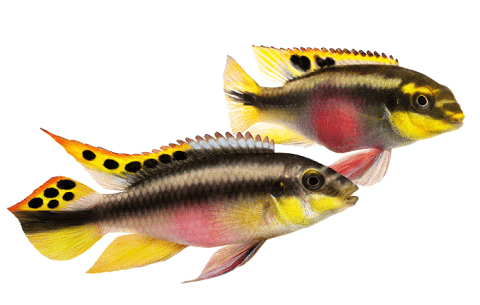
    Kribensis Cichlid Male and Female

    The breathtaking appearance of Kribensis Cichlid makes it an extremely desirable species for any community tank. The males and female kribensis are both quite distinct, with the female boasting a shorter rounder body, while also being more colorful along with pointer dorsal, anal, and tail fins. Their trademark is the pink area around their belly. The male kribensis has larger pointed anal fins, is slimmer, and will grow longer than the female. All together, this creates a visually appealing scence in your freshwater habitat. These differences also make it easy to select a pair to breed when purchasing them at a fish store.

    Lifespan

    The Kribensis Cichlid is a beautiful, lively fish that can live up to 5 years in captivity with proper care. To extend their life span and keep them healthy, itโ€™s important to provide a balanced diet, clean water conditions, as well as a low stress environment. The great thing about them is they are pretty tolerant of a variety of conditions and get along with many tankmates, so even novices can keep them healthy for a long time.

    Average Size

    Kribensis Cichlid size varies slightly between males and females. They are a small tropical fish species, with males reaching up to 4 inches and females measuring 3. As they are small, you don’t need too large of a tank to house them. However, they do get aggressive when they are breeding. Have a plan to separate them or consider a larger tank if you want them to care for their young in the display tank.

    Kribensis Cichlid Care Guide

    For Kribensis Cichlid owners, caring for this small fish includes more than just feeding them. Creating the right environment in their tank and making sure appropriate water parameters are met is essential to providing good care of these cichlids. This section covers all aspects of taking care of kribensis cichlids: from selecting a suitable aquarium size to adding decorations and filtration systems.

    All thatโ€™s required is finding out what the necessary requirements are, such as substrate types, dimensions, etc. Once those elements have been established, any aquarist is on his way to building an optimal home for this species! Itโ€™s important to stay mindful about keeping up with correct water conditions in order to ensure healthy fishes throughout their lifespan by monitoring ph levels and other readings regularly. Given time dedicated towards proper maintenance results in truly rewarding experiences when dealing with Kribensis communities!

    Tank Size And Dimensions

    When setting up a tank for Kribensis Cichlids, you need an aquarium of at least 20-30 gallons. This will ensure they have plenty of space to swim and set up territories accordingly while also providing room to interact peacefully with other fish living in the same area. A longer tank is always better for these fish as they establish their territories near the bottom of the tank.

    A larger tank will also have more stable parameters and reduces hostility between inhabitants if you decide to get any territorial fish – making way for a much healthier environment within the confines of your home.

    Substrate And Decorations

    Creating the ideal environment for your Kribensis Cichlids is important in order to ensure their welfare and joy. Incorporate fine gravel or sand, which reflects its natural habitat accurately. If you choose sand and want to keep plants, you will either want to cap the sandbed with sand or have separate sand and planted substrate sections. Live plants will enhance water quality as well as provide shelter for these fishes if used within the tank of a kribensis cichlid set-up. Here are some great beginner plants to try with them:

    Hiding places such as hollow coconut shells or driftwood have great significance when it comes to providing protection and security along with giving breeding couples a suitable place to lay eggs safely. Position these accessories near the periphery of the aquarium while making sure they are placed wide apart from one another so that each fish can easily create an individual area.

    Editor’s Choice
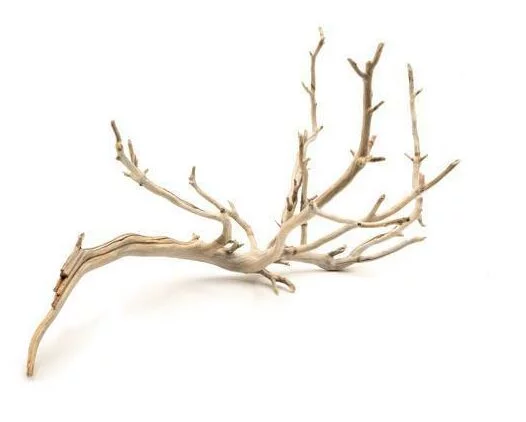
    Manzanita Driftwood

    Editor’s Choice

    Manzanita offers it all. Great shape, low tannins, quick to water log and reasonably priced. It’s the ultimate driftwood!

    Click For Best Price Click For Branch Pieces

    Is the Kribensis Cichlid Right for You?

    Before you commit to this species, here’s an honest assessment of whether it fits your setup and experience level.

    • The best beginner dwarf cichlid overall. Hardy, colorful, and fascinating breeders. Kribs are an ideal entry point into cichlid keeping.
    • Be prepared for aggressive breeding behavior. If you keep a pair, they will breed, and they will defend their territory fiercely.
    • Need caves for breeding. Without suitable spawning caves, kribs will stress and may not display their best colors or behavior.
    • Work in most community tanks outside of breeding. When not guarding fry, they’re genuinely peaceful and compatible with most small community fish.
    • Females are more colorful than males. Unusual in the cichlid world. Female kribs with their bright purple-red bellies are stunning.
    • 20 gallons is workable but 30+ is better. More space reduces breeding-related aggression toward tank mates.

    Water Parameters

    Ensuring your Kribensis Cichlids are living in a secure and healthy environment requires stable water parameters. For optimal results, you need to to keep these parameters between 75-79ยฐF for temperature with pH from 6.0 – 7.0 and hardness levels ranging from 5-20 dGH, respectively. Test kits should be used regularly to detect any changes that will impact the health of your fish, thereby allowing you to make timely adjustments as required so they live their best lives free of stress or sickness caused by sudden shifts in chemistry variables. Always test for these other key parameters as well, and consider doing water changes if you are off from these recommended levels.

    Filtration

    A reliable filtration system is essential to keep the water clean and avoid any illnesses in your Kribensis Cichlid tank. Canister filters are ideal in a planted and a community tank environment because they provide efficient biofiltration and maintain stable conditions.

    To guarantee proper operation, remember to regularly check on your filter unit and replace any worn-out components as needed. For a breeding situation, a separate breeding tank with a sponge filter works best as it is gentle enough to be used safely around fry.

    Diet And Feeding

    Kribensis Cichlids need a balanced diet to keep their color scales and healthy energy. This consists of sinking pellets, frozen or freeze-dried foods, and small amounts of veggies.

    Best Flake Formula
    Cobalt Aquatics Cichlid Flakes

    With probiotics and specially formulated for Cichlids, this is bar none the best flake formula available for your Africans

    Buy On Amazon Buy On Chewy

    To keep these fish healthy, feed them properly once daily, offer them tropical flakes combined with cichlid pellets plus occasional treats such as brine shrimp or bloodworms. Itโ€™s important that uneaten food be cleared away in order to maintain water quality. Frozen foods is used as well to enhance diet. Bloodworms and frozen brine shrimp are the food of choice when it comes to frozen food.

    Behavior And Compatibility

    Kribensis Cichlids are quite gentle and non-aggressive, making them suitable for keeping with various tankmates. However, when it comes to breeding time, they will become territorial over their hideaways or caves. There have been cases posted on fish forums about how all the other fish in the community fish tank would hang out at the edges of the tank after the Kribensis cichlids started to breed in order to avoid their aggression.

    Suitable Tank Mates

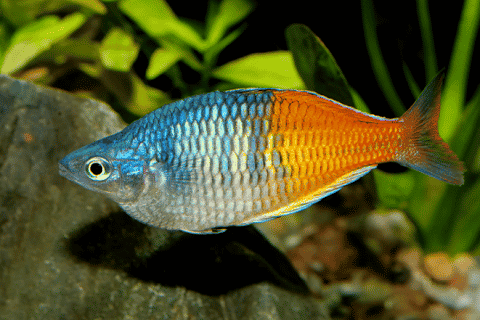
    <a href=Boesemani Rainbowfish” class=”wp-image-1061409″/>
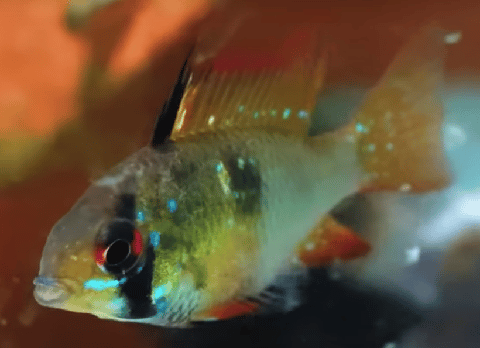
    When looking for suitable tankmates to house with Kribensis Cichlids, peaceful fish species that are of similar sized such as:

    All these fish are perfectly compatible with the Kribensis cichlid when they are not breeding. However, have a backup plan in the event that dominates the entire tank during this time. The best way to curb this aggression is to temporarily remove the Kribensis Cichlids into a breeding tank until the young have been raised.

    Bad Tank Mates

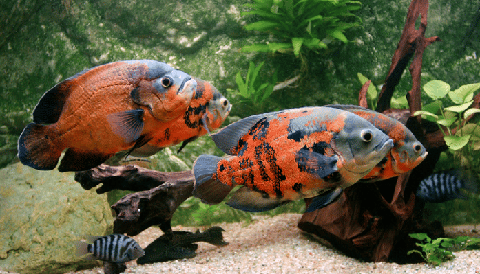
    Tiger <a href=Oscar Fish” class=”wp-image-1059319″/>
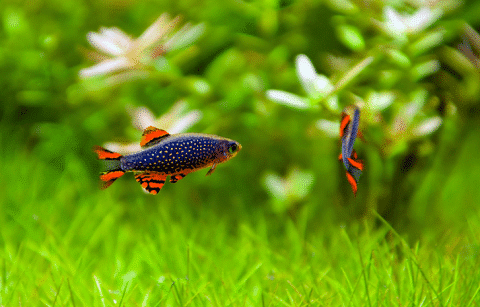
    It is not recommended to keep Kribensis Cichlids with timid fish, fish that will fit in its mouth, or overly aggressive fish. To keep with research, here are some obvious examples of fish to avoid:

    • Large cichlids
    • Tiger barbs
    • Most bottom dwellers – Kribs establish territory at the bottom and will attack fish occupying its space
    • Invertebrates – Kribensis Cichlids will happily eat most shrimps and harass snails and large inverts
    • Betta fish – Good chance of getting killed when Kribs are breeding
    • Fish that do not have similar water requirements, like Goldfish
    • Slow moving fish like Discus Fish.

    One thing to note about Kribensis cichlids is when breeding. These fish are such dedicated parents that they will attack fish much larger than them and will happily sacrifice their lives in defense of their youth. Even if the more aggressive fish wins out, it may be wounded enough to be subject to infections. Do not underestimate your kribensis cichlid’s ability to defend its young and breeding grounds!

    Breeding And Fry Care

    Breeding Kribensis Cichlids is an enjoyable activity that is relatively simple. To ensure successful breeding, itโ€™s necessary to set up a separate tank of at least 20 gallons for the process. Water conditions should also be modified, and care must be taken when dealing with eggs and fry in order to achieve optimal results. We have a video from The Urban Fishkeeper that shows his process how he breeds this fish.

    Taking these steps will increase your chances of success when attempting to breed kribensis cichlids!

    Caring For The Fry

    For your Kribensis Cichlid fry to receive the best care, keep these points in mind: First off, you should ensure a suitable tank size of at least 20-30 gallons and maintain an ideal water temperature between 75-79ยฐF. It is also important that pH levels remain balanced from 6 to 7. You should have sufficient food sources like liquid fish food, baby brine shrimp, or powdered foods available throughout each day so they can grow healthy and strong. Doing regular water changes is necessary, too, since it will help prevent diseases while keeping the quality high within this ecosystem for them over time.

    The fry rearing process is one of the most rewarding experiences in the aquarium trade to have with Kribensis cichlids. Once the eggs hatch, they are one of the most devoted parents and couples you will find in the aquarium hobby. Not only are they fierce defends of their young, as we mentioned previously, but they also work together to raise their young. They will continue to raise their young until they are old enough to fend for themselves. When the young are ready, the parents will chase them away from their territory so they can establish their own territories.

    The couple will continue to say together, being completely monogamous and dedicating themselves to being together and raising more young. They will dedicate themselves to each other for life, staying together until one of them dies.

    That being said, there is a chance that the fish batch may get eaten by the parents. This sometimes happens as the parents are new. Don’t be disappointed if this happens with the first batch. Subsequent batches should be more successful. It’s not common for the couple to have multiple fry batches during their lifespan together. Make sure you have a plan to house the young once they are old enough to be on their own.

    Common Diseases

    Kribensis Cichlids are quite resistant to illness, though they can still contract common freshwater fish diseases which affect freshwater fish. Examples of these include Ich (also known as white spot disease, characterized by spots on the body and fins), Dropsy caused by bacteria infections, and Fin Rot resulting from bacterial infections or fungus.

    To prevent any spread or onset of such illnesses, it is important that one monitors their tankโ€™s water conditions regularly alongside routine maintenance. If symptoms do occur, then isolating affected creatures while treating the entire aquarium with necessary medicines would be essential in protecting Kribensis Cichlid health. Seeking advice from a vet or experienced fish keeper should also be considered for accurate prescription medications so as to keep them safe from being impacted negatively by pathogens present within freshwater habitats.

    A best practice is to quarantine fish, but I understand that many freshwater hobbyists do not do this practice. Always try to purchase from a reputable local store or an online store. Most stores should have a guarantee on their fish.

    Frequently Asked Questions

    How many Kribensis should you keep together?

    To help promote peaceful interaction in your tank, it is advised to keep kribensis in a group or pair composed of more female kribensis cichlids than males. This will enable you to dodge any hostile behavior such as fin nipping that may arise from the fish.

    Are Kribensis good community fish?

    Kribensis are a great choice for any community tank due to their peaceful temperament and compatibility with many other species. As such, they make an ideal addition to virtually every type of community aquarium setup. However, they will become aggressive when they start breeding.

    Can you keep just one Kribensis?

    Having a pair of Kribensis is very desirable because they present stunning colors when they are together. You can still have one by itself if desired.

    What cichlids can I keep with Kribensis?

    It is best to not add any other cichlids when keeping Kribensis. They will fight with many dwarf cichlids like Apistogrammas in the same tank. Many other cichlids are too large for them, like New World cichlids. Others are too aggressive, like African cichlids. Your best bet with a Kribensis cichlid is a Severum.

    What is the ideal tank size for Kribensis Cichlids?

    Kribensis Cichlids need a tank size of around 20-30 gallons for them to feel completely at home. Such an environment is essential in order to make sure they thrive and be comfortable in their habitat. Longer is better, and having a large tank will help with aggression when it comes time for breeding.

    What It Is Actually Like Living With Kribensis Cichlid

    This is the part no other care guide gives you. Forget water parameters for a minute. Here is what it is actually like to share your tank with this species.

    They are fearless for their size. A 3 inch krib will face down fish twice its size without hesitation. This is especially true of females guarding fry. The confidence is entertaining and sometimes alarming.

    Parental care is incredible. Both parents protect and lead the fry around the tank. Watching a pair of kribs guide a cloud of tiny fry through the tank is one of the most rewarding sights in fishkeeping.

    They adapt to almost anything. Kribs tolerate a range of water conditions that most dwarf cichlids cannot handle. Hard water, soft water, slightly alkaline, slightly acidic. They adjust.

    The pink belly is stunning. A female krib in breeding condition with a fully flushed pink belly is one of the prettiest freshwater fish you will see at this size. The color is vivid and unmistakable.

    How the Kribensis Cichlid Compares to Similar Species

    The apistogramma genus is the natural comparison for anyone choosing a dwarf cichlid. Apistos offer far more species variety and some are equally colorful, but kribs are hardier and more adaptable. Kribs tolerate harder water, wider pH ranges, and cooler temperatures than most apistos. They’re also easier to breed. Almost too easy, honestly. If you want a straightforward, hardy dwarf cichlid with guaranteed breeding behavior, kribs are the pick. If you want to explore different species and don’t mind more specific water requirements, apistos offer a deeper long-term hobby.

    The Bolivian ram occupies a similar space as a hardy, beginner-friendly dwarf cichlid. Bolivian rams are calmer overall and cause fewer community tank disruptions during breeding. Kribs are more colorful (especially females) and have more dramatic breeding behavior. Both are excellent choices for beginners. The Bolivian ram for keepers who want minimal aggression, and the kribensis for keepers who want to observe full cichlid parental care behavior.

    Closing Thoughts

    Kribensis are peaceful until they breed. Then every fish in the tank becomes a threat.

    Kribensis Cichlids bring bright colors and activity to any community tank. To ensure a long life in your aquarium, provide suitable tank setup parameters like temperature and pH balance, offer them an assorted diet, and keep compatible fish as companions. And follow the detailed care guide referenced here. Doing so will help you create a healthy environment for these freshwater beauties that all can enjoy!

    Have you kept a Kribensis cichlid before? Let us know your experience in the comments below. We love to hear from our readers. Until next time!


  • Texas Cichlid Care Guide: The Only Cichlid Native to the United States

    Texas Cichlid Care Guide: The Only Cichlid Native to the United States

    As a Texan, I have a soft spot for the Texas Cichlid. And it helps that this is the only cichlid species actually native to waters in the United States. That alone makes it interesting. But what really draws people to this fish is the personality: Texas Cichlids are big, bold, and aggressive in a way that commands an entire tank. I’ve kept large New World cichlids and know the setup requirements well. These are not community fish, and anyone telling you otherwise is setting you up for a bad time. Done right though, they’re one of the most impressive freshwater fish you can keep.

    Everything is bigger in Texas, including the attitude.

    The Texas Cichlid does not need to be imported. It is already here. And it owns whatever tank you put it in.

    What Most Care Guides Get Wrong About Texas Cichlid

    Most care guides treat the Texas cichlid like just another Central American cichlid, but it’s actually the only cichlid species native to the United States. This isn’t just trivia. It means they’re adapted to temperature ranges that most tropical cichlids can’t handle. I’ve heard of Texas cichlids surviving in outdoor ponds through Texas winters, tolerating temperatures down to the low 50sยฐF. The other misconception is underestimating their aggression. Texas cichlids are among the most aggressive commonly kept cichlids. They’re significantly more territorial than Jack Dempseys or firemouths, and I wouldn’t recommend them for any keeper who hasn’t successfully managed aggressive species before.

    Table of Contents

    Texas cichlids are the only cichlid species native to the United States, and they carry all the aggression you would expect from a fish that survives wild American waterways. They get big, they get mean, and they get territorial fast. I have kept these for years and watched people underestimate them because they bought a 2 inch juvenile that looked harmless. That 2 inch fish becomes a 12 inch tank boss that rearranges everything and attacks on sight. The only cichlid native to the United States, with aggression that matches the biggest Central Americans.

    The Reality of Keeping Texas Cichlid

    Texas Cichlids are impressive, but they come with demands that most keepers underestimate. Here is the unfiltered truth.

    They are extremely aggressive. Texas Cichlids are among the most aggressive cichlids in the hobby. They will attack tank mates relentlessly, especially during breeding. Species-only setups or very large tanks with equally tough fish are the only options.

    They tolerate cold water. Unlike most cichlids, Texas Cichlids can handle temperatures down to the low 60s F. This makes them suitable for unheated tanks and even outdoor ponds in warmer climates. It also means they thrive in cooler setups that would stress tropical cichlids.

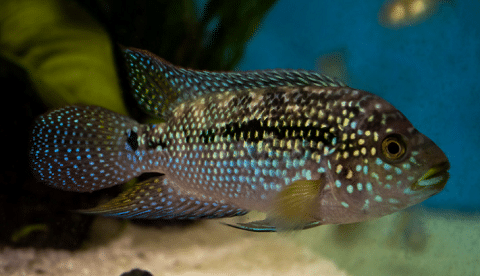
    The pearling pattern is unique. Adult Texas Cichlids develop a spangled iridescent pattern of turquoise and green spots across their entire body. No other cichlid looks quite like this. The pattern intensifies with age and good care.

    They destroy plants and decorations. Texas Cichlids dig aggressively, uproot anything not anchored to a rock, and move decorations around the tank. Use heavy hardscape and skip the delicate planted aquascape.

    Biggest Mistake New Texas Cichlid Owners Make

    Keeping them with smaller or peaceful fish. Texas Cichlids will dominate and injure anything that cannot stand up to them. Do not put them in a community tank. They belong in a species-only setup or with equally large, aggressive tank mates in a very large tank.

    Expert Take

    A single Texas Cichlid in a 75 gallon with sand, heavy rocks, and a canister filter rated for double the tank volume is a fantastic species-only display. The pearl pattern that develops on mature adults is unlike anything else in freshwater.

    Key Takeaways

    • Texas Cichlids are smart, colorful fish that can live over 10 years with proper care.
    • Caring for them requires a 55 gallon tank setup (75 gallon recommended) and maintaining the same conditions as their natural habitat.
    • Feeding should include commercial flakes or pellets supplemented with live foods given in small portions twice daily.
    • They are very aggressive and need large tankmates who can hold their own

    Species Overview

    Scientific NameHerichthys cyanoguttatus
    Common NamesTexas Cichlid, Rio Grande Cichlid, Pearl Cichlid
    FamilyCichlidae
    OriginNorth America (Texas, United States and Northern Mexico)
    DietOmnivorous
    Care DifficultyModerate
    ActivityActive
    Life Expectancy10-15 Years
    TemperamentAggressive
    Tank LevelAll
    Minimum Tank Size55 gallons (208 liters) for a single fish, larger for multiple or if kept with other species.
    Water Temperature Range68-78ยฐF (20 – 25ยฐC)
    Water Hardness5-12 dKH
    pH Range6. 8
    Filtration/Water FlowStrong
    Water TypeFreshwater
    BreedingOviparous
    Difficulty to BreedModerate
    CompatibilityAggressive tank with similar sized or larger fish
    OK, for Planted Tanks?No

    Classification

    Taxonomic RankClassification
    Common NameTexas Cichlid
    Scientific NameHerichthys cyanoguttatus
    OrderCichliformes
    FamilyCichlidae
    GenusHerichthys
    SpeciesH. Cyanoguttatus

    Introduction

    The Texas Cichlid is the only cichlid species native to the United States, and it has the attitude to match. This is a large, aggressive, territorial fish that grows to over 12 inches and will dominate any tank it is in. The spangled iridescent pattern is unique and beautiful, but you will need a big tank, heavy filtration, and the patience to deal with a fish that treats your aquascape like a construction zone.

    The only native US cichlid, and it is as tough as the state it is named after.

    Texas Cichlids live 10 to 15 years and reach over a foot in length. This is a 75 gallon minimum fish for the long haul.

    Nevertheless, they more than make up these negatives with their savvy abilities- this breed of fish will recognize its owner and often display active behavior when playing around gravel or tearing apart aquascapes. Itโ€™s not hard to see why this species stands out: they have brains as much as brawns!

    Origin And Distribution

    The Rio Grande Perch, also called the Texas Cichlid or Rio Grande Cichlid, originates from the Rio Grande River. With their native environment consisting of a soft sandy base with rocks and aquatic plants beneath its surface in water that is slightly acidic, they prove to be remarkably resilient creatures. They are also located in northeast Mexico – where they are known as popular game fish.

    Appearance

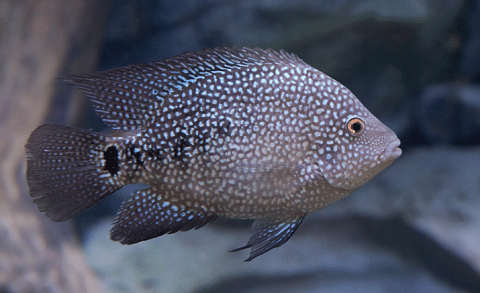
    Texas Cichlid

    These remarkable large fish of the cichlid species is up to 12 inches in length, dominating any aquarium. They have a mostly dark base, with blue and green colored scales that give it a shiny look. Their shine is complimented by their trademark body shape, comprising an expansive dorsal fin accompanied by a broad lateral line. All these elements define this intimidating type of fish that is unrivaled in beauty!

    Types Of Texas Cichlids (And Color Variations)

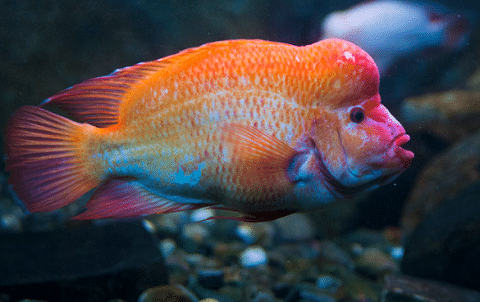
    There are also multiple types of Texas Cichlids available to purchase at pet stores. There is the electric blue Texas Cichlid, which exhibits a glowing blue shade covered with turquoise dots. There is the green Texas Cichlid with mostly green highlights. The most exotic is called the Red Texas Cichlid. This variety is a hybrid of a blood parrot and a classic Texas Cichlid. Usually, this hybrid is created with the help of a female Red Parrot and a male Texas Cichlid.

    Red Texas Cichlid

    Lifespan

    Texas Cichlids are a valuable addition to an aquarium, as these hardy fish can live for up to 10-15 years if theyโ€™re taken care of properly. Regular water changes and a balanced diet are necessary in order to maximize your cichlid’s lifespan – just remember that this isnโ€™t just any short term commitment when it comes to taking on such fish! They live long, and they get large as we will learn below.

    Average Size

    An Adult Texas Cichlid can reach up to a foot in length, and as such need plenty of swimming space when housed. When deciding on the Texas Cichlid tankmates you would like to choose for your aquarium set-up, itโ€™s advisable that they are similar size and temperament since these larger freshwater fish may tend towards aggression with smaller ones.

    A spacious tank is essential if you plan on housing one or more majestic Texas cichlids, while selecting their companions.

    Caring For Your Texas Cichlid

    Caring for Texas Cichlids is a task that must not be taken lightly. These fish need an environment where they feel comfortable and eat a balanced diet in order to remain healthy. Looking after the tank setup, maintaining clean water with regular changes, as well as feeding them correctly should all receive careful consideration. Let’s go into what it takes to make them thrive.

    Tank Requirements

    When it comes to maintaining a home for the Texas Cichlid, tank size is critical. At least 55 gallons of space should be allocated for a single Texas Cichlid in order to provide a sufficient swimming area. For a mixed tank, you should go to at least 75 gallons. Going bigger with your aquarium can also improve outcomes related to aggressive behavior. In nature, they establish large territories. If you can manage a 6 or 8 foot long tank, you will see less aggression with this fish.

    The environment should mimic their natural habitat as much as possible. Adding gravel or sand substrate along with rocks that won’t get tossed around or artificial decor you don’t mind getting trashed around will create plenty of spots where they can hide out when needed. Since this species loves digging into things, live plants are not recommended.

    Water Parameters (Living Conditions)

    For a Texas Cichlid to be in good health, its environment should match the conditions of its native habitat. The ideal temperature range is between 68-78ยฐF (though they prefer warmer water temperatures around 78-82). They aren’t too picky about pH having a while range of 6 – 8, while water hardness can range from 5-15 dGH. Itโ€™s necessary to keep an eye on these parameters so that any sudden alterations do not cause stress for your fish leading to illness or other issues. Itโ€™s vital that cleanliness and proper maintenance occur in order for them to remain healthy and contented. To stay on a solid water change schedule, monitor these two major water conditions:

    Note once your fish is an adult, it can tolerate a much higher range of nitrates level. However, some other fish you may keep may not be as tolerant or may be younger. There are many documented cases of large, aggressive fish being able to thrive on high nitrates. We provide a best practice to follow, which would be one that we would follow in our own tanks.

    Feeding And Nutrition

    Texas Cichlids require a balanced diet for their health and well-being. These omnivorous fish are not fussy eaters, consuming various foods such as crustaceans, eggs, insects, and even plant matter. It is essential that they receive high quality nutrition from commercial flakes or pellets supplemented with live food like larvae and worms two times daily in small portions so they do not overeat. Large pellets and frozen food are best as they get larger. You can also feed the live insects once they become adults.

    Feeding Schedule

    It is essential for Texas Cichlids to maintain a regular feeding schedule. The best approach would be two meals per day in smaller portions to prevent them from overindulging and curb aggression somewhat. Offering a variety of foods to help keep your little Texan friend thriving each and every day.

    Texas Cichlid Behavior And Compatibility

    Texas Cichlids is fascinating fish to own due to their active swimming, intelligent behavior, and recognition of owners. They are also known for being quite territorial, which means it is not advisable to keep them in a community tank with docile species, as their aggressive nature will cause problems. To lessen this issue, if you still want Texas cichilds in a tank environment, then keeping similar-sized semi-aggressive or more fierce specimens may help maintain balance amongst those living peacefully.

    Ideal Tank Mates

    Jack Dempsey Fish

    Texas Cichlid tank mates is kept in if they have the fortitude to tolerate their territorial nature. Other cichlids (usually South American Cichlids), sharing a similar disposition, make good companions for this species. Here are a few solid choices to consider:

    Note that you shouldn’t purchase a new fish as a tankmate that is smaller than them. If they are too small, they will be eaten, attacked, or even killed. In much larger tanks, it is possible to get away from this, but we are writing this article assuming that most readers are putting them in 4 foot long tanks.

    Bad Tank Mates

    Leopard Angelfish

    Keeping Texas Cichlids in the same tank is troublesome, as they will exhibit territorial behavior. Itโ€™s important to remember that vulnerable and small species should not join them, these fish may easily become prey. Here are some obvious bad examples:

    It is also not best to keep the same species together unless you manage to get a male and female and they pair up.

    Breeding Texas Cichlids

    If youโ€™re ready to take on a challenge, Texas Cichlids breeding is an exhilarating experience. You need to plan out the process accordingly and closely monitor every step for successful results – from installing the aquarium with sand bedding and flat rock, watching their courting dance along with the color change of male cichlid during this ritual. All are part of what makes these fish so captivating! Ensuring proper care in each stage is vital if one wishes to obtain desired outcomes (video source).

    Females is differentiated from females as they get older as the female has a black spot on their dorsal fin. Some males may develop a nuchal hump.

    Spawning And Fry Care

    Texas Cichlids have a unique spawning process. The pair clear an area, on a flat rock or in the substrate, and lay between 500-1000 eggs that are sticky to the touch and are roughly 2 mm in size. They will stay by these until they hatch before transitioning into providing care for their fry once they reach free swimming stages. One thing to keep in mind with Texas Cichlids in a breeding tank is once the fry are born, the male may push his aggression on the female if there are no other tankmates. In a breedin tank situation, it would be best to remove the male once the fry are born or use a tank separator to keep the male away from the female and the fry.

    Feeding fry is easy as they are born big enough to eat baby brine shrimp. Feed this and powered flakes until they are big enough to eat traditional aquarium food.

    Common Health Issues And Prevention

    When owning a Texas Cichlid, there are certain illnesses that can affect it. Fin Rot and Ich are two of the most frequent issues for these fish, requiring special care to prevent or treat. Fin rot isn’t a serious condition with these fish, but their weakened state could make them a target.

    Keeping an orderly tank environment is key in avoiding injuries as well as providing proper conditions with regard to water temperature stability. This helps create a stress-free atmosphere for your pet cichlids and also reduces their risk of getting Ich.

    Injuries are the major thing you will likely deal with aggressive fish. Because they will fight with each other, there is a chance of a severe wound. If this happens, separate the fish and treat it with antibiotics. If treatment does become necessary, then over-the-counter medications should do the trick!

    Frequently Asked Questions

    Is the Texas Cichlid Right for You?

    Before you commit to this species, here’s an honest assessment of whether it fits your setup and experience level.

    • One of the most aggressive commonly kept cichlids. Only for experienced keepers who understand and can manage extreme territorial behavior.
    • Unique cold tolerance. Can handle lower temperatures than any other popular cichlid, making them candidates for unheated tanks or outdoor ponds in warm climates.
    • Need 75 gallons minimum for a single fish. They grow to 12+ inches and need space to reduce aggression.
    • Stunning pearlescent coloring. The white sparkle pattern against a dark body is unlike anything else in the hobby.
    • Very limited tank mate options. Only similarly aggressive, large fish have a chance of coexisting with a Texas cichlid.
    • Great for keepers who want a single showpiece predator. In a species-only setup, they’re incredibly interactive and personable.

    What It Is Actually Like Living With Texas Cichlid

    This is the part no other care guide gives you. Forget water parameters for a minute. Here is what it is actually like to share your tank with this species.

    They are intelligent and interactive. Texas Cichlids are smart fish that learn to recognize their owners. They come to the glass for food, follow your movements, and display for attention.

    Digging is their full-time job. Your substrate will have pits, hills, and craters. The Texas Cichlid digs constantly. Accept it as part of the experience.

    They are incredibly hardy. Texas Cichlids tolerate a wider range of temperatures and water conditions than most cichlids. Once established, they are nearly bulletproof.

    Breeding aggression is extreme. A breeding pair of Texas Cichlids is as aggressive as it gets. Tank mates will be attacked or killed. Separate them or give the tank over to the pair entirely.

    How the Texas Cichlid Compares to Similar Species

    The Jack Dempsey is the comparison most keepers make first, and the aggression difference is significant. Jack Dempseys are assertive but manageable in community setups with similarly-sized fish. Texas cichlids are genuinely aggressive and will challenge tank mates regardless of size. Jack Dempseys are easier to keep with other fish and more widely recommended for intermediate keepers. Texas cichlids are for keepers who specifically want an aggressive, dominant species and have the tank space to accommodate it. If you’re debating between the two, the Jack Dempsey is the safer choice for most setups.

    The green terror cichlid is in a similar aggression class to the Texas cichlid but with completely different aesthetics. Green terrors have metallic blue-green coloring while Texas cichlids have pearlescent white spots. Green terrors are slightly less aggressive on average and come from tropical South American waters, so they need warmer temperatures. If you want a stunning large cichlid but can’t decide, the green terror is slightly more community-compatible, while the Texas cichlid is the hardier option with greater temperature tolerance.

    Summary

    Texas cichlids are as tough as the state they come from. Plan accordingly.

    Texas Cichlids, though quite distinct in their physical features and behavior patterns, is incredibly rewarding for aquarium owners who are willing to provide them with a large tank that meets their specific needs. Having the knowledge of how best to keep these fish makes it all worth while, they captivate viewers with an unmatched presence and prove themselves as much more than just regular old fish when given the right environment!

    Do you have a Texas Cichlid? Let us know your experience in the comments below! Thanks for reading and see you next time!


  • Rabbit Snail Care Guide: What You Need to Know Before You Buy

    Rabbit Snail Care Guide: What You Need to Know Before You Buy

    Rabbit Snails are slow, large, and produce live babies instead of eggs. Reproduction is so slow you will never have an overpopulation problem.

    Rabbit snails have more personality than most fish. Watch one long enough and you will agree.

    Table of Contents

    The Rabbit Snail is the most underrated cleanup crew member in freshwater tanks. Most people either ignore snails completely or treat them as pests. I have kept snails intentionally for over 20 years and this species does something specific that most tank owners genuinely benefit from.

    Snails are livestock, not decoration. Treat them accordingly.

    Keeping Rabbit Snail long-term requires consistent water quality, proper diet, and a tank that meets their specific needs. This is not a set-and-forget species.

    When kept right, the Rabbit Snail is one of those fish that makes the entire hobby worth it.

    What Most Care Guides Get Wrong About Rabbit Snail

    Most guides give you a cookie-cutter care sheet for Rabbit Snail without mentioning the nuances. After 25+ years in this hobby, I have seen how small details in tank setup and maintenance make a real difference in long-term health. Another thing guides gloss over is temperament. Rabbit Snail are often described with a single label, but their behavior shifts depending on tank size, tank mates, and territory. You need to plan for the worst-case scenario, not the best. Group size is another area where most guides fall short. Saying ‘keep them in groups’ is not enough. The difference between keeping 3 and keeping 8 or more is night and day when it comes to coloration, confidence, and natural behavior.

    The Reality of Keeping Rabbit Snail

    Snails are sensitive to water chemistry. Low pH and soft water dissolve snail shells over time. If your water is acidic or lacks calcium, your snails will develop thin, pitted shells and die prematurely. Calcium supplementation with cuttlebone or mineral blocks is often necessary.

    Copper kills snails. Any medication containing copper is lethal to snails. Always check labels. Many common ich treatments contain copper and will wipe out every snail in your tank.

    Population control varies by species. Some snails breed explosively. Others breed slowly or not at all in freshwater. Know which type you are buying before introducing them.

    Biggest Mistake New Owners Make

    Ignoring water hardness and pH. Snails need calcium-rich, slightly alkaline water to build and maintain their shells. Soft, acidic water is the number one cause of premature snail death in home aquariums.

    Expert Take

    Drop a piece of cuttlebone in every tank that has snails. It dissolves slowly, adds calcium, and prevents shell erosion. It is the cheapest, most effective snail supplement available.

    Key Takeaways

    • Rabbit Snails are an interesting, colorful addition to any aquarium, with a long lifespan and many varieties.
    • Provide them with a comfortable environment with substrate, greenery & stable water parameters for optimal health.
    • Feed your Rabbit Snail a balanced diet of tank algae & treats while avoiding aggressive species as tank mates.

    Species Overview

    Scientific NameTylomelania
    Common NamesRabbit Snail, Elephant Snail, Rabbit Snails, Sulawesi Snail, Poso Snails
    FamilyPachychilidae
    OriginSulawesi Indonesia
    DietOmnivorous
    Care DifficultyModerate
    ActivityMostly nocturnal
    Life Expectancy1 – 3 Years
    TemperamentPeaceful
    Tank LevelAll
    Minimum Tank Size20 Gallons (75 Liters)
    Water Temperature Range76-86ยฐF (24-30ยฐC)
    Water Hardness2-15 dKH
    pH Range7. 7.5
    Filtration/Water FlowAll
    Water TypeFreshwater
    BreedingLivebearer
    Difficulty to BreedModerate
    CompatibilityCommunity Tank
    OK, for Planted Tanks?With caution (eats some plants)

    Classification

    PhylumMollusca
    ClassGastropoda
    OrderArchitaenioglossa
    FamilyPachychilidae
    GenusTylomelania
    SpeciesMultiple species (over 50 described)

    Introduction

    Elephant Snails, also known as Rabbit Snails, are a distinct snail species that aquarium hobbyists find attractive. They have a body and head structure that resembles rabbits or elephants, and they make great tankmates since theyโ€™re peaceful creatures that move slowly through the water.

    These are unique looking freshwater snails that won’t overpopulate a tank. In this article, we will walk you through how to properly care for them, how to setup their tanks, and what tank mates work best for them.

    Origins And Habitant

    Rabbit Snails (also known as the Elephant Snail), native to the lakes and streams of Sulawesi in Indonesia, are a unique addition to any aquarium. Found inhabiting an environment abundant with life forms, these snails lend exotic beauty as well as intrigue when they become part of oneโ€™s home ecosystem. Wild-caught adults tend not to be too interested in brighter areas, but captively bred juveniles seem more flexible about different lighting conditions – so itโ€™s recommended that shadowy spots be provided for them just in case!

    Unique Features And Appearance

    Rabbit Snails stand out from other freshwater snails with their distinctive appearance. This species is aptly named for its rabbit-like face and wrinkled skin that covers a captivating cone shaped shell that looks like a unicorn horn. The coloring of this special snail varies greatly – brown, dark, whitish or spotted are just some possibilities. Not to be overlooked either is how they use their ventral foot, which protrudes outside the shell as a method of locomotion!

    When considering all these unique features together, itโ€™s easy to see why Rabbit Snails make such wonderful additions to aquariums. A major aspect of them one canโ€™t ignore, though, is found through learning about – surprising enough – their shells! These shells resemble inverted unicorn horns and complement their colors.

    Types Of Rabbit Snails

    There are several rabbit snails available in the hobby. Each type has its own unique shell pattern and color. The yellow or golden rabbit snails are the most common.

    • Yellow Poso
    • Chocolate Rabbit Snails
    • Black Rabbit Snails
    • White spotted rabbit snails
    • Golden Spotted
    • Orange Rabbit Snail
    • Red

    All these will be sure to add diversity, as well as joy due to their contrasting colors, which make it easier for viewers to appreciate both the fish around them while admiring your chosen breed!

    Lifespan

    Rabbit snails are known for their long lifespan compared to other snails when in captivity, which could span anywhere from one to three years. The duration of its existence is affected by various elements such as tank size, water quality, and diet. Keeping a safe and healthy environment for these creatures is critical since happy animals live longer periods of time. If you notice any foul smell coming from your snail, it would be wise to take prompt action because that may indicate death or some other serious health issue occurring with them.

    Average Size

    Rabbit snails are truly remarkable in size compared to other snails. They will often reach up to 5 inches long and grow to 3 inch in length. Various factors like breed, diet, or environment can determine their final dimensions. These gentle giant snails bring great colors while not posing any danger to their tank mates. They do require larger tanks as a result.

    Creating The Ideal Rabbit Snail Environment

    Rabbit snail care is essential for providing a perfect home for your snails. Tank setup, water conditions, and substrate type are all crucial components that will ensure the well-being of these aquatic snails. With an optimal habitat created with your rabbit snails in mind, they can stay happy and healthy!

    Let’s dive into the requirements and what to look out for.

    Tank Requirements

    When it comes to rabbit snails, a larger than is best to consider. Keep rabbit snails in a 20-gallon aquarium should be the minimum considered for these animals, with a larger one being preferred. Make sure thereโ€™s an effective lid in place to avoid any of them getting out accidentally. To protect water quality and your snailโ€™s health, make sure you have both a filtration system and some sort of sponge prefilter which will safeguard them from coming into contact with filter tubes or other potential risks inside the tank environment.

    Water Conditions And Temperature

    Rabbit snails need alkaline water to remain in good health and strong shells. The temperature should stay consistent, hovering around 76-84 degrees Fahrenheit. PH should remain around 7 – 8.5, with high pH being preferred since that will naturally keep calcium high. A little hardness helps too.

    Itโ€™s important for rabbit snail owners to provide them with an environment where both pH level and temperature are fairly stable since this is essential for keeping them healthy and safe from any shell deterioration issues.

    As with all inverts, they are sensitive to copper and high nutrient levels. Test your water frequently and maintain the following parameters:

    Substrate And Greenery

    When creating a habitat for your rabbit snails, a good foundation is essential. For these particular snails, fine sand or gravel works best as their substrate, allowing them to burrow and scavenge around easily. In terms of vegetation, itโ€™s recommended that you include both planted and floating varieties like Anubias, which not only look beautiful but also provide added shelter for the creatures in your aquarium. By crafting an environment with such additions, they will be more inclined to call this place home!

    Anubias

    Anubias is hardy and more fish and inverts won’t bother it. An excellent choice for beginners!

    Click For Best Price Buy On Amazon

    One thing to keep in mind with adult rabbit snails is that they are one of the few creatures you can keep in the aquarium that will try to eat Java Ferns.

    Feeding

    Rabbit snails will eat a variety of foods as they are omnivores. They require both animal and plant foods in their diet for optimal health. While they are great scavengers, they will not be able to get by with that activity. They will need to be given supplemented food in order to thrive

    Rabbit snails enjoy a daily meal of tank algae food treats occasionally throughout the week. Soft plants, fish food, or shrimp pellets make great snacks! Algae wafers are an easy food stable to give them. You can also try blanched vegetables. Cucumbers and carrots work very well as options. Make sure to switch out foods to keep a balanced diet.

    Great For Bottom Feeders!
    Hikari Algae Wafers

    Algae wafers are a great way to directly feed your bottom feeding fish. They are especially effective for larger fish like plecos

    Buy On Amazon Buy On Petco

    Calcium Supplementation

    A key element of the nutrition for rabbit snails is calcium, which helps sustain their shellsโ€™ robustness and bolsters their wellness. You can purchase foods online that contain calcium. Some of these are specialty foods that are made only for shrimp and snails. Having harder warm will help as well.

    Tank Mates

    The perfect tank mates for your rabbit snails can hugely benefit their wellbeing and happiness. These quiet animals are fine when living with other peaceful creatures such as fish, invertebrates, or fellow rabbit snails. Some species may not get along. Any aggressive type of fish should never reside in the same snail tank alongside assassin snails either. For those looking for ideal roommates for these docile critters, careful consideration must go into selecting suitable individuals from within a range of potentially compatible partners that could share this particular aquatic environment, the Rabbit Snail Tank!

    Compatible Species

    Rabbit snails can peacefully coexist with other community fish, invertebrates and even more of their own kind. An amazing fact about them is they do very well with Sulawesi shrimp. They form symbiotic relationships with these shrimp. It’s really fascinating to see these two species interact!

    Other suitable mates for rabbit snails include:

    Species To Avoid

    Some fish will see your Rabbit Snail as food and prey. Knowing this, here are some fish you will want to avoid:

    To ensure everyone lives harmoniously together, itโ€™s important to do sufficient research before adding any new tenants to cohabitate amongst the rabbit snail party!

    Breeding

    If you are planning to get into Rabbit Snail breeding, it is important to be aware of their breeding practices. Rabbit snails reproduce at a slow rate and give birth live, a unique characteristic among aquarium snails! They have one or two babies per reproduction round. Because of this slow reproduction, you are not as risk of having a talk overpopulated with them.

    Once they reach sexual maturity (approximately 1.5 inches long or 1 year), how often the rabbits breed can depend on tank settings, namely water temperature. There is no way to differentiate male and female rabbit snails. If you plan on breeding them, the best way to succeed would be to purchase at least a group of 4. This will give you a good chance of getting at least 1 male and 1 female.

    Let us explore more interesting rabbit snail mating and baby nurturing habits further!

    Caring For Babies

    The young of rabbit snails, commonly referred to as baby rabbit snails, are the cutest things around. They look like a reduced version of an adult snail with their small shell in place. They must be supplied food right after birth so that they can grow into strong and healthy adults. When the Rabbit Snail eggs are laid, a sack envelopes the new snail. The baby snail will develop in the egg sack until it is finally born! Such a site is most unique breeding process you will see among freshwater snails in the hobby (video source).

    These cute little baby snails wonโ€™t receive direct care from their parents, but providing them with ideal tank parameters and proper sustenance will ensure that these babies live long, healthy lives.

    Common Health Concerns

    When it comes to health matters, rabbit snails are not immune either. Commonly they suffer from leeches which attach themselves to the inner part of their shell and feed off them causing damages. Shell-related issues can also be a nuisance for these creatures, but with proper diet and clean water conditions shells have been known to heal on their own over time.

    Frequently Asked Questions

    Do rabbit snails clean freshwater tanks?

    Rabbit snails are ideal for keeping aquariums clean since they graze on algae and biofilm that accumulates along the surface. They also help keep the substrate clear by burrowing through it, feeding off any decomposing material. While they are good scavengers and clean animals, they are not compatible with several types of plants. Make sure you do your research on the plants you are planning to keep as your rabbit snail may decide to snack on them!

    Do rabbit snails like sand?

    Rabbits are very fond of sandy substrates as they can easily tunnel through it in search of food. They also enjoy other types of substrate, such as aquasoil and river gravel. All these materials make life more comfortable for rabbit snails when looking to feed themselves well. Their preferred substrate is sand with finer gravel or aquasoil being their second preference.

    Do rabbit snails have live babies?

    Rabbit Snails make a wonderful addition to any aquarium, as they are peaceful creatures. Every 4-6 weeks, the female will release an egg sack with 1 or 2 fully formed baby snails inside. This creamy white pouch is released into the water, and shortly after that, babies emerge, ready to start munching away at anything in sight!

    Raising these snail youngsters requires very little effort since once they come out of their egg sacks all it takes for them to grow big and strong is just food available in plenty! Because of their low production rates, their numbers are easy to control in an aquarium setting.

    Are rabbit snails easy to keep?

    These hardy creatures, Rabbit Snails, are very easy to take care of when provided in the right environment in a well-established aquarium. Having suitable substrate and water parameters is key for maintaining their healthiness and longevity.

    What do rabbit snails eat?

    Rabbit snails are an omnivorous species that consume soft algae, fish or shrimp food as well as decaying vegetation. For feeding, they enjoy algae wafers, specialty made snail foods, and blanched vegetables.

    How the Rabbit Snail Compares to Similar Species

    Want an easy community fish? This is not it. Want a species that rewards dedicated care? The Rabbit Snail delivers if you put in the work.

    The most common alternative to the Rabbit Snail is the Mystery Snail, another popular ornamental snail. Mystery Snails are more active and available in more color varieties. Rabbit Snails are slower, more unusual, and reproduce less frequently. If you want a unique conversation starter, the Rabbit Snail stands out. For a more active cleaner, go Mystery Snail.

    Closing Thoughts

    Rabbit snails are a stunning addition to any community aquarium, with their incredible colors and beneficial features. Experienced or novice aquarists alike can discover the wonders of owning these gentle giants that provide an ecologically balanced environment for your community tank. Taking care of them is simple. Just ensure you create an appropriate habitat, offer suitable food, and understand some basics about rabbit snail behavior so they can thrive in your home aquarium! With all these traits combined, having one of those aquatic rainbows within reach will undoubtedly make for a delightful experience full of fascination & joy.

  • Green Terror Cichlid Care Guide: What You Need to Know Before You Buy

    Green Terror Cichlid Care Guide: What You Need to Know Before You Buy

    Table of Contents

    Green terrors earn their name honestly. They are aggressive, territorial, and will dominate any tank they are placed in. Males especially become increasingly hostile as they mature, and a breeding pair will make the entire tank a no go zone for everything else. I have seen green terrors kill fish twice their size when they decided to defend a spawning site. This is not a fish you add to an existing community. This is a fish you build a tank around. Beautiful enough to justify the tank. Aggressive enough to empty it.

    The fish that lives up to its name, eventually.

    What Most Care Guides Get Wrong About Green Terror Cichlid

    The name “green terror” is the biggest source of misconceptions about this fish. It creates an expectation that they’re unmanageably aggressive monsters, and while they’re definitely assertive, they’re not in the same class as true terrors like red devils or dovii. I’ve kept adult green terrors in community setups with other large cichlids successfully. The aggression is real but manageable with proper tank size and compatible mates. The other common misconception is about color. Juveniles are drab and unimpressive, which leads people to undervalue them. An adult male green terror with full metallic green and blue coloring and a developed nuchal hump is one of the most beautiful freshwater fish you’ll ever see.

    The Reality of Keeping Green Terror Cichlid

    Green Terrors are stunning fish, but they come with a level of aggression that catches many keepers off guard. Here is the reality.

    Juvenile temperament is misleading. Baby Green Terrors are relatively calm and shy. This is not an indication of adult behavior. Once they hit 5 to 6 inches, the aggression switch flips and they become territorial, bold, and dominant.

    Males get a nuchal hump. Mature males develop a prominent head hump that adds to their imposing appearance. This is normal and a sign of a healthy, mature fish. Females stay sleeker.

    They need a 75 gallon minimum. Green Terrors are active, large fish that need swimming room and territory. A 55 gallon is too cramped for an adult. Start with 75 and go bigger if you plan on tank mates.

    Water quality affects color directly. Green Terrors in clean, well-maintained tanks display incredible iridescent coloring. In dirty water, they fade. Their appearance is a direct reflection of your maintenance habits.

    Biggest Mistake New Green Terror Cichlid Owners Make

    Buying a juvenile and keeping it in a 30 gallon community tank. It works for a few months, then the Green Terror grows, gets aggressive, and destroys the community. Plan for the adult size from day one.

    Expert Take

    A single Green Terror in a 75 gallon with sand substrate, heavy driftwood, and robust filtration is one of the most visually impressive single-fish setups you can build. If you want tank mates, choose large, tough cichlids and go with a 125+ gallon.

    Key Takeaways

    • Green Terror Cichlids require specialized care to stay healthy and happy.
    • Their environment, diet, tank size & layout, water parameters, and compatible tank mates all factor into successfully keeping them.
    • They are very aggressive cichlids and grow 8 inches in length. Tank mates must be about to fend for themselves
    • Breeding Green Terrors is possible with knowledge of male/female differences. Health concerns can be prevented with proper care measures.

    Species Overview

    Scientific NameAndinoacara rivulatus
    Common NamesGreen Terror Cichlid, Green Terror, Gold Saum
    FamilyCichlidae
    OriginSouth America, primarily in Peru and Ecuador
    DietOmnivorous
    Care DifficultyModerate
    ActivityActive
    Life Expectancy7-10 Years
    TemperamentAggressive
    Tank LevelAll
    Minimum Tank Size55 gallons (113 liters) recommended 75 gallons (284 liters)
    Water Temperature Range72-80ยฐF (22-26ยฐC)
    Water Hardness5-20 dKH
    pH Range6. 8
    Filtration/Water FlowModerate
    Water TypeFreshwater
    BreedingSubstrate Spawner
    Difficulty to BreedModerate
    CompatibilityAggressive tank with similar sized or larger fish
    OK, for Planted Tanks?No

    Classification

    OrderCichliformes
    FamilyCichlidae
    SubfamilyCichlinae
    GenusAndinoacara
    SpeciesA. Rivulatus (Gunther, 1860)

    Introduction

    There is no doubt the appeal of Green Terror Cichlids. These freshwater creatures that inhabit sluggish rivers and backwaters found in tropical Peru and Ecuador are incredibly charming to look at with their vivid colors and outstanding fins. Growing up to one foot long when theyโ€™re living in the wild makes them a truly exceptional sight!

    Caring for these hardy fish goes beyond appreciating their beauty – it requires knowledge regarding what they need. You also have to know how to deal with its aggressive nature and what fish are best housed with them.

    Origin And Habitat

    Green Terror Cichlids originate from South America, and are found in the slow-moving rivers of Peru and Ecuador. Their habitat provides a set of specific conditions essential for their survival. Thus it is very important to re-create this natural environment as accurately as possible within captivity. This means setting up an appropriate tank that closely mirrors the water parameters existing in Green Terrorsโ€™ native river basins. They are also very territorial and need their space in order to curb their aggression.

    Appearance

    Green Terror Cichlid in Aquarium

    The Green Terror Cichlids, also known as green terror fish, stand out with their captivating hues of metallic greens and blues. A dash of orange in the form of a stripe makes them truly eye-catching for aquariums. In terms of physical features to distinguish between males and females, males are bulkier and feature a bump on their foreheads, while female colors may seem more muted compared to that seen in the male counterparts.

    There are also two Green Terror types you will see in the hobby. Most of the time, both of these types are labeled as Green Terrors by the fish store. The first is the Gold Saum. This type has Yellow out fins and is considered better looking than your typical Green Terror. The true Green Terror is the other type that you will see, which you can recognize from its white outline on the top fin and tail. Both will grow to the same size and will have similar temperaments.

    Lifespan

    Green Terror Cichlids can live for 7-10 years with the right care and environment. The longevity of these hardy creatures depends on how well theyโ€™re looked after as much as their living conditions. Proper upkeep is key. Keeping up to date with water changes while maintaining optimal temperatures plus providing balanced nutrition are all essential in ensuring that your Green Terrors thrive healthily over time.

    Average Size

    Green Terror Cichlids can reach a maximum size of 12 inches in their natural environment, though only up to 8 inches in their adult size when kept as pets. Males are bigger than females regardless, and both genders benefit from an appropriately sized habitat that can aid them in reaching their full potential for growth. Their growth rate is considered moderate, but their aggression grows significantly as they get larger.

    Caring For Green Terror Cichlids

    Taking care of Green Terror Cichlids involves much more than providing food and regularly changing their water. It requires the aquarist to understand their lifestyle needs as well as create a suitable habitat for them in order to meet these requirements. The right tank size, proper arrangement within it, conforming with necessary parameters related to water quality, and carefully selecting ideal terror cichlid companions are all critical factors when tending green terror fish. Letโ€™s take a closer look at each element below.

    Tank Setup And Layout

    The healthy growth of Green Terror Cichlids depends on the size of their tank. For a single one, you will need at least 55 gallons, but larger tanks are better if there are more than one fish or a whole community aquarium. To recreate this speciesโ€™ natural South American environment in your aquarium, use sand as a substrate that replicates river beds and add some rocks and driftwood to provide hiding spots and curb territorial behavior and provide hiding spots when disputes happen. Also, place flat rock for an extra touch. You can go with moderate flow to keep the current going in the tank and to encourage strong filtration.

    Great For Large Tanks
    Fluval FX Series

    High flow, large filtration capacity, and quality plumbing – The FX series is designed for monster fish keepers

    Buy On Amazon Click For Best Price

    Water Conditions and Parameters

    To guarantee the safety and comfort of Green Terror Cichlids, it is essential to monitor water quality closely. The preferred temperature range for this freshwater species should be 72-80ยฐF with a pH 6-8 and 5-20 dGH in terms of hardness levels. Aside from these, check these parameters as well:

    Having an adequate test kit at hand can help you regularly assess these parameters in order to keep them within desirable standards. Sudden changes have proven detrimental for your green terror fish as they will get stressed out, leading to health issues if not attended to in time.

    Feeding And Nutrition

    Maintaining a proper diet for Green Terror Cichlids is important to keep them healthy. Theyโ€™re omnivores, so they should be fed with high-quality pellets combined with live or frozen food items. Look for top quality brands like New Life Spectrum, Hikari, or breeder specific food from brands like Ron’s (Ron has food that is for African Cichlids, but they still work great for South American Cichlids). Frozen food should be a mix of foods. Look for products from SF Bay that offer variety or buy separate frozen packs of foods like bloodworms, krill, etc.

    Great Balanced Food
    Ron's Cichlid Food

    Ron is an African Cichlid breeder with over 25 years in experience who created a line of food that is well balanced. A great option when you can’t use frozen foods.

    Buy On Amazon

    Feeding Schedule

    You need to to feed your Green Terror Cichlids once or twice daily with a sensible amount of food. Keeping an aggressive fish well feed will curb some aggression. However, it’s necessary to not overfeed so you don’t overwhelm your filtration system and have spikes in hazardous nutrients like Ammonia. Make sure you rotate out foods so your Cichlid can maintain a well balanced diet.

    Behavior And Temperament

    Green Terror Cichlids are known as an aggressive species of freshwater fish. They are infamous for their territorial and combative habits, especially when the breeding season rolls around. During this time, they produce eggs which they will fiercely guard over.

    Green Terror tank mates must be carefully researched and picked. The environment needs to also be suitable and carefully planned out. To ensure such a scenario plays out, one must be aware of how green terror cichlids behave in order to craft a balanced aquarium community.

    Tank Mates And Compatibility

    Jack Dempsey Fish

    Tank mates selection is essential not only due to its importance in avoiding too much aggression between other fish, but also because there is compatibility issues like extreme differences in temperament or even size so that others will end up becoming potential prey rather than tolerant members of the tank. Here are a few rules of thumb to follow:

    • A Green Terror will openly harass, attack, eat, or kill any fish that is smaller than it once it grows past its juvenile stage
    • They become incredibly aggressive when breeding
    • Always attempt to add your most aggressive fish last in the tank
    • Always have a backup plan if the fish you introduce is harrassed

    That being said, here are some tank mate choices that may work:

    Incompatible Species

    Rasboras

    Green Terrors, with their predatory nature, should not be kept in the same tank as smaller fish such as small schooling fish, which can easily become prey. Livebearers and more docile large fish like Discus Fish will be seen as targets and will be harassed or attacked to death. It is better to introduce large fish of a similar size or larger into your aquarium so that all species may coexist (it will never be peaceful in an aggressive tank, but they will tolerate each other).

    Breeding

    It is a highly rewarding experience to breed Green Terror Cichlids, as both male and female parents take part in raising the young. Though one must remain vigilant while engaging in this activity due to their aggressive behavior during spawning, if proper care is given it should go off without any problems (video source).

    Male And Female Differences

    During the mating season, you will see that there are some distinct differences between male and female Green Terror Cichlids. The males grow to be larger than females, and their colors will pop with more vibrancy when compared side-by-side. Also, as the males mature, they form a forehead hump on their head called a nochal hump1. The differences get more noticeable the closer fish is to adulthood.

    In contrast, females can come across as less brilliantly colored, but what makes up for it is their boldness in terms of defending eggs. Although being smaller sized creatures, they possess greater protection instincts which surpass those exhibited by males.

    Breeding Process

    Green Terror cichlids lay their eggs (usually 400 – 600 eggs are laid) on flat surfaces. Once fertilized in open water, the parents attend to them diligently until hatching. The fry emerge after three or four days and should be feed with brine shrimp as well as powdered dry food for optimal growth rate. Young fish can are raised by their parents until they are old enough to venture on their own.

    Health Concerns And Preventative Measures

    The Green Terror Cichlid, a type of freshwater fish, is affected by various illnesses that are common to the species. To avoid this potential problem, it is essential to ensure high water quality and proper care for these creatures.

    Lymphocystis disease occurs when a virus affects the connective tissues in green terror. Low stress levels and sufficient oxygenation can help prevent its development.

    Another disorder they may contract due to poor conditions is Head & Lateral Line Erosion (HLLE). This condition should not arise if regular maintenance on their environment, such as water changes.

    Another thing to watch out for is infections. Because these fish are aggressive, they will get injured occasionally by their aggressive tankmates. These are minor fin nips. Supreme water quality and diet are paramount to keep them from getting infections. Major wounds should be treated outside of the display tank, as a wounded fish will be seen as a target by their aggression tankmates.

    Frequently Asked Questions

    Is Green Terror cichlid aggressive?

    As Green Terror cichlids age, they become more and more aggressive towards smaller fish. This is why itโ€™s imperative to have an aquarium with other Green Terror or fish of the same size or larger that also shares similar temperaments. Ensuring this will help prevent any altercations between different types of fish in your tank.

    How big does a Green Terror cichlid get?

    The Green Terror Cichlid, native to Central America and found in rivers and streams of Costa Rica, Nicaragua, and Panama, has a vibrant coloration and an active character. This makes it ideal for home aquariums due to its easy care nature. In captivity, they can reach lengths of 8 inches, but if given the proper environment, such as large tanks or wild settings, they have been known to grow up to 12 inches long.

    What fish can be kept with Green Terror?

    Green Terror Cichlids can make good tank mates with Firemouths, Jack Dempseys, Oscars, Texas species of cichlid fish. Silver Dollars can also work as a type of dither fish. The main thing is having fish that are either their size or larger so they won’t bully them.

    What is the personality of a Green Terror?

    The Green Terror is a lively and curious fish, reaching up to 8 inches in length. Though their personality is aggressive as they get older. For tanks containing smaller varieties of fish, itโ€™s important to keep their aggression in mind, as an unsuitable pairing will cause problems down the road.

    What are Green Terror Cichlids’ ideal water parameters?

    Green Terror Cichlids thrive in slightly acidic to slightly alkaline pH environments, water hardness that ranges from soft to moderately hard, and temperatures between 72-80ยฐF. To achieve the optimal habitat for this species of fish, make sure you provide green terror cichlids with all these three parameters!

    Is the Green Terror Cichlid Right for You?

    Before you commit to this species, here’s an honest assessment of whether it fits your setup and experience level.

    • Stunning adult coloration. Worth the wait through the drab juvenile stage. Adult males are breathtaking.
    • Need 75 gallons minimum for a single fish. A pair needs 125+ gallons to establish territories safely.
    • Not as terrifying as the name suggests. Manageable aggression for experienced keepers with proper tank size.
    • Males develop impressive nuchal humps. This adds to their dramatic appearance and distinguishes them from females.
    • Need experienced keepers. Not a beginner fish. You should have experience managing territorial cichlids before attempting green terrors.
    • Excellent choice for a South American predator tank. They pair well with other large, assertive species like oscars and severums in large setups.

    What It Is Actually Like Living With Green Terror Cichlid

    This is the part no other care guide gives you. Forget water parameters for a minute. Here is what it is actually like to share your tank with this species.

    The color is extraordinary. A mature Green Terror in full color under good lighting is one of the most beautiful freshwater fish alive. The metallic green and blue iridescence rivals any saltwater fish.

    They are bulldozers. Green Terrors move everything. Substrate, decorations, plants. Nothing stays where you put it. Use heavy rocks and hardy plants attached to driftwood.

    They demand attention. Green Terrors are interactive fish that come to the glass, beg for food, and display for their owners. They are aware of what happens outside the tank.

    Aggression scales with size. A 4 inch Green Terror is manageable. A 10 inch Green Terror is a tank boss that dictates who goes where. The aggression does not level off. It grows with the fish.

    How the Green Terror Cichlid Compares to Similar Species

    The Jack Dempsey is the closest comparison in terms of size, care, and aggression level. Both reach 10-12 inches, both are manageable in large community setups, and both develop beautiful iridescent coloring as adults. Green terrors are slightly more aggressive, especially breeding males, and develop more dramatic nuchal humps. Jack Dempseys are slightly hardier and more readily available. For pure visual impact, adult male green terrors edge ahead. For ease of keeping, Jack Dempseys have a slight advantage.

    The Texas cichlid is another large, assertive species that green terror keepers should consider. Texas cichlids are more aggressive than green terrors and have a completely different look. Pearlescent white spots on a dark body rather than metallic green. Texas cichlids are also slightly larger and more cold-tolerant. If you want aggression with a unique look, the Texas cichlid is interesting. If you want the most striking metallic coloring available in a large cichlid, the green terror wins.

    Summary

    Green terrors do not earn their name by accident. Every word of it is accurate.

    The Green Terror Cichlids are not only striking for their vibrant colors, but also intriguing due to their unique behavior and characteristics. As long as you can manage their aggressive behavior and have a backup plan if things don’t go well, you can enjoy keeping these fish.

    Have you kept this fish species before? Let us know in the comments below. We love to hear from our readers. Let’s start a conversation. Thank you for reading!

    South American Cichlid Species Directory

    This article is part of our South American Cichlids: Complete A-Z Species Directory. Visit the hub page to explore care guides for all 32 South American cichlid species we cover.

  • Pearl Gourami Care Guide: The Underrated Gem of Community Tanks

    Pearl Gourami Care Guide: The Underrated Gem of Community Tanks

    The Pearl Gourami is one of the most misunderstood fish in the hobby. I have watched beginners buy them expecting a peaceful, easy community fish, only to deal with aggression, disease, or slow decline within months. After keeping gouramis for over two decades, I know exactly where most people go wrong.

    Most gourami problems start with the tank, not the fish.

    Gouramis live 4 to 6 years in good conditions. That means consistent water quality, proper tank mates, and an environment that lets them feel secure enough to show their natural behavior.

    The right gourami in the right tank is one of the most graceful fish in freshwater. The wrong gourami in the wrong tank is a stressed, aggressive nightmare.

    What It Is Actually Like Living With Pearl Gourami

    Gouramis move slowly and deliberately through the tank, using their modified pelvic fins to “feel” their surroundings. Watching them gently tap plants, substrate, and decorations with those threadlike feelers is genuinely mesmerizing.

    Males display regularly, spreading their fins and deepening their colors. In good conditions, this happens daily and is one of the most visually striking behaviors in freshwater fishkeeping.

    Gouramis surface breathe. You will see them rise to the top and gulp air several times an hour. This is normal labyrinth organ function, not a sign of low oxygen.

    In a well-planted tank, gouramis are surprisingly curious. They investigate new decorations, follow your finger along the glass, and react to activity outside the tank.

    What Most Care Guides Get Wrong About Pearl Gourami

    The most common misconception about pearl gouramis is that they’re too boring for a centerpiece fish. I completely disagree. A mature male pearl gourami in breeding color. With that deep orange chest, pearl-spotted body, and flowing fins. Is one of the most elegant freshwater fish you’ll ever keep. They’re not flashy like dwarf gouramis, but they have a refined beauty that grows on you. The other myth is that all gouramis are aggressive. Pearl gouramis are one of the most peaceful species in the family. I’ve kept them with small tetras, rasboras, and corydoras without a single issue. They’re community fish through and through.

    The Reality of Keeping Pearl Gourami

    Disease susceptibility is a real issue with commercially bred stock. Dwarf gouramis in particular carry Iridovirus at alarming rates. Even honey gouramis from mass-production facilities arrive stressed and immune-compromised. Buying from a reputable source matters more with gouramis than with almost any other community fish.

    Males get territorial. The “peaceful community fish” label on gouramis is misleading. Male gouramis of most species will harass other males, especially in tanks under 30 gallons. One male per tank is the safest approach for most setups.

    Surface access is non-negotiable. Gouramis are labyrinth fish. They breathe air from the surface. Strong surface agitation or tall tanks with limited surface area stress them out. Leave the top of the tank calm with floating plants for cover.

    Biggest Mistake New Owners Make

    Keeping multiple male gouramis in the same tank. One dominant male will relentlessly chase and stress the others. In a community setup, stick with one male and two or three females at most.

    Expert Take

    I always tell new gourami keepers the same thing. Buy from a breeder, not a chain store. The quality difference in health and coloration is worth the extra cost every single time.

    Table of Contents

    Key Takeaways

    • Pearl Gouramis are stunning fish with beautiful patterns & colors, and can live up to 9 years.
    • Create the right tank setup for them – a 30 gallon tank (40 gallon recommended) with plenty of floating plants & dim lighting, along with the correct water parameters for optimal health.
    • Choose peaceful tank mates and provide proper nutrition to ensure healthy fry. Regular maintenance is key in preventing common diseases.

    Species Overview

    Scientific NameTrichopodus leerii
    Common NamesPearl Gourami, Lace Gourami, Mosaic Gourami
    FamilyOsphronemidae
    OriginSoutheast Asia (Thailand, Malysia, Borneo and Sumatra)
    DietOmnivorous
    Care DifficultyModerate
    ActivityActive
    Life Expectancy5 Years
    TemperamentPeaceful
    Tank LevelMid to Top
    Minimum Tank Size30 gallons (113 liters) recommended 40 gallons (151 liters)
    Water Temperature Range75-82ยฐF (24-28ยฐC)
    Water Hardness5-12 dKH
    pH Range6. 7
    Filtration/Water FlowModerate
    Water TypeFreshwater
    BreedingBubble Nester
    Difficulty to BreedModerate
    CompatibilityCommunity Tanks
    OK, for Planted Tanks?Yes

    Classification

    Taxonomic RankClassification
    Common NamePearl Gourami
    Scientific NameTrichopodus leeri
    OrderAnabantiformes
    FamilyOsphronemidae
    GenusTrichopodus
    SpeciesT. Leeri

    Introduction

    These beautiful fish are native to the Indian and Pacific Oceans, and their natural habitats in these regions provide an interesting backdrop for them. They are one of the most docile Gourami Fish you can purchase in the hobby. They will get along with a wide variety of fish, and their medium size allows them to be featured as a centerpiece fish in many medium sized tanks.

    Origin And Natural Habitat

    Trichopodus leerii, more commonly known as Pearl Gouramis, originates from parts of Southeast Asia like Thailand, Malaysia and the islands of Borneo. These fish make their home in slow moving waters which plants densely populate. Think lowland swamps and peat swamps, the same environment inhabited by similar fish species such as Lace Gourami.

    Due to this preference for shaded areas with plenty of vegetation, Pearl gouramis require lower pH levels than is found in standard freshwater community aquarium set ups, but that doesnโ€™t mean they cannot adapt well! They have proven themselves to be quite hardy when facing less acidic water parameters making them suitable residents even for smaller tanks at home.

    Appearance

    Pearl Gourami Fish

    Pearl Gouramis are a stunning sight to behold. They have a bold pearl like pattern appearance across their body along with a black line. They have long ventral fins that give them effortless movement within their environment. Male gourami differ from females in how they present themselves: males are more colorful around their throat region and have longer dorsal fin points, whereas females appear less vibrant but offer up rounder bodies for a distinct look.

    Lifespan

    Pearl Gouramis can live for up to 9 years when given optimal conditions and care. The usual lifespan in captivity is 4-5 years. Proper maintenance of the fishโ€™s environment will increase its chance of reaching this extended period. Keeping Pearl Gourami healthy means providing suitable habitat, balanced diet, and a low stress environment. Doing so allows them to thrive and reach their full potential life expectancy.

    Average Size

    Pearl Gouramis, which are freshwater fish found in home aquariums, can grow to a size of around 4-5 inches. In order for them to thrive and be healthy, it is essential that the tank space provided accommodates their size. Males are slightly larger than females. Keeping an adequate amount of room when housing a group of these attractive creatures will ensure they remain contented inhabitants.

    Types Of Gouramis

    Want a peaceful labyrinth fish for a community tank? Get a honey gourami. Want more color and size? Get a pearl gourami. Avoid dwarf gouramis from chain stores unless you are willing to gamble on Iridovirus.

    You may be surprised about this, but there are actually two types of Peal Gourami species available in the hobby. The first one featured in our featured photos is the most common type. There is also another type called the Gold Pearl Gourami. While not as common as the Pearl Gourami, they offer colors that are unique and will cohabit with the common Pearl Gourami without any issues.

    Caring For Pearl Gouramis

    Now that we understand the origins of these exquisite fish, it is time to explore how best to take care of them. We will look at what would make an ideal tank setup and size, what water conditions they favor, and discuss their feeding requirements so your aquarium can provide a perfect environment for them.

    Tank Setup And Size

    For an optimal environment for your Pearl Gouramis, the bare minimum is to get a tank of at least 30 gallons (40 gallons is recommended). To best suit these active swimmers, make sure the aquarium has a rectangular shape that provides them with ample space. Create their new home by adding floating plants and dim light (like in their natural habitat) as well as darker substrates such as fine-grained gravel or sand that makes them feel secure. Having hiding spots around the pearl gourami tank also helps create comfort for your fish!

    You will also want to have open spaces at the top of the tank so the fish can use their labyrinth organ and build their bubble nests. Dimmer lights are best. Since they prefer a dimmer environment, you can go with low light plants so you can still keep them in their preferred environment while also keeping plants that are okay with the dimmer environment. Here are some lower light plants to consider:

    Water Wisteria

    An easy to grow and great beginner floating plant to try!

    Click For Best Price Buy Tissue Culture

    Water Parameters

    In order to maintain optimal health and well-being, pearl oysters should have water with a pH level between 6 and 7, temperature ranging from 76ยฐF to 82ยฐF and hardness 5-15 dKH. Although these fish are able to adapt to different environments, changing conditions is necessary for their survival if needed by monitoring the parameters of your aquariumโ€™s water quality regularly. This will ensure that they stay healthy.

    It is suggested that you do 25% water changes every two weeks in order not only to improve the habitat but also to prevent any problem related to bad conditions as it may affect your gouramisโ€™ state negatively. Water changes should be done to the main parameters. Look out for these parameters and make a water change if these parameters below are out of wack:

    Diet And Feeding

    Pearl Gouramis are omnivores, meaning they consume a mixture of different types of food such as bugs, eggs, algae, and plants. For their diet to be balanced, it should include quality flake feed coupled with live or frozen options like brine shrimp, blackworms or bloodworms. Plus, spinach leaves, or lettuce can also help offer additional nourishment. When feeding them meals, you must do this 1-2 times per day and watch out for any uneaten portions since these may deteriorate the water condition, creating harm to your fishโ€™s health, so keeping track in order to modify accordingly is key!

    Fluval Bug Bites Flakes

    A flake version of Fluval’s amazing pellet bug bits products. Great for all tropical fish and high in protein.

    Buy On Amazon Buy On Petco

    Behavior And Social Dynamics

    To ensure the well-being of Pearl Gouramis in a community tank, it is essential to recognize their behaviors and social dynamics. This article will explain their general personality and attitude as well as how to choose appropriate companions for them.

    Pearl Gourami Fish

    Pearl Gouramis have gentle demeanors that are slightly shy around others. They would rather be with other species members when placed in an aquarium setting. Despite this, though, these fish make excellent additions to peaceful tanks due to being relatively calm temperamentally. Caution should still be taken regarding choosing the correct tank mates so there isnโ€™t any hostility within the environment created by mixing together incompatible species or individuals who exhibit aggressive tendencies towards one another.

    General Behavior And Temperament

    Pearl Gouramis, also called mosaic gourami, are celebrated for their tranquil and sociable disposition. They get on well with other fish inhabiting the same tank and enjoy living in communities. That being said, male pearl gouramis can become aggressive during the breeding season, so it is essential to monitor them closely to ensure a peaceful atmosphere within the aquarium habitat.

    These labyrinth fish prefer swimming between the top and middle layers of tanks, where they find floating plants particularly attractive since they offer security when constructing bubble nests which are part of their reproductive period cycles.

    Ideal Tank Mates

    Cherry Barb Profile

    When setting up a tank to house Pearl Gouramis, peaceful fish such as:

    It is also suggested that they are kept in groups. This provides them with an added feeling of security, which reduces their stress levels. They have similar demeanors to the Honey Gourami. They will get along with more fish, but be careful with housing with other Gouramis. With any community tank, though, make sure there is enough space for all of its inhabitants and shelter provided if needed.

    Tank Mates To Avoid

    What Does A Redtail Shark Look Like

    When considering what species to keep with your Pearl Gouramis, you should avoid any fish that are overly aggressive or have a tendency to nibble on fins. It is also not advisable to house larger and hyperactive fish in the same tank as this will cause undue stress for the gouramis. Here are some obvious bad picks:

    By selecting appropriate tank mates carefully, it can help create an environment where everyone thrives peacefully together.

    Breeding

    When it comes to breeding Pearl Gouramis, aquarium hobbyists can expect an enjoyable experience (video source). To start with, the male and female fish must be identified. Male specimens feature more vibrant colors. They are also a bit smaller than females of this species.

    For successful reproduction, certain environmental factors should be considered. Temperature control being particularly important for optimal spawning conditions. Lastly, after hatching out young fry from eggs laid by their parents, giving them special attention is necessary in order to ensure healthy growth until they reach the maturity stage themselves one day!

    Identifying Males And Females

    Identifying the sex of Pearl Gouramis adults is often simpler than with juveniles since their visual characteristics and hues become more evident as they grow. This information is critical for creating a compatible breeding couple to make sure everything goes smoothly during the process. Male specimens are much brighter in coloration around their throat area and fins than female specimens, which present muted colors plus rounder body shapes. Also, males have extended pointed dorsal fins, while females do not demonstrate such features.

    Breeding Conditions And Process

    In order to successfully breed pearl gouramis, the ideal environment needs to be set up. The requirements are a separate breeding tank with dim lighting and floating plants for cover as well as live foods present in the water that should remain soft yet slightly acidic at a temperature of around 80ยฐF. This will provide increased chances of eggs being fertilized once theyโ€™re laid by the female into what is known as a bubble nest built by her mate -the male Pearl Gourami – amongst those same vegetation pieces used for security purposes earlier mentioned.

    Like with Bettas, the male will guard the eggs in the bubble nest once laid. Remove the female after the eggs are laid. Once the eggs hatch, remove the male to keep them from eating the fry.

    Caring For Fry

    Once the fry has hatched, offering them good nutrition is key to their healthy development. Start feeding with infusoria, then move onto brine shrimp or powdered fish foods tailored for fish fry until they reach about 1 inch in size. When this stage has been reached, it may be time to introduce your Pearl Gourami fries into a community tank that provides optimal care necessary for their long term growth and well being.

    Common Diseases And Prevention

    Pearl Gouramis will be vulnerable to illnesses, including fin rot. A bacterial infection caused by injury. To avoid such diseases and ensure the good health of these aquarium fish, itโ€™s essential that you maintain excellent water quality in the tank and regularly change the water while also avoiding aggressive fish as tank mates.

    In case your Pearl Gourami does contract this condition, isolation is recommended immediately to protect other inhabitants from contamination. Treatment for infections normally includes antibacterial medication being added into their aquatic environment and consistent monitoring of recovery progress over time.

    Frequently Asked Questions

    Is the Pearl Gourami Right for You?

    Before you commit to this species, here’s an honest assessment of whether it fits your setup and experience level.

    • Arguably the best gourami species for community tanks. Peaceful, hardy, and beautiful. Pearl gouramis check every box.
    • Need 30 gallons minimum. They’re medium-sized gouramis (4-5 inches) and need room to swim and display.
    • Very hardy and disease-resistant. Unlike dwarf gouramis, pearl gouramis don’t carry the iridovirus and rarely get sick with proper care.
    • Thrive in planted tanks with floating plants. Subdued lighting and surface cover bring out their best colors and natural behavior.
    • Is kept in small groups. One male with 2-3 females creates a beautiful, natural-looking display.
    • Not the flashiest gourami. If you want instant “wow factor” from across the room, a dwarf gourami or betta might catch your eye first.

    How the Pearl Gourami Compares to Similar Species

    Want a peaceful labyrinth fish for a community tank? Get a honey gourami. Want more color and size? Get a pearl gourami. Avoid dwarf gouramis from chain stores unless you are willing to gamble on Iridovirus.

    The dwarf gourami is the most common alternative, and I’ll be direct: the pearl gourami is the better fish for most keepers. Dwarf gouramis are flashier in a store display tank, but the iridovirus (DGIV) risk is real and widespread. Pearl gouramis don’t carry this disease, they’re hardier, they live longer (5-8 years vs. 3-4), and they’re more peaceful. The trade-off is size. Pearls need a 30-gallon tank minimum while dwarf gouramis can work in 20 gallons. If you have the space, the pearl gourami is the smarter investment.

    The honey gourami is the better comparison if you’re working with a smaller tank. Honeys are tiny, peaceful, and work well in 20-gallon setups. They share the pearl gourami’s disease resistance and hardy nature. The choice between them comes down to tank size and aesthetic preference. Honeys for smaller setups with subtle golden color, pearls for larger tanks with elegant spotted patterning.

    Closing Thoughts

    Are you excited to bring Pearl Gouramis into your fish tank? Then this guide is just what you need! These hardy fish possess a peaceful nature that makes them highly suitable for both beginner and expert aquarists. With the right setup, diet, water parameters, and environment in place, these captivating creatures is part of your home tank for many years.

    Have you kept these standout fish before? If so, let us know in the comments. We love to hear from our readers. Leave a comment, and let’s start a conversation. Until next time!


  • Silver Dollar Fish Care Guide: Great Schooling Fish With One Big Catch

    Silver Dollar Fish Care Guide: Great Schooling Fish With One Big Catch

    Table of Contents

    Silver Dollars are one of those fish that look like an easy community choice. They’re peaceful, schooling, and move in a beautiful group. Right up until you discover they’ll eat every plant in your tank. And I mean every plant. If you’re running a planted setup, Silver Dollars are not your fish. But in a large species-appropriate aquarium with plenty of open swimming space and a school of at least five or six, they’re genuinely impressive. They live a long time too, which is something a lot of people don’t realize when they impulse-buy them as juveniles.

    Silver dollar fish will eat every plant you own, outgrow every tank you plan, and outlive every excuse you make for not upgrading. Either commit to the big tank or do not buy them.

    What Most Care Guides Get Wrong About Silver Dollar Fish

    Most care sheets list the minimum tank size for Silver Dollar Fish and call it a day. But a minimum is just that. In my experience, giving them more room changes their behavior completely. You see more natural movement, less stress, and fewer aggression issues. Another thing guides gloss over is temperament. Silver Dollar Fish are often described with a single label, but their behavior shifts depending on tank size, tank mates, and territory. You need to plan for the worst-case scenario, not the best. Group size is another area where most guides fall short. Saying ‘keep them in groups’ is not enough. The difference between keeping 3 and keeping 8 or more is night and day when it comes to coloration, confidence, and natural behavior.

    The Reality of Keeping Silver Dollar Fish

    They will destroy every plant in your tank. This is not a maybe. Silver dollar fish are voracious herbivores that treat live plants as a salad bar. Java fern, anubias, and hornwort might last a while. Everything else will be gone within days. If you are planning a planted aquascape, silver dollars are not compatible with that vision. Period.

    They need more space than you think. A 75-gallon tank is the listed minimum, but a school of 6 adult silver dollars in a 75-gallon tank is cramped. These are large, active, fast-swimming fish that spook easily and dart across the tank when startled. A 125-gallon tank is where they actually start to look and behave the way they should. In a tank that is too small, they crash into glass, injure themselves on decor, and stay stressed.

    They are skittish. Despite their size, silver dollars are nervous fish. Sudden movements near the tank, loud noises, or even a quick light change can send the entire school into a panicked sprint. They jump. They slam into the glass. They knock over decorations. A lid is mandatory, and so is placement away from high-traffic areas in your home.

    They are long-term commitments. Silver dollar fish regularly live 10+ years in captivity. Buying a school of juveniles at the store is a decade-long commitment to maintaining a large tank. Many people do not think that far ahead.

    Biggest Mistake New Owners Make

    Putting them in a planted tank. It always goes the same way. Someone buys silver dollars because they look peaceful and attractive, adds them to a carefully aquascaped planted tank, and watches every plant get stripped to stems within a week. The second biggest mistake is keeping too few. Three silver dollars is a stress group, not a school. You need 6 minimum, and that means you need a big tank from day one.

    Expert Take

    Silver dollar fish are one of the most impressive schooling fish you can keep in a large tank. A group of 8 or more in a 125-gallon setup with driftwood and open swimming space is genuinely stunning. But they are a commitment fish. They need big tanks, they eat your plants, and they live for a decade. If you are ready for that, they deliver. If you are not, they will outgrow your patience before they outgrow your tank.

    Key Takeaways

    • Silver Dollar Fish are attractive, peaceful fish that make great tank additions if you understand their needs.
    • Silver Dollar Fish come in several varieties and can reach up to 6 inches with the right care.
    • To keep them healthy, create a natural environment with tall plants & driftwood, monitor water parameters, feed veggies, algae & occasional meaty treats, plus avoid small or breeding fish as tankmates!

    Species Overview

    Scientific NameMetynnis argenteus / Metynnis hypsauchen
    Common NamesSilver Dollar Fish
    FamilyCharacidae
    OriginSouth America
    DietOmnivorous
    Care DifficultyEasy
    ActivityActive
    Life Expectancy10 years
    TemperamentPeaceful
    Tank LevelMid to Top
    Minimum Tank Size75 gallons (284liters). Recommended 125 gallons (473 liters)
    Water Temperature Range75-82ยฐF (24-28ยฐC)
    Water Hardness4-18 dKH
    pH Range6 – 7
    Filtration/Water FlowModerate
    Water TypeFreshwater
    BreedingEgg layers
    Difficulty to BreedModerate
    CompatibilityCommunity Tanks. But not with small fish
    OK, for Planted Tanks?No – will eat most plants

    Classification

    OrderCharaciformes
    FamilySerrasalmidae
    GenusMetynnis
    SpeciesM. Argenteus (Ahl, 1923)

    Introduction

    Silver Dollar Fish, also known as dollar fish, are popular in the aquarium world due to their vibrant personalities and gentle temperament. With proper care and maintenance, these active freshwater creatures do well living with other species of fish inside community fish tanks. Owning them is like owning a piranha (they are related to them), but without aggressiveness! Let’s learn about where they come from.

    Origin And Habitat

    The Silver Dollar Fish, originally from the Amazon Basin, Peru, and Guyana, have adapted to low light environments with soft acidic water. These fish can be found in shallow tributaries, which are full of vegetation, rocks, driftwood, and stones, providing them a natural habitat they feel at home within. All these elements provide shelter for this species, allowing them to swim in groups mimicking their native behavior. Blackwater environments offer ideal living conditions for Silver Dollars where they can thrive undisturbedly.

    Appearance

    Silver dollar fish appearance will make you think that it looks like a piranha but does not have the aggressive and carnivore tendencies of its lookalike. Its features include a circular, disc-like shape that is reminiscent of a real silver dollar coin and sports triangle-shaped and angled dorsal fins as well as split caudal ones. This kind of laterally flattened body not only gives it an attractive look but also grants them great agility when swimming around the tank. The overall aspect that defines this species is their shining silvery coloration, which truly resembles a shiny metal currency piece – hence why they are called โ€œsilver dollars.โ€

    Lifespan

    Silver Dollar Fish, with their good genes and proper care, can live for up to 10 years. These fish need specific conditions in order to stay healthy, including a balanced diet, stress management as well as the correct tank environment and water temperature. Providing these requirements means that your Silver Dollars will be happy and have an extended lifespan of happiness.

    By attending to the needs of Dollar Fish properly you are providing them with all they require for optimal health throughout many long years ahead.

    Average Size

    Silver Dollar. Fish can be impressive, with their size reaching up to 6 inches. Several factors, such as diet, tank size, water temperature, and age, affect how big a silver dollar fish will become. With the right care, an adult Silver Dollar fish should attain its full growth potential, which makes it an attractive feature in any aquarium set-up dedicated to them. Because of their larger size and schooling behavior, they will require larger tanks. I’ll discuss more of that later in the article.

    The 5 Main Subspecies

    Silver Dollar. Fish come in a variety of shapes and sizes. Among them:

    • Common Silver Dollar
    • Red Hook
    • Black Bar
    • Spotted
    • Tiger Silver

    Each variety has its own unique features. Let’s check them out below

    Common Type

    Common Silver Dollar

    The common silver dollar is the most common silver dollar you will find in fish stores. They have mostly silver colors with no striking features on their tails or bodies. They grow up to 6 inches and do well in groups.

    Red Hook

    Red Hook

    The Red Hook Silver Dollar or hook silver dollar fish is a fish found in South America and features an eye-catching red anal fin. It is the largest of the 3 types of silver dollar – growing to 10 inches. However, it remains peaceful despite its size, making it the perfect addition for those who want some color added to their aquariums.

    This species of dollar fish offers aquarists plenty, being one of the larger varieties available from this continent. Ideal if you are seeking vibrant hues as well as tranquility within your tank!

    Black Bar

    https://youtu.be/gTo2YQNm4Zo

    Black Silver Dollars (video source) exhibit a large black bar in the center of their body. They are from Colombia and do best in large groups. They get to around 7 inches in size. They are docile like most silver dollar species.

    Spotted

    Spotted Silver Dollar

    The Spotted Silver Dollar Fish is native to South America and has a grey body with dark brown spots. It grows up to 6 inches in length. These varieties of silver dollar can also be kept peacefully alongside larger fish like oscars, pikes and larger catfish if the tank is big enough.

    Tiger

    The Tiger Silver Dollar Fish (video source), also called a dollar fish and hailing from South America, is renowned for its striking black and yellow striped pattern on the blue-silver of its body. It grows up to 6 inches, and it’s stripped features give it the most aggressive look of the three. However, they are peaceful and do well with many other fish.

    Caring For Your Silver Dollar Fish

    Silver dollar fish are generally easy to care for, as long as you have the right sized tank for them and by enough for a school of them. We will detail caring for these fish in the sections below. Let’s start first by finding them a suitable sized aquarium.

    Tank Setup

    A minimum tank size of 75 gallons is suggested for Silver Dollar Fish in order to give them ample space and the opportunity to school as they would naturally. The ideal environment should have tall plant life, driftwood, stones, along with dark-colored gravel which resembles their native habitat. To keep the water clean due to their high waste output, a canister filter will be needed too. Creating hiding places among these decorations adds more pleasure to your pet fishโ€™s lifestyle.

    Low lights are helpful as well – or consider adding tannins. Some aquarists keep these fish without lights. It’s an option if you don’t keep plants. If you do keep plants, they will eat most plants. The only plants that are possible would be tough plants like Java Fern, Anubias, or Hornwort.

    Water Parameters

    Maintaining a healthy environment for your Silver Dollar Fish is key to their well-being. Water parameters such as pH, GH and KH need to be kept stable for optimal health. Ideal ranges are 6.0 – 7.0 for pH, 6 dGH of water hardness. To keep this perfect balance in the aquarium, itโ€™s important to do regular water changes with water of similar parameters!

    Temperature is another factor. These fish are from the Amazon and do require warmer temperatures. They prefer ranges from 75 – 82 degrees Fahrenheit. Consider getting a reliable heater that can take the punishment. Knowing this fish can live with larger fish, it’s likely that the heater may get bumped. Opt for a titanium heater if you plan on keeping the heater in the display tank.

    Editor’s Choice
    Finnex STE Series

    Best Aquarium Heater

    Finnex has achieved what we as hobbyist have asked for decades. A reliable heater that won’t fail. Japanese components. Receives our top recommendation.

    Click For Best Price Buy On Amazon

    Stable parameters will help keep a healthy environment. Let’s talk about how to feed your silver dollar fish below.

    Feeding And Diet

    Silver Dollars are very active fish that require frequent feedings and a varied diet. This can be supplied in both plant and animal matter. You can feed them various nutrients found in vegetables and algae, making a pelleted or flake food specifically formulated for herbivores the best choice.

    To enrich their diet, you can occasionally give them frozen bloodworms or brine shrimp as treats. The great thing with Silver dollars is they eat just like their piranha cousins – voraciously. They are one of the easiest fish to get to eat. Your challenge is keeping them from getting to skinny due to their activity. Just feed them 2-3 small meals a day, switch out foods, and they should be happy and thick in no time.

    Behavior And Social Dynamics

    The Silver Dollar Fish, otherwise known as the dollar fish, are a peaceful and sociable species. They are large schooling fish that needs to be kept in groups. A group of 6 or more are best. Silver dollar fish swimming is typically due at the middle and top of their community tanks with other compatible tank mates.

    A major thing to note about Silver dollar fish behavior is they are very fast and can be spazzy fish. They will regularly dart around when scared. They are prone to jumping out of tanks as a result. Prevent this by covering your tank.

    It’s also good to keep decor that will not damage them. Avoid decor that has sharp edges. Opt for silk plants if you want to use artificial plants, and give them plenty of open space so they don’t run into anything accidentally.

    Great For Delicate Fins!
    Marina Naturals Plants

    Silk plants that are designed to be gentle on fish with fancy fins like Bettas and Fancy Goldfish

    Buy On Amazon

    Compatibility With Tank Mates

    Silver Dollar. Fish can live peacefully alongside many other types of bottom-dwelling and peaceful fish species, making them great for various community tanks. For successful cohabitation between your dollar fish and tank mates, itโ€™s essential to think carefully about their respective sizes, water needs as well as temperaments so that the whole aquatic environment is harmonious.

    They are larger and have good demeanors, which make them compatible with lots of fish. They are also known as dither fish, which are fish that are active and help timid and territorial fish come out in the open more.

    Good Tankmates

    Severums Fish

    When considering what other species to include in a tank with Silver Dollar Fish, it is important to choose peaceful fish that can coexist together. Good options are:

    As adults, they have been known to successfully house with larger aggressive fish like Oscars and Jack Dempsies. Caution should be kept when attempting to keep them with these fish, and a backup plan should be formulated if they end up not getting along. When they get along with these more aggressive fish, they will be out in the open more and be more active due to the benefits of having a dither fish in the aquarium.

    Bad Tankmates

    Comet Goldfish

    When choosing tankmates for Silver Dollar Fish, it is important to avoid the smaller fish such as bettas, neon tetras. Their small size and, in the Betta’s case – their lower activity will make it difficult for them to compete for food. Here are other bad choices:

    • Goldfish – incompatible temperature preferences
    • Small tetra fish
    • Rasboras – too small
    • Discus fish – Will have trouble competing for food with your silver dollar fish

    Breeding

    For those interested in the process of Silver Dollar Fish Breeding is an exciting and rewarding journey. Male and female differentiation must be done to start off their preparation for mating before eventually caring for the fry produced from it all.

    In order to successfully go through these steps, weโ€™ll detail how one can distinguish between males and females as well as conditioning them accordingly along with giving guidance on nurturing newborn dollar fish offspring afterwards.

    Sexing

    To identify the sex of your Silver Dollar Fish, look for their anal fin. In males, this will be rounded and may have a red leading edge or display some red/black bars along it. In females, the shape is straight-edged. Knowing which gender you are dealing with makes all the difference when preparing them to breed.

    One thing to note, it is difficult to determine the differences between males and females when they are young. The good thing is if you buy a group of them, it’s likely that you will have a few males and females. They don’t get territorial with each other, so mixing them is totally fine.

    Conditioning And Mating Process

    Breeding Silver Dollar Fish, like with any fish, requires you to keep them in prime health. It is important to provide them with the proper diet. Frozen bloodworms and brine shrimp are excellent sources of nutrition that will help condition your fish for mating. To create a natural atmosphere in which egg-laying can take place, construct a separate tank containing tall artificial plants as decoration.

    When ready, males may initiate courtship by chasing after females while entwining their anal fin around hers, an act required for external fertilization to be achieved. The embrace they do is very similar to Betta Fish. The eggs will then be laid on plants, which you can take out and raise in a separate tank. Silk plants are ideal to use for breeding as they can be easily taken out.

    Raising Fry

    One unique thing about Silver Dollars is that they will not eat their eggs or their young. This will actually allow you to colony breed your Silver Dollars in your display tank if you only keep them. A breeding tank is not necessary if you only keep a school of silver dollar fish.

    The fry will appear after 3-4 days and should be fed with brine shrimp or spirulina for ideal nutrition during the growth and development stages. Providing this proper food choice as well as suitable environmental conditions can make sure these dollar fish prosper and remain healthy.

    Common Health Issues And Prevention

    Maintaining the proper care of Silver Dollar Fish is essential for their overall health and well being. Regularly changing the water, monitoring parameters, providing a balanced diet, avoiding overcrowding in tanks, and offering plenty of hiding spots are all necessary steps to prevent common illnesses like ich from occurring with these fish species.

    That being said, these fish are prone to getting illnesses. Here are a few you may come across:

    • Ich
    • Fin and tail rot
    • Flukes
    • Internal parasites
    • Bacterial infections

    The best practice is to quarantine these fish if you are willing to do it. You should consider a larger quarantine tank unless these fish are small when purchased.

    They are generally hardy fish, as long as you give them a healthy environment and they aren’t already sick when you buy them.

    Frequently Asked Questions

    How big do silver dollar cichlids get?

    Silver dollar cichlids can grow up to 8 inches in length, so they need a sufficiently large tank like a 75 gallon tank and above for them to have enough space. They should be kept in a group of at minium 6.

    How often should I feed my silver dollar fish?

    For a healthy silver dollar fish, it is recommended to give them 2-3 feedings per day. Provide some extra nutrition for your dollar fish by adding treats that are made from insects or meaty products into their diet. While they readily will eat just about anything you give them, be such to mix up their foods for a balanced diet.

    How big do silver dollar tetras get?

    Silver dollar tetras require a very large aquarium due to their relatively large size. This species usually grows up to 6-8 inches in length, meaning juveniles need at least 75 gallons of water. Ideally, they do best in larger groups in a six feet long silver dollar fish tank!

    Are silver dollar tetras aggressive?

    Silver Dollar tetras tend not to be overly aggressive. They will intimidate much smaller fish due to their size and activity and will outcompete slower fish for food. In a tank full of other fish, it is important that none are small enough for the silver dollar tetra to eat or large and aggressive such as gars and larger catfish that may see them as prey. Even so, Silver Dollars may still do fine with such fish because they are too fast for many traditional freshwater fish.

    What It Is Actually Like Living With Silver Dollar Fish

    A properly stocked silver dollar tank is one of the most dynamic displays in freshwater fishkeeping. A school of 6 to 8 moving in unison through open water has a presence that smaller tetras simply cannot match. They fill the mid-to-upper water column with constant, coordinated movement.

    Feeding time is a spectacle. They hit the surface hard, compete for food aggressively, and create a visible frenzy. It is entertaining to watch, but it also means slower tank mates will go hungry if you are not careful about targeted feeding.

    They are spookier than you expect. Even after months in a stable tank, a sudden movement or shadow can send the entire school into a full-speed panic. You learn to move slowly near the tank. You learn not to flip on the room lights without warning. You learn that these fish are always ready to bolt.

    The plant destruction is real and total. Within the first week, you stop seeing silver dollars as peaceful community fish and start seeing them as the reason you cannot have nice plants. But if you accept the no-plant reality and set up a hardscape tank with driftwood and rocks, the silver dollars actually become the centerpiece a planted tank never needed.

    How the Silver Dollar Fish Compares to Similar Species

    Silver Dollar Fish vs. Tinfoil Barb

    The tinfoil barb is the most common alternative to the silver dollar, and the comparison matters because both are large, schooling, plant-eating fish that outgrow most tanks. Tinfoil barbs get bigger (up to 14 inches) and are even more active swimmers, requiring a 125-gallon minimum where silver dollars can technically start at 75. Both destroy live plants completely. Silver dollars are calmer and less likely to injure themselves from panicked swimming. Tinfoil barbs are faster and more demanding of space. Neither belongs in a planted tank. If you have a 125-gallon or larger setup, silver dollars are the more manageable choice. Check out our Tinfoil Barb care guide for more details.

    Silver Dollar Fish vs. Red Hook Silver Dollar

    The red hook silver dollar (Myloplus rubripinnis) is a close relative that grows even larger, reaching up to 10 inches. It has the striking red anal fin that gives it its name, making it the more visually dramatic fish. Red hooks need bigger tanks (150+ gallons for a school), but their care is otherwise identical. If you have the space, the red hook is the more impressive fish. If you are working with a 75 to 125-gallon tank, the common silver dollar is the more practical choice. Check out our Red Hook Silver Dollar care guide for more details.

    Closing Thoughts

    Silver dollar fish are one of the best large schooling fish in the freshwater hobby. They are also one of the most misunderstood. They are not the easy, peaceful community addition that their appearance suggests. They eat your plants, they need massive tanks, they spook at shadows, and they live for a decade. But if you set up a large tank with driftwood, open swimming space, and a proper school of 6 or more, you get a display that very few other freshwater fish can match. The coordinated movement, the flash of silver, the sheer presence of a full school in a big tank is genuinely impressive.

    The recipe for success is straightforward: big tank, big school, no plants, sturdy lid. Do those four things and silver dollars will be the fish you show off to every visitor for the next decade.


    ๐ŸŸ This article is part of our Tetras: Complete A-Z Species Directory. Your guide to every tetra species in the hobby.

    Check out our tetra tier list video where we rank the most popular tetras in the hobby, including the silver dollar fish:

    Six inches of nervous herbivore that hates your plants and loves your driftwood.

  • 50 Goldfish Facts That Will Change How You Think About Them

    50 Goldfish Facts That Will Change How You Think About Them

    Goldfish are not easy. They produce more waste than fish three times their price and need more space than most people realize. A single goldfish needs 20 gallons minimum and heavy filtration. Most goldfish deaths come from undersized tanks and inadequate filtration.

    A goldfish kept properly is more impressive than most tropical fish. The problem is almost nobody keeps them properly.

    https://www.youtube.com/watch?v=GHkCiMBhQzE

    Key Takeaways

    • Goldfish have a rich history with humans going all the way back to the Song Dynasty in China!
    • They are the most popular freshwater fish in the aquarium hobby
    • Goldfish has been taught how to play Soccer and had matches live streamed over the internet!
    • Goldfish have amazing anatomy like being able to use UV light and actually having teeth!
    • Facts about Goldfish will help to get to know your fish’s amazing ability and needs

    50 Goldfish Facts

    Are you ready to learn some amazing facts about goldfish? I’ve broken down each of our top 50 goldfish facts into these ten categories so that you can learn all about the wonderful world of goldfish:

    • History of goldfish
    • Goldfish records
    • Goldfish breeding
    • Goldfish diet & feeding
    • Goldfish behavior
    • Goldfish anatomy
    • Goldfish breeds and body shapes
    • Goldfish senses
    • Goldfish species
    • Goldfish care

    Let’s get started! We have a video you can watch from your YouTube Channel and we go into more detail in our blog post below!

    History

    1. The first goldfish

    Goldfish have been around for a long time. Originally bred from the Prussian carp, the fish we know today were first domesticated in ancient China over a thousand years ago! They were grey not the orange you are used to seeing with the common goldfish!

    2. Chinese emperors used to be the only humans who could afford them!

    In the early days, Goldfish were rare and prized animals that only royalty could keep. Unless you were an emperor, you were strictly forbidden to keep yellow goldfish. Luckily, things have changed, and today anyone can go into a pet store and pick up one of these royal fish.

    3. Anniversary gifts in the Orient

    Goldfish were once considered the perfect first-anniversary gift and a symbol of good luck for the future of the marriage. They can still make a great gift today, but only if you know the person will take good care of their new fishy friend.

    4. Traveling Goldfish

    After centuries of popularity in the East, Goldfish were introduced to the United States in the mid-1800s. They were brought across the ocean by ship and they’ve been here ever since. Nearly 200 years later, they are just as popular as ever!

    5. President Cleveland’s favorite fish

    President Cleveland

    Grover Cleveland was the American president for two terms in the late 1800s. He and his wife were both animal lovers, and they loved goldfish so much that they imported them from Japan and kept them in ponds at the Whitehouse.

    6. Goldfish is valuable

    Most goldfish make very affordable pets, but some rare breeds can cost hundreds of dollars. That’s still very cheap compared with the world’s most expensive koi fish which sold for a jaw-dropping 1.8 million dollars!

    Records

    7. Goldfish get really old!

    Goldfish have a really impressive maximum lifespan. We don’t know exactly how old they can get, but at least one individual lived for 44 years! It was a fish was named George

    Source Image

    8. The most talented goldfish

    A calico goldfish called Albert Einstein was awarded the Guinness world record for the fish with the largest repertoire of tricks. This smart fish was trained to do six different stunts1.

    9. The world’s favorite fish

    Goldfish are the world’s most popular freshwater aquarium fish, with an estimated 480-million sold each year!

    10. The largest goldfish on record was as large as a cat

    Most people think goldfish are small fish, but they can grow surprisingly large. In fact, the largest specimens can grow to several pounds, and one monster from South Carolina grew to nearly 10 pounds2! another giant goldfish in Europe grew an amazing 19 inches long.

    Breeding

    11. Male Goldfish grow spots on their gills

    Most people find it difficult to tell female goldfish from males, but you can often tell by looking at the sides of their heads. Male goldfish develop white dots called tubercles on their fin rays, gill covers, and the sides of their face in the breeding season.

    12. Female goldfish are heavier

    Are you wondering how to tell female goldfish from male goldfish? Well, females tend to have thicker, rounder bodies and their vent protrudes as a little bump under their belly.

    13. Females can lay over 1000 eggs

    Goldfish don’t get pregnant, but they do lay eggs – lots of them! Healthy female goldfish produce over a thousand fish eggs, which means you can grow your collection pretty fast if you breed these fish.

    14. Sticky eggs

    Goldfish prefer to lay their eggs on plants and other objects where they can get good oxygen and stay safe from predators cruising along the bottom. Their sticky eggs stay attached to the surface until they are ready to hatch out after about 4 to 7 days.

    Diet & Feeding

    15. Goldfish do not have a true stomach

    Goldfish don’t have stomachs like we do. Instead, they rely on their gut (long intestine) to digest their food and absorb nutrients.

    16. Goldfish have teeth

    If you watch your goldfish closely, you might spot them yawning and showing off their small bony tongue. One thing you won’t see is any teeth. But goldfish do have teeth, so where are they hidden? A video of these fish is filed by Solid Gold Aquatics. These are often spotted in bare bottom tanks on the bottom of the fish tank.

    A goldfish’s teeth are located in its throat where they can crush food before being swallowed. That means goldfish have to swallow meals whole, and they can’t take a bite out of their favorite snacks.

    17. Goldfish are predators

    We think of goldfish as friendly and even clumsy pets, but these fish will eat other fish if they can catch them. It’s simple – if the other fish is small enough to swallow whole, a goldfish will snack on it!

    Of course, goldfish aren’t only hunters. These fish have a pretty varied diet and they also eat plants and invertebrates like small crustaceans. Keep that in mind in case you were planning on keeping shrimps or growing live plants in your goldfish’s tank as your goldfish will eat both.

    Behavior

    18. They actually make noise

    You might hear your goldfish make popping noises at the surface. Some owners believe their pet fish do this to get attention, but it can also be a sign of low oxygen levels or poor water quality.

    19. Goldfish Yawn – But it’s not what you think!

    Have you ever seen your goldfish yawn? Well, it doesn’t mean your fish is sleepy. Instead, goldfish yawn to suck water through their gills and wash out any dirt so that they can breathe better.

    20. They will chase laser lights

    Goldfish is pretty playful, and they love to play chase. You can keep your pet entertained by shining a dot on the bottom of the tank and watching it give chase! Just don’t shine your laser directly on your fish because the bright light could hurt their eyes.

    21. Goldfish can jump

    Goldfish aren’t the most streamlined fish on the planet, and some of the fancy breeds are pretty weak swimmers. However, slim-bodied breeds like common and comet goldfish can swim surprisingly fast, and they can easily jump out of an aquarium without a secure hood.

    22. Goldfish are pretty smart

    You’ve probably heard that goldfish have a memory of just a few seconds, but that’s just not true. These colorful creatures actually have a memory of many months, and they are even able to recognize their owner’s face! They were even taught how to play soccer in China where the matches would get televised on Twitch. Check it out from South China Morning Post:

    23. Goldfish can do tricks

    You can train pet goldfish to do some pretty neat tricks like navigating an obstacle course. With time and patience, you can train your pet to swim through hoops, tunnels, and under hurdles. The secret to training these fish is to reward them with a tasty snack, and after a while they’ll even take food from your hand in reward!

    Anatomy

    24. Goldfish sleep with both eyes open

    Goldfish don’t have any eyelids because they live underwater and there’s no chance for their eyes to dry out. Goldfish still sleep at night though, so make sure you give them a regular day/night light cycle to get their beauty sleep.

    25. Their scales are clear

    Goldfish have obvious scales, but the color you see is on the skin underneath. Goldfish scales are actually see-through!

    26. Their scales tell their age

    Just like trees, goldfish scales develop a new ring each year, and you can count them to find out the age of your fish. However, these rings are known as circuli and they are very small, so you would need X-ray eyes or a microscope to see them clearly.

    27. They have bony tongues

    We rely on our flexible tongues for speech and eating, but goldfish get by just fine with a small bony structure known as a basihyal.

    28. Goldfish can regrow their scales

    Sometimes goldfish lose scales from injuries like bumping into decorations or fighting with other fish. The good news is that they can grow back, but the process might take up to three months.

    Breeds & Body Shapes

    29. Many varieties

    Ryukin Goldfish

    With at least two-hundred pet breeds of goldfish out there, these freshwater fish come in a pretty crazy range of different shapes, sizes, and colors. Some fancy breeds, like the black moor and oranda goldfish, look nothing like the regular goldfish!

    We’ve got a whole article just about goldfish varieties! check it out if you’d like to learn more about these adorable fish.

    30. Goldfish aren’t always gold

    Goldfish come in all sorts of colors, including black, silver, yellow, and orange. The original wild goldfish were actually a silvery brown color!

    31. Goldfish can change color too

    Goldfish often change color as they grow older. Most of the changes happen in their first few years, but it can happen at any stage of their lives. They can also turn pale at night or if kept in very low light. These fish develop their best colors in outdoor ponds where they can get some sunshine.

    32. Not all white goldfish are albino

    Albino goldfish are pretty rare, but they do turn up from time to time. The best way to tell the difference between an albino goldfish and a regular white goldfish breed is to look at their eyes. If your fish has a pale yellowish-pink body and pink pupils, it’s a true albino.

    33. A group of goldfish has a special name

    How To Increase Goldfish Life Expectancy

    A school of goldfish is called a glint or a trouble of goldfish. Glint makes sense because of the way these beautiful fish shine, but most goldfish owners would agree that they’re not that much trouble!

    34. Some goldfish can’t look down

    The celestial eye stargazer goldfish is a fancy breed that has large bulging eyes that look straight up! This is caused by large fluid-filled sacs below each eye.

    35. Long tails

    Due to centuries of selective breeding, some goldfish breeds have truly amazing fins and tails. The comet goldfish can even have a tail that’s longer than its whole body! Other goldfish breeds with long tails include the shubunkin, fantail goldfish, and ryukin.

    36. Double tails

    Many goldfish breeds have a special characteristic known as double tails. This amazing mutation is very rare in nature, but it has been around in domesticated goldfish for over 400 years. Now that’s a long time!

    37. Goldfish have three types of scales

    One of the differences between the various goldfish breeds is their scale color and texture. Goldfish can have matte (translucent), nacreous (translucent and reflective), or metallic scales (reflective).

    Senses

    38. A sense of taste

    Goldfish have taste buds, just not where you expect them to be. These fish taste with their lips and the inside of their mouths. In case you were wondering what goldfish taste like – stick to tuna because goldfish are much better in a fish tank than on a dinner plate!

    39. Goldfish can hear

    Goldfish don’t have visible ears, but they sure can hear by using internal ears located inside their heads. Believe it or not, your fish are sensitive to loud noises, so never put speakers next to your tank.

    40. Goldfish can smell

    Goldfish have a good sense of smell. Their nostrils ( correctly known as nares) end in blind chambers instead of opening into their mouths, but sensory cells allow them to detect food and bad smells in their environment.

    41. An extra sense

    It’s hard to sneak up on a goldfish. Like other fish, these sensory superstars can feel movement and vibrations in the water around them with their lateral line. This means they can sense prey and predators around them, even in complete darkness.

    42. Goldfish see more than we can

    Goldfish have big eyes and a great sense of vision. Scientists have discovered that these fish can see ultraviolet and infrared light, which means they can see many colors and patterns that we can’t3.

    Species

    43. Goldfish have a big family

    Goldfish come from the Cyprinidae family, which is the largest fish family on Earth! There are well over a thousand species in this group, including many well-known aquarium fish like barbs, koi, White cloud mountain minnows, and rasboras.

    44. Carp relatives

    Kawarimono Koi Types

    Goldfish are actually a species of carp, just like koi (pictures above). However, the two are completely different species, and it’s pretty easy to see the difference. Koi grow much larger, and they have distinctive whiskers or small barbels that grow around their mouths. The world’s largest ‘goldfish’, a beast of over 60 pounds is actually a golden common carp and not a true goldfish.

    Care

    45. Cool water

    Goldfish are not tropical fish, and they actually prefer cooler water temperatures between 68 and 74ยฐF. That means you can keep these fish without a heater and they even do fine in outdoor ponds in many parts of the world. However, choosing tank mates is tricky because most aquarium fish don’t like cold water.

    46. Goldfish hate bowls

    Goldfish need a lot of room to stay healthy and grow naturally. Those bowls you see at the pet store are way too small! in fact, goldfish need a tank of at least 20-30 gallons with good water quality.

    47. Goldfish are messy

    Goldfish eat a lot and poop a lot, so these fish need good filtration and regular tank maintenance to prevent toxic water conditions and grow to their full potential.

    48. Goldfish need to stay in the water

    Unless you’re a veterinarian, never touch your goldfish or take them out of the water. Not only can they suffocate, but you can injure their scales or leave them vulnerable to infection by damaging their protective slime coat.

    49. Goldfish only live in freshwater

    Goldfish are true freshwater fish that live in lakes, ponds, and slow-moving rivers in their natural habitat. Beautiful saltwater fish like the lyretail anthius or sea goldie may look similar, but they’re completely different species.

    50. Goldfish are great first fish (if you plan it right)

    With the right tank setup, goldfish are very hardy and easy to care for. This makes them an excellent choice for first-time fish keepers who want a beautiful new pet. However, they get large and need a sizeable tank long term. Before you purchase one, consider these instead.

    FAQs

    What is a unique fact about goldfish?

    One of the most unique goldfish facts is that they can learn to recognize music. As strange as it sounds, Japanese researchers discovered that goldfish from two groups could learn to recognize and respond to different classical music for a food reward.

    What colors can goldfish see?

    Goldfish have amazing color vision. These fish can see the visible light spectrum like we can, but that’s not all. Goldfish eyes can also perceive infrared and ultraviolet light.

    What makes goldfish happy?

    The best way to keep your goldfish happy is to provide a nice big aquarium of over twenty gallons with good filtration, high water quality, and comfortable, cool water temperatures.

    Provide good quality goldfish food at mealtimes and furnish their tank with gravel, some ornaments, and a few hardy live plants. If your tank is over thirty gallons, you can keep two goldfish together for company.

    What is special about goldfish?

    Goldfish are the world’s most popular fish and one of the first species to be domesticated. With so many amazing breeds and varieties to choose from, there’s a goldfish out there for anyone.

    How long do goldfish live?

    Most goldfish can live about 5 to 10 years with good care and proper nutrition, but some special fish live much longer. The oldest goldfish in the world reach their early forties!

    How do goldfish have fun?

    You and your goldfish can have fun by practicing tricks like chasing laser beams or swimming through hoops. Your pet will enjoy the stimulation and the tasty rewards you provide.

    Final Thoughts

    You can’t deny it, goldfish are special animals. I hope you’ve enjoyed learning these 50 fun facts about goldfish as much as I did!

    What are your favorite goldfish facts? Let us know in the comments below!


    ๐Ÿ“˜ Want to learn more? This article is part of our complete Freshwater Fish Guide. Your ultimate resource for freshwater species, care tips, tank setup, and more.

  • Clown Loach Care Guide: Beautiful, Long-Lived, and Ich Magnets

    Clown Loach Care Guide: Beautiful, Long-Lived, and Ich Magnets

    Table of Contents

    Clown loaches are a 20-year commitment that most people make on impulse at a pet store. That 2-inch juvenile in the display tank will hit a foot long, need a group of five or more, and eventually require 150 gallons or larger. Medication sensitivity is extreme. Copper and many common fish medications will kill them outright. If you are not ready for a decades-long investment in a massive tank, this is not your fish.

    But if you go in prepared, there is nothing like them. A group of clown loaches in a properly sized tank is one of the most entertaining things in the freshwater hobby. They play dead, stack on top of each other in caves, and click audibly when they eat. No other loach comes close to the personality. This guide is what I wish someone had given me before my first clown loach, because you are not buying a fish. You are adopting a decade-long project that will outgrow every tank you own.

    If you buy a clown loach without a plan for a 125+ gallon tank, you are setting yourself up to fail.

    What Most Care Guides Get Wrong About Clown Loach

    Most care sheets list the minimum tank size for Clown Loach and call it a day. But a minimum is just that. In my experience, giving them more room changes their behavior completely. You see more natural movement, less stress, and fewer aggression issues. Another thing guides gloss over is temperament. Clown Loach are often described with a single label, but their behavior shifts depending on tank size, tank mates, and territory. You need to plan for the worst-case scenario, not the best. Group size is another area where most guides fall short. Saying ‘keep them in groups’ is not enough. The difference between keeping 3 and keeping 8 or more is night and day when it comes to coloration, confidence, and natural behavior.

    The fish most likely to get ich is also the fish most likely to die from the treatment.

    The Reality of Keeping Clown Loach

    The clown loach is a 20-year commitment to a fish that will reach 12 inches. That is not a typo. Twelve inches. Most people buy them at 2 inches from a pet store and have no idea what they just signed up for. Within two years, that cute little striped fish will be 6 inches and still growing. Within five years, it will need a tank that most hobbyists cannot provide.

    They need a group. A single clown loach hides, stresses, and eventually dies prematurely. Three is a minimum but five or more is where the social behavior that makes this species legendary actually emerges. That means five fish that will each reach a foot long. Do the math on tank size.

    Ich is their weakness. Clown loaches are more susceptible to ich than almost any other tropical fish. They are also scaleless, which means most ich medications will kill them at full dose. Half-dose with temperature increase is the standard treatment, but prevention through quarantine and stable temperatures is the only reliable strategy.

    Biggest Mistake New Owners Make

    Buying them small for a 30 or 55-gallon tank and assuming they will grow slowly. They do not. Clown loaches grow fast for the first three years, hitting 6 to 8 inches, and then continue growing slowly for the next decade. A 125-gallon tank is the realistic minimum for a group of five adults. Start planning the upgrade the day you buy them.

    Expert Take

    A group of five clown loaches in a 180-gallon tank with sand substrate, large driftwood, and dim lighting is one of the most rewarding setups in freshwater fishkeeping. They are intelligent, social, and interactive in ways that most fish are not. But the commitment is real. If you are not prepared to house this fish for 15 to 20 years in a tank over 125 gallons, do not buy it. This is not a beginner fish no matter what the pet store tells you.

    Key Takeaways

    • Clown loaches are visually stunning, social fish that require experienced aquarists and should be kept in groups of 6+
    • To ensure their health & happiness, provide them with a 75 gallon tank (125 recommended) setup including sandy substrate mixed with small rocks/pebbles/gravel along w/ live plants, driftwood & caves.
    • Regular water changes and monitoring of parameters such as pH, hardness, and temperature is essential to maintaining a healthy environment for clown loaches.

    Species Overview

    Scientific NameChromobotia macracanthus
    Common NamesClown Loach, Tiger Botia
    FamilyBotiidae
    OriginIndonesia (Borneo and Sumatra)
    DietOmnivorous
    Care DifficultyIntermediate
    ActivityActive
    Life Expectancy10. 15 years
    TemperamentPeaceful
    Tank LevelBottom Of The Tank
    Minimum Tank Size75 gallons (284liters). Recommended 125 gallons (473 liters)
    Water Temperature Range75-86ยฐF (24-30ยฐC)
    Water Hardness5-12 dKH
    pH Range6.0. 7.5
    Filtration/Water FlowModerate
    Water TypeFreshwater
    BreedingEgg layers
    Difficulty to BreedDifficult
    CompatibilityCommunity Tanks – but not with small fish
    OK, for Planted Tanks?Yes. But will dig up plants

    Classification

    KingdomAnimalia
    PhylumChordata
    ClassActinopterygii
    OrderCypriniformes
    FamilyBotiidae
    GenusChromobotia
    SpeciesC. Macracanthus (Bleeker, 1852)

    Introduction

    Chromobotia macracanthus was also formerly known has Botia macracanthus until Dr. Maurice Kottelat created a new genus for them. They are more commonly known as clown loaches, are bottom dwelling fish from Southeast Asia that captivate the eye with their vibrant coloration. Unfortunately for beginners of aquarium keeping, they require large tanks and can be particularly prone to disease. For this reason, it is important to maintain at least six together in a shoal so they may perform natural actions such as playing around one another throughout the day. Much like how these social species live naturally within hierarchies formed by an alpha female in its habitat.

    The fish most likely to get ich is also the fish most likely to die from the treatment.

    Origins And History

    Clown loaches, also called tiger botia, are native to the islands of Borneo and Sumatra in Indonesia. In their natural habitat, they inhabit tributaries within Malaysia, Borneo, Sumatra and Kalimantan with lightly-hued waters flowing through tropical rainforests. Unfortunately, due to human interference, these fishโ€™s survival in the wild is threatened by poaching practices along with pollutants contaminating bodies of water as well as the destruction of vital habitats1.

    Fortunately, the loaches you find at pet stores are all captive bred. Clown loaches are known primarily for both beauty plus personality traits that make them distinguishable from other breeds: vibrant colors accompanied by rare patterns cause captivation among aquarists prompting commercial breeding efforts mainly conducted at Singapore based fish farms via hormone injection methods.

    Appearance

    Clown Loach in Aquarium

    Clown loaches, with their brilliant yellowish-orange bodies and vivid red fins featuring a distinct three-banded pattern in the shape of a triangle, make an eye-catching presence in any freshwater aquarium. These bottom dwelling fish have an impressive lateral line system that helps them detect changes to water pressure as well as external predators using barbels on their snouts for assistance while scavenging for food.

    Variations are known between regional clown loach populations, such as those from Borneo having extra black pigmentation on their fins compared to Sumatran ones though all share this stunning appearance which has made them so beloved among aquarists alike.

    Lifespan

    The average clown loach lifespan in captivity is around 10 years. If these little fish are given special attention and care, it can extend up to 20 or even 25 years. To ensure their health and a long life span, make sure that the aquatic environment theyโ€™re living in is free of pollutants with proper diet & water quality taken into account at all times. Clown loaches will be an amazing asset to your aquarium for many years thanks to the effort put forth when caring for them!

    Average Size

    When it comes to tank setup, a clowns’ eventual adult size should always be considered. Clown Loach Size in captivity is not to be underestimated, they can reach a size of up 12 inches! Providing them with the proper living space is vital since this active species needs enough room for its growth and behavior display. Itโ€™s important to note that when these fish increase in size you might need a larger tank, so make sure your set-up will meet their needs from day one onwards.

    Clown Loach Care Requirements

    For a clown loach to thrive, an appropriate environment must be provided. Weโ€™ll go through the necessary care essentials, including tank setup and water parameters for a healthy life of these bottom-dwelling creatures. Itโ€™s also crucial that they are kept in groups so their stress levels can reduce and natural behavior is exhibited – since theyโ€™re schooling fish, after all! Itโ€™s essential that you design your tank carefully with regard to the specific needs and preferences of the species.

    Tank Size And Setup

    When considering the number of clowns in your aquarium, a tank size of 75 gallons is recommended to house an adult. The walls should be at least 24 inches (60 cm) tall in order to provide enough room for them as they are active swimmers that need space to explore their surroundings.

    Substrates such as sand mixed with gravel and small rocks create a natural environment that allows them the opportunity to seek out food by sifting through it. Add plants. Both live, and floating ones – along with driftwood, caves, and stones contribute towards creating a visually appealing habitat where these fish can hide away from predators if needed. Keep in mind as they get larger, they will dig out some plants. It’s best to work with plants that do not need to be rooted.

    Great For Bottom Feeders
    Fine Natural Sand

    Natural sand is excellent for bottom feeder fish to forage around in.

    Click For Best Price Buy On Amazon

    A big note here about these fish is that they need a large group to really come into their own, while 6 is often the recommended, you will get the minimum behavior from them with a small group from them. You will see them more active with a group of 12 and you will see them the most active when you can get a group of 30 or more. This requires a very large tank and is something to consider if you plan on keep these fish long-term.

    Adequate filtration must be established: choose a canister filter that serves well to maintain high quality water levels. For larger tanks, you will need to consider a sump once you get past 150 gallons.

    Water Parameters

    Clown loaches prefer a soft water environment with pH between 6.0-7.5, dGH of 4-12 and a temperature range of 75-86ยฐF (24-30ยฐC). One thing missed in many blogs you will come across is that they will not touch upon how critical is it to have your temperature on the high end.

    80-85 degrees is their preference. However, many other fish won’t tolerate that well. With high temperatures, you will encourage your clown loach to be more active. The higher temperature will also help prevent ich, which they are sensitive to. Given their need for high temperatures, an aquarium heater is a must.

    Editor’s Choice
    Finnex STE Series

    Best Aquarium Heater

    Finnex has achieved what we as hobbyist have asked for decades. A reliable heater that won’t fail. Japanese components. Receives our top recommendation.

    Click For Best Price Buy On Amazon

    To keep the fish tank healthy and ensure optimal living conditions for these freshwater fish, regular water changes are needed. The typical recommendation is replacing 30% of the total volume weekly to avoid any buildup of hazardous substances. However, always keep up with testing your water and only do water changes based on the parameters of your tank. Here are base parameters to maintain.

    Note with these fish that pH is not an issue, they will adapt to a wide range, which allows them to house with fish on both extreme ends from Discus fish to African Cichlids.

    Feeding And Diet

    Ensuring your clown loach receive the right nutrients is important for their health and well-being. These omnivorous fish need both proteins as well as plants in order to be balanced, so itโ€™s essential that you provide them with a variety of healthy meals.

    Let’s go over a few things here. When your loaches are younger, they will pretty much eat anything. Look for foods such as:

    As they get larger, it’s good to consider snails (which they will happily eat and eradicate in a tank), clams and mussels from the store. These fish get massive over time and when they get closer to their full size some fish food won’t suffice. You can also use Zucchini, which they will happily munch on. Watching them eat Zucchini is also a great way to observe their clicking noises when they eat.

    Feeding Schedule

    When it comes to your clown loach, setting up a proper feeding schedule is very important. Aim for multiple small meals throughout the day that they can finish in 1 minutes or less so as not to overfeed them. Observe their eating habits and adjust accordingly if necessary.

    Note these are omnivores. Make sure to include vegetables and plant matter, which should make up approximately 30-40% of their diet.

    Choosing Compatible Tank Mates

    Tiger Barb Fish

    Your Clown Loach is a peaceful fish and best with other fish of similar demeanor. When choosing clown loach tank mates, consider they get very large and need community fish of similar size

    I’ll go over obvious bad picks in the next section. For now let’s list out a few great picks:

    Yes, this is one of the few fish that do great with tiger barbs; in fact, they complement each other perfectly!

    Incompatible Species

    When looking to form a balanced aquarium, it is important to consider the temperament and habitat requirements of other fish species when deciding on tank mates for your clown loach. Here are a few bad choices:

    Breeding

    Breeding clown loaches is a task that can bring great rewards to the committed aquarist. In order for these fish to be able to reproduce, they must first reach sexual maturity and have access to appropriate conditions. This includes proper nutrition as well as an ideal tank setup. It is rare to breed this as an aquarist. Fish farms can achieve breeding due to the use of hormones. For a bit of an insider view, check out this video by Cory’s Team on how it is done.

    Raising Fry

    In order to raise healthy clown loach fry, it is necessary to pay close attention and provide the right care. After fertilization of eggs, adult clowns should be removed from the tank to not consume these newly formed eggs.

    The young can feed on live insects cultured specifically for them such as brine shrimp or tubifex worms, along with ground fish flakes food that will nourish their development well and ensure a clean environment around them suitable for growth too. Check water parameters regularly since it plays an important role in keeping their health up so they can thrive properly.

    Common Health Issues And Prevention

    Clown loaches are particularly susceptible to Ich, an ectoparasite that can cause fungal and bacterial infections. This is due to their lack of scales compared with other fish species, making them more vulnerable. There are several ways to prevent Ich attacking your fish:

    • Consider quarantining this fish – because of their scaleless nature they are harder to medicate
    • Keep temperatures high – this is their preference and also keeps ich at bay
    • Keep dimmer lights or consider introducing tannins, they replicates their natural environment

    To ensure the health of your aquarium, it is important to monitor water parameters regularly as well as perform frequent partial water changes. If you encounter a case of Ich infestation in clown loaches, remove them immediately from the main tank and place them in quarantine for treatment. They will not do well with some medications so do your research!

    These fish are also one fo the first fish to pass during a power outage since they do not tolerate cold that well. Make sure you have a power outage plan and back up options to keep your heat going if you have an outage. Since heaters are the highest draw of an aquarium when in use, you will need to step up your back up plan with generators or high volt battery backups!

    Frequently Asked Questions

    How many clown loaches should be kept together?

    Clown loaches need to live in groups of at least six as they are highly social creatures and get along with other non-aggressive fish species. For them to have enough space for swimming around actively, an ample tank should be provided. It is also essential that a good filtration system be put into practice so the water remains healthy and clean for your clown loach. You will see them at their most social in a group of 30+. However, most hobbyists cannot accommodate a tank that large to fit that many at full size.

    How big will a clown loach get?

    Clown loaches are known to reach an impressive length. Many aquarists have reported Adult Clown Loaches up to 30 cm (11.8 in), although these fish typically grow to 15-20 cm (5.9. 7.9 in). It is necessary for owners of this large species of fish to provide enough room for them to swim around comfortably inside the tank!

    How long do clown loaches live in captivity?

    Clown Loaches are able to survive for a decade in an aquarium, while their longevity may even reach up to 25 years when conditions are optimal.

    What is the ideal tank size for a single adult clown loach?

    An adult clown loach needs a minimum tank size of 75 gallons to be properly housed. You should consider stepping up to a 125 gallon or up as a recommendation.

    What should I feed my clown loaches?

    Provide your clowns with a nutritious diet, including sinking pellets and flakes along with live or frozen items such as earthworms, bloodworms, clams, and mussels. Vegetables like cucumber, zucchini, and spinach (blanched) should also be included to make sure they get all the needed nutrients. Variety is key to optimal health!

    Where to Buy

    Clown Loaches are widely available at most local fish stores and online retailers. For healthy, quality stock I recommend checking out Flip Aquatics. They consistently have great fish and back every order with a live arrival guarantee. Dan’s Fish is another solid option with a wide selection of freshwater species.

    This article is part of our Loach Species Directory. Visit the hub page to explore all species care guides.

    Check out our loach tier list video where we rank all the popular loach species for home aquariums:

    How the Clown Loach Compares to Similar Species

    The most common alternative to the Clown Loach is the Yoyo Loach, a smaller loach option that fits in more tanks. Yoyo Loaches max out around 6 inches, while Clown Loaches can exceed a foot. Both eat snails and both are social. If you have a 75+ gallon tank and want the iconic orange-and-black schooler, Clown Loaches are worth the investment.

    What It Is Actually Like Living With Clown Loach

    Living with clown loaches is like keeping aquatic dogs. They recognize you. They come to the front of the tank when they see you. They beg for food. They play with each other, stacking in piles, lying on their sides (which looks alarming but is normal), and chasing each other through caves.

    The clicking sounds they make are audible from across the room. Clown loaches use their pharyngeal teeth to produce clicks during feeding and social interactions. It is one of the most distinctive sounds in freshwater fishkeeping.

    They rearrange everything. Gravel gets pushed around. Plants get uprooted. Decorations get moved. A clown loach tank is not a carefully aquascaped display. It is a playground that gets reorganized nightly.

    Closing Thoughts

    This clown loach care guide has all the information you need to create a healthy and happy home for these unique fish. Starting from their origins, appearance, and environmental requirements. Continuing with balanced diet selection, compatible tank mates determination plus breeding tips as well as addressing common health issues, everything is explored so that caring for your clown loach becomes simpler than ever before. If you looking for smaller loaches, check out our loach species guide.

    You are now ready to embrace this captivating challenge of looking after your very own pair or group of lively clowns! Enjoy having such delightful companions in your aquarium. They will surely bring lots of fun into it!

  • Jack Dempsey Fish Care Guide: The Heavyweight of Freshwater Cichlids

    Jack Dempsey Fish Care Guide: The Heavyweight of Freshwater Cichlids

    Jack Dempseys are named after the heavyweight boxing champion, and that name is earned. These are Central American cichlids with serious aggression and territorial instincts. They’re not community fish, and they shouldn’t be treated as such. I’ve kept large aggressive cichlids and the pattern is always the same: the fish does fine when given appropriate space and tank mates that can hold their own, and becomes a problem when someone tries to force it into the wrong setup. Jack Dempseys are rewarding fish for keepers who go in with eyes open.

    The fish they literally named after a boxer.

    The Jack Dempsey is the working-class cichlid. Not flashy, not trendy, but tough, reliable, and full of character.

    What Most Care Guides Get Wrong About Jack Dempsey Fish

    The biggest misconception about Jack Dempseys is that they’re unmanageably aggressive. They have a reputation that’s worse than the reality. Yes, they’re assertive cichlids, but compared to true terrors like red devils or dovii, Jack Dempseys are downright reasonable. I’ve kept them in community setups with other similarly-sized cichlids and large community fish without major issues. The key is giving them enough space (55 gallons minimum for a single, 75+ for a pair) and choosing tank mates that can hold their own without escalating conflicts. The electric blue Jack Dempsey variant is even calmer, though it’s also more delicate and harder to find.

    Table of Contents

    Jack Dempsey cichlids earned their name for a reason. They hit hard, hold territory aggressively, and will dominate any tank they are in. Most people buy them small, not realizing they grow fast and get mean faster. A juvenile Jack Dempsey in a community tank is a ticking time bomb. I have kept these for over two decades and the number one mistake is assuming they will stay manageable. They will not. Named after the heavyweight boxing champion for good reason. This cichlid delivers powerful bites that crack heater tubes and displace heavy decor.

    The Reality of Keeping Jack Dempsey Fish

    Jack Dempseys are classic New World cichlids, but classic does not mean easy. Here is what you are really signing up for.

    They are genuinely aggressive. This is not display aggression or bluffing. Jack Dempseys will attack and potentially kill tank mates that invade their territory. They need to be kept with fish that can hold their own.

    They grow large and fast. A 3 inch juvenile becomes a 10 inch adult within a year or two. If your plan is to upgrade the tank later, do it before you buy the fish. Stunted Jack Dempseys develop health problems.

    The Electric Blue variant is more delicate. Electric Blue Jack Dempseys look stunning but are significantly less hardy than the standard variety. They are more susceptible to disease and less aggressive, which creates problems in mixed setups.

    They dig. Jack Dempseys excavate substrate, uproot plants, and move decorations. Your carefully planned aquascape is a temporary arrangement when a Jack Dempsey lives there.

    Biggest Mistake New Jack Dempsey Fish Owners Make

    Keeping them in a community tank with peaceful fish. Jack Dempseys will terrorize tetras, guppies, and other gentle species. They need tank mates that match their size and temperament, or they need to be kept alone.

    Expert Take

    A single Jack Dempsey in a 55 gallon with heavy filtration and sturdy decorations is a rewarding setup. If you want tank mates, choose similarly-sized cichlids like firemouths, severums, or similar Central American species. A 75+ gallon gives you the best results.

    Key Takeaways

    • Jack Dempsey fish are an exciting species to care for and can live up to 10-15 years in captivity.
    • Provide them with a big enough tank (recommended 80 gallons) & create a comfortable environment with hiding spots, plants, etc.
    • Feed your Jack Dempsey Cichlid a variety of foods 2. 3 times/day & carefully select compatible tank mates while avoiding small or aggressive fish.

    Species Overview

    Scientific NameRocio octofasciata
    Common NamesJack Dempsey Fish, Jack Dempsey Cichlid
    FamilyCichlidae
    OriginCentral America
    DietOmnivorous
    Care DifficultyIntermediate
    ActivityActive
    Life Expectancy10. 15 years
    TemperamentAggressive
    Tank LevelAll levels
    Minimum Tank Size55 gallons (208 liters). Recommended 75-80 gallons (284 liters)
    Water Temperature Range72-86ยฐF (22-30ยฐC)
    Water Hardness9-20 dKH
    pH Range6.5. 8.0
    Filtration/Water FlowModerate
    Water TypeFreshwater
    BreedingEgg layers
    Difficulty to BreedModerate
    CompatibilityAggressive – should only be kept with other fish that can defend themselves.
    OK, for Planted Tanks?Yes. But will dig up plants

    Classification

    Taxonomic RankClassification
    Common NameJack Dempsey Fish
    Scientific NameRocio octofasciata
    OrderCichliformes
    FamilyCichlidae
    GenusRocio
    SpeciesR. Octofasciata

    Introduction

    Jack Dempsey fish, also scientifically known as Rocio octofasciata, are native to the slow-moving freshwater rivers of southern Mexico. They is easily recognized for their attractive scales and stunning colors that make them a prized pet in aquariums all over the world. Due to their aggressive behavior, they require an experienced aquarist who is knowledgeable about other cichlids in order to provide optimal care for these unique species of freshwater fish.

    Letโ€™s get started on this journey to understanding how best we can take care of your Jack Dempsey Cichlids!

    Origins And History

    Jack Dempseys have captivated aquarium owners for years with their size and color along with their lively personality. Found in slow-moving freshwater rivers featuring a mixture of mud, sand or even old leaves. These fish feed on insects, worms, crustaceans, and small fish.

    The name of the fish originated from the famous heavyweight boxer named Jack Dempsey. The fish was given this name due to its aggressive nature and the boxer’s demeanor in the ring.

    Appearance

    Jack Dempsey Fish

    The Jack Dempsey is a colorful fish with an oval-shaped cichlid with large fins and a tail. Often displaying colors of gray/brown to red/brown, some may even have specks of green or purple as well. Alongside their unique hues, the shimmering blue-green spots just add more character when you look at them closely. Its distinct head is another detail that stands out from other species in the oceanic family.

    The fish described above isn’t the only variant available to us hobbyists. In fact, there is a naturally occurring recessive blue gene morph called the Electric Blue Jack Dempsey. It is available now with an incredible light blue hue plus extended fins. This unique variation makes them coveted additions to any tank regardless. These electric blues are cherished items among enthusiasts currently searching for them regularly!

    Lifespan

    Jack Dempsey fish can live a long life in captivity if provided with the right conditions. Good care, including keeping their environment clean, providing them with balanced nutrition, and ensuring they have enough space, is essential for increasing their lifespans which range from 10 to 15 years. Neglecting any of these aspects could reduce this time significantly.

    Average Size

    Male Jack Dempsey fish can reach up to 10 inches long, while their female counterparts max out at 8. To make sure these gorgeous aquatic creatures achieve the size theyโ€™re capable of attaining, a large enough tank is imperative. Keeping these fish in a small aquarium will result in extreme aggression due to their territorial nature. Keep them in a large tank to start so they don’t become stressed and aggressive. As we know from our prior articles, stress will lead to a shorter lifespan.

    Essential Tank Requirements

    In order to properly care for your Jack Dempsey Cichlid, we need to offer the correct tank size, consider water parameters, and establish an apt habitat. Since these fish is territorial, providing enough space as well as places to hide can help reduce aggression levels caused by stress.

    Recreating their natural environment in our tanks should also not be overlooked when trying to give our Dempseys what they need. This will aid with reducing tension while improving overall health conditions too!

    So now letโ€™s break down exactly how much room we have to provide – that being said, itโ€™s important to take note of where their native terrain lies so that conditions may mimic theirs closely!

    Tank Size

    When creating a Jack Dempsey Fish Tank, you need to to have at minimum 55 gallons of space. For the best habitat conditions and an optimal environment for these large fish, having 80 or more gallons should be considered. Bigger is better in this case. This provides ample room so that your Dempseys can swim freely as well as define their own territory within the tank when there are multiple occupants present.

    Water Parameters And Conditions

    Jack Dempsey fish, while very hardy, are also prone to stress due to their environment. Aside from the proper tank size, we can keep stress to a minimum with proper water parameters and keeping them consistent. The ideal temperature range should stay between 72-86 degrees Fahrenheit with a pH of 6-8. Water hardness should not exceed 20 dGH, but ideally ranges between 9-20dGH for optimal results.

    To ensure good quality of the aquariumโ€™s contents, have an effective filtration system in place, such as a canister filter or hang on back power filter. A filter for a large fish like this needs lots of water flow. Most power filters will not have the right amount of flow or either oversize, get more than one, or opt to upgrade to a canister filter. This will help maintain water purity while providing oxygen levels necessary for the survival of the fish within your tank.

    Great For Large Tanks
    Fluval FX Series

    High flow, large filtration capacity, and quality plumbing – The FX series is designed for monster fish keepers

    Buy On Amazon Click For Best Price

    Regularly check all readings like ammonia nitrite & nitrate alongside maintaining consistent temperatures throughout different times during day/night intervals whilst also keeping track of any worrying signs displayed by the Jack Dempseys themselves (to rule out illnesses). Here are some basic parameters to strive for:

    As part of preserving its well being, periodic partial changes become imperative. You will make water changes based on your water parameters. For example, if you test your water, and your water has high nitrites or nitrates above the parameters mentioned, then do a water change. When you do a water change, ensure your tap water is dechlorinated and near the same temperature as your display tank so that you do not shock your fish.

    Tank Decor

    Creating a healthy atmosphere for your Jack Dempsey fish is essential. Adding decorations like caves, driftwood, and plants, as well as floating vegetation to provide shade, will make them feel right at home while replicating their natural habitat. These fish are known for digging out plants and decorations. Make sure you easier keep large rocks or do not get too attached to their placements, as your fish will happily redecorate for you.

    They prefer low light environments with sandy substrates they can dig in. However, they will adjust to virtually any environment with time.

    Great For Bottom Feeders
    Fine Natural Sand

    Natural sand is excellent for bottom feeder fish to forage around in.

    Click For Best Price Buy On Amazon

    Feeding

    Jack Dempsey plays Jack Dempsey. Fish are carnivorous, so it is necessary to provide them with a sufficient quantity of animal proteins for their well being. To ensure they have all the nutrients required to remain in top condition, offering your fish a selection of different high-protein dishes on its menu is essential. A balanced and varied diet provides these Dempsey fish with everything they need nutritionally speaking.

    Suggest Food Types And Frequency

    In order to maintain a healthy environment for your Jack Dempsey Fish, it is important to feed them with the correct food types. Offer them a mix of prepared frozen foods and live or fresh ones, such as small fish, worms, bloodworms, insects, and crustaceans. Fry should be fed infusoria for 48 hours before transitioning over to baby brine shrimp or micro worms.

    The frequency of feeding depends on size. Juvenile Dempseys should have 2-3 meals per day while adults can get away with 1-2 times daily. Make sure not to overfeed, though, because this will cause issues both health wise and also in terms of water quality! Finally, remember that removing leftover food helps keep an optimal living situation in their tank, so donโ€™t forget about cleanliness either!

    Behavior And Social Dynamics

    Jack Dempsey fish are notorious for their combative and territorial natures. They is feisty, often chasing after or aggressively biting other smaller aquatic creatures in the tank. This type of conduct necessitates experienced aquarists who know how to control the dynamics inside a tank and make it safe for all marine life living there.

    Due to this aggressive behavior pattern exhibited by Jack Dempseys, they must have plenty of room with many hiding spots inside the aquarium so as to reduce stress levels on them while avoiding any harm done to others present in that environment also. Understanding how these types of fish act is essential for an orderly habitat where everyone lives peacefully together.

    Tank Mate Selection

    Convict Cichlid

    For Jack Dempsey fish to thrive in an aquarium, selecting the correct tank mates is essential due to their aggressive temperament. Itโ€™s best for these cichlids if they have companions of similar size and demeanor, so a peaceful ecosystem is maintained with minimal conflict. Some examples of compatible friends include:

    Itโ€™s advised that more research should be done on each potential addition before deciding whether or not it will fit into the existing environment around this species of dempsey fish. For instance, Giant Danios along with firemouth cilchilds and green terror variations are all great choices as jack Dempsey tank mates – Care needs to remain consistent when observing interactions between them all within the same space over time.

    Bad Tank Mates

    Discus In An Aquarium

    When it comes to tank mates for a Jack Dempsey fish, small or timid species and slow-moving ones such as shrimp and snails are best avoided. These animals will become food sources for your Jack Dempsey.

    Avoid small fish such as:

    Also, very combative fish, such as:

    • Wolf Cichlids
    • Alligators Gars

    Breeding Process

    When Jack Dempsey fish are ready to mate, they will show darker coloring and become increasingly aggressive as a breeding pair. In order to ensure the safety of these dempsey fish and any other inhabitants in the tank, it is wise for them to be removed or separated during this process. Their strong bonds mean that multiple spawns can occur when raising Jack Dempseys, which makes successful breeding easy. Itโ€™s critical that all occupants remain safe throughout, so separating them from each other is vital part of their development procedure. I supplied a video from Aidans Aquatics to help illustrate.

    Raising Fry

    Once the eggs of Jack Dempsey have hatched, it is essential to take proper care and provide them with good nutrition for their survival and growth. Begin by offering infusoria as food during the first two days followed up with brine shrimp or microworms from day three onwards. Feed fry thrice daily while monitoring progress regularly.

    When they are free swimming itโ€™s best practice to keep parents away in order to avoid any potential harm or injury coming towards small ones. All these factors work together: high quality water & appropriate nutrients being fed accordingly help you raise healthy exquisite little dolphins that would turn into lovely adult specimens!

    Preventing And Treating Common Health Issues

    Jack Dempsey fish are vulnerable to common health issues like Ich and Head and Lateral Line Erosion (HLLE). To protect these creatures, one must make sure water is of proper quality, the diet balanced, and new tank additions are quarantined first as a best practice.

    In case your Jack Dempsey experiences a disease such as Ich, itโ€™s important you take action immediately. The process goes this way: transfer infected specimens into another aquarium with identical conditions, gradually increasing temperature by two degrees in order to speed up the life cycle of protozoa parasites. Then use medications like Ich-X, which kill them off so that your little friend can recover back again soon after.

    Best For Ich
    Hikari USA Ich-X

    Ich-X is the best all around medication when it comes to treating Ich

    Buy On Amazon

    Frequently Asked Questions

    How big of a tank does a Jack Dempsey need?

    For Jack Dempseys, the minimum tank size must be 80 gallons for one fish and an extra 55 gallons per each additional fish. To host a pair of these species properly in their habitat, at least 100 gallon capacity is recommended. When considering bigger aquariums for larger fish, it would always be better to err on the side of caution.

    Can a Jack Dempsey and Oscar live together?

    It is possible for Jack Dempseys and Oscars to inhabit the same tank if there are multiple fish in it, with ample room. This combination of species can get along as long as Jack Dempsey is big enough so that it wonโ€™t be bullied or eaten. Since these types of fish have a territorial nature, they will protect their own space while Oscars stay placid which means they arenโ€™t likely going to challenge the dominance of a larger Jack Dempsey.

    To ensure peaceful cohabitation between both species, make sure youโ€™re providing them with an adequately sized environment where everyone can find respite from each other when needed!

    What do Jack Dempsey fish like to eat?

    Jack Dempseys, or Dempsey Fish as they are sometimes known, have a carnivorous diet and love live food such as earthworms, brine shrimp or bloodworms. To these treats frozen foods like krill, fish filets and prawns also make excellent meals for them.

    How can I prevent common health issues in my Jack Dempsey fish?

    It is essential to maintain good health for your Jack Dempsey or dempsey fish by consistently carrying out water changes, providing a nutritious diet and keeping any new additions separate in quarantine. This helps keep the fish healthy and contented.

    Caring properly for this species involves paying attention to their needs, which includes ensuring they have plenty of access to clean water, being fed an appropriate meal plan as well as isolating all newcomers until they acclimated to the tankโ€™s environment.

    Are there any fish that should be avoided as tank mates for Jack Dempsey fish?

    you need to that Jack Dempsey fish be kept away from shy, slow-moving species such as shrimp and snails since these can quickly become prey to the territorial dempsey fish. Itโ€™s best not to house aggressive or timid creatures in the same tank with them.

    Is the Jack Dempsey Fish Right for You?

    Before you commit to this species, here’s an honest assessment of whether it fits your setup and experience level.

    • A great “stepping stone” large cichlid. If you’ve kept smaller cichlids and want to try something bigger, Jack Dempseys are a manageable introduction.
    • Beautiful iridescent coloring. Adult Jack Dempseys covered in blue-green spangles are genuinely stunning under proper lighting.
    • Need 55+ gallons for a single fish. They reach 10-12 inches and need room to establish territory.
    • Manageable aggression compared to their reputation. With proper tank size and compatible mates, they’re less problematic than most people expect.
    • Not for peaceful community tanks. They’ll eat small fish and bully anything that can’t stand up for itself.
    • Hardy and long-lived. A healthy Jack Dempsey can live 10-15 years with proper care. Be ready for the commitment.

    What It Is Actually Like Living With Jack Dempsey Fish

    This is the part no other care guide gives you. Forget water parameters for a minute. Here is what it is actually like to share your tank with this species.

    They have genuine personality. Jack Dempseys recognize their owners and respond to your presence. They come to the glass, beg for food, and some become surprisingly tame over time.

    Color changes with mood. A dominant Jack Dempsey in breeding color is stunning. Deep blue-green iridescence with bright blue spangles. A stressed one turns pale and dull. You can read their mood by looking at them.

    Breeding is intense. A breeding pair of Jack Dempseys is a force of nature. Both parents guard the nest and will attack anything that approaches. In a community tank, this is a serious problem.

    They are tough fish. Once established, Jack Dempseys are resilient. They tolerate a range of water conditions and recover from setbacks that would kill more delicate species. Hardy is an understatement.

    How the Jack Dempsey Fish Compares to Similar Species

    The green terror cichlid is the most common comparison for Jack Dempsey shoppers. Both are medium-to-large South/Central American cichlids with iridescent coloring and assertive personalities. Green terrors are slightly more aggressive, especially during breeding, and males develop a more pronounced nuchal hump. Jack Dempseys are more manageable in community settings and easier to find tank mates for. For a first large cichlid, I’d recommend the Jack Dempsey. For keepers who already have experience with aggressive species and want a step up in visual drama, the green terror delivers.

    The firemouth cichlid occupies a similar Central American niche but at a smaller size and lower aggression level. Firemouths max out around 6-7 inches compared to the Jack Dempsey’s 10-12 inches, and their aggression is mostly bluff. If you love the Central American cichlid aesthetic but want something more community-friendly, the firemouth is the safer choice. If you have the tank space and want more presence, the Jack Dempsey is the bigger, bolder option.

    Closing Thoughts

    A Jack Dempsey does not grow into aggression. It is born with it.

    This guide provides you with all the essential information needed to successfully keep and care for Jack Dempsey fish. From their fascinating history, eye-catching look, and precise tank requirements and feeding habits – right through to appropriate tank mates, breeding details, and health issues. We have everything here that will help in providing a healthy home environment for your dempsey fish.

    These colorful yet feisty creatures need experienced aquarists who understand how to deal with their aggressive behavior when it comes to maintenance or caring needs.

    Have you kept this fishing in the past? If so, let us know in the comments. We love to hear back from our readers. Let’s start a conversation with a comment below. Thanks for reading, and see you next time.


  • How Long Do Guppies Live โ€” Everything about Guppy Lifespan (And How To Extend It)

    How Long Do Guppies Live โ€” Everything about Guppy Lifespan (And How To Extend It)

    Guppies have been in my tanks at various points over 25 years and they’re one of the few fish that rewards genuinely attentive care with noticeably longer, healthier lives. The difference between guppies in poor conditions versus optimal conditions is dramatic. and it starts with understanding what their natural lifespan actually looks like.

    Everyone loves a colorful, vivid freshwater aquarium with fun and exciting fish. Sure, guppies are entertaining and beautiful, but they come with a large responsibility. 

    Raising guppy fish is easy and hard. Easy because they are hardy fish and live for a good few years. Hard because they breed very quickly and give birth to free swimming fry that might get eaten by their own parents. So, you need to be careful if you seriously want to raise guppy fish properly. 

    Today, I’m going to answer one of the most frequently asked questions, “How long do guppies live?”

    Also, I will discuss everything that shortens the lifespan of guppies and ways to increase their overall lifespan. 

    Stick with me!

    Key Takeaways

    • Guppies are undeniably the rabbits of water. That’s because they breed very quickly and give birth to free swimming fry. 
    • Because of their outstanding ability to reproduce quickly, they are also known as millions fish.
    • Female guppies are larger than male guppies, but male guppies tend to be more colorful than females.
    • Their ideal aquarium setup should include plants, rocks, and branches.
    • They feed on mosquito larvae. Therefore, in areas that experience malaria outbreaks, guppy fish is an amazing mosquito control method. 

    Introduction

    Wild guppies, scientifically known as Poecilia Reticulata originated from the fresh and salty waters of Central and South America1

    Guppies are ideal for novice aquarists because it is a hardy, non-aggressive fish and easy to care of. What many aquarium owners love about guppies is the variety in this breed. The female guppies are larger than males, measuring approximately 1.5 to 2.5 inches long. However, male guppies are more colorful than females.

    Also, they are community fish, so if you fancy an aquarium with other fish species that exist peacefully with one another, guppy fish is an excellent choice for you. 

    How Long Do They Live

    The average guppies lifespan is around 2 to 3 years max. But, it has been noted that with proper care, tank maintenance, and a balanced diet, guppies live for over 4 years. Female guppies live longer also.

    The ideal factors in maintaining to increase the lifespan of guppies are:

    1. Water parameters
    2. Water quality
    3. Food and nutrition
    4. Tank size
    5. Tank mates
    6. Proper filtration and aeration

    8 Conditions That Shorten Guppy Lifespan

    Green Guppy

    Here are 8 obvious conditions that can shorten guppies lifespan.

    1. Genetics

    Let’s be honest. nothing can beat nature and the genetic makeup of a living being. Guppies, being tropical freshwater fish species exhibit genetic variations that can affect their life expectancy in a number of ways. Guppy genetics can be better if you seek out more established breed of fancy guppies.

    2. Disease Susceptibility

    There are genetic characteristics that make guppy fish and other fish species more vulnerable to specific diseases or illnesses. Due to this, the life expectancy of guppy fish may considerably be decreased.

    3. Poor immune system

    Under some genetic variations, the immune system of guppy fish can be easily compromised. A poor immune system can easily make them more prone to infections, parasites, and other health diseases that may shorten the lifespan of guppies.

    4. Genetic disorders

    Since guppy fish reproduces rapidly, they may show genetic disorders that affect their overall health and life span. The genetic disorders may range from congenital defects to metabolic abnormalities and further. 

    5. Poor Water Quality

    Poor tank conditions and water quality are detrimental to the overall health of guppies, resulting in a shorter life span. Tropical fish, including guppies, need a well-oxygenated fish tank to avoid stress, suffocation, and sudden death. Therefore, poor tank conditions and water quality can lead to polluted tanks with improper aeration, negatively impacting guppies’ health and longevity.

    The ammonia spikes and accumulation of other toxic substances in water are one of the leading reasons for poor water quality and lead to organ damage, ultimately reducing the lifespan of guppy fish. 

    Therefore, it is imperative to maintain water parameters and establish a well-nourished, well-maintained tank ecosystem for keeping happy and healthy fish.

    6. Incompatible Tankmates

    Tank mates play a pivotal role in keeping your fish healthy and happy. Therefore, choosing the right tank mates can significantly improve the quality of life of your guppies.

    For example, guppy fish do not do well with other aggressive fish or territorial fish that bring more stress to their environment. Stress and aggression are two things guppy fish don’t respond well to. Thus, in all cases, avoid putting aggressive tank mates with your guppies.

    Sailfin Molly in Aquarium

    Since guppy fish are considerably small, many larger fish might treat them as their prey. Therefore, placing predatory, larger fish with guppies is not a good idea. 

    Some great tank mates for guppy fish are:

    1. Tetras
    2. Corydoras
    3. Swordtails
    4. Mollies
    5. Platies
    6. Rasboras
    7. Dwarf gouramis

    7. Lack of hiding spots

    Guppies, like many freshwater fish, appreciate hiding places and spots to reduce stress levels and feel secure. If there’s a lack of hiding spots or poor shelters, your guppy fish may feel constantly exposed, resulting in increased stress that can eventually weaken their immune system. Therefore, hiding places are essential to keeping your guppy fish healthy, happy, and thriving. 

    Hiding places also allow your fish to hide from aggressive tank mates without any physical injuries or stress. Above all, guppy fish are prolific breeders and require sheltered places for successful reproduction. With no or poor hiding spots, your guppy will most likely go under stress, reducing its lifespan. Consider using aquarium rocks, driftwood, and aquatic plants for shelter.

    Editor’s Choice
    Manzanita Driftwood

    Editor’s Choice

    Manzanita offers it all. Great shape, low tannins, quick to water log and reasonably priced. It’s the ultimate driftwood!

    Click For Best Price Click For Branch Pieces

    8. Overcrowding

    One of the many reasons why your guppy fish dies so young is because your fish tank is overcrowded. That’s because an overcrowded tank is short on space and full of competition for food, shelter, and other resources. This results in stress and aggression in the form of chasing, fin-nipping, and physical injuries.

    Additionally, an overcrowded tank means lots and lots of fish with leftover food, fish waste, and debris. In short, poor water quality may eventually compromise overall health. 

    Therefore, to maintain a healthy environment, it’s crucial to avoid overcrowding and allow 2 to 3 gallons of water per adult guppy for their better survival. 

    What Can I Do To Prolong Life Expectancy?

    We talked so much about what reduces your Guppy’s lifespan, lets talk about how to extend it.

    1. Proper Diet

    Guppies appreciate and love varied diets, like most fish. A balanced diet ensures good health and vibrant colors. High-quality food, such as pellets are good. However, I don’t like feeding my guppies pellets because they can be too big to swallow completely. So, I personally use only 20% of the pellets in their diet.

    Guppies love fish flakes. You can either crush them finely to feed guppy fry, or give them as is. Nowadays, fish flakes come in many varieties and target different concerns such as color enhancement. If you want to improve the reproductive health of your guppies, earthworm flakes are an ideal option. 

    Fluval Bug Bites Flakes

    A flake version of Fluval’s amazing pellet bug bits products. Great for all tropical fish and high in protein.

    Buy On Amazon Buy On Petco

    Freeze-dried foods are other common options. You can feed the pureed beef heart and other food to maintain a nutritious diet for your guppies. Just pop it out of the freezer, chip a little, and feed your fish. Additionally, always remove leftover uneaten food to prevent water contamination. 

    Live food such as daphnia, mosquito larvae, and bloodworms are also excellent for Guppy’s diet. Furthermore, as occasional treats, you can feed them sliced and blanched cucumber or other vegetables like lettuce and orange peels to improve their life span and keep your fish healthy. Guppy fry should be fed baby guppies brine shrimp and crushed fish flake food.

    2. Ideal Tankmates

    Guppies are social, peaceful fish that usually thrive in a community tank. However, the choice of tank mates should be made wisely to contribute to the well-being of guppies.

    What Does A Cory Catfish Look Like

    Ideal tank mates, such as Tetras Corydoras, Swordtail, Mollies, Platies, Rasboras, and Dwarf gouramis can play a crucial role in keeping your fish healthy and happy. Social interaction helps reduce stress and promote overall eel-being, ultimately improving the quality of life.

    While choosing tank mates, it’s also important to consider the natural behavior of guppies. Danios and other active fish can go along pretty well with guppies. They all can swim freely and explore activities in a fish tank, which also improves mental stimulation. 

    Since guppy fish are active and opportunistic feeders, you might want some tank mates that clean up their mess. Algae-eating shrimps, such as cherry shrimp and Amano shrimp can be wonderful and exotic additions to your aquarium.

    Beginner Friendly
    Cherry Shrimp

    Great red color and very hardy. Cherry shrimp are the best beginner shrimp for shrimp tanks

    Click For Best Price Buy In Bulk

    All in all, choose tank mates that are ideally compatible with guppy fish in terms of size, temperament, water parameters requirements, and social behavior. At all costs, avoid placing aggressive, fin-nipping fish species to support the well-being of your fish and improve their life span.

    3. A Good Sized Tank

    A fish tank is your fish’s home. Choose it as you would choose a room for your children. The ideal tank size for a group of 5 adult fish is 10 gallons. However, the larger; the better.

    It is because guppies are active and ardent swimmers. A large tank would provide them ample free swimming space and a stress-free environment, which is ideal for improving your fish’s quality of life and health. A larger tank also helps maintain water quality while keeping other parameters, ultimately reducing the likelihood of stress-related diseases.

    Most importantly, if you’re planning to keep male and female guppies with more than one male, the chances of aggression remain high. A large fish tank provides more territories in the form of more hiding places, reducing aggressive and territorial behavior, and promoting a peaceful environment. 

    What is the minimum tank size for guppy fish?

    The bare minimum tank size for a group of 5 guppies is around 10 gallons or 38 liters. However, for a group of 6 or more, a tank size of ideally 20 gallons or more would be appropriate to accommodate their needs.

    4. Proper Tank Parameters

    Though guppies are hardy freshwater fish that do not require special care, neither are they too demanding, but water parameters should be maintained to keep your fish calm, stress-free, happy, and living to their fullest. 

    The ideal water parameters for guppy fish are:

    Even though Guppy prefers hard water, most community fish do not like it. Fortunately, guppy fish are highly adaptable and will accustom themselves to softer water conditions that other schooling fish and social fish require. 

    5. Tank Maintenance

    It is recommended to perform 25% water changes weekly. Also, I advise adding 1 to 1.25 teaspoons of aquarium salt per gallon if you mostly keep livebearers, as they prefer harder water and some salinity. Remember, also do water changes based off your parameters. If your nitrate levels are low when it comes time for a water change, you can forgo doing it. 

    Replace salted water with salted water when changing water, but don’t add more salt while changing evaporated water. When topping up evaporated water, there is no need to add additional salt because the salts from the evaporated water will be left behind.

    Life Cycle

    To describe the entire lifecycle of a guppy could be a post within itself. As such, I included this video below from Fish4Ever so you can see it in video form. To summarize it briefly, it is as follows:

    1. Newborn (fry)
    2. Juvenile
    3. Young Adult
    4. Adult

    Common Signs Of Stress

    Here are some of the common signs of stress in your guppies.

    Discoloration

    If you notice any form of discoloration in your guppy fish, chances are it’s highly stressed. Some of the most common causes of discoloration in guppies include: 

    1. Poor water quality
    2. Small tank
    3. Aggressive or incompatible tank mates
    4. Poor diet
    5. Fish diseases

    Whatever the cause may be, the underlying reason why discoloration happens is stress. Therefore, it is important to choose tank mates that are compatible with balanced food and other basic requirements.

    Swimming At The Top Of The Surface

    If your fish is swimming at the top of the surface of your tank, it is stressed and needs some serious assistance and intense care. Therefore symptoms like gill movement, gasping for air, and low oxygen should be monitored closely to improve the lifespan of guppies.

    Injuries

    Fish that are stressed frequently exhibit injuries. Stress can cause changes in fish behavior and physiology, which could result in harm. For fancy guppy varieties, avoid hard plastic plants and opt for silk plants. This will protect their delicate fins.

    Lack Of Appetite

    Guppies’ lack of appetite is frequently an indication of stress. Fish, particularly guppies, can exhibit altered eating habits while under stress. So, if your fish is lethargic and not eating anything at all, it’s time to ask an aquarist or post on a forum. While vets can consult on fish, they typically will not see a small fish like a guppy.

    Properly Sexing And Properly Populating Your Aquarium

    As a rule of thumb, it is recommended to keep more female guppies than males in the aquarium The male-to-female ratio for a guppy tank is 1:3 to reduce the likelihood of male aggression and harassment. 

    Sexing guppies is fairly easy. Male guppies are smaller and more colorful with beautiful tails and fins. Whereas a female guppies are larger and less colorful with rounded fan-shaped anal fins. The male guppy has an external structure called a gonopodium, which is clearly visible near the belly of the fish.

    Choosing To Keep Only Female Or Males

    Yes, you can keep only male guppies or only female guppies if you wish to no longer breed your fish or want a stress-free environment for your fish. Keep in mind that some female guppies can be either pregnant or storing sperm from another male when they are purchased from pet stores.

    FAQs

    How long do feeder guppies live?

    With the proper care, feeder guppies may survive for two to five years. Poor water quality and general neglect severely reduce their lives to a few days or weeks.

    Is it hard to keep guppies alive?

    Guppies are fantastic fish for folks with fish keepers since they are reasonably simple to care for. However, low-quality water can cause a number of diseases that might kill your guppies. A minimum of once per month should be spent cleaning the tank and making sure the pH and temperature of the water are within the approved levels

    How many guppies should be together?

    Ideally, it is advised to keep at least five guppies together to maintain a positive social atmosphere. On the other hand, overpopulation can cause stress, illness, and even death in guppies.

    How long can a guppy live without food?

    Guppies can go without nourishment for 14 days. This does not, however, imply that the situation is optimal; you should always try to provide your fish food on a regular basis. Given that guppies are little fish that require regular feeding, this time frame is frequently too lengthy for them.

    How long do guppies live in a tank?

    The average guppy lifespan is around 2 to 3 years. However, with proper care, they may live for up to 5 years or longer.

    How many guppies can you have in a 10-gallon tank?

    You can easily place a group of 5 guppies in a 10-gallon tank.ย However, keep in mind if they do breed, they can easily overpopulate your tank. Be prepared if you have a mix of males and females.

    How often do guppies have babies?

    Guppies normally breed every 30 days, giving birth to 20 litters during the course of their lifetime. The scientists discovered that female guppies stopped reproducing beyond a particular age as they started to skip litter or even stopped reproducing for lengthy periods.

    Final Thoughts

    Guppies are beautiful, vibrant fish species that add life to your rather still aquarium. On average, guppies live for around 2 to 3 years in captivity. Under rare consequences, they may live for up to 5 years or longer.

    Have any questions about guppy fish? Ask us in the comments below, and let’s start a conversation! We love talking to other fish owners. Thanks for reading, and see you next time!

  • African Butterfly Fish Care Guide: The Oddball Surface Predator

    African Butterfly Fish Care Guide: The Oddball Surface Predator

    The African Butterfly Fish sits at the surface and waits. It does not swim. It does not chase. It ambushes anything small enough to eat that passes within striking range.

    African butterfly fish are living fossils. They have not changed their hunting strategy in millions of years because it still works.

    Table of Contents

    The African Butterfly Fish rewards keepers who do their homework. Most people buy this fish on impulse and learn the hard way that generic care advice does not cut it. After 25 years in the hobby, I have seen every mistake in the book with this species.

    If you are not willing to research this species, you are not ready to keep it.

    Keeping African Butterfly Fish long-term requires consistent water quality, proper diet, and a tank that meets their specific needs. This is not a set-and-forget species.

    When kept right, the African Butterfly Fish is one of those fish that makes the entire hobby worth it.

    Letโ€™s dive into the world of Pantodon buchholzi, a mesmerizing tropical freshwater fish that is also known as African Butterfly Fish for its impressive large pectoral fins resembling butterfly wings. We want to share our knowledge with you and guide you through everything there is to know about their care: from tank requirements, feeding, compatibility and even breeding advice!

    What Most Care Guides Get Wrong About African Butterfly Fish

    Most guides give you a cookie-cutter care sheet for African Butterfly Fish without mentioning the nuances. After 25+ years in this hobby, I have seen how small details in tank setup and maintenance make a real difference in long-term health. Another thing guides gloss over is temperament. African Butterfly Fish are often described with a single label, but their behavior shifts depending on tank size, tank mates, and territory. You need to plan for the worst-case scenario, not the best. Group size is another area where most guides fall short. Saying ‘keep them in groups’ is not enough. The difference between keeping 3 and keeping 8 or more is night and day when it comes to coloration, confidence, and natural behavior.

    The Reality of Keeping African Butterfly Fish

    This species has specific needs most generic guides skip. The African Butterfly Fish does not thrive in average community conditions. It needs targeted water parameters, the right diet, and compatible tank mates. Half-measures lead to chronic stress and shortened lifespans.

    Observation is your best tool. Watch this fish daily. Changes in color, activity level, or feeding response tell you more about water quality and health than any test kit alone.

    Long-term success requires consistency. Regular maintenance, stable parameters, and a consistent feeding schedule are the foundation of keeping the African Butterfly Fish healthy for years.

    Biggest Mistake New Owners Make

    Treating this fish like a generic community species. The African Butterfly Fish has specific requirements that differ from the typical tropical fish setup. Ignoring those differences leads to problems within the first few months.

    Expert Take

    After 25 years of keeping African Butterfly Fish, the single most important factor is consistency. Stable parameters, regular feeding, and a maintenance schedule you actually follow matter more than any piece of equipment.

    Key Takeaways

    • African Butterfly Fish are captivating & require unique care, hailing from West Africa.
    • Provide a long and shallow tank with plenty of plants for optimal hunting ability.
    • Feed them 2-4 times daily with live or frozen foods & choose compatible tank mates to create a peaceful environment.
    • Monitor signs of stress/illness and properly acclimate your new fish!

    Species Overview

    Scientific NamePantodon buchholzi
    Common NamesAfrican Butterfly Fish, Freshwater Butterflyfish
    FamilyPantodontidae
    OriginWest Africa (Sierra Leone)
    DietOmnivorous
    Care DifficultyIntermediate
    ActivityLow – expect when feeding
    Life Expectancy5. 6 years
    TemperamentSemi-aggressive
    Tank Water LevelSurface dweller
    Minimum Tank Size30 gallons (114 liters) – 40 gallons recommended (151 liters)
    Water Temperature Range75-86ยฐF (24-30ยฐC)
    Water Hardness5-12 dKH
    pH Range6.5. 7.5
    Filtration/Water FlowModerate
    Water TypeFreshwater
    BreedingEgg layers
    Difficulty to BreedModerate
    CompatibilityBest with fish not surface dwellers of similar size
    OK, for Planted Tanks?Yes

    Classification

    OrderOsteoglossiformes
    FamilyPantodontidae
    GenusPantodon
    SpeciesP. Buchholzi (Peters, 1876)

    Introduction

    The unique Pantodon buchholzi, more commonly known as African Butterfly Fish, is an eye-catching species of freshwater butterfly fish found in West Africa1. They have distinctive large pectoral fins that look like the wings of a butterfly. While it looks like they can fly through the air with ease, their unique look is used to hunt for prey. These slow-moving creatures require acidic water full of vegetation to stay healthy, making them perfect for any type of aquarium!

    African Butterflies float near the surface waiting to catch their insect prey or other small life such as tiny fish. In terms of food, these unusual pets prefer live or frozen meaty items – so if youโ€™re looking for something distinctively special, this might just be it!

    Origin And Habitat

    African Butterfly Fish, originating from West Africa, favor sluggishly-flowing acidic waters with a wealth of foliage. They inhabit areas such as the Lower Cross Rivers and Lake Chad. They hang amongst floating plants existing near their habitat while searching for insects or other tiny prey on the landโ€™s perimeter.

    An attribute belonging to these fish is their ability to surprise-attack small animals near them. They launch themselves out of nearby bodies of water when unsuspecting bugs come too close in order to capture them off leaves or pieces of wood above it.

    In an aquarium, this type of activity is replicated by having floating aquatic vegetation present and making sure that there is proper coverage so nothing escapes into open spaces during hunting time.

    Physical Features And Appearance

    Freshwater Butterfly Fish

    The African Butterfly Fish is an incredible sight with its large pectoral fins that look like butterfly wings and speckled brown or grey coloring. Their unique, upwards-facing eyes allow them to seek out food from the waterโ€™s surface while their body shape enables speedy movements in the sea, making them very effective predators.

    This airplane-like appearance to use actually looks like a leaf to unsuspecting insects. In the wild, insects will come close to this freshwater fish or jump on top of it, thinking it is a floating leaf. They are ambush predators and will attack and eat insects that get too close to the water.

    Sexual dimorphism between males and females is spotted by looking at one specific detail, the anal fin of a female has a straight edge, whereas males have convex edges on theirs instead. It should also be noted that compared to male specimens, females will grow slightly bigger both in weight and size, which could help aquarium owners accurately identify genders when planning breeding activities for these fishes!

    Lifespan

    African Butterfly. Fish have the potential to live up to five or six years with proper care. What you can do, as an owner of these fish, is make sure their tank size and water quality are suitable for them in order to prolong their lifespan. Providing a balanced diet along with regular water changes will help ensure they remain healthy and active during this time period.

    It is necessary for owners of African Butterflies in captivity to pay close attention when it comes to monitoring essential parameters within the aquariumโ€™s water so that stability remains consistent. Avoiding any sort of distress caused due to environmental fluctuations will extend the life of your fish!

    Size

    The African Butterfly Fish reach up to 5 to 6 inches in the wild, but are found between 4-5 inches when theyโ€™re living in captivity. Creating a tank with sufficient surface area is essential for these unique fish since they live at the top of their watery habitat. An elongated and shallow aquarium design would enable them to explore comfortably while allowing them full use of their searching skills. Thus providing as much available space on the surfacing level will be vital for optimal care.

    Caring For African Butterfly Fish

    Caring for African Butterfly Fish is very important. This entails the right tank size, stable water conditions that reflect their natural habitat, and an understanding of how they interact with other fish in the aquarium. In this section, weโ€™ll be talking about all these aspects concerning African Butterfly Fish care including proper tank requirements, appropriate decoration ideas to emulate their environment as well as what food sources are necessary for them to thrive.

    Tank Requirements

    A tank size of at least 40 gallons is suggested for African Butterfly Fish as they need enough space to live healthily. To provide them with a natural environment that mimics their habitat, a long and shallow aquarium should be used instead since this creates more surface area allowing these surface-swimming fish to scavenge around easily. Ensure thereโ€™s a secure cover on top that can prevent escape attempts, given how strong of a jumper a butterflyfish is known to be!

    Aqueon 40 Gallon Breeder

    Your standard 40 gallon breeder tank. Great dimensions, easy to find, and well priced

    Buy On Petco Buy On Amazon

    When organizing your setup with the requirements in mind. Primarily focusing on replicating African Butterfliesโ€™ original setting. Itโ€™ll ensure optimal activity levels where theyโ€™ll get the most out of their living quarters while utilizing all areas within like what occurs naturally when kept in its native habitats.

    Water Quality And Parameters

    To comfort African Butterfly Fish, it is very important to be aware of water parameters. The ideal range for temperature should stand between 73-86ยฐF (23-30ยฐC), while pH value must remain in 6.0-7.5 limits. These sensitive fish canโ€™t handle sudden changes in chemistry levels. Thus monitoring every two or three days becomes inevitable if one wants to preserve high quality conditions and a healthy habitat for them.

    To make sure everythingโ€™s under control, you have to perform regular tank maintenance as well as partial water changes, all this is significant when we talk about providing an adequate environment for your butterfly fish friends!

    Decoration Considerations

    When creating the perfect tank for African Butterfly Fish, it is important to mimic their natural environment. This means adding floating plants such as Amazon Frogbit, Water Lettuce, and Hornwort, which provide shade and hiding places near the surface level of the water. Itโ€™s also essential to keep water movement at a minimum in order for them to hunt small fish with ease thanks to their sharp vision. By recreating these conditions one can ensure that your butterfly fishes feel right at home!

    Feeding Your African Butterfly Fish

    The African Butterfly Fish diet is comprised primarily of insects and small fish, which comprise the essential components of its diet. It hunts for food around the surface of water by displaying impressive jumping and darting skills during meal times! A balanced feeding regime should be adopted, with two to four meals being provided daily. Itโ€™s important not to overfeed as this can have a detrimental effect on their health and consequently negatively impact water quality.

    Foods such as brine shrimp, bloodworms, and smaller fish-based items like flakes or live/freeze-dried varieties are all suitable options when attempting to craft an appropriate African butterflyfish diet, one that provides them with complete nutrition in order to thrive successfully within captivity.

    To encourage their natural behavior, consider fishing your freshwater butterfly fish crickets. You can easily purchase these at a pet store. Just throw the cricket into the tank, and your fish should take care of the rest. If you don’t like the task of feeding them live food, you can opt for fish flake food. However, some of these freshwater fish will not be accustomed to eating prepared foods and may only eat live foods (such as feeder fish). You need to wean them off the live foods if that is the case over time.

    Behavior And Compatibility

    They are known as “boring fish” since they will float in the tank most of the day and not do much more. If you have floating plants, they will stick by them most of the day. This mimics their behavior in nature as they are acting like floating leaves and don’t want to break their camouflage. Don’t expect them to move that much during the day outside of feeding times.

    A major concern with African Butterfly Fish behavior is that they are known for jumping out of tanks. It is a good idea to get a lid for your tank to prevent this from happening. I have heard of many stories of them jumping out of tanks with lids when the aquarium owner just left the top open after feeding. They are almost as bad as eels when it comes to their escapability.

    African Butterfly Fish are renowned for their special characteristics, and in order to maintain a calm tank environment it is important to understand the behavior of these unique fish. They exhibit peaceful demeanors. They may become aggressive if smaller aquatic creatures venture too close to its mouth.

    For this reason, picking suitable tank mates should be considered when creating an African butterfly-friendly aquarium – choose companions that wonโ€™t aggravate your butterfly fish, such as other large species or ones of similar size who can peacefully coexist with them! Conversely, youโ€™ll want to avoid including any small animals which could get attacked by the bigger residents.

    Good Tank Mates

    Platinum Angelfish

    The ideal butterfly fish tank mates are other species that wonโ€™t attempt to venture to the top surfer or prey on it. Such as:

    These are all ideal tank mates for this type of fish since they naturally occupy the bottom and middle areas of a tank.

    Overall providing compatible livestock guarantees peace amongst everyone involved – a peaceful abode where many fishes can interact freely as if being part of a fascinating community, thereby allowing you to enjoy seeing these beautiful animals live happily together inside their home aquarium!

    Bad Tank Mates

    Arowana Fish

    When choosing tankmates for an African Butterfly Fish, it is essential to stay away from small surface-dwelling fish such as guppies. The predatory nature of the butterflyfish means they will feast on smaller creatures and thus disturb the harmony in a community fish tank. Aggressive species with similar body types should also be excluded since these animals are likely to fight over territory within the environment.

    Here are some species to avoid:

    • Large aggressive surface dwellers like Arowanas
    • Celebi half beaks
    • Hachetfish
    • Guppies
    • Any fish that can fish into your Butterfly Fish’s mouth

    Breeding African Butterfly Fish In Captivity

    The breeding of African Butterfly Fish in captivity can prove to be a fun and fulfilling activity, yet it involves certain planning for success. To begin the process you need a special tank only used for this purpose. This section will provide detailed steps from beginning the setup all the way to caring for any eggs or fry that may result!

    First off, get everything prepared with your newly designated space. Youโ€™ll require an isolated aquarium specifically meant for nurturing these particular specimens if they decide to breed, African Butterfly Fish! Following this, instructions on how best take care of future hatchlings along with their eggs are included so as to ensure successful procreation outcomes overall.

    Spawning And Raising Fry

    In order to breed African Butterfly Fish, you need a distinct breeding tank that is equipped with plenty of surface area as well as some floating plants. Feed the fish top quality food for two weeks and then fill up the basin with soft acidic water. Over the next couple of days, females will lay anywhere from 100-200 eggs daily which rise towards the surface of the water, where they are protected by their parents among vegetation.

    To stop them getting consumed, itโ€™s important to relocate these 24 hour old embryos into another vat featuring comparable aquatic conditions. The fry will take between 4. 7 days before hatching, during which time tiny live food such as baby brine shrimp needs to be supplied in moderate amounts near the waterโ€™s edge. Continuous monitoring of water stability along with prompt replacement can help make sure health and development thrive.

    Common Health Issues And Prevention

    African Butterfly Fish, just like any other freshwater fish, can potentially be prone to various illnesses and infections, such as skin flukes or parasites. It is necessary for owners of these species to pay close attention in order to ensure that their tank environment remains healthy by monitoring signs of illness and stress when first introducing a new butterflyfish into its home.

    Signs Of Stress And Illness

    Itโ€™s essential to recognize any signs of distress or illness in your African Butterfly Fish as soon as possible, including changes in behavior, coloring and appetite. To ensure your aquatic pet is in its best condition, you should check its water parameters and modify environmental conditions if necessary. Check for these warning signs:

    • White spots on the body or fins
    • Rapid breathing
    • Torn fins
    • Red marks
    • White stringy poop

    You may also need specialized advice from an aquarium specialist or vet for treatment options. Keeping a close eye on your butterfly fish can assist greatly with detecting potential health problems early so that effective solutions is implemented quickly.

    Purchasing And Acclimating

    When picking out African Butterfly Fish, itโ€™s important to get them from a reliable dealer or breeder. After you have your fish in hand, acclimation is necessary for the adjustment of its new surroundings and reducing stress levels.

    To properly introduce your African Butterfly Fish into their tank, let the bag they came in float on top of the water for 15-20 minutes to adjust temperatures before gradually pouring some aquarium liquid over an hour interval so that adaptation is eased. You can also do a drip method for fish purchased locally. Quarantining your fish is a best practice before placing them in a display tank, but it is not done in the freshwater hobby.

    By adhering closely to these steps during the acclimation process, any danger posed by anxiety and sickness should be minimized, aiding a smooth transition when integrating butterflies into their home environment.

    Frequently Asked Questions

    What fish can live with African butterfly fish?

    The African butterflyfish can cohabitate comfortably with larger tetras, barbs, small cichlids, catfish, and Ctenopoma species. These variety of fish are suitable companions for creating an interesting tank ecosystem when combined with the African butterflyfish. Consequently, if one is looking to create a vibrant underwater population thatโ€™s full of color, then these will be excellent additions to their aquarium!

    Can African butterfly fish live in a community tank?

    African butterfly fish, also known as ABF, is kept in a community aquarium provided that all of their tankmates are able to handle their territorial and aggressive attitude. When setting up the habitat for this species, it is essential to pick suitable companions who would not suffer any consequences from living with them. Avoid any surface dwelling fish, as they will be attacked, eaten, or killed.

    What size tank do African butterfly fish need?

    African butterfly fish require a habitat of at least 40 gallons with an ample amount of plants that reach close to the water surface for protection. This serves as an optimal environment for their development and allows them enough space to dart across short distances gracefully.

    What is the lifespan of the African butterfly fish?

    The African butterfly fish is a spectacular species that can live up to six years with the correct care and nutrition. If you wish for your majestic creature to remain part of your home for as long as possible, then be sure it has an appropriate habitat along with healthy meals.

    Are there freshwater butterfly fish?

    The African Butterflyfish, or Pantodon buchholzi, is a species of freshwater butterfly fish. Itโ€™s the only extant member in its family and has nothing to do with marine-dwelling types of butterflyfishes. As such, these creatures are real. They are indeed specimens found in freshwaters!

    This particular type inhabits rivers and lakes across Africa. It goes by several names including Pantodon buchholzi as well as simply Freshwater Butterfly Fish or just plain old โ€˜Butterfly Fishโ€™. They is identified easily due to their striking coloration.

    How the African Butterfly Fish Compares to Similar Species

    Want an easy community fish? This is not it. Want a species that rewards dedicated care? The African Butterfly Fish delivers if you put in the work.

    The most common alternative to the African Butterfly Fish is the Hatchetfish, another surface-dwelling species. Hatchetfish are smaller, peaceful, and schooling, while African Butterfly Fish are predatory loners. For a community tank, Hatchetfish are safer. For a species tank or oddball setup, the African Butterfly Fish is far more interesting to observe.

    Closing Thoughts

    African Butterfly. Fish are an exquisite addition to any freshwater tank, but they require a bit of extra attention in order for them to thrive. Ensuring that the aquarium is set up with appropriate parameters and providing a proper diet will create the ideal living environment these fish need. Both beginner aquarists and seasoned hobbyists can benefit from understanding their special needs when it comes to keeping this species healthy.

    Have you ever kept this fish before? Let us know your experience in the comments below. We love to hear from our readers. Thanks for reading and see you next time!