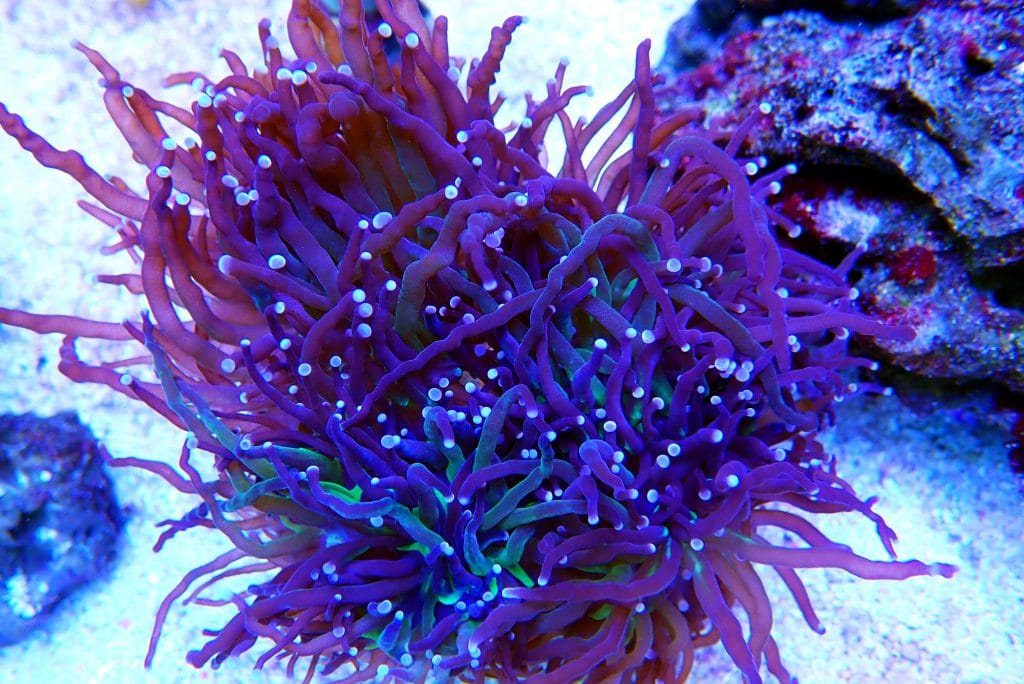
AquariumStoreDepot

Tag: LPS Coral

  • Acan Coral Care – How To Care For Your New Coral

    Acan Coral Care – How To Care For Your New Coral

    Acan corals are some of my favorite LPS to collect — the color variety is extraordinary and they respond visibly to feeding in a way that’s really satisfying to watch. I’ve kept them in my reef for years, and once you get their placement and lighting dialed in, they’re not particularly difficult. The main thing people get wrong is not feeding them directly, which is where most of their growth comes from.

    If you just got a new Acan coral for your reef tank and are wondering how to care for it, read on! Acan corals are one of the most popular types of coral in the hobby. They come in many colors and shapes, so if you’re looking to fill up some space with color, this is a great option. Let’s go deeper with the essentials on Acan Coral Care so you can have a thriving colony yourself!

    A Quick Overview

    Scientific NameAcanthastrea spp.
    Common NamesAcans and micros, largely named after their designer names
    FamilyLobophylliidae
    OriginWidely found throughout the Indo-Pacific (Fiji, Australia, Tonga, Solomon Islands) 1
    Common ColorsPurples, blues, greens, oranges, yellows, reds
    Care LevelEasy
    TemperamentAggressive
    LightingLow-Moderate (50-150 PAR)
    Tank PlacementBottom, Middle
    Flow RateLow-Moderate
    Temperature Range76-82 degrees F
    pH Range8.0 – 8.4
    Salinity1.025 or 35 PPT
    Alkalinity8 – 12 dKH
    Calcium Level350 – 450 PPM
    Magnesium Level1250 – 1350 PPM
    PropagationCutting/Fragging

    Origins And Habitat

    Acan corals originate from the tropical waters around Fiji, Australia, Tonga, and the Solomon Islands. They form large colonies often found on the seabed or near the bottom of the rockwork of shallow reefs (30-50m).

    Most acans available within the hobby today come from Australia. However, these corals are popular to aquaculture because many wild acans arrive with bacterial infections; aquaculture also gives better control over color expression and subsequent designer names as well as growth rates.

    Taxonomy And Naming

    Acan corals are abbreviated after their taxonomic genus, Acanthastrea. There are several large polyp stony coral (LPS) species within Acanthastrea, though only Acanthastrea echinata and Acanthastrea bowerbanki are widely kept in the saltwater aquarium hobby. 

    Micromussa lordhowensis (named after their discovery near Lord Howe Island) used to be classified under Acanthastrea, but was recently moved to the Micromussa genus. Now, these corals may still be referred to as their popular name, acan ‘lord’, or simply called micros. It’s an LPS coral with lots of hobby names!

    What Do They Look Like?

    How Does An Acan Coral Look Like

    An Acan coral is easy to identify, though their flattened, suction-cup appearance can sometimes resemble Blastomussa spp., species of brain coral (Mussidae and Merulinidae families), or even chalice corals (Echinophyllia spp.). Their fleshy polyps as a lot of interest contrast other corals in the display tank.

    In general, acan corals form tight colonies with puffy outer rims and deeper, flatter centers. The outside is usually a different color from the inside and might display a gradient of color. In healthy and/or hungry acan coral colony, clear tentacles will be visible along the inner rim of the mouth. A single acan coral polyp typically stays under an inch in diameter when fully grown, but larger species may be closer to two inches.

    The different species of acan corals can be difficult to tell apart from each other, though their requirements in reef aquariums are all relatively similar. Here are some ways to tell the most common three species apart:

    • Acanthastrea echinata is most commonly found in variations of red, orange, and green, but may be found in other colors as well. These corals are in between M. lordhowensis and A. bowerbanki in regards to the size. They have a smooth appearance and are flatter than these other species as well.
    • Acanthastrea bowerbanki is the largest species of acan coral out of these three. They are flattened and have a bumpy texture. In colonies, they take on irregular shapes.
    • Species of Micromussa lordhowensis are referred to micros due to their small size in comparison to the two other species. These are some of the most colorful acan coral and can come in many different colors and patterns.

    As mentioned before, the acan coral is largely marketed based on appearance. Some of the most desirable acan corals show the best colors, like ‘rainbow’ and ‘ultra’ variations.

    Acan Coral Care

    These corals are not demanding and can thrive in places of the saltwater aquarium where other species might lack light. However, their colors, size, and growth rate largely depend on the type of light they’re being kept under as well as how often they’re being fed.

    An Acan coral are a low to moderate light coral, which means that they will do best on or near the sandbed. They need moderate water flow to keep food moving past their clear center tentacles and to keep debris from building up in between the colony. If given ideal conditions with room to grow, they will quickly take over an isolated rock island.

    However, can acan coral can be very aggressive even though they lack the long sweeper tentacles of other LPS corals. Some hobbyists choose to keep them on the main rockwork of the display, but this can quickly become a problem once the acans get close to other corals; allowing the acan coral to grow on the rockwork also creates a flatter shape whereas they will create a more circular colony on an island.

    Different species of acan coral should not be placed together. Unlike other corals that are compatible within the same genus, members of Acanthastrea are incompatible with each other and will start to attack the other if placed too closely together.

    Do They Like High Light?

    Acans can actually be kept at most levels of the reef tank. However, they vary in size and color under different lighting conditions. An acan coral kept under LED lighting will look much different from one kept under T5HO lighting. This can be tricky purchasing an acan coral in-store or online as they will likely change color once introduced into a home system.

    In general, an acan coral does best under low to moderate lighting. This gives some freedom for placement, filling in shaded areas of the reef tank and bringing color to the sandbed.

    Are They Difficult To Keep?

    Overall, the acan coral is considered one of the easiest lps corals to care for and beginner-friendly. Unfortunately, they are not favored by most beginners though.

    Acans do not bring exciting movement to the reef tank like other LPS coral like Euphyllia that wave in the water current. On top of this, they do not grow fast and hobbyists might be left wanting more.Many of the cheaper varieties are much less colorful than the more desirable ones, so there is no real incentive to waste space on one of these seemingly boring corals.

    However, acans are very hardy and can adapt to most tank conditions. Their low lighting requirements make them a perfect addition for hard-to-fill shaded areas in the aquarium. Once the tank has become established enough, it’s more than worth it to go for the pricier varieties to bring a pop of color to dark areas of the reef tank.

    Maintenance

    Acan Coral

    An Acan coral does best in stable conditions with good water quality, unmoved and unbothered. Because these corals are naturally slow-growers, it’s extremely important to keep conditions favorable to prevent delaying the growing process any further.

    As a species of LPS coral, the acan coral needs nutrients to build its calcium carbonate skeleton. This includes some nitrates, magnesium, calcium, and trace elements; most importantly, the tank cannot be overly clean, or else your corals will not thrive. Alkalinity also needs to be stable in order for the rest of the system to be stable.

    Acan corals do not need any special care and can successfully be kept with sump filtration, a canister filter, or a simple hang on the back filter. A protein skimmer is not necessary and not recommended for low-nutrient systems.

    If keeping large colonies of acan coral or keeping SPS coral, it is recommended to dose those nutrients needed. However, acans are eager eaters and can get most of their nutrition through regular feedings.

    Feeding

    Though acan corals might not be the most exciting to watch in the reef aquarium, they’re one of the favorites to feed. These corals will accept most foods most of the time. You can tell they are hungry as they release their small, inner clear tentacles; some hobbyists have trained their acan coral colony to show these tentacles at feeding times.

    Otherwise, a healthy acan coral should have its feeding tentacles out a majority of the time. If you don’t see yours during the day, check back when the tank lights are shutting off and shortly after. If you still don’t see tentacles, make sure the coral looks healthy otherwise.

    Most hobbyists consider feeding acan corals a must for success. Yes, they can sustain themselves with the nutrients available in the water column, but additional feedings really make them thrive. You check out this video by The Reefer for a nice overview on feeding an acan coral.

    What Do They Eat?

    These corals can be fed a variety of foods and are very willing to try new things. Unlike other LPS coral, acans are relatively quick to eat. Simply place the food in the center of the polyp and the coral will start to eat almost immediately.

    This makes feeding easier as you’re not dealing with hungry fish or invertebrates that are trying to steal the food away. Good acan coral food options are fresh or frozen krill, brine shrimp, Mysis shrimp, and bloodworms as well as larger pieces of seafood, like fish, shrimp, and mollusks. Acan corals can also be fed coral powders and pellets, like Reef-Roids.

    Some hobbyists like to feed their acans every day, though this can start to cause nutrient buildup from the leftovers. Instead, target feed your acan corals 2-3 times a week. This may be done at night as this is when their tentacles are most present. They really live foods like Reef Roids. Make sure to feed each head.

    What Are Good Tankmates?

    These corals can be kept with most species of fish and invertebrates. With any reef aquarium system, you want to avoid species that are not reef-safe, like puffers, angels, and triggers. Keep in mind that most crabs are also not reef-safe.

    Some better reef safe fish would be:

    While gobies and blennies are reef-safe, they may choose to use your acan coral as a perch which will cause the coral to retract. Though this doesn’t directly injure the coral, it can interfere with photosynthesis and nutrient intake. It is also very unlikely that the coral will grow or reproduce if it is constantly stressed by a fish or invertebrate walking over it.

    Fragging

    Not only do acan corals grow slower than most other LPS coral species, but they can also be more difficult to frag. This is because the skeleton of the colony is connected throughout and can only be separated by an electric saw or a very careful bone cutter.

    If using an electric saw, simply cut the coral around the contour of the polyp. Make sure to never cut through the polyp as this will most likely kill it. Attach the frag to a piece of rock or frag plug and make sure to dip it in iodine or another coral solution; acan corals are very susceptible to bacterial infections and a dip will help keep the coral healthy and speed up recovery.

    If using a bone cutter, the process is the same. However, you need to be much more careful with where you cut and to make sure you don’t accidentally split the skeleton elsewhere in the colony as this could damage the whole colony. Given how precise you need to be when fragging Acan, I prefer a bandsaw like a Gryphon.

    My Pick For Pro Fragging
    Gryphon Bandsaw

    Best For Pro Fraggers

    The Gryphon Bandsaw is a high quality commercial fragging tool. Made in the USA and equipped with a diamond band saw. This is used to cut the highest quality, cleanest cuts possible for coral fraggers!

    Click For Best Price Buy On Amazon

    How Fast Do Acan Corals Grow?

    It is generally agreed that acan corals grow very slowly, but once they get going, they will quickly fill up space. Be prepared to wait close to a year to see any signs of growth from your acan coral. From there, they can develop several new heads at a time within a couple of weeks.

    Why Is It Dying?

    There are a few reasons why your acan coral might be dying. Some of the most common explanations are nutrients, light, other corals, or fish/invertebrates.

    1. Acan corals need nutrients to survive. For the last decade, hobbyists were convinced that all water parameters needed to be 0 ppm. This starved the corals and left hobbyists wondering what they were doing wrong. Acan corals need these nutrients from the water column to grow. This can then be supplemented with additional feedings. If your coral is lacking in color or not fully extending, test for nutrients.
    2. Remember, these corals prefer low light conditions. More light is not always better, though this might be true for more advanced LPS corals and SPS species. With acan corals, less light is better for growth and color. If you think your acan coral is too high in the tank and changes color or is retracted, then it probably is. Try slowly moving it to a more shaded area of the reef aquarium. They don’t like being in too much light!
    3. Acan corals are pretty aggressive corals. They have been known to engage in coral warfare more even aggressive LPS coral and SPS corals and win. However, they lack sweeper tentacles so their defenses are limited. If they are being stung by a coral with longer tentacles, they may be taking damage. Take a look into your tank at night and look for any corals that have their tentacles extended. Move the acan coral if necessary.
    4. Finally, your acan coral might be dying because it doesn’t get the chance to fully extend without being walked over or picked at by a fish or invertebrate. Observe your tank a few times throughout the day and take a headcount of where everything is. Watch how snails, hermit crabs, urchins, blennies, and gobies move throughout the day.

    Acan corals are pretty hardy and are not ones to die overnight without any explanation. Most likely, one of the reasons listed above is why your coral is not thriving.

    Make changes, but remember to do them slowly. Too many changes all at once can also damage your acan coral and unbalance your entire system.

    Closing Thoughts

    Acan corals aren’t the most popular coral, but they’re one of the easiest to care for and funniest to feed. Unfortauntely, they have been designated designer names which can make the more desirable varieties unattainable for some hobbyists. Luckily, the three species, Acanthastrea echinata, Acanthastrea bowerbanki, and Micromussa lordhowensis, give plenty of options. Even the simplest-colored acan coral can bring additional color and life to an otherwise dark and empty space of your tank!

    We hope you’ve enjoyed this blog post about Acan coral care. If it’s been inspiring and informative for you, we’d love to hear from you in the comments! What do your favorite coral varieties have that others don’t? Do they require different care or feeding than other species? Let us know below!


    📘 Want to learn more? This article is part of our complete Saltwater Fish & Reef Guide — your ultimate resource for marine fish, coral care, reef setup, and more.

  • How to Care for Your New Hammer Coral

    How to Care for Your New Hammer Coral

    Hammer coral is one of my favorite LPS corals to keep in a reef tank — that flowing, tentacle motion in the current is genuinely mesmerizing. I’ve kept both branching and wall hammer varieties in my 125-gallon reef, and they’re moderately demanding but very rewarding once you find their sweet spot for flow and lighting. They’re also one of the corals I get asked about most at reef events, which tells you how popular they are.

    https://www.youtube.com/watch?v=8tLhi6lMLw8

    Welcome to the blog for reef tank owners! This week’s topic is on how to care for your new hammer coral. The Hammer Coral is one of the most popular corals for reef tanks for their unique shape and coloration. Caring for your new Hammer Coral is easy, as long as you know what to do! In this blog post, we’ll discuss how you can care for your new hammer coral so that you can enjoy its beauty! Let’s get started!

    A Quick Overview On The Hammer Coral

    Scientific NameEuphyllia ancora
    Common NamesHammer coral, less commonly known as the anchor coral
    FamilyEuphylliidae
    OriginIndo-Pacific (mainly in western regions) as well as the Red Sea
    Common ColorsGreens, purples/pinks, browns, oranges/yellows, blues
    Care LevelModerate
    TemperamentSemi-aggressive
    LightingModerate (50-150 PAR)
    Tank PlacementBottom, Middle
    Flow RateModerate
    Temperature Range76-82 degrees F
    pH Range8.0 – 8.4
    Salinity1.025 or 35 PPT
    Alkalinity8 – 12 dKH
    Calcium Level350 – 450 PPM
    Magnesium Level1250 – 1350 PPM
    PropagationCutting/Fragging

    Origins And Habitat

    The hammer coral can be found in large colonies throughout western regions of the Indo-Pacific; some occurrences have also been documented in the Red Sea, but these populations are secondary1.

    These corals prefer shallower waters with moderate flow on the reef. Hammer corals have been observed in turbid waters, but will not do well if placed in areas of excessively high water flow.

    Interestingly, they can be found among other species of Euphyllia, like frogspawns (Euphyllia divisa/Euphyllia paradivisa), as well as with their own even though they contain nematocysts that are capable of stinging other neighboring corals.

    However, more aggressive Euphyllia, like torches (Euphyllia glabrescens) can still cause damage to the hammer coral and will not coexist in close proximity.

    What Does The Hammer Coral Look Like?

    What Does A Hammer Coral Look Like

    Hammer corals are large polyp stony coral (LPS) which means that they form fleshy polyps on top of calcium carbonate skeleton. These corals are one of the most popular corals in the reef aquarium hobby due to their movement in the water current and variety of colors.

    Hammers can come in many colors, including greens, purples/pinks, browns, oranges/yellows, and blues. They typically have darker tentacles and lighter tips, though they can sometimes appear uniform in color.

    These corals are pretty easy to identify by looking at their tips, but not all hammers look the same. Here is a list of possible tip-shapes that you can find among hammer corals:

    • “T” shape. Hammer corals earn their most common name from the flattened tip that resembles the construction tool of the same name.
    • Anchor shape. This shape earns them their second common name and is similar to the “T” shape. However, the edges of the flattened area pull back towards the tentacles, creating an upward curve.
    • Rounded shape. A hammer coral with rounded tips can easily be mistaken for a torch coral. Though difficult to tell apart, hammers with rounded edges usually have shorter and wider tentacles than most torches.

    Hammer corals can also come in branching or wall varieties, both exhibiting all tip-shapes; branching hammers will have independent polyps separated by coral skeleton while a wall hammer coral will have one solid wall of coral skeleton with connected polyps.

    Placement And Temperament In The Aquarium

    Hammer corals are moderately aggressive and should be given plenty of space in the aquarium.

    Though they’re not as aggressive as torches, a hammer coral will extend their sweeper tentacles to keep other corals away. This sting is not completely damaging and most other LPS corals and soft corals can tolerate it, but placement should be planned to avoid eventual interaction.

    The only exception to this stinging is with other species of Euphyllia. Though hammer corals will try to sting other corals regardless of species, most hammers and frogspawn coral are able to peacefully live next to one another.

    If you notice that one species starts to retract more or lose its color, it’s possible that the larger colony is fighting for space and resources.

    How Much Light Do They Need?

    The hammer coral can be placed in most areas of the aquarium. They do best in medium water flow and medium light so that they can fully extend their tentacles. Hobbyists agree that keeping them at higher PARS in excess of 150 does not provide any benefit and can actually cause the coral to bleach.

    Hammer corals can tolerate being placed on the substrate, but care should be taken to avoid rubbing and irritation from rocks or stuck granules. Due to their lower light requirements, most reef led systems should be suitable for Hammers.

    Are They Easy To Keep?

    Yes they are. The Hammer coral is one of the best introductory LPS species for beginner hobbyists looking to move past soft corals. They don’t require intense lighting or water flow and don’t need additional feedings. However, these corals do need stable tank parameters so a mature tank is preferred.

    Water Quality

    But what parameters will allow your coral to thrive? As always, you should strive for stability rather than ideal numbers. There are some ranges where these corals will do their best though (video source).

    A Hammer coral should have access to available nutrients and will actually do better in ‘dirtier’ water. They do not require any special filtration and can be kept in tanks with hang on the back filters, canister filters, and sumps. A protein skimmer can be useful for larger tanks, though your hammer coral will probably appreciate the excess nutrients.

    Because hammers like dirtier water, your water should have up to 40 PPM nitrate and up to 0.1 PPM phosphate. For best color and coral skeleton growth, other parameters should be kept at:

    • magnesium: 1200-1350 PPM
    • calcium: 350-450 PPM
    • alkalinity: 8-12 dKH

    Dosing is not usually recommended unless dealing with much larger colonies and/or a mixed reef with small-polyp stony corals (SPS). Fish waste, water changes, and other detritus are usually enough to keep your hammer coral happy!

    If you are working with a mixed reef, then calcium, alkalinity, and other trace elements will be the most important nutrients for maintaining a healthy reef. Dosed parameters should be tested right after dosing and right before the next dose to measure how nutrients are being used in the tank.

    Feeding

    Hammer corals are not big eaters and will usually rely on what’s already in the water column, like small microorganisms.

    Spot feeding hammer corals can actually irritate them as larger foods cannot be quickly or easily moved into the mouth and might be initially seen as a predator. Because it takes a while for the food to reach the mouth, it is also likely that fish and invertebrates will try to take the food before it can be eaten, leading to further annoyance.

    Are There Any Benefits To Feeding?

    Not really. These corals are experts at finding their own food naturally throughout the tank and attempting to feed them more may just create a nutrient imbalance in your tank.

    If you really want to feed your hammer coral, broadcast feed brine shrimp, zooplankton, and other coral foods only once a week. Algae Barn’s Ocean Magik is a great source for Phytoplankton.

    What Are Good Tankmates?

    Not only can a hammer coral be kept with other Euphyllia coral, but they can also be kept with many species of reef-safe fish and invertebrates. As long as your fish or invertebrate doesn’t have teeth, hairy pincers, or an appetite for coral, then it will most likely get along with a hammer coral.

    Here are some stocking ideas for a reef aquarium that has a hammer coral:

    • Damsel Fish – like clownfish, azure, and springeri damsel fish
    • Tangs – like yellow, powder blue, and hippo tangs
    • Anthias – like lyretail, dispar, and Bartlett’s anthias
    • Gobies – like yellow watchman, diamond watchman, and Hector’s gobies
    • Blennies – like bicolor, algae, and tail spot blennies
    • Cardinals – like Banggai and pajama cardinals
    • Select wrasses – like possum, Carpenter’s flasher, and fairy wrasses

    It should be noted that clownfish may mistake a hammer coral for an anemone, which can cause the coral to retract.

    Non-reef-safe species in general would be:

    • Angelfish
    • Triggerfish
    • Groupers
    • Puffers
    • Parrotfish
    • Butterflyfish

    Any invertebrates that are known to snack on fleshier corals should also be avoided, like large hermit crabs and male emerald crabs.

    How To Propagate

    If you’ve ever propagated a frogspawn or torch coral, then fragging a hammer is straightforward and easy. If you’ve never done either, then no worries, it’s not too hard.

    First, you will need tools. An electric saw is most preferred as it provides a clean cut, though bone cutters can work as well. Next, you will want to identify if you have a wall or a branching variety of hammer coral.

    Branching hammer corals are easier to frag as you just need to separate one branch from the rest of the colony. You can do this by cutting below the flesh and above where the branch begins. This should give enough room to comfortably attach the frag to a plug.

    Wall hammers are much more difficult to frag and should only be done with an electric saw for a clean cut. There is no straight method for cutting wall hammers, but it’s ideal to cause as least stress as possible; cut in a section that is relatively straight and where the flesh is thinnest.

    All frags should be dipped in iodine or another solution to ensure healthy healing. Keep frag plugs at the bottom of the tank until ready to be moved up to their permanent placements or sold/given away to another hobbyist.

    Should You Dip This?

    Yes! You should always take the time to dip new corals in a pesticide dip. While this doesn’t guarantee 100% coverage against pests from entering your system, it kills a good amount of problematic species.

    For the best results, quarantine the coral in a separate tank for several weeks. This should be plenty of time for pests to rear their ugly heads.

    At the very least, it’s strongly recommended to remove the frag plug from the new coral before placing it in your tank. If you would like a base, then you may attach the frag to a new plug and use that in your tank instead.

    Possible Pests And Diseases

    What are you likely to find on a contaminated hammer coral? While some pests, like algae and various eggs, can be microscopic, there are a few major pests that you don’t want entering your system.

    This includes:

    Unfortunately, a dip won’t kill Aiptasia but should cover everything else.

    Handling

    Hammer corals are delicate and stress or injury can quickly lead to rapid tissue necrosis (RTN) which causes the coral to die within a matter of days.

    When handling a hammer coral, it’s important to avoid touching the polyp as the flesh is easily damaged. If you need to move the coral for whatever reason, hold it by the skeleton and use gloves as the sweeper tentacles can cause injury to human skin.

    How Much Do They Cost?

    Because hammer corals are so popular, they have become increasingly available over the past few years. A simple colored hammer coral frag can start at $35-40. Larger colonies with more interesting coloration can cost upwards of a couple of hundred dollars. Remember that hammer corals, especially the branching variety can grow very quickly so it might be worth the wait to let your coral grow on its own!

    Is Your’s Dying?

    While hammer corals are easy to care for, coral death can come quickly and once it starts, it’s very hard to stop.

    A dying hammer coral will be pale or brown, retracted, and sometimes spewing out brown stringy mucus; sometimes, this mucus is just waste that the coral is expelling but paired with the other symptoms, it’s usually the zooxanthellae being pushed out from the coral.

    If your coral is already expelling zooxanthellae, then it’s usually too late to reverse the damage. However, observe changes in the tank. Ask yourself these questions:

    1. Did you recently change the water flow or lighting?
    2. Did you introduce new fish or invertebrates?
    3. Did any of your water parameters swing within the last 24 hours?

    If you answered ‘yes’ to any of these questions, then this could be the cause of your coral’s decline. Luckily, most of these problems can be fixed if done slowly.

    Water Flow And Lighting

    If water flow and/or lighting are your problem, slowly return to your previous settings. You may have changed conditions too quickly and it would be best to reattempt at a slower pace. You can adjust your return pumps and your wavemakers as needed. This is why it’s best to work with pumps that can be adjusted on the fly when it comes to keeping a reef tank. There are many DC powered wavemakers these days with great controllers!

    New Livestock

    If you introduced new livestock, then this can be tricky as we all know how hard it can be to catch fish and invertebrates! Trying to remove them can also cause a good amount of stress, which isn’t ideal for a new addition.

    Instead, try covering the coral in a water-permeable container or moving it to quarantine either in or outside of the tank. This should give enough time to see if the new additions were the cause of the problem.

    Water Parameters

    If your water parameters changed over the last day, then this can be difficult to tell if you don’t have a record of your values. However, changes in conditions should also reflect on other corals and livestock. Are all your other corals fully extended with full color?

    If yes, then water parameters might not be your problem, or you might just have a sensitive hammer. Regardless, it is best to test all water parameters and perform a water change if you can’t find any other causes. Alkalinity, Nitrate, and Phosphate tends to be the main items to test with LPS coral tanks. Consider investing in quality reef tank test kits to monitor your levels.

    Closing Thoughts

    Hammer corals are a longtime favorite in the aquarium hobby. These corals sway and interact with the coral, bringing life to large portions of the aquarium. These corals don’t need any specific care and can adjust to a variety of water parameters, water flow rates, and lighting, but stability is key. Hammer corals also don’t need to be fed but will appreciate available nutrients in the water column.

    We hope you found this blog post informative and helpful in caring for your new Hammer Coral! If you have any questions or comments, please leave them below. Thank you for visiting!


    📘 Want to learn more? This article is part of our complete Saltwater Fish & Reef Guide — your ultimate resource for marine fish, coral care, reef setup, and more.
  • How To Care For Your New Duncan Coral

    How To Care For Your New Duncan Coral

    Duncan corals are one of the LPS corals I recommend most to reefers making the jump from softies. I’ve kept them in my reef and they’re genuinely easy to please — moderate light, moderate flow, and they respond enthusiastically to target feeding. Watch a duncan coral open up and extend its tentacles at feeding time and you’ll understand why they’re so popular with hobbyists at every level.

    Fellow reefers, we have all been there. We are so excited to buy a new coral and the excitement is quickly followed by fear that we won’t know how to care for it properly. Fortunately a Duncan Coral is one of the easier LPS corals to keep in the hobby. However, they are a coral and require proper care. And being an LPS corals there are other parameters that come into play when it comes to growing a healthy colony of Duncans.

    We’re going to go over the basics of how to care for your Duncan Coral. When you are done reading this post, you should have all that you need in order to keep your coral happy and healthy in its new home. Let’s get started!

    Species Overview

    Scientific NameDuncanopsammia axifuga
    Common NamesDuncans (abbreviated from their genus name), rarely referred to as the whisker coral or daisy coral
    FamilyDendrophylliidae
    OriginAustralia
    Common ColorsPurples, blues, greens
    Care LevelEasy
    TemperamentNot aggressive
    LightingLow-High (<50-200 PAR)
    Tank PlacementBottom, Middle, Top
    Flow RateModerate-High
    Temperature Range76-82 degrees F
    pH Range8.0 – 8.4
    Salinity1.025 or 35 PPT
    Alkalinity8 – 12 dKH
    Calcium Level350 – 450 PPM
    Magnesium Level1250 – 1350 PPM
    PropagationCutting/Fragging

    Origins And Habitat

    The Duncan coral is the only species within the Duncanopsammia genus and originates from the waters surrounding Australia. More specifically, these corals can be found off the western and northern coasts of Australia and as far away as the South China Sea.

    There, these corals thrive in many conditions but prefer sandy areas. Once established in large colonies, it can be difficult to see any of their branching skeleton. Duncan corals are a recent addition to the aquarium hobby and have only been available for about 15 years.

    What Do Duncan Corals Look Like?

    What Does A Duncan Coral Look Like

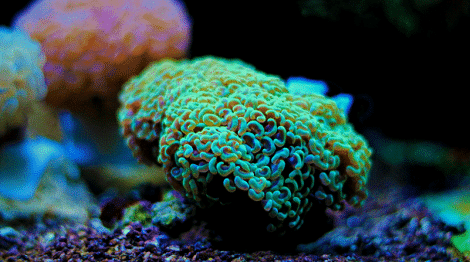
    Though duncan corals might look fleshy from above, they are actually a type of large polyp stony coral (LPS). This means that each polyp is supported and sheltered by a hard calcium carbonate skeleton.

    Duncan corals are an easy coral species to identify if you know what you’re looking for. Usually seen in tight colonies, these corals have wide polyp heads surrounded by tentacles with a mouth in the center. Some Duncans may have longer tentacles than others, but they’re relatively short. The center of the polyp usually stays under a few inches wide across.

    These polyps are typically a mixture of purples, blues, and greens, though these colors might change and intensify under certain lighting. Almost all Duncans have a blueish-green center with light pink or purple tentacles. These tentacles are harmless to fish and other corals, though Duncans should be given their own space within the aquarium.

    It is believed that this Duncan skeleton is much stronger than other LPS. The Duncan coral is a branching species, which means that each polyp head will extend from its own individual section of skeleton.

    Though there is only one known species of this coral, the degree of branching can vary greatly between specimens. Some Duncans have tight and compact branching whereas others have very long tree-like branches where each polyp is very far from the next.

    In general, the Duncan coral appearance is likened to elegance corals (Catalaphyllia jardinei) and Euphyllia spp., like hammers and frogspawns. However, Duncans are considered to be even easier to keep than those and are accepted as one of the best beginner corals in the hobby.

    Are They Easy To Keep?

    Duncan corals are considered to be one of the easiest LPS corals to care for and are great for beginners. As we’ll discuss, these corals can adapt to a variety of water conditions and tank setups.

    That being said, Duncan corals are not the most popular coral to have in your tank. This is because they can be slow growing, uninteresting to look at when compared to other corals, and take up a lot of space in the aquarium.

    If you don’t want to spend a fortune on coral if you’re just starting out, then Duncan corals are a good choice! Give them some time in your tank and you might even grow a larger colony that can be traded for more desirable species.

    Placement And Temperament In The Aquarium

    Duncan corals are extremely adaptable and can live in most conditions if acclimated properly. Hobbyists have kept Duncans at the bottoms of their reef aquariums in the shadows, or right next to Acropora small polyp stony coral (SPS) at the highest PAR values.

    Though these corals can be placed anywhere from low to high reef lighting, their color doesn’t change with intensity. Instead, Duncan color is highly influenced by the spectrum of the light being used; they might show more neon variations under actinic lighting than a light focused in the other spectrums.

    Duncan corals do need good flow and should be placed in a medium to high current. This is because they are very susceptible to being taken over by algae due to stagnant areas in the colony; they are also voracious eaters and will want to catch any available food in the water column.

    If flow allows, these corals can be placed on the substrate or on the rockwork. Placement doesn’t need to be cautious of other corals as Duncans are completely harmless and cannot sting. That being said, they can easily be attacked by more aggressive corals which will cause them to close and eventually die.

    Duncan corals can also quickly shade out other species below, so make sure you allow your Duncan enough room to grow to full size.

    Care And Maintenance

    Duncan Coral Care

    Duncan corals are very low maintenance and are able to sustain themselves with good lighting, flow, and available nutrients. They can tolerate relatively large swings in water parameters but do best in optimal water conditions.

    Water Parameters

    Like most other corals, Duncans need stable water parameters. Most importantly, they need some nitrate to be available in the aquarium in order to grow and maintain their color.

    Too clean of an aquarium will not allow your Duncan corals to thrive, and will usually be reflected in other coral development as well. Because these corals are LPS, they need ample levels of calcium and stable alkalinity in order to form their skeletons.

    If keeping larger colonies of Duncan or if placed in a mixed reef aquarium with SPS, then it may be necessary to dose those depleted nutrients. Otherwise, regular feedings and water changes will be enough to keep nutrients available.

    Duncan corals do not require any special filtration and can be kept with a hang on the back filter, canister filter, or sump filtration. A protein skimmer is not necessary, especially if the system does not have many nutrients available.

    Feeding

    One of the best features of Duncan corals is their willingness to eat almost anything you give them. Unlike many other LPS, Duncans are actually very willing to use the mouth at the top of their polyp head to ingest both small and large pieces of food.

    Duncan corals can be fed an assortment of foods, including mysis shrimp, krill, pieces of seafood, as well as coral-specific powder formulas and pellets. These corals are voracious feeders and will accept these foods when offered. However, in order to keep nutrients down, it’s only recommended to target feed about one to two times per week.

    Duncan corals will readily accept food that is placed near their mouths, though this can take some time to move the food and digest it. In that time, fish and invertebrates may steal the food and annoy the coral in the process.

    The best way to stop this from happening is to broadcast feed at the same time to stop them from stealing the food. A great coral food to use to feed Duncans would be Reef Roids.

    What Are Good Tankmates?

    Duncan corals are not able to defend themselves like most other corals. The only thing they can do is retract if something starts to walk over them or attack them.

    This is especially important to keep in mind when choosing other corals to place around your Duncan. Aggressive corals with long sweeper tentacles, like favia corals (Favia spp.) and torch corals (Euphyllia glabrescens), should be avoided or placed far away from your Duncan colony.

    Otherwise, duncan corals can be kept with a variety of reef-safe fish and invertebrates. Some options include:

    Gobies and blennies are also on this list but have been known to excessively swim and walk over Duncan corals that might be placed on the substrate. Invertebrates, like species of cleaner shrimp, should also be avoided for this same reason as they can cause your corals to be closed more than you would like.

    Other invertebrates with pincers and an appetite for fleshy corals should never be placed in a reef tank either. This includes emerald crabs (Mithraculus sculptus) and banded coral shrimp (Stenopus hispidus).

    Problems

    For as easy as Duncans can be for some hobbyists, they can sometimes be as temperamental as zoas! For the most part, though, solving Duncan coral problems is straightforward and usually a matter of adjusting lighting, flow, or pests.

    Why Is They Not Opening Up?

    The most common problem to have with Duncan corals is the failure for them to open or extend completely. Don’t panic though! Duncan corals are very easy to save if things go wrong and it’s just a matter of looking at what could be causing the problem.

    Lighting and flow

    If you have a relatively new Duncan coral or just recently rearranged your saltwater tank, your Duncan might not be happy with its new placement.

    Duncan corals can tolerate most light intensities, even when next to SPS, but this does not mean that they can go from very low light to bright light without any acclimation. If you find that your Duncan coral is not extending, try moving it away from the light. Slowly work back up towards that level in the tank instead.

    The same solution goes for water flow. Duncans do best in moderate to high flow. Not enough flow can cause algae to grow and irritate the coral while overly high flow can start to cause tissue damage. You want to find a happy medium between these two extremes; a good placement would bring soft movement to all tentacles of the colony. Work with adjustable wavemakers or gyre (like the IceCap Gyre) to make things easier to adjust in your aquarium.

    Best Value
    IceCap Gyre

    Best Value

    Breakthrough technology at a reasonable price. The IceCap Gyre is a great deal!

    Click For Best Price Buy On Amazon

    New growth

    Believe it or not, a closed Duncan can actually be a good sign!

    Sometimes these corals will close up for a few days while they develop new heads. These heads will be near the base of the polyp and lighter in color. If you notice these and hadn’t seen them before, then your coral is happy and growing!

    If you don’t see any new heads, check out other reasons as to why your coral might be closed.

    Acclimation

    Though Duncans can quickly adapt to new conditions, they still need to be acclimated like all other corals, invertebrates, and fish.

    Most hobbyists don’t feel the need to drip acclimate their corals, but a temperature match is definitely recommended. A coral dip or quarantine period is also strongly recommended before adding the piece to your tank to avoid disease and pest introduction.

    Before placing your coral in its final spot in the tank, it is best to leave it on the substrate or on a frag rack for a couple of weeks so that it can adjust to your tank’s parameters. Then, slowly move the frag to the desired placement.

    Pests

    Lastly, pests can be the cause of your angry Duncan coral. If something like Aiptasia or hydroids start growing on the skeleton of your Duncan, it can easily irritate the polyp, causing it to start retracted.

    Pests can be hard to see and you might need to take a magnifying glass to the side of the tank, but your coral should make a full recovery once the pest has been removed.

    Solutions

    Most Duncan coral problems are straightforward, though it’s always scary to have to handle your corals.

    If you can’t find any reason as to why your Duncan corals might be closed, try enticing them to open. This can be done with target feeding to encourage your coral to eat. Try not to do this too much, though, as you can irritate the coral and build up nutrients within the tank.

    How To Frag

    Duncans are one of the easiest and most forgiving species of coral to propagate. As a branching species of large polyp stony coral, simply use a bone cutter or electric saw to cut the skeleton below the flesh.

    Fragging is the best way to control Duncan growth or to spread the coral around the tank. Fragging can also be helpful if one section of the colony is damaged or has been infected by pests.

    Here is how to easily frag your Duncan colony:

    1. First, remove the coral from the tank. Try to keep the coral submerged in water as much as possible.
    2. Carefully cut the coral with the bone cutter or electric saw between where the flesh starts and the branching begins.
    3. Attach this frag to a frag plug with superglue (cyanoacrylate).
    4. Dip your coral. Dipping your Duncan in a coral solution or iodine is highly recommended to promote fast healing, but this is not entirely necessary.
    5. Put the frag back into the tank, preferably on a frag rack or in the substrate; make sure that the coral is secure and won’t fall over.
    6. Gradually more the coral up to its final spot in the tank or rehome it to another hobbyist.

    If you are looking for a more visual example, our Aussie friends at Gallery Aquatic TV give a great example below on how to frag these Aussie originals.

    Closing Thoughts

    While Duncan corals might not be the most popular LPS coral to have in the reef aquarium, these beginner corals bring movement to the display. They can be placed in almost all lighting intensities with acclimation, which can fill up empty spots in the aquarium. Duncan corals do require moderate to high water flow and will close for extended periods of time if conditions are unideal. However, they are very easy to frag and one of the most forgiving species to propagate.

    We want all Duncan owners out there to know how much we appreciate them for taking the time to read this article. Leave us a comment below if you’ve got any questions about caring for your own Duncans!


    📘 Want to learn more? This article is part of our complete Saltwater Fish & Reef Guide — your ultimate resource for marine fish, coral care, reef setup, and more.

  • How To Care For The Frogspawn Coral In Your Reef Tank

    How To Care For The Frogspawn Coral In Your Reef Tank

    Frogspawn coral is one of the most visually striking LPS corals I keep in my reef tank, and it’s been a staple in the hobby for good reason. When it’s healthy and fully extended, those tentacles with their forked tips look genuinely alien — in the best way. The main thing I tell people is to watch its placement carefully, because frogspawn will sting neighboring corals with its sweeper tentacles and needs adequate space around it.

    Do you have a Frogspawn Coral in your reef tank? If so, congratulations, you have one of the most beautiful and beginner friendly LPS corals available in the hobby. They are typically hardy corals, but it’s important to know how to care for them if you want your tank to thrive. This blog post will cover everything you need to know about caring for this type of coral including light requirements, water flow preferences, feeding habits, and more!

    Species Overview

    Scientific NameEuphyllia divisa (wall) and Euphyllia paradivisa (branching)
    Common NamesFrogspawn coral, less commonly known as the wall coral, octopus coral, grape coral, or honey coral
    FamilyEuphylliidae
    OriginIndo-Pacific, mainly around Australia and Southeast Asia
    Common ColorsGreens, Purples/Pinks, Browns, Oranges/Yellows
    Care LevelModerate
    TemperamentSemi-aggressive
    LightingModerate (50-150 PAR)
    Tank PlacementBottom, Middle
    Flow RateModerate
    Temperature Range76-82 degrees F
    pH Range8.0 – 8.4
    Salinity1.025 or 35 PPT
    Alkalinity8 – 12 dKH
    Calcium Level350 – 450 PPM
    Magnesium Level1250 – 1350 PPM
    PropagationCutting/Fragging

    Origins And Habitat

    Frogspawn coral can be found in large colonies around reef structures of Southeast Asia and Australia. There, they can be found in indirect sunlight at depths of about 130 feet.

    Interestingly, these corals seem to prefer more turbid waters with gentle currents and muddy substrates, which is a very different environment from the aragonite-sand and clear water we strive for in our home reef aquariums.

    As a species of Euphyllia, frogspawns have sweeper corals that are full of stinging nematocysts that can be used to catch planktonic organisms and attack nearby corals that might outcompete the colony for resources. Because of this, there is usually some space between frogspawn coral and the next coral species on the reef.

    Name

    There are believed to be at least two unique species of frogspawn coral present in the aquarium hobby, Euphyllia divisa (wall) and Euphyllia paradivisa (branching). However, the aquarium hobby has created many hybrids of Euphyllia that have made placing frogspawn into an exact taxonomic categorization difficult.

    The common name ‘frogspawn’ comes from their unique bubble-tipped appearance that resembles frog eggs.

    What Do They Look Like?

    Classic Frogspawn Coral

    The frogspawn coral is one of the most popular types of large-polyp stony coral (LPS) not only because of its easy care but also because of the flowing movement it can provide in a display.

    As mentioned before, frogspawn coral looks like a bunch of frog eggs; these corals have many tentacles with different-colored tips along them. These tentacles can range in color with greens, pinks, oranges, and browns, while the tips can contrast with darker or lighter greens, pinks, purples, yellows, and oranges.

    Of course, the brighter and more eye-catching the color, the more expensive the frogspawn coral will be.

    In general, most frogspawn corals you come across will be the branching variety. This means that each polyp will have its own calcium carbonate skeleton base. Branching frogspawns can grow very quickly by forming new heads at the base of the polyp which will then mature within several months in favorable conditions.

    This is in contrast to wall frogspawns, which are pretty rare to come across due to their slower growth rate and more difficult care. Instead of having defined polyps, wall frogspawns grow along a solid calcium carbonate skeleton, making the coral much more compact in appearance.

    Different Types

    Like other Euphyllia, frogspawn corals have been hybridized with each other and with other species. This has resulted in some spectacular colorations, but also some very unclear common names and designer brands.

    Here are some of the most common frogspawn colors you’re likely to come across:

    • Golden peach frogspawn coral. These corals are one of the more expensive types of frogspawn due to their pink coloration; their tentacles are dark purplish-pink while the tips are light pink with some yellow fluorescence under certain lights.
    • Purple tip frogspawn coral. Probably the most common coloration you’re likely to come across, the purple tip frogspawn is easy to confuse with a hammer coral due to same coloration. These corals have bright green tentacles with electric purple tips. While not the most desirable color combination, these corals can still bring movement to the tank and accent other Euphyllia.
    • Toxic green frogspawn coral. A common and less in demand type of frogspawn, the toxic green frogspawn glows neon under certain lights. These corals have dark green tentacles and light green tips that look like a highlighter pen.

    Both the purple tip and toxic green frogspawn coral are featured in the video above by Elite Reef Denver.

    Placement And Temperament In The Aquarium

    Frogspawn Placement

    Frogspawn coral is often used as a centerpiece coral in the reef aquarium. They can quickly fill up a rock island, gently swaying in the flow.

    While these corals can generally be placed anywhere throughout the reef tank, there are some things to keep in mind before gluing down that frag. The most important factors to consider are light and water flow.

    Frogspawns do not require a lot of light and are naturally found in indirect sunlight. While replicating indirect sunlight in the aquarium can be difficult, placing your frogspawn in the middle to lower water column with moderate lighting (50-150 PAR) will recreate those conditions.

    Hobbyists agree that there is no true benefit to keeping these corals in higher lighting and can risk the health of the coral instead. If your coral starts to bleach and lose its color, then it might be getting too much light.

    Similarly, frogspawns do best in moderate flow. The amount that their tentacles extend largely depends on the flow they are placed in; higher flows equal more retracted tentacles while lower flows result in more extended tentacles. Because of this, many hobbyists keep their corals in just enough flow to keep algae away and to keep the frogspawn fed. Flow can be provided either with return pumps or wavemakers.

    Unlike other Euphyllia, like torch corals, frogspawns do not do well when placed on the substrate. This is because their tentacles fall over the sides of their skeleton, which can easily start to rub against sharp surfaces and invite injury.

    Frogspawn coral should also not be placed next to other corals due to their sweeper tentacles. If placed too close to another coral, be prepared for some chemical warfare to break out in your tank. This is true for all coral species except for other frogspawns and hammer corals (Euphyllia ancora, Euphyllia parancora, etc.). Keep them away from other aggressive Euphyllia like bubble corals.

    Interestingly, frogspawns can be placed next to similar species (except torches) with little to no ill effect. They will continue to grow in and out of each other, which can make for a beautiful colony of many colors.

    Successful – Water Quality

    Frogspawn coral is very easy to keep and one of the best LPS coral species for beginner enthusiasts. As with any coral, stability is better than chasing numbers, though your water still should be testing within a given range.

    Water Parameters

    Euphyllia is not demanding in regards to nutrients, but will not do well with higher nitrates. At the same time, they also won’t do well if the tank is too clean and if there are limited nitrates and phosphates.

    Since the frogspawn coral tends to be the first LPS coral for many, it is our introduction to reef aquarium water parameters. Frogspawn corals should be kept in nitrates below 40 PPM with phosphates below 0.1 PPM. They do need 1200-1350PPM magnesium, 350-450 PPM calcium, and steady alkalinity at 8-12 dKH; these nutrients are fundamental for growing new skeleton and maintaining vibrancy.

    As with any coral, frogspawn coral does best in stable conditions. While hobbyists have successfully kept frogspawn at values above and below those listed, consistency is more important.

    Dosing

    Dosing is not necessary for frogspawns unless the tank is filled with many LPS corals and small-polyp stony corals (SPS) that quickly deplete reef elements; if you have large colonies of Euphyllia, you may also want to consider dosing alkalinity, calcium, and other trace elements for healthy skeleton growth. ESV B-Ionic is a great choice for first time dosers. It works really well with dosing pumps while being easy to use for manual doing.

    Best For Beginners
    E.S.V. B-Ionic

    Great For Beginners

    ESV B-Ionic is a great 2 part solution that works for all levels. Approachable for a beginner to use and can be used for all reef tank builds.

    Click For Best Price Buy On Amazon

    Testing Water Conditions

    Frogspawns are very forgiving when it comes to parameter swings, but that doesn’t mean that you can allow your tank to have daily changes in conditions. Because of this, LPS corals should only be added once the tank has fully established after several months.

    If dosing additional nutrients, water should be tested immediately after dosing and right before the next dose. This will allow you to trace how nutrients are being cycled throughout the tank.

    Filtration

    Frogspawn coral does not require any special filtration and can be kept in setups with a hang on the back filter, canister filter, or sump filtration. A protein skimmer is also not necessary and might even be harmful to systems with low nutrient input.

    Instead, focus on getting the placement of your coral correct. Nutrients should constantly be flowing in and out of your coral with moderate flow.

    What Are Good Tankmates?

    Frogspawn corals can be kept with a variety of fish and invertebrates. However, their soft fleshy polyps can be appetizing for some species, so it is important to have a truly reef-safe community. Some ideal tankmates would be:

    It should be noted that some clownfish may attempt to host a frogspawn coral as it would with an anemone. Though some corals may tolerate this symbiosis, others will retract and could even begin to die back.

    Some invertebrates, like hermit crabs, emerald crabs, and shrimp, may also pose a threat to frogspawn as they are not entirely reef-safe. Even though you might have an invertebrate that has never touched any of your other corals before, it is possible for them to develop an appetite for frogspawns overnight.

    Likewise, fish species that are known to pick at corals should also be avoided. This includes:

    • Angelfish
    • Triggerfish
    • Groupers
    • Puffers
    • Parrotfish
    • Butterflyfish

    What Do They Eat?

    While frogspawn might look hungry with all those tentacles reaching for food, they’re actually best kept without any additional target feeding.

    Trying to feed your frogspawn coral larger foods, like fish and shrimp, can actually do more harm than good. This is because the polyp will see this food as a threat, which can cause it to retract.

    If your coral does accept the food, then your fish and invertebrates will also most likely steal it before the frogspawn has the chance to move the food into its mouth; either that or your coral will spit it out entirely!

    If really wanting to feed your frogspawn coral, then it is best to broadcast feed brine shrimp, zooplankton, and coral foods, like Reef Roids.

    How Much And How Often To Feed

    If you do choose to feed your frogspawn coral, you should only feed once a week. This will not only help prevent nutrient buildup in your tank but there’s also no real benefit to overfeeding Euphyllia.

    More importantly, light, flow, and water quality will determine the growth rate of your frogspawn coral.

    Health And Disease

    The frogspawn coral is a hardy lps species but can die back very quickly once subjected to disease. The most important factor in keeping these corals is protecting their delicate tentacles.

    If their tentacles are scraped against rock or placed in high flow, they may succumb to stress or brown jelly infection or disease, which can kill the coral in a matter of days.

    To help prevent diseases from entering your reef aquarium when purchasing new corals, it’s recommended to do an iodine or coral bath and to quarantine the piece for a couple of weeks.

    Pests

    Of course, you will have to be mindful of bringing pests into the aquarium with any new corals you bring into the system as well. A coral dip and quarantine will help, but it’s still possible for these pests to slip by:

    How To Propagate

    Frogspawn coral is one of the fastest-growing species of Euphyllia, and you will probably have to frag your colony at some point. Don’t worry, this is easier than it sounds. First, you need to know if you have a branching or wall variety.

    If you have a branching variety, then your chances of success are very high. You will need a bone cutter or electric saw that can cleanly cut through the skeleton. Remove the coral from the tank and use the instrument to cut underneath the flesh of the frogspawn coral and before the branch. Dip the coral in iodine and place it in a low-stress environment until it recovers.

    Wall frogspawns are harder to frag and success is not guaranteed. This is because you will need to cut through a good majority of flesh with a saw; a saw will provide the cleanest cut, increasing chances of success.

    There is no clean way to do this, but once the wall has been divided, dip the coral in iodine and place it in a low-stress environment. Monitor recovery and move the coral to its final place in the tank once fully healed.

    Where To Buy

    Because frogspawn coral is fast-growing, it is usually more available than some other Euphyllia, like torches. They also ship very easily, which makes them good online buys. However, expect to pay at least $50 for one frag with more colorful variations fetching closer to $200 and over.

    Best LPS Coral
    Frogspawn

    Editor’s Choice

    A readily available, hardy, and beautiful LPS coral. Great for beginners and forgiving

    Shop WYSIWYG Click For Best Price

    FAQs

    Are They Hard To Keep?

    Frogspawn Corals are not hard to keep. They are one of the easiest LPS corals you can keep and also one of the easier corals to keep in the saltwater aquarium trade. They are tolerate of less ideal conditions and do not respond as quickly to swings in parameter. Nevertheless, the more stable your tank is the better!

    Where Should I Place Them?

    You should place your frogspawn coral in the middle of your tank. They prefer moderate flow. In reef tanks setup for LPS corals, they can be placed near the top of the water flow is lower and on the bottom and away from other corals in a mostly SPS coral configuration.

    Do They Grow Fast?

    Frogspawn corals do not grow fast. They are one of the slower growing corals in the aquarium trade. Because of this however, they will not demand a lot in terms of two part solution for dosing. You can increase the growth rate by better spectrum lighting, moderate flow

    Closing Thoughts

    Frogspawn corals are one of the best Euphyllia to have for beginner, intermediate, and advanced hobbyists as they are easy to care for, come in a variety of colors, and resemble an anemone without any of the aggression or over-splitting.

    These corals need moderate light and moderate flow, but will quickly start to grow new polyps once established. Feeding is not required and the coral can easily be cut as needed. I hope you’ve learned a lot about caring for your Frogspawn Coral in this blog post and that it has answered any questions or concerns you may have had. If not, please leave me a comment below with anything else on your mind!


    📘 Want to learn more? This article is part of our complete Saltwater Fish & Reef Guide — your ultimate resource for marine fish, coral care, reef setup, and more.

  • How to Care For A Torch Coral – Your Expert Guide

    How to Care For A Torch Coral – Your Expert Guide

    Torch coral is one of the most sought-after LPS corals in the reef hobby, and I understand the obsession — a healthy torch fully extended in good flow is a stunning sight. I’ve kept them in my 125-gallon reef and they can be a bit temperamental compared to hammers or frogspawn, especially given the torch coral disease (rapid tissue necrosis) that has affected many tanks in recent years. That said, healthy specimens from reputable sources kept in stable systems do beautifully.

    The Torch Coral is a brightly colored and beautiful type of coral that can be found in reef aquariums around the world. They are characterized by their long tentacles, which they use to feed on plankton from the water column. When cared for properly, Torch Corals will grow and thrive in your tank. In this blog post, I am going to show you how to care for a torch coral so that you can enjoy them for years!

    We’ll cover what types of lights are best for Torch Coral growth and maintenance as well as other factors that can make or break your Torch Coral experience. We’ll also go over feeding schedules and anything else you need to know about caring for a Torch Coral. I hope this article helps you better understand how to keep your Torch Coral happy and healthy so it can be admired by all!

    A Brief Overview Of The Torch Coral

    Scientific NameEuphyllia glabrescens
    Common NamesTorch coral, pom-pom coral, brain trumpet coral
    FamilyEuphylliidae
    OriginIndo-Pacific, Australia, Indonesia
    Common ColorsGreens, Purple/Pinks, Browns, Oranges/Yellows
    Care LevelModerate
    TemperamentSemi-Aggressive to Aggressive
    LightingModerate (50-150 PAR)
    Tank PlacementBottom, Middle
    Flow RateModerate
    Temperature Range76-82 degrees F
    pH Range8.0 – 8.4
    Salinity1.025 or 35 PPT
    Alkalinity8 – 12 dKH
    Calcium Level350 – 450 PPM
    Magnesium Level1250 – 1350 PPM
    PropagationCutting/Fragging

    Origins And Habitat

    Like many other corals available in the aquarium trade, the torch coral comes from the warm waters of the Indo-Pacific around Australia and Indonesia1.

    There, torch corals can be found among other large-polyp stony corals (LPS) and small-polyp stony corals (SPS). However, torch corals have long sweeper tentacles that are used for catching food and stinging nearby corals and sessile animals that might try to steal resources. Because of this, the area surrounding the torch coral is usually clear around all sides.

    Torch corals are very forgiving of water parameters but may struggle in conditions with higher nitrates. Interestingly, they have been found in waters with varying levels of turbidity which is much different from the sparkling, pristine waters of our home aquariums.

    These corals cannot withstand higher flow rates as their delicate flesh can be easily damaged.

    What Does The Torch Coral Look Like?

    How Does a Torch Coral Look Like

    The torch coral resembles a flickering flame when submerged under a decent flow. These corals have polyps with long tentacles that can be a mixture of greens, purples, pinks, browns, oranges, and yellows.

    Torch corals are stony lps corals that are part of the Euphylliidae family, which makes them close relatives to frogspawn corals (Euphyllia divisa) and hammer corals (Euphyllia ancora). While care and appearance are similar between these species, they can be told apart by some key features.

    Mainly, torch corals have long, skinny tentacles. The bottoms of the tentacles are usually noticeably darker than the round tips of the tentacles and are typically a different color altogether. A frogspawn coral has thicker, branching tentacles while a hammer coral has shorter, wider tentacles with flattened tips.

    Each torch coral polyp can measure up to 10 inches across with another 10 inches in tentacle. Transparent sweeper tentacles maybe even longer than normal tentacles as they extend their reach for optimal feeding and territory defense.

    As a type of large-polyp stony coral, torch corals have hard calcium carbonate skeletons. Unlike other euphillyas the Hammer Coral, torch skeletons are branching. Branching torches have defined coral polyps each with its own skeleton base whereas wall corals are a straight line of coral polyps with one connected skeleton.

    Different Types

    Many varieties of torch coral have been brought into the aquarium hobby with differences in color, tentacle length, and hardiness; in general, the more attractive the color, the more expensive the coral. Luckily, care doesn’t differ too much between the varieties.

    Types of Torch Corals

    Here are the more rare and expensive varieties of torch coral you’re likely to come across:

    • Indo gold torch (AKA Holy Grail Torch). The gold torch is named after its deep orangey-green tentacles and lighter green tips. This variety has longer, skinnier tentacles and is said to be more forgiving of unfavorable water conditions than the Aussie gold torch.
    • Aussie gold torch. The Aussie torch is similar to the Indo gold torch but has orangey-gold tentacles with bluish-purple tips. The easiest way to tell these two torches apart is by looking at the difference in tentacle length; Aussie gold torches have much shorter and stubbier tentacles.
    • Black torch. The black torch is named after its intense purple coloration with neon green tips and does not require special care.

    Placement And Temperament In The Aquarium

    Torch Coral Placed Mid Tank

    Torch coral placement varies in the aquarium. Some hobbyists prefer keeping them in lower lighting with the lower flow for the greatest tentacle extension. Other hobbyists like to keep their torches in moderate lighting with a higher flow to deter algae.

    There doesn’t seem to be any benefit to placing torch corals under higher PAR (150+ PAR), and they might actually start to bleach if exposed to unfavorable conditions for too long; some hobbyists like to keep them on the sandbed if lighting and flow allow in order to keep other corals from getting stung. Most reef leds will support a Torch coral. The main thing will be to adjust light intensity or placement to get them within the desired PAR level.

    Torch corals tend to do better under moderate flow, Higher rates of flow will cause your coral to not extend as far. Higher flow rates are beneficial for delivering food and keeping algae off the skeleton. As long as the water current isn’t directly hitting the polyp, then your torch coral should be able to withstand most flow rates.

    Torch corals are moderately aggressive corals and will defend their place in a reef aquarium. At night, these corals will extend their sweeper tentacles in order to feed and to keep other corals from getting too close. Because of this, they should be given enough room to expand and release their sweeper tentacles; this is especially true for other corals that are behind the torch as the sweeper tentacles move with the water flow.

    Water Quality

    Overall, torch corals are relatively easy to keep and are recommended for beginner to medium-skilled coral enthusiasts. That being said, they do tend to be more sensitive to fluctuations in water parameters and poorer water conditions than other coral species of Euphyllia.

    Water Parameters

    Even though torch corals have sweepers, they heavily rely on the water column to provide the nutrients they need to grow and develop new skeletons. Surprisingly, the problem that most hobbyists run into is having too clean of a tank.

    Torch corals need nitrate and phosphate; running 0 PPM phosphates and 0 PPM nitrates deprives the coral of important nutrients needed for development and sustaining their vibrant colors. At the same time, these corals don’t do well in high nutrients either.

    Ideally, nitrates should be kept under 40 PPM and phosphates below 0.1 PPM. Torch corals also require steady magnesium levels (1250-1350 PPM), calcium levels (350-450 PPM), and alkalinity levels (8-12 dKH) to continually grow.

    Of course, hobbyists have gone above and below these ideals with success. As long as conditions are stable and your corals look happy, then you have no need to worry.

    Filtration

    Torch corals do not require any special filtration. More importantly, placement and flow need to be correct.

    As long as your torch is getting enough light and a strong enough current to carry food and keep off algae, then hang on the backs, sumps, protein skimmers, and canisters work just as well.

    Maintaining parameters

    As mentioned before, stability is key. Even though torch corals are more influenced by water parameters than other Euphyllia, as long as your tank is testing within a given range and staying accurate, then your torch coral will stay fully extended.

    Dosing

    It is generally agreed that dosing is not required for torch corals and other Euphyllia corals; for the most part, these corals will get the nutrients they need from food, fish waste, and the salt mix being used.

    However, if keeping a larger colony of torches or a mixed reef with SPS, then some hobbyists might choose to dose for alkalinity, calcium, and other trace elements to help with skeleton growth.

    Testing Water Conditions

    If choosing to dose for alkalinity or calcium, then you will want to regularly test water conditions to see how your corals are incorporating those additives.

    In order to do this, test water parameters right after dosing. Before the next dose, test the nutrients that you have been targeting. Keep a record of the numbers to watch how they interact and decrease between doses.

    What Are Good Tank Mates?

    Torch corals can be kept with any reef-safe fish or invertebrate. This includes:

    It is possible that clownfish will attempt to host a torch coral, but this can cause the coral to stress out and keep its tentacles retracted.

    It should also be noted that ‘reef-safe’ invertebrates, like emerald crabs, hermit crabs, and some shrimp, may not be reef-friendly for fleshy large polyp stony corals. Too many times hobbyists have had a helpful crab become hungry for corals overnight and destroy a reef. For the best security, stick to herbivores instead.

    Tankmates to avoid are:

    Anything that has noticeable teeth or pincers is not a good combination for a reef tank!

    What Do They Eat? (Feeding)

    Torch corals don’t eat the same way other animals do that have a mouth in the middle of their polyp, like the similar-looking anemone. In fact, most torch corals will refuse larger foods, like shrimp and other pieces of meat.

    If really interested in feeding torch corals for the extra nutrition, brine shrimp, zooplankton, and coral foods, like Reef Roids, are good choices.

    How Much And How Often To Feed

    If choosing to feed your torch coral, you should not overfeed. Some hobbyists never spot feed or give additional supplements to their corals and have substantial growth and vibrant colors. Others feed high-quality foods and see little to no growth. Coral success is largely based on water quality, lighting, and flow.

    That being said, torch corals should only be fed once a week at maximum in order to allow time for your coral to digest and to keep water conditions more stable.

    Health And Disease

    During the daytime, your torch coral polyp should be fully extended with bright coloration. If purchasing a new coral, remember that coral will never look like how it does in the store or on online websites. This is simply due to differences in lighting and sometimes, color enhancement.

    Euphyllia corals are very susceptible to brown jelly disease, which can cause the coral to die within a few days. Other bacterial infections are also very likely to come in on new torches, and the corals should be dipped and preferably quarantined before being placed in the display aquarium.

    Pests

    Like all corals, torch corals can bring in unwanted pests. Common pests you will need to look out for are:

    • Flatworms
    • Aiptasia
    • Isopods
    • Amphipods

    In order to eliminate the threat of pests as much as possible, a coral dip should be used and the frag plug should be removed; again, quarantine will improve the chances of catching pests, but even then, it’s possible that they still slip by undetected.

    How To Propagate

    Fragging corals that are branching like torches are easy to do but will require some extra tools to ensure success. The best way to frag torches is by using an electric saw or bone cutters. Carefully, you want to cut the skeleton between the start of the flesh and where the coral branches. Use iodine to help disinfect and superglue the frag to a plug. Branching corals are easier to fag with proper bone cutter tools.

    Leave the piece near the sand bed and in low to medium flow until ready to acclimate to higher lighting and water current.

    Wall corals are more difficult to frag and have a lower success rate. This is because you will need to cut through the flesh of the coral, which can fatally injure it if not careful. Because of this, it is highly recommended to use a sharp electric saw like a Gryphon bandsaw to cut through the piece of the skeleton.

    Use the best coral disinfectant product available and keep the frag in a low-stress environment until ready to move to its final location in the aquarium.

    Where To Buy

    Over the past few years, torch corals have been hard to find and the prices reflect that. On average, be prepared to spend upwards of $150 for a high-quality torch coral frag.

    These corals ship well overnight and can be purchased online or in-store. If you purchase online, my preference would be to purchase only what you see is what you get (WYSIWYG) corals

    Closing Thoughts

    Torch Coral care is a rewarding experience, but it can also be challenging. I hope this article helped you better understand how to keep your Torch Coral happy and healthy so that you can enjoy its beauty for years to come! Comment below if there are any more questions I haven’t answered in the article or on our site. I know caring for these beautiful creatures isn’t always easy, but hopefully, with some knowledge from this post, things will get easier as time goes by. Happy reefing!


    📘 Want to learn more? This article is part of our complete Saltwater Fish & Reef Guide — your ultimate resource for marine fish, coral care, reef setup, and more.

  • LPS Coral – 10 Easy to Care Corals for Beginners (Updated)

    LPS Coral – 10 Easy to Care Corals for Beginners (Updated)

    LPS corals were my entry point into keeping coral in my reef — they’re forgiving enough for beginners but rewarding enough that experienced hobbyists keep them long-term. I’ve kept hammers, torches, and frogspawn in my 125-gallon for years, and these large polyp stony corals have some of the best movement and personality in the hobby. If you’re just getting started with coral, this is exactly where I’d recommend beginning.

    So you have seen the incredible tanks posted on forums, seen your friend’s tank, or just have been inspired by seeing ocean life and now looking to get your own. Reef tanks can be pretty intimating for a newcomer and we have written articles about tank selection and easy saltwater fish to keep. But what about corals?

    I wrote an article later on about soft corals, but I want to talk today about the LPS Coral. These corals are the big show stoppers in the tank with their colors and their varieties, but not all LPS corals are created equally. Some of these corals are difficult to keep, but we have a list of corals here that you can safely pick from if you are looking to get into coral keeping.

    Before we get started, let’s talk about requirements of LPS corals. What makes corals “difficult” in the hobby is stability. Corals like stability. They don’t want temperature swings, they suffer from salinity changes, and hate high nitrates. The good thing is that technology and best practices from experienced hobbyist have made it easier to keep LPS corals than ever before.

    • A solid RODI system or buy RODI water from your fish store
    • Make your biological filter natural with dry rock or live rock – consider slowly removing “nitrate factories” such as bio-balls
    • Get a serious protein skimmer to filter your tank
    • Get a quality reef light that has proven PAR and spectrum for your corals
    • Monitor your nutrient levels with test kits
    • Change your water on a set schedule at least twice a month. Use a quality reef salt mix.
    • Consider supplementation if you have a heavy LPS or SPS population – for many newcomers water changes will take care of this if you are a frequent water changer. We recommend two part from B-Ionic and dosing to your saltwater mix

    The Easy LPS Corals for Beginners

    Below is our list from the easiest to care LPS corals readily available in the market. While there could be many others on this list, we felt these were the best candidates based on their beauty, ease of care, and uniqueness. Feel free to comment if your favorite has been left off the list.

    PictureNameBest ForLink
    Editor’s Choice!
    Frogspawn
    Frogspawn

    Middle to Top

    Click For Best PriceBuy On eBay
    Hammer Coral Hammer Coral

    Bottom to Middle

    Click For Best PriceBuy On eBay
    Acan Coral Acan Coral

    Bottom to Middle

    Click For Best PriceBuy On eBay
    Duncan Coral Duncan Coral

    Bottom to Middle

    Click For Best PriceBuy On eBay
    Pagoda Cup Coral Pagoda Cup Coral

    Bottom to Middle

    Click For Best PriceBuy On eBay
    Tongue Coral Tongue Coral

    Bottom

    Click For Best PriceBuy On eBay
    Blasto Coral Blasto Coral

    Bottom to Middle

    Click For Best PriceBuy On eBay
    Brain Coral Brain Coral

    All

    Click For Best PriceBuy On eBay
    Trumpet Coral Trumpet Coral

    Bottom to Middle

    Buy On eBay
    Candy Cane Coral Candy Cane Coral

    All

    Buy On eBay

    The 10 Best LPS Corals For Beginners

    Let’s go into detail and see why each LPS Coral is great for beginners.

    #1 Frogspawn

    Best LPS Coral
    Frogspawn

    Editor’s Choice

    A readily available, hardy, and beautiful LPS coral. Great for beginners and forgiving

    Shop WYSIWYG Click For Best Price

    This is the one of the more aggressive corals on the list, but it is readily available and very popular. The main thing with the frogspawn is giving it adequate space as they are known to stretch 6″ beyond their base at night and will sting other corals nearby. They can be mixed with hammer corals as they both will not sting each other. There is also a variant called an Octospawn, which is less common, more expensive, and offers more color variety.

    Key Frogspawn Stats:

    • Temperament: Aggressive
    • Lighting: Moderate
    • Water Flow: Moderate
    • Placement: Middle to Top

    #2 Hammer

    Anemone Look-Alike
    Hammer Coral

    A great anemone lookalike coral. Easy to care for. Look for branching types vs wall type

    Click For Best Price Buy On EBay

    Hammers are a great beginner LPS coral that adds a lot of moment. It is relatively easy to care for with the major issue being its aggressiveness. Also note that the branching hammers are a lot easier to take care of over the wall types. They come in a lot of different colors with yellow and orange being the most expense. These are fairly easy to find online, but the more exotic hammers tend to be only sold through coral vendors while the cheaper variety tend to be found locally or through coral vendors selling on EBay.

    Key Hammer Stats:

    • Temperament: Aggressive
    • Lighting: Moderate
    • Water Flow: Low to Medium
    • Placement: Bottom to Mid

    #3 Acan Brain

    Multiple Colors Available!
    Acans

    The best LPS coral if you are looking for a variety of colors. Easy to care for and fun to feed

    Click For Best Price Buy On EBay

    Acans are great coral additions as long as you place them correctly. They need to placed a few inches away from other corals as they are known for attacking other corals by extending their stomachs out! They are widely available in many colors and patterns. Acan lords tend to be on the less aggressive side versus other Acans. Reds are the most common color but they come in many colors.

    Key Acan Stats:

    • Temperament: Aggressive
    • Lighting: Moderate
    • Water Flow: Medium
    • Placement: Bottom to Middle

    #4 Duncan

    Easy To Propagate
    Duncan Coral

    A quick growing and easy to care for LPS coral. Known for being easy to frag

    Click For Best Price Buy On EBay

    If you are looking for a coral like looks like an anemone, this is a great candidate. Well a Torch coral can pull off the look as well, some Torch corals can be pretty finicky, but most Ducan corals are pretty tough. This is a fairly easy LPS coral and a fun one to feed as it will readily consume food. They offer a lot of movement in the aquarium and can get quite large if you let them. They tend to also be fast growing and easy to frag.

    Duncan Key Stats:

    • Temperament: Peaceful
    • Lighting: Low to Moderate
    • Water Flow: Low to Moderate
    • Placement: Bottom to Middle

    #5 Pagoda Cup

    Pagoda Cup Coral

    One of the most peaceful LPS corals that you can buy. Easy to keep and a fast grower

    Click For Best Price Buy On EBay

    Pagoda Cup Corals do vary in the amount of care they require. You will want to avoid such species with thin plates or convoluted shapes. Pagodas like the one picture above are the ones we are looking for. They make excellent additions to a reef tank being very peaceful and easy to keep. The only thing with these corals is that it growth fast.

    Pagoda Cup Key Stats:

    • Temperament: Peaceful
    • Lighting: Moderate
    • Water Flow: Medium
    • Placement: Bottom to Middle

    #6 Tongue (Fungia Repanda)

    Tongue Coral

    A unique looking coral that is best placed at the bottom of your reef tank. Easy to care for

    Click For Best Price Buy On EBay

    This is a very hardy coral that will add color to the bottom of your tank. It prefers to live on a fine sandy substrate and known for being easy to care for.

    Tongue Key Stats:

    • Temperament: Semi-Aggressive
    • Lighting: Moderate
    • Water Flow:Low to Medium
    • Placement: Bottom

    #7 Blasto

    Blasto Coral

    An affordable and easy to care for LPS coral. They are a great way to get reds in your reef tank

    Shop WYSIWYG Buy On EBay

    A Blasto coral is a pretty tough LPS coral that adds a lot of color in the reef tank. While it can be more on the aggressive side, they make up for it with their variety of colors and more tend to be fairly affordable. It’s a pretty low risk LPS coral to start with and a joy to feed.

    Blasto Key Stats:

    • Temperament: Aggressive
    • Lighting: Low
    • Water Flow: Moderate
    • Placement: Bottom to middle

    #8 Brain – Favia Species

    Brain Coral

    A hardy coral that can be placed anywhere in the reef aquarium

    Click For Best Price Buy On EBay

    A hardy coral that can be placed anywhere in the aquarium. They are on the aggressive side so care must be taken when placing. They are plentiful in the wild and available from local fraggers and shops. The favia brain coral overall is a great coral for beginners.

    Brain Key Stats:

    • Temperament: Aggressive
    • Lighting: Moderate
    • Water Flow: Low
    • Placement: All

    #9 Trumpet

    Trumpet Coral

    A hardy and peaceful LPS coral. Comes in multiple colors and reasonably priced. Also great for small tanks

    Buy On eBay

    An excellent LPS coral for a beginner. This is a hardy and peaceful coral with very short sweeper tentacles.  They are a number of colors available and they are not overly expensive. They stay small enough to be good candidates for smaller tanks.

    Trumpet Key Stats:

    • Temperament: Peaceful
    • Lighting: Moderate
    • Water Flow: Low
    • Placement: Bottom to Middle

    #10 Candy Cane

    Candy Cane Coral

    A peaceful and easy to care for LPS coral. It is one of the best choices for beginners

    Buy On eBay

    The number one LPS coral on our list hits all the checkmarks. A peaceful coral than can be placed anywhere in the aquarium and needs moderate flow and lighting. It’s short sweeper tentacles allow it to be placed in close proximity to other corals and it is a generally hard coral.

    Candy Cane Key Stats:

    • Temperament: Peaceful
    • Lighting: Moderate
    • Water Flow: Medium
    • Placement: All

    Feeding Instructions

    Discussing LPS corals wouldn’t be complete without talking about feeding them. After all, feeding LPS corals is really what makes many reefers enjoy them being seeing them actively feed gives that anemone like appearance and behavior. The other great thing with being able to feed LPS corals is it is a great way to help a coral that is struggle or going south. In fact, some of these corals like Acans, do much better with feedings once or twice a week. So what is the best food for them?

    We recommend feeding your LPS corals with Polyp Lab’s Reef Roids. Reef roids is readily accepted by LPS corals and it’s too small to be eaten by fish, which can be an issue in a reef tank once fish figure out that when corals are feed. Big meaty food like Mysis is great as well, but it is big enough for fish and shrimp to get a hold of and can cause some harassment when then shrimp or fish pull the food out of the coral’s mouth.

    Just mix up the roids in a cup of tank water, use a turkey baster too grabbed the mixture, and directly feed the LPS corals while the pumps are off. Feeding 1 to 2 times a week and as always always test your water to make sure you aren’t spiking your phosphates and nitrate levels with too much food.

    Closing Thoughts

    We will note that your tank must be setup with a healthy system before you begin placing corals in your aquarium. All corals require careful observation while they are establishing in your tank. Check for signs of stress like lack of opening up, discoloration, or damage to other corals. Stay patient and make adjustments as necessary. Once you have your first set of corals established you will be on your way to a successful and enjoyable reefing experience!


    📘 Want to learn more? This article is part of our complete Saltwater Fish & Reef Guide — your ultimate resource for marine fish, coral care, reef setup, and more.