
Last Updated: June 25, 2026
Thank you for visiting! By the way… any links on this page that lead to products on Amazon and other stores/partners are affiliate links Aquarium Store Depot earns a commission if you make a purchase.
Table of Contents
- The Reality of Keeping Altum Angelfish
- Key Takeaways
- Species Overview
- Classification
- Origin & Natural Habitat
- Appearance & Identification
- Average Size & Lifespan
- Care Guide
- Tank Mates
- Food & Diet
- Breeding & Reproduction
- Common Health Issues
- Common Mistakes to Avoid
- Where to Buy
- Frequently Asked Questions
- What It Is Actually Like Living With Altum Angelfish
- Closing Thoughts
- References
Altum angelfish are not regular angelfish with a bigger price tag. They are wild caught, fragile, and absolutely intolerant of the shortcuts that domestic angelfish forgive. Altums need soft, acidic water, zero ammonia, and a tall tank that accommodates their massive finnage. I have watched experienced keepers lose entire groups of altums because they treated them like standard angelfish. That mistake is expensive and heartbreaking. If your angelfish cost $10, this is not the same fish.
If your angelfish cost $10, this is not the same fish.
What Most Care Guides Get Wrong About Altum Angelfish
The most common misconception about altum angelfish is that they’re just bigger, fancier versions of common angelfish (Pterophyllum scalare). They’re fundamentally different fish in terms of care requirements. True altums (Pterophyllum altum) come from specific rivers in Venezuela and Colombia. The Orinoco and its tributaries. And they need soft, acidic, warm water to thrive. Most domestic angelfish keepers who try altums fail because they treat them like their regular angelfish. The other myth is about availability. Many fish sold as “altums” are actually deep-bodied scalare or hybrids. True Pterophyllum altum from reputable sources have a distinctive tall body profile and specific fin ray counts that set them apart.
But the altum demands more. Much more. While common angelfish (Pterophyllum scalare) have been captive-bred for generations and can tolerate a wide range of conditions, altum angelfish come primarily from wild-caught stock and require soft, acidic water, warm temperatures, and a level of care that puts them firmly in the advanced category. In my 25+ years in the hobby, I’ve watched many experienced fishkeepers struggle with altums simply because they underestimated how different these fish are from their domestic cousins. This guide will help you understand exactly what you’re getting into.
The Reality of Keeping Altum Angelfish
Dwarf cichlids are not beginner fish just because they are small. The Altum Angelfish has specific requirements you need to meet.
Soft, acidic water is essential. Most dwarf cichlids need a pH between 5.5 and 7.0 and very low hardness. If your tap water is hard and alkaline, you need RO water or significant modification.
They need a mature tank. A newly cycled tank is risky. These fish do best in established aquariums with stable bacterial colonies and well-seasoned substrate.
Males are territorial. Even in a small body, cichlid behavior is cichlid behavior. Males claim territory and defend it. You need caves, plants, and sight-line breaks.
Breeding females transform. A female guarding eggs or fry becomes the most aggressive fish in the tank, regardless of her size. Be prepared for this behavioral shift.
Biggest Mistake New Altum Angelfish Owners Make
Keeping them in hard, alkaline water. Dwarf cichlids from South American blackwater habitats need soft, acidic conditions. Your tap water pH of 7.8 is not going to work.
Expert Take (Mark Valderrama, AquariumStoreDepot)
Set up a 20 gallon planted tank with sand, Indian almond leaves, and driftwood. Keep the pH between 6.0 and 6.5, temperature at 78 to 82F, and add the Altum Angelfish once the tank has been running for at least two months. This approach gives you the best chance of success.
Key Takeaways
- Not your average angelfish. Altums require soft, acidic water (pH 4.5-6.5) and warm temperatures (78-84°F) that are far more demanding than common angelfish
- Tall tanks are essential. With a total height of up to 14 inches including fins, altums need aquariums with significant vertical space
- Mostly wild-caught. Captive breeding of altums is rare and challenging, meaning most available fish are imported from Colombia and Venezuela
- Peaceful but sensitive. Altums stress easily and need calm tank mates, subdued lighting, and minimal disturbance
- A 55-gallon minimum for a small group, though 75+ gallons is strongly recommended for long-term success
Species Overview
| Field | Details |
|---|---|
| Scientific Name | Pterophyllum altum |
| Common Names | Altum Angelfish, Altum Angel, Deep Angelfish, Orinoco Angelfish |
| Family | Cichlidae |
| Origin | Upper Orinoco and upper Rio Negro basins, South America |
| Care Level | Advanced |
| Temperament | Peaceful |
| Diet | Omnivore |
| Tank Level | Middle |
| Maximum Size | 7 inches (18 cm) body length; up to 14 inches (35 cm) total height |
| Minimum Tank Size | 55 gallons (208 liters) |
| Temperature | 78 to 84°F (26 to 29°C) |
| pH | 4.5 to 6.5 |
| Hardness | 0 to 5 dGH |
| Lifespan | 10 to 15 years |
| Breeding | Substrate spawner |
| Breeding Difficulty | Very Difficult |
| Compatibility | Peaceful community (soft water species only) |
| OK for Planted Tanks? | Yes |
Classification
| Taxonomic Level | Classification |
|---|---|
| Order | Cichliformes |
| Family | Cichlidae |
| Subfamily | Cichlinae |
| Genus | Pterophyllum |
| Species | P. Altum Pellegrin, 1903 |
The altum angelfish was described by Jacques Pellegrin in 1903, making it the second species of angelfish to receive a formal scientific description after P. Scalare. The species name altum means “tall” or “deep” in Latin, referring to the exaggerated body depth that distinguishes this species from its relatives. There are three recognized species in the genus Pterophyllum: P. Scalare (the common angelfish), P. Altum, and P. Leopoldi (Leopold’s angelfish).
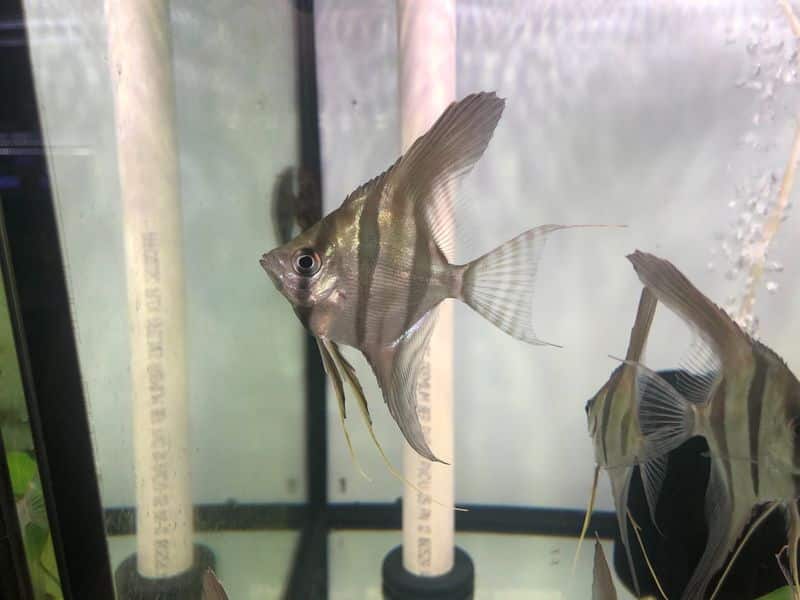
Many fish sold as “altum angelfish” in pet stores are actually deep-bodied varieties of P. Scalare or scalare-altum hybrids. True P. Altum have a distinctive notch (saddle) above the nose between the upper lip and the forehead, giving them a steeper, more angular head profile. If the transition from mouth to forehead is smooth and rounded, you’re likely looking at a scalare, not a true altum.
Origin & Natural Habitat
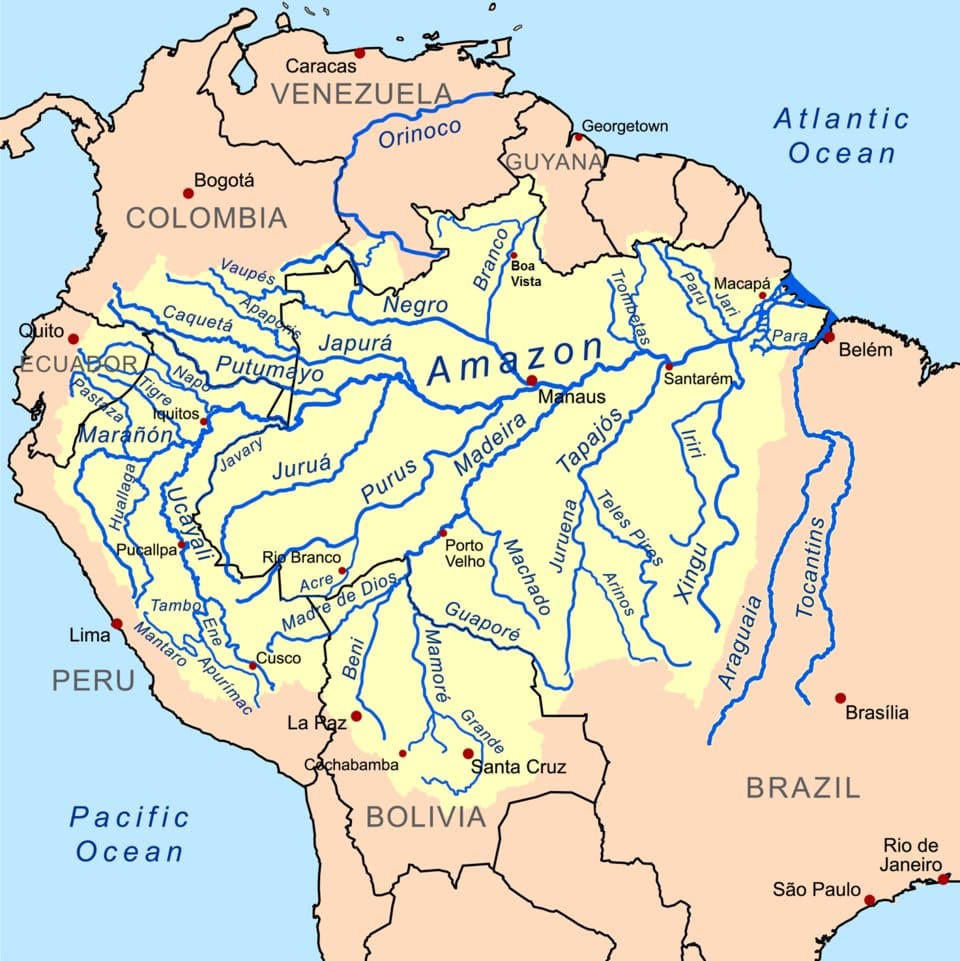
Altum angelfish have a relatively limited natural range compared to the widespread common angelfish. They’re found in the upper Orinoco River basin in Venezuela and Colombia, particularly in tributaries like the Rio Inirida and Rio Atabapo. They also occur in the upper Rio Negro drainage in Brazil and Colombia. These are remote, often difficult-to-access waterways that are far from the typical fish collection routes.
The natural habitat of altums is characterized by extremely soft, acidic water. The pH in their native rivers often drops below 5.0, sometimes reaching as low as 4.0 during certain seasons. The water is warm (82-86°F / 28-30°C), heavily stained with tannins from decomposing organic matter, and very low in dissolved minerals. The substrate is fine sand or mud covered in leaf litter.
In the wild, altums inhabit areas with dense submerged wood, tangled root structures, and overhanging vegetation. They move slowly through these structures, using their laterally compressed body to navigate between branches and roots. This vertical, narrow body plan allows them to slip through tight spaces that predators cannot follow. They stay in deeper, calmer pools rather than areas with strong current.
Appearance & Identification
The altum angelfish is the tallest of the three Pterophyllum species, with a body depth-to-length ratio that gives it a dramatically more vertical appearance than the common angelfish. A mature altum can stand 14 inches (35 cm) from the tip of the dorsal fin to the tip of the ventral fins, while the body itself reaches about 7 inches (18 cm) in standard length. The overall impression is of a fish that is much taller than it is long.
The most distinctive identification feature is the steep, angular forehead profile with a pronounced notch or saddle above the snout. Common angelfish have a gradual, rounded slope from mouth to dorsal fin, while altums have an abrupt, almost concave indentation. This is the single most reliable way to distinguish a true altum from a deep-bodied scalare.
Coloration consists of a silvery-brown to olive base with three prominent dark vertical bars. The bars are bolder and more defined than those on common angelfish. Additional faint barring and reddish-brown streaking may be present between the main bars. The dorsal and anal fins are elongated and may show red or brown spotting. Wild specimens often display subtle reddish or brownish hues that intensify under proper conditions.
Male vs. Female
Sexing altum angelfish is extremely difficult. There are no reliable external differences visible to most keepers. As with common angelfish, the only definitive sexing method is observing the breeding tubes during spawning.
| Feature | Male | Female |
|---|---|---|
| Body Size | Slightly larger on average | Slightly smaller on average |
| Nuchal Hump | May develop a small hump with maturity | Smoother forehead profile |
| Forehead Angle | Steeper in some mature males | Slightly less pronounced |
| Breeding Tube | Narrow, pointed, angled forward | Wider, blunt, angled backward |
| Coloration | No reliable difference | No reliable difference |
If you’re hoping to breed altums, the standard advice applies: start with a group of 6 or more juveniles and let pairs form naturally over time. Attempting to pair random individuals rarely works with this species.
Average Size & Lifespan
Adult altum angelfish reach a body length of approximately 6-7 inches (15-18 cm), but the total height including the extended dorsal and ventral fins can reach 13-14 inches (33-35 cm). This dramatic vertical span is what makes them so visually striking and why tank height is such an important consideration.
Growth rate is moderate. Altums are slower growing than common angelfish and can take 18-24 months to approach adult size under good conditions. With proper care, they can live 10-15 years in captivity, making them a long-term commitment that rewards patient, dedicated keepers.
ASD Difficulty Rating: Tier 3 – Advanced
Altum angelfish are the most demanding angelfish species. They require very soft, acidic water (pH 4.5-6.0), tall tanks with at least 24 inches (60 cm) of vertical height, and exceptional water quality. They do not adapt to standard tap water the way common angelfish do.
Care Guide
Tank Size
A minimum of 55 gallons (208 liters) is needed for a small group of altum angelfish, but 75 gallons or larger is strongly recommended. The critical dimension is tank height. Standard 55 and 75-gallon tanks are 20-21 inches tall, which provides adequate room for adult altums. Avoid shallow tanks, as these fish need vertical swimming space to accommodate their tall fin profile.
For a group of 5-6 adults, a 90 to 125-gallon tank with at least 20 inches of water depth provides the best environment. A wider tank also helps by giving each fish enough lateral space to establish personal territory without constant conflict.
Water Parameters
| Parameter | Recommended Range |
|---|---|
| Temperature | 78 to 84°F (26 to 29°C) |
| pH | 4.5 to 6.5 |
| General Hardness | 0 to 5 dGH |
| Ammonia | 0 ppm |
| Nitrite | 0 ppm |
| Nitrate | Below 10 ppm |
This is where altum angelfish separate themselves from common angelfish. While captive-bred scalare angels do fine in moderately hard, neutral water, altums require genuinely soft, acidic conditions. Most keepers need to use reverse osmosis (RO) water or rainwater to achieve the necessary softness. Tap water with measurable hardness and a neutral-to-alkaline pH is not suitable for altums without modification.
Stability is paramount. Wild-caught altums are sensitive to parameter swings, particularly sudden pH or temperature changes. Get your water chemistry right and keep it consistent. Indian almond leaves, peat filtration, and driftwood all help maintain naturally acidic, tannin-rich water that altums thrive in.
Filtration & Water Flow
Altums come from slow-moving to still water and do not appreciate strong currents. A gentle canister filter or sponge filter works best. If using a canister, diffuse the output with a spray bar or direct it against the glass to minimize water movement. The filtration needs to be effective enough to maintain pristine water quality without creating turbulence.
Regular water changes of 20-30% once or twice weekly are important, but the replacement water must be carefully temperature-matched and have similar chemistry. Adding large volumes of harder, cooler, or more alkaline water during changes is a recipe for stress and disease.
Lighting
Subdued lighting is strongly recommended. Altums come from heavily shaded forest waterways and are visibly stressed under bright illumination. Floating plants are excellent for diffusing overhead light and creating the dappled, shaded environment these fish prefer. A dimmer LED fixture on a gradual timer mimics natural dawn-to-dusk light cycles and reduces stress.
Plants & Decorations
A well-planted tank with tall driftwood pieces is the ideal setup for altum angelfish. Use tall background plants like vallisneria or amazon swords, along with mid-ground plants like java fern and anubias attached to driftwood. Floating plants (amazon frogbit, dwarf water lettuce) are essential for creating shade. The driftwood not only provides visual barriers and hiding spots but also releases tannins that help acidify the water naturally.
Create open swimming areas between planted sections so the altums can glide through the tank without bumping their delicate fins on décor. Avoid sharp-edged rocks or decorations that could tear their elongated dorsal and ventral fins.
Substrate
Fine sand is the ideal substrate for altum angelfish tanks. It mimics their natural habitat, won’t damage delicate fins if they brush against it, and works well with live plants. A layer of dried Indian almond leaves or other botanical leaf litter on top of the sand adds a natural touch, releases beneficial tannins, and provides additional surfaces for biofilm growth that the fish pick at.
Is the Altum Angelfish Right for You?
Before you commit to this species, here’s an honest assessment of whether it fits your setup and experience level.
- The pinnacle of the angelfish family. True altums in a tall planted tank are one of the most majestic sights in the freshwater hobby.
- Not for beginners or even most intermediate keepers. These fish demand specific water chemistry and are far less forgiving than common angelfish.
- Need tall tanks. Their body height can reach 13+ inches tip to tip. Standard 12-inch tall tanks are inadequate.
- Require soft, acidic water (pH 4.5-6.5). If your tap water is hard and alkaline, you’ll need an RO system.
- Mostly wild-caught. This means they’re sensitive to transport stress and need extended quarantine periods.
- Buy from specialist importers only. Big box stores rarely carry true altums, and misidentification is rampant.
Tank Mates
Tank mate selection for altum angelfish is constrained by their need for soft, acidic, warm water and their timid nature. Any companion species must share these water parameter requirements and be peaceful enough not to stress the altums.
Best Tank Mates
- Cardinal tetras. Thrive in the same soft, acidic water altums require. Their small size means very young fish is eaten, but adults are safe
- Rummy-nose tetras. Another soft-water tetra that complements altums well in properly sized tanks
- Sterbai corydoras. Tolerant of the warm temperatures altums prefer and peaceful bottom dwellers
- Pencilfish (Nannostomus spp.). Gentle, small, and native to similar soft-water habitats
- Hatchetfish. Peaceful surface dwellers that add activity to the upper tank zone
- Apistogramma species. Dwarf cichlids from similar biotopes that occupy the bottom of the tank
- Discus. Can coexist beautifully in large tanks with matching water parameters
Tank Mates to Avoid
- Aggressive cichlids. Any cichlid that will harass or outcompete the altums
- Fin nippers. Tiger barbs, serpae tetras, and other known nippers will destroy the altums’ long fins
- Hard water species. African cichlids, livebearers, and other fish requiring alkaline, hard water are completely incompatible
- Fast, boisterous fish. Active fish that create constant commotion will stress altums into hiding
- Very small fish. Anything that fits in an altum’s mouth is potential prey, including small neon tetras
Food & Diet
Wild-caught altum angelfish is finicky eaters when first imported, sometimes refusing everything except live foods. This is one of the initial challenges of keeping the species. Newly acquired wild altums may only accept live foods like blackworms, brine shrimp, daphnia, and mosquito larvae for the first few weeks.
With patience, most altums is weaned onto frozen foods (bloodworms, mysis shrimp, brine shrimp) and eventually high-quality cichlid pellets or flakes. The transition process can take weeks, so don’t get discouraged if your new altums ignore prepared foods initially. Offering a mix of live and frozen foods alongside pellets during the weaning period helps.
Once acclimated, feed altums 2-3 times daily with a varied diet of frozen and prepared foods. A high-quality small to medium cichlid pellet makes a good staple, supplemented with frozen bloodworms, mysis shrimp, and the occasional treat of live food. Avoid overfeeding, as uneaten food degrades water quality quickly in the warm, soft water these fish require.
Breeding & Reproduction
Breeding Difficulty
Very difficult. Captive breeding of true altum angelfish remains one of the greatest challenges in the freshwater hobby. While it has been accomplished, successful breeding events are rare enough to be noteworthy. The difficulty stems from the extreme water parameter requirements, the sensitivity of eggs and fry, and the challenge of obtaining compatible pairs from wild-caught stock.
Spawning Tank Setup
A dedicated breeding tank of 55-75 gallons with tall dimensions is recommended. Provide vertical spawning surfaces such as broad-leafed plants (amazon swords), PVC pipes, or slate pieces. Lighting should be dim, and the tank should be placed in a quiet area with minimal foot traffic. Altums are easily spooked and will eat their eggs if disturbed.
Water Conditions for Breeding
Breeding altums requires extremely soft, acidic water. Target a pH of 4.5-5.5 with hardness as close to 0 dGH as possible. Temperature should be 82-84°F (28-29°C). Pure RO water with minimal remineralization is necessary. Some breeders use peat filtration or blackwater extract to achieve the necessary water chemistry.
Conditioning & Spawning
Condition the pair with frequent feedings of high-protein live and frozen foods. Simulating seasonal water level changes through gradually lowering and then raising the water level, combined with slight temperature adjustments, may help trigger spawning behavior. When ready, the pair cleans a vertical surface and deposits eggs in a typical angelfish fashion. Clutch sizes are smaller than common angelfish, often 100-200 eggs.
Egg & Fry Care
Eggs are highly susceptible to fungus in anything other than extremely soft, acidic water. Many breeders add methylene blue to protect the eggs. Hatching occurs in approximately 48-72 hours at 82°F (28°C). The fry are tiny and delicate, requiring infusoria or commercially prepared liquid fry food initially, followed by freshly hatched baby brine shrimp once large enough.
Fry mortality is high, especially during the first week. Maintaining pristine water quality with very gentle filtration (a mature sponge filter is ideal) and performing careful, small water changes are critical. The parents may or may not care for the fry successfully. Many first-time altum parents eat their eggs or fry, and even experienced pairs may fail if disturbed.
Common Health Issues
Ich (White Spot Disease)
Altums are particularly susceptible to ich during the acclimation period after import. Stress from shipping, combined with exposure to new water conditions, can trigger outbreaks. Treatment should be approached carefully, as altums is sensitive to medications. Raising temperature to 86°F (30°C) is often the safest first approach, sometimes combined with low-dose salt treatment (though be cautious with salt in very soft water). Commercial ich medications should be used at half-dose initially to gauge the fish’s tolerance.
Internal Parasites
Wild-caught altums frequently carry internal parasites including Hexamita, intestinal worms, and flagellates. Symptoms include white stringy feces, weight loss, loss of appetite, and lethargy. Prophylactic treatment of newly imported fish with metronidazole and praziquantel is common practice among experienced altum keepers. A thorough quarantine period of 4-6 weeks is strongly recommended.
Bacterial Infections
Stress-related bacterial infections can manifest as fin rot, body sores, or cloudy eyes. These are almost always secondary to poor water quality or the stress of importation. Maintaining pristine water conditions is the best prevention. Treatment with broad-spectrum antibiotics like kanamycin may be necessary for active infections.
pH Shock
Because altums require such acidic water, they are vulnerable to pH shock when exposed to neutral or alkaline conditions. Symptoms include erratic swimming, rapid breathing, and loss of balance. This is most common during water changes with improperly prepared replacement water or when fish are transferred between tanks with different chemistry. Always match replacement water to current tank parameters as closely as possible.
Hard Rule
Altum angelfish require a tank at least 24 inches (60 cm) tall to accommodate their body shape. A standard 55-gallon is too shallow. Their water chemistry requirements (pH 4.5-6.0, very soft water) are non-negotiable – neutral tap water is a chronic stressor.
Common Mistakes to Avoid
- Treating altums like common angelfish. They are a completely different animal in terms of water requirements and sensitivity. Care guides for P. Scalare do not apply
- Using untreated tap water. Most tap water is too hard and alkaline for altums. RO water or very soft water is necessary
- Buying mislabeled fish. Many fish sold as “altum angelfish” are deep-bodied scalare or hybrids. Learn to identify the distinctive forehead notch of true P. Altum
- Skipping quarantine. Wild-caught altums almost always carry parasites. Quarantine for at least 4-6 weeks and consider prophylactic deworming
- Using tanks that are too short. Altums need vertical space. A long, shallow tank constrains their natural posture and fin extension
- Rushing acclimation. Take your time introducing altums to new water. Drip acclimation over 2-3 hours is the minimum. These fish do not handle rapid parameter changes well
Where to Buy
True altum angelfish are not as widely available as common angelfish. They are a specialty fish that needs to be sourced from importers, specialty online retailers, or occasionally from local hobbyists who have established groups. Because most altums are wild-caught, availability is often seasonal, coinciding with collection periods in their native range.
Check with Flip Aquatics and Dan’s Fish for availability, as both carry specialty South American species and ship with live arrival guarantees. When buying altums, ask the seller how long the fish have been in their facility and whether they’ve been eating prepared foods. An altum that has been in a retailer’s tanks for several weeks and is eating well is a much safer purchase than a freshly imported specimen.
When selecting altum angelfish, look for the distinctive forehead notch that confirms true P. Altum identification. Choose fish with clear eyes, intact fins, and good body condition. Avoid any fish with pinched bellies, clamped fins, or visible lesions. If possible, watch them eat before buying.
Frequently Asked Questions
What’s the difference between altum and common angelfish?
The altum angelfish (P. Altum) is a distinct species from the common angelfish (P. Scalare). Altums are taller, have a characteristic notch above the nose, require soft acidic water (pH 4.5-6.5), and are almost exclusively wild-caught. Common angelfish are widely captive-bred, available in many color varieties, and tolerate a much broader range of water conditions.
Are captive-bred altum angelfish available?
Captive-bred altums do exist, but they are rare and command premium prices. The vast majority of altum angelfish in the hobby are wild-caught imports from Colombia and Venezuela. If you find captive-bred altums, they are hardier and easier to acclimate than wild-caught specimens, making them worth the extra cost.
Can I keep altums with common angelfish?
This is not recommended. The water parameter requirements are significantly different. Altums need very soft, acidic water (pH 4.5-6.5, 0-5 dGH), while most captive-bred scalare do best in neutral to slightly acidic, moderately soft water. There is also a risk of hybridization, and the more assertive scalare may outcompete the more timid altums for food.
Do I need an RO system for altum angelfish?
Yes. Unless your tap water is naturally very soft and acidic (unlikely for most hobbyists), you will need an RO unit to produce water soft enough for altums. An RO system is one of the most important investments for keeping this species successfully. You can remineralize the RO water slightly with a product designed for soft-water fish to ensure essential minerals are present.
How tall should an altum angelfish tank be?
At least 20 inches of water depth, with 24 inches being ideal. Adult altums can reach 14 inches from fin tip to fin tip, so they need significant vertical space. Standard 55 and 75-gallon tanks (typically 20-21 inches tall) work, but taller custom tanks or standard 90-gallon tanks (24 inches tall) are even better.
What It Is Actually Like Living With Altum Angelfish
This is the part no other care guide gives you. Forget water parameters for a minute. Here is what it is actually like to share your tank with this species.
They have more personality than you expect. The Altum Angelfish is not a fish that just sits in the background. Once settled in, they become interactive, curious, and responsive to your presence.
Feeding time reveals their character. Watch how the Altum Angelfish approaches food and you will see real personality. Some are bold, some are cautious, and their feeding behavior tells you a lot about their mood and health.
They establish routines. After a few weeks, your Altum Angelfish will have favorite spots, preferred paths through the tank, and predictable patterns. Learning these routines makes you a better keeper.
Color is a health indicator. The Altum Angelfish’s coloration is a real-time report card on your husbandry. Vibrant color means happy fish. Faded color means something is wrong. Pay attention.
How the Altum Angelfish Compares to Similar Species
The freshwater angelfish (Pterophyllum scalare) is the natural comparison, and the difference in difficulty is dramatic. Domestic scalare angelfish are bred for aquarium conditions. They tolerate a wide pH range, standard temperatures, and municipal tap water. Altums need specific soft, acidic conditions and are almost exclusively wild-caught. Common angelfish are readily available for $5-15; quality altums can cost $50-100+ each. Common angelfish come in dozens of color varieties; altums come in one wild-type form. For 95% of fishkeepers, the common angelfish is the right choice. Altums are for dedicated specialists who specifically want the wild-type experience.
The discus occupies a similar niche as an advanced, demanding South American cichlid. Both need warm, soft, acidic water and pristine quality. Discus offer far more color variety through captive breeding, and modern captive-bred discus are arguably hardier than wild-caught altums. If you want an advanced, beautiful South American cichlid challenge, discus are the more accessible option with more variety. Altums are for purists who value the wild-type aesthetic above all else.
Closing Thoughts
Altums are not upgraded angelfish. They are a completely different level of commitment.
The altum angelfish is not a beginner fish, and it’s not even an intermediate fish. It’s a species for experienced keepers who have the equipment, knowledge, and patience to provide the specific conditions these wild angels require. Soft water, stable chemistry, warm temperatures, a calm environment, and a willingness to invest in proper equipment (including an RO system) are the baseline requirements.
But for those who can meet the challenge, altum angelfish are among the most rewarding species in the freshwater hobby. Watching a group of adult altums drift through a planted, blackwater-style aquarium is an experience that simply doesn’t compare to anything else. If you’ve mastered common angelfish and discus and you’re looking for the next level, the altum is waiting for you. Just make sure you’re ready for it.
This article is part of our South American Cichlids species directory. Explore more South American cichlid care guides.
References
- Seriously Fish. Pterophyllum altum species profile. seriouslyfish.com
- FishBase. Pterophyllum altum Pellegrin, 1903. fishbase.se
- Kullander, S.O. (2003). Family Cichlidae. In: Reis, R.E., Kullander, S.O. & Ferraris, C.J. (eds.) Check List of the Freshwater Fishes of South and Central America. Porto Alegre: EDIPUCRS.
- Practical Fishkeeping. Altum angelfish profile. practicalfishkeeping.co.uk
- About the Author
- Latest Posts

I’m Mark Valderrama, founder of Aquarium Store Depot and a fishkeeper with over 25 years of hands-on experience. I started in the hobby at age 11, worked at local fish stores, and have kept freshwater tanks, ponds, and reef tanks ever since. I’ve been featured in two best-selling aquarium books on Amazon and built this site to share practical, experience-based fish keeping knowledge.
Leave a Reply