
Last Updated: June 25, 2026
Thank you for visiting! By the way… any links on this page that lead to products on Amazon and other stores/partners are affiliate links Aquarium Store Depot earns a commission if you make a purchase.
Table of Contents
- What Most Care Guides Get Wrong
- The Reality of Keeping Eureka Red Peacock
- Key Takeaways
- Species Overview
- Classification
- Origin & Natural Habitat
- Appearance & Identification
- Average Size & Lifespan
- Care Guide
- Is This Species Right for You?
- Tank Mates
- Food & Diet
- Breeding & Reproduction
- Common Health Issues
- Common Mistakes to Avoid
- Where to Buy
- Frequently Asked Questions
- What It Is Actually Like Living With Eureka Red Peacock
- Species Comparison
- Closing Thoughts
- References
Eureka red peacocks are the most stunning aulonocara you can keep, and everyone who sees one wants one. The problem is that color intensity depends entirely on water quality, diet, and stress levels. I have seen eureka reds in pet stores that look washed out and grey, then watched the same fish color up into show quality specimens once the setup was right. If you are buying this fish for the color, you need to earn that color with proper care. The peacock that shows you exactly how good your tank really is.
The peacock that wears its stress level on its skin.
The Reality of Keeping Eureka Red Peacock
Mbuna keeping is a different discipline from regular fishkeeping. The Eureka Red Peacock is no exception. Here is what you need to prepare for.
Hard, alkaline water is mandatory. Lake Malawi chemistry means pH between 7.8 and 8.6, high GH, and high KH. There is no faking this. If your tap water is soft and acidic, you need to buffer every water change without exception.
Overstocking is the strategy. Keeping 3 or 4 Eureka Red Peacocks leads to one bully and victims. You need groups of 12 or more to spread aggression. But overstocking only works with heavy filtration and consistent water changes.
Diet is critical. Spirulina and veggie-based foods are essential. High-protein diets cause Malawi Bloat, which is often fatal.
Rockwork defines territories. Mbuna need piles of rocks with caves and passageways. Without proper rockwork, dominant fish have nowhere to establish boundaries and subordinates have nowhere to hide. Stack rocks from substrate to near the waterline.
Biggest Mistake New Eureka Red Peacock Owners Make
Understocking. Keeping a small group of Eureka Red Peacocks means the dominant fish picks off the weak ones. You need a large group to distribute aggression. Twelve is the minimum for most mbuna species.
Expert Take
Start with a group of 12 or more in a 55 gallon minimum. Use aragonite or crushed coral substrate to buffer pH naturally. Feed spirulina-based food as the staple. Stack rocks to create territories. This formula works for Eureka Red Peacocks and most other mbuna.
Key Takeaways
- One of the most colorful freshwater fish available, with males displaying vivid red-orange bodies and metallic blue faces and fins
- A selectively bred color form of Aulonocara jacobfreibergi, originally from the Otter Point area of Lake Malawi
- Slightly more assertive than other Peacocks, but still far more peaceful than Mbuna and should not be mixed with aggressive species
- Sand substrate is essential because all Peacocks are natural sand sifters that feed from the substrate
- Minimum 75-gallon tank with hard, alkaline water (pH 7.8-8.6) and strong filtration
Species Overview
| Field | Details |
|---|---|
| Scientific Name | Aulonocara jacobfreibergi “Eureka Red” |
| Common Names | Eureka Red Peacock, Eureka Red Jake, Malawi Butterfly |
| Family | Cichlidae |
| Origin | Lake Malawi, East Africa (selectively bred variant) |
| Care Level | Easy to Moderate |
| Temperament | Semi-peaceful |
| Diet | Micro-predator / Omnivore |
| Tank Level | Bottom to Mid |
| Maximum Size | 6 inches (15 cm) |
| Minimum Tank Size | 75 gallons (284 liters) |
| Temperature | 76-82°F (24-28°C) |
| pH | 7.8-8.6 |
| Hardness | 10-20 dGH |
| Lifespan | 6-8 years |
| Breeding | Maternal mouthbrooder |
| Breeding Difficulty | Easy |
| Compatibility | Peacock & Hap community |
| OK for Planted Tanks? | Limited (may uproot plants while sifting) |
Classification
| Taxonomic Level | Classification |
|---|---|
| Order | Cichliformes |
| Family | Cichlidae |
| Subfamily | Pseudocrenilabrinae |
| Genus | Aulonocara |
| Species | A. Jacobfreibergi (Johnson, 1974) |
The species is named after Jacob Freiberg, a fish importer from Verona, New Jersey, who co-collected the original type specimens. When the first A. Jacobfreibergi were exported from Lake Malawi in the early 1970s, they were an immediate hit with hobbyists. The stunning colors earned them the trade name “Malawi Butterfly” in the United States. The Eureka Red variant was developed through selective breeding of Otter Point locality fish, amplifying the red pigmentation to produce the dramatically red specimens we see today.
A. Jacobfreibergi has many geographic color variants in the wild, each with slightly different coloration. The Eureka Red is not found in the wild. It’s purely a product of selective captive breeding, though it is genetically the same species as wild jacobfreibergi.
Origin & Natural Habitat
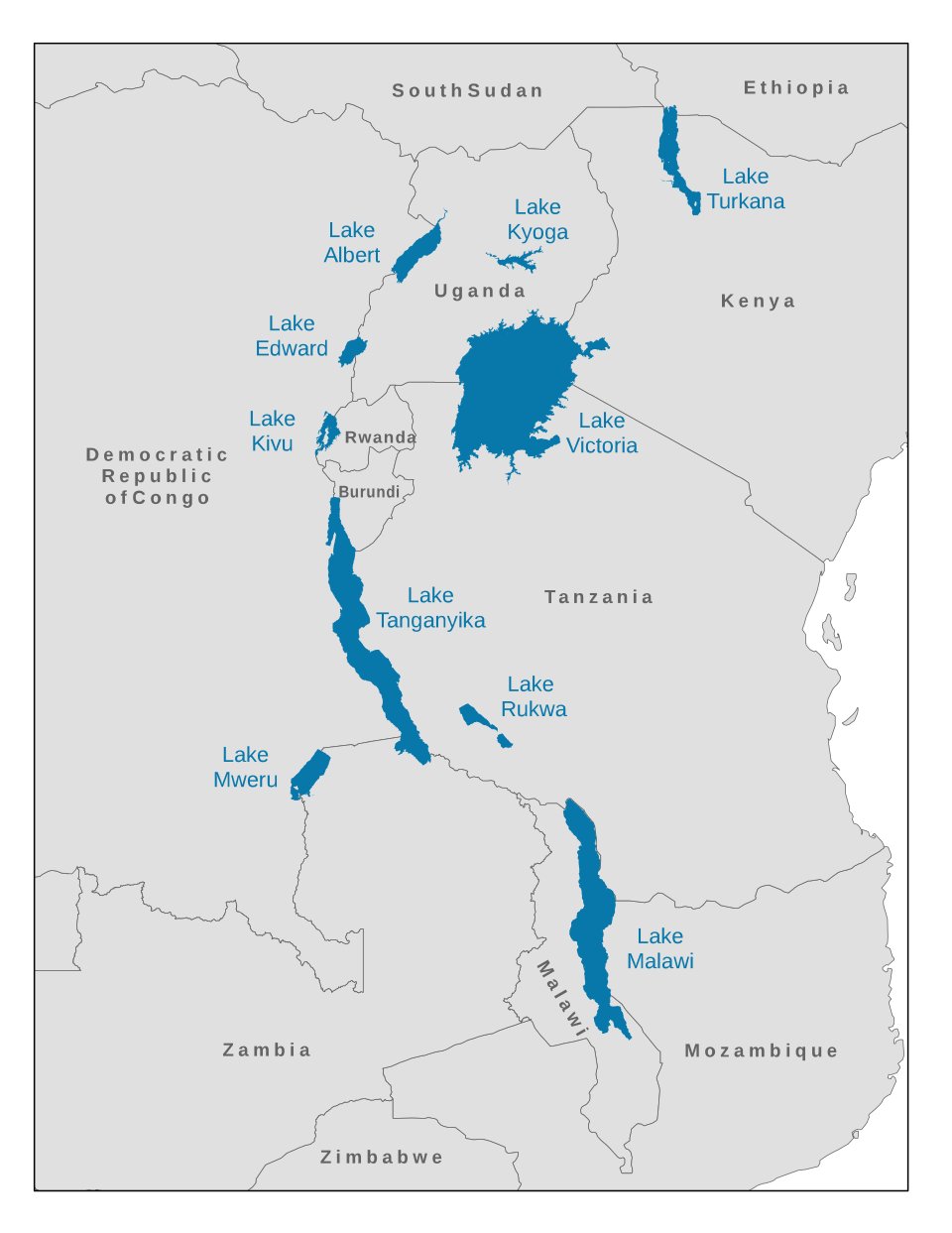
The wild parent species, Aulonocara jacobfreibergi, is endemic to Lake Malawi in East Africa, specifically the southern portion of the lake. Known populations include Cape Maclear, Otter Point, Mumbo and Domwe Islands, Monkey Bay, Makokala Reef, and several other locations along the southern shoreline.
What makes jacobfreibergi unique among Peacocks is its habitat preference. While most Aulonocara species hover over open sandy areas, jacobfreibergi is more cave-oriented. In the wild, it’s found in large caves within the rocky habitat, often with muddy bottoms. Males establish territories near cave ceilings, while females and non-breeding males forage near the bottom. Early morning divers can observe them venturing out to feed from the sand in front of their caves, but they spend most of the day inside.
This cave-dwelling tendency is important for aquarium setup. Eureka Reds appreciate having caves and rock formations to retreat to, perhaps even more so than other Peacock species. The water conditions in Lake Malawi are hard, alkaline, and extremely stable, with minimal seasonal variation. Replicating that stability in the aquarium is critical for long-term health.
Appearance & Identification
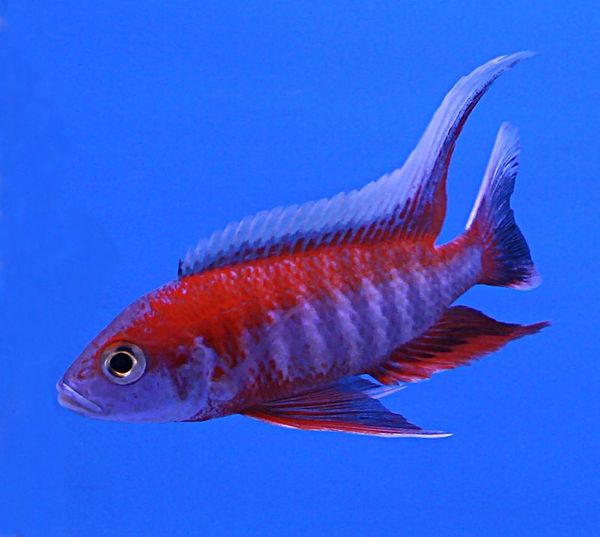
A dominant male Eureka Red Peacock in full color is one of the most visually striking freshwater fish in the world. The body is covered in a deep red to red-orange coloration that extends from the gill plate through the flanks, belly, and into the lower portions of the fins. The face and head display a bright metallic blue that shimmers under aquarium lighting. The dorsal fin features a blue edge with red lower portions, and the tail fin is a mix of blue and red. The overall effect is a fiery, impossibly colorful fish that dominates the visual landscape of any tank it’s in.
Color intensity is heavily dependent on mood, dominance, diet, and water quality. A stressed or subdominant male will show significantly muted colors. The most vivid coloration appears in a dominant male that has established territory, is well-fed with color-enhancing foods, and is kept in a tank with appropriate (non-aggressive) companions. Lighting plays a role too. A slightly subdued light with blue spectrum brings out the metallic blue on the face and makes the red appear even deeper.
Like all Peacocks, juveniles are plain and underwhelming. Young fish are silver-grey with faint vertical barring, and males don’t begin showing color until around 2.5 to 3 inches (6-8 cm). Full adult coloration develops gradually over several months.
Male vs. Female
The sexual dimorphism in Eureka Red Peacocks is dramatic, as it is across the entire Aulonocara genus. Once males color up, there is absolutely no confusion about which fish is which.
| Feature | Male | Female |
|---|---|---|
| Color | Vivid red-orange body, metallic blue face | Plain silver-grey |
| Size | 5-6 inches (12-15 cm) | 4-5 inches (10-12 cm) |
| Body Shape | Larger, more robust | Smaller, fuller belly when gravid |
| Fins | Elongated dorsal and anal fins, often with trailing points | Shorter, rounded fins |
| Egg Spots | Present on anal fin | Usually absent |
Note that A. Jacobfreibergi have slightly more elongated fins compared to other Peacock species, giving males a more elegant, butterfly-like appearance. This is part of where the “Malawi Butterfly” common name originated.
Average Size & Lifespan
Eureka Red Peacocks reach a maximum size of about 6 inches (15 cm), making them one of the slightly larger Peacock species. Males are larger than females by about an inch. Most fish reach full size within 18 to 24 months with good nutrition, though coloration continues to intensify beyond that.
With proper care and stable water conditions, expect a lifespan of 6 to 8 years. Some well-kept specimens may exceed this. As with all Peacocks, the keys to longevity are consistent water quality, appropriate tank mates, and avoiding the dietary pitfalls that lead to Malawi Bloat.
Care Guide
Tank Size
A minimum of 75 gallons (284 liters) is recommended for a single male with a harem of females. The Eureka Red is slightly more territorial than some Peacock species due to its jacobfreibergi genetics, so adequate space is important. For a mixed Peacock and Hap community, 125 gallons (473 liters) or larger is strongly recommended.
Length matters more than height. A 4-foot tank is the minimum footprint, but a 6-foot tank gives significantly better results in terms of reducing aggression and allowing multiple males to coexist. These fish need room to establish territories without being constantly in each other’s space.
Water Parameters
| Parameter | Ideal Range |
|---|---|
| Temperature | 76-82°F (24-28°C) |
| pH | 7.8-8.6 |
| General Hardness (GH) | 10-20 dGH |
| Carbonate Hardness (KH) | 6-12 dKH |
| Ammonia | 0 ppm |
| Nitrite | 0 ppm |
| Nitrate | Below 20-30 ppm |
Stability is the single most important factor with water parameters for any Malawi cichlid. Sudden swings in pH, temperature, or hardness are far more dangerous than being slightly outside the ideal range. Weekly water changes of 25-30% keep nitrates in check and maintain consistent chemistry. If your source water is soft, use a cichlid buffer or aragonite substrate to maintain the alkalinity these fish need.
Filtration & Water Flow
Robust filtration is essential. Malawi cichlids produce a substantial bioload, and the high pH environment makes ammonia more toxic. Over-filter your tank by running a canister filter rated for at least 1.5 times your aquarium volume, or combine multiple filtration methods (canister plus sump, canister plus HOB). Biweekly filter maintenance keeps flow rates high without crashing your biological filtration.
Keep water flow moderate. The wild jacobfreibergi lives in caves rather than exposed rocky coastline, so these fish don’t need strong currents. Good surface agitation for gas exchange is important, but avoid creating a high-flow environment.
Lighting
Moderate aquarium lighting works best. Eureka Reds look their absolute best under slightly subdued lighting with a blue or actinic component, which makes the blue on the face shimmer and deepens the appearance of the red body. Very bright overhead lighting can make the fish feel exposed and may wash out colors. If you’re running intense LEDs, provide shaded areas through rock formations where the fish can retreat.
Plants & Decorations
Because of the jacobfreibergi tendency toward cave-dwelling behavior, providing caves and rock formations is especially important for Eureka Reds. Stack rocks to create multiple caves and overhangs. Males will choose a cave as the centerpiece of their territory, and females need caves for refuge, especially when holding eggs in their mouths.
Balance the rock structures with open sandy areas for sifting and swimming. The tank shouldn’t be a solid wall of rocks (that’s a Mbuna setup), but it should have more structure than a wide-open sand flat. Live plants are limited to hardy species like Anubias, Java Fern, and Vallisneria because of the alkaline water and substrate disturbance from sifting.
Substrate
Fine sand is a must for all Peacock cichlids, and the Eureka Red is no exception. These fish sift sand through their gills to extract food, and coarse gravel will damage their gill filaments and prevent natural feeding behavior. Pool filter sand, play sand, and aragonite sand are all suitable options. Many keepers prefer a darker sand color because Peacocks will show more intense coloration over darker substrates.
Tank Mates
Getting tank mates right is critical with any Peacock, and the Eureka Red presents a slight wrinkle because it’s a touch more assertive than many other Aulonocara species. Males is moderately territorial, especially during breeding. That said, it’s still a Peacock, meaning it’s far more peaceful than Mbuna and should never be mixed with aggressive rock-dwellers.
Best Tank Mates
- Other Peacock cichlids (Aulonocara spp.) — Choose species with distinctly different coloration to minimize male-on-male aggression. Avoid Peacocks that are also predominantly red.
- Mild Haplochromines — Copadichromis borleyi, Copadichromis azureus, Placidochromis electra, Otopharynx lithobates, and Cyrtocara moorii are all excellent companions that share similar temperaments.
- Synodontis catfish — Synodontis multipunctatus and Synodontis petricola thrive in the same alkaline water conditions and stay out of territorial disputes.
- Bristlenose Plecos — Hardy enough for the alkaline water and ignored by cichlids. Good for algae control.
- Labidochromis caeruleus (Yellow Lab) — The one Mbuna species that will sometimes work with Peacocks in a large tank, since it’s by far the mildest Mbuna.
Tank Mates to Avoid
- Aggressive Mbuna — Melanochromis auratus, Metriaclima lombardoi, Pseudotropheus demasoni, and most Mbuna species are far too aggressive. They will dominate Peacocks, stress them into losing color, and prevent them from feeding properly.
- Other red-colored Peacocks or Haps — Males will treat any similarly colored fish as a rival. If keeping multiple Peacock species, choose ones with clearly different color patterns.
- Large aggressive Haps — Species like Nimbochromis get too large and too predatory.
- Non-Malawi species — Community fish, South American cichlids, and other fish from different water chemistry requirements should not be combined with Malawi cichlids.
Stock Eureka Reds at a ratio of one male to four or more females. This disperses the male’s attention and reduces stress on individual females, especially important because males continue to pursue females aggressively after spawning. In too-small groups, females becomes exhausted from constant pursuit.
Food & Diet
Like all Peacock cichlids, Eureka Reds are micro-predators in their natural habitat. Wild A. Jacobfreibergi uses its extraordinary sensory system to detect invertebrates moving in the sand or on cave floors. A quick bite secures the prey, and the fish then separates food from substrate by chewing and expelling sand through the gills. It’s an elegant hunting method that relies on patience and precision rather than speed.
In captivity, they’re straightforward to feed. A high-quality sinking cichlid pellet should be the dietary staple. Supplement with frozen foods like Mysis shrimp, brine shrimp (vitamin-enriched), cyclops, and the occasional bloodworm. Color-enhancing pellets containing astaxanthin or spirulina help maintain the vivid red coloration that makes this fish so desirable.
Avoid fatty or mammalian-protein foods like beef heart. The digestive system of Malawi cichlids is not designed for these foods, and a diet too heavy in fat is a contributing factor to Malawi Bloat. Feed once or twice daily in amounts they can consume within 2-3 minutes. Peacocks are not surface feeders, so make sure food reaches the lower levels of the tank where they prefer to eat.
Breeding & Reproduction
Eureka Red Peacocks are prolific breeders in the aquarium, and getting them to spawn is easier than preventing it. They’re maternal mouthbrooders, following the standard Peacock breeding pattern, but with a few behavioral nuances tied to their jacobfreibergi heritage.
Spawning Behavior
Males establish territories centered around caves or rock formations, which aligns with the cave-dwelling habits of wild jacobfreibergi. When courting, the male intensifies his coloration dramatically, flares all fins, and performs a shaking display to attract a ripe female. Spawning occurs inside or near the entrance of a cave. The female lays a small clutch of eggs, picks them up in her mouth, then mouths at the male’s egg spots on his anal fin, triggering sperm release for fertilization.
One important behavioral note: male Eureka Reds are persistent chasers after spawning. They will continue pursuing females, which is why maintaining a ratio of at least one male to four females is essential. Females need caves and hiding spots to escape the male’s attention, especially holding females that aren’t eating.
Mouthbrooding & Fry Care
The female incubates the eggs in her mouth for 18 to 25 days. During this entire period, she does not eat. You can identify a holding female by her distended throat and a rhythmic chewing motion as she rotates the eggs. She’ll become reclusive, sticking close to caves and avoiding the male’s territory.
Typical brood sizes range from 15 to 50 fry depending on the female’s size and condition. Fry are released fully formed and can immediately accept baby brine shrimp and finely crushed flake food. For maximum fry survival, either strip the female at around day 18-20 and raise fry in a separate grow-out tank, or move the holding female to a dedicated breeding tank before release.
Hybridization Warning
All Aulonocara species can hybridize freely. Since the Eureka Red is already a selectively bred variant, maintaining genetic integrity is especially important if you’re breeding. Keep it as the only Aulonocara species in the breeding tank, or be extremely vigilant about separating holding females if you keep multiple Peacock species together.
Common Health Issues
Malawi Bloat
The most serious health threat for any Peacock cichlid. Malawi Bloat causes severe abdominal swelling, loss of appetite, white stringy feces, and rapid breathing. It can kill within days if untreated. The primary triggers are elevated nitrates, poor water quality, stress from incompatible tank mates, and improper diet (especially foods too high in fat).
Prevention is the only reliable strategy. Maintain nitrates below 20-30 ppm with regular water changes, feed a balanced diet, and keep Eureka Reds with appropriate peaceful companions. If bloat symptoms appear, perform an immediate 50% water change, move the affected fish to a hospital tank, and begin treatment with Metronidazole. Early intervention is critical.
Ich (White Spot Disease)
Stress and temperature fluctuations can trigger ich outbreaks. The characteristic white spots are easy to identify. Treatment involves gradually raising the temperature to 82-86°F (28-30°C) and using a commercial ich medication. Remove activated carbon during treatment. Eureka Reds handle standard ich medications well.
Hole-in-the-Head Disease (HLLE)
Pitting and erosion around the head and lateral line can occur in Peacocks kept in suboptimal conditions. It’s associated with poor water quality, vitamin deficiencies, and the use of activated carbon. Improving water quality through more frequent water changes, feeding vitamin-enriched foods, and removing carbon from filtration can lead to recovery over time.
Common Mistakes to Avoid
- Housing with aggressive Mbuna. Despite being slightly more assertive than some Peacocks, Eureka Reds are still no match for aggressive Mbuna. Mixing them leads to stressed, colorless fish that hide constantly and eventually succumb to health problems.
- Not providing enough females. Male Eureka Reds are persistent chasers. Keeping a single male with only one or two females puts too much pressure on those females. Aim for one male to four or more females.
- Using gravel instead of sand. All Peacocks need sand for natural feeding behavior. Gravel prevents sand sifting and can damage gills and mouth tissue.
- Skipping water changes. Peacocks are sensitive to nitrate buildup. Letting nitrates climb above 30 ppm is asking for Malawi Bloat. Weekly 25-30% water changes are non-negotiable.
- Buying unknown hybrids. The market is full of hybrid Peacocks sold under creative marketing names. If you want a genuine Eureka Red, buy from a reputable breeder who can verify the lineage of their stock.
- Expecting instant color from juveniles. Young Eureka Reds look like plain grey fish. It takes months for males to develop their signature coloration. Be patient and don’t assume you got scammed if your new fish isn’t bright red immediately.
Where to Buy
Eureka Red Peacocks are one of the most popular Aulonocara variants in the hobby, so availability is good. You’ll find them at specialty cichlid retailers, online fish stores, and occasionally at well-stocked local fish shops. Chain pet stores sometimes carry generic “assorted Peacocks” that may include Eureka Reds, but the quality and genetic purity is questionable.
For guaranteed quality specimens that have been properly quarantined and correctly identified, I recommend checking Flip Aquatics and Dan’s Fish. Both are reputable online retailers known for shipping healthy, vibrant fish. Expect to pay $12-$30 per fish depending on size and sex. Males showing full color command premium prices, while unsexed juveniles are more affordable but require patience.
Frequently Asked Questions
Is the Eureka Red Peacock a natural species?
No. The Eureka Red color variant does not exist in the wild. It was developed through selective breeding of Aulonocara jacobfreibergi from the Otter Point locality in Lake Malawi. Wild jacobfreibergi are beautiful fish with blue and orange coloration, but the intense all-over red of the Eureka variant is a product of captive selective breeding over many generations.
Are Eureka Red Peacocks aggressive?
They’re slightly more assertive than some other Peacock species, but they’re still far more peaceful than Mbuna. Males will defend their territories and is persistent chasers of females, which is why a ratio of one male to four or more females is important. In a properly sized tank with appropriate companions, aggression is manageable.
Can I keep Eureka Red Peacocks with Mbuna?
This is a bad idea. Most Mbuna species are significantly more aggressive and will bully Eureka Reds, causing stress, color loss, and health problems. The only Mbuna that sometimes works is Labidochromis caeruleus (Yellow Lab), which is exceptionally mild for a Mbuna. But as a general rule, keep Peacocks with Peacocks and mild Haps.
Why is my Eureka Red Peacock losing color?
Color loss in Peacocks indicates stress. Common causes include aggressive tank mates (especially Mbuna), poor water quality, being a subdominant male in the presence of a more dominant one, inadequate diet, or illness. Address the stress source first: check water parameters, evaluate tank mate compatibility, and ensure the fish has appropriate territory and hiding spots.
How many Eureka Red Peacocks should I keep?
Keep one male with four to six females in a 75-gallon or larger tank. Never keep two males of the same species together unless the tank is very large (150+ gallons) with enough structure for each to establish separate territories. Multiple males in tight quarters leads to one dominant and one or more stressed, colorless subdominants.
What’s the difference between Eureka Red and other red Peacocks?
Several red-colored Peacock variants exist in the hobby, including Ruby Red, Rubin Red, and various “OB” (orange blotch) forms. The Eureka Red is specifically a selectively bred variant of Aulonocara jacobfreibergi. Other red Peacocks may come from different Aulonocara base species or be hybrids. If species purity matters to you, verify the exact lineage with the breeder before purchasing.
What It Is Actually Like Living With Eureka Red Peacock
This is the part no other care guide gives you. Forget water parameters for a minute. Here is what it is actually like to share your tank with this species.
They have more personality than you expect. The Eureka Red Peacock is not a fish that just sits in the background. Once settled in, they become interactive, curious, and responsive to your presence.
Feeding time reveals their character. Watch how the Eureka Red Peacock approaches food and you will see real personality. Some are bold, some are cautious, and their feeding behavior tells you a lot about their mood and health.
They establish routines. After a few weeks, your Eureka Red Peacock will have favorite spots, preferred paths through the tank, and predictable patterns. Learning these routines makes you a better keeper.
Color is a health indicator. The Eureka Red Peacock’s coloration is a real-time report card on your husbandry. Vibrant color means happy fish. Faded color means something is wrong. Pay attention.
Closing Thoughts
Eureka red peacocks only look like the photos when the tank is dialed in. Otherwise they are grey.
The Eureka Red Peacock earns its popularity honestly. Few freshwater fish can match the visual impact of a dominant male in full color, that mix of deep red and electric blue is genuinely stunning. And unlike many colorful fish that come with extreme care requirements or aggression issues, the Eureka Red is quite manageable for anyone willing to maintain good water quality and choose tank mates wisely.
The keys to success are straightforward: give it a big enough tank with sand substrate, keep the water hard and alkaline with low nitrates, stock it with peaceful companions, and provide caves for territory and refuge. Do those things, and you’ll have a centerpiece fish that stops everyone who walks by your tank. It’s one of the best arguments in the hobby for why African cichlids deserve more attention from the broader fishkeeping community.
This article is part of our Lake Malawi Cichlid Species Directory: Complete A-Z Care Guide List. Visit the hub page to explore care guides for all 28 Lake Malawi cichlid species we cover.
Recommended Video
References
- Aulonocara jacobfreibergi (Malawi Butterfly) — Seriously Fish
- Aulonocara jacobfreibergi Johnson, 1974 — FishBase
- Cichlids with a sixth sense — Practical Fishkeeping
- Eureka Red Peacock Cichlid Care Guide — Aquadiction
- About the Author
- Latest Posts

I’m Mark Valderrama, founder of Aquarium Store Depot and a fishkeeper with over 25 years of hands-on experience. I started in the hobby at age 11, worked at local fish stores, and have kept freshwater tanks, ponds, and reef tanks ever since. I’ve been featured in two best-selling aquarium books on Amazon and built this site to share practical, experience-based fish keeping knowledge.
Leave a Reply