
Last Updated: June 25, 2026
Thank you for visiting! By the way… any links on this page that lead to products on Amazon and other stores/partners are affiliate links Aquarium Store Depot earns a commission if you make a purchase.
Table of Contents
- What Care Guides Get Wrong
- Key Takeaways
- Species Overview
- Classification
- Origin & Natural Habitat
- Appearance & Identification
- Average Size & Lifespan
- Care Guide
- Is It Right for You?
- Tank Mates
- Food & Diet
- Breeding & Reproduction
- Common Health Issues
- Common Mistakes to Avoid
- Where to Buy
- Frequently Asked Questions
- Species Comparison
- Closing Thoughts
- References
The giant danio is one of those fish that doesn’t get nearly enough credit. It’s fast, it’s tough, it’s got a flash of iridescent color that catches the light in a way few freshwater fish can match, and it’s big enough to hold its own with medium-sized tank mates. At 4 to 6 inches (10 to 15 cm) fully grown, Devario malabaricus bridges the gap between the small schooling danios most hobbyists know and the larger community fish that dominate a tank. If you’ve ever wished your zebra danios came in a bigger, bolder package, the giant danio is exactly what you’re looking for.
What Most Care Guides Get Wrong About the Giant Danio
The Giant Danio lives up to its name in more ways than people expect. At 4-5 inches, it is the largest commonly kept danio, and it is also one of the fastest swimmers in the freshwater hobby. The number one misconception is that it will work in a 20-gallon tank. It absolutely will not. A school of Giant Danios needs a 55-gallon minimum, and they prefer 75+ gallons. The other mistake is keeping just 3-4. you need at least 6 for them to school rather than chase each other around the tank.
These fish come from fast-flowing hill streams in the Western Ghats of India and Sri Lanka, and that origin tells you a lot about what they need in captivity. They’re active, they’re athletic, and they will absolutely launch themselves out of your tank if you leave the lid off. They also make outstanding dither fish for setups with larger or slightly more aggressive species. Let’s break down everything you need to know to keep giant danios successfully.
Key Takeaways
- Larger than most danios at 4 to 6 inches (10 to 15 cm), making them suitable tank mates for medium-sized fish that would eat smaller schooling species
- Extremely active swimmers that need a 30-gallon tank minimum with plenty of horizontal swimming space — a short, tall tank won’t cut it
- Notorious jumpers that require a tight-fitting lid with no gaps. This is non-negotiable.
- Peaceful but boisterous, their constant high-speed swimming can stress slow or timid fish, so choose tank mates carefully
- Excellent dither fish for tanks with larger cichlids, as their bold, active presence helps draw shy fish out of hiding
- Hardy and adaptable, tolerating a wide range of water conditions (pH 6.0 to 8.0, temp 72 to 81°F), making them forgiving for less experienced fishkeepers
Species Overview
| Field | Details |
|---|---|
| Scientific Name | Devario malabaricus (Jerdon, 1849) |
| Common Names | Giant Danio, Malabar Danio |
| Family | Danionidae |
| Origin | Western India (Western Ghats), Sri Lanka |
| Care Level | Easy |
| Temperament | Peaceful (boisterous) |
| Diet | Omnivore |
| Tank Level | Middle to Top |
| Maximum Size | 4 to 6 inches (10 to 15 cm) |
| Minimum Tank Size | 30 gallons (114 liters) |
| Temperature | 72 to 81°F (22 to 27°C) |
| pH | 6.0 to 8.0 |
| Hardness | 5 to 20 dGH |
| Lifespan | 3 to 5 years |
| Breeding | Egg scatterer |
| Breeding Difficulty | Moderate |
| Compatibility | Community (with appropriately sized tank mates) |
| OK for Planted Tanks? | Yes |
Classification
| Taxonomic Level | Classification |
|---|---|
| Order | Cypriniformes |
| Family | Danionidae |
| Subfamily | Danioninae |
| Genus | Devario |
| Species | D. malabaricus (Jerdon, 1849) |
The giant danio has had a bit of a taxonomic journey. For decades it was classified under the genus Danio and listed as Danio malabaricus in most aquarium references. You’ll still see that name used in plenty of fish stores and older care guides. However, taxonomic revisions by Fang (2003) separated the larger-bodied species into the genus Devario, and the giant danio was reassigned accordingly. The accepted name today is Devario malabaricus in the family Danionidae.
There’s also some ongoing debate about whether Devario aequipinnatus, another species commonly sold as the “giant danio,” is the same fish or a distinct species. Many specimens in the aquarium trade are likely a mix of both, and telling them apart can be tricky. For practical fishkeeping purposes, the care requirements are the same regardless of which Devario species you have.
Origin & Natural Habitat
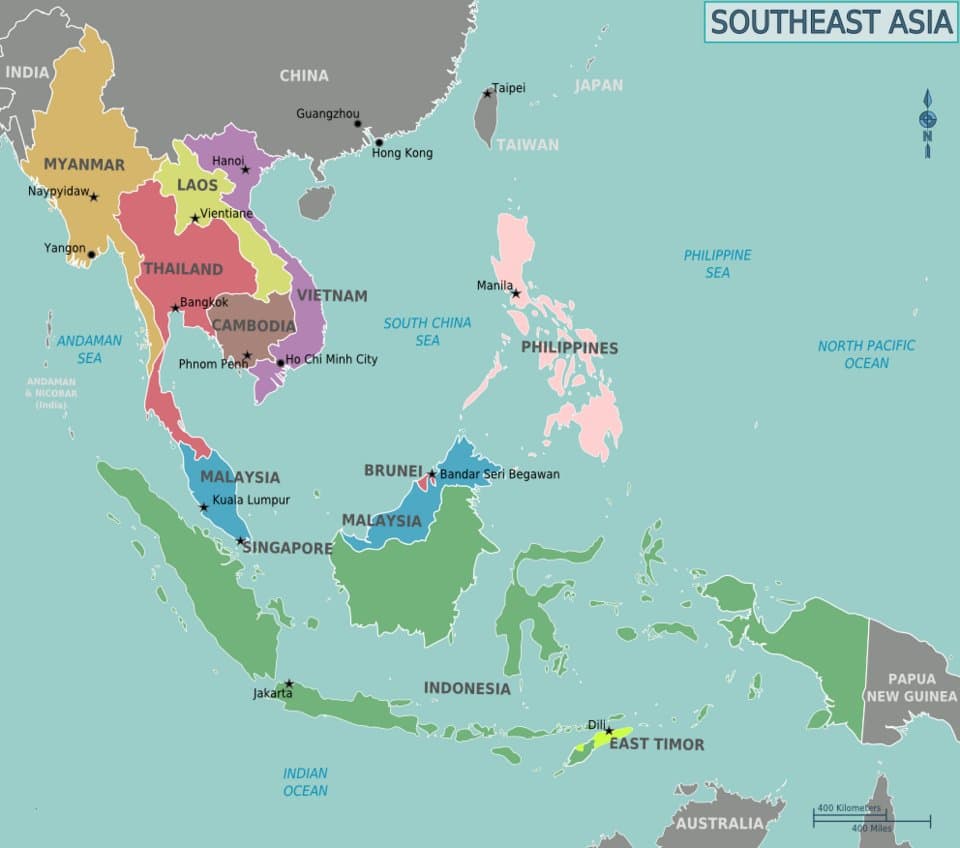
Giant danios are native to the Western Ghats mountain range along the western coast of India and to Sri Lanka. The Western Ghats are one of the world’s biodiversity hotspots, home to thousands of species found nowhere else on Earth. Within this region, giant danios inhabit fast-flowing hill streams, rivers, and tributaries at various elevations. These are clear, well-oxygenated waters that move quickly over rocky and gravelly substrates, often shaded by overhanging vegetation.
The habitat gives you strong clues about what this fish needs in an aquarium. In the wild, giant danios are used to current. They’re built for it, with their streamlined, torpedo-shaped bodies and powerful swimming ability. The water in these hill streams tends to be moderately soft to moderately hard with a near-neutral to slightly alkaline pH. Temperatures in these elevated waterways are on the cooler side of tropical, which is why giant danios do well in the 72 to 81°F (22 to 27°C) range rather than needing the warmer temperatures that many South American or Southeast Asian tropicals prefer.
During the monsoon season, these streams swell with rainfall, and giant danios have adapted to handle fluctuating water levels and seasonal changes in flow. This adaptability translates directly to their hardiness in captivity. They can handle a wider range of water conditions than many community fish, which is one of the reasons they’ve remained popular in the hobby for so long.
Appearance & Identification
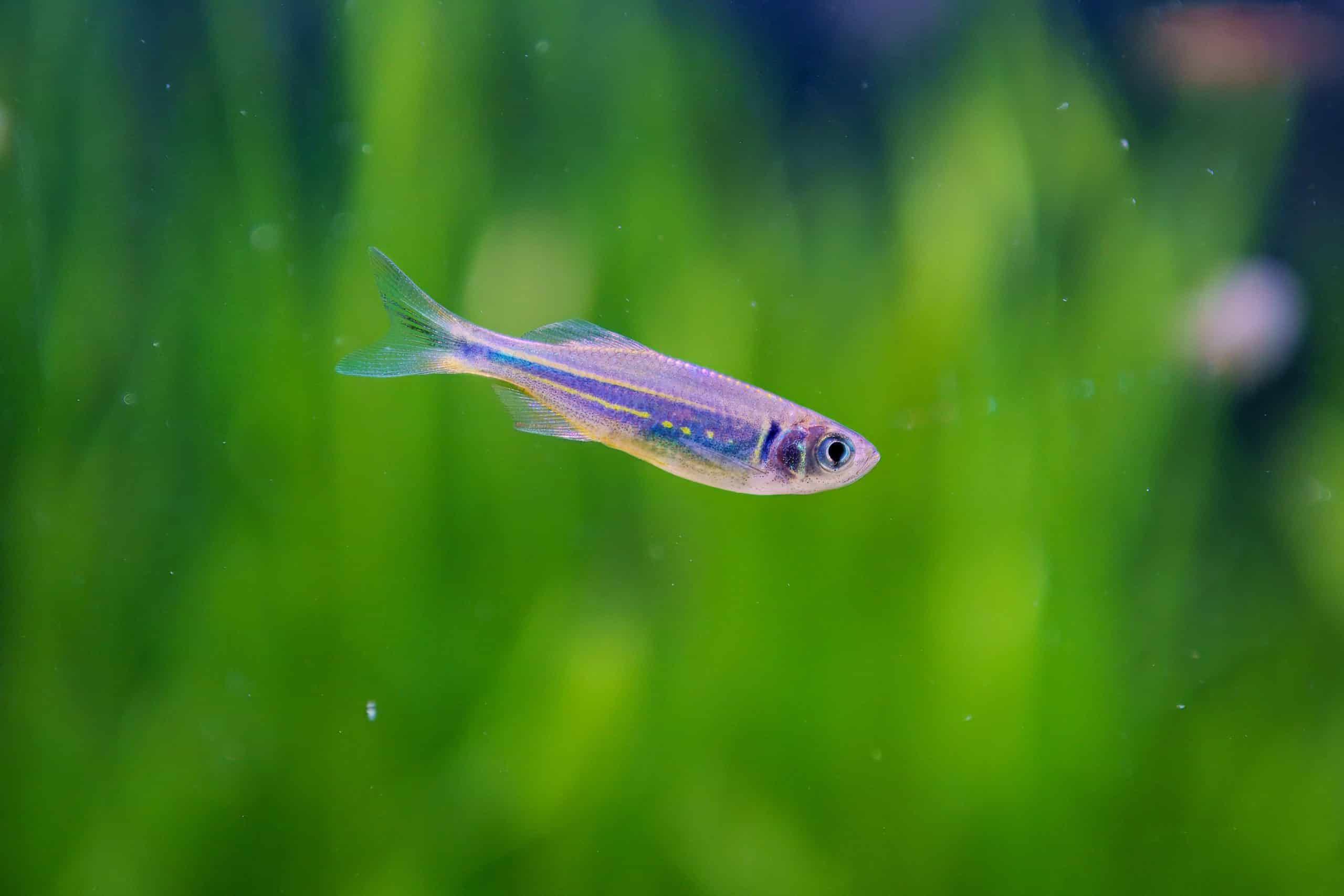
The giant danio is a striking fish when it catches the light. The body is elongated and laterally compressed with a streamlined profile built for speed. The base color is a steel blue to blue-green with several bright yellow to gold horizontal stripes and spots running along the flanks from behind the gill cover to the caudal peduncle. These markings can appear iridescent, flashing blue-green and gold as the fish moves. The overall effect is a fish that looks far more colorful in person than it does in most photos.
The fins are mostly translucent with a slight yellowish or greenish tint. The dorsal fin is set well back on the body, and the caudal fin is forked, both traits that contribute to the fish’s impressive swimming speed and agility. A pair of short barbels are present at the corners of the mouth, typical of the danio group.
Male vs. Female
Sexing giant danios becomes easier as the fish mature. Females are noticeably fuller and deeper-bodied than males, especially when carrying eggs. A gravid female will appear significantly rounder when viewed from above. Males tend to be slimmer, more streamlined, and often display slightly more vivid coloration, particularly in the blue and gold tones along the flanks. During spawning condition, the color difference between the sexes becomes more apparent, with males intensifying their iridescent markings. In juvenile fish, sexing is very difficult, so if you’re looking to get a mixed group, buy 6 or more and let nature sort it out.
Average Size & Lifespan
Giant danios live up to their name. They reach 4 to 6 inches (10 to 15 cm) in total length when fully grown, which makes them significantly larger than the common zebra danio at 2 inches (5 cm). Most aquarium specimens settle in around 4 to 5 inches (10 to 13 cm), with well-fed fish in spacious tanks occasionally pushing toward 6 inches (15 cm). This size puts them in a different category when it comes to tank requirements and compatible species.
With proper care, giant danios typically live 3 to 5 years in captivity. Some hobbyists have reported individuals reaching the 5-year mark, but 3 to 4 years is more typical. As with most fish, lifespan is closely tied to water quality, diet, and stress levels. Keeping them in a spacious tank with appropriate school sizes and stable conditions will give them the best shot at a longer life.
Giant danios are exactly that – large, active schooling fish reaching 4 inches (10 cm). They are hardy and easy to keep, but their size and high activity level require more space than most danio species.
Care Guide
Tank Size
A 30-gallon (114-liter) tank is the minimum for a group of giant danios, but bigger is genuinely better here. These are not fish that sit still. They are among the most active freshwater species you can keep, and they need room to stretch out and swim. A 30-gallon breeder or a 40-gallon breeder with a longer footprint is ideal because the extra horizontal length gives them the swimming lanes they need. A tall, narrow tank of the same volume will leave them frustrated and more prone to jumping.
If you’re planning a larger community with other active species, consider a 55-gallon or larger. The more space you give giant danios, the more natural their behavior will look and the less likely they are to bother slower tank mates.
A tight-fitting lid is absolutely essential. Giant danios are powerful jumpers. They will clear several inches of air above the waterline, and any gap in the tank cover is an invitation for a floor-dried fish. If you run a rimless or open-top setup, you’ll need a mesh cover or acrylic lid, or simply choose a different species.
Water Parameters
| Parameter | Ideal Range |
|---|---|
| Temperature | 72 to 81°F (22 to 27°C) |
| pH | 6.0 to 8.0 |
| General Hardness (GH) | 5 to 20 dGH |
| Ammonia | 0 ppm |
| Nitrite | 0 ppm |
| Nitrate | Below 20 ppm |
Giant danios are refreshingly easy to keep when it comes to water chemistry. They accept a broad pH range from 6.0 to 8.0, which means most tap water will work without any adjustments. The hardness range is equally forgiving at 5 to 20 dGH. Rather than chasing a specific number, focus on keeping conditions stable. Consistent water parameters and regular weekly water changes of 25 to 30% will do more for your giant danios than obsessing over hitting a particular pH target.
Temperature-wise, they’re comfortable in the standard tropical range of 72 to 81°F (22 to 27°C). They come from hill streams where temperatures sit on the cooler end of tropical, so they don’t need the warmer water that many South American species prefer. A heater set to around 75°F (24°C) is a good middle ground for most community setups.
Filtration & Water Flow
Given their origin in fast-flowing hill streams, giant danios appreciate moderate to strong water flow. A hang-on-back filter or canister filter that generates some current across the length of the tank is ideal. You’ll often see them swimming directly into the filter output, which is a behavior that mimics their natural stream environment. If your filter doesn’t create enough movement, adding a small powerhead can help replicate the conditions they thrive in.
Good filtration is also important because a school of 4 to 6 inch fish in a 30 to 55 gallon tank produces a meaningful bioload. Choose a filter rated for at least your tank’s volume, and consider slightly oversizing it. These fish are active eaters and produce waste accordingly.
Lighting
Giant danios don’t have specific lighting requirements. Standard aquarium lighting on a regular day/night cycle works perfectly fine. That said, their iridescent blue-green and gold coloring looks its absolute best under moderate lighting. Overly bright light can wash them out, while moderate to slightly subdued lighting brings out the metallic sheen along their flanks. If you’re running a planted tank, whatever light your plants need will work for the fish as well.
Plants & Decorations
Giant danios do well in planted tanks, but you’ll want to plan the layout around their swimming habits. Leave the center and front of the tank open for swimming space, and focus your planting along the sides and back. Hardy, fast-growing plants like Vallisneria, Java fern, and Anubias work well because they can handle the water flow these fish prefer and won’t get uprooted by their activity. Floating plants can help diffuse overhead light and provide some cover, which may also reduce jumping behavior.
Driftwood and smooth river rocks make natural-looking decorations that also help break up sight lines. Avoid sharp-edged decorations, since giant danios swim at high speed and could injure themselves on anything with jagged points.
Substrate
Giant danios spend almost all their time in the middle and upper water column, so substrate choice is more about your plants and tank mates than the danios themselves. Sand, fine gravel, or a planted tank substrate all work well. If you want to recreate a hill stream look, a mix of smooth river pebbles over a fine gravel base gives a natural appearance that fits the species nicely.
Is the Giant Danio Right for You?
Before you buy, run through this honest checklist. The Giant Danio is a great fish for the right keeper, but it is not for everyone.
- You have a 55-gallon or larger tank, ideally 4+ feet long
- You want an active, fast-swimming school fish that fills the upper water column
- You can keep a group of 6-8+ for proper schooling behavior
- Your tank has other medium-sized, active species that can handle the pace
- You enjoy watching fast, dynamic schooling motion
- You have a secure lid. Giant Danios are notorious jumpers
- You do NOT have slow-moving, timid species that will be stressed by constant activity
Tank Mates
Giant danios are peaceful fish, but “peaceful” comes with a caveat here. They’re boisterous, fast, and constantly in motion. They won’t actively attack other fish, but their relentless activity can stress out slow, timid, or shy species. The ideal tank mates are fish that are a similar size, can handle some activity in the tank, and won’t be outcompeted for food.
One of the best uses for giant danios is as dither fish in larger cichlid tanks. Their bold, fearless swimming encourages shy cichlids to come out into the open. They’re large enough that most medium-sized cichlids won’t view them as food, and they’re fast enough to stay out of trouble.
Best Tank Mates
- Rainbowfish (Boesemani, Turquoise, etc.), active swimmers of a similar size that match the giant danio’s energy level perfectly
- Medium-sized barbs (Tiger barbs, Rosy barbs, Odessa barbs), tough, active, and won’t be intimidated by fast-moving danios
- Medium-sized cichlids (Severums, Firemouths, Blue Acaras, Geophagus), giant danios make excellent dither fish that draw these cichlids out of hiding
- Larger gouramis (Pearl gouramis, Moonlight gouramis), can coexist as long as the tank is spacious enough
- Loaches (Clown loaches, YoYo loaches), bottom dwellers that occupy a different zone and add activity at the lower levels
- Larger corydoras or Brochis, peaceful bottom feeders that stay out of the danios’ way
- Larger plecos (Bristlenose, Rubber Lip), stay at the bottom and on glass, no conflict with mid-to-top swimmers
Tank Mates to Avoid
- Small fish (Neon tetras, Endlers, Celestial Pearl Danios), anything small enough to fit in a giant danio’s mouth is at risk, and even if they’re not eaten, the size and speed difference causes significant stress
- Bettas, too slow, too fragile, and the giant danio’s constant movement will stress them relentlessly
- Fancy guppies, the flowing fins are a target, and guppies can’t compete with giant danios at feeding time
- Dwarf cichlids (Rams, Apistos), too small and too timid to handle the giant danio’s boisterous nature
- Large aggressive cichlids (Oscars, Jack Dempseys, large Mbuna), any fish big enough and aggressive enough to injure or eat giant danios should be avoided
- Very slow or sedentary fish (Discus, Angelfish), the frantic activity of a school of giant danios will stress these calmer species
Food & Diet
Giant danios are enthusiastic omnivores that will eat just about anything you offer them. They’re aggressive surface and midwater feeders that hit food fast and hit it hard. A high-quality flake food or pellet sized appropriately for their larger mouths should form the foundation of their diet.
To keep them in peak condition and bring out their best color, supplement their staple diet with:
- Frozen or live foods: Bloodworms, brine shrimp, daphnia, and mosquito larvae. These protein-rich foods are especially important for conditioning breeding fish.
- Freeze-dried foods: Tubifex worms, brine shrimp, and krill provide a convenient alternative to frozen.
- Small insects: In the wild, giant danios eat a lot of insects that fall on the water surface. Wingless fruit flies or small crickets are accepted eagerly if you can source them.
- Blanched vegetables: Spirulina-based flakes or blanched zucchini add vegetable matter to balance the diet.
Feed once or twice daily, only what the school can consume in two to three minutes. Giant danios are fast eaters and will outcompete slower tank mates for food, so if you keep them in a community, make sure other species are getting their share. Dropping sinking pellets or wafers for bottom dwellers at the same time you feed the danios at the surface can help distribute food more evenly.
Breeding & Reproduction
Giant danios are egg scatterers that can be bred in captivity with some preparation. They’re not as effortlessly easy to breed as zebra danios, but experienced hobbyists can get them to spawn reliably with the right setup and conditioning.
Breeding Difficulty
Moderate. Giant danios will sometimes spawn spontaneously in a community tank, but raising fry requires a dedicated breeding setup because the adults will eat their own eggs without hesitation.
Spawning Tank Setup
Set up a separate breeding tank of 20 gallons or larger with a shallow water level of 6 to 8 inches (15 to 20 cm). The most important element is an egg trap at the bottom. A layer of glass marbles, a mesh screen, or dense clumps of Java moss or spawning mops will allow eggs to fall through and settle out of reach of the adults. Add a gentle sponge filter for aeration and biological filtration without creating currents strong enough to scatter eggs.
Water Conditions for Breeding
Breeding water should be slightly warmer than normal maintenance temperatures, around 77 to 81°F (25 to 27°C). Keep the pH near neutral at 6.5 to 7.0 with soft to moderately soft water around 8 to 12 dGH. A large partial water change with slightly cooler water can help trigger spawning, simulating the onset of the monsoon rains in their native habitat.
Conditioning & Spawning
Condition the breeding group with high-protein live or frozen foods like bloodworms, brine shrimp, and daphnia for one to two weeks before attempting to spawn them. Use a group with two males for every female for best results. Introduce the conditioned fish to the breeding tank in the evening. Spawning typically occurs the following morning at first light. Males will actively chase the females, driving them through the plants or over the egg trap. A single female can release 200 to 300 eggs during a spawning event.
The eggs are small, clear, and non-adhesive. Remove the adults immediately after spawning is complete. Giant danios are aggressive egg eaters and will devour the entire clutch if given the opportunity.
Egg & Fry Care
Eggs typically hatch within 24 to 48 hours at 78 to 80°F (26 to 27°C). The fry will absorb their yolk sacs over the next day or two before becoming free-swimming. Once free-swimming, start feeding infusoria or commercially available liquid fry food. After a few days, transition to freshly hatched baby brine shrimp, which provides the protein needed for rapid growth. Within four to six weeks, the fry should be large enough to accept finely crushed flake food. Keep the breeding tank dimly lit during the first few days, as eggs and newly hatched fry can be sensitive to bright light. Adding a few drops of methylene blue helps prevent fungal growth on unfertilized eggs.
Common Health Issues
Giant danios are hardy fish that rarely get sick when kept in clean, well-maintained conditions. However, no fish is completely immune to disease, and there are a few issues to watch for.
Ich (White Spot Disease)
Ich is one of the most common freshwater fish diseases, and giant danios can contract it, especially after the stress of shipping or a sudden temperature change. It appears as small white spots scattered across the body and fins. Treatment is straightforward: raise the temperature gradually to 82 to 86°F (28 to 30°C) for 10 to 14 days to speed up the parasite’s life cycle, and add an ich medication containing malachite green or formalin. Giant danios tolerate standard medications well.
Columnaris
Columnaris is a bacterial infection that can appear as white or grayish patches on the body, frayed fins, or cottony growths around the mouth. It’s often triggered by stress, poor water quality, or overcrowding. Treatment involves antibacterial medications and addressing the underlying water quality issues. Catching it early is key, as columnaris can progress rapidly in warm water.
Fin Rot
Fin rot typically results from bacterial infection secondary to poor water conditions or physical injury. Giant danios can occasionally damage their fins during their high-speed swimming, particularly if the tank has sharp decorations. The affected fins appear ragged, discolored, or progressively shorter. Improving water quality with more frequent water changes and treating with an antibacterial medication usually resolves it.
General Prevention
Quarantine all new fish for at least two weeks before adding them to your main tank. Maintain consistent water quality with regular 25 to 30% weekly water changes. Avoid temperature swings and overcrowding. A clean, well-filtered tank with stable parameters is the best defense against disease for any fish, and giant danios are no exception.
Common Mistakes to Avoid
- No lid on the tank. Giant danios are powerful jumpers that can clear several inches of air. If there’s a gap in the cover, they will find it. A tight-fitting lid is not optional with this species.
- Tank too small. A 10 or 20-gallon tank is not enough for a school of fish that grows to 4 to 6 inches and never stops swimming. Start at 30 gallons minimum and prioritize horizontal length over height.
- Keeping too few. Giant danios are schooling fish that need a group of at least 6. Small groups of 2 or 3 often become stressed and may chase or nip at other tank mates to compensate for lacking a proper school.
- Housing them with small, timid fish. Giant danios don’t mean any harm, but their size and constant high-speed activity will stress out small tetras, dwarf cichlids, and other timid species. Match them with fish that can handle the energy.
- Not enough water flow. These fish come from fast-flowing hill streams. A tank with minimal filtration and stagnant water doesn’t replicate their natural environment. Moderate to strong flow keeps them happiest.
- Underestimating their adult size. People buy them as small juveniles at 1 to 2 inches and don’t plan for a fish that will triple or quadruple in size. Make sure your setup can accommodate fully grown adults.
Where to Buy
Giant danios are widely available in the aquarium hobby. Most well-stocked local fish stores carry them, and they’re commonly found at chain pet stores as well. Prices are very reasonable, typically running $3 to $6 per fish depending on size and source. Since you’ll want a school of at least 6, you’re looking at a modest investment to get started.
For healthier, better-conditioned stock that’s been properly quarantined before shipping, I’d recommend checking Flip Aquatics or Dan’s Fish. Both are reputable online retailers that ship fish in excellent condition and offer a significant step up in quality compared to what you’ll typically find at big-box pet stores. Buying online also gives you the option to pick the exact number you want for a proper school.
Frequently Asked Questions
How big do giant danios get?
Giant danios reach 4 to 6 inches (10 to 15 cm) in total length when fully grown. Most aquarium specimens settle in around 4 to 5 inches (10 to 13 cm). This makes them significantly larger than zebra danios and most other danio species commonly found in the hobby.
Are giant danios aggressive?
No, giant danios are peaceful fish. However, they are boisterous and extremely active. Their constant high-speed swimming can stress out slow, timid, or small tank mates even though the danios aren’t actually attacking them. Choose tank mates that are a similar size and can handle an active environment.
Can I keep giant danios with cichlids?
Yes, and this is actually one of the best uses for giant danios. They make excellent dither fish for medium-sized cichlid tanks. Their bold, active swimming draws shy cichlids out into the open. They work well with species like Severums, Firemouths, Blue Acaras, and Geophagus. Avoid pairing them with large, highly aggressive cichlids like Oscars or Jack Dempseys that could injure or eat them.
How many giant danios should I keep together?
Keep a minimum of 6 giant danios. They are schooling fish that feel most secure and display the best behavior in a group. Smaller groups of 2 or 3 often become stressed, nippy, and erratic. A school of 8 to 10 in a larger tank is even better, as the group dynamics become more natural and any chasing behavior stays within the school.
Do giant danios jump out of the tank?
Absolutely, and they’re good at it. Giant danios are powerful jumpers that can clear several inches of air above the waterline. Jumping is a natural behavior in stream-dwelling fish, and it’s triggered by everything from feeding excitement to being startled. A tight-fitting lid with no gaps is essential. This is one of the most common reasons people lose giant danios, and it’s completely preventable.
What is the difference between a giant danio and a zebra danio?
The most obvious difference is size. Giant danios grow to 4 to 6 inches (10 to 15 cm), while zebra danios max out around 2 inches (5 cm). They’re also different species in different genera: the giant danio is Devario malabaricus while the zebra danio is Danio rerio. Giant danios need a larger tank (30 gallons vs. 10 gallons minimum), prefer slightly warmer water, and are better suited as dither fish for larger community setups. Both share the typical danio traits of active swimming, hardiness, and a tendency to jump.
How the Giant Danio Compares to Similar Species
Giant Danio vs. Scissortail Rasbora
Both are large, active schoolers that need long tanks. The Giant Danio is faster and more boisterous, while the Scissortail Rasbora is more graceful with its signature tail movement. Both need groups and lots of swimming room. The Giant Danio is more demanding of space but adds incredible energy to a large tank.
Giant Danio vs. Zebra Danio
The Zebra Danio is the miniature version. same energy, much smaller package. If you want danio behavior but have a smaller tank, the Zebra Danio is the obvious choice. If you have a big tank and want maximum impact, the Giant Danio is the species to go with.
Expert Take (Mark Valderrama, AquariumStoreDepot)
After 25 years in the hobby and time managing fish stores, the giant danio is one of those species I always recommend to hobbyists ready to move beyond the basics. Giant danios are exactly that – large, active schooling fish reaching 4 inches (10 cm). They are hardy and easy to keep, but their size and high activity level require more space than most danio species. Giant danios need at least a 55-gallon tank with long horizontal swimming space. Their 4-inch (10 cm) size and schooling pace make a 30-gallon tank too small for a proper school of 6+.
Closing Thoughts
The giant danio is one of the most underappreciated community fish in the hobby. It’s large enough to hold its own with medium-sized tank mates, colorful enough to turn heads when the light hits it right, hardy enough to forgive beginner mistakes, and active enough to bring real energy to any tank. As a dither fish for cichlid setups, there are few better options at this price point.
The care requirements are straightforward: give them space to swim, keep the lid on, maintain clean water, and keep them in a proper school. Do those things, and a group of giant danios will reward you with years of bold, active, and genuinely entertaining behavior. They’re proof that you don’t need to spend a fortune on rare or exotic species to have a stunning, dynamic aquarium.
Have you kept giant danios? How do they fit into your community tank? Drop a comment below!
Recommended Video
Check out our danio video where we cover the most popular danios in the hobby:
References
- Devario malabaricus (Jerdon, 1849) — FishBase
- Devario malabaricus Profile — Seriously Fish
- Giant Danio Care Guide — Practical Fishkeeping
- TFH Magazine — Tropical Fish Hobbyist
- About the Author
- Latest Posts

I’m Mark Valderrama, founder of Aquarium Store Depot and a fishkeeper with over 25 years of hands-on experience. I started in the hobby at age 11, worked at local fish stores, and have kept freshwater tanks, ponds, and reef tanks ever since. I’ve been featured in two best-selling aquarium books on Amazon and built this site to share practical, experience-based fish keeping knowledge.
Leave a Reply