
Last Updated: June 25, 2026
Thank you for visiting! By the way… any links on this page that lead to products on Amazon and other stores/partners are affiliate links Aquarium Store Depot earns a commission if you make a purchase.
Table of Contents
- What Care Guides Get Wrong
- Key Takeaways
- Species Overview
- Classification
- Origin & Natural Habitat
- Appearance & Identification
- Average Size & Lifespan
- Care Guide
- Is It Right for You?
- Tank Mates
- Food & Diet
- Breeding & Reproduction
- Common Health Issues
- Common Mistakes to Avoid
- Where to Buy
- Frequently Asked Questions
- Species Comparison
- Closing Thoughts
- References
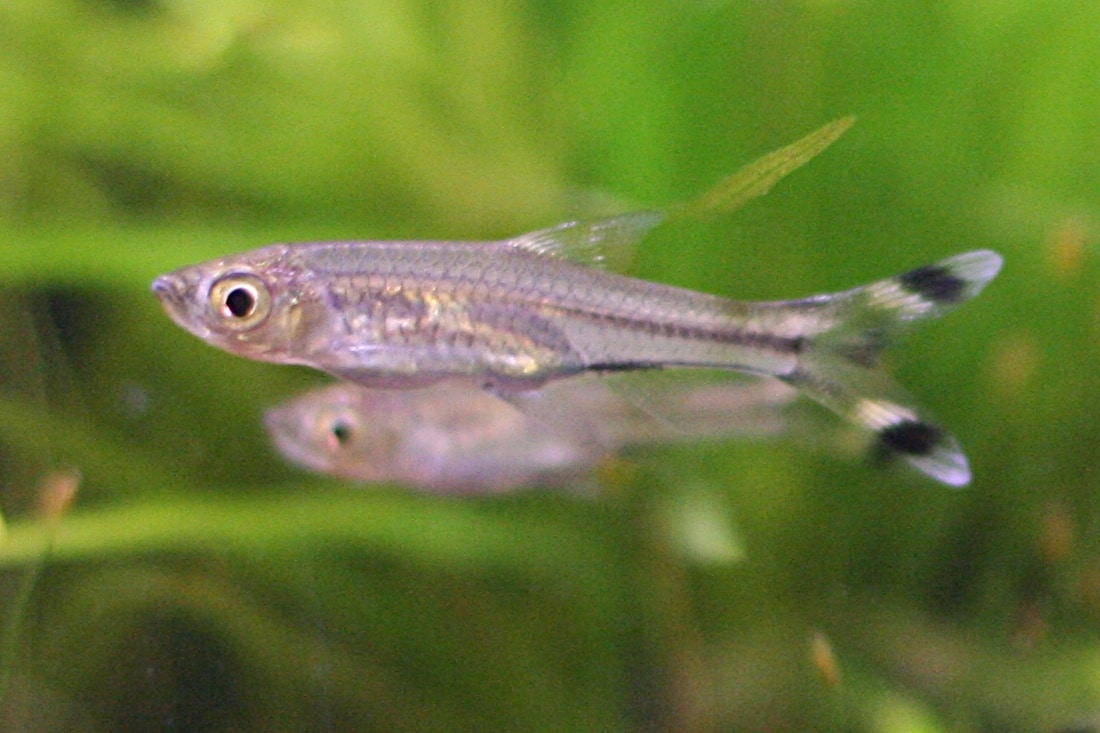
The scissortail rasbora is one of those fish that catches your eye from across the room. It’s bigger than most rasboras, topping out around 5 inches (13 cm), and it has this unmistakable caudal fin that opens and closes in a twitching, scissor-like motion as it swims. Once you notice it, you can’t unsee it. That little flicking movement is what earned Rasbora trilineata its common name, and it’s one of the most distinctive behaviors you’ll see in any freshwater schooling fish.
What Most Care Guides Get Wrong About the Scissortail Rasbora
The Scissortail Rasbora is one of the most underappreciated community fish in the hobby. The misconception is that it is a plain silver fish with no personality. Watch a school of 8+ in a large tank and you will change your mind fast. The scissoring tail motion is mesmerizing, and a tight school moving in unison is one of the best sights in freshwater fishkeeping. The mistake people make is keeping 3-4 in a 20-gallon tank, where they just look like stressed generic silver fish. This species needs numbers and space to shine.
Despite its larger size, the scissortail rasbora is a thoroughly peaceful community fish with a care level that suits beginners and experienced hobbyists alike. They’re hardy, they eat everything, and they look spectacular in groups of six or more zipping around the upper half of a well-planted tank. If you’ve been keeping smaller rasboras like harlequins or chili rasboras and you want something with more presence, the scissortail is a natural step up. Let’s walk through everything you need to know to keep them happy and healthy.
Key Takeaways
- One of the larger rasbora species, reaching up to 5 inches (13 cm), so they need a minimum 30-gallon tank with plenty of horizontal swimming space
- Named for their distinctive tail — the deeply forked caudal fin has black and yellow markings and twitches open and closed like a pair of scissors while the fish swims
- Excellent community fish that do well with similarly sized peaceful species, but they’re too large and active to pair with nano fish
- Keep in groups of 6 or more — they’re a true schooling species that looks best and behaves most naturally in a sizable group
- Active swimmers that appreciate some current — provide moderate water flow and open swimming areas in the middle and upper water column
- Known jumpers — a tight-fitting lid is essential, as these active swimmers will leap out of uncovered tanks
- Hardy and easy to care for with a wide tolerance for water parameters, making them a great choice for beginner community tanks
Species Overview
| Field | Details |
|---|---|
| Scientific Name | Rasbora trilineata (Steindachner, 1870) |
| Common Names | Scissortail Rasbora, Three-lined Rasbora |
| Family | Danionidae |
| Origin | Southeast Asia (Thailand, Malaysia, Borneo, Sumatra) |
| Care Level | Easy |
| Temperament | Peaceful |
| Diet | Omnivore |
| Tank Level | Mid to Top |
| Maximum Size | 5 inches (13 cm) |
| Minimum Tank Size | 30 gallons (114 liters) |
| Temperature | 73 to 78°F (23 to 26°C) |
| pH | 6.0 to 7.5 |
| Hardness | 2 to 10 dGH |
| Lifespan | 5+ years |
| Breeding | Egg scatterer |
| Breeding Difficulty | Moderate |
| Compatibility | Community |
| OK for Planted Tanks? | Yes |
Classification
| Taxonomic Level | Classification |
|---|---|
| Order | Cypriniformes |
| Family | Danionidae (formerly placed in Cyprinidae) |
| Genus | Rasbora |
| Species | R. trilineata (Steindachner, 1870) |
The scissortail rasbora was first described by Franz Steindachner in 1870 as Rasbora trilineata, and that name has remained remarkably stable over the years. The species name “trilineata” translates to “three-lined,” referring to the faint horizontal lines running along the body. Unlike many other rasbora species that have been reclassified into new genera in recent years (like Trigonostigma for the harlequin rasboras), R. trilineata has stayed right where it was originally placed.
The family Danionidae itself was separated from the broader Cyprinidae in relatively recent taxonomic revisions, which is why you’ll still occasionally see older references listing scissortails under Cyprinidae. The current accepted classification places them in Danionidae, and that’s what you’ll find in modern databases.
Origin & Natural Habitat
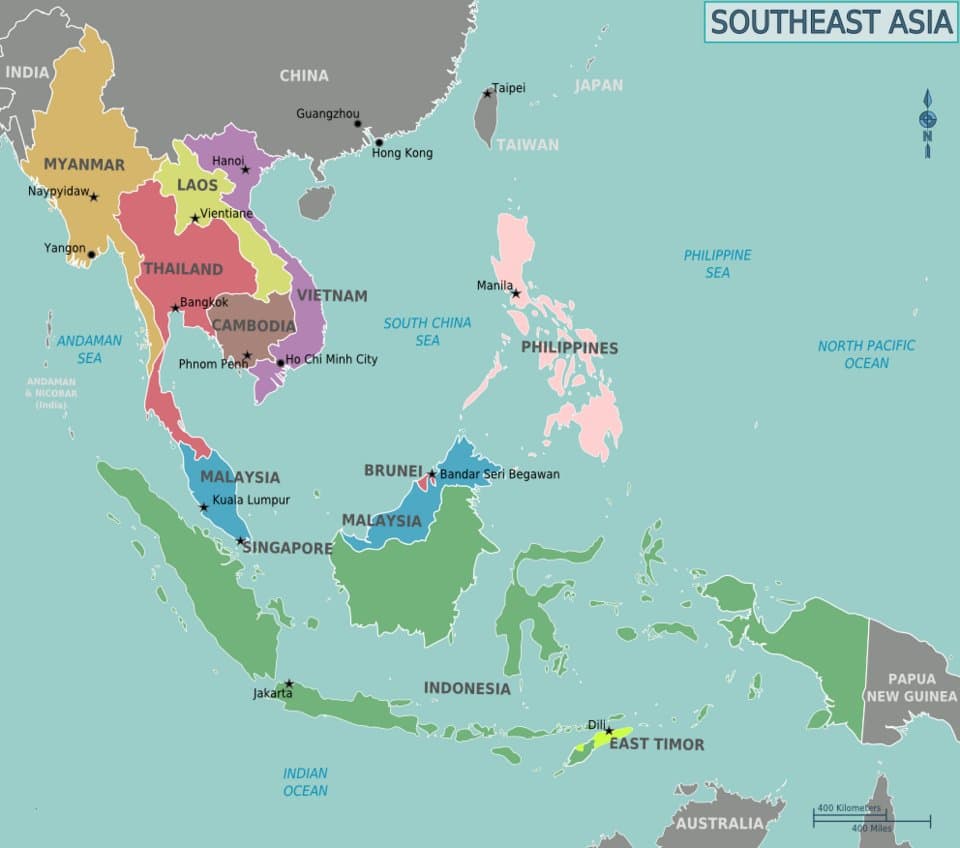
Scissortail rasboras are native to Southeast Asia, with a range that covers Thailand, peninsular Malaysia, Borneo, and Sumatra. They’ve been collected across a wide area within these regions, inhabiting rivers, streams, and associated flood plains in lowland tropical forests. Their distribution spans the major river basins of Thailand, Malaysia, and Indonesia.
In the wild, they favor areas with moderate current, typically clear or slightly tannin-stained water flowing over sandy or gravelly substrates. They tend to occupy the middle and upper portions of the water column, staying in open water rather than hiding among dense vegetation. That said, they’re usually found near areas with some overhanging vegetation and submerged roots that provide cover when needed. The water in their natural habitats is generally soft and slightly acidic, though conditions can vary depending on the specific watershed and seasonal changes.
These are not fish from tiny, still jungle pools. They come from flowing environments with room to swim, which is an important detail to keep in mind when setting up their aquarium. If you want your scissortails to feel at home, think open water with some current rather than a densely planted, still-water setup.
Appearance & Identification
The scissortail rasbora has a streamlined, somewhat elongated body with a silvery base color that can show a subtle greenish or olive sheen under good lighting. It’s not the most colorful fish in the hobby by any means, but what it lacks in vivid pigment it makes up for with form and movement. The body is semi-translucent, and you can often see the outline of internal organs and the dark line of the gut, which is common among many rasbora species.
The defining feature, of course, is the tail. The caudal fin is deeply forked, with each lobe bearing a bold black bar tipped with yellow or white. When the fish swims, the lobes of the tail open and close in a rhythmic twitching motion that looks exactly like a pair of scissors snipping. It’s a constant, involuntary movement, and in a school of six or more fish, the effect of all those tails flicking in unison is surprisingly eye-catching.
The “three-lined” part of the name refers to faint horizontal lines that run along the body. The most visible is a dark midlateral stripe that extends from behind the gill cover to the base of the tail. Two additional lines, one above and one below, are often quite faint and may only be visible under certain lighting conditions or at specific angles. They’re more prominent in some individuals than others.
Male vs Female
Telling male and female scissortail rasboras apart isn’t always easy, but there are some clues once the fish are mature. Females tend to be slightly larger and noticeably deeper-bodied, especially when they’re carrying eggs. A gravid female will have a rounder, fuller belly compared to the more streamlined profile of a male. Males are generally a touch slimmer and may show slightly more vivid markings on the caudal fin, though this difference is subtle. There’s no dramatic color difference between the sexes, so body shape is your most reliable indicator.
Average Size & Lifespan
Scissortail rasboras can reach up to 5 inches (13 cm) in total length, making them one of the larger commonly kept rasbora species. In aquariums, most individuals top out around 4 to 4.5 inches (10 to 11 cm), but well-fed fish in spacious tanks can certainly hit the full 5-inch mark. This is a significantly bigger fish than popular rasboras like harlequins or lambchops, so plan your tank size accordingly.
With proper care, scissortail rasboras typically live 5 to 7 years in captivity. Some hobbyists have reported individuals reaching 8 years in ideal conditions. Clean water, a balanced diet, and a stress-free environment with appropriate group sizes all contribute to pushing them toward the upper end of that range. As with most fish, consistently poor water quality is the single biggest factor that shortens lifespan.
Scissortail rasboras are one of the larger rasbora species, reaching 3 inches (7.5 cm). They are fast, active schooling fish that need more horizontal swimming space than most nano rasboras.
Care Guide
Tank Size
A 30-gallon tank is the minimum for a group of scissortail rasboras. This is a bigger requirement than most rasbora species, and it’s driven entirely by their size and activity level. These are strong, fast swimmers that spend most of their time cruising the middle and upper portions of the tank. In anything smaller than 30 gallons, they simply won’t have the room they need to swim comfortably, and you’ll see stunted growth and stressed behavior as a result.
If you can go bigger, do it. A 40-gallon breeder or a standard 55-gallon tank gives a school of 6 to 8 scissortails the kind of swimming space where they really shine. Prioritize horizontal swimming length over height. These fish want to cruise back and forth across the tank, not swim up and down. A long, shallow tank is better than a tall, narrow one.
Water Parameters
| Parameter | Ideal Range |
|---|---|
| Temperature | 73 to 78°F (23 to 26°C) |
| pH | 6.0 to 7.5 |
| Hardness | 2 to 10 dGH |
| Ammonia | 0 ppm |
| Nitrite | 0 ppm |
| Nitrate | Below 20 ppm |
Scissortail rasboras are quite adaptable when it comes to water chemistry. They do well across a range of pH values from slightly acidic to neutral, and they can handle both soft and moderately hard water without issues. The key, as with most freshwater fish, is consistency. Stable parameters matter more than hitting a perfect number. Keep ammonia and nitrite at zero, nitrates under 20 ppm, and maintain a regular water change schedule of 25 to 30% weekly. That’s really all it takes.
Filtration & Water Flow
This is where scissortail rasboras differ from a lot of other rasboras. They actually appreciate some current in the tank. In the wild, they come from rivers and streams with moderate flow, and they’re strong enough swimmers to handle it easily. A hang-on-back filter or canister filter that produces a noticeable but not overpowering flow across the length of the tank is ideal. You don’t want to turn the tank into a whitewater rapids situation, but a gentle to moderate current will keep your scissortails active and engaged.
Aim for a filter rated for your tank size or slightly above. Good mechanical and biological filtration is important, especially in a tank with a school of larger-bodied rasboras that produce more waste than their smaller cousins. If you’re running a canister filter, positioning the outflow to create a linear current from one end of the tank to the other gives the fish a natural flow pattern to swim against.
Lighting
Scissortail rasboras don’t have any special lighting requirements. Standard aquarium lighting suitable for growing live plants works perfectly. They come from environments with a mix of open water and shaded areas, so moderate lighting is ideal. If your lights are on the brighter side, providing some floating plants to create shaded zones gives them areas to retreat to when they want a break from the spotlight. A consistent photoperiod of 8 to 10 hours daily helps maintain a natural rhythm.
Plants & Decorations
The most important thing when decorating a scissortail rasbora tank is to leave plenty of open swimming space in the middle and upper portions of the tank. These are not fish that spend their time weaving through dense plant thickets. They want room to cruise. Plant around the perimeter and back of the tank, using taller stem plants like Vallisneria, Hygrophila, or Amazon swords to create a natural-looking backdrop, but keep the center of the tank relatively open.
Driftwood and smooth rocks can provide visual interest and break up sight lines without blocking swimming lanes. Floating plants like Amazon frogbit or red root floaters are a nice addition since they provide shaded areas and help diffuse light, mimicking the overhanging vegetation found in their natural habitats. Just make sure floating plants don’t completely cover the surface, as scissortails are mid-to-top swimmers that appreciate access to the upper water column.
Substrate
Substrate choice is not critical for scissortail rasboras since they spend almost no time near the bottom of the tank. Fine gravel, sand, or aquasoil all work equally well. If you’re keeping live plants, choose a substrate that supports plant growth. Dark-colored substrates tend to bring out the contrast of the fish’s silver body and black-marked tail, making them look more visually striking. But honestly, this is more of an aesthetic preference than a care requirement.
Is the Scissortail Rasbora Right for You?
Before you buy, run through this honest checklist. The Scissortail Rasbora is a great fish for the right keeper, but it is not for everyone.
- You have a 40-gallon or larger tank, preferably long rather than tall
- You can keep a school of 8+ for the signature synchronized swimming
- You want an active, fast-swimming schooler that uses the full length of your tank
- You enjoy motion and activity over static coloring
- Your tank has open swimming space with some planted areas for contrast
- You want a bulletproof species that adapts to most conditions
Tank Mates
Scissortail rasboras are peaceful schooling fish that get along with a wide range of community tank mates. Their size, however, means you need to think a little differently compared to picking companions for smaller rasboras. They do best with fish of a similar size and temperament.
Best Tank Mates
- Other medium rasboras — harlequin rasboras, brilliant rasboras, and similar mid-sized species
- Danios — giant danios and pearl danios make excellent companions given their similar size and activity level
- Barbs — cherry barbs, gold barbs, and odessa barbs are all good options. Avoid the nippier tiger barbs unless you keep them in large groups
- Tetras — larger tetras like black skirt tetras, Colombian tetras, or Congo tetras work well
- Corydoras catfish — any Corydoras species fills the bottom of the tank nicely while scissortails handle the upper levels
- Loaches — kuhli loaches, yo-yo loaches, and similar peaceful loach species
- Gouramis — pearl gouramis, honey gouramis, and dwarf gouramis are all compatible
- Rainbowfish — Boesemani, turquoise, or dwarf neon rainbowfish share a similar active swimming style
- Plecos and Otocinclus — bristlenose plecos and otos make good algae-eating companions
- Peaceful livebearers — larger platies and swordtails can work in the right setup
Tank Mates to Avoid
- Nano fish — chili rasboras, ember tetras, celestial pearl danios, and other tiny species may be stressed by the scissortail’s size and activity. While scissortails aren’t predatory, their constant fast swimming can overwhelm very small tank mates
- Small shrimp — adult cherry shrimp and Amano shrimp are generally safe, but baby shrimp may be picked off. If you’re running a serious shrimp breeding setup, scissortails aren’t the best choice
- Aggressive cichlids — Oscars, Jack Dempseys, and other large or territorial cichlids will bully or eat scissortails
- Slow, long-finned fish — while scissortails aren’t fin nippers, their fast, active swimming can stress out slow-moving species like fancy goldfish or long-finned bettas
- Very large predatory fish — anything big enough to fit a scissortail in its mouth should obviously be avoided
Food & Diet
Scissortail rasboras are unfussy omnivores that accept pretty much anything you offer them. In the wild, they feed on small insects, insect larvae, worms, zooplankton, and small crustaceans. In the aquarium, they’ll eagerly take a wide range of prepared and live foods.
A good quality flake food or micro pellet should form the staple of their diet. Supplement this regularly with frozen or live foods like bloodworms, daphnia, brine shrimp, and mosquito larvae. These protein-rich foods bring out better coloring and keep the fish in peak condition. Freeze-dried options work too, though frozen and live foods are nutritionally superior.
Feed once or twice daily, offering only what the school can consume in about two minutes. Scissortails are mid-to-top feeders and will grab food as it sinks through the water column. They’re not shy eaters and will be among the first fish to the surface at feeding time. Overfeeding is a bigger concern than underfeeding, as excess food quickly degrades water quality in any tank. A fasting day once a week doesn’t hurt, either.
Breeding & Reproduction
Breeding scissortail rasboras in captivity is possible but requires some dedicated effort. They’re egg scatterers that show no parental care, and they’ll eat their own eggs if given the chance. Most successful breeding happens in a separate spawning tank rather than in the main community setup.
Breeding Difficulty
Moderate. Scissortail rasboras are not as easy to breed as zebra danios or some other cyprinids, but they’re far from impossible. The main challenges are getting the water conditions right, conditioning the adults properly, and separating eggs from the parents quickly enough. If you’ve successfully bred other rasboras or egg-scattering species, you’ll have a head start.
Spawning Tank Setup
Set up a separate breeding tank of at least 20 gallons. Cover the bottom with a layer of glass marbles or a mesh screen that allows eggs to fall through but prevents the adults from reaching them. This is critical because scissortails will eat every egg they can find. Include some fine-leaved plants like Java moss or spawning mops to give the fish additional egg-scattering sites. Gentle filtration from a sponge filter provides water movement without pulling in eggs or fry.
Water Conditions for Breeding
Slightly warmer, softer water tends to trigger spawning behavior. Raise the temperature to around 79 to 82°F (26 to 28°C) and aim for a pH of 6.0 to 6.5 with soft water in the 2 to 5 dGH range. Some breeders use RO water mixed with a small amount of tap water to achieve these conditions. Morning sunlight hitting the tank or a gradual increase in lighting can also serve as a spawning trigger.
Conditioning & Spawning
Condition breeding pairs or small groups with plenty of high-protein live and frozen foods for one to two weeks before attempting to spawn them. Bloodworms, daphnia, and brine shrimp are all excellent choices. Well-conditioned females will appear noticeably rounder as they fill with eggs.
Introduce the conditioned fish to the spawning tank in the evening and allow them to settle overnight. Spawning typically occurs in the early morning hours. The males will display for the females, and the pair will scatter adhesive and semi-adhesive eggs among the plants and across the substrate. A single spawning can produce several hundred eggs. Remove the adults immediately after spawning is complete to prevent them from eating the eggs.
Egg & Fry Care
Eggs typically hatch within 24 to 48 hours at breeding temperatures. The fry will remain attached to surfaces or lie on the bottom, absorbing their yolk sac for another two to three days before becoming free-swimming. Keep the breeding tank dimly lit during this stage, as the eggs and young fry are sensitive to strong light.
Once free-swimming, the fry need very small food. Infusoria and commercially prepared liquid fry food are good first foods for the initial week. After that, you can transition to freshly hatched baby brine shrimp and microworms. Growth is steady but not rapid. Maintain excellent water quality with gentle daily water changes of about 10%, being careful not to siphon up fry. As the fry grow, gradually introduce finely crushed flake food alongside live foods.
Common Health Issues
Scissortail rasboras are generally robust fish that don’t suffer from species-specific diseases. Most health issues that arise are the same ones that can affect any freshwater tropical fish and are typically triggered by poor water quality, stress, or introduction of sick fish without quarantine.
Ich (White Spot Disease)
Ich is the most common disease you’ll encounter with any freshwater fish, and scissortails are no exception. It presents as small white spots scattered across the body and fins, often accompanied by flashing (scratching against objects) and clamped fins. The good news is that it’s very treatable. Raising the temperature to 82 to 86°F (28 to 30°C) for 10 to 14 days speeds up the parasite’s life cycle, and standard ich medications containing malachite green are effective. Scissortails tolerate these treatments well.
Fin Rot
Fin rot shows up as frayed, discolored, or deteriorating fin edges, and it’s almost always caused by poor water quality or stress. In scissortails, the distinctive caudal fin is often the first place you’ll notice it. Improving water conditions through more frequent water changes is often enough to reverse mild cases. For more advanced fin rot, antibacterial treatments may be necessary. Catching it early is key, because a damaged caudal fin takes away the scissortail’s most distinctive visual feature.
Columnaris
Columnaris is a bacterial infection that can cause white or grayish patches on the body, mouth, or fins. It’s sometimes confused with a fungal infection because of its cotton-like appearance. Columnaris tends to strike when fish are stressed due to overcrowding, poor water quality, or temperature instability. Treatment involves antibacterial medications, and improving overall tank conditions is essential to prevent recurrence.
General Prevention
The best medicine is prevention. Quarantine all new fish for at least two weeks before adding them to your main tank. Maintain consistent water parameters with regular 25 to 30% weekly water changes. Avoid overstocking, keep up with filter maintenance, and feed a varied diet. Scissortail rasboras are tough fish, and in a clean, well-maintained tank, disease is rarely an issue.
Common Mistakes to Avoid
- Keeping them in too small a tank. This is the number one mistake with scissortail rasboras. A 10- or 20-gallon tank might work for harlequin rasboras, but scissortails grow to 5 inches (13 cm) and are highly active swimmers. They need at least 30 gallons, and bigger is always better. Cramped conditions lead to stunted growth and increased stress.
- Not keeping enough of them. Scissortails are schooling fish that need a group of at least 6. Keeping just 2 or 3 results in nervous, skittish behavior and washed-out coloring. In a proper school, they’re confident, active, and display their best fin movement.
- Pairing them with nano fish. Because scissortails are often labeled simply as “rasboras,” some hobbyists assume they can go in the same tank as chili rasboras or other micro species. The size and speed difference is too much. Nano fish can become stressed by the scissortail’s constant fast swimming.
- No lid on the tank. Scissortail rasboras are capable jumpers, especially when startled or during active feeding. A tight-fitting lid is strongly recommended to prevent losses.
- Too little swimming space. Filling the entire tank with dense plants and decorations leaves no open water for these fish to do what they do best — swim. Leave the center of the tank open and plant around the edges.
- Neglecting water flow. Unlike some rasboras that prefer still water, scissortails come from flowing environments and appreciate some current. A tank with zero water movement isn’t ideal for this species.
Where to Buy
Scissortail rasboras are regularly available at many local fish stores, though they’re not quite as universally stocked as zebra danios or neon tetras. You may need to ask your local shop to order them in, or you can look online. They’re usually priced around $3 to $6 per fish, and you’ll want to buy a group of at least 6 at once to establish a proper school from the start.
For healthy, well-conditioned stock shipped directly to your door, I’d recommend checking Flip Aquatics or Dan’s Fish. Both are reputable online retailers that quarantine their fish and ship in excellent condition. The quality tends to be a step above what you’ll find at chain pet stores, and online retailers are often more consistent about having scissortails in stock compared to local shops that may only carry them occasionally.
Frequently Asked Questions
How many scissortail rasboras should I keep together?
Keep a minimum of 6, and more is always better if your tank can support it. In groups smaller than 6, scissortails tend to be skittish and hide more often. A school of 8 to 10 in a 40-gallon or larger tank is where they really start to look impressive, with coordinated schooling behavior and confident movement throughout the tank.
Can scissortail rasboras live with bettas?
It’s not an ideal pairing. Scissortail rasboras are large, active swimmers that prefer moderate current and lots of swimming space. Bettas, on the other hand, prefer calm, still water and can be stressed by fast-moving tank mates. The scissortail’s constant motion is likely to agitate a betta. You’re better off pairing bettas with slower, calmer species and keeping your scissortails with tank mates that match their energy level.
Why is my scissortail rasbora’s tail twitching?
That’s completely normal and is the defining behavior of the species. The “scissor” motion of the caudal fin is a natural, constant movement that happens whenever the fish swims. It’s not a sign of illness, stress, or irritation. In fact, it’s the exact reason they got their common name. If you notice the tail twitching has stopped or the fish is clamping its fins against its body, that would actually be the cause for concern.
Are scissortail rasboras jumpers?
Yes, they can be. While they’re not as notorious as zebra danios or hatchetfish when it comes to jumping, scissortail rasboras are fast, active swimmers that can and will leap out of uncovered tanks, especially if startled by sudden movements or loud noises. Always keep a secure lid on the tank to be safe.
What’s the difference between scissortail rasboras and other rasbora species?
The biggest differences are size and behavior. At 5 inches (13 cm), scissortails are significantly larger than popular rasboras like harlequins at 2 inches (5 cm) or chili rasboras at under 1 inch (2 cm). They’re also more active and prefer tanks with some water flow, whereas many smaller rasboras do well in calmer conditions. Their distinctive scissoring tail motion is unique to this species and makes them easy to identify at a glance.
Do scissortail rasboras eat plants?
No. Scissortail rasboras are perfectly safe in planted tanks. They’re omnivores that feed primarily on small invertebrates and prepared foods, and they have no interest in eating or uprooting live plants. You can keep them with any aquarium plants without worry.
How the Scissortail Rasbora Compares to Similar Species
Scissortail Rasbora vs. Giant Danio
Both are large, active schoolers that need long tanks and big groups. The Giant Danio is more colorful but can be more boisterous. The Scissortail Rasbora has a more elegant swimming style with its signature tail movement. Both need 40+ gallons and are excellent for active community tanks.
Scissortail Rasbora vs. Brilliant Rasbora
The Brilliant Rasbora has better iridescent coloring, but the Scissortail Rasbora has more dynamic swimming behavior. Both are medium-sized, peaceful schoolers. The Scissortail Rasbora is the better choice if you prioritize movement and activity over coloring.
Expert Take (Mark Valderrama, AquariumStoreDepot)
After 25 years in the hobby and time managing fish stores, the scissortail rasbora is one of those species I always recommend to hobbyists ready to move beyond the basics. Scissortail rasboras are one of the larger rasbora species, reaching 3 inches (7.5 cm). They are fast, active schooling fish that need more horizontal swimming space than most nano rasboras. Scissortail rasboras need a minimum 30-gallon tank with plenty of open swimming space. Their active swimming pattern and 3-inch (7.5 cm) adult size make a 20-gallon tank too cramped for a proper school.
Closing Thoughts
The scissortail rasbora might not have the flashy neon colors of some other popular aquarium fish, but it has something a lot of those fish don’t: presence. A school of scissortails cruising through the upper half of a well-set-up tank, with all those forked tails snipping away in unison, is genuinely one of the more striking sights in the freshwater hobby. They’re big enough to hold their own in a community tank, peaceful enough to get along with almost everyone, and hardy enough that beginners can keep them without stress.
Give them room to swim, keep the water clean, maintain a proper school, and these fish will reward you with years of active, engaging behavior. If you’re looking for a rasbora that brings more size and movement to the table, the scissortail is hard to beat.
Looking for more rasbora and danio species to explore? Check out our full Rasboras & Danios: Complete Species Directory for care guides on all the most popular species in the group.
Recommended Video
Check out our rasbora video where we cover the most popular rasboras in the hobby:
References
- Rasbora trilineata (Steindachner, 1870) — FishBase
- Rasbora trilineata Profile — Seriously Fish
- Scissortail Rasbora Care Guide — Practical Fishkeeping
- About the Author
- Latest Posts

I’m Mark Valderrama, founder of Aquarium Store Depot and a fishkeeper with over 25 years of hands-on experience. I started in the hobby at age 11, worked at local fish stores, and have kept freshwater tanks, ponds, and reef tanks ever since. I’ve been featured in two best-selling aquarium books on Amazon and built this site to share practical, experience-based fish keeping knowledge.
Leave a Reply