
Last Updated: June 25, 2026
Thank you for visiting! By the way… any links on this page that lead to products on Amazon and other stores/partners are affiliate links Aquarium Store Depot earns a commission if you make a purchase.
Table of Contents
- What Care Guides Get Wrong
- Key Takeaways
- Species Overview
- Classification
- Origin & Natural Habitat
- Appearance & Identification
- Average Size & Lifespan
- Care Guide
- Is It Right for You?
- Tank Mates
- Food & Diet
- Breeding & Reproduction
- Common Health Issues
- Common Mistakes to Avoid
- Where to Buy
- Frequently Asked Questions
- Species Comparison
- Closing Thoughts
- References
The pearl danio is one of those fish that makes you stop and stare when the light catches it just right. Danio albolineatus has an iridescent, pearl-like sheen that shifts between pink, purple, blue, and gold depending on the angle and lighting. It’s genuinely stunning. And yet, this is one of the most overlooked danios in the hobby. Most fishkeepers gravitate toward zebra danios or celestial pearl danios and never give this species a second glance. That’s a real shame, because the pearl danio has a lot going for it.
What Most Care Guides Get Wrong About the Pearl Danio
The Pearl Danio is criminally underrated, and the misconception that it is a bland fish needs to die. Under the right lighting, this species has an iridescent mother-of-pearl sheen that is genuinely beautiful. The problem is that in store tanks under harsh fluorescents, it looks like a plain silver fish. People pass it by without ever seeing what it can look like. The other common mistake is keeping it in warm tropical temperatures. Pearl Danios prefer cooler water (64-75°F) and actually do better in unheated tanks in most homes.
Beyond the looks, pearl danios are peaceful, hardy, and tolerant of cooler water temperatures. They don’t need a heater in most homes, they school beautifully, and they’re easy enough for a complete beginner to keep successfully. If you’re looking for an active, colorful schooling fish that doesn’t demand tropical temperatures, the pearl danio deserves a serious look. Let’s break down everything you need to know to keep them thriving.
Key Takeaways
- Underrated beauty — the iridescent pearl-like sheen on this fish shifts between pink, purple, blue, and gold, making it one of the most attractive danios available
- Cooler water species that thrives at 64 to 75°F (18 to 24°C), making it an excellent choice for unheated tanks in most homes
- Keep in groups of 6 or more in at least a 20-gallon tank. They’re active swimmers that need room to school and display natural behavior
- Peaceful community fish that gets along with most similarly sized, non-aggressive species
- Easy to breed as an egg scatterer, though adults will eat their own eggs if not separated
- Hardy and beginner-friendly with a wide tolerance for water parameters and a lifespan of 3 to 5 years with proper care
Species Overview
| Field | Details |
|---|---|
| Scientific Name | Danio albolineatus (Blyth, 1860) |
| Common Names | Pearl Danio, Spotted Danio |
| Family | Danionidae |
| Origin | Southeast Asia (Myanmar, Thailand, Sumatra) |
| Care Level | Easy |
| Temperament | Peaceful |
| Diet | Omnivore |
| Tank Level | Middle to Top |
| Maximum Size | 2.5 inches (6 cm) |
| Minimum Tank Size | 20 gallons (76 liters) |
| Temperature | 64 to 75°F (18 to 24°C) |
| pH | 6.0 to 8.0 |
| Hardness | 5 to 12 dGH |
| Lifespan | 3 to 5 years |
| Breeding | Egg scatterer |
| Breeding Difficulty | Easy |
| Compatibility | Community |
| OK for Planted Tanks? | Yes |
Classification
| Taxonomic Level | Classification |
|---|---|
| Order | Cypriniformes |
| Family | Danionidae (formerly placed in Cyprinidae) |
| Subfamily | Danioninae |
| Genus | Danio |
| Species | D. albolineatus (Blyth, 1860) |
The pearl danio was first described by Edward Blyth in 1860 as Nuria albolineata. Like most danios, it spent a long time lumped into the catch-all family Cyprinidae before molecular studies led to the danios being moved into their own family, Danionidae. You may also see older references placing this fish in the genus Brachydanio, which was once used for the smaller danio species before being folded back into Danio.
The species name albolineatus translates roughly to “white-lined,” referring to the pale lateral stripe that runs along the body. Today, the accepted name is Danio albolineatus in the family Danionidae, and that’s what you’ll find in current taxonomic databases.
Origin & Natural Habitat
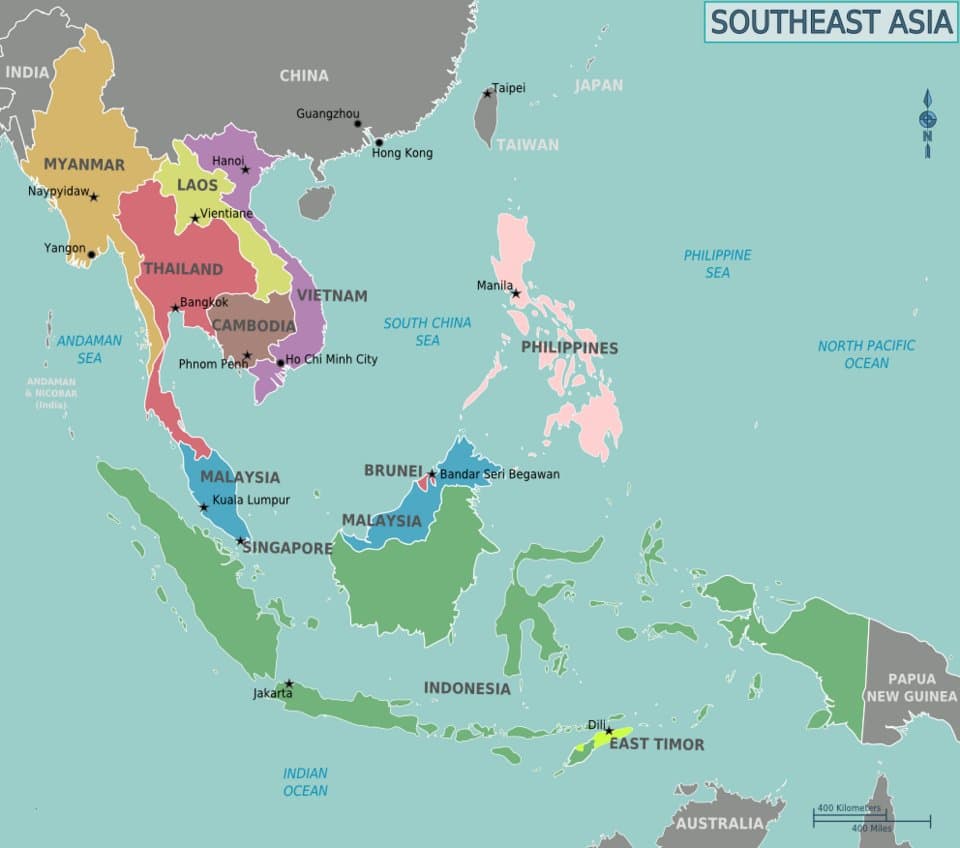
Pearl danios are native to Southeast Asia, with a range that covers parts of Myanmar (Burma), Thailand, and the island of Sumatra in Indonesia. They’ve also been reported from Laos and possibly parts of the Malay Peninsula, though the exact extent of their distribution gets a little fuzzy depending on which source you consult. The majority of documented populations come from the Irrawaddy, Salween, and Mekong river drainages.
In the wild, pearl danios are found in clear, moderately flowing hill streams, tributaries, and the margins of rivers at moderate elevations. They tend to prefer well-oxygenated water with some current, often in areas with rocky or gravelly substrates and overhanging vegetation. These aren’t lowland swamp dwellers. They’re stream fish that like clean water and a bit of flow.
The elevation and geography of their native habitat is important for understanding their care needs. Many of these hill streams experience seasonal temperature swings, with water temperatures dropping into the mid-60s°F (around 18°C) during cooler months. This is why pearl danios do so well without a heater and actually prefer temperatures that would be on the low side for most tropical community fish. If you keep them in a standard 78°F tropical tank, you’re actually running warmer than they’d experience in nature for much of the year.
Appearance & Identification
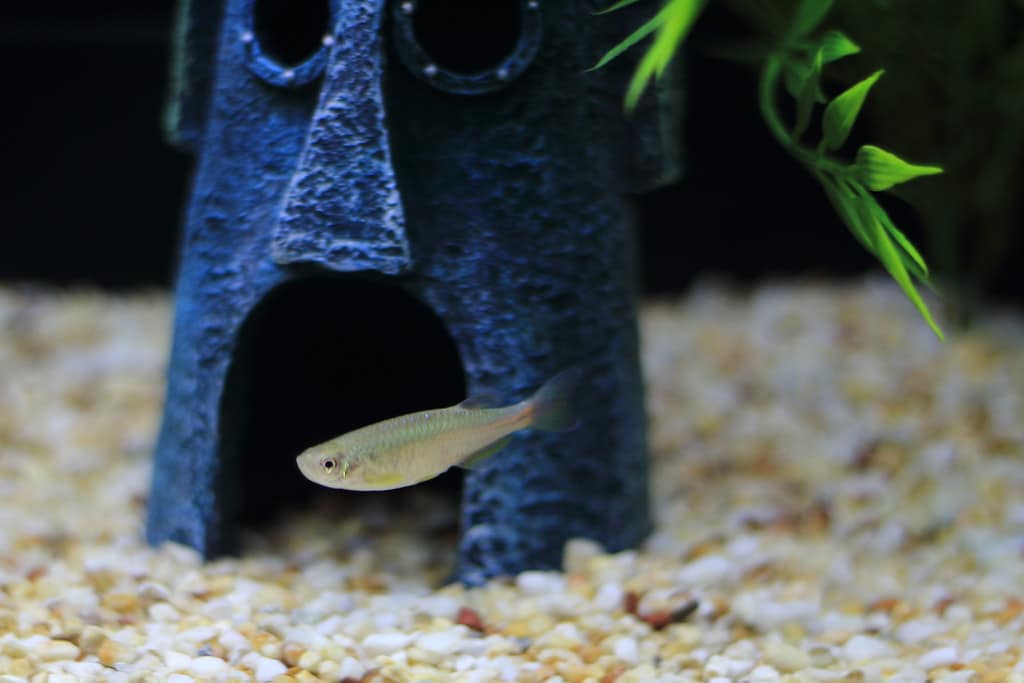
This is where the pearl danio really separates itself from the pack. The body shape is typical danio — elongated, slightly laterally compressed, with a small upturned mouth suited for surface feeding. But the coloration is something else entirely. The body has an opalescent, iridescent sheen that shifts between pastel shades of pink, purple, blue, and gold as the fish moves and the light changes. It’s that pearly, almost mother-of-pearl quality that gives the fish its common name.
Running along each flank is a distinctive orange to pinkish-orange lateral stripe, bordered above by a thinner blue iridescent line. The back is olive to blue-gray, and the belly is lighter, often with a warm pinkish or golden tone. The fins are largely translucent with a faint yellowish or orange tinge, particularly on the anal and caudal fins. Under good lighting, especially with a dark substrate and background, the iridescent colors really pop and the fish looks almost luminous.
Pearl danios reach a maximum size of about 2.5 inches (6 cm), making them slightly larger than zebra danios. Their body proportions are a bit more robust and less torpedo-shaped compared to their striped cousins, which adds to their visual presence in a school.
Male vs. Female
Sexing pearl danios is fairly straightforward once the fish reach maturity. Males are slimmer, more streamlined, and tend to display more intense coloration, particularly that orange lateral stripe. The iridescent sheen is also generally more vivid on males, especially when they’re in breeding condition or competing for female attention.
Females are noticeably deeper-bodied and rounder, especially when carrying eggs. When viewed from above, a gravid female will look considerably plumper than the males. The coloration on females is still attractive but somewhat more subdued compared to a displaying male. In a group of pearl danios, the size and shape difference between the sexes becomes pretty obvious once you know what to look for.
Average Size & Lifespan
Pearl danios typically reach about 2 to 2.5 inches (5 to 6 cm) in a home aquarium. This puts them on the slightly larger end for danios, bigger than zebra danios but smaller than giant danios. Most specimens you’ll find at stores are juveniles around 1 to 1.5 inches (2.5 to 4 cm) and will grow to full size within several months under good conditions.
With proper care, pearl danios live 3 to 5 years on average. Diet quality, water conditions, and stress levels all play a role in longevity. Fish kept at the lower end of their preferred temperature range (mid-60s to low 70s°F) tend to have a slightly slower metabolism and may live on the longer end of that range, while fish kept consistently at the upper end of their temperature tolerance may have shorter lifespans. Avoiding overcrowding, maintaining clean water, and providing a varied diet will all help your pearl danios reach their full potential lifespan.
Pearl danios are hardy, active, and peaceful schooling fish suitable for most beginners. They are tolerant of a wide temperature range and adapt well to varied water parameters.
Care Guide
Tank Size
A 20-gallon (76-liter) tank is the minimum for a school of pearl danios. These are active, horizontal swimmers that need room to cruise and school naturally. While they’re not the hyperactive darters that zebra danios are, they still cover a lot of ground during the day and will look cramped in anything smaller. A 20-gallon long is actually the ideal starter tank for this species because it provides more horizontal swimming space than a standard 20-gallon high.
If you’re planning a larger community setup with other species, sizing up to a 30 or 40-gallon tank gives everyone more room and makes the schooling behavior much more impressive. Pearl danios look their best in longer tanks where they have space to form a loose school and cruise back and forth.
Water Parameters
| Parameter | Ideal Range |
|---|---|
| Temperature | 64 to 75°F (18 to 24°C) |
| pH | 6.0 to 8.0 |
| Hardness | 5 to 12 dGH |
| Ammonia | 0 ppm |
| Nitrite | 0 ppm |
| Nitrate | Below 20 ppm |
The standout feature of pearl danio care is their preference for cooler water. At 64 to 75°F (18 to 24°C), they sit well below the 76 to 82°F range that most tropical community fish prefer. In most homes, room temperature water will be perfectly fine for pearl danios without needing a heater at all. If your house stays in the high 60s to low 70s°F range year-round, these fish will thrive.
The pH and hardness ranges are quite flexible. Pearl danios are adaptable to a broad range of water chemistry, from slightly acidic soft water to mildly alkaline harder water. Most municipal tap water will work just fine without any special adjustments. The key is stability — avoid sudden swings in temperature or pH, and keep up with regular water changes to maintain good water quality.
Filtration & Water Flow
Pearl danios come from flowing streams, so they appreciate some water movement in the tank. A hang-on-back filter or canister filter that provides moderate flow works well. You don’t need a powerhead or strong current, but a gentle to moderate flow across the length of the tank will keep them active and comfortable. They’ll often swim into the current, which is natural behavior for a stream-dwelling species.
Good filtration is important because these are active fish that produce a moderate bioload for their size. Make sure your filter is rated for your tank size and keep up with regular filter maintenance. Since pearl danios prefer cooler water, beneficial bacteria in the filter may cycle slightly more slowly than in a warm tropical tank, so avoid disrupting your biological filtration more than necessary.
Lighting
Standard aquarium lighting works perfectly fine for pearl danios. That said, lighting choice makes a real difference in how these fish look. Under bright, full-spectrum LED lighting with a dark background and substrate, the iridescent sheen on pearl danios becomes absolutely stunning. The colors shift and shimmer as the fish move, and that’s really the main draw of this species. If you’re keeping pearl danios for their looks (and you should be), give some thought to your lighting setup. Moderate to bright lighting with some shaded areas from floating plants is a solid approach.
Plants & Decorations
Pearl danios look fantastic in a planted tank, and live plants provide practical benefits too. The key is balancing open swimming space in the middle and upper portions of the tank with planted areas along the sides and back. Java fern, Anubias, Vallisneria, and various stem plants all work well. Floating plants like Amazon frogbit or red root floaters add shaded areas and help diffuse light, which can actually make the iridescent colors on the fish more visible against the dimmer backdrop.
For hardscape, driftwood and smooth river rocks are great additions that mimic the fish’s natural stream habitat. Just make sure to leave plenty of open swimming space through the center and front of the tank. Pearl danios are mid-water to upper-water swimmers, so a densely aquascaped lower level with open water above is the ideal layout.
Substrate
Pearl danios aren’t bottom dwellers, so substrate choice is really more about aesthetics and plant health than fish preference. That said, a dark substrate (black sand, dark gravel, or a planted tank soil) will make the iridescent colors on your pearl danios pop dramatically compared to a light-colored substrate. The contrast between a dark background and the shimmering pastels on the fish is night and day. If you want your pearl danios to look their absolute best, go dark on the substrate.
Is the Pearl Danio Right for You?
Before you buy, run through this honest checklist. The Pearl Danio is a great fish for the right keeper, but it is not for everyone.
- You can keep water on the cooler side (64-75°F). this is a subtropical species
- You want an iridescent fish with a pearlescent sheen that photos cannot capture
- You have a 20-gallon or larger tank for a school of 6-8+
- Your lighting setup highlights iridescence rather than washing it out
- You want a hardy species that thrives in cooler water without a heater
- You appreciate a fish that looks dramatically different in your home than in the store
Tank Mates
Pearl danios are peaceful schooling fish that get along well with most community species. The main consideration when choosing tank mates is temperature compatibility. Since pearl danios prefer cooler water in the 64 to 75°F range, you’ll want to pair them with species that share that preference rather than fish that need the warmer end of the tropical spectrum.
Best Tank Mates
- Other danios — zebra danios, leopard danios, and celestial pearl danios overlap well in temperature and temperament
- White Cloud Mountain minnows — another cooler water species that schools beautifully alongside pearl danios
- Corydoras catfish — most Corydoras species tolerate the lower temperature range and occupy a different tank level
- Bristlenose plecos — hardy, peaceful bottom dwellers that do fine in cooler water
- Hillstream loaches — perfect temperature match and they appreciate the same moderate flow
- Cherry barbs — peaceful, similarly sized, and tolerant of the lower end of tropical temperatures
- Rosy barbs — another cooler water species that makes a lively tank mate in larger setups
- Variatus platies — hardier than regular platies and comfortable at lower temperatures
- Amano shrimp and Nerite snails — safe invertebrate options that won’t be bothered by pearl danios
Tank Mates to Avoid
- Discus, rams, and angelfish — these need much warmer water (80°F+) and have incompatible temperaments
- Large cichlids — anything big enough to eat a pearl danio will eventually try
- Bettas — pearl danios are too active and may stress a slow-moving betta, and the temperature preferences don’t align well
- Very slow or long-finned fish — while pearl danios are not typical fin nippers, their active swimming style can stress delicate, slow-moving species
- Aggressive or territorial species — any fish that will chase or harass a peaceful schooler is a bad match
Food & Diet
Pearl danios are enthusiastic omnivores that are not picky eaters at all. They’ll readily accept just about any food you offer, from flake food to frozen to live. A high-quality micro pellet or flake food should form the staple of their diet, supplemented with frozen or live foods several times per week for variety and nutritional balance.
Good supplemental foods include frozen or live brine shrimp, daphnia, bloodworms, and mosquito larvae. These protein-rich foods help bring out the best coloration and are especially important if you’re conditioning fish for breeding. Pearl danios are primarily surface and mid-water feeders, so choose foods that float or sink slowly. Sinking pellets designed for bottom feeders will often be missed entirely.
Feed small amounts once or twice daily, only as much as the fish can consume in about two minutes. Like all danios, pearl danios will eagerly eat far more than they need if given the chance, so don’t let their enthusiasm trick you into overfeeding. Overfeeding leads to poor water quality, which is a bigger health risk than underfeeding ever would be.
Breeding & Reproduction
Pearl danios are one of the easier egg-scattering species to breed in captivity. They don’t require highly specialized conditions, and a well-conditioned group will often spawn without much intervention. That said, raising the fry does require some planning and a separate breeding setup if you want to save the eggs from being eaten.
Breeding Difficulty
Easy. Pearl danios will breed readily in home aquariums, and spawning can happen in a community tank without any deliberate effort on your part. The challenge isn’t getting them to spawn — it’s saving the eggs and fry from hungry adults. If you want to raise fry intentionally, a dedicated breeding tank is the way to go.
Spawning Tank Setup
Set up a separate 10 to 15-gallon tank with a bare bottom or a layer of glass marbles. The marbles serve as an egg trap — eggs fall through the gaps and are protected from the adults. Alternatively, you can use a mesh divider or a layer of spawning mops placed across the bottom. Add a gentle air-driven sponge filter for water movement and aeration, and include a few clumps of fine-leaved plants like java moss or spawning mops as additional egg-catching surfaces.
Water Conditions for Breeding
Pearl danios aren’t overly demanding about breeding water conditions. Slightly warmer water in the 72 to 75°F (22 to 24°C) range, with a pH around 6.5 to 7.0 and moderate hardness, works well. Some breeders use slightly softer water to encourage spawning, but it’s not strictly necessary. A small water change with slightly cooler water can sometimes trigger spawning behavior, mimicking the rainy season conditions in their native habitat.
Conditioning & Spawning
Condition your breeding group (2 to 3 males per female works well) with plenty of high-protein live and frozen foods for about a week before introducing them to the breeding tank. Brine shrimp, daphnia, and bloodworms are all excellent conditioning foods. You’ll know females are ready when they appear noticeably plump with eggs.
Introduce the conditioned fish to the breeding tank in the evening. Spawning typically occurs the following morning, often triggered by the first light of day. The males will chase and court the females, and the pair will scatter adhesive eggs among plants, marbles, or whatever substrate you’ve provided. A single female can produce 100 to 300 eggs in a spawning event. Remove the adults immediately after spawning is complete, because they will eat every egg they can find.
Egg & Fry Care
Pearl danio eggs are small, clear, and adhesive. They typically hatch in 24 to 48 hours at around 73 to 75°F (23 to 24°C). The newly hatched fry are tiny and will survive on their yolk sac for the first day or two. Once free-swimming, they’ll need infusoria, commercially prepared liquid fry food, or very finely powdered fry food for the first week or so. After that, they can graduate to freshly hatched baby brine shrimp, which is the single best food for growing out danio fry quickly.
Keep the water clean in the fry tank with small, frequent water changes, and make sure the sponge filter intake can’t suck up the tiny fry. Growth is fairly rapid under good conditions, and the young fish will start showing their iridescent coloration at around 4 to 6 weeks of age.
Common Health Issues
Pearl danios are hardy fish that don’t have any species-specific diseases. Like all freshwater fish, they’re susceptible to the usual suspects when water quality declines or stress levels rise. Here are the most common issues to watch for.
Ich (White Spot Disease)
Ich is the most common freshwater fish disease, and pearl danios can get it just like any other species. It presents as small white spots on the body and fins, along with flashing (rubbing against objects) and clamped fins. The good news is that ich is very treatable when caught early. Raise the temperature gradually to 82°F (28°C) and treat with an ich-specific medication. One important note: since pearl danios prefer cooler water, the temperature increase alone can be stressful, so treat promptly and bring the temperature back down once treatment is complete.
Velvet Disease
Velvet (caused by the parasite Oodinium) produces a fine, dusty gold or rust-colored coating on the skin, often visible before the fish shows behavioral changes. It can look similar to ich but the spots are much finer and more uniform. Velvet is more aggressive than ich and can spread quickly, so treat the entire tank with a copper-based medication at the first sign of symptoms. Dimming the lights during treatment helps because the parasite has a photosynthetic stage in its life cycle.
Fin Rot
Fin rot is almost always a secondary condition caused by poor water quality, stress, or physical injury. You’ll see ragged, fraying, or disintegrating fin edges, sometimes with redness at the base. The fix starts with water quality — do a water change, test your parameters, and figure out what went wrong. In mild cases, improving water conditions alone will resolve the issue. More advanced cases may need treatment with an antibacterial medication.
Mycobacteriosis (Fish Tuberculosis)
This is less common but worth mentioning because danios as a group can be susceptible. Symptoms include wasting, loss of appetite, pale coloration, and a general decline over weeks or months. Unfortunately, mycobacteriosis is difficult to treat and often fatal. Prevention through clean water, low stress, and good nutrition is the best approach. Quarantine any new fish before adding them to an established tank to reduce the risk of introducing this or any other disease.
Common Mistakes to Avoid
- Keeping them too warm. Pearl danios prefer 64 to 75°F. Keeping them in a standard tropical tank at 78 to 80°F long-term is outside their ideal range and can shorten their lifespan. Don’t assume every community fish needs the same temperature.
- Too few fish in the school. A group of 3 pearl danios will look stressed and washed out. Keep at least 6, preferably 8 or more. Their coloration, behavior, and schooling displays improve dramatically in larger groups.
- Tank too small. These are active swimmers that need horizontal space. A 10-gallon tank is too cramped for pearl danios. Start with 20 gallons minimum, and go bigger if you can.
- Skipping the lid. Like all danios, pearl danios are capable jumpers. An uncovered tank is an invitation for fish on the floor. Always use a tight-fitting lid.
- Pairing with incompatible tank mates. Mixing pearl danios with warm-water species like discus or German blue rams forces at least one species into an uncomfortable temperature range. Choose tank mates that share the same cooler water preference.
- Overfeeding. Pearl danios will eat with enthusiasm every time you approach the tank. Don’t let that fool you into feeding too much. Excess food fouls the water and leads to health problems.
Where to Buy
Pearl danios pop up at local fish stores from time to time, but they’re not as consistently stocked as zebra danios or other mainstream community fish. You may need to ask your LFS to special order them, or check in regularly since they tend to sell quickly when they do come in. Chain pet stores occasionally carry them, but availability is hit or miss.
For a more reliable source with healthier, better-conditioned fish, I’d recommend checking Flip Aquatics or Dan’s Fish. Both are reputable online fish retailers that ship quality stock in excellent condition. Online retailers are often your best bet for finding pearl danios specifically, since they tend to carry a wider selection of danio species than most brick-and-mortar stores.
Frequently Asked Questions
Do pearl danios need a heater?
In most homes, no. Pearl danios thrive at 64 to 75°F (18 to 24°C), which falls within the normal room temperature range in most houses. If your home stays above 64°F year-round, you can skip the heater entirely. In fact, keeping them at cooler temperatures within their range is actually better for their long-term health and longevity. You’d only need a heater if your room temperature drops below 64°F consistently, such as in an unheated garage or basement in winter.
How many pearl danios should I keep?
A minimum of 6, but 8 to 10 or more is better. Pearl danios are schooling fish that feel secure and display their best behavior and coloration in larger groups. In small numbers (3 or fewer), they tend to become skittish, stressed, and their colors look washed out. A school of 8 to 10 pearl danios in a well-lit tank with a dark substrate is genuinely impressive to watch.
Can pearl danios live with tropical fish?
It depends on the species. Pearl danios can coexist with tropical fish that tolerate the lower end of the tropical temperature range, around 72 to 75°F (22 to 24°C). Species like corydoras catfish, cherry barbs, and many tetras can overlap with pearl danios in that temperature window. However, fish that need consistently warm water (78°F and above), like discus, rams, and cardinal tetras, are not a good match.
Are pearl danios jumpers?
Yes. Like all danios, pearl danios can and will jump, especially during feeding time, when startled, or when males are chasing each other. A tight-fitting lid with no gaps is a must. Open-top aquariums are not suitable for this species unless you have a significant lowered water level and some kind of floating barrier, which honestly isn’t worth the trouble. Just use a lid.
What is the difference between pearl danios and celestial pearl danios?
Despite the similar common names, these are very different fish. The pearl danio (Danio albolineatus) is a 2.5-inch schooling fish with an iridescent sheen. The celestial pearl danio (Danio margaritatus) is a tiny, 1-inch micro fish with dark blue coloring and bright pearl-like spots. They’re in the same genus but have very different sizes, appearances, and somewhat different care requirements. The celestial pearl danio is more of a nano tank species, while the pearl danio needs a standard-sized community setup.
Do pearl danios eat shrimp?
Adult pearl danios are unlikely to bother adult Amano shrimp or larger cherry shrimp. However, they will eat very small shrimp fry if they come across them. If you’re trying to breed shrimp in the same tank, some fry predation is inevitable. For a shrimp colony that’s already established, adding pearl danios is generally fine since enough fry will survive among the plants and hiding spots to sustain the population. Just don’t expect every baby shrimp to make it.
How the Pearl Danio Compares to Similar Species
Pearl Danio vs. Glowlight Danio
Both are beautiful iridescent danios that get overlooked. The Pearl Danio has a cooler-toned pearlescent sheen, while the Glowlight Danio has warmer gold tones. The Pearl Danio prefers cooler water, making it better for unheated tanks. Both are hardy and easy to keep.
Pearl Danio vs. Zebra Danio
The Zebra Danio is the most popular danio but lacks the iridescence of the Pearl Danio. Both are equally hardy and easy to keep. The Pearl Danio is the more visually interesting choice for the keeper who wants something a step up from the standard.
Expert Take (Mark Valderrama, AquariumStoreDepot)
After 25 years in the hobby and time managing fish stores, the pearl danio is one of those species I always recommend to hobbyists ready to move beyond the basics. Pearl danios are hardy, active, and peaceful schooling fish suitable for most beginners. They are tolerant of a wide temperature range and adapt well to varied water parameters. Pearl danios are fast and active – do not keep them with slow-moving, long-finned species. Their constant movement stresses shy or slow fish, even though pearl danios themselves are not aggressive.
Closing Thoughts
The pearl danio is one of those fish that genuinely deserves more attention than it gets. In a hobby that’s always chasing the newest, most colorful species from remote jungle streams, it’s easy to overlook a fish that’s been available for decades. But when you see a school of pearl danios under good lighting, with that iridescent sheen flashing pink and blue and gold as they cruise through a planted tank, you understand why this fish earned its name.
They’re hardy, peaceful, easy to feed, easy to breed, and they don’t need a heater. They’re a perfect fit for a cool-water community setup alongside white clouds, corydoras, and hillstream loaches. And they bring a level of visual elegance that most “beginner” fish simply can’t match. If you’ve been sleeping on the pearl danio, it might be time to give this underrated gem a closer look.
Have you kept pearl danios? What do you think of them compared to other danio species? Drop a comment below!
Recommended Video
Check out our danio video where we cover the most popular danios in the hobby:
References
- Danio albolineatus (Blyth, 1860) — FishBase
- Danio albolineatus Profile — Seriously Fish
- Pearl Danio Care Guide — Practical Fishkeeping
- Danio albolineatus — The Aquarium Wiki
- About the Author
- Latest Posts

I’m Mark Valderrama, founder of Aquarium Store Depot and a fishkeeper with over 25 years of hands-on experience. I started in the hobby at age 11, worked at local fish stores, and have kept freshwater tanks, ponds, and reef tanks ever since. I’ve been featured in two best-selling aquarium books on Amazon and built this site to share practical, experience-based fish keeping knowledge.
Leave a Reply