
Last Updated: June 25, 2026
Thank you for visiting! By the way… any links on this page that lead to products on Amazon and other stores/partners are affiliate links Aquarium Store Depot earns a commission if you make a purchase.
Table of Contents
- What Care Guides Get Wrong
- Key Takeaways
- Species Overview
- Classification
- Origin & Natural Habitat
- Appearance & Identification
- Average Size & Lifespan
- Care Guide
- Is It Right for You?
- Tank Mates
- Food & Diet
- Breeding & Reproduction
- Common Health Issues
- Common Mistakes to Avoid
- Where to Buy
- Frequently Asked Questions
- Species Comparison
- Closing Thoughts
- References
The emerald dwarf rasbora is a tiny, shy species that will hide behind plants and barely show itself unless the tank is specifically set up to give it confidence. Dense planting, a large group of at least ten, dim lighting, and no boisterous tank mates are all required. Skip any of that and you own a fish you never see.
In the right setup, it is a jewel-toned little fish with iridescent green and orange that glows under the right light. Males display for each other with a subtle intensity that is easy to miss if you are not watching closely. This guide covers what it takes to coax them out, because the emerald dwarf rasbora is not hiding because it is scared. It is hiding because your tank is not set up to make it feel safe.
Build the tank first. Dense plants, soft water, dim light, big group. Then add the fish. The order matters.
Key Takeaways
- Not actually a rasbora, despite the common name, this is a danio in the genus Celestichthys, closely related to the Celestial Pearl Danio
- Endemic to Inle Lake, Myanmar and listed as Endangered by the IUCN due to habitat loss and invasive species
- Prefers cooler water (68-76°F) and a neutral to slightly alkaline pH (7.0-8.0), which is unusual for a fish commonly sold alongside tropical nano species
- Shy and easily stressed, dense planting and a group of at least 8-10 are essential for seeing natural behavior
- Micropredator diet, they need small live and frozen foods to thrive, not just flakes
- Best kept in a species-specific tank or with other small, peaceful fish that share similar water requirements
The emerald only shows its gems in the dark. Bright tanks produce brown fish.
Species Overview
| Field | Details |
|---|---|
| Scientific Name | Celestichthys erythromicron (Annandale, 1918) |
| Common Names | Emerald Dwarf Rasbora, Emerald Dwarf Danio |
| Family | Danionidae |
| Origin | Inle Lake, Myanmar |
| Care Level | Moderate |
| Temperament | Peaceful / Shy |
| Diet | Omnivore / Micropredator |
| Tank Level | Mid |
| Maximum Size | 1.2 inches (3 cm) |
| Minimum Tank Size | 10 gallons (38 liters) |
| Temperature | 68 to 76°F (20 to 24°C) |
| pH | 7.0 to 8.0 |
| Hardness | 8 to 15 dGH |
| Lifespan | 3 to 5 years |
| Breeding | Egg scatterer |
| Breeding Difficulty | Moderate |
| Compatibility | Nano community |
| OK for Planted Tanks? | Yes |
Classification
| Taxonomic Level | Classification |
|---|---|
| Order | Cypriniformes |
| Family | Danionidae |
| Genus | Celestichthys |
| Species | C. Erythromicron (Annandale, 1918) |
The taxonomy of this fish is a bit of a mess, and it helps explain why the common name is so misleading. When it was first described by Nelson Annandale in 1918, the species was placed in Microrasbora, which is where the “rasbora” part of the name came from. Later, it was moved to Danio as scientists reclassified several of the smaller Southeast Asian cyprinids based on molecular evidence.
Then in 2007, researchers Tyson Roberts and others split out a handful of species into the new genus Celestichthys, which includes just two species: the emerald dwarf rasbora (C. Erythromicron) and the Celestial Pearl Danio (C. Margaritatus). The genus name literally means “heavenly fish,” which is fitting once you see the coloring on these two species. Some databases and older references still list this fish under Microrasbora or Danio, but Celestichthys is the currently accepted placement. The takeaway for hobbyists: this is a danio, not a rasbora, and its care requirements reflect that.
Origin & Natural Habitat
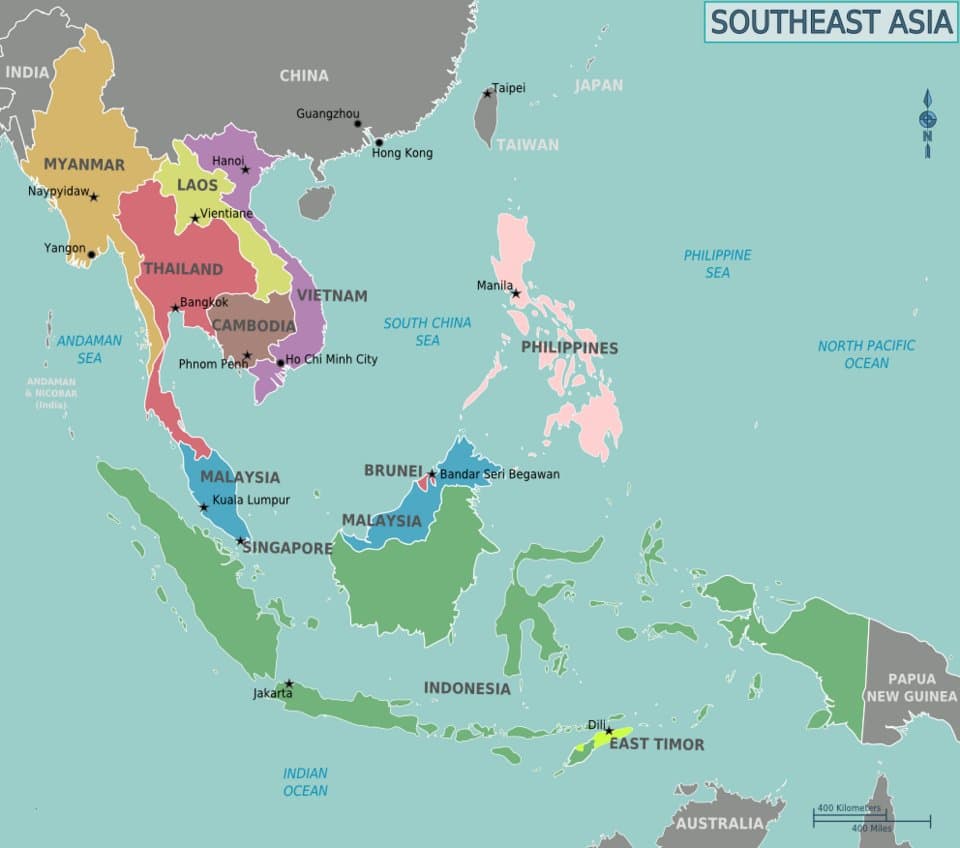
The emerald dwarf rasbora is endemic to Inle Lake in Shan State, Myanmar. This is an important detail, “endemic” means this species is found nowhere else on Earth. Inle Lake is a shallow, freshwater lake sitting at about 2,900 feet (880 meters) above sea level in the mountains of eastern Myanmar. It’s roughly 13.5 miles (22 km) long and 6.2 miles (10 km) wide, but it’s remarkably shallow, averaging only about 7 feet (2.1 meters) deep during the dry season.
This high-altitude setting is the reason emerald dwarf rasboras prefer cooler water. The lake doesn’t get the tropical heat that lowland rivers and streams in Myanmar experience. Water temperatures in Inle Lake typically range from the mid-60s to mid-70s°F (roughly 18-24°C) depending on season, and the water chemistry is notably different from what you’d expect in Southeast Asia. The lake is fed by limestone-rich springs and streams, producing water that is neutral to slightly alkaline (pH 7.0-8.5) with moderate hardness. This is not soft, acidic water, which catches a lot of hobbyists off guard.
Within the lake, emerald dwarf rasboras live among the dense stands of aquatic vegetation that grow along the shallow margins. These plants provide both shelter from predators and prime hunting grounds for the tiny invertebrates that make up their diet. The fish are typically found in loose shoals among the plant thickets, rarely venturing into open water.
Conservation concern: The IUCN Red List classifies Celestichthys erythromicron as Endangered. Inle Lake faces serious environmental pressures including agricultural runoff, sedimentation, habitat conversion for floating gardens, and the introduction of invasive species. The lake has been shrinking and becoming shallower over the past several decades. Because this species exists nowhere else in the wild, the threats to Inle Lake directly translate to threats for the emerald dwarf rasbora’s survival. The good news is that captive breeding is well-established, and many of the fish available in the hobby are tank-bred rather than wild-caught.
Appearance & Identification
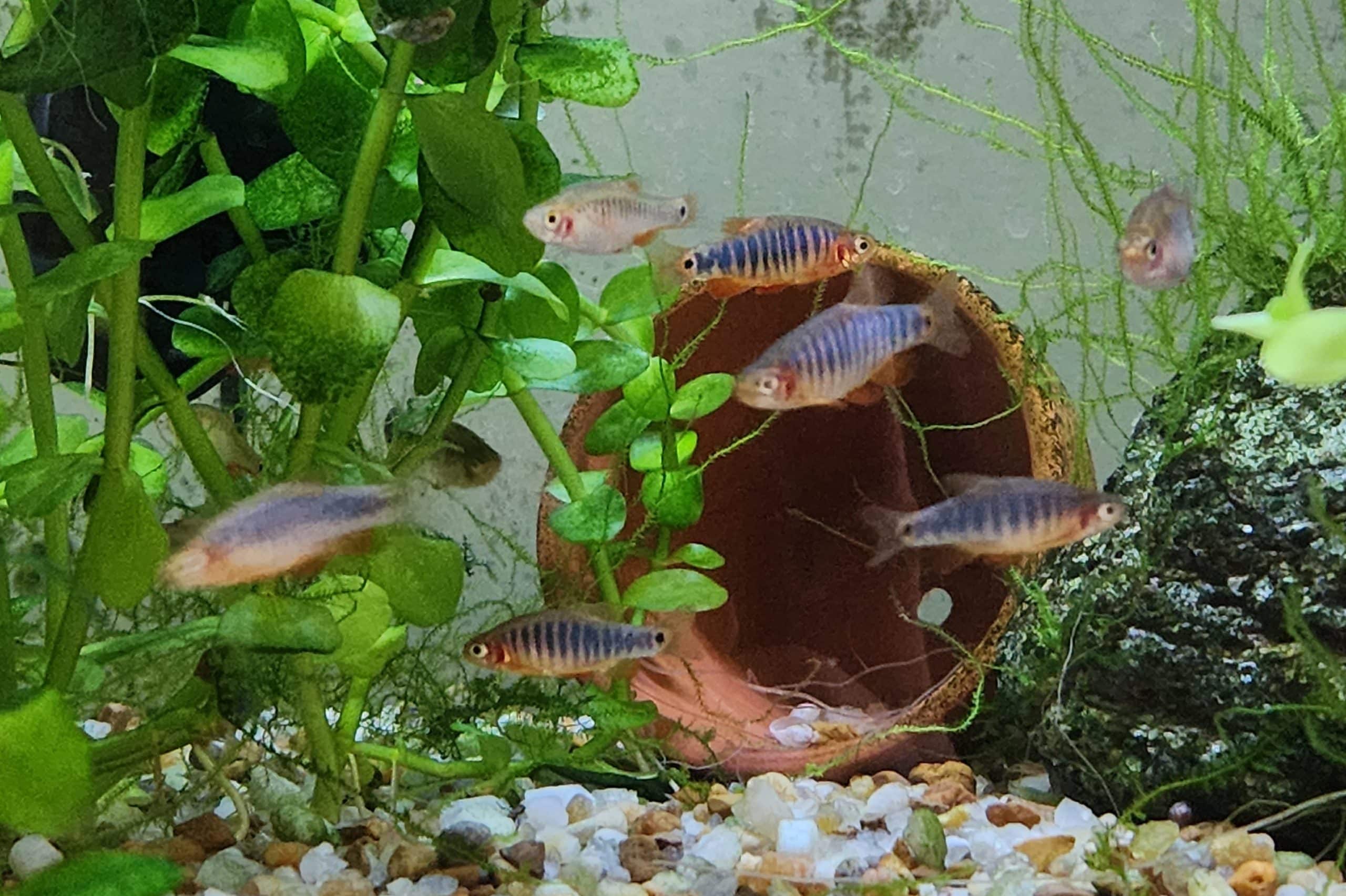
The emerald dwarf rasbora is a truly striking little fish, especially for its size. The body is elongated and slightly compressed, with a base color that ranges from blue-green to a deep emerald, depending on the lighting and the individual’s mood. The most distinctive feature is a series of dark, vertical bars that run along the flanks, giving it an almost banded or striped appearance. These bars are spaced evenly and stand out sharply against the lighter body color.
The fins add another layer of color. The pelvic, anal, and caudal fins show varying degrees of orange to reddish coloring, which contrasts beautifully with the cool tones of the body. In well-conditioned fish under good lighting, the overall effect is genuinely impressive for something that maxes out at just over an inch.
If you’re familiar with the Celestial Pearl Danio (Celestichthys margaritatus), you’ll notice some family resemblance. Both species share that same general body shape and the combination of dark markings on a lighter body with orange-red fin accents. The difference is in the pattern: celestial pearl danios have spots (like a galaxy), while emerald dwarfs have vertical bars. Both are members of the same genus, and they share that same “jewel-like” quality that makes them so popular in planted nano tanks.
Male vs. Female
Sexing emerald dwarf rasboras takes a bit of practice, but once you know what to look for, the differences are fairly consistent. Males are more intensely colored, with bolder vertical bars and more vibrant orange-red in the fins. They also are slightly slimmer in build. When males are displaying to each other or to females, their coloring can become remarkably vivid.
Females are slightly larger and noticeably rounder in the belly, particularly when carrying eggs. Their coloring is somewhat more muted compared to males, the vertical bars are still present but less crisp, and the fins show less orange. The most reliable way to distinguish the sexes is body shape: a well-fed female will have a clearly fuller, more rounded abdomen compared to the leaner male profile.
Average Size & Lifespan
This is a tiny fish. Fully grown adults reach a maximum of about 1.2 inches (3 cm), with most individuals staying a bit smaller than that in aquarium conditions. They’re one of the smallest fish commonly available in the hobby, which is part of their appeal for nano tank enthusiasts.
In terms of lifespan, well-kept emerald dwarf rasboras can live 3 to 5 years. That’s a respectable span for a fish this small, and it’s generally achievable as long as water quality is maintained and the fish aren’t stressed by inappropriate tank mates or conditions. Fish kept at the cooler end of their temperature range will live longer than those kept warmer, which is consistent with what we see across many small cyprinids.
Care Guide
Tank Size
A 10-gallon (38-liter) tank is the minimum for a group of emerald dwarf rasboras. While they’re tiny fish, they need to be kept in groups of at least 8-10, and they benefit from a tank that has enough space for dense planting with some open swimming areas in between. A 10-gallon with a good aquascape gives you room for a proper group while maintaining stable water parameters.
If you’re planning a species-only setup, a 10-gallon is perfect. If you want to keep them alongside a few compatible tank mates, consider stepping up to a 15 or 20-gallon long. The extra footprint gives everyone more space and more planting options, which directly benefits these shy fish.
Water Parameters
This is where the emerald dwarf rasbora stands apart from most nano fish you’ll encounter. Pay close attention to these numbers, because they’re not what most people expect for a small Southeast Asian species.
| Parameter | Recommended Range |
|---|---|
| Temperature | 68 to 76°F (20 to 24°C) |
| pH | 7.0 to 8.0 |
| Hardness (GH) | 8 to 15 dGH |
| KH | 4 to 10 dKH |
| Ammonia / Nitrite | 0 ppm |
| Nitrate | Below 20 ppm |
The cooler temperature range is the first thing to note. These fish come from a high-altitude lake, not a lowland tropical river. Keeping them at 78-80°F like you would for most community fish will stress them and shorten their lifespan. Aim for the low 70s and you’ll see the best coloring and behavior.
The pH and hardness are the other big surprise. Most hobbyists assume small Southeast Asian fish want soft, acidic water. Emerald dwarf rasboras are the opposite, they come from limestone-fed waters and actually prefer moderately hard, neutral to alkaline conditions. If your tap water is on the harder side with a pH around 7.5, you’re in great shape for this species without having to adjust anything.
Filtration & Water Flow
A gentle sponge filter is ideal for emerald dwarf rasboras. These are tiny, relatively weak swimmers that live in calm, vegetated waters in the wild. A strong power filter or powerhead will push them around and cause stress. If you’re using a hang-on-back filter, baffle the output or turn the flow down to the lowest setting.
Sponge filters have the added benefit of growing biofilm and microorganisms on their surface, which these micropredators will pick at between meals. An air-driven sponge filter running at a moderate bubble rate provides adequate filtration and oxygenation without creating uncomfortable current for the fish.
Lighting
Moderate lighting works best. You want enough light to support healthy plant growth (and these fish need plants), but not so much that the tank feels exposed and bright. Emerald dwarf rasboras are naturally shy fish that live among thick vegetation in the wild. In a brightly lit tank with sparse cover, they’ll spend most of their time hiding and their colors will wash out.
A standard planted tank LED on a timer (8-10 hours per day) is fine. Floating plants are a great way to diffuse overhead light and create the dappled, shaded conditions these fish prefer. You’ll notice them venturing out into the open much more frequently when the lighting is softened.
Plants & Decorations
Dense planting is not optional for this species, it’s essential. In Inle Lake, these fish live among thick stands of aquatic vegetation, and they rely on that cover for security. A sparsely planted tank will produce stressed, pale, and constantly hiding fish. You want to aim for at least 50-60% of the tank volume filled with plant growth, leaving some open areas in the center or along the front for swimming.
Great plant choices include java fern, java moss, Cryptocoryne species, Vallisneria, and various stem plants like Rotala or Hygrophila. Floating plants like water lettuce, frogbit, or red root floaters provide that overhead shade they appreciate. Moss-covered driftwood and small rocks create additional hiding spots and give the tank a natural look that complements these fish beautifully.
One note: since emerald dwarf rasboras prefer harder, more alkaline water, avoid driftwood-heavy setups that will significantly lower pH through tannin release. A piece or two is fine, but don’t go overboard with blackwater-style scaping for this species.
Substrate
A fine gravel or sand substrate works well. Since you’ll want to grow plants with these fish, a nutrient-rich planted tank substrate or sand topped with root tabs is a good approach. Inert substrates like pool filter sand or fine natural gravel won’t affect the water chemistry, which is ideal since you don’t want the substrate pulling your pH down.
Some active substrates designed for planted tanks (like certain aquasoils) are formulated to lower pH and soften water. If you choose one of these, keep an eye on your parameters. A substrate that pulls your pH down to 6.0 isn’t doing this species any favors. Inert or alkaline-leaning substrates are a safer bet.
Is the Emerald Dwarf Rasbora Right for You?
Before you buy, run through this honest checklist. The Emerald Dwarf Rasbora is a great fish for the right keeper, but it is not for everyone.
- You have a planted nano tank (10+ gallons) with plenty of visual barriers
- You can keep a group of 10+ to distribute male territorial behavior
- You want one of the most colorful nano fish. Blue-green body with orange fins
- You enjoy watching male display behavior and micro-territorial sparring
- Your tank does not include anything large or aggressive enough to stress them
- You understand this is not a tight schooling fish. It is a loose shoaling species
Tank Mates
Choosing tank mates for emerald dwarf rasboras requires careful thought. These are small, shy, slow-eating fish that will lose every competition for food and territory. The best approach is either a species-only setup or a carefully selected nano community with fish that have similar temperaments and water requirements.
Best Tank Mates
- Celestial Pearl Danios, Same genus, same lake origin, same water parameters. The most natural pairing you can make
- Rosy Loach (Petruichthys sp.), Another Inle Lake endemic with identical care needs
- Lake Inle Danio (Inlecypris auropurpureus), Same habitat, compatible size and temperament
- Small Corydoras species, Pygmy corys (C. Pygmaeus) or dwarf corys (C. Habrosus) are peaceful bottom-dwellers that stay out of the way
- Otocinclus catfish, Gentle algae grazers that ignore other fish entirely
- Amano shrimp and cherry shrimp, Safe and beneficial tank mates that add cleanup duty
- Nerite snails, Excellent algae control with zero impact on the fish
Tank Mates to Avoid
- Bettas, Too territorial and the barred pattern can trigger aggression
- Barbs (tiger, cherry, etc.), Too boisterous and competitive for food
- Guppies and mollies, Active swimmers that will outcompete emerald dwarfs at feeding time and prefer warmer water
- Dwarf cichlids (rams, apistos), Too large, territorial, and prefer different water chemistry
- Any fish over 2-3 inches, Larger fish create stress simply by being present, and anything big enough to eat them probably will
- Highly active mid-dwelling species, Fish that zip around the tank constantly will intimidate these shy creatures into permanent hiding
Honestly, a species-only tank is where emerald dwarf rasboras really shine. In a well-planted 10 or 15-gallon with a group of 10-12 and maybe some shrimp and snails, you’ll see behavior and coloring that you simply won’t get in a busier community setup. The males will display to each other, the fish will venture out into the open more confidently, and the whole group feels more relaxed.
Food & Diet
This is where a lot of keepers run into trouble. Emerald dwarf rasboras are micropredators, meaning they naturally feed on tiny invertebrates, insect larvae, and zooplankton in the wild. They have very small mouths and are not enthusiastic about dried foods. You will get them to accept high-quality micro pellets or crushed flakes, but don’t count on it as their primary diet.
The best results come from a diet built around small live and frozen foods:
- Baby brine shrimp (BBS), The gold standard for this species. Newly hatched brine shrimp are the perfect size and trigger a strong feeding response
- Daphnia, Small-sized daphnia or moina are readily accepted and nutritious
- Micro worms and vinegar eels, Easy to culture at home and perfect for supplemental feeding
- Frozen cyclops, Widely available and a great staple frozen food for tiny fish
- Frozen baby brine shrimp, A convenient alternative when live BBS isn’t available
- Grindal worms, Small enough for adult emerald dwarfs and easy to culture
Feed small amounts twice daily rather than one large feeding. These fish have tiny stomachs and do better with frequent, small meals. Watch to make sure every fish is eating, in a community tank, slower or more timid individuals can easily get pushed away from the food. This is another reason species-only setups work so well for them.
If you’re not willing to deal with live and frozen foods on a regular basis, this may not be the right fish for you. While hobbyists report success getting them onto prepared foods over time, the most consistent results in terms of health, coloring, and longevity come from a varied diet of small live and frozen offerings.
Breeding & Reproduction
Emerald dwarf rasboras can be bred in captivity, and while it’s not as straightforward as breeding zebra danios or guppies, it’s achievable for dedicated hobbyists.
Breeding Difficulty
Moderate. Getting them to spawn isn’t the hard part, raising the fry is the bigger challenge due to their tiny size at hatching. You need a reliable supply of infusoria or similarly small first foods to get them through the first couple of weeks.
Spawning Tank Setup
A small 5 to 10-gallon tank works well for breeding. Set it up with plenty of fine-leaved plants or spawning mops to give the fish places to scatter eggs. Java moss is the go-to choice, as eggs will land and settle into the moss where they’re somewhat protected from being eaten. A thin layer of marbles on the bottom can also help eggs fall out of reach.
Use a gentle sponge filter to maintain water quality without creating current that could sweep eggs around or suck in fry. Keep the lighting dim and provide plenty of cover so the fish feel secure enough to spawn.
Water Conditions for Breeding
Maintain the same parameters as the main tank, temperature around 72-74°F (22-23°C), pH 7.0-7.5, and moderate hardness. Consistency is more important than hitting specific numbers. A slight drop in temperature (a degree or two) followed by a gradual warm-up, combined with increased feeding of live foods, can help trigger spawning behavior.
Conditioning & Spawning
Condition a group of adults with generous portions of live baby brine shrimp, daphnia, and other small live foods for 1-2 weeks before moving them to the breeding tank. Well-fed females will become noticeably rounder as they fill with eggs.
Spawning typically happens in the morning and is a somewhat subtle affair compared to more active egg scatterers. Males will display to females, showing off their best colors, and the pair will scatter small numbers of eggs among the plants. Unlike some species that produce hundreds of eggs in a single spawn, emerald dwarf rasboras deposit relatively small clutches, often just a handful of eggs per spawning event. However, they may spawn repeatedly over several days.
Egg & Fry Care
Remove the adults after spawning, as they will eat the eggs if given the opportunity. Eggs typically hatch in 3-5 days depending on temperature. The newly hatched fry are extremely small and will absorb their yolk sacs over the first 24-48 hours before becoming free-swimming.
This is the critical stage. Free-swimming fry are too small for baby brine shrimp initially. You’ll need to start them on infusoria, paramecium, or commercial liquid fry food for the first week or two. Once they’ve grown enough (usually around 10-14 days), they can transition to newly hatched brine shrimp, which will accelerate their growth significantly.
Keep the water pristine with frequent small water changes (10-15% every other day), matched to the same temperature and chemistry. Growth is slow, and it may take 3-4 months before the fry start showing the characteristic barred pattern and begin to resemble the adults.
Common Health Issues
Ich (White Spot Disease)
Like most freshwater fish, emerald dwarf rasboras are susceptible to ich, particularly when stressed by temperature fluctuations, poor water quality, or the shock of being introduced to a new tank. The white spots are easy to identify. Since these fish prefer cooler water, the standard approach of raising the temperature to 86°F is not ideal, it can stress them further. Use a half-dose ich medication appropriate for small, sensitive fish and raise the temperature only to 78°F at most.
Bacterial Infections
Poor water quality can lead to bacterial infections that present as fin rot, cloudy eyes, or red streaks on the body. These fish are sensitive to elevated nitrates and ammonia spikes. Prevention through consistent water changes and good filtration is the best approach. If infections occur, treat with a broad-spectrum antibacterial medication at a reduced dose, since these are small, delicate fish.
Internal Parasites
Wild-caught specimens or fish from crowded supplier tanks will carry internal parasites. Signs include lethargy, loss of appetite, wasting (getting thinner despite eating), and white, stringy feces. If you suspect parasites, a medicated food containing praziquantel or metronidazole is the standard treatment approach.
Stress-Related Issues
This is probably the most common health problem with emerald dwarf rasboras, and it’s almost always husbandry-related. Fish that are kept in tanks that are too warm, too bright, with insufficient cover, in groups that are too small, or with aggressive tank mates will show chronic stress. Symptoms include pale coloring, clamped fins, hiding constantly, loss of appetite, and increased susceptibility to disease. The fix isn’t medication, it’s correcting the environment.
Common Mistakes to Avoid
- Keeping them too warm. This is probably the number-one mistake. People see “Southeast Asian nano fish” and crank the heater to 78-80°F. Emerald dwarf rasboras come from a cool, high-altitude lake. Aim for 68-74°F. Extended periods above 76°F will stress them and shorten their lifespan.
- Wrong water chemistry. Trying to keep them in soft, acidic water because “they’re rasboras.” They’re not rasboras. They’re danios from a limestone-fed lake. They need neutral to slightly alkaline pH (7.0-8.0) and moderate hardness. Soft, acidic water will cause chronic stress.
- Not enough cover. Sparse tanks produce stressed, pale fish that hide all the time. These fish need dense planting to feel secure. No plants = no confidence = no color.
- Keeping too few. A group of 3-4 is not enough. These are shoaling fish that need the security of numbers. Keep at least 8-10 for natural behavior and the best displays.
- Feeding only dry foods. Many emerald dwarfs will refuse flakes and pellets entirely. Even the ones that accept them won’t thrive on dried foods alone. Budget for live and frozen foods if you’re going to keep this species.
- Mixing with inappropriate tank mates. Putting them in a community tank with active, food-competitive fish means they’ll be outcompeted, stressed, and constantly hiding. Choose tank mates carefully or keep them in a species-only setup.
- Skipping quarantine. Because they’re often wild-caught or come from suppliers handling large volumes of fish, quarantining new emerald dwarf rasboras for 2-4 weeks before adding them to your display tank is important. They can carry parasites and diseases that won’t show up immediately.
Where to Buy
Emerald dwarf rasboras are becoming more available in the hobby as their popularity grows, but they’re still not a fish you’ll find at every local fish store. Chain pet stores rarely carry them. Your best bet is to look at specialty online retailers who focus on quality nano fish.
Flip Aquatics carries emerald dwarf rasboras at around $8.99 per fish and is a great source for healthy, well-conditioned specimens. Dan’s Fish also stocks them at around $7.99 and is another reliable option for shipping live fish. Both retailers have solid reputations for quality and proper packaging, which matters a lot with delicate nano species like this one.
When buying, try to get a group of at least 8-10 at once rather than adding a few at a time. They ship and acclimate better in larger groups, and you’ll lose fewer fish to stress-related issues. Also ask whether the fish are captive-bred or wild-caught, captive-bred specimens are hardier and adapt to aquarium life more easily.
Frequently Asked Questions
Is the emerald dwarf rasbora actually a rasbora?
No. Despite the common name, Celestichthys erythromicron is a danio, not a rasbora. It was originally placed in the genus Microrasbora, which is where the “rasbora” name comes from, but it has since been reclassified into Celestichthys alongside the Celestial Pearl Danio. True rasboras belong to different genera within the family Cyprinidae. The emerald dwarf rasbora belongs to the family Danionidae. This isn’t just a technicality, it matters for care, because its water parameter preferences are quite different from most true rasboras.
Can I keep emerald dwarf rasboras with Celestial Pearl Danios?
Yes, and it’s one of the best pairings you can make. Both species are in the same genus (Celestichthys), both come from similar habitats in Myanmar, and both prefer the same cooler temperatures, neutral-alkaline pH, and moderate hardness. They also have similar temperaments and dietary needs. A planted nano tank with a group of each is a beautiful and biologically sensible setup.
Do emerald dwarf rasboras need a heater?
It depends on your room temperature. These fish prefer 68-76°F (20-24°C), which is at or below typical room temperature in many homes. If your fishkeeping room stays consistently in that range, you may not need a heater at all. If your home gets cooler than 65°F in winter, a low-wattage heater set to around 70-72°F is a good safety net. The bigger risk with this species is actually overheating, don’t let the tank climb above 76°F for extended periods.
How many emerald dwarf rasboras should I keep?
A minimum of 8, with 10-12 being better. In smaller groups, they’re extremely timid and will spend most of their time hiding. Larger groups give them confidence, encourage natural social behaviors like male-to-male displaying, and result in more active, more colorful fish. If you can only fit 4-5 in your tank, this species may not be the right choice for your setup.
Why are my emerald dwarf rasboras so pale?
Pale coloring is almost always a sign of stress. The most common causes are: water that’s too warm, pH that’s too low (acidic), not enough plant cover in the tank, a group that’s too small, aggressive or overly active tank mates, or a recent move. Check your water parameters against the recommended ranges (68-76°F, pH 7.0-8.0, 8-15 dGH) and make sure the tank has dense planting. Give newly added fish at least a week or two to settle in before judging their color.
What do emerald dwarf rasboras eat?
They’re micropredators that feed on tiny invertebrates in the wild. In the aquarium, the best foods are baby brine shrimp, daphnia, micro worms, frozen cyclops, and grindal worms. Some individuals will accept crushed high-quality flakes or micro pellets, but many won’t. Plan on providing live or frozen foods as the core of their diet. If the idea of culturing live foods or regularly buying frozen options doesn’t appeal to you, this may not be the ideal species for your setup.
How the Emerald Dwarf Rasbora Compares to Similar Species
Emerald Dwarf Rasbora vs. Phoenix Rasbora
The Phoenix Rasbora has more dramatic coloring in soft water, but the Emerald Dwarf Rasbora is more adaptable and more colorful in a wider range of conditions. Both need groups of 10+. The Phoenix Rasbora is the specialist; the Emerald Dwarf Rasbora is the more versatile choice.
Emerald Dwarf Rasbora vs. Neon Green Rasbora
The Emerald Dwarf Rasbora has more intense coloring overall, with orange fins complementing the blue-green body. The Neon Green Rasbora has a subtler green stripe. The Emerald Dwarf Rasbora is the more visually striking choice for most nano setups.
Closing Thoughts
The emerald dwarf rasbora is one of the most visually stunning nano fish available in the hobby, but it’s not a plug-and-play species. Getting the water chemistry right (cooler, harder, and more alkaline than most people expect), providing dense plant cover, keeping a proper-sized group, and committing to a diet of small live and frozen foods are all non-negotiable if you want healthy, colorful fish that live out their full lifespan.
If you’re willing to meet those requirements, the payoff is a tank full of tiny, brilliantly colored fish displaying their emerald bars and orange fins against a backdrop of lush plants. In a well-set-up species tank, few fish under two inches can match the visual impact of a large group of emerald dwarf rasboras in full color. They’re a perfect example of why nano fishkeeping can be just as rewarding, and just as challenging, as keeping large tanks.
Looking for more species like this one? Check out our full directory to find the right rasbora or danio for your setup.
This guide is part of our Rasboras & Danios: Complete Species Directory. Visit the hub page to explore care guides for all popular rasbora and danio species.
Recommended Video
Check out our rasbora video where we cover the most popular rasboras in the hobby:
References
- Celestichthys erythromicron (Annandale, 1918), FishBase
- Celestichthys erythromicron Profile, Seriously Fish
- Celestichthys erythromicron, The IUCN Red List of Threatened Species
- About the Author
- Latest Posts

I’m Mark Valderrama, founder of Aquarium Store Depot and a fishkeeper with over 25 years of hands-on experience. I started in the hobby at age 11, worked at local fish stores, and have kept freshwater tanks, ponds, and reef tanks ever since. I’ve been featured in two best-selling aquarium books on Amazon and built this site to share practical, experience-based fish keeping knowledge.
Leave a Reply