Last Updated: June 25, 2026
Thank you for visiting! By the way… any links on this page that lead to products on Amazon and other stores/partners are affiliate links Aquarium Store Depot earns a commission if you make a purchase.
Table of Contents
- What Care Guides Get Wrong
- Key Takeaways
- Species Overview
- Classification
- Origin & Natural Habitat
- Appearance & Identification
- Average Size & Lifespan
- Care Guide
- Is It Right for You?
- Tank Mates
- Food & Diet
- Breeding & Reproduction
- Common Health Issues
- Common Mistakes to Avoid
- Where to Buy
- Frequently Asked Questions
- Species Comparison
- Closing Thoughts
- Recommended Video
- References
There aren’t many truly green freshwater fish in the hobby. Blues, reds, yellows — sure. But a genuine, vivid green? That’s rare. The neon green rasbora is one of those uncommon species that actually delivers on the color its name promises. Under decent lighting, a school of these tiny fish glows with an almost electric chartreuse that you just don’t see in other freshwater species.
What Most Care Guides Get Wrong About the Neon Green Rasbora
The Neon Green Rasbora’s name is misleading. the green is more of a subtle iridescence than a neon glow, and many fishkeepers are disappointed when their fish do not look like the oversaturated photos online. The real beauty of this fish shows in tanks with dark substrate and moderate lighting, where the green stripe catches the light naturally. The other misconception is that any nano tank will do. These fish need a well-established tank with stable parameters. New tanks with fluctuating chemistry stress them out fast.
Here’s the thing that catches people off guard, though: despite being sold as a “rasbora,” Microdevario kubotai isn’t a rasbora at all. It belongs to the family Danionidae and the genus Microdevario, which puts it firmly in the danio camp. The common name is a holdover from older classifications, and it leads to some confusion about what this fish actually needs. It’s a tiny, peaceful nano species from Myanmar that does well in planted community setups — but getting the details right makes the difference between dull, stressed fish and a school that looks like it’s lit from within. Let’s get into it.
Key Takeaways
- Not actually a rasbora — despite the common name, this species belongs to the family Danionidae and the genus Microdevario, making it a danio relative
- One of the few truly green freshwater fish — the vivid neon green/chartreuse coloration is rare in the hobby and makes this species a standout in planted tanks
- Very small — maxes out at just 0.8 inches (2 cm), making it one of the tiniest fish commonly available
- Needs a proper school — keep at least 8-10 to see natural shoaling behavior and the best coloring
- Great nano tank candidate — a 10-gallon is sufficient for a school, and they’re peaceful enough for community setups with similarly sized fish
- Named after Katsuma Kubota, a Japanese ichthyologist who contributed to the study of Southeast Asian freshwater fish
Species Overview
| Field | Details |
|---|---|
| Scientific Name | Microdevario kubotai (Kottelat & Witte, 1999) |
| Common Names | Neon Green Rasbora, Green Rasbora, Kubotai Rasbora, Neon Yellow Rasbora |
| Family | Danionidae |
| Origin | Myanmar (Ataran River basin, near Thai border) |
| Care Level | Easy to Moderate |
| Temperament | Peaceful |
| Diet | Omnivore / Micropredator |
| Tank Level | Mid to Top |
| Maximum Size | 0.8 inches (2 cm) |
| Minimum Tank Size | 10 gallons (38 liters) |
| Temperature | 68 to 79°F (20 to 26°C) |
| pH | 6.0 to 7.5 |
| Hardness | 2 to 10 dGH |
| Lifespan | 3 to 5 years |
| Breeding | Egg scatterer |
| Breeding Difficulty | Moderate to Difficult |
| Compatibility | Nano community |
| OK for Planted Tanks? | Yes |
Classification
| Taxonomic Level | Classification |
|---|---|
| Order | Cypriniformes |
| Family | Danionidae |
| Genus | Microdevario |
| Species | M. kubotai (Kottelat & Witte, 1999) |
The common name “neon green rasbora” is misleading from a taxonomic standpoint. True rasboras belong to the family Cyprinidae and genera like Rasbora and Trigonostigma. Microdevario kubotai, on the other hand, sits in the family Danionidae — the same family as zebra danios and Celestial Pearl Danios. The genus Microdevario is small, containing just a handful of species, all of which are tiny cyprinids from Southeast Asia.
The species was formally described in 1999 by Maurice Kottelat and Karl-Heinz Witte. The species name kubotai honors Katsuma Kubota, a Japanese ichthyologist who made significant contributions to the study of freshwater fishes in the region. Some older references may list this fish under Boraras or Microrasbora, but Microdevario is the currently accepted genus. For hobbyists, the practical takeaway is the same as with many small Southeast Asian “rasboras” — the common name doesn’t match the actual taxonomy, and you should look at care requirements for the specific species rather than relying on what other “rasboras” need.
Origin & Natural Habitat
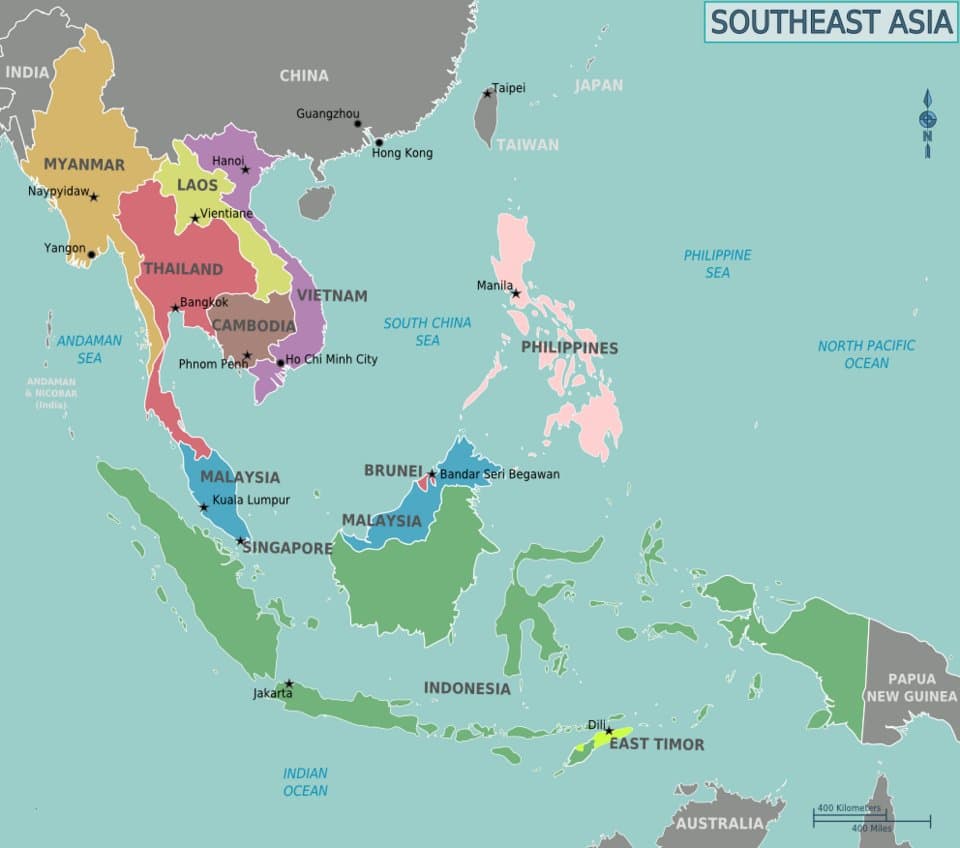
The neon green rasbora comes from the Ataran River basin in southeastern Myanmar, near the border with Thailand. The Ataran River (also known as the Kasat River) is a tributary of the Salween River system, flowing through the hilly terrain of Mon State and Kayin State. This is a region of dense tropical and subtropical forest, with clear, moderately flowing streams feeding into larger river channels.
In the wild, Microdevario kubotai is found in small streams and tributaries rather than the main river channel. These are typically shallow, clear-water habitats with moderate flow, substrates of gravel and sand, and varying amounts of submerged vegetation and leaf litter along the margins. The water in these streams tends to be soft and slightly acidic to neutral, influenced by the surrounding forest canopy and the geology of the watershed.
The fish occupy the upper and middle portions of the water column, shoaling in loose groups among submerged plants and overhanging vegetation. The forest canopy provides dappled shade, which is worth keeping in mind when you set up a tank for these fish — they’re not a species that evolved under blazing sunlight over open water. They’re stream fish accustomed to filtered light and moderate flow.
While not currently assessed as endangered by the IUCN, the neon green rasbora’s habitat faces pressure from deforestation, agricultural development, and mining activity in the border region between Myanmar and Thailand. Most specimens available in the hobby are wild-caught, though some captive-bred stock is beginning to appear from commercial breeders in Southeast Asia.
Appearance & Identification
This is a fish that earns its name. The neon green rasbora has a slender, elongated body that displays a vivid neon green to chartreuse coloration across the flanks and back. The intensity of the green can shift between a more yellowish-green and a cooler blue-green depending on the lighting, the fish’s mood, and its diet. Under good LED lighting in a planted tank, the effect is genuinely striking — these fish seem to glow.
The body is somewhat translucent, particularly along the belly, which allows you to see hints of the internal structures. A faint darker lateral line may be visible along the midline. The fins are mostly clear to slightly yellowish, and the overall impression is of a sleek, streamlined little fish that’s all about that green glow. There aren’t bold stripes, spots, or markings to speak of — the color itself is the main event.
What makes this fish genuinely special in the hobby is the rarity of true green coloration among freshwater species. Plenty of fish are marketed as “green” but actually lean more toward olive, teal, or blue-green. Microdevario kubotai is one of the few species that delivers an authentic, vivid green that’s immediately recognizable in a tank. A school of 10 or more in a well-planted aquarium creates a visual effect that’s hard to achieve with any other species.
Male vs. Female
Sexing neon green rasboras is tricky with young fish, but becomes more straightforward as they mature. Males are typically slimmer and may display slightly more intense coloration, particularly when competing for female attention or establishing minor hierarchies within the group. Their bodies remain lean and torpedo-shaped.
Females are noticeably rounder and fuller-bodied than males, especially when carrying eggs. A gravid female will have a clearly distended belly that’s visible from above. The color on females tends to be slightly less vivid than the brightest males, but the difference is subtle and can be hard to spot unless you’re comparing fish side by side. In a shoal, the plumper individuals are almost always female.
Average Size & Lifespan
The neon green rasbora is a genuinely tiny fish. Adults max out at about 0.8 inches (2 cm), making it one of the smallest species regularly available in the freshwater hobby. Most individuals in aquarium conditions will hover right around that 0.8-inch mark once fully grown. These are not fish you buy expecting much size — you buy them for the color and the schooling behavior.
In terms of lifespan, well-cared-for neon green rasboras can live 3 to 5 years. That’s a solid stretch for a micro fish, and it’s achievable if you maintain stable water quality, feed a varied diet, and keep them in a proper group. Fish that are chronically stressed by poor conditions, insufficient numbers, or aggressive tank mates will have shortened lifespans, as is the case with most nano species.
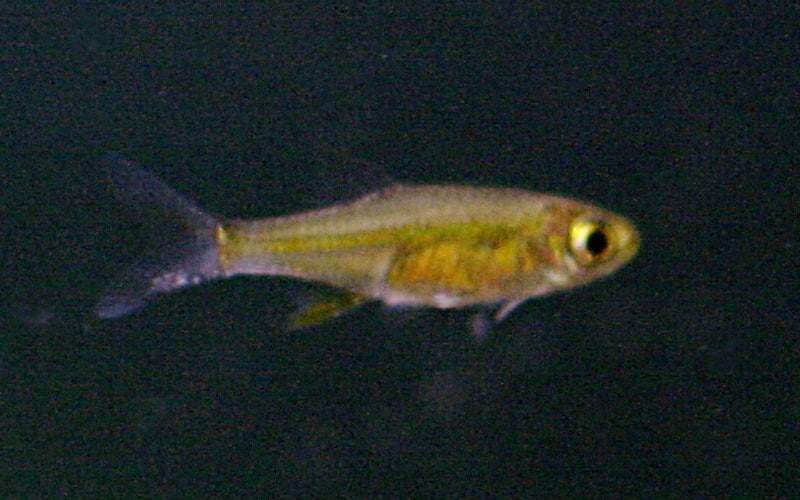
Neon green rasboras (Microdevario kubotai) are a small schooling species prized for their vivid lime-green coloration. They prefer soft, slightly acidic water and planted nano setups.
Care Guide
Tank Size
A 10-gallon (38-liter) tank is the minimum for a school of neon green rasboras. While these are tiny fish, they need to be kept in groups of at least 8-10, and the tank needs enough room for planting and some open swimming space. A 10-gallon long with a good layout gives you the footprint to create a nice planted setup with room for the school to move around.
If you’re planning a nano community with other small species, step up to a 15 or 20-gallon. The extra volume gives you more flexibility with stocking and helps maintain more stable water parameters, which is always a plus with small fish. A 20-gallon long is particularly good for nano communities because of the extra swimming length.
Water Parameters
Neon green rasboras come from soft, slightly acidic to neutral streams, and they do best when you match those conditions in the aquarium.
| Parameter | Recommended Range |
|---|---|
| Temperature | 68 to 79°F (20 to 26°C) |
| pH | 6.0 to 7.5 |
| Hardness (GH) | 2 to 10 dGH |
| KH | 1 to 6 dKH |
| Ammonia / Nitrite | 0 ppm |
| Nitrate | Below 20 ppm |
The temperature range is fairly forgiving compared to some nano species. They’ll tolerate the mid to high 70s just fine, but you don’t need to push the heater up to 80°F. A comfortable room temperature setup in the low to mid 70s is a sweet spot where you’ll see active behavior and good coloring.
Water softness is the more important factor. These fish come from soft-water streams, and hard, alkaline tap water (above 10 dGH or pH above 7.5) will dull their coloring and cause long-term stress. If your tap water is naturally soft and slightly acidic, you’re in great shape for this species right out of the faucet. If you have harder water, consider using a mix of RO water to bring the hardness down, or set up with active substrate and driftwood that will naturally soften things.
Filtration & Water Flow
A gentle to moderate flow works best. In the wild, neon green rasboras inhabit streams with some current, so they’re not a completely still-water species. That said, they’re tiny fish that can be pushed around by strong filtration output. A sponge filter is the ideal choice for a dedicated nano setup — it provides biological filtration without creating excessive current, and the sponge surface grows biofilm that these micropredators will pick at between feedings.
If you’re using a hang-on-back or canister filter, diffuse the output with a spray bar or baffle to prevent strong directional flow. You want enough circulation to keep the water oxygenated and evenly heated, but not so much that the fish are fighting a current all day. Watch how they’re swimming — if they’re constantly bracing against the flow rather than moving freely, the current is too strong.
Lighting
Moderate lighting brings out the best in neon green rasboras. You want enough light to support healthy plant growth and make those green bodies pop, but not so much that the tank feels overexposed. These fish come from shaded forest streams, and they’ll show their most confident behavior and richest coloring under softer lighting conditions.
A planted tank LED on a timer (8-10 hours per day) is perfect. Adding some floating plants like red root floaters, salvinia, or water lettuce will help create pockets of shade and dappled light, which mimics their natural environment. Under this kind of lighting, the green coloration really seems to glow. Under harsh overhead light with no cover, the fish will look washed out and spend more time hiding.
Plants & Decorations
Planting is important for neon green rasboras. A bare tank with no cover will produce stressed, pale fish. You don’t necessarily need the extreme density required by some ultra-shy nano species, but at least 40-50% plant coverage gives them the security they need to behave naturally and show off their color.
Good plant choices include java moss, java fern, Cryptocoryne species, Rotala, Hygrophila, and stem plants that create vertical structure in the mid and background. Floating plants are especially valuable for providing overhead shade. Driftwood works well in the setup too — it releases tannins that gently lower pH and soften the water, which is exactly what these fish prefer.
Leave some open areas in the front or center of the tank for the school to swim through. The contrast between planted sections and open swimming lanes lets you watch the group move as a unit, which is one of the real pleasures of keeping a species like this.
Substrate
A fine gravel or sand substrate works well. If you’re growing rooted plants (and you should be), a nutrient-rich planted tank substrate or an inert sand with root tabs is a good approach. Active substrates like aquasoils that buffer toward slightly acidic pH are actually a benefit for this species, since they prefer soft, slightly acidic conditions.
A dark substrate tends to make the green coloration pop more dramatically than a light-colored bottom. Dark sand or dark aquasoil creates a nice visual contrast and encourages the fish to display deeper color. Light substrates aren’t harmful, but aesthetically, you get more visual impact with a darker base.
Is the Neon Green Rasbora Right for You?
Before you buy, run through this honest checklist. The Neon Green Rasbora is a great fish for the right keeper, but it is not for everyone.
- You have a well-established nano tank (10+ gallons) with stable parameters
- You enjoy subtle iridescent coloring that changes with the light
- You can keep a group of 10+ for proper schooling
- Your tank has a dark substrate and moderate lighting
- You keep soft to moderately hard water with neutral to slightly acidic pH
- You want a species that rewards patient observation rather than demanding immediate attention
Tank Mates
The neon green rasbora’s small size and peaceful temperament make tank mate selection straightforward — just keep everything small and calm. Any fish big enough to eat a 0.8-inch fish will likely try, and anything aggressive or highly active will stress them out and push them into hiding.
Best Tank Mates
- Celestial Pearl Danios — Similar size, similar temperament, and the gold/red tones contrast beautifully with the neon green
- Chili Rasboras (Boraras brigittae) — Another tiny, peaceful nano species that shares soft water preferences
- Ember Tetras — Small enough to be safe, peaceful, and the warm orange complements the green nicely
- Pygmy Corydoras (C. pygmaeus) — Gentle bottom-dwellers that stay small and won’t compete for space in the water column
- Dwarf Corydoras (C. habrosus) — Same benefits as pygmy corys, slightly different behavior pattern
- Otocinclus catfish — Peaceful algae grazers that completely ignore other fish
- Cherry shrimp and amano shrimp — Safe companions that add cleanup and visual interest
- Nerite snails — Excellent algae control with zero aggression risk
- Other Microdevario species — If you can find them, other species in the genus are natural companions
Tank Mates to Avoid
- Bettas — Too territorial for a tiny fish like this, and the enclosed space of a nano tank makes aggression worse
- Barbs (tiger, cherry, etc.) — Too boisterous, nippy, and competitive at feeding time
- Guppies and mollies — Prefer harder, more alkaline water and are active enough to stress out neon green rasboras
- Dwarf cichlids (rams, apistos) — Too large and territorial, especially during breeding
- Any fish over 2 inches — At 0.8 inches, neon green rasboras are snack-sized for most community fish. Keep tank mates small
- Aggressive or fast-swimming species — Anything that dominates feeding time or claims territory will push these tiny fish into permanent hiding
Food & Diet
Neon green rasboras are micropredators with very small mouths. In the wild, they feed on tiny invertebrates, insect larvae, zooplankton, and biofilm. In the aquarium, you need to match the food size to the fish — standard-sized flakes and pellets are too large for them to eat comfortably.
Here’s what works well:
- Crushed high-quality flakes or micro pellets — These are more readily accepted than with some other micropredators, but crush them fine enough for tiny mouths
- Baby brine shrimp (BBS) — The perfect size and a strong feeding trigger for just about any nano fish
- Frozen cyclops — Widely available and an excellent staple frozen food for micro fish
- Daphnia (small) — Moina or young daphnia are great for variety and nutrition
- Micro worms and vinegar eels — Easy to culture at home and perfect for supplemental feeding
- Frozen baby brine shrimp — A convenient frozen alternative when live cultures aren’t available
- Grindal worms — Small enough for adults and easy to culture
Feed small amounts twice a day rather than one large feeding. These fish have tiny stomachs and do much better with frequent, small meals. A mix of high-quality crushed dry food supplemented with live or frozen foods several times a week will keep them healthy and colorful. The live and frozen foods, in particular, tend to intensify the green coloration. If you notice the color looking dull, improving the diet is often the first thing to try.
In a community tank, watch carefully to make sure the neon greens are actually getting food. They’re not aggressive feeders, and faster or larger tank mates can easily outcompete them at mealtimes. Target feeding with a pipette or turkey baster directly into the school can help.
Breeding & Reproduction
Breeding neon green rasboras in captivity is possible but not particularly easy. They’re egg scatterers that show no parental care, and the fry are extremely small at hatching. Successful breeding requires dedicated setup and a commitment to culturing tiny foods for the fry.
Breeding Difficulty
Moderate to difficult. Getting conditioned adults to scatter eggs isn’t the hardest part — raising the microscopic fry is where most hobbyists struggle. You’ll need infusoria or similar first foods ready to go before the eggs even hatch.
Spawning Tank Setup
Set up a small 5 to 10-gallon breeding tank with plenty of fine-leaved plants or spawning mops. Java moss is ideal because eggs settle into the moss structure where they’re somewhat protected from being eaten by the adults. A mesh or marble substrate layer is another option to keep eggs out of reach. Lighting should be dim and the tank well-covered to reduce stress.
Use a gentle air-driven sponge filter. Anything stronger risks sucking in eggs or the tiny fry once they hatch. Keep the water shallow — 6 to 8 inches of depth is sufficient and makes it easier for the fish to find each other and for you to manage the fry later.
Water Conditions for Breeding
Soft, slightly acidic water seems to produce the best spawning results. Aim for a temperature of 75-77°F (24-25°C), pH around 6.5, and GH of 2-4 dGH. These conditions are slightly warmer and softer than the middle of their general care range, which can help trigger spawning behavior. A small water change with slightly cooler water can sometimes act as a spawning trigger, mimicking the effect of a rain event.
Conditioning & Spawning
Condition a group of adults with generous portions of live baby brine shrimp, daphnia, and other small live foods for 1-2 weeks before introducing them to the breeding setup. Well-fed females will become noticeably rounder as they fill with eggs. A ratio of roughly 2 males per female gives the best chances of successful fertilization.
Spawning usually occurs in the early morning hours. Males will display and chase gravid females through the plants, and the pair scatters small adhesive eggs among the fine-leaved vegetation. Clutches are typically small — perhaps a dozen or so eggs per spawning event — but spawning may occur over consecutive days if conditions remain favorable. The adults show no parental interest and will eat the eggs if they can find them, so remove the adults after spawning activity stops.
Egg & Fry Care
Eggs are tiny, clear, and adhesive. They typically hatch in 24 to 48 hours depending on temperature. The newly hatched fry are almost invisible to the naked eye and will absorb their yolk sacs over the first day or two before becoming free-swimming.
This is the make-or-break stage. The fry are too small for baby brine shrimp initially. Start them on infusoria, paramecium, or a high-quality commercial liquid fry food. Green water (a tank with a controlled algae bloom) can also support infusoria populations that provide continuous grazing for the fry. After about 7-10 days, the fry should be large enough to start taking newly hatched brine shrimp, which will accelerate growth.
Keep the water pristine with small, frequent water changes (10% every other day) matched to the breeding tank parameters. Growth is slow, and it can take 2-3 months before the fry start showing the characteristic green coloration and begin to resemble miniature adults.
Common Health Issues
Ich (White Spot Disease)
Like most freshwater fish, neon green rasboras are susceptible to ich, especially after the stress of shipping or introduction to a new tank. The telltale white spots are easy to identify. When treating, use a half-dose medication appropriate for small, sensitive fish. These are tiny animals with a high surface-area-to-body-mass ratio, so full-dose treatments can sometimes be too much. Raising the temperature to 82-84°F (28-29°C) alongside the medication can speed up the parasite’s life cycle and make treatment more effective.
Bacterial Infections
Poor water quality is the primary driver of bacterial infections in nano fish. Fin rot, cloudy eyes, or red streaking on the body are common signs. These fish are sensitive to ammonia spikes and elevated nitrates, and in a small tank, water quality can deteriorate quickly if maintenance is skipped. Prevention through regular water changes and good filtration is far more effective than treatment. If infections occur, a broad-spectrum antibacterial medication at a reduced dose is the standard approach.
Internal Parasites
Since many neon green rasboras in the hobby are wild-caught, internal parasites are a real possibility. Signs include wasting (losing weight despite eating), white stringy feces, lethargy, and a sunken belly. Quarantining new fish for 2-4 weeks before adding them to your display tank gives you time to spot these issues. If parasites are suspected, medicated food containing praziquantel or metronidazole is the go-to treatment.
Stress-Related Color Loss
The most common “health” problem with neon green rasboras is really a husbandry problem: dull, washed-out color. This is almost always caused by stress from hard water, insufficient cover, a group that’s too small, aggressive tank mates, poor diet, or some combination of those factors. The fix isn’t medication — it’s fixing the environment. Once conditions improve, the vibrant green usually returns within a week or two.
Common Mistakes to Avoid
- Keeping too few. A pair or a group of 3-4 will be stressed, pale, and constantly hiding. These are shoaling fish that need the security of numbers. Start with at least 8-10 for the best behavior and coloring.
- Wrong water hardness. Neon green rasboras are soft-water fish. If your tap water is very hard (above 10-12 dGH), you’ll struggle to get good coloring and long-term health from this species. Test your water before buying and consider blending with RO water if needed.
- Food too large. Standard-sized flakes and pellets are too big for a 0.8-inch fish. Crush dry foods to a fine powder or use micro-sized products designed for nano fish. Supplement with live and frozen foods that match their mouth size.
- Overpowered filtration. Strong current from oversized filters will exhaust these tiny fish. Use a sponge filter or baffle the output on powered filters. Watch the fish — if they’re struggling against the flow, it’s too strong.
- Skipping quarantine. Many neon green rasboras are wild-caught and can carry parasites or diseases that aren’t immediately visible. Quarantine new arrivals for 2-4 weeks in a separate tank before adding them to your display.
- Not enough plants. A bare or sparsely decorated tank will stress these fish. They need plant cover to feel secure and show their best color. Floating plants for overhead shade are especially important.
- Mixing with incompatible tank mates. Any fish large enough to eat them is a risk, and active, food-competitive species will outcompete them at feeding time. Keep the community small and peaceful.
Where to Buy
Neon green rasboras are a specialty species that you won’t typically find at big-box pet stores. They show up occasionally at well-stocked local fish stores, but your most reliable options are online retailers who specialize in nano and rare freshwater species.
Flip Aquatics is a solid source for nano species like the neon green rasbora. They’re known for shipping healthy, well-conditioned fish, and their quality control is consistently good. Dan’s Fish is another excellent option — they stock a wide range of nano and rare species and have a strong reputation for careful packaging and healthy arrivals.
When ordering, buy a group of at least 8-10 at once rather than adding a few at a time. They ship better in larger groups, acclimate more easily, and you’ll see natural behavior much faster when the full school is introduced together. Ask the seller whether the fish are wild-caught or captive-bred if the listing doesn’t specify — captive-bred specimens tend to be hardier and adjust to aquarium life more quickly.
Frequently Asked Questions
Is the neon green rasbora actually a rasbora?
No. Despite the common name, Microdevario kubotai belongs to the family Danionidae and the genus Microdevario, which puts it in the danio lineage rather than with true rasboras. The “rasbora” label is a holdover from older classifications and is just one of many examples in the hobby where common names don’t match current taxonomy. This isn’t just trivia — it’s relevant for care, since this species has different water parameter preferences than many true rasboras.
How many neon green rasboras should I keep?
Keep a minimum of 8, with 10-12 being ideal. In smaller groups, they’ll be timid, hide constantly, and won’t show their best coloring. A proper school gives them confidence and brings out natural behaviors like loose shoaling and minor displays between males. More fish means better behavior, which is one of the core reasons to keep a species like this in the first place.
What makes the neon green rasbora green?
The green coloration comes from specialized pigment cells called iridophores that reflect light and produce structural color. This is similar to how many other iridescent fish produce their colors — it’s not a simple pigment but a light-reflecting mechanism. The intensity of the green is influenced by diet, water quality, lighting, stress level, and mood. Fish that are healthy, well-fed (especially with live and frozen foods), and kept in soft water with appropriate lighting will show the most vibrant green.
Can neon green rasboras live with shrimp?
Yes, adult cherry shrimp and amano shrimp are safe tank mates. Neon green rasboras are too small to bother full-sized shrimp. However, very young shrimp (shrimplets) could potentially be eaten since they’re small enough to fit in the rasboras’ mouths. If you’re breeding shrimp in the same tank, provide dense moss and plant cover to give the baby shrimp hiding spots. This isn’t a species that actively hunts shrimp, but opportunistic snacking on tiny shrimplets is always a possibility with any fish.
Do neon green rasboras need a heater?
It depends on your room temperature. Their range of 68-79°F (20-26°C) includes comfortable room temperature for most homes. If your fishkeeping room consistently stays in the low to mid 70s, you may not need a heater at all. If temperatures drop below 68°F at night or in winter, a small adjustable heater set to around 72-74°F provides a safety net. These are adaptable fish in terms of temperature, which is one of their strengths for nano setups.
Why are my neon green rasboras not very green?
Dull coloring in neon green rasboras is usually caused by one or more of the following: hard water (GH above 10 dGH), high pH (above 7.5), insufficient plant cover, too few fish in the group, poor diet lacking live or frozen foods, harsh lighting with no shade, or recent stress from shipping or a tank change. Check your water parameters against the recommended ranges, improve the diet, add more plants (especially floaters), and give newly added fish at least a week to settle in. The color should improve as conditions are optimized.
Are neon green rasboras good for beginners?
They can be, as long as the beginner is willing to research water parameters and start with a properly cycled tank. The fish themselves aren’t particularly demanding — they’re peaceful, adaptable within their preferred range, and accept a variety of foods. The main challenges are maintaining soft water (which may require RO water blending depending on your tap water) and feeding appropriately sized foods. If you can meet those two requirements, they’re a rewarding species for newer hobbyists who want something visually unique.
How the Neon Green Rasbora Compares to Similar Species
Neon Green Rasbora vs. Emerald Dwarf Rasbora
The Emerald Dwarf Rasbora is more colorful overall with orange fins and blue-green body. The Neon Green Rasbora has a more subtle, stripe-based appeal. Both need groups and stable conditions. For more visual impact, the Emerald Dwarf Rasbora wins. For something subtler and less commonly seen, the Neon Green Rasbora is the pick.
Neon Green Rasbora vs. Phoenix Rasbora
The Phoenix Rasbora is far more dramatic in color but needs softer, more acidic water. The Neon Green Rasbora is easier to keep in a wider range of conditions. If you want maximum color impact and can provide blackwater conditions, go Phoenix. For a more adaptable nano schooler, the Neon Green Rasbora works better.
Expert Take (Mark Valderrama, AquariumStoreDepot)
After 25 years in the hobby and time managing fish stores, the neon green rasbora is one of those species I always recommend to hobbyists ready to move beyond the basics. Neon green rasboras (Microdevario kubotai) are a small schooling species prized for their vivid lime-green coloration. They prefer soft, slightly acidic water and planted nano setups. The neon green coloration requires the right conditions to show fully. In bright light on light substrate, these fish look dull – a dark substrate, subdued lighting, and tannins bring out the fluorescent green.
Closing Thoughts
The neon green rasbora occupies a genuinely unique niche in the freshwater hobby. There are very few species that deliver this kind of vivid, true green coloration, and even fewer that do it in a body small enough for a 10-gallon nano tank. A school of 10 or more in a well-planted aquarium with soft water and subdued lighting creates a visual effect that’s hard to replicate with any other species — it looks like someone scattered tiny glowing emeralds through the plants.
Keep them in soft water, feed them small foods with live and frozen options in the rotation, give them enough plant cover to feel secure, and maintain a proper school size. Do those things and you’ll be rewarded with a tank that stops people in their tracks. In my 25+ years in the hobby, few nano fish deliver as much visual punch per inch as Microdevario kubotai. If you’re building a nano planted tank and want something that nobody else in your fish club is keeping, this is a strong contender.
Looking for more species like this? Check out our full directory to find the right rasbora or danio for your setup.
Recommended Video
Check out this video to learn more about rasboras and what makes them great choices for your aquarium:
References
- Microdevario kubotai (Kottelat & Witte, 1999) — FishBase
- Microdevario kubotai Profile — Seriously Fish
- Neon Green Rasbora Care Guide — Practical Fishkeeping
- About the Author
- Latest Posts

I’m Mark Valderrama, founder of Aquarium Store Depot and a fishkeeper with over 25 years of hands-on experience. I started in the hobby at age 11, worked at local fish stores, and have kept freshwater tanks, ponds, and reef tanks ever since. I’ve been featured in two best-selling aquarium books on Amazon and built this site to share practical, experience-based fish keeping knowledge.
Leave a Reply