
Last Updated: June 25, 2026
Thank you for visiting! By the way… any links on this page that lead to products on Amazon and other stores/partners are affiliate links Aquarium Store Depot earns a commission if you make a purchase.
Table of Contents
- What Care Guides Get Wrong
- Key Takeaways
- Species Overview
- Classification
- Origin & Natural Habitat
- Appearance & Identification
- Average Size & Lifespan
- Care Guide
- Is It Right for You?
- Tank Mates
- Food & Diet
- Breeding & Reproduction
- Common Health Issues
- Common Mistakes to Avoid
- Where to Buy
- FAQ
- Species Comparison
- Closing Thoughts
- References
The peppered cory is one of those fish that practically sells itself once you watch a group of them working the bottom of a tank. They’ve got personality for days, they’re tough as nails, and they were one of the very first tropical fish ever kept in aquariums, dating all the way back to 1878. That’s nearly 150 years of proven success in home tanks. If that doesn’t give you confidence, nothing will.
What Most Care Guides Get Wrong About the Peppered Cory
The biggest misconception about the Peppered Cory is temperature. Most care guides list it as a tropical fish needing 75 to 80F water. That is wrong. This is one of the most cold-tolerant corydoras, thriving in water as cool as 64F. In fact, it does better in cooler water than most other corys. The second mistake is substrate. Sharp gravel will destroy their barbels over time, and once those barbels are damaged, the fish cannot forage properly. Smooth sand is not optional for this species. It is essential.
What makes the peppered cory stand out from the dozens of other corydoras in the hobby is its cold water tolerance. Most tropical fish need a heater, but peppered corys can thrive in temperatures as low as 64°F (18°C). That opens up a whole world of unheated tank possibilities that most corys simply can’t handle. Whether you’re a complete beginner or a seasoned hobbyist looking for a reliable bottom dweller, this fish deserves a serious look.
Key Takeaways
- One of the hardiest corydoras available, tolerating temperatures as low as 64°F (18°C), making them suitable for unheated tanks
- Keep in groups of 6 or more in a minimum 20-gallon tank with a sand substrate to protect their delicate barbels
- Among the easiest corydoras to breed in home aquariums, with cold water changes simulating rainfall to trigger spawning
- Peaceful bottom dwellers that work well with nearly any community fish that won’t fit them in its mouth
- Obligate air breathers that dash to the surface to gulp air, which is completely normal behavior and not a sign of distress
Species Overview
| Field | Details |
|---|---|
| Scientific Name | Hoplisoma paleatum (formerly Corydoras paleatus) |
| Common Names | Peppered Cory, Peppered Catfish, Peppered Corydoras, Salt and Pepper Cory |
| Family | Callichthyidae |
| Origin | La Plata basin, South America (Brazil, Paraguay, Uruguay, Argentina) |
| Care Level | Easy |
| Temperament | Peaceful |
| Diet | Omnivore (bottom feeder) |
| Tank Level | Bottom |
| Minimum Tank Size | 20 gallons (76 liters) |
| Temperature | 64 to 77°F (18 to 25°C) |
| pH | 6.0 to 8.0 |
| Hardness | 2 to 20 dGH |
| Lifespan | 5 to 8 years in captivity |
| Breeding | Egg depositor |
| Maximum Size | 2.5 inches (5 to 7 cm) |
| Breeding Difficulty | Easy |
| Compatibility | Peaceful community |
| OK for Planted Tanks? | Yes |
Classification
| Taxonomic Level | Classification |
|---|---|
| Order | Siluriformes |
| Family | Callichthyidae |
| Subfamily | Corydoradinae |
| Genus | Hoplisoma (reclassified from Corydoras; Dias et al., 2024) |
| Species | H. paleatum (Jenyns, 1842) |
If you’re wondering why you still see this fish listed as Corydoras paleatus everywhere, it’s because the reclassification is very recent. In 2024, Dias and colleagues published a major revision of the Corydoradinae subfamily, splitting the massive Corydoras genus into several smaller genera. The peppered cory was moved to Hoplisoma along with many other popular species. Most retailers and hobbyists still use the old name, so you’ll see both in the trade for years to come.
Origin & Natural Habitat
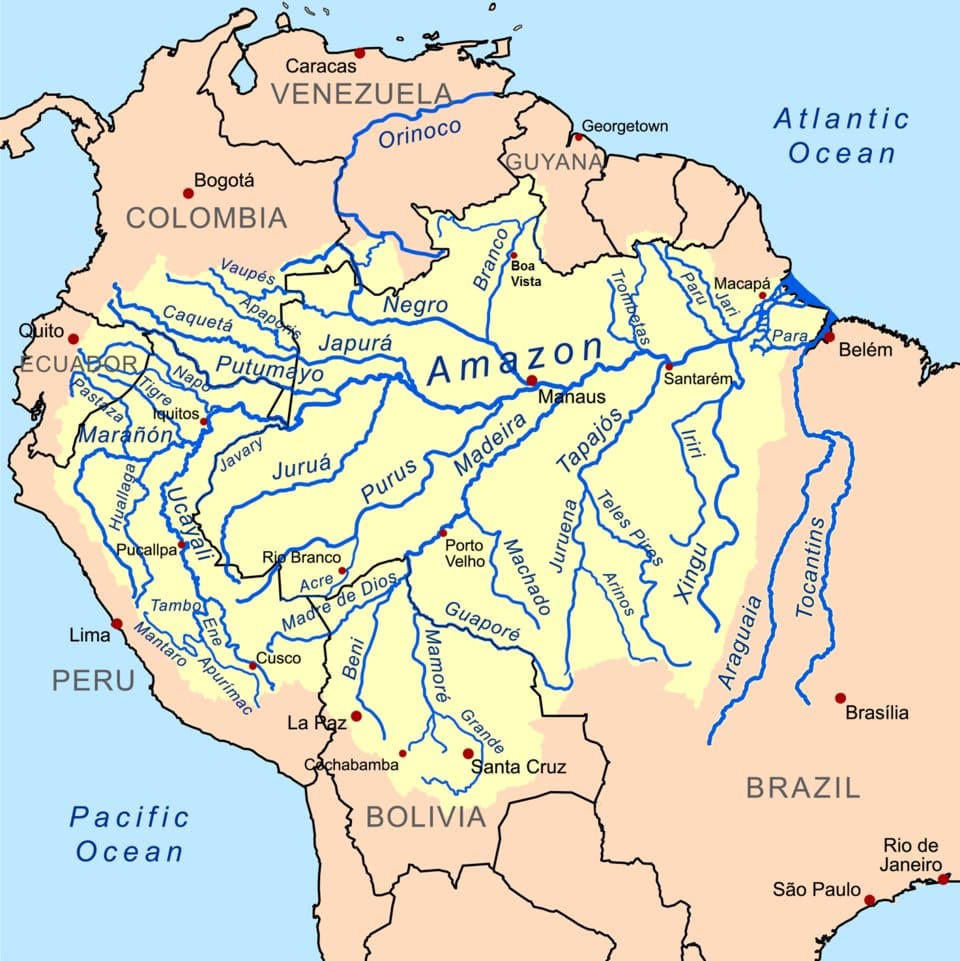
Peppered corys are native to the La Plata basin in South America, spanning the Paraguay, Parana, and Uruguay river systems across Brazil, Paraguay, Uruguay, and Argentina. This is a massive drainage that covers a huge swath of southern South America, and it includes some surprisingly cool, subtropical climates. That’s the key to understanding why this species handles cold water so well compared to most tropical fish.
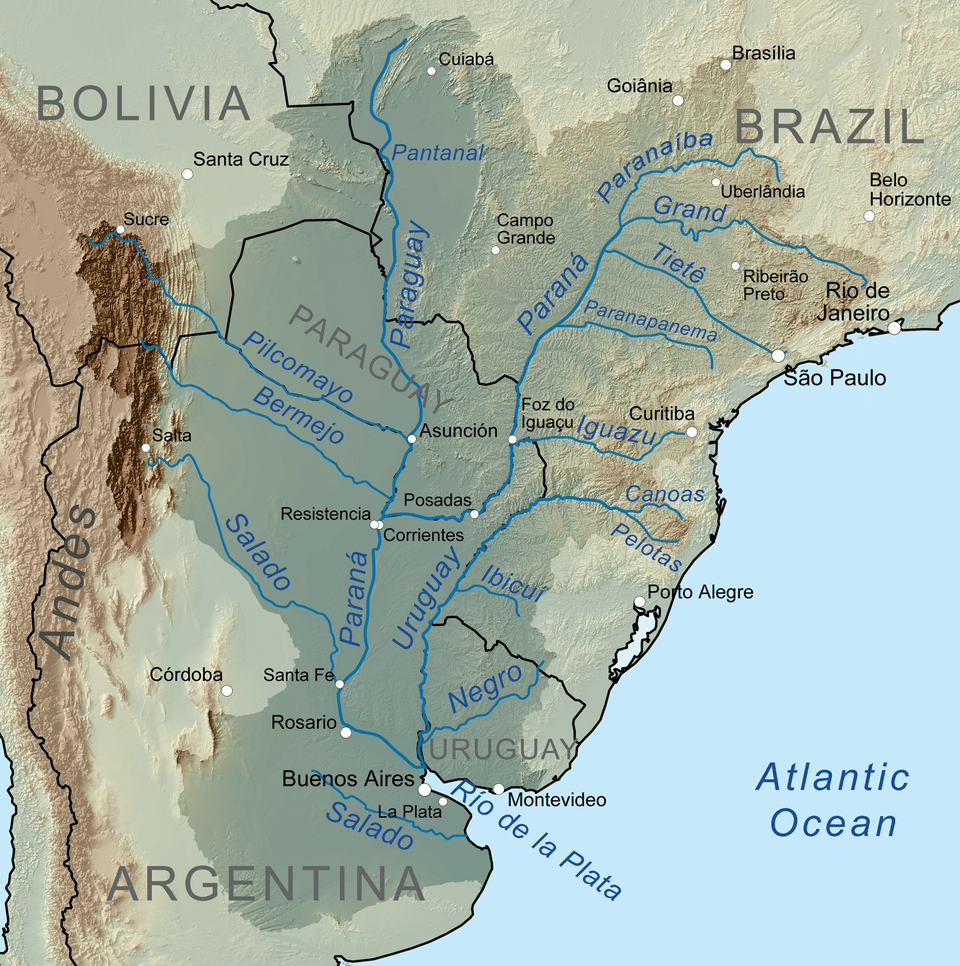
In the wild, peppered corys inhabit slow-moving rivers, tributaries, streams, and floodplain pools with sandy or muddy bottoms. They’re typically found in shallow, well-vegetated areas where fallen leaves and organic debris accumulate. Water conditions in their native range vary widely, from soft and slightly acidic to moderately hard and alkaline, which explains their remarkable adaptability in captivity. These fish have also been introduced to waters outside their native range, including parts of the United States, making them one of the most widely distributed corydoras in the world.
Appearance & Identification
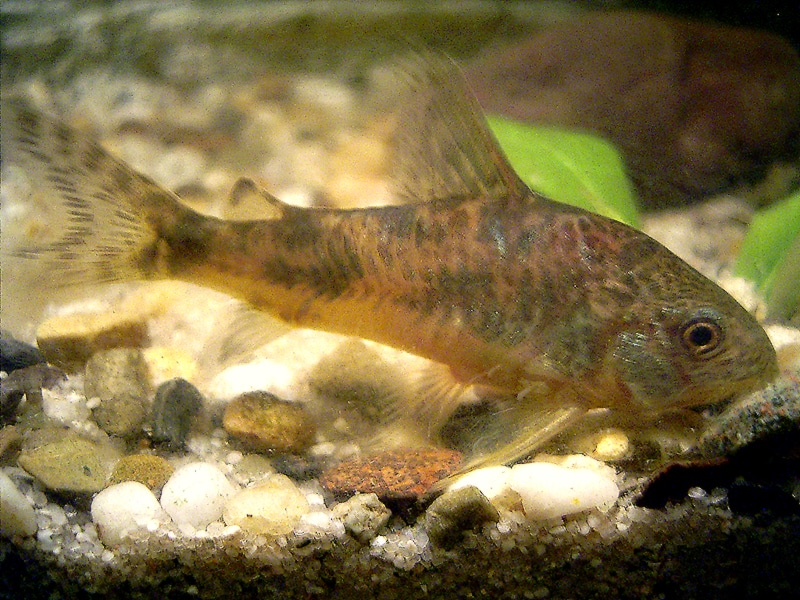
The peppered cory gets its name from the dark, irregular splotches and speckles that cover its olive to tan body. Think of it like someone scattered black pepper across a pale background. The pattern is unique to each fish, which is pretty cool once you start recognizing individuals in your school. The body has that classic corydoras shape: a flat belly, arched back, and armored plates (called scutes) running along the sides instead of traditional scales.
A dark band runs vertically through each eye, and the dorsal fin features a prominent dark blotch that’s one of the easiest identification markers. The fins are mostly clear to slightly yellowish with faint dark spotting. Under good lighting and water conditions, you’ll sometimes catch a subtle greenish or bronze iridescence along the flanks.
You’ll also find albino and longfin variants in the trade. The albino form has a pale pinkish-white body with red eyes and retains faint hints of the peppered pattern. The longfin variant has flowing, elongated fins that give the fish a more dramatic look. Both are the same species with the same care requirements and temperament, so everything in this guide applies to them as well.
Male vs. Female
Sexing peppered corys is straightforward once you know what to look for. Females are noticeably larger and wider when viewed from above, especially when they’re carrying eggs. They have a rounder, plumper body shape overall. Males are slimmer, slightly smaller, and have a more pointed dorsal fin. The easiest time to tell them apart is when the females are full of eggs and look like little submarines compared to the more streamlined males.
Average Size & Lifespan
Peppered corys reach about 2.5 inches (5 to 7 cm) in aquariums. Females tend to max out slightly larger than males. They’re a medium-sized corydoras, bigger than pygmy or habrosus corys but smaller than the giant brochis types.
With proper care, peppered corys live 5 to 8 years. There are reports from hobbyists of individuals pushing past 10 years in well-maintained tanks with stable water quality and a good diet. That’s a solid commitment for a small catfish, and it means you’ll have these little guys scurrying around the bottom of your tank for years to come.
Peppered corydoras are one of the most cold-tolerant corydoras species, able to thrive at temperatures as low as 59°F (15°C). They are hardy, peaceful, and among the easiest cories to keep.
Care Guide
Tank Size
A 20-gallon (76-liter) tank is the minimum for a group of 6 peppered corys. These are active bottom dwellers that need enough floor space to forage, and a 20-gallon long is ideal because it prioritizes footprint over height. If you’re building a community setup, stepping up to a 30 or 40 gallon gives everyone more room and keeps waste levels more manageable. Remember, corys are schooling fish, so you always need that group of 6 at minimum. More is always better.
Water Parameters
| Parameter | Range |
|---|---|
| Temperature | 64 to 77°F (18 to 25°C) |
| pH | 6.0 to 8.0 |
| Hardness | 2 to 20 dGH |
| Ammonia | 0 ppm |
| Nitrite | 0 ppm |
| Nitrate | Below 20 ppm |
Here’s where the peppered cory really stands apart from most tropical fish. That lower temperature tolerance of 64°F (18°C) means you can keep these fish in an unheated tank in most homes. Most hobbyists keep them in the 68 to 74°F (20 to 23°C) range, which is cooler than the typical tropical setup. If you’re pairing them with other community fish, just make sure your tank mates overlap in temperature preference. Don’t stick them in an 82°F tank with discus. That’s too warm for peppered corys and will shorten their lifespan.
The pH and hardness range is extremely forgiving. Most tap water falls within their tolerance, which is another reason they’re such a great beginner fish. Just focus on keeping the water clean and stable rather than chasing a perfect number.
Filtration & Water Flow
A standard hang-on-back filter or sponge filter works perfectly for a peppered cory tank. They don’t need strong flow. In fact, they prefer gentler currents since they spend their time on the bottom where strong flow can push them around. Sponge filters are a popular choice for cory tanks because they provide gentle filtration without creating strong currents and won’t suck up fry if you end up breeding them (which is very likely with this species).
Whatever filter you choose, make sure it can handle the bioload. Corys produce a fair amount of waste, especially in a group of 6 or more, and clean water is essential for keeping those barbels healthy.
Lighting
Peppered corys aren’t picky about lighting at all. They’re naturally most active during dawn, dusk, and nighttime hours, so subdued to moderate lighting is ideal. If you’re growing live plants (which you should consider), just match your light to your plant needs and the corys will be fine. Floating plants that diffuse overhead light are a nice touch that helps these fish feel more comfortable coming out to forage during the day.
Plants & Decorations
Live plants work great with peppered corys since they won’t eat or damage them. Java fern, Anubias, Amazon swords, and Vallisneria are all solid choices that appreciate the same cooler temperatures. Provide some hiding spots using driftwood, smooth rocks, or caves. Corys feel more secure when they have places to retreat to, and you’ll actually see them out in the open more often when cover is available. It sounds counterintuitive, but fish that feel safe are braver.
Leave some open floor space for foraging. Corys need room to root around in the substrate, so don’t carpet every inch of the bottom with decorations.
Substrate
This is the single most important part of a cory setup, and it’s non-negotiable: use sand. Fine sand is the only appropriate substrate for peppered corys. These fish constantly sift through the substrate with their sensitive barbels, searching for food. Gravel, especially sharp or coarse gravel, will wear down and erode those barbels over time. Once the barbels are damaged, they become susceptible to bacterial infections that can spread and become life-threatening.
Play sand, pool filter sand, or any aquarium-specific sand works well. You want a grain size that’s fine enough for the corys to sift through comfortably. If you already have gravel in your tank, you can add a thick layer of sand on top, but be aware it may mix over time. The bottom line: if you want to keep corys, sand is a must.
Is the Peppered Cory Right for You?
Before you buy, run through this honest checklist. The Peppered Cory is a great fish for the right keeper, but it is not for everyone.
- You keep a cooler tank (64 to 75F) where most tropical corys would struggle
- You can provide smooth sand substrate to protect their sensitive barbels
- You want a hardy cory that handles temperature fluctuations without stress
- You can keep a group of 6 or more for proper social behavior
- You have a 20-gallon or larger tank with regular maintenance
- You are looking for a species that pairs well with other cool-water fish like White Cloud Minnows
Tank Mates
Peppered corys are about as peaceful as it gets in the fish world. They mind their own business on the bottom of the tank and get along with just about anything that won’t try to eat them. The main considerations are temperature overlap (remember, these are cooler water fish) and making sure tank mates aren’t aggressive or large enough to harass them.
Best Tank Mates
- White Cloud Mountain Minnows – perfect cold water companions that share the same temperature preferences
- Zebra Danios – hardy, active, and comfortable in the same cooler temperature range
- Cherry Barbs – peaceful, colorful, and overlap well in water parameters
- Platies – easy-going livebearers that do well in the mid to upper water column
- Bristlenose Plecos – another peaceful bottom dweller that won’t compete with corys
- Neon Tetras – classic community fish that add color to the mid level of the tank
- Harlequin Rasboras – peaceful schooling fish that stay in the middle and top of the tank
- Kuhli Loaches – another gentle bottom dweller, though they prefer slightly warmer water
- Mystery Snails – peaceful algae cleaners that won’t bother the corys at all
- Amano Shrimp – great cleanup crew members that coexist peacefully with corys
Tank Mates to Avoid
- Cichlids (large or aggressive) – fish like Jack Dempseys, oscars, or convicts will harass or eat peppered corys
- Goldfish – despite the cold water overlap, goldfish produce too much waste, grow too large, and may try to eat smaller corys
- Chinese Algae Eaters – become aggressive as they mature and will harass bottom-dwelling fish
- Red-Tailed Sharks – territorial bottom dwellers that will aggressively chase corys out of their space
- Large Catfish – anything big enough to swallow a cory should be avoided; remember, corys have sharp pectoral spines that can lodge in a predator’s throat
Food & Diet
Peppered corys are omnivores that will eat just about anything that sinks to the bottom of the tank. But don’t make the mistake of thinking they’ll survive on leftover flakes from your other fish. That’s one of the biggest myths in the hobby. Corys need their own dedicated feeding, and the food needs to actually reach them at the bottom.
High-quality sinking pellets or wafers should be the staple of their diet. Brands like Hikari, Omega One, and Repashy make excellent options. Supplement with frozen or live foods like bloodworms, brine shrimp, daphnia, and tubifex worms. These protein-rich foods are especially important if you’re conditioning them for breeding. Blanched vegetables like zucchini or cucumber make a great occasional treat and add variety.
Feed once or twice daily, and make sure the food makes it past any mid-water fish that might intercept it. Dropping food in after lights out can help ensure the corys get their fair share, since they’re naturally more active in low light.
Breeding & Reproduction
If you’ve ever wanted to try your hand at breeding fish, the peppered cory is one of the best species to start with. They’re among the easiest corydoras to breed in captivity, and many hobbyists have found their peppered corys spawning without even trying. It’s practically a rite of passage in the hobby.
Breeding Difficulty
Easy. The peppered cory is widely considered one of the simplest corydoras to spawn. Their cold water tolerance actually works in your favor here, because the breeding trigger is straightforward: simulate a rainstorm with a large, cool water change. It’s one of those rare fish where breeding feels natural rather than forced.
Spawning Tank Setup
A separate 10 to 20 gallon breeding tank works best, though peppered corys will often spawn in the main tank if conditions are right. Equip the breeding tank with a sponge filter (gentle filtration that won’t harm eggs or fry), fine sand substrate, and some broad-leaved plants or smooth surfaces like the tank glass where the female can deposit eggs. Java fern, Anubias, and even spawning mops give the female plenty of options for egg placement.
Water Conditions for Breeding
The trick to triggering a spawn is simulating the onset of the rainy season. Perform a large water change (50% or more) with water that’s noticeably cooler than the tank, around 5 to 10°F lower. Drop the temperature to around 65 to 68°F (18 to 20°C). Many breeders also drop the water level slightly, then slowly refill with cool water to mimic rising floodwaters. A slight drop in barometric pressure can help too, so rainy days are genuinely a good time to try.
Conditioning & Spawning
Condition your breeding group with protein-rich live and frozen foods for 1 to 2 weeks before attempting the cool water change. Bloodworms, brine shrimp, and daphnia are all excellent choices. You’ll know the females are ready when they look noticeably plumper.
Spawning behavior in peppered corys follows the classic corydoras pattern. Males will actively pursue females around the tank in what hobbyists call the “cory chase.” When a female is ready, she’ll adopt the distinctive T-position, where she presses her mouth against the male’s genital area to collect milt (sperm). She then cups her pelvic fins to form a basket, deposits a few adhesive eggs into it, and swims off to carefully place them on a surface like the tank glass, a plant leaf, or a decoration. She repeats this process with one or more males over the course of several hours, depositing anywhere from 100 to 300 eggs total.
Egg & Fry Care
Once spawning is complete, it’s best to either remove the adults or move the eggs to a separate hatching container. Peppered corys will eat their own eggs if given the opportunity, so don’t rely on parental care. Eggs hatch in about 4 to 6 days at room temperature. Adding a few drops of methylene blue to the water helps prevent fungus from attacking unfertilized eggs and spreading to healthy ones.
The fry are tiny but can feed on infusoria and microworms immediately after absorbing their yolk sac. After a few days, graduate to baby brine shrimp (freshly hatched Artemia), which is the gold standard for corydoras fry food. Keep the water clean with small, frequent water changes, and the fry grow relatively quickly. Most hobbyists see them reach sellable or tradeable size within 2 to 3 months.
Common Health Issues
Peppered corys are hardy fish, but they do have a few vulnerabilities that every keeper should know about.
Barbel Erosion
This is the number one health issue with corydoras, and it’s almost always caused by keeping them on rough gravel or in dirty substrate. The barbels gradually wear down, become inflamed, and can get infected by bacteria. In severe cases, the barbels erode completely, leaving the fish unable to forage properly. Prevention is simple: use fine sand substrate and keep it clean. If you catch barbel erosion early, switching to sand and improving water quality will often allow the barbels to regenerate.
Ich (White Spot Disease)
Like most freshwater fish, peppered corys are susceptible to ich, especially during temperature swings or after being introduced to a new tank. Be cautious with medications, though. Corys are scaleless fish (they have bony plates instead), which makes them more sensitive to many common ich treatments. Use half-dose concentrations of copper-based medications, or better yet, opt for heat treatment by slowly raising the temperature to 82 to 86°F (28 to 30°C) for 10 to 14 days. Salt treatments are another option, but keep the concentration low.
Red Blotch Disease
Sometimes called hemorrhagic septicemia, this bacterial infection shows up as red, inflamed patches on the belly or body. It’s typically triggered by poor water quality, overcrowding, or stress. Improving water conditions is the first step, and antibiotic treatment may be necessary in severe cases. This is more common in newly imported wild-caught specimens than in captive-bred fish.
Fin Rot
Frayed, discolored, or deteriorating fins are usually a sign of bacterial infection linked to poor water quality. Clean water is the best medicine for mild cases. For more advanced fin rot, an antibiotic treatment in a quarantine tank may be needed. Peppered corys kept in well-maintained tanks rarely develop this issue.
Common Mistakes to Avoid
- Using gravel instead of sand – This is the most common and most damaging mistake. Gravel destroys their barbels over time, leading to infections and an inability to feed naturally. Always use fine sand.
- Keeping them alone or in pairs – Peppered corys are social fish that need a group of 6 or more. Solitary corys are stressed, inactive, and more prone to health issues.
- Relying on leftovers for food – The “cleanup crew” myth causes a lot of suffering. Corys need their own sinking foods. Leftover flakes drifting to the bottom are not a complete diet.
- Keeping them too warm – Just because they’re sold alongside tropical fish doesn’t mean they need 80°F water. Peppered corys prefer cooler conditions, and prolonged exposure to high temperatures shortens their lifespan.
- Panicking when they dart to the surface – Peppered corys are obligate air breathers. They regularly dash to the surface, gulp air, and zip back down. This is completely normal. However, if the entire group is doing it constantly, that can indicate poor water quality or low dissolved oxygen.
- Overdosing medications – Because corys have bony plates instead of scales, they absorb medications differently. Always use reduced doses of copper-based and salt-based treatments.
Where to Buy
Peppered corys are one of the most widely available corydoras in the hobby, second only to the bronze cory. You’ll find them at most local fish stores and chain pet stores for just a few dollars per fish. Nearly all specimens in the trade are captive-bred, so they’re well adapted to aquarium life from day one. For healthy, quality specimens shipped directly to your door, check out Flip Aquatics and Dan’s Fish. Both are reliable sources for freshwater fish and carry corydoras regularly. Buy in groups of 6 or more to get a proper school from the start.
FAQ
How many peppered corys should I keep together?
A minimum of 6, but 8 to 10 is even better. These are social, schooling fish that feel more secure and display more natural behavior in larger groups. A solitary cory will be stressed, hide constantly, and live a shorter life.
Can peppered corys live in cold water without a heater?
Yes. Peppered corys tolerate temperatures as low as 64°F (18°C), which makes them one of the few tropical fish that can thrive in an unheated tank. As long as your room temperature stays above 60°F (16°C), they’ll be fine without a heater in most homes.
Why does my peppered cory keep going to the surface?
This is completely normal. Peppered corys are obligate air breathers, meaning they can supplement their oxygen intake by gulping air at the surface and absorbing it through their intestinal lining. An occasional dash to the surface and back is nothing to worry about. If the entire group is doing it constantly, check your water quality and aeration.
Can I keep peppered corys on gravel?
No. Fine sand is essential for peppered corys. They constantly sift the substrate with their sensitive barbels while foraging. Gravel, especially anything with rough or sharp edges, will erode those barbels over time and lead to bacterial infections. Sand is non-negotiable for corydoras.
Are peppered corys easy to breed?
Very easy. They’re considered one of the simplest corydoras species to breed in home aquariums. A large, cool water change (simulating rainfall) is often all it takes to trigger spawning. Many hobbyists have their peppered corys spawn without any deliberate effort.
What’s the difference between peppered corys and bronze corys?
The bronze cory (Corydoras aeneus, also reclassified to Hoplisoma aeneum) has a uniform bronze to greenish body without the distinct dark spots and blotches that define the peppered cory. Peppered corys also tolerate slightly cooler temperatures. Both species are equally hardy, easy to keep, and make excellent choices for beginners. They can be kept together in the same tank, though they’ll form separate schools.
How the Peppered Cory Compares to Similar Species
Peppered Cory vs. Bronze Cory
Both are classic beginner corys, but the Peppered Cory has a clear advantage in cooler tanks. The Bronze Cory tolerates warmer water better (up to 82F), making it more versatile for tropical community setups. For unheated tanks or cool-water biotopes, the Peppered Cory is the obvious choice.
Peppered Cory vs. Panda Cory
Both tolerate cooler water, but the Panda Cory is noticeably more sensitive to water quality. The Peppered Cory is the tougher, more forgiving species. If you are a beginner wanting a cool-water cory, start with Peppered. The Panda Cory is the upgrade once you have more experience maintaining stable parameters.
Expert Take (Mark Valderrama, AquariumStoreDepot)
After 25 years in the hobby and time managing fish stores, the peppered cory is one of those species I always recommend to hobbyists ready to move beyond the basics. Peppered corydoras are one of the most cold-tolerant corydoras species, able to thrive at temperatures as low as 59°F (15°C). They are hardy, peaceful, and among the easiest cories to keep. Do not keep peppered cories with tropical fish requiring 78°F (26°C)+. Their preferred temperature range (64-72°F/18-22°C) is cooler than most community fish – mixing them into a warm tank causes chronic stress.
Closing Thoughts
There’s a reason the peppered cory has been a staple in the fishkeeping hobby for nearly 150 years. It’s hardy, peaceful, easy to breed, and full of personality. Watching a group of them snuffle through the sand, stacking on top of each other at feeding time, and zooming to the surface for a gulp of air is genuinely entertaining. They’re one of those fish that makes keeping an aquarium fun without making it complicated.
If you give them clean water, a sandy bottom, and some friends to hang out with, peppered corys will reward you with years of active, engaging behavior. They’re the kind of fish that makes you wonder why anyone would ever skip having corydoras in a community tank. If you’ve kept peppered corys, I’d love to hear about your experience in the comments below.
Recommended Video
Check out our corydoras tier list video where we rank the most popular cory catfish in the hobby:
References
- Hoplisoma paleatum Profile – Seriously Fish
- Corydoras paleatus – FishBase
- Peppered Cory Care – Practical Fishkeeping
- Corydoras paleatus – The Aquarium Wiki
- About the Author
- Latest Posts

I’m Mark Valderrama, founder of Aquarium Store Depot and a fishkeeper with over 25 years of hands-on experience. I started in the hobby at age 11, worked at local fish stores, and have kept freshwater tanks, ponds, and reef tanks ever since. I’ve been featured in two best-selling aquarium books on Amazon and built this site to share practical, experience-based fish keeping knowledge.
Leave a Reply