
Last Updated: June 25, 2026
Thank you for visiting! By the way… any links on this page that lead to products on Amazon and other stores/partners are affiliate links Aquarium Store Depot earns a commission if you make a purchase.
Table of Contents
- What Care Guides Get Wrong
- Key Takeaways
- Species Overview
- Classification
- Origin & Natural Habitat
- Appearance & Identification
- Average Size & Lifespan
- Care Guide
- Is It Right for You?
- Tank Mates
- Food & Diet
- Breeding & Reproduction
- Common Health Issues
- Common Mistakes to Avoid
- Where to Buy
- Frequently Asked Questions
- Species Comparison
- Closing Thoughts
- References
If you’ve ever kept a community tank, chances are good you’ve either kept a bronze cory or at least thought about adding one. These little bottom dwellers are one of the most popular aquarium fish in the hobby for good reason. They’re tough, peaceful, fun to watch, and they help keep the bottom of your tank clean. For beginners and experienced keepers alike, the bronze cory is about as close to a perfect community fish as you can get.
What Most Care Guides Get Wrong About the Bronze Cory
The Bronze Cory is probably the most underestimated fish in the hobby. Because it is cheap and always available, people treat it as disposable. That is the first mistake. This fish can live 10+ years with proper care, and most die within two because keepers do not give them clean substrate or adequate groups. The second misconception is that a pair or trio is fine. It is not. Bronze Corys are highly social and stressed in small numbers. Six is the minimum, and a group of 10+ changes their behavior completely. You will see constant foraging, playful chasing, and group resting that you never get with two or three.
What makes the bronze cory stand out from the dozens of other corydoras species available? It comes down to adaptability. This is a fish that tolerates a wide range of water conditions, eats just about anything, breeds readily in captivity, and gets along with virtually every peaceful fish in the hobby. Whether you’re setting up your first planted tank or looking for a reliable cleanup crew for an established community, the bronze cory delivers.
Key Takeaways
- One of the hardiest corydoras species, making it an excellent choice for beginners and experienced keepers alike
- Must be kept in groups of 6 or more for natural schooling behavior and reduced stress
- Sand substrate is essential because gravel will damage their delicate barbels over time
- Obligate air breathers that dash to the surface to gulp air, which is completely normal behavior
- Recently reclassified from Corydoras aeneus to Osteogaster aeneus following the 2024 Dias et al. taxonomic revision
Species Overview
| Field | Details |
|---|---|
| Scientific Name | Osteogaster aeneus (Gill, 1858) |
| Common Names | Bronze Cory, Bronze Corydoras, Green Corydoras, Lightspot Corydoras |
| Family | Callichthyidae |
| Origin | Widespread across South America and Trinidad |
| Care Level | Easy |
| Temperament | Peaceful |
| Diet | Omnivore (bottom feeder) |
| Tank Level | Bottom |
| Maximum Size | 2.5 inches (6 to 7 cm) |
| Minimum Tank Size | 20 gallons (76 liters) for a group of 6 |
| Temperature | 72 to 79°F (22 to 26°C) |
| pH | 6.0 to 8.0 |
| Hardness | 2 to 20 dGH |
| Lifespan | 5 to 8 years (some reports of 10+) |
| Breeding | Egg depositor (T-position mating) |
| Breeding Difficulty | Easy to Moderate |
| Compatibility | Excellent community fish |
| OK for Planted Tanks? | Yes, they won’t damage plants |
Classification
| Taxonomic Level | Classification |
|---|---|
| Order | Siluriformes |
| Family | Callichthyidae |
| Subfamily | Corydoradinae |
| Genus | Osteogaster |
| Species | O. aeneus (Gill, 1858) |
For decades, this fish was known to everyone in the hobby as Corydoras aeneus. That changed in 2024 when Dias et al. published a major phylogenomic study that reorganized the entire Corydoradinae subfamily. The old genus Corydoras was split into multiple genera, and the bronze cory was moved into the resurrected genus Osteogaster. You’ll still see Corydoras aeneus used in most fish stores, online retailers, and older reference materials. Both names refer to the same fish.
The species was originally described by Theodore Gill in 1858 from specimens collected in Trinidad. It’s worth noting that the taxonomy of corydoras as a whole is still being worked out, and many species in the group remain poorly defined. The bronze cory, at least, has a stable identity even if its genus name has changed.
Origin & Natural Habitat
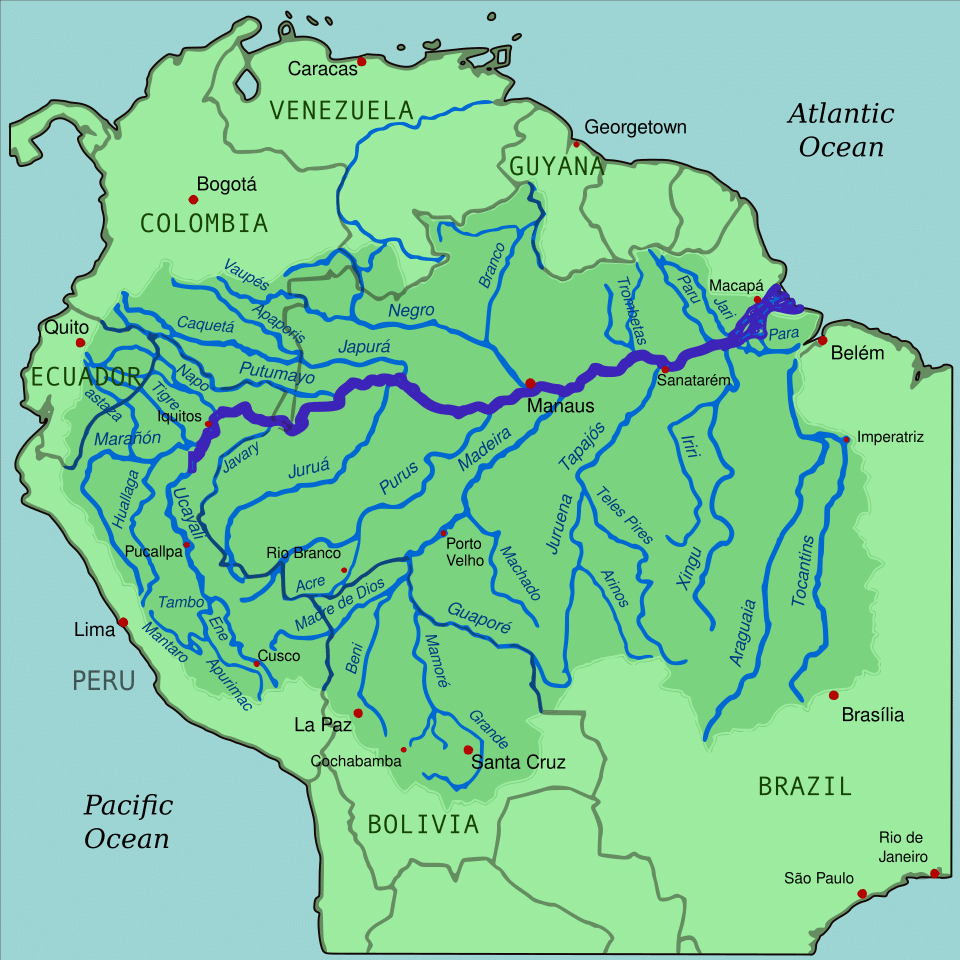
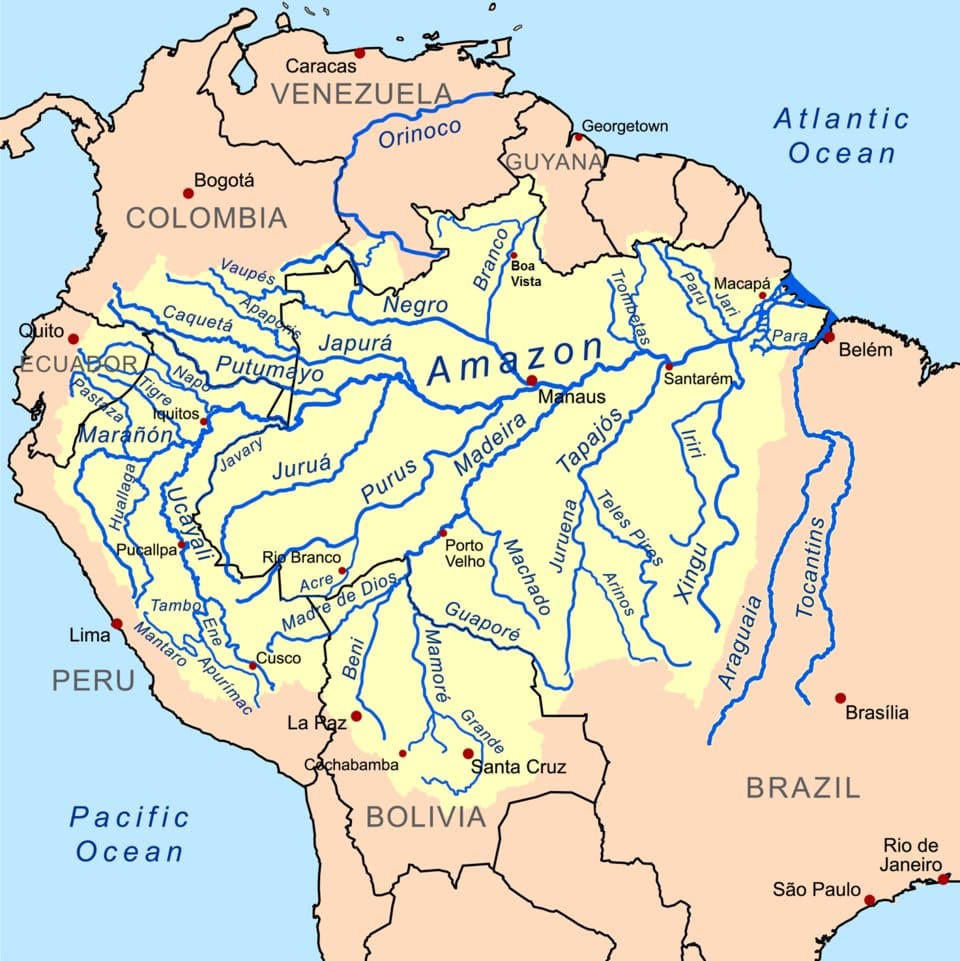
The bronze cory has one of the widest natural ranges of any corydoras species. It’s found across an enormous stretch of South America, from Trinidad and Venezuela in the north, through Colombia, Peru, and Brazil, all the way down to Argentina in the south. Very few corydoras species come close to matching this distribution. It’s been recorded in the Amazon basin, the Orinoco basin, the La Plata system, and numerous smaller coastal drainages in between.
In the wild, bronze corys inhabit slow-moving streams, tributaries, and shallow floodplain areas with soft, sandy or muddy substrates. They’re typically found in areas with leaf litter, fallen branches, and overhanging vegetation that provides shade and cover. Water in their native habitats can range from clear to quite turbid, and conditions vary widely depending on the specific location and season.
This wide geographic range and habitat flexibility is a big part of why bronze corys are so adaptable in aquariums. They’ve evolved to handle a broad range of water chemistries, temperatures, and environmental conditions. Fish from different populations may look slightly different in coloration, which has led to several regional variants being recognized in the hobby, including the popular “green” form.
Appearance & Identification
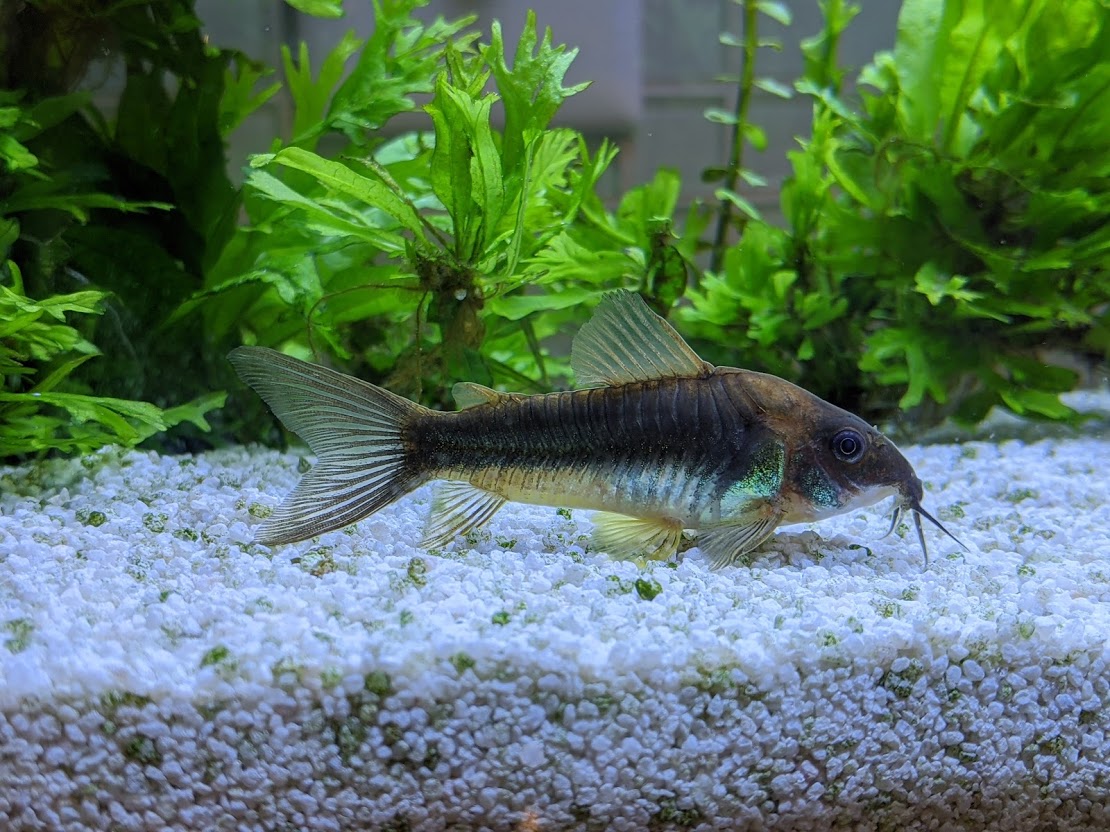
The bronze cory is a compact, armored catfish with a rounded body and a flattened underside built for life on the bottom. The body is covered in two rows of overlapping bony plates (called scutes) that run along each side, giving it a slightly angular profile. The head is broad with a downward-pointing mouth flanked by two pairs of sensitive barbels used for sifting through the substrate in search of food.
The typical wild-type bronze cory has a warm, coppery-bronze sheen across the body with a pinkish-gold belly and a darker olive-brown back. Under good lighting, you can see a metallic iridescence that shifts between gold, green, and copper tones. The fins are mostly translucent with a slight yellowish tint.
Several color variants exist in the hobby, all belonging to the same species. The albino form is extremely common and features a pale pinkish-white body with red eyes. The “green” variant (sometimes sold as Corydoras aeneus “green” or incorrectly as a separate species) has a more pronounced greenish-gold metallic sheen. Longfin forms have been selectively bred as well, with extended dorsal and pectoral fins. All of these are the same species, just different color morphs and selectively bred strains.
Male vs. Female
Sexing bronze corys gets easier once the fish are mature. Females are noticeably larger and rounder when viewed from above, especially when full of eggs. They have a wider body profile and a plumper belly. Males are slightly smaller, slimmer, and more streamlined. When viewed from the front, the difference in body width between a mature male and female is quite obvious. Males also tend to have slightly more pointed pectoral fins, though this is less reliable as an identification marker.
Average Size & Lifespan
Bronze corys reach a maximum size of about 2.5 inches (6 to 7 cm) in aquariums, with females being the larger of the two sexes. Males typically max out slightly smaller, around 2 to 2.25 inches. They grow relatively quickly for the first year and then slow down considerably.
With proper care, bronze corys typically live 5 to 8 years in captivity. There are credible reports of specimens reaching 10 years or more in well-maintained tanks. The keys to longevity are clean water, a sand substrate (to protect those barbels), a proper diet, and keeping them in a group so they’re not stressed. Solitary bronze corys or those kept on rough gravel tend to have significantly shorter lifespans.
Bronze corydoras are one of the best starter fish in the hobby. They are hardy, peaceful, and adaptable to a wide range of water parameters, making them ideal for new aquarists.
Care Guide
Tank Size
A 20-gallon tank is the minimum for a group of 6 bronze corys. Since these fish need to be kept in groups and they’re active bottom dwellers that like to forage across the substrate, floor space matters more than height. A standard 20-gallon long (30 x 12 inches) is actually a better choice than a 20-gallon tall because it provides more bottom area for the fish to work with.
If you’re planning a community tank with other species, size up accordingly. A 29-gallon or 40-gallon breeder gives you a lot more flexibility for stocking and makes water quality easier to maintain. Larger groups of 8 to 10 corys display more natural behavior and are genuinely more entertaining to watch.
Water Parameters
| Parameter | Ideal Range |
|---|---|
| Temperature | 72 to 79°F (22 to 26°C) |
| pH | 6.0 to 8.0 |
| General Hardness (GH) | 2 to 20 dGH |
| KH | 2 to 12 dKH |
| Ammonia | 0 ppm |
| Nitrite | 0 ppm |
| Nitrate | Below 20 ppm |
One of the best things about bronze corys is how adaptable they are when it comes to water chemistry. That pH range of 6.0 to 8.0 is genuinely wide, and they handle moderate hardness without any issues. This means they’ll do well in most municipal tap water without needing to fiddle with RO systems or chemical buffers. They also tolerate slightly cooler temperatures than many tropical fish, which makes them compatible with species that prefer the lower end of the tropical range.
What bronze corys don’t tolerate well is poor water quality. Keep ammonia and nitrite at zero, and keep nitrates under control with regular water changes. Weekly water changes of 25% to 30% are a good baseline. These are bottom-dwelling fish that spend their time right where waste tends to settle, so they’re often the first to show signs of deteriorating conditions.
Filtration & Water Flow
Bronze corys don’t need anything fancy for filtration, but they do need it to be effective. A hang-on-back filter or a sponge filter works well for a 20-gallon cory tank. For larger setups, a canister filter provides excellent mechanical and biological filtration. Whatever you choose, make sure the flow isn’t too strong at the bottom of the tank. Corys prefer gentle to moderate water movement. They’re not river fish that fight strong currents all day.
Sponge filters are actually a fantastic choice for corydoras tanks, especially breeding setups, because they provide gentle flow, good biological filtration, and no risk of trapping fry. If you’re using a hang-on-back or canister, consider adding a pre-filter sponge to the intake to prevent any small corys from getting pulled in.
Lighting
Bronze corys aren’t picky about lighting. They’re most active during dawn and dusk in the wild, so they do appreciate some shaded areas in the tank where they can retreat from bright light. If you’re running high-intensity lights for a planted tank, just make sure there are some floating plants, tall stems, or hardscape pieces that create pockets of shade. Standard LED aquarium lights on a timer (8 to 10 hours per day) work perfectly.
Plants & Decorations
Bronze corys are completely plant-safe. They won’t eat, uproot, or damage your plants, so go ahead and plant to your heart’s content. Good plant choices include Java fern, Anubias, Amazon swords, Vallisneria, and Cryptocoryne species. These all provide cover without taking up too much bottom space.
For decorations, driftwood and smooth rocks create natural-looking territories and hiding spots. Leave some open areas of substrate for the corys to forage, because that’s what they spend most of their time doing. A few dried Indian almond leaves scattered on the bottom mimic their natural habitat and also release beneficial tannins into the water.
Substrate
This is the single most important aspect of setting up a corydoras tank, and it’s worth saying clearly: use sand. Fine, smooth sand is what bronze corys (and all corydoras) need. Their natural behavior involves constantly plunging their barbels into the substrate to search for food. If you watch a group of corys on sand, you’ll see them diving face-first into it, sifting it through their gills, and generally having a great time.
Gravel, especially coarse or sharp-edged gravel, erodes and damages their barbels over time. Once barbels are worn down, the fish lose their primary food-finding sense, become more susceptible to infections at the wound sites, and their quality of life drops significantly. Play sand, pool filter sand, or any smooth aquarium sand works well. Avoid anything labeled “sharp” or “crusite.” The color doesn’t matter, but most hobbyists find a natural tan or brown sand looks best and shows off the fish’s coloring nicely.
Is the Bronze Cory Right for You?
Before you buy, run through this honest checklist. The Bronze Cory is a great fish for the right keeper, but it is not for everyone.
- You want a tough, forgiving bottom dweller that tolerates a wide range of conditions
- You can keep a group of 6 or more on smooth sand or fine gravel substrate
- You have a 20-gallon or larger tank with decent filtration and regular water changes
- You want a species with real personality that interacts with its group constantly
- You are looking for a beginner-friendly cory that can live well over a decade
- Your tank needs a reliable cleanup crew member that actually earns its keep
Tank Mates
Bronze corys are among the most compatible community fish in the hobby. They’re completely peaceful, they stay at the bottom where they rarely compete with mid-water or surface-dwelling species, and they’re too well-armored for most fish to bother them. The only real requirement for tank mates is that they need to be peaceful species that won’t harass or eat the corys.
Best Tank Mates
- Neon tetras and cardinal tetras, classic community pairing
- Rummy nose tetras, great mid-water schooling contrast
- Harlequin rasboras, peaceful and occupy different water levels
- Cherry barbs, calm temperament with beautiful color
- Ember tetras, small and completely non-threatening
- Otocinclus catfish, another peaceful bottom dweller that stays small
- Honey gouramis, gentle top-to-mid dweller
- Bristlenose plecos, compatible bottom dweller (in 30+ gallon tanks)
- Mystery snails and nerite snails, totally compatible cleanup crew partners
- Amano shrimp, safe with corys and help with algae
Tank Mates to Avoid
- Cichlids (except dwarf species like Apistogramma in larger tanks), most are too aggressive or territorial
- Large catfish like common plecos or pictus cats that may outcompete or bully them
- Aggressive barbs like tiger barbs that nip and harass bottom dwellers
- Bettas (aggressive males may target corys in smaller tanks)
- Any fish large enough to eat them, including oscars, Jack Dempseys, and other large predators
Food & Diet
Bronze corys are omnivores and enthusiastic bottom feeders. They’ll eat just about anything that sinks to the bottom of the tank, but that doesn’t mean you should rely on leftovers from other fish to feed them. This is one of the most common mistakes in the hobby. Corys need their own dedicated food to stay healthy.
A good staple diet should be built around high-quality sinking pellets or wafers designed for bottom feeders. Feed once or twice per day, offering only what the group can consume within a few minutes. Supplement the staple diet with frozen or freeze-dried bloodworms, brine shrimp, daphnia, and tubifex worms. These protein-rich foods promote good health and are especially important for conditioning breeders.
Bronze corys also enjoy blanched vegetables like zucchini slices or shelled peas as an occasional treat. One of the most entertaining feeding behaviors is watching a group of corys mob a sinking wafer, pushing and shoving each other to get the best position. They’re not aggressive about it, just very motivated.
Breeding & Reproduction
Bronze corys are one of the easiest corydoras species to breed in captivity. In fact, they sometimes spawn in community tanks without any special effort from the keeper. If you want to breed them intentionally, though, a dedicated breeding setup will give you much better results and fry survival rates.
Breeding Difficulty
Easy to moderate. Bronze corys breed readily in captivity and are often recommended as a first breeding project for hobbyists interested in catfish. The main challenge isn’t getting them to spawn, it’s raising the fry and preventing egg fungus.
Spawning Tank Setup
A 10 to 20 gallon tank works well as a dedicated breeding setup. Use a bare bottom or a thin layer of fine sand for easy cleaning. Include a sponge filter for gentle filtration (hang-on-backs can trap fry). Add some broad-leaved plants like Anubias or Java fern, or tape a piece of glass or a spawning mop to the tank wall. The females deposit eggs on flat surfaces, including the glass itself, plant leaves, and decorations.
Water Conditions for Breeding
The classic technique for triggering a spawn is a large, cool water change. Replace 50% to 70% of the tank water with fresh, dechlorinated water that is 3 to 5 degrees cooler than the tank temperature. This simulates the onset of the rainy season in their native habitat. Many breeders report that a drop in barometric pressure (storm fronts) also seems to trigger spawning behavior. Drop the temperature to around 68 to 72°F and keep the pH slightly acidic to neutral (6.5 to 7.0) for best results.
Conditioning & Spawning
Condition the breeding group with plenty of high-protein foods like frozen bloodworms and live brine shrimp for 1 to 2 weeks before attempting to induce spawning. A ratio of 2 males to every female is ideal, as the competition between males seems to improve spawning success.
Corydoras have one of the most distinctive spawning behaviors in the freshwater hobby: the T-position. During mating, the female presses her mouth against the male’s genital area, forming a “T” shape with their bodies. She takes sperm into her mouth, and it passes through her digestive tract to fertilize the eggs she’s holding between her ventral fins. She then swims to a chosen surface (glass, plant leaf, or decoration) and carefully deposits a small clutch of adhesive eggs. This process repeats multiple times over several hours, with the female depositing eggs in different locations around the tank. A single spawning event can produce 100 to 300+ eggs.
Egg & Fry Care
The eggs are adhesive and translucent, turning slightly tan or amber as they develop. Egg fungus is the biggest threat during incubation. Many breeders remove the eggs to a separate container with an airstone and add a few drops of methylene blue to prevent fungal growth. Remove any eggs that turn white (unfertilized or fungused) immediately so they don’t spread to healthy eggs.
Eggs hatch in approximately 3 to 5 days depending on temperature. The fry are tiny and will absorb their yolk sac over the first day or two. Once they’re free-swimming, feed them with infusoria, microworms, or powdered fry food. As they grow, graduate to baby brine shrimp, which is one of the best foods for fast, healthy growth. Keep the water clean with small, frequent water changes and watch for any buildup of uneaten food on the bottom.
Common Health Issues
Bronze corys are hardy fish, but they’re not immune to health problems. Most issues that affect corydoras are preventable with proper tank setup and maintenance.
Barbel Erosion
This is the number one health issue for corydoras, and it’s almost always caused by keeping them on the wrong substrate. Rough or sharp gravel wears down their barbels, leaving shortened, blunted, or completely absent whiskers. Once the barbels are eroded, the damaged tissue is vulnerable to bacterial infections. Barbels can regrow if the fish is moved to sand and water quality is excellent, but severe erosion may be permanent. Prevention is simple: use sand from day one.
Ich (White Spot Disease)
Like most tropical fish, bronze corys can contract ich, especially when stressed by poor water quality, sudden temperature swings, or the introduction of new, unquarantined fish. The challenge with treating corydoras for ich is that they’re sensitive to many medications, particularly those containing copper and malachite green. If treatment is needed, use medications at half the recommended dose and raise the temperature gradually to 82 to 84°F to speed up the parasite’s life cycle. Salt treatments should also be used cautiously, as corydoras don’t tolerate high salt concentrations well.
Bacterial Infections
Red streaks on the belly, fin rot, or cloudy patches on the body can indicate bacterial infections. These are usually secondary to an underlying problem like poor water quality, substrate injuries, or stress. Improve water conditions first, and treat with a broad-spectrum antibiotic if symptoms don’t improve. Again, dose conservatively with scaleless-type fish like corydoras.
Internal Parasites
Wild-caught or poorly sourced bronze corys may carry internal parasites. Signs include weight loss despite eating, white or stringy feces, and a sunken belly. Treat with a medicated food containing praziquantel or metronidazole. Farm-raised specimens are generally less prone to parasite issues.
Common Mistakes to Avoid
- Keeping them on gravel. This is the most common and most damaging mistake. Gravel erodes barbels and leads to infections. Always use sand.
- Not keeping them in groups. A single cory or a pair is a stressed cory. They need a minimum of 6 to feel secure and display natural schooling behavior.
- Relying on scraps to feed them. Bronze corys won’t survive on leftover flakes that drift to the bottom. They need their own sinking food, offered consistently.
- Panicking when they dash to the surface. Bronze corys are obligate air breathers. Darting to the surface to gulp air is completely normal. Frequent, frantic gulping, however, can indicate poor water quality or low oxygen levels.
- Overmedicating. Corydoras are sensitive to many common fish medications. Always use reduced doses and avoid copper-based treatments when possible.
- Ignoring the substrate during water changes. Waste accumulates in the sand where corys spend all their time. Use a gravel vacuum gently over the sand surface during water changes to remove debris.
Where to Buy
Bronze corys are one of the most widely available aquarium fish in the hobby. Nearly every local fish store carries them, often in both the standard bronze and albino forms. Expect to pay around $3 to $6 per fish, with discounts usually available when you buy a group of 6 or more (which is exactly how you should buy them).
For healthier stock and better selection, including the green variant and longfin forms, consider ordering online from Flip Aquatics or Dan’s Fish. Both are reputable sellers that ship healthy, well-acclimated fish directly to your door. Online ordering is also a good option if your local store only stocks the standard bronze or albino and you’re looking for a specific variant.
Frequently Asked Questions
Why does my bronze cory keep swimming to the surface?
Bronze corys are obligate air breathers. They have a modified intestine that allows them to absorb atmospheric oxygen, so periodic dashes to the surface to gulp air are completely normal. If they’re doing it constantly or seem frantic, check your water quality and oxygen levels, as excessive surface breathing can indicate a problem.
Can I keep bronze corys with shrimp?
Yes, bronze corys are generally safe with adult shrimp like Amano shrimp, cherry shrimp, and other neocaridina. They may occasionally eat very small shrimplets if they happen across them while foraging, but they don’t actively hunt shrimp. If you’re breeding shrimp, provide plenty of moss and hiding spots for the baby shrimp.
Can I mix bronze corys with other corydoras species?
You can keep different corydoras species in the same tank, but each species should have at least 6 of its own kind. Corys prefer to school with their own species. A group of 3 bronze corys and 3 peppered corys won’t school together as well as 6 of either species would on their own.
Is the albino cory a different species?
No. The albino cory sold in most fish stores is an albino form of the bronze cory (Osteogaster aeneus). It’s the exact same species with the same care requirements, just bred for a lack of pigmentation that results in a pale pinkish-white body and red eyes. They can be kept together with standard bronze corys without any issues.
Do bronze corys need a heater?
It depends on your room temperature. Bronze corys tolerate temperatures as low as 72°F (22°C), which is cooler than many tropical fish. If your home stays consistently in the low to mid 70s, some hobbyists keep them without a heater. However, a heater set to the appropriate range ensures stable temperatures and prevents dangerous drops overnight or during cold snaps. Consistency matters more than hitting a specific number.
How many bronze corys should I keep?
A minimum of 6 is the standard recommendation, and more is better. In groups of 6 or more, bronze corys display active schooling behavior, are less stressed, and are far more entertaining to watch. A group of 8 to 10 in a well-sized tank is ideal. Keeping fewer than 6 leads to shy, stressed fish that spend most of their time hiding.
How the Bronze Cory Compares to Similar Species
Bronze Cory vs. Peppered Cory
Both are hardy beginner corys that tolerate cooler water. The Peppered Cory prefers slightly cooler temperatures (72 to 78F vs 72 to 82F for the Bronze), making it the better choice for unheated tanks. The Bronze Cory is slightly more adaptable overall and more commonly available. Honestly, you cannot go wrong with either one. Both are absolute workhorses.
Bronze Cory vs. Emerald Cory
The Emerald Cory (Brochis splendens) is larger and more impressive looking, with a deep metallic green body. It needs a bigger tank (30+ gallons vs 20 for the Bronze). The Bronze Cory is easier to find and more forgiving of beginner mistakes. If you have the space, the Emerald Cory is the showier upgrade.
Expert Take (Mark Valderrama, AquariumStoreDepot)
After 25 years in the hobby and time managing fish stores, the bronze cory is one of those species I always recommend to hobbyists ready to move beyond the basics. Bronze corydoras are one of the best starter fish in the hobby. They are hardy, peaceful, and adaptable to a wide range of water parameters, making them ideal for new aquarists. Keep bronze cories in groups of 6 or more. A lone corydoras or pair becomes stressed and inactive – the natural schooling behavior only shows in larger groups.
Closing Thoughts
The bronze cory has earned its place as one of the most popular aquarium fish in the world, and it’s easy to see why. Hardy, peaceful, endlessly entertaining, and easy to breed, it checks every box for a community tank bottom dweller. Whether you’re a first-time fishkeeper looking for a forgiving species or a seasoned hobbyist who appreciates a fish that just works, the bronze cory won’t let you down.
The one thing you absolutely have to get right is the substrate. Give them sand, keep them in a proper group, feed them their own food, and maintain clean water. Do those four things, and you’ll have a thriving group of bronze corys scooting around your tank for years to come. There’s a reason this species has been a staple of the hobby for over a century. It’s just that good.
Recommended Video
Check out our corydoras tier list video where we rank the most popular cory catfish in the hobby:
References
- Froese, R. and D. Pauly, Eds. FishBase. Corydoras aeneus. Accessed 2025.
- SeriouslyFish. Corydoras aeneus species profile. Accessed 2025.
- Dias, M.S. et al. (2024). Phylogenomic revision of Corydoradinae (Siluriformes: Callichthyidae) and the reclassification of Corydoras into multiple genera. Zoological Journal of the Linnean Society.
- Practical Fishkeeping. Bronze Corydoras Care Guide. Accessed 2025.
- About the Author
- Latest Posts

I’m Mark Valderrama, founder of Aquarium Store Depot and a fishkeeper with over 25 years of hands-on experience. I started in the hobby at age 11, worked at local fish stores, and have kept freshwater tanks, ponds, and reef tanks ever since. I’ve been featured in two best-selling aquarium books on Amazon and built this site to share practical, experience-based fish keeping knowledge.
Leave a Reply