
Last Updated: June 25, 2026
Thank you for visiting! By the way… any links on this page that lead to products on Amazon and other stores/partners are affiliate links Aquarium Store Depot earns a commission if you make a purchase.
Table of Contents
- Key Takeaways
- Species Overview
- Classification
- Origin & Natural Habitat
- Appearance & Identification
- Average Size & Lifespan
- Care Guide
- Tank Mates
- Food & Diet
- Breeding & Reproduction
- Common Health Issues
- Common Mistakes to Avoid
- Where to Buy
- Frequently Asked Questions
- Closing Thoughts
- Recommended Video
- References
- What Most Care Guides Get Wrong
- Is the Dwarf Rasbora Right for You?
- Species Comparison
If you’ve caught the nano fish bug, the dwarf rasbora is one of the tiniest and most beautiful freshwater fish you can keep. At barely an inch long, Boraras maculatus packs a surprising amount of color into an incredibly small package, a translucent ruby-red body accented with bold dark spots that make it look like a living gemstone under the right lighting.
This little fish holds some serious bragging rights in the taxonomy world, too. Boraras maculatus is the type species for the entire Boraras genus, the fish that the genus was literally built around. The genus name “Boraras” is actually an anagram of “Rasbora,” and that’s a deliberate nod to how these miniature fish were split off from the much larger Rasbora genus. While true rasboras can reach several inches, every species in Boraras stays well under an inch. They’re a completely different ballgame.
Native to the blackwater peat swamps of the Malay Peninsula, Sumatra, and Singapore, the dwarf rasbora thrives in soft, acidic water that many other fish would struggle in. If you’ve got a planted nano tank with gentle filtration and soft water, this might be the perfect centerpiece fish for it. In my 25+ years in the hobby, I’ve always appreciated how these micro-sized fish can turn a simple 5-gallon planted tank into something genuinely captivating.
What Most Care Guides Get Wrong About Dwarf Rasbora
The most common mistake with Dwarf Rasboras is keeping them in groups that are too small. These fish genuinely need eight to twelve to show natural schooling behavior. In my experience working with rasboras at the stores I managed, small groups of three or four spend all their time hiding.
Key Takeaways
- One of the smallest aquarium fish available: maxes out at just 1 inch (2.5 cm), making it a true nano species ideal for tanks as small as 5 gallons
- Requires soft, acidic water with a pH of 4.0 to 7.0 and hardness of 1 to 5 dGH, this is not a fish for hard, alkaline tap water
- The type species of the Boraras genus, which was split from Rasbora specifically for these miniature fish (the name “Boraras” is an anagram of “Rasbora”)
- Peaceful schooling fish that should be kept in groups of at least 8 to 10 for best color and behavior
- Stunning ruby-red coloration with distinctive dark spots that intensify in soft, tannin-stained water with subdued lighting
- Egg scatterer that can breed in well-maintained planted nano tanks, though raising fry requires dedication and very small first foods
Species Overview
| Field | Details |
|---|---|
| Scientific Name | Boraras maculatus (Duncker, 1904) |
| Common Names | Dwarf Rasbora, Spotted Rasbora, Pygmy Rasbora |
| Family | Danionidae |
| Origin | Southeast Asia (Malay Peninsula, Sumatra, Singapore) |
| Care Level | Easy to Moderate |
| Temperament | Peaceful |
| Diet | Omnivore (micropredator) |
| Tank Level | Middle |
| Maximum Size | 1 inch (2.5 cm) |
| Minimum Tank Size | 5 gallons (19 liters) |
| Temperature | 73 to 82°F (23 to 28°C) |
| pH | 4.0 to 7.0 |
| Hardness | 1 to 5 dGH |
| Lifespan | 3 to 5 years |
| Breeding | Egg scatterer |
| Breeding Difficulty | Moderate |
| Compatibility | Nano community |
| OK for Planted Tanks? | Yes, ideal choice |
Classification
| Taxonomic Level | Classification |
|---|---|
| Order | Cypriniformes |
| Family | Danionidae (formerly placed in Cyprinidae) |
| Subfamily | Rasborinae |
| Genus | Boraras |
| Species | B. maculatus (Duncker, 1904) |
The dwarf rasbora was originally described by Georg Duncker in 1904 as Rasbora maculata. It was later moved into the genus Boraras when Maurice Kottelat established that genus in 1993 to accommodate a group of miniature species that were clearly distinct from the larger true rasboras. Boraras maculatus serves as the type species for the genus, meaning it’s the species that defines what a Boraras is.
The genus name Boraras is an anagram of Rasbora, which is a clever bit of taxonomic wordplay. It reflects the close relationship between the two genera while signaling that Boraras species are fundamentally different, all of them are miniature fish that stay well under 1 inch (2.5 cm), while true Rasbora species can reach several inches. Currently, the genus Boraras contains six recognized species, including popular nano aquarium fish like the chili rasbora (B. brigittae), phoenix rasbora (B. merah), and the least rasbora (B. urophthalmoides).
Like most rasboras, this species was historically classified under the family Cyprinidae. Molecular phylogenetic studies led to the reclassification of many small cyprinids into the family Danionidae, which is now the accepted placement. You may still see Cyprinidae listed on older reference material, but Danionidae is correct.
Origin & Natural Habitat
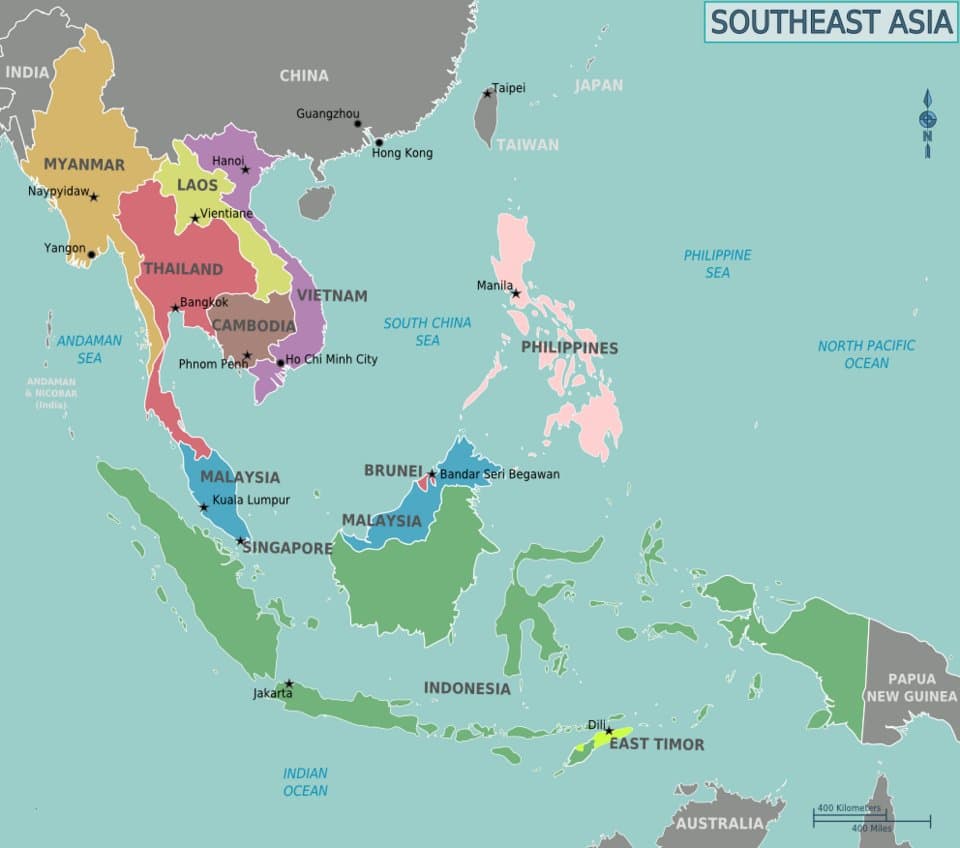
The dwarf rasbora is native to Southeast Asia, specifically the southern Malay Peninsula (including parts of Malaysia and Singapore) and the island of Sumatra in Indonesia. It has one of the more restricted natural ranges among commonly kept aquarium fish, though it can be locally abundant within that range.
In the wild, B. maculatus is found in peat swamp forests, blackwater streams, and heavily shaded pools associated with ancient tropical peatlands. These are extraordinary environments, the water is often stained a deep tea-brown or almost black by humic acids and tannins leaching from thick layers of decomposing organic matter. The pH in these habitats can drop as low as 3.0 to 4.0, and the water is extremely soft with almost no measurable mineral content. Dissolved oxygen levels can be low, and the substrate is typically a deep bed of waterlogged leaves and woody debris.
Light penetration is minimal due to the dense forest canopy overhead and the deeply stained water. The fish share these habitats with other acid-loving species like chocolate gouramis, licorice gouramis, and various other Boraras species. Understanding just how extreme these blackwater conditions are helps explain why the dwarf rasbora does so much better in soft, acidic aquarium water. These fish evolved in water that most fishkeepers would consider impossibly acidic.
It’s worth noting that many of these peat swamp habitats are under serious threat from deforestation, agricultural conversion (particularly oil palm plantations), and peat drainage. Conservation of these ecosystems matters not just for the dwarf rasbora but for the dozens of unique fish species that call them home.
Appearance & Identification
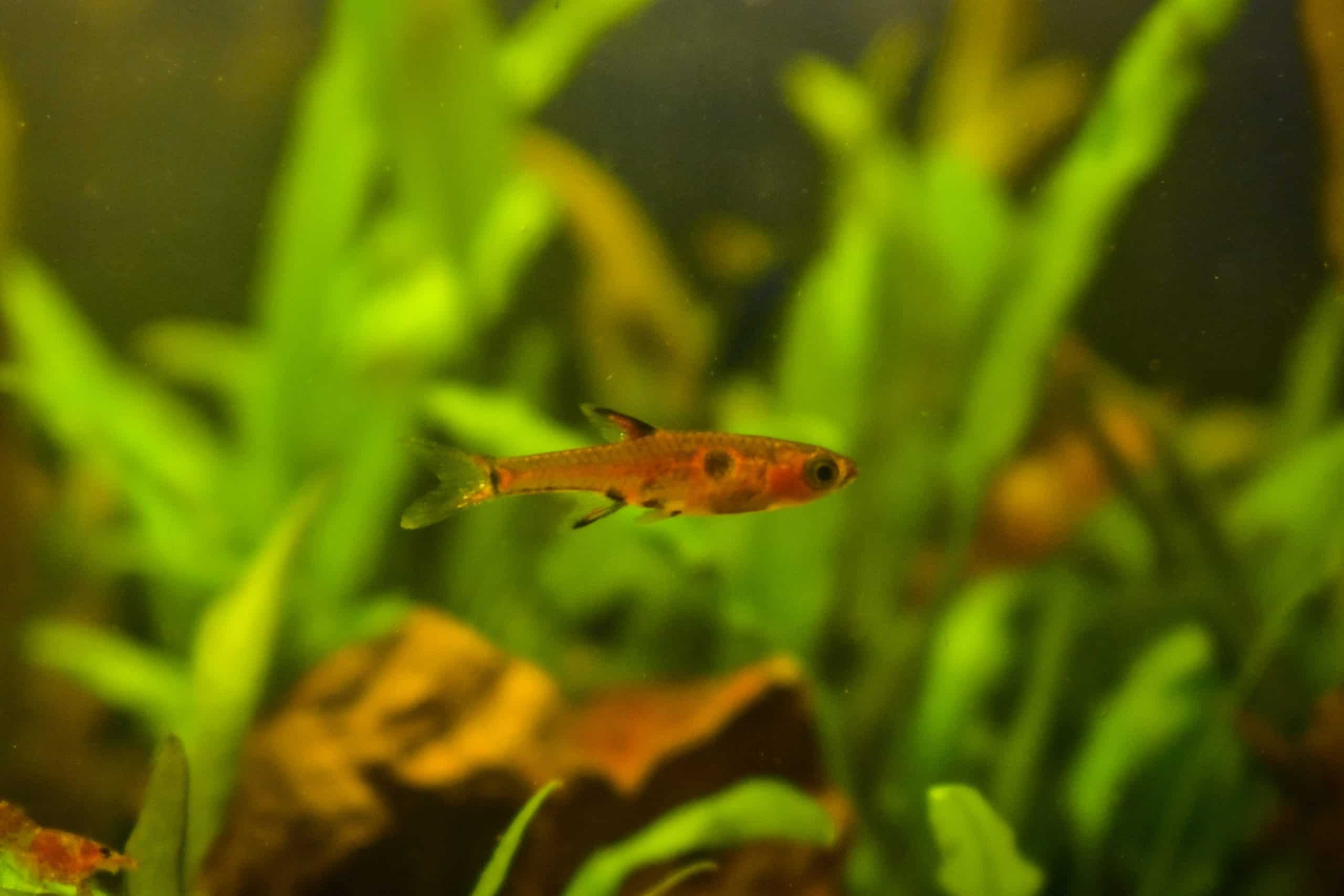
The dwarf rasbora is a tiny, slender-bodied fish with a translucent to semi-translucent base color that ranges from pinkish-red to a deep ruby-red depending on the fish’s condition, water chemistry, and diet. When kept in optimal soft, acidic water with tannins, the red coloration becomes rich and intense. In harder or more alkaline water, the color fades to a washed-out pinkish-orange.
The most distinguishing feature of B. maculatus is its pattern of dark spots. There are typically three prominent dark markings: one near the base of the anal fin, one on the caudal peduncle (the narrow area just before the tail), and one larger spot on the mid-body near the base of the dorsal fin. These dark blotches are bordered or highlighted by areas of more intense red or orange pigment, creating a striking contrast against the translucent body.
The fins are mostly transparent to slightly reddish, and the eye is relatively large for the body size, with a dark pupil and a thin golden or reddish iris. The overall body shape is torpedo-like but very petite, these are genuinely tiny fish, and seeing them in person for the first time, most people are surprised by just how small they actually are.
Telling Boraras Species Apart
With six species in the genus, Boraras can be confusing, especially since several look similar at first glance and mislabeling in the trade is common. Here’s a quick breakdown of the most commonly available species:
- Dwarf Rasbora (B. maculatus): Ruby-red body with distinct dark spots (typically three visible). This is the type species for the genus and one of the most widely available.
- Chili Rasbora (B. brigittae): Deeper, more intense red coloration with a prominent dark lateral stripe running along the body rather than isolated spots. Generally considered the most vibrantly colored Boraras species.
- Phoenix Rasbora (B. merah): Similar to the chili rasbora but with a shorter, less defined lateral stripe and more prominent dark spots. The red coloration tends to be slightly more orange-toned.
- Least Rasbora (B. urophthalmoides): Has a thin dark lateral stripe with a distinct dark spot at the base of the tail. Body color is more golden-orange than ruby-red. Slightly more elongated body shape.
- Exclamation Point Rasbora (B. urophthalmoides): Sometimes sold under this common name, same species as the least rasbora. The name comes from the combination of the lateral stripe and tail spot resembling an exclamation mark.
The key to telling B. maculatus apart from its relatives: look for distinct, rounded dark spots rather than a continuous lateral stripe. If you see a solid dark line running along the body, you’re more likely looking at a chili rasbora or phoenix rasbora.
Male vs. Female
Sexing dwarf rasboras takes patience, but there are some differences in mature fish:
- Males tend to be slightly slimmer and display more intense red coloration, especially when displaying to other males or courting females. Their dark spots may also appear more sharply defined.
- Females are slightly rounder and deeper-bodied, particularly when carrying eggs. When viewed from above, gravid females have a noticeably plumper profile compared to the more streamlined males.
These differences are subtle at best and nearly impossible to see in juvenile fish. Having a group of 8 or more adults makes the distinctions easier to spot as the males and females naturally sort themselves out during social interactions.
Average Size & Lifespan
The dwarf rasbora is one of the smallest freshwater fish available in the aquarium hobby. Maximum size is right around 1 inch (2.5 cm) in total length, and most specimens in home aquariums will be closer to 0.6 to 0.8 inches (1.5 to 2 cm). They really are remarkably tiny, if you’ve only kept standard community fish like tetras or barbs, seeing a dwarf rasbora for the first time can be a bit of a shock.
Despite their diminutive size, dwarf rasboras have a respectable lifespan of 3 to 5 years with proper care. Stable water conditions, appropriate water chemistry (soft and acidic), a varied diet of small foods, and a stress-free environment are the keys to longevity. Poor water quality and improper parameters will shorten their lifespan significantly, these small-bodied fish have very little margin for error when conditions deteriorate.
Dwarf rasboras (Boraras maculatus) are micro fish reaching less than 1 inch (2.5 cm). They need established, mature tanks, gentle filtration, and appropriately sized tank mates to thrive.
Care Guide
Dwarf rasboras are not particularly demanding fish, but they do have some strong preferences that you’ll need to accommodate. The biggest thing to understand is that these are softwater, acidic-water fish to their core. They come from some of the most acidic natural habitats of any commonly kept aquarium fish, and while they don’t need pH 4.0 water in captivity, they absolutely need soft, acidic conditions to thrive and show good color.
Tank Size
A 5-gallon tank is the minimum for a small group of dwarf rasboras, and honestly, a 5-gallon planted nano tank with 8 to 10 of these fish can be one of the most beautiful small aquariums you’ll ever set up. A 10-gallon gives you more room to work with, you can keep a larger group of 12 to 15 and have space for a few tank mates like dwarf shrimp or pygmy corydoras.
These are mid-level swimmers that don’t need a lot of vertical space. Longer, shallower tanks are preferable to tall, narrow ones. A 10-gallon standard or a 5-gallon long-style nano tank works beautifully. Whatever size you choose, stability is the key concern. Smaller tanks experience faster parameter swings, which these tiny fish are sensitive to. If you’re new to nano fishkeeping, starting with a 10-gallon gives you a bit more of a buffer.
Water Parameters
| Parameter | Recommended Range |
|---|---|
| Temperature | 73 to 82°F (23 to 28°C) |
| pH | 4.0 to 7.0 (prefers 5.0 to 6.5) |
| General Hardness (GH) | 1 to 5 dGH |
| Carbonate Hardness (KH) | 0 to 4 dKH |
| Ammonia / Nitrite | 0 ppm |
| Nitrate | Below 20 ppm |
Here’s where the dwarf rasbora gets a little more specialized than your average community fish. These fish genuinely prefer acidic water, not just slightly acidic, but properly acidic. In the wild they live in water with pH values as low as 3.0 to 4.0. In the aquarium, they’ll do well in a pH range of about 5.0 to 6.5, and they can tolerate up to neutral (7.0) without issues. Going above 7.0 is where you’ll start to see problems, faded color, reduced activity, and increased susceptibility to disease.
Water hardness is just as important as pH. These are soft water fish, period. If your tap water is above 5 dGH, you’ll almost certainly need to use RO/DI water remineralized with a product like Seachem Equilibrium, or blend RO water with your tap water until you hit the right range. Running them in hard, alkaline water is a recipe for pale, stressed fish that won’t live anywhere near their potential lifespan.
Indian almond leaves, alder cones, and driftwood all release tannins that naturally lower pH and add the humic substances these fish are adapted to. A blackwater-style setup isn’t just aesthetically appealing for this species, it’s genuinely beneficial for their health and coloration.
Filtration & Water Flow
These fish come from nearly stagnant water, so strong filtration and high flow are not what they want. A sponge filter is the ideal choice for a dwarf rasbora tank. It provides gentle biological filtration, creates minimal water movement, and won’t suck up tiny fish or fry. For slightly larger setups, a small hang-on-back filter with the outflow baffled (a piece of filter sponge over the output works great) is also fine.
Avoid canister filters or powerheads that create strong currents in a nano tank with these fish. They’ll spend all their energy fighting the current instead of displaying their natural, relaxed schooling behavior. If you can see the fish being pushed around by the water flow, it’s too strong.
Lighting
Dwarf rasboras come from dimly lit, heavily shaded blackwater environments, and they look and behave best under moderate to low lighting. Bright lights will make them skittish, washed out, and prone to hiding. If you’re running a planted tank that needs higher light for your plants, add plenty of floating plants, water sprite, frogbit, red root floaters, or salvinia, to create shaded areas. The fish will naturally gravitate toward these darker zones, and their ruby-red color will look far more vivid in softer light.
Plants & Decorations
A well-planted tank is strongly recommended for dwarf rasboras. Dense planting provides security, creates visual barriers that reduce stress, and mimics their natural environment. Great plant choices include:
- Cryptocoryne species: Thrive in soft, acidic water just like these fish. Perfect for mid and foreground planting.
- Java fern and Anubias: Hardy, low-light plants that attach to driftwood and provide broad leaves and hiding spots
- Java moss and other mosses: Excellent for providing cover for fry and creating a natural-looking carpet or covering on hardscape
- Floating plants: Water sprite, frogbit, salvinia, or red root floaters to diffuse lighting and add root structure
- Bucephalandra: Another slow-growing epiphyte that does well in soft water and low to moderate light
Driftwood is almost a must-have. It releases tannins that these fish benefit from and creates a natural-looking blackwater aesthetic. Scatter some dried Indian almond leaves or oak leaves on the substrate for an authentic peat swamp look. The leaves will slowly decompose, release tannins, and harbor microorganisms that the fish will graze on between feedings. Leave an open swimming area in the front or center of the tank so you can actually watch the school move together.
Substrate
A dark substrate is the way to go. Dark sand, fine dark gravel, or an active aqua soil all work well. Active substrates designed for planted tanks are particularly good because many of them buffer the water toward an acidic pH, which is exactly what these fish need. ADA Amazonia and similar products are excellent choices if you’re setting up a dedicated dwarf rasbora nano tank.
Avoid bright white or light-colored substrates. They make the fish feel exposed, wash out their coloration, and don’t reflect the dark, leaf-covered bottoms these fish are accustomed to in the wild.
Tank Mates
Tank mate selection for dwarf rasboras requires some careful thought because of their extremely small size. At under an inch, these fish can fit in the mouth of a surprisingly wide range of other species. You need to think nano-scale when choosing companions, only the smallest, most peaceful fish and invertebrates belong in the same tank.
Best Tank Mates
- Other Boraras species: Chili rasboras, phoenix rasboras, least rasboras. They share identical care requirements and look fantastic together in a mixed Boraras display.
- Pygmy corydoras (Corydoras pygmaeus): Tiny bottom dwellers that stay small enough to be safe companions
- Habrosus corydoras (Corydoras habrosus): Another miniature cory that’s a perfect nano tank mate
- Ember tetras: Small, peaceful, and also do well in soft, acidic water
- Sparkling gouramis: Calm, tiny gouramis that share a preference for blackwater conditions
- Chocolate gouramis: Share the exact same blackwater habitat in the wild (for experienced keepers)
- Dwarf shrimp: Cherry shrimp, crystal red shrimp, and other neocaridina or caridina species. Adult shrimp are safe; baby shrimp may occasionally be eaten.
- Small snails: Nerite snails, ramshorn snails, Malaysian trumpet snails
- Otocinclus catfish: Gentle algae eaters, though they prefer slightly different water chemistry
Tank Mates to Avoid
- Any fish large enough to eat them: This rules out most standard community fish. Even a peaceful 2-inch tetra could potentially view a dwarf rasbora as food.
- Bettas: Even in a nano tank, most bettas will harass or eat fish this small
- Dwarf cichlids: Apistogramma and rams are too large and territorial for a nano tank with dwarf rasboras
- Tiger barbs and other nippy species: Way too aggressive and active for these tiny, delicate fish
- Large shrimp species: Amano shrimp are generally fine, but be cautious with larger species like bamboo shrimp in very small tanks
- Any aggressive or highly active species: Fast-moving fish will outcompete them for food and stress them out
Honestly, a species-only tank with just a group of 10 to 15 dwarf rasboras and some dwarf shrimp is one of the most rewarding nano setups you can build. Don’t feel like you need to fill the tank with other species. Sometimes less is more.
Food & Diet
Dwarf rasboras are omnivorous micropredators with very small mouths. In the wild, they feed on tiny insects, worms, zooplankton, and other microscopic organisms found among leaf litter and decomposing plant matter. In the aquarium, food size is the biggest consideration, these fish physically cannot eat standard-sized flakes or pellets.
A good feeding plan includes:
- Micro pellets or finely crushed flakes: Look for high-quality products specifically designed for nano fish. The food particles need to be small enough for a sub-1-inch mouth.
- Frozen foods: Baby brine shrimp, daphnia, cyclops, and micro bloodworms are all excellent. These small frozen foods are some of the best everyday options for Boraras species.
- Live foods: Baby brine shrimp, microworms, vinegar eels, daphnia, and grindal worms. Live foods bring out the best feeding response and are essential for conditioning breeders.
- Freeze-dried foods: Crushed freeze-dried tubifex or daphnia as an occasional supplement, pre-soaked to prevent digestive issues.
Feed small amounts once or twice daily. These are tiny fish with tiny stomachs, and overfeeding is one of the fastest ways to crash water quality in a nano tank. Offer only what the group can consume in about 60 seconds. If food is hitting the substrate uneaten, you’re feeding too much. In a well-planted tank with leaf litter, the fish will also graze on biofilm and microorganisms between feedings, which helps supplement their diet naturally.
Is the Dwarf Rasbora Right for You?
Before you add a Dwarf Rasbora to your tank, here is an honest assessment of what you’re signing up for. I’d rather you know exactly what to expect now than find out the hard way after you’ve already bought one.
- Experience level: Dwarf Rasboras are best suited for intermediate to advanced keepers. They have specific requirements that can overwhelm beginners.
- Tank size commitment: You’ll need at least 5 gallons, though bigger is always better. Make sure you have room for the tank before buying.
- Tank mate planning: Dwarf Rasboras can be territorial, so plan your community carefully. Not every fish will work as a tank mate.
- Maintenance demands: Expect regular water testing and consistent water changes. Dwarf Rasboras are sensitive to parameter fluctuations.
- Budget reality: Keeping Dwarf Rasboras costs more than typical setups. Budget for ongoing costs, not just the initial purchase.
- Time investment: Beyond daily feeding and weekly maintenance, regular observation is the best way to catch health issues early.
- Long-term commitment: With proper care, Dwarf Rasboras can live up to 5 years. Make sure you’re ready for years of consistent care.
Breeding & Reproduction
Breeding dwarf rasboras is achievable, though it requires some patience and attention to detail. These are egg scatterers that don’t provide any parental care, so the challenge is mainly about creating the right conditions and protecting the eggs and fry from being eaten.
Breeding Difficulty
Moderate. In well-maintained planted nano tanks with soft, acidic water, dwarf rasboras may actually spawn on their own without any intervention. The challenge isn’t triggering spawning, it’s getting the fry to survive. In a community setting, eggs and fry are almost always consumed by other fish (including the parents). Raising fry requires either a dedicated breeding setup or an extremely densely planted tank where some fry can hide.
Spawning Tank Setup
If you want to breed dwarf rasboras intentionally, set up a small breeding tank of 2.5 to 5 gallons with:
- Very dim lighting or a heavily shaded environment
- An air-driven sponge filter on the lowest possible setting
- Clumps of fine-leaved plants like java moss, Taxiphyllum, or spawning mops to catch the scattered eggs
- A bare bottom or a thin layer of dark substrate
- A cover on the tank, keep the environment calm and undisturbed
Water Conditions for Breeding
Soft, acidic water is essential for successful breeding. Target:
- Temperature: 78 to 82°F (26 to 28°C), slightly warmer than normal maintenance temperature
- pH: 5.0 to 6.0
- Hardness: 1 to 3 dGH (very soft)
RO water with minimal remineralization is ideal. Adding Indian almond leaves or peat filtration helps achieve the low pH and provides the tannin-rich water these fish naturally breed in.
Conditioning & Spawning
Condition a small group (ideally 3 to 4 females and 2 to 3 males) with plenty of live and frozen foods for about two weeks prior to breeding attempts. Baby brine shrimp, daphnia, and microworms are excellent conditioning foods. Well-conditioned females will become visibly rounder as they fill with eggs.
Introduce the group to the breeding tank in the evening. Spawning typically occurs in the early morning hours. The male courts the female with subtle displays, and the pair scatters small, adhesive eggs among fine-leaved plants or moss. A single spawning event may produce 30 to 50 eggs, though clutch sizes vary. The eggs are very small and can be difficult to spot.
Egg & Fry Care
Remove the adults after spawning, as they will eat the eggs without hesitation. The eggs hatch in approximately 24 to 48 hours depending on temperature. The fry are absolutely minuscule, among the smallest you’ll encounter in freshwater fishkeeping.
Newly hatched fry will absorb their yolk sac over the first 24 to 48 hours. Once they become free-swimming, they need extremely small first foods. Infusoria (paramecium cultures) or commercially available liquid fry foods are necessary for the first 7 to 10 days. After that, you can transition to freshly hatched baby brine shrimp and microworms. Keep the water extremely clean with very small, careful water changes. Growth is slow, and it takes several weeks for the fry to develop recognizable coloration. Patience is essential.
Common Health Issues
Dwarf rasboras are reasonably hardy when kept in appropriate conditions, but their small body size means they have less reserve to fight off illness. Prevention through proper water quality and stable parameters is far more effective than treatment with this species. Here are the most common issues:
Ich (White Spot Disease)
The most common disease in freshwater aquariums, and dwarf rasboras are susceptible when stressed by temperature fluctuations, poor water quality, or new introductions. Look for small white dots resembling grains of salt on the body and fins. Treat by gradually raising the temperature to 82 to 84°F (28 to 29°C) and using a half dose of ich medication, these small fish can be sensitive to full-strength chemical treatments. Always follow the medication instructions carefully and remove any activated carbon from the filter during treatment.
Fin Rot
Deteriorating, ragged fins indicate a bacterial infection, usually brought on by poor water conditions. In a nano tank, water quality can decline rapidly if maintenance is skipped. Improving water quality through frequent small water changes is often enough to resolve mild cases. Severe fin rot may require an antibacterial treatment.
Bacterial Infections
Columnaris and other bacterial infections can appear as white or grayish patches on the body, mouth, or fins. These are typically triggered by stress from improper water parameters, particularly keeping dwarf rasboras in water that’s too hard or too alkaline. Getting the water chemistry right is the best prevention. Treatment with antibacterial medications may be necessary for active infections, but use reduced doses given the small body size of these fish.
Velvet Disease
Velvet (caused by Piscinoodinium) appears as a fine gold or rust-colored dust on the skin, often visible when you shine a flashlight at an angle across the fish. It’s more common in warm, soft water, exactly the conditions dwarf rasboras prefer. Affected fish may clamp their fins and scratch against surfaces. Treatment typically involves raising the temperature slightly, dimming the lights, and using a copper-based medication at a reduced dose.
The single best preventive measure for all of these issues is maintaining clean, stable water conditions. In nano tanks, that means weekly water changes of 20 to 30%, testing your parameters regularly, not overstocking, and quarantining all new fish before adding them to an established tank.
Common Mistakes to Avoid
- Keeping them in hard, alkaline water. This is the number one mistake. Dwarf rasboras need soft, acidic water to thrive. If your tap water is pH 7.5+ or above 8 dGH, you need to use RO water. Running them in hard water leads to faded color, chronic stress, and shortened lifespans.
- Groups that are too small. A pair or trio of dwarf rasboras will hide, stress, and fade. You need a minimum of 8, and 10 to 15 is better. In a proper-sized school, they’re confident, active, and brilliantly colored. In a group of 3, they’re a ghost of what they should be.
- Feeding food that’s too large. Standard-sized flakes and pellets are literally too big for these fish to eat. You need micro pellets, crushed flakes, or frozen foods sized for nano fish. If the food particles are bigger than their mouths, they’ll go hungry.
- Overstocking a nano tank. Just because they’re small doesn’t mean you can cram 20 of them into a 3-gallon tank. Respect the minimum tank sizes and bioload limits. A 5-gallon is the minimum for 8 to 10 fish.
- Too much light, not enough cover. Bright, unshaded lighting makes these fish pale and skittish. Add floating plants and plant densely to create the shaded, secure environment they need.
- Housing them with inappropriate tank mates. Any fish over about 1.5 inches is potentially a predator of dwarf rasboras. Think nano-scale when choosing companions. A “peaceful” 3-inch fish is still a death sentence for a 0.7-inch rasbora.
- Neglecting water changes in a nano tank. Small tanks accumulate waste quickly. Skipping water changes for even a week or two in a 5-gallon tank can lead to dangerous parameter spikes. Consistency is everything with nano fishkeeping.
Where to Buy
Dwarf rasboras are moderately available in the hobby. You’re unlikely to find them at chain pet stores, but specialty aquarium shops and online retailers frequently carry them, especially shops that cater to the planted tank and nano fish crowd. Prices are typically in the $3 to $5 per fish range, and buying in bulk (10 or more) often gets you a better deal.
For healthy, well-conditioned fish that have been properly quarantined before shipping, I’d recommend checking Flip Aquatics or Dan’s Fish. Both are reputable online retailers that specialize in quality freshwater fish and ship in excellent condition. Buying online is often the best option for nano species like this, since local fish stores may not stock them regularly and you want to get a proper-sized group all at once.
When buying dwarf rasboras, look for fish that are active, alert, and showing decent color. Avoid any that appear lethargic, have clamped fins, or show visible spots or patches. And double-check the species, Boraras species are frequently mislabeled in the trade, so confirm you’re looking at B. maculatus (dark spots, not a lateral stripe) before you buy.
Frequently Asked Questions
What’s the difference between the dwarf rasbora and the chili rasbora?
Both are Boraras species and share very similar care requirements, but they look quite different once you know what to look for. The dwarf rasbora (B. maculatus) has distinct, rounded dark spots on a ruby-red body. The chili rasbora (B. brigittae) has a continuous dark lateral stripe running along its body with a vivid red stripe above it. The chili rasbora is widely recognized as the more intensely colored of the two, with a deeper, more saturated red. Both are excellent nano tank fish, and they can actually be kept together in the same aquarium since they share identical water parameter requirements.
How many dwarf rasboras should I keep?
A minimum of 8, with 10 to 15 being ideal. These are schooling fish that need a group to feel secure and display natural behavior. In a proper-sized school, they’ll stay out in the open, show their best coloration, and exhibit fascinating social interactions between males. In groups of fewer than 6, they’ll hide, stress, and look pale. More is genuinely better with this species.
Can dwarf rasboras live in a 3-gallon tank?
I wouldn’t recommend it. While they’re small enough to physically fit, a 3-gallon tank doesn’t provide enough water volume for stable parameters, and these fish need a group of at least 8 to thrive. A 5-gallon is the true minimum, and a 10-gallon is a much safer and more forgiving starting point. The smaller the tank, the faster water quality deteriorates, and nano fish like dwarf rasboras are sensitive to those swings.
Do dwarf rasboras need a heater?
In most homes, yes. Their preferred temperature range is 73 to 82°F (23 to 28°C). Unless your room temperature consistently stays above 73°F year-round, you’ll need a small heater to keep things stable. In a nano tank, a low-wattage preset heater (25 watts for a 5-gallon, 50 watts for a 10-gallon) is usually sufficient. Temperature stability matters more than hitting an exact number, avoid swings of more than 2 to 3 degrees in a day.
Are dwarf rasboras good with shrimp?
Adult cherry shrimp, crystal red shrimp, and other dwarf shrimp are generally safe with dwarf rasboras. However, shrimplets (baby shrimp) may be eaten since they’re small enough to fit in the rasboras’ mouths. If you’re actively breeding shrimp, provide plenty of dense moss and plant cover for the babies to hide in. This isn’t a species that hunts shrimp, but opportunistic snacking on newborn shrimplets is always a possibility with any fish, no matter how small.
Why are my dwarf rasboras pale?
Pale coloration in dwarf rasboras is almost always caused by one or more of these factors: water that’s too hard or alkaline (check your pH and GH first), too-bright lighting without enough shade, a group that’s too small, stress from aggressive or overly active tank mates, or a bland diet lacking frozen and live foods. Getting the water soft and acidic, adding floating plants for shade, keeping a group of 8 or more, and feeding a varied diet with frozen baby brine shrimp and daphnia will usually resolve the issue within a couple of weeks.
How the Dwarf Rasbora Compares to Similar Species
If you’re considering a Dwarf Rasbora, you’ve probably also looked at the Chili Rasbora. Both fill similar roles, but the differences matter when planning your tank. The Dwarf Rasbora has its own distinct personality and care needs. In my experience, the choice often comes down to the specific community you’re building and whether your water parameters favor one over the other.
The Strawberry Rasbora is worth considering as well. While the Dwarf Rasbora and the Strawberry Rasbora share some overlap in care, they bring different energy to a tank. If you have the space, keeping both in separate setups gives you a great chance to compare their behavior firsthand.
Expert Take (Mark Valderrama, AquariumStoreDepot)
After 25 years in the hobby and time managing fish stores, the dwarf rasbora is one of those species I always recommend to hobbyists ready to move beyond the basics. Dwarf rasboras (Boraras maculatus) are micro fish reaching less than 1 inch (2.5 cm). They need established, mature tanks, gentle filtration, and appropriately sized tank mates to thrive. Dwarf rasboras cannot share a tank with fish larger than 1.5 inches (4 cm). At their tiny adult size, even small tetras become predators – this species belongs in a nano species-specific setup.
Closing Thoughts
The dwarf rasbora is one of those fish that really shows you what nano fishkeeping is all about. In a properly set up blackwater nano tank, soft acidic water, dense planting, tannin-stained water, dim lighting, a school of these tiny ruby-red fish is genuinely breathtaking. They’re living proof that you don’t need a massive aquarium or big, flashy fish to create something beautiful.
As the type species for the Boraras genus, B. maculatus has a special place in the nano fishkeeping world. It’s the fish that started it all for this group of miniature rasboras that have become some of the most sought-after species among planted tank enthusiasts. Keep them in a proper school, give them the soft, acidic water they crave, feed small foods regularly, and they’ll reward you with years of subtle, jewel-like beauty. If you’re looking to set up a nano tank that packs real visual impact into a small footprint, the dwarf rasbora belongs at the top of that list. Get the water soft, the group to 10 or more, and the substrate dark. A blackwater nano with these tiny red dots moving through it is the setup that makes other nano keepers stop and ask what that fish is.
Recommended Video
Check out our rasbora video for more on these amazing nano fish, including the dwarf rasbora:
References
- Boraras maculatus (Duncker, 1904) – FishBase
- Boraras maculatus Profile – Seriously Fish
- Dwarf Rasbora Care Guide – Practical Fishkeeping
- Kottelat, M. (1993). “Diagnoses of two new genera and three new species of small fishes from Thailand.”, Ichthyological Exploration of Freshwaters, 4(4): 313-320.
- About the Author
- Latest Posts

I’m Mark Valderrama, founder of Aquarium Store Depot and a fishkeeper with over 25 years of hands-on experience. I started in the hobby at age 11, worked at local fish stores, and have kept freshwater tanks, ponds, and reef tanks ever since. I’ve been featured in two best-selling aquarium books on Amazon and built this site to share practical, experience-based fish keeping knowledge.
Leave a Reply