
Last Updated: May 19, 2026
Thank you for visiting! By the way… any links on this page that lead to products on Amazon and other stores/partners are affiliate links Aquarium Store Depot earns a commission if you make a purchase.
If you’ve ever looked at a nano tank and thought it needed a splash of living fire, the Phoenix Rasbora (Boraras merah) might be exactly what you’re after. This tiny fish, barely reaching an inch in length, is one of the most vividly colored micro rasboras available in the freshwater hobby. Its combination of deep black markings and glowing orange-red patches makes it a showstopper in small planted tanks.
But don’t let the size fool you. Phoenix Rasboras have specific water chemistry needs that set them apart from the average community fish. They come from acidic blackwater habitats in Borneo, and replicating those conditions is key to keeping them healthy and colorful. In this guide, I’ll walk you through everything you need to know to keep these little gems thriving in your aquarium.
Species Summary
| Field | Details |
|---|---|
| Scientific Name | Boraras merah |
| Common Names | Phoenix Rasbora, Red Micro Rasbora |
| Family | Danionidae (formerly Cyprinidae) |
| Origin | Southern Borneo (Kalimantan, Indonesia) |
| Care Level | Moderate |
| Temperament | Peaceful |
| Diet | Micro predator (carnivore-leaning omnivore) |
| Tank Level | Mid |
| Maximum Size | 0.8 inches (2 cm) |
| Minimum Tank Size | 10 gallons (38 liters) |
| Temperature | 72-79°F (22-26°C) |
| pH | 4.0-6.5 |
| Hardness | 1-5 dGH |
| Lifespan | 3-5 years in captivity |
| Breeding | Egg scatterer |
| Compatibility | Species-only or nano tank mates |
| OK for Planted Tanks? | Yes |
Origin & Natural Habitat
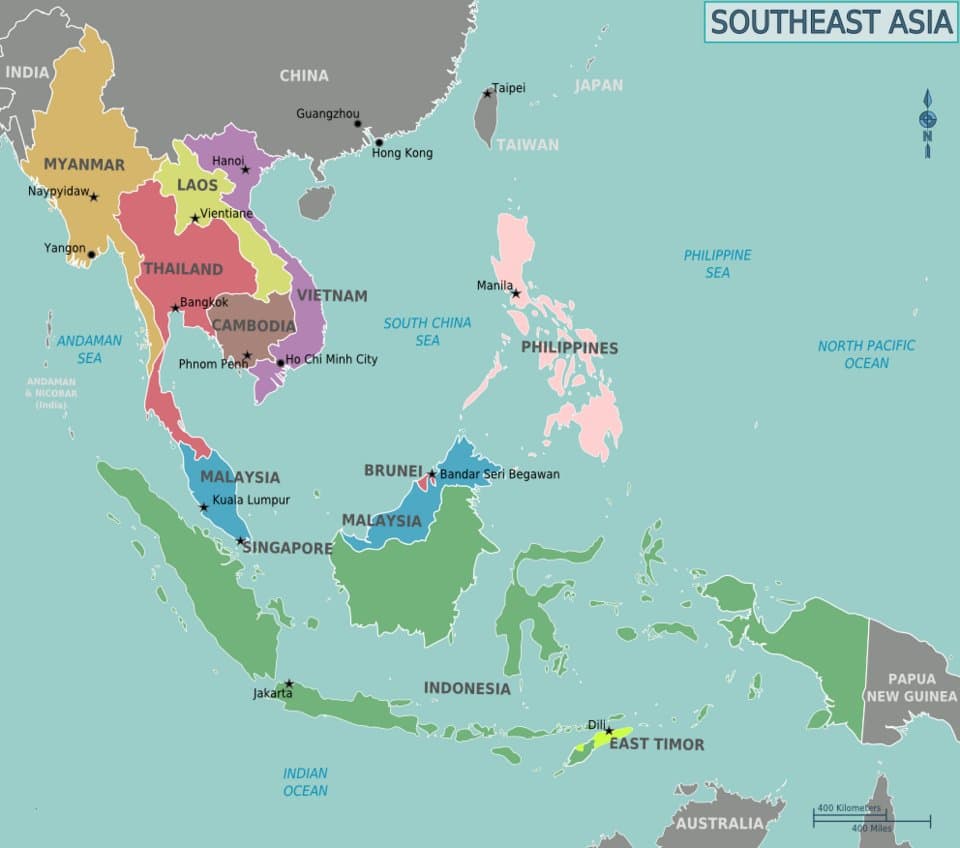
The Phoenix Rasbora is native to southern Borneo, specifically the Indonesian province of Kalimantan Tengah (Central Kalimantan). The original type specimens were collected from the Jelai Bila river basin near the town of Sukamara. This region is characterized by ancient forest peat swamps, where slow-moving blackwater streams wind through dense tropical vegetation.
These habitats produce some of the most extreme water conditions in the freshwater world. Decomposing plant matter releases massive amounts of tannins into the water, staining it a deep tea color and driving the pH down to remarkably acidic levels, sometimes below 4.0. The water is extremely soft with almost no dissolved minerals. Fallen leaves, branches, and submerged root systems create a complex environment with plenty of cover but very little open water flow.
Understanding this natural environment is essential because it directly informs how you should set up your aquarium. Phoenix Rasboras did not evolve for crystal-clear, neutral water. They thrive in dim, tannin-rich conditions that many aquarists might consider “dirty.” In reality, that’s exactly what they need.
Unfortunately, peat swamp forests in Borneo are under serious threat from deforestation for palm oil plantations and other agricultural development. The IUCN currently lists Boraras merah as “Data Deficient,” but wild populations appear to be declining. This makes responsible captive husbandry all the more important for the long-term survival of the species.
Appearance & Size
The Phoenix Rasbora maxes out at around 0.8 inches (2 cm), making it one of the smallest freshwater aquarium fish available. Its body shape is slender and elongate compared to some other Boraras species from mainland Asia, which tend to be a bit more compact.
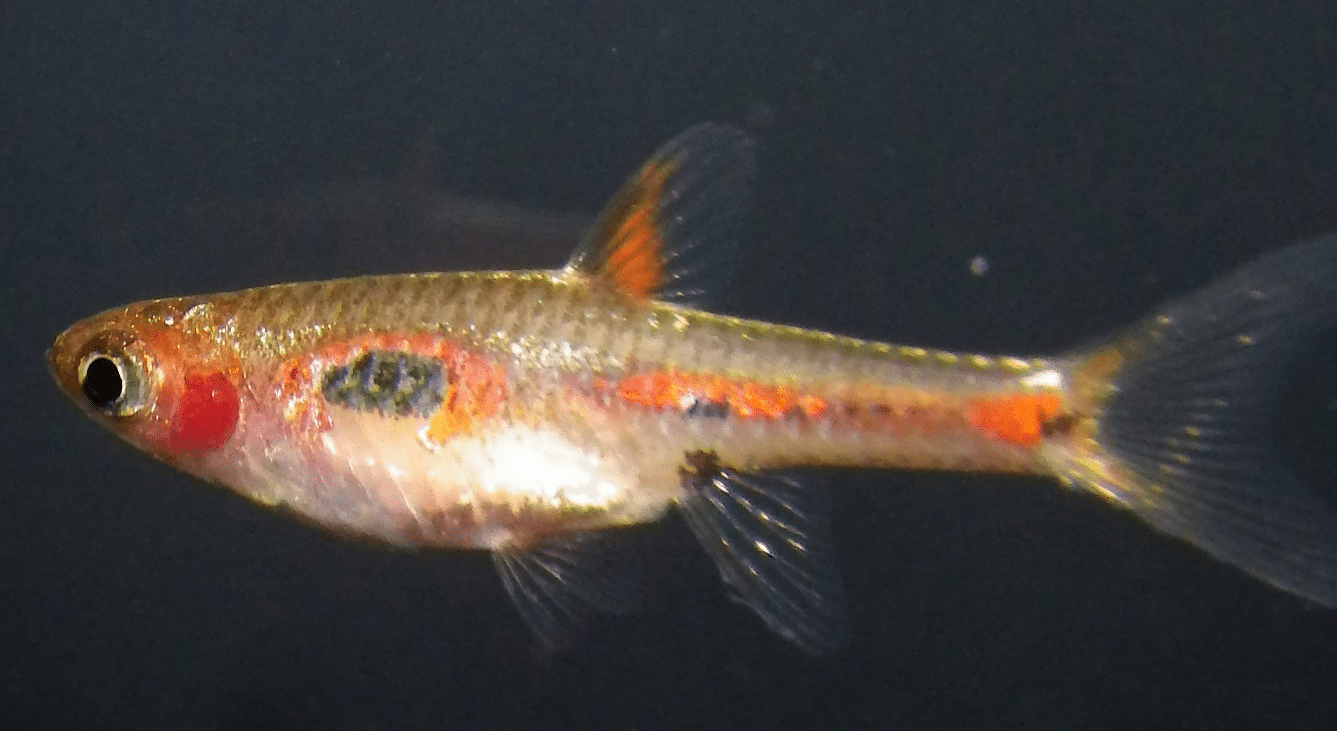
What makes this fish stand out is its striking color pattern. The base body color is a dull grayish-silver that fades to nearly transparent toward the fins. But layered on top of that are bold black markings, each surrounded by a vivid orange-red border. This glowing effect is where the “Phoenix” name comes from. The brightest coloration concentrates around the dark central body spot and extends toward the head, creating a fiery contrast against the muted background.
The Phoenix Rasbora is frequently confused with the Chili Rasbora (Boraras brigittae), and there’s ongoing debate among taxonomists about whether they’re truly separate species or geographic variants of the same one. The easiest way to tell them apart is by looking at the dark lateral marking. On a Phoenix Rasbora, this marking is broken into distinct spots rather than forming a continuous horizontal stripe. The red coloration on the Phoenix Rasbora is also more localized around the dark markings rather than being spread evenly across the body.
Sexing Phoenix Rasboras can be tricky given their size. Females tend to be slightly fuller-bodied, especially when carrying eggs. Males are typically a bit slimmer and may show slightly more intense coloration when in breeding condition. These differences are subtle, though, and can be difficult to spot outside of spawning periods.
For the best color display, keep your Phoenix Rasboras over a dark substrate with dim lighting and plenty of tannins in the water. Under these conditions, the orange-red patches really pop. In a brightly lit tank with pale substrate, these fish tend to look washed out and stressed.
Behavior & Temperament
Phoenix Rasboras are peaceful, social fish that should always be kept in groups. A minimum of 8 is recommended, but a school of 15 to 20 or more is where you’ll really see their natural behavior come to life. In larger groups, they form loose shoals, with males occasionally displaying to each other in brief, harmless sparring matches that bring out their best colors.
These are not bold fish. They tend to be timid, especially when first introduced to a new tank or when kept with larger, more active species. In a well-planted aquarium with subdued lighting, they gradually become more confident and spend more time out in the open. If you notice your Phoenix Rasboras constantly hiding, it’s usually a sign that something about the environment is stressing them, whether it’s too much light, too few hiding spots, or overly boisterous tank mates.
They’re primarily mid-water swimmers, occasionally venturing toward the surface or into lower areas of the tank to pick at microorganisms. Their movements are quick but graceful, and watching a large group drift through a densely planted tank is genuinely relaxing.
Phoenix rasboras (Boraras merah) are a tiny, vividly colored micro species from blackwater habitats in Borneo. They require soft, acidic water and a mature planted tank to thrive.
Tank Requirements
Because of their small size, Phoenix Rasboras don’t need a huge aquarium. A 10-gallon long tank is the recommended minimum for a group of 8 to 10 fish. That said, a larger tank like a 15 or 20-gallon long provides more swimming space and makes it much easier to maintain stable water parameters, which is critical for these sensitive fish. Some sources list 5 gallons as a minimum, but I’d steer you toward 10 gallons or more. The extra water volume gives you a much bigger margin for error with water chemistry.
Water Parameters
| Parameter | Recommended Range |
|---|---|
| Temperature | 72-79°F (22-26°C) |
| pH | 4.0-6.5 |
| General Hardness (GH) | 1-5 dGH |
| Carbonate Hardness (KH) | 0-2 dKH |
| TDS | 18-90 ppm |
| Ammonia/Nitrite | 0 ppm |
| Nitrate | <10 ppm |
This is where Phoenix Rasboras get tricky for a lot of hobbyists. They need very soft, acidic water. If your tap water is hard and alkaline, you’ll likely need to use RO (reverse osmosis) water remineralized with a product designed for soft water species. Trying to force these fish into standard tap water with a pH of 7.5 and high hardness is a recipe for stress, faded colors, and shortened lifespans.
Filtration & Flow
A gentle sponge filter is ideal for a Phoenix Rasbora tank. These fish come from slow-moving waters and can be stressed by strong currents, especially given their tiny size. A sponge filter also provides biological filtration without creating excessive flow, and it won’t suck up fry if any spawning occurs. If you’re using a hang-on-back or canister filter, baffle the output to reduce flow and cover the intake with a pre-filter sponge.
Lighting, Plants & Decor
Dim lighting is the way to go. In the wild, Phoenix Rasboras live under dense forest canopy with very little direct light reaching the water. Floating plants like Amazon Frogbit, Red Root Floaters, or Salvinia are excellent for diffusing light from above. Dense plantings of Java Moss, Java Fern, and Cryptocorynes provide cover and help the fish feel secure.
A dark substrate will make their colors stand out much more than a light-colored one. Adding Indian Almond Leaves (Catappa leaves), alder cones, or driftwood releases tannins into the water, which tints it a natural amber color and helps lower pH. This leaf litter also encourages the growth of biofilm and microorganism colonies that these tiny fish love to graze on between feedings.
One important note on water changes: because of their small size and sensitivity to parameter swings, avoid large water changes. Stick to smaller, more frequent changes (10-15% once or twice a week) rather than doing a big 50% change that could shock them. Always make sure the replacement water matches the tank’s temperature and chemistry as closely as possible.
Is the Phoenix Rasbora Right for You?
Before you buy, run through this honest checklist. The Phoenix Rasbora is a great fish for the right keeper, but it is not for everyone.
- You can provide soft, acidic water (pH 5.0-6.5) ” this is essential for full color
- You have a nano tank (10-15 gallons) with tannin-stained water and subdued lighting
- You can keep a school of 10+ for confident, colorful behavior
- Your tank does not include any fish that could eat a 1-inch adult
- You are willing to modify water chemistry if your tap water is hard
- You want arguably the most stunning nano fish available when conditions are right
Diet & Feeding
Phoenix Rasboras are classified as micro predators. In the wild, they feed on tiny invertebrates, insect larvae, zooplankton, and other microscopic organisms found in their peat swamp habitat. Their mouths are extremely small, so food size is a major consideration.
What Most Care Guides Get Wrong About the Phoenix Rasbora
The Phoenix Rasbora is one of the most beautiful nano fish in the hobby, and the biggest misconception is that it will look like the photos you see online in any tank. It will not. Those intense orange and black colors only develop in soft, acidic water with tannins. In hard, alkaline water under bright lights, Phoenix Rasboras look pale and washed out, and people blame the fish when the real problem is the water. The other mistake is keeping too few. You need 10+ for confident behavior and peak color display.
In the aquarium, offer a variety of appropriately sized foods:
- Staple foods: High-quality micro pellets or finely crushed flake food
- Frozen foods: Baby brine shrimp, daphnia, cyclops, and micro bloodworms
- Live foods: Vinegar eels, microworms, grindal worms, live daphnia, and live baby brine shrimp
- Supplemental: Freeze-dried foods (crushed to appropriate size)
Live and frozen foods should make up a significant portion of their diet. These protein-rich options bring out the best coloration and keep the fish in prime health. Feed small amounts twice daily rather than one large feeding. Watch carefully to make sure food particles are small enough for them to eat. Standard-sized pellets and flakes are too large and will just sink to the bottom uneaten.
A well-established tank with biofilm and microorganism colonies on driftwood and leaf litter provides supplemental grazing opportunities throughout the day, which closely mimics their natural feeding behavior.
Tank Mates
Given their extremely small size and shy nature, tank mate selection for Phoenix Rasboras requires careful thought. Honestly, a species-only setup is the best way to enjoy these fish. In a dedicated nano tank, they’ll be more active, show better color, and you won’t have to worry about competition for food or predation.
If you do want to create a nano community, stick to other peaceful micro species that share similar water requirements:
Compatible Tank Mates
- Other Boraras species (Chili Rasbora, Strawberry Rasbora, Dwarf Rasbora, Exclamation Point Rasbora)
- Pygmy Corydoras (Corydoras pygmaeus, C. habrosus, C. hastatus)
- Otocinclus catfish
- Small peaceful tetras (Ember Tetra, Green Neon Tetra)
- Dwarf shrimp (Neocaridina, Caridina)
- Small snails (Nerite, Ramshorn)
Tank Mates to Avoid
- Any fish large enough to eat them (most fish over 2 inches)
- Aggressive or territorial species (bettas, dwarf cichlids)
- Fast, boisterous feeders (danios, barbs) that will outcompete them for food
- Large shrimp species like Amano shrimp, which may bully them
Keep in mind that even “peaceful” fish can be a problem if they’re significantly larger. A fish doesn’t have to be aggressive to eat a 0.8-inch tank mate. If it fits in the mouth, it’s food.
Breeding
Phoenix Rasboras are egg scatterers that provide no parental care. In a well-maintained species-only tank with dense plantings, small numbers of fry may appear on their own over time as eggs survive unnoticed among the plants. However, if you want to raise a larger number of fry, a more controlled approach is necessary.
Spawning Tank Setup
Set up a small breeding tank of about 2.5 to 4 gallons (10-15 liters) with the following conditions:
- Dim lighting
- Soft, acidic water (pH 5.0-6.0, temperature 78-82°F / 26-28°C)
- Bare bottom or fine mesh that allows eggs to fall through but prevents adults from reaching them
- Java Moss or other fine-leaved plants filling roughly half the tank
- A small air-powered sponge filter set to very gentle flow
Conditioning & Spawning
Condition a pair or small group with high-quality live and frozen foods like daphnia, baby brine shrimp, and microworms for about a week before introducing them to the breeding tank. Females carrying eggs will appear noticeably rounder. The fish typically scatter eggs among the fine-leaved plants.
Egg & Fry Care
Remove the adults immediately after spawning is observed, as they will eat both eggs and fry if given the chance. Eggs typically hatch within 24 to 48 hours. The fry are incredibly tiny, and for the first several days they’ll feed on their yolk sacs and any microorganisms present in the tank.
First foods need to be extremely small. Infusoria and paramecium are ideal starter foods. Even freshly hatched brine shrimp are too large for newly free-swimming fry. After 7 to 10 days, the fry should be large enough to accept vinegar eels, microworms, and eventually baby brine shrimp. Growth is slow, so patience is essential.
Common Health Issues
Phoenix Rasboras are generally hardy once established in a stable, mature aquarium. Most health problems stem from environmental issues rather than specific diseases.
Parameter Shock
The single biggest killer of Phoenix Rasboras is sudden shifts in water chemistry. Large water changes, mismatched replacement water, or unstable pH can cause acute stress that leads to rapid decline. Always match new water to existing tank parameters and keep water changes small and consistent.
Ich (White Spot Disease)
Like all freshwater fish, Phoenix Rasboras can contract ich, especially when stressed by poor water quality or temperature fluctuations. Due to their small size, be cautious with medication dosing. Gradually raising the temperature to 82°F (28°C) combined with a half-dose of ich medication is usually the safest approach. Always remove activated carbon from your filter before treating.
Bacterial Infections
Fin rot, body sores, and other bacterial infections can occur in tanks with poor water quality. Prevention is straightforward: maintain pristine water conditions with regular small water changes, don’t overstock, and don’t overfeed. If infections do appear, treat with a broad-spectrum antibacterial medication at a reduced dose appropriate for nano fish.
Internal Parasites
Wild-caught Phoenix Rasboras may carry internal parasites. Signs include weight loss despite eating, white stringy feces, and a hollow belly. Quarantine all new arrivals for at least two weeks before adding them to an established tank. This gives you time to observe for any health issues and treat if needed without risking your main population.
How the Phoenix Rasbora Compares to Similar Species
Phoenix Rasbora vs. Emerald Dwarf Rasbora
The Emerald Dwarf Rasbora is more adaptable to different water conditions, while the Phoenix Rasbora is a blackwater specialist that needs soft, acidic water to show color. If your water is soft, the Phoenix Rasbora is more visually dramatic. If your water is hard, the Emerald Dwarf Rasbora is the more realistic choice.
Phoenix Rasbora vs. Exclamation Point Rasbora
The Exclamation Point Rasbora is even smaller and more subtle, while the Phoenix Rasbora has much bolder coloring. Both need groups and soft water, but the Phoenix Rasbora is the showpiece species. The Exclamation Point Rasbora is the one you add for variety alongside it.
Expert Take (Mark Valderrama, AquariumStoreDepot)
After 25 years in the hobby, the phoenix rasbora is one of the most rewarding nano fish I recommend to experienced hobbyists. Phoenix rasboras (Boraras merah) are a tiny, vividly colored micro species from blackwater habitats in Borneo. They require soft, acidic water and a mature planted tank to thrive. Phoenix rasboras are not beginner fish despite their small size. They need stable, soft acidic water (pH 5.5-6.5) and a fully cycled tank – standard tap water at neutral pH will slowly stress them to death.
Where to Buy
Phoenix Rasboras aren’t always available at local fish stores, but they can be found through reputable online retailers that specialize in nano and rare freshwater species.
Flip Aquatics is a great source for Phoenix Rasboras and other Boraras species. They’re known for shipping healthy, well-acclimated fish and carry a solid selection of nano species. Dan’s Fish is another excellent option, offering a wide variety of freshwater species with reliable shipping and quality fish.
When purchasing, try to buy a group of at least 8 to 10 at once. This ensures you have a proper school from the start and reduces the stress of multiple separate introductions. Ask about whether the fish are wild-caught or captive-bred, as this affects acclimation needs and potential parasite concerns.
Recommended Video
References
- Kottelat, M., & Vidthayanon, C. (1993). Boraras genus description. Raffles Bulletin of Zoology.
- “Boraras merah.” Seriously Fish. https://www.seriouslyfish.com/species/boraras-merah/
- “Boraras merah.” FishBase. https://www.fishbase.org
- Liao, T.Y., Kullander, S.O., & Fang, F. (2010). Phylogenetic analysis of the genus Rasbora (Teleostei: Cyprinidae). Zoologica Scripta, 39(2), 155-176.
- About the Author
- Latest Posts

I’m Mark Valderrama, founder of Aquarium Store Depot and a fishkeeper with over 25 years of hands-on experience. I started in the hobby at age 11, worked at local fish stores, and have kept freshwater tanks, ponds, and reef tanks ever since. I’ve been featured in two best-selling aquarium books on Amazon and built this site to share practical, experience-based fish keeping knowledge.
Leave a Reply