Last Updated: June 25, 2026
Thank you for visiting! By the way… any links on this page that lead to products on Amazon and other stores/partners are affiliate links Aquarium Store Depot earns a commission if you make a purchase.
Table of Contents
- What Most Care Guides Get Wrong
- The Reality of Keeping Green Neon Tetra
- Key Takeaways
- Species Overview
- Classification
- Origin & Natural Habitat
- Appearance & Identification
- Average Size & Lifespan
- Care Guide
- Is This Fish Right for You?
- What People Get Wrong
- Tank Mates
- Food & Diet
- Breeding & Reproduction
- Common Health Issues
- Common Mistakes to Avoid
- Where to Buy
- Frequently Asked Questions
- What It Is Actually Like Living With Green Neon Tetra
- How It Compares to Similar Species
- Closing Thoughts
- Recommended Video
- References
The green neon tetra is the most delicate of the three neon species. It needs soft, acidic water with stable parameters or it will not survive. This is not a beginner fish. It is not even an intermediate fish. It is for experienced keepers with established blackwater or soft water setups.
Do not even look at green neon tetras until your soft water setup has been stable for six months.
The Reality of Keeping Green Neon Tetra
Water chemistry matters more than with neons. Green neon tetras are from blackwater environments and show their best color in soft, acidic water with tannins. In hard, alkaline water, the green stripe fades to a dull silver-blue. If you cannot provide appropriate water chemistry, the visual payoff is not there.
They stay smaller than neons and cardinals. Maxing out around 0.8 to 1 inch, green neon tetras are true nano fish. This makes them suitable for 10-gallon setups where regular neons and cardinals would be too active.
They are primarily wild-caught. Most green neon tetras in the trade are wild-caught, which means acclimation is critical. Drip acclimate slowly and avoid adding them to immature tanks. The first week is the highest-risk period.
Biggest Mistake New Owners Make
Keeping them in hard, alkaline water and wondering why the green stripe looks blue-gray instead of vivid turquoise-green. This is a soft water fish. Period.
The green neon tetra is the ultimate nano schooling fish for dedicated planted tank keepers who maintain soft, acidic water. Nothing else at this size delivers this level of iridescent color.
Key Takeaways
- The smallest Paracheirodon at just 1 inch – ideal for nano tanks and aquascapes
- More blue-green, less red than neon or cardinal tetras, with a brighter, more prominent lateral stripe
- True blackwater specialist – thrives in soft, acidic water with tannins and dim lighting
- Keep in groups of 10-20+ for the best visual impact and natural behavior
- 10-gallon minimum but larger tanks with big schools are far more impressive
Species Overview
| Field | Details |
|---|---|
| Scientific Name | Paracheirodon simulans |
| Common Names | Green Neon Tetra, Blue Neon Tetra, False Neon Tetra |
| Family | Acestrorhamphidae |
| Origin | Upper Rio Negro (Brazil) and Orinoco basin (Venezuela/Colombia) |
| Care Level | Moderate |
| Temperament | Peaceful |
| Diet | Omnivore (micropredator) |
| Tank Level | Mid |
| Maximum Size | 1 inch (2.5 cm) |
| Minimum Tank Size | 10 gallons (38 liters) |
| Temperature | 75-84°F (24-29°C) |
| pH | 3.0-6.5 |
| Hardness | 0-4 dGH |
| Lifespan | 2-3 years in captivity |
| Breeding | Egg scatterer |
| Breeding Difficulty | Difficult |
| Compatibility | Nano community (with similar-sized fish) |
| OK for Planted Tanks? | Yes (excellent) |
Classification
| Taxonomic Level | Classification |
|---|---|
| Order | Characiformes |
| Family | Acestrorhamphidae (reclassified from Characidae, Melo et al. 2024) |
| Subfamily | Megalamphodinae |
| Genus | Paracheirodon |
| Species | P. Simulans (Gery, 1963) |
Green neon tetras require soft, acidic water — much stricter than regular neon tetras. They are not suitable for hard or alkaline tap water without significant conditioning.
The green neon tetra was described by Jacques Gery in 1963, originally as Hyphessobrycon simulans. It was later moved to Paracheirodon by Weitzman and Fink in 1983. The species name simulans is Latin for “imitating” – a reference to its resemblance to the other Paracheirodon species. There are only three species in the genus: the neon tetra (P. Innesi), the cardinal tetra (P. Axelrodi), and this species.
Note on reclassification: The 2024 phylogenomic study by Melo et al. Moved all three Paracheirodon species from the old catch-all family Characidae into the new family Acestrorhamphidae, placed within the subfamily Megalamphodinae. FishBase has already updated to reflect this new classification.
Origin & Natural Habitat
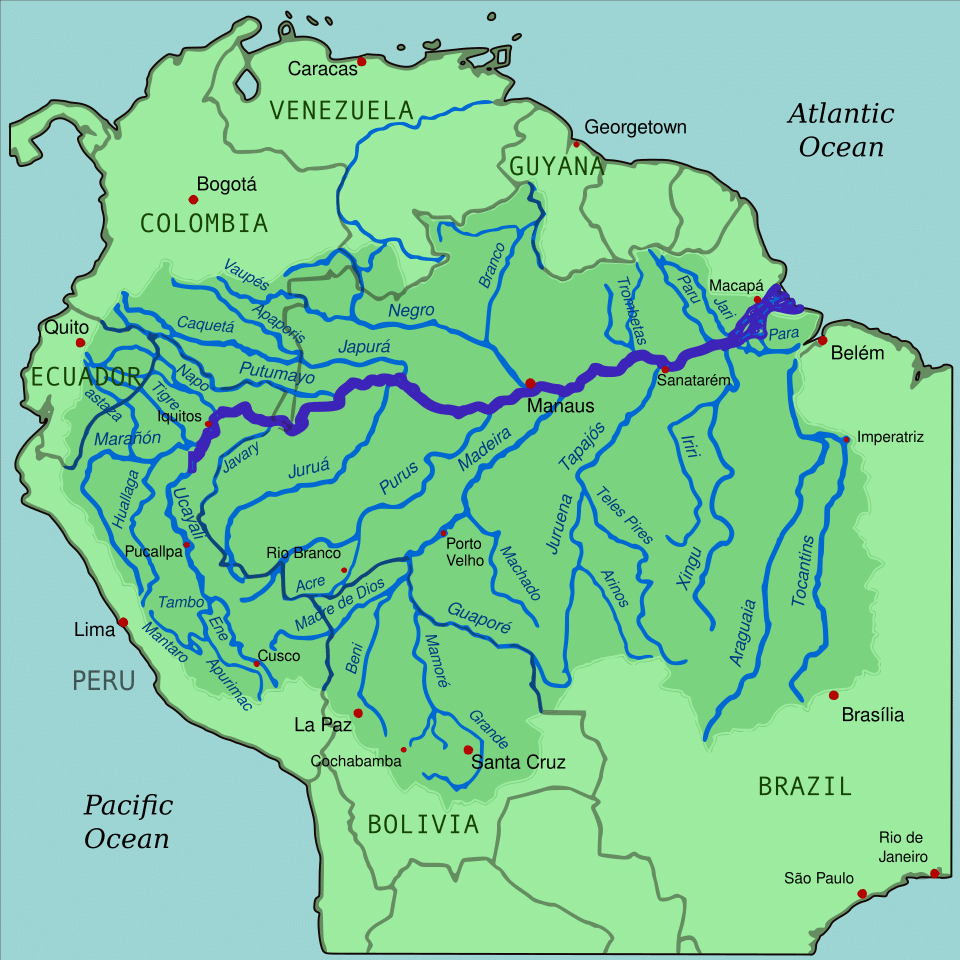
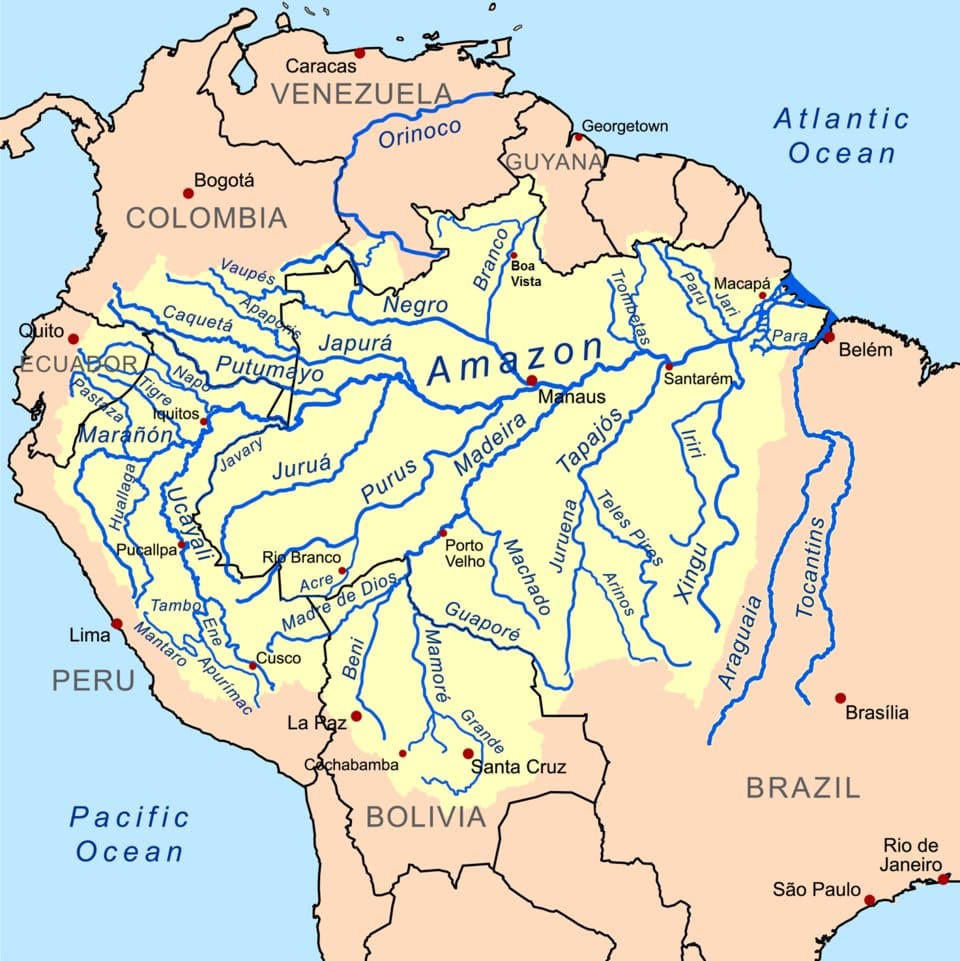
The green neon tetra is found in the upper Rio Negro drainage in Brazil and the Orinoco basin in Venezuela and Colombia. The Rio Negro is famous in the fishkeeping world as the source of some of the most extreme blackwater habitats on the planet – water that looks like dark tea, with pH values as low as 3.0 and virtually zero mineral content.
In the wild, green neon tetras inhabit slow to moderately flowing blackwater streams with thick overhanging vegetation that blocks most direct sunlight. The water is stained deep brown by tannins from decomposing leaves and wood. Substrates are typically sandy, covered in leaf litter. These are warm, dark, extremely soft environments with almost no dissolved minerals.
This is important for aquarium care because unlike regular neon tetras (which have been captive-bred for decades and adapted to a wide range of conditions), many green neon tetras in the trade are still wild-caught from these extreme environments. That said, tank-bred specimens are becoming more available and are more adaptable.
Appearance & Identification
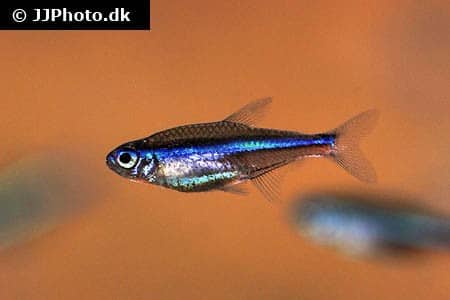
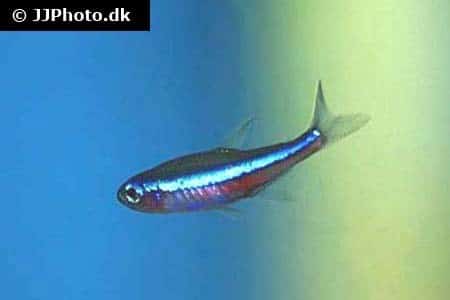
At first glance, the green neon tetra looks like a smaller, more intensely blue version of the neon tetra. The body shape is slender and torpedo-like, typical of the genus. The most prominent feature is the brilliant turquoise-blue lateral stripe that runs from the head to the base of the tail. This stripe appears more blue-green (hence the common name) compared to the more pure-blue stripe of neon and cardinal tetras.
The key visual difference from its relatives is the red coloration – or rather, the lack of it. While neon tetras have a red stripe covering the back half of the body and cardinal tetras have red extending the full length, the green neon tetra shows only a faint reddish or pinkish hint below the blue stripe. In some lighting, it’s barely visible at all. This makes the blue stripe the dominant visual feature, and it’s why a school of green neons looks so clean and cohesive.
One interesting behavioral note: the iridescent stripe takes about 20-30 minutes to fully “color up” after the aquarium lights turn on each day. When the lights are off, the coloration fades significantly – likely an anti-predator adaptation from their wild habitat.
How to Tell Green Neons from Neon Tetras and Cardinals
- Size – Green neons are the smallest at about 1 inch. Neons reach 1.5 inches. Cardinals get to 2 inches.
- Red coloration – Green neons have minimal red. Neons have red on the back half. Cardinals have red running the full body length.
- Blue stripe – Green neons have a more turquoise-green tone. Neons and cardinals lean more blue.
- Body shape – Green neons are slimmer and more delicate overall.
Male vs. Female
Sexing green neon tetras is difficult. The most reliable method is body shape – females are slightly rounder and deeper-bodied when carrying eggs. Males are marginally slimmer. There are no significant color differences between the sexes.
Average Size & Lifespan
Green neon tetras max out at about 1 inch (2.5 cm), making them the smallest of the three Paracheirodon species and one of the smallest tetras commonly available. Their tiny size makes them perfect for nano tanks and densely planted aquascapes where larger fish would look out of proportion.
Lifespan is typically 2-3 years in captivity, which is on the shorter end for tetras. Wild-caught specimens may have a shorter aquarium lifespan due to the stress of collection and acclimation to different water conditions.
Care Guide
Tank Size
A 10-gallon tank can house a small school, but a 20-gallon long or larger is much better for creating an impressive display. Because these fish are so tiny, you can keep a large school in a modest tank. A group of 20-30 in a well-planted 20-gallon creates a truly spectacular effect. They’re also popular choices for aquascaping tanks where their small size and tight schooling behavior complement the planted layout perfectly.
Water Parameters
| Parameter | Ideal Range |
|---|---|
| Temperature | 75-84°F (24-29°C) |
| pH | 4.0-6.5 |
| Hardness | 0-4 dGH |
| KH | 0-2 dKH |
This is where green neon tetras differ most from regular neons. They strongly prefer soft, acidic water. While wild-caught specimens can survive in pH as low as 3.0, the practical aquarium range is pH 4.0-6.5. Hardness should be very low, ideally under 4 dGH. Tank-bred specimens are somewhat more adaptable, but you’ll still get the best color and health in soft, acidic conditions.
Tannins are your friend here. Indian almond leaves, alder cones, driftwood, and peat filtration all help create the blackwater conditions these fish thrive in. The tannin-stained water also makes the iridescent stripe pop even more against the amber background.
Filtration & Water Flow
Gentle filtration is essential. These are tiny fish from slow-moving water, and strong currents will exhaust them. A sponge filter is the best option for smaller tanks. If using a hang-on-back or canister filter, baffle the output to reduce flow. Turnover of 3-4 times the tank volume per hour is plenty. Weekly water changes of 15-20% help maintain stability without shocking the system.
Lighting
Dim to moderate lighting is strongly recommended. Green neon tetras come from heavily shaded blackwater habitats and can become stressed under bright lights. Floating plants are essential for creating natural shade. The iridescent stripe actually looks more impressive under subdued, angled lighting than under bright overhead lights that wash everything out.
Plants & Decorations
A densely planted tank with a dark substrate is the ideal setup. Floating plants for shade, driftwood for tannins, and a bed of dried leaf litter on the bottom create a biotope that closely mimics their natural habitat. Low-light plants like Java moss, Java fern, Anubias, Bucephalandra, and Cryptocoryne work perfectly. These fish look absolutely stunning against a dark, natural backdrop with tannin-stained water.
Is the Green Neon Tetra Right for You?
Green neon tetras are blackwater specialists that demand specific conditions. Here’s who should attempt them:
- You’re committed to maintaining soft, acidic water. PH 5.0-6.5 with very low hardness
- You want to create an authentic blackwater biotope setup
- You appreciate the distinction between similar species and want something more specialized than neons
- You can keep large groups of 15-20. Their schooling behavior in big numbers is mesmerizing
- You have experience with sensitive species and understand blackwater chemistry
- Don’t get these if your water is hard and alkaline. They will slowly decline no matter what else you do right
What People Get Wrong
The biggest mistake is treating green neon tetras like regular neon tetras. They look similar and are often sold side by side, but the care requirements are fundamentally different. Green neons come from blackwater habitats in the upper Rio Negro — extremely soft, highly acidic water with pH as low as 4.5. Most tap water is far too hard and alkaline. In wrong parameters, they fade, lose condition, and die within weeks.
Second mistake: buying them for a new or cycling tank. Green neon tetras are more sensitive than regular neons to ammonia and nitrite. They belong in a mature, well-established tank with stable, tested water. Add them to an immature setup and you will lose your investment quickly.
Third: expecting the same hardiness as neon or cardinal tetras. Green neons have a narrower tolerance window. The payoff — a school of 15 or 20 in a proper soft-water planted tank, with that intense blue-green iridescence showing in layers as they move — is spectacular. But they demand the right setup to get there.
Tank Mates
Best Tank Mates
- Pygmy corydoras (Corydoras pygmaeus, C. Habrosus) – tiny, peaceful bottom dwellers perfect for a nano community
- Otocinclus – small, gentle algae eaters
- Other small tetras (ember tetras, cardinal tetras) – similar size and temperament
- Dwarf rasboras (chili rasbora, strawberry rasbora) – similarly tiny nano fish
- Sparkling gouramis – small, peaceful centerpiece fish
- Dwarf shrimp (cherry shrimp, amano shrimp) – generally safe with adult green neons
- Pencilfish – gentle, similarly sized South American fish
Tank Mates to Avoid
- Any fish large enough to eat them – at 1 inch, they’re snack-sized for many common community fish
- Aggressive or territorial species – even small aggressive fish can stress them out
- Fast, boisterous swimmers – tiger barbs, giant danios, and similar active species will intimidate and outcompete them
- Fish requiring hard, alkaline water – the water parameter mismatch makes cohabitation impractical
Food & Diet
Green neon tetras are micropredators that feed on tiny insects, worms, and crustaceans in the wild. In the aquarium, they accept a range of foods but perform best with a diet that includes live and frozen offerings.
Crushed high-quality flakes or micro-pellets work as a daily staple, but make sure the food is small enough for their tiny mouths. Supplement regularly with live or frozen daphnia, baby brine shrimp, cyclops, and micro worms. These protein-rich foods are especially important for maintaining vibrant coloration and overall health.
Feeding tip: Feed small amounts once or twice daily. Because of their size, it’s easy to overfeed. Watch that food doesn’t sink past them unused, as uneaten food will degrade water quality quickly in the soft, acidic conditions they prefer.
Breeding & Reproduction
Breeding green neon tetras in captivity is considered difficult. Unlike regular neon tetras, which have been commercially bred for decades, green neons haven’t been widely bred in home aquariums. Most fish in the trade are wild-caught, though tank-bred specimens are becoming more available from Asian farms.
Spawning Requirements
If you want to attempt breeding, set up a separate tank with extremely soft, acidic water (pH 5.0-5.5, near-zero hardness). Dim lighting is essential, and fine-leaved plants or spawning mops provide egg deposition sites. Temperature around 79-82°F. A sponge filter provides gentle circulation without endangering eggs or fry.
Spawning Behavior
Condition a group with plenty of live foods. Green neons reportedly spawn better in small groups rather than isolated pairs. Spawning occurs in dim conditions, with eggs scattered among fine-leaved plants. Remove adults after spawning to prevent egg predation.
Fry Care
Fry are extremely tiny and require infusoria or similarly microscopic foods for the first week or two. Maintain very dim lighting and pristine water quality. Growth is slow, and raising green neon fry successfully requires patience and attention to water parameters. This is not a beginner breeding project.
Common Health Issues
Green neon tetras are more sensitive than regular neons, particularly wild-caught specimens. They should never be added to a new or uncycled aquarium.
Ich (White Spot Disease)
The most common ailment, usually triggered by temperature fluctuations or stress from poor acclimation. Treatment with heat (gradually raising to 82°F) combined with a mild ich medication works, but be cautious with dosing – their small size means they’re more sensitive to medications. Half doses are often recommended.
Neon Tetra Disease
All Paracheirodon species are susceptible to neon tetra disease, caused by the parasite Pleistophora hyphessobryconis. Symptoms include loss of coloration, visible cysts or lumps under the skin, and erratic swimming. There is no effective treatment, and infected fish should be removed immediately to prevent spread through the school.
General Prevention
Quarantine all new fish for at least 2-3 weeks. Maintain stable water parameters – green neons are far more sensitive to fluctuations than common neons. Only add them to mature, fully cycled tanks. Keep water quality high with regular small water changes rather than infrequent large ones that could shock the system.
Common Mistakes to Avoid
- Adding to hard, alkaline water – This is the number one mistake. Green neons need soft, acidic water to thrive. Keeping them in pH 7.5+ with high hardness leads to stress, washed-out colors, and shortened lifespans.
- Adding to new tanks – Never add green neons to an uncycled or newly set up aquarium. They need mature, stable conditions.
- Keeping too few – A group of 4-5 looks sparse and the fish won’t behave naturally. Aim for 10-20+ for proper schooling behavior and visual impact.
- Bright lighting without shade – These are forest stream fish accustomed to deep shade. Without floating plants or dim lighting, they’ll be stressed and pale.
- Mixing with large tank mates – At just 1 inch, they’re food for anything with a mouth big enough. Stick to nano-compatible species.
- Confusing them with regular neons – Some stores sell green neons at neon tetra prices, but their care requirements are different. Make sure you know what you’re getting.
Where to Buy
Green neon tetras are moderately available through online retailers but less commonly stocked at local fish stores compared to regular neons or cardinals. Both wild-caught and tank-bred specimens are available. Tank-bred fish are hardier and adapt better to aquarium conditions. Pricing runs about $3-5 per fish individually, with discounts for larger groups.
For quality stock with live arrival guarantees, check Flip Aquatics and Dan’s Fish. Both retailers carry green neon tetras and can advise whether their current stock is wild-caught or tank-bred.
Frequently Asked Questions
What is the difference between a green neon tetra and a neon tetra?
Three main differences: size, color, and care requirements. Green neons are smaller (1 inch vs 1.5 inches), have a more turquoise-green stripe with almost no red coloration (neons have a red stripe on the back half), and prefer softer, more acidic water. Regular neon tetras have been captive-bred for decades and are much more adaptable to a range of water conditions.
Are green neon tetras hard to keep?
They’re moderate difficulty. If you already have soft, acidic water (naturally or through remineralized RO water), they’re straightforward. The challenge comes if your tap water is hard and alkaline, as they don’t adapt well to those conditions like regular neons do. The key is providing mature, stable, soft water with some tannins.
Can green neon tetras live with regular neon tetras?
Yes, they can coexist peacefully since they’re closely related and have similar temperaments. However, the green neons are noticeably smaller and prefer softer, more acidic water. Regular neons are more flexible with parameters. If you’re keeping both, target the green neon’s preferred conditions since regular neons will adapt.
How many green neon tetras should I keep?
A minimum of 10, but 15-20 or more is strongly recommended. Their tiny size means a big school doesn’t need a huge tank – a group of 20 works well in a 20-gallon. Large schools produce tight, coordinated schooling behavior that smaller groups simply don’t replicate.
Are green neon tetras wild-caught?
Historically, yes – nearly all were wild-caught from Colombia and Brazil. However, tank-bred specimens from Asian farms are becoming increasingly available. Tank-bred fish are hardier and more adaptable to aquarium conditions. When buying, ask your retailer whether their stock is wild-caught or captive-bred, as this affects how sensitive the fish will be during acclimation.
What It Is Actually Like Living With Green Neon Tetra
A school of 15+ green neon tetras in a blackwater nano tank is one of the most beautiful small-scale displays in fishkeeping. The green stripe glows with an intensity that is almost bioluminescent under the right conditions.
They school tighter than regular neons, which makes the visual impact of a large group even more dramatic.
They are delicate feeders that need small, slow-sinking food. Crush flakes finely or use micro pellets.
In a tank with tannin-stained water, Indian almond leaves, and soft lighting, they look like they belong in a nature documentary.
How the Green Neon Tetra Compares to Similar Species
Green Neon Tetra vs. Diamond Tetra
Diamond tetras are a completely different aesthetic. Sparkly and iridescent versus the green neon’s clean horizontal stripe. Both can work in soft water, but diamond tetras are far more tolerant of a wider parameter range. Green neons are strict blackwater fish while diamond tetras adapt to moderate conditions. For a soft water tank, both are excellent choices that create different visual effects. Green neons give you a clean, coordinated school. Diamond tetras give you individual sparkle and drama. Check out our Diamond Tetra care guide for more details.
Green Neon Tetra vs. Costello Tetra
Costello tetras share the green neon’s preference for soft, acidic conditions but are even rarer and harder to source. Both are excellent blackwater species. Green neons are more visually impactful. That iridescent stripe in a large school creates a stunning display. Costello tetras are subtler and more of a collector’s fish. For visual impact in a blackwater tank, green neons are the winner. For rarity and bragging rights, costello tetras are the deeper cut. Check out our Costello Tetra care guide for more details.
Closing Thoughts
The green neon tetra is a specialist’s fish that rewards the right setup with an absolutely breathtaking display. A large school of 20+ in a blackwater-style planted tank with tannin-stained water and dim lighting is one of the most beautiful sights in the nano fishkeeping hobby. That wall of shimmering turquoise-blue is something you have to see in person to fully appreciate.
They’re not quite as forgiving as regular neon tetras, but if you’re willing to provide soft, acidic water and a mature tank environment, they’re absolutely worth the extra effort. Pair them with pygmy corydoras and some ember tetras for a world-class nano community that captures the magic of a South American blackwater stream.
Recommended Video
Check out our tetra tier list video where we rank the most popular tetras in the hobby:
References
- Paracheirodon simulans Profile – Seriously Fish
- Paracheirodon simulans (Gery, 1963) – FishBase
- Green Neon Tetra – Wikipedia
- Phylogenomics of Characidae – Melo et al, 2024
- About the Author
- Latest Posts

I’m Mark Valderrama, founder of Aquarium Store Depot and a fishkeeper with over 25 years of hands-on experience. I started in the hobby at age 11, worked at local fish stores, and have kept freshwater tanks, ponds, and reef tanks ever since. I’ve been featured in two best-selling aquarium books on Amazon and built this site to share practical, experience-based fish keeping knowledge.
Leave a Reply