
Last Updated: June 25, 2026
Thank you for visiting! By the way… any links on this page that lead to products on Amazon and other stores/partners are affiliate links Aquarium Store Depot earns a commission if you make a purchase.
Table of Contents
- What Care Guides Get Wrong
- The Reality of Keeping Panda Loach
- Key Takeaways
- Species Overview
- Classification
- Origin & Natural Habitat
- Appearance & Identification
- Average Size & Lifespan
- Care Guide
- Is It Right for You?
- Tank Mates
- Food & Diet
- Breeding & Reproduction
- Common Health Issues
- Common Mistakes to Avoid
- Where to Buy
- Frequently Asked Questions
- Species Comparison
- Closing Thoughts
- Recommended Video
- References
The panda loach is one of the most expensive and demanding loaches in the hobby. It needs cold, fast-flowing, highly oxygenated water with near-zero ammonia and nitrate. It comes from pristine mountain streams in China, and it expects those conditions in your tank. Compromise on water quality and it dies. There is no middle ground with this species.
For the keepers willing to build a dedicated hillstream setup, the panda loach is a stunning fish with bold black and white patterning that rivals any marine species for visual impact. This guide covers what it actually takes to keep one alive, because a panda loach is not a fish you buy on impulse. It is a fish you build an entire tank for.
If your water quality is not immaculate, the panda loach will be the most expensive lesson you have ever learned in this hobby.
The Reality of Keeping Panda Loach
The panda loach is a rare, expensive hillstream species with dramatic black and white banding that fades as the fish matures. Juveniles are strikingly patterned. Adults are more muted. If you are buying this fish for the coloring, know that the high-contrast juvenile appearance does not last.
It needs the same coolwater, high-flow setup as other hillstream loaches. Temperatures between 65 and 75F, strong current, oxygen-rich water, and mature biofilm-covered surfaces. This is a specialist fish that costs specialist money and needs specialist care.
Availability is limited and prices are high. A single panda loach often costs more than a group of five common loach species. That price tag means getting the setup right before buying the fish, not after.
Biggest Mistake New Owners Make
Buying it for the juvenile coloration without knowing it fades. Adult panda loaches retain the banding pattern but with significantly reduced contrast. If the striking black-and-white juvenile look is the reason you want this fish, you will be disappointed within a year.
Panda loaches (Yaoshania pachychilus) are a rare, specialized loach from fast-flowing, cold-water streams in China. They require cold water (65-72°F/18-22°C), very high oxygenation, and are not suitable for standard tropical tanks.
Expert Take (Mark Valderrama, AquariumStoreDepot)
The panda loach is the premium hillstream species. Beautiful, rare, and demanding. A dedicated coolwater hillstream setup with strong flow, mature biofilm, and temperatures around 68 to 72F is mandatory. Do not buy this fish until the setup has been running for at least two months. The price of the fish should reflect the investment in the setup, not precede it.
Key Takeaways
- Cool water specialist. Requires temperatures between 68 to 75°F (20 to 24°C), making it incompatible with most tropical community tanks
- High flow and oxygen are non-negotiable. Aim for water turnover of 15 to 20 times per hour with heavy aeration
- Striking juvenile pattern fades with age. The bold black and white panda bands in young fish gradually shift to a more mottled, network-like pattern in adults
- Keep in groups of 4 or more in a minimum 20-gallon (76 liter) tank with a long footprint for adequate surface area
- Rare and expensive. Expect to pay $30 to $60+ per fish, with limited availability from specialty retailers
- Not yet bred in captivity. All specimens in the trade are wild-caught from a very limited range in China
Species Overview
| Field | Details |
|---|---|
| Scientific Name | Yaoshania pachychilus (formerly Protomyzon pachychilus) |
| Common Names | Panda Loach, Panda Hillstream Loach |
| Family | Gastromyzontidae |
| Origin | Guangxi Province, southern China |
| Care Level | Advanced |
| Temperament | Peaceful (mildly territorial) |
| Diet | Herbivore / Biofilm grazer |
| Tank Level | Bottom |
| Maximum Size | 2.3 inches (6 cm) |
| Minimum Tank Size | 20 gallons (76 liters) |
| Temperature | 68 to 75°F (20 to 24°C) |
| pH | 6.5 to 7.5 |
| Hardness | 2 to 15 dGH |
| Lifespan | 6 to 8 years |
| Breeding | Not achieved in captivity |
| Breeding Difficulty | Extremely Difficult / Unrecorded |
| Compatibility | Specialized community (cool, high-flow species only) |
| OK for Planted Tanks? | Yes (rheophytic plants only) |
Classification
| Taxonomic Level | Classification |
|---|---|
| Order | Cypriniformes |
| Family | Gastromyzontidae (split from Balitoridae) |
| Subfamily | . |
| Genus | Yaoshania (reclassified from Protomyzon) |
| Species | Y. Pachychilus (Chen, 1980) |
This species was originally described by Chen in 1980 under the genus Protomyzon, and you’ll still find it listed as Protomyzon pachychilus in many hobby references and online retailers. The fish was later moved to its own monotypic genus, Yaoshania, named after the Dayao Mountain range where it was discovered. Similarly, the family was reclassified from Balitoridae to Gastromyzontidae as ichthyologists split the hillstream loaches into more precisely defined groups. You’ll see both names floating around. They refer to the same fish.
Origin & Natural Habitat
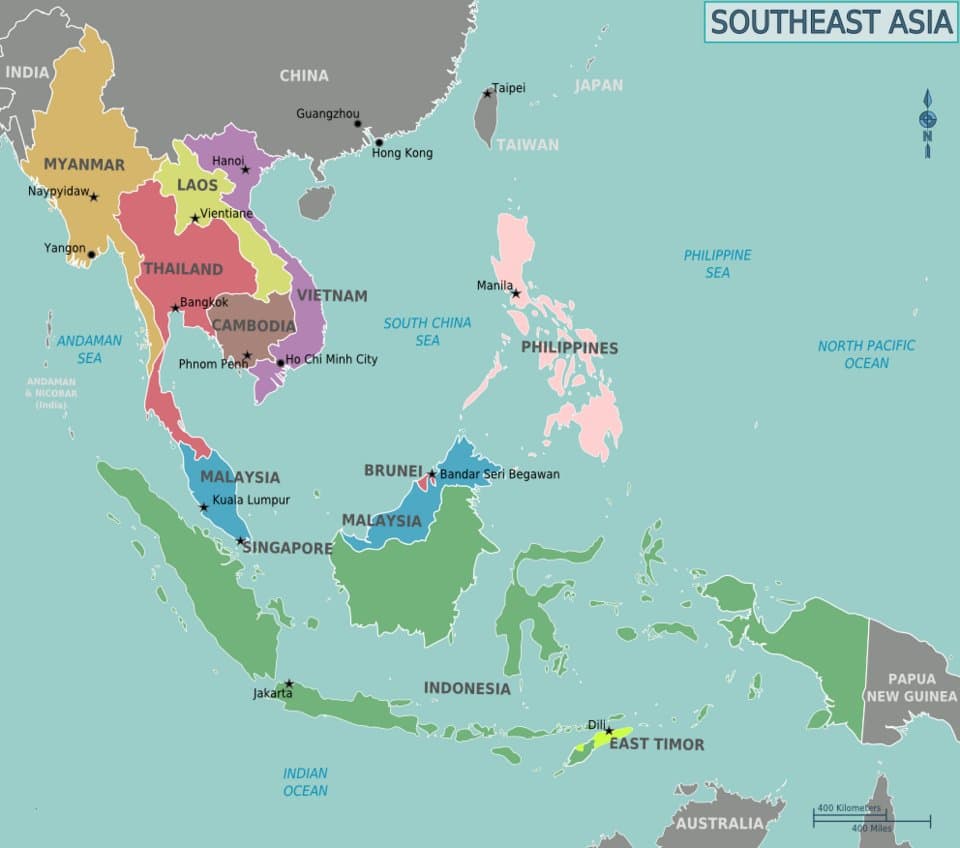
The panda loach is endemic to an extremely small range in southern China. It’s found only in headwater tributaries draining Dayao Mountain (Dayaoshan) in Jinxiu County, within the Guangxi Zhuang Autonomous Region. The confirmed collection sites are limited to a few streams within the Liu River and Gui River drainages. That’s it. This is not a widespread species by any stretch.
In the wild, they live in clear, shallow, fast-flowing mountain streams with rocky bottoms. Cold water rushing over smooth stones and cobbles coated in biofilm and algae. There’s minimal vegetation in the main flow areas, and the substrate is gravel, pebbles, and water-worn rocks with little fine sediment. Sunlight promotes diatom and algae growth that these loaches depend on for food. The key takeaway: this is a habitat defined by flow, oxygen, and cleanliness. Not warmth and plant cover.
Appearance & Identification
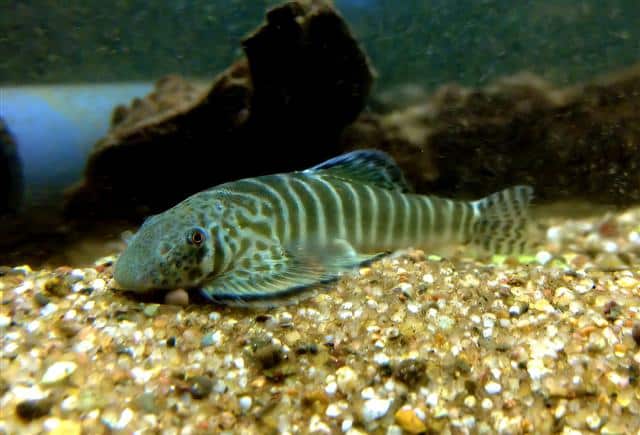
There’s a reason this fish has “panda” in its name. Juvenile panda loaches display bold, alternating bands of black (or very dark brown) and white that run vertically across the body. The contrast is striking and immediately sets them apart from every other hillstream loach in the trade. It’s one of the few freshwater fish where the pattern genuinely justifies the hype.
Here’s what a lot of buyers don’t realize, though: that dramatic juvenile coloration changes as the fish matures. Adult panda loaches develop a more variable pattern. The clean vertical bands give way to lateral stripe arrangements and a network-like, reticulated pattern across the body, often organized in three loose rows. Adults are still attractive fish, but they look quite different from the juveniles that drew you in at the store. Most specimens in the trade are young fish specifically because the juvenile pattern is what sells.
Structurally, the panda loach has the classic hillstream body plan. Dorsoventrally flattened with paired fins forming a suction-cup disc underneath. This lets them cling to rocks in powerful current that would sweep other fish downstream. They don’t really “swim”. They crawl and hop across surfaces, gripping and releasing as they go. The mouth sits on the underside with an enlarged lip structure for scraping biofilm off hard surfaces.
Male vs. Female
| Feature | Male | Female |
|---|---|---|
| Body shape | Slimmer, more streamlined | Fuller, rounder body when mature |
| Size | Slightly smaller on average | Slightly larger, heavier-bodied |
| Coloration | No known reliable difference | No known reliable difference |
| Difficulty to sex | Very difficult. No external sexual dimorphism is well-documented | |
Telling males from females is nearly impossible outside of comparing body shape in mature specimens. Females are assumed to be the heavier-bodied individuals, but that’s about all anyone can say with confidence.
Average Size & Lifespan
Panda loaches reach a maximum size of about 2 to 2.3 inches (5 to 6 cm) in standard length. These are small fish. Don’t let that fool you into thinking they’re suited for nano tanks, though. Their need for flow, territory, and pristine water quality means they require more space than their body size alone would suggest.
With proper care, panda loaches can live 6 to 8 years in captivity. Hobbyists report even longer lifespans when water quality is consistently maintained and the diet is rich in natural biofilm. Conversely, in poorly suited setups. Warm water, low flow, poor oxygenation. They often decline within months. Lifespan with this species is directly tied to how closely you replicate their natural conditions.
Care Guide
These aren’t fish you add to an existing tropical community. They need a setup built around their requirements. The good news is that once you understand what they need, it’s not complicated. Just different.
Tank Size
A minimum of 20 gallons (76 liters) is appropriate for a small group of 4 to 6 panda loaches. More important than volume is the tank footprint. A longer, shallower tank with maximum surface area for gas exchange is far better than a tall, narrow one. A 20-gallon long (30 x 12 inches / 76 x 30 cm base) is the starting point. If you plan on keeping a larger group or adding compatible tank mates, step up to a 30-gallon (114 liters) or larger.
Despite their small size, panda loaches do establish loose territories around preferred grazing spots. Cramming too many into a small tank leads to competition and stress, even though they’re generally peaceful.
Water Parameters
| Parameter | Recommended Range |
|---|---|
| Temperature | 68 to 75°F (20 to 24°C) |
| pH | 6.5 to 7.5 |
| General Hardness (GH) | 2 to 15 dGH |
| KH | 2 to 10 dKH |
| Ammonia / Nitrite | 0 ppm |
| Nitrate | Below 20 ppm (lower is better) |
| Dissolved Oxygen | High. Heavy aeration required |
The temperature range is the first thing most hobbyists trip over. Standard tropical tank temps of 78 to 82°F (26 to 28°C) are too warm. If your home stays in the low to mid 70s, you may not even need a heater. Which is actually ideal. In warmer climates, a chiller or fan-based cooling system may be necessary during summer.
Water quality needs to be impeccable. Ammonia and nitrite at zero, nitrate as low as possible. Weekly water changes of 25 to 50% are a good baseline.
Filtration & Water Flow
This is the single most important aspect of panda loach care. These fish need strong water flow. Their entire body morphology is built for clinging to rocks in fast-moving water, and they don’t do well in calm, slow-moving conditions.
Target a total water turnover of 15 to 20 times per hour. For a 20-gallon tank, that means 300 to 400 gallons per hour combined. An oversized canister filter is the backbone, but you’ll need supplemental powerheads or wavemakers too. Position the flow to sweep across the rocks where the loaches graze.
Aeration is equally critical. Add an airstone or spray bar at the surface to maximize gas exchange. High dissolved oxygen is not optional with this species.
Lighting
Moderate to strong lighting is actually beneficial here. Light promotes the growth of diatoms and soft green algae on rocks, which is the primary food source. A standard LED on a 10 to 12-hour photoperiod encourages a healthy biofilm layer. Just make sure it doesn’t drive tank temperatures up.
Plants & Decorations
Smooth, water-worn rocks and cobbles should dominate the hardscape. They provide grazing surfaces, territory markers, and grip points. Avoid sharp-edged or rough volcanic stone that could damage the loaches’ undersides.
For plants, stick with species that handle strong current and attach to hardscape: Anubias, Java fern (Microsorum pteropus), aquatic mosses, and Crinum. Stem plants will struggle in high flow. The goal is a riverine biotope. Rocks, epiphytic plants, maybe some driftwood.
Use a tight-fitting lid. Panda loaches can and will climb the glass. An uncovered tank is an invitation for an escape.
Substrate
A mix of fine gravel and sand works well, mimicking the natural streambed. Scatter smooth pebbles and rounded stones across the substrate to create a natural-looking riverbed with plenty of surfaces for biofilm growth. Avoid fine sand alone, as it can compact and create anaerobic pockets in high-flow setups. The substrate should allow water to move across it freely.
Is the Panda Loach Right for You?
Before you buy, run through this honest checklist. The Panda Loach is a great fish for the right keeper, but it is not for everyone.
- You can maintain water temperatures of 64-72°F – this is a cool water species
- Your tank has strong water flow and high oxygen levels
- You have an established tank producing natural biofilm and algae
- You are willing to invest in a premium species – Panda Loaches are not cheap
- You can keep a group of at least 3-4 in a 20-gallon or larger tank
- You understand this is NOT a standard tropical community fish
- You enjoy the challenge of keeping a specialist species that rewards proper care
Tank Mates
Whatever you keep with panda loaches has to thrive in cool, fast-flowing water. Which eliminates most tropical community fish. Here’s what works and what doesn’t.
Best Tank Mates
- Other hillstream loaches. Species like Sewellia, Beaufortia, and Gastromyzon share identical habitat requirements and make natural companions
- White Cloud Mountain minnows. One of the best matches, as they also prefer cool, well-oxygenated water
- Danios. Zebra danios and pearl danios are active, current-loving fish that do well in cooler temperatures
- Stiphodon gobies. Another biofilm grazer from fast-flowing habitats, though watch for territorial overlap on grazing surfaces
- Rhinogobius gobies. Cool-water gobies that occupy similar habitats naturally
- Garra species. Many Garra are rheophilic and tolerant of the same temperature range
- Dojo loaches. Compatible temperature-wise, though they get much larger and prefer a sandier setup
Tank Mates to Avoid
- Most tropical community fish. Tetras, gouramis, angelfish, rams, and other species that need 76°F+ (24°C+) water are incompatible
- Plecos and other large suckermouth catfish. They’ll outcompete panda loaches for grazing territory and can bully them at night
- Aggressive or territorial bottom dwellers. Cichlids, large loaches like clown loaches, or aggressive catfish
- Slow-water species. Bettas, most barbs, and other fish that prefer calm conditions will be stressed by the flow levels panda loaches need
- Large predatory fish. Anything big enough to eat a 2-inch (5 cm) fish
Food & Diet
In the wild, panda loaches are primarily biofilm grazers. They spend their days scraping diatoms, soft green algae, and the microorganisms living within that biofilm off of rock surfaces. This is their natural diet, and replicating it in the aquarium should be your first priority.
A mature tank with strong lighting and algae-covered rocks is the foundation of feeding these fish. If you set up their tank and immediately add panda loaches before biofilm has established, they can starve. Let the tank mature for at least 2 to 3 months before introducing them, or rotate in pre-seasoned rocks from an established aquarium.
Beyond natural grazing, panda loaches will accept supplemental foods:
- Algae wafers and spirulina-based sinking foods. Choose high-quality brands with spirulina as a primary ingredient
- Blanched vegetables. Zucchini, cucumber, and spinach placed on the bottom
- Repashy gel foods. Soilent Green and other algae-based Repashy formulas are excellent, as they can be smeared on rocks to mimic natural biofilm
- Frozen foods. Bloodworms, daphnia, and brine shrimp as occasional protein supplements
- Homemade gel food. Gelatin-bound recipes with pureed vegetables and spirulina powder, pressed onto flat stones
Avoid flake foods and floating pellets. Panda loaches are bottom feeders with downward-facing mouths designed for surface grazing. They won’t chase food in the water column. Sinking foods placed directly on their grazing surfaces are the way to go.
Breeding & Reproduction
Let me be straightforward here: panda loach breeding has not been successfully achieved in captivity. There are no documented, reproducible reports of captive spawning. Everything available in the aquarium trade is wild-caught.
Breeding Difficulty
Extremely difficult. This ranks among the hardest freshwater fish to breed, alongside many other hillstream loach species. The combination of unknown spawning triggers, difficulty sexing the fish, their narrow environmental requirements, and limited availability of breeding stock makes captive reproduction a serious challenge.
Spawning Tank Setup
Any setup recommendations here are speculative. Based on related hillstream species, a breeding attempt would require a dedicated tank with fast flow, heavy oxygenation, abundant rock crevices, and possibly seasonal temperature fluctuations as spawning triggers.
Water Conditions for Breeding
Unknown definitively. If attempting to breed, simulating a seasonal cycle with a gradual temperature drop to the lower end of their range (64 to 66°F / 18 to 19°C) followed by a slow increase to 73 to 75°F (23 to 24°C) can trigger reproductive behavior. Increased flow and pristine water quality would be essential.
Conditioning & Spawning
Related hillstream species are egg depositors that lay small clutches under rocks or in crevices. Panda loaches likely follow a similar strategy, but this is all educated guessing at this point.
Egg & Fry Care
No data on egg development or fry care exists. Fry of related species are extremely small and likely feed on microorganisms and biofilm from birth. Anyone who succeeds in breeding panda loaches would make a significant contribution. Their limited wild range makes captive breeding an important conservation goal.
Common Health Issues
Starvation & Wasting
This is the number one killer of panda loaches in captivity. These fish need a constant supply of biofilm and algae, and a tank that doesn’t provide it will slowly starve them. Sunken bellies, lethargy, and a loss of color are early warning signs. If you notice a fish looking thin, increase supplemental feeding immediately with gel foods smeared on rocks and blanched vegetables.
Oxygen Deprivation
Panda loaches come from highly oxygenated water. In tanks with insufficient surface agitation or flow, they can suffer from chronic low oxygen levels. Symptoms include gasping near the water surface (unusual behavior for a bottom-dwelling species), reduced activity, and loss of appetite. Increasing aeration and flow usually resolves the issue quickly.
Thermal Stress
Keeping panda loaches at temperatures above 77°F (25°C) for extended periods leads to chronic stress, immune suppression, and increased susceptibility to disease. During summer heat waves, monitor tank temperatures closely and consider adding fans or a chiller. Even a few degrees above their comfort range can have long-term health consequences.
Ich (White Spot Disease)
Panda loaches are susceptible to ich when stressed by poor conditions or temperature swings. Hillstream loaches can be sensitive to copper-based treatments, so half-dose approaches with increased aeration are safer. Avoid salt treatments entirely.
Bacterial Infections
Redness, fin erosion, or ulceration can occur in tanks with poor water quality. Prevention through pristine conditions and regular water changes is far easier than treatment. A broad-spectrum antibiotic is the standard remedy if infections appear.
Common Mistakes to Avoid
- Adding them to a standard tropical community tank. This is the most common mistake and it’s almost always fatal long-term. They need cool, high-flow water that’s fundamentally different from a typical 78°F community setup.
- Putting them in an immature tank. A brand new tank lacks the biofilm these fish depend on. Let the tank mature for at least 2 to 3 months before introducing panda loaches.
- Insufficient water flow. A standard hang-on-back filter isn’t enough. You need 15 to 20x turnover with supplemental powerheads. If the water looks calm, it’s not enough.
- Keeping them alone. Panda loaches live in loose aggregations in the wild. A single specimen will be stressed and reclusive. Keep at least 4 together.
- Expecting the juvenile pattern to last. Those gorgeous black and white panda bands will gradually shift as the fish matures. If you buy juveniles, understand that adult coloration is more subdued.
- Leaving the tank uncovered. These loaches can climb glass. A tight-fitting lid is essential to prevent escapes.
- Relying solely on commercial prepared foods. While supplemental foods are important, natural biofilm growth should be the primary food source. No amount of algae wafers fully replaces a well-established biofilm.
Where to Buy
Panda loaches are not something you’ll find at your local chain pet store. They’re a specialty species with limited, seasonal availability. When they do show up, expect to pay $30 to $60 per fish or more depending on size, coloration, and the vendor. Juveniles with strong banding command higher prices.
Your best options for finding healthy, well-acclimated panda loaches include:
- Flip Aquatics. A reliable source for specialty freshwater fish with a focus on quality and healthy stock
- Dan’s Fish. Another excellent option for rare and hard-to-find species, with a good reputation for fish health
- Specialty importers and hobbyist groups. Online fishkeeping forums and Facebook groups focused on hillstream loaches and oddball species often have leads on availability
When purchasing, look for clear eyes, full bellies, good coloration, and active behavior. Avoid lethargic or thin specimens. Since all panda loaches are wild-caught, quarantine new arrivals for 2 to 4 weeks before adding them to your display.
Frequently Asked Questions
Are panda loaches good for beginners?
No. The cool temperature requirement, high flow rates, need for mature biofilm, and sensitivity to water quality make this an advanced-level species. If you’re new to the hobby, start with other hillstream species or cool-water fish first.
Can panda loaches live in a heated tropical tank?
Not long-term. At 68 to 75°F (20 to 24°C), they’re incompatible with standard 78 to 82°F (26 to 28°C) tropical setups. You need to build a tank around their temperature needs, not try to fit them into an existing community.
How many panda loaches should I keep together?
A minimum of 4 is recommended. In the wild, they exist in loose aggregations, and keeping them in groups reduces stress and encourages natural behavior. A group of 4 to 6 is ideal for a 20-gallon (76 liter) tank. If you have a larger setup, more is better.
Do panda loaches eat algae?
Yes, but it’s more accurate to say they eat biofilm. The thin layer of algae, diatoms, bacteria, and microorganisms that coats submerged surfaces. They won’t clean your tank of hair algae or green spot algae the way a pleco or a Siamese algae eater might. Their grazing is more targeted toward soft biofilm on rocks and glass.
Why is my panda loach losing its color pattern?
If you have a juvenile, the fading of bold bands into a mottled adult pattern is completely normal. However, sudden paleness or washed-out contrast could indicate stress from poor water quality, high temperatures, or inadequate nutrition.
Can panda loaches live with shrimp?
Generally yes. Amano shrimp (Caridina multidentata) are a great match for the cooler, high-flow conditions. Neocaridina can also work, though strong current may challenge smaller shrimp. Panda loaches pose no threat to adult shrimp.
What It Is Actually Like Living With Panda Loach
Panda loaches are hillstream specialists with a collector’s price tag. Watching one navigate strong current while grazing biofilm is satisfying in the way that any specialized animal doing what it evolved to do is satisfying. The suction-cup body design works flawlessly against smooth rocks.
The color change from juvenile to adult is gradual. Over six to twelve months, the sharp black-and-white contrast softens into a more muted pattern. Some keepers find this disappointing. Others appreciate the mature look as elegant rather than flashy.
They are territorial with their own species in small tanks. A group of three or more in a 30-gallon hillstream setup works well, but two panda loaches will often spar over prime grazing territory. Provide enough rock surface area for each fish to claim its own territory.
Closing Thoughts
The panda loach is one of those fish that separates casual hobbyists from dedicated enthusiasts. It’s not hard to keep alive if you understand what it needs. But what it needs is fundamentally different from the standard tropical aquarium. Cool water, extreme flow, pristine quality, and a steady supply of natural biofilm. That’s the deal.
If you’re willing to build a dedicated hillstream setup and maintain those conditions, panda loaches are incredibly rewarding. Watching them hop across rocks, grip surfaces, and graze through biofilm is unlike anything else in freshwater. Just go in with realistic expectations about the setup, the cost, and the fact that juveniles will change as they mature. For those up for the challenge, this fish is worth every bit of extra effort.
Recommended Video
Check out this video for more on panda loach care and what makes these hillstream species so special:
References
- Seriously Fish. Yaoshania pachychilus species profile. seriouslyfish.com
- FishBase. Yaoshania pachychilus (Chen, 1980). fishbase.org
- Chen, Y.R. (1980). Original species description of Protomyzon pachychilus from Guangxi, China.
- Kottelat, M. (2012). Conspectus cobitidum: an inventory of the loaches of the world. Raffles Bulletin of Zoology, Supplement 26: 1-199.
- About the Author
- Latest Posts

I’m Mark Valderrama, founder of Aquarium Store Depot and a fishkeeper with over 25 years of hands-on experience. I started in the hobby at age 11, worked at local fish stores, and have kept freshwater tanks, ponds, and reef tanks ever since. I’ve been featured in two best-selling aquarium books on Amazon and built this site to share practical, experience-based fish keeping knowledge.
Leave a Reply