Last Updated: June 25, 2026
Thank you for visiting! By the way… any links on this page that lead to products on Amazon and other stores/partners are affiliate links Aquarium Store Depot earns a commission if you make a purchase.
Table of Contents
- What Care Guides Get Wrong
- Key Takeaways
- Species Overview
- Classification
- Origin & Natural Habitat
- Appearance & Identification
- Average Size & Lifespan
- Care Guide
- Is It Right for You?
- Tank Mates
- Food & Diet
- Breeding & Reproduction
- Common Health Issues
- Common Mistakes to Avoid
- Where to Buy
- Frequently Asked Questions
- Species Comparison
- Closing Thoughts
- Recommended Video
- References
The glowlight danio is one of those fish that makes you wonder how it stayed under the radar for so long. Celestichthys choprae packs an absurd amount of color into barely over an inch of fish — vivid orange-gold bars set against a shimmering turquoise-blue body that looks almost painted. It’s the kind of fish that makes people stop and ask, “What is that?” when they spot it in a planted nano tank.
What Most Care Guides Get Wrong About the Glowlight Danio
The Glowlight Danio gets confused with GloFish. the genetically modified fluorescent danios. This is a completely different, naturally occurring species with subtle iridescent gold and green markings. The misconception that it is a ‘boring Danio’ drives me crazy because in the right lighting, this fish genuinely glows with warm gold tones. The mistake is keeping it under harsh white LEDs where it looks washed out. Warm-toned lighting and a dark substrate transform this species.
And yet, this species remains genuinely underrated. Most hobbyists know about the Celestial Pearl Danio (Galaxy Rasbora), but far fewer realize it has a close cousin in the same genus that’s just as striking in a completely different way. The glowlight danio comes from cool hill streams in northern Myanmar, shares a genus with the CPD, and brings a warm, fiery color palette that stands out in any nano community setup. If you’ve been looking for something beyond the usual suspects for a small planted tank, this fish deserves your attention. Let’s walk through everything you need to know to keep them healthy and looking their best.
Key Takeaways
- One of the most colorful small danios available — vibrant orange-gold vertical bars with turquoise-blue accents make this a standout nano fish
- Shares a genus with the Celestial Pearl Danio — both are Celestichthys species, though the glowlight danio was previously classified under Danio
- Hill stream species from northern Myanmar that prefers cooler water (68-79°F) and moderate flow
- Peaceful and perfect for nano communities — best kept in groups of 8 or more in a minimum 10-gallon tank
- Easy to moderate care level — hardy once established, but they need clean water and a varied diet to show their best colors
- Egg scatterer that can be bred in captivity, though raising the tiny fry requires small live foods like infusoria
Species Overview
| Field | Details |
|---|---|
| Scientific Name | Celestichthys choprae (Hora, 1928) |
| Common Names | Glowlight Danio, Chopra Danio |
| Family | Danionidae |
| Origin | Northern Myanmar (hill streams) |
| Care Level | Easy to Moderate |
| Temperament | Peaceful |
| Diet | Omnivore |
| Tank Level | Mid to Top |
| Maximum Size | 1.2 inches (3 cm) |
| Minimum Tank Size | 10 gallons (38 liters) |
| Temperature | 68 to 79°F (20 to 26°C) |
| pH | 6.0 to 7.5 |
| Hardness | 2 to 12 dGH |
| Lifespan | 3 to 5 years |
| Breeding | Egg scatterer |
| Breeding Difficulty | Moderate |
| Compatibility | Nano community |
| OK for Planted Tanks? | Yes |
Classification
| Taxonomic Level | Classification |
|---|---|
| Order | Cypriniformes |
| Family | Danionidae |
| Genus | Celestichthys (formerly Danio) |
| Species | C. choprae (Hora, 1928) |
The glowlight danio was first described by Sunder Lal Hora in 1928 as Danio choprae, named after B.N. Chopra, a fellow zoologist. For decades, that’s where it sat taxonomically — just another small Danio species. But molecular research in the 2000s shook up the danio family tree considerably, and this species got caught up in the reclassification.
The key change came when researchers recognized that a small group of tiny, highly colorful species from Myanmar formed a distinct clade within the broader danio lineage. These species were split into the genus Celestichthys — a name that translates to “heavenly fish.” The genus currently includes just three species: the glowlight danio (C. choprae), the Celestial Pearl Danio (C. margaritatus), and the emerald dwarf rasbora (C. erythromicron). All three are small, strikingly colorful, and native to Myanmar.
You’ll still see this fish listed as Danio choprae in many hobbyist references, older care guides, and even some retailer listings. Both names refer to the same fish, but Celestichthys choprae is the currently accepted scientific name. The practical takeaway for fishkeepers: this fish is more closely related to the Celestial Pearl Danio than it is to zebra danios, and understanding that relationship helps make sense of its care preferences.
Origin & Natural Habitat
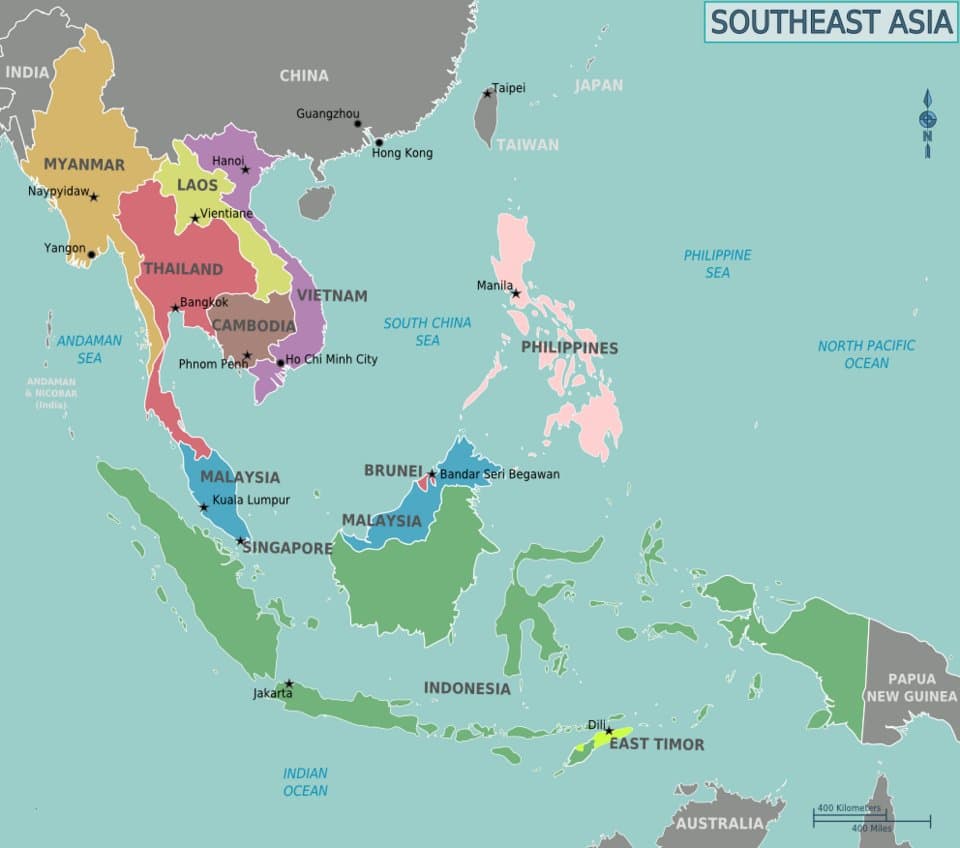
The glowlight danio is native to northern Myanmar, specifically the hill streams and tributaries in the regions around the Irrawaddy River drainage. These are not lowland tropical rivers. The fish inhabits clear, moderately flowing streams at higher elevations, typically in areas with rocky or gravelly substrates, overhanging vegetation, and relatively cool water compared to lowland Southeast Asian habitats.
The streams these fish call home tend to be well-oxygenated with some current, shaded by riparian vegetation, and characterized by slightly acidic to neutral water chemistry. The substrates are typically a mix of gravel, cobbles, and sand, with submerged leaf litter and fallen branches providing cover and foraging opportunities. The water in these hill streams is generally soft to moderately hard, with temperatures that can drop into the upper 60s°F (around 20°C) during cooler seasons.
This habitat context is important for understanding why glowlight danios do well in planted tanks with some flow, why they tolerate a broader temperature range than many tropical nano fish, and why they appreciate slightly acidic to neutral water rather than the alkaline conditions preferred by their Inle Lake cousins (the emerald dwarf rasbora). The northern Myanmar hill streams where glowlight danios live are a different environment from Inle Lake, and the care requirements reflect that difference.
Wild populations are not considered threatened at this time, though habitat degradation from deforestation and agricultural runoff is an ongoing concern across many freshwater systems in Myanmar. Most glowlight danios available in the hobby are captive-bred, which is good news for both conservation and for hobbyists — tank-bred fish tend to be hardier and adapt more readily to aquarium conditions.
Appearance & Identification
This is the section where the glowlight danio really earns its reputation. The body shape is typical danio — elongated, slightly compressed, with a small terminal mouth suited for mid-water and surface feeding. But the coloration is where this fish sets itself apart from just about every other small danio in the hobby.
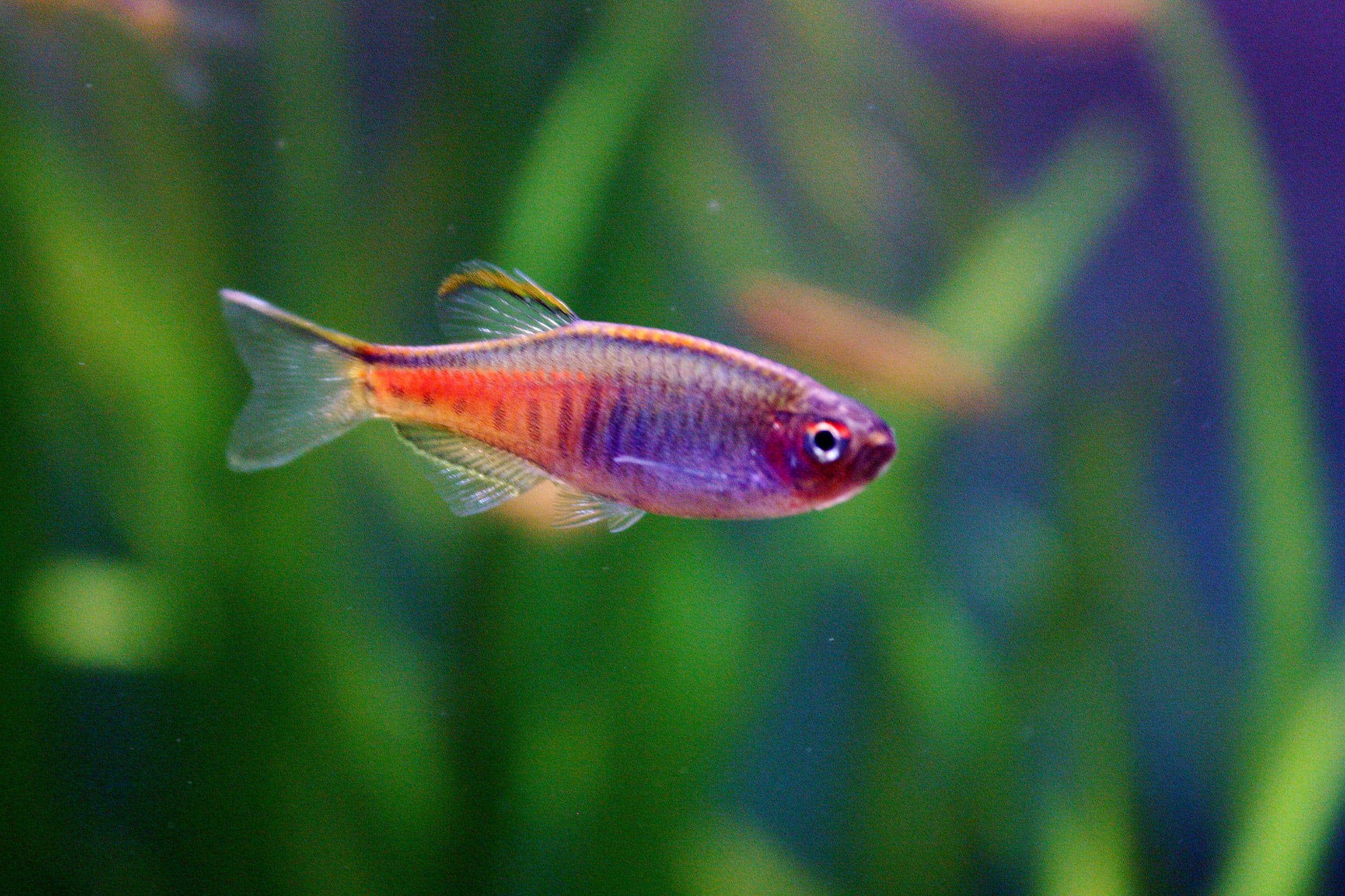
The base body color is a deep blue-green to turquoise, overlaid with a series of bright orange to golden-yellow vertical bars that run along the flanks. These bars are vivid and well-defined, giving the fish an almost banded appearance that catches the light beautifully. Between the bars, the blue-green iridescence creates a striking contrast that’s hard to capture in photos but genuinely impressive in person. The fins show orange to reddish-orange tones, particularly the anal and caudal fins, which adds even more warmth to the overall color palette.
The effect is a fish that seems to glow from within — hence the common name. Under good aquarium lighting, especially against a dark substrate and background, a school of glowlight danios is genuinely one of the most visually impressive displays you can create in a nano tank. The warm orange and gold tones are unusual in the danio world, where blues, silvers, and greens tend to dominate, and that’s a big part of what makes this species stand out.
If you’re familiar with the Celestial Pearl Danio, you can see the family resemblance in the body shape and the general approach of “dark body with bright markings plus colorful fins.” But where CPDs have pearl-like spots on a dark blue body, glowlight danios have orange bars on a turquoise body. They’re like two variations on the same theme, and they look fantastic together in a tank.
Male vs. Female
Sexing glowlight danios is fairly straightforward once the fish are mature and well-conditioned. Males are slimmer, more intensely colored, and tend to have bolder, more saturated orange bars. When males are competing with each other or courting females, their colors can become remarkably vivid — the orange practically glows. Males are also slightly smaller than females on average.
Females are rounder and deeper-bodied, especially when carrying eggs. Their coloring is still attractive but generally more subdued compared to a displaying male — the bars are present but less crisp, and the overall contrast between the orange and blue tones is softer. The most reliable way to tell them apart is body shape: viewed from above or the side, a mature female will have a noticeably fuller belly compared to the lean, streamlined profile of a male.
Average Size & Lifespan
Glowlight danios are small fish. Adults top out at about 1.2 inches (3 cm), with most individuals staying right around the 1-inch mark in aquarium conditions. They’re in the same size class as Celestial Pearl Danios and emerald dwarf rasboras, which makes sense given that they’re all in the same genus. Fish purchased from stores are often juveniles at around 0.5 to 0.75 inches (1.3 to 2 cm) and will reach full size within a few months under good care.
With proper husbandry, glowlight danios typically live 3 to 5 years. That’s a solid lifespan for a fish this size and is generally achievable as long as water quality is maintained, the fish are fed a varied diet, and stress is kept to a minimum. Fish kept at the cooler end of their temperature range tend to have slightly slower metabolisms and may live toward the longer end of that range, while consistently warmer temperatures can shorten lifespan somewhat.
Glowlight danios (Danio choprae) are a striking nano species with vivid orange and blue striping. They are peaceful, hardy, and one of the most visually impressive small danios available.
Care Guide
Tank Size
A 10-gallon (38-liter) tank is the minimum for a group of glowlight danios. These fish need to be kept in groups of at least 6 to 8 (more is better), and while they’re tiny, they’re active little swimmers that appreciate room to move around. A 10-gallon gives you space for a proper school plus some plants and hardscape without cramping anyone.
If you want to build a nano community with glowlight danios alongside other small species, stepping up to a 15 or 20-gallon long is a smart move. The extra footprint gives you more flexibility for tank mates, more room for aquascaping, and a larger water volume that’s easier to keep stable. A 20-gallon long with a school of 10-12 glowlight danios and a densely planted layout is honestly one of the most visually rewarding small tank setups you can put together.
Water Parameters
| Parameter | Recommended Range |
|---|---|
| Temperature | 68 to 79°F (20 to 26°C) |
| pH | 6.0 to 7.5 |
| Hardness (GH) | 2 to 12 dGH |
| KH | 1 to 8 dKH |
| Ammonia / Nitrite | 0 ppm |
| Nitrate | Below 20 ppm |
Glowlight danios are reasonably adaptable within their preferred range, but the sweet spot for most hobbyists is going to be somewhere in the low-to-mid 70s°F, with a slightly acidic to neutral pH. If your tap water is in the 6.5 to 7.0 pH range with moderate hardness, you’re in excellent shape for this species without needing to make any adjustments.
One thing worth noting: unlike their close relative the emerald dwarf rasbora (which prefers harder, more alkaline water from Inle Lake), glowlight danios come from soft to moderately hard hill streams and do fine in softer water. They also tolerate a wider temperature range than many nano fish, handling everything from the upper 60s to the upper 70s°F. This flexibility makes them a good fit for a wider variety of community setups compared to the more demanding emerald dwarf rasbora.
As always, stability matters more than hitting a specific number. Avoid sudden swings in temperature or pH, and keep up with regular water changes to prevent nitrate buildup. Weekly 20-25% water changes are a good baseline for keeping things clean and consistent.
Filtration & Water Flow
Glowlight danios come from flowing hill streams, so they appreciate some water movement — more so than their still-water relatives from Inle Lake. A hang-on-back filter or small canister filter that provides gentle to moderate flow works well. They’ll often swim into the current, which is natural behavior for a stream-dwelling species. You don’t need a powerhead or strong current, but a bit of flow keeps them active and comfortable.
A sponge filter is another solid option, especially in smaller tanks. It provides reliable biological filtration without creating turbulence that could push these small fish around. For a 10-gallon nano tank, a well-sized sponge filter is really all you need. If you’re using a hang-on-back filter, make sure the intake is covered with a sponge pre-filter to prevent tiny fish or fry from being sucked in.
Lighting
Moderate lighting is the sweet spot for glowlight danios. You want enough to support plant growth (and these fish look their best in a planted tank), but not so much that the environment feels harsh and exposed. In their native streams, overhanging vegetation provides dappled shade, and recreating that effect in the aquarium helps the fish feel secure and brings out their colors.
A standard planted tank LED on a timer running 8-10 hours per day works well. Floating plants are a great way to soften the light and create that shaded canopy effect. Under the right lighting — especially with a dark substrate and background — the orange bars on glowlight danios practically glow. It’s worth taking the time to dial in your lighting setup, because it makes a real difference in how these fish present.
Plants & Decorations
A planted tank is the natural choice for glowlight danios, and the fish will reward you with better color and more confident behavior when they have plenty of vegetation to feel secure in. Aim for a good balance — dense planting along the sides and back, with open swimming space through the middle and front of the tank. These fish like to cruise through and around plant thickets, darting in and out of cover.
Good plant choices include java fern, java moss, Cryptocoryne species, Rotala, Hygrophila, and various stem plants that create vertical structure. Floating plants like Amazon frogbit, red root floaters, or salvinia provide overhead shade that these fish appreciate. Moss-covered driftwood and small stones add natural-looking cover and give the tank a hill-stream feel that suits the species well.
Since glowlight danios prefer slightly acidic to neutral water, driftwood and botanical elements that release tannins and slightly lower pH are perfectly compatible with their care. This is a notable difference from the emerald dwarf rasbora, which comes from alkaline water and doesn’t do as well with tannin-heavy setups.
Substrate
Fine gravel or sand works well. If you’re running a planted tank (and you should be with these fish), a nutrient-rich aquasoil or a sand substrate with root tabs will support healthy plant growth. Darker substrates — black sand, dark gravel, or dark aquasoil — will make the orange and turquoise colors on your glowlight danios pop dramatically. The contrast between a dark background and those vivid orange bars is genuinely striking.
Since glowlight danios tolerate slightly acidic water, buffering aquasoils that tend to lower pH slightly aren’t a concern for this species the way they would be for alkaline-loving fish. That makes them a great match for the typical planted tank setup that many hobbyists are already running.
Is the Glowlight Danio Right for You?
Before you buy, run through this honest checklist. The Glowlight Danio is a great fish for the right keeper, but it is not for everyone.
- You want a naturally beautiful danio that glows without genetic modification
- You have a 15-gallon or larger tank with a dark substrate and warm-toned lighting
- You can keep a group of 8+ for active schooling behavior
- You want a hardy, easy-to-keep species that tolerates a wide range of conditions
- Your tank has other peaceful, active community fish
- You appreciate natural iridescence over artificial fluorescence
Tank Mates
Glowlight danios are peaceful community fish that work well with a variety of similarly sized, non-aggressive species. Their small size and calm temperament make them ideal candidates for a nano community, but you’ll want to choose tank mates that won’t outcompete them for food or intimidate them into hiding.
Best Tank Mates
- Celestial Pearl Danios — Same genus, similar size, overlapping water parameters. One of the best pairings you can make, and the contrasting color patterns (spots vs. bars) look fantastic together
- Emerald Dwarf Rasboras — Another Celestichthys species. Compatible in temperament and size, though watch the pH overlap since emerald dwarfs prefer slightly more alkaline water
- Small Corydoras species — Pygmy corys (C. pygmaeus), dwarf corys (C. habrosus), and hastatus corys are peaceful bottom-dwellers that occupy a different zone
- Otocinclus catfish — Gentle algae grazers that ignore other fish
- Chili rasboras and other micro rasboras — Tiny, peaceful, and share similar water preferences
- Ember tetras — Small, peaceful, and the warm orange coloring complements glowlight danios nicely
- Cherry shrimp and Amano shrimp — Safe and beneficial tank mates that add color and cleanup
- Nerite snails — Great algae control with zero impact on the fish
Tank Mates to Avoid
- Bettas — Too territorial for a small nano setup, and the colorful pattern of glowlight danios can trigger aggression
- Larger barbs (tiger barbs, etc.) — Too boisterous, too food-competitive, and likely to harass smaller fish
- Dwarf cichlids (rams, apistos) — Too territorial and larger than ideal for pairing with fish this small
- Any fish over 2-3 inches — Larger fish create stress just by being present, and anything that can fit a glowlight danio in its mouth probably will
- Aggressive or highly active mid-dwelling species — Fish that zip around the tank at high speed will stress out these relatively calm small danios
A species-only setup or a carefully chosen nano community is where glowlight danios really shine. In a planted 10 or 15-gallon with a school of 8-10 glowlight danios, maybe a few pygmy corys on the bottom, and some cherry shrimp, you’ll get the best color, the most natural behavior, and a tank that’s genuinely beautiful to watch.
Food & Diet
Glowlight danios are omnivores that will accept a wider range of foods than some of their pickier genus-mates. They’ll eat high-quality micro pellets, crushed flakes, and frozen and live foods without much fuss. That said, a varied diet is key to getting the best coloration and long-term health out of these fish. A fish fed nothing but flakes will survive but won’t look anything like a fish getting regular variety in its meals.
Good diet staples and supplements include:
- High-quality micro pellets or crushed flakes — A good daily staple. Choose a brand with whole-food ingredients rather than fillers
- Baby brine shrimp (live or frozen) — Excellent for color enhancement and one of the best all-around foods for small fish
- Daphnia — Great supplemental food, readily accepted, and helps with digestion
- Frozen cyclops — Perfect size for small mouths and widely available
- Micro worms and grindal worms — Easy to culture at home and a great protein-rich treat
- Frozen or live bloodworms — Chopped small, these make an occasional high-protein treat (don’t overfeed bloodworms)
Feed small amounts once or twice daily — only as much as the fish can consume in about two minutes. These fish have small stomachs and do better with frequent, modest meals than one large feeding. In a community tank, watch to make sure glowlight danios are actually getting their share of the food. They’re not the most aggressive feeders, and larger or faster tank mates can sometimes push them aside.
Breeding & Reproduction
Glowlight danios can be bred in home aquariums, and while it requires a bit more effort than breeding zebra danios, it’s well within reach for hobbyists willing to set up a dedicated breeding tank and provide the right conditions.
Breeding Difficulty
Moderate. Getting adults to spawn isn’t the hardest part — raising the extremely small fry through the first couple of weeks is where the real challenge lies. You’ll need a supply of infusoria or similarly tiny first foods to get them through the critical early stage before they’re large enough for baby brine shrimp.
Spawning Tank Setup
Set up a separate 5 to 10-gallon tank specifically for breeding. Line the bottom with a layer of glass marbles or a mesh grid to protect eggs from being eaten by the adults. Java moss is the ideal spawning medium — drape clumps of it across the tank to give the fish surfaces to scatter eggs into. The fine texture of java moss catches and holds the tiny eggs, keeping them somewhat hidden from hungry parents.
Use a gentle sponge filter to maintain water quality and aeration without creating strong current or sucking in fry. Keep the lighting dim and provide a few plant clumps for cover so the breeding group feels comfortable.
Water Conditions for Breeding
Match the breeding tank water to the main tank parameters — temperature around 72-76°F (22-24°C), pH 6.5-7.0, and soft to moderately soft water. A slight temperature drop of a degree or two followed by a gradual warm-up, combined with generous live food feedings, can help trigger spawning behavior. Some breeders report that a partial water change with slightly cooler, soft water mimics the rainy-season conditions that stimulate spawning in the wild.
Conditioning & Spawning
Condition a group of adults (aim for 2-3 males per female) with a rich diet of live baby brine shrimp, daphnia, and other small live foods for 1-2 weeks before moving them to the breeding tank. Well-conditioned females will become noticeably plumper as they fill with eggs.
Introduce the conditioned group to the breeding tank in the evening. Spawning typically occurs the following morning, often stimulated by the first light of the day. Males will display their most vivid coloring and court the females, driving them into the plant cover where eggs are scattered among the moss and across the substrate. Glowlight danios scatter adhesive eggs in small batches rather than producing one large clutch. Remove the adults promptly after spawning, because they will eat any eggs they find.
Egg & Fry Care
Eggs typically hatch in 2-4 days depending on water temperature. The newly hatched fry are extremely small and will absorb their yolk sacs over the first 24-48 hours before becoming free-swimming. This is the make-or-break stage.
Free-swimming fry are too tiny for baby brine shrimp at first. Start them on infusoria, paramecium, commercially prepared liquid fry food, or vinegar eels for the first 10-14 days. Once they’ve grown enough to take newly hatched brine shrimp (usually around two weeks old), growth accelerates noticeably. Keep the water pristine with small, frequent water changes (10-15% every other day), temperature-matched to the tank. Fry growth is slow, and it will take 2-3 months before the young fish start developing the distinctive orange barring of the adults.
Common Health Issues
Glowlight danios are generally hardy fish without any species-specific diseases. Like all freshwater fish, they’re susceptible to common ailments when water quality slips or stress levels climb. Here are the main issues to watch for.
Ich (White Spot Disease)
The most common freshwater fish disease, and glowlight danios aren’t immune. White spots on the body and fins, flashing against objects, and clamped fins are the telltale signs. Since glowlight danios tolerate warmer water better than some of their cooler-water relatives, you can use the standard approach of gradually raising the temperature to around 82-84°F (28-29°C) alongside an appropriate ich medication. Catch it early and it’s very treatable.
Fin Rot
Usually caused by poor water quality or stress, fin rot shows up as fraying, ragged, or disintegrating fin edges, sometimes with redness at the base. The first step is always to check and improve water quality — do a water change, test your ammonia, nitrite, and nitrate levels, and figure out what went wrong. Mild cases often resolve with clean water alone. More advanced cases may need a broad-spectrum antibacterial treatment.
Velvet Disease
Caused by the parasite Oodinium, velvet appears as a fine, dusty gold or rust-colored sheen on the body. It can be easy to miss in the early stages, especially on a fish with warm coloring like the glowlight danio. If you notice your fish clamping their fins, losing appetite, or rubbing against surfaces, look closely under a flashlight for that characteristic dusty coating. Treat the entire tank with a copper-based medication and dim the lights during treatment, since the parasite has a photosynthetic stage.
Stress-Related Issues
Chronic stress is probably the most common underlying cause of health problems in glowlight danios. Fish kept in groups that are too small, in tanks with no plant cover, with aggressive or overly active tank mates, or in fluctuating water conditions will show persistent pale coloring, clamped fins, loss of appetite, and increased vulnerability to infections. The solution isn’t medication — it’s correcting the environment. Make sure the group is large enough (8+), the tank is well-planted, and the water parameters are stable.
Common Mistakes to Avoid
- Keeping too few. Glowlight danios are shoaling fish that need the security of numbers. A group of 3-4 will be stressed, pale, and constantly hiding. Keep at least 6-8, and ideally 10 or more. You’ll see dramatically better color and behavior in a proper-sized group.
- Not enough plant cover. A bare tank or sparsely planted setup will produce timid, washed-out fish. These fish come from streams with overhanging vegetation, and they need plants to feel secure. Dense planting is the single biggest factor in getting confident, colorful glowlight danios.
- Feeding only dry food. While glowlight danios will accept flakes and pellets (unlike the pickier emerald dwarf rasbora), a diet of nothing but dry food won’t bring out their best coloring. Mix in frozen or live baby brine shrimp, daphnia, or cyclops at least a few times per week for a noticeable difference in vibrancy.
- Mixing with incompatible tank mates. Putting these 1-inch fish in a community tank with larger, more aggressive, or highly active species is a recipe for stressed, hiding, non-eating fish. Choose tank mates carefully and keep the peace in your nano community.
- Skipping the lid. Like all danios, glowlight danios can and will jump, especially when startled, during feeding, or when males are chasing. Use a tight-fitting lid with no gaps. This is non-negotiable.
- Ignoring water quality in small tanks. A 10-gallon nano tank has less water volume to buffer against waste buildup. Stay on top of weekly water changes and test your parameters regularly. Small tanks go sideways faster than large ones when maintenance slips.
- Confusing them with other danio species. Some retailers mislabel glowlight danios or mix them in with other small danio species. Know what you’re looking for — the distinctive orange bars on a turquoise body are the key identifier. If the fish look plain or washed out at the store, they may be stressed or mislabeled.
Where to Buy
Glowlight danios are less commonly stocked than zebra danios or even Celestial Pearl Danios, but they’re becoming easier to find as more hobbyists discover them. Your local fish store may carry them occasionally, but don’t count on consistent availability at chain pet stores. Specialty aquarium shops with a focus on nano fish are your best bet for finding them locally.
For a more reliable source, I’d recommend checking Flip Aquatics or Dan’s Fish. Both are reputable online retailers that specialize in quality freshwater fish and ship in excellent condition. Online retailers tend to carry a wider selection of specialty nano species like the glowlight danio compared to most brick-and-mortar stores. When ordering, try to buy a group of at least 8-10 at once — they ship and acclimate better in larger numbers.
Frequently Asked Questions
Are glowlight danios the same as Celestial Pearl Danios?
No, but they’re closely related. Both are in the genus Celestichthys, which currently contains just three species. The Celestial Pearl Danio (C. margaritatus) has a dark blue body covered in pearl-like spots, while the glowlight danio (C. choprae) has orange-gold bars on a turquoise body. They’re distinct species with different appearances, though their care requirements overlap significantly. They can be kept together and actually make a beautiful pairing in a nano tank.
How many glowlight danios should I keep?
A minimum of 6, but 8-10 or more is strongly recommended. Glowlight danios are shoaling fish that feel more secure, show better color, and display more natural behavior in larger groups. In small numbers (3-4 or fewer), they’ll be stressed, pale, and perpetually hiding. A bigger group is always better with this species.
Do glowlight danios need a heater?
It depends on your room temperature. These fish tolerate a range of 68-79°F (20-26°C), which means they can go without a heater in many homes during warmer months. However, if your room temperature drops below 68°F consistently — for example, in an unheated room during winter — a low-wattage heater set to around 72-74°F is a good idea. They’re more temperature-flexible than some of their Celestichthys relatives, which makes them a bit more forgiving on this front.
Can glowlight danios live with shrimp?
Yes. Adult cherry shrimp and Amano shrimp are safe with glowlight danios. The fish are too small to bother adult shrimp. However, very tiny shrimp fry (newborn cherry shrimp, for example) may get eaten if the danios come across them. In a well-planted tank with plenty of moss and hiding spots, enough shrimp fry will survive to maintain a breeding colony. Glowlight danios and cherry shrimp actually complement each other well in a nano setup.
Why did the scientific name change from Danio choprae to Celestichthys choprae?
Molecular research showed that the glowlight danio, along with the Celestial Pearl Danio and emerald dwarf rasbora, forms a distinct evolutionary group within the broader danio lineage. Researchers split these species into their own genus, Celestichthys (meaning “heavenly fish”), to reflect this relationship. The old name Danio choprae is still widely used in hobbyist circles and by some retailers, but Celestichthys choprae is the currently accepted scientific name. Both refer to the same fish.
Are glowlight danios jumpers?
Yes. All danios have a tendency to jump, and glowlight danios are no exception. They’re most likely to jump when startled, during feeding frenzies, or when males are chasing each other. A tight-fitting lid is essential — open-top aquariums are not suitable for this species. Even small gaps around filter intakes or heater cords can be enough for a determined danio to squeeze through, so cover your tank thoroughly.
How the Glowlight Danio Compares to Similar Species
Glowlight Danio vs. Pearl Danio
Both are beautiful danios with iridescent qualities. The Pearl Danio has a more pearlescent, mother-of-pearl sheen, while the Glowlight Danio has warmer gold tones. Both are hardy and easy to keep. The Pearl Danio is slightly larger and more commonly available.
Glowlight Danio vs. Zebra Danio
The Zebra Danio is hardier and more widely available, but the Glowlight Danio is more visually interesting with its warm iridescence. For beginners, the Zebra Danio is the easier starting point. For something more special, the Glowlight Danio is the upgrade.
Expert Take (Mark Valderrama, AquariumStoreDepot)
After 25 years in the hobby and time managing fish stores, the glowlight danio is one of those species I always recommend to hobbyists ready to move beyond the basics. Glowlight danios (Danio choprae) are a striking nano species with vivid orange and blue striping. They are peaceful, hardy, and one of the most visually impressive small danios available. Glowlight danios need a long tank for their fast swimming pace. Despite their small size, they are rapid swimmers – a tank at least 24 inches (60 cm) long gives them proper swim lanes in a school of 8+.
Closing Thoughts
The glowlight danio is one of the hobby’s hidden gems — a fish that combines stunning color, peaceful temperament, manageable size, and reasonable hardiness into a package that works beautifully in a planted nano tank. The orange-gold bars against that turquoise body are genuinely hard to beat at this size, and a school of these fish in a well-lit, dark-substrate planted tank is the kind of setup that makes people want to get into the hobby.
It’s also a fish that benefits from the growing understanding of the Celestichthys genus. Knowing that the glowlight danio is a close relative of the Celestial Pearl Danio opens up some fantastic stocking ideas — a planted nano tank with both species showcasing their different color patterns is one of the most visually impressive small setups you can build. If you’ve been sleeping on this species while everyone else talks about CPDs, it might be time to give the glowlight danio its moment in the spotlight.
Have you kept glowlight danios? How do they compare to other small danios in your experience? Drop a comment below!
Recommended Video
Check out our danio species video for an overview of some of the best danios in the hobby, including the glowlight danio:
References
- Celestichthys choprae (Hora, 1928) — FishBase
- Celestichthys choprae Profile — Seriously Fish
- Glowlight Danio Species Profile — Practical Fishkeeping
- Danio choprae — The Aquarium Wiki
- About the Author
- Latest Posts

I’m Mark Valderrama, founder of Aquarium Store Depot and a fishkeeper with over 25 years of hands-on experience. I started in the hobby at age 11, worked at local fish stores, and have kept freshwater tanks, ponds, and reef tanks ever since. I’ve been featured in two best-selling aquarium books on Amazon and built this site to share practical, experience-based fish keeping knowledge.
Leave a Reply