
Last Updated: June 25, 2026
Thank you for visiting! By the way… any links on this page that lead to products on Amazon and other stores/partners are affiliate links Aquarium Store Depot earns a commission if you make a purchase.
Table of Contents
- What Care Guides Get Wrong
- The Reality of Keeping Black Darter Tetra
- Key Takeaways
- Species Overview
- Classification
- Origin & Natural Habitat
- Appearance & Identification
- Average Size & Lifespan
- Care Guide
- Is It Right for You?
- What People Get Wrong
- Tank Mates
- Food & Diet
- Breeding & Reproduction
- Common Health Issues
- Common Mistakes to Avoid
- Where to Buy
- Frequently Asked Questions
- What It Is Actually Like Living With Black Darter Tetra
- Species Comparison
- Closing Thoughts
- Recommended Video
- References
The black darter tetra is a micro predator that hunts tiny invertebrates in the wild. It needs live or frozen foods to thrive. Dry food alone is not enough. Soft, acidic water and a heavily planted tank. This is a specialist species that rewards the keeper who researches before buying.
Black darter tetras on dry food alone do not thrive. Live or frozen foods are required, not optional.
The Reality of Keeping Black Darter Tetra
Group size is not a suggestion. The minimum school size for black darter tetra is not just a guideline. In small groups, these fish lose color, become stressed, and display abnormal behavior. A proper group of 6 to 8+ is where you start to see natural schooling behavior, full color expression, and the confidence that makes them worth keeping.
Hardy does not mean indestructible. The black darter tetra tolerates a range of conditions, but it still needs basic care. Ammonia spikes, dramatic temperature swings, and neglected water changes will catch up to even the toughest species. The difference is margin of error, not immunity.
Store appearance is not home appearance. Fish in store tanks are stressed, crowded, and under inappropriate lighting. The black darter tetra almost always looks better in a properly set up home aquarium than it does at the store. Dark substrate, live plants, and appropriate lighting bring out colors and behaviors you will never see in a retail environment.
Biggest Mistake New Owners Make
Keeping them with fish small enough to eat. This is a predator. It will eat anything it can fit in its mouth. If you stock smaller fish with a black darter tetra, you are feeding it expensive live food.
Black darter tetras are a rare and specialist species for the dedicated blackwater hobbyist. They need soft, acidic water, dense planting, and a species-appropriate tank to show their behavior. In the right setup with proper group size, they’re fascinating fish to observe: active, patterned, and unlike most common tetras. Not a beginner fish, but a rewarding one for keepers who do the work.
Key Takeaways
- Not a true tetra – belongs to the darter family (Crenuchidae), a group of bottom-dwelling ambush predators unrelated to typical schooling tetras
- Advanced care level – requires very soft, acidic blackwater conditions (pH 4.0-6.5) that most community tanks can’t provide
- Micro predator – feeds primarily on small live and frozen foods and will rarely accept flake or pellet foods
- Stunning sexual dimorphism – males display dramatic elongated fins with dark black and iridescent blue-green coloration, while females are plain brown
- Territorial but not aggressive – males will spar and display like bettas, but rarely cause real harm to each other
- Best kept as a pair or trio (1 male, 2 females) in a biotope setup with leaf litter, driftwood, and dim lighting
Species Overview
| Field | Details |
|---|---|
| Scientific Name | Poecilocharax weitzmani |
| Common Names | Black Darter Tetra, Black Morpho Tetra, Weitzmani Tetra |
| Family | Crenuchidae (South American Darters) |
| Origin | Upper Amazon basin, Rio Negro drainage (Brazil); upper Orinoco (Venezuela) |
| Care Level | Advanced / Expert |
| Temperament | Peaceful but territorial (males) |
| Diet | Micro predator (live and frozen foods) |
| Tank Level | Bottom to Mid |
| Maximum Size | 1.5 inches (4 cm) |
| Minimum Tank Size | 10 gallons (38 liters) |
| Temperature | 75-82°F (24-28°C) |
| pH | 4.0-6.5 |
| Hardness | 1-5 dGH |
| Lifespan | 3-5 years in captivity |
| Breeding | Egg depositor (on leaves/surfaces) |
| Breeding Difficulty | Moderate (with proper conditions) |
| Compatibility | Specialized blackwater community |
| OK for Planted Tanks? | Yes (low-light species only) |
Classification
| Taxonomic Level | Classification |
|---|---|
| Order | Characiformes |
| Family | Crenuchidae |
| Subfamily | Crenuchinae |
| Genus | Poecilocharax |
| Species | P. Weitzmani (Géry, 1965) |
Black darter tetras are a specialist species with strict water chemistry requirements (very soft, very acidic) and sensitivity to suboptimal conditions. They need a mature, stable blackwater setup and are not suitable for beginners or standard community tanks. Experienced hobbyists who set up the right environment will find them manageable.
The genus Poecilocharax is a small group within the family Crenuchidae, which contains the South American darter characins. These fish are quite distinct from the “true” tetras you see in most aquarium shops. While species like neon tetras and cardinal tetras belong to Characidae (or the newly reclassified Acestrorhamphidae), the darters sit in their own separate family entirely.
Note on reclassification: In 2024, a major phylogenomic study (Melo et al.) reorganized the traditional family Characidae into several new families. However, Crenuchidae was not affected by this reclassification. The black darter tetra remains in Crenuchidae exactly where it has always been. If you see older references listing this fish under Characidae, that was always incorrect – Crenuchidae has been recognized as a separate family for decades.
Origin & Natural Habitat
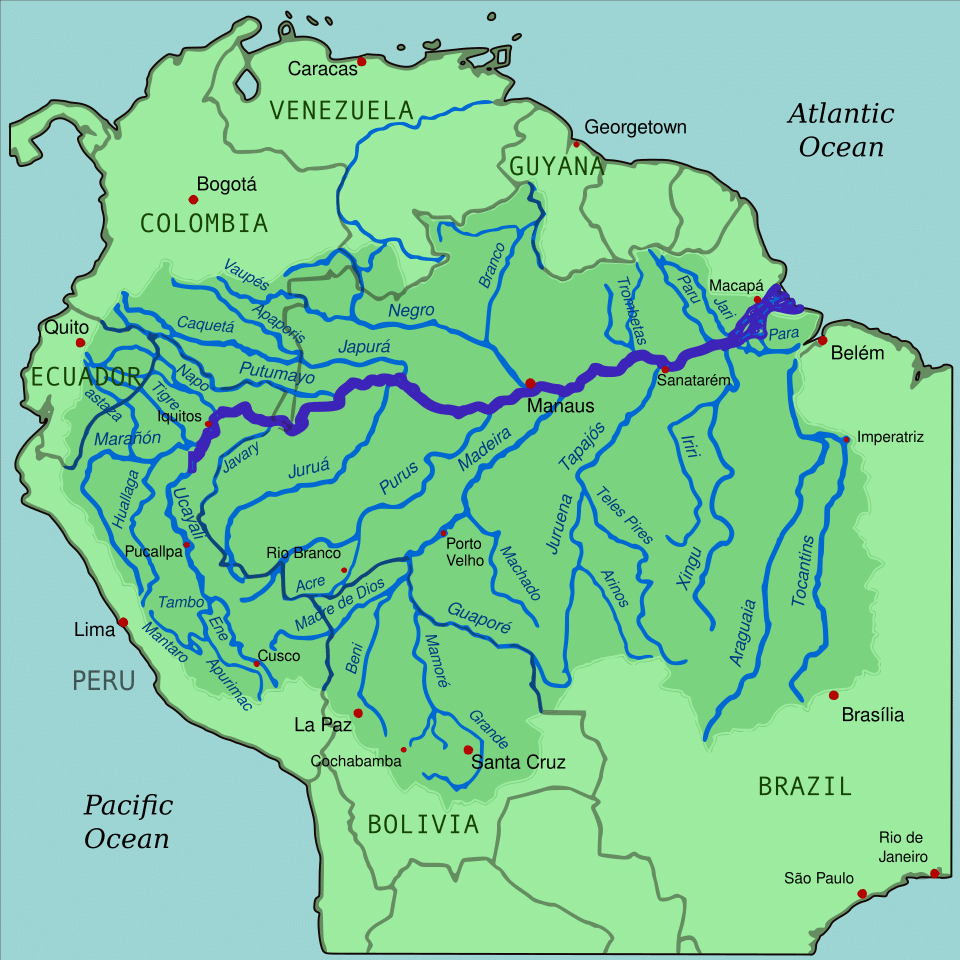
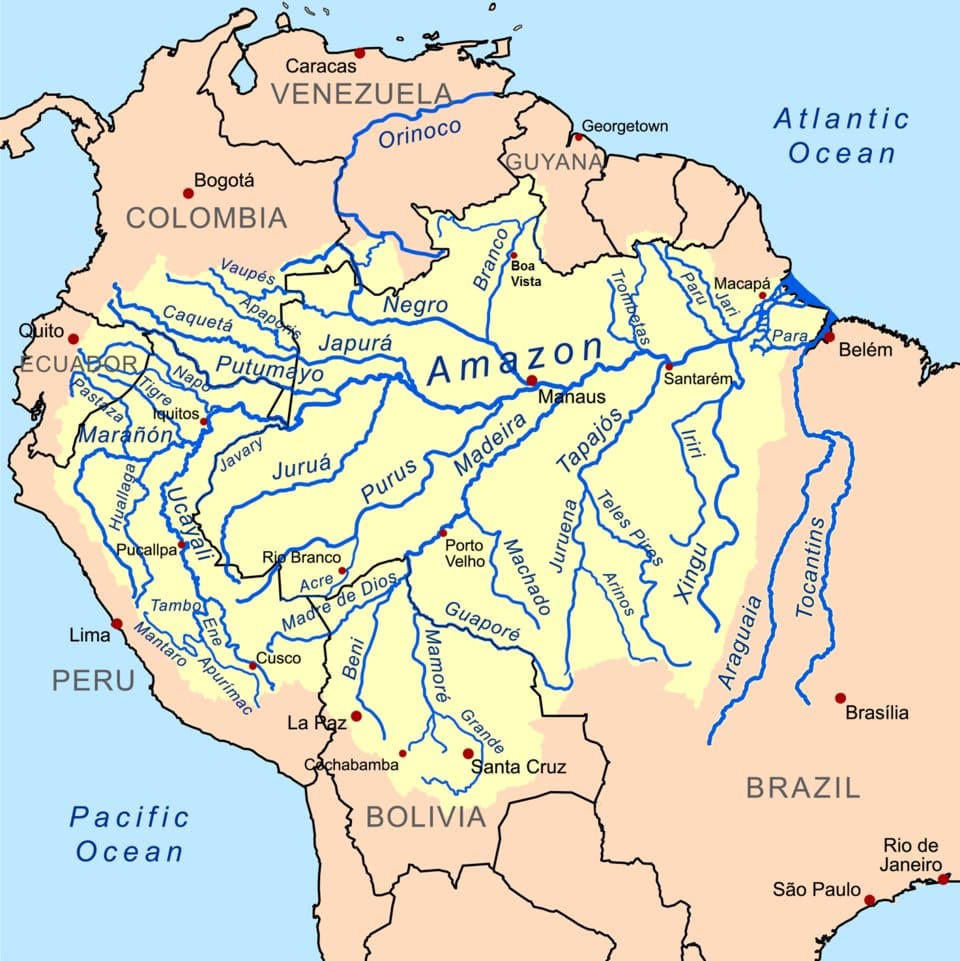
The black darter tetra is native to the upper Amazon basin, specifically the Rio Negro drainage system in Brazil. There are also reports of populations in the upper Orinoco River basin in Venezuela. The Rio Negro is one of the largest blackwater river systems on earth, and the conditions there are extreme by aquarium standards. The water is stained deep brown by tannins, with a pH that can drop below 4.0 in some tributaries, and almost zero measurable hardness.
In the wild, black darter tetras inhabit small, slow-moving forest streams and flooded areas within the river basin. These streams flow through dense tropical forest where the canopy blocks most sunlight. The substrate is covered in thick layers of decomposing leaf litter, fallen branches, and woody debris. There is very little aquatic vegetation in these deeply shaded blackwater habitats, but the structure provided by wood and leaves creates a complex environment full of hiding spots and ambush points.
Understanding this habitat is absolutely critical to keeping black darter tetras successfully. These fish evolved in some of the softest, most acidic water on the planet. They aren’t just “adapted” to blackwater conditions, they genuinely require them. Attempting to keep this species in standard community tank water (neutral pH, moderate hardness) is a recipe for stress, disease, and early death. If you want to keep black darter tetras, you need to be willing to recreate their natural environment.
Appearance & Identification
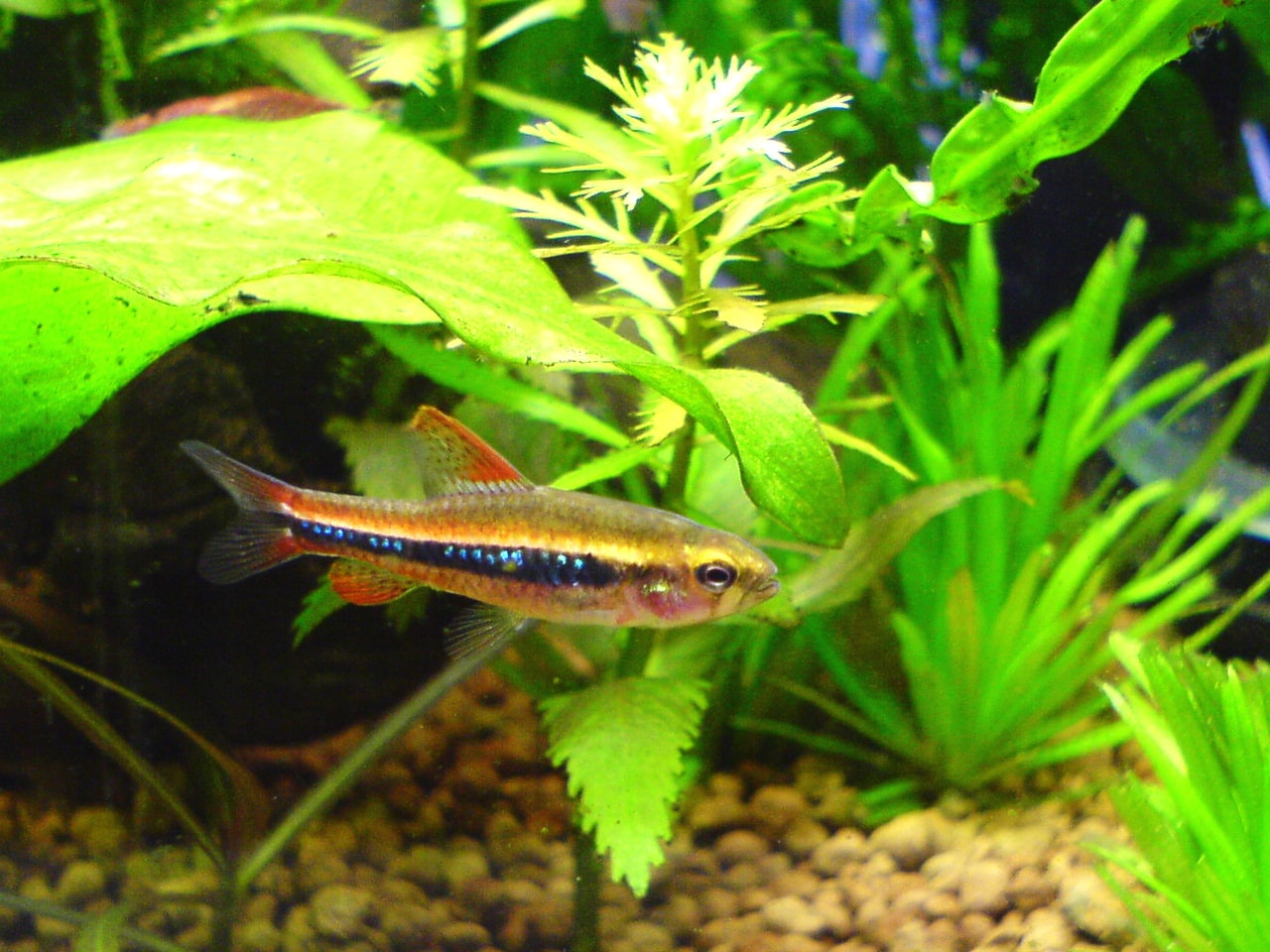
The black darter tetra is one of the most visually striking micro fish in the hobby, at least when you’re looking at a mature male. Males develop an intense dark black base coloration across the body, overlaid with iridescent blue-green highlights that shift depending on the angle of light. The dorsal and anal fins are dramatically elongated and sail-like, giving the fish an almost butterfly-like silhouette when fully displayed. It’s a genuinely beautiful fish that looks like nothing else in a typical freshwater tank.
The body shape itself is different from typical tetras. Black darter tetras have a more elongated, slightly flattened profile suited to their bottom-dwelling lifestyle. They will perch on leaves and surfaces rather than swim continuously through the water column. When they do move, it’s often in short, rapid bursts, which is where the “darter” name comes from. Watching one launch forward to grab a tiny prey item is genuinely impressive for such a small fish.
Color can vary depending on mood, water conditions, and dominance status. A dominant male in pristine blackwater conditions will display the deepest black coloration with the most vivid iridescence. Stressed or subordinate fish will appear much paler and less impressive. The quality of the water plays a huge role here, so if your black darter tetras look washed out, the first thing to check is your water chemistry.
Male vs. Female
This species shows some of the most extreme sexual dimorphism you’ll find in any small freshwater fish. Males and females look so different that you could easily mistake them for separate species. Males are the showstoppers, with their deep black body, iridescent highlights, and those dramatic elongated dorsal and anal fins. Females, by contrast, are plain brown or tan with short, rounded fins and very little ornamentation. The size difference is subtle (both max out around 1.5 inches / 4 cm), but the visual difference is enormous. Sexing adult black darter tetras is one of the easiest tasks in fishkeeping because the contrast between the sexes is so obvious.
Average Size & Lifespan
Adult black darter tetras reach a maximum size of about 1.5 inches (4 cm) in total length. They’re a small species, but their elongated fins (on males) make them appear somewhat larger than they actually are. Don’t let the compact size fool you, though. These fish have big personalities and need more space than you will expect due to their territorial behavior.
In captivity, you can expect a lifespan of 3 to 5 years with proper care. Maintaining the correct water parameters is the single biggest factor in longevity. Fish kept in water that’s too hard or too alkaline will have significantly shorter lifespans, even if they do be surviving initially. Consistent blackwater conditions and a varied diet of live and frozen foods give you the best chance of seeing your black darter tetras reach the upper end of that range.
Care Guide
Tank Size
A 10-gallon (38-liter) tank is the minimum for a single pair or trio (1 male, 2 females) of black darter tetras. Unlike typical schooling tetras that need horizontal swimming space, black darter tetras are more territorial and sedentary. They establish small territories around pieces of wood, leaf litter, or other structures and spend most of their time perching and watching for prey.
If you want to keep multiple males, you’ll need a larger tank with enough structure to break sight lines. A 20-gallon long (75 liters) can work for 2-3 males with appropriate females, provided there are plenty of visual barriers. Each male will claim his own section of the tank, so the layout matters more than the raw gallon count.
Water Parameters
| Parameter | Ideal Range |
|---|---|
| Temperature | 75-82°F (24-28°C) |
| pH | 4.0-6.5 |
| Hardness | 1-5 dGH |
| KH | 0-2 dKH |
This is where the black darter tetra separates itself from beginner-friendly fish. The water parameter requirements are strict and non-negotiable. A pH of 4.0 to 6.5 is the acceptable range, with most experienced keepers targeting somewhere around 5.0 to 6.0. Hardness needs to stay very low, ideally 1-5 dGH. Standard tap water in most areas of the United States will be far too hard and alkaline for this species.
To achieve these conditions, most keepers use RO (reverse osmosis) or distilled water remineralized with a product designed for blackwater aquariums. Adding Indian almond leaves, alder cones, driftwood, and peat filtration all help acidify the water and release tannins. The water should have a visible amber to brown tint. If your water looks crystal clear, it’s not acidic or tannin-rich enough for this species.
Filtration & Water Flow
Very gentle flow is essential. Black darter tetras come from nearly still water in the wild, and strong currents will stress them out and make it difficult for them to hunt. A small sponge filter is the ideal choice. It provides gentle biological filtration, creates minimal current, and won’t suck up the tiny live foods these fish eat. An air-powered sponge filter also helps maintain the low-oxygen environment that naturally occurs in blackwater habitats.
Water changes should be small and frequent, around 10-15% weekly. Use pre-treated water that matches the tank’s pH and hardness closely. Large water changes with mismatched parameters can cause dangerous swings in these ultra-soft, acidic conditions. Since there’s very little buffering capacity in water this soft, even small changes in chemistry can have big effects.
Lighting
Dim lighting is a must. In the wild, these fish live under dense forest canopy where very little light reaches the water’s surface. Bright aquarium lighting will make them feel exposed, stressed, and pale. Use low-intensity lighting or heavily diffuse the light with floating plants. Many dedicated keepers simply use ambient room light or a very dim LED strip set on a timer.
The tannin-stained water in a properly set up blackwater tank will also naturally reduce light penetration, which works in your favor. The combination of dim lighting and dark water brings out the best coloration in males, especially those iridescent blue-green highlights.
Plants & Decorations
A biotope-style setup is the way to go with this species. The centerpiece of the tank should be leaf litter. Indian almond leaves (Terminalia catappa), oak leaves, or magnolia leaves spread across the bottom replicate the natural habitat perfectly. The leaves also release tannins that help maintain the acidic conditions these fish need, and they support the growth of biofilm and microfauna that serve as supplemental food sources.
Driftwood is equally important. Use a variety of branches, twigs, and larger pieces to create a complex structure with lots of perching spots and sight-line breaks. Black darter tetras love to sit on horizontal surfaces and observe their surroundings. If you want to include live plants, stick to low-light species that tolerate acidic water: Java fern, Java moss, Anubias nana, and Bucephalandra all work well and is attached to the driftwood.
Substrate
Fine sand in a natural tan or dark color works best. Many keepers opt for a thin layer of sand partially covered by leaf litter, which closely mimics the natural stream bottom. Avoid bright-colored gravels or substrates that might reflect light and make the fish uncomfortable. In my experience, aquarists skip conventional substrate entirely and just use a thick bed of leaves over the bare tank bottom, which actually looks quite natural and makes maintenance easier.
Is the Black Darter Tetra Right for You?
Before you buy, run through this honest checklist. The Black Darter Tetra is a great fish for the right keeper, but it is not for everyone.
- You want a predatory tetra with ambush hunting behavior you can observe
- You have a species tank or a community with fish too large to be eaten
- You can provide live or frozen foods as a regular part of the diet
- You want something completely different from standard peaceful schooling tetras
- You have a 30-gallon or larger tank with hiding spots and plants for ambush points
- Your tank has NO small fish, shrimp, or fry that could become prey
Avoid If:
- You have hard, alkaline water – black darter tetras are extremely sensitive Amazonian fish that need soft, acidic conditions to thrive
- You want a bold, visible schooling fish – they are cryptic, stay hidden in dense vegetation, and are rarely the centerpiece species
- You cannot source live or frozen micro-foods – they rarely accept dry food and need live artemia, micro-worms, or daphnia regularly
What People Get Wrong
Black darter tetras are bought as “unusual tetras” by hobbyists who don’t research the water chemistry requirements first. Standard aquarium parameters (pH 7, moderate hardness) are not compatible with this species long-term. These fish come from highly acidic, tannin-stained blackwater habitats. Without a blackwater setup, they decline slowly and never display the behavior or coloration they’re capable of.
Tank mate selection is frequently wrong. Black darter tetras are small, shy, and need specific water chemistry that most community fish don’t share. Putting them in a general community tank with fish that prefer neutral or harder water creates a chemistry conflict with no winners. A species-only or dedicated blackwater community tank is the appropriate approach.
They’re also one of the most commonly mislabeled fish in the specialist trade. Several Poecilocharax species and related genera look similar at first glance. Confirm species identification from a reliable seller before purchasing. The care requirements differ enough between species that buying the wrong fish matters.
Tank Mates
Best Tank Mates
Choosing tank mates for the black darter tetra means finding species that share the same demanding water requirements. You can’t mix these fish with standard community species that need neutral pH and moderate hardness. Stick to other blackwater specialists:
- Cardinal tetras – one of the few “true” tetras that thrives in extremely soft, acidic water and provides a beautiful contrast
- Green neon tetras – small, peaceful, and naturally found in the same Rio Negro habitat
- Pencilfish (Nannostomus species) – gentle surface-to-mid dwellers that come from similar blackwater environments
- Corydoras habrosus or pygmaeus – tiny corydoras species that tolerate soft, acidic conditions
- Apistogramma dwarf cichlids – many species overlap in habitat, though avoid overly aggressive pairs during breeding
- Chocolate gouramis – another blackwater specialist that pairs well in temperament and water requirements
- Otocinclus catfish – small algae eaters that do well in soft water setups
- Small Corydoras species – peaceful bottom companions, choose species from soft water habitats
Tank Mates to Avoid
- African cichlids – completely incompatible water requirements (hard, alkaline vs. Soft, acidic)
- Livebearers (guppies, mollies, platies) – require harder, more alkaline water and will not thrive in blackwater conditions
- Large or aggressive fish – anything that might bully, outcompete, or eat the small, shy darter tetras
- Fast, boisterous species – tiger barbs, danios, and similar active swimmers will stress out these calm, sedentary fish
- Large shrimp species – adult Amano shrimp may compete for the same live food items
Food & Diet
This is arguably the trickiest aspect of keeping black darter tetras. They are true micro predators that evolved to ambush tiny invertebrates in leaf litter. In the wild, their diet consists almost entirely of small worms, insect larvae, crustaceans, and other minute organisms living among the decomposing leaves on the stream floor.
In captivity, live and frozen foods are essential. The staple diet should include frozen or live daphnia, cyclops, baby brine shrimp, grindal worms, and micro worms. Frozen bloodworms (chopped small) is offered occasionally but shouldn’t be the primary food. Many keepers culture their own live foods specifically for this species, since a steady supply of tiny live prey keeps them in the best condition and encourages natural hunting behavior.
Here’s the honest truth: most black darter tetras will not eat flake food, pellets, or other prepared dry foods. Some individuals may learn to accept crushed high-quality pellets over time, but you should not count on it. If you aren’t willing to provide live or frozen foods on a regular basis, this is not the right fish for you. The good news is that a properly maintained leaf litter bed will support a population of infusoria and microorganisms that the fish will graze on between feedings.
Feeding frequency: Once or twice daily, offering only what is consumed within a few minutes. These are small fish with high metabolisms, so consistent feeding with appropriately sized foods is important.
Breeding & Reproduction
Breeding the black darter tetra in captivity is uncommon but certainly achievable for dedicated hobbyists willing to provide the right conditions. Unlike most tetras, which scatter eggs freely, black darter tetras are egg depositors. The female lays adhesive eggs on the undersides of leaves, driftwood, or other surfaces, and the male often guards the spawning site. This is a fascinating departure from typical tetra breeding behavior.
Breeding Difficulty
Moderate, assuming you can provide the necessary water conditions. The biggest hurdle isn’t getting the fish to spawn. It’s maintaining the extremely soft, acidic water needed for eggs to develop and fry to survive. If you already have an established blackwater setup with stable parameters, you’re halfway there.
Spawning Tank Setup
A dedicated breeding tank of 5-10 gallons (19-38 liters) works well. Furnish it with plenty of broad-leaved plants like Anubias or Java fern, along with Indian almond leaves and driftwood. The leaves serve as egg-laying surfaces and also support the microfauna that fry will feed on in their earliest days. Keep filtration to a bare minimum with a small air-powered sponge filter. Dim lighting or near darkness is preferred.
Water Conditions for Breeding
Water chemistry is critical for successful breeding. Use pure RO or distilled water treated with blackwater extract or conditioned with peat. Aim for a pH of 4.5-5.5, hardness of 1-2 dGH, and a temperature around 78-80°F (26-27°C). The water should be heavily tannin-stained. Eggs are very sensitive to water quality, and even slightly elevated hardness or pH prevents development.
Conditioning & Spawning
Condition the breeding pair (or trio: 1 male, 2 females) with plenty of high-quality live foods for 2-3 weeks before introducing them to the spawning tank. Daphnia, baby brine shrimp, and grindal worms are all excellent choices. When the female is plump with eggs and the male is displaying his best coloration with fully extended fins, they are ready.
Spawning typically occurs on the undersides of leaves or other horizontal surfaces. The male will court the female with flared fins and darting displays. After the female deposits a small clutch of adhesive eggs, the male may guard the area. Clutch sizes are small compared to egg-scattering tetras, often around 20-50 eggs per spawn.
Egg & Fry Care
Eggs typically hatch within 48-72 hours depending on temperature. Some breeders remove the adults after spawning, while others leave the male to guard the eggs (he’s generally a responsible parent, though this can vary by individual). Fry are tiny and require extremely small foods. Infusoria and the microfauna growing on the leaf litter bed are essential first foods. After a week or so, you can introduce vinegar eels, micro worms, and eventually freshly hatched baby brine shrimp as the fry grow.
Growth is relatively slow compared to typical tetra fry. Maintaining pristine water quality with very gentle water changes is critical during the first few weeks. Keep the fry tank dimly lit and avoid disturbing the setup more than necessary.
Common Health Issues
Black darter tetras are hardy when kept in proper blackwater conditions, but they is susceptible to several issues, especially when water parameters aren’t right:
Bacterial Infections
Fish kept in water that is too hard or alkaline for their needs are prone to bacterial infections. Symptoms include clamped fins, loss of color, lethargy, and cloudy patches on the skin. The best prevention is maintaining proper blackwater conditions. Treatment with broad-spectrum antibacterials helps, but correcting the underlying water chemistry issue is essential for long-term recovery.
Ich (White Spot Disease)
Like most tropical fish, black darter tetras can develop ich when stressed by temperature fluctuations or introduction to a new environment. The characteristic white spots are easy to identify. Raising the temperature gradually to 82°F (28°C) and using a mild ich treatment is the standard approach. Be cautious with medication doses, as these fish is more sensitive than hardier species. Many experienced keepers prefer heat treatment alone in very soft water since some medications alter pH.
Stress-Related Issues
Stress is the number one killer of black darter tetras in captivity, and it almost always traces back to incorrect water conditions. Fish kept in water that doesn’t match their needs will show chronic stress signs: faded coloration, refusal to eat, hiding constantly, and a weakened immune system that leaves them vulnerable to opportunistic infections. If your black darter tetras aren’t thriving, test your water parameters before anything else. Prevention through proper habitat setup is far more effective than treating symptoms after the fact.
Common Mistakes to Avoid
- Keeping them in standard community water – This is the most common and most serious mistake. Black darter tetras cannot thrive in neutral pH, moderately hard water. They need extremely soft, acidic blackwater. Period. If you aren’t willing to maintain those conditions, choose a different fish.
- Expecting them to eat flake food – Most black darter tetras simply refuse prepared dry foods. You need a reliable supply of live or frozen foods like daphnia, baby brine shrimp, and micro worms. Budget for this before you buy the fish.
- Keeping them in bright lighting – Bright lights stress these forest-dwelling fish and wash out their colors. Dim lighting with plenty of shade from floating plants and tannin-stained water is what they need to feel secure and show their best.
- Housing multiple males without enough territory – Males are territorial and will display and spar. Without adequate space and visual barriers (driftwood, plants, leaf litter), subordinate males will be stressed and may stop eating.
- Skipping the leaf litter – Leaf litter isn’t just decoration. It’s a critical part of the habitat that provides cover, releases tannins, and supports the microorganism populations these fish naturally graze on between feedings.
- Large water changes with mismatched water – In extremely soft, acidic setups, large water changes with water that doesn’t match the tank’s chemistry can cause dangerous pH and hardness swings. Small, frequent changes with pre-treated water are much safer.
Where to Buy
Black darter tetras are a specialty fish that you won’t find at most chain pet stores. They occasionally show up at well-stocked independent fish shops, especially those that carry wild-caught or uncommon South American species. Expect to pay a premium compared to common tetras, typically $10-20+ per fish depending on size, sex, and availability.
For the best chance of finding healthy specimens, I recommend checking with online specialty retailers like Flip Aquatics and Dan’s Fish. Both carry a rotating selection of uncommon species and ship fish in excellent condition. Because this species is relatively uncommon in the trade, availability is sporadic, so check back regularly or sign up for stock notifications if they offer them.
Frequently Asked Questions
Is the black darter tetra actually a tetra?
No, not really. Despite having “tetra” in the common name, the black darter tetra belongs to the family Crenuchidae (South American darters), not to Characidae or Acestrorhamphidae where true tetras are classified. The common name is misleading. These are bottom-dwelling ambush predators with behavior and ecology that’s very different from typical schooling tetras. The “tetra” label is a holdover from the aquarium trade, where almost any small South American characiform gets called a tetra.
Can I keep black darter tetras in a community tank?
Only in a specialized blackwater community with other species that share the same extreme water requirements. Standard community tanks with neutral pH and moderate hardness are not suitable. Good companions include cardinal tetras, green neon tetras, pencilfish, dwarf corydoras, and Apistogramma species that thrive in soft, acidic water. Avoid livebearers, African cichlids, and any species that requires harder, more alkaline conditions.
What do black darter tetras eat?
They are micro predators that feed primarily on small live and frozen foods. Daphnia, baby brine shrimp, cyclops, grindal worms, and micro worms are all excellent choices. Most individuals will not accept flake food or pellets. If you aren’t prepared to provide live or frozen foods regularly, this species is not a good fit for your setup.
How many black darter tetras should I keep together?
A pair (1 male, 1 female) or a trio (1 male, 2 females) works well in a 10-gallon (38-liter) tank. Unlike schooling tetras, black darter tetras do not need to be kept in large groups. Males are territorial, so keeping multiple males requires a larger tank (20+ gallons / 75+ liters) with plenty of visual barriers to break up sight lines and allow each male to establish his own territory.
Are black darter tetras hard to keep?
Yes, they are considered an advanced-level species. The difficulty comes from two main factors: the extreme water parameter requirements (very soft, strongly acidic blackwater) and the specialized diet (live and frozen foods only, no prepared dry foods). If you have experience maintaining blackwater aquariums and culturing live foods, the fish themselves are fairly straightforward. The challenge is in the setup and maintenance, not the fish’s behavior.
Can black darter tetras be bred in captivity?
Yes, though it’s uncommon. Successful breeding requires very soft, acidic water (pH 4.5-5.5, 1-2 dGH), a dedicated spawning setup with broad-leaved plants, and well-conditioned adults fed live foods. Unlike typical tetras that scatter eggs, black darter tetras deposit adhesive eggs on the undersides of leaves, and males may guard the spawning site. Fry are very small and require infusoria and microfauna as first foods.
What It Is Actually Like Living With Black Darter Tetra
In a proper school, black darter tetra display natural movement patterns that are genuinely engaging to watch. The fish interact with each other, establish subtle hierarchies, and move through the tank with purpose.
They spend most of their time near the surface, which fills a level of the tank that many other species ignore. This makes them excellent complements to mid-water and bottom-dwelling fish.
Feeding time is when their personality comes out. They learn your routine quickly and will anticipate feeding before you even open the lid.
Their color and behavior improve over time as they settle into a stable environment. Fish that have been in the same tank for months look noticeably better than recently added stock.
They coexist peacefully with virtually every other appropriately-sized community fish. This compatibility makes tank planning straightforward.
How the Black Darter Tetra Compares to Similar Species
Black Darter Tetra vs. Dwarf Pike Cichlid
Both are ambush predators of similar size. The Dwarf Pike Cichlid has more personality and cichlid intelligence. The Black Darter Tetra is more subtle and tetra-shaped. Both need tank mates that are too large to eat. For predator behavior in a smaller package, both deliver.
Black Darter Tetra vs. Emperor Tetra
The Emperor Tetra is a peaceful, community-safe tetra that looks somewhat predatory with its large eyes and darker coloring. The Black Darter Tetra is an actual predator. If you want the look without the risk to small tank mates, the Emperor Tetra is the safe choice.
Closing Thoughts
The black darter tetra is not a fish for everyone, and that’s perfectly fine. It’s a specialist species that rewards keepers who are willing to put in the extra effort to provide proper blackwater conditions and a live food diet. For those who do commit, the payoff is one of the most unique and captivating fish you can keep in a small aquarium. Watching a mature male display his sail-like fins in a dimly lit leaf litter tank is an experience you won’t get from any other fish in the hobby.
If you’re drawn to the idea of a blackwater biotope and enjoy the challenge of recreating a specific natural habitat, the black darter tetra makes a perfect centerpiece. Just go in with realistic expectations about diet, water conditions, and the fact that this fish will never behave like a typical community tetra. That’s exactly what makes it so special.
Have questions about setting up a blackwater tank for black darter tetras? Drop a comment below!
Recommended Video
Check out our tetra tier list video where we rank the most popular tetras in the hobby, including the black darter tetra:
References
- Poecilocharax weitzmani Profile – Seriously Fish
- Poecilocharax weitzmani (Géry, 1965) – FishBase
- Géry, J. (1965). Notes on the ichthyology of Surinam and other Guianas. Description of a new crenuchine fish: Poecilocharax weitzmani.
- Melo, B.F. Et al. (2024). Phylogenomics of Characidae – Zoological Journal of the Linnean Society (for context on Characidae reclassification, which does not affect Crenuchidae)
- About the Author
- Latest Posts

I’m Mark Valderrama, founder of Aquarium Store Depot and a fishkeeper with over 25 years of hands-on experience. I started in the hobby at age 11, worked at local fish stores, and have kept freshwater tanks, ponds, and reef tanks ever since. I’ve been featured in two best-selling aquarium books on Amazon and built this site to share practical, experience-based fish keeping knowledge.
Leave a Reply