
Last Updated: June 25, 2026
Thank you for visiting! By the way… any links on this page that lead to products on Amazon and other stores/partners are affiliate links Aquarium Store Depot earns a commission if you make a purchase.
Table of Contents
- Key Takeaways
- Species Overview
- Classification
- Origin & Natural Habitat
- Appearance & Identification
- Average Size & Lifespan
- Care Guide
- Tank Mates
- Food & Diet
- Breeding & Reproduction
- Common Health Issues
- Common Mistakes to Avoid
- Where to Buy
- Frequently Asked Questions
- Closing Thoughts
- Recommended Video
- References
- The Reality of Keeping Marble Hatchetfish
- What It Is Actually Like Living With Marble Hatchetfish
The marble hatchetfish will jump out of your tank. That is not a possibility. It is a certainty. Any gap in your lid, any space around filter intakes or heater cords, and you will find a dried hatchetfish on the floor. This is the single most important rule for keeping this species alive.
No lid, no hatchetfish. Every keeper learns this rule. The only question is whether you learn it before or after you find one on the floor.
The Reality of Keeping Marble Hatchetfish
The marble hatchetfish is a strict surface-dwelling fish that will jump out of any tank without a tight-fitting lid. That is not a warning you can file away for later. It is the single most important fact about keeping this species. Every hatchetfish keeper has lost at least one fish to jumping. If your lid has gaps around filter intakes, heater cords, or airline tubing, the hatchetfish will find them.
No lid? No hatchetfish. That is the entire discussion.
A tight-fitting lid with every gap sealed. A 20-gallon minimum with calm surface water. Soft, slightly acidic water. A group of 6+. And the discipline to keep that lid on.
The marble hatchetfish is the only commonly available freshwater fish that can genuinely fly. That ability is both its most fascinating feature and its biggest risk in captivity.
Expert Take (Mark Valderrama, AquariumStoreDepot)
Marble hatchetfish are one of the most unique and fascinating species you can keep. The hatchet body shape, the surface-dwelling behavior, and the jumping ability make them unlike anything else in the hobby. Just seal your lid properly.
Key Takeaways
- A tight-fitting lid is absolutely non-negotiable because these fish fly out of the water
- Surface-dwelling species that spends nearly all its time at the top of the tank
- Prefers soft, acidic water with plenty of floating plants
- Peaceful schooling fish that should be kept in groups of 6 or more
- Insectivore that does best with a diet including floating foods and small insects
Species Overview
| Field | Details |
|---|---|
| Scientific Name | Carnegiella strigata |
| Common Names | Marble Hatchetfish, Marbled Hatchetfish |
| Family | Gasteropelecidae |
| Origin | Amazon basin, Guianas, Peru |
| Care Level | Moderate |
| Temperament | Peaceful |
| Diet | Insectivore / Omnivore |
| Tank Level | Top |
| Maximum Size | 1.4 inches (3.5 cm) |
| Minimum Tank Size | 15 gallons (57 liters) |
| Temperature | 75-82°F (24-28°C) |
| pH | 5.0-7.5 |
| Hardness | 2-12 dGH |
| Lifespan | 2-5 years in captivity |
| Breeding | Egg scatterer |
| Breeding Difficulty | Difficult |
| Compatibility | Community |
| OK for Planted Tanks? | Yes |
Classification
| Taxonomic Level | Classification |
|---|---|
| Order | Characiformes |
| Family | Gasteropelecidae |
| Genus | Carnegiella |
| Species | C. strigata (Günther, 1864) |
This species was described by Albert Günther in 1864. The genus Carnegiella was named after Margaret Carnegie, daughter of Andrew Carnegie, by Carl Eigenmann in 1909. The family Gasteropelecidae contains only three genera of flying hatchetfishes and is unique among freshwater fish for its members’ ability to achieve true powered flight.
Note on family placement: Gasteropelecidae is separate from Characidae and was not affected by the 2024 Melo et al. revision that reorganized Characidae into four families. The hatchetfish family has been taxonomically stable for decades.
Origin & Natural Habitat
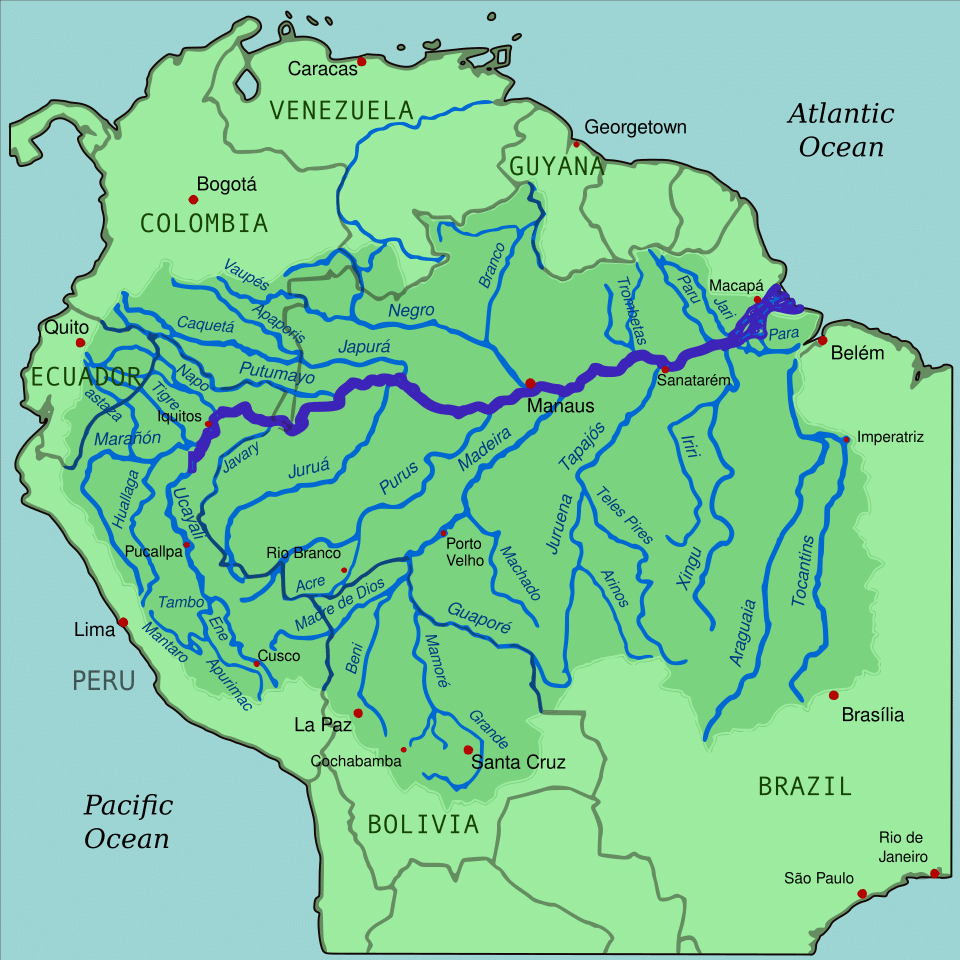
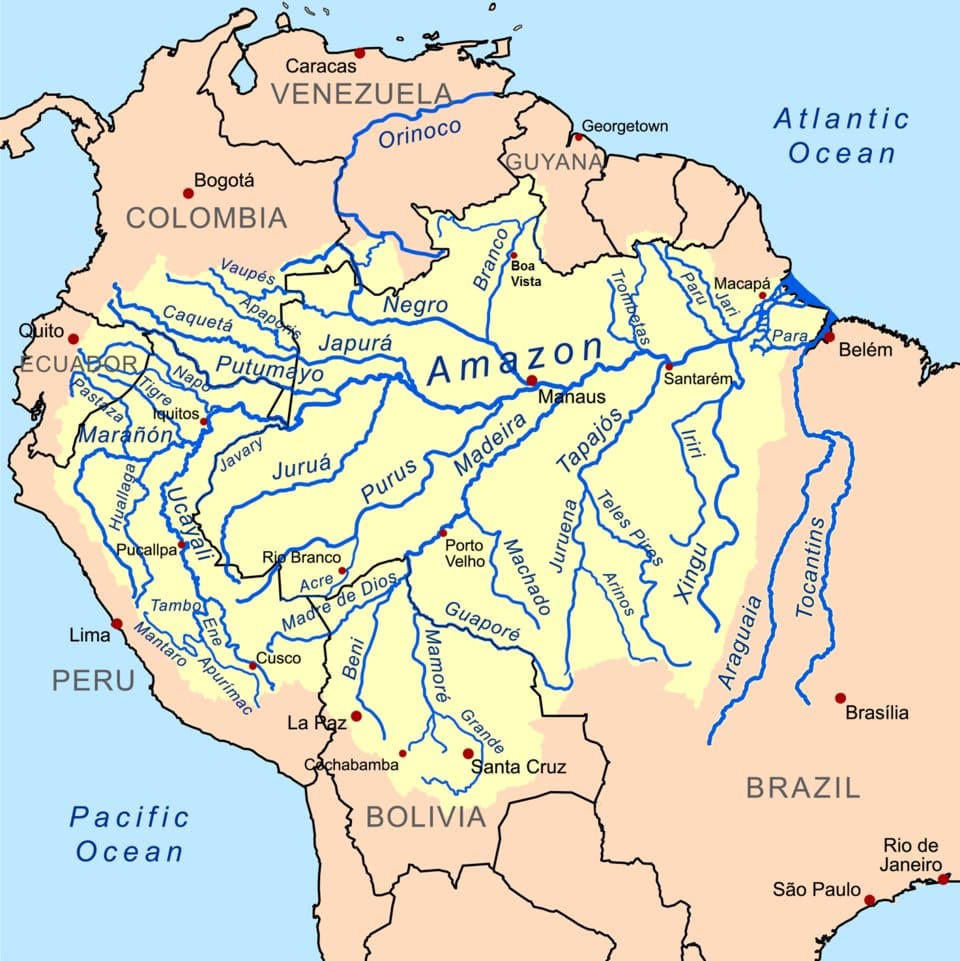
The marble hatchetfish has a wide distribution across northern South America. It’s found throughout the Amazon basin in Brazil, Peru, and Colombia, as well as in Guyana, Suriname, and French Guiana. It inhabits a variety of habitat types across this range, but shows a strong preference for forested waterways.
In the wild, marble hatchetfish live in small, slow-moving streams and flooded forest areas with overhanging vegetation. They’re almost exclusively found at the water’s surface, hanging just below the surface film among floating plants and leaf litter. The water in their native habitats is typically soft, acidic, and tannin-stained.
Their position at the surface isn’t random. It’s where they hunt. Insects landing on or flying near the water surface are the primary food source. When startled by predators approaching from below, they launch themselves out of the water using their powerful pectoral muscles and can cover distances of several feet through the air.
Appearance & Identification
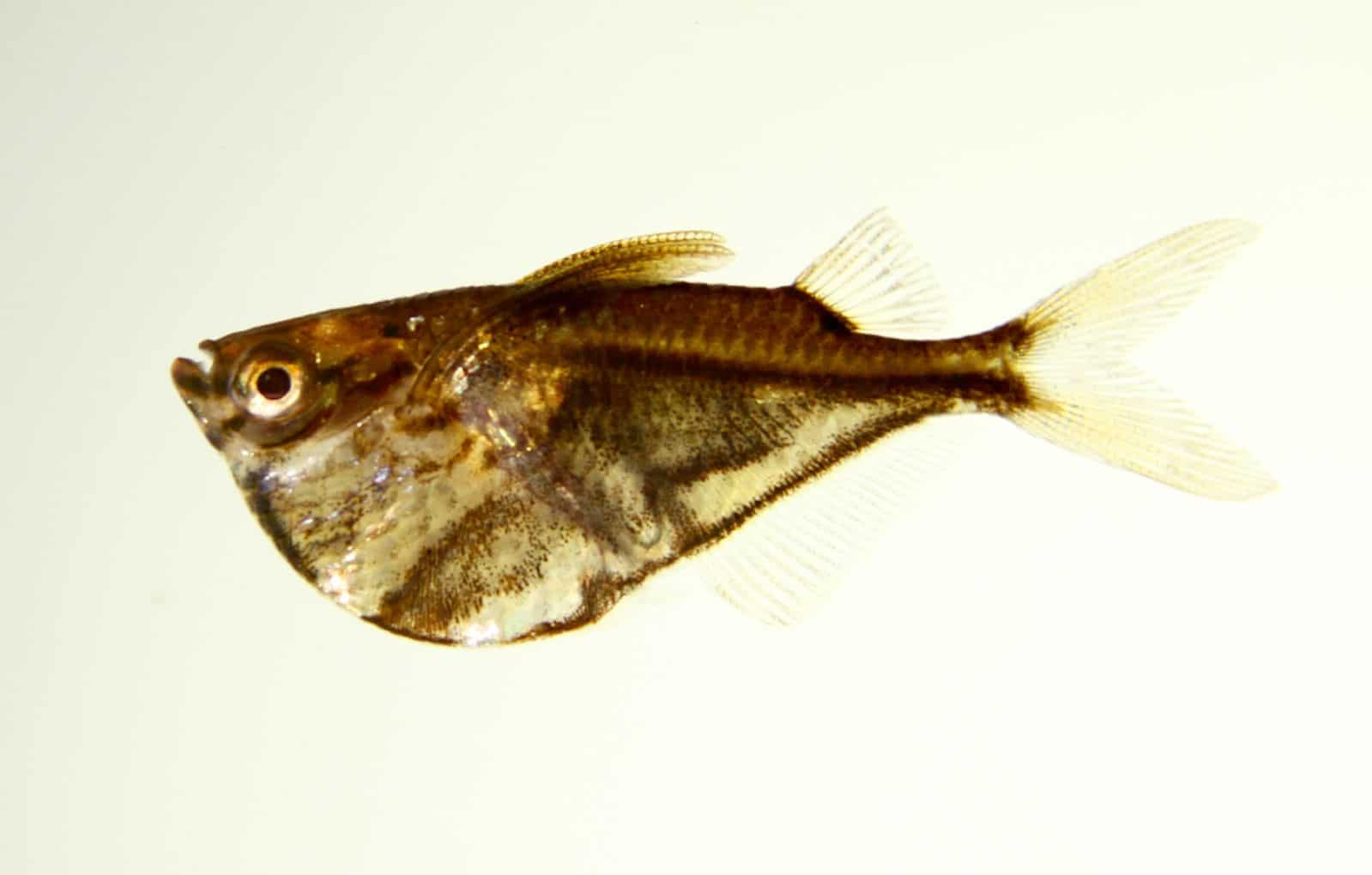
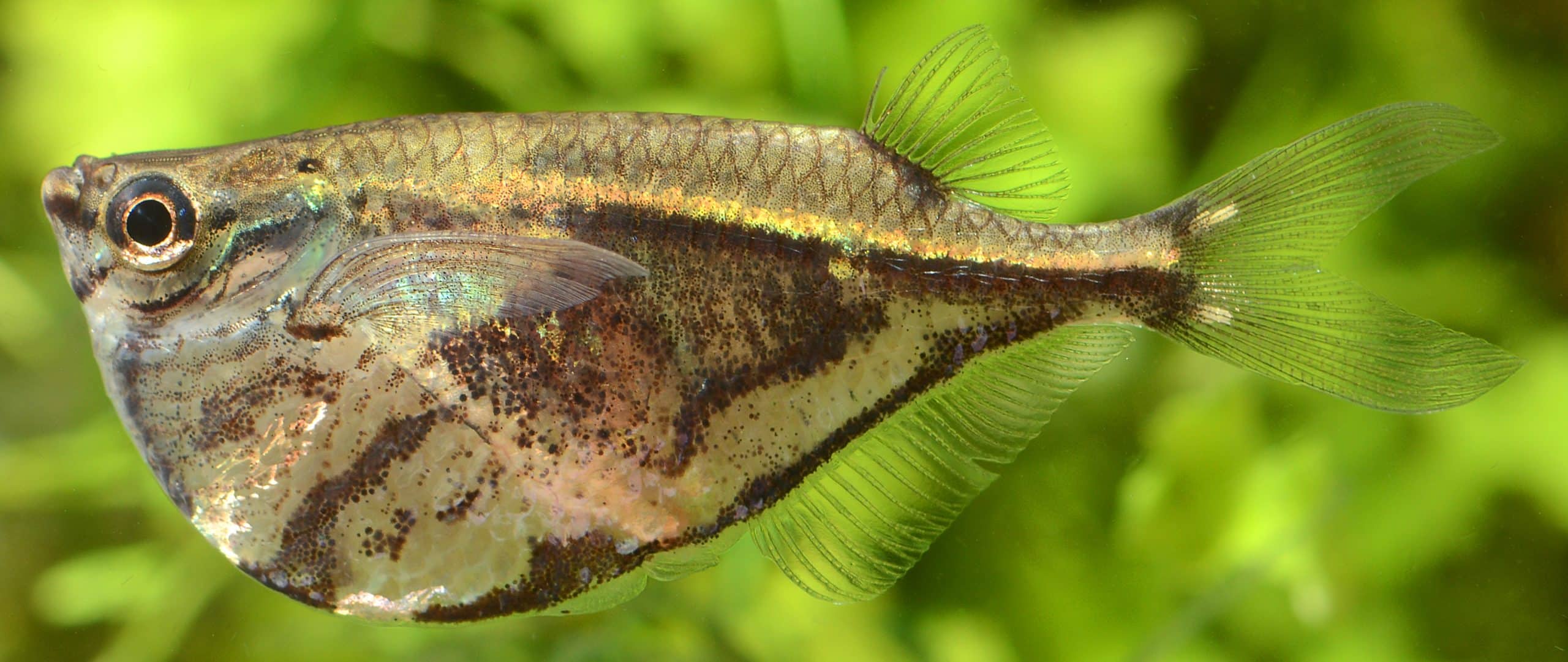
The marble hatchetfish is instantly recognizable. Its body is extremely deep and laterally compressed, with a pronounced ventral keel that gives it the “hatchet” profile. The pectoral fins are large, wing-like structures positioned high on the body, and the powerful muscles that drive them make up a significant portion of the fish’s body mass.
The coloring is subtle but attractive. The body is silvery with a pattern of dark brown to black marbled or mottled markings along the flanks, which is where the “marble” name comes from. A dark lateral stripe runs from the gill plate to the caudal peduncle. The overall effect is a well-camouflaged fish when viewed from below against a backdrop of dappled light.
Sexual dimorphism is minimal and difficult to detect. Females may be slightly rounder when viewed from above, especially when carrying eggs, but there are no reliable external differences in coloring or finnage.
Average Size & Lifespan
The marble hatchetfish is a small species, reaching only about 1.4 inches (3.5 cm) in length. Despite their small size, their deep body shape gives them a visual presence that’s larger than you’d expect from a fish under two inches long.
Lifespan in captivity is typically 2 to 5 years, though reaching the upper end requires excellent water quality and a consistent diet. Wild-caught specimens is more sensitive during acclimation than captive-bred fish.
ASD Difficulty Rating: Moderate
Moderate. More sensitive than they look – particularly to water quality swings and temperature fluctuations. The lid requirement is non-negotiable. Beyond that, they are a rewarding, unique surface fish that adds a dimension most community tanks completely miss.
Care Guide
Tank Size
A 15-gallon tank is the minimum for a group of 6 marble hatchetfish, but a 20-gallon long is much better. These fish need horizontal surface area more than depth. A tank with a wide, long footprint gives them more surface territory to patrol. The tank doesn’t need to be tall since they rarely venture below the top third of the water column.
Water Parameters
| Parameter | Ideal Range |
|---|---|
| Temperature | 75-82°F (24-28°C) |
| pH | 5.0-7.5 (prefers slightly acidic) |
| General Hardness | 2-12 dGH |
| KH | 1-6 dKH |
| Ammonia / Nitrite | 0 ppm |
| Nitrate | Below 20 ppm |
Marble hatchetfish prefer soft, slightly acidic water but can adapt to a modest range of conditions. They do best with Indian almond leaves and driftwood to naturally lower pH and add tannins. Consistent water quality is critical. They’re more sensitive to parameter swings than many other community fish, so stable conditions and regular water changes are important.
Keep the current gentle. These fish live at the surface in calm water, and strong flow from filters or powerheads will stress them. Point filter outputs toward the glass or use a spray bar to diffuse the flow.
Tank Setup
The most important element is a completely sealed lid. Marble hatchetfish are among the most notorious jumpers in the hobby. They don’t just bump into the lid occasionally. They launch themselves with muscular force. Any gap larger than a few millimeters is a potential escape route. Seal around filter intakes, heater cords, and airline tubing with foam or mesh.
Floating plants are essential. Amazon frogbit, Salvinia, red root floaters, or duckweed give hatchetfish cover at the surface, reduce stress, and dim the lighting below. These fish feel most secure when they have floating vegetation to hide under.
Below the surface, you can set up whatever you like. Planted tanks, driftwood arrangements, and dark substrates all work well. The hatchetfish won’t interact much with the lower levels of the tank, which leaves that space available for mid-level and bottom-dwelling tank mates.
Tank Mates
Marble hatchetfish are peaceful and occupy the top layer of the tank exclusively. This makes them excellent companions for mid-level and bottom-dwelling species since there’s very little territorial overlap.
Good Tank Mates
- Small tetras (neon, cardinal, ember, rummy nose)
- Pencilfish (Nannostomus species)
- Corydoras catfish
- Otocinclus
- Dwarf cichlids (Apistogramma, rams)
- Small rasboras
- Cherry shrimp, amano shrimp
Tank Mates to Avoid
- Large or aggressive surface feeders that would outcompete them
- Boisterous or fast-moving species that cause stress
- Large cichlids or predatory fish
Food & Diet
In the wild, marble hatchetfish are surface-feeding insectivores. They eat insects that land on the water surface, mosquito larvae, and other small invertebrates found at the air-water interface. This feeding ecology is important to replicate in the aquarium.
Feed foods that float or stay near the surface:
- Best foods: Wingless fruit flies, small crickets, mosquito larvae (if safely sourced)
- Frozen foods: Bloodworms, daphnia, brine shrimp (offered at the surface)
- Dry foods: Floating micro pellets, crushed flakes that stay at the surface
The key is making sure food stays at the surface long enough for them to eat it. These fish rarely chase food below the top inch of water. Sinking pellets and heavy foods will go to waste. Feed small amounts two to three times daily. Wingless fruit flies are arguably the single best food you can offer. They’re easy to culture at home, and hatchetfish go wild for them.
Breeding & Reproduction
Breeding marble hatchetfish in captivity is difficult and rarely accomplished by hobbyists. They’re egg scatterers that release eggs among fine-leaved floating plants at the surface. The eggs sink to the bottom after fertilization.
Breeding Setup
- Breeding tank: 10 to 15 gallons with very dim lighting
- Water: Very soft, acidic (pH 5.5 to 6.0, gH under 3)
- Temperature: 79 to 82°F (26 to 28°C)
- Decor: Dense floating plants (water lettuce, frogbit) and fine-leaved plants below
- Filtration: Air-driven sponge filter with very gentle flow
Condition pairs with abundant live foods for at least two weeks. Spawning, if it occurs, typically happens in the early morning. Remove adults afterward as they don’t guard eggs. Eggs hatch in about 24 to 36 hours, and fry are extremely small and require infusoria or liquid fry food for the first week or two before graduating to baby brine shrimp.
Most marble hatchetfish in the trade are wild-caught, which speaks to how challenging captive breeding remains for this species.
Common Health Issues
- Jumping and escape: The number one cause of loss. An unsecured tank lid will result in dead fish, guaranteed.
- Ich (white spot disease): Wild-caught specimens are particularly susceptible during acclimation. Quarantine new arrivals and acclimate slowly.
- Sensitivity to water quality: They’re less tolerant of elevated nitrates and parameter swings than many community fish. Keep up with maintenance.
- Shipping stress: Wild-caught fish can arrive in poor condition. Buy from reputable sellers and quarantine for at least two weeks.
Once established in a stable tank with appropriate water conditions, marble hatchetfish are reasonably hardy. The critical period is the first few weeks after introduction. If they settle in and start eating well, they typically do fine long-term.
Hard Rule
Marble hatchetfish will jump through any gap in your lid. This is not occasional behavior – it is constant. A loose cover or one with significant openings will result in dead fish on the floor. Seal every gap before you add them to the tank.
Common Mistakes to Avoid
- Open-top or poorly sealed tanks: The single most common and most preventable mistake. Seal every gap.
- Sinking foods only: They won’t chase food below the surface. Use floating foods or offer food directly at the waterline.
- Strong current: Surface turbulence disrupts their feeding and stresses them. Keep flow gentle.
- No floating plants: They feel exposed and stressed without cover at the surface. Floating plants are not optional.
- Too few fish: Keep at least 6. They’re much less stressed and more active in proper groups.
- Skipping quarantine: Wild-caught hatchetfish are common in the trade and often carry parasites. Always quarantine.
Where to Buy
Marble hatchetfish are widely available in the aquarium trade, both at local fish stores and online. Many are wild-caught, so buying from reputable sellers who properly condition their fish is important. Check these trusted sources:
What It Is Actually Like Living With Marble Hatchetfish
The Marble Hatchetfish is more active and aware of its surroundings than most people expect. In a properly set up tank, it shows behaviors that generic care guides never mention.
Feeding becomes a routine both you and the fish look forward to. The Marble Hatchetfish learns your schedule and responds to your presence near the tank within the first few weeks.
Maintenance is consistent, not difficult. Regular water changes and parameter monitoring become second nature. The fish rewards consistent care with better color, more activity, and visible health.
Over time, you notice personality traits unique to your individual fish. Some are bold explorers. Others are cautious observers. That individual personality is what turns casual fishkeeping into a genuine hobby.
Frequently Asked Questions
Can marble hatchetfish really fly?
Yes. Unlike flying fish in the ocean that glide on extended fins, hatchetfish achieve true powered flight by rapidly beating their enlarged pectoral fins. They can cover several feet through the air. This is an escape response triggered by predators or sudden disturbances, and it’s why a secure lid is absolutely essential.
Do marble hatchetfish need to be in groups?
Yes. They’re schooling fish that become stressed and skittish when kept alone or in small numbers. A minimum group of 6 is recommended, and 8 to 10 is even better. In a proper school, they display more natural behavior and spend less time hiding.
Will marble hatchetfish eat regular fish flakes?
Most will accept crushed flakes if they float at the surface long enough. But they do much better with a diet that includes live or frozen foods, especially wingless fruit flies. Variety is important for their long-term health.
Closing Thoughts
The marble hatchetfish occupies a niche in the aquarium that very few other fish can fill. It’s a dedicated surface dweller with a body plan that’s genuinely unlike anything else in freshwater fishkeeping. The fact that it can actually fly makes it one of those species that never gets old to watch or talk about.
The care requirements aren’t complicated, but they are specific. A sealed lid, floating plants, gentle current, and surface-oriented foods. Get those basics right, and you’ll have a group of fascinating little fish patrolling the top of your tank for years. Pair them with tetras and corydoras below, and you’ve got a complete South American community that covers every level of the water column.
Recommended Video
Check out our Tetra Tier List video where we rank popular tetra species for the home aquarium:
References
- Froese, R. and D. Pauly, Eds. FishBase. Carnegiella strigata. Accessed 2025.
- SeriouslyFish. Carnegiella strigata species profile. Accessed 2025.
- Wiest, F.C. (1995). The specialized locomotory apparatus of the freshwater hatchetfish family Gasteropelecidae. Journal of Zoology, 236(4), 571-592.
Explore More Tetras
The marble hatchetfish is just one of dozens of characin species we cover in our complete species directory. Whether you’re into surface specialists or classic community tetras, our guide has you covered.
👉 Tetras: Complete A-Z Species Directory
- About the Author
- Latest Posts

I’m Mark Valderrama, founder of Aquarium Store Depot and a fishkeeper with over 25 years of hands-on experience. I started in the hobby at age 11, worked at local fish stores, and have kept freshwater tanks, ponds, and reef tanks ever since. I’ve been featured in two best-selling aquarium books on Amazon and built this site to share practical, experience-based fish keeping knowledge.
Leave a Reply