
Last Updated: June 25, 2026
Thank you for visiting! By the way… any links on this page that lead to products on Amazon and other stores/partners are affiliate links Aquarium Store Depot earns a commission if you make a purchase.
Table of Contents
- What Most Care Guides Get Wrong
- The Reality of Keeping Sunshine Peacock
- Key Takeaways
- Species Overview
- Classification
- Origin & Natural Habitat
- Appearance & Identification
- Average Size & Lifespan
- Care Guide
- Is This Species Right for You?
- Tank Mates
- Food & Diet
- Breeding & Reproduction
- Common Health Issues
- Common Mistakes to Avoid
- Where to Buy
- Frequently Asked Questions
- What It Is Actually Like Living With Sunshine Peacock
- Species Comparison
- Closing Thoughts
- References
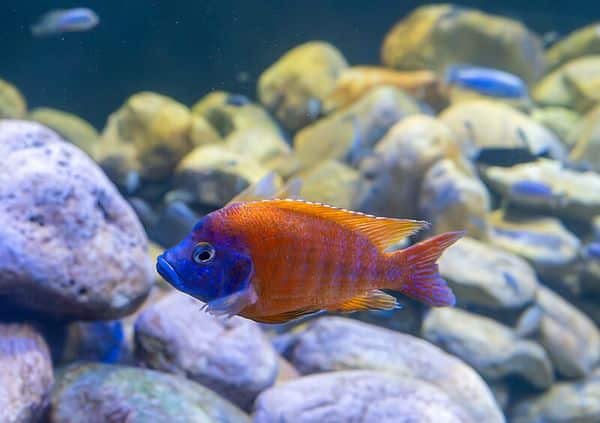
Sunshine peacocks are one of the brightest yellow cichlids in Lake Malawi, and that color makes them a target for hybridization. The single biggest issue with sunshine peacocks is getting a pure specimen. Mixed stock is everywhere, and hybrids never color up the same way. I have kept aulonocara stuartgranti for years and the first rule is buying from a reputable breeder, not a pet store with unlabeled fish. Start with bad genetics and no amount of care fixes it. One of the brightest yellow cichlids available, but only if the genetics are pure and the water is clean.
The brightest yellow in freshwater, if genetics and diet cooperate.
The Reality of Keeping Sunshine Peacock
Mbuna keeping is a different discipline from regular fishkeeping. The Sunshine Peacock is no exception. Here is what you need to prepare for.
Hard, alkaline water is mandatory. Lake Malawi chemistry means pH between 7.8 and 8.6, high GH, and high KH. There is no faking this. If your tap water is soft and acidic, you need to buffer every water change without exception.
Overstocking is the strategy. Keeping 3 or 4 Sunshine Peacocks leads to one bully and victims. You need groups of 12 or more to spread aggression. But overstocking only works with heavy filtration and consistent water changes.
Diet is critical. Spirulina and veggie-based foods are essential. High-protein diets cause Malawi Bloat, which is often fatal.
Rockwork defines territories. Mbuna need piles of rocks with caves and passageways. Without proper rockwork, dominant fish have nowhere to establish boundaries and subordinates have nowhere to hide. Stack rocks from substrate to near the waterline.
Biggest Mistake New Sunshine Peacock Owners Make
Understocking. Keeping a small group of Sunshine Peacocks means the dominant fish picks off the weak ones. You need a large group to distribute aggression. Twelve is the minimum for most mbuna species.
Expert Take
Start with a group of 12 or more in a 55 gallon minimum. Use aragonite or crushed coral substrate to buffer pH naturally. Feed spirulina-based food as the staple. Stack rocks to create territories. This formula works for Sunshine Peacocks and most other mbuna.
Key Takeaways
- Brilliant yellow and blue coloration in males, making it one of the most visually striking Peacock species available
- Peaceful temperament typical of all Peacocks, and should not be housed with aggressive Mbuna
- Critically endangered in the wild due to its restricted range in Lake Malawi, but widely available as captive-bred specimens
- Sand substrate is essential for natural sand-sifting feeding behavior
- Minimum 55-75 gallon tank with hard, alkaline water (pH 7.8-8.6) and consistent maintenance
Species Overview
| Field | Details |
|---|---|
| Scientific Name | Aulonocara baenschi |
| Common Names | Sunshine Peacock, Nkhomo Benga Peacock, Benga Peacock, Yellow Peacock, Baensch’s Peacock, New Yellow Regal |
| Family | Cichlidae |
| Origin | Lake Malawi, East Africa (western shoreline) |
| Care Level | Easy to Moderate |
| Temperament | Peaceful (for a cichlid) |
| Diet | Micro-predator / Omnivore |
| Tank Level | Bottom to Mid |
| Maximum Size | 5-6 inches (12-15 cm) |
| Minimum Tank Size | 55 gallons (208 liters) |
| Temperature | 76-82°F (24-28°C) |
| pH | 7.8-8.6 |
| Hardness | 10-20 dGH |
| Lifespan | 6-10 years |
| Breeding | Maternal mouthbrooder |
| Breeding Difficulty | Easy |
| Compatibility | Peacock & Hap community |
| OK for Planted Tanks? | Limited (may uproot plants while sifting) |
Classification
| Taxonomic Level | Classification |
|---|---|
| Order | Cichliformes |
| Family | Cichlidae |
| Subfamily | Pseudocrenilabrinae |
| Genus | Aulonocara |
| Species | A. Baenschi (Meyer & Riehl, 1985) |
The Sunshine Peacock was described by Meyer and Riehl in 1985 and named after Ulrich Baensch, a well-known aquarium publisher and cichlid enthusiast. The genus name Aulonocara means “flute face” in Greek, referring to the enlarged sensory pores on the head that all Peacock cichlids use to detect prey in the substrate. This species has gone through several common names in the hobby, including Nkhomo Benga Peacock (referencing its locality at Nkhomo Reef near Benga) and the somewhat confusing “New Yellow Regal Peacock.”
There has been some taxonomic confusion between A. Baenschi and the closely related Aulonocara sp. “Maleri” from the Maleri Islands. Some sources treat them as the same species, while others consider the Maleri form a separate, undescribed species. In the hobby, fish from the Maleri Islands are sometimes sold as A. Baenschi, which can create confusion. True A. Baenschi is specifically associated with the Nkhomo Reef and Benga area.
Origin & Natural Habitat
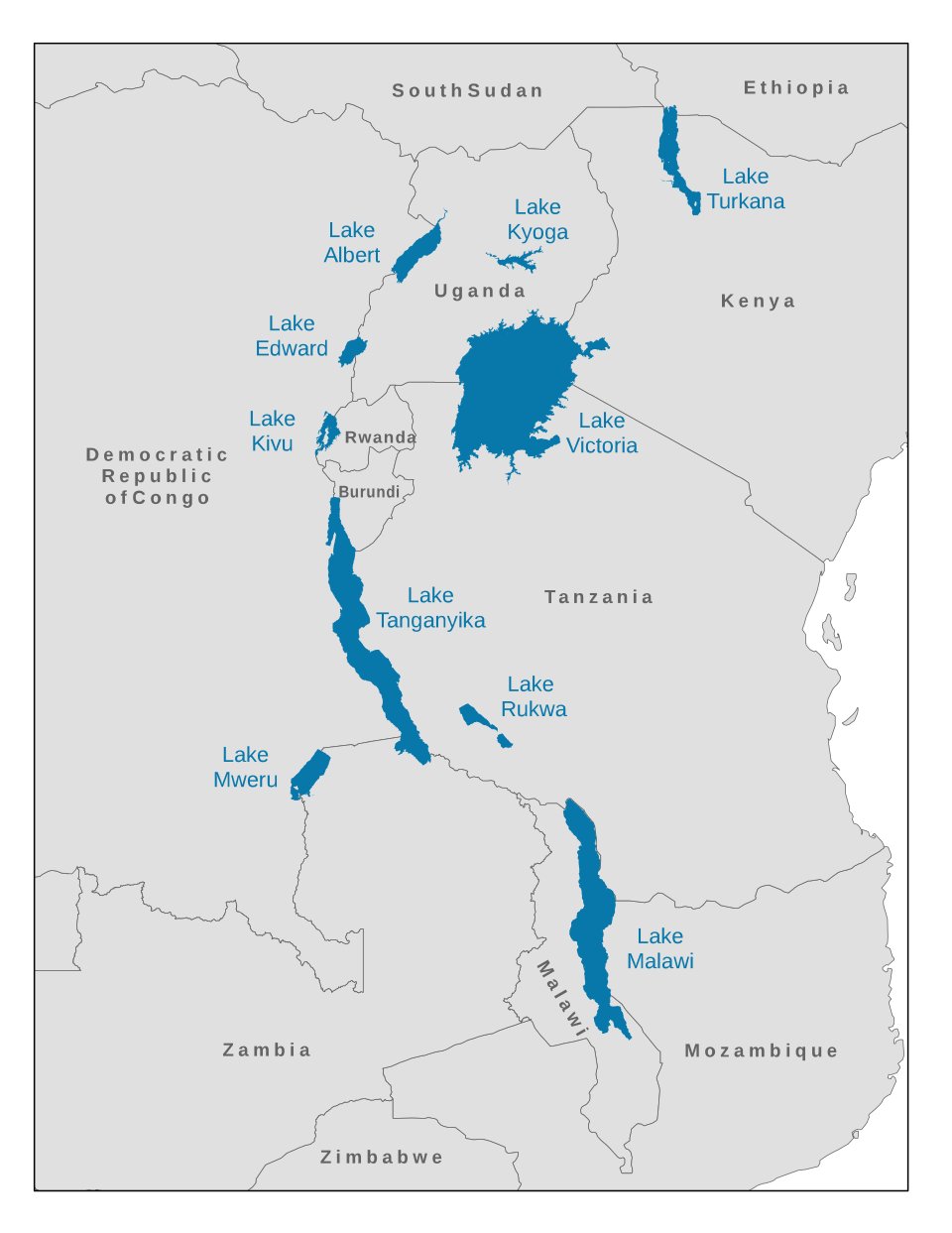
The Sunshine Peacock is endemic to Lake Malawi in East Africa, with a natural distribution restricted to the western shoreline of the lake, particularly around the Nkhotakota District of Malawi. Known localities include Chipoka, the Maleri Islands, Nkhomo Reef, Usisya, and the Benga area. This relatively limited range is one reason the species faces conservation concerns.
Like all Peacock cichlids, A. Baenschi inhabits the intermediate zones of Lake Malawi where sandy substrates transition to rocky outcrops. These transitional habitats are found at depths of roughly 30 to 100 feet (10-30 meters). The fish spend most of their time over sandy-bottomed regions, sifting through fine sediment in search of small invertebrates. Nearby rock crevices provide shelter and spawning sites.
The water in Lake Malawi is characteristically hard and alkaline, with remarkable year-round stability. Temperature, pH, and mineral content remain consistent, which is a critical detail for aquarium care. Peacocks do not handle fluctuating water conditions well because they’ve evolved in one of the most stable freshwater environments on Earth.
Conservation note: Aulonocara baenschi is considered critically endangered by the IUCN, primarily due to collection for the aquarium trade. The good news is that virtually all specimens in the hobby are captive-bred, so purchasing aquarium fish does not directly impact wild populations. But it’s still worth being aware of this species’ vulnerability in its natural habitat.
Appearance & Identification
The Sunshine Peacock fully earns its common name. Dominant males develop an intense, bright yellow coloration across the entire body, from the gill plate through the flanks, belly, and into the tail and fins. The head and face display a vivid metallic blue that contrasts beautifully against the yellow body. The dorsal fin is yellow with a blue edge, and the anal fin is yellow with egg spots. The overall effect is a genuinely radiant fish that glows in any tank.
Males take approximately two years to develop their full adult coloration, and color intensity varies based on dominance, mood, diet, and water quality. A dominant male with good genetics, a proper diet, and stable water conditions will show colors that are dramatically more vivid than a stressed or subdominant individual. Lighting matters too. Moderate lighting with a warmer spectrum make the yellow body pop, while cooler lighting highlights the blue face.
Juveniles of both sexes and subdominant males are plain silver-grey with faint vertical bars, identical to juvenile Peacocks of most other species. Males begin showing yellow coloration around 2.5 to 3 inches (6-8 cm), but patience is needed because full color development is gradual.
Male vs. Female
Sexual dimorphism in the Sunshine Peacock is extreme, consistent with the entire Aulonocara genus. Adult males and females look like entirely different species.
| Feature | Male | Female |
|---|---|---|
| Color | Brilliant yellow body with metallic blue face | Plain silver-grey with faint bars |
| Size | 5-6 inches (12-15 cm) | 4-5 inches (10-12 cm) |
| Body Shape | Slightly larger and more elongated | Smaller with rounder belly |
| Fins | Longer, more pointed | Shorter, rounded |
| Egg Spots | Prominent on anal fin | Absent or very faint |
Sexing juveniles is essentially impossible by visual inspection alone. If you’re purchasing young fish, buy a group of 6-8 to improve your odds of getting at least one male. Venting (examining the fish’s genital papilla) is the only reliable method for sexing juveniles, but it requires experience and practice.
Average Size & Lifespan
Sunshine Peacocks reach a maximum size of 5 to 6 inches (12-15 cm), with males being slightly larger. They’re a medium-sized Peacock species, comparable to most other commonly kept Aulonocara. Most fish available in stores are juveniles around 1.5 to 2 inches, so expect them to need 12-18 months to approach full size.
Lifespan is 6 to 10 years with proper care, and some specimens may exceed this in ideal conditions. The species is relatively long-lived for a mid-sized cichlid. Clean water, stable parameters, a varied diet, and low-stress tank mates are the keys to maximizing lifespan.
Care Guide
Tank Size
A minimum of 55 gallons (208 liters) can work for a single-species setup with one male and a small harem. However, 75 gallons (284 liters) is a better starting point and gives you more flexibility for stocking. If you’re building a mixed Peacock and Hap community, go with 125 gallons (473 liters) or larger.
Tank length is more important than height for Peacocks. These fish use floor space, not vertical space. A 4-foot tank is the bare minimum, and a 6-foot tank provides significantly more territory for multiple males to coexist peacefully.
Water Parameters
| Parameter | Ideal Range |
|---|---|
| Temperature | 76-82°F (24-28°C) |
| pH | 7.8-8.6 |
| General Hardness (GH) | 10-20 dGH |
| Carbonate Hardness (KH) | 6-12 dKH |
| Ammonia | 0 ppm |
| Nitrite | 0 ppm |
| Nitrate | Below 20-30 ppm |
Consistency is everything with Malawi cichlids. These fish evolved in one of the most chemically stable bodies of water on the planet, and they struggle with parameters that fluctuate. Weekly water changes of 20-30% are essential to maintain low nitrates and stable chemistry. If your tap water is naturally soft, use aragonite substrate or cichlid buffer products to keep the pH and hardness where they need to be.
Filtration & Water Flow
Over-filtration is standard practice for any Malawi cichlid tank. A canister filter rated for at least 1.5 times your tank volume is a solid starting point. Many keepers double up on filtration with a canister and a hang-on-back filter or sump for additional capacity and redundancy. The high pH of Malawi water makes ammonia more toxic, so excess biological filtration capacity is insurance against problems.
Water flow should be moderate. Peacocks inhabit calmer sandy areas in the wild, not the wave-battered rocky shores that Mbuna prefer. Good surface agitation for oxygenation is important, but don’t create a high-current environment.
Lighting
Standard aquarium lighting works well. Sunshine Peacocks look fantastic under moderate lighting that brings out the warmth of their yellow coloration. Extremely bright overhead lights can make them feel exposed and reduce color intensity. If your tank has intense LEDs, provide some shaded areas through rock formations. Many keepers find that a warm-spectrum light makes the yellow body color appear even more vivid.
Plants & Decorations
Design the tank with a mix of rock formations and open sandy areas. Peacocks need open floor space for sand sifting and swimming, so don’t fill the entire tank with rocks the way you would for Mbuna. Stack rocks along the back and sides to create caves and visual barriers, which help break up sight lines and reduce aggression between males.
Hardy plants like Anubias (attached to rocks or driftwood), Java Fern, and Vallisneria can work in a Peacock tank. Avoid delicate plants rooted in the substrate, as they’ll be constantly uprooted during sand sifting. The alkaline water also limits plant options compared to a typical freshwater planted tank.
Substrate
Fine sand is required. This is a universal rule for all Peacock cichlids. Sunshine Peacocks are natural sand sifters that take mouthfuls of substrate, filter out edible invertebrates, and expel the sand through their gills. Coarse gravel prevents this behavior and can cause physical damage to their delicate gill filaments.
Pool filter sand, play sand, or aragonite sand are all excellent choices. Aragonite sand has the added benefit of buffering the water to maintain high pH and hardness. Many experienced keepers recommend a darker substrate color, as Peacocks will display more intense coloration over dark sand compared to bright white substrates.
Tank Mates
Sunshine Peacocks are among the most peaceful Malawi cichlids you can keep. They have a calm, almost regal demeanor that’s a world apart from the hyperactive aggression of Mbuna. This peaceful nature is their greatest appeal, but it also makes proper tank mate selection absolutely critical. Put a Sunshine Peacock with aggressive fish and it will be bullied into a pale, stressed shell of what it should be.
Best Tank Mates
- Other Peacock cichlids (Aulonocara spp.) — Multiple Peacock species in a large tank is the classic setup. Choose species with distinctly different coloration to reduce male aggression. Avoid other predominantly yellow Peacocks if possible.
- Mild Haplochromines — Copadichromis azureus, Copadichromis borleyi, Placidochromis electra, Otopharynx lithobates, and Cyrtocara moorii are all excellent choices with compatible temperaments.
- Synodontis catfish — Synodontis multipunctatus and Synodontis petricola add bottom-level interest and do well in the same alkaline water conditions.
- Bristlenose Plecos — Hardy, peaceful algae eaters that get ignored by cichlids and handle the high pH well.
Tank Mates to Avoid
- Aggressive Mbuna — This cannot be stressed enough. Species like Melanochromis auratus, Metriaclima lombardoi, Pseudotropheus demasoni, and most Mbuna are far too aggressive. They will relentlessly harass Sunshine Peacocks, causing chronic stress, color loss, and eventual health problems.
- Other yellow-colored Peacocks or Haps — Males interpret similarly colored fish as rivals. If stocking multiple Peacock species, choose ones with clearly different color patterns.
- Large predatory Haps — Nimbochromis species and other large, aggressive Haplochromines will dominate and potentially eat smaller Peacocks.
- Non-Malawi species — Fish from different water chemistry requirements (South American cichlids, community tropicals) should never be mixed with Malawi cichlids.
A good stocking ratio is one male to three or four females per species. This distributes the male’s attention and protects individual females from excessive pursuit. In a 75-gallon tank, a single-species group of one male and four females works well. In a 125-gallon, you can keep two or three Peacock species with their respective harems.
Food & Diet
Sunshine Peacocks are micro-predators that feed primarily on small invertebrates in the wild. They hover motionless over sandy substrates, using their highly developed lateral line system to detect the vibrations of crustaceans, insect larvae, and other small organisms moving in the sand. When prey is detected, a quick plunge into the substrate captures the food, and the sand is expelled through the gills.
In the aquarium, feeding is uncomplicated. A quality sinking cichlid pellet should form the dietary foundation. Supplement regularly with frozen foods like Mysis shrimp, brine shrimp, cyclops, and daphnia. Occasional bloodworms are fine but shouldn’t be a staple. Include some vegetable-based foods such as spirulina-enriched pellets to round out the diet. Color-enhancing foods containing astaxanthin or carotenoids can help maintain and enhance the brilliant yellow coloration.
Feed once or twice daily, offering only what the fish can consume within 2-3 minutes. Avoid overly fatty foods and never feed mammalian proteins like beef heart. Peacocks have a digestive system adapted for small invertebrates and plant matter, and fatty foods contribute to Malawi Bloat, the most dangerous health threat for this group of fish.
Breeding & Reproduction
Sunshine Peacocks breed readily in captivity and are considered one of the easier African cichlids to spawn. They’re maternal mouthbrooders, following the typical Aulonocara breeding pattern.
Spawning Behavior
Males establish territories, around a flat rock surface or a cleared area in the sand. When a ripe female enters his territory, the male intensifies his coloration to maximum display levels. He performs a shimmying, fin-flaring courtship dance designed to impress the female and guide her to his spawning site. The female deposits eggs on the substrate, then immediately picks them up in her mouth. She then mouths at the male’s egg spots on his anal fin, which triggers him to release sperm, fertilizing the eggs in her mouth.
Mouthbrooding & Fry Care
After spawning, the female carries the developing eggs for approximately 21 to 28 days. She does not eat during this entire incubation period. A holding female is easily identified by her distended throat and a characteristic chewing motion as she rotates the eggs to keep them oxygenated. She’ll become secretive, sticking to hiding spots and avoiding the male.
Typical brood sizes range from 12 to 40 fry depending on the female’s size. The fry are released fully formed and able to eat baby brine shrimp and finely crushed flake food immediately. For maximum fry survival, strip the female around day 18-21 or move her to a separate tank before she releases. In a community tank, some fry will survive if there are adequate hiding spots, but most will be eaten by other fish.
Hybridization Warning
All Aulonocara species readily hybridize. If you keep multiple Peacock species together, cross-breeding is likely if females have access to multiple species of males. This is a significant problem in the hobby because hybrid Peacocks are sold under made-up names, muddying the genetic pool. If you intend to breed, keep a single Aulonocara species per tank.
Common Health Issues
Malawi Bloat
The most serious and common health issue for all Peacock cichlids. Malawi Bloat manifests as severe abdominal swelling, loss of appetite, white stringy feces, lethargy, and rapid breathing. It can progress to organ failure and death within days if left untreated. Contributing factors include poor water quality (especially high nitrates), stress from aggressive tank mates, overfeeding, and diets too high in fat.
Prevention is far more effective than treatment. Keep nitrates below 20-30 ppm through regular water changes, feed a balanced diet, maintain stable water chemistry, and house Peacocks only with appropriate non-aggressive companions. If symptoms appear, perform an immediate large water change, isolate the affected fish, and treat with Metronidazole. Early detection is critical for survival.
Ich (White Spot Disease)
Ich can strike after temperature fluctuations or when new fish are added without quarantine. Small white spots across the body and fins are the telltale sign. Treatment involves gradually raising the temperature to 82-86°F (28-30°C) over 48 hours and using a commercial ich medication. Remove activated carbon from the filter during treatment. Sunshine Peacocks tolerate standard ich treatments without issues.
Hole-in-the-Head Disease (HLLE)
Pitting and erosion around the head and lateral line area is sometimes seen in Peacocks maintained in suboptimal conditions. It’s linked to chronic poor water quality, nutritional deficiencies (particularly vitamins C and D), and possibly the long-term use of activated carbon in filtration. Improving water quality, diversifying the diet with vitamin-enriched foods, and removing carbon from filters leads to gradual healing.
Common Mistakes to Avoid
- Keeping them with aggressive Mbuna. Sunshine Peacocks are among the most peaceful Malawi cichlids. Mixing them with aggressive Mbuna results in stressed, pale fish that hide constantly and eventually develop bloat or other health issues.
- Using gravel substrate. Sand is essential for Peacock cichlids. They are biologically programmed to sift substrate for food, and gravel prevents this behavior while potentially damaging their gills.
- Neglecting water quality. Peacocks are more sensitive to nitrate buildup than many other cichlids. Regular weekly water changes of 20-30% are critical. Letting nitrates climb is the fastest path to Malawi Bloat.
- Overstocking males. Multiple male Sunshine Peacocks in a small tank leads to one dominant, colorful fish and several stressed, grey subdominants. Keep one male per species unless the tank is very large with plenty of territory.
- Adding to an immature tank. Peacocks should never be the first fish in a newly set up aquarium. The tank must be fully cycled and biologically stable before they’re introduced.
- Confusing species. Several yellow Peacocks exist in the hobby, including fish from the Maleri Islands that may or may not be true A. Baenschi. Buy from reputable sources that can verify what species you’re getting.
Where to Buy
Sunshine Peacocks are widely available in the hobby as captive-bred specimens. You’ll find them at specialty African cichlid retailers, online fish stores, and occasionally at well-stocked local fish shops. Chain pet stores sometimes carry them under generic labels, but species identification is unreliable in those settings.
For quality, properly identified specimens, check out Flip Aquatics and Dan’s Fish. Both are reputable online retailers that ship healthy, well-conditioned fish and are transparent about species identification. Expect to pay $8-$25 per fish depending on size and sex. Males showing color will be priced higher than unsexed juveniles.
Frequently Asked Questions
Are Sunshine Peacocks endangered?
Yes, Aulonocara baenschi is considered critically endangered in its natural habitat in Lake Malawi due to its very limited distribution and collection pressure for the aquarium trade. However, the species is widely bred in captivity, so the aquarium specimens you buy are captive-bred and do not impact wild populations. Captive breeding has actually helped preserve the species’ genetics.
Can Sunshine Peacocks live with Mbuna?
No. Mbuna are significantly more aggressive than Peacocks and will bully them relentlessly. The one exception some keepers make is Labidochromis caeruleus (Yellow Lab), which is the most peaceful Mbuna species. But as a rule, keep Sunshine Peacocks with other Peacocks and mild Haplochromines only.
How long does it take for males to color up?
Males begin showing hints of yellow coloration around 2.5 to 3 inches (6-8 cm), around 8-12 months of age. Full adult coloration can take up to 2 years to fully develop. Good nutrition, stable water conditions, and low stress from tank mates all accelerate color development. Be patient with juvenile Peacocks.
What’s the difference between Sunshine Peacock and Maleri Peacock?
This is a point of ongoing debate. Aulonocara baenschi from Nkhomo Reef and the yellow Peacocks from the Maleri Islands are very similar and are sometimes treated as the same species. Some authorities consider the Maleri form to be a separate, undescribed species or a geographic variant. In the hobby, both are often sold as “Sunshine Peacock.” The care requirements are identical regardless of the locality form.
Do Sunshine Peacocks need sand substrate?
Yes, absolutely. Sand is essential for all Peacock cichlids. They sift substrate to feed on small invertebrates, a behavior that’s hardwired into their biology. Gravel prevents this natural behavior and can physically damage their gills. Use fine pool filter sand, play sand, or aragonite sand.
How many Sunshine Peacocks should I keep together?
Keep one male with three to four females in a 55-75 gallon tank. In larger tanks (125+ gallons), you could potentially keep two males if there’s sufficient territory and line-of-sight breaks. Never keep two males in a small tank, as the dominant male will suppress the subdominant’s coloration and cause chronic stress.
What It Is Actually Like Living With Sunshine Peacock
This is the part no other care guide gives you. Forget water parameters for a minute. Here is what it is actually like to share your tank with this species.
They have more personality than you expect. The Sunshine Peacock is not a fish that just sits in the background. Once settled in, they become interactive, curious, and responsive to your presence.
Feeding time reveals their character. Watch how the Sunshine Peacock approaches food and you will see real personality. Some are bold, some are cautious, and their feeding behavior tells you a lot about their mood and health.
They establish routines. After a few weeks, your Sunshine Peacock will have favorite spots, preferred paths through the tank, and predictable patterns. Learning these routines makes you a better keeper.
Color is a health indicator. The Sunshine Peacock’s coloration is a real-time report card on your husbandry. Vibrant color means happy fish. Faded color means something is wrong. Pay attention.
Closing Thoughts
A sunshine peacock from a bad source will never color up. Genetics come first, care comes second.
The Sunshine Peacock is everything that makes Peacock cichlids great, concentrated into one brilliantly colored package. That intense yellow and blue combination is legitimately one of the most eye-catching color patterns in all of freshwater fishkeeping. And unlike some colorful fish that require expert-level care, the Sunshine Peacock is accessible to anyone willing to maintain proper water quality and make smart tank mate choices.
The formula for success is the same as with all Peacocks: sand substrate, hard alkaline water, robust filtration, regular water changes, and peaceful companions. Keep them away from aggressive Mbuna, feed a varied diet, and give males time to develop their full coloration. Do these things, and you’ll have a centerpiece fish that earns its sunny name every time it catches the light.
This article is part of our Lake Malawi Cichlid Species Directory: Complete A-Z Care Guide List. Visit the hub page to explore care guides for all 28 Lake Malawi cichlid species we cover.
Recommended Video
References
- Aulonocara baenschi Meyer & Riehl, 1985 — FishBase
- Aulonocara baenschi — Seriously Fish
- Nkhomo-benga peacock — Wikipedia
- Cichlids with a sixth sense — Practical Fishkeeping
- About the Author
- Latest Posts

I’m Mark Valderrama, founder of Aquarium Store Depot and a fishkeeper with over 25 years of hands-on experience. I started in the hobby at age 11, worked at local fish stores, and have kept freshwater tanks, ponds, and reef tanks ever since. I’ve been featured in two best-selling aquarium books on Amazon and built this site to share practical, experience-based fish keeping knowledge.
Leave a Reply