Tag: Freshwater

  • Agassiz’s Dwarf Cichlid Care Guide: The Classic Apisto Everyone Should Try

    Agassiz’s Dwarf Cichlid Care Guide: The Classic Apisto Everyone Should Try

    Table of Contents

    Agassiz’s dwarf cichlid is the apistogramma most people start with, and for good reason. Males are stunning, breeding is achievable, and their behavior is endlessly entertaining. But do not let the word dwarf fool you. Males are territorial, aggressive toward other males, and demand soft, acidic water that tap water in most areas does not provide. I have kept agassizii for years and the number one reason people fail is water chemistry. Get the pH and hardness wrong and this fish fades fast. And territory is non-negotiable. One cave per female or someone gets evicted.

    One cave per female or someone gets evicted.

    What Most Care Guides Get Wrong About the Agassiz’s Dwarf Cichlid

    The Agassiz’s Dwarf Cichlid (Apistogramma agassizii) is often listed as a beginner apisto, and that is only half true. It is one of the more available and recognized apistos, but it still needs soft, acidic water to show its best colors and breed successfully. Keeping it in hard, alkaline water works for survival but you will never see the stunning blue, red, and yellow coloration that makes this species famous. The other misconception is about male behavior. Males are territorial and will harass females relentlessly in tanks that are too small or lack hiding spots. You need multiple females per male and plenty of visual barriers.

    What makes Agassiz’s dwarf cichlid particularly appealing is its versatility. Captive-bred specimens are well-adapted to a range of water conditions, making them accessible to hobbyists who don’t have naturally soft, acidic tap water. They’re harem breeders with fascinating courtship and parental care behaviors, and they’re one of the most commonly available apistos in the hobby. Whether you’re stepping into the dwarf cichlid world for the first time or adding another species to an established collection, A. Agassizii delivers.

    The Reality of Keeping Agassiz’s Dwarf Cichlid

    Agassizs dwarf cichlids are the classic apisto that everyone starts with, and the one that teaches you what dwarf cichlid keeping is really about.

    Males are territorial but not murderous. Agassizs apistos defend territory through display, not violence. That spade-shaped tail and lateral display are meant to intimidate, not injure.

    Harem keeping works. One male with 2 to 3 females in a well-decorated 30-gallon is the classic setup. Each female needs her own cave.

    They adapt better than most apistos. While they prefer soft, acidic water, agassizs apistos tolerate neutral pH better than many dwarf cichlids. This makes them more forgiving for beginners.

    Color morphs vary wildly. From fire red to double red to blue, the color variation within this species is enormous. Different collection localities produce dramatically different looking fish.

    Biggest Mistake New Agassiz’s Dwarf Cichlid Owners Make

    Not providing enough caves for the females. In a harem setup, each female needs her own cave or territory. Without that, the dominant female harasses the others and you lose fish.

    Expert Take

    Give Agassizs Dwarf Cichlid a 30-gallon minimum for a harem, with sand substrate, multiple caves (one per female plus extras), and Indian almond leaves. They are the best starting point for anyone serious about apistogramma keeping.

    Key Takeaways

    • One of the most popular apistos. Widely available, well-studied, and offered in multiple color varieties
    • Males are showstoppers with vivid coloration and a distinctive flame-shaped (spade-shaped) caudal fin
    • Harem breeders. Best kept as one male with 2-3 females in a well-structured tank
    • Captive-bred specimens are adaptable to a wider range of water conditions than wild-caught fish
    • Ideal for planted tanks. Won’t damage plants and thrives in densely planted environments with plenty of cover
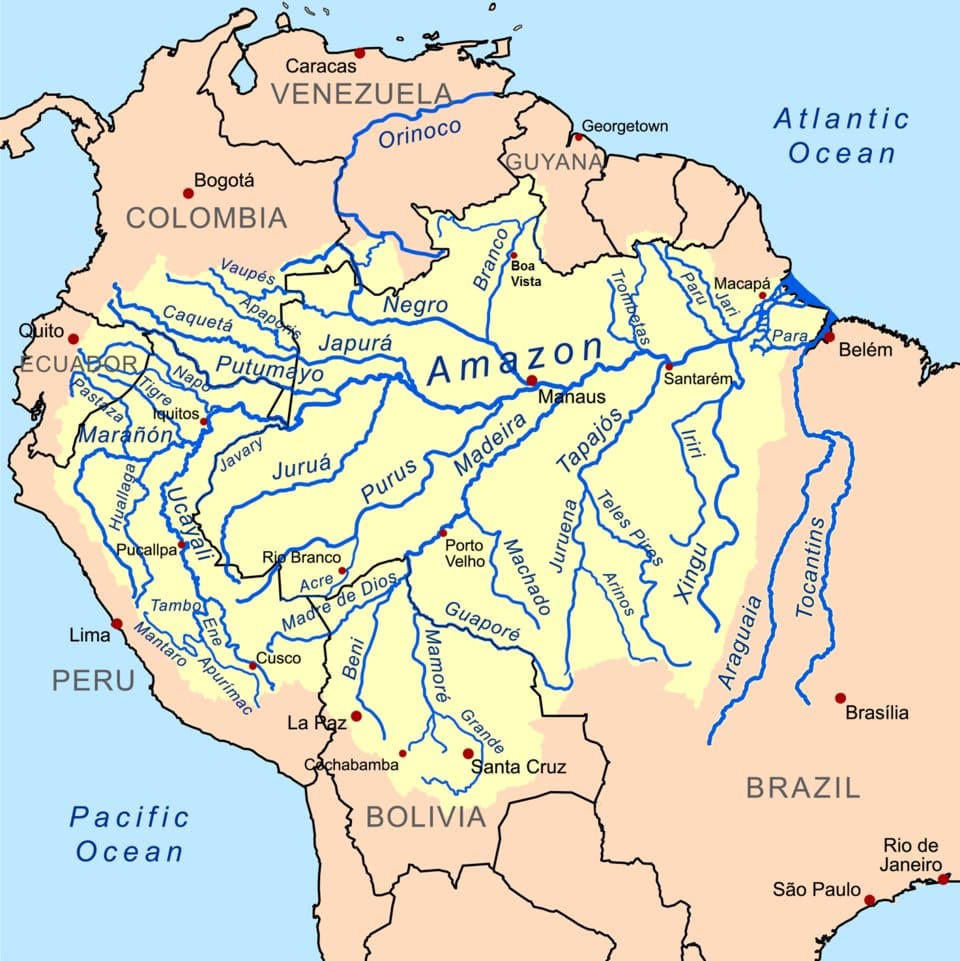
    Map showing the Amazon River Basin in South America
    Map by Kmusser, CC BY-SA 3.0, via Wikimedia Commons

    Species Overview

    FieldDetails
    Scientific NameApistogramma agassizii
    Common NamesAgassiz’s Dwarf Cichlid, Agassiz Apisto
    FamilyCichlidae
    OriginAmazon River basin (Peru, Brazil)
    Care LevelModerate
    TemperamentSemi-aggressive (territorial when breeding)
    DietCarnivore
    Tank LevelBottom to Middle
    Maximum Size3.5 inches (9 cm) males; 2.5 inches (6 cm) females
    Minimum Tank Size20 gallons (76 liters)
    Temperature73 to 84ยฐF (23 to 29ยฐC)
    pH5.0 to 7.0
    Hardness1 to 10 dGH
    Lifespan3 to 5 years
    BreedingCave spawner (harem breeder)
    Breeding DifficultyModerate
    CompatibilityPeaceful community (with appropriate tank mates)
    OK for Planted Tanks?Yes (ideal environment)

    Classification

    Taxonomic LevelClassification
    OrderCichliformes
    FamilyCichlidae
    SubfamilyGeophaginae
    GenusApistogramma
    SpeciesA. Agassizii (Steindachner, 1875)

    Apistogramma agassizii was originally described as Geophagus (Mesops) agassizii by Steindachner in 1875. The species name honors Louis Agassiz, the famous zoologist and geologist who led the Thayer Expedition to Brazil (1865-1866) during which the type specimens were collected. The genus name Apistogramma comes from the Greek for “uncertain line,” referring to the variably developed lateral lines found in species of this genus. A. Agassizii is the namesake of one of the three main lineage groups within the genus, the agassizii lineage, which includes several related species.

    Origin & Natural Habitat

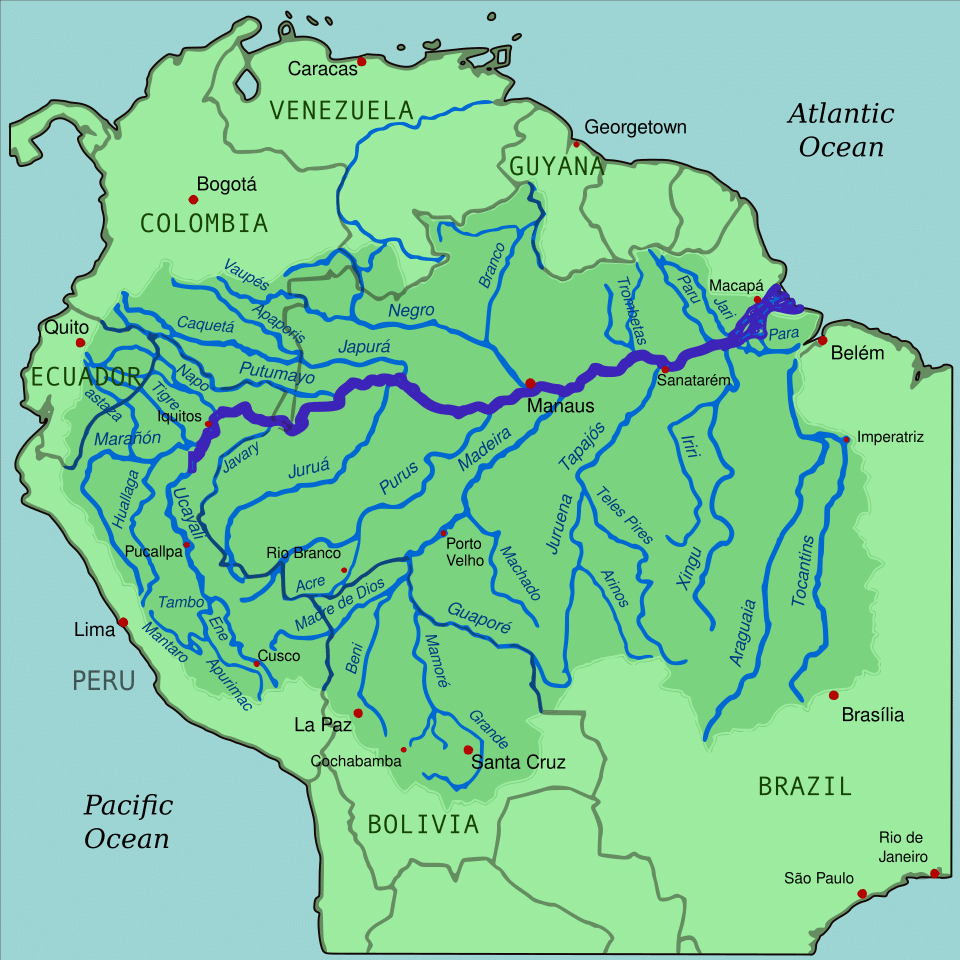
    Agassiz’s dwarf cichlid has a broad distribution across the Amazon River basin, ranging from Peru through Brazil along the main Amazon-Solimoes channel and its tributaries, extending east to the Capim River basin. This wide range encompasses diverse water types including clear, black, and white water habitats, which explains the considerable variation in coloration between populations.

    In the wild, A. Agassizii inhabits shallow tributaries with sandy bottoms, often in areas with abundant leaf litter, submerged roots, and overhanging vegetation. The water is warm, very soft, and acidic, often with pH values in the 4-5 range in blackwater habitats. However, the species is found across such a wide range of water types that generalizations about habitat are difficult. What’s consistent is the preference for structure-rich environments near the bottom, where the fish can establish territories and find shelter.

    The leaf litter habitat is particularly important for understanding how to keep this species well. In nature, the accumulated leaves on the bottom create a complex three-dimensional landscape that provides food (infusoria and small invertebrates), shelter, and spawning sites. Replicating this with dried leaves, botanicals, and dense planting dramatically improves the behavior and health of captive fish.

    Map of the Amazon River Basin and South American river systems
    Map of South American freshwater habitats. Via Wikimedia Commons.

    Appearance & Identification

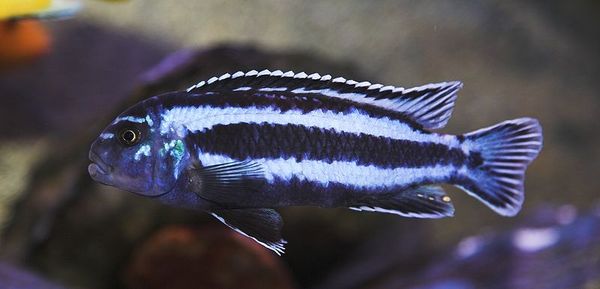
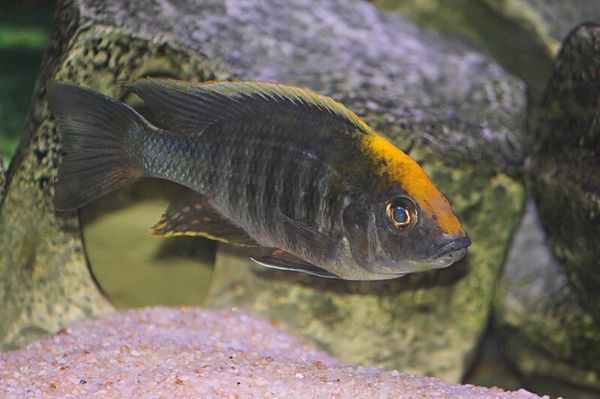
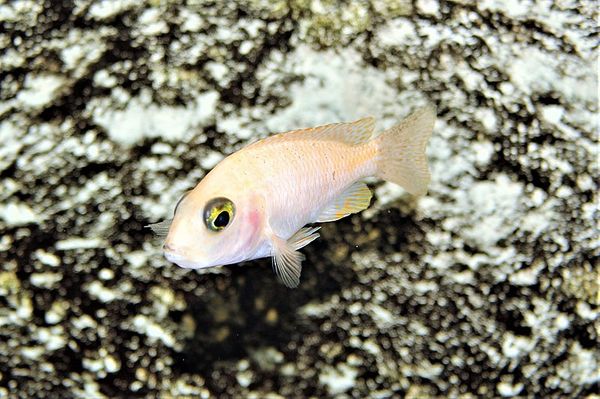
    Male Agassiz’s dwarf cichlids are among the most colorful fish in the genus. The body is elongated and laterally compressed, with a prominent dark lateral stripe running from the snout through the eye to the caudal peduncle. The most distinctive feature is the caudal fin, which is shaped like a spade or flame, coming to a pointed tip that makes the fish look larger and more impressive than it actually is.

    Wild-type males show a blue-silver body with yellow-orange on the belly, chest, and fins. However, selective breeding has produced numerous color forms including “double red” (red in the caudal and dorsal fins), “fire red” (intense overall red), “gold” (yellow-gold body), and “blue” (enhanced blue iridescence). Regardless of color form, the body shape and flame-shaped tail remain the hallmarks of the species.

    Females are considerably smaller and less colorful, with a brownish to olive body that transforms to bright yellow with bold dark markings when breeding or guarding fry. This color change is one of the most dramatic in the dwarf cichlid world.

    Male vs. Female

    Sexing adult A. Agassizii is straightforward. The size and fin differences between the sexes are pronounced.

    FeatureMaleFemale
    Body SizeUp to 3.5 inches (9 cm)Up to 2.5 inches (6 cm)
    Caudal FinFlame-shaped (spade), elongatedRounded, much smaller
    Dorsal FinElongated, with extended raysShorter, rounded
    ColorationVivid blues, reds, yellows depending on varietyBrownish-olive, turns bright yellow when breeding
    Body ShapeMore elongated, deeper bodySmaller, more compact

    Average Size & Lifespan

    Males reach a maximum of about 3-3.5 inches (7-9 cm), with some sources noting specimens up to 4.4 cm SL (standard length, which excludes the caudal fin). The flame-shaped caudal fin adds considerable visual length. Females are noticeably smaller at 2-2.5 inches (5-6 cm). This is one of the larger Apistogramma species, which is part of why a 20-gallon tank is recommended rather than the 15-gallon minimum that works for some smaller apistos.

    Lifespan is 3-5 years in captivity, which is standard for the genus. As with other dwarf cichlids, the relatively short individual lifespan is compensated by their willingness to breed, allowing you to maintain a self-sustaining population over many years. Optimal water quality and a varied diet are the biggest factors in reaching the upper end of that lifespan range.

    Care Guide

    Tank Size

    A 20-gallon (76-liter) tank is the minimum for a pair or a harem of one male with 2-3 females. For a community setup with dither fish and multiple female territories, 30-40 gallons provides more room and reduces aggression. As with all apistos, footprint matters more than height. A 20-gallon long (30 x 12 x 12 inches) is far better than a 20-gallon tall for this species.

    Each female in a harem needs her own territory with at least one cave. Plan the tank layout around providing distinct territorial zones separated by visual barriers. This prevents the male from constantly cornering any single female and allows each female to establish her own domain.

    Water Parameters

    ParameterRecommended Range
    Temperature73 to 84ยฐF (23 to 29ยฐC)
    pH5.0 to 7.0
    General Hardness1 to 10 dGH
    Ammonia0 ppm
    Nitrite0 ppm
    NitrateBelow 20 ppm

    Wild A. Agassizii come from extremely soft, acidic water with pH values as low as 4-5. Commercially bred specimens, however, are much more tolerant and can thrive in moderately soft water with a near-neutral pH. A pH around 6.5-7.0 with low hardness (GH around 6, KH around 2) works well for captive-bred fish. Don’t introduce apistos as the first fish in a newly cycled tank. Wait at least a few weeks until the biological balance is fully established, since these fish are sensitive to ammonia and nitrite.

    For breeding, softer and more acidic conditions (pH 6.0-6.5, GH below 5) significantly improve egg viability and hatch rates. Indian almond leaves, driftwood, and peat filtration naturally soften and acidify the water while providing a more natural environment.

    Filtration & Water Flow

    Gentle filtration is key. A. Agassizii comes from slow-moving water and doesn’t appreciate strong currents. Sponge filters are excellent for smaller setups, providing biological filtration with minimal flow. In larger tanks, a hang-on-back or small canister filter with a pre-filter sponge and diffused output works well. Matten filters are particularly well-suited for apisto tanks, offering large surface area for biological filtration with very low flow.

    Weekly water changes of 20-25% maintain water quality without causing parameter swings. Consistency matters more than large changes. Match the temperature and chemistry of the replacement water closely to what’s in the tank.

    Lighting

    Low to moderate lighting is preferred. These fish come from shaded forest streams and display their best behavior and coloration under subdued conditions. Floating plants are one of the most effective tools for creating the dim, sheltered environment apistos love. Under moderate planted-tank lighting, provide enough shade through plant cover that the bottom of the tank has areas of reduced light intensity.

    Plants & Decorations

    A densely planted tank is the ideal habitat for Agassiz’s dwarf cichlid. Java fern, anubias, cryptocorynes, and floating plants all work beautifully. The fish don’t damage plants, so you can go as elaborate with your aquascaping as you like. Dense planting creates visual barriers that help manage aggression and give each fish its own space.

    Caves are essential. Provide at least one cave per female, plus extras. Coconut shell halves with an entrance hole, small terracotta pots, commercially available ceramic caves, or natural rock formations all work. Driftwood adds structure and releases tannins that benefit water chemistry. Adding dried Indian almond leaves or other botanicals on the substrate mimics the natural leaf litter habitat and provides foraging opportunities.

    Substrate

    Fine sand is the ideal substrate. Agassiz’s apistos spend time on and near the bottom, occasionally sifting through sand for food particles. Sand provides a natural look, is gentle on their bodies, and supports the planted tank aesthetic that works so well with this species. A dark-colored sand can enhance the contrast with the fish’s coloration.

    Is the Agassiz’s Dwarf Cichlid Right for You?

    Before you buy, run through this honest checklist. The Agassiz’s Dwarf Cichlid is a great fish for the right keeper, but it is not for everyone.

    • You can provide soft, acidic water (pH 5.5 to 6.8) for best coloration and breeding
    • You have a 20-gallon or larger planted tank with driftwood and hiding spots
    • You want one of the most colorful freshwater fish available when conditions are right
    • You can keep a harem setup (1 male to 2 or 3 females) with adequate territory for each
    • You enjoy watching complex cichlid breeding behavior in a smaller package
    • You understand that water chemistry directly impacts how colorful this species becomes

    Tank Mates

    Agassiz’s dwarf cichlid is peaceful toward other species that stay out of its bottom territory. The classic setup pairs apistos with small, peaceful schooling fish in the upper water levels. These schooling fish serve as “dither fish” that help the apistos feel secure and encourage them to come out into the open.

    Best Tank Mates

    • Cardinal tetras. Classic apisto companions that thrive in similar soft, acidic water
    • Rummy-nose tetras. Peaceful mid-water schoolers that serve as excellent dither fish
    • Pencilfish (Nannostomus spp.). Upper-water dwellers that share soft-water preferences
    • Ember tetras. Tiny, peaceful, and beautiful alongside apistos in planted tanks
    • Hatchetfish. Surface-dwelling fish that avoid the apisto’s territory entirely
    • Otocinclus. Peaceful algae eaters that don’t compete for territory
    • Small corydoras. Can work in larger tanks, though watch for territory disputes

    Tank Mates to Avoid

    • Other bottom-dwelling cichlids in small tanks. Rams, other apistos, and kribensis create territorial conflicts
    • Aggressive or boisterous fish. Tiger barbs, serpae tetras, and similar species will harass and outcompete apistos
    • Large or predatory fish. Anything that could eat a 2-3 inch fish
    • Dwarf shrimp. Will be hunted and eaten, especially smaller species

    Food & Diet

    Agassiz’s dwarf cichlids are carnivores that feed on small invertebrates and insect larvae in the wild. In captivity, a protein-rich diet centered on frozen and live foods brings out the best coloration and condition. Frozen bloodworms, brine shrimp, daphnia, cyclops, and mysis shrimp are all eagerly accepted. Live foods like baby brine shrimp, blackworms, microworms, and grindal worms are excellent for conditioning and encouraging breeding behavior.

    Captive-bred specimens often accept high-quality micro pellets and crushed flake food, which simplifies daily feeding. However, frozen and live foods should remain a significant part of the diet for optimal health and coloration. Feed small amounts 2-3 times daily. These fish have small stomachs and do better with frequent, modest meals rather than one large feeding.

    Breeding & Reproduction

    Breeding Difficulty

    Moderate. A. Agassizii breeds readily in captivity once conditions are right. It’s considered one of the easier Apistogramma species to spawn, especially captive-bred stock. Sexual maturity is reached around 6 months of age.

    Spawning Tank Setup

    A 20-gallon breeding tank with sand substrate, multiple caves, leaf litter, and a sponge filter provides an ideal setup. Each female needs her own cave as a potential spawning site. Provide at least 2-3 cave options per female so they can choose their preferred site. Keep the tank densely planted with plenty of visual barriers.

    Water Conditions for Breeding

    Softer, more acidic water (pH 6.0-6.5, GH 2-5) at 79-82ยฐF (26-28ยฐC) improves egg viability and hatch rates. Adding tannins through Indian almond leaves or alder cones creates a more natural environment and has mild antifungal properties that can help protect eggs. Clean water with very low nitrates is essential.

    Conditioning & Spawning

    Condition breeders with live and frozen foods for 1-2 weeks. When ready, the female turns bright yellow with bold dark markings and begins actively exploring caves. She may show her belly to the male as an invitation. The female lures the male toward her chosen cave, where she deposits eggs on the ceiling or walls. The male enters briefly to fertilize the eggs.

    Be aware that A. Agassizii is a harem breeder, and aggression between the male and female is significant during the breeding cycle. In small or poorly structured tanks, one fish may seriously injure or kill the other. Provide ample cover and escape routes, and be prepared to separate them if aggression escalates beyond normal breeding behavior.

    Egg & Fry Care

    The female takes primary responsibility for egg care, fanning the eggs and removing any that develop fungus. Eggs hatch within 24-72 hours depending on temperature, which is notably fast compared to many other cichlids. The fry become free-swimming within a few days of hatching and are guarded by the female, who herds them around the tank and aggressively defends them.

    First foods should include infusoria and micro-organisms, followed by freshly hatched baby brine shrimp within a few days. The female’s protective behavior is remarkable. She’ll turn bright yellow as a warning signal and aggressively chase away any fish, including the male, that comes near her brood.

    Common Health Issues

    Bacterial Infections

    Bacterial infections present as fin erosion, body sores, cloudy eyes, or lethargy, triggered by poor water quality or stress. Prevention through consistent water quality is the best defense. Treatment with broad-spectrum antibiotics like kanamycin or nitrofurazone is effective when caught early. Quarantine infected fish in a hospital tank when possible.

    Ich (White Spot Disease)

    Ich is a common problem after stress events like temperature fluctuations or new tank introductions. Gradually raise the temperature to 82-84ยฐF (28-29ยฐC) and use a quality ich medication. Apistos tolerate standard ich treatments well due to their preference for warm water.

    Internal Parasites

    White, stringy feces and progressive weight loss despite normal feeding suggest internal parasites. This is more common in wild-caught specimens but can occur in tank-raised fish too. Metronidazole treats protozoan parasites like Hexamita, while praziquantel targets intestinal worms. Always quarantine new fish for at least two weeks.

    Velvet Disease (Oodinium)

    Velvet presents as a fine, dusty gold or rust-colored coating on the body, often accompanied by fin clamping and rapid breathing. It progresses faster than ich and is lethal if not treated quickly. Dim the lights (the parasite is photosynthetic), raise the temperature, and treat with copper-based medication. Early detection is crucial with velvet.

    Common Mistakes to Avoid

    • Not providing enough caves. Each female needs at least one cave. Without caves, females can’t spawn and remain chronically stressed
    • Introducing to a new tank too soon. Don’t add apistos to a freshly cycled tank. Wait at least 2-3 weeks for the biological balance to fully stabilize
    • Keeping in hard, alkaline water. While captive-bred fish are more tolerant, very hard water (above 15 dGH) and pH above 7.5 cause long-term health issues
    • Housing with aggressive tank mates. Apistos are small fish that will be bullied by larger or more aggressive species. Choose peaceful companions
    • Underestimating breeding aggression. A female guarding fry can become surprisingly aggressive. In small tanks, the male need to be removed for his own safety
    • Feeding only prepared foods. While captive-bred fish accept pellets, a diet without frozen or live foods will result in faded coloration and reduced vitality

    Where to Buy

    Agassiz’s dwarf cichlids are one of the more commonly available Apistogramma species, and you will often find them at local fish stores with a decent cichlid selection. For specific color varieties (double red, fire red, gold), specialty retailers are your best bet. Flip Aquatics carries quality dwarf cichlids and is worth checking for availability, and Dan’s Fish is another reliable source for healthy, well-conditioned specimens.

    When buying, look for active fish with vibrant coloration, intact fins (especially the male’s flame-shaped caudal), and no visible signs of disease. If possible, buy a group to establish a harem: one male with two or three females. Sexing is straightforward in adults, so selecting a proper group should be easy.

    Frequently Asked Questions

    Is the Agassiz’s dwarf cichlid good for beginners?

    Captive-bred A. Agassizii is one of the easier Apistogramma species to keep, along with the cockatoo apisto. It’s suitable for fishkeepers with some experience in basic tropical fish care, water testing, and maintenance. Complete beginners should gain some experience with hardier species first, but it’s an excellent second or third step into more specialized fishkeeping.

    Should I keep a pair or a harem?

    A harem of one male with 2-3 females is the more natural social structure and works better than a single pair. In a pair setup, the male’s attention is focused entirely on one female, which can lead to excessive harassment. With multiple females, his attention is distributed. Each female needs her own cave and territory, so plan the tank layout accordingly.

    What are the different color varieties?

    Popular varieties include “double red” (red in the caudal and dorsal fins), “fire red” (intense overall red coloration), “gold” or “yellow” (golden body tones), and “blue” (enhanced blue iridescence). Wild-type coloring varies considerably between geographic populations. All color forms have identical care requirements.

    What’s the difference between wild-caught and captive-bred?

    Wild-caught specimens are more demanding about water chemistry, requiring very soft, acidic water to thrive and breed. They will also carry internal parasites. Captive-bred fish are adapted to a wider range of conditions and are hardier. For most hobbyists, captive-bred is the better choice unless you specifically want a wild population for breeding purposes.

    Can I keep Agassiz’s apistos with shrimp?

    Not with dwarf shrimp like cherry shrimp or neocaridina. Apistos will hunt and eat dwarf shrimp with enthusiasm. Larger shrimp like amanos may survive if the tank has dense plant cover, but there’s always risk. If you want to keep both, a heavily planted tank with lots of moss gives the shrimp the best chance, but losses are likely.

    What It Is Actually Like Living With Agassiz’s Dwarf Cichlid

    This is the part no other care guide gives you. Forget water parameters for a minute. Here is what it is actually like to share your tank with this species.

    They have more personality than you expect. The Agassiz’s Dwarf Cichlid is not a fish that just sits in the background. Once settled in, they become interactive, curious, and responsive to your presence.

    Feeding time reveals their character. Watch how the Agassiz’s Dwarf Cichlid approaches food and you will see real personality. Some are bold, some are cautious, and their feeding behavior tells you a lot about their mood and health.

    They establish routines. After a few weeks, your Agassiz’s Dwarf Cichlid will have favorite spots, preferred paths through the tank, and predictable patterns. Learning these routines makes you a better keeper.

    Color is a health indicator. The Agassiz’s Dwarf Cichlid’s coloration is a real-time report card on your husbandry. Vibrant color means happy fish. Faded color means something is wrong. Pay attention.

    How the Agassiz’s Dwarf Cichlid Compares to Similar Species

    Agassiz’s Dwarf Cichlid vs. Borellii Dwarf Cichlid

    The Borellii is more peaceful and slightly more forgiving of water conditions. The Agassiz’s has more dramatic coloration in ideal conditions but is more demanding about water chemistry and more aggressive. For beginners to apistos, the Borellii is the safer starting point. For keepers who can nail the water parameters, the Agassiz’s rewards you with stunning colors.

    Agassiz’s Dwarf Cichlid vs. German Blue Ram

    Both are small, colorful South American cichlids that need warm, soft water. The German Blue Ram is more sensitive to water quality and has a shorter lifespan. The Agassiz’s Dwarf Cichlid is hardier overall and lives longer. If you have struggled keeping Rams alive, the Agassiz’s is worth trying.

    Closing Thoughts

    Agassiz’s apistos in the right water are electric. In the wrong water, they are grey and dying.

    Agassiz’s dwarf cichlid is a classic of the hobby for good reason. The combination of vivid coloration, manageable size, fascinating breeding behavior, and relative adaptability makes it one of the best apistos for anyone looking to explore the world of dwarf cichlids. The flame-tailed males are genuinely stunning in a well-planted tank, and the behavioral dynamics of a harem group provide entertainment that simple fish-watching can’t match.

    Set up a planted tank with soft water, sandy substrate, and plenty of caves. Stock a harem with one male and two or three females. Add some cardinal tetras or pencilfish as dither fish. Feed a varied carnivorous diet with plenty of frozen and live foods. The result is one of the most rewarding small fish setups you can build, and one that consistently ranks among the favorites of experienced hobbyists worldwide.

    This article is part of our South American Cichlids: Complete A-Z Species Directory. Visit the hub page to explore care guides for all 32 South American cichlid species we cover.

    References

  • Ulrey’s Tetra Care Guide: Tank Setup, Diet, Tank Mates, and More

    Ulrey’s Tetra Care Guide: Tank Setup, Diet, Tank Mates, and More

    Table of Contents

    Ulrey’s tetra is a hardy, overlooked schooler that works in almost any community setup. It does not need soft water, does not need special food, and does not cause problems. The only reason it is not more popular is that most stores do not carry it. If you find them, buy them.

    Ulrey’s tetra is the easy tetra that nobody knows about. If you find them in stock, do not hesitate.

    The Reality of Keeping Ulrey’s Tetra

    Group size is not a suggestion. The minimum school size for ulrey’s tetra is not just a guideline. In small groups, these fish lose color, become stressed, and display abnormal behavior. A proper group of 6 to 8+ is where you start to see natural schooling behavior, full color expression, and the confidence that makes them worth keeping.

    Tank mate selection requires thought. The ulrey’s tetra is not aggressive in the traditional sense, but it is assertive enough to cause problems with the wrong companions. Slow-moving, long-finned species are targets. Fast, short-finned fish of similar size are fine. Plan your community around this reality.

    Hardy does not mean indestructible. The ulrey’s tetra tolerates a range of conditions, but it still needs basic care. Ammonia spikes, dramatic temperature swings, and neglected water changes will catch up to even the toughest species. The difference is margin of error, not immunity.

    Store appearance is not home appearance. Fish in store tanks are stressed, crowded, and under inappropriate lighting. The ulrey’s tetra almost always looks better in a properly set up home aquarium than it does at the store. Dark substrate, live plants, and appropriate lighting bring out colors and behaviors you will never see in a retail environment.

    Biggest Mistake New Owners Make

    Keeping them with fish small enough to eat. This is a predator. It will eat anything it can fit in its mouth. If you stock smaller fish with a ulrey’s tetra, you are feeding it expensive live food.

    Expert Take

    Predatory fish are not for everyone, but the ulrey’s tetra is one of the more manageable predatory species in the hobby. If you understand the feeding requirements, the tank mate restrictions, and the space needs, it is a genuinely fascinating fish to keep.

    Key Takeaways

    • Peaceful schooling fish that does best in groups of 6 or more
    • 20-gallon minimum gives a school enough room to swim and display naturally
    • Hardy and adaptable to a wide pH range (6.0 to 7.5), making it beginner-friendly
    • Distinctive flag-like pattern with a dark horizontal stripe topped by a golden band
    • Easy to feed and compatible with most mostly peaceful community fish, but keep them in groups of 8 or more to manage their intraspecies sparring. Small groups bring out the worst in them
    Map showing the Amazon River Basin in South America
    Map by Kmusser, CC BY-SA 3.0, via Wikimedia Commons

    Species Overview

    FieldDetails
    Scientific NameHemigrammus ulreyi
    Common NamesUlrey’s Tetra
    FamilyCharacidae
    OriginParaguay River basin, Pantanal region (Brazil/Paraguay)
    Care LevelEasy
    TemperamentPeaceful
    DietOmnivore
    Tank LevelMid
    Maximum Size2 inches (5 cm)
    Minimum Tank Size20 gallons (76 liters)
    Temperature72-79ยฐF (22-26ยฐC)
    pH6.0-7.5
    Hardness2-15 dGH
    Lifespan3-5 years in captivity
    BreedingEgg scatterer
    Breeding DifficultyModerate
    CompatibilityCommunity
    OK for Planted Tanks?Yes

    Classification

    Taxonomic LevelClassification
    OrderCharaciformes
    FamilyCharacidae
    GenusHemigrammus
    SpeciesH. Ulreyi (Boulenger, 1895)

    The genus Hemigrammus is one of the largest in the order Characiformes, containing over 70 described species. Taxonomy within the genus is considered Incertae Sedis (uncertain placement), and future revisions may reorganize several species into new genera.

    Note on taxonomy: In 2024, a major phylogenomic study (Melo et al.) reorganized the traditional family Characidae, splitting several genera into newly erected families. Unlike many other Hemigrammus species that were moved into Acestrorhamphidae, H. Ulreyi remained within Characidae based on its phylogenetic placement. Some older references may group it differently, but current evidence supports keeping it in Characidae.

    Origin & Natural Habitat

    Map of the Paraguay River basin in South America showing the native habitat of Ulrey's tetra
    Map of the Paraguay River basin, native range of Ulrey’s tetra. Image by Kmusser, CC BY-SA 3.0, via Wikimedia Commons.

    Ulrey’s tetra is native to the Paraguay River basin, including the vast Pantanal wetlands that span parts of Brazil and Paraguay. The Pantanal is one of the largest tropical wetland systems on Earth, and it provides a unique environment shaped by dramatic seasonal flooding.

    In the wild, these fish inhabit slow-moving streams, tributaries, and floodplain pools where vegetation is dense along the margins. The water is typically warm, slightly acidic to neutral, and moderately soft. The substrate is often sandy or silty, with leaf litter and submerged vegetation providing cover. During the wet season, flooded grasslands and forests expand the available habitat significantly, and these tetras take advantage of the additional food sources and shelter.

    Understanding this environment is helpful when setting up a tank for them. They don’t come from extreme blackwater conditions, so they’re more adaptable to typical aquarium water than many other South American tetras.

    Appearance & Identification

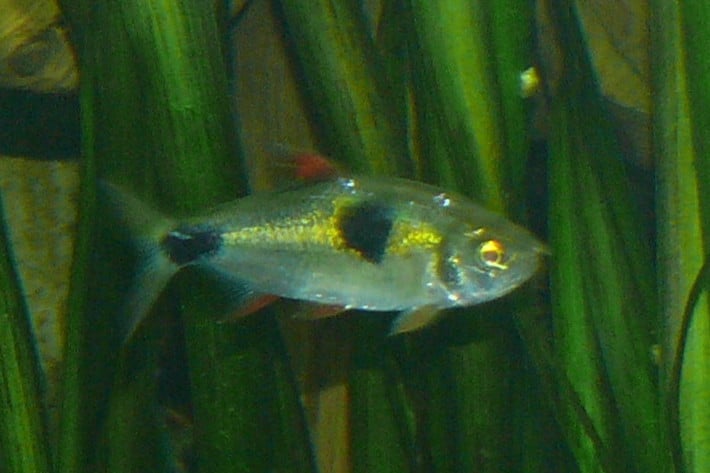
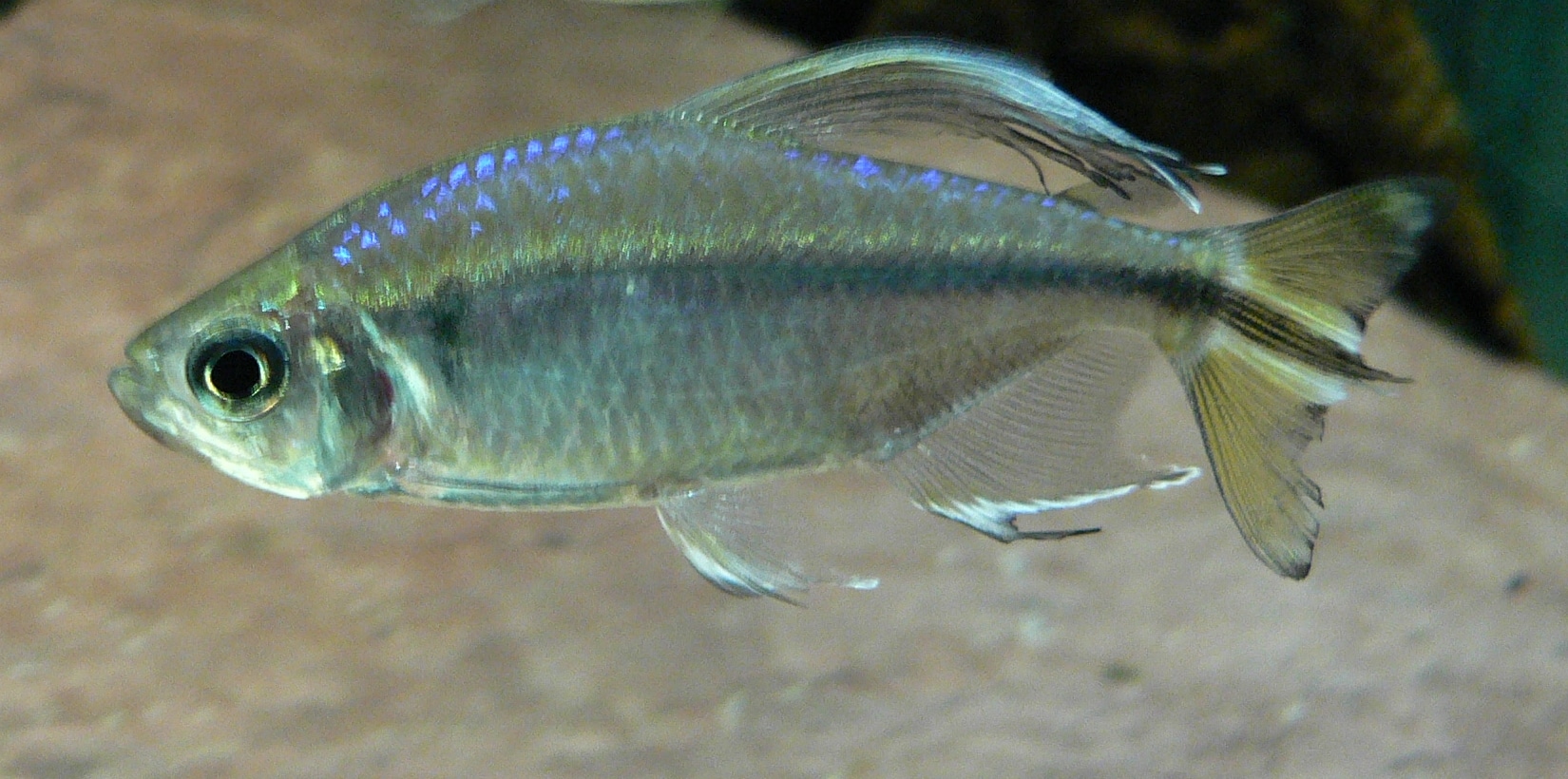
    Ulrey’s tetra is a clean-looking fish with a distinctive color pattern that makes it easy to identify once you know what to look for. The body is a silvery olive base, compressed laterally like most characins. What sets it apart is the bold dark horizontal stripe that runs from behind the gill cover to the base of the tail fin.

    Just above that dark stripe sits a bright golden-yellow band that runs parallel to it, creating a striking two-toned “flag” pattern. This contrast between the dark and golden markings is the hallmark of the species and gives the fish a polished, well-defined look that really pops in a planted tank.

    The fins are mostly transparent with a slight yellowish tint. The upper portion of the eye shows the reddish tone that’s common in many Hemigrammus species. In good conditions with proper lighting and diet, the colors intensify noticeably, and a well-maintained school is genuinely attractive.

    Male vs. Female

    Sexual dimorphism in Ulrey’s tetras is subtle. Males are typically slimmer and may display slightly more vivid coloration, especially along the golden band. Females are rounder and fuller-bodied, particularly when they are carrying eggs. The differences are most visible when comparing adults side by side, but they aren’t dramatic enough to spot at a glance in a mixed group.

    Average Size & Lifespan

    Ulrey’s tetras reach a maximum size of about 2 inches (5 cm) in total length. Most aquarium specimens stay in the 1.5 to 1.75 inch range. They’re comparable in size to other popular small tetras like neons and glowlights.

    With stable water quality and a varied diet, expect a lifespan of 3 to 5 years. This is typical for small characins. The biggest factors in reaching the upper end of that range are consistent water parameters, proper nutrition, and keeping them in a low-stress environment with appropriate tankmates.

    Care Guide

    Tank Size

    A 20-gallon tank is the recommended minimum for a school of 6 to 8 Ulrey’s tetras. If you want a larger group of 10 or more (which I’d always recommend for schooling species), step up to a 30-gallon or bigger. These fish are active mid-level swimmers, and the extra horizontal swimming space makes a real difference in how naturally the school behaves.

    Water Parameters

    ParameterIdeal Range
    Temperature72-79ยฐF (22-26ยฐC)
    pH6.0-7.5
    General Hardness2-15 dGH
    KH2-10 dKH
    Ammonia / Nitrite0 ppm
    NitrateBelow 30 ppm

    One of the best things about Ulrey’s tetra is its adaptability. It tolerates a wider pH and hardness range than many South American tetras, which makes it a good fit for hobbyists who don’t have naturally soft water. That said, they’ll show the best coloration in slightly soft, mildly acidic conditions. Adding driftwood or Indian almond leaves to release tannins helps bring out those golden tones.

    Filtration & Water Flow

    Standard filtration with a hang-on-back filter or sponge filter works well. These fish come from slow-moving waters, so keep the flow moderate. A gentle current is fine, but avoid anything that creates a strong directional flow across the tank. Weekly water changes of 20 to 25 percent will keep nitrates in check and maintain water quality.

    Lighting

    Moderate lighting is ideal. Ulrey’s tetras aren’t as light-sensitive as some deeper-water species, but they still look their best under subdued conditions. Floating plants like Amazon frogbit or red root floaters help diffuse overhead light and create dappled shade zones that mimic their natural habitat.

    Plants & Decorations

    A planted tank is the way to go with these fish. Use a mix of background plants (Vallisneria, Amazon swords), midground plants (Cryptocorynes, Anubias), and floating plants to create layers of cover. Driftwood and dried leaf litter add a natural touch and release tannins that enhance coloration.

    Leave an open swimming area in the center or front of the tank so the school has room to move together. A well-planted perimeter with open center is the classic community tank layout, and it works perfectly for this species.

    Substrate

    A dark substrate (black sand, dark gravel, or an aquasoil) will make the golden and dark markings on these fish stand out much more than a light-colored substrate. This isn’t a strict requirement, but the visual difference is significant. Fine sand or smooth gravel both work well.

    Is the Ulrey’s Tetra Right for You?

    Ulrey’s tetra is a solid, underrated choice for community tanks with the right group dynamics. Here’s who they’re best for:

    • You want a classic-looking tetra with bold markings that hold up across the tank
    • You can keep a group of 8+ to spread out their internal social dynamics
    • You have a 20-gallon or larger tank with both open swimming space and planted areas
    • You don’t mind a tetra species that’s harder to source than the usual pet store options
    • You want a robust fish that handles a range of water conditions without drama
    • Avoid if you only want 5-6. Smaller groups amplify their nippy tendencies within the school

    Tank Mates

    Ulrey’s tetras are peaceful community fish that mix well with other calm, similarly sized species. They’re not nippy, not pushy, and generally mind their own business in the mid-water column.

    Best Tank Mates

    • Other small, peaceful tetras (neon tetras, ember tetras, cardinal tetras, rummy-nose tetras)
    • Rasboras (harlequin rasboras, chili rasboras)
    • Corydoras catfish
    • Small Loricariids (otocinclus, bristlenose plecos)
    • Dwarf cichlids (Apistogramma, rams)
    • Small gouramis (honey gouramis, sparkling gouramis)
    • Peaceful livebearers (endlers, platies)
    • Cherry shrimp and amano shrimp
    • Nerite snails, mystery snails

    Tank Mates to Avoid

    • Large or aggressive cichlids (oscars, Jack Dempseys, convicts)
    • Fast, nippy species like tiger barbs or serpae tetras
    • Any predatory fish large enough to eat them
    • Highly territorial bottom-dwellers that may stress the group

    Food & Diet

    Feeding Ulrey’s tetras is as simple as it gets. They’re true omnivores that accept virtually anything offered. In the wild, they feed on small insects, insect larvae, worms, micro-crustaceans, and plant matter. In the aquarium, variety is the key to keeping them healthy and colorful.

    • Staple: High-quality flakes or micro pellets
    • Frozen foods: Bloodworms, daphnia, brine shrimp
    • Live foods: Baby brine shrimp, microworms, daphnia
    • Supplements: Freeze-dried foods, spirulina-based flakes for plant matter

    Feed small portions two to three times daily rather than one large feeding. Their mouths are small, so crushed flakes or micro-sized pellets work better than standard pellets. A diet that includes regular frozen or live foods will bring out the best coloration, especially along that golden stripe.

    Breeding & Reproduction

    Ulrey’s tetras are egg scatterers that is bred in captivity with proper preparation. They’re not the most frequently bred tetra, but it’s definitely achievable with the right setup and conditioning.

    Breeding Difficulty

    Moderate. They require a dedicated breeding setup and some preparation, but they don’t have the extreme water chemistry demands of some other characins.

    Spawning Tank Setup

    • Breeding tank: 10 to 15 gallons
    • Decor: Fine-leaved plants (Java moss, Cabomba) or spawning mops
    • Lighting: Very dim or cover the sides of the tank
    • Filtration: Gentle sponge filter only
    • Base: A mesh or marble bottom helps prevent the parents from eating eggs

    Water Conditions for Breeding

    • Temperature: 78 to 82ยฐF (26 to 28ยฐC), slightly warmer than normal
    • pH: 6.0 to 6.5
    • Hardness: 2 to 6 dGH (softer water encourages spawning)

    Conditioning & Spawning

    Condition a breeding pair (or a small group with more males than females) with high-protein live and frozen foods for one to two weeks before introducing them to the breeding tank. Bloodworms, brine shrimp, and daphnia are ideal conditioning foods. Introduce the conditioned fish to the spawning tank in the evening. Spawning typically occurs the following morning as light levels increase.

    The female will scatter adhesive eggs among fine-leaved plants or spawning mops. A single spawning can produce 100 to 200 eggs.

    Egg & Fry Care

    Remove the parents immediately after spawning, as they will eat the eggs. Keep the breeding tank dark, as the eggs are light-sensitive. Eggs typically hatch in 24 to 36 hours. The fry will absorb their yolk sacs over the next 2 to 3 days and become free-swimming around day 4 to 5.

    Feed free-swimming fry infusoria or commercially available liquid fry food for the first week, then transition to freshly hatched baby brine shrimp as they grow. Perform small, frequent water changes to maintain quality, and keep the light levels low during the early weeks.

    Common Health Issues

    Ulrey’s tetras are reasonably hardy fish, but like all small characins, they’re susceptible to a handful of common issues. Most health problems come down to water quality and stress.

    Ich (White Spot Disease)

    The most common issue with small tetras, usually triggered by temperature swings or transport stress. Look for small white spots on the body and fins. Raise the temperature to 86ยฐF (30ยฐC) gradually and treat with a quality ich medication.

    Fin Rot

    Typically a water quality problem. Frayed, discolored fin edges are the telltale sign. Increase water change frequency and treat with antibacterial medication if the condition doesn’t improve.

    Neon Tetra Disease

    A risk with most small characins, caused by the parasite Pleistophora hyphessobryconis. Symptoms include fading color, erratic swimming, and body wasting. There is no reliable cure, so prevention through quarantine is critical. Always quarantine new fish for 2 to 4 weeks before adding them to your main tank.

    Stress-Related Illness

    Keeping Ulrey’s tetras in groups that are too small, with aggressive tankmates, or in unstable water conditions leads to chronic stress. Stressed fish become more vulnerable to opportunistic infections. The best prevention is a stable environment, proper group size, and compatible tankmates.

    Common Mistakes to Avoid

    • Keeping too few: A pair or a group of 3 will be stressed and hide constantly. Get at least 6, and 10+ is better.
    • Skipping the cycle: These fish should only go into a fully cycled aquarium. They don’t handle ammonia or nitrite spikes well.
    • Overly strong flow: They come from calm waters. A powerhead blasting across the tank will exhaust them.
    • Aggressive tankmates: They’re peaceful fish that won’t compete with pushy species for food or territory.
    • Skipping quarantine: Small tetras are notorious for carrying diseases into established tanks. Always quarantine new arrivals for at least 2 weeks.
    • Light-colored substrate with no cover: They’ll look washed out and feel exposed. Give them a dark substrate and plant cover.

    Where to Buy

    Ulrey’s tetra is not one of the more commonly stocked species at chain pet stores, so you’ll likely need to look at specialty retailers or online fish stores. These are two trusted sources I recommend:

    Try to buy a group all at once rather than adding individuals over time. A group that arrives together acclimates better and schools more cohesively. If you can’t find them in stock, check back regularly or reach out to the retailer to ask about availability.

    Frequently Asked Questions

    Are Ulrey’s tetras good for beginners?

    Yes. They’re hardy, peaceful, and tolerate a wide range of water parameters. As long as you keep them in a proper group in a cycled tank, they’re a great choice for someone getting into the hobby.

    How many Ulrey’s tetras should I keep?

    A minimum of 6, but 10 or more is ideal. Larger groups school more naturally, display brighter colors, and are less stressed overall.

    Do Ulrey’s tetras nip fins?

    No. They’re one of the more peaceful tetra species and are not known for fin nipping behavior. They’re generally safe with long-finned species.

    What makes Ulrey’s tetra different from other Hemigrammus species?

    The most distinctive feature is the bold dark horizontal stripe with a bright golden-yellow band running just above it. This “flag” pattern is unique to H. Ulreyi and makes it easy to distinguish from other small tetras in the genus.

    Can Ulrey’s tetras live in hard water?

    They’re more adaptable than many South American tetras and can handle moderately hard water up to 15 dGH. However, they’ll show their best colors in softer water. If your tap water is very hard, mixing with RO water helps.

    Do Ulrey’s tetras need a heater?

    In most homes, yes. They need stable temperatures between 72 and 79ยฐF (22 to 26ยฐC). A reliable heater prevents the temperature swings that can trigger stress and disease.

    What It Is Actually Like Living With Ulrey’s Tetra

    In a proper school, ulrey’s tetra display natural movement patterns that are genuinely engaging to watch. The fish interact with each other, establish subtle hierarchies, and move through the tank with purpose.

    They occupy the middle water column during active hours, creating movement and visual interest in the zone where most fishkeepers want action.

    Feeding time is when their personality comes out. They learn your routine quickly and will anticipate feeding before you even open the lid.

    Their color and behavior improve over time as they settle into a stable environment. Fish that have been in the same tank for months look noticeably better than recently added stock.

    How the Ulrey’s Tetra Compares to Similar Species

    Ulrey’s Tetra vs. Buenos Aires Tetra

    Buenos Aires tetras are superficially similar. Both are robust, medium-sized tetras with horizontal markings. But Buenos Aires tetras are notorious plant eaters and grow significantly larger. Ulrey’s tetras are far more plant-safe and stay smaller, making them a better fit for planted community tanks. Buenos Aires tetras are also more boisterous and better suited to semi-aggressive setups. If you want that bold stripe look in a planted tank, Ulrey’s tetra is the way to go without sacrificing your aquascape. Check out our Buenos Aires Tetra care guide for more details.

    Ulrey’s Tetra vs. Bloodfin Tetra

    Bloodfin tetras are another hardy, understated species, but their appeal is completely different. Red fins against a silvery body versus Ulrey’s bold horizontal stripe. Both are excellent hardy community fish with similar care requirements. Bloodfin tetras are slightly easier to find and have an incredible lifespan (10+ years is documented). Ulrey’s tetras offer more pattern interest. For visual impact in the mid-water column, Ulrey’s wins. For longevity and easy sourcing, bloodfins take it. Check out our Bloodfin Tetra care guide for more details.

    Closing Thoughts

    Ulrey’s tetra is the kind of fish that rewards you for paying attention. It doesn’t have the instant flash of a cardinal tetra or the name recognition of a neon, but a school of 10 or more in a well-planted tank with a dark substrate is a genuinely impressive sight. That golden stripe catches the light in a way that’s hard to appreciate from a single photo.

    They’re genuinely easy to care for once you have a proper group size. They’re one of the most forgiving tetras in terms of water chemistry, peaceful with just about everything, and hardy enough to handle typical community tank conditions without issue. If you’ve been keeping the usual small tetras and want to try something a little different, Ulrey’s tetra is a species that deserves a spot on your shortlist.

    Check out our tetra tier list video where we rank the most popular tetras in the hobby, including the Ulrey’s tetra:

    References

    • Froese, R. And D. Pauly, Eds. FishBase. Hemigrammus ulreyi. Accessed 2025.
    • SeriouslyFish. Hemigrammus ulreyi species profile. Accessed 2025.
    • Melo, B.F, et al. (2024). Phylogenomics of Characidae. Zoological Journal of the Linnean Society, 202(1), 1-37.

    Ulrey’s tetra is just one of dozens of tetra species we cover in our complete species directory. Whether you’re looking for beginner-friendly community tetras or something more specialized, our guide has you covered.

    ๐Ÿ‘‰ Tetras: Complete A-Z Species Directory

  • Demasoni Cichlid Care Guide: The Tiny Mbuna With a Giant Attitude

    Demasoni Cichlid Care Guide: The Tiny Mbuna With a Giant Attitude

    Table of Contents

    Demasoni cichlids pack more aggression per inch than any other mbuna in the hobby. They are relentless, territorial, and will kill tank mates if the group is too small. The only way to keep demasoni is to overstock aggressively and spread the aggression across a large group. I have seen single demasoni murder entire tanks because the keeper thought three or four would be enough. It is not. With demasoni, you go big on numbers or you do not keep them at all. The one-inch fish that needs a bigger group than species ten times its size.

    Three Demasoni is a murder scene; twelve is a functioning society.

    What Most Care Guides Get Wrong About Demasoni Cichlid

    The biggest misconception about Demasoni is that they is kept in small groups like other mbuna. I see this advice everywhere, and it leads to dead fish every time. Keeping 3 or 4 Demasoni in a tank is a death sentence for the weakest individuals. The dominant male will relentlessly target subordinates until only one remains. You need 12 or more to spread aggression properly. The second mistake is housing them in a 40 gallon tank because they are small. Size does not equal space requirements with this species. Their aggression output demands 55 gallons minimum, and honestly, 75 is where they really do well.

    The Reality of Keeping Demasoni Cichlid

    Mbuna keeping is a different discipline from regular fishkeeping. The Demasoni Cichlid is no exception. Here is what you need to prepare for.

    Hard, alkaline water is mandatory. Lake Malawi chemistry means pH between 7.8 and 8.6, high GH, and high KH. There is no faking this. If your tap water is soft and acidic, you need to buffer every water change without exception.

    Overstocking is the strategy. Keeping 3 or 4 Demasoni Cichlids leads to one bully and victims. You need groups of 12 or more to spread aggression. But overstocking only works with heavy filtration and consistent water changes.

    Diet is critical. Spirulina and veggie-based foods are essential. High-protein diets cause Malawi Bloat, which is often fatal.

    Rockwork defines territories. Mbuna need piles of rocks with caves and passageways. Without proper rockwork, dominant fish have nowhere to establish boundaries and subordinates have nowhere to hide. Stack rocks from substrate to near the waterline.

    Biggest Mistake New Demasoni Cichlid Owners Make

    Understocking. Keeping a small group of Demasoni Cichlids means the dominant fish picks off the weak ones. You need a large group to distribute aggression. Twelve is the minimum for most mbuna species.

    Expert Take

    Start with a group of 12 or more in a 55 gallon minimum. Use aragonite or crushed coral substrate to buffer pH naturally. Feed spirulina-based food as the staple. Stack rocks to create territories. This formula works for Demasoni Cichlids and most other mbuna.

    Key Takeaways

    • Small but aggressive. Demasoni only reach 2.5. 3 inches (6.4. 7.6 cm), but they are one of the most territorial mbuna species available
    • Keep in large groups. A minimum of 12 fish is essential to diffuse aggression. I would not keep fewer under any circumstances; keeping just a few will result in bullying and casualties
    • Herbivore diet is critical. Spirulina-based foods should be the staple; high-protein diets lead to deadly Malawi Bloat
    • 55-gallon minimum. Though small, they need space for territories; 75 gallons or more is ideal for a proper colony
    • Maternal mouthbrooder. Females carry eggs for 14. 20 days and are easy to breed in captivity
    • Vulnerable in the wild. Listed as Vulnerable on the IUCN Red List due to their extremely limited range in Lake Malawi
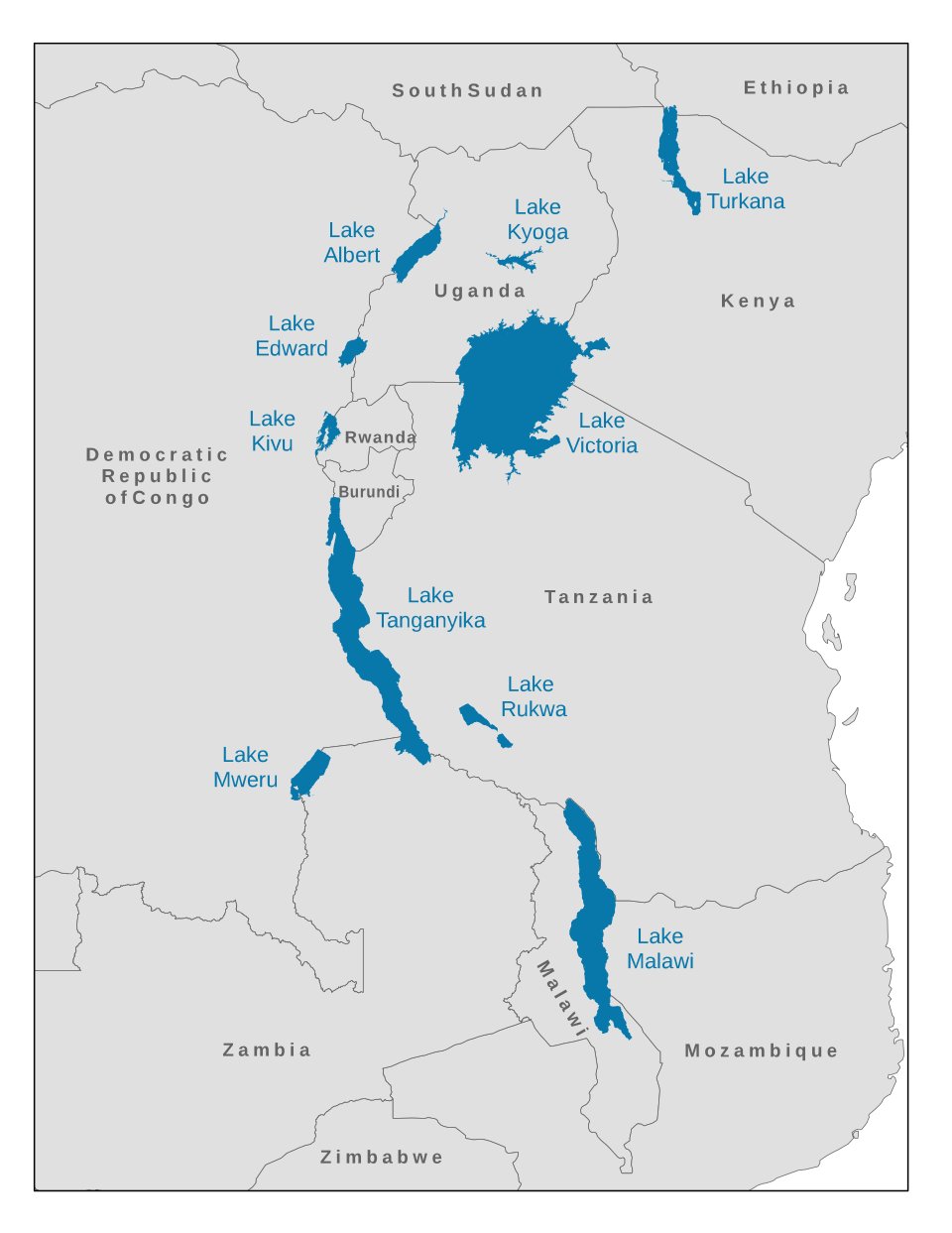
    Map showing Lake Malawi and the African Great Lakes region
    Map of Lake Malawi. Via Wikimedia Commons.

    Species Overview

    Common NameDemasoni Cichlid, Dwarf Mbuna
    Scientific NamePseudotropheus demasoni
    Care LevelIntermediate
    TemperamentAggressive
    Max Size2.5. 3 inches (6.4. 7.6 cm)
    Min Tank Size55 gallons (208 liters)
    DietHerbivore
    Lifespan10+ years
    Water Temp76. 82ยฐF (24. 28ยฐC)
    pH7.8. 8.6
    OriginLake Malawi, Africa

    Classification

    KingdomAnimalia
    PhylumChordata
    ClassActinopterygii
    OrderCichliformes
    FamilyCichlidae
    GenusPseudotropheus
    SpeciesP. Demasoni

    Origin & Natural Habitat

    The Demasoni Cichlid is endemic to Lake Malawi in East Africa, one of the African Great Lakes and one of the most biodiverse freshwater ecosystems on the planet. Specifically, this species is found around Pombo Rocks and Ndumbi Point along the Tanzanian coast of the lake.

    What makes Demasoni particularly interesting. And concerning from a conservation standpoint. Is their incredibly limited natural range. They occupy just a small stretch of rocky shoreline, which is why the IUCN has listed them as Vulnerable. In the wild, they inhabit the rocky sediment-free zones at depths between 3 and 13 feet (1. 4 meters), grazing on the biofilm (aufwuchs) that coats the rocks.

    Lake Malawi itself is characterized by extremely hard, alkaline water with a stable pH ranging from 7.8 to 8.6. The water is clear and warm, between 76. 82ยฐF (24. 28ยฐC). Recreating these conditions in the home aquarium is essential for keeping Demasoni healthy and displaying their best colors.

    Map showing Lake Malawi and the African Great Lakes region
    Map by MellonDor, CC BY-SA 4.0, via Wikimedia Commons

    Appearance & Identification

    Demasoni Cichlids are absolutely stunning for their size. Their bodies feature alternating dark blue (nearly black) and light blue vertical bars that run from the head to the tail. The dorsal fin continues the striping pattern, and the overall effect creates one of the most visually striking small cichlids in the hobby.

    Their body shape is typical of mbuna. Elongated and somewhat compressed laterally, built for darting in and out of rocky crevices. The color intensity can vary somewhat depending on mood, dominance status, and diet, but healthy Demasoni always display bold, high-contrast striping.

    Male vs. Female

    Sexing Demasoni is one of the trickier aspects of keeping this species. Unlike many mbuna where males and females look drastically different, both sexes of P. Demasoni display the same blue and black barring pattern. However, there are subtle differences if you know what to look for.

    FeatureMaleFemale
    SizeSlightly larger, up to 3 inchesSlightly smaller, around 2.5 inches
    Color IntensityBolder, more vivid stripesSlightly duller coloration
    Egg SpotsMore prominent on anal finFewer or absent egg spots
    Body ShapeSlightly more robustRounder belly when carrying eggs
    BehaviorMore territorial, displays frequentlyLess dominant, schools with other females

    Average Size & Lifespan

    Demasoni Cichlids are one of the smallest mbuna species available in the hobby. They reach 2.5. 3 inches (6.4. 7.6 cm) in captivity, with males being slightly larger than females. Aquarium specimens occasionally grow a touch larger than their wild counterparts, but don’t expect them to exceed 3.5 inches under any circumstances.

    In terms of lifespan, Demasoni are surprisingly long-lived for their size. With proper care. Clean water, appropriate diet, and a well-managed colony. They can live 10 years or more in captivity. I’ve seen reports of well-kept specimens pushing past the 12-year mark, which is remarkable for a fish this small.

    Care Guide

    Tank Size

    Despite their small size, Demasoni Cichlids need a surprisingly spacious tank. The absolute minimum is 55 gallons (208 liters) for a small group, but I’d strongly recommend 75 gallons (284 liters) or larger if you want a proper colony of 12 or more. A 4-foot tank is the minimum length you need. These fish need horizontal swimming space to establish territories without constant conflict.

    If you’re building a mixed mbuna community, plan on 100 gallons (379 liters) or more. The extra space goes a long way toward keeping aggression manageable when you’re mixing Demasoni with other species.

    Water Parameters

    Temperature76. 82ยฐF (24. 28ยฐC)
    pH7.8. 8.6
    General Hardness (dGH)10. 20 dGH
    Carbonate Hardness (dKH)10. 15 dKH
    Ammonia0 ppm
    Nitrite0 ppm
    Nitrate<20 ppm

    Lake Malawi is one of the most stable freshwater environments on Earth, so consistency is key. Sudden swings in pH or temperature will stress your Demasoni quickly. If your tap water is naturally soft and acidic, you’ll need to buffer it using crushed coral in your substrate or filter, or use a commercially available cichlid buffer.

    Filtration & Water Flow

    Demasoni need excellent water quality. A canister filter rated for at least 1.5 times your tank volume is ideal, and adding a powerhead for additional circulation is a smart move. Lake Malawi has well-oxygenated water with moderate current, so good surface agitation is important.

    Because mbuna tanks are overstocked to manage aggression, filtration needs to be robust. Weekly water changes of 25. 40% are non-negotiable. Demasoni are sensitive to elevated nitrates, and poor water quality is one of the leading triggers for Malawi Bloat.

    Lighting

    Moderate lighting works well for Demasoni. They come from relatively shallow, well-lit waters, so they’re comfortable under standard aquarium LED lighting. If you want to encourage algae growth on rocks (which gives them something natural to graze on), you can run your lights for 8. 10 hours per day.

    Plants & Decorations

    Rock, rock, and more rock. That’s the theme for a Demasoni tank. Create a rocky reef-style aquascape with lots of caves, overhangs, and crevices. Each fish needs to be able to claim a territory and have somewhere to retreat when being chased. Ocean rock, limestone, and lava rock all work well.

    Stack your rocks from the substrate all the way to near the water surface. The more complex your rockwork, the better. Line-of-sight breaks are essential for reducing aggression. As for plants, most mbuna will uproot or eat them, but Anubias attached to rocks and Java Fern tied to driftwood can survive in a Demasoni tank.

    Substrate

    A sand substrate is the way to go. Pool filter sand, play sand, or aragonite sand all work well. Aragonite has the added benefit of buffering your pH upward, which is exactly what you want for Lake Malawi cichlids. Crushed coral mixed into the substrate serves the same purpose. Avoid dark or planted-tank substrates that will lower pH.

    Is the Demasoni Cichlid Right for You?

    Demasoni Cichlids are stunning, but they are not for everyone. Before you commit, honestly assess whether your setup and experience match what this species demands.

    • Great fit if you want a species-dominant mbuna tank with one of the most visually striking dwarf cichlids in the hobby
    • Great fit if you can commit to keeping a group of 12 or more from the start
    • Great fit if you already have experience with mbuna aggression dynamics and understand how to manage territorial disputes
    • Not ideal if you want a mixed mbuna community with only a few of each species. Demasoni do not work well in small numbers
    • Not ideal if you only have a 40 gallon tank or smaller. These fish need room despite their small size
    • Not ideal if you are a first time cichlid keeper. Start with a more forgiving species like Yellow Labs or Rusty Cichlids and learn the basics first

    If you can provide the right group size and tank volume, Demasoni are incredibly rewarding. A thriving colony of these electric blue and black striped fish is one of the best displays in the freshwater hobby.

    Tank Mates

    Best Tank Mates

    Demasoni do best with other moderately aggressive to aggressive mbuna that don’t share their coloration. The key is avoiding species with similar blue and black vertical barring. Demasoni will treat lookalikes as rivals and harass them relentlessly. Good options include:

    • Yellow Lab (Labidochromis caeruleus). Different color, relatively peaceful
    • Red Zebra (Metriaclima estherae). Bold enough to hold its own
    • Rusty Cichlid (Iodotropheus sprengerae). Peaceful mbuna, different look
    • Acei Cichlid (Pseudotropheus acei). Occupies upper water column, avoids territory conflicts
    • Synodontis catfish. Bottom dwellers that get left alone

    Tank Mates to Avoid

    • Maingano (Melanochromis cyaneorhabdos). Too similar in coloring; will trigger constant aggression
    • Auratus (Melanochromis auratus). Extremely aggressive and will dominate the tank
    • Peacock cichlids (Aulonocara spp.). Too docile for a Demasoni tank; they’ll be stressed and outcompeted
    • Any slow-moving or long-finned fish. Demasoni will nip and harass them relentlessly
    • Other blue-barred mbuna. Color similarity triggers territorial aggression

    Food & Diet

    Diet is absolutely critical with Demasoni. Get this wrong, and you’ll be dealing with Malawi Bloat, which can kill a fish within days. In the wild, Demasoni are aufwuchs grazers, scraping biofilm and algae from rocks throughout the day. Their digestive systems are built for a plant-based, low-protein diet.

    Your staple should be a high-quality spirulina flake or pellet. Supplement with blanched vegetables like zucchini, spinach, or shelled peas. Algae wafers and nori (seaweed sheets) on a veggie clip are also excellent options.

    You can offer occasional treats like brine shrimp or mysis shrimp, but keep protein-rich foods to once or twice a week at most. Avoid bloodworms, beef heart, and tubifex worms entirely. These high-fat, high-protein foods are the fast track to bloat. Feed small amounts 2. 3 times per day rather than one large feeding.

    Breeding & Reproduction

    Demasoni are maternal mouthbrooders, like all Lake Malawi mbuna. Breeding them in captivity is relatively straightforward once you have a well-established colony with the right male-to-female ratio.

    Spawning Behavior

    When a male is ready to spawn, he’ll intensify his colors and begin displaying near his chosen territory. A flat rock or cleared area near his cave. He’ll shake and shimmy to attract a receptive female. The pair performs the classic mbuna circular spawning dance, with the female depositing a few eggs at a time, then immediately scooping them into her mouth.

    The male displays egg-shaped spots on his anal fin (known as egg dummies), and when the female attempts to collect these “eggs,” she inadvertently picks up the male’s milt, fertilizing the eggs in her mouth.

    Mouthbrooding & Fry Care

    The female carries the developing eggs and fry in her buccal cavity for 14. 20 days. During this time, she won’t eat, and you’ll notice her jaw appears distended and she becomes more reclusive. A typical brood is 5. 15 fry, depending on the female’s size and experience.

    Once the fry are released, they’re free-swimming and ready to eat. Newly hatched brine shrimp, crushed spirulina flake, and finely ground fry food all work well. For the best survival rates, move the holding female to a separate breeding tank a few days before she’s due to release, or strip the fry from her mouth at around day 18. The fry grow slowly compared to larger mbuna species.

    Common Health Issues

    Malawi Bloat

    This is the number one killer of Demasoni and other herbivorous mbuna. Malawi Bloat is caused by a protozoan that thrives when fish are stressed or fed an improper diet. Symptoms include a swollen abdomen, loss of appetite, rapid breathing, and white or stringy feces. Once the bloat progresses to internal organ damage, it’s often fatal within 24. 72 hours.

    Prevention is everything: feed a plant-based diet, maintain pristine water quality, and minimize stress. If you catch it early, treatment with Metronidazole-based medication is effective. Remove the affected fish to a hospital tank immediately.

    Ich (White Spot Disease)

    Ich is common in stressed cichlids, especially after transport or when water quality drops. You’ll see small white spots covering the body and fins. Raise the temperature gradually to 82ยฐF (28ยฐC) and treat with a quality ich medication. Many ich treatments contain copper, which is safe for cichlids but should be dosed carefully.

    Swim Bladder Issues

    Overfeeding or feeding inappropriate foods can cause swim bladder problems, resulting in the fish swimming erratically or struggling to maintain buoyancy. Fasting for 2. 3 days and then offering blanched peas resolves mild cases.

    Common Mistakes to Avoid

    • Keeping too few Demasoni. A group of 2. 3 will result in one dominant fish bullying the others to death. You need 12 or more to properly distribute aggression
    • Feeding a protein-heavy diet. Bloodworms, beef heart, and other high-protein foods lead directly to Malawi Bloat. Stick to spirulina and veggies
    • Not enough rockwork. Without abundant caves and line-of-sight breaks, dominant fish will terrorize the tank
    • Mixing with similar-looking species. Any fish with blue and black vertical bars will be treated as a competitor
    • Neglecting water changes. Overstocked mbuna tanks produce a lot of waste. Skip water changes, and nitrate levels spike fast
    • Undersized tank. A 20-gallon or 30-gallon tank might seem fine for a 3-inch fish, but Demasoni need space to establish territories

    Where to Buy

    Demasoni Cichlids are popular in the hobby, so you can find them at many local fish stores that carry African cichlids. However, for healthy, quality stock, I recommend ordering from reputable online sellers who specialize in cichlids:

    • Flip Aquatics. A reliable source for quality African cichlids with excellent customer service and healthy fish
    • Dan’s Fish. Another trusted retailer that frequently stocks Demasoni and other mbuna species

    When buying Demasoni, try to purchase a group of 12 or more juveniles from the same source. This lets you grow them out together, which reduces aggression compared to adding new fish to an established colony. Expect to pay $5. $12 per fish depending on size and source.

    FAQ

    How many Demasoni should I keep together?

    A minimum of 12 is recommended. In smaller groups, the dominant male will relentlessly bully subordinate fish, often resulting in deaths. Large groups of 12. 20+ distribute the aggression so no single fish bears the brunt of it. Aim for a ratio of 1 male to every 3. 4 females.

    Can Demasoni live with Peacock cichlids?

    , no. Peacocks (Aulonocara species) are much more docile than Demasoni and will be stressed, outcompeted for food, and harassed in a tank with these feisty dwarf mbuna. Stick to other moderately aggressive to aggressive mbuna as tank mates.

    What should I feed my Demasoni?

    A plant-based diet is essential. High-quality spirulina flakes or pellets should be the staple, supplemented with blanched vegetables, algae wafers, and nori. Occasional brine shrimp or mysis shrimp is fine as a treat, but avoid bloodworms, beef heart, and other high-protein foods that can cause Malawi Bloat.

    Why are my Demasoni losing color?

    Color loss in Demasoni indicates stress. Common causes include poor water quality, bullying from tank mates, insufficient hiding spots, or an improper diet. Check your water parameters, ensure the tank has plenty of rockwork, and verify that no single fish is being singled out by aggressors. Subdominant males will also display paler colors as a sign of submission.

    Are Demasoni good for beginners?

    Not really. While they’re hardy once established, their aggressive nature and specific stocking requirements make them better suited for intermediate to experienced fishkeepers. If you’re new to African cichlids, start with something more forgiving like Yellow Labs or Rusty Cichlids before working your way up to Demasoni.

    How can I tell if my Demasoni is male or female?

    Sexing Demasoni is difficult because both sexes share the same blue and black barring. Males are slightly larger, have more prominent egg spots on their anal fin, and display bolder colors. The most reliable method is venting. Examining the shape of the genital papilla. But this requires practice and careful handling.

    What It Is Actually Like Living With Demasoni Cichlid

    This is the part no other care guide gives you. Forget water parameters for a minute. Here is what it is actually like to share your tank with this species.

    They have more personality than you expect. The Demasoni Cichlid is not a fish that just sits in the background. Once settled in, they become interactive, curious, and responsive to your presence.

    Feeding time reveals their character. Watch how the Demasoni Cichlid approaches food and you will see real personality. Some are bold, some are cautious, and their feeding behavior tells you a lot about their mood and health.

    They establish routines. After a few weeks, your Demasoni Cichlid will have favorite spots, preferred paths through the tank, and predictable patterns. Learning these routines makes you a better keeper.

    Color is a health indicator. The Demasoni Cichlid’s coloration is a real-time report card on your husbandry. Vibrant color means happy fish. Faded color means something is wrong. Pay attention.

    How the Demasoni Cichlid Compares to Similar Species

    Choosing the right Malawi cichlid means understanding how similar species compare. Here is how the Demasoni Cichlid stacks up against species you will also be considering.

    Demasoni Cichlid vs. Maingano Cichlid

    The Maingano and Demasoni are frequently confused because both feature horizontal blue and dark striping. However, they are quite different in practice. Maingano (Melanochromis cyaneorhabdos) have lighter blue horizontal stripes on a darker body, while Demasoni have alternating dark blue and light blue vertical bars. Maingano are also considerably more aggressive individually and should never be mixed with Demasoni. The two species can hybridize, which is another reason to keep them separate. If you want the blue striped look but prefer a slightly hardier fish that does fine in smaller groups, the Maingano may be a better choice. But if you want a colony display with the most vivid patterning, Demasoni win that contest every time. You can learn more in our Maingano Cichlid Care Guide.

    Demasoni Cichlid vs. Saulosi Cichlid

    Saulosi are another dwarf mbuna from Lake Malawi, and they share the Demasoni’s preference for being kept in groups. The key difference is temperament. Saulosi are significantly calmer and easier to manage. Males display blue barring similar to Demasoni, while females are bright yellow, giving you a two tone colony. If the Demasoni’s aggression level concerns you but you still want a colorful dwarf mbuna colony, Saulosi are the perfect alternative. They thrive in the same water parameters and similar rocky setups, but they will not terrorize tankmates the way Demasoni can. You can learn more in our Saulosi Cichlid Care Guide.

    Closing Thoughts

    A demasoni tank is not a community. It is managed chaos.

    The Demasoni Cichlid is proof that great things come in small packages. These little mbuna are bursting with color and personality, and a well-stocked colony in a properly set up tank is genuinely one of the most impressive displays in the freshwater hobby. But they demand respect. Get the group size wrong, feed the wrong diet, or skimp on filtration, and you’ll run into problems fast.

    If you’re willing to commit to a group of 12 or more, maintain excellent water quality, and provide a rocky habitat with plenty of hiding spots, Demasoni will reward you with years of vibrant color and fascinating behavior. They’re not the easiest mbuna to keep, but they’re absolutely worth the effort.

    This article is part of our Lake Malawi Cichlid Species Directory: Complete A-Z Care Guide List. Visit the hub page to explore care guides for all 28 Lake Malawi cichlid species we cover.

    Recommended Video

    References

  • Red-Base Tetra Care Guide: Tank Setup, Diet, Tank Mates, and More

    Red-Base Tetra Care Guide: Tank Setup, Diet, Tank Mates, and More

    Table of Contents

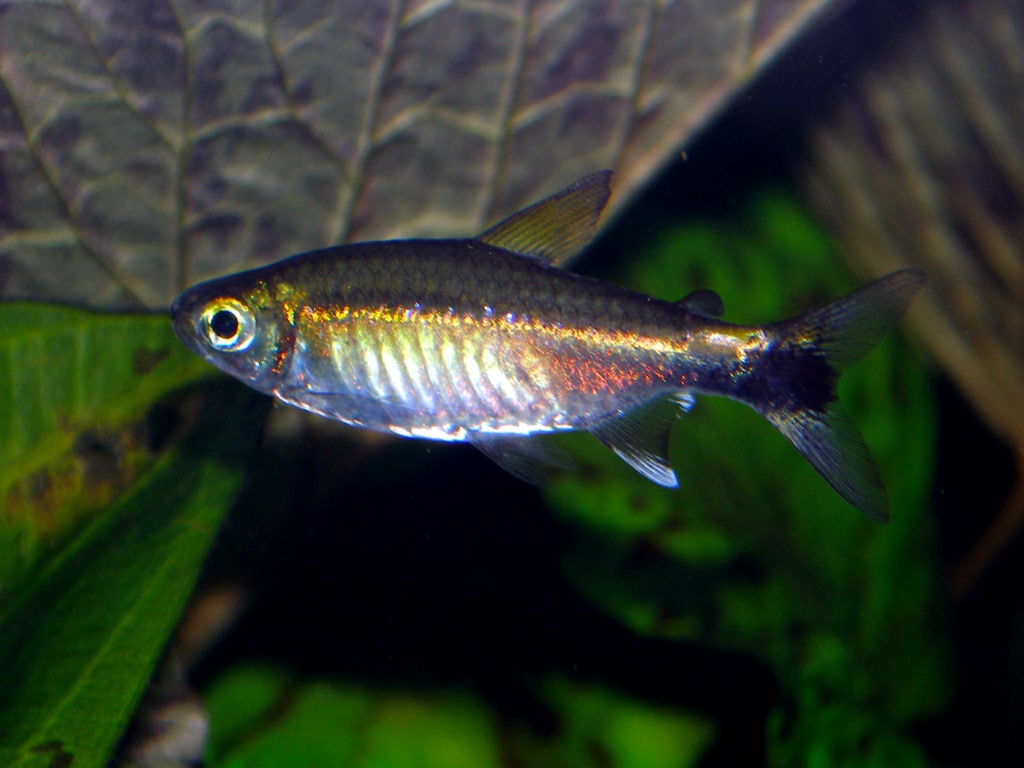
    The red-base tetra is a mid-size schooler with intense red coloration at the base of the tail that only shows in proper conditions. Soft water, dark substrate, and a school of 8+. Skip any of these and you get a plain silver fish that looks nothing like the photos online.

    The red-base tetra in the wrong setup is a plain silver fish. In the right setup, the red is electric.

    The Reality of Keeping Red-Base Tetra

    Group size is not a suggestion. The minimum school size for red-base tetra is not just a guideline. In small groups, these fish lose color, become stressed, and display abnormal behavior. A proper group of 6 to 8+ is where you start to see natural schooling behavior, full color expression, and the confidence that makes them worth keeping.

    Tank mate selection requires thought. The red-base tetra is not aggressive in the traditional sense, but it is assertive enough to cause problems with the wrong companions. Slow-moving, long-finned species are targets. Fast, short-finned fish of similar size are fine. Plan your community around this reality.

    Hardy does not mean indestructible. The red-base tetra tolerates a range of conditions, but it still needs basic care. Ammonia spikes, dramatic temperature swings, and neglected water changes will catch up to even the toughest species. The difference is margin of error, not immunity.

    Store appearance is not home appearance. Fish in store tanks are stressed, crowded, and under inappropriate lighting. The red-base tetra almost always looks better in a properly set up home aquarium than it does at the store. Dark substrate, live plants, and appropriate lighting bring out colors and behaviors you will never see in a retail environment.

    Biggest Mistake New Owners Make

    Keeping them with fish small enough to eat. This is a predator. It will eat anything it can fit in its mouth. If you stock smaller fish with a red-base tetra, you are feeding it expensive live food.

    Expert Take

    Predatory fish are not for everyone, but the red-base tetra is one of the more manageable predatory species in the hobby. If you understand the feeding requirements, the tank mate restrictions, and the space needs, it is a genuinely fascinating fish to keep.

    Key Takeaways

    • Distinctive red caudal spot sets this tetra apart from similar small characins
    • Minimum group of 6, but 10 or more brings out confident schooling behavior and better coloration
    • 15 gallons minimum for a small school, 20+ gallons for a larger group
    • Tolerates a wide pH range (5.5 to 7.5), making it adaptable to most community setups
    • Easy care level with no special requirements beyond stable water and a varied diet
    Map showing the Amazon River Basin in South America
    Map by Kmusser, CC BY-SA 3.0, via Wikimedia Commons

    Species Overview

    FieldDetails
    Scientific NameHemigrammus stictus
    Common NamesRed-Base Tetra
    FamilyCharacidae
    OriginAmazon basin, widespread across South America
    Care LevelEasy
    TemperamentPeaceful
    DietOmnivore
    Tank LevelMid
    Maximum Size1.8 inches (4.5 cm)
    Minimum Tank Size15 gallons (57 liters)
    Temperature75-82ยฐF (24-28ยฐC)
    pH5.5-7.5
    Hardness2-15 dGH
    Lifespan3-5 years in captivity
    BreedingEgg scatterer
    Breeding DifficultyModerate
    CompatibilityCommunity
    OK for Planted Tanks?Yes

    Classification

    Taxonomic LevelClassification
    OrderCharaciformes
    FamilyCharacidae (retained in Characidae after 2024 Melo et al. Revision)
    GenusHemigrammus
    SpeciesH. Stictus (Durbin, 1909)

    The genus Hemigrammus is one of the largest in the order Characiformes, containing over 70 described species. Its taxonomy has been considered Incertae Sedis (uncertain placement) for years, and revisions are still ongoing.

    Note on classification: Unlike many other Hemigrammus species that were moved to the newly erected family Acestrorhamphidae in the 2024 Melo et al. Phylogenomic study, H. Stictus was retained within Characidae. This is worth noting because if you’ve been reading our other tetra care guides, you’ll notice that many closely related species were reclassified. The red-base tetra stayed put.

    Origin & Natural Habitat

    Map of the Amazon River basin in South America showing the native range of the red-base tetra
    Map of the Amazon River basin, the native range of the red-base tetra. Image by Kmusser, CC BY-SA 3.0, via Wikimedia Commons.

    The red-base tetra has one of the wider distributions of any small tetra species. It’s found throughout much of the Amazon basin and across several river systems in South America. This widespread range is part of why the species is so adaptable in captivity. It has evolved to handle a variety of water conditions across different habitats.

    In the wild, these fish inhabit slow-moving tributaries, forest streams, and floodplain areas where the water is typically warm and soft. Many of these habitats feature dense vegetation along the banks, a substrate of sand and leaf litter, and water stained with tannins from decomposing organic matter. This gives you a good blueprint for how to set up their tank at home.

    Appearance & Identification

    Red-base tetra (Hemigrammus stictus) displaying its distinctive red patch at the base of the caudal fin
    Red-base tetra (Hemigrammus stictus) showing the vivid red caudal spot that gives this species its common name. Photo: CC BY 2.0, Clinton & Charles Robertson, via Flickr.

    At first glance, the red-base tetra might look like a fairly plain silver tetra. But once you look a little closer, that changes fast. The standout feature is the vivid red patch at the base of the caudal fin, which is where the common name comes from. It’s a bold splash of color that becomes even more pronounced under good conditions and against a dark background.

    The body is elongated and somewhat compressed laterally, typical of many Hemigrammus species. The base color is a silvery-olive tone with a subtle iridescence along the flanks. The upper portion of the eye is a bright red-orange, another common trait in this genus. The fins are mostly transparent, which makes that red caudal spot stand out even more.

    A faint horizontal stripe may be visible along the lateral line, though it’s not as prominent as you’d see on a neon or cardinal tetra. Overall, this is a clean-looking fish that really pops in groups.

    Male vs. Female

    Sexual dimorphism in red-base tetras is subtle. Females are slightly rounder and deeper-bodied than males, especially when they’re carrying eggs. Males are typically slimmer and may show slightly more intense coloration, particularly in the red caudal patch. The differences are not dramatic, and sexing them outside of breeding condition is tricky.

    Average Size & Lifespan

    Red-base tetras max out at about 1.8 inches (4.5 cm) in standard length. Most aquarium specimens settle closer to 1.5 inches. They’re in the same size range as glowlight tetras and ember tetras, so plan your stocking accordingly.

    With stable water conditions and a varied diet, expect a lifespan of 3 to 5 years. This is standard for small characins. Keeping up with consistent water quality, avoiding overcrowding, and feeding a nutritious diet are the biggest factors in reaching the upper end of that range.

    Care Guide

    Tank Size

    A 15-gallon tank is the minimum for a group of 6 red-base tetras. If you plan to keep 10 or more (which I’d strongly recommend for the best display), step up to 20 gallons or larger. These are active mid-level swimmers that use horizontal space, so a longer tank footprint is better than a tall, narrow one.

    Water Parameters

    ParameterIdeal Range
    Temperature75-82ยฐF (24-28ยฐC)
    pH5.5-7.5
    General Hardness2-15 dGH
    KH1-10 dKH
    Ammonia / Nitrite0 ppm
    NitrateBelow 30 ppm

    One of the things that makes red-base tetras so easy to keep is their broad tolerance for different water chemistry. They do well in soft, acidic water, but they also handle neutral to slightly alkaline conditions without issue. That wider pH range of 5.5 to 7.5 makes them flexible for a variety of community setups.

    That said, they look their best in softer water with some tannins. Adding Indian almond leaves, driftwood, or alder cones will naturally soften the water and bring out deeper coloration in that red caudal spot.

    Filtration & Water Flow

    Standard filtration works fine. A hang-on-back filter or sponge filter is all you need for a tank of this size. Keep the flow rate moderate. These fish come from slow-moving waters and don’t appreciate being blasted around the tank. If your filter creates too much current, a spray bar or baffle will fix that.

    Weekly water changes of 20 to 25 percent will keep things stable. They’re not especially sensitive to minor parameter swings, but consistency is always the goal.

    Lighting

    Moderate to subdued lighting works best. The red-base tetra naturally comes from habitats with significant canopy cover, so they won’t appreciate blinding light. Floating plants are an easy way to diffuse the light and make the fish feel more secure. As a bonus, the darker environment makes that red caudal spot really stand out.

    Plants & Decorations

    A planted tank is the ideal setup for red-base tetras. Use a mix of background stem plants (like Vallisneria or Hygrophila), midground plants, and some floating cover. Driftwood and dried leaf litter add visual interest and help replicate their natural habitat.

    Leave open swimming space in the center and front of the tank so you can enjoy the schooling behavior. The classic layout of a well-planted perimeter with open center works perfectly here.

    Substrate

    A dark substrate (black sand or fine dark gravel) is the best choice. It mimics the natural streambed these fish come from and provides contrast that makes their colors pop. Light-colored substrates won’t harm them, but the fish will look washed out by comparison.

    Is the Red-Base Tetra Right for You?

    Red-base tetras reward the right conditions with color that surprises people. Here’s who should keep them:

    • You have a soft water setup where their red coloration can fully develop
    • You use a dark substrate and moderate lighting. Bright white gravel will wash them out
    • You keep tank mates with short fins. They can nip at long-finned species
    • You can keep a group of 8+ to direct their energy at each other rather than other fish
    • You want a tetra that’s easy to maintain but needs specific conditions for peak color
    • Skip these if your tank has bettas, angelfish, or other long-finned species

    Tank Mates

    Red-base tetras are peaceful and well-suited for community aquariums. They don’t nip fins, they don’t bother other species, and they stay in the mid-water column where they won’t compete with bottom dwellers. Just make sure their tankmates have a similar temperament.

    Good Tank Mates

    • Other small, peaceful tetras (neon tetras, ember tetras, cardinal tetras, glowlight tetras)
    • Rasboras (harlequin rasboras, chili rasboras)
    • Corydoras catfish
    • Small Loricariids (otocinclus, bristlenose plecos)
    • Dwarf cichlids (Apistogramma, rams)
    • Small gouramis (honey gouramis, sparkling gouramis)
    • Peaceful livebearers (endlers, guppies)
    • Cherry shrimp and amano shrimp
    • Nerite snails, mystery snails

    Tank Mates to Avoid

    • Large or aggressive cichlids (oscars, Jack Dempseys, convicts)
    • Fast, nippy species like tiger barbs or serpae tetras
    • Large predatory fish that could eat them
    • Overly territorial species that dominate the mid-water column

    Food & Diet

    Feeding red-base tetras is about as easy as it gets. They’re true omnivores with zero picky-eating tendencies. In the wild, they feed on small insects, larvae, worms, crustaceans, and bits of plant matter. In captivity, they’ll take just about anything you offer.

    For the best health and coloration, provide a varied diet:

    • Staple: High-quality flakes or micro pellets
    • Frozen foods: Bloodworms, daphnia, brine shrimp
    • Live foods: Baby brine shrimp, microworms, daphnia
    • Supplements: Freeze-dried foods, spirulina-based flakes for plant matter

    Feed small amounts two to three times per day. Their mouths are small, so crushed flakes or micro pellets work better than large food items. Color-enhancing foods with carotenoids helps intensify that red caudal spot.

    Breeding & Reproduction

    Red-base tetras are egg scatterers and is bred in captivity with some preparation. They’re not the most difficult species to spawn, but it does take more setup than simply letting nature take its course in a community tank.

    Breeding Difficulty

    Moderate. Triggering spawning requires soft, acidic water and proper conditioning. Raising the fry is the bigger challenge, as they’re tiny and need appropriately small foods in the first few weeks.

    Spawning Tank Setup

    • Tank size: 10 to 15 gallons
    • Decor: Fine-leaved plants (java moss, spawning mops) to catch the scattered eggs
    • Lighting: Very dim or covered
    • Filtration: Gentle sponge filter only
    • Bottom: Consider a mesh or grid on the bottom to protect eggs from being eaten

    Water Conditions for Breeding

    • Temperature: 80 to 84ยฐF (27 to 29ยฐC)
    • pH: 5.5 to 6.5
    • Hardness: 1 to 5 dGH (very soft)

    Softer, more acidic water than their normal range is key to triggering spawning. Use RO or distilled water mixed with a small amount of tap water to achieve these parameters.

    Conditioning & Spawning

    Condition a breeding pair (or a small group of 2 males and 3 females) with high-protein live and frozen foods for one to two weeks before introducing them to the breeding tank. Move them to the spawning tank in the evening. Spawning typically occurs in the early morning hours the next day.

    Egg & Fry Care

    Remove the adults immediately after spawning, as they will eat the eggs if given the chance. The eggs are light-sensitive, so keep the breeding tank dark or dimly lit.

    Eggs typically hatch within 24 to 36 hours. The fry will absorb their yolk sac for another 2 to 3 days before becoming free-swimming. Start feeding with infusoria or liquid fry food initially, then transition to freshly hatched baby brine shrimp as the fry grow large enough to take them. Frequent small water changes (5 to 10 percent daily) help keep the fry tank clean without stressing the young fish.

    Common Health Issues

    Red-base tetras are hardy fish, but they’re still susceptible to the same issues that affect most small tetras. The good news is that most problems are preventable with basic maintenance.

    Ich (White Spot Disease)

    The most common issue with any small tropical fish. You’ll see white spots on the body and fins, along with flashing (rubbing against surfaces). It’s usually triggered by temperature swings or stress from transport. Raise the temperature gradually to 86ยฐF and treat with an ich medication.

    Fin Rot

    Ragged, deteriorating fins are a sign of bacterial infection, almost always linked to poor water quality. Increase your water change frequency, check your parameters, and treat with an antibacterial medication if the condition doesn’t improve.

    Neon Tetra Disease

    Despite the name, neon tetra disease can affect many small characins, including the red-base tetra. Symptoms include loss of color, erratic swimming, and body cysts. There is no reliable cure, which is why quarantining all new fish for 2 to 4 weeks before adding them to your main tank is so important.

    Columnaris

    A bacterial infection that shows up as white or grayish patches on the body or mouth. It can spread quickly in stressed or overcrowded tanks. Treat with antibiotics and address the underlying cause (usually poor water quality or overstocking).

    Common Mistakes to Avoid

    • Keeping too few: A group of 3 or 4 will be stressed and skittish. Get at least 6, ideally 10 or more for natural behavior.
    • Skipping quarantine: Small tetras are notorious for bringing diseases into established tanks. Always quarantine new arrivals for at least 2 weeks.
    • Adding to an uncycled tank: Even hardy tetras don’t do well in a tank that hasn’t been properly cycled. Make sure ammonia and nitrite are at 0 ppm before adding fish.
    • Bright, stark lighting: This washes out their colors and makes them feel exposed. Use floating plants or moderate lighting for the best results.
    • Overly aggressive tankmates: Their peaceful nature means they can’t compete with pushy or territorial fish. Match them with similarly calm species.

    Where to Buy

    Red-base tetras are not as commonly stocked as neons or cardinals, but they show up at specialty retailers and online fish stores from time to time. Your best bet is to check dedicated online suppliers:

    Buy your full group at once if possible. Adding fish one or two at a time over weeks creates unnecessary stress for both the newcomers and the existing group. A single shipment of 8 to 10 fish is the way to go.

    Frequently Asked Questions

    Are red-base tetras good for beginners?

    Yes. They’re hardy, peaceful, and accept a wide range of water parameters. As long as you keep them in a proper school and maintain stable conditions, they’re a great choice for hobbyists at any experience level.

    How many red-base tetras should I keep together?

    A minimum of 6, but 10 or more is ideal. Larger groups are more confident, school more tightly, and show better coloration. In a group of fewer than 6, they are shy and hide.

    Do red-base tetras nip fins?

    No. They’re peaceful and not known for fin nipping. They’re safe to keep with long-finned species like bettas and fancy guppies, as long as those tankmates are also peaceful.

    What makes the red-base tetra different from other Hemigrammus species?

    The vivid red patch right at the base of the caudal fin is the key identifying feature. While several Hemigrammus species have red tones or markings, the concentrated spot at the tail base is distinctive to H. Stictus.

    Can red-base tetras live in hard water?

    They can tolerate moderately hard water up to about 15 dGH, which is more flexible than many Amazonian tetras. However, they’ll show their best colors in softer conditions. Very hard, alkaline water should be avoided.

    Do red-base tetras need a heater?

    Yes. They’re tropical fish that need a consistent temperature between 75 and 82ยฐF (24 to 28ยฐC). A reliable heater with a thermostat is essential unless your room temperature stays consistently in that range year-round.

    What It Is Actually Like Living With Red-Base Tetra

    In a proper school, red-base tetra display natural movement patterns that are genuinely engaging to watch. The fish interact with each other, establish subtle hierarchies, and move through the tank with purpose.

    They spend most of their time near the surface, which fills a level of the tank that many other species ignore. This makes them excellent complements to mid-water and bottom-dwelling fish.

    Feeding time is when their personality comes out. They learn your routine quickly and will anticipate feeding before you even open the lid.

    Their color and behavior improve over time as they settle into a stable environment. Fish that have been in the same tank for months look noticeably better than recently added stock.

    They coexist peacefully with virtually every other appropriately-sized community fish. This compatibility makes tank planning straightforward.

    How the Red-Base Tetra Compares to Similar Species

    Red-Base Tetra vs. Bloodfin Tetra

    Bloodfin tetras also feature red coloring around the fins, but the distribution is different. Bloodfins show red across all their fins, creating a more dramatic overall display. Red-base tetras concentrate the color at the tail base, creating a subtler effect. Bloodfins are also significantly hardier and longer-lived, making them the better choice for beginners. Red-base tetras need more specific water conditions to color up properly. If you just want red-accented tetras and don’t want to fuss with water chemistry, bloodfins are the practical choice. Check out our Bloodfin Tetra care guide for more details.

    Red-Base Tetra vs. Flame Tetra

    Flame tetras deliver consistent warm coloration without the water chemistry demands that red-base tetras need. They’re also completely peaceful. No fin-nipping tendencies at all. Red-base tetras offer a different aesthetic with the color concentrated at the tail, but they’re fussier about conditions and less safe with long-finned tank mates. For a low-effort warm-toned tetra, flame tetras win every time. Red-base tetras are the choice when you want something less common and have the setup to support them. Check out our Flame Tetra care guide for more details.

    Closing Thoughts

    The red-base tetra isn’t going to win any popularity contests against the neons and cardinals of the world, but that’s part of its charm. If you want a tetra that’s a little different, easy to care for, and genuinely attractive in a planted community setup, Hemigrammus stictus is hard to beat.

    That red caudal spot is the star of the show, and it really pops once you give them the right environment. A dark substrate, some floating plants, a bit of tannin in the water, and a group of 10 or more of these fish will give you a display that’s subtle but undeniably beautiful. In my 25+ years in the hobby, I’ve learned that the best fish are often the ones people overlook. The red-base tetra is one of them.

    Check out our tetra tier list video where we rank the most popular tetras in the hobby, including the red-base tetra:

    References

    • Froese, R. And D. Pauly, Eds. FishBase. Hemigrammus stictus. Accessed 2025.
    • SeriouslyFish. Hemigrammus stictus species profile. Accessed 2025.
    • Melo, B.F, et al. (2024). Phylogenomics of Characidae. Zoological Journal of the Linnean Society, 202(1), 1-37.

    The red-base tetra is just one of dozens of tetra species we cover in our complete species directory. Whether you’re looking for beginner-friendly community tetras or something more specialized, our guide has you covered.

    ๐Ÿ‘‰ Tetras: Complete A-Z Species Directory

  • Flavescent Peacock Care Guide: The Most Popular Aulonocara Species

    Flavescent Peacock Care Guide: The Most Popular Aulonocara Species

    Table of Contents

    Flavescent peacocks are the most popular aulonocara species for good reason. They color up reliably, tolerate a range of tank conditions, and show less aggression than most Lake Malawi cichlids. But less aggression is not no aggression. Males still claim territory, still harass subdominant males, and still need proper tank structure to manage conflicts. I have kept flavescent peacocks for years and the key is keeping only one male per tank unless you have 100 gallons or more. The peacock that colors up reliably when everything else about your setup is right.

    The peacock that looks different depending on who is watching.

    The Reality of Keeping Flavescent Peacock

    Mbuna keeping is a different discipline from regular fishkeeping. The Flavescent Peacock is no exception. Here is what you need to prepare for.

    Hard, alkaline water is mandatory. Lake Malawi chemistry means pH between 7.8 and 8.6, high GH, and high KH. There is no faking this. If your tap water is soft and acidic, you need to buffer every water change without exception.

    Overstocking is the strategy. Keeping 3 or 4 Flavescent Peacocks leads to one bully and victims. You need groups of 12 or more to spread aggression. But overstocking only works with heavy filtration and consistent water changes.

    Diet is critical. Spirulina and veggie-based foods are essential. High-protein diets cause Malawi Bloat, which is often fatal.

    Rockwork defines territories. Mbuna need piles of rocks with caves and passageways. Without proper rockwork, dominant fish have nowhere to establish boundaries and subordinates have nowhere to hide. Stack rocks from substrate to near the waterline.

    Biggest Mistake New Flavescent Peacock Owners Make

    Understocking. Keeping a small group of Flavescent Peacocks means the dominant fish picks off the weak ones. You need a large group to distribute aggression. Twelve is the minimum for most mbuna species.

    Expert Take

    Start with a group of 12 or more in a 55 gallon minimum. Use aragonite or crushed coral substrate to buffer pH naturally. Feed spirulina-based food as the staple. Stack rocks to create territories. This formula works for Flavescent Peacocks and most other mbuna.

    Key Takeaways

    • One of the most peaceful Malawi cichlids, making it ideal for community setups with other Peacocks and mild Haplochromines
    • Males display stunning yellow, blue, and black coloration while females remain plain silver-brown, showing extreme sexual dimorphism
    • Sand substrate is non-negotiable because Peacocks sift the substrate to feed, and gravel can damage their gills and mouth
    • Minimum 75-gallon tank with hard, alkaline water (pH 7.8-8.6) to replicate Lake Malawi conditions
    • Must not be housed with aggressive Mbuna, which will bully and outcompete these more peaceful cichlids
    Map showing Lake Malawi and the African Great Lakes region
    Map of Lake Malawi. Via Wikimedia Commons.

    Species Overview

    FieldDetails
    Scientific NameAulonocara stuartgranti
    Common NamesFlavescent Peacock, Usisya Peacock, Grant’s Peacock
    FamilyCichlidae
    OriginLake Malawi, East Africa
    Care LevelEasy to Moderate
    TemperamentPeaceful (for a cichlid)
    DietMicro-predator / Omnivore
    Tank LevelBottom to Mid
    Maximum Size5-6 inches (12-15 cm)
    Minimum Tank Size75 gallons (284 liters)
    Temperature76-82ยฐF (24-28ยฐC)
    pH7.8-8.6
    Hardness10-20 dGH
    Lifespan6-8 years
    BreedingMaternal mouthbrooder
    Breeding DifficultyEasy to Moderate
    CompatibilityPeacock & Hap community
    OK for Planted Tanks?Limited (may uproot plants while sifting)

    Classification

    Taxonomic LevelClassification
    OrderCichliformes
    FamilyCichlidae
    SubfamilyPseudocrenilabrinae
    GenusAulonocara
    SpeciesA. Stuartgranti (Meyer & Riehl, 1985)

    The genus name Aulonocara comes from the Greek words aulos (flute) and kara (face/head), referring to the enlarged lateral line pores on the head that resemble the holes of a flute. These sensory pores are a defining feature of all Peacock cichlids and play a key role in how they locate food in the substrate. The species name honors Stuart M. Grant, a legendary English fish exporter who operated in Malawi for decades and was instrumental in bringing many Lake Malawi cichlid species into the aquarium hobby.

    Aulonocara stuartgranti is a wide-ranging species with numerous geographic color variants found along different portions of the Lake Malawi coastline. The “Usisya” variant is the one most commonly associated with the Flavescent Peacock name in the hobby, but you will also encounter other locality forms labeled as A. Stuartgranti from Cobue, Chilumba, Ngara, and other locations. Each locale produces males with slightly different color patterns, which is typical for Lake Malawi cichlids.

    Origin & Natural Habitat

    The Flavescent Peacock is endemic to Lake Malawi in East Africa, one of the Great Rift Valley lakes and one of the most biodiverse freshwater ecosystems on the planet. Lake Malawi is shared by Malawi, Mozambique, and Tanzania, and is home to hundreds of cichlid species found nowhere else on Earth.

    Aulonocara stuartgranti is found along the central eastern and north-central western coastline of the lake, as well as in the Cape Maclear area. It inhabits the intermediate zones where rocky shorelines give way to open sandy expanses with scattered rocks. This transition zone is the key habitat for virtually all Peacock cichlids. Unlike Mbuna, which are tightly associated with rocky habitats, Peacocks spend most of their time over sandy substrates near rocks.

    In the wild, Flavescent Peacocks hover motionless above the sandy bottom, using those enlarged sensory pores on their heads to detect the slightest vibrations from invertebrates buried in the sand below. When prey is detected, a quick plunge into the substrate secures the meal. The remaining sand is expelled through the gills. It’s a remarkably specialized feeding strategy, and watching it in the aquarium is genuinely fascinating.

    The water in Lake Malawi is hard, alkaline, and remarkably stable. Temperature fluctuations are minimal, and water chemistry stays consistent year-round. This stability is important to replicate in the aquarium, as Peacocks are more sensitive to water quality swings than many other cichlid groups.

    Map showing Lake Malawi and the African Great Lakes region
    Map by MellonDor, CC BY-SA 4.0, via Wikimedia Commons

    Appearance & Identification

    The Flavescent Peacock is a genuinely stunning fish when it’s in full color. Dominant males develop a bright yellow body that extends from the gill plate through the flanks and into the tail. The face and head are a rich metallic blue that contrasts sharply against the yellow body. The dorsal and anal fins are dark black with blue edging, creating a bold three-tone look that’s hard to miss in any tank.

    Color intensity varies significantly between individuals and is heavily influenced by mood, dominance status, diet, and water quality. A dominant male in a well-maintained tank with proper tank mates will display colors that are dramatically more vivid than a stressed or subdominant fish. This is true across all Peacock species, but it’s especially noticeable with the Flavescent.

    Juveniles and subdominant males look essentially identical to females, showing a plain silver-grey body with faint vertical barring. Males start showing color around 2.5 to 3 inches (6-8 cm), but full adult coloration may not develop until they reach 4 inches (10 cm) or larger. Patience is required. Buying juvenile Peacocks and waiting for them to color up is part of the experience.

    Male vs. Female

    Sexual dimorphism in Peacock cichlids is extreme, more dramatic than almost any other freshwater fish group. Telling adult males from females is effortless once the males color up. Here’s a quick breakdown:

    FeatureMaleFemale
    ColorVivid yellow body, blue face, dark finsPlain silver-grey with faint bars
    Size5-6 inches (12-15 cm)4-5 inches (10-12 cm)
    Body ShapeSlightly larger, more elongatedSlightly smaller, rounder belly
    FinsLonger, more pointed dorsal and anal finsShorter, rounded fins
    Egg SpotsPresent on anal finUsually absent or faint

    The challenge comes with juveniles. Young Flavescent Peacocks all look female until the males begin developing color. If you’re buying juveniles, purchasing a group of 6-8 and letting them grow out is the best strategy for ending up with at least one colorful male.

    Average Size & Lifespan

    Flavescent Peacocks reach a maximum size of 5 to 6 inches (12-15 cm), with males being slightly larger than females. FishBase records the maximum standard length at around 4.7 inches (11.8 cm), but aquarium specimens with good nutrition often grow a bit larger. They’re a medium-sized Malawi cichlid, not as big as some of the larger Haplochromines but larger than most Mbuna.

    With proper care, expect a lifespan of 6 to 8 years. Some individuals may push past this with excellent water quality and a low-stress environment. The keys to longevity with any Peacock are stable water parameters, a varied diet, and keeping them with appropriate tank mates that won’t constantly harass them.

    Care Guide

    Tank Size

    A minimum of 75 gallons (284 liters) is recommended for a small group of Flavescent Peacocks. A standard 75-gallon (4 feet long) gives enough floor space for males to establish territories without constant conflict. If you’re planning a mixed Peacock and Hap community, which is one of the most popular setups in the hobby, go with 125 gallons (473 liters) or larger. More space means less aggression and better color from your males.

    Tank length matters more than height with Peacocks. These fish spend most of their time in the bottom half of the water column, so a longer footprint provides more usable territory. A 6-foot 125-gallon is significantly better than a taller 90-gallon for a Peacock community.

    Water Parameters

    ParameterIdeal Range
    Temperature76-82ยฐF (24-28ยฐC)
    pH7.8-8.6
    General Hardness (GH)10-20 dGH
    Carbonate Hardness (KH)6-12 dKH
    Ammonia0 ppm
    Nitrite0 ppm
    NitrateBelow 20-30 ppm

    Peacocks are more sensitive to poor water quality than many other Malawi cichlids. They do not tolerate elevated nitrates well, and sudden swings in pH or temperature can trigger Malawi Bloat, which is the number one killer in this group. Consistency is king. Aim for weekly water changes of 25-30% to keep nitrates low and parameters stable.

    If your tap water is naturally soft and acidic, you’ll need to buffer it. Aragonite or crushed coral in the substrate or filter can help maintain the high pH and hardness these fish require. Lake Malawi cichlid buffer products are also available and work well.

    Filtration & Water Flow

    Over-filtration is the way to go with any Malawi cichlid tank. These fish produce a significant bioload, and the alkaline water conditions mean ammonia is more toxic at higher pH levels. A canister filter rated for at least 1.5 times your tank volume is a good starting point. Many experienced keepers use a canister filter combined with a sump or a second hang-on-back filter for redundancy.

    Water flow should be moderate. Peacocks don’t come from wave-battered rocky zones like Mbuna do. They inhabit calmer sandy areas, so you don’t need powerheads creating strong currents. Good surface agitation for oxygenation is important, but avoid turning the tank into a whirlpool.

    Lighting

    Standard aquarium lighting works fine. Peacocks don’t have specific lighting requirements, but moderate lighting bring out the best color. Extremely bright lighting can make them feel exposed and stressed, leading to washed-out coloration. If you’re running high-output LEDs, consider dimming them or providing shaded areas with rock formations. Many keepers find that a slightly subdued light with a blue or actinic spectrum makes the metallic blue face of Peacocks absolutely pop.

    Plants & Decorations

    The ideal Peacock tank combines open sandy areas with rock formations. Unlike a Mbuna tank that’s packed wall-to-wall with rocks, a Peacock setup should have more open floor space. Stack rocks along the back and sides to create caves and territories, but leave the majority of the tank bottom open for sand sifting and swimming.

    Live plants are possible but limited. The alkaline water and the tendency of Peacocks to disturb the substrate while sifting make delicate plants impractical. Hardy species like Anubias (attached to rocks), Vallisneria, and Java Fern will survive. Avoid anything that needs to root in the sand, as it will be constantly uprooted.

    Substrate

    Sand is essential for Peacock cichlids. This is not a suggestion, it’s a requirement. These fish are sand sifters by nature. They take mouthfuls of substrate, filter it through their gills for food, and expel the rest. Gravel that’s too coarse can damage their gills, inhibit their natural feeding behavior, and even cause internal injuries if pieces are ingested.

    Pool filter sand, play sand, or aragonite sand all work well. Aragonite has the added benefit of slowly buffering the water to maintain high pH and hardness. Many keepers use a darker sand because Peacocks will display better coloration over darker substrates. A white or bright substrate can wash out their colors.

    Tank Mates

    This is the section that matters most with Peacock cichlids, because getting tank mates wrong is the fastest way to ruin a Peacock tank. Peacocks are the most peaceful group of Lake Malawi cichlids. They are not Mbuna. They cannot hold their own against aggressive, hyperactive rock dwellers. Mixing Peacocks with the wrong species leads to stressed, pale, hiding fish that never show their true colors.

    Best Tank Mates

    • Other Peacock cichlids (Aulonocara spp.) — The classic combination. Multiple Peacock species together in a large tank creates an incredible display. Avoid keeping species that look too similar to prevent excessive aggression between males.
    • Mild Haplochromines — Species like Copadichromis azureus, Copadichromis borleyi, Placidochromis electra, and Otopharynx lithobates are excellent companions. They occupy similar water column levels and have compatible temperaments.
    • Cyrtocara moorii (Blue Dolphin) — A classic pairing in Peacock/Hap tanks. Peaceful enough to coexist without bullying.
    • Synodontis catfishSynodontis multipunctatus and Synodontis petricola are Lake Malawi/Tanganyika catfish that do well in the same water conditions and add bottom-level activity.
    • Bristlenose Plecos — Hardy enough to handle the alkaline water and useful algae eaters. They get ignored by Peacocks.

    Tank Mates to Avoid

    • Aggressive Mbuna — This is the big one. Species like Melanochromis auratus, Metriaclima lombardoi (Kenyi), Pseudotropheus demasoni, and most Metriaclima species are far too aggressive for Peacocks. They will chase, harass, and dominate Peacocks relentlessly, preventing them from feeding properly and causing chronic stress.
    • Large predatory Haps — Species like Nimbochromis venustus and Nimbochromis livingstonii get too large and too aggressive as adults.
    • Other Aulonocara species that look similar — Males will treat similar-looking Peacocks as rivals. If keeping multiple Peacock species, choose ones with distinctly different coloration.
    • Fish from other regions — South American cichlids, community fish like tetras, and other non-Malawi species should not be mixed. Water parameter requirements are too different.

    A good stocking ratio for Peacocks is one male to three or four females of each species. This reduces aggression directed at any single female and encourages males to display their best colors. In a 125-gallon tank, you could comfortably keep 2-3 male Peacocks (different species) with their respective harems plus a few mild Haps.

    Food & Diet

    In the wild, Flavescent Peacocks are micro-predators. They feed on small invertebrates, insect larvae, and crustaceans that they locate by sifting through the sandy substrate. Those enlarged sensory pores on their head function like a biological metal detector, picking up the faintest vibrations from prey hiding in the sand. It’s a specialized feeding strategy that sets them apart from algae-grazing Mbuna.

    In the aquarium, they’re not picky eaters at all. A high-quality cichlid pellet should form the staple of their diet. Look for pellets with good protein content that sink or slowly sink, since Peacocks prefer to feed from the bottom or mid-water. Supplement with frozen foods like Mysis shrimp, brine shrimp, cyclops, and bloodworms (sparingly). The variety helps maintain vibrant coloration and overall health.

    One important dietary note: avoid foods that are too high in fat or protein from mammalian sources. Peacocks are susceptible to Malawi Bloat, and a diet heavy in beef heart or other fatty foods can contribute to digestive issues. Spirulina-enriched foods are a good addition for balanced nutrition. Feed once or twice daily, offering only what they can consume in 2-3 minutes.

    Breeding & Reproduction

    Peacock cichlids are among the easiest African cichlids to breed in captivity, and the Flavescent Peacock is no exception. They’re maternal mouthbrooders, meaning the female carries the fertilized eggs and developing fry in her mouth for the entire incubation period.

    Spawning Behavior

    Males establish territories, near a rock formation or a cleared area in the sand. When a ripe female approaches, the male displays intensely, flaring his fins and showing off his brightest colors. He’ll guide the female to his territory, where she deposits a small batch of eggs on the substrate. After the female picks up the eggs in her mouth, the male presents his egg spots on his anal fin. The female mouths at these spots, stimulating the male to release sperm, which fertilizes the eggs already in her mouth.

    Mouthbrooding & Fry Care

    The female carries the eggs for approximately 18 to 25 days, during which she does not eat. Her throat will appear visibly distended, and you will often see a characteristic “chewing” motion as she rotates the eggs. During this period, the female is vulnerable. She needs access to hiding spots and should not be constantly harassed by males or other tank mates.

    When the fry are released, they’re surprisingly large and capable of eating baby brine shrimp and crushed flake food immediately. A typical brood size is 15-40 fry, depending on the size and condition of the female. If you want to maximize survival rates, strip the female at around day 18-20 and raise the fry separately, or move the holding female to a dedicated breeding tank before she releases.

    Hybridization Warning

    All Aulonocara species can and will hybridize with each other. If you keep multiple Peacock species and you’re breeding, you need to be very careful about preventing cross-breeding. Hybrid Peacocks are common in the hobby and have muddied the genetics of many captive populations. If breeding is your goal, keep only one Aulonocara species, or be extremely diligent about separating holding females.

    Common Health Issues

    Malawi Bloat

    This is the number one health threat for all Peacock cichlids and Lake Malawi cichlids in general. Malawi Bloat presents with abdominal swelling, loss of appetite, rapid breathing, and white, stringy feces. It can progress rapidly and is often fatal if not caught early. The exact cause is debated, but it’s strongly associated with poor water quality, high nitrates, stress from aggressive tank mates, and improper diet.

    Prevention is everything. Keep nitrates below 20-30 ppm with regular water changes, avoid overfeeding, provide a varied diet without excessive fat, and maintain stable water chemistry. If you notice early symptoms, an immediate large water change and treatment with Metronidazole-based medication is the standard approach. Removing the affected fish to a hospital tank reduces stress and improves outcomes.

    Ich (White Spot Disease)

    Ich can affect Peacocks, particularly after temperature fluctuations or the introduction of new, unquarantined fish. The white salt-grain-sized spots are easy to identify. Treatment involves slowly raising the temperature to 82-86ยฐF (28-30ยฐC) over 24-48 hours and using an ich medication. Peacocks tolerate most standard ich treatments well, but always remove carbon from the filter during treatment.

    Hole-in-the-Head Disease (HLLE)

    Lateral line erosion and pitting around the head is occasionally seen in Peacocks, particularly those kept in suboptimal conditions. It’s linked to poor water quality, vitamin deficiencies (especially vitamin C and D), and the use of activated carbon in filtration. Improving water quality, offering a more varied diet with vitamin-enriched foods, and removing activated carbon from the filter often leads to gradual improvement.

    Common Mistakes to Avoid

    • Mixing Peacocks with aggressive Mbuna. This is the single most common mistake. Peacocks are not built for the constant aggression that Mbuna dish out. They’ll hide, refuse to eat, lose their color, and eventually develop health issues from chronic stress.
    • Using gravel instead of sand. Peacocks are sand sifters. Gravel prevents their natural feeding behavior and can physically damage their gills and mouth. Always use fine sand substrate.
    • Overstocking males. Too many male Peacocks in one tank creates constant territorial disputes. Stick to a ratio of one male to three or four females per species, and make sure the tank is large enough for each male to claim territory.
    • Neglecting water changes. Peacocks are sensitive to nitrate buildup. Skipping water changes leads to elevated nitrates, which is the primary trigger for Malawi Bloat. Weekly 25-30% water changes are essential.
    • Adding Peacocks to an immature tank. These fish should never be introduced to a newly set up aquarium. The tank needs to be fully cycled and biologically mature, with stable parameters, before Peacocks go in.
    • Buying hybrid Peacocks without knowing it. The market is flooded with hybrid Peacocks that are sold under made-up names or incorrect species labels. Buy from reputable breeders who can tell you exactly what you’re getting.

    Where to Buy

    Flavescent Peacocks are moderately available in the hobby. You’ll find them at specialty African cichlid retailers and from dedicated breeders more readily than at chain pet stores, which will carry generic “assorted Peacock” cichlids of questionable lineage. When buying Peacocks, knowing the exact species and locality form matters if you care about keeping pure lines.

    For quality, properly identified stock that’s been quarantined and conditioned, check out Flip Aquatics and Dan’s Fish. Both are reputable online retailers that ship healthy fish and are transparent about what species and variants they carry. Expect to pay $10-$25 per fish depending on size, sex, and coloration. Males showing full color will obviously command a premium over unsexed juveniles.

    Frequently Asked Questions

    Are Flavescent Peacocks aggressive?

    By cichlid standards, no. Flavescent Peacocks are among the most peaceful Malawi cichlids. Males will defend territories and may chase other males, especially those with similar coloring, but they lack the relentless aggression of Mbuna. In a properly sized tank with appropriate stocking, aggression is manageable and rarely causes serious problems.

    Can I keep Flavescent Peacocks with Mbuna?

    This is not recommended. Most Mbuna species are significantly more aggressive than Peacocks and will bully them. The one exception sometimes cited is Labidochromis caeruleus (Yellow Lab), which is the mildest Mbuna and will sometimes work in a large tank. But as a rule, Peacocks should be kept with other Peacocks and mild Haplochromines, not with Mbuna.

    How do I get my Peacock to show better color?

    Several factors influence color intensity. First, make sure your fish is actually a dominant male because subdominant males suppress their color. Reduce aggression from tank mates, use a darker substrate, feed a varied diet with color-enhancing foods containing astaxanthin or spirulina, maintain pristine water quality, and give the fish time. Some males don’t reach full color potential until they’re 3-4 years old.

    How many Flavescent Peacocks can I keep in a 75-gallon tank?

    In a 75-gallon, a good starting point is one male with three to four females. You could potentially add a second Peacock species (different looking) with a similar ratio, but the tank would be at capacity. For a mixed Peacock/Hap community with multiple species, move up to a 125-gallon or larger.

    Do Flavescent Peacocks need sand substrate?

    Yes, absolutely. Sand substrate is essential for all Peacock cichlids. They’re sand sifters that feed by taking mouthfuls of substrate and filtering it for invertebrates. Gravel prevents this natural behavior and can injure their gills. Use pool filter sand, play sand, or aragonite sand.

    Will different Peacock species hybridize?

    Yes. All Aulonocara species can hybridize with each other, and they will if given the opportunity. This is a significant issue in the hobby, as hybrid Peacocks are widespread. If you’re keeping multiple species together and breeding occurs, be responsible about what you do with hybrid fry. Most serious breeders recommend keeping only one Aulonocara species per tank if breeding is the goal.

    What It Is Actually Like Living With Flavescent Peacock

    This is the part no other care guide gives you. Forget water parameters for a minute. Here is what it is actually like to share your tank with this species.

    They have more personality than you expect. The Flavescent Peacock is not a fish that just sits in the background. Once settled in, they become interactive, curious, and responsive to your presence.

    Feeding time reveals their character. Watch how the Flavescent Peacock approaches food and you will see real personality. Some are bold, some are cautious, and their feeding behavior tells you a lot about their mood and health.

    They establish routines. After a few weeks, your Flavescent Peacock will have favorite spots, preferred paths through the tank, and predictable patterns. Learning these routines makes you a better keeper.

    Color is a health indicator. The Flavescent Peacock’s coloration is a real-time report card on your husbandry. Vibrant color means happy fish. Faded color means something is wrong. Pay attention.

    Closing Thoughts

    Flavescent peacocks are the gateway African cichlid. They are still African cichlids.

    The Flavescent Peacock is one of those fish that perfectly balances beauty with manageability. You get spectacular color that rivals anything from the coral reef world, combined with fascinating feeding behavior and a temperament that won’t turn your tank into a war zone. For anyone getting into African cichlids and wanting to avoid the full-contact aggression of a Mbuna tank, a Peacock setup is the answer, and the Flavescent is an excellent species to start with.

    Get the basics right: big enough tank, sand substrate, hard alkaline water, proper filtration, and the right tank mates. Avoid the temptation to mix them with aggressive Mbuna. Feed a quality diet, stay on top of water changes, and give them time to mature. Do those things, and a dominant male Flavescent Peacock will reward you with one of the most impressive color displays in all of freshwater fishkeeping.

    This article is part of our Lake Malawi Cichlid Species Directory: Complete A-Z Care Guide List. Visit the hub page to explore care guides for all 28 Lake Malawi cichlid species we cover.

    Recommended Video

    References

  • Emperor Cichlid Care Guide: The Original Peacock Cichlid

    Emperor Cichlid Care Guide: The Original Peacock Cichlid

    Table of Contents

    Emperor cichlids are the original peacock that started the aulonocara craze. They are the standard by which all other peacocks are measured, and they set that standard for a reason. But their popularity means the market is flooded with hybrids and low quality stock. I have kept aulonocara nyassae for years and the first challenge is finding a pure, well bred specimen. After that, the keeping is straightforward if you understand basic Lake Malawi requirements. The original peacock that most hobbyists have never actually kept.

    The original peacock before selective breeding made them brighter.

    The Reality of Keeping Emperor Cichlid

    Mbuna keeping is a different discipline from regular fishkeeping. The Emperor Cichlid is no exception. Here is what you need to prepare for.

    Hard, alkaline water is mandatory. Lake Malawi chemistry means pH between 7.8 and 8.6, high GH, and high KH. There is no faking this. If your tap water is soft and acidic, you need to buffer every water change without exception.

    Overstocking is the strategy. Keeping 3 or 4 Emperor Cichlids leads to one bully and victims. You need groups of 12 or more to spread aggression. But overstocking only works with heavy filtration and consistent water changes.

    Diet is critical. Spirulina and veggie-based foods are essential. High-protein diets cause Malawi Bloat, which is often fatal.

    Rockwork defines territories. Mbuna need piles of rocks with caves and passageways. Without proper rockwork, dominant fish have nowhere to establish boundaries and subordinates have nowhere to hide. Stack rocks from substrate to near the waterline.

    Biggest Mistake New Emperor Cichlid Owners Make

    Understocking. Keeping a small group of Emperor Cichlids means the dominant fish picks off the weak ones. You need a large group to distribute aggression. Twelve is the minimum for most mbuna species.

    Expert Take

    Start with a group of 12 or more in a 55 gallon minimum. Use aragonite or crushed coral substrate to buffer pH naturally. Feed spirulina-based food as the staple. Stack rocks to create territories. This formula works for Emperor Cichlids and most other mbuna.

    Key Takeaways

    • The type species of the Aulonocara genus, meaning it’s the original fish that defines what a Peacock cichlid is scientifically
    • Males display beautiful blue coloration when dominant, while females remain plain silver-brown, showing the extreme sexual dimorphism typical of all Peacocks
    • Peaceful temperament characteristic of all Peacock cichlids, and should not be kept with aggressive Mbuna
    • Sand substrate is essential for natural sand-sifting micro-predator feeding behavior
    • Minimum 55-75 gallon tank with hard, alkaline water (pH 7.8-8.6) and stable water conditions
    Map showing Lake Malawi and the African Great Lakes region
    Map of Lake Malawi. Via Wikimedia Commons.

    Species Overview

    FieldDetails
    Scientific NameAulonocara nyassae
    Common NamesEmperor Cichlid, Nyasa Peacock, Blue Peacock Cichlid
    FamilyCichlidae
    OriginLake Malawi, East Africa
    Care LevelEasy to Moderate
    TemperamentPeaceful (for a cichlid)
    DietMicro-predator / Omnivore
    Tank LevelBottom to Mid
    Maximum Size5-6 inches (12-15 cm)
    Minimum Tank Size55 gallons (208 liters)
    Temperature76-82ยฐF (24-28ยฐC)
    pH7.8-8.6
    Hardness10-20 dGH
    Lifespan6-10 years
    BreedingMaternal mouthbrooder
    Breeding DifficultyEasy
    CompatibilityPeacock & Hap community
    OK for Planted Tanks?Limited (may uproot plants while sifting)

    Classification

    Taxonomic LevelClassification
    OrderCichliformes
    FamilyCichlidae
    SubfamilyPseudocrenilabrinae
    GenusAulonocara
    SpeciesA. Nyassae (Regan, 1922)

    Aulonocara nyassae was first described by the British ichthyologist Charles Tate Regan in 1922, making it one of the earliest Peacock cichlids to receive a formal scientific description. It holds the distinction of being the type species for the genus Aulonocara, which means it’s the foundational reference point that defines the entire Peacock cichlid group.

    The species name “nyassae” refers to Lake Nyasa, which is the historical name for Lake Malawi (still used in Tanzania and Mozambique). The genus name Aulonocara means “flute face” in Greek, referencing the enlarged lateral line pores on the head that are a defining characteristic of all Peacock cichlids. These sensory pores function as a biological prey-detection system, allowing the fish to sense tiny movements of invertebrates hidden in the sand.

    An interesting historical note: A. Nyassae was known for decades only from its holotype, a single preserved specimen. It wasn’t until the 1990s that additional specimens were collected and studied, which helped clarify the species’ identity and its relationship to the many other Aulonocara species that had been discovered in the intervening years.

    Origin & Natural Habitat

    The Emperor Cichlid is endemic to Lake Malawi in East Africa, one of the ancient Great Rift Valley lakes and one of the most species-rich freshwater ecosystems on the planet. A. Nyassae has been recorded from the southeastern arm of Lake Malawi and will also be present in the southwestern arm. Its exact distribution within the lake is less well-documented compared to some other Peacock species, partly due to the historical confusion around its identification.

    Like all Peacock cichlids, the Emperor Cichlid inhabits the intermediate zones of Lake Malawi where rocky habitats transition to sandy substrates. It’s observed over sand in the vicinity of rocks, where it spends its time hunting for sand-dwelling invertebrates using its specialized sensory system. Rocky areas nearby provide shelter and breeding sites.

    The water conditions in Lake Malawi are characteristically hard and alkaline, with exceptional year-round stability. Temperature, pH, and mineral content remain remarkably consistent, which is why Peacock cichlids are sensitive to fluctuating water parameters in the aquarium. Replicating this stability is one of the most important aspects of successful Peacock keeping.

    Map showing Lake Malawi and the African Great Lakes region
    Map by MellonDor, CC BY-SA 4.0, via Wikimedia Commons

    Appearance & Identification

    The Emperor Cichlid is a classically handsome Peacock. Dominant males develop a rich, overall blue coloration that ranges from steel blue to a deeper cobalt depending on mood and genetics. The blue extends across the body, face, and into the fins. Vertical bars may be visible or absent depending on the fish’s state. Some individuals show hints of yellow or gold on the belly and lower flanks, creating a subtle two-tone effect that adds depth to their appearance.

    The fins are well-developed, with the dorsal fin showing blue coloration often edged in lighter blue or white. Egg spots are present on the anal fin of males. The overall body shape is typical of the genus: moderately deep-bodied with a slightly elongated profile, larger and more robust than most Mbuna species.

    As with all Aulonocara species, juveniles are plain silver-grey regardless of sex. Males begin developing color around 2.5 to 3 inches (6-8 cm), with full coloration developing over several months. The blue intensifies with age, dominant status, good diet, and stable water conditions.

    Note on identification: The name “Blue Peacock” is used loosely in the hobby and can refer to multiple blue-colored Aulonocara species and variants. True A. Nyassae is difficult to distinguish from other blue Peacocks without knowing the fish’s provenance. This is one reason buying from reputable, knowledgeable breeders matters with Peacock cichlids.

    Male vs. Female

    Sexual dimorphism is extreme, as it is across the entire Aulonocara genus. This is one of the most dramatic examples of sexual dimorphism in all freshwater fish.

    FeatureMaleFemale
    ColorRich blue body, may show gold on bellyPlain silver-grey to brownish with faint bars
    Size5-6 inches (12-15 cm)4-5 inches (10-12 cm)
    Body ShapeLarger, more elongatedSmaller, rounder belly when gravid
    FinsLonger, more pointed dorsal and anal finsShorter, rounded fins
    Egg SpotsPresent on anal finUsually absent or very faint

    Juveniles are impossible to sex visually. If purchasing young fish, buy a group of 6-8 to ensure you end up with at least one male. Males develop brighter, more vibrant coloration as they mature, while females remain subdued in appearance throughout their lives.

    Average Size & Lifespan

    Emperor Cichlids reach a maximum size of 5 to 6 inches (12-15 cm) in the aquarium, with males being slightly larger than females. They’re a medium-sized Peacock species, comparable to most other commonly kept Aulonocara. Juvenile fish sold in stores are 1.5 to 2 inches, requiring 12-18 months to approach full size with proper nutrition.

    Lifespan is 6 to 10 years with proper care, with some well-maintained specimens exceeding this. The species is relatively long-lived for a mid-sized cichlid. Clean water, consistent parameters, a varied diet, and peaceful tank mates are the keys to maximum lifespan.

    Care Guide

    Tank Size

    A minimum of 55 gallons (208 liters) is sufficient for a species-specific group of Emperor Cichlids. For a mixed Peacock and Hap community, 75 gallons (284 liters) is the starting point, and 125 gallons (473 liters) or larger is ideal. As with all Peacocks, tank length matters more than height because these fish use the bottom portion of the water column and need horizontal space for territories.

    A 4-foot (120 cm) tank is the minimum length. Six-foot tanks give significantly better results for mixed communities, allowing multiple males to establish territories without constant confrontation.

    Water Parameters

    ParameterIdeal Range
    Temperature76-82ยฐF (24-28ยฐC)
    pH7.8-8.6
    General Hardness (GH)10-20 dGH
    Carbonate Hardness (KH)6-12 dKH
    Ammonia0 ppm
    Nitrite0 ppm
    NitrateBelow 20-30 ppm

    Like all Peacock cichlids, the Emperor Cichlid evolved in one of the most chemically stable freshwater environments on the planet. Consistency in water parameters is more important than hitting an exact number. Weekly water changes of 25-30% are essential for maintaining low nitrates and stable chemistry. If your tap water is naturally soft and acidic, use aragonite substrate or a commercial cichlid buffer to maintain the alkaline conditions these fish need.

    Filtration & Water Flow

    Over-filtration is the standard approach for Malawi cichlid tanks. Run a canister filter rated for at least 1.5 times your tank volume. Many keepers use dual filtration systems (canister plus hang-on-back, or canister plus sump) for additional biological filtration capacity and water volume stability. Ammonia is more toxic at higher pH levels, so excess biological filtration serves as important insurance.

    Water flow should be moderate. Emperor Cichlids inhabit calmer sandy areas in the wild rather than wave-battered rocky shores. Ensure good surface agitation for oxygenation, but avoid creating a high-current environment that makes the fish uncomfortable.

    Lighting

    Standard aquarium lighting works well. Moderate lighting brings out the best blue coloration in males. Many keepers find that lighting with a blue or actinic component makes the metallic blue shimmer and pop. Very bright lighting without shaded areas can make Peacocks feel exposed and stressed. Provide some refuges under rock formations for fish that want to escape direct light.

    Plants & Decorations

    Balance rock formations with open sandy areas. Peacock tanks should not be packed with rocks like a Mbuna setup. Instead, place rock structures along the back and sides of the tank to create caves, overhangs, and visual barriers. Leave the majority of the floor space open for sand sifting and swimming.

    Live plants are possible in limited fashion. Hardy species like Anubias (attached to rocks), Java Fern, and Vallisneria can survive in the alkaline water conditions. Avoid plants that root in the sand, as they’ll be constantly uprooted by sifting behavior.

    Substrate

    Fine sand is required. All Peacock cichlids are sand sifters that feed by taking mouthfuls of substrate, filtering out edible invertebrates, and expelling the sand through their gills. Gravel prevents this natural behavior and can cause physical damage to their delicate gill filaments.

    Pool filter sand, play sand, and aragonite sand are all suitable options. Aragonite sand provides the added benefit of buffering water chemistry to maintain high pH and hardness. Many keepers prefer a darker sand because Peacocks will show more vivid coloration over darker substrates. Coral sand works well for maintaining alkalinity but can wash out the fish’s colors due to its bright white appearance.

    Tank Mates

    Emperor Cichlids are peaceful and relatively low-maintenance by cichlid standards, making them suitable for intermediate aquarists. Their calm temperament means tank mate selection is critical. Put them with the wrong fish and they’ll be stressed, hiding, and never showing their full color potential.

    Best Tank Mates

    • Other Peacock cichlids (Aulonocara spp.) — A mixed Peacock community in a large tank is the most popular approach. Choose species with distinctly different coloration to minimize male aggression between similar-looking fish.
    • Mild HaplochrominesCopadichromis borleyi, Copadichromis azureus, Placidochromis electra, Otopharynx lithobates, and Cyrtocara moorii are classic companion species with compatible temperaments.
    • Synodontis catfishSynodontis multipunctatus and Synodontis petricola are excellent bottom-dwelling additions that thrive in the same alkaline water conditions.
    • Bristlenose Plecos — Hardy algae eaters that handle the high pH and are ignored by cichlids.
    • Clown Loaches — Can work in very large tanks (150+ gallons) as they get big but are peaceful and tolerate the alkaline water.

    Tank Mates to Avoid

    • Aggressive Mbuna — This is the primary rule for all Peacock cichlids. Mbuna species like Melanochromis auratus, Metriaclima lombardoi, Pseudotropheus demasoni, and most other Mbuna are far too aggressive. They will bully Emperor Cichlids relentlessly, causing stress, color loss, and eventually health problems. Peacocks are the most peaceful Malawi cichlid group and simply cannot compete with Mbuna aggression.
    • Similarly colored blue Peacocks or Haps — Males interpret similarly colored fish as rivals. If keeping multiple blue species, make sure they’re distinctly different enough to avoid constant conflict.
    • Large aggressive HapsNimbochromis species and other large predatory Haplochromines will dominate and potentially prey on smaller Peacocks.
    • Non-Malawi species — Community fish, tetras, and South American cichlids have incompatible water chemistry needs and temperaments.

    Ideally, spawn Emperor Cichlids in a harem of one male with at least three females. This ratio reduces aggression directed at any single female and allows the male to display naturally. In a community tank with multiple species, ensure each Peacock species has a similar male-to-female ratio.

    Food & Diet

    Emperor Cichlids are micro-predators, like all Peacock cichlids. In the wild, they feed on sand-dwelling invertebrates including small crustaceans, insect larvae, and other tiny organisms. They use their specialized sensory pores to detect prey movements beneath the sand surface, then plunge into the substrate to capture their meal and expel the sand through their gills.

    In captivity, they’re omnivorous and easy to feed. A high-quality sinking cichlid pellet should form the dietary staple. Supplement with frozen foods like Mysis shrimp, brine shrimp, cyclops, daphnia, and occasional bloodworms. Include some vegetable-based food like spirulina-enriched pellets to round out the diet. Color-enhancing foods containing astaxanthin or carotenoids can help maximize the blue coloration.

    Feed once or twice daily, offering only what is consumed within 2-3 minutes. Avoid foods that are overly fatty or contain mammalian proteins. Beef heart and other fatty foods can contribute to Malawi Bloat, the most dangerous health threat for this group. A diverse diet of quality pellets and small frozen invertebrates is the best recipe for long-term health and vibrant color.

    Breeding & Reproduction

    Emperor Cichlids are maternal mouthbrooders that breed readily in captivity. They’ll often spawn in a community setup, though a dedicated breeding tank improves fry survival rates significantly.

    Spawning Behavior

    Males establish territories near rocky formations or cleared areas in the sand. When a ripe female approaches, the male intensifies his blue coloration to maximum display levels. He performs a vigorous courtship dance with flared fins and a shaking motion designed to attract and guide the female to his spawning site.

    The female deposits a small batch of eggs on the substrate, then immediately picks them up in her mouth. She then mouths at the egg spots on the male’s anal fin, which triggers sperm release and fertilizes the eggs already in her buccal cavity. This spawning process may repeat several times during a single session.

    Mouthbrooding & Fry Care

    The female incubates the eggs in her mouth for approximately 21 to 28 days, during which she does not eat. She’ll become reclusive, staying near hiding spots and caves while avoiding the male’s territory. Her throat will be visibly swollen, and you’ll notice the characteristic rhythmic chewing motion common to all mouthbrooders.

    Typical brood sizes range from 15 to 40 fry depending on the female’s size. Fry are released fully formed and can immediately accept baby brine shrimp and finely crushed flake food. For maximum fry survival, strip the female around day 18-21 or transfer her to a separate tank before she releases the fry. In a community tank, some fry may survive if there are plenty of hiding spots, but predation from other fish will take most of them.

    Hybridization Warning

    All Aulonocara species can hybridize freely, and they will if given the opportunity. If you’re keeping Emperor Cichlids with other Peacock species and breeding is occurring, hybrid offspring are likely unless you separate holding females. Given the historical significance of A. Nyassae as the type species of the genus, maintaining pure lines is particularly worthwhile. If breeding is your goal, keep it as the only Aulonocara species in the tank.

    Common Health Issues

    Malawi Bloat

    This is the most serious health concern for all Peacock cichlids and Lake Malawi cichlids in general. Malawi Bloat presents as severe abdominal swelling, loss of appetite, white stringy feces, rapid breathing, and lethargy. It can progress to organ failure and death within days if left untreated. The primary contributing factors are poor water quality (especially elevated nitrates), stress from aggressive tank mates, overfeeding, and diets too high in fat.

    Prevention is far more effective than treatment. Maintain nitrates below 20-30 ppm through consistent water changes, feed a balanced diet without excessive fat, keep the fish with appropriate non-aggressive companions, and maintain stable water chemistry. If symptoms appear, perform an immediate 50% water change, isolate the affected fish in a hospital tank, and begin treatment with Metronidazole. Early intervention is the difference between survival and loss.

    Ich (White Spot Disease)

    Temperature fluctuations and stress from new fish introductions are the most common triggers for ich in Peacock tanks. The white spots across the body and fins are unmistakable. Treatment involves gradually raising the temperature to 82-86ยฐF (28-30ยฐC) and using a commercial ich medication. Remove activated carbon from the filter during treatment. Emperor Cichlids tolerate standard ich treatments without complications.

    Hole-in-the-Head Disease (HLLE)

    Pitting and erosion around the head and lateral line can occur in Peacocks kept in suboptimal conditions over extended periods. It’s associated with poor water quality, nutritional deficiencies (particularly vitamins C and D), and possibly long-term use of activated carbon. Improving water quality through more frequent water changes, providing a more varied diet with vitamin-enriched foods, and removing carbon from filtration leads to gradual improvement.

    Common Mistakes to Avoid

    • Mixing with aggressive Mbuna. The most common and most damaging mistake. Peacock cichlids are the most peaceful group of Malawi cichlids. Mbuna will harass them relentlessly, leading to stress, color loss, refusal to eat, and eventual health problems. Keep Peacocks with Peacocks and mild Haps only.
    • Using gravel substrate. Emperor Cichlids are sand sifters. They feed by taking mouthfuls of substrate and filtering out invertebrates. Gravel prevents this natural behavior and can physically damage their gills. Always use fine sand.
    • Falling behind on water changes. Peacocks are sensitive to nitrate accumulation. Irregular or insufficient water changes lead to elevated nitrates, which is the primary trigger for Malawi Bloat. Weekly water changes of 25-30% are essential.
    • Buying unidentified “blue Peacocks”. The term “blue Peacock” is used loosely in the hobby and can refer to many different species, hybrids, or variants. If you want genuine A. Nyassae, buy from a reputable breeder who can verify the species.
    • Overstocking males. Too many males in a tank creates constant territorial stress. Maintain a ratio of one male to at least three females per species, and ensure the tank is large enough for each male to have its own territory.
    • Adding to a new aquarium. Peacocks should never be placed in a freshly set up tank. The aquarium must be fully cycled and biologically mature with stable parameters before these fish are introduced.

    Where to Buy

    Emperor Cichlids are moderately available in the hobby. You may find them under various names including “Blue Peacock” and “Nyasa Peacock” at specialty African cichlid retailers and online fish stores. Chain pet stores sometimes carry generic “assorted Peacock” cichlids, but species identification is often unreliable in those settings. True A. Nyassae is harder to source specifically because of the loose use of common names for blue Peacock variants.

    For properly identified, healthy specimens, check Flip Aquatics and Dan’s Fish. Both are reputable online retailers that ship quality fish and are transparent about species identification. Expect to pay $10-$25 per fish depending on size and sex. Colored-up males will cost more than unsexed juveniles.

    Frequently Asked Questions

    What makes the Emperor Cichlid special compared to other Peacocks?

    Aulonocara nyassae is the type species of the Aulonocara genus, meaning it’s the original fish that scientists used to define what a Peacock cichlid is. While it may not be the most dramatically colored Peacock available today, it holds historical significance in ichthyology and is a beautiful, manageable species in its own right. Its rich blue coloration is understated but elegant.

    Can Emperor Cichlids live with Mbuna?

    No. This is a universal rule for all Peacock cichlids. Mbuna are significantly more aggressive and will bully Peacocks constantly. The Emperor Cichlid’s peaceful temperament makes it especially vulnerable to Mbuna aggression. Keep it with other Peacocks and mild Haplochromines only. The exception that some keepers make is Labidochromis caeruleus (Yellow Lab), the mildest Mbuna species.

    How do I tell Emperor Cichlids apart from other blue Peacocks?

    Honestly, this is difficult without knowing the fish’s provenance. Several Aulonocara species and variants display blue coloration, and the hobby common name “Blue Peacock” is applied loosely. Your best approach is to buy from a reputable breeder who can verify what species you’re getting. True A. Nyassae from documented lineages is the only way to be sure.

    Are Emperor Cichlids aggressive?

    They’re peaceful by cichlid standards. Males will defend territories and may chase other males, especially during breeding, but they lack the relentless aggression characteristic of Mbuna. In a properly sized tank with the right stocking ratio (one male to three or more females), aggression is manageable and rarely causes serious problems.

    Do Emperor Cichlids need sand substrate?

    Yes, without exception. Sand substrate is essential for all Peacock cichlids. They’re biologically programmed to sift substrate for food, and this behavior is hardwired into their feeding strategy. Gravel prevents natural feeding and can damage their gill filaments. Use pool filter sand, play sand, or aragonite sand.

    How long do Emperor Cichlids live?

    With proper care, Emperor Cichlids live 6 to 10 years. Some well-maintained specimens may exceed this. The keys to longevity are consistent water quality, stable parameters, a varied diet, and low-stress tank mates. Avoiding Malawi Bloat through preventive care is the single most important factor in reaching their full lifespan potential.

    What It Is Actually Like Living With Emperor Cichlid

    This is the part no other care guide gives you. Forget water parameters for a minute. Here is what it is actually like to share your tank with this species.

    They have more personality than you expect. The Emperor Cichlid is not a fish that just sits in the background. Once settled in, they become interactive, curious, and responsive to your presence.

    Feeding time reveals their character. Watch how the Emperor Cichlid approaches food and you will see real personality. Some are bold, some are cautious, and their feeding behavior tells you a lot about their mood and health.

    They establish routines. After a few weeks, your Emperor Cichlid will have favorite spots, preferred paths through the tank, and predictable patterns. Learning these routines makes you a better keeper.

    Color is a health indicator. The Emperor Cichlid’s coloration is a real-time report card on your husbandry. Vibrant color means happy fish. Faded color means something is wrong. Pay attention.

    Closing Thoughts

    The emperor cichlid set the standard for peacocks. Make sure the one you buy actually meets it.

    The Emperor Cichlid may not be the flashiest Peacock in the lineup, but it has something that no other Peacock can claim: it’s the original. As the type species for the entire Aulonocara genus, A. Nyassae is quite literally the fish that started it all. And on its own merits, a dominant male in full blue coloration is a beautiful, dignified fish that anchors any Peacock community tank.

    The care requirements are the same as for any Peacock: sand substrate, hard alkaline water, robust filtration, regular water changes, and peaceful companions. Stay away from Mbuna, feed a varied diet, and maintain water quality. Do these things, and the Emperor Cichlid will reward you with years of fascinating behavior and that classic blue Peacock beauty that’s been captivating fishkeepers since the Aulonocara genus first entered the hobby.

    This article is part of our Lake Malawi Cichlid Species Directory: Complete A-Z Care Guide List. Visit the hub page to explore care guides for all 28 Lake Malawi cichlid species we cover.

    Recommended Video

    References

  • Red Hook Silver Dollar Care: The Complete Guide

    Red Hook Silver Dollar Care: The Complete Guide

    What It Is Actually Like Living With Red Hook Silver Dollar

    The Red Hook Silver Dollar is more active and aware of its surroundings than most people expect. In a properly set up tank, it shows behaviors that generic care guides never mention.

    Feeding becomes a routine both you and the fish look forward to. The Red Hook Silver Dollar learns your schedule and responds to your presence near the tank within the first few weeks.

    Maintenance is consistent, not difficult. Regular water changes and parameter monitoring become second nature. The fish rewards consistent care with better color, more activity, and visible health.

    Over time, you notice personality traits unique to your individual fish. Some are bold explorers. Others are cautious observers. That individual personality is what turns casual fishkeeping into a genuine hobby.

    Expert Take

    In my 25+ years in the hobby, the red hook silver dollar remains one of the most reliable fish you can buy. It tolerates beginner mistakes, adapts to a wide range of conditions, and schools beautifully. The one catch is understanding what makes it tricky before you stock it, not after.

    Eight inches of herbivore that needs a school and hates your plants.

    Table of Contents

    The red hook silver dollar is one of the most visually striking members of the silver dollar family. Its bright red anal fin with a distinctive hook-like extension makes it immediately recognizable and gives the species its common name. This is a large, robust fish that brings real presence to a South American community tank.

    **In the right setup, this fish shows behavior you will not see in any YouTube video.**

    Keeping Red Hook Silver Dollar long-term requires consistent water quality, proper diet, and a tank that meets their specific needs. This is not a set-and-forget species.

    When kept right, the Red Hook Silver Dollar is one of those fish that makes the entire hobby worth it.

    Related to piranhas but entirely peaceful, the red hook silver dollar is a herbivore that spends most of its time grazing on plants and algae. It’s been a popular aquarium fish for decades, appreciated for its bold appearance, schooling behavior, and easy care. If you have the tank space for a group, they’re hard to beat for visual impact. Here’s your complete care guide.

    What Most Care Guides Get Wrong About Red Hook Silver Dollar Care: The

    Want an easy community fish? This is not it. Want a species that rewards dedicated care with unique behavior? The Red Hook Silver Dollar delivers if you put in the work.

    The most common mistake I see with Red Hook Silver Dollar Care: Thes is people following outdated care advice that gets recycled from guide to guide. In my 25 plus years in the hobby, hands-on experience often contradicts what you read online. The biggest issue is usually tank size and group size. Minimum recommendations are exactly that, minimums. The other overlooked factor is acclimation.

    The Reality of Keeping Red Hook Silver Dollar

    This species has specific needs most generic guides skip. The Red Hook Silver Dollar does not thrive in average community conditions. It needs targeted water parameters, the right diet, and compatible tank mates. Half-measures lead to chronic stress and shortened lifespans.

    Observation is your best tool. Watch this fish daily. Changes in color, activity level, or feeding response tell you more about water quality and health than any test kit alone. The Red Hook Silver Dollar shows stress before your test results catch up.

    Long-term success requires consistency. This is not a fish that tolerates neglect. Regular maintenance, stable parameters, and a consistent feeding schedule are the foundation of keeping the Red Hook Silver Dollar healthy for years.

    Biggest Mistake New Owners Make

    Treating this fish like a generic community species. The Red Hook Silver Dollar has specific requirements that differ from the typical tropical fish setup. Ignoring those differences leads to problems within the first few months.

    Key Takeaways

    • Large species (up to 9 inches) requiring a 75-gallon minimum tank
    • Distinctive red anal fin with a hook-shaped extension in males
    • Primarily herbivorous and will eat most live plants
    • Peaceful schooling fish that does best in groups of 5 or more
    • Related to piranhas (Serrasalmidae family) but completely plant-eating and non-aggressive
    Map showing the Amazon River Basin in South America
    Map by Kmusser, CC BY-SA 3.0, via Wikimedia Commons

    Species Overview

    FieldDetails
    Scientific NameMyloplus rubripinnis
    Common NamesRed Hook Silver Dollar, Redhook Myleus, Red Hook Metynnis
    FamilySerrasalmidae
    OriginAmazon basin, Guyana, Suriname
    Care LevelModerate
    TemperamentPeaceful
    DietPrimarily herbivore
    Tank LevelMid
    Maximum Size9 inches (22 cm)
    Minimum Tank Size75 gallons (284 liters)
    Temperature75-82ยฐF (24-28ยฐC)
    pH5.5-7.5
    Hardness4-18 dGH
    Lifespan10-15 years in captivity
    BreedingEgg scatterer
    Breeding DifficultyDifficult
    CompatibilityLarge community
    OK for Planted Tanks?No (will eat most plants)

    Classification

    Taxonomic LevelClassification
    OrderCharaciformes
    FamilySerrasalmidae
    GenusMyloplus
    SpeciesM. Rubripinnis (Müller & Troschel, 1844)

    The taxonomy of this species has been confusing for years. It has been placed in Myleus, Metynnis, and Myloplus at various times, and you’ll still see all three genus names used in the hobby. The currently accepted placement is Myloplus rubripinnis. The specific epithet means “red-finned,” a straightforward reference to the vivid red anal fin.

    Note on family placement: Silver dollars and piranhas belong to Serrasalmidae, a family entirely separate from Characidae. Serrasalmidae was not affected by the 2024 Melo et al. Phylogenomic revision.

    Origin & Natural Habitat

    Map of the Amazon River basin showing the native range of the red hook silver dollar
    Map of the Amazon River basin. The red hook silver dollar is found throughout the Amazon basin and in the rivers of Guyana and Suriname. Image by Kmusser, CC BY-SA 3.0, via Wikimedia Commons.

    The red hook silver dollar is found throughout the Amazon basin in Brazil, as well as in Guyana and Suriname. It has a wide distribution across multiple river systems, which contributes to its adaptability in aquarium conditions.

    In the wild, these fish inhabit rivers, tributaries, and flooded forest areas where they feed on submerged vegetation, fruits, seeds, and algae. During the flood season, they move into inundated forest areas where they have access to abundant plant material. They’re typically found in groups in open water, schooling together as a defense against predators.

    Their natural habitat includes a variety of water conditions from blackwater to clearwater, reflecting their adaptability. They’re not as tied to specific water chemistry as many smaller South American species.

    Appearance & Identification

    Red hook silver dollar showing its distinctive red anal fin with hook extension
    Red hook silver dollar (Myloplus rubripinnis) displaying the characteristic red anal fin. Photo by Line1, CC BY-SA 3.0, via Wikimedia Commons.

    The red hook silver dollar has the classic silver dollar body shape: deep, laterally compressed, and roughly disc-shaped. The body is silvery with a slight greenish or golden sheen. The defining feature is the vivid red anal fin, which in mature males develops an extended, hook-like projection that curves backward. This “red hook” is what makes this species unmistakable.

    The caudal fin often shows red or orange coloring, and the body may develop a faint reddish wash along the belly in well-conditioned fish. The eye is large with a dark pupil and often shows a reddish upper iris.

    Sexual dimorphism is most visible in the anal fin. Males develop the characteristic hook-like extension on the anal fin, which is absent or much less pronounced in females. Males also will show more intense red coloration. Females are typically fuller-bodied, especially when carrying eggs.

    Average Size & Lifespan

    This is a large species, reaching up to 9 inches (22 cm) in aquariums. Most individuals grow to 6 to 8 inches. Their disc-shaped body makes them look even larger than their length suggests, and a school of mature red hooks is an imposing sight.

    Red hook silver dollars are long-lived fish, with a lifespan of 10 to 15 years in captivity. This is a serious commitment, so plan accordingly.

    Care Guide

    Tank Size

    A 75-gallon tank is the minimum for a small group of red hook silver dollars. For a proper school of 5 to 6 adults, a 125-gallon or larger is recommended. These are big, active fish that need significant swimming room. A 6-foot tank provides the horizontal space they prefer.

    Water Parameters

    ParameterIdeal Range
    Temperature75-82ยฐF (24-28ยฐC)
    pH5.5-7.5
    General Hardness4-18 dGH
    KH2-10 dKH
    Ammonia / Nitrite0 ppm
    NitrateBelow 30 ppm

    Red hook silver dollars are adaptable to a range of water conditions. They prefer slightly acidic to neutral water but can handle moderate hardness without problems. Their flexibility makes them easier to keep than many other large South American species.

    The main challenge is managing water quality with such large, messy herbivores. Their plant-heavy diet produces significant waste. Powerful filtration and weekly water changes of 30 to 40 percent are essential. A canister filter rated for at least twice the tank volume is recommended.

    Tank Setup

    The most important thing to understand about keeping red hook silver dollars is that they will eat almost any live plant. This is not a planted tank species. Your aquascaping options are limited to:

    • Artificial plants: The practical choice if you want greenery
    • Hardy, unpalatable plants: Java fern, Anubias, and Bolbitis are sometimes left alone, but results vary
    • Driftwood and rocks: The safest decor that can’t be eaten

    Open swimming space is essential. These are mid-water swimmers that need room to move as a group. Driftwood along the sides and back provides some structure and territorial boundaries. A sandy substrate works well.

    These fish is skittish, especially during water changes or when startled. A tight-fitting lid is mandatory, as they can jump when spooked. Dim lighting or floating plants (if they don’t eat them) helps reduce nervousness.

    Tank Mates

    Red hook silver dollars are peaceful giants that generally ignore other fish entirely. They is kept with a wide range of tank mates as long as those tank mates are large enough not to be accidentally intimidated and can tolerate the same water conditions.

    Good Tank Mates

    • Other silver dollar species
    • Peaceful to semi-aggressive cichlids (severums, geophagus, acaras)
    • Large tetras (Buenos Aires, Congo)
    • Plecos (bristlenose, royal, common)
    • Large catfish (Raphael catfish, Pictus catfish)
    • Rainbowfish
    • Larger barbs (tinfoil barbs)
    • Large gouramis (pearl, moonlight)

    Tank Mates to Avoid

    • Very small fish that is stressed by their size and activity
    • Highly aggressive cichlids (large Oscar-sized aggression)
    • Fin nippers that might target their large fins
    • Slow, delicate species that would be overwhelmed at feeding time

    Food & Diet

    Red hook silver dollars are primarily herbivores, though they’re technically omnivores that will accept some protein-based foods. Their diet should be heavily plant-based.

    • Staple: Spirulina-based flakes or pellets, herbivore wafers
    • Fresh vegetables: Blanched spinach, lettuce, zucchini, peas, cucumber
    • Occasional protein: Bloodworms, brine shrimp, high-quality pellets (as a supplement, not a staple)
    • Live plants: They’ll happily eat duckweed, Elodea, and most other aquarium plants offered as food

    Feed two to three times daily. Vegetable matter should make up the majority (70 to 80 percent) of their diet. Growing duckweed or Elodea in a separate container and adding it to the tank as supplemental feeding is a great way to provide natural plant matter. They have strong, molar-like teeth designed for crushing plant material and seeds.

    Is the Red Hook Silver Dollar Care: The Right for You?

    Before you add a Red Hook Silver Dollar Care: The to your tank, here is an honest assessment of what you’re signing up for. I’d rather you know exactly what to expect now than find out the hard way after you’ve already bought one.

    • Experience level: Red Hook Silver Dollar Care: Thes are best suited for intermediate to advanced keepers. They have specific requirements that can overwhelm beginners.
    • Tank size commitment: You’ll need at least 75 gallons, though bigger is always better. Make sure you have room for the tank before buying.
    • Tank mate planning: Red Hook Silver Dollar Care: Thes is territorial, so plan your community carefully. Not every fish will work as a tank mate.
    • Maintenance demands: Expect regular water testing and consistent water changes. Red Hook Silver Dollar Care: Thes are sensitive to parameter fluctuations.
    • Budget reality: Keeping Red Hook Silver Dollar Care: Thes costs more than typical setups. Budget for ongoing costs, not just the initial purchase.
    • Time investment: Beyond daily feeding and weekly maintenance, regular observation is the best way to catch health issues early.
    • Long-term commitment: With proper care, Red Hook Silver Dollar Care: Thes can live up to 15 years. Make sure you’re ready for years of consistent care.

    Breeding & Reproduction

    Breeding red hook silver dollars in home aquariums is difficult and rarely achieved. Most specimens in the trade are wild-caught or commercially bred in large pond facilities.

    Breeding Requirements

    • Tank: Very large (150+ gallons) with soft, acidic water
    • Water: pH 5.5-6.5, very soft, temperature 80-82ยฐF
    • Conditioning: Heavy feeding with plant matter and occasional protein for several weeks
    • Group: A group of 6 or more to allow natural pair formation

    When spawning does occur, the pair scatter eggs in open water or over flat surfaces. Females can produce several thousand eggs per spawning. Eggs hatch in about 3 days, and fry become free-swimming within a week. Fry feed on algae and fine vegetable matter from the start.

    The main barriers to breeding are tank size and the difficulty of simulating the seasonal flooding triggers that stimulate spawning in the wild.

    Common Health Issues

    • Ich: Can occur during acclimation or after temperature changes. Their large body size makes treatment with heat (gradually raising to 86ยฐF) effective.
    • HLLE (Head and Lateral Line Erosion): Can develop from poor water quality or nutritional deficiencies. A varied, vegetable-rich diet and clean water prevent this.
    • Jump injuries: Skittish fish can injure themselves by crashing into the lid or tank walls when startled. A secure lid and avoiding sudden movements near the tank help.
    • Obesity: Less common than in some species since their natural diet is plant-based, but overfeeding protein-rich foods can cause issues.

    Common Mistakes to Avoid

    • Tank too small: This is the most common mistake. Juvenile red hooks are sold at 2 to 3 inches and grow to 8 or 9. A 75-gallon minimum is non-negotiable for adults.
    • Expecting a planted tank: They will destroy virtually every plant you put in the tank. Plan your aquascape around driftwood and rocks.
    • Keeping alone or in pairs: These are schooling fish that are nervous and skittish when kept individually. A group of 5 or more is much calmer and more confident.
    • Too much protein: Their diet should be primarily plant-based. A protein-heavy diet leads to digestive issues and poor long-term health.
    • No lid: They’re capable jumpers, especially when spooked. A secure, heavy lid is essential.

    Where to Buy

    Red hook silver dollars are fairly common in the aquarium trade and is found at many fish stores. They may be sold under various names including redhook myleus or redhook metynnis. Check these trusted sources:

    Frequently Asked Questions

    Are red hook silver dollars related to piranhas?

    Yes, they’re in the same family (Serrasalmidae). However, while piranhas are carnivorous predators, silver dollars are primarily herbivores. They have similar body shapes, but their teeth are adapted for crushing plant matter rather than tearing flesh. Red hook silver dollars are completely peaceful and pose no threat to tank mates.

    Will red hook silver dollars eat all my plants?

    Almost certainly yes. They’re voracious plant eaters that will consume most aquarium plants. Java fern and Anubias are sometimes left alone due to their tough, bitter leaves, but even those aren’t guaranteed safe. If you want a planted tank, silver dollars are not the right choice.

    What is the hook on the red hook silver dollar?

    Mature males develop a hook-shaped extension on the anal fin. This elongated fin ray curves backward and is used in courtship displays. It’s the defining visual feature that distinguishes this species from other silver dollars and gives it its common name. Females lack this extension or show only a very minor version of it.

    How the Red Hook Silver Dollar Care: The Compares to Similar Species

    Want an easy community fish? This is not it. Want a species that rewards dedicated care with unique behavior? The Red Hook Silver Dollar delivers if you put in the work.

    If you’re considering a Red Hook Silver Dollar Care: The, you’ve probably also looked at the Silver Dollar Fish. Both fill similar roles, but the differences matter when planning your tank. The Red Hook Silver Dollar Care: The has its own distinct personality and care needs. In my experience, the choice often comes down to the specific community you’re building and whether your water parameters favor one over the other.

    The Red Bellied Piranha is worth considering as well. While the Red Hook Silver Dollar Care: The and the Red Bellied Piranha share some overlap in care, they bring different energy to a tank. If you have the space, keeping both in separate setups gives you a great chance to compare their behavior firsthand.

    Closing Thoughts

    The red hook silver dollar is a big, beautiful fish that brings a real sense of scale and movement to a large aquarium. A school of them cruising through a tank decorated with driftwood, their red fins flashing as they turn, is one of those sights that makes you glad you have a big tank. They’re peaceful, hardy, and long-lived, checking all the boxes for a centerpiece species.

    The tradeoffs are clear: you need a large tank, you can’t have live plants, and you’re committing to a decade or more of care. If those work for you, the red hook silver dollar is one of the most rewarding large community fish in the hobby.

    Check out our Tetra Tier List video where we rank popular tetra species for the home aquarium:

    References

    The red hook silver dollar is just one of dozens of characin species we cover in our complete species directory. Whether you’re into large showpiece fish or tiny nano species, our guide has you covered.

    ๐Ÿ‘‰ Tetras: Complete A-Z Species Directory

  • Skunk Loach Care Guide: The Feisty Snail Hunter With an Attitude

    Skunk Loach Care Guide: The Feisty Snail Hunter With an Attitude

    Skunk Loach Care Guide: The Feisty Bottom Dweller You Need to Plan For

    Table of Contents

    The skunk loach is the feisty little snail hunter that most people buy for pest control and then discover has a personality bigger than its body. It grows to about 4 inches, needs a group of at least five, and will absolutely harass slower bottom dwellers if it gets bored or feels outnumbered. It is not a peaceful community fish in the way most care guides describe it.

    But in the right setup, with proper group size and enough territory, skunk loaches are efficient, active, and genuinely entertaining. They clear snail infestations faster than any chemical treatment, and they do it with a level of focus that borders on vendetta. This guide covers what it actually takes to keep them, because “snail eater” is the least interesting thing about this fish.

    Skunk loaches do not just eat snails. They hunt them with purpose. And when the snails are gone, they will find something else to bother.

    The Reality of Keeping Skunk Loach

    The skunk loach has more attitude per inch than almost any other bottom dweller. It is territorial, opinionated about food, and will chase fish away from its preferred hiding spots. This is not aggression in the traditional sense. It is personality. A lot of personality in a 4-inch package.

    Like all loaches, it is scaleless and medication-sensitive. Half-dose everything. No exceptions. The skunk loach is also one of the more disease-resistant loaches when water quality is maintained, so prevention is more effective than treatment with this species.

    They are excellent snail hunters. If you have a pest snail problem and want a loach that will actually deal with it while adding personality to the tank, the skunk loach delivers. It hunts snails with visible enthusiasm.

    Biggest Mistake New Owners Make

    Expecting it to be peaceful. The skunk loach is not aggressive, but it is assertive. It will claim territory, defend feeding spots, and chase slow-moving bottom dwellers away from its preferred areas. Tank mates need to be able to handle a fish that has opinions.

    Expert Take

    The skunk loach is the loach with the most personality per inch. A group of four in a 30-gallon tank with sand, caves, and driftwood creates a micro-drama that you will watch more than your TV. They argue over hiding spots, compete for food with theatrical intensity, and then pile into the same cave to sleep. Keep them in a group to spread the attitude across multiple fish.

    Key Takeaways

    • Group fish: Skunk Loaches must be kept in groups of 6 or more. Smaller groups or solitary individuals become stressed and significantly more aggressive toward tank mates.
    • More aggressive than most loaches: This species is a known fin nipper and will harass slow-moving, long-finned, or timid fish. Tank mate selection is critical.
    • Subocular spine: Each Skunk Loach has a sharp, retractable spine beneath each eye. Handle with care during netting, as the spine can snag mesh and injure the fish.
    • Mature tanks only: These loaches are intolerant of ammonia, nitrite, and high nitrate. Only introduce them to well-established, biologically mature aquariums.
    • Breeding is not realistic at home: Commercial farms use hormonal injections to breed this species. There are no confirmed reports of successful home aquarium breeding.

    Species Overview

    Scientific Name Yasuhikotakia morleti
    Common Names Skunk Loach, Skunk Botia, Hora’s Loach
    Family Botiidae
    Origin Southeast Asia (Thailand, Laos, Cambodia, Vietnam)
    Care Level Intermediate
    Temperament Semi-Aggressive
    Diet Omnivore (primarily carnivorous)
    Tank Level Bottom
    Maximum Size 4 inches (10 cm)
    Minimum Tank Size 30 gallons (114 liters)
    Temperature 75 – 84°F (24 – 29°C)
    pH 6.0 – 7.5
    Hardness 5 – 12 dGH
    Lifespan 5 – 8 years

    Classification

    Order Cypriniformes
    Family Botiidae (Pointface Loaches)
    Subfamily Botiinae
    Genus Yasuhikotakia
    Species Y. Morleti (Tirant, 1885)

    The taxonomy of this species has gone through several revisions over the decades. It was originally described as Botia morleti and was also known for many years as Botia horae. In 2002, it was moved into the genus Yasuhikotakia, which was named after the Japanese ichthyologist Dr. Yasuhiko Taki. You may still see it sold under the older Botia name in some shops.

    Origin & Natural Habitat

    Skunk Loaches are native to mainland Southeast Asia. They are found throughout the middle and lower Mekong River basin in Thailand, Laos, Cambodia, and Vietnam, as well as in the Chao Phraya and Mae Klong drainages in western and central Thailand. The species was originally described from a tributary of the lower Mekong in Kampong Speu province, Cambodia.

    In the wild, these loaches inhabit lowland rivers, streams, and floodplain channels. They are demersal fish, spending most of their time near the bottom in areas with moderate to strong current. The substrate in their natural habitat is typically a mix of sand, gravel, and smooth rocks, with submerged root systems and fallen branches providing shelter.

    One of the more interesting things about Skunk Loaches in the wild is their seasonal migration. In the lower Mekong basin, they move from tributaries and flood plains into the main river channels around November and December. During the monsoon season, they travel into flooded areas to spawn, and the fry develop in those temporary habitats before migrating back to the rivers as water levels recede.

    Map of Southeast Asia showing freshwater fish habitats
    Map of Southeast Asian freshwater habitats. Via Wikimedia Commons.

    Appearance & Identification

    The Skunk Loach has a sleek, torpedo-shaped body typical of the Botiidae family. Its base color is a warm, pale pinkish-cream to light gold. The defining feature is a bold black or dark brown stripe that starts at the tip of the snout, runs along the dorsal ridge (the back), and extends to the base of the caudal fin. This dorsal stripe is what gives the fish its common name.

    The pectoral, anal, and pelvic fins are translucent with a subtle orange tint, while the dorsal fin is translucent pale yellow. The caudal (tail) fin is pale yellow with some dark spotting. Juveniles often display a series of faint, dark vertical bars along the flanks, but these fade as the fish matures.

    Like other botiid loaches, the Skunk Loach has a pair of sharp, retractable subocular spines, one located beneath each eye. These spines are a defensive mechanism. The fish can flick them outward when threatened, which is something to keep in mind when netting. Never use a fine-mesh net for this species, as the spines can get tangled and cause serious injury to the fish. A soft, coarse-weave net or a container is a much safer option.

    The Skunk Loach can look similar to the rarely seen Yasuhikotakia longidorsalis, but you can distinguish the two by the presence of the dorsal stripe, which Y. Longidorsalis lacks.

    Male vs. Female

    Sexing Skunk Loaches is not straightforward, especially in younger fish. The differences become more apparent in mature specimens, but even then, they are subtle.

    Feature Male Female
    Body Shape Slightly slimmer and more streamlined Fuller, more rounded abdomen when mature
    Overall Size Slightly smaller on average Is slightly larger
    Coloration No reliable difference No reliable difference

    Average Size & Lifespan

    Skunk Loaches reach a maximum size of about 4 inches (10 cm) in total length, though most aquarium specimens settle in the 3 to 3.5 inch (7.5 to 9 cm) range. They are not a large fish, but they are active enough that they need room to move.

    With proper care in a well-maintained aquarium, Skunk Loaches typically live 5 to 8 years. Hobbyists have reported keeping them longer, but this depends heavily on water quality, diet, and stress levels. Keeping them in an appropriate group size and providing plenty of cover goes a long way toward maximizing their lifespan.

    Care Guide

    Tank Size

    A minimum tank size of 30 gallons (114 liters) is recommended for a group of Skunk Loaches. Since these are active, bottom-dwelling fish that need to be kept in groups of at least 6, you want to prioritize floor space over height. A long, wide aquarium is far more useful than a tall, narrow one. If you plan to keep a larger group of 8 to 10 (which is ideal), consider stepping up to a 40 to 55 gallon (150 to 210 liter) tank.

    Water Parameters

    Temperature 75 – 84°F (24 – 29°C)
    pH 6.0 – 7.5
    General Hardness (GH) 5 – 12 dGH
    Ammonia 0 ppm
    Nitrite 0 ppm
    Nitrate <20 ppm

    Stability is the name of the game with Skunk Loaches. They are sensitive to fluctuations in water chemistry and will not do well in tanks that have not fully cycled. Always introduce them to a mature, established aquarium. Weekly water changes of 25 to 30 percent will help keep nitrate levels in check and maintain the pristine conditions these loaches need.

    Filtration & Water Flow

    Strong filtration is non-negotiable for Skunk Loaches. They are intolerant of organic waste buildup, so your filter should be rated to turn over the tank volume at least 4 to 5 times per hour. A canister filter is an excellent choice for tanks in the 30 to 55 gallon range. Botiid loaches naturally come from environments with moderate to strong water flow, so a good amount of current in the tank will actually make them more comfortable. Position your filter output to create a steady flow across the length of the tank.

    Lighting

    Skunk Loaches are not picky about lighting, but they do appreciate shaded areas to retreat to. Moderate lighting works well, especially if you are growing live plants. The key is to provide enough cover through hardscape and plant growth that the loaches always have dim, sheltered spots available. They are most active during twilight and evening hours, so do not be surprised if they are a bit shy under bright lights.

    Plants & Decorations

    Decoration is one of the most important parts of setting up a Skunk Loach tank. These fish are curious and love to explore, so the more hiding spots and visual barriers you provide, the better. Use a combination of driftwood, rocks, slate caves, and even PVC pipes or overturned terracotta pots as shelters. Make sure there are enough hiding spots for each fish in the group to claim its own space.

    One important note: avoid any decorations with sharp edges, and fill in gaps that are small enough for a fish to wedge itself into with aquarium-grade silicone sealant. Skunk Loaches are notorious for squeezing into tight spaces and getting stuck. Hardy plant species like Java Fern, Anubias, and Vallisneria work well, as they can tolerate the occasional uprooting that these active bottom dwellers may cause.

    A tight-fitting lid is essential. Skunk Loaches are known jumpers, especially when they are new to a tank or feel stressed.

    Substrate

    Soft sand is the best substrate for Skunk Loaches. Like other loaches, they spend time sifting through the substrate and have delicate barbels around their mouths that can be damaged by rough or sharp gravel. A fine, smooth sand substrate protects their barbels and allows them to exhibit natural foraging behavior. If you prefer a gravel look, choose a smooth, rounded variety and keep the grain size small.

    Is the Skunk Loach Right for You?

    Before you buy, run through this honest checklist. The Skunk Loach is a great fish for the right keeper, but it is not for everyone.

    • You have a 30-gallon or larger tank with a mature filter and stable water parameters
    • You enjoy watching bold, active fish with distinct personalities rather than shy hiders
    • You can commit to keeping a group of at least 6. Anything less leads to serious aggression problems
    • Your tank does not include slow-moving, long-finned species like bettas, fancy guppies, or angelfish
    • You are comfortable feeding a varied diet including frozen and live foods
    • You want an effective snail control species that actually earns its keep
    • You are NOT looking for a peaceful, low-maintenance bottom dweller. This species demands planning

    Tank Mates

    Choosing tank mates for Skunk Loaches requires some thought. This is not a peaceful community fish in the traditional sense. They are fin nippers and can be outright bullies toward slow-moving or timid species, especially in groups smaller than 6. The aggression stays within the group when the school is large enough, but in small numbers, they redirect that energy toward other fish.

    Best Tank Mates

    • Active barbs – Tiger Barbs, Cherry Barbs, Odessa Barbs
    • Danios – Zebra Danios, Giant Danios
    • Active rasboras – Scissortail Rasboras
    • Other robust loaches – Yoyo Loach (Botia almorhae), Polka Dot Loach (Botia kubotai), other Yasuhikotakia species
    • Larger tetras – Congo Tetras, Buenos Aires Tetras
    • Medium catfish – Bristlenose Pleco, larger Corydoras species

    The general rule is to choose tank mates that are fast-moving, occupy the mid to upper water column, and are not easily intimidated. Fish that can hold their own without being aggressive themselves are ideal.

    Tank Mates to Avoid

    • Long-finned species – Bettas, Fancy Guppies, Angelfish (fins will get nipped)
    • Slow-moving fish – Discus, Rams, most Gouramis
    • Small, shy species – Neon Tetras, Celestial Pearl Danios, small Rasboras
    • Shrimp – Cherry Shrimp, Amano Shrimp (will be eaten or harassed)
    • Snails (as primary inhabitants) – Skunk Loaches will eat snails, so do not keep them with prized snail collections

    Food & Diet

    Skunk Loaches are primarily carnivorous in their dietary preferences, though they will accept a range of foods. In the wild, they feed on small crustaceans, insect larvae, worms, and snails. In the aquarium, a varied diet keeps them healthy and brings out their best coloration.

    A good feeding plan includes high-quality sinking pellets or wafers as a staple, supplemented with live or frozen foods several times per week. Bloodworms, brine shrimp, daphnia, and tubifex worms are all excellent choices. They will also graze on blanched vegetables like zucchini or cucumber on occasion, though meaty foods are always preferred.

    If you have a pest snail problem, Skunk Loaches will absolutely help with that. They are effective snail eaters, though snails alone should not be their entire diet.

    One feeding tip to keep in mind: Skunk Loaches are most active in the evening and at night. Offering food shortly before or just after the lights go out ensures they get their share, especially in a community tank where faster-feeding mid-water fish might otherwise grab everything first.

    Breeding & Reproduction

    Breeding Difficulty

    Let me be upfront: breeding Skunk Loaches in a home aquarium is essentially not possible with current hobbyist methods. There are no confirmed reports of private aquarists successfully spawning this species without hormonal intervention. The commercial specimens you see in stores are produced on fish farms using hormone injections to induce spawning.

    Spawning Tank Setup

    Because home breeding has not been achieved, there is no established protocol for a hobbyist spawning setup. If you were to attempt it, you would want to replicate the conditions of their wild spawning environment as closely as possible. That means a large tank with a sand substrate, plenty of cover, moderate current, and the ability to simulate seasonal changes in water depth and flow.

    Water Conditions for Breeding

    In the wild, Skunk Loaches are seasonal, migratory spawners. They move into flooded areas during the monsoon season when water is warm, soft, and slightly acidic. Simulating a gradual temperature increase toward the higher end of their range (82 to 84°F / 28 to 29°C) combined with slightly softer, more acidic water and increased water flow might theoretically help trigger spawning behavior, but this remains unproven in home aquariums.

    Conditioning & Spawning

    If you want to condition your Skunk Loaches in hopes of observing spawning behavior, feed a protein-rich diet of live foods for several weeks. Increase the frequency of bloodworm, daphnia, and brine shrimp feedings. Hobbyists have theorized that simulating the wet season with large, slightly cooler water changes followed by a gradual warm-up could serve as a trigger, but again, no confirmed success has been reported.

    Egg & Fry Care

    Since home breeding has not been documented, there is no established fry care protocol for hobbyists. In their natural habitat, fry develop in seasonal floodplain pools and eventually migrate back to main river channels as the water recedes. If breeding were somehow achieved, the fry would likely require very small live foods such as infusoria or newly hatched brine shrimp, with pristine water quality being absolutely critical.

    Common Health Issues

    Skunk Loaches are reasonably hardy once established in a mature tank, but like all botiid loaches, they have some specific vulnerabilities you need to be aware of.

    Ich (White Spot Disease)

    Botiid loaches, including Skunk Loaches, are particularly susceptible to Ich (Ichthyophthirius multifiliis). The small white spots typically appear on the body, fins, and gills. The challenge with treating Ich in loaches is that they are sensitive to many common medications, especially those containing copper or malachite green at full strength.

    The safest approach for loaches is a heat treatment. Gradually raise the water temperature to 86°F (30°C) over 24 to 48 hours while increasing aeration, since warmer water holds less dissolved oxygen. Maintain this temperature for at least two weeks to break the parasite’s life cycle. If medication is needed, use a loach-safe product at half the recommended dose and always increase oxygenation during treatment.

    Skinny Disease (Internal Parasites)

    Skinny disease is a common issue in wild-caught loaches, including Skunk Loaches. Affected fish eat normally but gradually lose weight and become emaciated. This is typically caused by internal parasites such as intestinal worms or protozoan infections. Treatment with praziquantel (Prazi Pro) or levamisole is effective and well-tolerated by loaches. Quarantining new arrivals and prophylactically treating for internal parasites is a smart practice.

    Bacterial Infections

    Poor water quality is the primary trigger for bacterial infections in Skunk Loaches. Symptoms can include redness at the base of the fins, cloudy eyes, or open sores. Maintaining pristine water quality is the best prevention. If treatment is necessary, broad-spectrum antibiotics like Maracyn or Maracyn 2 are considered loach-safe. Always remove activated carbon from your filter during any medication treatment.

    Common Mistakes to Avoid

    1. Keeping them alone or in pairs. This is the single biggest mistake. Solitary Skunk Loaches or those kept in groups of 2 to 3 become extremely stressed and aggressively take it out on other fish. A group of 6 is the minimum.
    2. Adding them to a new tank. Skunk Loaches should never go into a freshly cycled or immature aquarium. They need stable, established water conditions with zero ammonia and nitrite.
    3. Choosing the wrong tank mates. Putting Skunk Loaches with Bettas, Guppies, or other slow-moving, long-finned fish is a recipe for torn fins and stressed fish. Choose active, robust companions.
    4. Using a rough substrate. Sharp or coarse gravel will damage their sensitive barbels over time, leading to infections and reduced ability to find food. Use sand or smooth, fine-grained substrate.
    5. Netting them carelessly. Their subocular spines can easily get tangled in fine-mesh nets, which can injure or even kill the fish. Use a container or a coarse-mesh net instead.
    6. Medicating at full dose. Loaches are sensitive to many common fish medications. Always use loach-safe products at half dose when treating, and increase aeration during treatment.

    Where to Buy

    Skunk Loaches are common in the hobby and can usually be found through specialty online retailers. Here are two reliable sources I recommend:

    • Flip Aquatics – A trusted online retailer with a solid reputation for healthy, well-conditioned fish. Check their loach selection for availability.
    • Dan’s Fish – Another great source for freshwater fish, with a wide variety of loach species often in stock.

    When purchasing Skunk Loaches, always buy a group of at least 6 at once. This helps them establish their social hierarchy from the start and reduces the stress of adding new members to an existing group later. Look for active fish with clear eyes, intact fins, and a healthy body weight. Avoid any individuals that look thin or lethargic.

    FAQ

    Are Skunk Loaches aggressive?

    Yes, Skunk Loaches are more aggressive than most other commonly kept loach species. They are known fin nippers and will harass slow-moving, long-finned, or timid tank mates. Keeping them in groups of 6 or more helps contain the aggression within the group, but they still need robust, active tank mates that can hold their own.

    How many Skunk Loaches should I keep together?

    A minimum of 6 is recommended, but a group of 8 to 10 is ideal. In smaller groups, they become more stressed and significantly more aggressive toward other fish. A larger group spreads out the social interactions and results in more natural, less problematic behavior.

    Do Skunk Loaches eat snails?

    Absolutely. Skunk Loaches are effective snail predators and will readily consume pest snails like bladder snails, ramshorn snails, and Malaysian trumpet snails. However, snails should be a supplement to their diet, not the primary food source. They still need a balanced diet of sinking pellets, frozen, and live foods.

    Can I keep a single Skunk Loach?

    I strongly advise against it. Skunk Loaches are social fish that rely on group dynamics to feel secure. A solitary Skunk Loach will be stressed, hide constantly, and often redirect its aggression toward other species in the tank. Always keep them in groups.

    What is the spine under a Skunk Loach’s eye?

    Skunk Loaches have a sharp, retractable spine called a subocular spine located beneath each eye. It is a defensive weapon that the fish can deploy when threatened or stressed. This spine can get caught in fine-mesh nets and even puncture plastic bags during transport. Handle these fish carefully and avoid fine-mesh nets.

    Can Skunk Loaches be kept with Kuhli Loaches?

    This is not recommended. Kuhli Loaches are peaceful, shy, and much more delicate than Skunk Loaches. Skunk Loaches are likely to bully and outcompete Kuhli Loaches for food and hiding spots. If you want multiple loach species, pair Skunk Loaches with other robust botiids like Yoyo Loaches or Polka Dot Loaches instead.

    How the Skunk Loach Compares to Similar Species

    Skunk Loach vs. Dwarf Chain Loach

    Both are active, social loaches that need groups, but the Dwarf Chain Loach is significantly more peaceful and better suited to community tanks with smaller fish. Skunk Loaches grow larger (4 inches vs 2.5 inches) and are noticeably more aggressive, especially toward slow-moving tank mates. If you want the loach personality without the attitude, the Dwarf Chain Loach is the safer choice. However, if snail control is your goal, the Skunk Loach is the more effective hunter.

    Skunk Loach vs. Bengal Loach

    The Bengal Loach is another semi-aggressive botiid that needs a group, but it grows considerably larger (6+ inches) and needs a bigger tank. Both species have the retractable subocular spine and similar temperaments. The Skunk Loach is a better option for mid-sized tanks (30. 55 gallons), while the Bengal Loach needs 55 gallons or more. Neither is a good fit for a peaceful community with small, timid fish.

    What It Is Actually Like Living With Skunk Loach

    Living with skunk loaches means accepting that your tank has a cast of characters, not just a collection of fish. Each one has a personality. The bold one that always eats first. The sneaky one that steals food from the other side of the tank. The one that claims the best cave and defends it like it is real estate.

    They are one of the few loach species that will look you in the eye. When you approach the tank, a skunk loach will swim to the front glass and stare at you, waiting for food with an intensity that is either endearing or unsettling depending on your perspective.

    The snail hunting is genuinely entertaining. Watching a skunk loach extract a snail from its shell is a precision operation. It pins the snail, works the meat out, and discards the shell. Then it goes looking for the next one.

    Closing Thoughts

    The skunk loach does not share. Not caves, not food, not your attention. That is the entire appeal.

    The Skunk Loach is not a fish for every community tank, and that is perfectly fine. What it is, is a genuinely interesting, active, and intelligent bottom dweller for the fishkeeper who is willing to plan around its needs. Give them a mature tank with clean water, the right group size, appropriate tank mates, and plenty of hiding spots, and they will reward you with years of entertaining behavior.

    In my 25+ years in the hobby, the fish that require a little extra thought in setup are often the ones that end up being the most rewarding to keep. The Skunk Loach is a perfect example of that. If you go in with realistic expectations and do the planning upfront, you will not be disappointed.

    This guide is part of our Loaches: Complete Species Directory. Visit the hub page to explore care guides for all popular loach species.

    References

    1. Seriously Fish. “Yasuhikotakia morleti – Skunk Loach.” seriouslyfish.com
    2. FishBase. “Yasuhikotakia morleti, Skunk botia.” fishbase.se
    3. Loaches Online. “Skunk Loach (Yasuhikotakia morleti).” loaches.com
    4. The Aquarium Wiki. “Yasuhikotakia morleti.” theaquariumwiki.com
  • Three-Lined Pencilfish Care Guide: Tank Setup, Diet, Tank Mates, and More

    Three-Lined Pencilfish Care Guide: Tank Setup, Diet, Tank Mates, and More

    Table of Contents

    The three-lined pencilfish is a micro predator that needs a calm, well-planted tank with minimal current. It picks food off surfaces and from the water column with precision. Throw it in a tank with strong flow or aggressive feeders and it will starve. This is a fish that demands a specific environment.

    Three-lined pencilfish do not compete for food. If your tank has aggressive eaters, pencilfish starve.

    The Reality of Keeping Three-Lined Pencilfish

    Group size is not a suggestion. The minimum school size for three-lined pencilfish is not just a guideline. In small groups, these fish lose color, become stressed, and display abnormal behavior. A proper group of 6 to 8+ is where you start to see natural schooling behavior, full color expression, and the confidence that makes them worth keeping.

    Hardy does not mean indestructible. The three-lined pencilfish tolerates a range of conditions, but it still needs basic care. Ammonia spikes, dramatic temperature swings, and neglected water changes will catch up to even the toughest species. The difference is margin of error, not immunity.

    Store appearance is not home appearance. Fish in store tanks are stressed, crowded, and under inappropriate lighting. The three-lined pencilfish almost always looks better in a properly set up home aquarium than it does at the store. Dark substrate, live plants, and appropriate lighting bring out colors and behaviors you will never see in a retail environment.

    Biggest Mistake New Owners Make

    Keeping them with fish small enough to eat. This is a predator. It will eat anything it can fit in its mouth. If you stock smaller fish with a three-lined pencilfish, you are feeding it expensive live food.

    Expert Take

    Predatory fish are not for everyone, but the three-lined pencilfish is one of the more manageable predatory species in the hobby. If you understand the feeding requirements, the tank mate restrictions, and the space needs, it is a genuinely fascinating fish to keep.

    Key Takeaways

    • One of the most commonly available pencilfish species in the hobby
    • Beautiful striped pattern with red and gold accents between the black bands
    • Small species (1.5 inches max), ideal for nano and planted tanks
    • Prefers soft, acidic water for best coloration
    • Peaceful and calm, best kept in groups of 8 or more
    Map showing the Amazon River Basin in South America
    Map by Kmusser, CC BY-SA 3.0, via Wikimedia Commons

    Species Overview

    FieldDetails
    Scientific NameNannostomus trifasciatus
    Common NamesThree-Lined Pencilfish, Three-Striped Pencilfish, Three-Banded Pencilfish
    FamilyLebiasinidae
    OriginAmazon basin, Rio Negro, Guyana
    Care LevelModerate
    TemperamentPeaceful
    DietOmnivore (micropredator)
    Tank LevelMid to Top
    Maximum Size1.5 inches (4 cm)
    Minimum Tank Size10 gallons (38 liters)
    Temperature75-82ยฐF (24-28ยฐC)
    pH5.0-7.0
    Hardness1-10 dGH
    Lifespan3-5 years in captivity
    BreedingEgg scatterer
    Breeding DifficultyModerate
    CompatibilityPeaceful community / specialist
    OK for Planted Tanks?Yes

    Classification

    Taxonomic LevelClassification
    OrderCharaciformes
    FamilyLebiasinidae
    SubfamilyPyrrhulininae
    GenusNannostomus
    SpeciesN. trifasciatus (Steindachner, 1876)

    Nannostomus trifasciatus was described by Franz Steindachner in 1876. The species name translates to “three-banded,” referring to the three horizontal stripes that give this fish its common name. There are several regional color variants that differ in the intensity and extent of their red and gold markings.

    Note on family placement: Pencilfish belong to Lebiasinidae, which is separate from Characidae. This family was not affected by the 2024 Melo et al. revision. Nannostomus has been taxonomically stable for decades.

    Origin & Natural Habitat

    Map of the Amazon River basin showing the native range of the three-lined pencilfish
    Map of the Amazon River basin. The three-lined pencilfish is found across the Amazon basin, particularly in the Rio Negro drainage, and in coastal rivers of Guyana. Image by Kmusser, CC BY-SA 3.0, via Wikimedia Commons.

    The three-lined pencilfish has a broad range across the Amazon basin in Brazil, with populations in the Rio Negro, Rio Madeira, and other major tributaries, as well as in Guyana. Different collection points produce fish with varying amounts of red and gold coloring, leading to some sought-after locality variants.

    In the wild, they inhabit slow-moving blackwater streams and flooded forest margins with soft, acidic water stained dark with tannins. They’re found in areas with dense aquatic vegetation, submerged roots, and leaf litter. These are typically shaded, low-flow habitats where the fish hover among the vegetation.

    Most fish in the trade today are captive-bred, though wild-caught specimens from specific localities are sometimes available from specialty importers.

    Appearance & Identification

    The three-lined pencilfish features three bold, dark horizontal stripes running from the snout to the caudal fin. Between these dark bands, the body shows bright patches of gold, cream, and red. The intensity of the red varies between populations and individuals, with some fish showing vivid crimson patches and others displaying more subdued coloring.

    The body shape is typical of pencilfish: elongated, slender, and torpedo-shaped. Like all Nannostomus species, three-lined pencilfish often hover at an oblique angle in the water, which is perfectly normal behavior.

    Like other pencilfish, this species displays a nocturnal color pattern. When the lights go off, the horizontal stripes fade and are replaced by a series of faint vertical bars. This is normal and the daytime pattern returns when lights come back on.

    Sexual dimorphism is subtle. Males are slightly slimmer and more intensely colored, particularly in the red areas. The anal fin of males often has a slightly different shape with a more rounded edge. Females are fuller-bodied when mature.

    Average Size & Lifespan

    Three-lined pencilfish reach about 1.5 inches (4 cm), making them well-suited for nano tanks and smaller planted setups. They’re slightly larger than some other pencilfish species like N. marginatus.

    With proper care, expect a lifespan of 3 to 5 years. Soft, acidic water and a varied diet are the biggest factors in longevity.

    Care Guide

    Tank Size

    A 10-gallon tank is the minimum for a small group. For a school of 10 to 12 with additional tank mates, a 20-gallon long provides more swimming room and easier maintenance. These are not demanding in terms of space, but they benefit from a longer tank footprint over a taller one.

    Water Parameters

    ParameterIdeal Range
    Temperature75-82ยฐF (24-28ยฐC)
    pH5.0-7.0
    General Hardness1-10 dGH
    KH0-4 dKH
    Ammonia / Nitrite0 ppm
    NitrateBelow 15 ppm

    Soft, acidic water is recommended for this species, though the three-lined pencilfish is somewhat more tolerant of moderate water conditions than some of its relatives like N. mortenthaleri. The best coloration comes out in soft, tannin-stained water. Indian almond leaves, driftwood, and peat filtration all help achieve these conditions.

    Water quality should be excellent. These are clean-water fish that don’t tolerate organic waste buildup. Small, frequent water changes (15 to 20 percent twice weekly) work well for maintaining stable conditions.

    Tank Setup

    A densely planted tank with subdued lighting brings out the best in this species. Floating plants are highly recommended to diffuse light and provide security. Dense vegetation along the sides and back gives the fish places to retreat, while leaving some open areas for them to hover and display.

    A dark substrate enhances the color contrast of their striped pattern. Leaf litter on the bottom adds a natural touch and provides tannins. Low-light plants like Java fern, Cryptocoryne, Anubias, and mosses thrive in the same conditions these fish prefer.

    Keep water flow gentle. Pencilfish are not strong swimmers and prefer calm water.

    Is the Three-Lined Pencilfish Right for You?

    Three-lined pencilfish are specialist fish that thrive under specific conditions. Here’s who should consider them:

    • You enjoy watching unique, hovering behavior. pencilfish are unlike any standard schooling tetra
    • You have a low-flow, heavily planted tank with subdued lighting
    • You’re willing to target-feed to ensure they get enough food alongside faster tank mates
    • You keep other calm species. boisterous tank mates will stress them into hiding
    • You want a species that looks incredible in blackwater biotope setups
    • These aren’t for you if you want active, constantly-moving fish. pencilfish hover and glide

    Tank Mates

    Three-lined pencilfish are among the most peaceful fish in the hobby. They rarely interact with other species and spend most of their time hovering quietly in the mid to upper water column.

    Good Tank Mates

    • Other pencilfish species
    • Small, peaceful tetras (ember, green neon, cardinal)
    • Pygmy corydoras, habrosus corydoras
    • Otocinclus
    • Small rasboras (chili, espei)
    • Dwarf Apistogramma species
    • Cherry shrimp, Amano shrimp
    • Small snails

    Tank Mates to Avoid

    • Active, boisterous species that would outcompete them for food
    • Large or aggressive fish
    • Fast-moving species that would stress them

    Food & Diet

    Three-lined pencilfish are micropredators with small mouths. They feed best on small, appropriately sized food items.

    • Best foods: Live baby brine shrimp, daphnia, microworms, grindal worms
    • Frozen foods: Cyclops, baby brine shrimp, daphnia
    • Dry foods: Crushed high-quality flakes or micro pellets (most individuals accept these readily)

    The three-lined pencilfish is somewhat more willing to accept dry foods than some of its relatives, making it one of the easier pencilfish species to feed. Still, regular offerings of live or frozen foods promote the best coloration and condition. Feed small amounts two to three times daily.

    Breeding & Reproduction

    Three-lined pencilfish is bred in captivity with some effort and attention to water conditions.

    Breeding Setup

    • Breeding tank: 5 to 10 gallons with dim lighting
    • Water: Very soft (1-3 dGH), acidic (pH 5.0-6.0), temperature 79-82ยฐF
    • Decor: Java moss, fine-leaved plants, or spawning mops
    • Filtration: Gentle sponge filter

    Spawning occurs among fine-leaved plants, with eggs deposited individually on plant surfaces. Clutch sizes are typically small (20 to 50 eggs). Adults will eat eggs, so dense plant cover is essential or remove adults after spawning is observed.

    Eggs hatch in approximately 24 to 36 hours. Fry are very small and require infusoria or liquid fry food as a first food, transitioning to baby brine shrimp nauplii after a week or so. Growth is slow, as is typical for pencilfish.

    Common Health Issues

    • Water chemistry stress: While more tolerant than some pencilfish, they still do best in soft, acidic water. Hard, alkaline conditions lead to dull coloring and increased disease susceptibility.
    • Ich and velvet: Can occur during acclimation. Slow, gradual introduction to new water conditions is important.
    • Starvation in community tanks: Their calm, deliberate feeding style means they can lose out to faster fish. Make sure food is reaching them.
    • Stress from boisterous tank mates: These are quiet fish that stress easily around active, fast-moving species.

    Common Mistakes to Avoid

    • Hard, alkaline water: They’ll survive but won’t show their best coloration. Soft, acidic conditions make a visible difference.
    • Bright lighting: Washes out their colors and makes them shy. Subdued lighting with floating plants is essential.
    • Food too large: Their mouths are small. Standard flakes should be crushed, and pellets should be micro-sized.
    • Groups too small: Pencilfish are more confident and display better behavior in groups of 8 or more.
    • Mixing with fast feeders: They’re deliberate, slow feeders that get outcompeted by aggressive eaters like barbs or larger tetras.

    Where to Buy

    Three-lined pencilfish are one of the more commonly available pencilfish species and is found through many online retailers. Check these trusted sources:

    Frequently Asked Questions

    Why does my three-lined pencilfish change color at night?

    All pencilfish species display a nocturnal color pattern. When the lights go off, the bold horizontal stripes fade and are replaced by faint vertical bars. This is completely normal and not a sign of illness. The daytime pattern returns when the lights come back on.

    Why does my pencilfish swim at an angle?

    This is characteristic behavior for all Nannostomus species. Pencilfish naturally hover at an oblique, slightly head-up angle. It’s normal and not a sign of swim bladder problems or illness. If a pencilfish suddenly starts swimming normally (horizontally), that might actually be a cause for concern.

    Can three-lined pencilfish be kept with other pencilfish species?

    Yes, different Nannostomus species is kept together in the same tank. They generally don’t interact with or show aggression toward other pencilfish species. A mixed pencilfish community in a planted blackwater tank is a beautiful setup.

    What It Is Actually Like Living With Three-Lined Pencilfish

    In a proper school, three-lined pencilfish display natural movement patterns that are genuinely engaging to watch. The fish interact with each other, establish subtle hierarchies, and move through the tank with purpose.

    They spend most of their time near the surface, which fills a level of the tank that many other species ignore. This makes them excellent complements to mid-water and bottom-dwelling fish.

    Feeding time is when their personality comes out. They learn your routine quickly and will anticipate feeding before you even open the lid.

    Their color and behavior improve over time as they settle into a stable environment. Fish that have been in the same tank for months look noticeably better than recently added stock.

    They coexist peacefully with virtually every other appropriately-sized community fish. This compatibility makes tank planning straightforward.

    How the Three-Lined Pencilfish Compares to Similar Species

    Three-Lined Pencilfish vs. Coral Red Pencilfish

    Coral red pencilfish are the showier cousin, with vivid red coloration that makes them more immediately eye-catching. Three-lined pencilfish have subtler striped patterning that appeals to a more discerning eye. Care requirements are similar for both, though coral reds are even more demanding about water quality. Three-lined pencilfish are slightly hardier and a better starting point if you’re new to pencilfish. Once you’ve mastered their care, the coral red is a beautiful next step. Check out our Coral Red Pencilfish care guide for more details.

    Three-Lined Pencilfish vs. Green Neon Tetra

    Green neon tetras share the three-lined pencilfish’s preference for soft, acidic water and subdued conditions, but their behavior is completely different. Green neons school actively and move through the water column in coordinated groups. Pencilfish hover individually or in loose associations. Both are excellent blackwater species, but green neons give you that classic schooling display while pencilfish offer a unique, contemplative presence. They actually make excellent tank mates together in a larger blackwater setup. Check out our Green Neon Tetra care guide for more details.

    Closing Thoughts

    The three-lined pencilfish is a great entry point into the world of pencilfish. It’s more widely available and slightly more forgiving than some of the rarer species, while still offering the elegant appearance and fascinating behavior that makes this group so appealing. A school of these fish hovering at angles among the plants in a dimly lit blackwater tank is one of the most peaceful and attractive sights in the nano fish hobby.

    If you’ve never kept pencilfish before, the three-lined is a great place to start. If you’re already a fan, it’s a species you already appreciate. Either way, it’s a fish that earns its place in any peaceful community or specialist setup.

    Check out our Tetra Tier List video where we rank popular tetra species for the home aquarium:

    References

    The three-lined pencilfish is just one of dozens of characin species we cover in our complete species directory. Whether you’re into pencilfish or classic schooling tetras, our guide has you covered.

    ๐Ÿ‘‰ Tetras: Complete A-Z Species Directory

  • Venustus Cichlid Care Guide: The Giraffe-Patterned Predator

    Venustus Cichlid Care Guide: The Giraffe-Patterned Predator

    Table of Contents

    Venustus cichlids are ambush predators with a giraffe pattern that makes them one of the most recognizable Lake Malawi haps. They get large, they eat small fish, and they need a tank that accounts for both. I have kept nimbochromis venustus for years and the biggest mistake is buying a juvenile and underestimating the adult size. A 10 inch venustus in a 55 gallon tank is not just cramped. It is a stressed, aggressive fish that will destroy everything around it. The giraffe-patterned predator that plays dead and hunts like a livingstonii.

    The giraffe-spotted fish that hunts like a crocodile.

    What Most Care Guides Get Wrong About Venustus Cichlid

    The biggest mistake with Venustus Cichlids is buying one without understanding how large they get. At 10 inches, this is not a fish for standard sized tanks. I have seen too many hobbyists buy a small juvenile Venustus, fall in love with the giraffe pattern, and then struggle when it outgrows their 55 gallon tank within a year. The second misconception is that they are slow and peaceful because they are large. Venustus are ambush predators that will eat any fish small enough to swallow. They play dead in the wild to lure prey. That hunting instinct does not disappear in an aquarium.

    The Reality of Keeping Venustus Cichlid

    Mbuna keeping is a different discipline from regular fishkeeping. The Venustus Cichlid is no exception. Here is what you need to prepare for.

    Hard, alkaline water is mandatory. Lake Malawi chemistry means pH between 7.8 and 8.6, high GH, and high KH. There is no faking this. If your tap water is soft and acidic, you need to buffer every water change without exception.

    Overstocking is the strategy. Keeping 3 or 4 Venustus Cichlids leads to one bully and victims. You need groups of 12 or more to spread aggression. But overstocking only works with heavy filtration and consistent water changes.

    Diet is critical. Feed a varied diet appropriate for the species. Quality pellets should be the staple, supplemented with occasional frozen foods.

    Rockwork defines territories. Mbuna need piles of rocks with caves and passageways. Without proper rockwork, dominant fish have nowhere to establish boundaries and subordinates have nowhere to hide. Stack rocks from substrate to near the waterline.

    Biggest Mistake New Venustus Cichlid Owners Make

    Understocking. Keeping a small group of Venustus Cichlids means the dominant fish picks off the weak ones. You need a large group to distribute aggression. Twelve is the minimum for most mbuna species.

    Expert Take

    Start with a group of 12 or more in a 55 gallon minimum. Use aragonite or crushed coral substrate to buffer pH naturally. Feed spirulina-based food as the staple. Stack rocks to create territories. This formula works for Venustus Cichlids and most other mbuna.

    Key Takeaways

    • Large predatory Hap. Grows to 10 inches (25 cm) in captivity and will eat any fish small enough to swallow
    • 125-gallon minimum. These fish need serious space; a 6-foot tank is strongly recommended
    • Unique giraffe pattern. The spotted pattern is distinctive; males develop stunning blue and yellow coloration at maturity
    • Ambush predator. One of the few cichlids that “plays dead” by partially burying in sand to lure prey
    • Long-lived. 10. 12 years with proper care, making this a real commitment
    • Maternal mouthbrooder. Females carry 50. 120 eggs for approximately 21 days; keep 1 male to 3. 6 females
    Map showing Lake Malawi and the African Great Lakes region
    Map of Lake Malawi. Via Wikimedia Commons.

    Species Overview

    Common NameVenustus Cichlid, Giraffe Cichlid, Giraffe Hap, Kalingo
    Scientific NameNimbochromis venustus
    Care LevelIntermediate
    TemperamentPredatory / Semi-Aggressive
    Max Size10 inches (25 cm)
    Min Tank Size125 gallons (473 liters)
    DietCarnivore (Piscivore)
    Lifespan10. 12 years
    Water Temp76. 82ยฐF (24. 28ยฐC)
    pH7.8. 8.6
    OriginLake Malawi, Africa

    Classification

    KingdomAnimalia
    PhylumChordata
    ClassActinopterygii
    OrderCichliformes
    FamilyCichlidae
    GenusNimbochromis
    SpeciesN. Venustus (Boulenger, 1908)

    Origin & Natural Habitat

    The Venustus Cichlid is found throughout Lake Malawi in East Africa, as well as in Lake Malombe and the upper Shire River, which are connected to the main lake system. It was first described by the Belgian-British zoologist George Boulenger in 1908, originally under the name Haplochromis venustus before being reclassified into the Nimbochromis genus in 1989.

    In their natural habitat, Venustus prefer deeper water areas over sandy substrates, though they also frequent transitional zones between sand and rock. This habitat preference is directly tied to their remarkable hunting strategy. They partially bury themselves in the sand, lying motionless until unsuspecting juvenile cichlids wander within striking distance. It’s a behavior that’s rarely seen in freshwater fish and makes Venustus one of the most behaviorally interesting species you can keep.

    Like all Malawi cichlids, Venustus come from water that’s warm, hard, and alkaline. Parameters that remain incredibly stable throughout the year. Maintaining this consistency in captivity is a core requirement for long-term success.

    Map showing Lake Malawi and the African Great Lakes region
    Map by MellonDor, CC BY-SA 4.0, via Wikimedia Commons

    Appearance & Identification

    The Venustus gets its “Giraffe Cichlid” nickname from its juvenile and female coloration. A golden-tan base color covered with dark brown blotches that genuinely resemble giraffe markings. It’s a unique look among Malawi cichlids and makes this species easy to identify even at a young age.

    But the real show begins when males reach maturity. The giraffe pattern gradually gives way to a vivid transformation. The head and face develop a deep blue coloration while the body takes on yellow tones. A fully mature dominant male Venustus, with his blue face and golden body, is one of the most striking cichlids you’ll ever see. The color transition happens gradually as the fish grows, becoming apparent at 4. 5 inches.

    These are large, stocky fish with a powerful build suited to their predatory lifestyle. The body shape is deep and laterally compressed, with a large head and mouth designed for engulfing prey.

    Male vs. Female

    Sexing Venustus is challenging when they’re young but becomes obvious as they grow. The males’ color transformation is the most reliable indicator, though it takes patience as they develop more slowly than some other Haps.

    FeatureMaleFemale
    Body ColorBlue head with yellow body at maturityGolden-tan with brown giraffe blotches
    SizeUp to 10 inches (25 cm)Up to 8 inches (20 cm)
    FinsLonger, more pointed dorsal and anal finsShorter, more rounded fins
    Egg SpotsPresent on anal finAbsent or very faint
    Throat ColorBlue coloration extends to throatYellow coloration around throat area

    Average Size & Lifespan

    Venustus are among the larger Haps commonly kept in the hobby. Males routinely reach 10 inches (25 cm) in aquariums, with some wild specimens reported up to 12 inches (30 cm). Females are smaller but still substantial at 7. 8 inches (18. 20 cm). These are fish that make their presence known in any tank.

    With proper care, Venustus are long-lived fish. Expect 10. 12 years in captivity. That’s a serious commitment, so make sure you’re prepared for the long haul before bringing one home. Quality water, proper diet, and adequate space are the keys to reaching that upper lifespan range.

    Care Guide

    Tank Size

    A 125-gallon (473-liter) tank is the minimum I’d recommend for Venustus, and even that can feel tight once they reach full size. A 6-foot tank is strongly preferred. These fish are powerful swimmers that need horizontal space. If you’re keeping a harem with other large Haps, pushing into the 150. 180 gallon range gives everyone breathing room.

    Don’t underestimate how quickly these fish grow. Starting a juvenile in a smaller tank will work temporarily, but you’ll need that large tank sooner than you think. Plan for the adult size from the beginning and save yourself the headache of an emergency upgrade.

    Water Parameters

    Temperature76. 82ยฐF (24. 28ยฐC)
    pH7.8. 8.6
    General Hardness (dGH)10. 20 dGH
    Carbonate Hardness (dKH)10. 15 dKH
    Ammonia0 ppm
    Nitrite0 ppm
    Nitrate<20 ppm

    Consistency matters more than hitting exact numbers. Lake Malawi has some of the most stable water chemistry of any freshwater lake on Earth, and these fish have evolved to expect that stability. Sudden swings in pH or temperature cause far more problems than parameters that are slightly off-target but steady. If your tap water is naturally soft, use crushed coral, aragonite, or a cichlid buffer to maintain proper hardness and alkalinity.

    Filtration & Water Flow

    Venustus produce a lot of waste. They’re big fish with big appetites, and they’re messy eaters. Heavy-duty filtration is essential. A large canister filter or a sump system rated for well beyond your tank volume is the way to go. Many experienced keepers run two filters on Venustus tanks for redundancy and flow distribution.

    Moderate water flow is fine. You don’t need heavy current, but good circulation ensures oxygenation and prevents dead spots where waste can accumulate. Weekly water changes of 30. 50% are recommended, especially in larger community setups where bioload is significant.

    Lighting

    Standard aquarium LED lighting is perfectly adequate. Venustus don’t have specialized lighting needs, and moderate light levels are ideal. Keep the photoperiod to 8. 10 hours daily. Good lighting will help showcase the males’ blue and yellow coloration, which is really the whole point of keeping these gorgeous fish.

    Plants & Decorations

    The ideal Venustus setup balances rock formations with large open areas. Create rock piles that form caves and hiding spots along the back and sides of the tank, but leave the majority of the floor space open. This replicates their natural deep-water sandy habitat and gives them room to exhibit natural behaviors. Including their ambush hunting technique if you have sand substrate.

    Plants are optional. Vallisneria and Anubias can work, but Venustus may uproot anything planted in the substrate during digging. Attach plants to rocks or wood if you want greenery.

    Substrate

    Sand is the only sensible substrate choice for Venustus. These fish naturally bury themselves in sand as part of their hunting behavior, and you’ll want to observe this fascinating adaptation. A fine-grained pool filter sand or play sand works well. Aragonite sand is another excellent option that doubles as a pH buffer. Avoid coarse gravel or sharp substrates that could injure the fish during their digging behavior.

    Is the Venustus Cichlid Right for You?

    Venustus Cichlids are one of the most visually unique haps in Lake Malawi. Their giraffe patterning is unlike anything else. But their size and predatory nature demand serious tank space.

    • Great fit if you have a 125 gallon or larger tank and want a true showpiece predator
    • Great fit if you appreciate the unique giraffe pattern that no other cichlid species offers
    • Great fit if you are building a large hap community with other big species
    • Not ideal if your tank is under 125 gallons. Venustus need space to grow and will suffer in cramped conditions
    • Not ideal if you keep small fish. Venustus will eat anything that fits in their mouth
    • Not ideal if you want a fast growing, instantly impressive display. Venustus take time to reach full size and coloring

    A mature male Venustus in a large tank is one of the most impressive sights in the African cichlid hobby. Just make sure you have the tank space to do this species justice.

    Tank Mates

    Best Tank Mates

    Venustus are predatory but peaceful with fish too large to be considered food. The key is choosing tank mates that match their size and won’t provoke territorial disputes. Stick to other large Haps and robust species:

    • Blue Dolphin (Cyrtocara moorii). A classic pairing; peaceful enough to coexist but large enough to avoid being prey
    • Livingstonii (Nimbochromis livingstonii). Similar size and temperament as a fellow Nimbochromis species
    • Malawi Eye-Biter (Dimidiochromis compressiceps). Large, robust, and occupies a slightly different niche
    • Red Empress (Protomelas taeniolatus). Peaceful Hap with different coloration
    • Frontosa (Cyphotilapia frontosa). Large enough to hold their own, though technically a Tanganyikan species
    • Synodontis catfish. Bottom dwellers large enough to avoid being eaten

    Tank Mates to Avoid

    • Small mbuna. Venustus will eat them; it’s not a question of if, it’s when
    • Small Peacocks. Any Aulonocara under 4 inches is at risk of being swallowed
    • Any small or juvenile fish. Anything that fits in a Venustus mouth is food, period
    • Overly aggressive mbuna. While Venustus can handle themselves, constant mbuna harassment is stressful and unnecessary
    • Other Nimbochromis males. Males of the same or similar species will clash; keep only one male per species

    Food & Diet

    Venustus are dedicated piscivores in the wild. Their primary diet consists of small fish and juvenile cichlids. In captivity, there’s no need (and no reason) to feed live fish. They transition readily to prepared foods, which is both safer and more nutritious.

    Feed a high-quality carnivore pellet as the dietary staple. Supplement with frozen foods like prawns, krill, mysis shrimp, whitebait, and chopped lancefish 2. 3 times per week. These protein-rich foods maintain coloration and overall health. You can also offer the occasional small piece of fish fillet as a treat.

    Feed 2. 3 small meals per day for juveniles, scaling back to 1. 2 meals for adults. Don’t overfeed. Venustus have enthusiastic appetites and will gorge themselves given the chance. This is especially important because overfeeding protein-rich diets is a fast track to Malawi Bloat. Avoid bloodworms, beef heart, and any mammalian meat products.

    Breeding & Reproduction

    Venustus are polygamous maternal mouthbrooders. Breeding in captivity is achievable but requires patience. These fish are slower to breed than many other Malawi cichlids, and success depends heavily on having the right group dynamics and tank conditions.

    Spawning Behavior

    Males are solitary by nature and is aggressive toward each other, so keep only one male with a harem of 3. 6 females. When ready to breed, the male’s blue and yellow coloration intensifies dramatically. He’ll choose a spawning site. A flat rock surface or a depression he digs in the sand. And display vigorously to attract females.

    When a female is receptive, spawning follows the typical Malawi mouthbrooder pattern. She lays eggs on the chosen surface, picks them up in her mouth, then is attracted to the male’s egg spots on his anal fin. Collecting milt that fertilizes the eggs inside her buccal cavity.

    Mouthbrooding & Fry Care

    Females carry between 50 and 120 eggs for approximately 21 days, continuing to hold the fry for an additional 7. 10 days after hatching before releasing them. During this entire period, the female won’t eat. Her buccal cavity will be visibly distended, and she’ll become withdrawn and reclusive.

    A critical note. Female Venustus are notorious for spitting out or eating their brood when stressed. Handle holding females with extreme care if you need to move them. Many breeders prefer to let the female release naturally in the main tank and then collect the fry, rather than risk stressing her by moving her to a separate breeding tank.

    Once released, the fry are large enough to accept baby brine shrimp and finely crushed dry food immediately. Grow them out in a separate tank away from the adults for the best survival rate.

    Common Health Issues

    Malawi Bloat

    Malawi Bloat is the number one health concern for Venustus. Despite being piscivores, they’re still susceptible to the protozoan parasite that causes bloat, particularly when stressed or fed an inappropriate diet. Symptoms include abdominal swelling, white stringy feces, refusal to eat, and rapid breathing. The disease progresses quickly and is fatal within 24. 72 hours if untreated.

    Prevention is straightforward. Maintain excellent water quality, avoid overfeeding, don’t use low-quality foods with excessive fillers, and perform regular water changes. If you catch bloat early, isolate the fish and treat with Metronidazole.

    Ich (White Spot Disease)

    Ich can occur after temperature fluctuations, during acclimation of new fish, or when stress levels are elevated. White spots on fins and body are the telltale sign. Gradually raise the temperature to 82ยฐF (28ยฐC) and treat with a reliable ich medication. Venustus are hardy and respond well to treatment.

    Hole-in-the-Head Disease (HITH)

    Large Haps like Venustus is prone to HITH, which presents as pitted lesions on the head and lateral line. The causes are linked to poor water quality, vitamin deficiencies, and possibly the overuse of activated carbon filtration. Improving diet quality and water conditions halts the disease, and mild cases can heal completely over time.

    Common Mistakes to Avoid

    • Undersizing the tank. A 10-inch predatory fish doesn’t belong in a 55-gallon tank; 125 gallons is the minimum, and bigger is genuinely better
    • Keeping with small fish. Venustus are ambush predators; anything small enough to fit in their mouth will eventually be eaten
    • Keeping multiple males. Males are solitary and will fight aggressively; one male per tank unless you have 300+ gallons
    • Overfeeding. Their big appetite makes it tempting to overfeed, but excess protein leads to bloat; moderation is key
    • Feeding live feeder fish. Feeder fish carry parasites and diseases; use quality prepared and frozen foods instead
    • Neglecting sand substrate. Without sand, you’ll never see their remarkable ambush hunting behavior

    Where to Buy

    Venustus Cichlids are a staple of the African cichlid hobby and are widely available at most stores that carry Malawi species. Juveniles are affordable at $6. $12 each. For the best quality and genetics, ordering from specialized online breeders is a smart move:

    • Flip Aquatics. Known for quality African cichlids with healthy arrivals and responsive customer support
    • Dan’s Fish. Carries Venustus regularly along with other large Hap species

    Buy a group of 6+ juveniles and grow them out together. This gives you the best chance of ending up with a proper harem. One male and multiple females. As males start to color up, remove the extras before serious aggression begins.

    FAQ

    How big do Venustus Cichlids get?

    Males reach about 10 inches (25 cm) in captivity, with wild specimens potentially growing even larger. Females are somewhat smaller at 7. 8 inches (18. 20 cm). Either way, these are big fish that need big tanks. Plan for their adult size from day one.

    Are Venustus Cichlids aggressive?

    They’re predatory rather than aggressive in the traditional sense. They won’t chase and harass tank mates like mbuna do. Instead, they’ll calmly eat any fish small enough to swallow. With appropriately sized tank mates, they’re actually quite manageable. Males is territorial toward other males, especially of their own species.

    Do Venustus really play dead to catch prey?

    Yes, this is one of the most fascinating behaviors of any freshwater aquarium fish. In the wild, Venustus partially bury themselves in sandy substrate and lie motionless, resembling a dead or resting fish. When a curious juvenile cichlid approaches, the Venustus strikes with surprising speed. You may occasionally see this behavior in the home aquarium, especially if the tank has a sandy substrate.

    Can Venustus live with Peacock cichlids?

    Only with caution. Adult Peacocks that are 5+ inches are safe, but smaller Peacocks and juveniles are at serious risk of being eaten. If you’re mixing the two, make sure your Peacocks are fully grown before introducing Venustus, and watch carefully during the initial period. Many keepers prefer to keep Venustus exclusively with other large Haps.

    Why is my Venustus not changing color?

    If your Venustus still has the juvenile giraffe pattern, it may be female (they retain this pattern for life) or a young male that hasn’t matured yet. Males can take 2. 3 years to develop their full blue and yellow adult coloration. Stress, subdominant status, poor diet, or suboptimal water conditions can all delay or suppress the color transition.

    What It Is Actually Like Living With Venustus Cichlid

    This is the part no other care guide gives you. Forget water parameters for a minute. Here is what it is actually like to share your tank with this species.

    They have more personality than you expect. The Venustus Cichlid is not a fish that just sits in the background. Once settled in, they become interactive, curious, and responsive to your presence.

    Feeding time reveals their character. Watch how the Venustus Cichlid approaches food and you will see real personality. Some are bold, some are cautious, and their feeding behavior tells you a lot about their mood and health.

    They establish routines. After a few weeks, your Venustus Cichlid will have favorite spots, preferred paths through the tank, and predictable patterns. Learning these routines makes you a better keeper.

    Color is a health indicator. The Venustus Cichlid’s coloration is a real-time report card on your husbandry. Vibrant color means happy fish. Faded color means something is wrong. Pay attention.

    How the Venustus Cichlid Compares to Similar Species

    Choosing the right Malawi cichlid means understanding how similar species compare. Here is how the Venustus Cichlid stacks up against species you will also be considering.

    Venustus Cichlid vs. Livingstonii Cichlid

    Venustus and Livingstonii are both large predatory haps that use ambush hunting tactics. Livingstonii are famous for playing dead to lure prey, while Venustus use a similar but less dramatic lurking strategy. Both reach similar sizes and need 125 gallon or larger tanks. Keeping them together works in very large setups (150 gallons plus), but in standard tanks, choose one or the other. Venustus offer the more unique pattern, while Livingstonii have the more fascinating hunting behavior. You can learn more in our Livingstonii Cichlid Care Guide.

    Venustus Cichlid vs. Electric Blue Hap

    Electric Blue Haps and Venustus are both popular predatory haps, but the Venustus grows significantly larger. In a 125 gallon tank, they can coexist well because they look nothing alike and occupy slightly different zones. If you can only keep one, the Electric Blue Hap is more manageable size wise, while the Venustus is the bigger showpiece. Both are excellent choices for a large hap community. You can learn more in our Electric Blue Hap Care Guide.

    Closing Thoughts

    Venustus are patient predators. They wait, they ambush, and the small fish vanish.

    The Venustus Cichlid is one of those species that rewards patience. Watching a young fish with its giraffe pattern gradually transform into a stunning blue-and-yellow adult male is an experience that never gets old. Add in the fascinating ambush hunting behavior, the impressive size, and a lifespan that can reach 12 years, and you’ve got a fish that truly feels like a pet rather than just a tank inhabitant.

    The commitment is real though. You need a big tank, proper tank mates, and the discipline to maintain water quality over the long haul. If you can provide those things, Nimbochromis venustus will be one of the most memorable fish you ever keep.

    This article is part of our Lake Malawi Cichlid Species Directory: Complete A-Z Care Guide List. Visit the hub page to explore care guides for all 28 Lake Malawi cichlid species we cover.

    Recommended Video

    References

  • Sailfin Tetra Care Guide: Tank Setup, Diet, Tank Mates, and More

    Sailfin Tetra Care Guide: Tank Setup, Diet, Tank Mates, and More

    Table of Contents

    The sailfin tetra is a predatory characin that will eat anything small enough to fit in its mouth. It is not a community fish. It is a display predator that needs a species-appropriate setup with tank mates large enough to avoid becoming food. Get this wrong and you will lose fish.

    The sailfin tetra eats small fish. Not sometimes. Always. Size your tank mates accordingly.

    The Reality of Keeping Sailfin Tetra

    Group size is not a suggestion. The minimum school size for sailfin tetra is not just a guideline. In small groups, these fish lose color, become stressed, and display abnormal behavior. A proper group of 6 to 8+ is where you start to see natural schooling behavior, full color expression, and the confidence that makes them worth keeping.

    Tank mate selection requires thought. The sailfin tetra is not aggressive in the traditional sense, but it is assertive enough to cause problems with the wrong companions. Slow-moving, long-finned species are targets. Fast, short-finned fish of similar size are fine. Plan your community around this reality.

    Store appearance is not home appearance. Fish in store tanks are stressed, crowded, and under inappropriate lighting. The sailfin tetra almost always looks better in a properly set up home aquarium than it does at the store. Dark substrate, live plants, and appropriate lighting bring out colors and behaviors you will never see in a retail environment.

    Biggest Mistake New Owners Make

    Keeping them with fish small enough to eat. This is a predator. It will eat anything it can fit in its mouth. If you stock smaller fish with a sailfin tetra, you are feeding it expensive live food.

    Expert Take

    Predatory fish are not for everyone, but the sailfin tetra is one of the more manageable predatory species in the hobby. If you understand the feeding requirements, the tank mate restrictions, and the space needs, it is a genuinely fascinating fish to keep.

    Key Takeaways

    • Males are territorial and display like dwarf cichlids, not typical schooling tetras
    • Dramatically enlarged dorsal fin in males gives this species its common name
    • Cavity spawner with parental care, highly unusual for a tetra
    • Needs soft, acidic water and a well-structured tank with territories
    • Rare in the hobby but worth seeking out for dedicated keepers
    Map showing the Amazon River Basin in South America
    Map by Kmusser, CC BY-SA 3.0, via Wikimedia Commons

    Species Overview

    Field Details
    Scientific Name Crenuchus spilurus
    Common Names Sailfin Tetra, Sailfin Characin
    Family Crenuchidae
    Origin Amazon basin, Guyana, Suriname
    Care Level Moderate to Advanced
    Temperament Territorial (males), peaceful toward other species
    Diet Omnivore (micropredator)
    Tank Level Bottom to Mid
    Maximum Size 2.4 inches (6 cm)
    Minimum Tank Size 20 gallons (76 liters)
    Temperature 75-82ยฐF (24-28ยฐC)
    pH 4.0-6.5
    Hardness 0-5 dGH
    Lifespan 3-5 years in captivity
    Breeding Cavity spawner with parental care
    Breeding Difficulty Moderate
    Compatibility Specialist community
    OK for Planted Tanks? Yes

    Classification

    Taxonomic Level Classification
    Order Characiformes
    Family Crenuchidae
    Subfamily Crenuchinae
    Genus Crenuchus
    Species C. Spilurus (Günther, 1863)

    Crenuchus spilurus is the sole member of its genus, making it a monotypic genus. It belongs to Crenuchidae, a small family of South American characins commonly known as darter tetras or South American darters. Despite the “tetra” common name, crenuchids are quite different from typical Characidae tetras in both behavior and biology.

    Note on family placement: Crenuchidae is a separate family from Characidae and was not affected by the 2024 Melo et al. Phylogenomic revision. The sailfin tetra’s family placement has been stable.

    Origin & Natural Habitat

    Map of the Amazon River basin showing the native range of the sailfin tetra
    Map of the Amazon River basin. The sailfin tetra is found across the Amazon basin and in the coastal drainages of Guyana and Suriname. Image by Kmusser, CC BY-SA 3.0, via Wikimedia Commons.

    The sailfin tetra has a broad range across the Amazon basin in Brazil as well as the coastal rivers of Guyana and Suriname. Despite this wide distribution, it’s not commonly encountered due to its preference for specific microhabitats.

    In the wild, sailfin tetras inhabit slow-moving or still blackwater streams and forest pools. They’re found in shallow water with dense leaf litter on the bottom and overhanging vegetation providing heavy shade. The water is extremely soft and acidic, often with a pH below 5.0, and heavily stained with tannins from decomposing organic matter.

    Males establish territories around submerged structures like hollow logs, leaf litter caves, and root tangles. This territorial behavior is unusual for characins and gives the sailfin tetra a very different ecological niche compared to typical schooling tetras.

    Appearance & Identification

    The sailfin tetra has a moderately elongated body with a distinctive dark spot at the base of the caudal fin (the species name “spilurus” means “spotted tail”). The base coloration is brownish to olive with subtle iridescent scales. A dark horizontal stripe runs along the midline of the body.

    The real spectacle is the dramatically enlarged dorsal fin in mature males. When raised during territorial displays, the dorsal fin expands into a broad, sail-like structure marked with bold patterns of black, white, and sometimes reddish tones. Males also develop more vivid body coloration during breeding condition, with intensified markings and a warm brownish-red hue.

    Sexual dimorphism is very pronounced. Males are larger, more colorful, and have the enlarged, ornate dorsal fin. Females are smaller, plainer in coloration, and have a normally proportioned dorsal fin. The difference is obvious in mature specimens.

    Average Size & Lifespan

    Sailfin tetras reach about 2.4 inches (6 cm), with males typically larger than females. They’re a mid-sized species that has enough presence to be a focal point in a smaller tank.

    With proper care, expect a lifespan of 3 to 5 years. Maintaining appropriate water chemistry and providing a well-structured environment are the keys to longevity.

    Care Guide

    Tank Size

    A 20-gallon tank is the minimum for a pair or trio (one male, two females). For keeping multiple males, you’ll need a larger tank (30 gallons or more) with enough structure to establish separate territories. Each male needs his own small domain with visual barriers from other males.

    Water Parameters

    Parameter Ideal Range
    Temperature 75-82ยฐF (24-28ยฐC)
    pH 4.0-6.5
    General Hardness 0-5 dGH
    KH 0-2 dKH
    Ammonia / Nitrite 0 ppm
    Nitrate Below 10 ppm

    This is a true blackwater species that needs very soft, acidic water. RO/DI water is essentially required unless your tap water happens to be extremely soft. Indian almond leaves, driftwood, peat, and alder cones help maintain the acidic conditions and provide the tannin-rich water these fish thrive in.

    Water quality must be excellent. Keep nitrates as low as possible through small, frequent water changes. These are sensitive fish that respond poorly to organic waste buildup.

    Tank Setup

    The tank setup for sailfin tetras is all about creating territories and hiding spots. Think of it more like setting up a dwarf cichlid tank than a typical tetra tank:

    • Leaf litter: A deep layer of dried Indian almond leaves or oak leaves on the substrate
    • Caves and hollows: Small coconut shell caves, PVC tubes, or dense leaf litter piles serve as spawning sites
    • Driftwood: Branchy driftwood creates visual barriers between territories
    • Plants: Dense planting helps break up sight lines. Cryptocoryne, Java fern, and mosses work well in the low-light, acidic conditions
    • Lighting: Dim. Floating plants are highly recommended
    • Substrate: Sand or fine gravel, covered in leaf litter

    Is the Sailfin Tetra Right for You?

    The sailfin tetra is a showstopper that demands commitment. Here’s who should keep them:

    • You have a 55-gallon or larger tank. These fish need serious space
    • You want a tetra with real visual drama. Fully developed males are jaw-dropping
    • You can handle semi-assertive fish that might push around smaller species
    • You enjoy watching dominance displays and natural social hierarchies
    • You want something that looks like it belongs in a magazine spread, not a beginner tank
    • Don’t attempt these in anything under 40 gallons. You’ll stunt their development and amplify aggression

    Tank Mates

    Sailfin tetras are territorial toward their own kind but generally ignore other species. The challenge is finding tank mates that share their water chemistry requirements and won’t outcompete them for food or territory.

    Good Tank Mates

    • Small, peaceful tetras (ember tetras, green neons, cardinal tetras)
    • Pencilfish (Nannostomus species)
    • Pygmy corydoras
    • Otocinclus
    • Small, peaceful dwarf cichlids (Apistogramma in large enough tanks)
    • Dwarf shrimp (in well-established, planted tanks)

    Tank Mates to Avoid

    • Active, boisterous species
    • Large or aggressive fish
    • Bottom-dwelling species that would invade their territories
    • Fish requiring hard, alkaline water

    Food & Diet

    Sailfin tetras are micropredators that feed primarily on small invertebrates in the wild. They have a preference for live and frozen foods and is reluctant to accept dry food.

    • Best foods: Live baby brine shrimp, daphnia, grindal worms, blackworms
    • Frozen foods: Bloodworms, brine shrimp, daphnia, cyclops
    • Dry foods: High-quality micro pellets or crushed flakes (some individuals accept these after training)

    Feed small amounts two to three times daily. Males often feed from within or near their territories, picking food items off the substrate or catching them as they drift past. A diet rich in live foods promotes the best coloration and displays.

    Breeding & Reproduction

    The breeding behavior of the sailfin tetra is what truly sets it apart from other tetras. Unlike the egg-scattering strategy used by most characins, sailfin tetras are cavity spawners with male parental care. This is exceptionally rare among characins and makes their breeding biology more similar to cichlids.

    Breeding Setup

    • Spawning sites: Small caves, coconut shells, or dense leaf litter piles where the male can establish a nest
    • Water: Very soft, acidic (pH 4.5-5.5, near-zero hardness)
    • Temperature: 78-82ยฐF (25-28ยฐC)
    • Pair or trio: One male with one or two females

    The male selects a spawning site (typically a small cave or hollow) and courts the female with dramatic dorsal fin displays. Eggs are deposited inside the cavity, and the male guards the eggs and fry. He fans the eggs to keep water flowing over them and aggressively defends the nest from intruders.

    Clutch sizes are small, usually 30 to 60 eggs. Eggs hatch in about 36 to 48 hours. The male continues to guard the fry for several days after hatching. First foods should be infusoria or paramecium, transitioning to baby brine shrimp as the fry grow.

    Common Health Issues

    • Water chemistry stress: The most common issue. These fish deteriorate in hard, alkaline water. Soft, acidic conditions are essential.
    • Ich and velvet: Can occur during acclimation. Use slow, careful acclimation with drip methods.
    • Male aggression: In small tanks, dominant males can injure subordinates. Provide adequate space and visual barriers.
    • Bacterial infections: Usually secondary to stress from poor water conditions. Maintain pristine water quality.

    Common Mistakes to Avoid

    • Treating it like a typical tetra: This is not a schooling fish. Males are territorial and need individual territories with spawning sites.
    • Hard, neutral water: They need very soft, acidic water. Standard tap water in most areas is too hard for this species.
    • No caves or hiding spots: Males need cavities for spawning and territorial display. Without them, the fish won’t show natural behavior.
    • Bright lighting: These are shade-dwelling forest stream fish. Bright lights stress them and wash out their coloration.
    • Keeping only males: Multiple males in a small tank without enough territory leads to constant aggression and stress.

    Where to Buy

    Sailfin tetras are a rare specialty species that is difficult to find. They’re occasionally available through specialty importers and dedicated online retailers. Check these trusted sources:

    Never add them to an uncycled tank. Sailfin tetras need pristine water from the start. Ammonia and nitrite will cause immediate stress in a species already sensitive to water quality changes.

    Frequently Asked Questions

    Are sailfin tetras actually tetras?

    They belong to the order Characiformes like other tetras, but they’re in a different family (Crenuchidae) from the typical tetras you see in pet stores (Characidae). Their behavior is also very different. They don’t school, males are territorial, and they show parental care. Calling them tetras is technically correct at the order level but undersells how unique they are.

    Can sailfin tetras be kept in groups?

    Yes, but with structure. You can keep multiple males if the tank is large enough (30 gallons or more) with clear territorial boundaries created by driftwood, plants, and cave structures. Each male needs his own small territory. Females is kept together without issue. A ratio of one male to two females works well in a 20-gallon tank.

    Do sailfin tetras really guard their eggs?

    Yes. Males guard the eggs inside the spawning cavity and continue to protect the fry for several days after hatching. This cavity-spawning behavior with paternal care is extremely rare among characins and is one of the most fascinating aspects of keeping this species.

    What It Is Actually Like Living With Sailfin Tetra

    In a proper school, sailfin tetra display natural movement patterns that are genuinely engaging to watch. The fish interact with each other, establish subtle hierarchies, and move through the tank with purpose.

    They occupy the middle water column during active hours, creating movement and visual interest in the zone where most fishkeepers want action.

    Feeding time is when their personality comes out. They learn your routine quickly and will anticipate feeding before you even open the lid.

    Their color and behavior improve over time as they settle into a stable environment. Fish that have been in the same tank for months look noticeably better than recently added stock.

    How the Sailfin Tetra Compares to Similar Species

    Sailfin Tetra vs. Emperor Tetra

    Emperor tetras share that regal, elegant presence with extended finnage on males, but in a much more manageable package. Emperors work in 20-30 gallon tanks and are genuinely peaceful community fish. Sailfin tetras are larger, need bigger tanks, and have a more assertive temperament. If you love the idea of a tetra with dramatic fins but have a smaller tank, emperor tetras deliver that aesthetic at a more practical scale. Sailfins are for keepers who have the space and want maximum impact. Check out our Emperor Tetra care guide for more details.

    Sailfin Tetra vs. Diamond Tetra

    Diamond tetras are another species where mature males develop impressive finnage, but they stay smaller and are more peaceful than sailfin tetras. The diamond tetra’s iridescent scales catch light beautifully, creating a different kind of visual impact. Sparkle versus drama. Both species look best in mature planted tanks with moderate lighting. Diamond tetras are the safer community choice, while sailfin tetras are the bold pick for keepers who want something truly commanding. Check out our Diamond Tetra care guide for more details.

    Closing Thoughts

    The sailfin tetra is one of the most interesting and unusual fish you can keep. Watching a male flare his enormous dorsal fin in a territorial display is one of those moments that reminds you why you got into fishkeeping. Add in the cavity-spawning behavior with paternal care, and you have a fish that feels more like keeping a dwarf cichlid than a tetra.

    It’s not a fish for everyone. The water chemistry requirements are specific, it’s hard to find for sale, and it needs a thoughtfully set up tank rather than a generic community setup. But for the aquarist who wants something truly different and is willing to meet this species halfway, the sailfin tetra is one of the most rewarding fish in the hobby.

    Check out our Tetra Tier List video where we rank popular tetra species for the home aquarium:

    References

    The sailfin tetra is just one of dozens of characin species we cover in our complete species directory. Whether you’re into unusual specialty fish or classic community tetras, our guide has you covered.

    ๐Ÿ‘‰ Tetras: Complete A-Z Species Directory

  • South American Cichlid Species Directory: Complete A-Z Care Guide List

    South American Cichlid Species Directory: Complete A-Z Care Guide List

    South American cichlids are the most diverse and dramatic group of freshwater fish in the hobby, and after 25+ years of keeping them, I can tell you they are also the most rewarding. This single family covers an absurd range of sizes and personalities. You can set up a 20-gallon planted tank with a pair of Apistogramma dwarf cichlids, or you can dedicate an entire room to a 200-gallon Peacock Bass setup. No other group gives you that kind of range.

    What makes South American cichlids so fascinating is how many ecological niches they fill. Eartheaters like the Red Head Tapajos sift sand through their gills to find food. Dwarf cichlids like Apistogramma and rams stake out tiny territories in leaf litter. Discus cruise in slow-moving blackwater schools. Oscars bulldoze everything in sight. And predators like the Dwarf Pike Cichlid ambush prey from cover. They all belong to the family Cichlidae, but their care requirements, tank setups, and temperaments could not be more different from one another.

    At Aquarium Store Depot, we have been building detailed care guides for the most popular South American cichlid species. This A-Z directory puts all 32 species in one place. Click any linked name below to jump straight to the full care guide, and check back regularly as we continue publishing new profiles.


    A | B | C | D | E | F | G | H | I | J | K | L | M | N | O | P | Q | R | S | T | U | V | W | X | Y | Z


    A

    • Agassiz’s Dwarf Cichlid (Apistogramma agassizii) — Colorful wild-type apisto. Size: 3.5 inches (9 cm) | Temperament: Semi-Aggressive | Min Tank: 20 gallons
    • Altum Angelfish (Pterophyllum altum) — Tall wild angelfish. Size: 7 inches (18 cm) body, 14 inches (36 cm) tall | Temperament: Peaceful | Min Tank: 55 gallons
    • Angelfish (Pterophyllum scalare) — The classic freshwater angelfish. Size: 6 inches (15 cm) | Temperament: Semi-Aggressive | Min Tank: 30 gallons

    B

    • Blood Parrot Cichlid (hybrid) — Controversial but popular hybrid. Size: 8 inches (20 cm) | Temperament: Semi-Aggressive | Min Tank: 55 gallons
    • Blue Panda Apisto (Apistogramma panduro) — Striking blue and orange dwarf. Size: 3 inches (7 cm) | Temperament: Semi-Aggressive | Min Tank: 20 gallons
    • Bolivian Ram (Mikrogeophagus altispinosus) — Hardy dwarf cichlid. Size: 3.5 inches (9 cm) | Temperament: Peaceful | Min Tank: 30 gallons
    • Borellii Dwarf Cichlid (Apistogramma borellii) — Hardy beginner apisto. Size: 3 inches (7 cm) | Temperament: Peaceful | Min Tank: 20 gallons

    C

    • Checkerboard Cichlid (Dicrossus filamentosus) — Delicate checkerboard pattern. Size: 3.5 inches (9 cm) | Temperament: Peaceful | Min Tank: 20 gallons
    • Chocolate Cichlid (Hypselecara temporalis) — Large peaceful cichlid. Size: 12 inches (30 cm) | Temperament: Semi-Aggressive | Min Tank: 75 gallons
    • Cockatoo Dwarf Cichlid (Apistogramma cacatuoides) — Most popular apisto. Size: 3.5 inches (9 cm) | Temperament: Semi-Aggressive | Min Tank: 20 gallons

    D

    • Demon Eartheater (Satanoperca jurupari) — Peaceful sifting eartheater. Size: 10 inches (25 cm) | Temperament: Peaceful | Min Tank: 75 gallons
    • Discus (Symphysodon spp.) — King of the aquarium. Size: 8 inches (20 cm) | Temperament: Peaceful | Min Tank: 55 gallons
    • Dwarf Flag Cichlid (Laetacara curviceps) — Underrated peaceful dwarf. Size: 3 inches (8 cm) | Temperament: Peaceful | Min Tank: 20 gallons
    • Dwarf Pike Cichlid (Crenicichla regani) — Predatory but manageable pike. Size: 6 inches (15 cm) | Temperament: Semi-Aggressive | Min Tank: 40 gallons

    E

    • Electric Blue Acara (Andinoacara pulcher) — Stunning blue color morph. Size: 6 inches (15 cm) | Temperament: Semi-Aggressive | Min Tank: 30 gallons

    F

    • Festivum (Mesonauta festivus) — Flag cichlid, mid-water swimmer. Size: 6 inches (15 cm) | Temperament: Peaceful | Min Tank: 55 gallons

    G

    • German Blue Ram (Mikrogeophagus ramirezi) — Most popular dwarf cichlid. Size: 3 inches (7 cm) | Temperament: Peaceful | Min Tank: 20 gallons
    • Golden Dwarf Cichlid (Nannacara anomala) — Hardy golden dwarf. Size: 3.5 inches (9 cm) | Temperament: Semi-Aggressive | Min Tank: 20 gallons
    • Green Terror (Andinoacara rivulatus) — Bold and territorial. Size: 12 inches (30 cm) | Temperament: Aggressive | Min Tank: 75 gallons

    H

    • Hongsloi Apisto (Apistogramma hongsloi) — Vibrant red and blue apisto. Size: 3 inches (7 cm) | Temperament: Semi-Aggressive | Min Tank: 20 gallons

    I

    • Inka Apisto (Apistogramma baenschi) — Rare and colorful Peruvian apisto. Size: 3 inches (7 cm) | Temperament: Semi-Aggressive | Min Tank: 20 gallons

    K

    • Keyhole Cichlid (Cleithracara maronii) — Most peaceful SA cichlid. Size: 5 inches (12 cm) | Temperament: Peaceful | Min Tank: 30 gallons

    M

    • Macmaster’s Dwarf Cichlid (Apistogramma macmasteri) — Brilliant red-finned apisto. Size: 3 inches (7 cm) | Temperament: Semi-Aggressive | Min Tank: 20 gallons

    O

    • Oscar (Astronotus ocellatus) — The dog of the fish world. Size: 14 inches (35 cm) | Temperament: Aggressive | Min Tank: 75 gallons

    P

    • Peacock Bass (Cichla kelberi) — Monster predator. Size: 24 inches (60 cm) | Temperament: Aggressive | Min Tank: 200 gallons
    • Pearl Cichlid (Geophagus brasiliensis) — Iridescent and hardy. Size: 10 inches (25 cm) | Temperament: Semi-Aggressive | Min Tank: 55 gallons

    R

    • Red Head Tapajos (Geophagus pyrocephalus) — Stunning eartheater. Size: 8 inches (20 cm) | Temperament: Peaceful | Min Tank: 55 gallons
    • Redhump Eartheater (Geophagus steindachneri) — Colorful mouthbrooder. Size: 6 inches (15 cm) | Temperament: Peaceful | Min Tank: 55 gallons

    S

    • Severum (Heros severus) — Underrated alternative to Discus. Size: 8 inches (20 cm) | Temperament: Semi-Aggressive | Min Tank: 55 gallons

    T

    • Threadfin Acara (Acarichthys heckelii) — Dramatic fin extensions. Size: 8 inches (20 cm) | Temperament: Semi-Aggressive | Min Tank: 55 gallons
    • Three-Stripe Apisto (Apistogramma trifasciata) — Small and feisty apisto. Size: 2.5 inches (6 cm) | Temperament: Semi-Aggressive | Min Tank: 20 gallons

    U

    • Uaru (Uaru amphiacanthoides) — Large disc-shaped herbivore. Size: 10 inches (25 cm) | Temperament: Semi-Aggressive | Min Tank: 75 gallons

    Species Coming Soon

    We are actively working on care guides for more South American cichlid species. This is one of the largest and most varied groups in the freshwater hobby, and new species continue to enter the trade every year, especially in the Apistogramma genus. Check back as we continue expanding this directory with detailed care guides for each species.

    Frequently Asked Questions

    Are South American cichlids aggressive?

    It depends entirely on the species. Dwarf cichlids like Bolivian Rams, Keyhole Cichlids, and many Apistogramma species are genuinely peaceful community fish. Mid-size species like Angelfish and Severums are semi-aggressive and need some planning around tankmates. And then you have Oscars, Green Terrors, and Peacock Bass, which are full-on aggressive predators that need species-appropriate setups. Always research the specific species before mixing them with other fish.

    What size tank do I need for South American cichlids?

    Tank size ranges from 20 gallons for dwarf cichlids like Apistogramma and German Blue Rams up to 200+ gallons for monster species like Peacock Bass. Most mid-size species like Angelfish, Electric Blue Acaras, and Severums do well in 30 to 55-gallon tanks. Eartheaters and larger species typically need 55 to 75 gallons minimum because they produce a lot of waste and need swimming room.

    Do South American cichlids need special water?

    Many South American cichlids come from soft, acidic blackwater habitats and do best with a pH between 6.0 and 7.0 and low to moderate hardness. Species like Discus, wild-caught Apistogramma, and Altum Angelfish can be demanding about water parameters. However, plenty of tank-bred species, including Bolivian Rams, Angelfish, Severums, and Cockatoo Dwarf Cichlids, have adapted to a wide range of tap water conditions. If you are a beginner, start with tank-bred specimens and you will have a much easier time.

    Can I keep multiple cichlid species together?

    Yes, but you need to plan carefully. Mixing dwarf cichlids with mid-size community cichlids works well in larger tanks. A 55-gallon tank with Angelfish, a pair of Bolivian Rams, and some Corydoras is a classic setup that works. Avoid pairing aggressive species with peaceful ones, and always provide enough territory with driftwood, rocks, and plants so each fish can claim its own space. Eartheaters are surprisingly good community cichlids despite their size because of their peaceful temperament.

    What do South American cichlids eat?

    Most South American cichlids are omnivores and do well on a varied diet of high-quality pellets or flakes supplemented with frozen foods like bloodworms, brine shrimp, and mysis shrimp. Eartheaters need sinking pellets they can sift through sand. Predatory species like Oscars, Peacock Bass, and Dwarf Pike Cichlids need protein-heavy diets including pellets, shrimp, and fish. Uaru are one of the few herbivorous cichlids and need a diet heavy in spirulina and blanched vegetables.

    Closing Thoughts

    South American cichlids are the group that keeps pulling you deeper into the hobby. You start with an Angelfish or a pair of German Blue Rams, and before you know it, you are setting up a dedicated Apistogramma breeding tank or planning a 75-gallon eartheater biotope. The diversity in this group is unmatched. Whether you want a showpiece Discus tank, a planted dwarf cichlid setup, or a big bruiser like an Oscar with real personality, South American cichlids have you covered.

    This directory will continue to grow as we publish new care guides. If there is a South American cichlid species you want us to cover next, drop a comment below and let us know.

    References