Tag: Invert Profiles

  • Bristle Worm in Reef Tank โ€“ Friend or Foe? (Complete Guide)

    Bristle Worm in Reef Tank โ€“ Friend or Foe? (Complete Guide)

    Bristle worms are one of those reef tank discoveries that tends to freak people out the first time they see one โ€” I remember the first time I spotted one in my 125-gallon reef and wasn’t sure what I was looking at. After years of reef keeping, my view is clear: most bristle worms are your friends, not your enemies. They’re detritivores doing cleanup work you’d otherwise have to do yourself, and removing them all is usually a mistake.

    Bristle worms are one of those reef tank surprises that almost every reefer encounters sooner or later โ€” I certainly did when I set up my 125-gallon reef. The first time I spotted one under the rocks at night, I wasn’t sure whether to panic or leave it alone. After 25 years in the hobby, I’ve come to appreciate that these guys are often more beneficial than harmful, but there are exceptions. This guide covers everything you need to know about identifying bristle worms in your tank and deciding whether to remove them.

    What Are Bristle Worms?

    Bristle worms are one of the most common ‘pests’ to come across in reef aquariums though many hobbyists see them as essential cleanup crew members (featured image source).

    Scientifically, bristle worms are members of the Polychaeta class. With over 10,000 species under this taxonomic categorization, most members have segmented bodies with parapodia that grow chaetae made from chitin. In simple terms, these worms grow bristles on the sides of their body (earning them their name), though some species lack them.

    Polychaetes have perfectly adapted to a variety of aquatic environments with some being found in the coldest regions of the ocean and some in the hottest, like the Pompeii worm (Alvinella pompejana) that can be found at extreme pressures and temperatures around hydrothermal vents. These worms use these bristles as protection from being eaten by predators and to sometimes help circulate water in and out of tubes; these bristles may be venomous for further protection.

    In the wild, these worms greatly help with the decomposition of organic matter. However, they can also take part in commensalism relationships where the worm benefits but does not harm the other organism as well as parasitism where the worm benefits and harms the other organism.

    Almost unbelievably, bobbit worms (Eunice aphroditois) can grow to be almost 10 feet long with other species of Polychaete growing to all sizes under that. Luckily, bristle worm species in the aquarium hobby usually stay under 4 inches and are much tamer than their wild counterparts.

    Bristle Worms in the Aquarium

    When you first see a bristle worm in your fish tank, you may feel the sudden urge to tear down your tank and heavily sanitize–yes, these creatures can be scary to see at first especially if you’re not familiar with their existence.

    For the most part, bristle worms are not visible in the aquarium and will stay hidden. There are a few times you might see your bristle worms emerge though:

    1. During feedings. Bristle worms are scavengers and are quickly alerted to any food that becomes available in the water column. If you ever want to check the health of your bristle worm population, simply add some fish food to the tank and watch as they slither out of their cracks and crevices.
    2. During saltwater tank maintenance. If using a filter sock or other sponge media, you are bound to catch some bristle worms. For the most part, you can leave them alone. However, you will want to be careful during maintenance periods when handling that media as you can hit them with your hand; aquarium gloves would prevent most bristle worm encounters from happening.
    3. During decomposition. As mentioned before, bristle worms are excellent members of the reef tank cleanup crew. They are attracted to decaying matter and will be one of the first on the scene to take advantage of uneaten food or a dead fish or invertebrate.
    4. During the night. Bristle worms are largely nocturnal and will become most active and present when the tank lights are out.

    Bristle worm populations directly correlate to the abundance of food in the tank; more available food equals larger populations of bristle worms and vice versa.

    While there isn’t ever a thing as having too many bristle worms in your reef tank, they can definitely start to become unsightly over time; some more advantageous types of bristle worms might even start to steal food from fish and corals if food supplies become limited.

    It should be noted that there have been some claims of bristle worms injuring or killing fish. Though these claims are few and far in between, it’s not impossible.

    If keeping sand-dwelling fish, like gobies, it is also possible for your fish to get pricked by a bristle worm. Bristle worm-hungry fish, like wrasses, may get stabbed around their mouths while eating. These injuries will eventually heal and there is usually no reason to worry, however, keep an eye out for any signs of infection.

    How Do They Enter the Aquarium?

    Bristle worms enter the aquarium just as any other hitchhiker does: through objects moved between tanks.

    One of the most common ways to introduce a bristle worm into the aquarium is through live rock. These worms have the incredible capability to burrow themselves into the deepest parts of live rock where they can’t be reached.

    In the same way, bristle worms can come in on frags plugs and skeletons of coral (like LPS corals) as well as substrate or filter media that was previously used in another saltwater tank. Though less likely, some bristle worm species reproduce by releasing eggs and sperm into the water column that eventually become free-swimming larvae. Both eggs and larvae could possibly be transferred via water.

    Once in the aquarium, your bristle worms will continue to reproduce in this way in relationship to the amount of food available. Some species may also reproduce asexually.

    What Do They Do in the Aquarium?

    Besides looking somewhat scary, what do bristle worms actually do, and are they worth keeping in your reef tank?

    The short answer is yes. Bristle worms are one of the most beneficial hitchhikers that can be introduced into your tank as long as they are the right kind. These worms are natural detritivores that clean up the various waste and detritus that are created in the aquarium; some species can be omnivorous.

    For the most part, bristle worms stay in the substrate or in the live rock. Like terrestrial worms in the soil, they can help aerate substrate in order to prevent nitrate buildup. Shuffling the substrate can also help algae from forming on the surface and make vacuuming easier. Inside of the live rock, bristle worms can clean hard-to-reach places and help dead zones from collecting waste.

    Overall, bristle worms are a helpful, abundant, and often free member of the tank clean up crew that does not need to be removed or monitored. However, if you’re dealing with anything other than your typical bristle worm, there might be some cause for concern.

    Types

    Though all bristle worms might look the same, they’re usually lumped into two categories in the aquarium hobby: good (harmless) and bad (harmful).

    With so many species–and so many still unknown–it can be very difficult or even impossible to assign an exact scientific name to the type you have. It is very likely that you end up with more than one species in your reef tank anyway, so a broader categorization is better.

    The Good Guys

    Bristle Worm Upclose

    Most bristle worms are beneficial and look the same (picture source). They are typically light red to pink. There is usually a darker section of their body which is food being digested. These worms have clear or white bristles on either side of their flat body and usually stay under 3-4 inches long.

    The Bad Guys

    In general, bad bristle worms are any that deviate from this ‘common’ bristle worm appearance. This can mean deeper intensities of pinks and reds, striping, or differences in size; some hobbyists remove any worms they see that have breached the 4 inch mark, though this does not necessarily mean that they are a harmful species.

    The bigger concern with larger bristle worms is that they can start to produce significant amounts of bioload and possibly eat or injure fish and invertebrates. Most of all, they are an unsightly member of the tank system.

    On the other hand, there are a few species of bristle worm that are known to be bad through and through. This includes members from the Eunicidae family and fireworms.

    Eunicid Worms

    Eunicids are pretty easy to identify. These dark red or black worms are considerably larger and rounder than common bristles, with some growing in excess of 10 inches, like the bobbit worm.

    Their most defining feature is their antennae which surround their feeding structure. These can usually clearly be seen poking out from rockwork or the substrate. Otherwise, they have thinner and more separated bristles than regular bristle worms.

    Though some reef tank owners allow smaller eunicid worms to keep their tanks clean, larger individuals have been known to go after fish and corals. As a result, many hobbyists try to remove them as soon as possible.

    Fireworms

    Fireworm

    When researching saltwater aquarium bristle worms, one of the first things that will come up is a fireworm. These worms are considered one of the worst hitchhikers that could enter your system as they have highly irritable bristles that can cause severe pain and discomfort; it is strongly believed that some species of fireworm are venomous.

    These worms are named after their bright white bristles that are sometimes puffy-looking and fiery sting. Fireworms are usually thicker, longer, and much more ornate than regular bristle worms. They can feature dark reds and browns. If your bristle worm looks dangerous, it is probably a fireworm.

    There are over 120 different species of fireworm, though they’re not incredibly common to come across in the reef aquarium. One of the most common species to come across is the bearded fireworm (Hermodice carunculata).

    Though these worms can inflict serious pain, they are not deadly to humans or fish. If you suspect that you have a fireworm in your tank, use thick gloves and/or remove it from your tank immediately.

    What Happens If You’re Stung By A Fireworm?

    Fireworm stings aren’t very common, but if you happen to get stung by one, you’ll want to know what to do.

    Fireworm stings are painful and you’ll know right away that something has happened. Though, in an aquarium, there are many things that could possibly hurt you so closer examination is needed.

    First, look at the affected area. Most times, you’ll be able to see the bristles in the skin. These bristles should first be removed with tweezers or adhesive tape. Isopropyl alcohol and vinegar may be applied to the area; the isopropyl alcohol will help prevent infection while the vinegar will dissolve any remaining bristles. Ibuprofen may be taken for the pain.

    Common symptoms of a fireworm sting are localized burning sensations, bumpy skin, irritation, and blotchiness. In extreme cases, the person may experience dizziness and nausea and medical assistance is recommended.

    If mild symptoms continue, hydrocortisone may be applied over the following days. If infection starts, it is recommended to seek medical attention and start a course of antibiotics.

    Bobbit Worm (The Nightmare)

    The scariest bristle worm that you will ever come across would be the bobbit worm. They are known as the nightmare of saltwater fish tanks. These predators can grow as long as 10 feet and will readily eat fish in your aquarium. They often times will be hidden for a long time and the aquarist will wonder why their fish keep disappearing. They will hitchhike on live rock and considered one of the major pests you can get from them. Want to be scared? Check out this video below by Smithsonian Channel.

    https://youtu.be/K_7ByiYbCYM

    How to Get Rid of Worms

    If you really can’t stand the look of bristle worms, then you’ll want to get them out of your tank as soon as possible.

    Luckily, there are a few ways to get rid of bristle worms safely and with little to no additional work. Here are some of the best options for eliminating or controlling bristle worm populations.

    Traps

    There are many bristle worm traps commercially available that are specifically made for catching bristle worms. Simply place this trap in your tank with some food loaded and you should catch a good amount of worms at a time; these traps are designed so that the bristle worms can easily enter but cannot exit.

    There are also some DIY alternatives. One of the methods for making a bristle worm trap is by using a bottle or a piece of PVC piping. If using piping, make sure that both sides are sealed.

    First, cut form-fitting holes along the sides of the bottle or pipe. Angle straws or another cylindrical plastic tube pointing down towards the sand bed; you may create as many of these entryways as you want. Place some food inside, submerge overnight, and remove the bristle worms the following morning.

    Manual Removal

    In addition to traps, you may try manually remove bristle worms from your aquarium. This is much more time-consuming but can deal with any stragglers that might refuse to go in a trap.

    Basically, use tongs to remove any bristle worms you see at any given moment. These worms are surprisingly fast and will react to changes in light, like the shadow from an incoming hand, so make sure to be fast with your movements.

    Some hobbyists even lure bristle worms out by attaching food to the end of the tongs and picking up any that make their way out. There is no wrong way to catch them, though it is recommended to wear protective gloves if working up close to them.

    Natural Predators

    If you have a large enough aquarium and want to add another fish or invertebrate but also want to get rid of your bristle worm problem, then there are also a few livestock options.

    Arrow Crabs (Stenorhynchus seticornis)

    Arrow crabs are one of the best invertebrate solutions for controlling bristle worm populations. These crabs can be scavengers or active predators and will gladly eat any bristle worm they come across.

    However, these crabs aren’t 100% reef-safe. They have been known to pick at corals and even other slow invertebrates and fish. They will not take care of any algae in the tank and heavily rely on meatier foods for sustenance.

    If wanting to keep an arrow crab in the aquarium, then tank mates should be considered carefully; there should be nothing that your crab could accidentally eat and there should be nothing that could accidentally eat your crab!

    Wrasses

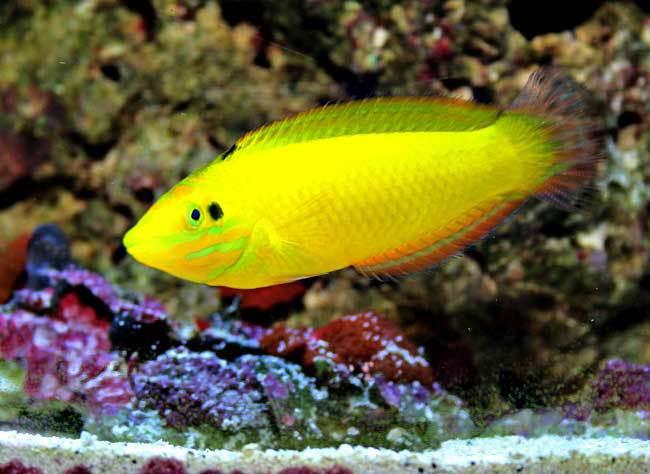
    Yellow Coris Wrasse

    Wrasses are one of the best fish to add to your aquarium if you’re having a bristle worm explosion. These fish are active and colorful and have a big appetite for worms.

    Wrasses can differ in size and behavior, so it’s important to check if your fish is compatible with your setup before adding it to your tank. Here are some of the best wrasse species to get rid of your bristle worm problem:

    • Six Line Wrasse (Pseudocheilinus hexataenia) – maximum size of 3 inches; minimum tank size of 55 gallons
    • Pink-streaked wrasse (Pseudocheilinops ataenia) – maximum size of 2.5 inches; minimum tank size of 15 gallons
    • Red coris wrasse (Coris gaimard) – maximum size of 15 inches; minimum tank size of 125 gallons
    • Melanurus wrasse (Halichoeres melanurus) – maximum size of 4.5 inches; minimum tank size of 50 gallons
    • Yellow coris wrasse (Halichoeres chrysus) – maximum size of 4.5 inches; minimum tank size of 50 gallons

    Apart from wrasses, there are a few other fish species that could help control bristle worm populations in your aquarium. Some of these options include goatfish (Mullidae family), butterflyfish (Chaetodontidae family), and gobies (Gobiidae family).

    What To Do With Unwanted Worms

    If you’ve chosen to use a trap or manually remove your bristle worms, you’ll find yourself wondering what to do with them. There are three options you have for dealing with unwanted bristle worms:

    1. Sell/give them away to another hobbyist. Believe it or not, bristle worms are in high demand. They’re one of the best cleanup crew members and some hobbyists haven’t been fortunate enough to have them come in on their rock. Ask local hobbyists and fish stores if they’re interested in taking them off your hands.
    2. Put them in your sump. If you have sump filtration, underneath the tank is the perfect spot for your worms. They will continue to clean just as well, but out of sight from your main display. It is very possible that some will make their way back up through the plumbing, but this can be controlled with a natural predator or regular removal.
    3. Dispose of them. If you have no other option, then humanely killing the bristle worms is the best method of disposal. You can place them in freshwater, hydrogen peroxide, or a coral dip that specifically targets invertebrates.

    Closing Thoughts

    While bristle worms might not be the prettiest aspect of your saltwater aquarium, they are one of the best live rock hitchhikers that and can come on coral frags. Like other hitchhikers, there are good and bad species, though the bad ones are relatively easy to remove by hand or with a natural predator; if handling, always use proper safety equipment.

    Otherwise, bristle worm populations will sustain themselves based on the amount of food available in the aquarium. Smaller ones will typically not affect fish or corals, though larger ones should be removed in order to prevent possible injury.


    ๐Ÿ“˜ Want to learn more? This article is part of our complete Saltwater Fish & Reef Guide โ€” your ultimate resource for marine fish, coral care, reef setup, and more.

  • How to Set up a Freshwater Shrimp Tank: The Ultimate Guide

    How to Set up a Freshwater Shrimp Tank: The Ultimate Guide

    Freshwater shrimp tanks are one of my favorite recommendations for hobbyists who want a low-maintenance setup with high visual impact. I’ve set up dedicated shrimp tanks and kept shrimp in planted community setups โ€” both work well when you understand what shrimp actually need. Here’s how to set one up right from the start.

    Freshwater Shrimp tanks are getting very popular these days. Shrimp with their small size, active nature, and appealing personality has increased in popularity, especially with nano or smaller tanks. Shrimp tanks have some special considerations though to be successful. They can be intimating at first because they can be more delicate than fish and require a bit more planning than first.

    That is not to say they are difficult to keep. In fact, most shrimp are relatively easy to keep, they just require proper planning. That’s what this article is for – to get you on the right track. In this article, I will discuss everything you need to know to get started right.

    Key Takeaways

    • A sponge filter is the go-to for most shrimp tank keepers
    • If you are going the planted tank route, you must ensure your substrate and fertilizers do not contain copper as it could kill your shrimp
    • TDS meters are beneficial to determine if your source water is okay. Consider RO or RODI + mineralizing if your TDS is too high
    • Tank mates are tricky as many fish will prey on shrimp. If they don’t prey on the adult shrimp, they will likely eat the baby shrimp

    Freshwater Shrimp Tank Equipment – Getting The Proper Equipment

    Below is a video from our YouTube Channel all about how to setup a freshwater shrimp tank. We go over more details in our blog post below. If you like our content, be sure to subscribe.

    The first step is figuring out what we need exactly to get started. Let’s start with the biggest consideration – the tank itself.

    Tank Size

    Bigger is better and more stable. Although shrimp can technically survive in a very small aquarium, the water is prone to fluctuations in parameters and temperatures. This can lead to premature death of shrimp. Shrimp do not like a lot of parameter fluctuations in their tank. In addition, healthy freshwater shrimp will actively breed, meaning you want a bigger tank to support the offspring.

    Shrimp Tank Size

    There is also a drawback with going too big. Too big with how small the shrimp are will make your aquarium look underwhelming. Due to this, I would recommend not going larger than 40 gallons with 20 – 29 gallons being an ideal sweet spot to start. A 2 foot long tank will be the cheapest overall to setup.

    If you are looking for a cheap used tank, you will need to do some extra diligence when shopping around. Any used tank that has been treated with copper is going to be a major problem with freshwater shrimp. Copper will leech from the silicon seems in a used aquarium and will kill off new additions to your tank. It is critical that you purchase a used tank that has never been treated with copper to ensure long-term success.

    Filtration

    Editor’s Choice
    Hikari Bacto Surge Sponge Filter

    The Best Sponge Filter

    With a name brand and high quality reputation, the Bacto Surge separates itself from the pack

    Buy On Chewy Buy On Amazon

    Freshwater Shrimp filtration gets a little more complicated with shrimp as you have to account for shrimp fry then the general small nature of Shrimp. A filter can easily suck up shrimp babies and even adults. It is easy to modify your filters to prevent this though. Usually, shrimps tanks go with one of the following:

    We do not consider Canister Filters with freshwater shrimp. It’s just overkill for this application. Internal filters could work, but the sponge filter is just a great choice to use if you are going internal. If you are going with a Hang On Back Filter, you can’t go wrong with an Hagen Aquaclear Filter.

    • Sponge Filter – Cheap, easy, and not dangerous to shrimp out of the box. Many shrimp breeders use these in their tanks because they are so easy to use and they work!
    • Hang On Back (HOB) Filter – Also known as power filters. These are excellent choices, but you have to modify your intake to prevent any accidents. I would suggest you place a sponge pre-filter on your intake in order to prevent any losses.

    Heating

    An Aquarium Heater can be a controversial subject among shrimp keepers, especially those who keep Neocaridina Shrimp, which can live in cooler water. Ideally, you will want your freshwater shrimp in water temperatures of 70 – 79 degrees Fahrenheit though many breeders will say that a heater is not exactly needed with Neocardina shrimp as long as your area does not get too cold during the winter. For heaters, I would recommend Eheim Jagers.

    Substrate

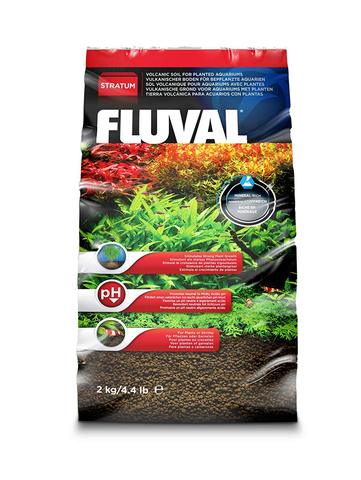
    With Aquarium Substrate, we have to consider either going with an inert or active substrate. An inert substrate will not affect our water parameters, but will require more supplementation to maintain plants. An active substrate is more suited for shrimp that need softer water, like Caridina shrimp. You will also have more success with active substrate growing rooted plants as nutrients will be available through the substrate. If you are going with an active substrate, consider going with ADA Aquasoil or Fluval Stratum, which is designed for freshwater shrimp.

    Best Value
    Fluval Stratum

    Best Value

    A cheaper and beginner friendly alternative to ADA Soil. Also great for shrimp tanks!

    Buy On Petco Buy On Amazon

    If we are looking at shrimp that like KH, like Neocaridina shrimp, you may want to consider an inert substrate. I would recommend CaribSea EcoComplete if you are looking for an inert substrate.

    If you go with an active soil, keep in mind that your cycle time will be longer. Active soil will produce a lot of ammonia when new and freshwater shrimp are very sensitive to ammonia spikes. Be patient with your cycle and introduce your shrimp when parameters have stabilized.

    Plants

    Anubias

    Anubias is hardy and more fish and inverts won’t bother it. An excellent choice for beginners!

    Click For Best Price Buy On Amazon

    Shrimp thrive on planted tanks and there are several good choices for freshwater shrimp. Here are several that will work well with your shrimp inhabitants:

    If you are going with an active substrate, you can consider carpet plants like Monte Carlo. Duckweed and Rotalas do a very good job at protecting your shrimp from high nitrate spikes as they tend to explode in growth when nutrients are high. Also stay on top of your pruning and leaf clean up to prevent decaying matter build up in your aquarium.

    Lighting

    Freshwater Shrimp and lighting is pretty simple. You can use any decent Planted Tank LED system and you should be able to house the main plants listed. For the best features, I would recommend the Serene RGB Pro LED light if it’s in your budget.

    Best Value
    Serene RGB Pro LED

    Current USA’s offering into aquascaping is an incredible value. Spectrum, spread, easy to program and great PAR output.

    Click For Best Price Buy On Amazon

    Test Kits

    There are several parameters we will want to keep an eye when shrimp keeping. These will be:

    • Ammonia
    • Nitrite
    • Nitrate
    • pH
    • GH
    • KH
    • TDS

    Ammonia, Nitrite are very important to measure when you get started with your tank. As you tank matures, you will mostly worry about your nitrate levels. pH, GH, and KH need to be regularly tested in order to ensure they stay stable with your desired shrimp.

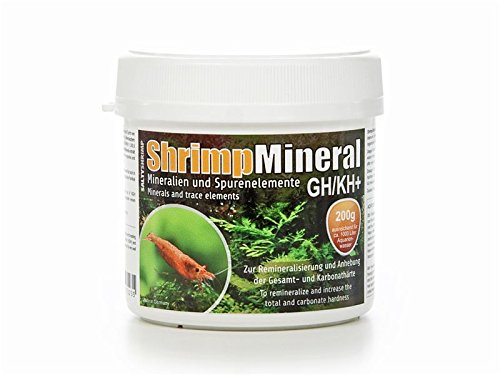
    TDS is a new parameter to test when it comes to shrimp keeping. TDS is a measure of total dissolved solids in water. Too much TDS can affect the health of your shrimp and some shrimp are so sensitive, it is more ideal to use water from an RODI System and then re-materialize the water with a supplement like Shrimp Mineral. Below is a chart that lists out the range of TDS levels for specific types of shrimp:

    NameOptimal TDSLimits
    Bamboo Shrimp150 โ€“ 200100 โ€“ 300
    Snowball Shrimp150 โ€“ 20080 โ€“ 300
    Ghost Shrimp150 โ€“ 200100 โ€“ 400
    Amano Shrimp150 โ€“ 200100 โ€“ 400
    Cherry Shrimp150 โ€“ 200100 โ€“ 400
    Cardinal Shrimp10050 โ€“ 150
    Blue Tiger Shrimp180 โ€“ 220100 โ€“ 300
    My Pick
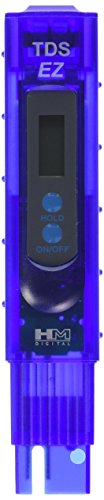
    HM Digital TDS Meter

    Readily available online, this TDS Meter is perfect for ensuring your levels are optimum for your shrimp

    Buy On Amazon

    TDS Meters are readily available online and do a great job at getting accurate readings for you. Make sure when you are testing for TDS, that you test your other parameters as well. Everything affects TDS so just measuring TDA alone is not sufficient! Check out our posts on Aquarium Test Kits for more recommendations on test kits. For KH and HG tests, an API Test Kit should work for most shrimp keepers.

    Parameters for Neocaridina are as follows:

    • pH: 6.5 – 7.5
    • KH: 1-4
    • GH: 6-8
    • TDS – 80-200
    • Water Temp: 65 – 73 F

    Parameters for Caridina shrimp are as follows:

    • pH: 6.2 – 6.6
    • KH: 2-6
    • GH: 4-8
    • TDS: 80-100
    • Water Temp: 70 – 73 F

    Keep in mind these are general guidelines. Caridina and their bee varieties can have various ideal parameters so you will want to do your research accordingly!

    How To Set Up

    I’m going to borrow a video from my good friend Aaron from Aaron’s Aquatics. This video shows an example setup and the start up process. Aquascaping for Shrimp Tanks are best using the Iwagumi style aquascape. This is because the large rocks create mountain that are still smooth for shrimp to venture around on. Cholla wood is also great to use for shrimp. Aaron’s video also has a few other recommendations like Catappa Leaves.

    Species – Choosing The Right Ones

    So you heard me earlier in this post talk about Neocaridina and Caridina shrimp. I’m going to focus on these two types of shrimp in this post.

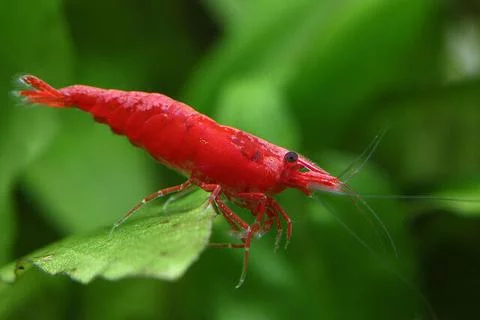
    Neocaridina shrimp are going to be hardier than Cardina shrimp. They are a hardwater species and like KH, which means them best for an inert substrate. If the Neocardina shrimp, the Cherry Shrimp is the most beginner friendly and has the most variety.

    Beginner Friendly
    Cherry Shrimp

    Great red color and very hardy. Cherry shrimp are the best beginner shrimp for shrimp tanks

    Click For Best Price Buy In Bulk

    Cherry Shrimp have grades that are easy to follow with Red Cherry being the lowest grade and Painted Fire Red being the highest. Their grades are as follows:

    • Cherry
    • Sakura
    • Fire Red
    • Painted Fire Red

    Each grade is more rare and more expensive than the other. Cherry shrimp will  breed and grow quickly.

    Other examples include Yellow, Blue Dream, and Green. All come from the Neocardina Davidi species. You can get multiple colors, but be aware that over time they will cross bred and you will have hybrids. A variety only tank is more ideal to keep consistent colors.

    Snow White Bee Shrimp

    Caridina shrimp are a soft water, more delicate species of shrimp. They tend to be imported from other countries making them larger when shipped and more prone to die off for a variety of reasons that I will explain later. Caradia shrimp and bring in some exotic colors and adapt better to active soils like ADA Aquasoil because they prefer softer water and tend to fit better in a professional level planted tank because the plants one will go for will demand softer water. Caradina shrimp are highly sensitive to parameter fluctuations and the reason why shrimp tend to get labeled as hard to keep in our industry. One common Caradina shrimp is an Amano shrimp.

    There is another type of shrimp that is available called Sulawesi shrimp. These are exotic shrimp that usually imported. They have high mortality rates when shipping and are considered an advanced care shrimp to keep.

    Here is a simple chart below on Neocardina and Caradina shrimp varieties:

    Neo CaridinaCaridina
    CherryTangerie Tigers
    SnowballsRacoon Tigers
    Blue JellyYellow King Kong
    Blue DreamAura Blue
    CarbonBlue Bolts (Crystal/Bee)
    OrangeShadow Panda (Crystal/Bee)
    ChocolateGolden Bee
    Green JadeSnow White

    Sourcing Selections

    When purchasing freshwater aquarium shrimp, sourcing becomes a major component in your success. With shrimp, you have two sources, importing shrimp and homebred shrimp.

    Importing shrimp is what you will typically find at your local fish stores. If you haven’t seen my Quarantine post, you may not be familiar with the sourcing cycle of imported livestock in our hobby. It is below for your reference:

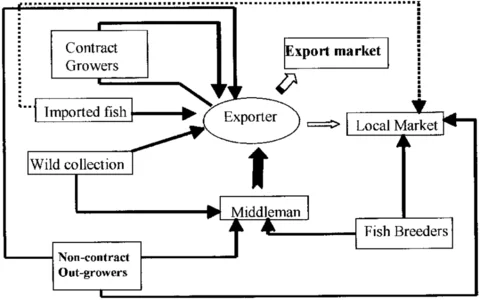
    The Ornamental Fish Trade Supply Chain

    Imported livestock in general are going to go through multiple distributions to get to your home. This increases stress and the likelihood for diseases. Imported shrimp will also be larger in size, meaning they will have a harder time adapting to captivity. It is common for imported shrimp to experience die off when shipping (picture reference from the University of Florida).

    Homebred shrimp on the other hand are going to be hardier in general. They are used being in captivity and tend to be less prone to diseases. Homebred shrimp can also have issues as well if your breeder is not experienced or they are only a generation or two removed from being imported. In general, it’s going to be better to get your shrimp homebred from a local breeder in your area as they will use the similar source water as you (e.g. – tap water). Check your local aquarium societies and social media groups for sources of homebred shrimp.

    For those who do not have a local breeder available, I would highly recommend Buceplant. They sell a variety of Neocardina shrimp that would all be excellent choices for your shrimp tank.

    Pests – Dealing With Them

    Freshwater aquarium shrimp have pests that we need to deal with. Most will come from freshwater plants we purchase. The main pests are:

    • Planaria
    • Hydra
    • Scuds
    • Dragon Fly Nymphs

    Planaria is a type of flatworm that will attack and eat shrimp. You can use a Planaria Trap or a No Planaria medication to eradicate the problem.

    Hydra is a small aquatic vertebrae. They will sting and poison your shrimp killing them. They can also be treated with No Planaria medication.

    Scuds are especially dangerous for newborn shrimp. It is another hitchhiker from live plants. Manual removal is best for these. The reproduce very fast. Another option is to use Bettas or Killifish as they they will happily eat the scuds. Betta are a wildcard for shrimp tanks. Some people go the nuclear route, remove as many shrimp as they can, drop the Betta in and let it eat all the scuds over time. Once the scuds have been eaten the Betta can be removed and the shrimp can be reintroduced.

    Dragonfly Nymphs are nasty predators. They will kill and eat your shrimp and will hunt non-stop. Manual removal is your best bet. There are other options you can do, but they will harm your shrimp.

    The best way to deal with pests is prevention though. Consider dipping your plants in a bleach solution (19 parts water to 1 parts bleach) and rising with Prime conditioned water before introducing them into your aquarium or consider quarantining your live plant additions. See the video below from LifeWithPets on how to do a bleach dip for your live plants:

    Compatible Tank Mates

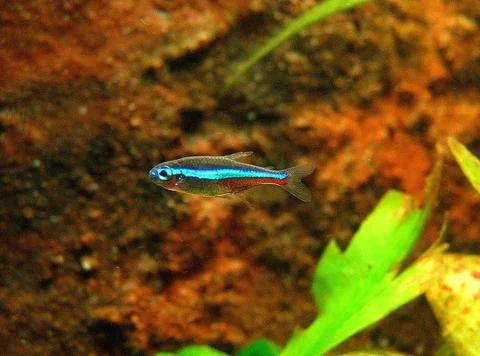
    You may not be interested in shrimp only tanks, so this list of fish will help with picking ones that will work with your shrimp. One thing you will need to keep in mind is if you add fish, it is going to be very likely that the shrimp babies will get eaten so don’t expect to breed shrimp with fish. There are very few fish that will not eat a baby shrimp if given a chance. You can increase your chances of success by choosing a larger species of shrimp like an Amano. Here is a limited selection of small fish that may work in a shrimp tank:

    Neon Tetra

    Feeding

    You need a mix of natural and prepared food to be successful with shrimp tanks. The main natural food we are looking to have available is biofilm. Biofilm is the structure bacteria build to support themselves and grow on surfaces. Shrimp will eat this in the aquarium. Biofilm can grow on your sponger filter, leave litter, mosses, and rocks. The more surface you have available the better for your shrimp. You can also provide “permanent food” like Cholla Wood.

    The next is prepared food. Powered Shrimp Baby Food by GlasGarten is a great choice to sustain shrimp babies. For adult shrimp, commercial shrimp food is available for purchase and will do the trick.

    Shrimp Baby

    This powdered food is perfect for baby shrimp

    Buy On Amazon

    It is also a good idea to use a Feeding Tray when feeding your shrimp. This will prevent excess food getting lost in your substrate and keeping the rest of your aquarium clean from food debris. It’s also a nice way to observe your fish.

    Tank Maintenance

    Shrimp in general are more prone to parameter changes than fish. Staying on top of maintenance is a big deal with shrimp tanks. Many shrimp tanks are also smaller tanks, which make them more susceptible to parameter changes.

    Water Quality

    Shrimp are sensitive to ammonia, nitrite, and higher levels of nitrate. Weekly water changes are especially important with shrimp tanks. Another factor to consider with shrimp tanks is water top off. When water evaporates, parameters can change. Evaporation just pulls out water, but leaves your trace minerals in. You will want to added pure replacement water. This would be something like RODI water or distilled water to replace your evaporated water. You can use an Auto Top Of System to make things easier.

    Shrimp Tank Maintenance Tasks

    Additional tasks aside from water changes and top off water would be once a month filter cleaning. Make sure when you clean your filter media that you use your pulled tank water and squeeze the foam or sponges. This will clean out the debris, but will maintain the bacterial colonies in the media. Sponges should last a very long time and shouldn’t need to be replaced. Don’t replace a sponge unless you absolutely have to, and be very careful if you do because of the bacterial colony loss. It’s better to seed a sponge beforehand if you have to replace a sponge.

    Another key thing to note about shrimp tank is you need to be very careful when you put your hands in your aquarium. Shrimp are very sensitive to toxins. Detergents, chemicals on plants, flea treatments from pets, flea shampoo, and cleaners are prone a risk for your shrimp. Always make sure you wash your hands before putting your hands in your tank. Reef Safe Soap is your friend and a recommended purchase if you are going to handle a shrimp tank.

    Problems – Why They Die

    There a number of challenges one can come across with a Shrimp Tank. I’ll try to cover several of them in this post.

    Parameter Swings

    Shrimp are sensitive to water parameter swings. Having proper tests kits and a TDS meter are you friend. Get in the habit of regularly testing your water on a weekly basis.

    Uncycled Tanks

    Shrimp are very sensitive to ammonia in the aquarium and with their prolific breeding, they can add on to your bioload overtime. If you are using active substrate like ADA Aquasoil, keep in mind that the substrate will generate ammonia when it is first introduced. You will want to give an active soil like this a good two months before introducing shrimp.

    Molting Issues

    A common aliment in beginner shrimp tanks. This indicates a lack of iodine in the tank. Most staple food and powered food will serve this function. Fertilizer that is made for shrimp tanks will also include iodine to help support the shrimp’s molting process. Additional items to add if needed would be montmorillonite material powder that you can readily purchase online.

    Too Many Males

    If you have a shrimp tank with too many males to females, this will present a problem to your population. Males in abundance will overwhelm, stress out, and harass females to the point of death. If you are seeing your females are dropping fast, consider removing a portion of your male population to balance out your numbers. I have provide examples of a female and male shrimp to show you the visual differences. The male is typically longer while the female has an expanded abdomen section.

    Female Cherry Shrimp
    Male Shrimp

    Aquarium Heaters

    Heater failure is pretty common in our hobby. A failed heater can lead to many shrimp deaths. Heaters will usually fail on the on position, which will overheat your tank. Consider an Aquarium Heater Controller to prevent a catastrophic event.

    Pests

    As we mentioned earlier, pests are a major problem in shrimp tanks. Consider using a bleach dip to prevent nuisance pests in your tank.

    Toxins

    Toxins – especially copper are especially deadly to shrimp. Make sure if you are using fertilizer that your fertilizer is shrimp safe meaning that there isn’t copper in the mix or purchase a fertilizer specially designed for shrimp. Check our our Aquarium Plant Fertilizer post for recommended products.

    Poor Source Water

    Let’s talk about your source water. In general for freshwater tanks, you can be okay using tap water that is treated with a Dechlorinator. If you are going to keep harder to keep shrimp like Caridina shrimp, you will probably need to go with better source water.

    Shrimp are very sensitive to copper levels and high nurtients, things that could be present in tap water. You will want to look at your city’s water reports to see what is in your water. RODI water is 99% pure H20 for your aquarium and ideal for sensitive species of shrimp. If you use tap water with Caridina shrimp, it’s possible to get quick die off of your shrimp. If you are using RODI water, you will need to remineralize the water when making water changes. You will want to use a remineralizer supplement in order to get the proper elements in your water changes so your shrimp can stay health.

    Editor’s Choice
    SaltyShrimp – Shrimp Mineral

    Editor’s Choice

    The go to for remineralizing your source water. Highly recommended for all shrimp tank setups

    Buy On Amazon

    Baby Deaths

    Having baby shrimp dying in large numbers can indicate an inadequate source of biofilm for the babies. Focus on building this up in your tank with more rocks, mosses, leave litter, and consider using powdered food to keep them fed.

    Life Span

    Shrimp don’t actually live very long. Most shrimp will live 6-12 months in an aquarium, but they breed a lot. This is also why having a single variety of shrimp is a big deal because generations pass quickly and within a couple of years you will have hybrid shrimps in your tank from the new generations.

    Closing Thoughts

    Glass Feeding Dish For Shrimp Tanks

    Freshwater shrimp tanks are loaded with personality and if bigger shrimp are selected, they can be manageable for a beginner. Shrimp tanks are a niche in our hobby with challenge levels for everyone and it can be really exciting to have an actively breeding tank.

    They can really be a lot of fun to keep and with their smaller sizes, your wallet will thank you versus going for a much larger tank :). If you have any questions, please leave a comment below. Thank you for reading.

  • Algae Eaters – The 7 Best For Your Saltwater Tank

    Algae Eaters – The 7 Best For Your Saltwater Tank

    Saltwater algae control is a challenge I’ve dealt with across every phase of reef keeping, and having the right cleanup crew makes a genuine difference. I’ve tried most of the common saltwater algae eaters in my 125-gallon and know which ones actually earn their spot โ€” and which ones cause more trouble than they solve.

    Today’s post is about Algae eaters for your saltwater tank. Before we get into our list of 7 best, I want to talk about the 3 key steps in implementing an algae control system. When most people have an outbreak, the first thing one might do is buy livestock to fix the issue. However, livestock is not the fix, but actually the control. Livestock controls algae and prevention measures fix outbreaks. Knowing prevention, the types of algae, and how to combat them will ensure that you implement the right algae control measures in your tank 

    Algae Eaters

    Step 1 – Know How To Prevent Outbreaks

    The first step in controlling algae is preventative. Virtually all algae comes from the following sources:

    • Age of tank
    • Excessive Nutrients – Phosphates, Nitrates Silicates, TDS in source water
    • Poor lighting
    • Hitchhiked from live rock or coral purchases

    Age of tank is usually the first issue. If your tank is establishing or just got out of its cycle, it is very common to get nuisance algae. Usually this starts with diatoms and then moves to hair algae and red slime. You get outbreaks because your bacteria cycle is still maturing. As you perform proper maintenance, your nutrient levels should stabilize. Stay patient if you are a newcomer experiencing your first bloom 

    What Causes It?

    To answer the question about what does algae eat, let’s talk about excessive nutrients. The most common cause of Saltwater Aquarium algae outbreaks is poor source water. Water from the tap can be filled with silicates, phosphates, and nitrates that make nuisance algae thrive in your tank. Algae thrives no this nutrients as this is their food source and they will grow to consume these nutrients in your tank. These nutrients will then get “trapped” in the algae, meaning you will not be able to remove these nutrients out the system until you remove both the algae and the source of these nutrients.

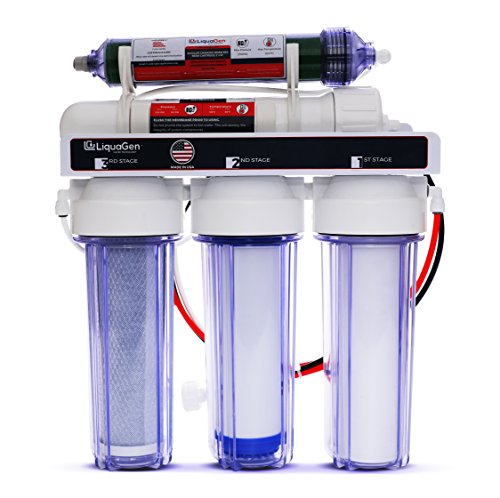
    After learning about the age of the tank, the second question I also ask hobbyist when they have an outbreak is where their source water is coming from. If you are not using an RODI System ((Please note, this post includes affiliate links for which I may make a small commission at no extra cost to you should you make a purchase), you will have outbreaks unless your source water is very pure. Even with an RODI system, one can still have outbreaks and sometimes this is due to not replacing your RODI parts timely.

    Best Value
    LiquaGen – 5-Stage RODI

    Best Value

    A complete 5 stage RODI unit without the excessive price

    Buy On Amazon

    This brings us to the next part with nutrient control – maintenance. You need to have a proper maintenance schedule in order to prevent high nutrient levels. This means water changes, cleaning equipment, changing light bulbs if you use T5 fluorescent lighting, having a proper protein skimmer, and not overfeeding or overstocking your tank.

    Poor lighting is another factor that is usually fixed easily. This is common with T5 fluorescent lighting as the spectrum and intensity degrades as the lights age. If you have older bulbs, you should replace them with fresh bulbs. If you have a light fixture that does not produce the correct spectrum, you should consider getting an appropriate reef light.

    Hitchhiking algae is our last culprit. Macroalgae, Byropsis, and Macro Algae are usually the types of algae that make their way through Hitchhiking. You can avoid most of these issues by investing in dry rock instead of live rock. This leaves corals as your only source of introduction. You can limit your exposure by purchasing frags, inspecting corals before purchase, and only purchasing from reputable local or online stores.

    Dry Rock

    This dry rock from ARC reef is mined from the Earth and is completely eco-friendly

    Buy On Amazon

    Prevention is the first step in algae control. Our next stop is knowing your algae.

    Step 2 – Know What Type You Are Dealing With

    When combating algae, you need to know what type of algae you are dealing with, how they come about, and how to limit or eliminate them. I will be going over the following algae below:

    • Diatoms
    • Dinoflagellates
    • Film Algae
    • Red Slime (Cyanobacteria)
    • Hair Algae
    • Bubble Algae
    • Bryopsis Algae 
    • Calerpa Algae

    Diatoms

    Diatoms

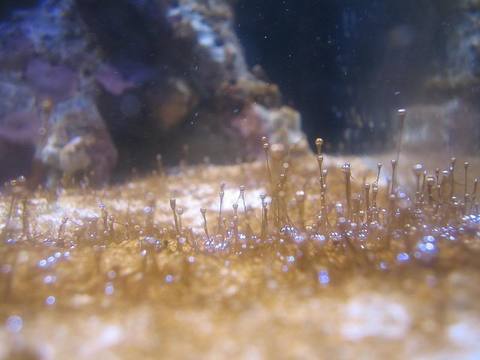
    Diatoms are brown algae that usually appear when a tank has just completed its cycle. They can cover sand, rocks, pumps, glass…pretty much everything. They are unsightly, but harmless in your tank. Diatoms feed off silicates. You can prevent silicate by using an RODI system and keeping up with the maintenance. Even with proper maintenance though, they can still appear via additives, salt mixes, or using improper sand. 

    Film

    This is a common algae in a tank that grows due to nutrients in the tank. They are not harmful, just unsightly and easily removed manually or eaten by algae eaters.

    Dinoflagellates

    Dinoflagellates

    Also known as brown slime algae. This type of algae is some nasty stuff. They release toxins, will kill sensitive inverts like snails, and will feed off what they kill. Eliminating them in the tank requires a mult-prong approach involving granular activated carbon, black out periods, raising pH, reduced feedings, and manual removal. It’s not an outbreak to be taken lightly. More on How To Get Rid of Dinoflagellates.

    Red Slime (Cyanobacteria)

    Cyanobacteria

    Often called algae, this is actually bacteria. Cyanobacteria is another common nuisance that pops up in a newer tank. While not harmful to fish, they are harmful to corals – especially soft corals. It is something that will always been present in your system. It is all about nutrient control with Cyano. The key parameters to control are phosphate (below 0.05 ppm) and nitrates (below 10 ppm). Nutrients can be locked in the red slime, so a common frustration point with reefers is their parameters test well, but the cyano is holding the nutrients until they are removed.

    Other factors are lighting and low flow. Redirect power heads and wavemakers or add more to eliminate dead spots. If the tank is overtaken, you can manually remove by siphoning the cyanobacteria. Chemical options would include using Chemi-Clean ,which can be used as a good way of wiping out Cyano while address the long-term issue.

    Treats Cyanobacteria
    Chemi-Clean

    This solution from Boyd Enterprises efficiently treats cyanobacteria outbreaks

    Buy On Amazon Buy On Petco

    Hair

    Hair Algae

    Hair Algae is an algae that thrives on nutrients. Having high phosphates and nitrates will cause this algae to thrive. Like Cyanobacteria, it can always be present in the tank, but can be controlled and virtually eliminated with good maintenance practices and algae eaters. You can also purposely grow in a container filtration unit like an Algae Scrubber where it can be used to keep phosphates and nitrates low and pH stable at night.

    Bubble

    Bubble Algae

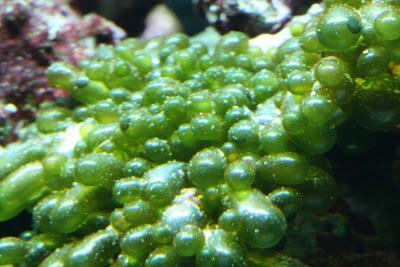
    Bubble algae is usually introduced in the tank as a hitchhiker from either purchased live rock or corals. The best way to prevent it is to carefully inspect all of your rock or coral purchases for this hitchhiker. If you do end up with bubble algae, work to eliminate it early. You can manually remove it (but be careful about popping the bubbles or you will have it reproduce everywhere) or enlist algae eaters that specialize in eating this algae.

    Bryopsis

    Bryopsis Algae

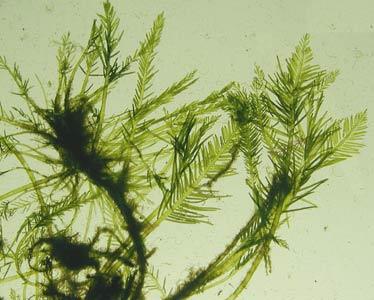
    Bryopsis Algae is a fern-like algae that usually gets introduced in your aquarium from live rock or purchased corals. It is very difficult to get rid of and there are all sorts of horror stories about this algae. This is an algae unfortunately that many algae eaters will not touch.

    The best way to get rid of it is to raise your magnesium levels using a supplement like Kent Marine Tech M. You would want to increase your magnesium to the 1500 levels gradually over a week and keep it consistent until the Bryopsis is wiped out.  

    Kent Marine Magnesium

    Kent Marine Magnesium is a safe, high-quality ionically balanced magnesium supplement that supports both the health of your coral reef inhabitants and the growth of healthy corals.

    Buy On Amazon

    Calerpa

    Caulerpa Racemosa Algae

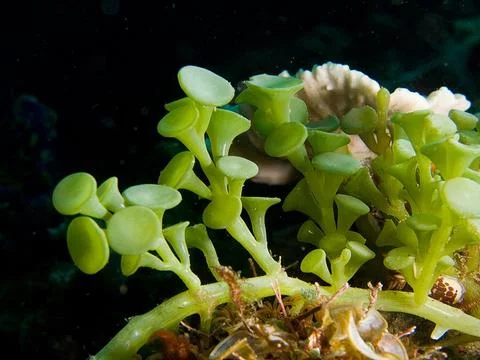
    Calerpa Algae is another algae that finds its way to your tank as a hitchhiker. It is another algae that is difficult to get rid of, but there are algae eaters that will happily eat away at this algae. If it has over taken your tank, it is best to manually remove what you can and then implement the help of an algae eating crew to keep it contained. This algae, like many others on this list thrive on nutrients so keeping phosphates and nitrates low will limit its growth rate.

    Chaetomorpha

    chaetomorpha algae

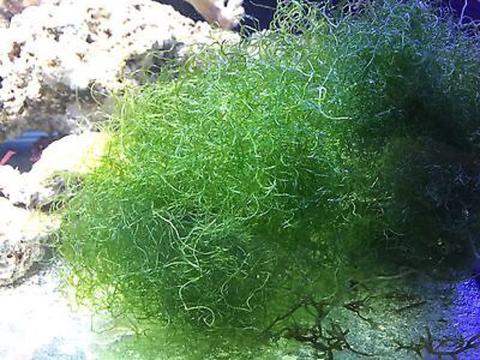
    Chaetomorpha Algae is a single celled algae that is actually used as a beneficial type of algae in many saltwater aquarium setups. While not considered a nuisance algae, I listed this on here to saw that not all algae is bad algae. Chaetomorpha algae is usually placed in a sump and grown in a separate section of the sump to help control nitrates and phosphates.

    While it is fine in a sump, they do happen to hitch hike in the display aquarium when you purchase corals or live rock. They can quick grow out of hand if they grow in your display tank if there is nothing in the tank to eat it and may require manual removal to keep it in check.

    Step 3 – Add Them To Your Aquarium

    We have gone through preventative measures and identification. Since algae is always present in our systems, you should implement some algae eaters to control the algae that does make itself present. Step 1 and 2 were guides on how to prevent an outbreak. Step 3 is about how to implement the best crew to control the algae that does show up. Check out our video from our YouTube channel.

    Below are the list of my recommended algae eaters:

    The Top 7 Control Livestock for Saltwater Tanks

    Let’s go into further detail about each algae eater. Below is a short description of each of your crew member candidates.

    ImageNameTypeLink
    Nassarius Snail Nassarius Snail

    Diatoms

    Click For Best PriceBuy on SWF.com
    Cerith Snail Cerith Snail

    Cyano, Hair, Film

    Click For Best PriceBuy on SWF.com
    Mexican Turbo Snail Mexican Turbo Snail

    Cyano, Diatoms, Film, Macro Algae

    Click For Best PriceBuy on SWF.com
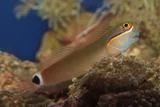
    Tailspot Blenny Tailspot Blenny

    Film, Hair

    Click For Best Price
    Kole Tang Kole Tang

    Film

    Click For Best Price
    FoxFace FoxFace

    Hair, Macro Algae

    Click For Best Price
    Emerald Crab Emerald Crab

    Bubble, Hair

    Click For Best Price

    1. Nassarius Snail

    Best For Diatoms
    Nassarius Snail

    Best For Diatoms

    Nassarirus Snails excel at keeping your sandbed clean and algae free!

    Click For Best Price Buy on SWF.com

    Stats:

    • Temperament – Peaceful
    • Minimum Tank Size – 10 gallons
    • Size – 1/2″
    • Care Level – Easy 
    • Target Algae – Any nutrient reliant algae

    Contrary to belief, the Nassarius Snail does not directly eat algae. So why would it make this list? Because as we had discussed earlier, algae control is mostly about nutrient control. These are savaging snails that do an incredible job of eating detritus in the tank, keeping your nutrients in check, and algae at bay. They do most of their work in the sand, so they will only be compatible with tanks with a substrate. 

    2. Cerith Snails

    Small But Mighty!
    Cerith Snail

    A Workhorse Algae Eater

    Ceriths are small, but in large numbers do a great job at removing algae from rocks and glass

    Click For Best Price Buy From SWF.com

    Stats:

    • Temperament – Peaceful
    • Minimum Tank Size – Any
    • Size – 1″
    • Care Level – Easy
    • Target Algae – Cyano, Hair Algae, Film

    The Cerith Snail makes it to our honorable mention. Many reefers would put these to the top of their list, but I have it an honorable mention for a few reasons. The first is that they can reproduce in the aquarium and you can have dozens of snails in a short period of time. 

    The second is their size – they tend to be pretty small which can be a bad thing if they get sucked into your overflow box and cause some issues with plumbing.

    Aside from that though they are a great hybrid cleaner. They clean on the rock, glass, and sand. They all are most active at night so they tend to avoid getting eating by fish who like to snack on snails. Their small size makes them ideal for nano reef tanks. They are also dirt cheap to get in large qualities. Just check out this deal on 100 cerith snails.

    3. Mexican Turbo Snail

    Great For Larger Tanks!
    Mexican Turbo Snail

    A Work Horse Algae Eater

    Great for larger tanks, the Mexican Turbo Snail eats most types of algae in your aquarium

    Click For Best Price Buy From SWF.com

    Stats:

    • Temperament – Peaceful
    • Minimum Tank Size – 10 gallons
    • Size – 2″
    • Care Level – Easy 
    • Target Algae – Cyanobacteria, Diatoms, Film Algae, Macro Algae

    The Mexican Turbo Snail is the ultimate reef snail for larger tanks. It will mow down several types of nuisance algae, grow sizable, and have the ability to flip itself over. Its shell shape makes it difficult for crabs to eat it as well. It does not take many of these snails to establish a good clean up crew in a tank. Every reefer should consider these snails. The only downfall with them is they get large. For small saltwater aquariums, I would recommend you go with Ceriths instead.  

    4. TailSpot Blenny

    Great For Small Tanks
    Tailspot Blenny

    Great For Small Tanks

    Great personality and algae eater. The Tailspot Blenny is an entertaining addition to any saltwater tank.

    Click For Best Price

    Stats:

    • Temperament – Peaceful
    • Minimum Tank Size – 10 gallons
    • Size – 2 1/2″
    • Care Level – Easy 
    • Target Algae – Film Algae, Hair Algae

    Most hobbyists think about the lawnmower blenny when it comes to an algae eating blenny. I tend to shy away from the lawnmower primarily due to its max size of 5″. The Tailspot Blenny has all the algae eating characteristics of the lawnmower blenny but in a smaller, more colorful, and more peaceful package. They have great personalities and are a great addition to your tank.

    5. Kole Tang

    Great For Large Tanks
    Kole Tang

    A Hardy Tang

    Hardy and medium sized, the Kole Tang is great at removing film algae from rocks and glass

    Click For Best Price

    Stats:

    • Temperament – Semi-aggressive
    • Minimum Tank Size – 70 gallons
    • Size – 7″
    • Care Level – Moderate
    • Target Algae – Film Algae

    The Kole Tang makes our list for a few reasons. It is one of the smaller tangs you can put in your aquarium, which means that those with a medium sized tank can house them. They tend to be less aggressive in smaller aquariums than yellow, purple, or scopas tangs.

    Kole tangs will eat film algae though in some cases will eat hair and macro algae. For those with larger tanks, a yellow tang or a foxface/rabbitfish would be a viable candidate for hair and macro algae. If you have a much larger tank mixing both a bristle tooth tang like a Kole and a zebra species tang or foxface/rabbitfish make for a solid algae control team.

    6. Foxface

    Hair Algae Specialist
    Foxface

    Hair Algae Specialist

    Hardy, peaceful and full of personality – the Foxface is a wondering addition to any tank.

    Click For Best Price

    Stats:

    • Temperament – Semi-aggressive
    • Minimum Tank Size – 75 gallons
    • Size – 8″
    • Care Level – Moderate
    • Target Algae – Hair, Macro Algae

    The best companion for an algae destroying fish duo is a Kole Tang and Foxface. The Foxface is an amazing algae eater in saltwater aquariums. They will chew up any hair algae in the aquarium and will happily eat most macro algae. Combining them with a Kole tang covers more algae you will face in a saltwater tank. It is also one of the most the hardy herbivores you can purchase for a saltwater aquarium. Their thick slime coats make them very resistant to ich and bacterial infections.

    There are some significant drawbacks with a Foxface however. The main one is they are venomenous. They have spikes that can leave a nasty sting, though not as dangerous as a lionfish or scorpion fish. They get pretty large at 8″ and grow very fast. They also can develop a taste for some corals and inverts – specifically clams. If a Foxface gives you pause, a Scopas Tang could be a good alternative. A Scopas is the most hardy Zebrasoma species tang you can buy. 

    7. Emerald Crab

    Bubble Algae Destroyer
    Emerald Crab

    Bubble Algae Destroyer

    The emerald crab is a great scavenger and bubble algae eater

    Click For Best Price

    Stats:

    • Temperament – Semi-aggressive
    • Minimum Tank Size – 10 gallons
    • Size – 2 1/2″
    • Care Level – Easy
    • Target Algae – Bubble Algae, Hair Algae, controls nutrient reliant algae

    The emerald crab is well known for eating bubble algae. It is a scavenger that will feed on uneaten foods and many types of nuisance algae. They are generally a peaceful invert, but can become an opportunistic eater if food sources are low. This invert should be part of any clean up crew in a reef tank. If you are going to get an emerald crab, ensure that your crab is guaranteed to eat bubble algae.

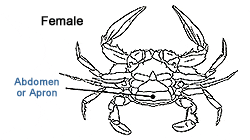
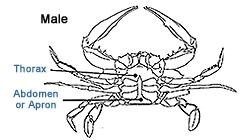
    There are some clean-up crew sellers out there that guarantee their crabs will do so, and those are the ones you want. You will also want to make sure you purchase a female as they are typically less aggressive than males. A picture is shown below so you can tell the difference:

    Emerald Crab Male vs Female
    Male Emerald Crab

    Which Have You Used?

    So that’s my list folks. These 7 aquatic animals I feel are the best algae control livestock you can add to your saltwater aquarium. If you want to go the equipment route, I would highly recommend an algae turf scrubber for controlling all types of nuisance algae growth.

    Did I miss any of your favorites in the list above? Share what I missed in the comments below and please share this post with others if you found it helpful. Thanks for reading!

  • Bubble Tip Anemone Care Guide: How to Have Real Success With BTAs

    Bubble Tip Anemone Care Guide: How to Have Real Success With BTAs

    BTAs were one of the first anemones I kept in my reef, and they taught me a lot about what stability actually means in a saltwater tank. I’ve kept rose bubble tips and green BTAs in my 125-gallon, and I’ve watched them split, wander into powerheads, and thrive spectacularly depending on conditions. The difference between success and failure with these animals almost always comes down to lighting, flow, and water quality โ€” and I’ll break all of that down here.

    Bubble tip anemones are the dream for a lot of reef keepers โ€” especially anyone who got into saltwater because of the clownfish-and-anemone relationship. After 25 years in this hobby and keeping BTAs in my 125-gallon reef, I can tell you they’re one of the most rewarding additions you can make to a mature reef tank. The key word is mature. BTAs don’t belong in new setups โ€” they need stable, well-established water chemistry, and rushing that timeline is the most common reason beginners lose them. Get the conditions and placement right, and a bubble tip anemone can become the centerpiece of your entire reef. This guide covers everything I’ve learned about keeping them successfully long-term.

    Key Takeaways

    • Anemones are generally difficult to keep
    • The best anemones to keep as a first-timer are Rock Anemones or Bubble Tip Anemones
    • Anemones do not need to be quarantined or dipped
    • Anemones can be induced to split either through stress or from frequent feedings

    What Makes Anemones Difficult to Keep?

    Let’s start with the big question here – why are anemones so difficult to keep? Anemones for one are invertebrates that are closely related to jellyfish, not corals. They do not require calcium shell-like hard corals and comprise a single organism versus a colony. Because they are a single organism, this makes them more sensitive to changes than most corals. They also have a bad habit of moving around a lot and getting stuck on a wavemaker or gyre – which can lead to the death of it and the possibility of nuking your entire tank!

    Anemone Caught in Powerhead

    Along with moving around a lot when they getting settled in, they also will sting any corals near their space. They will dominate over any corals near them way worse than what you see with LPS corals. If the anemone moves to a new location near some prized corals, be prepared to move those corals out of the way within 24-48 hours.

    Anemones also require a lot of light. The ideal range of PAR is 220-350. That puts them into SPS lighting territory. You will want to purchase the Best Reef Lighting you can budget if you are looking to keep one of these.

    Lastly, anemones require a lot of stability in the tank, these are not the first inverts you want to place into your tank. It is recommended that you wait at least 6 months before you add one. You should wait until you are experiencing a good amount of coralline growth in your tank before considering one. Coralline algae growth is the one of the major sign of stability in a reef tank. If you are growing coralline and your Alk and Cal are staying stable, then you are well on your way to keeping an anemone.

    Types of Anemones

    Before I get into talking about the bubble tip anemone, let’s talk about the other types of anemones available for sale in the hobby and why they are bad choices for a first time anemone.

    Sebae

    Sebae Anemone

    Sebae Anemones are colorful anemones that are usually hosted by Maroon clown fish. They tend to anchor on the sand versus the rock. You will want a deeper sand bed for them to anchor or make an “anemone” lagoon for them to home in. They are notoriously bad shippers and require nearly perfect water quality to thrive. They are considered one of the more difficult anemones to care for.

    Carpet

    Carpet Anemone

    Carpet Anemones are big and beautiful anemones. They are also known as very deadly anemones as they often will eat fish. They are best to kept in a clown fish only harem type of tank. Even knowing where they fit in best, they are hard to keep thriving long-term. They have a very high morality rate in the hobby with 90% of them dying within the 1st year of captivity. These are not for beginners, and honestly really shouldn’t be in the hobby with exception to aqua-cultured species. 

    Long Tentacle

    Long Tentacle Anemone

    Otherwise known as the corkscrew anemone. These anemones get large like the Carpet Anemones and require near perfect water parameters. They prefer anchoring on a sandy substrate. They do not require as much light as other anemones, but they are sensitive to changes. Another not recommended anemone for first timers.

    Rock Flower

    Rock Flower Anemones

    These are extremely colorful anemones found in the Caribbean are are actually not difficult to keep. The main drawback with them is that clownfish will not host them. They only require a moderate amount of light (150-350 PAR works) and they will adjust to lower PAR in the tank. These are actually good anemones if you want to add a splash of color to your reef tank. Just be aware that they have all the negative characteristics of other anemones in that they will sting nearby corals and they will move until they find a comfortable spot for them. They do move around a lot less than other anemones. This would be a good first time Anemone.

    Bubble Tip – The Best for Clownfish

    Bubble Tip Anemone

    Let’s now talk about why bubble tip anemones are a great choice for a first time Anemone. They are more colorful than long-tentacle anemones and less prone to eating fish like a carpet anemone. They are also the one anemone that will host nearly all varieties of clownfish in the hobby including Ocellaris, Maroon, Tomato, Clark’s, and Skunk clownfish. They are the one Anemone that you can find locally among hobbyist as they regularly split so finding an aquacultured bubble tip anemone is fairly easy.

    Like other anemones, bubble tip anemones will move but they move the most of all anemone varieties so covering your powerheads and wavemakers is essential to keep them from getting injured or killed.

    These are hardy anemones that that your clownfish will host and ideal as a first time anemone with the intention of a clownfish hosting it.

    Care (Lighting, Flow, Feeding, Selection)

    Bubble tip anemone care isn’t as difficult as other types of anemones, but you do need to ensure that you have a stable and ideal environment for them. Let’s go over lighting, flow, feeding, and proper selection to maximize your success.

    Lighting

    For bubble tip anemones, you will want a higher output of light. 220 – 350 PAR is ideal for them. This means that you will need a more powerful reef light to ensure they thrive, check out our Best LED Lighting for Reef Tanks post for a list of recommended lighting setups for a bubble tip anemone.

    Ocean Revive

    A powerful LED (Quick Note – the links below include affiliate links for which I may make a small commission at no extra cost to you should you make a purchase) like an Ocean Revive or Hydra should do the trick for them. Hybrid T5/LED systems work great as well.

    Flow

    Bubble Tip Anemones require a moderate amount of flow. It is argued in the the hobby that too much flow will make the anemone stretch out and lower flow will retain their bubble tentacle shape.  Check out our Best Aquarium Wavemaker Review posts for a list of recommended wavemakers. Make sure you get covers for your wavemakers.

    Anemone Covers

    Ebay has a number of good covers for Gyres and EcoTech MPs that are 3D Printed and will protect your anemones. I highly recommend purchasing these if you are planning on keeping bubble tip anemones.

    Feeding (What Do They Eat)

    Bubble tip anemones require regular feeding to stay healthy. You will want to feed your anemones at least once or twice a week. For smaller anemones, I would recommend that you feed them Reef Roids directly. As they get larger you can opt to feed them mysis shrimp and eventually move on to larger chucks of frozen food like LRS reef frenzy, sliversides, and even fresh shrimp from the super market. Once a clownfish hosts an anemone, it will also attempt to feed your anemone.  

    Selection

    When selecting a bubble tip anemone for purchase, I highly recommend that you purchase an aqua-cultured specimen over a wild caught one. Anemones that are splits from captive kept anemones tend to do better than wild caught ones, have a less potent sting, and can also be obtained at cheaper prices — especially if you get them from local hobbyists. Knowing this, here is what to look for:

    • Look for an anemone that is firmly attached to the substrate or glass and is well expanded
    • The mouth is the best sign of health for an anemone. The mouth should not be gaping open. A healthy specimen should have it’s mouth closed up and somewhat puckered
    • Look for smaller anemones. 3-4 inches in diameter is ideal. They tend to ship better than larger anemones and bubble tip anemones (BTAs) can grow quickly
    • Look at the health of the foot. It should not be damaged or cut. Observe how the anemone is caught and ensure it it pulled from the tank safety. An anemone with a damaged foot will often not thrive and perish

    Below is a sample of a damaged foot so you know what to look out for:

    Damaged Anemone Foot

    Types (and Pictures)

    Bubble tip anemones come in a variety of colors. Below are several of the most popular types. Always check your local hobbyist forums and groups to see if you can get splits locally. Ebay auctions and postings are also a good place to get cheaper bubble tip anemones for sale over the name brand online shops – which often will highly mark up anemones.

    Green

    Green Bubble Tip Anemone

    A fairly common and cheaper bubble tip anemone. It’s fairly easy to find these online or through hobbyist groups available for sale.

    Rose

    Rose bubble tip anemones are the signature anemone of all BTAs. They are the most common bubble tip anemones you will see for sale and they tend to be prolific propagators. They aren’t too expensive. This would be the anemone I would shop off if I was looking at purchasing my first bubble tip anemone. 

    Rainbow

    Rainbow Bubble Tip Anemone

    Rainbow bubble tip anemones are the first subset of BTAs that fall under the exotic category. There are many different varieties of them and several will easily sell for $100+. They are great looking specimens and will add an exotic color to your reef tank.

    Black Widow

    Black Widow Anemone

    Black windows are the signature exotic BTA in the hobby. Their blood red color is hard to find in any coral or invert and they contrast well with several designer clown varieties. They are pretty expensive usually command a price of several hundred dollars even for splits that come directly from a hobbyist.

    Propagating (Reproduction and Profit?)

    Bubble tip anemones are one of the easier anemones to propagate in the hobby. They are actually quite lucrative as many local fish stores and hobbyists will be happy to purchase your splits from you. There are various reasons why an anemone would split – some good and some bad. I’ll go over the methods here.

    The Bad Way – Stress Induced Splitting

    When an anemone is stressed, a survival instinct can be triggered where the anemone will split into order to preserve themselves. Sometimes a new hobbyist will purchase a bubble tip anemone and be excited that their bubble tip anemone is splitting all over the place, but that is not a sign of a thriving anemone. Usually something is off like the salinity, nutrients, or even lighting.

    If your anemone is splitting like crazy, test your parameters and your lighting to see if something is wrong. Likewise, some hobbyist do use this knowledge to their advantage to split anemones faster. I feel that it is not the best way to propagate to them and a rather cruel way to make a quick buck.

    The Good Way – Feeding Induced Splitting

    Feeding your anemone a lot is a good way to get them to split faster. What I mean by this is that you do not overfeed with large chucks of food, but instead to feed them often. Keeping them well feed will make them grow and split naturally. This is the best way of propagating. You can see a time lapse of an anemone splitting for reference below. 

    Quarantining

    One of the biggest advantages of going with anemones over corals is that Anemones theoretically will not carry coral pests or parasites. This is because the anemone lacks the hard surfaces for parasites like ich and velvet to encrust on and many coral pests will simply not survive the sting of the anemone. If you subscribe to the no quarantine methodology (which I recommend you do not, but I know many hobbyist will not QT), anemones are the ideal pop and drop invert with only starfish outshining them (starfish do not require quarantine – just rinse them in display tank water).

    If you are going to introduce an anemone directly into the tank, rinse the anemone in your display water to get as much of the former tank water out of it. The anemone will only carry free swimmers of parasites within the water they hold.

    For those of us who subscribe to the quarantine everything camp, our work here is less burdensome than with corals. Because the anemone will only carry free swimmers, all parasites will simply die off in only 16 days in a fish less quarantine system. That is way less than the standard 45-76 days (Your range is dependent on your risk tolerance) you see recommended for coral quarantine. Keep in mind you will need to have an appropriate reef light and to have all your filters and powerheads covered as the anemone WILL move during the quarantine process.

    Closing Thoughts

    Bubble tip anemones are one of the most rewarding inverts you can keep during your reefing journey. They split regularly and grow very fast introducing you to the world of coral and anemone trading. Because clownfish love them, you get to provide the natural environment that many of us want to provide to our beloved clownfish pairs. My goal in writing this guide was to advise you on want you need to do in order to have success with bubble tip anemones. If you have any questions, please leave a comment below so we can discuss. Thanks again for reading :).  


    ๐Ÿ“˜ Want to learn more? This article is part of our complete Saltwater Fish & Reef Guide โ€” your ultimate resource for marine fish, coral care, reef setup, and more.

  • Emerald Crab Care Guide: The Best Crab for Bubble Algae Control in Reef Tanks

    Emerald Crab Care Guide: The Best Crab for Bubble Algae Control in Reef Tanks

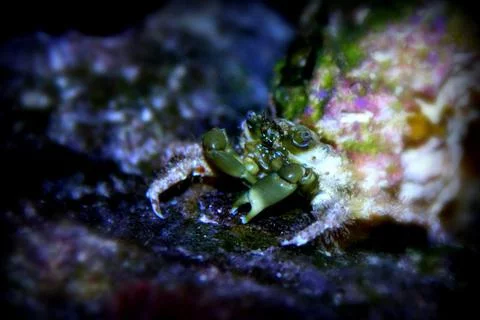
    Emerald crabs are one of my go-to recommendations for reef keepers dealing with bubble algae โ€” they’re one of the few cleanup crew members that will actually go after valonia and related species rather than ignore it. I’ve kept them in my 125-gallon reef and they earn their spot. That said, like any crab, they come with caveats you should know before adding them to a mature reef.

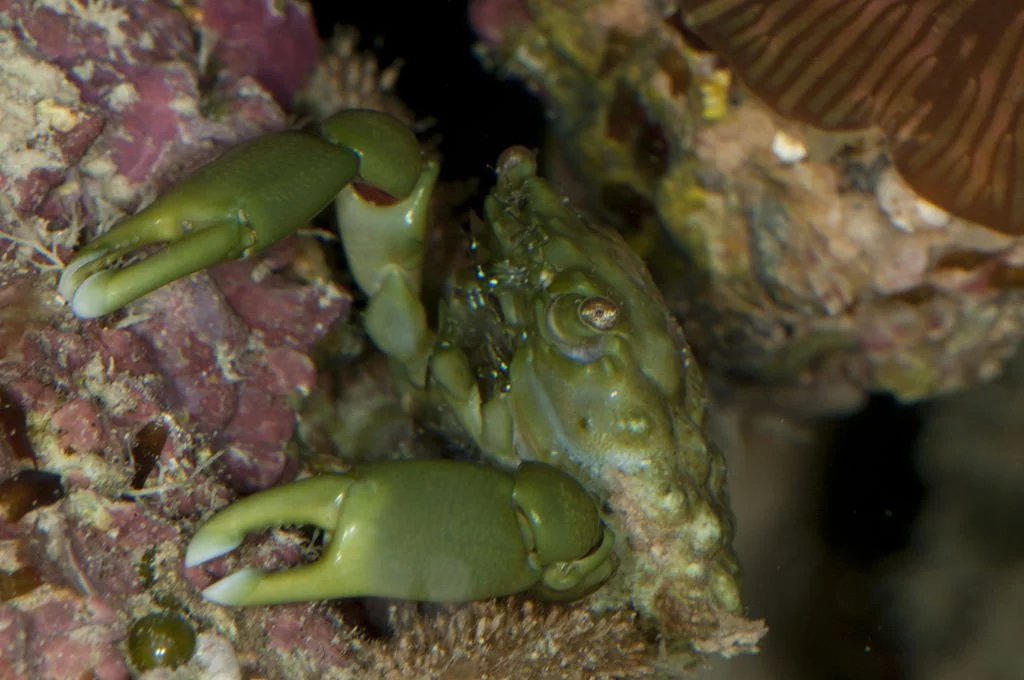
    The emerald crab is one of the most underrated members of the saltwater cleanup crew โ€” and one of the best solutions for bubble algae (Valonia) that most other cleanup members won’t touch. After 25 years in the saltwater hobby and maintaining a reef tank, I’ve used emerald crabs to handle Valonia outbreaks that would otherwise require manual removal. They’re hardy, widely available, and generally reef-safe. One honest note from experience: large, well-fed emerald crabs are mostly benign, but very large, underfed individuals can become opportunistic and have been known to bother small corals or disturb sleeping fish. Keep them fed and keep population in check. Everything you need to know is in this guide.
    As we saw in our previous post, the Emerald Crab was rated the #1 algae eater in a saltwater aquarium. I wanted to dive in deeper in this post about this crab and why this crab is a great addition to your saltwater tank. I’m going to break this post down Q A style for simplicity:

    Species Overview

    Scientific NameMithraculus sculptus
    Common NamesEmerald Crab, Green Crab, Mithraculus Crab
    FamilyMajidae
    OriginCaribbean and Gulf of Mexico
    DietOmnivore
    Care LevelEasy
    TemperaturementSemi-aggressive
    Minimum Tank Size20 Gallons 
    Max Size1.5 โ€“ 2 inches
    Temperature Range76 โ€“ 82 degrees F
    pH Range8.0 โ€“ 8.4
    Salinity1.025 or 35 PPT
    Reef SafeYes
    Available As Tank BredNo
    Filtration/Water FlowModerate
    Water TypeSaltwater
    BreedingEgg-layer
    Difficulty to BreedDifficult to breed
    CompatibilitySpecies-only tank or community tank 

    Where Do Emerald Crabs Come From?

    Emerald crabs hail from the Caribbean Sea to the Gulf of Mexico1. They are nocturnal and will hide in caves and rock during most of the day. While primarily a scavenger of uneaten food, it is well known in aquariums to eat algae.

    What Are They Compatible With?

    Emerald crabs are compatible with just about every fish or invert you can place in the tank. Generally, as long as you food sources (waste, algae,and food from an established tank), they should not bother any fish, inverts, or coral in the tank. If they are starving, they may go after snails, smaller fish, and even polyps. As long as the crab is well-fed, they shouldn’t pose a threat to the other inhabitants in the tank. In most cases I have seen of them eating other animals, it was due to lack of food, poor water quality (which lead to drying inverts and fish), or overstocking. 

    In a mature tank, normally what we need to look out for are fish that might actually try to eat them. Avoid placing them with predatory fish such as hawkfish, triggers, puffers that are known for preying on them.

    Bubble algae is mainly the algae it is known for eating and they usually end up on a reefer’s shopping list the first time they have a bubble algae outbreak and they are recommended on a forum or Facebook group. 

    What Do They Eat?

    Crabs are scavengers and omnivorous. They will happily eat leftover meaty food and clear nuisance algae like bubble algae in the aquarium. You may want to consider supplemental feed if the emerald crab is new to your tank or you do not have enough algae for it to eat in the tank. Dried nori and and pellet foods are good choices for feeding. Nori, in particular is quite a show as you can hand feed it to them and they go nuts when feeding off it.

    Will They Really Rid My Tank of Hair/Bubble Algae?

    Yes and no actually. Yes, they will eat bubble & hair algae, but if your tank is infested with a large outbreak you should not rely on an emerald crab being able to remove all of it. You should consider manually removing what you can, reducing nutrients, and then having the emerald crab control and eliminate the leftover. You should also purchase from a store that can attest to the fact that they will eat bubble algae. There are some on-line stores that will guarantee this.

    Is My Pet Dead?

    This is a common question for newbies when their crab molts for the first time. Like shrimps, these emerald crabs will shed their exoskeleton as they grow leaving behind a what looks like a dead crab. Often times, the emerald crab will appear back out of hiding after a few days…sometimes a week. Either way, it is best to remove the molt or suspected dead tank as you see it to prevent any nutrient build up.

    How Many Should I Get For My Tank?

    They do not get too large – maxing out around 2 1/2″ and generally you will only need one or two in a tank. The general guidance has been one emerald tank for every 30 gallons, but this will depend on your rockwork setup and abundance of food in the tank. Overpopulating emerald crabs could lead to aggression among the crabs.

    FAQs

    Are they Aggressive?

    Yes, they can be aggressive. However, the aggression is usually from the male. Emerald crabs get a really bad rap in the saltwater aquarium hobby because of aggressive males. If you know how to select a female crab, you generally should have less issues with them over the males.

    Will They Consume Corals?

    Generally, an Emerald Crab will not consume corals. They will eat dead or dying matter, which is why they can be mistaken for eating corals. They are merely eating a coral that is already damaged or dead.

    Do They Eat Diatoms?

    There have been reports from reef keepers that Emerald Crabs do in fact eat diatoms. They are a good member of a clean up crew when it comes to diatoms!

    Any Other Questions? Leave Us A Comment Below!

    What experiences have you had with this crab? Please leave your comments below or any questions you have.


    ๐Ÿ“˜ Want to learn more? This article is part of our complete Saltwater Fish & Reef Guide โ€” your ultimate resource for marine fish, coral care, reef setup, and more.