
Last Updated: June 25, 2026
Thank you for visiting! By the way… any links on this page that lead to products on Amazon and other stores/partners are affiliate links Aquarium Store Depot earns a commission if you make a purchase.
Table of Contents
- What Most Care Guides Get Wrong
- The Reality of Keeping Acei Cichlid
- Key Takeaways
- Species Overview
- Classification
- Origin & Natural Habitat
- Appearance & Identification
- Average Size & Lifespan
- Care Guide
- Is This Species Right for You?
- Tank Mates
- Food & Diet
- Breeding & Reproduction
- Common Health Issues
- Common Mistakes to Avoid
- Where to Buy
- FAQ
- What It Is Actually Like Living With Acei Cichlid
- Species Comparison
- Closing Thoughts
Acei cichlids are the most peaceful mbuna you can keep, and that makes them the best choice for beginners entering the African cichlid world. But peaceful by mbuna standards is still more aggressive than most tropical fish. They still need overstocking, hard alkaline water, and a tank built around their needs. I have recommended acei as a starter mbuna for over 20 years, but only when the keeper understands that African cichlid keeping is a fundamentally different approach than community fishkeeping. Acei school in open water, graze algae off driftwood instead of defending rock piles, and ignore the territorial playbook every other mbuna follows. The mbuna that broke every mbuna rule.
The mbuna that broke every mbuna rule.
What Most Care Guides Get Wrong About Acei Cichlid
Most care guides describe Acei as a peaceful mbuna, and while that is true compared to species like Auratus or Demasoni, it is misleading. Acei are still cichlids. Males will spar, chase females during breeding, and defend their preferred spot near driftwood. The real issue is that people read “peaceful” and assume they can go in any community tank. They cannot. They still need Malawi water parameters and mbuna appropriate tankmates. The other common mistake is not providing driftwood. Unlike most mbuna that are strictly rock dwellers, Acei naturally graze algae from submerged logs and need wood in their environment.
The Reality of Keeping Acei Cichlid
Mbuna keeping is a different discipline from regular fishkeeping. The Acei Cichlid is no exception. Here is what you need to prepare for.
Hard, alkaline water is mandatory. Lake Malawi chemistry means pH between 7.8 and 8.6, high GH, and high KH. There is no faking this. If your tap water is soft and acidic, you need to buffer every water change without exception.
Overstocking is the strategy. Keeping 3 or 4 Acei Cichlids leads to one bully and victims. You need groups of 12 or more to spread aggression. But overstocking only works with heavy filtration and consistent water changes.
Diet is critical. Spirulina and veggie-based foods are essential. High-protein diets cause Malawi Bloat, which is often fatal.
Rockwork defines territories. Mbuna need piles of rocks with caves and passageways. Without proper rockwork, dominant fish have nowhere to establish boundaries and subordinates have nowhere to hide. Stack rocks from substrate to near the waterline.
Biggest Mistake New Acei Cichlid Owners Make
Understocking. Keeping a small group of Acei Cichlids means the dominant fish picks off the weak ones. You need a large group to distribute aggression. Twelve is the minimum for most mbuna species.
Expert Take (Mark Valderrama, AquariumStoreDepot)
Start with a group of 12 or more in a 55 gallon minimum. Use aragonite or crushed coral substrate to buffer pH naturally. Feed spirulina-based food as the staple. Stack rocks to create territories. This formula works for Acei Cichlids and most other mbuna.
Key Takeaways
- Most peaceful mbuna. Widely regarded as the least aggressive species in the mbuna group
- Unique habitat. Unlike most mbuna, Acei prefer submerged wood and open water over strict rock territories
- Larger mbuna. Grows to 5. 6 inches (13. 15 cm); needs a 75-gallon minimum
- Striking appearance. Blue body with contrasting yellow tail (Yellow Tail variant) or white tail (White Tail variant)
- Versatile tank mate. Can be kept with other mbuna, Peacocks, and even some Haplochromis species
- Maternal mouthbrooder. Females carry up to 50 fry per brood for about 3 weeks
Species Overview
| Common Name | Acei Cichlid, Yellow Tail Acei, White Tail Acei |
| Scientific Name | Pseudotropheus sp. “acei” |
| Care Level | Easy to Intermediate |
| Temperament | Mildly Aggressive (peaceful for a mbuna) |
| Max Size | 5. 6 inches (13. 15 cm) |
| Min Tank Size | 75 gallons (284 liters) |
| Diet | Omnivore (primarily herbivorous) |
| Lifespan | 8. 10 years |
| Water Temp | 76. 82°F (24. 28°C) |
| pH | 7.8. 8.6 |
| Origin | Lake Malawi, Africa |
Classification
| Kingdom | Animalia |
| Phylum | Chordata |
| Class | Actinopterygii |
| Order | Cichliformes |
| Family | Cichlidae |
| Genus | Pseudotropheus |
| Species | sp. “acei” |
Origin & Natural Habitat
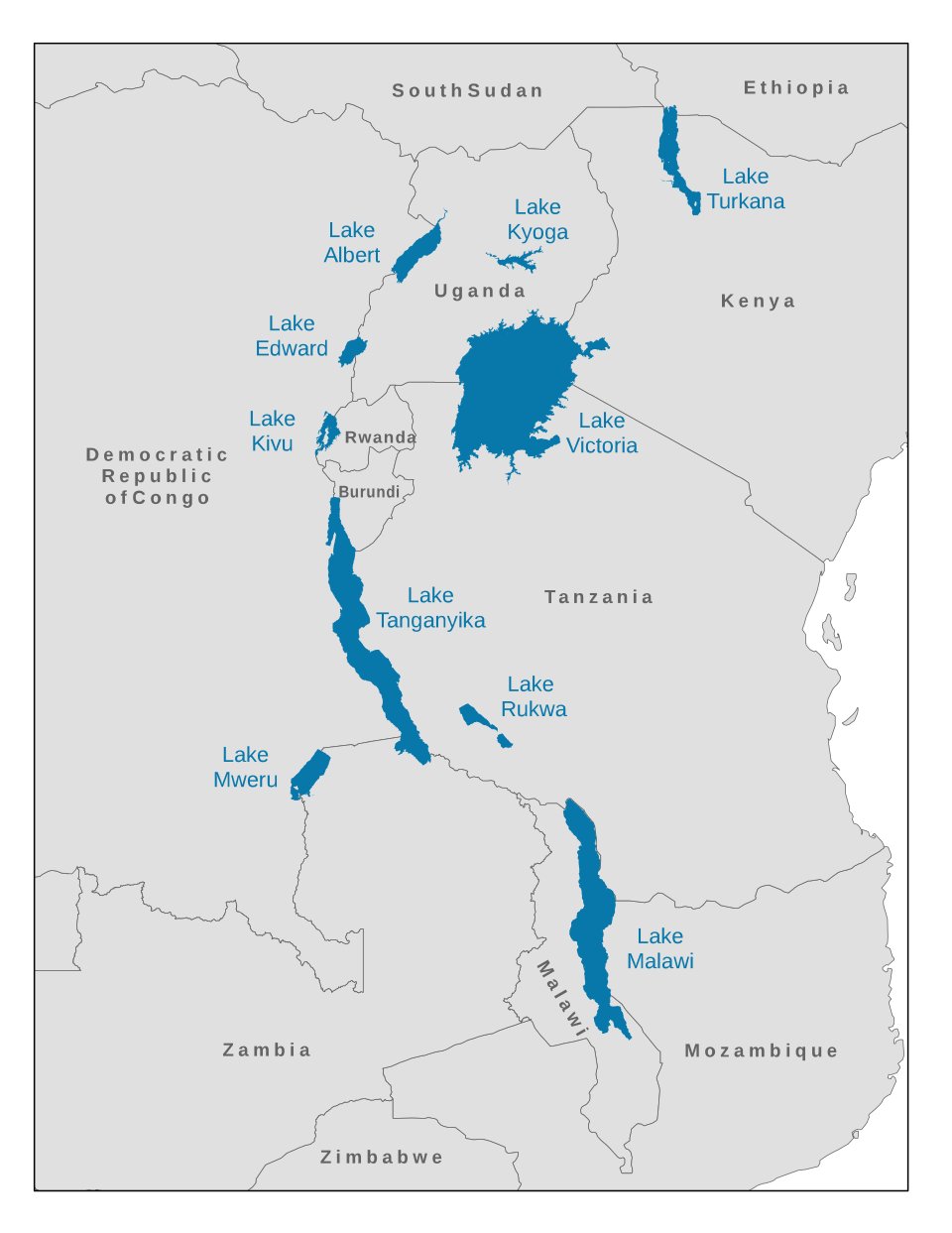
The Acei Cichlid is endemic to Lake Malawi in East Africa. They’re found along the western coast of the lake, with populations documented around Nkhata Bay, Senga Bay, Ngara, Ruarwe, Bandawe, and Karonga. The Yellow Tail variant from the Msuli Point and Ngara areas is the most commonly seen form in the aquarium hobby.
What makes the Acei unique among mbuna is its habitat preference. While most mbuna are strict rock dwellers, Acei are found along sandy and rocky shorelines where submerged logs, roots, and tree branches are present. They’ve developed the ability to harvest algae from submerged wood. A niche that few other mbuna species exploit. This means they naturally spend more time in the middle and upper water column rather than hugging the bottom like typical mbuna.
This unique ecological niche is why Acei are so much less aggressive than other mbuna. They’re not competing for the same rocky territories that drive the intense aggression seen in most other species. In the wild, they form loose schools that graze along sunken logs and roots, giving them an almost peaceful, community-oriented behavior.
Appearance & Identification
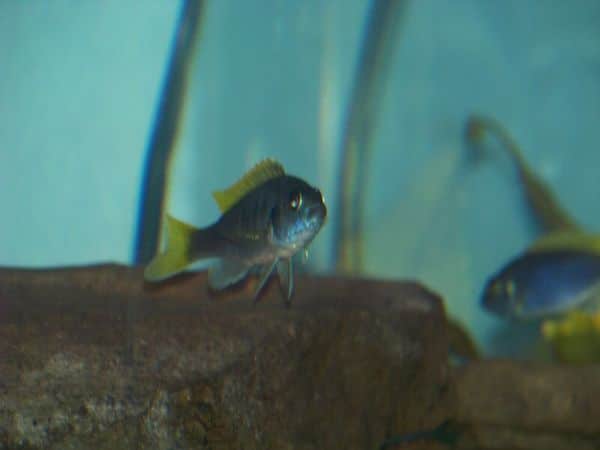
The Acei has a slender, elongated body compared to most mbuna. More streamlined and less stocky. The most popular variant, the Yellow Tail Acei, features a powder blue to purple-blue body with a bright yellow tail fin (caudal fin) and yellow dorsal fin. The contrast between the blue body and yellow fins is immediately eye-catching and unlike anything else in the mbuna world.
The White Tail variant (sometimes called the Ngara variant) replaces the yellow with white on the tail and fins, creating a more subtle but equally attractive look. Both variants are available in the hobby, though the Yellow Tail is more commonly seen.
Male vs. Female
Sexing Acei is more challenging than many mbuna because the dimorphism is subtle. Both sexes display similar coloration, which can make it tricky to ensure the right male-to-female ratio.
| Feature | Male | Female |
|---|---|---|
| Size | Up to 6 inches (15 cm) | Up to 4.5 inches (11 cm) |
| Color | Slightly deeper blue, brighter fins | Slightly paler, less vivid |
| Egg Spots | More prominent on anal fin | Fewer or smaller egg spots |
| Body Shape | Slightly larger and more elongated | Rounder when carrying eggs |
| Behavior | More territorial during breeding | More social, schools with other females |
Average Size & Lifespan
Acei are one of the larger mbuna species, reaching 5. 6 inches (13. 15 cm) in captivity. Males are the larger sex, with mature specimens reaching the full 6 inches, while females stay around 4. 5 inches. They grow relatively quickly in their first year, reaching maturity at 1.5. 2 inches, then their growth rate slows considerably. Most reach full size within about 18 months.
With proper care, Acei Cichlids live 8. 10 years in a home aquarium. Some reports suggest they can exceed 10 years in optimal conditions. Their relatively peaceful nature means they experience less chronic stress than more aggressive mbuna, which likely contributes to their longevity.
ASD Difficulty Rating: Tier 2 – Intermediate
Acei cichlids are mbuna from Lake Malawi requiring hard, alkaline water (pH 7.8-8.5, GH 10-20), aragonite or crushed coral substrate, and groups of 12 or more. A small group concentrates mbuna aggression on 1-2 fish until they deteriorate.
Care Guide
Tank Size
Due to their larger adult size and active swimming nature, Acei need a minimum of 75 gallons (284 liters). They’re active swimmers that use the full water column. Especially the middle and upper zones. So horizontal space is essential. A 4-foot or longer tank is the minimum recommendation.
If you’re building a mixed Lake Malawi community with Acei as part of the lineup, 100 gallons (379 liters) or more gives you much better flexibility for stocking and territory management.
Water Parameters
| Temperature | 76. 82°F (24. 28°C) |
| pH | 7.8. 8.6 |
| General Hardness (dGH) | 10. 20 dGH |
| Carbonate Hardness (dKH) | 10. 15 dKH |
| Ammonia | 0 ppm |
| Nitrite | 0 ppm |
| Nitrate | <20 ppm |
Standard Lake Malawi parameters apply. Use aragonite substrate or crushed coral to naturally maintain the high pH and hardness these fish require. Consistency matters more than exact numbers. Avoid large swings in any parameter.
Filtration & Water Flow
A quality canister filter or wet/dry filter rated for your tank volume is essential. Add a powerhead for supplemental circulation. Acei appreciate moderate water movement, and the increased oxygenation benefits the entire tank. Aim for 6. 8 times tank volume turnover per hour.
Weekly water changes of 25. 30% are standard. Acei are sensitive to poor water quality, so don’t let maintenance slide. Regular testing for nitrates is especially important.
Lighting
Moderate lighting works well. Acei spend more time in open water than most mbuna, so they’re visible under any standard aquarium LED setup. A photoperiod of 8. 10 hours is ideal and promotes natural algae growth on rocks and wood for supplemental grazing.
Plants & Decorations
Here’s where the Acei tank differs from a typical mbuna setup. While you still want plenty of rockwork stacked high to create hiding spots and territories, you should also include some larger pieces of driftwood or bogwood to mimic the submerged logs they naturally graze on. Yes, driftwood does lower pH slightly, but in a properly buffered Lake Malawi setup with aragonite substrate, the effect is minimal.
Acei will inhabit the upper half of the aquarium, so build your rockwork tall. Include open swimming space in the upper and middle water column. They’re not fish that want to be crammed between rocks all day. Hardy plants like Anubias and Vallisneria can work in an Acei tank, as these fish are less destructive to plants than most mbuna.
Substrate
Fine sand is the go-to choice. Aragonite sand provides both a natural look and pH buffering. Pool filter sand is a budget alternative. Acei do some digging but are less destructive to the substrate than many other mbuna species.
Is the Acei Cichlid Right for You?
Acei Cichlids are the friendliest mbuna in the hobby. If you want a Lake Malawi tank without the constant territorial warfare, this is the species to build around.
- Great fit if you want a mbuna community that does not feel like a battlefield all day
- Great fit if you are a beginner to African cichlids and want a forgiving first species
- Great fit if you like the idea of incorporating driftwood into a Malawi setup for a more natural look
- Great fit if you want a schooling mbuna. Acei look their best in groups of 6 or more
- Not ideal if you want maximum color intensity. Acei are attractive but more subtle than species like Red Zebras or Demasoni
- Not ideal if you keep highly aggressive mbuna like Auratus that would bully the Acei relentlessly
Acei are my go to recommendation for first time Malawi keepers. They are peaceful, hardy, and beautiful in groups. If you want to enjoy African cichlids without the stress of managing extreme aggression, start here.
Tank Mates
Best Tank Mates
The Acei’s peaceful nature makes it one of the most versatile mbuna for community stocking. They can coexist with a wider range of species than most mbuna, including some that would be terrorized by more aggressive species. Great companions include:
- Yellow Lab (Labidochromis caeruleus). Another peaceful mbuna; excellent pairing
- Rusty Cichlid (Iodotropheus sprengerae). Equally peaceful, different niche
- Peacock cichlids (Aulonocara spp.). Acei are mild enough to coexist with Peacocks
- Saulosi Cichlid (Chindongo saulosi). Smaller, relatively peaceful mbuna
- Synodontis catfish. Great bottom dwellers for any Malawi setup
- Red Zebra (Metriaclima estherae). Manageable in a properly stocked tank
Tank Mates to Avoid
- Auratus (Melanochromis auratus). Far too aggressive; will bully Acei relentlessly
- Large aggressive mbuna. Kenyi and similarly belligerent species will dominate Acei
- Any highly aggressive species. Acei’s peaceful nature makes them poor matches for the most pugnacious mbuna
- Small community fish. Tetras and rasboras are too small for a cichlid tank
Food & Diet
Acei are omnivores with a strong herbivorous lean. In the wild, they spend most of their time grazing on algae from submerged wood and rocks. In the aquarium, a high-quality spirulina-based flake or pellet should be the core of their diet.
Supplement with blanched vegetables. Frozen peas, romaine lettuce, broccoli, cucumber, and zucchini are all readily accepted. Occasional protein treats like brine shrimp or daphnia are fine once or twice a week. Avoid beef heart entirely, as it disrupts their digestive system. Bloodworms should also be avoided or used extremely sparingly.
Feed 2. 3 small meals per day. Acei are active grazers by nature, so multiple small feedings throughout the day better matches their natural feeding pattern than one large meal.
Breeding & Reproduction
Acei are maternal mouthbrooders and breed readily in captivity. Their relatively peaceful nature makes the breeding process less stressful for all involved compared to more aggressive mbuna species.
Spawning Behavior
The male claims a spawning territory and courts females with color intensification and body displays. The spawning process follows the typical mbuna pattern. The female deposits eggs, immediately picks them up in her mouth, and then attempts to collect the egg-shaped spots on the male’s anal fin, picking up milt in the process to fertilize the eggs.
Mouthbrooding & Fry Care
The female incubates the eggs in her buccal cavity for approximately 3 weeks, during which she won’t eat. Clutch sizes is impressive. Mature females can carry up to 50 fry per brood, though 20. 30 is more typical for younger females.
Minimizing stress for the holding female is crucial. If she’s harassed too much, she may spit the fry prematurely or consume them. Keep lighting low in the breeding area and ensure she has quiet hiding spots. Once released, fry can take crushed spirulina flake, baby brine shrimp, and microworms immediately. For the best survival rates, isolate the holding female in a separate tank before she releases.
Common Health Issues
Malawi Bloat
Acei are particularly susceptible to Malawi Bloat. This condition is caused by a protozoan that multiplies rapidly when the fish is stressed or eating an improper diet. The parasite causes intestinal blockages that can damage the liver, swim bladder, and kidneys. Symptoms include abdominal swelling, loss of appetite, white stringy feces, and rapid breathing. Death can occur within 24. 78 hours if untreated.
Prevention is far more effective than treatment: maintain a plant-heavy diet, keep water quality pristine, and minimize stress. Early cases is treated with Metronidazole in a hospital tank.
Ich (White Spot Disease)
Like all cichlids, Acei can develop ich when stressed or exposed to poor water conditions. White salt-like spots on the body and fins are the telltale sign. Raise the temperature gradually to 82°F (28°C) and treat with an appropriate medication. Acei respond well to treatment when caught early.
Bacterial Infections
While less prone to fighting injuries than aggressive mbuna, Acei can still develop bacterial infections from minor scrapes or stress. Fin rot, cloudy eyes, and red patches are common symptoms. Excellent water quality is the best prevention. Treat with antibacterial medication if symptoms appear.
Hard Rule
Keep acei cichlids in groups of 12 or more – never fewer than 8. Mbuna aggression is territory-driven. Small groups concentrate that aggression on 1-2 fish until they die. Large groups spread it out and prevent fixation on individual targets.
Common Mistakes to Avoid
- Housing with overly aggressive mbuna. Acei’s peaceful nature means they’ll be bullied by species like Auratus or Kenyi
- Insufficient tank size. At 6 inches, they need more space than small mbuna. 75 gallons is the starting point
- Feeding a high-protein diet. Despite being omnivores, their diet should be heavily plant-based. Too much protein causes bloat
- Not enough vertical rockwork. Acei prefer the upper water column, so build your rockwork high to give them elevated territories
- Skipping driftwood. Unlike most mbuna tanks, Acei actually benefit from having some wood to graze on
- Poor water quality. Acei are sensitive to elevated nitrates. Stay on top of water changes
Where to Buy
Acei Cichlids are moderately available in the hobby. Many local fish stores carry them, especially those with a good African cichlid selection. Online retailers often have both Yellow Tail and White Tail variants. Expect to pay $6. $15 per fish depending on size and variant. For quality stock:
- Flip Aquatics. Reliable source for healthy Acei Cichlids with quality shipping
- Dan’s Fish. Trusted retailer with a solid selection of Lake Malawi species
Purchase a group of at least 6 with a female-heavy ratio. Since sexing juveniles is difficult, buying a slightly larger group and removing extra males later is the safest approach.
FAQ
Are Acei Cichlids really peaceful?
By mbuna standards, yes. They’re considered the most peaceful species in the group. They’re still cichlids, so they is territorial during breeding, but compared to Auratus, Kenyi, or Demasoni, Acei are remarkably laid-back. They won’t chase other fish around the tank or aggressively defend territories the way most mbuna do.
Can Acei live with Peacock cichlids?
Yes, this is one of the few mbuna species that can coexist with Peacocks (Aulonocara) successfully. Their mild temperament makes them compatible with the more peaceful Peacock species. Just monitor interactions and ensure the Peacocks aren’t being bullied during feeding time.
What’s the difference between Yellow Tail and White Tail Acei?
Both are the same species. Pseudotropheus sp. “acei”. Just from different geographic locations in Lake Malawi. The Yellow Tail variant has bright yellow caudal and dorsal fins, while the White Tail variant has white or cream-colored fins. Care requirements are identical for both.
Why do Acei stay near the top of the tank?
This is completely natural behavior. Unlike most mbuna that are strict rock-bottom dwellers, Acei naturally inhabit the upper water column in the wild, grazing on submerged logs and roots near the surface. Build your rockwork high to accommodate this preference, and consider adding some driftwood for them to graze on.
How many Acei should I keep?
A group of 6. 8 works well in a 75-gallon tank, with a ratio of 1 male to 3. 4 females. Acei are social fish that do well in groups and feel more secure with conspecifics. Avoid keeping them in pairs, as the male may overly harass a single female.
Do Acei need driftwood in their tank?
It’s not strictly necessary, but it’s beneficial. In the wild, Acei naturally graze on submerged wood, so providing some driftwood or bogwood gives them a natural feeding surface and enrichment. Just make sure your substrate buffers the pH adequately, as driftwood can slightly lower pH.
What It Is Actually Like Living With Acei Cichlid
This is the part no other care guide gives you. Forget water parameters for a minute. Here is what it is actually like to share your tank with this species.
They have more personality than you expect. The Acei Cichlid is not a fish that just sits in the background. Once settled in, they become interactive, curious, and responsive to your presence.
Feeding time reveals their character. Watch how the Acei Cichlid approaches food and you will see real personality. Some are bold, some are cautious, and their feeding behavior tells you a lot about their mood and health.
They establish routines. After a few weeks, your Acei Cichlid will have favorite spots, preferred paths through the tank, and predictable patterns. Learning these routines makes you a better keeper.
Color is a health indicator. The Acei Cichlid’s coloration is a real-time report card on your husbandry. Vibrant color means happy fish. Faded color means something is wrong. Pay attention.
How the Acei Cichlid Compares to Similar Species
Choosing the right Malawi cichlid means understanding how similar species compare. Here is how the Acei Cichlid stacks up against species you will also be considering.
Acei Cichlid vs. Rusty Cichlid
Both Acei and Rusty Cichlids earn the title of “most peaceful mbuna,” but they fill different roles in a tank. Acei are active mid water swimmers that school together, while Rusties stay closer to the rocks. Both work beautifully together in a community setup. If you can only pick one, Acei provide more visible activity and schooling behavior, while Rusties offer a more unique brownish purple color palette. Ideally, keep both. They complement each other perfectly. You can learn more in our Rusty Cichlid Care Guide.
Acei Cichlid vs. Powder Blue Cichlid
Powder Blues share the Acei’s relatively mild temperament but stick to the rocks rather than driftwood. Color wise, Powder Blues are a solid light blue while Acei are yellow tailed with a blue body. Both make excellent choices for less aggressive Malawi communities. The Powder Blue edges ahead on color consistency, while the Acei wins on personality and schooling behavior. You can learn more in our Powder Blue Cichlid Care Guide.
Closing Thoughts
Acei are peaceful for mbuna. That is still more aggressive than anything in your average community tank.
The Acei Cichlid occupies a unique and valuable niche in the Lake Malawi hobby. Its combination of stunning coloration, peaceful temperament, and interesting upper-water behavior makes it stand out from the typical mbuna crowd. Whether you’re building a mbuna-only community or looking for a Lake Malawi species that can coexist with Peacocks, the Acei is one of the most versatile and rewarding choices available.
Give them a spacious tank with tall rockwork, some driftwood, and a plant-based diet, and they’ll thrive for years. Among mbuna, the Acei proves that you don’t need extreme aggression to be an engaging, captivating aquarium fish.
Recommended Video
References
- Seriously Fish. (n.d.). Pseudotropheus sp. “acei”. https://www.seriouslyfish.com/species/pseudotropheus-sp-acei/
- FishBase. (n.d.). Pseudotropheus sp. “acei”. https://www.fishbase.se
- Practical Fishkeeping. (n.d.). Acei Cichlid species profile. https://www.practicalfishkeeping.co.uk
- The Aquarium Wiki. (n.d.). Pseudotropheus acei. https://www.theaquariumwiki.com/wiki/Pseudotropheus_acei
- About the Author
- Latest Posts

I’m Mark Valderrama, founder of Aquarium Store Depot and a fishkeeper with over 25 years of hands-on experience. I started in the hobby at age 11, worked at local fish stores, and have kept freshwater tanks, ponds, and reef tanks ever since. I’ve been featured in two best-selling aquarium books on Amazon and built this site to share practical, experience-based fish keeping knowledge.
Leave a Reply