
Last Updated: June 25, 2026
Thank you for visiting! By the way… any links on this page that lead to products on Amazon and other stores/partners are affiliate links Aquarium Store Depot earns a commission if you make a purchase.
Table of Contents
- What Most Care Guides Get Wrong
- The Reality of Keeping Powder Blue Cichlid
- Key Takeaways
- Species Overview
- Classification
- Origin & Natural Habitat
- Appearance & Identification
- Average Size & Lifespan
- Care Guide
- Is This Species Right for You?
- Tank Mates
- Food & Diet
- Breeding & Reproduction
- Common Health Issues
- Common Mistakes to Avoid
- Where to Buy
- FAQ
- What It Is Actually Like Living With Powder Blue Cichlid
- Species Comparison
- Closing Thoughts
Powder blue cichlids are a solid beginner mbuna that offers striking color without extreme aggression. But underestimating this fish is still a mistake. They hold territory, chase intruders, and need the same hard, alkaline water and rock heavy setup as every other mbuna. I have kept pseudotropheus socolofi for years and the biggest issue is people buying them for their color and ignoring the African cichlid requirements that come with it. The beginner mbuna that teaches you every lesson African cichlid keeping demands.
Beginner-friendly by mbuna standards, which still means intermediate by everyone else’s.
What Most Care Guides Get Wrong About Powder Blue Cichlid
The most common mistake with Powder Blues is assuming they are the same as Cobalt Blue Zebras. They are not. Pseudotropheus socolofi and Metriaclima callainos look similar at first glance, but Powder Blues are noticeably calmer and slightly slimmer. Buying the wrong species because a store mislabeled them leads to aggression problems in tanks designed for a milder fish. The other misconception is that “beginner mbuna” means you can skip the basics. Powder Blues still need proper pH above 7.8, adequate filtration, and a well structured rockscape.
The Reality of Keeping Powder Blue Cichlid
Mbuna keeping is a different discipline from regular fishkeeping. The Powder Blue Cichlid is no exception. Here is what you need to prepare for.
Hard, alkaline water is mandatory. Lake Malawi chemistry means pH between 7.8 and 8.6, high GH, and high KH. There is no faking this. If your tap water is soft and acidic, you need to buffer every water change without exception.
Overstocking is the strategy. Keeping 3 or 4 Powder Blue Cichlids leads to one bully and victims. You need groups of 12 or more to spread aggression. But overstocking only works with heavy filtration and consistent water changes.
Diet is critical. Spirulina and veggie-based foods are essential. High-protein diets cause Malawi Bloat, which is often fatal.
Rockwork defines territories. Mbuna need piles of rocks with caves and passageways. Without proper rockwork, dominant fish have nowhere to establish boundaries and subordinates have nowhere to hide. Stack rocks from substrate to near the waterline.
Biggest Mistake New Powder Blue Cichlid Owners Make
Understocking. Keeping a small group of Powder Blue Cichlids means the dominant fish picks off the weak ones. You need a large group to distribute aggression. Twelve is the minimum for most mbuna species.
Expert Take
Start with a group of 12 or more in a 55 gallon minimum. Use aragonite or crushed coral substrate to buffer pH naturally. Feed spirulina-based food as the staple. Stack rocks to create territories. This formula works for Powder Blue Cichlids and most other mbuna.
Key Takeaways
- Beautiful powder blue coloration. Both sexes display the signature soft blue color with black fin edging
- Relatively peaceful for a mbuna. Less aggressive than most mbuna species; suitable for mixed communities
- Compact size. Reaches only about 4 inches (10 cm), manageable in a 55-gallon setup
- Hardy and adaptable. One of the more forgiving mbuna for intermediate keepers
- Omnivore with herbivore leanings. Plant-based diet is essential to prevent bloat
- Prolific breeder. Maternal mouthbrooder that can produce up to 60 fry per brood
Species Overview
| Common Name | Powder Blue Cichlid, Pindani, Eduard’s Mbuna |
| Scientific Name | Pseudotropheus socolofi |
| Care Level | Easy to Intermediate |
| Temperament | Mildly Aggressive |
| Max Size | 4 inches (10 cm) |
| Min Tank Size | 55 gallons (208 liters) |
| Diet | Omnivore (primarily herbivorous) |
| Lifespan | 5. 8 years |
| Water Temp | 76. 82°F (24. 28°C) |
| pH | 7.8. 8.6 |
| Origin | Lake Malawi, Africa (Mozambique coast) |
Classification
| Kingdom | Animalia |
| Phylum | Chordata |
| Class | Actinopterygii |
| Order | Cichliformes |
| Family | Cichlidae |
| Genus | Pseudotropheus |
| Species | P. Socolofi |
Origin & Natural Habitat
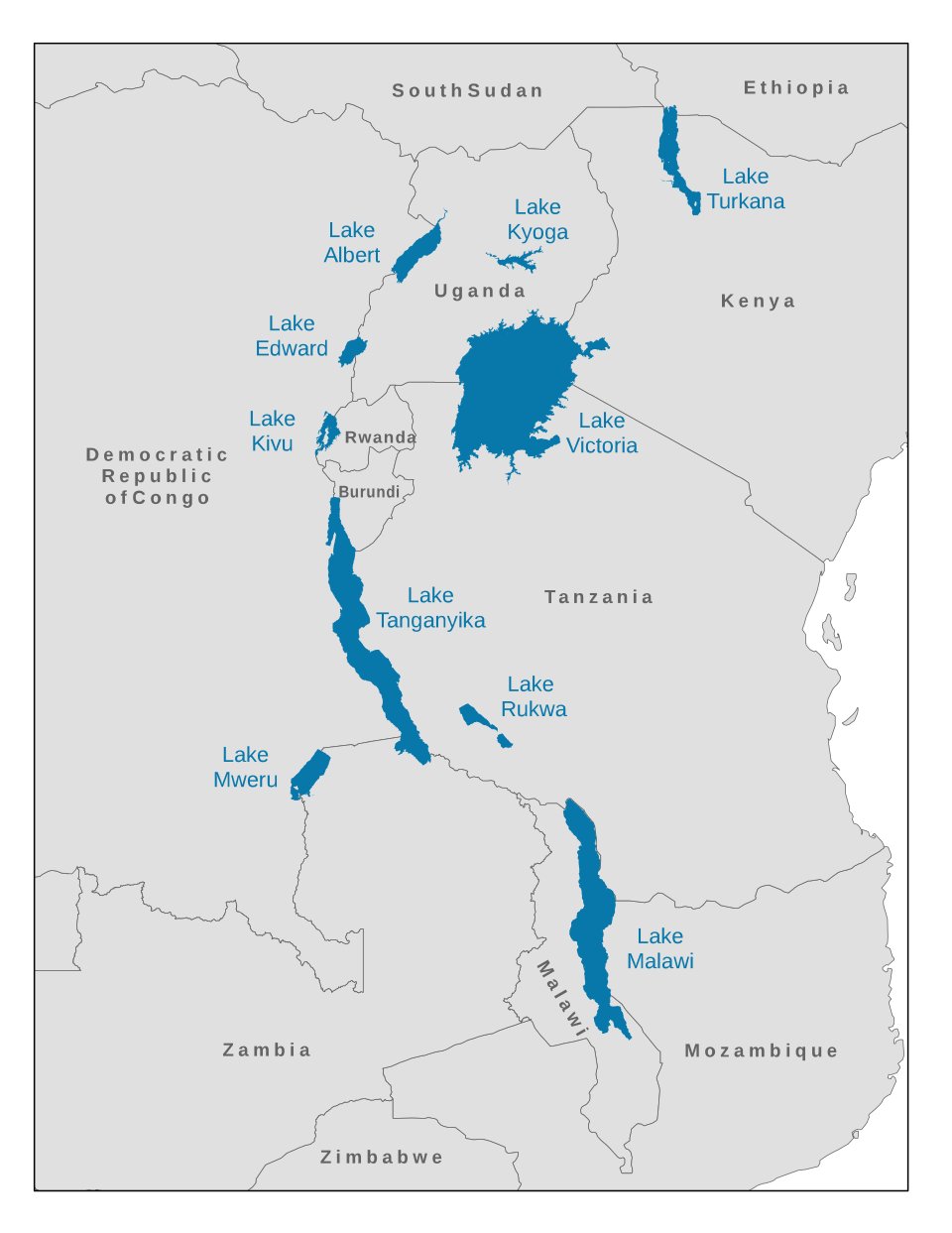
The Powder Blue Cichlid originates from Lake Malawi in the East African Rift Valley. Its distribution is centered along the Mozambique coast of the lake, particularly around Tumbi Point and Cobue. This coastal region provides the typical mbuna habitat. Rocky shorelines with abundant boulders and rubble that create a complex maze of caves and crevices.
In their natural environment, Powder Blues inhabit the rocky zones at depths ranging from about 6 to 45 feet (2. 15 meters). They graze on aufwuchs. The biofilm of algae and microorganisms that coats every rock surface. Which forms the bulk of their natural diet. The water is characteristically warm, alkaline, and mineral-rich, with remarkable stability in temperature and chemistry throughout the year.
The species was named after Eduard Socolof, a well-known aquarium fish importer who helped introduce many Lake Malawi species to the hobby.
Appearance & Identification
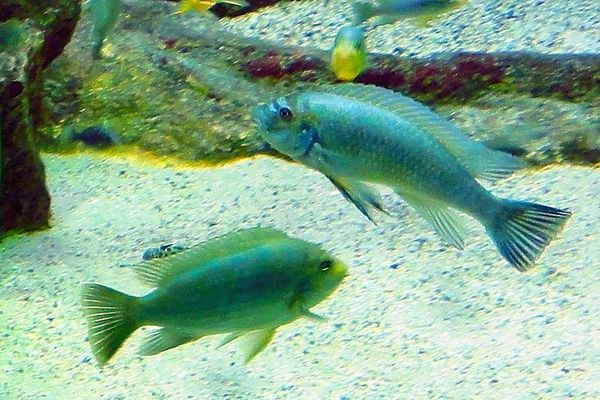
True to its common name, the Powder Blue Cichlid displays a soft, luminous powder blue coloration across its entire body. The fins feature attractive black edging on the dorsal fin. A characteristic that varies in prominence between individuals. Some specimens display the black dorsal stripe boldly, while others show it more subtly. The overall effect is clean, refined, and quite unlike the bold patterns of many other mbuna.
Their body shape is typical of the genus Pseudotropheus. Elongated and laterally compressed with a slightly downturned mouth adapted for grazing. Under quality aquarium lighting, the blue takes on an almost ethereal, shimmering quality that makes them look truly special.
Male vs. Female
Sexing Powder Blue Cichlids is notoriously difficult because both sexes share the same blue coloration. It’s one of the trickier mbuna to sex visually.
| Feature | Male | Female |
|---|---|---|
| Color | Brighter, shinier whitish-blue | Paler, duller blue |
| Egg Spots | Larger and more intensely colored | Smaller or fewer egg spots |
| Pelvic Fins | Longer | Shorter |
| Size | Slightly larger, up to 4 inches | Slightly smaller, around 3.5 inches |
| Behavior | More territorial during breeding | More social, less confrontational |
Venting is the most reliable method for sexing this species, but it requires practice and careful handling. When buying, purchasing a group of 6. 8 juveniles gives you the best odds of getting a workable male-to-female ratio.
Average Size & Lifespan
Powder Blue Cichlids are a small to medium-sized mbuna, reaching about 4 inches (10 cm) in captivity. Males may grow slightly larger than females, but the difference is modest. Their compact size makes them one of the more manageable mbuna for medium-sized tanks.
Lifespan is 5. 8 years with proper care. Consistent water quality, a balanced plant-based diet, and a stress-free environment are the keys to reaching the upper end of that range. Their relatively peaceful nature helps. They experience less chronic stress from constant fighting compared to more aggressive mbuna.
Care Guide
Tank Size
A 55-gallon (208-liter) tank is suitable for a small species-only group. For a mixed mbuna community, 75 gallons (284 liters) or larger is preferred. As always with mbuna, horizontal space matters. A standard 4-foot tank is the minimum length you need.
Water Parameters
| Temperature | 76. 82°F (24. 28°C) |
| pH | 7.8. 8.6 |
| General Hardness (dGH) | 10. 20 dGH |
| Carbonate Hardness (dKH) | 10. 15 dKH |
| Ammonia | 0 ppm |
| Nitrite | 0 ppm |
| Nitrate | <20 ppm |
Use aragonite sand or crushed coral to maintain the alkaline pH these fish need. Avoid using driftwood (which lowers pH) or any substrate designed for planted tanks. Stability in water chemistry is more important than hitting exact numbers.
Filtration & Water Flow
A canister filter rated for 1.5. 2 times your tank volume provides the mechanical and biological filtration these fish need. Supplemental water movement from a powerhead improves oxygenation and replicates the moderate currents of Lake Malawi. Good surface agitation is important for gas exchange.
Weekly water changes of 25. 30% are standard. Powder Blues are sensitive to deteriorating water quality, so consistent maintenance is essential. Regular testing for ammonia, nitrite, and nitrate helps you stay ahead of problems.
Lighting
Standard aquarium LED lighting works well. Powder Blues show their best color under moderate lighting. An 8. 10 hour photoperiod is ideal and encourages natural algae growth on rocks for supplemental grazing.
Plants & Decorations
Create an environment rich in rock formations with plenty of caves, crevices, and hiding spots. Each fish needs access to retreat areas, even in a relatively peaceful species like socolofi. Stack rocks from the substrate to near the surface, creating multiple territories and visual barriers.
Hardy plants like Anubias, Java Fern, and Vallisneria can work in a Powder Blue tank. These fish are less destructive to plants than many mbuna species, though they may still uproot anything that’s not securely attached to hardscape.
Substrate
Fine sand. Particularly aragonite sand. Is ideal. It provides a natural look, buffers pH, and supports the natural digging behavior that mbuna enjoy. Crushed coral mixed into the substrate adds additional buffering capacity. Darker substrates can help these fish display stronger colors, as mbuna will show better coloration when they feel secure.
Is the Powder Blue Cichlid Right for You?
Powder Blue Cichlids are one of the best entry points into the mbuna world. They are hardy, reasonably peaceful, and consistently blue. Here is whether they match your setup.
- Great fit if you want a blue mbuna that is less aggressive than most Metriaclima species
- Great fit if you are building a beginner friendly Malawi community with species like Yellow Labs, Acei, and Rusties
- Great fit if you want a species that breeds easily and gives you a taste of mouthbrooding behavior
- Not ideal if you already have Cobalt Blue Zebras. The similar appearance can cause confusion and extra aggression between males
- Not ideal if you want maximum color variety. Powder Blues are uniformly blue with minimal pattern variation
- Not ideal if you keep highly aggressive mbuna that will bully a calmer species
Powder Blues offer everything a beginner needs in a mbuna. Consistent color, manageable temperament, and straightforward care. They are a solid foundation species for any Malawi community.
Tank Mates
Best Tank Mates
Powder Blues are one of the more flexible mbuna when it comes to tank mates. Their milder temperament opens up options that wouldn’t work with more aggressive species. Good choices include:
- Yellow Lab (Labidochromis caeruleus). Classic peaceful mbuna pairing
- Acei Cichlid (Pseudotropheus acei). Equally peaceful, different tank zone preference
- Rusty Cichlid (Iodotropheus sprengerae). Another mild mbuna with contrasting color
- Peacock cichlids (Aulonocara spp.). Powder Blues are mild enough to mix with Peacocks
- Haplochromis species. Compatible with many of the more peaceful Malawi haps
- Synodontis catfish. Excellent bottom-dwelling companions
Tank Mates to Avoid
- Auratus (Melanochromis auratus). Far too aggressive; will bully Powder Blues
- Kenyi (Maylandia lombardoi). Too boisterous and aggressive
- Other similarly colored blue mbuna. Color similarity can trigger aggression
- Large aggressive mbuna. Powder Blues will be outcompeted and stressed
- Small community fish. Not suitable for a cichlid environment
Food & Diet
Powder Blue Cichlids are omnivores that should be fed a primarily plant-based diet. High-quality spirulina-based flakes or pellets should be the daily staple. Supplement with blanched vegetables. Spinach, peas, zucchini, and romaine lettuce are all readily accepted.
Occasional treats of live or frozen foods like brine shrimp and daphnia are fine 1. 2 times per week, but don’t overdo the protein. Avoid bloodworms and beef heart. These high-fat, high-protein foods can cause serious digestive problems and contribute to Malawi Bloat.
Feed 2. 3 small meals daily, providing only what the fish can consume within a few minutes. Veggie wafers and algae wafers make great supplemental options between primary feedings.
Breeding & Reproduction
Powder Blue Cichlids are maternal mouthbrooders that breed readily in captivity. They’re actually one of the more prolific mbuna breeders, with large brood sizes relative to their body size.
Spawning Behavior
Keep one male with at least 4 females for the best breeding results. The male establishes a territory and courts females with color intensification and vigorous body displays. The spawning follows the standard mbuna egg-dummy method. The female deposits eggs, collects them in her mouth, then is lured by the male’s anal fin egg spots to inadvertently pick up milt for fertilization.
Mouthbrooding & Fry Care
The female holds the developing eggs for up to 3 weeks, fasting throughout the incubation period. She can carry up to 60 fry per brood. An impressively large clutch for a fish this size. Minimize stress for the holding female by keeping lighting dim and providing quiet hiding areas. An overly stressed female may spit the fry prematurely or consume them.
Once released, the fry are large enough to take brine shrimp nauplii, microworms, and crushed spirulina flake from day one. They grow quickly with proper feeding. For the best survival rates, move the holding female to a separate tank before release.
Common Health Issues
Malawi Bloat
The primary health concern for Powder Blues and all herbivorous mbuna. Caused by a protozoan that multiplies under stress or with improper diet, Malawi Bloat produces abdominal swelling, white feces, loss of appetite, and rapid breathing. It is fatal within days. Prevention through a plant-based diet and excellent water quality is essential. Treat early cases with Metronidazole in a hospital tank.
Ich (White Spot Disease)
Stress-related ich shows up as small white spots on the body and fins. Raise temperature gradually to 82°F (28°C) and treat with an appropriate medication. Powder Blues are hardy and recover well with early treatment.
Bacterial Infections
Poor water quality can lead to bacterial infections showing as fin rot, cloudy eyes, or red patches. Regular water changes and proper filtration are the best prevention. Treat with antibacterial medications when symptoms appear, and isolate affected fish in a hospital tank.
Common Mistakes to Avoid
- Keeping in pairs. One male with one female leads to constant harassment. Keep several females per male (4+ is ideal)
- Mixing with overly aggressive mbuna. Despite being mbuna, Powder Blues are too mild for species like Auratus or Kenyi
- Feeding too much protein. Their digestive system is built for plant matter. Heavy protein causes bloat
- Skipping water changes. Consistent maintenance is non-negotiable for long-term health
- Insufficient hiding spots. Even peaceful mbuna need caves and retreats for security
- Using wood or peat. These lower pH, which is the opposite of what Malawi cichlids need
Where to Buy
Powder Blue Cichlids are widely available and one of the more affordable mbuna species. Most local fish stores with an African cichlid selection carry them, and they’re priced at $4. $10 per fish. For the healthiest stock:
- Flip Aquatics. Consistent quality and reliable shipping for African cichlids
- Dan’s Fish. Trusted retailer with a good selection of mbuna species
Buy a group of 6. 8 juveniles. Since sexing is difficult, a larger group increases your chances of getting a good male-to-female ratio. Rehome extra males once they is identified.
FAQ
Is the Powder Blue Cichlid the same as Pindani?
Yes. “Pindani” and “Eduard’s Mbuna” are alternate common names for Pseudotropheus socolofi. All three names refer to the same species. The species was named after Eduard Socolof, who played an important role in importing Lake Malawi cichlids to the aquarium trade.
Can Powder Blue Cichlids live with Peacocks?
Yes, they can. Powder Blues are one of the few mbuna species mild enough to coexist peacefully with Peacock cichlids (Aulonocara). Just avoid keeping them with very similar blue-colored Peacock species to prevent color-based aggression. Monitor interactions during feeding to ensure the Peacocks get their share.
How do I sex Powder Blue Cichlids?
It’s not easy. Both sexes display similar powder blue coloration. Males are slightly brighter with larger, more intensely colored egg spots on the anal fin, and their pelvic fins are longer. Venting. Examining the genital papilla. Is the most reliable method but requires experience. Buying a group of 6. 8 and letting them sort themselves out is the most practical approach.
Are Powder Blue Cichlids good for beginners?
They’re one of the best mbuna for beginners. Their relatively peaceful temperament, hardiness, and adaptability make them more forgiving than most other mbuna species. If you have basic aquarium experience and understand the fundamentals of Lake Malawi water chemistry, Powder Blues are an excellent starting point for the mbuna hobby.
How many Powder Blues should I keep?
A group of 6. 8 with a ratio of 1 male to 4+ females is ideal. Keeping in pairs will result in the male constantly harassing the single female. A larger group distributes attention and creates a more natural social dynamic.
What It Is Actually Like Living With Powder Blue Cichlid
This is the part no other care guide gives you. Forget water parameters for a minute. Here is what it is actually like to share your tank with this species.
They have more personality than you expect. The Powder Blue Cichlid is not a fish that just sits in the background. Once settled in, they become interactive, curious, and responsive to your presence.
Feeding time reveals their character. Watch how the Powder Blue Cichlid approaches food and you will see real personality. Some are bold, some are cautious, and their feeding behavior tells you a lot about their mood and health.
They establish routines. After a few weeks, your Powder Blue Cichlid will have favorite spots, preferred paths through the tank, and predictable patterns. Learning these routines makes you a better keeper.
Color is a health indicator. The Powder Blue Cichlid’s coloration is a real-time report card on your husbandry. Vibrant color means happy fish. Faded color means something is wrong. Pay attention.
How the Powder Blue Cichlid Compares to Similar Species
Choosing the right Malawi cichlid means understanding how similar species compare. Here is how the Powder Blue Cichlid stacks up against species you will also be considering.
Powder Blue Cichlid vs. Cobalt Blue Zebra
These two species are the most commonly confused blue mbuna in the hobby. Powder Blues (Pseudotropheus socolofi) are slimmer with a slightly lighter blue, while Cobalt Blue Zebras (Metriaclima callainos) are stockier with deeper coloration. The biggest practical difference is temperament. Powder Blues are notably calmer, making them better for less aggressive communities. If your tank already has tough species, the Cobalt Blue Zebra holds its own better. For a mellower setup, stick with the Powder Blue. You can learn more in our Cobalt Blue Zebra Care Guide.
Closing Thoughts
Powder blues are the calm mbuna, but calm is relative when every fish in the tank is African.
The Powder Blue Cichlid is a gem of the mbuna world. Subtle, refined, and significantly more manageable than most of its relatives. Its soft blue color creates a beautiful canvas in any Lake Malawi tank, and its peaceful nature opens up stocking options that would be off the table with more aggressive species.
For hobbyists looking for a mbuna that offers the full Malawi experience. Alkaline water, rocky aquascapes, and fascinating cichlid behavior. Without the extreme aggression that makes some species so challenging, the Powder Blue is hard to beat. Give it clean water, a plant-based diet, and a proper group size, and it’ll reward you with years of quiet beauty.
This article is part of our Lake Malawi Cichlid Species Directory: Complete A-Z Care Guide List. Visit the hub page to explore care guides for all 28 Lake Malawi cichlid species we cover.
Recommended Video
References
- Seriously Fish. (n.d.). Pseudotropheus socolofi. https://www.seriouslyfish.com/species/pseudotropheus-socolofi/
- FishBase. (n.d.). Pseudotropheus socolofi. https://www.fishbase.se/summary/Pseudotropheus-socolofi.html
- Practical Fishkeeping. (n.d.). Pindani Cichlid species profile. https://www.practicalfishkeeping.co.uk
- The Aquarium Wiki. (n.d.). Pseudotropheus socolofi. https://www.theaquariumwiki.com/wiki/Pseudotropheus_socolofi
- About the Author
- Latest Posts

I’m Mark Valderrama, founder of Aquarium Store Depot and a fishkeeper with over 25 years of hands-on experience. I started in the hobby at age 11, worked at local fish stores, and have kept freshwater tanks, ponds, and reef tanks ever since. I’ve been featured in two best-selling aquarium books on Amazon and built this site to share practical, experience-based fish keeping knowledge.
Leave a Reply