
Last Updated: June 25, 2026
Thank you for visiting! By the way… any links on this page that lead to products on Amazon and other stores/partners are affiliate links Aquarium Store Depot earns a commission if you make a purchase.
Table of Contents
- What Most Care Guides Get Wrong
- The Reality of Keeping
- Key Takeaways
- Species Overview
- Classification
- Origin & Natural Habitat
- Appearance & Identification
- Average Size & Lifespan
- Care Guide
- Tank Mates
- Food & Diet
- Is the Hongsloi Apisto Right for You?
- Breeding & Reproduction
- Common Health Issues
- Common Mistakes to Avoid
- Where to Buy
- FAQ
- What It Is Actually Like
- Species Comparison
- Closing Thoughts
- References
Hongsloi Apistos are one of the most colorful dwarf cichlids in the hobby, and the males in full breeding color are genuinely stunning. Bright red bellies, blue face markings, and a level of attitude that makes you forget you are looking at a three-inch fish. They come from the Orinoco basin in Colombia and Venezuela, and they bring that South American temperament to everything they do. Territorial, opinionated, and absolutely worth the effort if you dial in the water chemistry. The apisto that proves bigger is not always better when it comes to color.
Hongsloi Apistos in breeding color will make you forget every large cichlid you have ever kept.
This species lives 3 to 5 years. That red belly does not fade with age if the water stays clean.
Native to the Orinoco River basin in Colombia and Venezuela, the Hongsloi Apisto has been captivating dwarf cichlid enthusiasts for decades. It’s widely regarded as one of the most colorful Apistogramma species, and that assessment is well-deserved. In my 25+ years in the hobby, few species have offered me the combination of visual impact, interesting behavior, and breeding potential that this one delivers. It’s not the most demanding Apisto to keep, either, making it accessible to intermediate hobbyists who are ready to step beyond the most beginner-friendly species. Here’s your complete guide to keeping Hongsloi Apistos successfully.
What Most Care Guides Get Wrong About Hongsloi Apisto
The biggest misconception about Hongsloi Apistos is that all dwarf cichlids are easy beginner fish. Most need soft, acidic water and are sensitive to parameter swings. In my 25 plus years in the hobby, I’ve watched beginners lose entire groups because their tap water was too hard. A 20-gallon long is a much more realistic starting point for a pair than a 10-gallon. They don’t just fail to color up in the wrong water. They go pale, stop eating within a few weeks, and crash by month two. Hard water is the number one husbandry killer for this species, and it’s almost always the cause when someone tells me their Hongsloi “just stopped doing well.”
The Reality of Keeping Hongsloi Apisto
Hongsloi Apistos are dwarf cichlids with opinions. They are not aggressive by cichlid standards, but they are not passive either.
Water must be soft and acidic. pH 5.0 to 7.0, hardness 1 to 8 dGH. They tolerate a slightly wider hardness range than some apistos, but soft water brings out the best color.
Males are territorial during breeding. A single male with one or two females works best. Two males in the same tank need 40 gallons minimum with broken sight lines.
Temperature affects color. Warmer water (79 to 82F) brings out the most intense red belly coloration. Cooler water dulls them noticeably.
They need live and frozen foods. Brine shrimp, daphnia, and bloodworms are not optional treats. They are what triggers breeding condition and peak coloration.
Biggest Mistake New Hongsloi Apisto Owners Make
Keeping them too cool. Hongsloi Apistos show their best color at the warmer end of their range. A tank sitting at 74F will have dull, washed-out fish. Push it to 79 to 82F and the red belly comes alive.
Expert Take (Mark Valderrama, AquariumStoreDepot)
At the stores I managed, the Hongsloi was one of the few Apistogramma species I’d display prominently with good lighting and tannin water specifically to stop people. The red belly on a conditioning male has no equivalent in freshwater at this size. What I tell people: the coloration you see in the display tank is not the fish’s best – it gets better when it feels safe, when the water is right, and when there’s a female to display for. The temperature-color connection is real and direct. Keep this species at 74°F and you’ll think someone sold you a different fish. Push it to 79 to 82°F with the right diet and you’ll understand why Apistogramma enthusiasts obsess over this species.
Key Takeaways
- One of the most colorful Apistos available: Males display intense red-orange ventral coloration combined with golden body tones and blue-green iridescence that few dwarf cichlids can match.
- Harem structure works best: One male with two to three females is the ideal social arrangement. Males are territorial and polygynous, so multiple females distribute aggression.
- Warm-water species: Unlike some Apistos that prefer cooler conditions, A. Hongsloi thrives at temperatures in the upper 70s to low 80s°F.
- Cave spawners with dedicated maternal care: Females guard eggs and fry with intense devotion, sometimes becoming dangerously aggressive toward tank mates during this period.
- Manageable for intermediate keepers: Captive-bred specimens are reasonably adaptable, though soft, slightly acidic water still produces the best results.
Species Overview
| Property | Details |
|---|---|
| Scientific Name | Apistogramma hongsloi |
| Common Names | Hongsloi Apisto, Hongsloi Dwarf Cichlid, Red-Bellied Apisto |
| Family | Cichlidae |
| Origin | Colombia, Venezuela (Orinoco River basin) |
| Care Level | Intermediate |
| Temperament | Semi-aggressive |
| Diet | Carnivore (primarily) |
| Tank Level | Bottom to middle |
| Maximum Size | 3 inches (7.5 cm) |
| Minimum Tank Size | 20 gallons (75 liters) |
| Temperature | 75 – 82°F (24 – 28°C) |
| pH | 5.0 – 7.0 |
| Hardness | 1 – 8 dGH |
| Lifespan | 3 – 5 years |
| Breeding | Cave spawner |
| Breeding Difficulty | Moderate |
| Compatibility | Peaceful community with caution during breeding |
| OK for Planted Tanks? | Yes (highly recommended) |
Classification
| Taxonomic Rank | Classification |
|---|---|
| Order | Cichliformes |
| Family | Cichlidae |
| Subfamily | Geophaginae |
| Genus | Apistogramma |
| Species | A. Hongsloi (Kullander, 1979) |
Apistogramma hongsloi was described by Sven Kullander in 1979. The species was named in honor of Norwegian aquarist and collector Alf Hongslo, who contributed significantly to the early study of Apistogramma species from the Orinoco basin. There are several recognized color forms in the hobby, most notably “Hongsloi II” or “Super Red,” which features even more intense red ventral coloration than the standard form. These variants represent geographic populations rather than separate species, and all fall under the same scientific name.
Origin & Natural Habitat
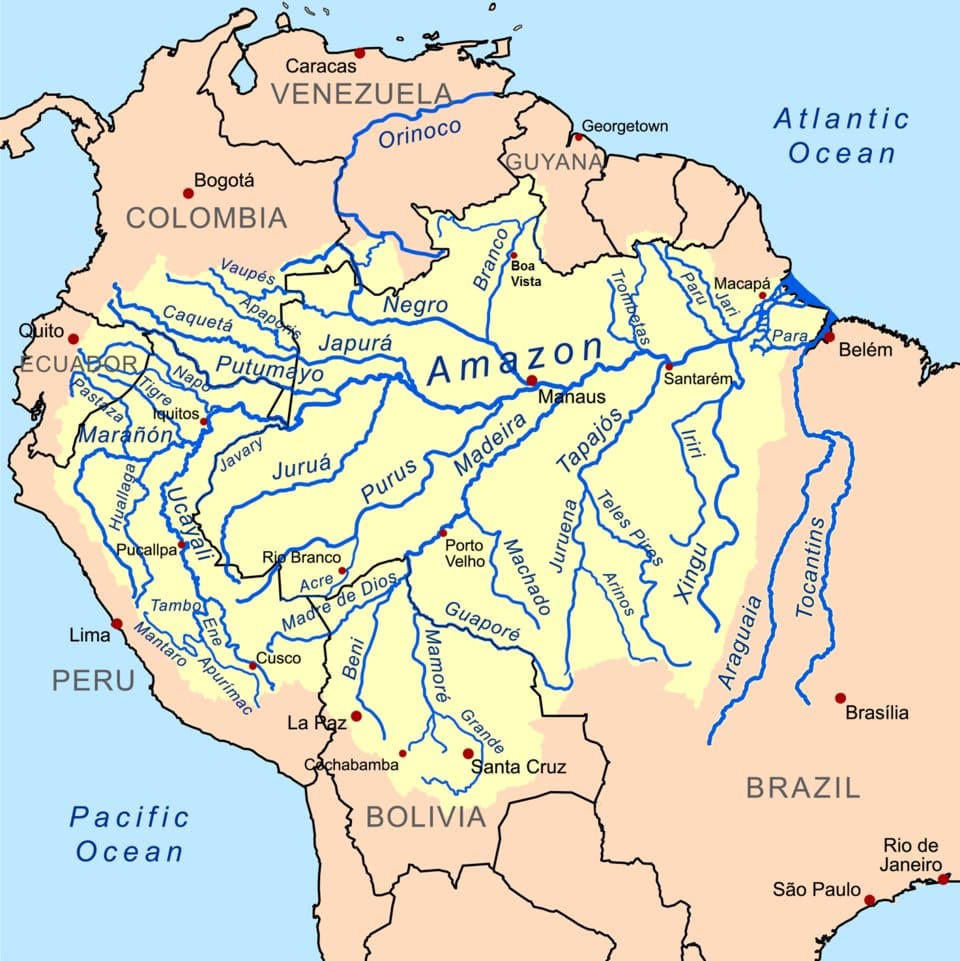
The Hongsloi Apisto is native to the Orinoco River basin, with populations documented in the Río Vichada and Río Meta drainages of Colombia, as well as sections of the middle Orinoco in Venezuela. This is a vast, seasonally flooded landscape of open grasslands (llanos) and forested riverbanks, with dramatically different wet and dry season conditions that shape the habitats these fish occupy.
In the wild, A. Hongsloi inhabits small tributaries, backwater pools, and flooded areas with slow-moving or still water. The substrate is fine sand or mud covered in organic debris, and the water ranges from clear to moderately tannin-stained depending on the specific location and season. Submerged vegetation, fallen branches, and leaf litter provide shelter and foraging grounds. Water conditions are soft and slightly acidic, though this species encounters a wider range of hardness in nature than some of its more specialized congeners, which partly explains its relative adaptability in captivity.
Appearance & Identification
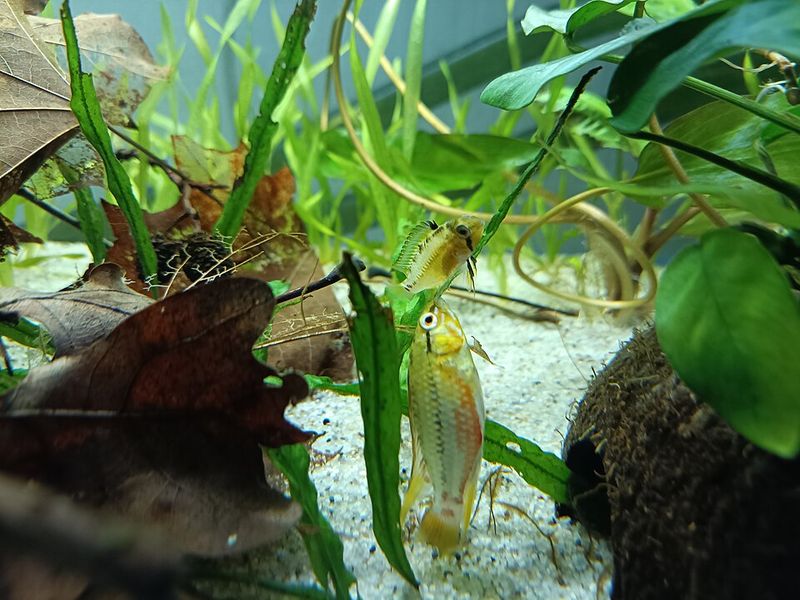
Male Hongsloi Apistos are among the most visually striking dwarf cichlids available in the hobby. The upper body displays a warm golden-olive to amber base color, while the lower body erupts in vivid reds and oranges that can extend from the chin all the way to the anal fin. Depending on the color form, the red intensity ranges from moderate to absolutely blazing. Iridescent blue-green scales scatter across the flanks, and the dorsal fin is tall with extended rays. The caudal fin is rounded to slightly lyrate, often with red-orange markings. When a male is displaying or defending territory, these colors intensify to an almost unbelievable degree.
Females are significantly smaller and display the typical Apistogramma sexual dimorphism. Their base color is yellowish-olive, becoming a more vivid yellow during breeding condition. A dark lateral band is visible, and breeding females develop bold vertical bars across the body. Their fins are shorter and more rounded than the males’, without the dramatic extensions or intense coloration.
Male vs. Female
| Feature | Male | Female |
|---|---|---|
| Size | Up to 3 inches (7.5 cm) | Up to 1.8 inches (4.5 cm) |
| Coloration | Golden-olive upper body, vivid red-orange belly | Yellowish-olive, yellow when breeding |
| Dorsal Fin | Tall, pointed, with extended rays | Shorter, rounded |
| Ventral Color | Intense red-orange | Pale to yellowish |
| Body Shape | Elongated, laterally compressed | Compact, rounder when gravid |
Sexing Hongsloi Apistos becomes quite easy once the fish reach about 1.5 inches (4 cm). The red ventral coloration in males begins developing early and is unmistakable. By the time males approach full maturity, there’s simply no confusing them with the smaller, more subdued females.
Average Size & Lifespan
Males reach 2.5 to 3 inches (6 to 7.5 cm) in the aquarium, while females stay considerably smaller at about 1.5 to 1.8 inches (4 to 4.5 cm). Like all Apistogramma, these are true dwarf cichlids, but the males’ elaborate finnage and vivid coloring give them a visual presence that belies their modest dimensions.
With proper care, Hongsloi Apistos live 3 to 5 years in captivity. Maintaining stable water conditions, offering a varied diet rich in protein, and providing appropriate social structures all contribute to reaching the upper end of that range. Fish kept in stressful conditions with poor water quality will have significantly shortened lifespans.
ASD Difficulty Rating
Intermediate | 6/10
Hongsloi apistos prefer soft, slightly acidic water and a diet heavily supplemented with live and frozen foods. The coloration that makes this species famous requires both correct temperature and regular frozen food feeding – skip either and you get a pale fish. More demanding than beginner dwarf cichlids, but the visual payoff justifies the extra effort.
Care Guide
Tank Size
A 20-gallon (75-liter) tank works for a single pair, but if you want to keep a harem of one male with two or three females, step up to at least 30 gallons (115 liters). Each female establishes her own territory around a cave site, and these territories need to be far enough apart to minimize conflict. A longer tank footprint is always better than a taller one for these bottom-dwelling fish. A 20-gallon long offers noticeably more usable territory than a standard 20-gallon.
Water Parameters
| Parameter | Recommended Range |
|---|---|
| Temperature | 75 – 82°F (24 – 28°C) |
| pH | 5.0 – 7.0 |
| General Hardness (GH) | 1 – 8 dGH |
| KH | 1 – 5 dKH |
| Ammonia | 0 ppm |
| Nitrite | 0 ppm |
| Nitrate | < 20 ppm |
The Hongsloi Apisto is one of the more adaptable Apistogramma species when it comes to water chemistry, particularly captive-bred specimens. While they still prefer soft, slightly acidic water, they tolerate a wider range of hardness than many of their congeners. That said, the most vibrant coloration and best breeding results come in soft water with a pH below 7.0. If your tap water is moderately hard, these fish will likely still do fine, but blending with RO water can elevate your results. Perform weekly water changes of 10 to 15 percent to maintain stability.
Filtration & Water Flow
These fish come from slow-moving to still water, so keep filtration gentle. A sponge filter is ideal for breeding tanks, while a hang-on-back filter or small canister filter works well for community setups. If using a power filter, baffle the output to reduce current. Aim for roughly 4 times tank volume turnover per hour, with the emphasis on biological filtration rather than raw flow rate.
Lighting
Moderate to subdued lighting is preferred. Bright, direct lighting make these fish feel exposed and can wash out their stunning coloration. Use floating plants to create areas of shade, and consider adding Indian almond leaves to tint the water with tannins. The warm amber light filtering through tannin-stained water makes the red-orange belly coloration of the males absolutely glow. It’s one of the most beautiful effects you can create in a freshwater aquarium.
Plants & Decorations
A well-decorated tank with plenty of visual barriers and caves is essential. Use driftwood and roots to create a network of sheltered areas, and provide dedicated spawning caves using coconut shells, clay pots, or commercial cichlid caves. Each female needs at least one cave within her territory. Live plants add both beauty and function. Java Fern, Anubias, Cryptocoryne, Vallisneria, and floating plants like Amazon Frogbit are all excellent choices.
Leaf litter is a natural complement to this setup. Scattered Indian almond leaves or dried oak leaves break down slowly, releasing tannins and supporting microfauna growth while mimicking the natural habitat floor. They also provide additional cover for fry during breeding.
Substrate
Fine sand is the appropriate substrate for Hongsloi Apistos. They sift through the substrate while foraging, and coarse gravel can damage their mouths and gills. Choose a soft, smooth sand in a natural color that complements the warm tones of the fish and the overall aesthetic of your setup.
Tank Mates
Best Tank Mates
Choose peaceful species that occupy the middle and upper water levels and appreciate similar water conditions. The best tank mates provide a sense of security as dither fish without competing for bottom territory. Top picks include:
- Pencilfish (Nannostomus species). Classic Apistogramma dither fish
- Cardinal Tetras. Peaceful and perfectly suited to soft, acidic water
- Rummy-Nose Tetras. Active mid-water schoolers that stay out of the way
- Ember Tetras. Tiny, gentle, and visually complementary
- Hatchetfish. Strict surface dwellers with zero impact on bottom territories
- Small Corydoras (like C. Pygmaeus or C. Habrosus). Peaceful bottom companions, though watch during breeding
- Otocinclus. Unobtrusive algae grazers
Tank Mates to Avoid
- Other Apistogramma species. Territory disputes are almost guaranteed in standard tank sizes
- Larger or aggressive cichlids. They will dominate and stress the Hongsloi
- Fin nippers. Tiger Barbs, Serpae Tetras, and similar species will target the males’ fins
- Fast, boisterous species. Buenos Aires Tetras, Giant Danios, and similar hyperactive fish create chronic stress
- Large Plecos. Can damage eggs and compete for cave space
Food & Diet
Hongsloi Apistos are carnivores that feed on small benthic invertebrates in nature. In the aquarium, provide a protein-rich diet centered on frozen and live foods. Frozen bloodworms, brine shrimp, daphnia, cyclops, and mysis shrimp should all be regular offerings. Live foods like baby brine shrimp, grindal worms, and microworms are particularly valuable for conditioning breeding pairs and intensifying the males’ spectacular red coloration.
High-quality sinking pellets and granules can supplement the diet, and most captive-bred specimens accept them readily. However, dry foods alone won’t produce the vibrant coloration or breeding condition this species is capable of. Aim for a diet that’s at least 60 percent frozen and live foods. Feed small amounts two to three times daily, and remove any uneaten food promptly to maintain water quality.
Is the Hongsloi Apisto Right for You?
The honest breakdown before you commit. The Hongsloi Apisto is one of the most visually rewarding dwarf cichlids in the hobby – but it requires specific conditions to show what it’s capable of.
Good fit if:
- You can provide or create soft, slightly acidic water (pH 5.5–7.0, under 8 dGH) – either from soft tap water or RO blending
- You want a visually spectacular dwarf cichlid with red-orange belly coloration that intensifies with temperature and diet
- You’re committed to a diet heavy in frozen and live foods – bloodworms, brine shrimp, daphnia regularly, not occasionally
- You have a 20-gallon minimum for a pair, or 30+ gallons for a harem (one male, two to three females)
- You want to observe harem breeding dynamics and intense maternal brood care in a small-tank format
Think twice if:
- Your tap water is hard and you’re not willing to blend with RO – soft water is the price of entry for the best color
- You want a forgiving beginner Apistogramma – try A. cacatuoides (Cockatoo Apisto) first, then step up to Hongsloi
- You’re planning to feed primarily dry pellets – this species does not show its best coloration on dry food alone
- You want a single fish or a matched pair only – the harem structure (one male, multiple females) is where this species naturally thrives
Breeding & Reproduction
Breeding Difficulty
Moderate. Hongsloi Apistos are among the more readily bred Apistogramma species, especially captive-bred strains. They will breed reliably once conditions are appropriate, and both the spawning and fry-raising processes are manageable for hobbyists with some experience. The main challenge is managing the female’s aggressive brood defense in smaller setups.
Spawning Tank Setup
A 10 to 20-gallon (40 to 75-liter) breeding tank is sufficient for a pair. Provide multiple cave options, as the female will inspect several before choosing. Coconut shell halves, overturned clay pots with an entry hole, and purpose-built Apistogramma caves all work well. Include driftwood and plants to create visual barriers so the male has hiding spots if the female becomes aggressive post-spawning. A sponge filter provides fry-safe filtration.
Water Conditions for Breeding
Soft, slightly acidic water gives the best results. Target a pH of 5.5 to 6.5, temperature around 78 to 80°F (26 to 27°C), and general hardness below 5 dGH. While this species is more tolerant of moderate hardness than some Apistos, egg viability and hatch rates improve noticeably in softer water. Indian almond leaves and alder cones help maintain appropriate conditions naturally.
Conditioning & Spawning
Condition the pair with generous feedings of live and frozen foods for two to three weeks. The female signals readiness by turning a vivid yellow and spending increasing time near her chosen cave. Spawning takes place inside the cave, with the female depositing 60 to 90 eggs on the ceiling. The eggs are small, adhesive, and reddish-brown in color.
Both parents may participate in early brood care, which is somewhat unusual among Apistogramma species. However, the female takes primary responsibility for egg guarding and fanning. She becomes very aggressive toward the male during this period, so monitor the pair closely and be prepared to remove the male if necessary, especially in tanks under 20 gallons.
Egg & Fry Care
Eggs hatch in 2 to 3 days at breeding temperatures. The wrigglers remain in the cave for approximately 5 days while they absorb their yolk sacs. Once free-swimming, the female (and sometimes the male) leads the fry school around the tank. Initial foods should include freshly hatched baby brine shrimp (Artemia nauplii), which the fry can accept from the start. Supplement with infusoria or commercial liquid fry food for the first few days. Growth is steady, and fry begin showing color at around 6 to 8 weeks with consistent feeding.
Common Health Issues
Ich (White Spot Disease)
Ich is a ubiquitous parasite that can affect any freshwater fish, and dwarf cichlids are no exception. It appears after temperature fluctuations or the stress of a new introduction. The characteristic white spots, flashing, and clamped fins are easy to recognize. Gradually raising the temperature to 86°F (30°C) for 10 to 14 days is an effective treatment. Hongsloi Apistos tolerate the higher temperatures needed for heat treatment better than cooler-water species, making this approach particularly viable.
Hole-in-the-Head Disease
HITH is a concern with all dwarf cichlids. Small pits or erosions on the head and lateral line are the hallmark symptoms. It’s strongly associated with poor water quality, high nitrates, and nutritional deficiencies. Prevention involves consistent water changes, a varied protein-rich diet, and keeping nitrates below 20 ppm. Early-stage cases respond to metronidazole treatment combined with improved water quality and diet diversification.
Bacterial Infections
Stress from aggression, sudden parameter changes, or poor water quality can compromise the immune system and lead to secondary bacterial infections. These may present as fin rot, reddened areas on the body, or cotton-like growths. Addressing the underlying stressor and treating with broad-spectrum antibacterial medications is the standard approach. Prevention through consistent tank maintenance is always better than treatment.
Fungal Infections
Fungal infections often follow wounds from territorial disputes, appearing as fuzzy white or gray patches on the body or fins. They’re secondary infections that take hold when the skin barrier is compromised. Treating the wound with an antifungal medication and addressing the cause of the injury (often aggression) are both necessary. Maintaining clean water helps prevent fungal colonization of minor wounds.
Hard Rule: Frozen and live food. Not optional for this species.
Hongsloi apistos will not show full coloration on a dry-food-only diet. Feed frozen bloodworms, brine shrimp, and daphnia regularly. Nutrition directly drives the red coloration this species is known for – skip live and frozen foods and you get a pale fish.
Common Mistakes to Avoid
- Not enough caves for females: In a harem setup, each female needs her own cave or spawning site within a defined territory. Without enough caves, females fight viciously for the limited resources.
- Keeping multiple males in a small tank: Two males in a 20-gallon tank is a guaranteed conflict. The subordinate male will be relentlessly harassed and may suffer serious injury. One male per tank is the rule unless you have 55+ gallons with well-defined territories.
- Ignoring the diet: A pellet-only diet won’t bring out the famous red coloration this species is known for. Without regular access to frozen and live foods, you’ll have dull, washed-out fish that never reach their potential.
- Using gravel substrate: These substrate sifters need fine sand. Gravel can cause damage to their mouths and gill filaments and should be avoided entirely.
- Skipping water changes: Consistency matters with all dwarf cichlids. Weekly small water changes prevent waste buildup and keep parameters stable.
- Not planning for breeding aggression: When the female starts guarding eggs, she can turn into a tiny terror. Have a plan to remove the male or provide sufficient hiding spots before you end up with an injured fish.
Where to Buy
Hongsloi Apistos are moderately available through specialty fish retailers. The standard form and the popular “Super Red” variant will sometimes be found at well-stocked local fish stores, but online specialty retailers are your best bet for consistent availability. Check these trusted sources:
- Flip Aquatics. A reliable source for dwarf cichlids with careful shipping and healthy stock. They frequently carry Apistogramma species including Hongsloi variants.
- Dan’s Fish. Another excellent retailer with a solid reputation for quality livestock and competitive pricing on dwarf cichlids.
When purchasing, ask whether the fish are captive-bred or wild-caught and inquire about the specific color form if that matters to you. Captive-bred specimens, particularly the “Super Red” line, have been selectively bred for intensified red coloration and are hardier than wild-caught fish.
FAQ
What is the difference between Hongsloi and Hongsloi II (Super Red)?
Hongsloi II, commonly marketed as “Super Red,” refers to a selectively bred line that exhibits even more intense red-orange ventral coloration than the wild-type form. Both are the same species (A. Hongsloi), but the Super Red variant has been line-bred by hobbyists and commercial breeders to enhance the red pigmentation. The care requirements are identical for both forms.
How do I make my Hongsloi Apisto more colorful?
Three factors drive coloration in this species. First, diet. Regular feedings of color-enhancing live and frozen foods like bloodworms, brine shrimp enriched with astaxanthin, and daphnia make a significant difference. Second, water conditions. Soft, slightly acidic water with tannins brings out the deepest colors. Third, social context. A healthy male with females to display for will show much more intense coloration than one kept alone.
Can Hongsloi Apistos live in a community tank?
Yes, they work well in community tanks with small, peaceful species. The key is choosing tank mates that occupy different water levels and won’t compete for bottom territory. Avoid boisterous or aggressive fish, and be prepared for increased territorial behavior during breeding periods.
How many Hongsloi Apistos can I keep together?
In a 20-gallon tank, keep one male with one or two females. In a 30-gallon or larger, you can keep one male with two to three females. Never house multiple males in tanks under 55 gallons. Each female needs her own territory with at least one cave site, so scale your tank size according to the number of females.
Are Hongsloi Apistos good for beginners?
They’re best suited for intermediate hobbyists. While captive-bred Hongsloi are reasonably adaptable, they still require attention to water quality, proper diet, and understanding of territorial behavior. If you’ve successfully maintained other community fish and want to try your first Apistogramma, slightly hardier species like A. Cacatuoides or A. Borellii are often recommended as starting points, with Hongsloi being an excellent second or third species.
What It Is Actually Like Living With a Hongsloi Apisto
This is what the parameter tables miss. Here is what daily life looks like with this species.
The red belly is not static. A new fish, stressed from transport or acclimation, has muted, washed-out color. A fish that’s been in your tank for two weeks, eating well, with the temperature and water dialed in, is a completely different animal. The transformation from dull to vivid happens gradually over the first month, and when you see it fully lit up for the first time – belly blazing orange-red, fins extended – you’ll understand why people keep this species.
A male in display is a small fish having a very large moment. When a male locates a female and begins his courtship display – fins fully extended, body tilted, colors at peak intensity – the contrast with his normal cruising posture is dramatic. That display posture is also what aggression toward another male looks like. You learn to tell the difference by reading direction and speed.
The female’s transformation during breeding is underappreciated. She goes from olive-yellow to vivid yellow in hours when she’s ready to spawn. Once eggs are laid, she becomes ferociously protective – a fish at 1.8 inches that will chase anything, including the male, out of her cave zone. The size-to-aggression ratio is remarkable.
This fish responds to your routine. After a few weeks, a settled Hongsloi Apisto learns feeding time. The male surfaces and patrols when you approach. The female comes out of her cave. They’re not just living in the tank – they’re aware of it, and of you.
How the Hongsloi Apisto Compares to Similar Species
Hongsloi Apisto vs. Cockatoo Apisto (A. cacatuoides)
The Cockatoo Apisto is the most widely kept Apistogramma species, and for good reason – it tolerates a wider range of water conditions, is more commonly available, and is generally considered the best starting Apisto for beginners. The Hongsloi requires softer, more precisely managed water but delivers significantly more intense red coloration. Choose the Cockatoo Apisto if you want your first Apistogramma with forgiving water requirements. Choose the Hongsloi if you’ve kept Apistos before and want to step up to the species with the most dramatic red belly in the genus.
Hongsloi Apisto vs. Blue Panda Apisto (A. panduro)
Both are intermediate-level Apistogramma species requiring soft, acidic water and protein-rich diets. The difference is the visual focus: Blue Panda leads with sky-blue body coloration and a dramatic black caudal spot; Hongsloi leads with a blazing red-orange belly that intensifies with temperature and condition. Blue Panda tends toward monogamous pair bonding; Hongsloi thrives in a harem structure with one male and multiple females. Choose the Blue Panda if the blue coloration and pair dynamic appeals more. Choose the Hongsloi if you want maximum red coloration and the complexity of managing a harem breeding group.
Closing Thoughts
The Hongsloi Apisto is a fish that delivers on every level. The coloration is genuinely spectacular, the behavior is endlessly fascinating, and the breeding experience is rewarding for anyone willing to put in the work. A male in full display, with his red-orange belly blazing and his fins flared wide, is one of the most impressive sights in the dwarf cichlid world. There’s a reason this species consistently ranks among the favorites of Apistogramma enthusiasts worldwide.
Give this fish soft water, a well-decorated tank with plenty of caves, and a steady supply of protein-rich foods, and it will repay you with some of the most vivid coloration and captivating behavior you’ll ever experience in a 20-gallon aquarium. A male Hongsloi Apisto at peak condition is three inches of fish that punches like twelve. If you’ve been thinking about Apistogramma and keep coming back to this species, trust that instinct.
This article is part of our South American Cichlids species directory. Explore more South American cichlid care guides.
References
- Seriously Fish. (n.d.). Apistogramma hongsloi. Retrieved from https://www.seriouslyfish.com/species/apistogramma-hongsloi/
- Froese, R. & Pauly, D. (Eds.). (2024). Apistogramma hongsloi in FishBase. Retrieved from https://www.fishbase.se/summary/Apistogramma-hongsloi.html
- Kullander, S.O. (1979). Species of Apistogramma (Teleostei, Cichlidae) from the Orinoco drainage basin, South America. Zoologica Scripta, 8(1-4), 69-79.
- Römer, U. (2006). Cichlid Atlas Volume 2: Natural History of South American Dwarf Cichlids. Mergus Publishers.
- About the Author
- Latest Posts

I’m Mark Valderrama, founder of Aquarium Store Depot and a fishkeeper with over 25 years of hands-on experience. I started in the hobby at age 11, worked at local fish stores, and have kept freshwater tanks, ponds, and reef tanks ever since. I’ve been featured in two best-selling aquarium books on Amazon and built this site to share practical, experience-based fish keeping knowledge.
Leave a Reply