
Last Updated: June 25, 2026
Thank you for visiting! By the way… any links on this page that lead to products on Amazon and other stores/partners are affiliate links Aquarium Store Depot earns a commission if you make a purchase.
Table of Contents
- The Reality of Keeping Inka Apisto
- Key Takeaways
- Species Overview
- Classification
- Origin & Natural Habitat
- Appearance & Identification
- Average Size & Lifespan
- Care Guide
- Tank Mates
- Food & Diet
- Breeding & Reproduction
- Common Health Issues
- Common Mistakes to Avoid
- Where to Buy
- FAQ
- Closing Thoughts
- References
- What Most Care Guides Get Wrong
- Is the Inka Apisto Right for You?
- What It Is Actually Like Living With Inka Apisto
- Species Comparison
Inka Apistos are one of the most striking dwarf cichlids you can keep, and they know it. Males display a golden yellow body with vivid blue face markings that rival anything in the apistogramma genus. They are a Peruvian species that stayed under the radar until relatively recently, and now everyone who sees one in person wants a pair. The catch is they need soft, acidic water and a tank setup that gives the female somewhere to hide when the male decides he is the most important fish in the room. The golden apisto that stayed hidden until the hobby finally caught up.
This species lives 3 to 5 years. That means years of watching a three-inch fish own a tank like it is ten times its size.
Native to the Río Huallaga drainage in Peru, the Inka Apisto wasn’t formally described until 2004, making it one of the newer additions to the Apistogramma roster. It remains less commonly available than workhorses like A. Cacatuoides or A. Agassizii, which only adds to its appeal for hobbyists who enjoy keeping something a bit more unusual. In my 25+ years in the hobby, I’ve seen plenty of dwarf cichlids come and go in popularity, but A. Baenschi has earned a permanent spot among the favorites. Let’s walk through what it takes to keep this rare Peruvian gem thriving in your aquarium.
What Most Care Guides Get Wrong About Inka Apisto
The biggest misconception about Inka Apistos is that the care requirements are “same as any apisto, just cool water.” People read “soft, acidic water” and stop there. The temperature requirement – 72 to 76°F, not 78 to 80°F – gets treated as a footnote when it’s actually the primary differentiator. In my 25 plus years in the hobby, I’ve seen more Inka Apistos decline from being kept too warm than from water chemistry mistakes. The fish doesn’t crash overnight. The color goes first, then the appetite, then the fish. Most people never connect the warm tank to the declining fish.
The Reality of Keeping Inka Apisto
Inka Apistos are dwarf cichlids, not beginner fish. Small does not mean simple.
Soft, acidic water is mandatory. pH between 5.0 and 7.0, hardness under 5 dGH. They come from blackwater streams in Peru and their biology reflects that.
A 20-gallon long is the starting point. Not a 10-gallon. These fish need horizontal swimming space and multiple territories, especially if you keep a pair.
Males harass females. Without enough caves and cover, the male will chase the female relentlessly. Provide at least 3 caves per pair so the female always has an escape route.
They are micro predators. Live and frozen foods bring out the best color and breeding behavior. A pellet-only diet will keep them alive but not thriving.
Biggest Mistake New Inka Apisto Owners Make
Keeping a pair in a bare 10-gallon with hard water. Inka Apistos need soft water, caves, leaf litter, and enough space for the female to get away from the male. Skip any of that and you will lose the female first.
Expert Take (Mark Valderrama, AquariumStoreDepot)
After 25+ years in the hobby, the Inka Apisto is the species I’d call the sneaky hard one. People treat it like a cockatoo apisto that happens to prefer cooler water, and they get burned by that assumption. The cool temperature preference is not a footnote – it’s the difference between a thriving fish and one that slowly declines over months. Most apistos tolerate 78 to 80°F. The Inka Apisto wants 72 to 76°F, and it will tell you slowly if you’ve gotten it wrong. If your tank consistently runs warm and you can’t cool it down, this is not your fish. Get the temperature right first, and the rest of the care falls into place.
Key Takeaways
- Warm golden coloration: Unlike many blue-dominated Apistos, the Inka Apisto stands out with a bright yellow-gold body and iridescent blue accents, particularly in males.
- Needs cool, soft, acidic water: This species comes from cool forest streams and does best at temperatures slightly lower than many tropical fish. Soft, acidic water is essential.
- Rarer in the trade: You won’t find these at big-box pet stores. Sourcing Inka Apistos requires specialty retailers or dedicated breeders.
- Can be feisty with conspecifics: Both males and females spar regularly for dominance, so provide ample space and territory markers for groups.
- Rewarding breeders: While not the easiest Apistogramma to spawn, successful breeding produces some of the most beautiful fry you’ll raise in a dwarf cichlid tank.
Species Overview
| Property | Details |
|---|---|
| Scientific Name | Apistogramma baenschi |
| Common Names | Inka Apisto, Inca Dwarf Cichlid, Baensch’s Apistogramma |
| Family | Cichlidae |
| Origin | Peru (Río Huallaga drainage) |
| Care Level | Intermediate to Advanced |
| Temperament | Semi-aggressive |
| Diet | Carnivore (primarily) |
| Tank Level | Bottom to middle |
| Maximum Size | 3 inches (7.5 cm) |
| Minimum Tank Size | 20 gallons (75 liters) |
| Temperature | 68 – 79°F (20 – 26°C) |
| pH | 5.0 – 7.0 |
| Hardness | 1 – 5 dGH |
| Lifespan | 3 – 5 years |
| Breeding | Cave spawner |
| Breeding Difficulty | Moderate to Difficult |
| Compatibility | Peaceful community with caution during breeding |
| OK for Planted Tanks? | Yes (highly recommended) |
Classification
| Taxonomic Rank | Classification |
|---|---|
| Order | Cichliformes |
| Family | Cichlidae |
| Subfamily | Geophaginae |
| Genus | Apistogramma |
| Species | A. Baenschi (Römer, Hahn, Römer, Soares & Wöhler, 2004) |
Apistogramma baenschi was described by Römer, Hahn, Römer, Soares, and Wöhler in 2004. The species was named in honor of Hans A. Baensch, the German aquarium publisher whose influential aquarium atlases have been a resource for hobbyists worldwide. It belongs to the nijsseni species group within the genus, alongside A. Panduro and A. Nijsseni. Males of this species are notable for their extremely prolonged dorsal fin lappets, a feature that helps distinguish them from related species. Before its formal description, this fish circulated in the hobby under the provisional trade name “Apistogramma sp. Inca.”
Origin & Natural Habitat
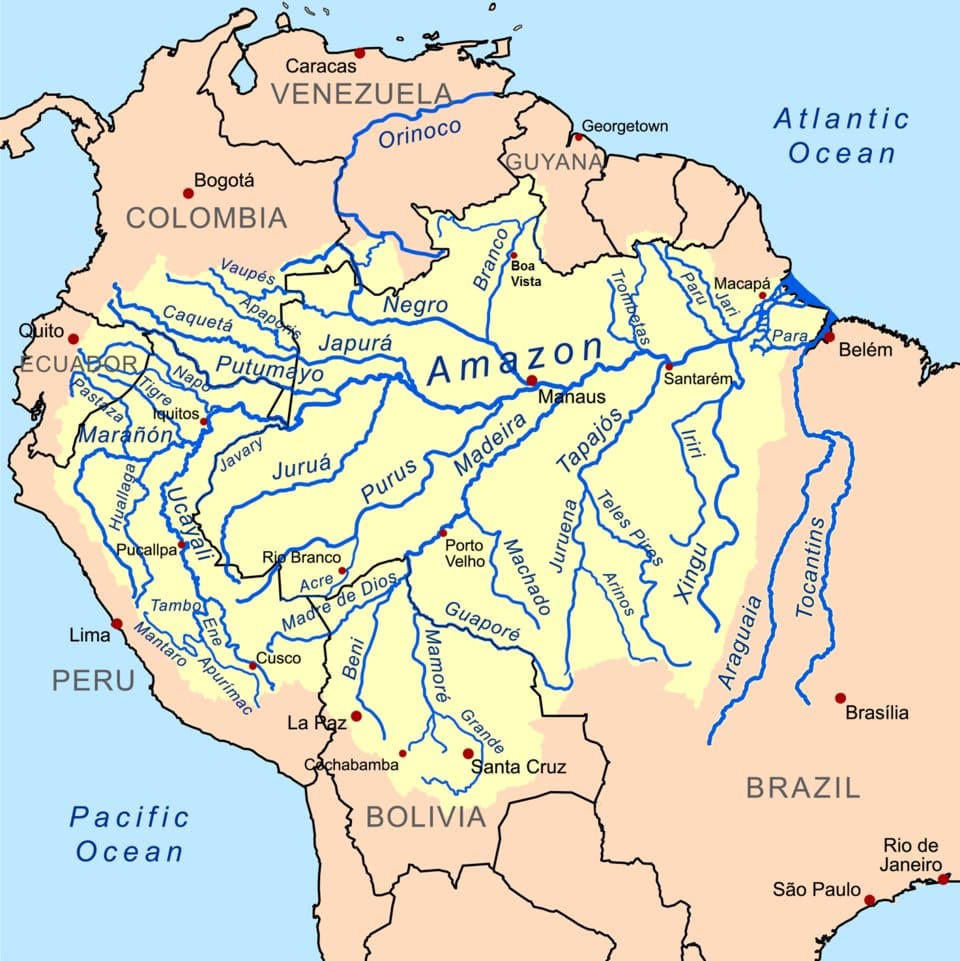
The Inka Apisto is native to Peru, specifically tributaries within the Río Huallaga drainage system, which ultimately feeds into the Amazon River. This is a region of foothills and lowland forest where small, clear streams wind through dense vegetation. The exact collection localities are not widely publicized, as is common with many South American dwarf cichlid species, but the fish are associated with small forest streams rather than the main river channels.
What makes this species particularly interesting from a habitat perspective is the relatively cool water temperatures it encounters in the wild. The streams where A. Baenschi lives are cooler than the typical tropical aquarium, with temperatures often in the low 70s Fahrenheit (around 20 to 24°C). The water is very soft, acidic, and has low conductivity. The substrate is fine sand covered in leaf litter, with submerged woody debris and root tangles providing shelter and foraging opportunities. This cooler-water preference sets the Inka Apisto apart from many of its congeners and is an important detail to get right in captivity.
Appearance & Identification
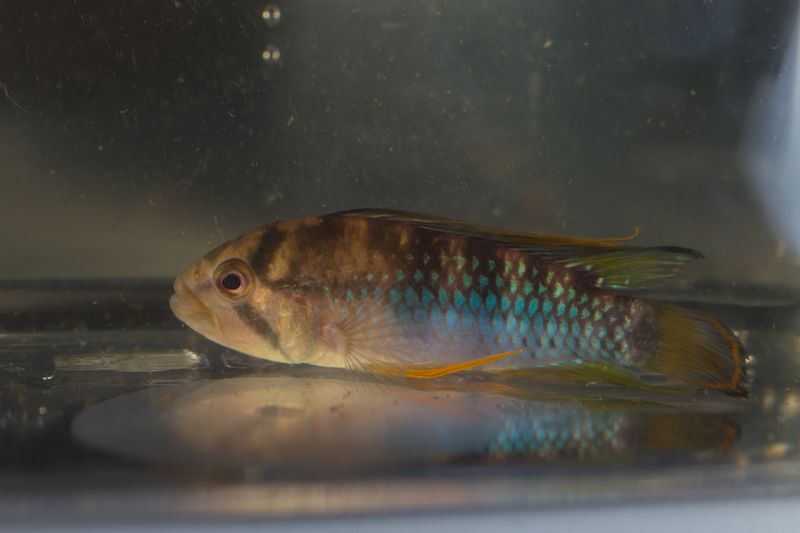
Male Inka Apistos are absolutely gorgeous fish. The body is a rich, warm yellow-gold that can approach orange in dominant males under ideal conditions. Iridescent blue scales shimmer along the flanks, and the cheeks display metallic blue-green markings. The dorsal fin is high and sail-like, with dramatically extended lappets (thread-like extensions) that trail elegantly as the fish swims. Reddish bands mark the caudal fin, and the overall impression is of a fish that’s dressed for the occasion at all times.
Females are smaller and display a more understated beauty. Their base coloration is yellowish, and during breeding condition, they develop bold vertical bars along the body and a broadened suborbital stripe that gives the face a more angular, assertive look. Non-breeding females are subtler, with a pale yellow to olive body and shorter, rounded fins. The sexual dimorphism in this species is quite pronounced once the fish reach maturity, making sexing relatively straightforward.
Male vs. Female
| Feature | Male | Female |
|---|---|---|
| Size | Up to 3 inches (7.5 cm) | Up to 1.6 inches (4 cm) |
| Coloration | Golden-yellow body with iridescent blue accents | Yellowish body, bold bars during breeding |
| Dorsal Fin | Tall, sail-like with extended lappets | Shorter, rounded, no extensions |
| Caudal Fin | Reddish bands, slightly extended | Rounded, mostly clear |
| Body Shape | Elongated, laterally compressed | Compact, rounder when gravid |
Once Inka Apistos reach about 1.5 inches (3.5 cm), sexing becomes quite reliable. Males begin showing the extended dorsal lappets and golden-yellow intensification well before full maturity. Females remain noticeably smaller and rounder, with shorter fins that never develop the dramatic extensions seen in males.
Average Size & Lifespan
Males reach about 2 to 2.5 inches (5 to 6 cm) in the aquarium, with some specimens reaching up to 3 inches (7.5 cm) in optimal conditions. Females are significantly smaller, topping out around 1.5 to 1.6 inches (3.5 to 4 cm). The size difference between the sexes is more pronounced in this species than in many other Apistos, which can look a bit dramatic when you see a pair together.
With proper care, Inka Apistos live 3 to 5 years. Because this species prefers cooler water temperatures than many tropical fish, metabolism runs a bit slower, and fish kept at the lower end of their temperature range may live slightly longer. Consistent water quality, a protein-rich diet, and low-stress social conditions are the keys to longevity.
ASD Difficulty Rating
Advanced | 7/10
A specialist Apistogramma that requires very soft, blackwater-conditioned, cool water – not suitable for standard neutral tap water setups. The combination of low temperature, low pH, and low hardness requirements puts this above most dwarf cichlids on the difficulty scale. Rewarding for experienced soft-water keepers who can meet all three conditions consistently.
Care Guide
Tank Size
A 20-gallon (75-liter) tank is the minimum for a pair of Inka Apistos. For a group with one male and two to three females, you’ll want at least 30 gallons (115 liters) to provide adequate territory for each female. Both sexes is quite pugnacious with conspecifics, so space and visual barriers matter a great deal. A tank with a long footprint (such as a 20-gallon long) is much better suited than a taller, narrower design.
Water Parameters
| Parameter | Recommended Range |
|---|---|
| Temperature | 68 – 79°F (20 – 26°C) |
| pH | 5.0 – 7.0 |
| General Hardness (GH) | 1 – 5 dGH |
| KH | 0 – 3 dKH |
| Ammonia | 0 ppm |
| Nitrite | 0 ppm |
| Nitrate | < 20 ppm |
One of the most important details about keeping Inka Apistos is that they prefer cooler temperatures than many aquarium fish. While they can tolerate the mid-to-upper 70s, they naturally come from streams where the water stays in the low-to-mid 70s°F (around 22 to 24°C). Keeping them at temperatures consistently above 80°F (27°C) is likely to shorten their lifespan and increase stress. This also means they’re not ideal tank mates for species that require very warm water.
Soft, acidic water is non-negotiable for this species, particularly with wild-caught specimens. Captive-bred fish are more adaptable, but they still thrive best when the water is soft (under 5 dGH) and slightly acidic (pH 5.5 to 6.5). RO water mixed with a small amount of tap water is often the easiest way to achieve these conditions consistently.
Filtration & Water Flow
Gentle filtration is essential. The Inka Apisto comes from very slow-moving or still water, so powerful filter outputs need to be diffused. Sponge filters are the best choice for breeding tanks, providing clean water without any current. For community setups, use a hang-on-back filter with a pre-filter sponge or a small canister filter with a spray bar to disperse the flow. Turnover of about 4 times the tank volume per hour is sufficient.
Lighting
Subdued lighting brings out the best in Inka Apistos. These forest stream fish are accustomed to heavy shade, and bright lighting makes them nervous and washes out their colors. Floating plants are your best friend here, providing natural shade while also helping stabilize water chemistry. Under dim, tannin-tinted lighting, the golden-yellow males practically glow.
Plants & Decorations
Create a complex environment with lots of hiding places and territory markers. Driftwood, roots, and branches should form natural caves and overhangs. Provide dedicated spawning sites using coconut shells, small clay pots, or commercial cichlid caves. Each female needs at least one cave in her territory. Java Fern, Anubias, Cryptocoryne, and mosses are excellent plant choices that tolerate the low light and soft water this species needs.
Leaf litter is highly recommended. Scattered Indian almond leaves or oak leaves on the substrate mimic the natural habitat, release beneficial tannins, and support microfauna colonies that fry can graze on. Replace leaves as they decompose, which takes 4 to 6 weeks.
Substrate
Fine sand is essential for this substrate-sifting species. Coarse gravel or sharp substrates can damage their delicate mouths and gills. A natural-colored sand that mimics the fine sediment of their native streams works beautifully, especially when partially covered with leaf litter.
Tank Mates
Best Tank Mates
Select small, peaceful species that appreciate similar water conditions and won’t outcompete the Apistos for food or territory. Good choices include:
- Pencilfish (Nannostomus species). Ideal companions that stay in the upper water column
- Cardinal Tetras. Classic blackwater fish that complement the setup perfectly
- Green Neon Tetras. Tiny, peaceful, and thrive in soft, acidic water
- Ember Tetras. Warm coloration that pairs beautifully with the golden Inka males
- Marbled Hatchetfish. Surface dwellers that won’t interact with bottom-level territories
- Pygmy Corydoras. Small enough to coexist, but monitor during breeding periods
- Otocinclus. Peaceful, unobtrusive algae grazers
Tank Mates to Avoid
- Other Apistogramma species. Territory competition is inevitable in standard tank sizes
- Larger cichlids. Even moderately sized cichlids will dominate these small fish
- Warm-water species. Fish that require temperatures above 80°F aren’t compatible with the Inka Apisto’s cooler preferences
- Aggressive or fin-nipping species. The male’s elaborate finnage makes him a target
- Large bottom dwellers. Big Plecos or loaches can crush eggs and overwhelm territories
Food & Diet
Inka Apistos are carnivorous and feed primarily on small invertebrates in the wild. In captivity, they do best on a varied diet of frozen and live foods. Offer frozen bloodworms, daphnia, brine shrimp, cyclops, and moina regularly. Live foods like baby brine shrimp, grindal worms, and microworms are excellent for conditioning breeding pairs and maintaining vibrant coloration.
Most captive-bred specimens will accept high-quality sinking pellets and granules, and these can supplement the diet. However, live and frozen foods should make up the majority of what you offer. Feed small portions twice daily, and watch carefully to ensure food is being consumed. These fish have small mouths, so choose appropriately sized foods. Remove uneaten food quickly to prevent water quality issues in these sensitive soft-water setups.
Is the Inka Apisto Right for You?
Honest assessment before you buy. The Inka Apisto is one of the most beautiful apistos in the hobby – and one of the most demanding on water conditions and temperature. These requirements are non-negotiable with this species.
- Good fit if: You have soft, acidic water or are willing to build it with RO and peat filtration, and can maintain a consistent pH below 7.0 year-round.
- Good fit if: Your tank runs cool – 72 to 76°F (22 to 24°C). If you keep a chiller or have a naturally cool fishroom, this is one of the most stunning fish you can keep at those temperatures.
- Good fit if: You want a visually spectacular fish with genuine personality – territorial displays, dramatic color shifts during breeding, and a male dorsal fin extension that is unlike anything else in the dwarf cichlid world.
- Think twice if: Your tank consistently runs above 78°F and you can’t cool it down. This species declines slowly at warm temperatures and will never show its true color or behavior.
- Think twice if: You can’t or won’t use RO or distilled water blending. Standard neutral tap water is not suitable for long-term health in this species.
- Think twice if: This would be your first Apistogramma. Start with A. cacatuoides or A. borellii and build your soft-water experience before adding this one to your fishroom.
Breeding & Reproduction
Breeding Difficulty
Moderate to difficult. Getting Inka Apistos to spawn isn’t exceptionally hard if the water conditions are right, but the species is more finicky than hardier Apistos like A. Cacatuoides. The main challenges are achieving the very soft, acidic water they need for egg viability and managing the intense intraspecific aggression that ramps up during breeding.
Spawning Tank Setup
A 10 to 20-gallon (40 to 75-liter) breeding tank with multiple cave options is ideal. Provide two or three potential spawning sites per female so she can choose her preferred location. Driftwood and plants should create visual barriers between territories. A mature sponge filter provides safe, gentle filtration that won’t endanger fry.
Water Conditions for Breeding
Very soft, acidic water is essential for successful egg development. Target a pH of 5.0 to 6.0, temperature around 74 to 76°F (23 to 24°C), and general hardness below 2 dGH. RO water is almost certainly necessary unless your tap water is naturally very soft. Indian almond leaves, peat filtration, and alder cones can all help achieve and maintain these conditions. The cooler temperature is important and distinguishes this species from many other Apistos that breed better in warmer water.
Conditioning & Spawning
Condition breeders with two to three weeks of heavy feeding on live and frozen foods. The female will signal readiness by intensifying her yellow coloration and displaying bold vertical bars. She’ll begin inspecting cave sites closely and spending time near her chosen location. Spawning occurs inside the cave, with the female depositing eggs on the ceiling. Clutch sizes range from 40 to 80 eggs.
After spawning, the female assumes primary brood care and becomes extremely aggressive toward the male and any other fish. In smaller tanks, removing the male is often advisable to prevent injury.
Egg & Fry Care
Eggs hatch in approximately 36 to 72 hours at breeding temperatures. The wrigglers remain in the cave for another 5 to 6 days while absorbing their yolk sacs. Once free-swimming, the female leads the fry school around the tank in search of food. First foods should be freshly hatched Artemia nauplii, which the fry can accept from day one of free-swimming. Supplement with infusoria or liquid fry food during the first few days for the smallest individuals. Growth is steady with consistent feeding, and fry begin developing their characteristic coloration at 8 to 12 weeks.
Common Health Issues
Ich (White Spot Disease)
Even well-maintained tanks can experience ich outbreaks, triggered by temperature drops or the stress of new introductions. The classic white salt-grain spots, scratching against objects, and clamped fins are unmistakable. The heat treatment method (raising temperature to 86°F / 30°C) works but should be approached carefully with this cooler-water species. If using heat treatment, raise the temperature very gradually and monitor the fish closely. Half-dose medications may be preferable for this sensitive species.
Columnaris
Columnaris (Flavobacterium columnare) is a serious threat in dwarf cichlid tanks, particularly when water quality slips. It presents as white or grayish patches on the body, frayed fins, and sometimes ulcerations around the mouth. It progresses quickly and is fatal within days if untreated. Improving water quality immediately and treating with antibiotic medications is essential. This is a good reason to always have quarantine and medication supplies on hand.
Hole-in-the-Head Disease
HITH shows up as small pits or lesions on the head and sensory pore areas. It’s strongly associated with poor water quality and nutritional deficiencies, particularly a lack of variety in the diet. Prevention involves maintaining low nitrate levels, providing vitamin-rich live and frozen foods, and performing regular water changes. Metronidazole-based treatments can help in early cases.
Internal Parasites
Wild-caught Inka Apistos may carry internal parasites that cause weight loss, hollow belly, and white stringy feces. Prophylactic treatment during quarantine is recommended for any wild-caught specimens. A two-week quarantine period with observation is the minimum before introducing new fish to your established display tank.
Hard Rule: Never keep Inka Apistos in neutral tap water.
This species requires blackwater conditions: pH 4.5-6.0, very soft water (GH 0-4), and cool temperatures. Standard tap water slowly stresses this fish to death – you won’t see it fail immediately, you’ll see it fade over weeks. RO water treated with blackwater extract or peat filtration is required, not optional.
Common Mistakes to Avoid
- Keeping them too warm: This is the most common mistake with Inka Apistos. They come from relatively cool streams and don’t thrive at the 80°F+ temperatures many hobbyists default to. Aim for the low-to-mid 70s°F for long-term health.
- Ignoring water chemistry: More than most commonly available Apistos, this species really needs soft, acidic water. Cutting corners on water chemistry leads to chronic stress and poor coloration.
- Underestimating aggression between females: Female Inka Apistos are not shy about fighting each other for territory. Provide each female with her own defined territory and cave system, and watch for signs of bullying.
- Relying solely on dry foods: A pellet-only diet won’t support the coloration or breeding potential this species is capable of. Live and frozen foods should make up the bulk of the diet.
- Skipping quarantine: Whether wild-caught or captive-bred, all new fish should be quarantined. This species can carry parasites that aren’t apparent until the fish is stressed.
Where to Buy
Inka Apistos are less commonly available than more mainstream Apistogramma species, so you’ll need to look beyond your local chain pet store. Check these specialty online retailers:
- Flip Aquatics. A go-to source for dwarf cichlids with a reputation for quality fish and reliable shipping. Check their inventory regularly, as Inka Apistos can sell out quickly.
- Dan’s Fish. Another trustworthy option with a rotating selection of Apistogramma species. They often carry captive-bred specimens at reasonable prices.
Be prepared to act quickly when you find them in stock, as this species doesn’t stay available for long. Ask sellers about the origin (wild-caught vs. Captive-bred) and the water conditions the fish have been kept in, so you can plan your acclimation accordingly.
FAQ
What temperature should I keep Inka Apistos at?
Aim for 72 to 76°F (22 to 24°C) as your target range. This species comes from cooler streams than many tropical fish and doesn’t thrive at temperatures consistently above 80°F. The cooler temperature preference also makes tank mate selection important, as not all tropical fish do well at these temperatures.
How rare are Inka Apistos?
They’re not extremely rare, but they’re considerably less common than popular Apistos like A. Cacatuoides or A. Agassizii. They show up periodically at specialty retailers and through dedicated breeders. If you’re set on acquiring them, monitor your preferred sellers’ inventory regularly and be ready to purchase when they become available.
Can I keep Inka Apistos with other dwarf cichlids?
In most home aquarium setups, it’s best to keep only one Apistogramma species per tank. Mixing species leads to territorial conflicts, hybridization risks, and chronic stress. If you have a very large tank (55+ gallons) with well-defined territories, it’s theoretically possible, but a species-specific approach is almost always more successful.
Do Inka Apistos need Indian almond leaves?
They don’t strictly need them, but Indian almond leaves are extremely beneficial for this species. The tannins help lower pH and soften water, the leaf litter mimics natural habitat, and the decomposing leaves support microfauna growth that fry can graze on. If you’re keeping Inka Apistos, there’s really no reason not to add them.
Why is my Inka Apisto male losing color?
Color loss in male Inka Apistos is almost always a sign of stress. Check water parameters first, as elevated nitrates, incorrect pH, or temperature issues are the most common culprits. A diet lacking in variety, aggressive tank mates, or overly bright lighting can also suppress coloration. Address the underlying stressor, and the color should return within days to weeks.
What It Is Actually Like Living With Inka Apisto
This is the part no other care guide gives you. Forget water parameters for a minute. Here is what it is actually like to share your tank with this species.
The first thing that surprises people is how much presence a three-inch fish can have. The male Inka Apisto sets up a territory within days of introduction and makes it very clear that the caves and the bottom are his. The sail-like dorsal fin spreads wide during display, the golden body intensifies toward orange, and he will engage with his reflection in the glass as enthusiastically as with any real tank mate. He is not aggressive toward most community fish, but his awareness of everything in the tank is constant and unmistakable.
The female’s transformation during breeding is one of the more dramatic things you’ll see in a dwarf cichlid setup. She goes from a pale, unremarkable yellow to a bold, barred fish with black markings and intense gold – a completely different visual character. When she is guarding eggs in a cave, the docile fish from last week will now charge anything that comes too close. The same 1.5-inch fish that hid from the male will actively drive him away from the entrance of her cave.
On a daily basis, the Inka Apisto is a fish you watch rather than just admire. The territory patrols, the hunting posture before food hits the water, the male displaying to the female at the cave entrance – there is always something happening. The color is the constant feedback signal: bright gold and vivid blue means the water is right. Faded, pale, and hiding means something is off. You will check your parameters more consistently with this fish than with anything else in your fishroom.
How the Inka Apisto Compares to Similar Species
If you are deciding between Apistogramma species, the choice comes down to your water conditions and what you want from the keeping experience.
Inka Apisto vs. Cockatoo Apisto (A. cacatuoides) , Choose the Cockatoo Apisto if you have moderately hard or neutral tap water and want an apisto with wide parameter tolerance, strong availability, and reliable acceptance of prepared foods. It’s the right starting point for most keepers. Choose the Inka Apisto if you can provide very soft, cool, acidic water and want the warm golden coloration and dramatic sail dorsal that make this species genuinely unlike anything else in the genus.
Inka Apisto vs. Blue Panda Apisto (A. nijsseni) : Choose the Blue Panda Apisto if you want bold, high-contrast black-and-blue patterning (especially on the female) and a fish with similar soft-water requirements but slightly more widely available captive-bred stock. Choose the Inka Apisto if you prefer the warm gold-and-blue palette and want a male dorsal lappet extension that is more dramatic – the elongated fin extensions on a mature Inka male are more striking than on most other Apistogramma species.
Closing Thoughts
The Inka Apisto is one of those species that reminds you there’s always something new and exciting to discover in the dwarf cichlid world, even after decades in the hobby. Its warm golden coloration sets it apart from the blue-dominated Apistos that most people are familiar with, and the sail-like dorsal fin of a mature male is genuinely eye-catching. It’s not the most forgiving species for beginners, but for intermediate keepers willing to invest in proper water chemistry and a thoughtfully designed setup, it’s incredibly rewarding.
If you can source a pair or a small group, give them cool, soft, acidic water with plenty of caves and cover, and feed them a diet rich in live and frozen foods, you’ll be treated to one of the finest displays the Apistogramma genus has to offer. An Inka Apisto at peak condition – cool water, soft and acidic, caves loaded, a female to display for – is the apisto that makes other apistos look ordinary. Get the temperature right first. Everything else follows.
This article is part of our South American Cichlids species directory. Explore more South American cichlid care guides.
References
- Seriously Fish. (n.d.). Apistogramma baenschi. Retrieved from https://www.seriouslyfish.com/species/apistogramma-baenschi/
- Froese, R. & Pauly, D. (Eds.). (2024). Apistogramma baenschi in FishBase. Retrieved from https://www.fishbase.se/summary/Apistogramma-baenschi.html
- Römer, U., Hahn, I., Römer, E., Soares, D.P. & Wöhler, M. (2004). Apistogramma baenschi sp. N. Description of a new facultative mouth-breeding cichlid species. Vertebrate Zoology, 54(1), 77-106.
- Römer, U. (2006). Cichlid Atlas Volume 2: Natural History of South American Dwarf Cichlids. Mergus Publishers.
- About the Author
- Latest Posts

I’m Mark Valderrama, founder of Aquarium Store Depot and a fishkeeper with over 25 years of hands-on experience. I started in the hobby at age 11, worked at local fish stores, and have kept freshwater tanks, ponds, and reef tanks ever since. I’ve been featured in two best-selling aquarium books on Amazon and built this site to share practical, experience-based fish keeping knowledge.
Leave a Reply