
Last Updated: June 25, 2026
Thank you for visiting! By the way… any links on this page that lead to products on Amazon and other stores/partners are affiliate links Aquarium Store Depot earns a commission if you make a purchase.
Table of Contents
- What Care Guides Get Wrong
- The Reality of Keeping Flame Tetra
- Key Takeaways
- Species Overview
- Classification
- Origin & Natural Habitat
- Appearance & Identification
- Average Size & Lifespan
- Care Guide
- Is It Right for You?
- Tank Mates
- Food & Diet
- Breeding & Reproduction
- Common Health Issues
- Common Mistakes to Avoid
- Where to Buy
- Frequently Asked Questions
- What It Is Actually Like Living With Flame Tetra
- Species Comparison
- Closing Thoughts
- Recommended Video
- References
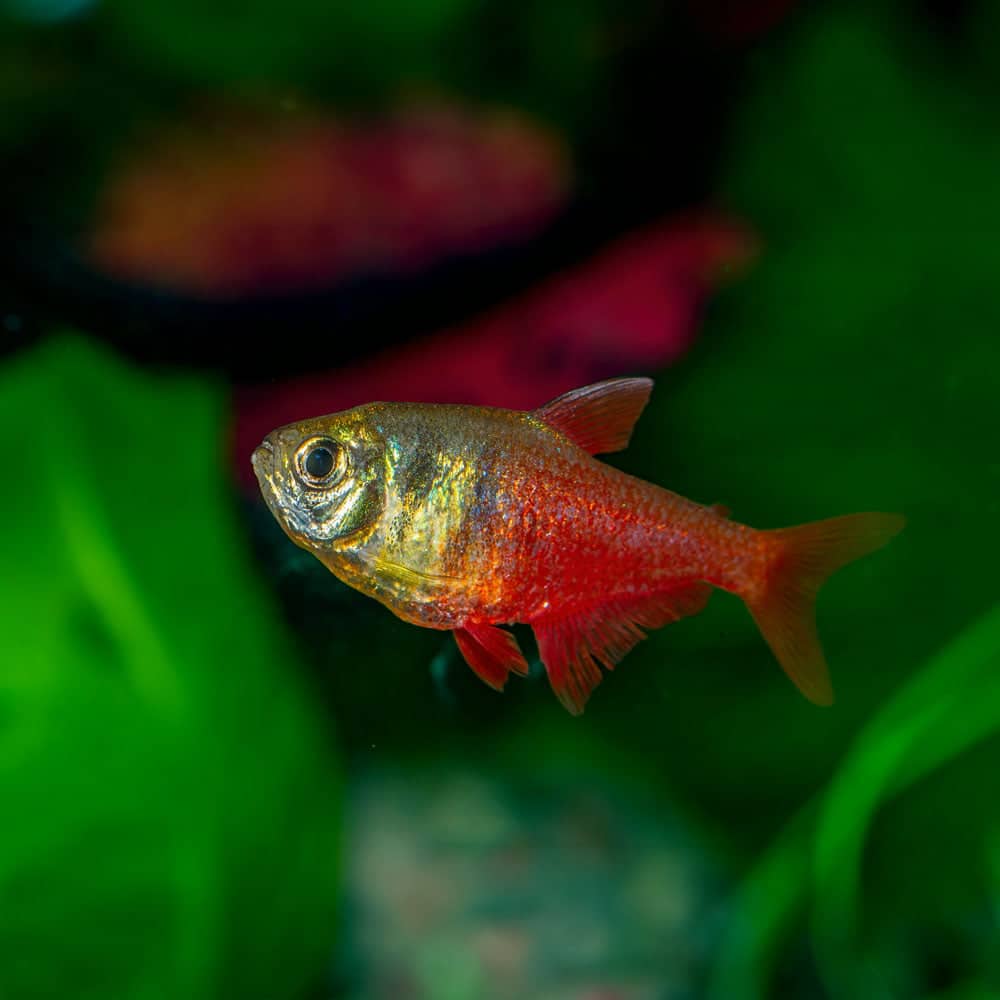
The flame tetra is one of the hardiest and most overlooked tetras in the hobby. It thrives in conditions that stress most small fish, breeds readily, and develops deep red-orange color in mature specimens. Most people skip it because it looks plain at the store. That is a mistake.
The flame tetra at the store and the flame tetra in a mature tank are two completely different fish.
The Reality of Keeping Flame Tetra
Color development takes time. Young flame tetras look nothing like adults. The warm orange-red body color develops gradually over weeks to months in the right conditions. Dark substrate, moderate lighting, quality food, and a large school all contribute. This is not an instant-gratification fish.
Group size is the biggest color trigger. In a school of 4 or 5, flame tetras stay pale and timid. In a school of 10+, they compete socially, display more, and the color deepens dramatically. The visual difference between 5 fish and 12 fish is enormous.
Lighting can make or break the color. Harsh white LEDs wash out the warm orange-red tones completely. Warm-toned or moderate lighting on dark substrate lets the flame coloring reach its full intensity. This species rewards the keeper who adjusts lighting to suit the fish rather than the plants.
Biggest Mistake New Owners Make
Buying 4 or 5 juveniles, putting them in a bright tank on light substrate, and judging the species as boring. You have not seen a flame tetra until you have seen a mature school of 10+ on black sand under warm lighting.
ASD Difficulty Rating
Beginner | 3/10
One of the most forgiving small tetras in the hobby. Flame tetras tolerate a wide range of water parameters, accept all common foods, and are peaceful with virtually any appropriately sized community fish. The only hard requirement is setup: dark substrate and subdued lighting. Get those right and this fish is nearly maintenance-free.
Expert Take (Mark Valderrama, AquariumStoreDepot)
At the stores I managed, flame tetras were the fish I used to demonstrate the substrate effect. Put a school of 10 on white gravel under bright LEDs and they look like generic orange fish. Move them to black sand with floating plants filtering the light, and the same fish looks like something from a specialty importer. I have used that demonstration more times than I can count. The fish does not change. The setup does. What most people who dismiss flame tetras have never seen is a well-kept group in a tank built around them. There is also something I find genuinely compelling about keeping a species that is endangered in its native rivers near Rio de Janeiro but thriving in living rooms around the world. Every flame tetra in the hobby is captive bred – the wild fish exists in aquariums now in a way it no longer does in its native waterways.
Hard Rule: Dark substrate and subdued lighting. Not optional – these determine the color you see.
Flame tetras kept on light-colored substrate under bright LEDs will bleach their red coloration within weeks, regardless of water quality, diet, or anything else you do right. The contrast between a flame tetra on white gravel and one on black sand is not subtle. It is the difference between a fish that looks like a generic orange tetra and one that earns its name. Add floating plants to filter overhead light. This is not a decoration choice – it is a husbandry requirement.
Key Takeaways
- Minimum tank size is 15 gallons (57 liters) for a school of 6, but 20+ gallons with 8–10 fish brings out the best behavior
- Hardy and beginner-friendly – tolerates a wide range of water conditions and accepts all common foods
- Endangered in the wild but thriving in captivity – every aquarium specimen is captive bred
- Best color comes out under dim lighting with a dark substrate and tannin-stained water
- Peaceful community fish that works well with other small tetras, corydoras, and rasboras
Species Overview
| Field | Details |
|---|---|
| Scientific Name | Hyphessobrycon flammeus |
| Common Names | Flame Tetra, Von Rio Tetra, Red Tetra, Rio Tetra |
| Family | Acestrorhamphidae |
| Origin | Coastal rivers near Rio de Janeiro, Brazil |
| Care Level | Easy |
| Temperament | Peaceful |
| Diet | Omnivore |
| Tank Level | Mid |
| Maximum Size | 2 inches (5 cm) |
| Minimum Tank Size | 15 gallons (57 liters) |
| Temperature | 72–82°F (22–28°C) |
| pH | 5.5–7.5 |
| Hardness | 3–15 dGH |
| Lifespan | 3–5 years in captivity |
| Breeding | Egg scatterer |
| Breeding Difficulty | Easy to Moderate |
| Compatibility | Community |
| OK for Planted Tanks? | Yes |
Classification
| Taxonomic Level | Classification |
|---|---|
| Order | Characiformes |
| Family | Acestrorhamphidae (reclassified from Characidae, Melo et al. 2024) |
| Subfamily | Hyphessobryconinae |
| Genus | Hyphessobrycon |
| Species | H. Flammeus (Myers, 1924) |
The genus Hyphessobrycon is one of the largest in the order Characiformes, with well over 150 described species. The name comes from the Greek hyphesson (“of lesser stature”) combined with Brycon, a related genus – essentially meaning “small Brycon.” The species name flammeus is Latin for “flame-colored,” which perfectly describes the fish’s signature orange-red coloration.
Note on reclassification: In 2024, a major phylogenomic study (Melo et al.) split the traditional family Characidae into four separate families. Hyphessobrycon was moved into the newly erected family Acestrorhamphidae under the subfamily Hyphessobryconinae. Some older references still list this species under Characidae.
Origin & Natural Habitat
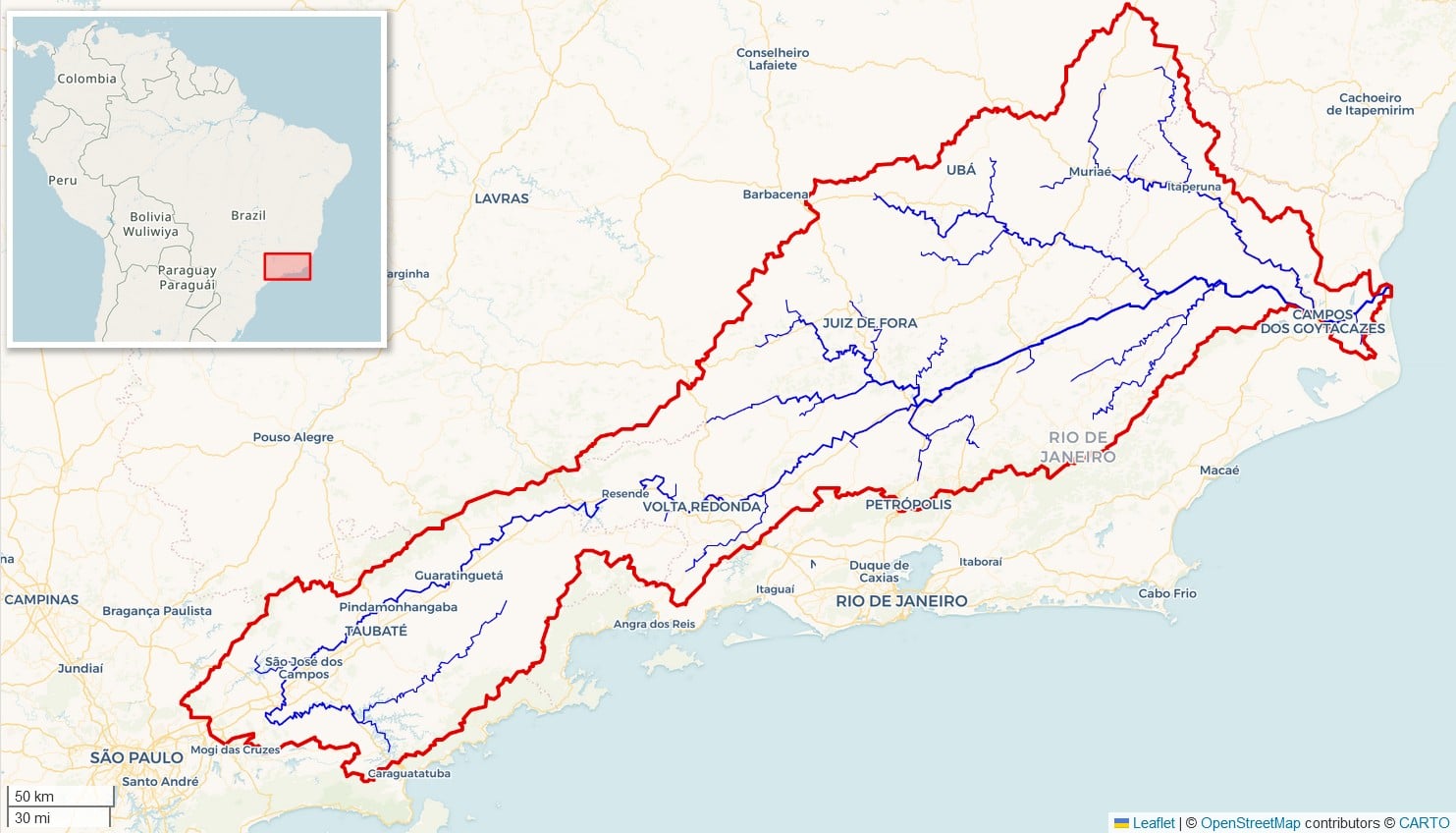
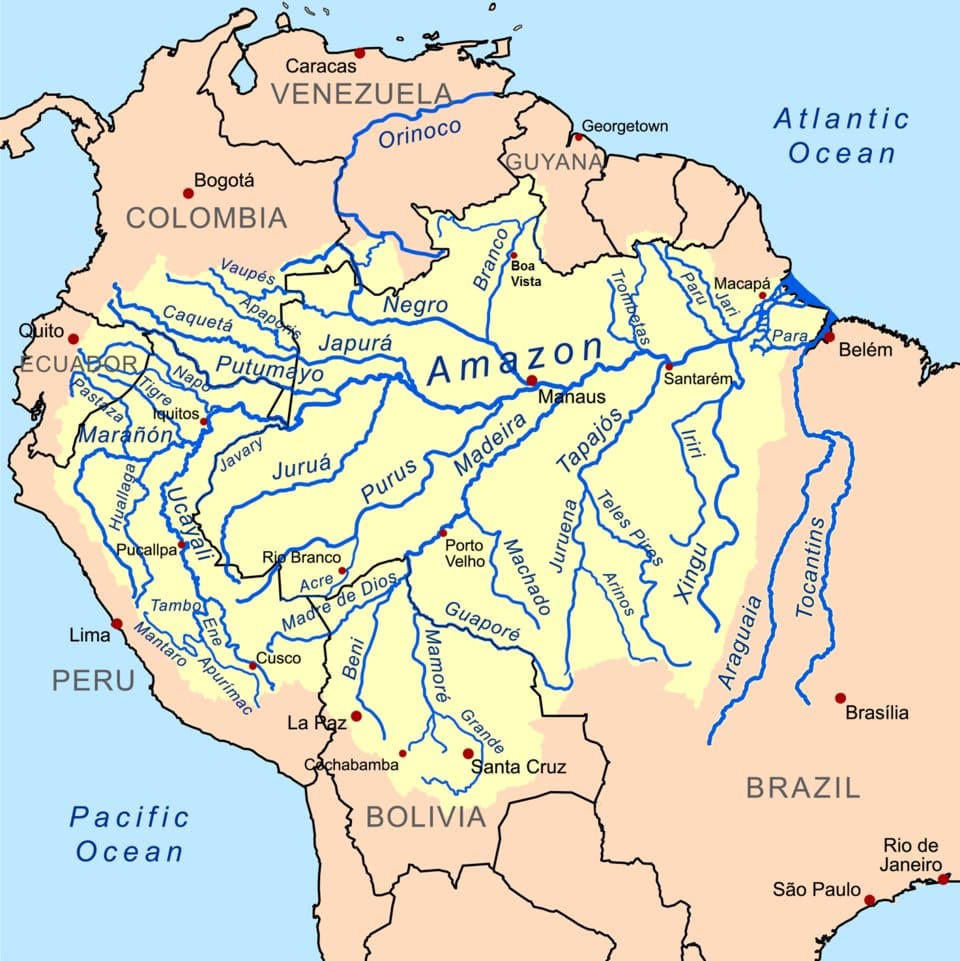
The flame tetra has one of the most restricted natural ranges of any popular aquarium fish. It’s found only in a handful of small coastal rivers and tributaries near Rio de Janeiro in southeastern Brazil – specifically in the Guanabara Bay drainage, the middle Rio Paraíba do Sul basin, and the Rio Guandu basin.
In the wild, flame tetras inhabit shallow, slow-moving tributary streams less than half a meter deep. These streams are shaded by surrounding forest, with dense aquatic vegetation and a substrate of sand and organic debris. The water ranges from clear to dark brown depending on the amount of dissolved tannins.
Here’s the sobering part: the flame tetra is classified as Endangered on the IUCN Red List. The rivers around Rio de Janeiro are some of the most heavily urbanized and polluted waterways in Brazil. Dam construction, water extraction, pollution, and invasive species like tilapia and largemouth bass have devastated native fish populations. The last confirmed collection of wild flame tetras from Rio de Janeiro state was in 1992. There are populations in the upper Rio Tietê drainage in São Paulo state, though researchers suspect those fish may have been introduced by aquarists rather than being naturally occurring.
Every flame tetra in the aquarium trade today is captive bred. The hobby has, in a sense, become the conservation backup for this species.
Appearance & Identification
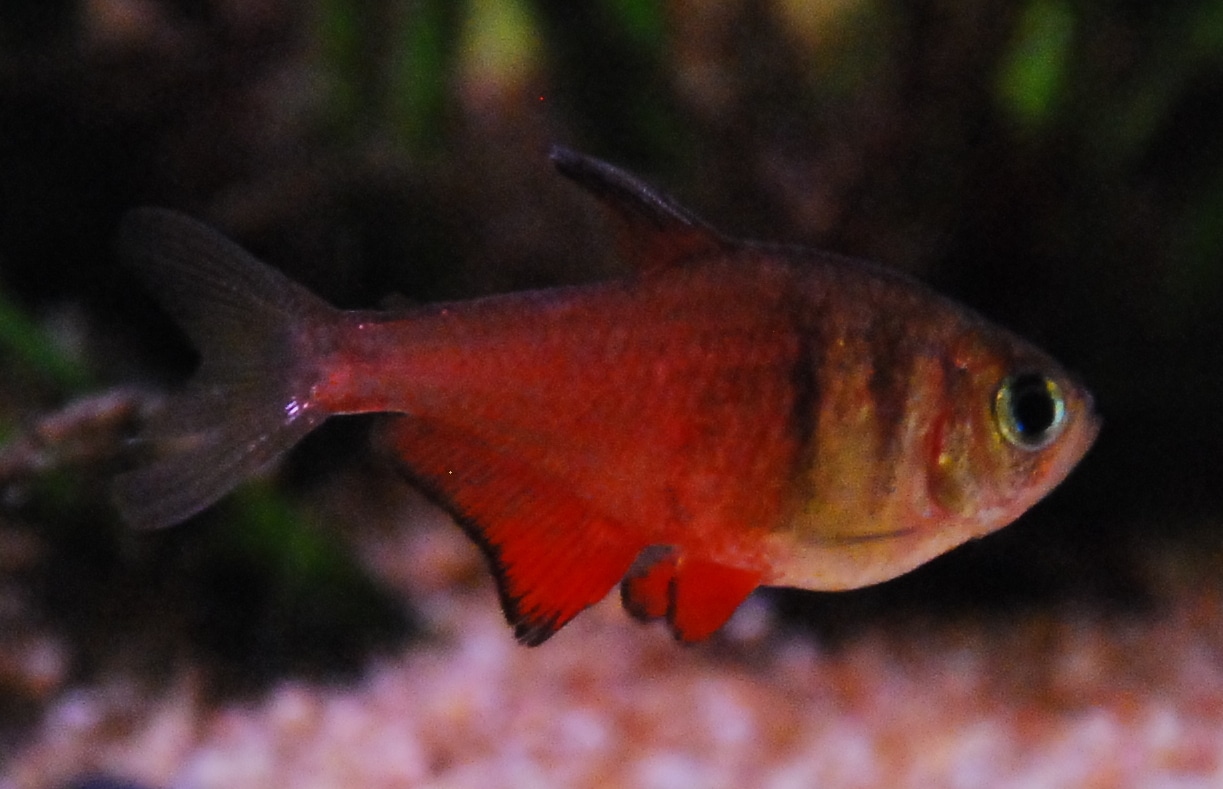
The flame tetra has a moderately deep, laterally compressed body – a bit stockier than some of the slimmer tetras like neons or cardinals. The front half of the body is silvery with a yellowish-beige tinge, while the rear half transitions into the signature flame-red to orange-red that gives this fish its name.
One of the most distinctive identification features is the pair of dark humeral spots – two vertically elongated bars on the shoulder area behind the gill cover. These are always present and help distinguish the flame tetra from other red-toned Hyphessobrycon species. All fins except the pectorals carry red coloration, and the caudal (tail) fin is transparent.
Several selectively bred color variants are available in the trade. The Orange Von Rio is the most common, with intensified orange coloration. You also encounter golden and albino forms. These are purely ornamental strains – not separate species – and all require the same care.
Male vs. Female
Flame tetras are one of the easier tetras to sex once they’re mature. Males are slimmer and show deeper, more intense red coloration. Their anal fin has a straighter edge with dark or black tips, and they develop small bony hooks on the anal and pelvic fins – you will sometimes feel these if you gently run a fine net along the fin. Females are deeper-bodied, especially when carrying eggs, and show lighter coloration overall. Females also have a unique trait: a black tip on the pectoral fin that males lack.
Average Size & Lifespan
Adult flame tetras reach about 1.5 to 2 inches (4–5 cm) in total length, making them a small tetra well suited for tanks in the 15–30 gallon range.
In captivity, expect a lifespan of 3 to 5 years with proper care. They’re a long-established captive species – the hobby has been breeding them continuously since the 1920s – so genetic stock is healthy and consistent.
Care Guide
Tank Size
A 15-gallon tank is the minimum for a school of 6 flame tetras. As with most schooling tetras, bigger is better – a 20-gallon long gives you room for a proper group of 8–10 and lets the fish school naturally across the length of the tank. That extra space also makes a visible difference in coloration, as the fish feel more secure and display more confidently.
Water Parameters
| Parameter | Ideal Range |
|---|---|
| Temperature | 72–82°F (22–28°C) |
| pH | 5.5–7.5 |
| Hardness | 3–15 dGH |
| KH | 2–8 dKH |
Flame tetras are adaptable fish that handle a broader range of conditions than many popular tetras. They can tolerate temperatures as low as 64°F (18°C) – which makes them one of the few tetras that can work in unheated tanks in mild climates. That said, they look their best and are most active in the 72–82°F range.
Like most tetras, they show the most vibrant coloration in softer, slightly acidic water. But captive-bred stock adapts well to moderately hard water around neutral pH. As always, consistency matters more than hitting perfect numbers.
Filtration & Water Flow
Gentle to moderate flow works best. In the wild, flame tetras come from slow-moving streams, so they don’t appreciate being blasted by strong currents. A sponge filter or hang-on-back filter with a diffused output is ideal. Weekly water changes of 25–30% will keep conditions stable.
One important note: flame tetras are sensitive to accumulated organic waste. Make sure the tank is fully cycled before adding them, and stay on top of your maintenance routine.
Lighting
Subdued lighting is where flame tetras really come alive – which sounds counterintuitive, but lower light brings out their richest reds and oranges. Under harsh overhead lighting, they can look washed out and pale. Add some floating plants like Amazon frogbit or salvinia to create shaded areas, and you’ll see a noticeable improvement in color intensity.
Plants & Decorations
A planted tank is the ideal setting for flame tetras. Dense planting along the sides and back with open swimming space in the center gives them the best of both worlds – shelter when they want it and room to school when they’re feeling confident. Java fern, Anubias, Cryptocoryne species, and Java moss all work well.
Driftwood and dried leaf litter add structure and release beneficial tannins that soften the water and give it that natural amber tint these fish evolved in. Indian almond leaves are a great addition – they slowly decompose, providing tannins and a surface for biofilm that the fish will pick at.
Substrate
Dark substrate is essential for getting the best color out of flame tetras. Fine dark sand or a dark planted tank substrate makes those reds and oranges pop against the background. On light-colored gravel, the fish pale out significantly – it’s one of the most dramatic substrate-dependent color differences you’ll see in any tetra.
Is the Flame Tetra Right for You?
Before you buy, here is the honest breakdown. The flame tetra is a great fish for the right keeper – and a disappointment for the keeper who sets it up wrong.
Good fit if:
- You want a warm-toned tetra with orange-red coloring that intensifies with maturity and the right setup
- You can keep a proper school of 8–10 or more – smaller groups stay pale and stressed
- You have a 20-gallon long or larger with dark substrate and floating plants or subdued lighting
- You want a proven, hardy species that has been captive bred for over a century without the fragility that comes with wild-caught fish
- You appreciate a peaceful community fish that will never cause a compatibility problem
- You are interested in an unusual conservation angle – this fish is endangered in its native rivers near Rio de Janeiro, but thriving in the hobby
Think twice if:
- Your tank has light-colored substrate or bright overhead LEDs – setup determines whether you see the flame coloring or a washed-out orange fish
- You want neon-bright coloring or the fluorescent flash of species like neon tetras – flame tetras are warm and rich, not electric
- You are planning to keep 4 or 5 fish to see if you like them – small groups stay pale and hide; you need at least 8 to see what this species actually looks like
- You want a centerpiece or showpiece fish that commands attention on its own – the flame tetra shines as part of a school, not as a solo display
Tank Mates
Best Tank Mates
Flame tetras are solidly peaceful community fish. They’re slightly more active and assertive than very small species like ember tetras, but they get along well with a wide range of tank mates:
- Corydoras catfish – ideal bottom-dwelling companions that occupy a different zone
- Neon tetras – classic pairing, the blue and red contrast beautifully
- Glowlight tetras – similar size and temperament with complementary warm tones
- Harlequin rasboras – peaceful mid-level schoolers
- Ember tetras – another warm-toned species that creates a cohesive color palette
- Otocinclus catfish – gentle algae eaters that won’t cause any issues
- Dwarf gouramis – a colorful centerpiece that coexists well with flame tetras
- Kuhli loaches – peaceful bottom dwellers that add variety to the lower tank zone
- Apistogramma dwarf cichlids – great for a South American biotope setup
- Hatchetfish – occupy the top water level, filling a different niche
Tank Mates to Avoid
- Angelfish – will eat flame tetras once they reach adult size
- Large cichlids – any fish big enough to view a flame tetra as a snack
- Tiger barbs – too nippy and boisterous
- Red tail sharks – territorial and aggressive toward small tetras
- Shrimp (juvenile) – flame tetras will prey on baby shrimp, though adult shrimp are safe
Food & Diet
Flame tetras are unfussy omnivores that accept virtually anything you offer. In the wild, they feed on small invertebrates, worms, crustaceans, and plant matter. A high-quality micro pellet or flake food makes a good daily staple.
To bring out the best color and keep them in peak condition, supplement their diet with frozen or live foods a few times per week. Daphnia, baby brine shrimp, bloodworms, and cyclops are all eagerly accepted and make a real difference in how vibrant the red-orange coloration looks. Some blanched spirulina or vegetable-based flakes round out the diet nicely.
Feeding frequency: Once or twice daily, only what the school can finish in about 2 minutes. These are small fish – overfeeding leads to water quality issues faster than you’d expect.
Breeding & Reproduction
Flame tetras are one of the easier tetras to breed at home, making them a good choice for hobbyists getting into egg-scatterer breeding for the first time.
Breeding Difficulty
Easy to moderate. With the right conditions and conditioning, they’ll spawn readily.
Spawning Tank Setup
Set up a separate 10–15 gallon (38–57 liter) breeding tank with dim lighting. Add fine-leaved plants like Java moss or spawning mops for egg deposition. A mesh or grid on the bottom prevents the adults from reaching fallen eggs – flame tetras are notorious egg eaters. Use a small air-powered sponge filter for gentle filtration.
Water Conditions for Breeding
Soft, slightly acidic water triggers spawning most reliably. Aim for pH 6.0–6.5, hardness of 2–5 dGH, and raise the temperature to 78–82°F (26–28°C). Frequent water changes of up to 50% every couple of days can simulate the rainy season and help trigger spawning behavior.
Conditioning & Spawning
Condition the breeding group or pair with plenty of live and frozen foods – baby brine shrimp, daphnia, and bloodworms – for 1–2 weeks before introducing them to the spawning tank. When females are visibly plump with eggs and males show their most intense coloration, they’re ready. Spawning typically occurs in the morning. The female scatters adhesive eggs on plant surfaces while the male fertilizes them.
Egg & Fry Care
Remove the adults immediately after spawning – they will eat every egg they can find. A healthy female can produce 200–300+ eggs per spawn. Eggs hatch in 24–36 hours, and the fry become free-swimming about 3 days later. Feed infusoria or liquid fry food initially, then graduate to freshly hatched baby brine shrimp and microworms as they grow. Keep the tank dimly lit during the early stages.
Common Health Issues
Flame tetras are hardy fish, but they’re susceptible to the same diseases that affect most small tropical species. Here’s what to watch for:
Ich (White Spot Disease)
The most common ailment in freshwater fish. Small white spots appear on the body and fins, usually triggered by temperature fluctuations or stress from a new environment. Raise the temperature gradually to 82°F (28°C) and treat with a standard ich medication. Flame tetras generally respond well to treatment when caught early.
Neon Tetra Disease (NTD)
Despite the name, this disease affects many tetra species, not just neons. It’s caused by the microsporidian parasite Pleistophora hyphessobryconis, which invades the fish’s muscle tissue. Symptoms include fading color, pale patches, restlessness, a curved spine, and isolation from the school. There is no effective cure – infected fish should be removed immediately to prevent spreading to the rest of the group.
General Prevention
Quarantine all new fish for at least two weeks before adding them to your main tank. Maintain stable water parameters and keep up with regular water changes. Flame tetras don’t tolerate accumulated organic waste well, so a consistent maintenance schedule is your best defense against disease.
Common Mistakes to Avoid
- Keeping too few – Groups under 6 result in stressed, pale fish that hide. Get at least 6, ideally 8–10. Larger groups bring out bolder behavior and more intense coloration.
- Light-colored substrate – This is the single biggest factor in washed-out flame tetras. Dark sand or substrate is non-negotiable if you want to see the full flame effect.
- Too much light, no shade – Bright overhead lighting fades their colors. Add floating plants to create dappled shade and watch the transformation.
- Adding to an uncycled tank – Flame tetras are sensitive to organic waste. Always make sure the tank is fully cycled before adding them.
- Mixing with baby shrimp – Flame tetras enjoy small live prey. Adult cherry shrimp are fine, but baby shrimp will be picked off.
Where to Buy
Flame tetras are widely available at most local fish stores and chain pet retailers. They’re typically sold under the names “flame tetra,” “Von Rio tetra,” or “orange Von Rio tetra,” and are priced at $2–5 per fish. You’ll often find discounts when buying a school.
For better quality stock, check Flip Aquatics, which carries the Orange Von Rio variety, or Dan’s Fish. Both prioritize healthy, well-conditioned fish that arrive in better shape than big box store stock. Since all flame tetras in the trade are captive bred, quality largely depends on the breeder – buying from reputable sellers makes a difference.
Frequently Asked Questions
How many flame tetras should be kept together?
A minimum of 6, but 8–10 or more is strongly recommended. Flame tetras are a shoaling species that become stressed and lose their color when kept in small numbers. In larger groups, they school more actively and display their best reds and oranges.
What size tank does a flame tetra need?
A 15-gallon tank is the minimum for a school of 6. A 20-gallon long is better for a group of 8–10, giving them enough horizontal space to school naturally.
Are flame tetras good for beginners?
Yes. Flame tetras are one of the hardiest small tetras available. They tolerate a wide range of temperatures and water chemistry, accept all common foods, and are peaceful with virtually all community tank mates. Just make sure your tank is cycled before adding them.
Can flame tetras live in an unheated tank?
Potentially, yes. Flame tetras can tolerate temperatures down to about 64°F (18°C), which makes them one of the few tropical tetras that can work in unheated indoor tanks in mild climates. However, they’ll show their best color and activity in the 72–82°F range, so a heater is still recommended for optimal conditions.
What’s the difference between a flame tetra and a Von Rio tetra?
They’re the same species – Hyphessobrycon flammeus. “Von Rio tetra” and “flame tetra” are just different common names. The “Orange Von Rio” you see in stores is a selectively bred color variant with enhanced orange coloration.
Are flame tetras endangered?
In the wild, yes – the flame tetra is listed as Endangered on the IUCN Red List. Its native rivers near Rio de Janeiro have been severely impacted by urbanization and pollution. However, the species is extremely common in the aquarium trade, where all specimens are captive bred. It’s one of the most fascinating conservation paradoxes in the hobby.
What It Is Actually Like Living With Flame Tetras
This is what the care guides miss. Here is what daily life with this species actually looks like.
The color transformation is gradual and dramatic. A new school of flame tetras, just acclimated and settling in, looks underwhelming. The fish are pale, they stay close together, and the orange-red coloring you expected is mostly absent. Give them two to three weeks on dark substrate with subdued lighting and good food – and watch what happens. The red deepens. The orange intensifies. A fish that looked generic when you bought it becomes the visual anchor of the tank. That transformation is the flame tetra experience, and keepers who judge the species in week one miss it entirely.
A settled school has a quality nothing else replicates. Ten to twelve flame tetras moving through a planted tank on black sand under soft light create a warm, fiery visual effect that is unlike any other tetra. The bodies glow orange-red, the movement is relaxed and unhurried, and the whole group seems lit from within. Under bright LEDs the effect disappears. In the right setup it is one of the most compelling displays in freshwater fishkeeping.
Males in breeding condition are a different fish. The same male that cruises calmly through the school transforms when there is a female to display for. Fins fully extended, coloring at its richest, body angled toward the female – this is the species at its absolute visual peak. It happens regularly in a well-kept mixed group, not just during dedicated breeding attempts.
They are the most peaceful fish you can keep. In 25+ years I have never seen a flame tetra cause a compatibility issue. They do not nip. They do not chase. They do not establish territories or bully other species. If a compatibility problem exists in a flame tetra tank, the flame tetra is not the cause. That reliability makes them a cornerstone fish for community setups – you plan around everything else and the flame tetras just work.
How the Flame Tetra Compares to Similar Species
Flame Tetra vs. Ember Tetra
Both are warm orange-red tetras with similar peaceful temperaments, but the size difference matters for setup. Ember tetras reach about 0.8 inches (2 cm) – they are true nano fish that disappear in larger tanks. Flame tetras reach 2 inches (5 cm) and have real visual presence in a standard 20-gallon community. The Ember’s smaller size also means it needs a tighter group and is more vulnerable in mixed communities. Choose the Ember Tetra if you are building a nano tank under 10 gallons and want a warm-toned species that fills that scale. Choose the Flame Tetra if you have a 20-gallon or larger community tank and want a warm-toned schooler with more size, color depth, and visual impact.
Flame Tetra vs. Serpae Tetra
The Serpae Tetra has more intense red coloring – brighter, more saturated, harder to miss – but it is a documented fin nipper that disrupts community tanks. Serpae tetras in a mixed setup will find the long fins on angelfish, bettas, and gouramis, and the results are predictable. Flame tetras are genuinely peaceful in any community. The color trade-off is real but so is the behavior difference. Choose the Serpae Tetra if you want maximum red saturation and are keeping it in a species-only or same-temperament group where fin nipping is not a concern. Choose the Flame Tetra if you want warm red-orange coloring without the aggression management – it is the better community fish by a significant margin.
Closing Thoughts
The flame tetra deserves far more attention than it gets. It’s hardy, peaceful, affordable, and absolutely beautiful when set up properly – dark substrate, dim lighting, tannin-stained water, and a proper school of 8 or more. The warm orange-red glow of a well-kept flame tetra group rivals fish that cost ten times as much.
There’s also something meaningful about keeping a species that’s endangered in the wild. Every flame tetra in the hobby is a captive-bred descendant of fish collected from rivers that may no longer support wild populations. In a small way, keeping them helps ensure the species persists.
If you’re looking for other underrated tetras to pair with flame tetras, check out our care guides for ember tetras, glowlight tetras, and lemon tetras.
Recommended Video
Check out our tetra tier list video where we rank the most popular tetras in the hobby, including the flame tetra:
References
- Hyphessobrycon flammeus Profile – Seriously Fish
- Hyphessobrycon flammeus (Myers, 1924) – FishBase
- Flame tetra – Wikipedia
- Redescription of Hyphessobrycon flammeus – Carvalho, de Jesus & Langeani, 2014
- Phylogenomics of Characidae – Melo et al, 2024
- About the Author
- Latest Posts

I’m Mark Valderrama, founder of Aquarium Store Depot and a fishkeeper with over 25 years of hands-on experience. I started in the hobby at age 11, worked at local fish stores, and have kept freshwater tanks, ponds, and reef tanks ever since. I’ve been featured in two best-selling aquarium books on Amazon and built this site to share practical, experience-based fish keeping knowledge.
Leave a Reply