
Last Updated: June 25, 2026
Thank you for visiting! By the way… any links on this page that lead to products on Amazon and other stores/partners are affiliate links Aquarium Store Depot earns a commission if you make a purchase.
Table of Contents
- What Care Guides Get Wrong
- The Reality of Keeping Lemon Tetra
- Key Takeaways
- Species Overview
- Classification
- Origin & Natural Habitat
- Appearance & Identification
- Average Size & Lifespan
- Care Guide
- Is It Right for You?
- What People Get Wrong
- Tank Mates
- Food & Diet
- Breeding & Reproduction
- Common Health Issues
- Common Mistakes to Avoid
- Where to Buy
- Frequently Asked Questions
- What It Is Actually Like Living With Lemon Tetra
- Species Comparison
- Closing Thoughts
- Recommended Video
- References
The lemon tetra takes months to show its true colors. Buy a group of washed-out juveniles from the store and most people send them back thinking they got duds. Give them six months in stable, slightly acidic water and they transform into one of the most striking tetras in the hobby.
Most people judge lemon tetras in the first week. The fish does not even start showing color for months.
Expert Take (Mark Valderrama, AquariumStoreDepot)
In the stores I managed, lemon tetras were the fish customers almost returned. They’d buy a group, come back two weeks later, and say the fish looked nothing like the photo online. I would ask them about their substrate and lighting. White gravel? Bright LED? That was the answer every time. I would set them up with some dark sand, floating plants, and a warm-toned light, and they would come back months later saying the fish had completely transformed. The lemon tetra is one of the most dramatic setups-dependent transformations in the hobby – and also one of the most rewarding when you get it right. This is not the fish for someone who wants instant color. It is the fish for someone who wants to feel like they earned it.
The Reality of Keeping Lemon Tetra
Color takes time to develop. Newly purchased lemon tetras look pale and unremarkable. Full lemon-yellow coloring develops over weeks to months in the right conditions. Dark substrate, moderate lighting, tannins in the water, and high-quality food all contribute. If you expect instant color, this is not the fish for you.
Group size directly affects color intensity. In a school of 4 or 5, lemon tetras are timid and washed out. In a school of 8 to 12, they compete socially, display more, and the color deepens noticeably. The jump from 6 to 10 fish makes a visible difference.
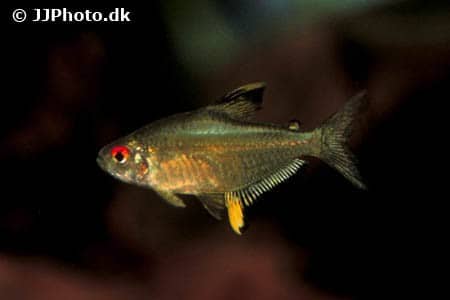
The red eye is the signature feature. When a lemon tetra is healthy and settled, the upper half of the eye turns a vivid red that is genuinely striking against the translucent body. If the eye color is faded, something in the environment needs attention.
Biggest Mistake New Owners Make
Keeping a small group in a bright tank on white gravel and then calling them boring. That setup eliminates every visual feature that makes this species worth keeping.
Key Takeaways
- Lemon tetras are hardy, peaceful community fish that thrive in groups of 8 or more
- They need a minimum 20-gallon (76-liter) tank with plenty of plants and subdued lighting to show their best colors
- Water parameters are flexible: temperature 73–82°F (23–28°C), pH 5.5–7.5, hardness 2–15 dGH
- Males display thicker black borders on their anal fins. The easiest way to tell them apart from females
- They’re omnivores that do best on a varied diet of quality flakes, frozen foods, and occasional live foods
- Breeding is possible but challenging. They need very soft, acidic water and dim conditions
Species Overview
| Field | Details |
|---|---|
| Scientific Name | Hyphessobrycon pulchripinnis |
| Common Names | Lemon Tetra, Citron Tetra |
| Family | Acestrorhamphidae |
| Origin | Tapajós River basin, Brazil |
| Care Level | Easy |
| Temperament | Peaceful |
| Diet | Omnivore |
| Tank Level | Mid |
| Maximum Size | 2 inches (5 cm) |
| Minimum Tank Size | 20 gallons (76 liters) |
| Temperature | 73–82°F (23–28°C) |
| pH | 5.5–7.5 |
| Hardness | 2–15 dGH |
| Lifespan | 4–8 years |
Classification
| Taxonomic Level | Classification |
|---|---|
| Order | Characiformes |
| Family | Acestrorhamphidae (reclassified from Characidae, Melo et al. 2024) |
| Subfamily | Hyphessobryconinae |
| Genus | Hyphessobrycon |
| Species | H. Pulchripinnis (Ahl, 1937) |
ASD Difficulty Rating
Beginner | 3/10
Lemon tetras are easy to keep and more durable than their reputation suggests. Water parameters are flexible, they accept all common foods, and they cause no aggression or compatibility issues in community tanks. The only effort required is in setup: dark substrate, subdued lighting, and a group of 8+. Get those right and the fish does the rest.
The genus Hyphessobrycon is one of the largest in the family and contains dozens of popular aquarium species including serpae, ember, and bleeding heart tetras. The lemon tetra was originally described by Ernst Ahl in 1937 from aquarium specimens, with its wild origin only later confirmed to be the Tapajós River basin in Brazil.
Note on reclassification: In 2024, a major phylogenomic study (Melo et al.) split the traditional family Characidae into four separate families. The genus Hyphessobrycon was moved into the family Acestrorhamphidae under the subfamily Hyphessobryconinae. Some older references still list this species under Characidae.
Origin & Natural Habitat
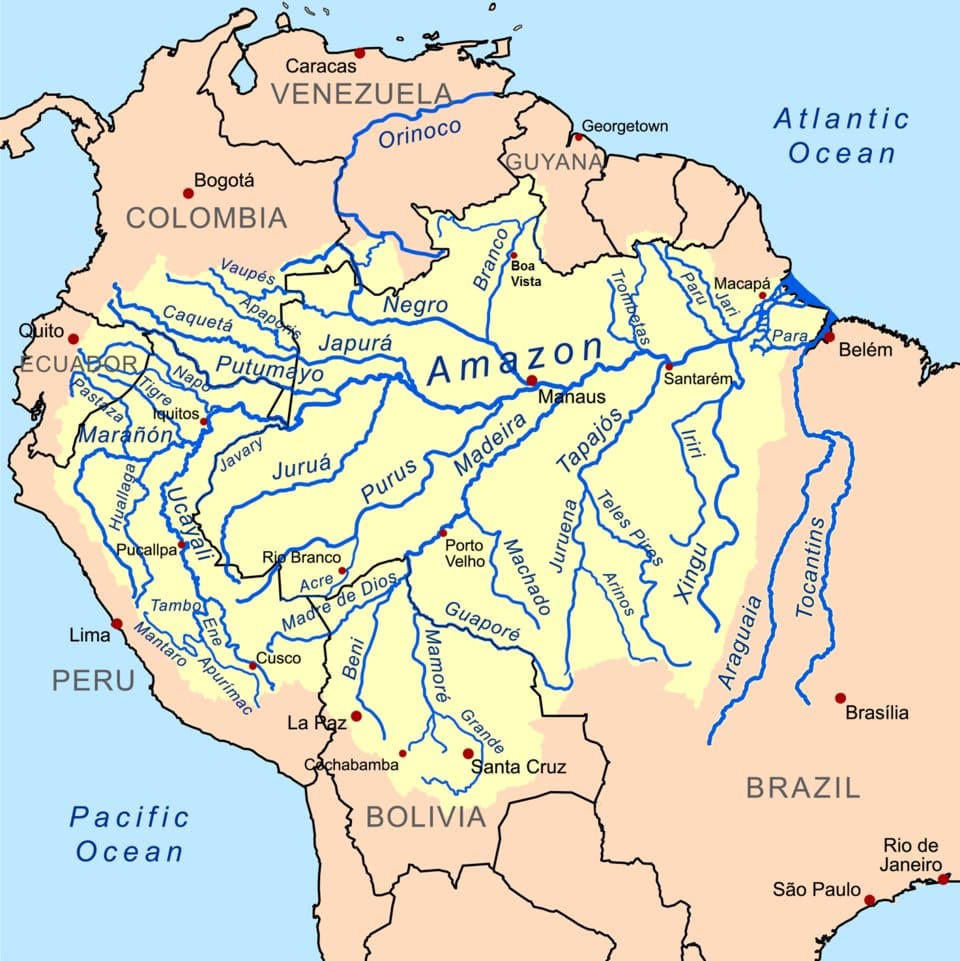
The lemon tetra is native to the Tapajós River basin in Pará and Mato Grosso states of central Brazil. Most confirmed wild populations come from the middle and lower reaches of the Tapajós, between the municipalities of Belterra and Jacareacanga. Additional records exist from the lower Xingu River basin near Senador José Porfírio, and a single collection from the rio Kaiapá, a tributary of the Teles Pires in Mato Grosso.
In the wild, lemon tetras inhabit slow-moving tributaries and streams with soft, slightly acidic water. These environments are typically shaded by overhanging vegetation, with substrates of sand, leaf litter, and fallen branches. The tannin-stained water creates the dim conditions that bring out the species’ best coloration. Something worth replicating in your aquarium.

Appearance & Identification
The lemon tetra has a laterally compressed, diamond-shaped body that’s deeper than many other tetra species. When healthy and well-conditioned, the body takes on a warm, translucent lemon-yellow hue. Though this can range from pale yellow to almost golden depending on diet, mood, and water conditions.
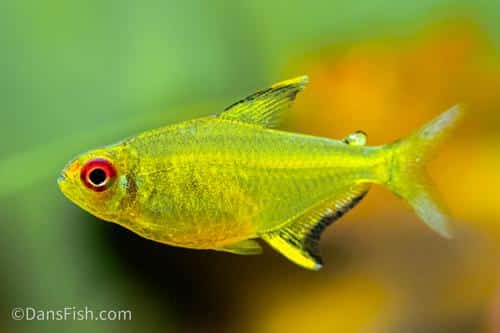
The most striking feature is the eye. A brilliant ruby red with a thin gold ring. The dorsal and anal fins are edged in bold black with yellow highlights, and the front rays of the anal fin are bright lemon-yellow. Under good conditions, the entire fish does glow with a warm, buttery light that looks fantastic against green plants and dark substrate.
A selectively-bred albino variant exists in the trade, though it’s less commonly seen than the standard wild-type coloration.
Male vs. Female
Sexing lemon tetras becomes straightforward once you know what to look for:
- Males: Slimmer body profile, more intensely colored fins, and a noticeably thicker black border on the anal fin that covers most of the fin’s surface
- Females: Deeper-bodied (especially when carrying eggs), broader when viewed from above, and a finer, thinner black line on the anal fin
The anal fin difference is the most reliable indicator and can even be spotted in juvenile fish once they reach about an inch in size.
Average Size & Lifespan
Lemon tetras reach a maximum size of about 2 inches (5 cm) in aquarium conditions. Wild specimens occasionally measure slightly smaller. They’re a medium-sized tetra. Larger than neons or embers, but smaller than congos or diamonds.
With proper care, lemon tetras typically live 4–8 years in captivity. Hobbyists regularly report individuals pushing past 6 years in well-maintained planted tanks. Diet quality, stable water parameters, and keeping them in proper shoals all contribute to their longevity.
Care Guide
Tank Size
I recommend a minimum of 20 gallons (76 liters) for a group of lemon tetras. While some sources suggest 15 gallons, these are active mid-level swimmers that benefit from extra horizontal swimming space. A 20-gallon long is ideal for a group of 8–10 fish. If you’re building a community tank with other species, aim for 30 gallons (114 liters) or larger.
Water Parameters
| Parameter | Ideal Range |
|---|---|
| Temperature | 73–82°F (23–28°C) |
| pH | 5.5–7.5 |
| Hardness | 2–15 dGH |
| KH | 1–10 dKH |
Hard Rule: Minimum 8 fish, dark substrate, subdued lighting. All three. Miss any one and you will not see this species.
These are not optional preferences. Under 6 fish, lemon tetras are pale and timid and show none of the schooling behavior that makes them worth keeping. On light substrate under bright lights, the color washes out completely. The fish you see in a bare dealer tank under fluorescent lighting is not the fish you get when the setup is right. You need all three conditions to see what this species actually is.
Lemon tetras are remarkably adaptable fish. They tolerate a wider range of water conditions than many other tetra species, making them a great choice for beginners. That said, they show their best coloration in slightly acidic, softer water. Think pH 6.0–6.8 with moderate hardness. If your tap water is on the harder side, they’ll still do fine as long as parameters are stable.
Filtration & Water Flow
A standard hang-on-back filter or canister filter rated for your tank size works well. Aim for a turnover rate of about 4–5 times the tank volume per hour. Lemon tetras come from slow-moving waters, so avoid creating strong currents. If your filter output is too powerful, baffle it with a sponge or spray bar to diffuse the flow.
Lighting
This is where lemon tetras differ from many community fish. They genuinely look better under subdued lighting. Bright, harsh lights wash out their color and make them appear pale and skittish. Use moderate to low lighting, or provide plenty of floating plants to create dappled shade. The contrast between dark and light areas in the tank will encourage them to display their best colors.
Plants & Decorations
A well-planted tank is ideal for lemon tetras. They appreciate a mix of background plants for cover and open swimming space in the middle. Good plant choices include:
- Java fern and Anubias (low light, easy care)
- Amazon swords for background structure
- Floating plants like Amazon frogbit or red root floaters to dim the lighting naturally
- Driftwood and leaf litter to create tannin-stained water and additional hiding spots
Substrate
Dark substrate is strongly recommended. It makes a dramatic difference in how lemon tetras display their color. On light-colored gravel, they will look pale and washed out. On dark sand or fine gravel, their yellow body and red eyes really pop. I prefer a fine dark sand or aqua soil for planted tank setups.
Is the Lemon Tetra Right for You?
Honest assessment before you buy. The lemon tetra is a slow-reveal fish – it does not deliver instant impact, but rewards the right setup over time.
Good fit if:
- You have a planted tank with dark substrate and moderate or warm-toned lighting – the setup where this species actually lives up to its potential
- You appreciate the color-development arc – lemon tetras transform significantly over 6–12 months in the right conditions; the fish you buy is not the fish you will have
- You want a school of 8–10+ and have a 20-gallon or larger tank – group size is the biggest single variable in how good this fish looks
- You want a betta-compatible schooler – lemon tetras are non-nippers and their muted coloring is one of the few that genuinely works in a betta community tank
- You want a more refined alternative to neons or cardinals – subtle translucent yellow and the red eye are genuinely elegant in the right setup
Think twice if:
- You want instant visual impact – lemon tetras look pale and unimpressive at the store and for the first several weeks in a new setup; if you need something that delivers on day one, try cardinal tetras
- You have a light-colored substrate you are not willing to change – on white or beige gravel, lemon tetras will look pale and disappointing regardless of everything else
- You want to keep fewer than 6 fish – small groups stay pale, skittish, and stressed, and show none of the schooling behavior that makes this species worth keeping
- You want a flashy, high-saturation color – this is not that fish; the beauty is translucent and understated
What People Get Wrong
The most common mistake is judging lemon tetras under pet store fluorescent lighting. They look washed-out and uninteresting in typical store tanks — pale yellow-white fish with nothing obvious to recommend them. In a planted tank with warm lighting, dark substrate, and a group of 10 or more, the translucent yellow body and red eye come alive in a way that surprises people.
The second mistake is expecting the same visual pop as a neon tetra. The lemon tetra is a subtler fish. The beauty is in the translucency and the way light moves through the body, not in fluorescent stripes. If you need something that jumps out from across the room, look elsewhere. If you want something that rewards attention and looks increasingly beautiful as you study it, the lemon tetra delivers.
Third: keeping too few. Under 6 fish, lemon tetras are skittish and pale. A group of 10 to 15 schools actively and shows the confident mid-water behavior that makes the translucent coloring visible. Group size is the biggest single variable in how good this fish looks.
Tank Mates
Lemon tetras are peaceful community fish that get along with a wide range of similarly-sized species. Their slightly larger size compared to neons means they’re a bit more versatile in community setups.
Best Tank Mates
- Corydoras catfish. Bottom dwellers that won’t compete for space. Panda cories and sterbai cories are great options.
- Other tetras. Neons, cardinals, embers, and glowlights all mix well. The color contrast is beautiful.
- Rasboras. Harlequin rasboras and chili rasboras are excellent companions.
- Small gouramis. Honey gouramis and sparkling gouramis are peaceful top-dwellers.
- Otocinclus. Gentle algae eaters that share similar water preferences.
- Dwarf cichlids. Apistogramma species and German blue rams work well in larger tanks.
- Shrimp. Amano shrimp and cherry shrimp coexist peacefully with lemon tetras.
Tank Mates to Avoid
- Large cichlids. Oscars, Jack Dempseys, and other predatory cichlids will eat them.
- Aggressive fish. Tiger barbs and some larger barb species can harass and nip at lemon tetras.
- Large catfish. Anything big enough to swallow a 2-inch fish should be avoided.
Food & Diet
Lemon tetras are omnivores that aren’t picky eaters. A varied diet is the key to bringing out their best coloration. Especially that warm yellow glow and the intensity of their red eyes.
- Staple: High-quality micro flakes or small pellets (look for formulas with color-enhancing ingredients like astaxanthin or spirulina)
- Frozen foods: Bloodworms, brine shrimp, daphnia, and cyclops 2–3 times per week
- Live foods: Baby brine shrimp, daphnia, and mosquito larvae are excellent treats that trigger natural foraging behavior
- Plant matter: Blanched spinach or zucchini occasionally. They do graze on algae and plant matter in the wild
Feeding frequency: Feed small portions 1–2 times per day. Only offer what they can consume in about 2 minutes to avoid overfeeding and water quality issues.
Pro tip: If your lemon tetras look pale and washed out despite good water parameters, diet is the culprit. Increasing the variety and frequency of frozen and live foods almost always brings the color back within a couple of weeks.
Breeding & Reproduction
Breeding Difficulty
Lemon tetras are egg scatterers that are bred in captivity, though it’s moderately challenging. They don’t provide any parental care and will readily eat their own eggs, so a dedicated breeding setup is essential.
Spawning Tank Setup
- A separate breeding tank of 10–15 gallons (38–57 liters) works well
- Keep lighting very dim. Eggs and fry are light-sensitive
- Use fine-leaved plants like Java moss, Cabomba, or spawning mops as egg deposition sites
- A mesh or marble substrate helps protect fallen eggs from being eaten
- A small, gentle sponge filter provides filtration without endangering eggs or fry
Water Conditions for Breeding
- pH: 5.5–6.5
- Hardness: 1–5 dGH (very soft water is important)
- Temperature: 78–82°F (26–28°C)
- Use RO water or peat-filtered water to achieve the required softness
Conditioning & Spawning
Condition breeding pairs or small groups with frequent feedings of live and frozen foods for 1–2 weeks before introducing them to the breeding tank. Spawning typically occurs in the early morning hours. Males will display to females, showing off their bold fin markings. The female scatters eggs among fine-leaved plants, and the male fertilizes them externally.
Males are territorial during spawning and will actively court females. You can breed them in pairs or in small groups with a 2:3 male-to-female ratio.
Egg & Fry Care
Remove the adults immediately after spawning to prevent egg predation. The eggs are small, semi-transparent, and will hatch in approximately 24–36 hours. Fry become free-swimming about 3–4 days after hatching.
Initial fry food should be infusoria or a liquid fry food in the 5–50 micron range. After about a week, they can graduate to microworms and newly hatched brine shrimp (Artemia nauplii). Keep the tank dark during the first few days. Both eggs and newly hatched fry are photosensitive.
Common Health Issues
Neon Tetra Disease (NTD)
Despite the name, neon tetra disease affects many tetra species including lemon tetras. It’s caused by the microsporidian parasite Pleistophora hyphessobryconis, which attacks the muscle tissue.
Symptoms: Loss of color, restlessness, curved spine, cysts or lumps in the muscle tissue, difficulty swimming, and progressive wasting. Affected fish often separate from the school.
Treatment: There is no known cure. Infected fish should be removed immediately to prevent the parasite from spreading to other tank inhabitants.
Ich (White Spot Disease)
Ich is caused by the protozoan Ichthyophthirius multifiliis and appears as small white spots on the body and fins. Lemon tetras are susceptible when stressed or when introduced to a new tank.
Treatment: Gradually raise the temperature to 82–86°F (28–30°C) and treat with a copper-based or malachite green medication. Lemon tetras respond well to heat treatment combined with medication.
General Prevention
- Quarantine all new fish for at least 2 weeks before adding them to your main tank
- Maintain stable water parameters with regular 20–25% weekly water changes
- Avoid overcrowding and keep stress levels low
- Feed a varied, high-quality diet to support the immune system
Common Mistakes to Avoid
- Keeping too few: Lemon tetras need to be in groups of at least 6, ideally 8–10. In smaller groups they become stressed, pale, and hide constantly.
- Too much light: Bright lighting washes out their color. Use floating plants or moderate lighting to keep them looking their best.
- Light-colored substrate: This is the single biggest mistake I see. Dark substrate makes a night-and-day difference in their appearance.
- Judging them in the store: Don’t write them off based on how they look in a bare dealer tank. They need a settled, planted environment to show their true colors.
- Skipping the quarantine: Commercially bred lemon tetras can carry diseases. Always quarantine before adding to an established community.
Where to Buy
Lemon tetras are sometimes available at local fish stores, though they’re not as commonly stocked as neons or cardinals. Online retailers are often the most reliable source for healthy specimens:
- Flip Aquatics. A great source for quality freshwater fish with careful shipping practices.
- Dan’s Fish. Known for healthy, well-acclimated fish and transparent livestock sourcing.
When purchasing online, try to buy groups of 8 or more. This not only gives them the social group they need, but most retailers offer better per-fish pricing on larger orders.
Frequently Asked Questions
How many lemon tetras should be kept together?
A minimum of 6, but I strongly recommend 8–10 or more. Larger groups feel more secure, display more natural schooling behavior, and show dramatically better coloration. In groups under 6, they are shy, pale, and stressed.
Are lemon tetras good for beginners?
Yes, absolutely. They’re hardy, adaptable to a wide range of water conditions, and peaceful with virtually any community fish. The only thing beginners need to watch is providing appropriate lighting and substrate to bring out their color.
Why do my lemon tetras look pale?
Pale coloration is caused by one or more of: bright lighting, light-colored substrate, stress from being kept in too-small groups, poor diet, or recent introduction to a new tank. Address these factors and you should see improvement within 1–2 weeks.
Can lemon tetras live with bettas?
Yes, lemon tetras can generally coexist with bettas in tanks of 20 gallons (76 liters) or larger. Their coloration is muted enough that most bettas don’t see them as rivals. As always with bettas, monitor the first few days for signs of aggression and have a backup plan.
Do lemon tetras nip fins?
Lemon tetras are not known as fin nippers. They’re one of the more peaceful tetra species. In rare cases, individual fish may nip at slow-moving tankmates with flowing fins, but this is uncommon and usually a sign of being kept in too-small groups.
What is the difference between lemon tetras and ember tetras?
Lemon tetras are significantly larger (2 inches vs. 0.8 inches) and have a diamond-shaped body compared to the ember tetra‘s slender profile. Lemon tetras are pale yellow with black-edged fins and red eyes, while ember tetras are a solid fiery orange-red. Both are peaceful and make great community fish, but they have very different visual impacts in a tank.
What It Is Actually Like Living With Lemon Tetras
What the care parameters don’t capture.
The 6-month mark is a genuine reveal. The fish you brought home from the store – pale, washed-out, underwhelming – is a different fish at month six. The yellow deepens from almost clear to a warm, saturated lemon tone. The red eye intensifies. The black-bordered fins become bold and defined. It happens gradually enough that you barely notice it happening, and then one day you look at the tank and realize these fish look spectacular. That transformation arc is the entire point of keeping lemon tetras. You do not buy the fish. You invest in the fish.
The red eye changes through the day. First thing in the morning after lights come on, the upper half of the eye is most vivid – a deep ruby red against the translucent body. After feeding, it intensifies further. By evening it softens slightly. It sounds like a minor detail, but it becomes one of those small daily observations that makes keeping this species genuinely enjoyable. Every morning glance at the tank gives you something specific to look for.
A large school in a warm-lit planted tank has an ambient quality unlike any other tetra. Twelve lemon tetras moving through green plants under warm lighting do not create the immediate visual impact of neons or cardinals. What they create instead is a warm, layered, living quality to the tank – translucent bodies catching light from multiple angles, the school turning slowly together in the mid-column, the occasional flash of red from an eye catching the light. It is the kind of display that looks better the more time you spend in front of the tank.
They are genuinely betta-safe, which opens combinations most tetras cannot. Lemon tetras do not nip fins, their coloration is subdued enough not to trigger betta aggression, and they occupy the mid-column without competing for surface territory. A 20-gallon with a betta and a school of ten lemon tetras in a planted setup is one of the best small community displays you can build. Most tetras at that size are not compatible with bettas in a reliable way. Lemon tetras are.
How the Lemon Tetra Compares to Similar Species
Lemon Tetra vs. Yellow Tetra
Both are warm-toned, yellow-bodied tetras that look best on dark substrates with moderate lighting. The Yellow Tetra has a deeper, more saturated yellow coloring that reads as bold from across the tank. The Lemon Tetra is more translucent – the body is almost clear at purchase and develops color over months. The Lemon Tetra is more commonly available, generally hardier in captivity, and has the distinctive red eye that the Yellow Tetra does not. Choose the Yellow Tetra if you want immediate, vivid yellow coloring and a more solid-bodied look. Choose the Lemon Tetra if you want the translucent glow-quality, the red eye as a distinctive feature, and the long development arc that rewards patience and proper setup.
Lemon Tetra vs. Pristella Tetra
Both are subtle, transparency-based tetras that rely on setup to look their best and are genuinely peaceful community fish. The Pristella Tetra has tricolor banded fins (yellow-black-white) as its defining feature and broad water parameter tolerance including mild brackish. The Lemon Tetra has the warm lemon glow and the red eye. They complement each other beautifully in a mixed school. Choose the Pristella Tetra if you want the fin banding pattern, maximum water parameter tolerance, and the full-body X-ray transparency. Choose the Lemon Tetra if you want the warm yellow color development arc, the red eye accent, and a fish that works in betta community setups where most tetras cannot go.
Closing Thoughts
The lemon tetra is one of those fish that rewards patience and attention to detail. They’re not the flashiest fish in the store display, but give them the right environment. Dark substrate, subdued lighting, a planted tank, and a good-sized group. And they become one of the most elegant and eye-catching species you can keep. Their warm yellow glow, ruby-red eyes, and bold fin markings are genuinely beautiful once they feel at home.
If you’re looking for a hardy, peaceful tetra that’s a little different from the usual suspects, give lemon tetras a try. I know from experience you’ll be pleasantly surprised.
Recommended Video
Check out our tetra tier list video where we rank the most popular tetras in the hobby, including the lemon tetra:
References
- Seriously Fish. Hyphessobrycon pulchripinnis species profile. seriouslyfish.com
- FishBase. Hyphessobrycon pulchripinnis (Ahl, 1937). fishbase.se
- The Aquarium Wiki. Hyphessobrycon pulchripinnis. theaquariumwiki.com
- Melo, B.F. Et al. (2024). Phylogenomics of Characidae, a hyper-diverse Neotropical freshwater fish lineage, with a phylogenetic classification including four families. Molecular Phylogenetics and Evolution.
- About the Author
- Latest Posts

I’m Mark Valderrama, founder of Aquarium Store Depot and a fishkeeper with over 25 years of hands-on experience. I started in the hobby at age 11, worked at local fish stores, and have kept freshwater tanks, ponds, and reef tanks ever since. I’ve been featured in two best-selling aquarium books on Amazon and built this site to share practical, experience-based fish keeping knowledge.
Leave a Reply