
Last Updated: June 25, 2026
Thank you for visiting! By the way… any links on this page that lead to products on Amazon and other stores/partners are affiliate links Aquarium Store Depot earns a commission if you make a purchase.
Table of Contents
- What Care Guides Get Wrong
- The Reality of Keeping Yellow Tetra
- Key Takeaways
- Species Overview
- Classification
- Origin & Natural Habitat
- Appearance & Identification
- Average Size & Lifespan
- Care Guide
- Is It Right for You?
- What People Get Wrong
- Tank Mates
- Food & Diet
- Breeding & Reproduction
- Common Health Issues
- Common Mistakes to Avoid
- Where to Buy
- Frequently Asked Questions
- What It Is Actually Like Living With Yellow Tetra
- Species Comparison
- Closing Thoughts
- Recommended Video
- References
The yellow tetra is a hardy, peaceful fish that works in almost any community tank. It does not need soft water, special food, or constant attention. It is the tetra you buy when you want something reliable that adds a warm yellow tone to the mid-level of your tank without any drama.
The yellow tetra is the definition of easy. If you cannot keep this fish alive, you need to fix your fundamentals.
The Reality of Keeping Yellow Tetra
Group size is not a suggestion. The minimum school size for yellow tetra is not just a guideline. In small groups, these fish lose color, become stressed, and display abnormal behavior. A proper group of 6 to 8+ is where you start to see natural schooling behavior, full color expression, and the confidence that makes them worth keeping.
Tank mate selection requires thought. The yellow tetra is not aggressive in the traditional sense, but it is assertive enough to cause problems with the wrong companions. Slow-moving, long-finned species are targets. Fast, short-finned fish of similar size are fine. Plan your community around this reality.
Hardy does not mean indestructible. The yellow tetra tolerates a range of conditions, but it still needs basic care. Ammonia spikes, dramatic temperature swings, and neglected water changes will catch up to even the toughest species. The difference is margin of error, not immunity.
Store appearance is not home appearance. Fish in store tanks are stressed, crowded, and under inappropriate lighting. The yellow tetra almost always looks better in a properly set up home aquarium than it does at the store. Dark substrate, live plants, and appropriate lighting bring out colors and behaviors you will never see in a retail environment.
Biggest Mistake New Owners Make
Adding them to a peaceful community tank without researching compatibility. The nipping and chasing will stress your existing fish, and by the time you realize the problem, fin damage is already done.
In my 25+ years in the hobby, I have consistently found that the hardiest species are the most underrated. The yellow tetra is a perfect example. It is easy to keep, rewarding to watch, and it does not demand the kind of obsessive maintenance that more sensitive species require.
Key Takeaways
- One of the hardiest tetras available – tolerates temperatures as low as 68°F (20°C), making it suitable for unheated tanks in many climates
- Excellent beginner fish – adapts to a wide range of pH (6.0-8.0) and hardness (5-20 dGH) without issue
- Minimum tank size is 20 gallons (76 liters) for a school of 6+
- Peaceful schooling species – safe with virtually all community fish and won’t nip fins
- Not the same as the lemon tetra – H. Bifasciatus and H. Pulchripinnis are different species often sold under similar names
- Develops golden-yellow coloration when kept in good conditions with a varied diet, especially during spawning
Species Overview
| Field | Details |
|---|---|
| Scientific Name | Hyphessobrycon bifasciatus |
| Common Names | Yellow Tetra, Yellow Rio Tetra |
| Family | Acestrorhamphidae |
| Origin | Southeastern Brazil (coastal Atlantic Forest drainages) |
| Care Level | Easy |
| Temperament | Peaceful |
| Diet | Omnivore |
| Tank Level | Mid to Top |
| Maximum Size | 2 inches (5 cm) |
| Minimum Tank Size | 20 gallons (76 liters) |
| Temperature | 68-82°F (20-28°C) |
| pH | 6.0-8.0 |
| Hardness | 5-20 dGH |
| Lifespan | 3-5 years in captivity |
| Breeding | Egg scatterer |
| Breeding Difficulty | Moderate |
| Compatibility | Community |
| OK for Planted Tanks? | Yes |
Classification
| Taxonomic Level | Classification |
|---|---|
| Order | Characiformes |
| Family | Acestrorhamphidae (reclassified from Characidae, Melo et al. 2024) |
| Subfamily | Stethaprioninae |
| Genus | Hyphessobrycon |
| Species | H. Bifasciatus (Ellis, 1911) |
Yellow tetras are one of the hardier small tetras available. They tolerate a range of water conditions, adapt well to community tanks, and don’t require special water chemistry to stay healthy. A solid beginner schooling fish that delivers consistent results.
The genus Hyphessobrycon is one of the largest in the characin world, containing well over 150 described species. It’s long been considered a “catch-all” genus, and most ichthyologists agree it needs significant revision. Many species currently placed in Hyphessobrycon will likely be moved to other genera as more phylogenomic work is completed.
Note on reclassification: In 2024, a major phylogenomic study (Melo et al.) split the traditional family Characidae into four separate families. The genus Hyphessobrycon was moved into the newly erected family Acestrorhamphidae under the subfamily Stethaprioninae. Some older references and fish store labels still list this species under Characidae, so don’t be surprised if you see conflicting information.
Origin & Natural Habitat
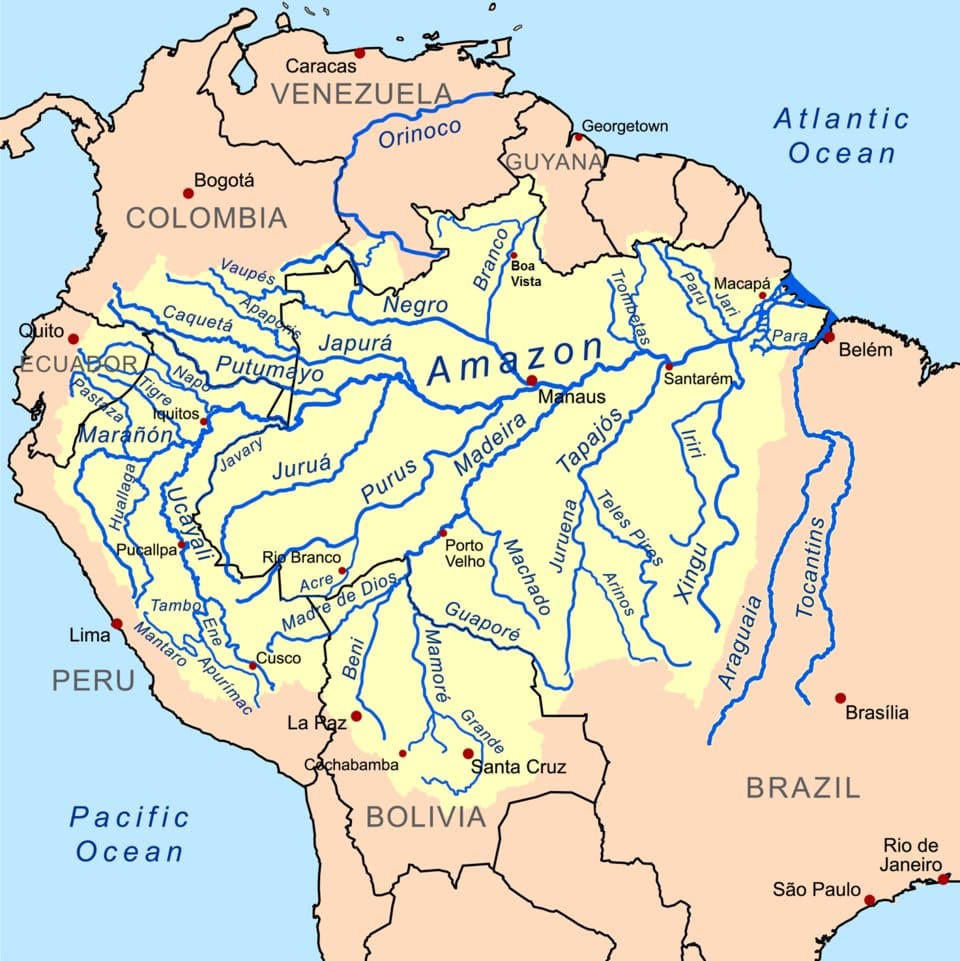
The yellow tetra is native to southeastern Brazil, specifically the coastal river drainages that run from Rio de Janeiro state south through Sao Paulo and down to Rio Grande do Sul. This is not an Amazon basin fish. Its range falls entirely within the Atlantic Forest biome, one of the most biodiverse (and most threatened) ecosystems on the planet. The rivers and streams in this region drain eastward into the Atlantic Ocean rather than feeding into the Amazon system.
In the wild, yellow tetras inhabit slow-moving streams, small rivers, and seasonally flooded areas where the water is typically soft to moderately hard with a slightly acidic to neutral pH. The Atlantic Forest waterways are clearer than the tannin-stained blackwater rivers of the Amazon, though fallen leaves and organic matter still influence the water chemistry. The habitat features a mix of aquatic vegetation, submerged roots, and overhanging riparian plants that provide shade and cover.
What’s notable about this habitat is the temperature range. Southeastern Brazil experiences cooler winters compared to the equatorial Amazon basin, with water temperatures dropping well below what most tropical fish would tolerate. This is exactly why yellow tetras handle cooler water so well in the aquarium. They’ve evolved in an environment where seasonal temperature swings are the norm, not the exception. Most yellow tetras in the hobby are commercially bred, though the species is not as widely farmed as neons or cardinals.
Appearance & Identification
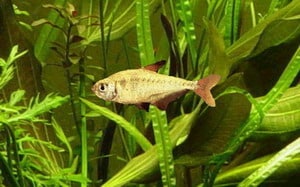
The yellow tetra has a typical tetra body shape, laterally compressed and somewhat deep-bodied compared to slimmer species like neons. The base body color is a translucent silvery-olive that develops a warm golden-yellow hue when the fish is healthy, well-fed, and kept in good conditions. The name “yellow tetra” is aspirational in pet store lighting, but give these fish a planted tank with a dark substrate and proper diet, and the yellow really does come through.
Two faint dark horizontal bands run along the body, which is where the species name “bifasciatus” (two-banded) comes from. These bands aren’t always visible and will show more prominently when the fish is stressed or in certain lighting. The fins are mostly transparent to slightly yellowish, and the anal fin often shows a touch of red or orange at its base. There’s a dark spot on the humeral region (behind the gill cover) that helps with identification.
Compared to the lemon tetra (H. Pulchripinnis), which it’s frequently confused with, the yellow tetra is less vibrant overall. The lemon tetra has a much more pronounced bright yellow coloring and distinctive black-edged anal fin. If the fish you’re looking at has a strongly marked black and yellow anal fin, it’s likely a lemon tetra, not a yellow tetra. The yellow tetra’s coloration is subtler and more of a warm golden tone than a bright lemon-yellow.
Male vs. Female
Sexing yellow tetras becomes easier as they mature. Females are plumper and rounder in the belly, especially when carrying eggs. Males are slimmer and more streamlined. During spawning season, males develop noticeably more intense golden-yellow coloration and may show brighter reddish tones on the anal fin. Outside of breeding condition, the differences are subtle, so it’s best to buy a group of 8-10 and let nature sort out the ratios.
Average Size & Lifespan
Adult yellow tetras reach about 2 inches (5 cm) in total length, which puts them on the slightly larger side for small tetras. They’re a bit bulkier than neons or embers, which means they need a bit more swimming space.
In captivity, expect a lifespan of 3 to 5 years with proper care. Their hardiness works in their favor here. Because they tolerate a wider range of conditions and are less prone to stress-related issues, they are reliable long-term residents in a well-maintained community tank. Good water quality and a varied diet are the biggest factors in reaching the upper end of that lifespan range.
Care Guide
Tank Size
A 20-gallon (76-liter) tank is the minimum for a school of 6 yellow tetras. These are active swimmers that use the full length of the tank, so a 20-gallon long is preferable to a tall format. If you want a larger school of 10-12 (which looks much better), a 30-gallon (114-liter) tank gives them the room to really show off their schooling behavior.
Yellow tetras primarily occupy the middle to upper water column, so tanks with good horizontal swimming space matter more than height. They’ll appreciate open areas in the center for swimming with planted borders along the back and sides for retreating when they want cover.
Water Parameters
| Parameter | Ideal Range |
|---|---|
| Temperature | 68-82°F (20-28°C) |
| pH | 6.0-8.0 |
| Hardness | 5-20 dGH |
| KH | 3-12 dKH |
This is where the yellow tetra really stands out from the crowd. That temperature range is remarkably wide for a tetra. At the low end, 68°F (20°C) means this fish can thrive in unheated tanks in homes that stay at room temperature. That’s a genuine advantage if you live in a temperate climate or want to set up a subtropical community tank. Very few tetras give you that kind of flexibility.
The pH and hardness tolerance is equally impressive. While many popular tetras need soft, acidic water to thrive, yellow tetras adapt to moderately hard, slightly alkaline conditions without complaint. If your tap water runs on the harder side and you’ve struggled to keep neon tetras alive, the yellow tetra is the answer. That said, as with any fish, stability matters more than hitting a specific number. Keep your parameters consistent and they’ll do well.
Filtration & Water Flow
Gentle to moderate flow works best. Yellow tetras come from slow-moving streams and flooded areas, so they’re not built for strong currents. A hang-on-back filter or sponge filter is ideal for most setups. If you’re using a canister filter, use a spray bar or lily pipe to diffuse the output so you’re not blasting them around the tank.
Weekly water changes of 20-25% are recommended. Yellow tetras are forgiving of minor water quality fluctuations, but that’s no excuse to skip maintenance. Consistent water changes are the single most important thing you can do for any fish’s long-term health.
Lighting
Moderate lighting works best for yellow tetras. They’re not as light-sensitive as some tetras, but their golden coloration looks washed out under very intense lighting. A standard planted tank light with some floating plants to create shaded areas gives you the best of both worlds. The fish will use the shaded zones to rest and the open areas to swim and school.
If you’re keeping them in a low-tech setup without strong lighting, they’ll be perfectly content. These aren’t fish that need any special lighting considerations. Just avoid extremes in either direction.
Plants & Decorations
Yellow tetras look great in planted tanks, and the green backdrop really helps their golden coloring pop. Hardy, low-maintenance plants like Java fern, Anubias, Cryptocoryne species, and Vallisneria all work well. These plants also tolerate the cooler temperatures that yellow tetras can handle, which is important if you’re running an unheated setup.
Driftwood and some leaf litter on the substrate create a natural look and provide additional cover. Floating plants like Amazon frogbit or salvinia add overhead shade that yellow tetras appreciate. Leave plenty of open swimming space in the center of the tank, with plants concentrated along the back and sides.
Substrate
A dark substrate is the way to go if you want to see the yellow tetra’s best coloring. Fine dark sand or a dark planted tank substrate makes the golden tones much more visible than a light-colored gravel would. That said, yellow tetras aren’t as dramatically affected by substrate color as some species. They’ll still look decent over lighter substrates, but dark gives you the best visual result.
Is the Yellow Tetra Right for You?
Before you buy, run through this honest checklist. The Yellow Tetra is a great fish for the right keeper, but it is not for everyone.
- You want a warm yellow tetra that develops color with proper conditions and diet
- You can provide soft, slightly acidic water for best color expression
- You keep a school of 8+ on dark substrate with moderate lighting
- You have a 15-gallon or larger planted community tank
- You feed high-quality foods including those with natural color enhancers
- You are patient enough to wait for full coloring to develop over weeks to months
What People Get Wrong
Yellow tetras (Hyphessobrycon bifasciatus) are frequently overlooked at the fish store because they’re not as visually dramatic as neon or cardinal tetras. That’s actually a selling point for the right hobbyist. They’re hardier than either of those species, more tolerant of water condition variation, and their yellow-gold coloration under the right lighting is genuinely attractive — just more subtle than competitors.
The color confusion is real. Under poor store lighting, yellow tetras can look almost plain. At home in the right tank — dark substrate, planted, moderate lighting — the yellow-gold sheen comes alive. Don’t judge this fish under fluorescent store lighting.
Group size is the same mistake made with all schooling tetras. Four fish hiding in the corner is not what yellow tetras are capable of. Eight or more fish in open water with plants behind them is a completely different experience. The school dynamics change everything about how this fish looks and behaves.
Tank Mates
Best Tank Mates
Yellow tetras are genuinely peaceful and get along with just about any community fish that won’t eat them. Their tolerance for cooler water also opens up some tank mate options that wouldn’t work with most tropical tetras:
- Corydoras catfish – perfect bottom-dwelling companions, and many Corydoras species also handle cooler water well
- Other peaceful tetras – ember tetras, pristella tetras, black neons, and silvertip tetras all make great companions
- Harlequin rasboras – peaceful mid-level schoolers that complement yellow tetras nicely
- White Cloud Mountain minnows – if you’re running a cooler subtropical tank, this is a natural pairing
- Dwarf gouramis – a colorful centerpiece fish that won’t bother your tetras
- Otocinclus catfish – gentle algae eaters that are completely non-threatening
- Cherry shrimp – yellow tetras are safe with adult shrimp, though baby shrimp may be eaten
- Kuhli loaches – peaceful bottom dwellers that add activity to the lower tank zone
- Bristlenose plecos – hardy algae eaters that stay a manageable size
- Pencilfish – gentle, slender fish from similar South American habitats
Tank Mates to Avoid
- Large cichlids – any fish big enough to see a yellow tetra as a snack
- Tiger barbs – too boisterous and nippy for peaceful yellow tetras
- Angelfish – they will eat yellow tetras once they reach adult size
- Red tail sharks – territorial and prone to chasing small tetras
- Aggressive or highly territorial species – anything that will outcompete yellow tetras for food or space
Food & Diet
Yellow tetras are unfussy eaters that accept virtually anything you put in the tank. They’re true omnivores, and in the wild they feed on small insects, worms, crustaceans, plant matter, and organic detritus. In the aquarium, they’ll happily eat whatever you offer.
A high-quality flake food or micro pellet makes a solid daily staple. To bring out the best golden-yellow coloration, supplement with frozen or live foods several times per week. Daphnia, brine shrimp, bloodworms, and cyclops are all eagerly accepted and make a noticeable difference in color intensity. Blanched vegetables like zucchini or spinach are also appreciated occasionally.
Feeding frequency: Once or twice daily, only what they can consume in about 2 minutes. Yellow tetras are enthusiastic eaters and will overeat if given the chance, so keep portions reasonable.
Color-enhancing tip: Foods rich in carotenoids (like spirulina-based flakes, daphnia, and brine shrimp) help bring out the yellow and gold tones in this species. If your yellow tetras look dull, improving their diet is often the fastest fix.
Breeding & Reproduction
Yellow tetras is bred in the home aquarium, though they require a bit more setup than some of the easiest egg scatterers. With the right conditions and a little patience, it’s definitely achievable for hobbyists with some breeding experience.
Breeding Difficulty
Moderate. Yellow tetras will breed readily once conditions are right, but getting those conditions dialed in takes some effort. They’re not as forgiving as glowlight tetras or pristella tetras when it comes to water chemistry for spawning.
Spawning Tank Setup
Set up a dedicated breeding tank of 10-15 gallons (38-57 liters). Keep the lighting dim, as both eggs and newly hatched fry are sensitive to bright light. Line the bottom with fine-leaved plants like Java moss or spawning mops to catch the scattered eggs. A mesh screen over the bottom works as an alternative, allowing eggs to fall through while keeping the adults from eating them. Yellow tetras, like most tetras, are enthusiastic egg eaters.
Water Conditions for Breeding
Soft, slightly acidic water gives you the best results. Aim for a pH of 6.0-6.5, hardness below 8 dGH, and a temperature of 75-80°F (24-27°C). Using RO water mixed with a small amount of tap water is an easy way to achieve these parameters. A gentle air-powered sponge filter provides filtration without creating too much current or sucking up eggs and fry.
Conditioning & Spawning
Condition your breeding group with plenty of high-quality live and frozen foods for 1-2 weeks before attempting to spawn them. Brine shrimp, daphnia, and bloodworms all work well for conditioning. When females are visibly plump with eggs and males are showing their most intense golden coloring, they’re ready.
You can spawn them in pairs or in a small group of 3 males and 3 females. Introduce the fish to the spawning tank in the evening. Spawning typically occurs the following morning, with the pair scattering adhesive eggs among the plants or spawning mops. A healthy female can produce 100-200 eggs per spawn.
Egg & Fry Care
Remove the adults immediately after spawning, as they will eat every egg they find. Eggs typically hatch within 24-36 hours. The fry are tiny and will absorb their yolk sac over the next 3-4 days before becoming free-swimming. Feed infusoria or commercially available liquid fry food for the first week, then gradually transition to microworms and freshly hatched baby brine shrimp as the fry grow large enough to take them. Keep the tank dimly lit during the early stages and maintain pristine water quality with small, frequent water changes.
Common Health Issues
Yellow tetras are one of the hardier tetras in the hobby, but no fish is immune to disease. Here are the main health concerns to be aware of:
Ich (White Spot Disease)
Ich is the most common ailment you’ll encounter with any tropical fish, and yellow tetras are no exception. It usually shows up after a temperature swing or the stress of being moved to a new tank. Look for the telltale white spots on the body and fins. Gradually raise the temperature to 82°F (28°C) and treat with a standard ich medication. Yellow tetras generally tolerate treatment well thanks to their overall hardiness.
Fin Rot
Fin rot is almost always a water quality issue. If you notice frayed, discolored, or deteriorating fins, test your water immediately. Ammonia and nitrite should be at zero, and nitrates should be below 20 ppm. Improve water quality with more frequent water changes, and treat with an antibacterial medication if the condition doesn’t improve within a few days. Caught early, fin rot is very treatable.
General Prevention
Prevention is always easier than treatment. Quarantine all new fish for at least two weeks before adding them to your main tank. Maintain stable water parameters and stick to a regular water change schedule. Avoid sudden temperature swings, and make sure you’re not overcrowding the tank. Yellow tetras are tough fish, but even tough fish get sick in poor conditions. A well-maintained tank with consistent parameters is your best defense against any disease.
Common Mistakes to Avoid
- Keeping too few – Yellow tetras need a group of at least 6 to feel secure. In smaller groups, they become shy, stressed, and spend most of their time hiding. A school of 8-10+ brings out their best behavior and schooling display.
- Confusing them with lemon tetras – These are different species with different care needs. Hyphessobrycon bifasciatus (yellow tetra) and H. Pulchripinnis (lemon tetra) are often mislabeled in stores. Know what you’re buying.
- Expecting flashy colors immediately – Yellow tetras in pet store tanks often look dull and washed out. Give them time in a good setup with proper diet, and the golden coloring develops over weeks. Patience pays off with this species.
- Overheating the tank – While yellow tetras can handle tropical temperatures, they don’t need (or necessarily prefer) the upper range. Running the tank at 74-76°F (23-24°C) is perfectly fine and often brings out better behavior than pushing it to 80°F+.
- Skipping the quarantine – Just because yellow tetras are hardy doesn’t mean they can’t bring diseases into your main tank. Always quarantine new arrivals for at least two weeks.
- Poor diet variety – Feeding only flake food will keep them alive but won’t bring out their best color. Supplement with frozen or live foods regularly to see the golden-yellow tones this species is known for.
Where to Buy
Yellow tetras aren’t as commonly stocked as neon or cardinal tetras, but they’re not rare either. Check your local fish stores first, as they sometimes carry them under the name “yellow tetra” or occasionally “lemon tetra” (even though that’s technically a different species). Expect to pay around $3-5 per fish, with discounts often available when buying a school.
For better selection and healthier stock, I recommend ordering from Flip Aquatics or Dan’s Fish. Both are reputable online sellers that ship healthy, well-acclimated fish. Ordering online also lets you confirm you’re getting the right species, which is helpful given the naming confusion between yellow tetras and lemon tetras in some stores.
Frequently Asked Questions
Is the yellow tetra the same as the lemon tetra?
No, they are different species. The yellow tetra (Hyphessobrycon bifasciatus) and the lemon tetra (Hyphessobrycon pulchripinnis) are separate species that are often confused in the hobby. The lemon tetra has brighter, more vivid yellow coloring and a distinctive black-edged anal fin. The yellow tetra has a subtler golden hue and lacks the bold anal fin markings. They come from different parts of Brazil and have slightly different care requirements, though both are easy to keep.
Can yellow tetras live in an unheated tank?
Yes, in many cases. Yellow tetras tolerate temperatures as low as 68°F (20°C), which means they can live comfortably in an unheated tank as long as your room temperature stays above that threshold. This makes them one of the few tetras suitable for subtropical or temperate community setups. If your home gets colder than 68°F in winter, you’ll still need a heater as a safety net.
How many yellow tetras should I keep together?
A minimum of 6, but 8-10 or more is strongly recommended. Yellow tetras are a schooling species that feel more secure and behave more naturally in larger groups. In small groups, they are shy and hide. In a proper school, they’ll swim actively in the open and display better coloring.
Are yellow tetras good for beginners?
Absolutely. Yellow tetras are one of the best beginner tetras available. They tolerate a wider range of water conditions than most tetras, they’re peaceful, they eat anything, and they’re forgiving of minor mistakes. If your tank is cycled and you maintain basic water quality, yellow tetras will thrive.
What fish can live with yellow tetras?
Yellow tetras are compatible with virtually any peaceful community fish. Corydoras catfish, other small tetras, rasboras, dwarf gouramis, otocinclus, bristlenose plecos, and peaceful livebearers all make great tank mates. Avoid large or aggressive fish that might see them as food. Their tolerance for cooler water also makes them compatible with White Cloud Mountain minnows in a subtropical setup.
Why do my yellow tetras look pale?
Several factors can cause pale coloring. The most common are stress from too few tank mates, poor diet (flake-only feeding), harsh lighting, and light-colored substrate. Yellow tetras need time to settle into a new tank before their color develops fully. Make sure you have a group of 6+, offer varied foods including frozen options, use moderate lighting, and consider a dark substrate. Color-enhancing foods with carotenoids can also help bring out the golden tones.
What It Is Actually Like Living With Yellow Tetra
In a proper school, yellow tetra display natural movement patterns that are genuinely engaging to watch. The fish interact with each other, establish subtle hierarchies, and move through the tank with purpose.
They occupy the middle water column during active hours, creating movement and visual interest in the zone where most fishkeepers want action.
Feeding time is when their personality comes out. They learn your routine quickly and will anticipate feeding before you even open the lid.
Their color and behavior improve over time as they settle into a stable environment. Fish that have been in the same tank for months look noticeably better than recently added stock.
They coexist peacefully with virtually every other appropriately-sized community fish. This compatibility makes tank planning straightforward.
How the Yellow Tetra Compares to Similar Species
Yellow Tetra vs. Lemon Tetra
Despite similar names, these are different species. The Lemon Tetra has a more translucent body with a subtle lemon glow and distinctive red eye. The Yellow Tetra has a deeper, more saturated yellow when conditions are right. Both need dark substrates and proper lighting. The Lemon Tetra is more commonly available.
Yellow Tetra vs. Gold Tetra
The Gold Tetra has metallic gold tones from a natural parasite (Ichthyophthirius), while the Yellow Tetra has clean yellow pigment. The Gold Tetra’s color comes from a different mechanism entirely. Both are warm-toned and attractive in the right setup.
Closing Thoughts
The yellow tetra won’t dazzle you the way a neon tetra does at first glance, but it earns its keep in ways that matter more over the long run. It’s tough, adaptable, peaceful, and genuinely easy to care for. That combination of traits makes it an excellent choice for beginners, but it’s also a solid pick for experienced hobbyists who want a reliable community fish that won’t cause problems.
Give a school of yellow tetras a well-planted tank, a dark substrate, and a varied diet, and you’ll be rewarded with a pleasant golden shimmer that grows on you over time. They’re the kind of fish that makes a community tank feel complete without demanding attention.
Recommended Video
Check out our tetra tier list video where we rank the most popular tetras in the hobby, including the yellow tetra:
References
- Hyphessobrycon bifasciatus (Ellis, 1911) – FishBase
- Hyphessobrycon bifasciatus Profile – Seriously Fish
- Melo, B.F. Et al. (2024). Phylogenomics of Characidae and the reclassification into Acestrorhamphidae. Molecular Phylogenetics and Evolution.
- Ellis, M.M. (1911). Original description of Hyphessobrycon bifasciatus. Annals of the Carnegie Museum, 8(1): 127-146.
- About the Author
- Latest Posts

I’m Mark Valderrama, founder of Aquarium Store Depot and a fishkeeper with over 25 years of hands-on experience. I started in the hobby at age 11, worked at local fish stores, and have kept freshwater tanks, ponds, and reef tanks ever since. I’ve been featured in two best-selling aquarium books on Amazon and built this site to share practical, experience-based fish keeping knowledge.
Leave a Reply